BAI-Webinar "Timberland and Farmland - Alternative and Sustainable Investment Choices"
←
→
Page content transcription
If your browser does not render page correctly, please read the page content below

BAI-Webinar „Timberland and Farmland – Alternative and Sustainable Investment Choices"

                                                                                                  Speakers:
                           Hancock Natural Resource Group – a Manulife Investment Management Company:
                                               Keith Balter: Managing Director, Head of Economic Research
                                       Michael Strzelecki, CFA: Managing Director, Senior Portfolio Manager
                                                                                                       June 22, 2021

                                                                       Philipp Bunnenberg
                                                                       Consultant
                                                                       Alternative Markets, BAI e.V.

                                                                       Poppelsdorfer Allee 106
                                                                       53115 Bonn
                                                                       +49 (0) 228 96987-52
                                                                       bunnenberg@bvai.de
What‘s moving markets?

                         2
The Speakers from our BAI members

            Keith Balter is responsible for the market analysis supporting investment and operational planning and decision
            making for the Hancock Natural Resource Group (HNRG), a Manulife Investment Management Company.
            Keith’s team maintains informational databases and produces analytical studies and publications addressing trends
            in timber and agricultural commodity markets as well as and the role of timberlands and farmlands in institutional
            investment. Before joining HNRG in 2012, Keith was Senior Economist with Forest Capital Partners LLC, a company
            investing and managing commercial timberland for institutional investors, where he was responsible for market
            analysis, business development and investor support. Prior to his time at Forest Capital Partners, Keith was a
            principal at RISI, a provider of information services and analysis to the global forest products sector. Keith holds an
            MFS in Forest Economics from Yale, and an MBA from the University of Chicago.

            Michael Strzelecki is responsible for business development activities, specifically focused on capital formation for
            Hancock Natural Resource Group (HNRG), a Manulife Investment Management Company, across North America,
            South America and Europe.

            In addition, he manages a number of investment portfolios and large institutional client relationships. Prior to
            joining HTRG in 2017, Michael worked at Global Forest Partners, where he was directly involved in portfolio
            management, valuation analysis, and investment research. Before GFP, Michael was an equity research analyst at
            Merrill Lynch, covering the forest products sector. He holds a B.S. in Finance from the Pennsylvania State University
            and is a CFA® charterholder.

                                                                                                                                      3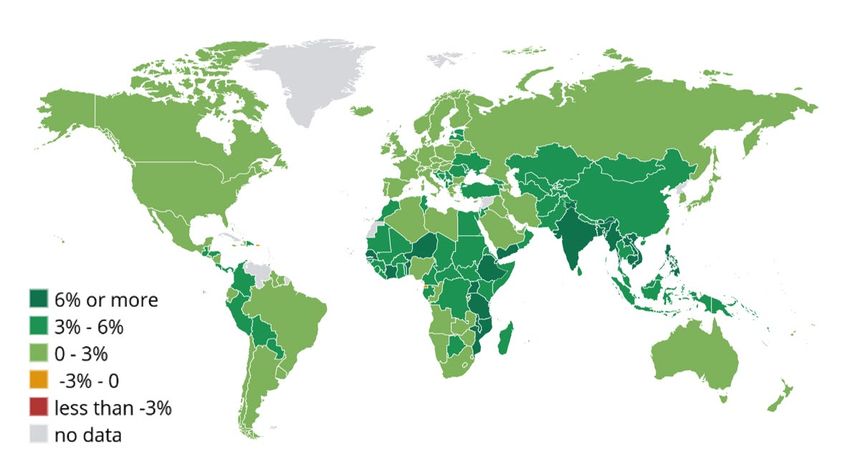
Timberland & Farmland –
Alternative and
Sustainable Investment
Choices
Hancock Natural Resource Group (HNRG), a Manulife
Investment Management Company

Keith Balter
Michael Strzelecki

June 2021

This event is taking place and recorded on June 22, 2021 and is brought to you by Manulife Investment Management. This commentary is for investment
professional use only and is not authorized or intended for use with the public. The commentary reflects the views of the presenters at the time of the event and is
subject to change as market and other conditions warrant. These opinions may not necessarily reflect the views of Manulife Investment Management or its
affiliates. Any holdings, securities, or assets referred to in this commentary may or may not represent a portion of the total portfolio and are intended for
discussion purposes only. Our opinions on any referenced securities or assets are subject to change without notice and are not a recommendation to buy or sell
any security. Any performance and/or characteristics discussed are based on current information [as noted in the material]. Investing involves risks, including the
potential loss of principal. You are encouraged to work with an investment professional before investing. Manulife Investment Management does not provide
investment, legal or tax advice. You should not rely upon any forward-looking statements, as actual results and events may differ materially. Past performance is
not indicative of future results.

                                                     For Institutional/Investment Professional Use Only. Not for distribution to the public. For informational use only.
Agenda

• Attributes of the asset classes

• Sustainability & climate benefits

• Resilience during COVID-19

• Current market environment and outlook

                                                                                                                                        2

                  For Institutional/Investment Professional Use Only. Not for distribution to the public. For informational use only.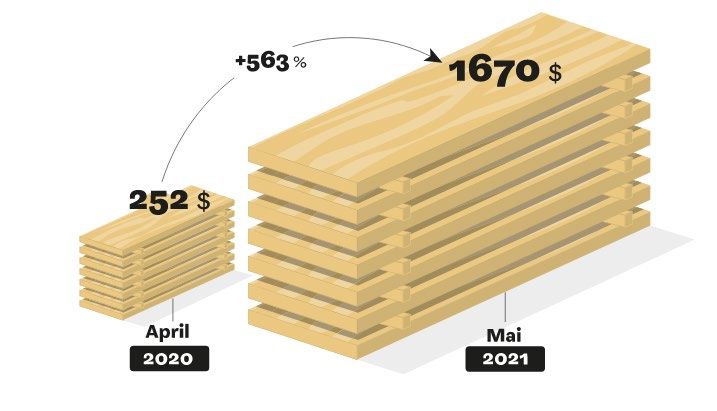
Global, Integrated, Sustainable Timber & Agriculture Investments
Hancock Natural Resource Group, a Manulife Investment Management company, is the
world’s largest timberland¹ and leading agriculture investment manager
 USD
 14.3B
 Total Assets
    Under
 Management

                                                                                                                   Vancouver
                                                                                                                                                          Boston

  5.9M                                                                                                                                                Charlotte
 Total Acres
   Under
 Management

   653
 Employees
 across the
   globe
                                                                                                                                                                   Curitiba
                                                                              Milton
                                                       Melbourne                             Tauranga                                          Valdivia

Over 200
Investors from

    13                      HNRG Headquarters                                       HNRG Managed Asset Locations

  Different                 HNRG Regional Office*                                   Additional Manulife Investment Management Presence
  countries
                            HNRG Field Office

                 As of December 31, 2020
                 * Includes offices associated with client owned operating companies                                                                                          3
                 ¹ Source: Fastmarkets RISI Global Timberland Ownership and Investment Database as of June 30, 2020
                         For Institutional/Investment Professional Use Only. Not for distribution to the public. For informational use only.                                  534625.
Long History of Stewardship, Sustainability & Responsible Investing
                                      Sustainability & stewardship have been essential strategies to maximize value since inception
                                                                                                                                                                                               2020
                                                                                                                                           2015
                                                                                                                                                                                               Issues its first Climate report, in line with the
                                     1999                                                                                                  Becomes a signatory to the
                                                                                       2005                                                Principles for Responsible
                                                                                                                                                                                               recommendations of the Task Force on
                                     Has its first timber                                                                                                                                      Climate-related Financial Disclosures (TCFD)
                                     property certified to                             Commits to the Equator                              Investment*
                                     Forest Stewardship                                Principles                                                                                                       2018
                                                                                                                                            Almond and pistachio
                                     Council® standards                                                                                     operations complete USDA                                    Becomes a member of the
                                                                                                                                            Good Agriculture Practices                                  Global Impact Investing Network
                                                                                                                                            Certification
                     16,0

                     14,0

                     12,0
Market Value ($ billions USD)

                     10,0

                                8,0

                                6,0

                                4,0

                                2,0
                                                                         HNRG Assets Under Management
                                 -
                                      1999    2000     2001   2002    2003    2004      2005       2006      2007       2008      2009       2010      2011       2012      2013       2014      2015     2016     2017      2018     2019     2020
                                                                                                                              2011                                         2016
                                                                                                                              Formally establishes its                     Plants its 1 billionth tree
                                                       2002                                                                   Sensitive Lands
                                                       Becomes the first timberland                                           Program for preserving                                           2019
                                                       investment manager to have its                                         unique and sensitive
                                                                                                                                                                                               Completes the first third-party audit to
                                                       holdings throughout North America                                      lands
                                                                                                                                                                                               the new Leading Harvest Farmland
                                                       certified under the Sustainable                                                                                                         Management Standard for its entire
                                                       Forestry Initiative®                                                                                                                    direct-operate US farming platform

                                                                         As of December 31, 2020
                                                                         *Manulife Investment Management, the global asset management business of Manulife, is the signatory to the UNPRI which includes HNRG                                  4

                                                                                 For Institutional/Investment Professional Use Only. Not for distribution to the public. For informational use only.                                          534625.
Attributes of Timberland
and Farmland

                           5
Why Timberland and Farmland?
Investments in timberland and farmland have historically experienced low volatility and attractive
risk adjusted returns
U.S. Historical Return and Standard Deviation (1996-2020)

                       16%
                                                                                                                      US Private Equity
Annualized Return (%/year)

                       12%
                                                                         Agriculture
                                                                                                                                                               Small Cap Stocks
                                                                          Commercial Real Estate
                             8%                                                                                                          S&P 500
                                                                                                                                                                        Public Forest Products
                                                                          Corporate Bonds
                                               Timberland                                                                                               International Equities
                             4%
                                             Treasury Bills
                             0%                                                                                                                                                      Commodities
                                   0%                 5%                             10%                              15%                               20%                           25%               30%
                             -4%

                                                                                                   Standard Deviation (%/year)

                        Attractive Risk/Return                           Favorable Market                                  Create Long-Term Value                                   Can Deliver Performance
                            Characteristics                               Fundamentals                                                                                                   Sustainably
                             May provide stable total               Increasing consumption                                  Long-lived assets with                                      Sustainability and
                              returns and moderate                trends via global population                             appreciation potential can                               responsible investing can
                             unlevered income with                    and income growth                                   match long-term investment                                enhance value and deliver
                              relatively low volatility                                                                      horizons and provide                                      market rate returns
                                                                                                                                current income

                                                     See sourcing information on page 24                                                                                                                        6

                                                              For Institutional/Investment Professional Use Only. Not for distribution to the public. For informational use only.                             534625.
Why Timberland and Farmland?
Low correlation with traditional assets and moderate inflation protection in an institutional portfolio

Historical USD Correlations with Agriculture                                                                          Historical USD Correlations with Timber
(1996-2020)                                                                                                           (1996-2020)
                                                             0,67           U.S. Timber/ Agriculture                                                                               0,67
                                          0,22                                         U.S. CPI                                                                    0,23
                                       0,14                                  International Equities                                                              0,16
                       -0,04                                                U.S. Small Cap Stocks                                                -0,05
                       -0,04                                                   U.S. Treasury Bills                                                                        0,43
                   -0,21                                                     U.S. Corporate Bonds                                      -0,27
                                                   0,42                U.S. Commercial Real Estate                                                                              0,55
                       -0,05                                                           S&P 500                                                                   0,14
  -1,0          -0,5           0,0                0,5                 1,0                                      -1,0                 -0,5                   0,0            0,5             1,0

Can Provide Diversification Benefits                              May Help Preserve Value in a                                                Timber and Agriculture Have
          to a Portfolio                                                   Portfolio                                                         Exhibited Moderate Correlation
         Generally uncorrelated with                              May provide inflation protection,                                    Lack of complete correlation can provide
            major asset classes                                  particularly in periods of relatively                                 additional diversification benefits and an
                                                                            high inflation                                            expanded opportunity set within a portfolio

                           Diversification does not guarantee a profit nor protect against loss in any market.
                           See sourcing information on page 24                                                                                                                              7

                                     For Institutional/Investment Professional Use Only. Not for distribution to the public. For informational use only.                                    534625.
Attractive Nominal Total Returns
Acquire and manage timber and agriculture investments to maximize risk-adjusted total
return, generate income, preserve capital investment and realize long-term appreciation
Expected Nominal Total Returns
Appreciation
Real crop and timber price changes
Biological growth Permanent
Gains in productivity crops 9-11%
Change in land values
Current Income
Rental income from land leases Row
Revenue from crop and timber sales crops 6-10%
Carbon and/or wetland mitigation banking credits
Realizing conservation or higher and better use values
Timber 6-10%
For illustrative purposes only. Forecasts are not meant as predictions for any particular asset class, fund or
investment vehicle. All expected returns refer to a five+ year horizon and are presented on a nominal
basis, unlevered, gross of investment management fees and do not guarantee future results. Actual
returns may vary. Potential for profit as well as for loss exists.
Source: Forecast from HNRG Research as of December 2020 8
For Institutional/Investment Professional Use Only. Not for distribution to the public. For informational use only. 534625.A Hypothetical Combined Timberland and Farmland Portfolio Has Shown
Consistent Return Performance Between 7-11% Over Long Periods of Time
Timberland and farmland tend to perform differently under specific economic and policy conditions
Offsetting each other’s weak performance periods, the simulated blended portfolio produced an average total
return over the three periods of 10.6%
U.S. Real Assets Average Historical Returns
16,0% 15,2%
14,0%
12,2%
11,7% 11,7% 11,8%
12,0% 11,3%
10,4%
10,0% 9,5%
8,3%
8,0% 7,3% 7,2%
6,0%
4,2%
4,0%
2,0%
0,0%
U.S. Timber U.S. Agriculture Pro-Forma 50%/50% U.S. Commercial Real Estate
Timber/Agriculture
1976-1990 1991-2009 2010-2020
The simulation above is theoretical and presented for informational purposes only. The results above are not based on the performance of actual portfolios and do not represent returns any investor actually
attained. Simulated performance is not an indicator of future actual results. Index data may be indicative of a broad asset class’ historical performance but is not representative of the investment team’s
methodology or performance.
Source: Historical annual total return performance for private farmland, timberland and commercial real estate is sourced from the NCREIF property-level indices for U.S. commercial real estate, U.S. farmland,
and U.S. timberland. Historical timberland performance from 1976 to 1986 is sourced from the Hancock Timber Resource Group (“HTRG”) synthetic indices Hancock Timber Index. Historical farmland
performance from 1976 to 1986 is constructed and sourced from Morningstar/Ibbotson Associates.
Pro forma Farmland/Timberland performance is based on aggregate farmland and aggregate timberland assets each representing 50% of the combined portfolio during the entire reported period, and it does not
include any allocation for “plus” investment-type assets. 9
For Institutional/Investment Professional Use Only. Not for distribution to the public. For informational use only. 537971.An Integrated Timberland and Farmland Investment Strategy Expands the
Institutional Investable Universe
Market Value of Investable Core Farmland Market Value of Investable Core Timberland
USD1,936 B1 USD344 B2
Australasia Rest of Europe
Eastern Europe $72 Scandinavia $9
$80 $20
Brazil
Western $415 South America US South
Europe $66 $150
$462 Canada
$90
Australia
$6
United States New Zealand
$13 US West
$596 $53
Other South Canada
$4 US North
America
$23
$220
• A combined global investment approach allows greater flexibility in investing capital by taking advantage
of differences in regional market dynamics
• Regional overlap between the investable universes for timberland and farmland may promote greater
regional scale, operational, administrative and governance efficiencies
• Uncorrelated markets in expanded investable universe may provide diversification benefits
1Sources: HNRG Research as of March 2021 United States: Agriculture Census 2017, USDA Land Values 2020, NCREIF 2020, Canada: Agriculture Census 2016, 2018 Statistics
Canada, Australia: ABARES, HNRG 2018, Western and Eastern Europe: Agriculture Census 2017, Eurostat 2019, Brazil: Agriculture Census 2017, Secretary of Agriculture and Supply
2020, Argentina Agriculture Census 2018, Savills Global Farmland Index, Uruguay: Agriculture Statistics 2020, New Zealand: Agriculture Census 2017, Reinz January 2021, Stats NZ
2017 Chile: Annual Statistics 2019/20, GPS Property 2019, HAIG 2020, ODEPA 2019/2020
Australasia includes: Australia, New Zealand; Other South America includes: Argentina, Chile, Uruguay; Western Europe includes: Belgium, Denmark, Germany, Ireland, Greece, Spain,
France, Italy, Luxembourg, Netherlands, Austria, Portugal, Finland, Sweden, United Kingdom; Eastern Europe includes: Bulgaria, Czech Republic, Poland, Romania
2 Source: HNRG Research as of September 2017. “Rest of Europe” includes Baltics, England, Ireland and Poland. “South America” includes Brazil, Chile and Uruguay. “Scandinavia”
includes Finland, Sweden and Norway. “U.S. West” includes U.S. West Coast, West Inland and California. “U.S. North” includes U.S. Northeast and U.S. Lake States. 10
For Institutional/Investment Professional Use Only. Not for distribution to the public. For informational use only. 537971.Diversifying Portfolios Can Improve Risk Efficiency
Seek to mitigate risk with an investment strategy focused on building sustainable, diversified
portfolios
Risks Mitigating Factors
Timber and agriculture commodity price volatility Portfolio diversification, active management
Harvest volume (fire, disease, pest) Modern silviculture/farming techniques, species and crop type diversification
Property value/liquidity Disciplined underwriting and comprehensive due diligence
Extensive due diligence on water quality and quantity, access to surface
Water availability
and subsurface water, asset selection, geographic diversification
Weather Diversification, modern silviculture/farming techniques and technology
Credit default/lease collection Extensive tenant due diligence, required rental pre-payment, letters of credit
No investment strategy or risk management technique can guarantee returns or eliminate risk in any
market environment. Diversification does not guarantee a profit nor protect against loss in any market. 11
For Institutional/Investment Professional Use Only. Not for distribution to the public. For informational use only. 534625.Sustainability and Responsible Investing
Managing natural resources allows us to focus on areas where meeting environmental and/or
social needs can offer commercial growth opportunities
Products Process
Sustainable Food Climate Stability People Empowerment
• Create carbon sequestration • Create jobs in rural
We produce healthy communities
opportunities
nutritious foods such as • Promote safe and healthy
• Invest in renewables and
nuts, fruit, and vegetables working and living
energy efficiency
consistent with planetary environments
• Sponsor climate change
health1 • Promote diversity, equity,
research through MIT2
and inclusion (DE&I)
Sustainable Fiber Community Prosperity
Ecosystem Resiliency
• Promote community
We produce sawtimber • Protect sensitive lands,
engagement through
used in housing and biodiversity, threatened &
volunteering and matching
pulpwood used in paper & endangered species
employee donations
hygiene products • Create conservation easements
• Offer recreational land use
• Sponsor working lands
• Implement vendor code of
conservation organizations
conduct and human rights
focus
Watershed Protection
• Implement water use efficiency
practices
• Utilize ground storage to
capture rain and flood waters
• Healthy forests maintain and
may improve water quality
As of December 31, 2019
Source: United Nations Department of Public Information Sustainable Development Knowledge Platform, https://sustainabledevelopment.un.org
1 https://eatforum.org/content/uploads/2019/01/EAT-Lancet_Commission_Summary_Report.pdf
2 https://globalchange.mit.edu/sponsors/current
12
For Institutional/Investment Professional Use Only. Not for distribution to the public. For informational use only. 537971.Natural Climate Solutions are critical to achieving net zero goals
Contribution of natural climate solutions (NCS) to stabilizing warming to below 2 °C.
• Annual reductions of 15 Total CO2 Mitigation Needed to Stabilize Global
gigatons or 7.6% every Warming
year to meet a 1.5 °C goal1
• As a comparison, global
emissions during the
pandemic fell by 6.4%2 NCS
Natural climate solutions can provide 37% of cost-effective CO2 mitigation
needed through 2030
Sources:
https://www.wbcsd.org/Programs/Climate-and-Energy/Climate/Natural-Climate-Solutions
1 https://unfccc.int/news/cut-global-emissions-by-76-percent-every-year-for-next-decade-to-meet-15degc-paris-target-un-
report#:~:text=On%20an%20annual%20basis%2C%20this,the%202%C2%B0C%20goal.
2 https://www.nature.com/articles/d41586-021-00090-3 13
For Institutional/Investment Professional Use Only. Not for distribution to the public. For informational use only. 534757Low-cost climate change solution
Forest carbon and agriculture removals occupy lowest end of carbon sequestration cost curve
Carbon sequestration cost curve (US$/ton MgCO2e) and the GHG emissions abatement potential (TGCO2e/yr)
100
3500
90
3000 80
CO2e sequestration potential
70
$/ton CO2e sequestered
2500
60
2000
50
1500 40
30
1000
20
500
10
0 0
Avoided Forest Natural Forest Cropland Nutrient Conservation
Conversion Management Management Agriculture
Maximum Additional Mitigation Potential (TgCO2E yr) Cost ($/ton MgCO2e)
Source: https://www.pnas.org/content/pnas/suppl/2017/10/11/1710465114.DCSupplemental/pnas.1710465114.sapp.pdf 14
For Institutional/Investment Professional Use Only. Not for distribution to the public. For informational use only. 534757Market Outlook
Economic Backdrop
Revived Economic Growth Boosts Commodity Demand, but Rasies Inflation Concerns

U.S. economy remains on track for robust 2021
      • Successful vaccine roll-out, easing of
                                                                                      US experiences a surge in Inflation 2021 Q1
        restrictions and revival of service economy
      • Monetary and fiscal policy remain strongly
        supportive
      • Rising employment and Covid-boosted
        savings
      • 6.4% (annual rate) GDP growth in Q1

Global growth prospects moderated by:
     • Vaccination rates lagging the U.S.
     • Depleted supply chains and logistical
        bottlenecks
     • China’s economic recovery decelerates

U.S. April CPI (4.1% y-o-y), highest since GFC
      • Pent-up, stimulus-enabled demand                                                Source: US Bureau of Labor Statistics
      • Gaps in supply chains
      • Tight job markets and rising wages
      • Weakening USD

                                                                                                                                               16

                         For Institutional/Investment Professional Use Only. Not for distribution to the public. For informational use only.   537971.
Farmland
Snapshot U.S. On-Farm Prices (USD per Bushel)
Soybeans Corn Soybean Forecasts Corn Forecasts
$15
After strong gains in Q1 2021,
prices ease: $12
Expanded planting, good weather $9
conditions, record soybean harvest
in Brazil $6
$3
Recovery in gasoline demand
$-
and prices translate into 2019 2019 2019 2019 2020 2020 2020 2020 2021 2021 2021 2021 2022
support for corn demand and Q1 Q2 Q3 Q4 Q1 Q2 Q3 Q4 Q1 Q2 Q3 Q4 Q1
price in 2021-2022
U.S. Gasoline Consumption (Billion USD)
Broadening improvement in 400
global economic conditions in
300
2022-2023 will support healthy
demand for ag products
200
Global demand should remain
2018 2019 2020 2021
strong, despite higher prices
100
0
Sources: USDA NASS April 2021, USDA Bureau of Economic Analysis April 2021, Price forecasts are from Capital Economics and as of
May 2021 17
537971.Drivers of Agriculture Investment in Current Climate
Agriculture and food sectors poised for robust growth post-COVID
Tailwinds
• Overall demand for food products will benefit
from strong post-COVID economic recovery Real Per Capita GDP Growth – Annual % Change to 20251
• Global GDP per capita and per capita income
to regain forward momentum
• Stronger GDP and income drive improved
and more sophisticated diets
• Limitations on land available for cultivation
and water resources
• Sustainable agricultural management
provides additional incentives for investors
Headwinds
• Global production expansion intensifies
exports market competition
• Sporadic African Swine Fever outbreaks
clouds China’s growing demand for feed
crops
The information in this slide may contain projections or other forward-looking statements regarding future events, targets, management discipline or other
expectations, and is only as current as of the date indicated. There is no assurance that such events will occur, and may be significantly different than that
shown here.1Source: International Monetary Fund, 2020 18
For Institutional/Investment Professional Use Only. Not for distribution to the public. For informational use only. 537971.Timberland
Fundamentals Monthly Total US Housing Starts (SAAR millions)
Remain Strong
2000
Single Multi Family
1800
1600
1400
Surge in Construction Activity 1200
Encounters Bumpss in Q2 1000
800
High prices, limited availability and
600
delayed delivery of building
400
materials and appliances; labor
200
shortages; cost-push adding to 0
rising new home prices Jan-15 Jul-15 Jan-16 Jul-16 Jan-17 Jul-17 Jan-18 Jul-18 Jan-19 Jul-19 Jan-20 Jul-20 Jan-21
Forest Product Prices Remain Source: US Census Bureau as of April 2021
Near All Time Highs
Prices – U.S. Solid Wood Products
Strong profit margins
$1.600
trigger another round of
investment in U.S. South lumber $1.400
Plywood OSB Lumber Index
mills $1.200
$1.000
Impact of Strong Forest $800
Product Prices on Timber $600
Values Delayed $400
Limits on regional mill capacity and
$200
ample timber supplies moderate
2020 timber price increases $0
Source: Source: Random Lengths – Lumber Index = RL composite lumber index. $/MBF
Southern Plywood =CDX/S.W. 15/32 3ply R/L, $/MSF
OSB = N. Central 7/16 R/L, $/MSF
19
Data as of 5/20/2021
535734Drivers of Timber Investment in Current Climate
Timber and forest products less exposed than other sectors to COVID-19 economic down-turn
Tailwinds
• COVID motivated shift to Working From Home U.S. Housing Markets Poised for a Multi-Year Boom1
boosts demand for expanded/reconfigured (SAAR new residential construction in the U.S., millions)
living-space, particularly in the U.S., resulting 2,5
in rising demand for lumber, wood panels and
2,0
timber
1,5
• Record wood product prices, boost profitability
for producers of building products and trigger 1,0
investments in expanded mill capacity
0,5
• Efforts to reduce greenhouse gas emissions
favor new wood-based building systems for 0,0
multi-story construction
2000
2001
2002
2003
2004
2005
2006
2007
2008
2009
2010
2011
2012
2013
2014
2015
2016
2017
2018
2019
2020
2021
2022
2023
2024
2025
Headwinds
• Large inventory of saw log timber in U.S. South
• Spruce-beetle infestation in Europe and
associated salvage harvests continue to
elevate regional supply level
1 Source: Forest Economic Advisors, End Use Quarterly Forecast, Feb 2021
2 Source: Random Lengths – Lumber Index = RL composite lumber index. Jan 2021 20
For Institutional/Investment Professional Use Only. Not for distribution to the public. For informational use only. 537971.Strong Fundamentals for U.S. Housing Extend into the 2020s
Demographics and Housing Deficit
US Population by Age Millions
6
5
4
Million
3 Peak Age Groups in 2019:
2 28- and 29-Year-Olds
1
0
12
15
18
21
24
27
30
33
36
39
42
45
48
51
54
57
60
63
66
69
72
75
78
81
84
87
90
93
96
99
0
3
6
9
Cumulative Over- / Underbuilding of Conventional U.S. Homes
(Millions)
3
2
1 Overbuilding
0
-1
-2 Underbuilding
-3
-4
-5
1995 2000 2005 2010 2015 2020
Sources: US Census Bureau as of July 1, 2019, FEA as of September 2020 21
For Institutional/Investment Professional Use Only. Not for distribution to the public. For informational use only. 535734Medium and Longer-Term Trends Support Timberland and Farmland
Positive economic fundamentals and shift to a decarbonized world
Return to Global Economic Expansion
• Rising per capita income in developing and emerging economies supports expanded demand for
higher value, healthier foods
• Strong fundamentals for U.S. housing based on demographics and deficient stock of housing
Climate Change Mitigation and Adaptation
• Significant opportunities to achieve reduced agricultural greenhouse gas emissions and more efficient
use of limited resources (energy, land, water) by deployment of ag tech, genetics and improved crop
management
• Timberland and Farmland can contribute to climate-change mitigation with carbon capture and storage
in forests, wood-products, and farmland soils.
• Innovative wood-based construction systems open new tiers of demand for wood products, multi-story
residential and non-residential buildings, and provide a low-carbon alternative to steel/concrete
Source: HNRG Research June 2021 22
For Institutional/Investment Professional Use Only. Not for distribution to the public. For informational use only. 537971.Thank You! Michael Strzelecki, CFA Keith Balter Managing Director & Senior Managing Director, Head of Portfolio Manager Economic Research E mstrzelecki@hnrg.com E kbalter@hnrg.com T 00 1 617 747 1501 T 00 1 617 747 1682 M 00 1 617 467 8467 M 00 1 857 260 0035
Notes
              Sources
              Slide 6 Sources: Data for Timberland refer to the NCREIF Timberland Index as of 12/31/20. Data for Farmland refer to the NCREIF Farmland Index
              as of 12/31/20. Data for Commercial Real Estate refer to the NCREIF Property Index as of 12/31/20. Data for Small Cap Equities refer to the Ibbotson
              series IA SBBI U.S. Small Stock TR USD as of 12/31/20. Data for Non U.S. Equities refer to the MSCI/EAFE International Equities Index as of
              12/31/20. Data for Corporate Bonds refer to the Ibbotson series IA SBBI U.S. LT Corp TR USD as of 12/31/20. Data for U.S. Treasury Bills refer to
              the Ibbotson series IA SBBI U.S. 30 Day Tbill TR USD as of 12/31/20. Data for the CPI refer to the U.S. Bureau of Labor Statistics as of 12/31/20.
              The S&P 500 series is from Standard & Poor’s Financial Services LLC as of 12/31/20. Data for U.S. Private Equity refers to the Cambridge
              Associates Private Equity Index as of 12/31/19. Data for U.S. Forest Products refer to the S&P Composite 1500 Paper and Forest Products series as
              of 12/31/2020.
              Slide 7 Sources: Data for Timberland refer to the NCREIF Timberland Index as of 12/31/20. Data for Farmland refer to the NCREIF Farmland Index
              as of 12/31/20. Data for Commercial Real Estate refer to the NCREIF Property Index as of 12/31/20. Data for Small Cap Equities refer to the Ibbotson
              series IA SBBI U.S. Small Stock TR USD as of 12/31/20. Data for Non U.S. Equities refer to the MSCI/EAFE International Equities Index as of
              12/31/20. Data for Corporate Bonds refer to the Ibbotson series IA SBBI U.S. LT Corp TR USD as of 12/31/20. Data for U.S. Treasury Bills refer to
              the Ibbotson series IA SBBI U.S. 30 Day Tbill TR USD as of 12/31/20. Data for the CPI refer to the U.S. Bureau of Labor Statistics as of 12/31/20.
              The S&P 500 series is from Standard & Poor’s Financial Services LLC as of 12/31/20.

                                                                                                                                                                        24

MSTR-498701                                       For Institutional/Investment Professional Use Only. Not for distribution to the public. For informational use only.
You can also read


