The Emerging Market Consumer Internet & E-Commerce Opportunity - An Overview of the KraneShares Emerging Markets Consumer Technology ETF Ticker: ...
←
→
Page content transcription
If your browser does not render page correctly, please read the page content below
KEMQ
                                            12/31/2019

 The Emerging Market Consumer
 Internet & E-Commerce Opportunity
 An Overview of the KraneShares
 Emerging Markets Consumer Technology ETF
 (Ticker: KEMQ)

info@kraneshares.com                                 1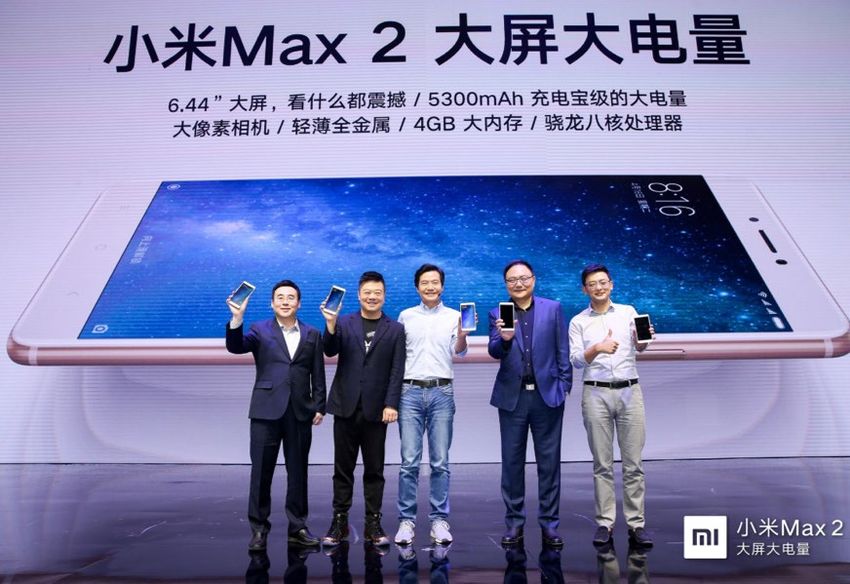
Introduction to KraneShares
About KraneShares
Krane Funds Advisors, LLC is the investment manager for
KraneShares ETFs. Our suite of China focused ETFs
provides investors with solutions to capture China’s
importance as an essential element of a well-designed
investment portfolio. We strive to provide innovative, first
to market strategies that have been developed based on
our strong partnerships and our deep knowledge of
investing. We help investors stay up to date on global
market trends and aim to provide meaningful
diversification. Krane Funds Advisors, LLC is majority
owned by China International Capital Corporation (CICC).

                                                               2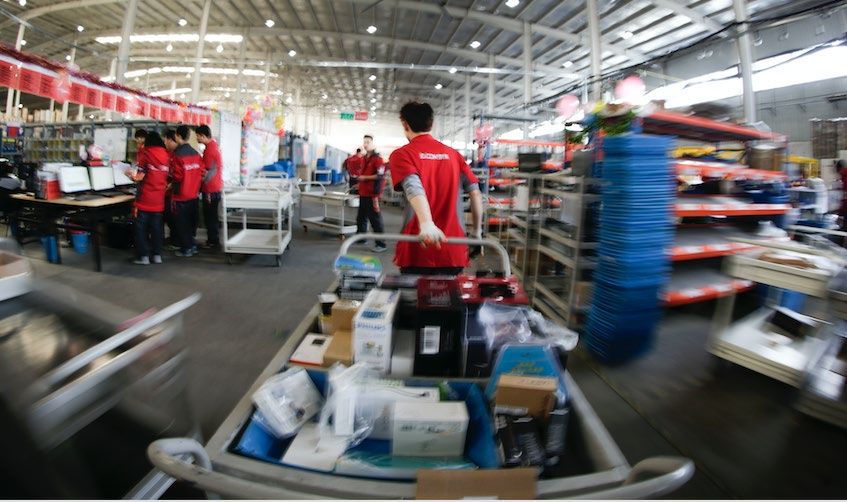
Investment Strategy:

       KEMQ                                KEMQ seeks to track the Solactive Emerging Markets Consumer Technology Index. The Index selects companies from 26 eligible
                                           countries within emerging markets whose primary business or businesses are internet retail, internet software/services, purchase,
KraneShares                                payment processing, or software for internet and E-Commerce transactions.
Emerging Markets                           Emerging Markets Consumer Technology Highlights:
Consumer Technology
ETF                                        •   Internet adoption is expanding rapidly within emerging markets at the same time that domestic consumption and retail sales are
                                               steadily increasing and frequently taking place online.

                                           •   According to a study from the Brookings Institution, middle class consumption could reach 50% of total global consumption by the
                                               year 2030, more than doubling from 20151.

                                           •   We believe the growth of internet adoption within emerging markets is a long term secular theme that may continue to play out over
                                               the course of decades.

                                           KEMQ features:

                                           •   Access to emerging market internet companies that provide similar services as Google, Facebook, PayPal, Amazon, etc.

                                           •   Exposure to companies that stand to benefit from increasing domestic consumption by emerging markets' growing middle class

                                           •   Exposure to emerging market companies facilitating mobile E-Commerce sales

1.   Homi Kharas, “The Unprecedented Expansion of the Global Middle Class” Brookings Institution, February 2017, retrieved 12/31/2019.                                              3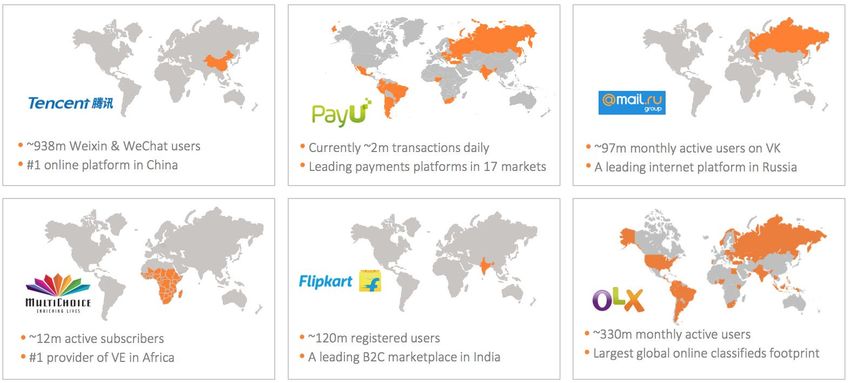
Transformational growth in emerging markets is driven by the “Three P’s”

          Population                     Penetration                       Performance
    The middle class consumer in   Internet adoption is the catalyst   Technology firms across the
    Emerging Markets will drive    for rapid innovation, and           emerging markets are taking
    global demand.                 facilitates “leapfrogging”.         global leadership positions.

                                                                                                      4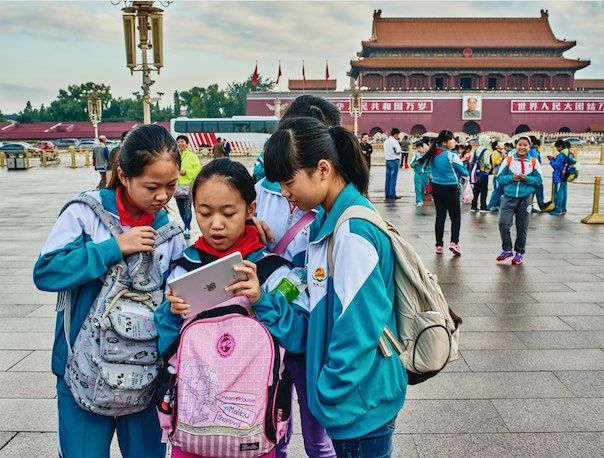
World Bank 2018 GDP, by PPP
                                                                            Ranking        Economy                            (millions of international dollars)
                                                                      CHN              1   China                                                      25,361,744
                                                                      USA              2   United States                                              20,494,100
Emerging markets represent a huge consumer                            IND              3   India                                                      10,498,468

market opportunity.                                                   JPN              4   Japan                                                       5,484,951
                                                                      DEU              5   Germany                                                     4,505,236

•    In order to fairly compare the consumption power of              RUS              6   Russian Federation                                          3,986,064
                                                                      IDN              7   Indonesia                                                   3,494,762
     different economies we use purchasing power parity (PPP)
                                                                      BRA              8   Brazil                                                      3,365,757

•    In terms of PPP, the top 25 economies by GDP represent           GBR              9   United Kingdom                                              3,074,432
                                                                      FRA             10   France                                                      3,073,179
     79% of the global economy1
                                                                      ITA             11   Italy                                                       2,542,974

•    60% of these economies (or 15 out of 25 numerically) are         MEX             12   Mexico                                                      2,519,962
                                                                      TUR             13   Turkey                                                      2,372,087
     considered emerging markets1
                                                                      KOR             14   Korea, Rep.                                                 2,090,161
•    According to the World Bank, emerging markets represent          ESP             15   Spain                                                       1,908,879

     a population of 4.5 billion people who spend $5 trillion a       SAU             16   Saudi Arabia                                                1,857,538
                                                                      CAN             17   Canada                                                      1,774,034
     year2
                                                                      THA             18   Thailand                                                    1,320,373
                                                                      AUS             19   Australia                                                   1,288,228
                                                                      POL             20   Poland                                                      1,228,854
                                                                      EGY             21   Egypt, Arab Rep.                                            1,219,510
                                                                      PAK             22   Pakistan                                                    1,176,498
                                                                      NGA             23   Nigeria                                                     1,171,387
1.   Data from the World Bank as of 12/31/2019.
                                                                      MYS             24   Malaysia                                                      999,405
2.   “The World Bank’s Global Consumption Database” The World Bank,
     retrieved 12/31/2019.                                            NLD             25   Netherlands                                                   978,240

                                                                                                                                                                5
According to a study from the Brookings Institution, middle class consumption could reach 50% of total global
consumption by the year 2030, more than doubling from 2015.
                                         Middle Class Consumption – Top 10 Countries (billions of 2011 PPP$ and global share)

                                       2015                                                 2020                                                   2030

          1    United States                  4.7            13%    China                          6.8             16%     China                          14.3   22%

          2    China                          4.2            12%    United States                  4.7             11%     India                          10.7   17%

          3    Japan                          2.1             6%    India                          3.7               9%    United States                   4.7   7%

          4    India                          1.9             5%    Japan                          2.1               5%    Indonesia                       2.4   4%

          5    Russia                         1.5             4%    Russia                         1.6               4%    Japan                           2.1   3%

          6    Germany                        1.5             4%    Germany                        1.5               4%    Russia                          1.6   3%

          7    Brazil                         1.2             3%    Indonesia                      1.3               3%    Germany                         1.5   2%

          8    UK                             1.1             3%    Brazil                         1.2               3%    Mexico                          1.3   2%

          9    France                         1.1             3%    UK                             1.2               3%    Brazil                          1.3   2%

          10   Italy                          0.9             3%    France                         1.1               3%    UK                              1.2   2%

               Emerging market total                         24%    Emerging market total                          35%     Emerging market total                 50%

                           Homi Kharas, “The Unprecedented Expansion of the Global Middle Class” Brookings Institution, February 2017, retrieved 12/31/2019            6
The rise of consumer technology goes beyond China to broader emerging markets as more of the developing
world gets internet access for the first time.
Internet penetration rates vary across emerging markets creating distinct Within major emerging market countries, internet usage has grown by an
growth profiles for each country average of 20% a year
Internet adoption after reaching 50% penetration Country by country number of internet users and average growth rate
20 since 2000
South Korea 800 35%
Number of years since achieving 50% internet
18
700 30%
Internet Users (millions)
16
600
Average Growth Rate
14 25%
500
12 Poland 20%
400
penetration
10 15%
300
8 Argentina
10%
200
South Africa
6 Russia 5%
China 100
Brazil
4 0 0%
2
0
50% 55% 60% 65% 70% 75% 80% 85% 90% 95% 100%
Internet Users % of Pop Trendline Internet Users (millions) Average internet user growth rate since 2000
Data from the World Bank as of 12/31/2017, retrieved on 12/31/2019. 7
For the majority of the developing world, smart phones provide the first point of internet access, bypassing
traditional computers.
                                                                                                      The proliferation of low cost smart phones across emerging
                           Mobile-cellular telephone subscriptions                                    markets, like the Mi Max 2 from Xiaomi pictured below, has
                                                                                                      meant much of the developing population is gaining access to
                                   2000                     2018               Growth multiple        the internet for the first time via smart phones.

 India                                 3,577,095            1,176,021,869                     329x

 Russia                                3,263,200              229,431,008                      70x

 China                                85,260,000            1,641,147,000                      19x

 South Africa                          8,339,000               88,566,977                      11x

 Brazil                               23,188,171              207,046,810                        9x

 Argentina                             6,487,950               58,598,041                        9x

 Malaysia                              5,121,748               42,413,400                        8x

 Poland                                6,747,000               51,098,747                        8x

 South Korea                          26,816,398               66,355,778                        2x

Source: International Telecommunications Union statistics database as of 12/31/2018. Retrieved on
12/31/2019.
ITU is the United Nations specialized agency for information and communication technologies. Data
includes pay-as-you-go and contract renewals
                                                                                                                                                                     8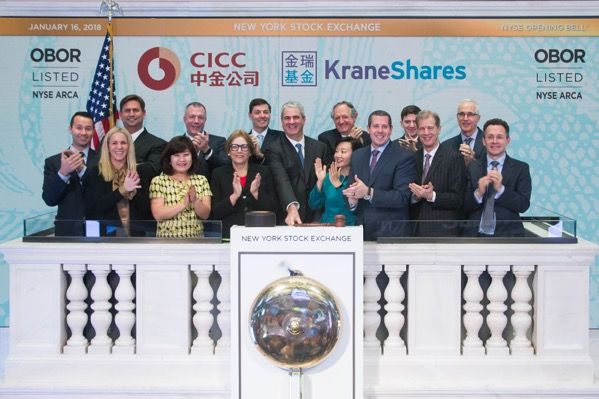
China’s rapid adoption of new technologies has produced a “leapfrogging” effect.

                           Payment                                                       Commerce

  Cash          Checking              Credit        Mobile Pay    Local Market         Big Box Retailer   E-Commerce

                     Transportation                                                         Healthcare

  Taxi                                                            Local Medical Care         Hospitals      E-Health
                 Car Ownership           App-Based Ride Sharing

                                                                                                                       9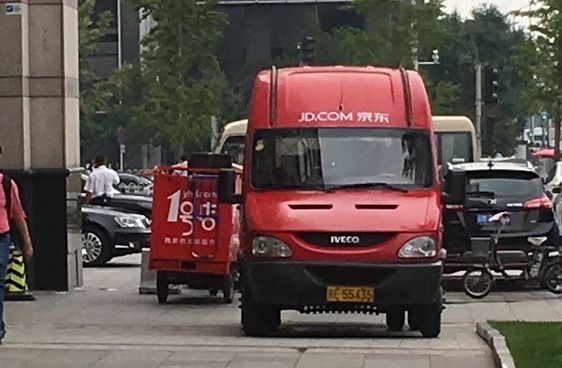
Money and the internet have become virtually inseparable.
Apps like Tencent’s WeChat and Alibaba’s Alipay allow users to do everything from buy a coffee, hail a cab, to make investments in
wealth management products, all from a smart phone.

 WeChat users can invest in mutual funds through the same app
 they use for social media.

                                                                                                                                     10
Through our experience investing in the Chinese markets we identified three core themes:
• Internet adoption is expanding rapidly within China
• Domestic consumption and retail sales are steadily increasing and frequently taking place online
• The China E-Commerce sector has consistently outperformed the broader Chinese markets
Value of Monthly China Retail Sales Index
(12/31/2009 - 12/31/2019)
4000 China / US Internet Statistics China US
Total internet population 854mm1 294mm2
3500
Index Value (CNY Billions)
% of population with internet access 61.2%1 89.5%2
3000
Country’s share of world internet users 23.4%2 8.1%2
2500
E-Commerce market size 2018 $1.3T3 $513.6B4
2000
Total retail sales 2018 $5.5T3 $5.3T4
1500
% of online retail sales 2018 23.6%3 9.7%4
1000
2017-2018 growth online sales 23.9%3 14.2%4
500
1. CNNIC, The 44th Statistical Report on the Development of China’s Internet, 8/31/2019.
2. Data from Pew Research Center, World Bank, and US Census Bureau as of 6/30/2019. Retrieved 12/31/2019.
3. National Bureau of Statistics in China, “National Economic Performance Maintained within an Appropriate Range in 2018
Chart data from Bloomberg as of 12/31/2019, retrieved 12/31/2019. with Main Development Goals Achieved” 1/21/2019. Note: Figures converted from Chinese Renminbi to USD as of
China Retail Sales Index: Retail sales (also referred to as retail trade) tracks the resale of new and used goods to the general 12/31/2018.
public, for personal or household consumption. This concept is based on the value of goods sold. 4. U.S. Department of Commerce, “Quarterly Retail E-commerce Sales 4th Quarter 2018” 3/13/2019.
11Through our trips to China we saw the proliferation of e-commerce firsthand.
Over 50 billion packages were delivered in China in 2018, an increase of 26% from the previous year1.
JD.com warehouse employees prepare same-day delivery JD.com owns its own logistics network and has a fleet of delivery vehicles
around China
1www.xinhua.net “China's express delivery sector expands fast in 2018”, 1/6/2019. Retrieved 9/30/2019. 12China is Rapidly Becoming A Global Internet Services Leader
2013 2019 Potential Future IPOs
Top 10 Global Internet Companies Top 10 Global Internet Companies
Top 10 Private Companies3
By Market Cap1 By Market Cap2
Alphabet $374.4B Alphabet Inc $972.9B Toutiao (Bytedance) $75.0B
Amazon $182.5B Amazon.com $943.2B Didi Chuxing $56.0B
Facebook $138.8B Facebook Inc $612.2B JUUL Labs $50.0B
Tencent $118.7B Alibaba Group $569.9B SpaceX $33.3B
Ebay $71.0B Tencent $469.3B Stripe $35.3B
Baidu $62.3B Netflix Inc $141.8B Airbnb $35.0B
Naspers Ltd $43.4B Paypal $127.0B Kuaishou $18.0B
Yahoo $41.0B Naspers Ltd $71.4B One97 Communications $16.0B
Twitter $36.1B Baidu Inc $43.8B Epic Games $15.0B
Salesforce $33.3B Netease Inc $39.2B DJI Innovations $15.0B
Total $1.10T Total $3.99T Total $348.6B
1. Data from Bloomberg as of 12/31/2013. Retrieved on 12/31/2019.
2. Data from Bloomberg as of 12/31/2019. Retrieved on 12/31/2019.
3. Data from CB Insights as of December 2019. Retrieved on 12/31/2019. 13The Alibaba Ecosystem
China Domestic Marketplaces Global Marketplaces
1688.com Tmall.com
(B2B Ecommerce Marketplace) (B2C Online Retail Platform) AliExpress Taobao
(Global B2B Marketplace) (Global C2C E-commerce Website)
Cainiao Alimama
(E-commerce Logistics Platform) (Online Advertising Platform)
Ant Financial
(Mobile and Online Payments Platform)
Other Business Ventures
Alibaba Cloud
(Cloud Computing Services
Provider to Online Businesses)
Jack Ma (Alibaba Founder)
14Historically, Alibaba has consistently outperformed Amazon in terms of revenue growth and profit margins.
YoY Revenue Growth Profit Margins
90% 80%
80%
60%
70%
40%
60%
20%
50%
40% 0%
30% -20%
20%
-40%
10%
-60%
0%
1997
1998
1999
2000
2001
2002
2003
2004
2005
2006
2007
2008
2009
2010
2011
2012
2013
2014
2015
2016
2017
2018
2011 2012 2013 2014 2015 2016 2017 2018
Alibaba Amazon Alibaba Amazon
Data from Bloomberg as of 12/31/2018. Retrieved on 12/31/2019.
Past performance does not guarantee future results.
15Naspers is a global internet and entertainment group that has grown into one of the largest technology investors in the world.
The company’s investments span the globe and are organized into six business areas: Classifieds, Payments, B2C E-Commerce,
Ventures, Video Entertainment, and Media¹.
Naspers has invested in technology companies across the developing world
• Naspers was founded in South Africa in
1915 as a publisher and printer of
magazines.
• Naspers has become one of the world’s
leading technology investors.
• Naspers owned 31.16% of Tencent
• Naspers also has a stake in significant
publicly traded companies like Mail.ru
and private investments such as Indian
E-Commerce company Flipkart.
Source: Naspers, “Financial results presentation for the year ended 31 March 2018”, retrieved 12/31/2019. 16In order to deliver a precise representation of the emerging markets consumer technology opportunity, we
worked with Solactive to develop the Solactive Emerging Markets Consumer Technology Index.
Filtering Process
for Index Constituent Selection
26 eligible countries: Argentina, Brazil, Chile, Colombia, Mexico, Peru, Puerto Rico, Cyprus, Czech Republic,
Country Eligibility Egypt, Greece, Hungary, Poland, Qatar, Russia, South Africa, Turkey, United Arab Emirates, China, India,
Indonesia, South Korea, Malaysia, The Philippines, Taiwan, Thailand
Minimum 3 month average daily trading volume of $1 million USD
Stock Size & Trading Minimums Minimum Market Cap of 1 billion USD
Select companies from Internet Retail and Internet Software/Services sub-sector and micro-sectors involved in the
Industry & Sub-sector Selection purchase, payment processing, and software for internet and e-commerce transactions
Ensure Proper
To mitigate exposure to any one company, constituents are capped at 3%.
Diversification
KEMQ
KraneShares seeks to minimize tracking error and trading costs
Diversification does not ensure a profit or guarantee against a loss. 17Capturing the performance of the EM consumer/technology sector can be complicated.
• In the past, E-Commerce and internet platforms were classified by Global Industry Classification Standards (GICS) as information technology (IT) companies.
• However, as this sector evolved, it ended up grouping social media platforms, E-Commerce, gaming, and internet companies with chip-makers and hardware companies.
• In October 2018, GICS underwent a major reclassification to resolve this issue. Information technology was left with mostly hardware companies, while E-Commerce and
internet platforms were split between two other sectors: consumer discretionary and communication services (formerly telecommunication services).
• For instance, Alibaba and Mercado Libre were shifted to the consumer discretionary sector, while internet platforms, such as Baidu and Naver, were classified as
communication services companies.
Weight of Select Sectors within the MSCI EM Index Weight of Select Sectors within KEMQ
Before and After Reclassification Before and After Reclassification
50% Communication Services
100%
Communication Services Communication
45% 5% 11% 90% Services
Consumer
40% 80% Discretionary
4%
Communication
35% Consumer 70% 30% Services
Discretionary
57%
% Weight
30% 60%
% Weight
10%
25% Consumer 50%
Discretionary
20% 14% 40% Information
Information Consumer
15% Technology 30% Technology
Information 61% Information Discretionary
10% 28% 20% Technology 30%
Technology
5% 16% 10% 10%
0% 0%
Before Reclassification After Reclassification Before Reclassification After Reclassification
Information Technology Consumer Discretionary Communication Services Information Technology Consumer Discretionary Communication Services
Data from MSCI and Bloomberg as of 12/31/2019. 18EM consumer/technology outperformed developed and emerging markets.
• In order to show the historical performance of the EM consumer/technology sectors within the MSCI EM Index, we combined the Index’s information technology, consumer
discretionary, and communication services sectors. We used the sectors’ pre- and post-GICS reclassification weightings pictured in slide 15.
• We found that EM consumer/technology outperformed both broad emerging markets and developed markets since the end of the recession, returning 377% against a
return of 281% for the MSCI World Index and 170% for the MSCI Emerging Markets Index.
EM Consumer/Technology vs. MSCI EM Index and MSCI World Index
60,000 GICS Reclassification
55,000
50,000
Growth of 10,000 units
45,000
40,000
35,000
30,000
25,000
20,000
15,000
10,000
MSCI Emerging Markets Index MSCI World Index EM Consumer/Technology
Data from Bloomberg as of 12/31/2019. See slide 27 for index definitions. Index returns are for illustrative purposes only. Indexes are unmanaged and one cannot invest directly in an
index. Index returns do not reflect fees or other costs associated with investing. Past performance does not guarantee future returns.
19KEMQ offers greater exposure to growth-oriented sectors than the MSCI Emerging Markets Index.
100% MSCI EM 100% KEMQ
Health Consumer
Real Estate Health Care Financials
Care Staples
Consumer 3% 3% 1%
1% 1%
Weight of Growth and Value-Oriented Sectors
Information
Staples Technology
6% 10% 75% MSCI 50% MSCI 25% MSCI
100% 100%
Communication EM / EM / EM /
MSCI EM KEMQ
Services 25% KEMQ 50% KEMQ 75% KEMQ
11% Financials
24%
Growth-
Oriented 53% 65% 76% 88% 99%
Consumer
Communication Sectors
Consumer Energy Discretionary
Services
Discretionary 7% 30%
57%
14%
Value-
Materials Oriented 47% 35% 24% 12% 1%
7% Sectors
Information Industrials
Technology Utilities 5%
16% 3%
Value-Oriented Sectors
Data from Bloomberg as of 12/31/2019. Excluding cash. Due to rounding, may not add up to 100%. See slide 27 for index definitions.
20Our index filtering process also results in a very different country breakdown than traditional emerging markets.
KEMQ Country Breakdown Country Breakdown
KEMQ vs. MSCI Emerging Markets
Brazil
9.92% 45%
Greece 40%
5.01% South Africa
3.93% 35%
Argentina 30%
South Korea 3.27% 25%
%
20.67% 20%
Poland
3.23% 15%
Malaysia 10%
3.16% 5%
Russia 0%
China 2.71%
39.50%
Others*
9.12%
KEMQ MSCI EM
Data from Bloomberg as of 12/31/2019. See page 27 for index definitions
*Others includes Mexico, Thailand, Taiwan, Puerto Rico, India, and Cyprus
**Others includes Indonesia, Philippines, Chile, Colombia, Peru, Saudi Arabia, Qatar, United Arab Emirates, Egypt, Pakistan, Turkey, Hungary, and Czech Republic 21KEMQ holds significantly fewer state-owned enterprises (SOEs) than the broader MSCI Emerging Markets
Index.
MSCI Emerging Markets KEMQ
SOEs
2%
SOEs
26%
Non-
SOEs Non-
74% SOEs
98%
Data from Callan and Factset as of 12/31/2019. See slide 27 for index definitions. State-Owned Enterprises as defined by MSCI are companies whose largest shareholder is a
government entity or whose government ownership is over 20%. 22Emerging market internet companies around the world
23The KraneShares Emerging Markets Consumer Technology ETF (Ticker: KEMQ) tracks a variety of companies throughout key emerging market countries.
Top countries and
Top Holdings in country Weight Company Logo Company description
weight within KEMQ
New Oriental Education & Technology Group, Inc. offers educational services. The Company offers foreign language training, test preparation courses for
NEW ORIENTAL
China 39.50% 3.31% admissions and assessment tests in the United States, the PRC and Commonwealth countries, primary and secondary school education, development
EDU-SP ADR and distribution of educational content, software and other technology, and online classes.
NAVER Corporation provides Internet site with web portal services, such as search engine, online game, and content development. The Company also
South
20.67% NAVER CORP 3.72% offers online marketing service through banner advertisement and e-commerce services. The company owns the popular Line app, which is used
Korea
primarily used in Japan and South Korea but also present in over 230 countries worldwide. Line offers services similar to WhatsApp and WeChat
B2W Companhia Digital is an e-commerce company. The Company offers technology, logistics, distribution, customer service, and consumer financing
Brazil 9.92% B2W CIA DIGITAL 2.48%
services.
MercadoLibre Inc. operates an online trading site for the Latin American markets. The Company's website allows businesses and individuals to list items
Argentina 3.27% MERCADOLIBRE INC 3.27% and conduct sales and purchases online in either a fixed-price or auction format. MercadoLibre offers classified advertisements for motor vehicles,
vessels, aircraft, real estate and services, and offers online payment services.
Telekom Malaysia Berhad establishes, provides, and maintains telecommunication and related services. Through its subsidiaries, the Company provides
Malaysia 3.16% TELEKOM MALAYSIA BHD 2.43% payphone network, mobile telecommunication, public telephone, and leasing of optical fiber telecommunication system services. Telekom also manages
and operates Kuala Lumpur Tower and provides intelligent security services
Cyfrowy Polsat, S.A. offers broadcast satellite subscription television services and mobile telephony in Eastern and Central Europe. The Company
Poland 3.23% CYFROWY POLSAT SA 2.47%
distributes signal decoders and offers a variety of television and radio channels.
Mail.Ru Group Ltd. offers Internet access services in Russia. The Company also operates social networking websites, instant messaging networks, an
Russia 2.71% MAIL.RU GROUP 2.71%
email service, and an online games company.
Wistron NeWeb Corporation manufactures wireless communication systems. The Company's products include satellite communication, wireless
Taiwan 2.23% WISTRON NEWEB CORP 0.74%
networking, embedded antenna, and mobile handset products.
As a holding company, Naspers mainly grows through acquisitions and equity stakes in companies in emerging markets. It also plans to focus on
South
3.93% NASPERS LTD 3.93% investment in technology; the company has worked to upgrade and improve its subscriber and user platforms by investing in e-commerce transaction
Africa
platforms and instant-messaging communication.
Data is for informational purposes only and does not represent the ETF. Sector and country weightings from Bloomberg as of 12/31/2019. Company descriptions from Bloomberg as of 12/31/2019. See page 21 for top 10 holdings.
24Fund Details As of 12/31/2019 Top Ten Holdings as of 12/31/2019 % of
The Fund’s Holdings Are Subject to Change. Fund
Primary Exchange NYSE
NASPERS LTD-N SHS 3.93
KraneShares Emerging Markets Cusip 500767876 NAVER CORP 3.72
Consumer Technology ETF (NYSE: KEMQ) Total Annual Fund Operating
Gross: 0.80% TENCENT HOLDINGS LTD 3.71
Expense
Investment Strategy:
BAIDU INC - SPON ADR 3.65
KEMQ seeks to track the Solactive Emerging Markets Inception Date 10/11/2017
Consumer Technology Index. The Index selects companies JD.COM INC-ADR 3.54
from 26 eligible countries within emerging markets whose Distribution Frequency Semiannually
primary business or businesses are internet retail, internet TRIP.COM GROUP LTD 3.49
software/services, purchase, payment processing, or software Solactive Emerging Markets ALIBABA GROUP HOLDING-SP ADR 3.42
Index Name
for internet and E-Commerce transactions. Consumer Technology Index
NEW ORIENTAL EDUCATIO-SP ADR 3.31
Index Ticker Bloomberg: SOLEMCT
MERCADOLIBRE INC 3.27
Number of Holdings (ex Cash) 50 NETEASE INC-ADR 3.24
KEMQ Performance History as of 12/31/2019
Cumulative % Average Annualized %
3 Mo 6 Mo Since Inception 1 Yr 3 Yr Since Inception
Fund NAV 12.47% 8.52% -2.24% 27.69% – -1.02%
Closing Price 12.82% 8.84% -2.52% 27.72% – -1.14%
Index 12.37% 8.94% 1.05% 29.10% – 0.47%
The performance data quoted represents past performance. Past performance does not guarantee future results. The investment return and principal value of an investment will fluctuate so that an
investor's shares, when sold or redeemed, may be worth more or less than their original cost and current performance may be lower or higher than the performance quoted. For performance data
current to the most recent month end, please visit www.kraneshares.com
Index returns are for illustrative purposes only. Index performance returns do not reflect any management fees, transaction costs or expenses. Indexes are unmanaged and one cannot invest directly
in an index.
25Key Takeaways
• Our China experience has allowed us to identify and deliver
extraordinary opportunities across emerging markets
• The three P’s will shape buying behavior for decades to come
o Population: The middle class consumer
o Penetration: Rapid internet adoption
o Performance: The growth of technology platforms
• Many of the themes and opportunities that we observe in China
extend across the Emerging Markets and include the
consumer, technology, healthcare, the environment and
electric vehicles
26Index Definitions:
CSI Overseas China Internet Index: Represents the Chinese internet companies listed in overseas markets (New York and Hong Kong), in order to
measure the performance of the Chinese internet companies listed outside mainland China.
MSCI China Index: The MSCI China Index captures large and mid cap representation across China H shares, B shares, Red chips and P chips.
The MSCI Emerging Markets Index: Captures large and mid cap representation across 23 Emerging Markets (EM) countries.
MSCI World Index: The MSCI World Index is a free-float weighted equity index. It was developed with a base value of 100 as of December 31, 1969. The
index includes developed world markets and does not include emerging markets.
The Solactive Emerging Markets Consumer Technology Index: The Solactive Emerging Markets Consumer Technology Index selects companies from
26 eligible countries within emerging markets whose primary business or businesses are internet retail, internet software/services, purchase,
payment processing, or software for internet and E-Commerce transact.
The S&P 500 Index: The S&P 500 Index is an American stock market index based on the market capitalization of the 500 largest companies having
common stock listed on the NYSE or NASDAQ.
Term Definitions:
Purchasing Power Parity (PPP): is an economic theory that compares different countries' currencies through a market "basket of goods" approach.
According to this concept, two currencies are in equilibrium or at par when a market basket of goods (taking into account the exchange rate) is priced
the same in both countries.
27Important Notes
Carefully consider the Funds’ investment objectives, risk factors, charges and expenses before investing. This and additional information can be
found in the Funds‘ full and summary prospectus, which may be obtained by visiting www.kraneshares.com. Read the prospectus carefully before
investing.
ETF shares are not redeemable with the issuing fund other than in large Creation Unit aggregations. Instead, investors must buy or sell ETF Shares in
the secondary market with the assistance of a stockbroker. In doing so, the investor may incur brokerage commissions and may pay more than net
asset value (NAV) when buying and receive less than net asset value when selling. The NAV of the Fund’s shares is calculated each day the national
securities exchanges are open for trading as of the close of regular trading on the New York Stock Exchange (“NYSE”), normally 4:00 P.M. Eastern time
(the “NAV Calculation Time”). Shares are bought and sold at market price not NAV. Closing price returns are based on the midpoint of the bid/ask
spread at 4:00 P.M. Eastern Time (when NAV is normally determined).
Narrowly focused investments typically exhibit higher volatility. The ability of the Emerging Markets Consumer Technology Index ETF to achieve its
investment objective is dependent, in part, on the continuous availability of A Shares and the ability to obtain, if necessary, additional A Shares quota.
The fund may invest in derivatives, which are often more volatile than other investments and may magnify the Fund's gains or losses. The Fund may
engage in securities lending. The Fund is non-diversified.
Investing involves risk, including possible loss of principal. There can be no assurance that a Fund will achieve its stated objectives. The Funds are
subject to political, social or economic instability within China which may cause decline in value. Fluctuations in currency of foreign countries may
have an adverse effect to domestic currency values. Emerging markets involve heightened risk related to the same factors as well as increase volatility
and lower trading volume.
Although the information provided in this document has been obtained from sources which Krane Funds Advisors, LLC believes to be reliable, it does
not guarantee accuracy of such information and such information may be incomplete or condensed.
The KraneShares ETFs are distributed by SEI Investments Distribution Company (SIDCO), which is not affiliated with Krane Funds Advisors, LLC, the
Investment Adviser for the Fund.
28Although Krane Funds Advisors LLC and its affiliates (“Krane”) shall obtain data from sources that Krane considers reliable, all data contained herein
is provided “as is” and Krane makes no representation or warranty of any kind, either express or implied, with respect to such data, the timeliness
thereof, the results to be obtained by the use thereof or any other matter. Krane expressly disclaims any and all implied warranties, including without
limitation, warranties of originality, accuracy, completeness, timeliness, non-infringement, merchantability and fitness for a particular purpose.
Forward-looking statements (including Krane’s opinions, expectations, beliefs, plans, objectives, assumptions, or projections regarding future events
or future results) contained in this presentation are based on a variety of estimates and assumptions by Krane. These statements generally are
identified by words such as “believes,” “expects,” “predicts,” “intends,” “projects,” “plans,” “estimates,” “aims,” “foresees,” “anticipates,” “targets,”
“should,” “likely,” and similar expressions. These also include statements about the future, including what “will” happen, which reflect Krane’s
current beliefs. These estimates and assumptions are inherently uncertain and are subject to numerous business, industry, market, regulatory, geo-
political, competitive, and financial risks that are outside of Krane’s control. The inclusion of forward-looking statements herein should not be
regarded as an indication that Krane considers forward-looking statements to be a reliable prediction of future events and forward-looking
statements should not be relied upon as such. Neither Krane nor any of its representatives has made or makes any representation to any person
regarding forward-looking statements and neither of them intends to update or otherwise revise such forward-looking statements to reflect
circumstances existing after the date when made or to reflect the occurrence of future events, even in the event that any or all of the assumptions
underlying such forward-looking statements are later shown to be in error. Any investment strategies discussed herein are as of the date of the
writing of this presentation and may be changed, modified, or exited at any time without notice.
This material represents an assessment of the market environment at a specific point in time and is not intended to be a forecast of future events, or
a guarantee of future results. This information should not be relied upon by the reader as research or investment advice regarding the funds or any
stock in particular. [R_US_KS_SEI]
29You can also read


