Organic Cotton Crop Guide - A manual for practitioners in the tropics Frank Eyhorn, Saro G. Ratter, Mahesh Ramakrishnan
←
→
Page content transcription
If your browser does not render page correctly, please read the page content below
Organic Cotton
               Crop Guide

               A manual for practitioners in the tropics
               Frank Eyhorn, Saro G. Ratter,
               Mahesh Ramakrishnan
2005 Edition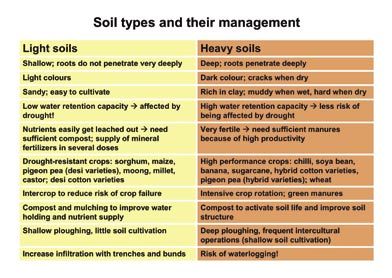
Publisher:
Research Institute of Organic Agriculture (FiBL), All of the statements, results, etc. contained in
Ackerstrasse, P.O. Box, CH-5070 Frick, Switzerland, this book have been compiled by the authors
Tel. +41 62 865 72 72, Fax +41 62 865 72 73, according to their best knowledge and have been
info.suisse@fibl.org, www.fibl.org scrupulously checked by the Research Institute of
Organic Agriculture (FiBL). However, the possibility
In cooperation with: of mistakes cannot be ruled out entirely. Therefore,
Swiss Agency for Development and Cooperation the editors and the authors are not subject to any
(SDC), www.deza.admin.ch obligation and make no guarantees whatsoever
World Wide Fund for Nature (WWF), Switzerland, regarding any of the statements etc. in this work;
www.wwf.ch neither do they accept responsibility or liability for
Remei AG, Switzerland, www.remei.ch / Maikaal any possible mistakes contained therein.
bioRe (India) Ltd.
International Competence Centre for Organic
Agriculture (ICCOA), India, www.iccoa.org
Distribution:
Copies and free downloads of this volume and of its
Hindi translation are available from the International
Competence Centre for Organic Agriculture (ICCOA),
951 C, 15th Cross, 8th Main, Ideal Homes Township,
Rajarajeshwari Nagar, Bangalore - 560 098, India,
Tel. +91- 80-57682830, Fax +91-80-28601183,
info@iccoa.org, www.iccoa.org
Copies of this volume can be ordered at FiBL also for
the price of CHF 9.00/Euro 6 plus shipping costs (or-
der number 1388), or are available as free download
from www.shop.fibl.org .
Authors:
Frank Eyhorn (FiBL), Saro G. Ratter (BioSim),
Mahesh Ramakrishnan (ICCOA)
Photos:
If not indicated otherwise by Frank Eyhorn (FiBL);
cover pictures: Frank Eyhorn
English review:
Christopher Hay (Ecotranslator, Germany)
Layout:
Claudia Kirchgraber (FiBL)
Printed by:
Impressions, Bangalore, India
The publication was realized with support of:
Swiss Agency for Development and Cooperation
(SDC)
World Wide Fund for Nature (WWF), Switzerland
© 2005, Research Institute of
Organic Agriculture FiBL
Any reproduction in full or in part of this publication
must identify the title of the report and FiBL as the
publisher.
Frank Eyhorn, Saro G. Ratter, Mahesh Ramakrishnan
(2005): Organic Cotton Crop Guide. 1st Edition.
Research Institute of Organic Agriculture FiBL, Frick,
Switzerland
ISBN 3-906081-67-2
Organic Cotton Crop Guide
Research Institute of Organic Agriculture

Organic Cotton
Crop Guide
A manual for practitioners in the tropics
Frank Eyhorn, Saro G. Ratter,
Mahesh Ramakrishnan

 Organic Cotton Crop Guide                                               1
Acknowledgment of contributions
The development of this guide is a
collaborative effort to which many people
have contributed. Special thanks go to the
following people and institutions:
Maikaal bioRe (India) Ltd., especially Rajeev
Baruah, Ritu Baruah and V. Tiwari, who
opened their doors to the research project
and provided all required support and
information.
The team members of Maikaal bioRe who
worked on this manual from the concept up
to the review. Special thanks go to Shriram
Vishwakarma, Ishwar Patidar, Yogendra
Shrivas, Dharmendra Singh Mandloi, Ashok
Singh Chouhan, Rajeev Verma, Jitendra Vyas,
Dinesh Tripati, and Sukhdev Gir. This manual
is based largely on their experience and
knowledge.
The Research Team of Maikaal bioRe:
Prashant .V. Tekade, Lokendra Singh
Chouhan, Gajendra Singh Chouhan,
Raghuvir Singh Mandloi.
Jens Soth (Helvetas) for the review of the
manual and for providing photos.
Remei AG, Switzerland, for information and
support.
The Steering Group of the Maikaal Research
Project: Patrick Hohmann (Remei AG), Dr.
Walter Wagner (WWF), Dr. Urs Heierli (msd
consulting), for providing guidance and
feedback.
The Maikaal bioRe Team The Maikaal Research Team
The guide has been developed and produced
within a research project funded by:
Swiss Agency for Development and
Cooperation (SDC)
World Wide Fund for Nature (WWF),
Switzerland
2 Organic Cotton Crop Guide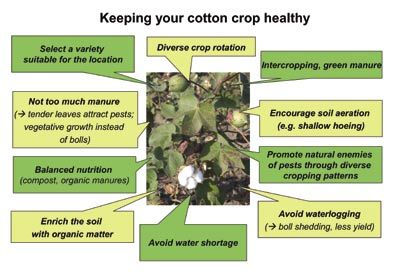
Contents

1       Introduction                           4    6      Soil Cultivation and Weed
1.1     About this guide                       4           Management                          44
1.2     Why organic cotton?                    5    6.1    Preparing the field                 44
1.3     Growing organic cotton – A system           6.2    Sowing                              44
        approach                               6    6.3    Weed management                     45
1.4     Organic standards                      7
1.5     Bio-dynamic farming                    8    7      Water Management                    46
1.6     Inspection and certification           8    7.1    Irrigation in cotton cultivation    46
1.7     Organic cotton and Fair Trade          9    7.2    Water harvesting and saving         46
                                                    7.3    Drip irrigation                     47
2       Cotton                                 10
2.1     The importance of cotton               10   8      Harvest and Post-Harvest
2.2     Requirements of the cotton crop        10          Operations                          48
2.3     Selecting the right cotton varieties   12   8.1    Quality issues in cotton picking    48
                                                    8.2    Storage                             48
3       Soil Fertility Management              14   8.3    Processing and trade                48
3.1     Soil properties                        14
3.2     The importance of soil organic              9      Farm Economy                        50
        matter                                 15   9.1    Managing the whole farm
3.3     Crop rotation – rotation crops         15          organically                         50
3.4     Green manures and intercrops           17   9.2    Strategies in cotton production     51
                                                    9.3    The economic performance of
4       Crop Nutrition                         19          organic cotton                      52
4.1     Nutrient requirements                  19   9.4    Monitoring the economic
4.2     Uptake of nutrients                    20          performance                         53
4.3     Application of manures and                  9.5    The conversion process              54
        fertilizers                            21   9.6    The role of women in organic
4.4     Compost                                23          cotton production                   55
4.5     Organic manures                        26
4.6     Natural mineral fertilizers            26   10     Annex                               56
4.7     Liquid fertilizers                     27   10.1   Glossary                            56
4.8     Bio-fertilizers                        27   10.2   Frequently Asked Questions,
4.9     Bio-dynamic preparations               28          and some answers                    58
                                                    10.3   Summary of organic standards
5       Pest and Disease Management            34          requirements relevant for organic
5.1     Keeping your cotton crop healthy       29          cotton farms (based on the EU
5.2     Important cotton pests and their                   Regulation EEC 2092/91)             59
        management                             30   10.4   Useful reading and websites         60
5.2.1   Bollworms and other caterpillars       31   10.5   Organic cotton crop calendar in
5.2.2   Sucking pests                          33          central India                       62
5.2.3   Other pests                            35   10.6   Template for keeping crop records   64
5.3     Preventing pests from becoming a
        problem                                37
5.3.1   Promotion of natural enemies           37
5.3.2   Trap crops                             38
5.3.3   Pheromones                             38
5.3.4   Removing crop residues                 38
5.4     Direct pest management methods         39
5.4.1   Biological control                     39
5.4.2   Natural pesticides                     39
5.4.3   Mass trapping                          42
5.5     Monitoring pests                       42
5.6     Seed treatment                         43
5.7     Diseases                               43

          Organic Cotton Crop Guide                                                                 3
1 Introduction

                               1.1            About this guide

                               This guide was developed as part of the research           The guide aims to provide useful informa-
                               project ‘Growing Organic Cotton Under                   tion and guidance to organic cotton farmers
                               Groundwater Stress: Lessons from the Maikaal            and to extension workers involved in organic
                               bioRe Project’ (project period: 2002–2005).             cotton production on smallholder farms in the
                               The Research Institute of Organic Agricul-              tropics. According to the authors, there is no
                               ture (FiBL), Switzerland, implemented this              one best ‘package of practices’ for organic cot-
                               project in collaboration with the International         ton farming, as the conditions differ from farm
                               Water Management Institute (IWMI), India,               to farm with specific soils, climatic conditions,
                               and Maikaal bioRe (India) Ltd. It is funded by          production facilities, availability of labour, and
                               the Swiss Agency for Development and Coope-             the individual objectives and skills of the far-
                               ration (SDC) and the World Wide Fund for Na-            mer. Therefore, this manual tries to impart an
                               ture (WWF), Switzerland. The information do-            understanding of an organic farming system
                               cumented in this guide is based to a large extent       and to point out the available management op-
                               on the experience and know-how of the Maik-             tions. It is meant to provide a sound basis for
                               aal bioRe extension team. This was complemen-           the farmer’s decision making process and shall
                               ted by experiences with other cotton projects in        serve as a source of ideas for improvements. In
                               India and in Africa and with information avai-          any case, the suitability of the suggested me-
                               lable from literature and the Internet.                 thods in a specific setting needs to be explored
                                                                                       on the respective farms and the methods po-
                                                                                       tentially need to be adapted and further deve-
                                                                                       loped.
                                                                                          The manual can be used for training purpo-
                                                                                       ses in combination with the Organic Cotton
                                                                                       Training Manual, which contains transparency
                                                                                       slides, recommendations for interactive training
                                                                                       elements, and material for group exercises1.
                                                                                          Although this manual is about cotton, rea-
                                                                                       ders need to keep in mind that cotton is only
                                                                                       one crop grown on an organic farm in rotati-
                                                                                       on (or intercropping) with a number of other
                                                                                       crops. These other crops, like pulses, maize,
                                                                                       sorghum, wheat, chillies, vegetables, and su-
                                                                                       garcane, are also important for cash income,
                                                                                       for home consumption or for fodder purpo-
                                                                                       ses. A more general overview of organic crop
                                                                                       production is provided by the IFOAM Training
                                                                                       Manual on Organic Agriculture in the Tropics,
                                                                                       complemented by the IFOAM Training Manual
                                                                                       on Organic Agriculture in Arid and Semi-arid
Training of organic cotton farmers in Kirgistan. (Photo: Helvetas)                     Regions ².

                               1
                                   Free downloads are available at www.shop.fibl.org
                               2
                                   See www.ifoam.org or www.shop.fibl.org

4                                                                                                     Organic Cotton Crop Guide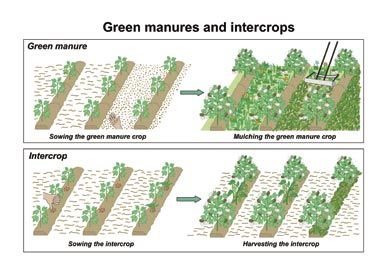
1.2 Why organic cotton?
Organic cotton still only occupies a tiny niche ters the human food
of far less than 1% of global cotton production. chain. We also know
However, the number of farms converting to or- that the pesticides
ganic cotton and the number of projects is con- sprayed on cotton
stantly increasing. At present, organic cotton cul- do not only affect
tivation is reported in the following countries: the target pest. Be-
Africa: Benin, Burkina Faso, Egypt, Mali, neficial insects and
Mozambique, Senegal, Tanzania, Togo, other animals are
Uganda, Zambia, Zimbabwe killed, too, so that
Asia: China, India, Kyrgyzstan, Pakistan pests that formerly
South America: Argentina, Brazil, Nicaragua, were of minor im-
Paraguay, Peru portance now have
Middle East: Turkey, Israel become a major pro-
Europe: Greece blem (for example,
USA whitefly and aphids). In some areas of Andhra
Australia Pradesh the ground water has become so pol-
luted with chemicals that people need to buy
There are a number of reasons to grow cotton their drinking water from outside. In addition,
organically. The negative impacts of conventio- many of the farmers and labourers spraying the
nal cotton farming on the environment and pesticides face health problems that cause them
health are obvious and well known. Some peo- to miss a lot of work and have additional costs
ple may say: «Why should I care about chemi- for medical treatment. There are many cases in
cals in cotton growing? We do not eat cotton.” India where farmers have even died after app-
But if you look at the fact that around 60% of lying chemical pesticides. In the hospital of Wa-
the cotton weight harvest is cotton seed that is rangal, Andhra Pradesh, up to a thousand far-
processed to edible oil and cattle feed, you reali- mers per month are treated because of pesticide Organic seed cotton
ze that the bigger part of cotton production en- intoxication.
Figure 1: Advantages of
growing cotton organi-
cally, as compared to
conventional farming
Organic Cotton Crop Guide 5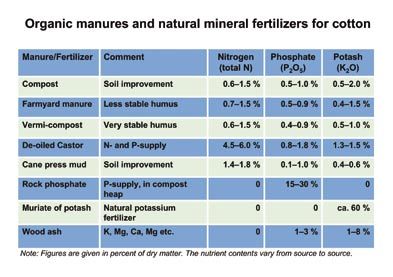
In central India, many conventional farmers Market demand for textiles made from orga-
have faced a decline in soil fertility over the past nic cotton mainly exists in Europe, the USA,
two decades. In some cases the soil got so hard Canada, Japan and Australia (see Chapter 8.3).
that the farmers had to give up groundnut culti- Some large companies become involved with
vation. While cotton yields were on the decline, organic cotton textiles in order to improve their
increasing amounts of fertilizers and pesticides corporate image with respect to environmental
were needed to maintain the crop. Declining and social accountability. The main reasons for
yields and increasing input costs, in combina- consumers to buy textiles made out of organic
tion with the frequent droughts, have left many cotton are:
farmers in a debt trap. To reduce the risk of skin irritation and aller-
When speaking to smallholder organic cot- gies;
ton farmers in developing countries, the follo- To protect the environment from toxic che-
wing motivations are stated as the most impor- micals;
tant ones: To support sustainable agricultural pro-
To improve the fertility of the soil (softer soil, duction in the country where the cotton is
greater absorption of water, better water hol- grown;
ding capacity, healthy crops); To ensure that the farmers in developing
To reduce the production costs and thus the countries receive a fair price.
financial risk;
To get a better price for the cotton (organic A comparison of the impacts of conventional
premium); (‘chemical’) and organic farming on the envi-
To get rid of the negative effects of conventio- ronment, health, soil fertility, the cotton mar-
nal farming: declining yields, resistance of pests ket, and the economy on the farm level is depic-
and diseases, health hazards of chemicals; ted in Figure 1.
To improve the profitability of the farm in
the long run.
1.3 Growing organic cotton – A system approach
Figure 2: Successful orga-
nic cotton farming with a
system approach
Converting a farm to organic production does farming system that also includes the other
not simply mean replacing chemical fertilizers crops. Instead of troubleshooting, organic far-
and pesticides with organic ones. Organic cot- mers should try to prevent problems and avoid
ton must be grown in a diverse and balanced substitutes to conventional inputs as far as pos-
6 Organic Cotton Crop Guide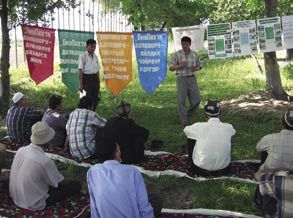
sible. This requires a thorough understanding                           3. Selection of varieties suitable to the condi-
of nutrient and pest management and the abili-                             tions (soil, availability of irrigation, market
ty to continuously observe and learn.                                      requirements);
   To get satisfactory yields and income in or-                         4. Appropriate types and amounts of manures
ganic cotton farming it is necessary to adopt                              at the right time;
a number of integrated measures in a system                             5. Timely crop management such as intercultu-
approach, ensuring that the interaction among                              ral operations, weeding and irrigation;
soil, plants, environment and people is well ba-                        6. Careful monitoring of the crop and sufficient
lanced. The ‘ingredients for success’ all need to                          protection against pests according to the
be applied together (Figure 2):                                            concept of economic threshold level;
1. Suitable measures to improve and maintain                            7. Timely and proper picking of the cotton;
   soil fertility;                                                      8. Sufficient documentation for inspection and
2. Establishment of crop rotation and crop di-                             certification;
   versity; fostering natural balance;                                  9. Capacity building and experimenting for
                                                                           continuous improvement.

1.4         Organic standards
Farmers who wish to sell their produce as ‘orga-                        is mutual trust between producers and consu-
nic’, whether in domestic markets or in export,                         mers. The consumer wants to be sure that the
need to be certified as organic. For this they need                     product is really organically produced. The or-
to strictly follow the national regulations1 and-                       ganic farmer also needs to be protected against
organic standards of the respective target coun-                        unfair competition from other farmers who use
try. For organic cotton to be exported to Europe,                       the term «organic» in a fraudulent way.
the European Regulation on Organic Farming                                 Organic standards define the minimum cri-
(EEC 2092/912) defines the basic requirements                           teria to be fulfilled (e.g. which fertilizers are not
to be fulfilled. Other target markets have their                        permitted), but not necessarily best practices
own standards, e.g. the US (NOP3) and Japan                             (e.g. how much organic manure should be ap-
(JAS4). A premium price is possible only if there                       plied). Important requirements of most organic

                                                                                                                                Figure 3: Important re-
                                                                                                                                quirements of organic
                                                                                                                                standards relevant in
                                                                                                                                cotton farming

1
  For India the standards under the National Program of Organic Production; see www.apeda.com
2
  EU regulation; europa.eu.int/eur-lex/en/consleg/main/1991/en_1991R2092_index.html
3
  National Organic Program; www.ams.usda.gov/nop/NOP/standards/FullRegTextOnly.html
4
  Japanese Agriculture Standard; www.maff.go.jp/soshiki/syokuhin/hinshitu/organic/eng_yuki_175.pdf

             Organic Cotton Crop Guide                                                                                                                    7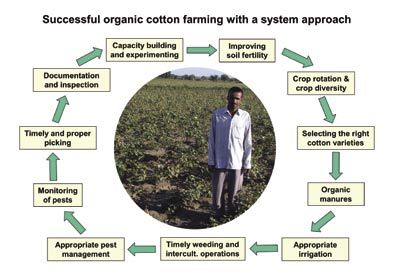
standards relevant for cotton farms to be certi- for organic textiles from the harvesting of fibres
fied organic are given in Figure 3. to the labelling of ready-made textiles. It also
A basic summary of organic standards rele- covers processing requirements (e.g. regarding
vant for organic cotton as per the EU regulation toxicity and biodegradability of materials used)
is given in Annex 10.3. and social criteria. The standard is expected to
In 2002, during the International Conference facilitate the certification process and to provi-
on Organic Textiles (Intercot), the development de end consumers with a credible assurance sys-
of a global organic textile standard was initiated tem for organic garments.
by IVN and IMO1. The standard defines criteria
1.5 Bio-dynamic farming
The system of bio-dynamic farming is a special Bio-dynamic preparations: Certain natural-
type of organic agriculture which fulfils all prin- ly occurring plant and animal materials are
ciples and standards of organic farming but goes combined in specific preparations and ap-
a step further: bio-dynamic farming includes a plied in highly diluted form to compost piles,
spiritual dimension of agriculture. It is foun- to the soil, or directly to the plants. The forces
ded on a holistic and spiritual understanding of within these preparations are to organize the
nature and human beings and builds on the re- elements within the plants and animals.
search work of the Austrian philosopher Rudolf Cosmic rhythms: The rhythms of the sun,
Steiner in the 1920s2. He developed a new ap- moon, planets, and stars influence the
proach to science which integrates observation growth of plants. By timing the activities of
of natural phenomena and spiritual dimensions. tillage, sowing and harvesting according to
In the words of Steiner: “Matter is never without the bio-dynamic calendar, the farmer can use
Spirit, and Spirit never without Matter.” this influence to benefit the crops.
Some of the principles of bio-dynamic far- Vitality: Besides the physical and chemical
ming are: characteristics, matter has a vital quality that
The Farm Organism: A farm is considered influences organisms. Thus, bio-dynamic
as a whole organism, integrating plants, ani- farmers strive for product quality, not just
mals and humans. There should be just the quantity.
right number of animals to provide manure
for fertility, and these animals should be fed As far back as 1928 the bio-dynamic movement
from the farm itself. developed the Demeter brand for labelling pro-
ducts from certified bio-dynamic farms3.
1.6 Inspection and certification
In order to support farmers in the certification At least once a year, an external certifier in-
process and to reduce costs, farmer groups can spects the functioning of the ICS and re-in-
be organized within an internal control system spects a certain percentage of the farms at
(ICS). For this, each farmer needs to sign a con- random (Figure 4). If the external inspection
tract with the organization in which they decla- finds that the ICS is not functioning properly,
re their commitment to following the specific for example because defaulting farmers are not
organic standards of the project. The extensi- discovered and excluded from the project, the
on workers of the project advise the farmers in entire project risks losing its organic certificati-
organic crop production techniques and help on and thus the option of selling the cotton and
them with the necessary record-keeping. Inter- other crops at a premium price. Therefore, in-
nal inspectors inspect the farms several times ternal control systems can only function if there
a year, and an internal certification committee is a spirit of trust and cooperation among the
decides about sanctions against defaulting far- involved farmers and between the farmers and
mers. the organization responsible for the ICS.
1
International Association Natural Textile Industry (IVN), Germany; Institute for Market Ecology (IMO), Switzerland.
2
www.biodynamic.org.uk/FAQ.htm
3
www.demeter.net/
8 Organic Cotton Crop GuideFigure 4: Internal and
external control in an or-
ganic cotton project (ad-
apted from IFOAM)
1.7 Organic cotton and Fair Trade
Fair Trade is a trading partnership that seeks nic and Fair Trade certification. FLO has de-
greater equity in international trade, particularly veloped product-specific Fair Trade standards
focusing on the rights of marginalized producers for cotton production (seed cotton)3. The most
and workers in developing countries. Trade rela- important requirements for smallholder orga-
tions are facilitated by a number of Fair Trade or- nic cotton projects to achieve Fair Trade certifi-
ganisations, most of them being associated with cation by FLO can be summarized as follows:
the International Fair Trade Association (IFAT)1. Smallholders: More than 50% of the volume
Fair Trade Labelling Organizations International must be produced by small producers (not
(FLO)2 operates a Fair Trade certification sche- structurally dependent on permanent hired
me based on generic and product-specific stan- labour).
dards. Many Fair Trade organizations, however, Democratic structure: An organizational
have their own labels and standards. structure is in place that enables control by
Important principles of Fair Trade include: the members and ensures that the use of the
Transparency and accountability based on Fair Trade premium is democratically deci-
democratic decision-making processes; ded by the members.
Capacity building to develop producers’ in- Labour issues: No forced or child labour, sa-
dependence; laries are in line with the official minimum
Payment of a fair price, usually fixed as a mi- wages, freedom of association and collective
nimum price and a Fair Trade premium; bargaining.
Gender equity; Environment: Development of a water manage-
Safe and healthy working conditions; ment plan in areas of acute water shortage.
Encouragement of environmental produc- Trade: Fixed buying commitments at the
tion practices. beginning of the harvest season, guaranteed
minimum prices and payment of Fair Trade
Fair Trade certification does not require that premium. Pre-financing of up to 60% of the
an operation is organic; it can also be applied contract value, if requested by the seller.
to conventional production. However, some Commitment to continuous improvements
smallholder cotton projects choose both orga- in all fields (progress requirements).
1
www.ifat.org
2
see www.fairtrade.net
3
see www.fairtrade.net/sites/standards/sp.html
Organic Cotton Crop Guide 92 Cotton
2.1 The importance of cotton
Nowadays, the livelihood of 17 million people
in India depends on cotton farming2. The In-
dian cotton textile industry contributes 38% of
the country’s export earnings. In some African
countries like Burkina Faso, Mali, and Benin,
cotton plays an even more dominant role in ag-
ricultural exports.
World market cotton prices fluctuate to a
great degree and have come down considerably
over the last two decades. According to Oxfam
and other NGOs, this is partly due to high farm
subsidies in the US3. By-products of cotton in-
clude the edible oil gained from the seeds, and
the seed cakes and husks are used as fodder and
Cotton bales manure.
Cotton production worldwide uses more
Cotton has been used for producing garm- than 20% of all insecticides used in agricultu-
ents for at least 8,000 years. Cotton is the most re4. In many areas, irrigated cotton cultivation
important fibre crop with an estimated world has led to depletion of ground and surface wa-
production of 23 million tons of fibre (lint) in ter sources. Many conventional cotton farmers
2004-051. The three largest producers are Chi- in developing countries are in a crisis due to
na, the USA, and India, followed by Pakistan, decreasing soil fertility, increasing production
the countries of the former USSR, and Brazil. costs, resistant pests, or low cotton prices. In
India is the third-largest producer of cotton, this scenario, an increasing number of farmers
producing about 12% of the world production, turn to organic cultivation in order to restore
but, due to low productivity, it has the largest soil fertility, reduce production costs, or to get a
area under cotton cultivation (ca. 9 million ha). better price for their certified organic harvest.
2.2 Requirements of the cotton crop
The cotton species (Gossypium) belong to the ging, which causes a reduction in yields (more
Malvaceae family (like okra and hibiscus). boll shedding) even when the plant appears
Their wild relatives are hardy perennial shrubs to be unaffected. It prefers deep, well-drained
with hairy leaves and short fibres. Cotton is soils with a good nutrient content. The clay-
grown in a wide range of climatic conditions in rich vertisols (so-called ‘black cotton soils’) are
temperate, subtropical and tropical regions of ideal. With their long tap roots penetrating up
all the continents. Ideal conditions are in regi- to three meters in such soils, cotton plants can
ons with long vegetation periods without frost, sustain short periods of drought. However, cot-
high temperature (ideally around 30°C), ample ton is also grown on less ideal sites with shallow,
sunshine, and a rather dry climate (Figure 5). sandy soils, both under irrigated and rain-fed
It requires a minimum of 500 mm water from conditions. This requires adapting the selection
rain or irrigation between germination and boll of varieties and management practices.
formation. Cotton is very sensitive to waterlog-
1
Source: International Cotton Advisory Committee, World Statistics
2
Source: www.tve.org/ho/doc.cfm?aid=604
3
www.oxfam.org/eng/pdfs/pp020925_cotton.pdf
4
Source: www.pan-uk.org/pestnews/pn28/pn28p23.htm
10 Organic Cotton Crop GuideCottonseeds take about 4 days to germina-
te after coming in contact with water. During
the first two weeks, growth of the leaves is slow
as it is mainly the root that grows, penetrating
deeply into the soil to ensure water supply. Af-
ter this, strong vegetative growth builds up the
leaves and branches, until the first flower buds
emerge. Flowering starts at the first node of
the first fruit-bearing branch and from one
node to another along the branch. Flowers are
white/yellow when they open, turning pink the
following day. Pollinated flowers take three to
four weeks to reach the final size of the pods,
and another two to three weeks to dry out and
open. Normally only about 1/3 of the flowers
develop bolls, and this rate can drop to 10%
when conditions are unfavourable, as in the
case of drought, waterlogging, cool weather, or
heavy insect infestation. Bud and boll dropping Development stages of cotton from bud (right) to boll
can be caused by both deficiency and excess of
nutrients, or of moisture. However, the plant
can pick up and compensate for loss of buds or
bolls by prolonging its production of flowers if
the unfavourable conditions last only for short
periods, and if it is not too late in the season.
Figure 5: Requirements of
the cotton crop
Organic Cotton Crop Guide 112.3 Selecting the right cotton varieties
By far the most widely grown cotton species is robust varieties that are resistant to or tolerant
Gossypium hirsutum, often called American Up- of pests and produce satisfying yields with me-
land cotton, which is available in a large number dium manure supply. Some varieties, however,
of hybrid varieties. Some countries grow Gossy- combine the advantages of the ‘desi’ varieties
pium barbadense (Sea Island cotton), spinning (hardy, drought resistant) with those of the hir-
its long fibres into extra-fine garments. In India situm varieties (high yield, long fibres). These
and Pakistan, a number of local ‘desi’ varieties varieties could be of great interest, especially for
of G. herbaceum and G. arboreum are grown organic farmers with less irrigation.
besides the ‘American hybrids’. They are usual- To select the most suitable varieties, farmers
ly more resistant to pests and to drought, but should consider the site conditions (soil quali-
most have a shorter staple length and thus fetch ty, rainfall, availability of irrigation water, etc.)
lower prices in the market. as well as the conditions of the farm (availabili-
There are a large number of different cotton ty of manure, possibility for pest management,
varieties available on the seed market, and re- etc.). Where irrigation is a constraint and rain-
search stations and seed companies continually fall is erratic, it is preferable to use varieties
release new varieties. Most of them are bred for that require less water (e.g. those with less leaf
producing high yields under high-input condi- area). In addition, farmers need to consider the
tions: fertilizers, pesticides, and irrigation. Or- buyers’ requirements concerning staple length
ganic farmers, however, are more interested in and other fibre quality aspects (see Figure 6).
Figure 6: Comparison of
American upland cotton
and Indian ‘desi’ varieties
Identifying suitable cotton varieties for a par- The cotton varieties that are most popular
ticular field requires a great deal of observati- among organic cotton farmers in the Nimar re-
on and experimentation. It can also be useful gion of Madhya Pradesh, India, and their pro-
to talk to extension workers or other farmers perties are listed in Table 1.
about their experience with a certain variety
and its expected yields, water requirements,
resistance to pests, and fibre quality. In some
countries, however, the government authorities
regulate which cotton varieties can be grown.
12 Organic Cotton Crop GuideVariety Suitable sites Staple length Remarks
H-8 Medium soils, little to 25–26 mm Most popular variety; good yields in organic farming; suitable for
medium irrigation available. monsoon sowing; drought tolerant.
H-10 Deep, heavy soils. 26–27 mm Ideal for summer sowing; not suitable for light soils.
JK-4 Medium soils 27–28 mm Resistant to diseases and bollworm; susceptible to sucking pests;
requires less water.
JKH-1 Deep, heavy soils; irrigation. 27–28 mm Good yields in organic farming; ideal for heavy soil; susceptible
to droughts.
Ankoor-09 Medium soils, not for heavy 26–27 mm A short duration crop suitable where a Rabi crop is grown; not
soils. suitable for summer sowing; susceptible to waterlogging.
Ankoor 651 Heavy to medium soils. 27–28 mm Ideal for late-summer sowing and monsoon sowing; suitable for
heavy soils.
New research varieties:
Jawahar Tapti Dry areas, little irrigation. 24–25 mm Hardy; requires less water; resistant to bollworm, but short fibres.
Surabhi Medium to dry areas. 28–32 mm A non-hybrid with long fibres.
Devi Raj Dry areas, little irrigation. 27–28 mm A variety grown in Gujarat.
Table 1: Cotton varieties grown by organic farmers in the Nimar region, Madhya Pradesh, India
Seed issues
Cotton is self-pollinating, but cross-pollina-
tion also occurs; thus, controlled breeding is
necessary to maintain the quality of varieties.
Most of the cultivated cotton varieties are hy-
brids that are propagated by seed companies
and cannot be multiplied without the parent
lines. In India, research stations have also de-
veloped a number of non-hybrids, the seeds of
which can be re-grown for a number of years.
Organic cotton farmers in Mali also use the cot-
ton seeds from their own harvest. Breeding of
varieties specifically suited to organic farming
conditions remains a challenge to be tackled in
coming years.
Testing cotton varieties for organic farming in Kirgistan (Photo: Helvetas)
Bt cotton
In organic agriculture the use of genetically The cultivation of Bt cotton involves higher
modified organisms (GMO) is not allowed. financial risk, since the seeds are considerably
For some years, seed companies have been more expensive and usually the crop is grown
promoting genetically engineered ‘Bt cotton’. with high inputs of fertilizers and pesticides
It contains genes of the same micro-organism, against sucking pests. In India, many conven-
Bacillus thuringiensis, that is used in bio-con- tional farmers who tried Bt cotton complained
trol against a number of insect pests, also by about crop failure, due possibly to inapprop-
organic farmers. The Bt cotton plant thus con- riate varieties, unfavourable climatic conditi-
tinuously produces an insecticide that is to ons, or adulterated seeds. Despite the benefits
prevent bollworms from feeding on it. Howe- promised by its promoters, growing Bt cotton
ver, bollworms frequently develop resistance, seems to be a high-risk strategy.
forcing the seed companies to develop new va- Organic farmers find it more and more dif-
rieties of Bt cotton. Also, there is a risk that the ficult to get cottonseed material that is gua-
development of resistance makes Bt sprays less ranteed GMO-free. Some certification bodies
effective, thus harming organic farmers. use test stripes to check whether cotton plants
contain GMO.
Organic Cotton Crop Guide 133 Soil Fertility Management
3.1 Soil properties
The best strategy for improving and maintai- application of compost is particularly impor-
ning soil fertility in cotton primarily depends on tant for increasing water retention and nutrient
the soil types present on a farm. Soil types in the supply. As these soils are less suitable for inten-
Nimar Region, India, can be broadly grouped sive production, the variety and crop selection
into light soils (Inceptisol), medium soils (Enti- should be adapted accordingly (robust, frugal,
sol) and heavy soils (‘black cotton soil’, Vertisol). and drought-resistant cotton varieties and ro-
Their distribution in the landscape mainly de- tation crops). Intercropping of more drought-
pends on the profile (see graph below). resistant crops like sorghum, safflower, sesame,
Light soils usually have a lower water-reten- or castor can help to reduce the risk of complete
tion capacity, and the nutrients are more easily crop failure in drought-prone areas. Soil culti-
leached out than in heavy soils. In light soils, the vation should be shallow and kept to a mini-
mum in order to avoid soil erosion and enhan-
ced decomposition of organic matter.
In deep or heavy soils (e.g. black cotton soil),
intensive production is possible with sufficient
inputs of organic manures, intensive crop ro-
tation, and green manuring. Frequent shallow-
soil cultivation helps to improve soil aeration
and nutrient supply. It also reduces evaporation
and suppresses weeds. When the cotton crop is
well established (after 6–9 weeks) it is recom-
mended to apply additional organic manure
(e.g. vermi-compost or oil cakes) and to earth
up ridges in order to accelerate decomposition
Soils in the Nimar Region, India, usually follow a sequence, with light and of manures and to bury weeds. The soil pro-
sandy soils on elevations and deep and heavy soils in depressions and river belts perties and management recommendations for
light and heavy soils are given in Figure 7.
Soil profile in a cotton
field in India Figure 7: Properties and management recommendations for light and heavy soils
14 Organic Cotton Crop Guide3.2 The importance of soil organic matter
Cotton prefers fertile soils with good water hol- they are available to the crop. Last but not least,
ding capacity and sufficient nutrient supply organic material feeds and hosts a huge num-
(see Chapter 2.2). On many farms, the conti- ber of beneficial soil organisms, such as earth
nuous application of chemical fertilizers has led worms and microbes, which continuously work
to a loss of soil fertility. This is mainly due to a toward improving soil fertility.
lack of organic matter – the residues of plant Thus, for getting good, stable yields it is im-
material and organic manures remaining in the portant that organic farmers ensure a continuous
soil. The application of nitrogen fertilizer acce- supply of organic material to the soil – not only
lerates the decomposition of organic matter. for cotton! The most important source of organic
Organic matter has a very crucial significance matter are the residues of the crops grown on the
for soil fertility improvement (Figure 8). It field itself (leaves, stalks, roots etc.). Therefore, ba-
ensures a soft and loose soil with good porosity lanced crop rotation, intercropping, and mulching
and thus good infiltration of water. The organic are the most efficient ways to enhance soil fertility.
matter particles act like tiny sponges, thus kee- This is complemented by the application of farmy-
ping the soil moist for a longer time. Organic ard manure, compost and organic manures such as
matter takes up and releases nutrients so that oil cakes, press mud, etc. (see Chapter 4.5).
Figure 8: The importance
of organic matter for soil
fertility
3.3 Crop rotation – rotation crops
It is important that organic cotton is grown in
rotation with other crops. This helps to improve
and maintain soil fertility and ensures balanced
nutrient contents in the soil. If cotton is grown
continually on the same field, yields are likely
to decrease. Crop rotation and mixed cropping Wheat grown in the win-
also help prevent build-up of pest populations, ter season (Rabi) after
diseases and weeds. Pests find it more difficult cotton
Organic Cotton Crop Guide 15to move from one host Depending on the climatic conditions, the
plant to another, and they market situation and the availability of land,
are controlled by a num- there are a number of suitable rotation patterns,
ber of beneficial insects with cotton grown every alternate or every third
hosted by the rotation year. Which rotation pattern is the most suitable
crops or intercrops. Crop one for a particular farm depends on a number of
diversity also reduces a factors: soil properties, irrigation facilities, crop
farmer’s risk, making far- prices, market access, and – last but not least –
mers less vulnerable to the skills and preferences of the farmer. Figure 9
crop failure and to fluc- lists some suitable rotation patterns from orga-
tuating prices. Further, it nic cotton projects in India and Africa.
helps prevent a shortage
of labour in peak seasons,
as labour requirements
are more evenly distribut-
ed throughout the year.
Pulses and cereals in an
Indian market
Figure 9: Some crop rota-
tion patterns from organic
cotton projects in India
and Africa
On organic farms, cotton should not be grown crops like chillies or vegetables, and after sugar-
in fields where the previous year’s crop also was cane and wheat. Organic farmers in particular
cotton (no ‘cotton after cotton’). The reason should take care to include pulses in the rotati-
is that if cotton is grown year after year in the on, as they increase the nitrogen content in the
same field, the soil nutrients get depleted, pest soil by fixing nitrogen from the air.
populations increase and there is a risk for soil- In some places a crop of wheat, pulses or
borne diseases. At least for one year, but pre- fodder can be grown after cotton in the win-
ferably for two years, another crop should be ter season. In India, where sufficient irrigation
grown between two cotton crops. If very small is available, farmers usually uproot the cotton
land holdings force farmers to grow cotton after crop before the second flush, in order to grow
cotton, they should, in any case, use an inter- a wheat or chickpea crop in the ‘Rabi’ season.
crop (e.g. moong bean, cow pea, or chick pea, Growing wheat instead of continuing to harvest
for harvesting) or a green manure crop (e.g. sun the cotton is usually more remunerative, as the
hemp or cow pea, to be cut and ploughed back gains from the wheat crop more than compen-
into the soil before flowering). sate for the loss in cotton yields and the addi-
Particularly good yields are achieved when tional production costs. However, sufficient
cotton is grown after pulses (soy bean, chick- availability of irrigation water and of labour are
pea, pigeon pea, groundnut etc.), horticultural important pre-conditions for this.
16 Organic Cotton Crop Guide3.4 Green manures and intercrops
Green manure crops for cotton (mainly pulses tive trap crop, see Chapter 5.3.2), with 10–15 m
like sun hemp or cow pea, or mixtures contai- distance between the rows in order to reduce
ning pulses and cereals) are usually sown bet- competition through shade. Smaller pulses like
ween the cotton rows after the cotton seedlings moong bean, black gram and cow pea, or small
have emerged. They are cut before or at the time millet varieties, can be grown in-between the
of flowering, and are either used as mulch or cotton rows, or between the individual cotton
incorporated into the soil. Intercrops like mai- plants. Intercrops are usually allowed to mature
ze or pigeon pea can be grown in rows every and are cut and used as organic mulch after the
few meters, replacing a row of cotton. Sunflo- seeds are harvested (Figure 10).
wer can also be used as an intercrop (an effec-
Figure 10: Green manures
(cutting at the time of
flowering) and intercrops
(cutting after harvesting
the seeds) for cotton
Both green manures and intercrops have the On the other hand, green manure and inter-
following benefits: crops do compete with the cotton crop for
Distract pests from the cotton crop (especial- water, light and nutrients. Thus, appropriate
ly sucking pests); timing of the sowing and cutting is very impor-
Attract and host beneficial insects; tant in order to get maximum benefit with mi-
Take up nutrients from the soil which would nimum competition.
be lost to the crop; Farmers in Nagpur and Yavatmal, India, have
Fix nitrogen from the air (pulses and other had good experiences with using the ‘Nagpur
legumes); mixture’ as a green manure, consisting of the seeds
Make nutrients available to the cotton crop listed in Table 2 (approximate quantity for 1 ha):
when decomposing;
Build up organic matter (better soil structu-
re, water retention, overall fertility);
Suppress weeds;
Produce mulch that keeps the moisture in the
soil;
Reduce soil erosion through rain or wind;
Provide additional yield;
Can serve as fodder for cattle.
Organic Cotton Crop Guide 17English name Scientific name Hindi name Quantity of seeds (for 1 ha)
Sunhemp (jute) Crotalaria juncea Sun beeja 5 kg
Pearl millet Pennisetum typhoideum Bajra 5 kg
Moong bean Vigna radiata Moong daal 5 kg
Black gram Phaseolus mungo Urid daal 5 kg
Chickpea Cicer spp. Channa 5 kg
Table 2: Composition of the green manure “Nagpur mixture” used for cotton in central India.
The Nagpur seed mixture is sown between the
cotton crop about 2–4 weeks after the germi-
nation of the cotton seedlings, just before the
first intercultural operation. The green manu-
re is cut (by hand or with a weeder) after ap-
proximately four weeks, when the pulses start
flowering.
In India, the most popular intercrops for cot-
ton are moong bean, chick pea (black gram),
cow pea and pigeon pea. Sorghum and maize
are grown as trap crops. To reduce competiti-
on for light, water and nutrients with the cot-
ton crop, the intercrop should only be grown in
every alternate row. The rows are preferably ori-
ented in an east-west direction. Pulses are par-
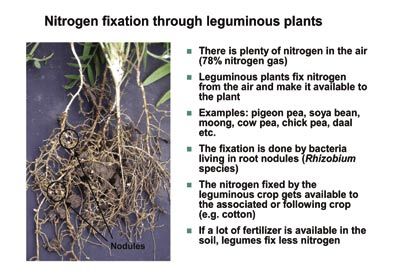
ticularly suitable green manures and intercrops,
as they fix nitrogen from the air with the help of
beneficial bacteria hosted in root nodules.
Nodules
Nodules of pulses host nitrogen fixing bacteria
Trials on green manures and intercrops
To try out alternative options for green man-
ures and intercrops, farmers can set up simple
plot trials on their farms. For this, the farmer
organizes the necessary seed material and se-
lects a suitable field for the trial. In the field,
the farmer chooses an area in which the soil is
more or less the same. He marks a number of
cotton rows for the intercrop or green manu-
re, and an equal number of cotton rows of the
same length without intercrop or green man-
ure as a control plot. The trial plot and the Trial plot Control plot
control plot are harvested separately so that
the yields can be compared. The yields and the Possible layout of a trial plot and control plot in a cot-
value of the intercrop should also be taken into ton field.
consideration when comparing the new me-
thod with the previous system.
18 Organic Cotton Crop GuideCrop Nutrition
4.1 Nutrient requirements
Crop rotation and intercropping with legumes, (especially of nitrogen) during this phase, it is
recycling of crop residues and the application recommended that a basal dose of well-decom-
of farm-produced organic manure (FYM and posed compost or farmyard manure be applied
compost) need to form the basis of nutrient at the start of the growing season, and be com-
management in organic cotton farming. Orga- plemented with one or two head applications
nic farmers should not try to copy conventional of compost and an organic manure rich in ni-
fertilizer application schemes by simply substi- trogen (e.g. oil cakes, poultry manure from ex-
tuting NPK-fertilizers with organic manures. It tensive rearing). Head applications of manure
is very important that above all they preserve should be applied 2–3 weeks before the start of
the nutrients that are already available in the square bud formation, as the nutrients are not
soil and on the farm: prevent soil erosion, use instantly available but only get released once the
all available crop residues and organic wastes, manure decomposes (see Figure 11).
and do not burn crop residues or cow dung. A harvest of 500 kg seed cotton extracts ap-
Like other crops, cotton requires the full ran- proximately 36 kg nitrogen (N), 14 kg phos-
ge of nutrients in a well-balanced composition. phate (P2O5) and 15 kg potassium (K2O equiva-
The cotton plant requires two-thirds (2/3) of lents). Parts of these nutrients may be replaced
these nutrients during the first two months of through nitrogen fixation by legumes (N) and
its growth. To ensure sufficient nutrient supply through weathering of minerals (P and K).
Figure 11: Nutrient de-
mands of cotton and
timing of manure appli-
cations
Organic Cotton Crop Guide 194.2 Uptake of nutrients
In organically managed soils, the crops mainly matter. Measures to improve overall soil fertili-
depend on the nutrients supplied by minerals ty (microbial activity, structure, moisture reten-
and by the organic matter in the soil. These tion) are more likely to result in increased yields
take up, store and release nutrients (through than merely applying fertilizers.
exchange, weathering, and decomposition). The most widespread nutrient deficiencies
Soil organisms play a vital role in this process in tropical cotton fields are in nitrogen, phos-
and should be supported through careful soil phorus, sulphur, zinc and boron. Soil tests have
cultivation and regular application of organic their limitations in providing useful informati-
on on nutrient deficiencies, as they only measu-
re the easily available nutrients. The availability
of nutrients to the crop, however, depends on
a number of factors such as the activity of soil
micro-organisms, the root system of the crop,
and the water content in the soil.
It is possible that the uptake of nutrients is
hindered by waterlogging (the roots then lack
air) and dryness (there is no nutrient uptake
without water). Excess nitrogen, phosphorus
and potassium also disturb the uptake of cer-
tain other nutrients like calcium, magnesium
and micronutrients (Figure 12). In the case of a
cotton crop showing deficiency symptoms, it is
not always necessary to apply additional manu-
re or fertilizers. It may be more efficient to sti-
mulate microbial activity and to overcome the
inhibiting factors, e.g. through soil cultivation,
irrigation, and incorporation of biomass.
Phosphorus deficiency symptoms on a cotton leaf
Figure 12: The uptake of
nutrients (represented by
coloured circles) and its
disturbance (red arrows).
K = potassium, Ca = cal-
cium, S = sulphur, B =
boron, Mg = magnesia,
Fe = iron, Zn = zinc, P =
phosphorus, N = nitrogen
20 Organic Cotton Crop GuideNitrogen immobilization
In the first two months of growth, the cotton residues before ploughing the fields and pre-
crop may be short of nitrogen because mic- pare compost out of them. Compost should
ro-organisms use the nitrogen in the soil for be kept moist and should be turned at least
the decomposition of carbon-rich (sturdy) twice so that it decomposes well. It should be
organic material. As a result, the leaves of the applied to the field early in the season so that
cotton plants look yellowish, growth is stun- the decomposition has already started when
ted and overall crop development is slow. This the cotton is sown. At the time of sowing, ni-
phenomenon known as ‘temporary nitrogen trogen-rich manures such as oil cakes can be
immobilization’ may occur when sturdy crop applied to prevent this problem. Oil cakes take
residues or manures (e.g. straw-rich farmyard 1-3 weeks until they release nitrogen through
manure or undecomposed press mud) are pre- decomposition. Soil cultivations (intercultu-
sent in the soil. To decompose this material, ral operations) speed up the decomposition of
microbes require nitrogen, which is not avai- organic matter and thus increase the nutrient
lable to the crop for a certain period of time. supply to the crop.
To avoid this situation, collect the sturdy crop
4.3 Application of manures and fertilizers
Suitable application doses of nutrients in or- 1. Practise crop rotation, and grow leguminous
ganic cotton depend on the soil condition, the crops (e.g. pulses) as intercrops or as green
previous crop, and the expected yield. Table 3 manures;
shows the nutrient quantities recommended for 2. Use all biomass available on the farm (do not
organic cotton for soil of average fertility culti- burn crop residues or cow dung!); mix wood
vated with high-yield varieties. A considerable ash into the compost heap;
portion of the required nutrients, however, can 3. Use whatever biomass is cheaply available
be supplied through decomposing residues of nearby (e.g. weeds, leaves, press mud, agri-
the previous crop, and through nitrogen fixati- cultural processing wastes);
on by leguminous crops. 4. Only then complement with purchased or-
Organic manures like compost and cattle ganic manures (e.g. oil cakes) and natural
dung contain the full range of nutrients inclu- mineral fertilizers (e.g. rock phosphate, gyp-
ding micronutrients in a balanced compositi- sum, muriate of potash).
on. Thus, where organic manures are applied in
sufficient quantity, usually there is no deficien- Approximate nutrient contents of important
cy of micronutrients. organic manures and natural fertilizers (mine-
Farmers can achieve the desired nutrient rals) are given in Figure 13.
input through the following steps (in order of
priority):
Nutrient Quantity per ha Possible sources
Nitrogen (N) 100–120 kg/ha Residues from previous crop, nitrogen fixation through pulses,
compost, vermi-compost, FYM, DOC, liquid manures
Phosphorous (P2O5) 50–60 kg/ha Residues from previous crop, compost, FYM, rock phosphate,
wood ash
Potassium (K2O) 40–50 kg/ha Residues from previous crop, compost, FYM, muriate of
potash, wood ash
Table 3: Recommended nutrient doses in average organic cotton fields, to be adapted to local conditions
Organic Cotton Crop Guide 21Figure 13: Approximate
nutrient contents of im-
portant organic manures
and natural fertilizers
Table 4 proposes a nutrient management plan Caution: A too-high supply of nitrogen-rich
for cotton for achieving the recommended nu- manures can cause:
trient input. However, this should only be a Strong vegetative growth of cotton (many
rough guideline and needs to be adapted to the leaves instead of bolls);
specific conditions of each farm and field. Increased shedding of square buds;
Plants to become more attractive to sucking
pests like aphids, whitefly and jassids;
Potentially lower yields!
Manure or measure Recommended quantity Comments
(per ha)
Crop rotation Preferably grow cotton on plots where the The cotton crop benefits from the high nutrient level of
previous crop was pulses, chillies, vegetables, the previous crop.
banana, or sugarcane.
Green manure / intercrop If possible, grow leguminous crops (e.g. pulses) as Leguminous crops increase the nitrogen content in the
intercrop or as a green manure. soil by fixing it from the air.
Compost, cow dung or Initial application: 10–13 tons cow dung, or 7–10 Compost and cow dung should be well decomposed.
press mud compost tons compost, or 6–7 tons vermi-compost. The quantity can be reduced if the previous crop was
Top dressing (decomposed compost, together pulse or a horticulture crop, or if pulses are grown as
with DOC): green manure or an intercrop.
3 weeks after sowing: 1.5–2.5 tons
10–12 weeks after sowing: 1.5–2.5 tons
De-oiled castor cake Top dressing (mixed with compost): Apply the lower dose if the previous crop was a pulse,
(DOC), or other oil cake 3 weeks after sowing: 150–350 kg or if sufficient compost of good quality was applied
initially.
10–12 weeks after sowing: 150–350 kg
Rock phosphate 50–70 kg per ha, application together with the Mix into the compost when setting up the heap; do
compost. not apply it directly to the soil. Increase the quantity to
100 kg in case of P-deficiency (soil test).
Muriate of potash Only in case of K-deficiency (soil test): 50–70 kg Usually the potassium (K) present in compost and
per ha. organic manures is sufficient. Add wood ash to the
compost.
Foliar application of Start 4 weeks after germination of the cotton until Strengthens and nourishes the plant, deters pests.
vermi-wash, diluted the first bolls open, every 2 to 3 weeks: one litre For second flush in Rabi season (India), start spraying
biogas slurry or diluted cow urine or vermi-wash in 10 litres water. again in November and December.
cow urine
Table 4: Recommended nutrient management plan for organic cotton
22 Organic Cotton Crop Guide4.4 Compost
Composting is the process of transforming or-
ganic material of plant or animal origin into
high-value organic manure in heaps or pits.
Compared to uncontrolled decomposition
of organic material, decomposition through
composting is faster. It heats up as part of the
process, which results in a product of higher
quality. If compost heaps are properly maintai-
ned, loss of nutrients (especially nitrogen) can
be kept low. Compost provides the crop with
well-balanced ‘food’ and helps to increase the
soil organic-matter content. Compost has both
a long-term and a short-term effect on plant
nutrition as nutrients are continuously released
over a period of time.
There are two general types of composting: Compost heaps in the Maikaal bioRe project, India.
‘continuously fed’ and ‘batch fed’ systems:
Batch fed systems (all material is set up at
once): During the first few weeks after setting The value of the compost very much depends
up the compost, the material gets very hot. on the material used, and on how well the com-
Weed seeds, diseases and pests are killed as a post is set up and maintained. If the compost is
result of the high temperature. The process is too dry or too wet, a lot of nutrients (especially
fast (within a few weeks), fewer nutrients get nitrogen) get lost and the quality of the com-
lost, and the final material is of high quality. post is low. Thus, proper set-up of the compost
Continuously fed systems (material is added and sufficient turning pays off. The results of
again and again): These systems do not heat nutrient analysis done on samples from manure
up during the composting process. They are and compost heaps in the Nimar Region, India,
handy if there is a continuous supply of was- prove this (Figure 14).
tes (e.g. from cleaning the cow sheds). Howe-
ver, they lack the advantages of the heating
phase and thus decompose less completely.
Vermi-compost heaps are a good example of
a continuously fed system.
Figure 14: Nutrient con-
tents (% dry matter) of
samples of different com-
post and dung heaps col-
lected on organic farms in
the Nimar Region, India
Organic Cotton Crop Guide 23Setting up a compost heap or pit Other material can be added to the heap in or-
Compost heaps are easier to build than pits, but der to improve the quality of the compost:
they also dry out more easily. In pits, however, Cow dung mixed with water, or biogas slurry
there is a risk of waterlogging during the wet for sprinkling on each layer;
season. During the dry season, when little wa- Rock phosphate (quantity depending on soil
ter is available, composting in pits may be more condition);
appropriate than heaps since humidity is con- Wood ash or sugarcane ash (if available);
served better. When setting up a compost heap Soil.
or pit, the following points should be kept in
mind: For ideal composting , the mixture should con-
Location: The compost is ideally located near sist of approximately:
the source of the composting material and the One-third sturdy and bulky material (chopped
fields to which the compost will be applied. twigs, stalks, roots of maize and sorghum etc.);
The site should be shady and near a water One-third medium-to-fine material rich in
source. Water-logged sites should be avoided. carbon (straw, dry leaves, left-overs from
Timing: A compost heap should be set up fodder, dry weeds etc.)
when a lot of plant material is available, i.e. One-third fine material rich in nitrogen (cow
towards the end of the rainy season (fresh dung, dung of other animals, green leaves,
material, weeds) and after the harvest of the kitchen waste etc.)
main crops (crop residues). If the farm does
not supply enough plant material, it may be
collected from outside sources.
Size: The compost heap should reach a size of
at least 1 cubic metre to allow for the proper
composting process. To allow sufficient aera-
tion it should not be more than 2.5 m wide
and 1.5 m high.
Some materials that can be used for making
compost:
Crop residues: stalks and roots of cotton,
maize, sorghum, straw etc.;
Weeds from fields, field borders, fallow lands
etc.;
Twigs from trees and shrubs, leaves; Layers of different materials in a compost heap
Fodder residues left by the animals after fee-
ding;
Cow dung and dung of other animals (poul- Steps in preparing compost of good quality (see
try, goat etc.); Figure 15):
Biogas slurry; 1. Chop coarse material like stalks and twigs.
Kitchen waste; 2. At the bottom of the heap or pit, put twigs
Agricultural processing by-products like su- and other coarse materials to allow for good
garcane trash, press mud, husks, cotton dust drainage of excess water.
etc.; 3. Pile up alternate layers of coarse material
Take care that no plastic gets into the com- (carbon-rich, such as stalks, twigs, dry lea-
post! ves) and material that decomposes quickly
(nitrogen-rich, such as cow dung, green lea-
ves, weeds).
4. In every alternate layer, spread some rock
phosphate and wood ash.
5. Sprinkle the layers of coarse material with
cow dung slurry or biogas slurry.
6. Add thin layers of soil to prevent loss of ni-
trogen, and to inoculate with soil organisms.
7. Cover the heap or pit with a 10-cm thick lay-
er of straw or leaves in the initial stage, and
Compost ingredients: with sacks or plastic sheet in the final stage
stalks, weeds, twigs, cow to prevent potassium and nitrogen being
dung, soil, rock phospha- leached out (during the rainy season) and
te, wood ash and water drying of the heap (during the hot season).
24 Organic Cotton Crop GuideYou can also read


