Organic Market 2019 - Soil Association
←
→
Page content transcription
If your browser does not render page correctly, please read the page content below
Organic Market 2019

Published with support from
What’s in
    this Report
    Foreword                               3

    Executive summary                      4

    UK organic market                      6

    Supermarkets                           10

    Home delivery                          11

    Other Retail Outlets                   12

    Foodservice and eating out             14

    Beauty and wellbeing                   16

    Textiles                               18

    Today’s consumer and organic           20

    Packaging for organic                  22

    Organic across the UK                  23

    Organic farming                        24

    Organic across the globe               26

    The year ahead                         28

    About Soil Association Certification   30

2
Foreword
It’s been another year of steady growth in the organic market.
With a 5.3% increase in organic sales, it’s refreshing to have one
area of life with year-on-year consistency.
There’s no lack of potential for disruption as we slide          Unfolding impact of the weather
towards March 2019 with little clarity on Brexit. But it’s not
                                                                 This has been a tough year for farmers and growers. We
just politics that could be about to turn our world upside
                                                                 staggered from the freezing temperatures of February 2018’s
down. The rapid rise in vegan and plant-based eating has
                                                                 ‘Beast from the East’ to the longest, wettest spring I can
been the biggest consumer trend this year, with its own
                                                                 remember, then into the most intense drought since 1976.
risks and opportunities. The meat and dairy debate is a
                                                                 On my own farm, we couldn’t plant any cereals on our clay
                                                                 land and made only 60% of the silage we planned to. We
                                                                 also put our dairy herd onto once-a-day milking in July to
                                                                 reduce the heat stress of the afternoon trek to the parlour,
                                                                 and to save grass.
                                                                 The impact of the year’s weather is still unfolding. Organic
                                                                 feed prices have risen by over 20% and the late winter will be
                                                                 a testing time for the dairy sector, as silage stocks diminish.
                                                                 Some yields from produce were down by half because of the
                                                                 heatwave. We are all hoping for an early spring.

                                                                 Fighting for farmers and the environment
                                                                 Future support arrangements for farmers post-Brexit have
                                                                 started to become a little clearer with the publication of
                                                                 the Agriculture Bill 2017-19, which is still going through
                                                                 parliament. We welcome its: seven-year transition and public
                                                                 goods approach to future payments; spotlight on fair play
                                                                 between farmers and first buyers; and farmer-led research.
                                                                 But we have pushed hard for soil, biodiversity and human
                                                                 health to be specifically listed as public goods in the bill, so
                                                                 that they are clearly eligible for future support.

                                                                 Supporting organic
                                                                 It’s good to see that organic products continue to be ever
                                                                 more relevant to more people. They are making ethical
complex one. The Soil Association’s message is ‘less but         choices on food and drink and other aspects of daily life
better’. ‘Better’ is ideally organic, and we would like to see   such as waste, packaging and energy.
the end of ultra-intensive, grain-based livestock systems,
which can be highly polluting, as well as inhumane. We           I continue to be impressed with the constant innovation
acknowledge that over-consumption of livestock products          coming from the growing number of businesses and
is damaging for the environment, and accelerating climate        brands, and the variety of products now available, in the
change. But we support the role that plant-eating animals        organic sector. It’s the perfect time to shout about the
can have in building soil fertility, supporting habitats on      benefits of organic – ‘Food as it should be’.
which much wildlife depends and providing high quality           Helen Browning,
nutrition, especially to people on low incomes.                  Group CEO, Soil Association

                                                                                                                                    3
Executive summary
The UK organic market continues to experience steady,
healthy growth, with sales increasing by 5.3%. That means
almost £45 million a week is spent on organic in the UK.

●   By 2020, the UK organic market is on target to
    be worth £2.5 billion.

● The market is now in its eighth year of growth.
● Home delivery of organic, through online and

                                                        +9
    box schemes, is growing fastest, at 14.2%. This
    channel accounts for 14% of all sales. By 2023,
    home delivery is on target to make up a quarter
    of all sales of organic in the UK.
                                                                  %
● Supermarket sales of organic (excluding               Soil Association
    discounters) increased by 3.3%*. Overall,             Certification
    supermarkets reduced their share of the organic     licensees’ sales
    market again. They have a 65.8% share of sales,          growth
    compared to 67% in 2017.

● Independent retailers maintained strong sales
    of organic, with sales increasing by 6.2%. New
    independent retailers and wider ranges from
    wholesalers have helped to improve the choice
    of organic products.

● Key categories driving growth in the market are:

                                                        75
    beers, wines and spirits and chilled foods. Fresh
    produce and canned and packaged grocery are
    also experiencing solid growth.                                 %
● Organic beauty/wellbeing and textiles had
    another year of double-digit growth at 14% and         of surveyed
    18% respectively.                                   licensees predict
                                                         growth in 2019
● Soil Association Certification licensee sales are
    up 9%, well ahead of market growth.

● Sales of organic into foodservice have risen by
    almost 8%, helped by spend through Food For Life
    award holders, despite cuts in public spending
    budgets. There was an increased demand from
    high street restaurants in response to diners
    looking for sustainable options.

● Packaging and wider environmental issues are
    continuing to influence shopper choices.

4
2018 Growth in sales of organic

                                                                +14 %
                                                                 Beauty and
                                                                  wellbeing
                                                                    sales

                                             +18 %                                   +9 %
                                                 Textiles                            Licensee
                                                  sales                                sales

                  +14.2%                                                                                +6.2 %
                    Home delivery                                                                        Independent
                    sales, including                                                                     retailer sales
                     box schemes

                                 +3.3 %                                                     +7.8 %
                                 Supermarket                                                  Organic sold
                                    sales*                                                   in foodservice

                                                                  Total
                                                              organic sales

                                                            £2.33  billion

                                                               +5.3 %
                                                               Total market
                                                               growth 2018

*+3.3% supermarket sales Source: Nielsen Scantrack Total Coverage Food & Drink(supermarkets and convenience stores)
52 weeks ending 29th December 2018

                                                                                                                          5
UK organic market
Across all channels, the UK organic market is growing – for the
seventh year in a row. It’s on target to reach £2.5 billion by 2020, as
predicted in last year’s Organic Market Report. Overall, sales have
increased by 5.3%, and for Soil Association Certification licensees,
they’ve grown ahead of the market, by 9%.

Trends                                                           Consumers are becoming more conscious about what
                                                                 they buy. They’re choosing organic because they have
Health is a key motivator for the majority of shoppers,          more knowledge of how it guarantees higher animal
with more consumers considering labels when they                 welfare standards, contains fewer pesticides with no added
decide what to buy. UK consumers are trying out new              artificial additives or chemicals, and is better for the planet.
diets, reducing the amount of meat they eat or not having        It also meets consumer demand for less packaging and
it at all, and cutting out gluten and dairy. Ethical Consumer    products from sustainable farming sources.
research found a 52% increase in the number of people
identifying as vegetarian and a 104% rise in veganism            Foodservice and eating out are an emerging and
since 2016. These consumers are often pre-disposed to            exciting channel for organic. This year sales grew by
buying organic. For example, when new products are               7.8% as demand continues to be driven both by Soil
labelled ‘free from’ and ‘organic’, it offers double assurance   Association’s Food for Life Served Here with £19.5m spent
and is a signpost to healthy choices.                            through this scheme and on the high street. More outlets
                                                                 are signing up to the Organic Served Here award, making
Since 2013’s horse meat food scare, provenance has been          organic more accessible on menus across the country.
another key motivator driving consumers. More are
concerned about the authenticity of products and organic
labelling provides integrity and trust. Consumers want the
complete reassurance that organic gives.

    2004-2018 UK sales of organic products in GBP(£) millions
                                                                                                                       2336
                                                                                                               2218
                               2078      2113                                                         2092
                      1900                                                                    1954
                                                1840                          1789    1862
                                                       1731           1741
             1600                                             1667

    1200

     +9%    +33%      +19%      +9%     +1.6%   -13%   -6%    -3.7%   +4.5%   +2.7%   +4%    +4.9%     +7%     +6%    +5.3%

    2004     2005     2006     2007     2008    2009   2010   2011    2012    2013    2014    2015    2016     2017    2018
    Source: Soil Association Market Reports

6
2017-2018 Channel Growth in GBP(£)
  millions and percentage growth

                                                             +5.3%
                                                            2017       2018
                                                           2218m      2336m

         +3.3%*                                                                                  +7.8%
                                                                                               Foodservice
      Supermarkets
       2017       2018                                                                         2017    2018

      1488m      1537m                                                                         84.4m   91m

                                          +6.2%                                   +14.2%
                                  Independent retailers                        Home delivery

                                        2017        2018                         2017   2018
                                      359.3m 381.5m                            285.8m 326.4m

  Share of sales growth 2018 v 2017 by channel

                                             2017                    2018

      Supermarkets                           67%                     65.8%

      Independent retailers                  16.3%                   16.3%		             =
      Home delivery                          12.9%                   14%

      Foodservice                            3.8%                    3.9%

*Nielsen Scantrack Total Coverage Food & Drink (supermarkets and convenience stores)
12 weeks ending 29th December 2018

                                                                                                              7
2017-2018 breakdown in product shares of UK food
     and drink organic market and % change in value

        Product                            % share of food and drink    Year -on-year growth

        Dairy                              28.4%                        +1.9

        Produce                            24.3%                        +3.6

        Canned & packaged                  16.5%                        +6.1

        Meat, fish & poultry               10.1%                        +1.1

        Babyfood & drink                   9%                           -4.8

        Confectionery/soft drinks          3.8%                         +2.3

        Chilled foods & deli               3.2%                         +26.8

        Beers, wine & spirits              2.8%                         +21

        Bakery & cakes                     1.2%                         -2.7

        Frozen                             0.7%                         +3.7

     Nielsen Scantrack Total Coverage Food & Drink (supermarkets
     and convenience stores) 52 weeks ending 29 December 2018

Growth categories
Free-from, alternative choice and healthy categories
are becoming more innovative and driving growth in
Canned & Packaged Grocery. This includes: non-dairy
milks; vegetarian and vegan options and snacks, such as
energy bars with protein claims; flavoured teas with health
properties; healthy cereals and toppings, such as porridge
and granolas; flaxseed; dry nuts; nutty butters.
Sales of fresh fruit, salad and vegetables, have increased
by approx. £15 million during the year. Figures also show
that the chilled convenience sector, including tofu and
fresh vegetarian products, grew by over 25% in value.
                                                                         Around
Large Fast-Moving Consumer Goods brands have
launched new organic products this year, attracted by                    1.5%                      Sales of
growth in the sector and experience in European and US                  of the total           organic through
markets. This includes Knorr, Red Bull, Carte D’Or, Babybel            UK food and              home delivery
and Tropicana.                                                         drink market            now account for
                                                                        is organic
                                                                                                  14 %
                                                                                                  of all sales

8
2015-2018 trends in food and drink sales by key categories
    (% growth or decline in value)

    +30%

                                                                                        Chilled foods & deli
    +25%

                                                                                        Beers/wines/spirits
    +20%

    +15%

    +10%

                                                                                        Canned & packaged
    +5%                                                                                 Produce
                                                                                        Confectionery/soft drinks
                                                                                        Dairy
     0%                                                                                 Meat, fish & poultry

     -5%

           52 weeks to                52 weeks to                 52 weeks to   52 weeks to
            02/01/16                    31/12/16                   30/12/17      29/12/18

    Nielsen Scantrack Total Coverage Food & Drink (supermarkets
    and convenience stores) 52 weeks ending 29 December 2018

Changes in shopping habits
Online ranges of organic offer a much wider choice of
products. Online growth was 14.2% in 2018, the fastest growth
of any channel. Ocado, for example, has over 3,000 lines.
Organic products account for 12% of online grocery sales. Many
millennials hone their shopping skills on the internet, checking
product ratings and reviews to help with decision making
The UK organic market continues to be dominated by three main
supermarkets – but discounters, like Aldi and Lidl, are now driving
sales in the sector. Over more than 1.5 million new households
shopped in Aldi or Lidl in the last year. They are stocking more
organic products, and the big three supermarkets – Sainsbury’s,
Tesco and Waitrose – need to try harder to maintain share.
As more consumers shop locally and often, the independent
organic retail sector is flourishing. This can be lucrative for
independents and supermarkets alike. Often, an organic shopper’s
basket size is more than double the value of someone shopping for
non-organic items. Independents offer specialist knowledge, and
innovative products and approaches, which appeal to consumers
who don’t want to buy traditional choices.

                                                                                                                    9
Supermarkets
Overall sales of organic products in supermarkets increased by
3.3%,* making it another encouraging year of growth.

Discounters, like Aldi and Lidl, are       Pies and Bio-tiful Dairy
setting the agenda for organic in          are benefiting from new
supermarkets. According to Kantar          listings, as are non-meat
Worldpanel, these two discount             options, such as cheese
supermarkets have more than 5%             and eggs. Indeed, the
share of the UK organic market (higher     move to less meat had
than Marks & Spencer), even though         a declining impact
they only stock a small range of core      on organic meat sales
everyday lines. This trend is set to       through supermarkets.
continue, especially as IGD predicts       Sales of meat through
that £3 in every £10 of growth in the      independents and box
UK food and grocery market over            schemes are holding up
the next five years will come from         better.
discounters.
                                           Traditional growth categories
Discounters’ interest in stocking          for supermarkets, such as
organic is driving the major               dairy, baby food and chocolate,           Exciting growth came from less
supermarkets to see it as a ‘must          had a slower year in 2018. For dairy,     expected categories such as organic
have’ in their ranges. The top three       this is partly because space was          wine, fruit and vegetables. Aldi’s
organic retailers, Waitrose, Sainsbury’s   allocated to non-dairy brands. Organic    organic wine range, received a lot of
and Tesco, all have a similar share of     yogurts also faced stiff competition on   media attention in 2018. It is a key area
organic supermarket sales – around         price and maintaining listings in the     of focus for the discount supermarket’s
23% each. Morrisons, Asda, and Co-op       key supermarkets. For chocolate and       organic range. Blueberries were the
are adding organic to their ranges,        baby food, less new brands came to        fifth fastest growing grocery product
taking share away from the three           market.                                   in 2018 and avocado volumes were up
largest players.                                                                     over 8%, according to The Grocer.
                                           Over 15% of total sales of carrots are
Smaller vegetarian and free-from           organic. Other Nielsen data shows
brands have gained new listings in         products which represent the biggest
some supermarkets during 2018.             share of their category are bananas at
Soil Association Certification licensees   9.4%, milk with 5.8%, eggs at 7.8% and
such as Tideford Organics, Clive’s         tea with 6.7%.*

     Highlights
     •   Sales of organic products in supermarkets
         grew by 3.3%*
     •   Smaller vegetarian and free-from brands have
         gained supermarket listings and this trend shows no signs
         of receding
     •   Supermarkets need to continue to increase their range and
         focus on organic products to keep up with discounters,
         which are setting the agenda in this channel                                *Nielsen Scantrack Total Coverage Food &
                                                                                     Drink(supermarkets and convenience stores)
                                                                                     52 weeks ending 29th December 2018

10
Home delivery
Online sales of organic are going from strength to strength, with
a 14.2% increase this year, the highest since we started tracking
sales through this channel.
By 2023, we expect home delivery’s Other large home delivery businesses
share of the total UK organic market continue to perform well and the trend
to account for a quarter of total towards less packaging could help Highlights
sales. This is based on sales this year increase their future sales further.
increasing from a 12.9% to 14% share of • More people are buying
Smaller home delivery businesses
all organic sales. Plus, nearly a quarter of organic products online,
have had an even better year, with
British people do their main shop online with a 14.2% increase in
an increase of over 30% in sales of
now (Mintel). Online grocery sales are sales this year
organic. New box schemes and others
expected to increase by nearly half in have enjoyed significant increases. • Nearly a quarter of British
the next four years (IGD), providing Some organic meat box businesses people do their main
further opportunities for growth. have benefited from consumers shop online now (Mintel)
Organic sales should also increase choosing to shop for meat outside and by 2023, home
as more retailers and brands start to supermarkets. delivery’s share of the
use the channel. Some big retailers total UK organic market is
of organic aren’t yet offering home Other online delivery schemes are
becoming popular and providing expected to be 25%
delivery grocery shopping, including
Marks & Spencer and Lidl. When they another option for consumers • Box schemes selling
do, accessibility and availability of looking for less packaging. Doorstep products with less
organic will increase further. delivery service Milk & More, for packaging have a unique
example, overtrades substantially opportunity to drive
The big player in online sales of on organic bottled milk. Traditional renewed interest
organic continues to be Ocado, box schemes, which tend to leave in home
which has an extensive range of produce unpacked, are enjoying new delivery
over 3,000 products. This year, again, opportunities and renewed interest
Ocado’s sales of organic increased from consumers. This is unsurprising
by over 15%. Amazon, too, continues considering how reducing packaging
to serve as an alternative channel for has become a priority for the organic
well-known organic packaged brands. consumer (see page 23).
11Other Retail Outlets
Organic being sold through retailers other than supermarkets
continues to show high levels of growth and this looks set to
continue. There’s been a 6.2% increase in sales this year,
almost 3% more than supermarkets.
Sales are being driven by the move This offers greater availability of quality Larger chains, including
to plant-based and healthier diets, organic brands which are often difficult
convenience store chains
local shopping and the increased to find elsewhere.
importance of ethical choices, Organic is a key part of ranges in
According to Soil Association
including packaging-free options. larger independent store chains,
Certification surveys, top brands,
This sector is often preferred for such as Holland & Barrett.
favoured by independent retailers are
its exclusive organic brands not
Biona, Suma, Clearspring, Infinity Convenience store chains, like Spar,
available in supermarkets.
Foods and Meridian Foods. Costcutter and Nisa, are stocking
more basic organic lines, as demand
Organic food hubs are offering
Independent shops and producers more opportunity to
for them increases. Products include
smaller chains sell to independent retailers. These
everything from milk and eggs to
dry goods brands, such as Pukka and
Estimates suggest that there are businesses distribute and market
Green & Black’s.
between 800 and 1,000 independent locally grown food, and are helping to
shops and smaller chains selling and develop the sector in many of the UK’s Figures from Mintel found that more
promoting organic products. These larger cities. than two in five (45%) of British people
include delis, health stores, specialist say they regularly visit convenience
Independents are set up for plastic-
butchers, bakers, greengrocers and stores to do a top-up shop, so it is very
free shopping, a key consumer
foodhalls in high end stores. important that organic is accessible in
trend this year. Many are focusing
these smaller stores.
There is a growing demand for on minimising their waste as much
organic across central London chains as possible with much more loose Non-food organic items are popular
and upmarket convenience stores. fresh produce and refillable options for in larger stores. One in five of our retail
According to Kantar Worldpanel, staples. Planet Organic, as an example, licensees say that supplements are
there are more shoppers of organic have introduced a new ‘Unpackaged’ the most important category in their
in England’s capital and the south range in four stores and Better Food independent store, even more so for the
of England. Additional investment Company have 40 organic products larger health chains.
in chains, such as Planet Organic, with no packaging.
will help further develop organic in
London.
Grocery and dry goods are the
most popular category for 56%
of independent licensees. A large
number of smaller individual retailers
Independent
are selling selected organic products to retailer sales growth
+3 %
bolster their healthy choices.
more Between
than supermarkets 800 to 1000
independent
shops in UK
sell organic
12Organic food trends
Products influencing sales of organics in independents
• Plant-based foods, such as soya and oat milks
• Vegan foods, such as yeast flakes, tempeh and jackfruit
• Sea vegetables
• Fermented and gut-friendly food and drink, such as sauerkraut and kefir
• Energy snacking, including protein balls and bars and cereal toppings
Wholesalers Farm shops and farmers’
Good growth across wholesalers of
organic reinforces increased sales of
markets Highlights
This is a key route to market for
organic in independent retailers. organic, as local food and the • There’s been a 6.2%
Wholesalers are helping to develop connection to the actual farm that increase in sales for other
total supply chains for organic through produced it, is a motivator for many retail outlets this year.
working directly with processors. They organic customers.
• The consumer demand
make exclusive products available for The trend for ‘hyper local’ food is a big for more vegetarian
the independent market reducing the driver of sales in this sector. Cutting and vegan options has
need for on shelf price competition their food miles and getting what they opened up opportunities
with the supermarkets. Many key buy from its original source is a key for the independent
brands stocked in the independent motivator for organic consumers. For sector
sector are brought to market by Soil Association Certification licensees,
wholesalers themselves. • Independents are quicker
opening a farm shop and delivering
to offer ‘unpackaged’
Top selling organic products locally has been a useful way of
options, a trend
through the wholesalers are being diversifying their income over the last
that is expected
driven by healthy food trends. five years.
to accelerate
They include: flavoured teas, healthy Popularity of local food markets in the coming
cereals, supplements, specialist continues to offer smaller organic year
drinks such as coconut waters and producers a platform for launching new
kombuchas, vegetarian options and products and gaining brand support
fermented products. before moving to independent retailers.
National agricultural suppliers are
increasing sales of organic by stocking
wider ranges of organic feed, grains,
gardening supplies and compost for
ethically minded producers.
13Foodservice
and eating out
The growth of organic into foodservice increased steadily again
this year – by 7.8%. Soil Association’s Food for Life Served Here
and Organic Served Here awards continue to contribute to driving
demand, with £19.5 million spent on organic through these schemes.
More licensees are supporting wholesalers
taking advantage of the to work with producers
exciting potential for Organic spend in foodservice from 2013 to 2018 to take their product to
organic in foodservice (£ms) market, improving the
and eating out. It’s overall availability of
a less developed Food for Life spend Other spend organic.
channel, accounting
Developing supply
for around 4% of the
£80m chains is key to
organic market. But as
supplying the
more meals continue £70m 71.4
66.4 foodservice sector.
to be eaten outside
£60m We run events
the home, or through 61.5
which connect the
delivery services, the
£50m 55.3 foodservice supply
potential in foodservice
48.8 chain, including
is significant. £40m
helping suppliers link
There’s lots of £30m +15.2% +19% +10.3% +7.8% up with award holders
opportunity for looking for organic
businesses to take £20m
products through the
advantage of the £10m Food For Life Supplier
growing foodservice 7 9 15 18 19.5 Scheme. Educating
market in public health 0 chefs about organic
and education. The 2013-2014 2014-2015 2015-2016 2016-2017 2017-2018 is also important for
public sector spends increasing demand
around £2.4 billion a for ingredients in both
year procuring food and political uncertainty in 2018. But sales the public and private
catering services – accounting for 5.5% through the scheme still rose by 8.3%. sectors.
of total UK food sector sales. Supplying
More wholesalers are now certified By spring 2019, the number of cafes
the public sector can be more complex
organic which is helping producers and restaurants signed up to our
than selling into retail yet many organic
supply the public health and Organic Served Here award scheme
businesses have secured large volumes
education sectors. This year, the is expected to have tripled to around
and long contracts through negotiations
number of certified wholesalers 70. That means more eating out
and offering relevant products.
increased by 6%. Many caterers in venues will have organic options on
The potential to grow The Soil the public sector prefer to work with their menus. Organic Served Here
Association’s Food for Life Served wholesalers which can deliver a wide celebrates cafes and restaurants with
Here scheme further is high. Double range of products at one time, supply 15-100% organic on the menu. It
digit increases have slowed following larger volumes and aggregate invoices. awards one to five stars according to
cuts to local authority budgets and Soil Association Certification is how much organic is served.
14Research shows organic in eating A Soil Association survey revealed
out is a growing area of customer that demand for organic in eating
demand – which is yet to be met. out isn’t being met at popular family
Our 2018 Eating Out survey found that attractions. Soil Association’s Out to
half of people would be more likely Lunch survey found that adult meals at
to choose a restaurant that highlights popular family attractions are typically
ethical or sustainable credentials. Over healthier than children’s meals. Royal
two in five (43%) think a restaurant or Botanic Garden, Edinburgh, which
cafe will be better than others if they serves seasonal and organic produce
see organic on the menu or drinks list. from their own market garden topped
But nearly three quarters (72%) believe the Out to Lunch league table in 2018.
that it is not easy to tell if a restaurant
or cafe sells organic food or drink.
Highlights
• Sales of organic in foodservice increased by 7.8% this year to £90.9 million
• Soil Association’s Food for Life Served Here and Organic Served Here awards have
increased demand in foodservice and eating out, with a 8.3% rise in the amount spent
on the schemes in 2018
• Connecting supply chains, educating chefs and getting more organic options on
menus is key to growing organic in this sector
15Beauty and wellbeing
In 2018, sustainable beauty and wellbeing became mainstream.
The certified organic and natural sector continued to lead this growth as
more consumers wanted to be sure that what they were buying delivered
on trust, integrity, sustainability and benefited the wider environment.
The market for certified organic and natural beauty in An ever-growing number of brands are becoming
the UK is at an all-time high. This looks set to continue as COSMOS-certified organic or natural. In 2018 there were
more millennials and Generation Zs come into the market, over 10,000 COSMOS-certified products across Europe,
more retailers stock certified brands and sustainable beauty twice as many as the previous year. Applications to Soil
becomes increasingly relevant. Trends driving the market Association Certification for COSMOS certification is at an
include the rise of self-care and ‘wellcare’, a demand for all-time high.
transparency, the war on plastic and packaging, plant-based
The availability of ingredients certified to COSMOS standards
beauty, and support for entrepreneurial, innovative and
is also becoming less of an issue with over 100% growth in the
ethical brands.
number of certified ingredients. The transfer of products to
The organic sector still needs to shout loudly about COSMOS is out-pacing expectations. These developments are
what certified organic and natural beauty is and what clarifying standards and labelling for consumers.
it delivers. ‘Greenwashing’ is still an issue, two years on For more detailed information on the sector, you can read
from Soil Association’s groundbreaking Come Clean About our Organic Beauty Market Report. It combines the latest
Beauty report. industry research and thought-leadership with insights
and market data from our pioneering licensees. The report
More and bigger brands, including L’Oreal Garnier, are
puts a spotlight on key themes and trends for 2019 as well
signing up to Soil Association COSMOS certification.
as the exciting role certified organic and natural brands can
They are excited by the opportunity to showcase their
continue to play in the future of beauty and wellbeing.
credentials and reassure consumers they are making
responsible choices. www.soilassociation.org/beautymarket/
UK sales of certified organic and natural health
and beauty products in GBP (£) millions
86.5
75.9
61.2
54.2
44.6
37.2
30.1 31.8
27.7
-23% +8.7% +5.6% +17% +20% +21.6% +13% +24% +14%
2010 2011 2012 2013 2014 2015 2016 2017 2018
*BDIH, ECOCERT, ICEA & NATRUE]
16With increased demand for organic and natural beauty products, Soil Association
teamed up with four other European partners to develop a new standard for
organic and natural cosmetics, known as COSMOS. Together, these partners
have created one harmonised international beauty standard which now certifies
80% of the global certified organic and natural market. There are two consumer
certification schemes: organic and natural.
£86.5 million +10k
Sales of certified organic and Certified COSMOS products
natural beauty products in the UK across 794 brands - 100%
year-on-year increase
+14%
Year on year growth of certified +11k
organic and natural beauty products Certified organic and natural
ingredients on the COSMOS database
8th
Year of consecutive growth
Highlights
• The market for certified organic and natural beauty in the UK is at an all-time high, with a 14%
year-on-year increase
• This looks set to continue as more millennials and Generation Zs come into the market, more
retailers stock certified brands and sustainable beauty becomes increasingly relevant
• More brands and bigger brands, are signing up to Soil Association COSMOS
certification, excited by the opportunity to showcase their credentials and reassure
consumers they are making responsible choices
17Textiles
Sales of Soil Association Certification certified textiles increased by
18% in the UK in 2018, making the market worth £41.3 million.
Consumers are demanding
more sustainable alternatives to
their everyday textile products. Sales of Soil Association Certification organic
41.3
Spending on ethical clothing textiles in GBP(£) millions
increased by 19.9% in 2018. A 2018
Fashion Revolution survey found
that more than three in five (61%)
35
people want to know how retailers
are minimising their impact on the
environment, and what they’re doing
to protect workers’ human rights.
28
Organic textile certification is
meeting increased consumer
expectations of authenticity and
transparency. Global Organic
Textile Standard (GOTS) certified 21.6
facilities and retailers grew by 10%
in 2018 (Textile Exchange) and 18.6
18
organic cotton fibre production
grew by 10% (FIBL). Retailers’ long-
term commitment to integrating 13.2
organic cotton into product lines is 11.6 12
overcoming barriers to increasing
its use, including price, supplier
resistance, and availability.
Their commitment is essential to +32% +3% +10% +36% +3.4% +16% +30% +25% +18%
encouraging growth in the supply
and integrity of organic cotton,
2010 2011 2012 2013 2014 2015 2016 2017 2018
and provides a business case to
inspire farmers.
Global Organic Textile Standard (GOTS) is the gold
standard for the sustainable processing of textiles made
from organically-grown fibres such as cotton or wool.
Organic Content Standard (OCS) certifies any non-food
product containing 5-100% organic material.
18Political changes are putting opportunities for clothing retailers to The research found that, in
pressure on the fashion industry to reduce their environmental impact. comparison to the production of
become more sustainable. MPs asked Now, 38 companies have signed up conventional cotton, organic cotton
top retailers how they are reducing to the Sustainable Cotton Challenge, reduces the: amount of bluewater
environmental harm following the an initiative managed by Textile (water taken from groundwater or
2018 UK government enquiry into the Exchange, for which retailers pledge to surface water bodies via irrigation)
environmental and social impacts of use 100% sustainable cotton by 2025. involved in production by 91%;
‘fast fashion’. And, as part of the Global potential for global warming by 46%;
More organic cotton is used across all
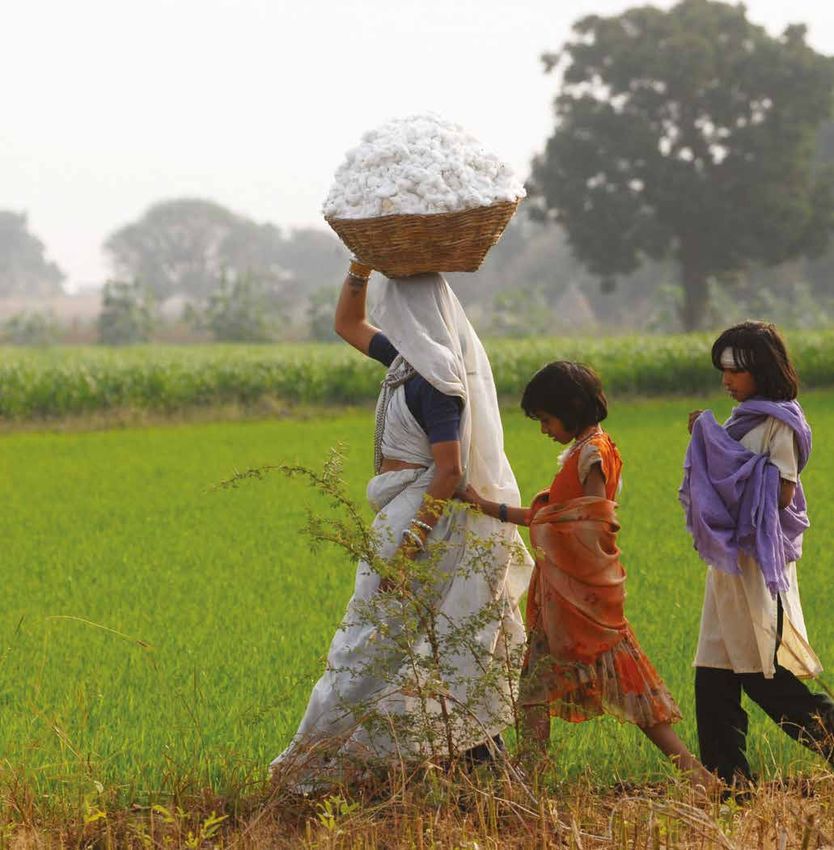
Organic Textile Standard (GOTS), Soil and demand for primary energy
textile sectors but sales have grown
Association has signed up to support by 62%. Social benefits of organic
most in personal care, fashion and
the United Nation’s charter to achieve cotton farming include: increased
baby and childrenswear. Homeware
net-zero greenhouse gas emissions income from organic premiums;
is another popular category as more
by 2050. food security through crop rotation;
retailers are selling organic mattresses
Companies and consumers are increased independence from seed
and bedding in response to consumer
trying to be more sustainable by companies; improved health thanks to
demand.
using organic cotton in clothing, the elimination of toxic agrochemicals;
home textiles and feminine care. Textile Exchange research has found and better local infrastructure.
More than half of garments sold in the that organic cotton has many social
UK are made from cotton (WRAP). So and environmental benefits, which
switching to more sustainable cotton contribute towards meeting the
alternatives is one of the biggest Sustainable Development Goals.
Highlights
• Sales of Soil Association
Certification textiles grew
by 18% in the UK in 2018,
making the market worth
£41.3 million
• Spending on ethical
clothing in the UK
increased by 19.9% in
2018 (Ethical Consumer
Market Report)
• Global Organic Textile
Standard (GOTS)
certified facilities
and retailers
grew by 10%
in 2018
Photo by Joerg Boethling, provided by Remei AG
19Today’s consumer
and organic
Organic’s integrity and values are aligned with many of today’s
consumers who continue to see it as a key signpost to health. It fits
well with mindful consumerism, environmentalism, veganism and
vegetarianism – trends which are dominating the market.
Increasing numbers of people are ‘Ethical’, ‘conscious’ and ‘mindful’ Indeed, research from Euromonitor
choosing to eat more healthily consumerism describe a much International shows that Britons spend
which works well for organic as greater percentage of shoppers who less of their household income on food
it’s regarded as a healthy option. choose organic because they want to than any other country, apart from the
Recent IGD research found that 85% be less harmful to the environment US and Singapore.
of shoppers claim to be actively trying and society in general. They have an
The amount we spend on food could
to improve their diet. Organic offers increased awareness of the impact
increase again as consumers realise
reassurance to this consumer and of their purchasing decisions. Ethical
that cheap food is not always the best
works in harmony with the many other Consumer research, for example,
ethical choice, and often creates more
trends towards healthy eating, such as found that over three in five people
waste, creating bigger problems for the
free-from, dairy-free and a flexitarian had made some dietary decisions
environment and the economy.
approach. for environmental or animal welfare
reasons in the past year. Over a Consumers are building different
Indeed, many people are switching
quarter of respondents to their survey food routines and choices into
to a partially vegetarian or vegan diet.
stated that they had avoided buying their daily food and drink planning,
Ethical Consumer research found that
a product, or using a service, due to following micro trends. The
11% of people are vegetarian and 3%
its negative environmental impact. popularity of healthy juicing and
vegan – an increase of 52% and 153%
There’s rising consumer pressure, for smoothie-making, for example, is
respectively since 2016. In their Food
example, for businesses to reduce the supporting sales of organic fruit
and Drink Report, Waitrose call 2018
amount of palm oil they use to help and vegetables. Organic fermented
the year vegan went ‘mainstream’.
stop deforestation, as well as reducing products, such as kombucha, kefir
Kantar Worldpanel reported recently packaging and cutting back on waste. and sauerkraut, are also popular as
that one in three food items are chosen fermentation is seen to be a natural
People are spending proportionately
for health reasons. University of and healthy way of preserving food.
less of their household income on
Oxford scientists published research Consumer awareness of cleaner labels,
food at home. So the quality of what
this year calling for more people to with simple ingredients and greater
they do buy could become more
adopt a flexitarian diet in order to transparency, bodes well for organic.
important. Organic offers quality
combat climate change, promote food
assurance, alongside animal welfare
sustainability and reduce pollution.
and environmental benefits. Research
This supports our call for people to eat
from the Office of National Statistics
less, but better (good quality) meat
shows that the amount people spend
and fish.
on food and non-alcoholic drinks at
home has halved in 60 years, from 33%
to 16% of household income (Family
Expenditure Survey).
20Triodos Case Study
Sieske Valk is an organic shopper living in London. She’s
proud to be a conscious consumer, even extending that to her
personal banking with Triodos Bank, a specialist in supporting
businesses throughout the organic supply chain.
‘As a professional pet carer and yoga teacher, I live a very active
lifestyle in a bustling city. The food I put into my body is vital, so
I love to eat nutritious, plant-based goodies whenever I can and
organic when possible.
I believe that humans, animals and the planet shouldn’t have
to suffer for my needs. That’s why I tend to buy organic – and
Fairtrade where I can – for everything that goes in and on my
body, with minimal packaging and miles travelled.
Soil Association Certification makes buying food, clothes and
beauty products so much easier as its labels help to identify
genuine organic products. Thanks to certification, as well as
banking ethically with Triodos, I’m reassured that my money
is supporting businesses that align with my values.’
Find out more at www.triodos.co.uk
Highlights
• The plant-based and
free-from food and drink trend
will continue to positively influence
the organic market in 2019.
• Only 15.7% of customers make up 78%
of total organic spend on food and
drink, suggesting a loyal customer
base
• Organic overtrades among under
44 year olds, often in London and
the south and from higher income
households
1 in 3 11%
of people are
food items are vegetarian
chosen and 3% are
for health vegan*
reasons
*Source: www.ethicalconsumer.org/research-hub/uk-ethical-consumer-markets-report
21Packaging for organic
The devastating effects of plastic on our natural planet has been one
of the hottest topics of the year, due, in part, to BBC1’s Blue Planet.
Soil Association Certification and its licensees are What Soil Association Certification
leading the way in finding more environmentally
is doing
friendly ways to package products. Nearly 70% of all
plastic waste in the UK is packaging (WRAP). If nothing is We’re committed to supporting licensees to reduce the
done to reduce the use of plastic, the amount of waste in amount of plastics they use.
the oceans will triple in the next decade, according to a UK
Our aim is to:
government report.
• Work towards a world that is free from plastic pollution
Soil Association Certification has the only organic
with a rapid phase-out of single use plastics. We want
standards in the UK to include packaging. We’ve
all plastic to be reusable, recyclable or compostable by
responded to the UK government’s Resources and
2025 – or earlier. And we want to make sure all recyclable
waste strategy for England consultation, with a call for
packaging is actually recycled.
minimising waste particularly avoidable plastic waste
while promoting resource efficiency. • Provide information on sourcing environmentally-
friendly packaging for food, drink and beauty,
including through our network of over 1,000 FSC
Packaging is influencing certified paper and card suppliers.
shopper choices
• We’re a signatory to the WRAP UK Plastics
We track consumer research about packaging and Pact, which brings together 68 businesses
share it with licensees so they can take responsibility and charities and the UK government to
for reducing their own. From this, we know that eliminate problematic single-use packaging
environmentally-friendly and less packaging is a by 2025.
priority for consumers.
February 2018 Ipsos MORI research found that more than
eight out of 10 people were ‘very’ or ‘fairly concerned’ about
packaging when they made choices to buy products. Over a
quarter (27%) expect companies that produce products to take
responsibility for reducing packaging.
67 %
An England Marketing survey for Soil Association
Certification in June 2018 found that environmentally-
friendly packaging was either ‘important’ or ‘very important’
for consumers when they buy fresh produce but that
they found it hard (72%) to understand labelling around
environmentally-friendly packaging
of shoppers surveyed said
they expected organic
food and drink to be more
environmentally-friendly
packaged than
non-organic
22Organic across UK
There is widespread support for organic across the UK. Almost a third
of organic sales are in London, a significant overtrade versus all food
and drink sales there.
The main UK regions have also organic grocery in Scotland was up
increased organic sales, with Wales 5.4% (Kantar Worldpanel to March
and the west of England making up 2018). Sales turnover from Scotland- Highlights
7.5% of the total national sales of based Soil Association Certification
organic and Scotland almost 7%. licensees was more modest at • Scottish licensees have
almost 2%. increased sales of organic
The south of England has the most
by around 2%, Northern
land devoted to organic. The highest Organic businesses are benefiting Ireland by 22% and Wales
concentration is in the south-west, from Scotland being seen as a brand by 27%
which accounts for almost half of itself, and representing a mark of
land farmed organically in England. quality. The country accounts for • Wales also has highest
There are over 1,600 producers and nearly a quarter (24%) of all organic increase of land farmed
processors of organic in this area. land in the UK. Organic land is 2.1% organically in the UK, at
of total area farmed in the country. 5.6% (Defra 2017 statistics)
Welsh licensees have had the biggest
rise in organic sales, with a 27% Scotland now has 578 processors and • Products branded
increase. This is mainly due to better producers, an increase of 3.2% on Scottish Organic and
sales of Wales-produced red meat 2016, suggesting there is an increasing agritourism are
such as the Rhug Estate brand and interest in producing organic. helping to
dry goods which account for around The Scottish market continues to grow the
40% of sales of organic from Welsh drive innovation in organic. In 2018 organic market
processors. Wales also has the highest we certified two of the first organic in Scotland
increase of land farmed organically in tea farms in the UK in Scotland,
the UK, at 5.6%. Windy Hollow Farm in Perthshire
Northern Ireland-based Soil and Isle of Arran Tea Company: also
Association Certification licensees’ Locavore, Scotland’s first organic and
turnover increased by 22% in 2018. social enterprise-run supermarket
Superfood company Linwoods and in Glasgow. Innovation in organic
White’s cereals are two large brands is contributing to the growth of
that are driving sales of product from agritourism in Scotland – almost
Northern Ireland. Sales of organic half of visitors to the country want to
mushrooms from Northern Ireland sample local food (VisitScotland).
also increased significantly. There
Sales of organic fresh produce
are now 220 organic producers and
and box schemes in Scotland are
processors in Northern Ireland, an
booming. They are benefiting from the
increase of 7.8% on 2016.
demand for ‘local’ and shorter supply
At the 2018 Royal Highland Show the chains. Likewise, milk delivery and
Scottish Cabinet Secretary, Fergus milk vending machines are offering a
Ewing revealed the total spend on new and growing route to market.
23Organic farming
More farmers are going into organic farming to meet increasing
consumer demand. The amount of organic certified land is
increasing, slowly, and organic offers exciting opportunities.
The amount of organic certified non-organic counterparts. With good vegetables, who can offer substitutes
land has increased by 1.9%, the first prices, innovative supply chains and for the high level of imports.
rise since 2008 (DEFRA). Land in guaranteed financial support, now is
Post-Brexit changes to farming
conversion also increased by nearly a good time to consider producing
policy could present an
30%, (albeit from a relatively low base) organic cereals.
unprecedented chance for a more
a third consecutive year rise. This is
There are also opportunities for ecologically sustainable farming
good news and is, largely, because of
growing more organic arable crops system. Soil Association has lobbied
the increased demand for organic food
for animal feed in the UK. In 2015, the UK government to amend the
in the UK, which has given confidence
the UK imported close to 80% of its Agriculture Bill to include “establishing
to prospective conversions.
organic animal feed, and this reliance and maintaining whole farm
More businesses are getting is increasing year on year. At the same agroecological systems”. We want a
involved in organic farming and time, processors and retailers are system that is supported by payments
food manufacture to meet consumer increasingly searching for UK sourced to farmers because of the public goods
demand. The number of organic ingredients for organic food. they deliver.
processors increased by 6% and
There has been a marked increase in For more information on farmer
producers by 2% in 2017. DEFRA
the number of producers of organic payments, please visit www.
statistics show that there were 6,586
fresh produce. More than one in soilassociation.org/farmers-growers/
organic operators in the UK in 2017, up
three new applications to become market-information/financial-
3.5% since 2016.
Soil Association Certification certified information/
Demand for organic eggs has producers in the 2017-2018 financial
It’s important that organic farmers
increased which has led to a rise year came from people who want to
respond to the increase in people
in the number of organic birds. It produce organic fruit and vegetables.
adopting meat and dairy-free
increased by 8.5% between 2016 and They are meeting the demand for
diets. These changes to consumer
2017, to just over 3 million birds, half a supermarket sales of fresh produce
diets are starting to have an impact on
million more birds since 2015. which have increased over a five year
what organic farmers grow in
period by approx. £70 million.
Arable producers were receiving 50% the UK. Organic arable farmers are
to 100% higher premiums for their The post-Brexit climate could growing ‘proteins’, like peas and beans,
crops than non-organic farmers potentially spur a renaissance in for human consumption, and the
in 2017. Our Organic Arable Report consumers wanting to buy from agriculture industry, as a whole, is
found that, often, organic farms are, UK producers. Opportunity could exploring how we can farm more
on average, more profitable than their be greatest for organic producers of grains like quinoa.
24The effects of 2018’s wet, cold
000s hectares 2016 2017 Year-on-year change
winter and hot, dry summer will
continue to influence organic
Fully organic UK land 482.7 484.8 +0.4%
livestock farming in 2019. The
UK had one of the latest turnouts
Land in conversion to organic 25.2 32.6 +29.4%
ever in spring 2018, followed by
one of the hottest, driest summers Total UK organic land 508 517.4 +1.9%
on record. This significantly
reduced production from grazed
grass, forcing livestock farmers 2016 2017 Year-on-year change
to eat into winter forage stocks
during the summer. It led to higher Producers 3398 3465 +2%
production costs for all ruminant
livestock farmers. Availability of Processors 2804 2977 +6.2%
supplementary feeds appear to be
adequate, but producers are hoping Producer processors 161 144 -10%
for an early spring in 2019 because
of reduced forage stocks. Total 6363 6586 +3.5%
Source: DEFRA Organic farming statistics 2017
Distribution of organic land (hectares 000s)
Organic land
2016 121.6
2017 122.7
+1%
Scotland Highlights
• The amount of organic
land in the UK is now
Organic land slowly increasing,
2016 296.5 growing by 1.9% in 2017
Northern 2017 300.3
+1.3% • With good prices,
Ireland
innovative supply chains
and financial support,
now is a good time to
consider producing
=
Organic land organic for the growing
2016 8.3 sectors
2017 8.3 England
flat • Post-Brexit changes to
farming policy could
Wales present an unprecedented
chance for a more
ecologically
Organic land sustainable
2016 81.5 farming
2017 86.1 system
+5.6%
Source: DEFRA Organic farming statistics 2017
25Organic across
the globe
Global sales of organic were expected to surpass 80 billion euros for
the first time in 2017. The UK has 3% of this total (FiBL). It’s the seventh
largest organic market in the world, a drop from fourth in 2016.
Soil Association Certification licensees export the Latest figures suggest that organic food and drink export
highest value of organic items to the USA, France and continues to be an under-indexed channel. Licensee
Germany. Unsurprising given that they are the largest figures suggest that approx. 8% of organic food and drink
and best performing markets. Interest in UK organic and is exported. This compares to approx. 19% of all UK food
Soil Association certified products, in particular, is very and drink*. With the right support, this has the potential to
strong in the Far East. There, The Soil Association symbol is increase as 2018 exports of all food and drink are up 5.1% on
recognised by many as the highest level of food assurance. 2017, according to the Food and Drink Federation (FDF).
As in the UK, health is the major driver of organic food In Denmark, 13.3% of total food sales are organic (Organic
purchases globally. Concerns about pesticides, genetically Denmark) – the highest market share in the world. Indeed,
modified organisms, and growth hormones are the primary Denmark offers an exciting example of a strong organic
purchasing motives in the USA. market, from which the UK could learn much. More than half
of Danes buy organic food every week, according to Organic
Organic crops are grown in 178 countries, but only 87 have
Denmark. Organic is much more available in supermarkets,
national standards (Ecovia Intelligence). With the UK’s tough
making it mainstream, and the difference in price between
standards, product integrity and quality greatly respected
non-organic products is often lower than equivalents in the
overseas, organic export offers a significant opportunity.
UK. Fresh fruit and vegetables account for 33% of total sales of
A 2018 survey of licensees found that nearly half of organic in Denmark, and are increasing.
organic businesses involved in export are exporting
ambient grocery products. 41% of licensees said this Trade post-Brexit
channel represented more than a quarter of their Soil Association Certification is very aware of the
business. A quarter of businesses surveyed found that the uncertainties and concerns surrounding organic trade
value of what they export increased by 25% in 2017. post-Brexit. We are advising DEFRA on achieving
continuity for organic trade between the EU and UK. At
the time of writing this report, there was no confirmation
of a Brexit deal.
For more information about the effect of Brexit on organic
trade, please visit: https://www.soilassociation.org/
Denmark has certification/food-drink/brexit-and-organic-certification/
13.3 %
of total food sales
Soil Association Certification hosts events with experts on
everything from regulations to labelling to help licensees
export to key organic markets.
as organic
(Organic Denmark)
274 euros
per person spent
on organic
products in
Switzerland
(FIBL-AMI survey 2018) *UK government statistics, 2016 gross value add food and drink
(including agriculture contributions) against government FDF
value of 2017 food and drink exports.
26Key countries for sales of organic (billion euros)
Position Country Sales est Growth est % total sales
1st 43.2B +6.4% 5.5
2nd 10B +5.9% 5.2
3rd 8.3B +17% 3.5
7th 2.6B +5.3% 1.5
Source: Approx size of market converted from UK £ using £1 = 1.13 euros.
Figures estimated using data from a number of sources including OTA, Agence Bio, FiBL
USA – 46% of global sales of organic (FiBL) France – 8% of global sales of organic
The growth of organic sales in the USA has been around 10% The organic market in France is growing rapidly, at 17% in
for several years, according to Organic Trade Associaton. 2017, according to Agence Bio. It offers opportunities for UK
This decreased to 6.4% in 2017. The OTA suggests that the businesses as 31% of organic products are imported. Around
biggest organic market in the world has matured so growth three quarters of French consumers buy at least one organic
has slowed yet remains steady. Their figures show that 83% product a month (Agence Bio). The French market has much
of families in the USA still buy organic products. more specialist and exclusive organic retailers, including
chains such as Biocoop. They contribute over a third of sales
This year, sales of organic dairy products reduced as
(36%) to the total organic market in the country. Supermarkets
plant-based alternatives became more popular. Growth
have a 46% share of the French market, compared to a 65.8%
in the USA’s organic egg market also reduced as other
in the UK. The largest growth category for organic in France is
animal welfare claims such as ‘pasture raised’ created new
wine, cider and beers with more than a 21% increase.
competition for organic. The biggest organic category
continued to be fresh fruit and vegetables. Organic
beverages increased in popularity, becoming the third
largest organic food category.
Germany – 11% of global sales of organic Highlights
AMI GmbH figures show that sales of organic increased by
• The Soil Association symbol is
5.9% in Germany in 2017. Now, one in 10 Germany-based
recognised by many buyers worldwide as
farms produces organically. Considerable expansion of
the highest level of food assurance
organic ranges in German supermarkets have contributed
to steady growth in the organic market. Supermarkets sales • A 2018 survey found that a quarter of
account for almost 60% of all organic sold in Germany. licensees increased the value of their
German government figures show that of the 3,500 organic exports by 25% in 2017
shops selling solely organic products, 500 are organic
• With our higher standards and
supermarkets (Germany Trade & Invest).
with product integrity and quality
greatly respected overseas,
organic export offers a
significant opportunity
27You can also read


