Our mission continues - Investor Relations | Sarepta ...
←
→
Page content transcription
If your browser does not render page correctly, please read the page content below
Our mission continues.
 Armed with the most advanced science in genetic medicine, we
 are in a daily race to rescue lives otherwise stolen by rare disease.
 At Sarepta, every day is another twenty-four hours to stand up
 for patients, advance technology, challenge convention, and
 drag tomorrow into today.

  DOUGLAS INGRAM
  President and Chief Executive Officer
  JP Morgan 39th Annual Healthcare Conference 2021
  January 11, 2021

                                                                                                                    KAI
                                                                                                                    Living with Duchenne
                                                                                                                    muscular dystrophy
J.P. MORGAN HEALTHCARE CONFERENCE – JANUARY 2021                         ©SAREPTA THERAPEUTICS, INC. 2021. ALL RIGHTS RESERVED.        1
Forward-looking Statements
                  This presentation contains "forward-looking statements." Any statements that are not statements of historical fact may be deemed to be forward-looking statements. Words such as
“believe,” “anticipate,” “plan,” “expect,” “will,” “may,” “intend,” “prepare,” “look,” “potential,” “possible” and similar expressions are intended to identify forward-looking statements. These forward-
looking statements include statements relating to our pipeline and the potential of our programs to treat 1.5M patients; the potential benefits of our product candidates, including PPMO’s potential
to increase cell penetration, lead to more efficient dosing for patients and deliver PMOs to unique muscle types (e.g., heart); the prediction for significantly greater changes as we continue to dose
escalate in SRP-5051-201; the estimated prevalence of DMD and potential market opportunities; the potential of our LGMD programs to generate a steady stream of gene therapy candidates in five
additional subtypes which together represent more than 70% of all known LGMDs; the PDUFA date of 2/25/21 for AMONDYS 45 and the expected launch of AMONDYS 45; our revenue guidance of
$537M – 547M in 2021; and plans and expected milestones, including continuing to advance Part 2 crossover phase of Study 102 and conducting biopsy at week 12 to assess expression and biological
markers and longer-term assessments of functional outcomes, reporting biomarker and safety results from Study 103 in Q2 2021, leveraging learnings from Study 102 and Study 103 to inform future
clinical development, including Study 301, announcing SRP-5051 data, advancing PPMO rare exons programs and expanding into other disease areas, completing GMP runs for LGMD2E, seeking FDA
confirmation of pivotal trial study design for LGMD2E and launching pivotal trial, and advancing our gene editing programs and expanding our gene editing centers of excellence.

                  These forward‐looking statements involve risks and uncertainties, many of which are beyond our control and are based on our current beliefs, expectations and assumptions
regarding our business. Actual results and financial condition could materially differ from those stated or implied by these forward‐looking statements as a result of such risks and uncertainties and
could materially and adversely affect our business, results of operations and trading price. Known risk factors include, among others: we may not be able to meet expectations with respect to sales of
our products; success in preclinical and clinical trials, especially if based on a small patient sample, does not ensure that later clinical trials will be successful; the data presented in this presentation
may not be consistent with the final data set and analysis or result in an assessment that any of our product candidates provides a safe or effective treatment benefit; different methodologies or
assumptions than we utilize to assess particular safety or efficacy parameters may yield different statistical results, and, even if we believe the data collected from clinical trials are positive, the data
may not be sufficient to support approval by the FDA or foreign regulatory authorities; we may not be able to comply with all FDA post-approval commitments and requirements with respect to
EXONDYS 51 and VYONDY 53 in a timely manner or at all; our data for our different programs, including casimersen, PPMO and gene therapy-based product candidates, may not be sufficient for
obtaining regulatory approval; if the actual number of patients suffering from DMD and LGMD is smaller than estimated, our revenue and ability to achieve profitability may be adversely affected;
various factors may decrease the market size of our product and product candidates, including the severity of the disease, patient demographics and the response of patients’ immune systems to our
product candidates; our dependence on our manufacturers to fulfill our needs for our clinical trials and commercial supply, including any failure on our part to accurately anticipate product demand
and timely secure manufacturing capacity to meet product demand, may impair the availability of products to successfully support various programs, including research and development and the
potential commercialization of our gene therapy product candidates; we may not be able to execute on our business plans and goals, including meeting our expected or planned regulatory milestones
and timelines, clinical development plans, and bringing our product candidates to market, due to a variety of reasons, many of which are outside of our control, including possible limitations on
company financial and other resources, manufacturing limitations that may not be anticipated or resolved for in a timely manner, regulatory, court or agency decisions, such as decisions by the United
States Patent and Trademark Office with respect to patents that cover our product candidates; the impact of the COVID-19 pandemic; and those risks identified under the heading “Risk Factors” in
our most recent Annual Report on Form 10-K for the year ended December 31, 2019, and most recent Quarterly Report on Form 10-Q filed with the Securities and Exchange Commission (SEC) as well
as other SEC filings we make, which you are encouraged to review.

                  Any of the foregoing risks could materially and adversely affect the Company’s business, results of operations and the trading price of Sarepta’s common stock. For a detailed
description of risks and uncertainties we face, we encourage you to review our SEC filings. We caution investors not to place considerable reliance on the forward-looking statements contained in this
presentation. We undertake no obligation to update forward-looking statements based on events or circumstances after the date of this presentation.

J.P. MORGAN HEALTHCARE CONFERENCE – JANUARY 2021                                                                                              ©SAREPTA THERAPEUTICS, INC. 2021. ALL RIGHTS RESERVED.              2
Micro-dystrophin SRP-9001-102
          Top-line Clinical Data (Part 1)

J.P. MORGAN HEALTHCARE CONFERENCE – JANUARY 2021   ©SAREPTA THERAPEUTICS, INC. 2021. ALL RIGHTS RESERVED.   3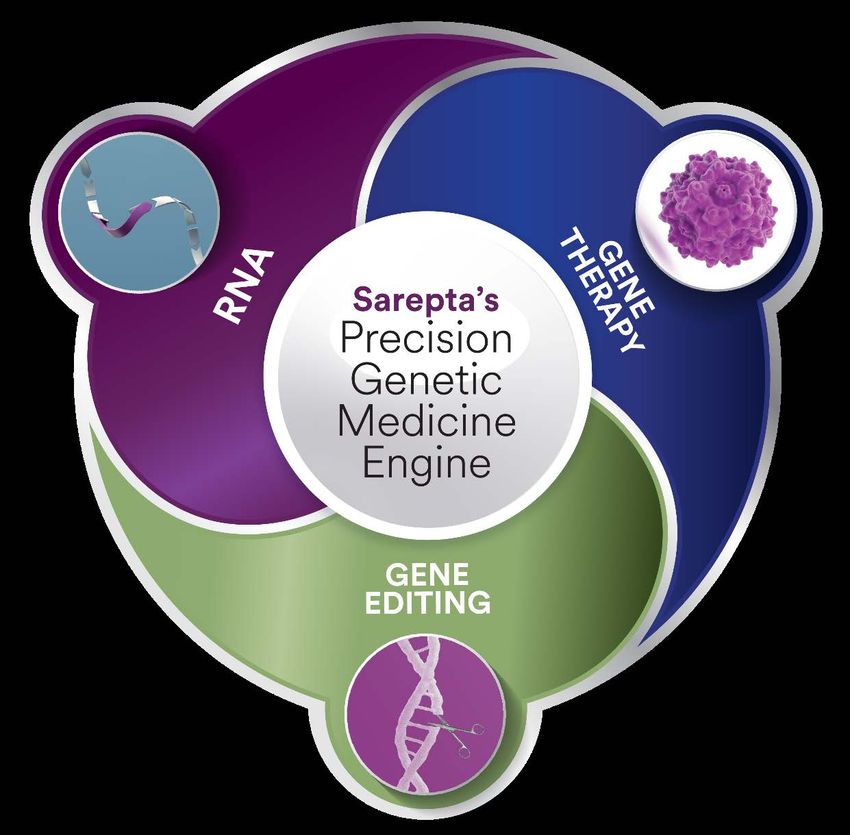
SRP-9001-102 Study Design: Parts 1 and 2
A randomized, double-blind, placebo-controlled clinical trial to evaluate the safety, efficacy and tolerability of a single dose
of SRP-9001 compared to placebo, in boys with DMD aged 4–7 years old; Study is ongoing and remains blinded, functional
results for all patients will be analyzed at 48 week timepoint
                                                                   Double-blind, placebo-controlled
                                                                                                                                            Part 3
                                                       Single IV infusion
                                                           SRP-9001                     Single IV infusion placebo
           Randomization                                     (n=20)
                (n=41)                                                                                                                        OLE
          (Stratified by age)                      Single IV infusion placebo               Single IV infusion
                                                              (n=21)                            SRP-9001

                                                      Part 1: 48 weeks                     Part 2: 48 weeks

              Primary endpoints
                   • Micro-dystrophin protein expression, from Baseline to Week 12, as measured by western blot
                   • Change in NSAA total score from Baseline to Week 48

              Statistical Analysis Plan
                     • Stratified by age cohort (4-5 age group vs. 6-7 age group)
                     • Pre-specified analysis for age cohorts

J.P. MORGAN HEALTHCARE CONFERENCE – JANUARY 2021                                                            ©SAREPTA THERAPEUTICS, INC. 2021. ALL RIGHTS RESERVED.   4
Micro-dystrophin Protein Expression and Vector Genome Copies per
Nucleus Achieved Endpoints in Part 1 of Study 102 (n=20, Week 12)
 Micro-dystrophin Expression (Western Blot)
                                                   Percentage of Normal

         Mean (n=20)                                      28.1%

Micro-dystrophin Expression (IF)
                                                   Intensity (% Normal)   Percentage of Dystrophin-positive Fibers
         Mean (n=20)                                      63.7%                                  33.0%

Vector Genome Copy Number
                                                    Copies per Nucleus
         Mean (n=20)                                       1.56

J.P. MORGAN HEALTHCARE CONFERENCE – JANUARY 2021                                    ©SAREPTA THERAPEUTICS, INC. 2021. ALL RIGHTS RESERVED.   5
Study 102 Placebo Crossover Patients Showed Similar Expression
Results to Patients in Study 101
 Micro-dystrophin Protein Expression Results: Study 102 Placebo Crossover Patients (n=11)

 Micro-dystrophin Expression (Western Blot)
                                                                                                                       % of Normal Expression
                                                         % of Normal Expression   % of Normal Expression
                                                                                                                         Study 102 – Part 2
                                                               Study 101            Study 102 – Part 1
                                                                                                                     Placebo Crossover Patients
                                                              Mean (n=3*)              Mean (n=20)
                                                                                                                            Mean (n=11)

                                                                53.7%                     28.1%                                      51.7%
      Mean age at time of biopsy                                 5.79                     6.58                                         7.14
Vector Genome Copy Number
                                                                                                                             Study 102
                                                              Study 101                Study 102
                                                                                                                     Placebo Crossover Patients
                                                             Mean (n=3*)              Mean (n=20)
                                                                                                                           Mean (n=11)

                                                                 1.63                     1.56                                         2.62
* Does not include 4th patient deemed to be an outlier
J.P. MORGAN HEALTHCARE CONFERENCE – JANUARY 2021                                                    ©SAREPTA THERAPEUTICS, INC. 2021. ALL RIGHTS RESERVED.   6
NSAA Primary Functional Endpoint: Treated Patients Outperformed
Placebo Patients at All Time Points
 NSAA change from baseline of +1.7 in SRP-9001 treated group vs. +0.9 in placebo group, which is not statistically different (p= 0.37)
        Least Squares Mean (+/- SE) Change from Baseline

                                                                                        •   Separation shown at every timepoint
                                                                                            between SRP-9001 and placebo groups

                                                                                        •   Baseline analysis at 48 weeks:
                                                                                             ― Treatment group showed 1.7-point increase
                                                                                               compared to baseline (P=0.0090)

                                                                                             ― Placebo group showed 0.9-point increase
                                                                                               compared to baseline (P=0.1411)

J.P. MORGAN HEALTHCARE CONFERENCE – JANUARY 2021                                                ©SAREPTA THERAPEUTICS, INC. 2021. ALL RIGHTS RESERVED.   7
Functional Measures Well Matched at Baseline (4-5 Year Old Group)

                                                                 SRP-9001         Placebo
Characteristic                                     Statistics
                                                                Age 4-5 (n=8)   Age 4-5 (n=8)
                                         Mean                   20.1            20.4
NSAA
                                         P-value(vs Placebo)    0.8318
                                         Mean                   58.76           59.79
100 meter (seconds)
                                         P-value(vs Placebo)    0.7925
Ascend 4 Steps                           Mean                   3.46            3.48
(seconds)                                P-value(vs Placebo)    0.9822

                                         Mean                   3.89            3.76
Time to Rise (seconds)
                                         P-value(vs Placebo)    0.7421

                                         Mean                   5.01            5.24
10 meter (seconds)
                                         P-value(vs Placebo)    0.5832

J.P. MORGAN HEALTHCARE CONFERENCE – JANUARY 2021                                         ©SAREPTA THERAPEUTICS, INC. 2021. ALL RIGHTS RESERVED.   8
Pre-specified NSAA Subgroup Analysis (Ages 4-5): Reached Statistical Significance
The 4- to 5-year old group had a statistically significant improvement in NSAA vs. placebo group at week 48
 NSAA change from baseline of +4.3 in SRP-9001 treated 4–5-year-olds vs. 1.9 in placebo (p= 0.0172); age was a stratification
 factor at randomization
        Least Squares Mean (+/- SE) Change from Baseline

                                                           4                                                                                                                                      Age 4-5 yrs
                                                                                                                                        Measure Treatment
                                                                                                                                                                                         LSM Change
                                                                                                                                                                         Baseline                          P-value
                                                                                                                                                                                            (SE)
                                                           2
                                                                                                                                                SRP-9001                    20.1            4.3 (0.6)
Functional Measures Not Well Matched at Baseline (6-7 Year Old Group)
Patients in the treated group had significantly lower NSAA scores at baseline

                                                                  SRP-9001                 Placebo                         Difference
Characteristic                                     Statistics
                                                                Age 6-7 (n=12)           Age 6-7 (n=13)                 (from Placebo)
                                        Mean                     19.6                      24.0                           - 4.4
NSAA
                                        P-value(vs Placebo)      0.0046
                                        Mean                     62.56                     50.21                          + 12.35
100 meter (seconds)
                                        P-value(vs Placebo)      0.0219
Ascend 4 Steps                          Mean                     3.83                      2.86                           + 0.97
(seconds)                               P-value(vs Placebo)      0.0958

                                        Mean                     5.91                      3.44                           + 2.47
Time to Rise (seconds)
                                        P-value(vs Placebo)      0.0053

                                        Mean                     5.58                      4.58                           + 1.00
10 meter (seconds)
                                        P-value(vs Placebo)      0.0313

 Note that an imbalance in NSAA and timed tests exist in the older (6–7-year-olds) between the two groups with the treated group worse than placebo.

J.P. MORGAN HEALTHCARE CONFERENCE – JANUARY 2021                                                     ©SAREPTA THERAPEUTICS, INC. 2021. ALL RIGHTS RESERVED.   10
Differences in Baseline NSAA Scores Have a Significant Impact
on Disease Progression
NSAA Natural History Data
35
Class 1
Class 2 Age and baseline NSAA are predictors
30
Class 3 of disease progression
Class 4
25
NSAA
20
15
10
Mean Baseline NSAA Score for 9001 Treated Patients
(6-7 year old group)
5
Mean Baseline NSAA Score for Placebo Patients
0 (6-7 year old group)
4 6 8 10 12 14 16
Age (years)
Source: Muntoni F, Domingos J, Manzur AY, et al. Categorising trajectories and individual item changes of the North Star Ambulatory Assessment in patients with Duchenne muscular dystrophy.
PLoS ONE. September 2019.14(9): e0221097.
J.P. MORGAN HEALTHCARE CONFERENCE – JANUARY 2021 ©SAREPTA THERAPEUTICS, INC. 2021. ALL RIGHTS RESERVED. 11Safety Summary
• No new safety signals
• Safe and well tolerated; consistent with previous studies
• 85% of the treated group had treatment related adverse events vs. 43% in the placebo group
– The most common treatment related adverse event was vomiting
• 60% (12/20) in treatment group vs. 19% (4/21) in placebo group
• Among patients with treatment-related AEs 82% were mild or moderate in severity
• Total of 4 patients with 5 treatment related SAEs
– 4 SAEs in the treated group and 1 in the placebo group
• Musculoskeletal: 3 rhabdomyolysis (2 in 9001 group and 1 in placebo)
• Hepatobiliary/Investigations: 2 transaminases increased in 9001 group
• No adverse event related discontinuations and no deaths
• No clinical complement activation observed
J.P. MORGAN HEALTHCARE CONFERENCE – JANUARY 2021 ©SAREPTA THERAPEUTICS, INC. 2021. ALL RIGHTS RESERVED. 12Conclusions
• No new safety signals observed
• Primary biological endpoint (micro-dystrophin expression at 12 weeks post-treatment) achieved
• Total NSAA score of treated patients vs. placebo demonstrated a positive increase at all
post-treatment time points
– The study did not achieve a statistical significance on the primary functional endpoint of improvement in
total NSAA score compared to placebo at 48 weeks post-treatment
• Pre-specified analysis in the 4- to 5-year old group showed a significant improvement in NSAA vs.
placebo group at 48 weeks
• Imbalance in baseline functional characteristics in the 6-to 7-year old group contributed
to the lack of statistical significance on the functional endpoint
• Data support future clinical development plans
J.P. MORGAN HEALTHCARE CONFERENCE – JANUARY 2021 ©SAREPTA THERAPEUTICS, INC. 2021. ALL RIGHTS RESERVED. 13Next Steps
• Continue to advance Part 2 crossover phase; conduct biopsy at week 12 to assess
expression and biological markers and longer-term assessments of functional outcomes
• Enrolled and dosed 11 patients in Study 103 using commercial process material
– Report biomarker and safety results in Q2 2021
• Leverage learnings from Study 102 and Study 103 to inform future clinical development,
including Study 301
J.P. MORGAN HEALTHCARE CONFERENCE – JANUARY 2021 ©SAREPTA THERAPEUTICS, INC. 2021. ALL RIGHTS RESERVED. 14EUROPE
NORTH
AMERICA
27,000
12,000
MIDDLE ASIA
EAST PACIFIC
13,000 92,000
AFRICA
SOUTH
AMERICA
50,000
25,000
TOTAL ESTIMATED PREVALENCE
J.P. MORGAN HEALTHCARE CONFERENCE – JANUARY 2021 ©SAREPTA THERAPEUTICS, INC. 2021. ALL RIGHTS RESERVED. 15EUROPE
NORTH
AMERICA
MIDDLE ASIA
EAST PACIFIC
AFRICA
SOUTH
AMERICA
PATIENTS LIVING WITH DMD TODAY*: >200,000 globally
* Estimated global prevalence
J.P. MORGAN HEALTHCARE CONFERENCE – JANUARY 2021 ©SAREPTA THERAPEUTICS, INC. 2021. ALL RIGHTS RESERVED. 16RNA Franchise
PMO and PPMO for Duchenne
J.P. MORGAN HEALTHCARE CONFERENCE – JANUARY 2021 ©SAREPTA THERAPEUTICS, INC. 2021. ALL RIGHTS RESERVED. 17PMO Franchise Revenue and Guidance
PDUFA DATE:
FEBRUARY
2021
$ 600
500
$537M-
400 547M $1.9B
$456M
$ Millions
Guidance
300 (Unaudited)
$381M in cash on
$301M 12/31/20
200
Q4 revenue
100
$ 122.6M
(Unaudited)
0
2018 2019 2020 2021
J.P. MORGAN HEALTHCARE CONFERENCE – JANUARY 2021 ©SAREPTA THERAPEUTICS, INC. 2021. ALL RIGHTS RESERVED. 18Sarepta’s PPMO Next-generation Technology
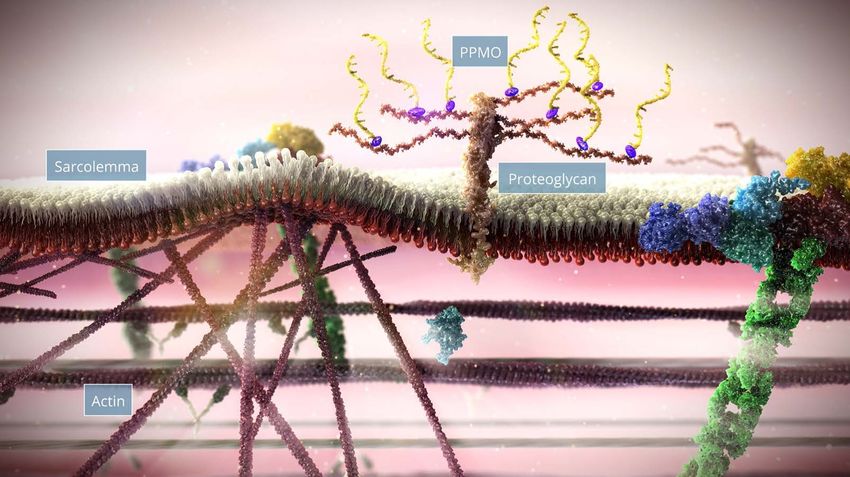
Peptide phosphorodiamidate morpholino oligomer (PPMO) technology
Enhances PMO
• Conjugated peptide greatly increases
cell penetration
• Could potentially lead to more
efficient dosing for patients
• Able to deliver PMOs to unique
muscle types (e.g., heart)
J.P. MORGAN HEALTHCARE CONFERENCE – JANUARY 2021 ©SAREPTA THERAPEUTICS, INC. 2021. ALL RIGHTS RESERVED. 19Gene Therapy
LGMD Portfolio
J.P. MORGAN HEALTHCARE CONFERENCE – JANUARY 2021 ©SAREPTA THERAPEUTICS, INC. 2021. ALL RIGHTS RESERVED. 20Sarepta’s Gene Therapy Pipeline
PROGRAM DISCOVERY PRECLINICAL CLINICAL COMMERCIAL
SRP-9001 micro-dystrophin
GALGT2 Nationwide Children’s
Micro-dystrophin Genethon
SRP-9003 (LGMD2E β-sarcoglycan)
SRP-9004 (LGMD2D α-sarcoglycan)
SRP-9005 (LGMD2C γ-sarcoglycan)
SRP-6004 (LGMD2B Dysferlin)
SRP-9006 (LGMD2L Anoctamin-5)
Calpain 3 (LGMD2A) Nationwide Children’s
Neurotrophin 3 (CMT1A) Nationwide Children’s
LYS-SAF302 (MPS IIIA) Lysogene
Cardiomyopathy University of Florida
Pompe Disease Lacerta
CNS Lacerta
Multiple Sclerosis University of Florida
Rett Syndrome 1 University of Massachusetts
Rett Syndrome 2 StrideBio
Dravet Syndrome StrideBio
Angelman Syndrome StrideBio
Niemann-Pick Type C StrideBio
Four Muscle/CNS Targets StrideBio
Muscle/Cardiovascular Targets Dyno Therapeutics
Emery-Dreifuss muscular dystrophy Type 1 Columbia University
Duchenne Institute of Myology
2 TARGETS PER YEAR - GENE THERAPY CENTER OF EXCELLENCE
All pipeline compounds are undergoing clinical trial investigation.
J.P. MORGAN HEALTHCARE CONFERENCE – JANUARY 2021 ©SAREPTA THERAPEUTICS, INC. 2021. ALL RIGHTS RESERVED. 21Clinical Results to Date: SRP-9003-101 (N=3)*, Cohort 1 (0.5 x 10¹⁴ vg/kg)2,3
QUESTION1
What was the safety Is the transgene Is the protein at the
and tolerability Is the desired Is muscle function
experience with DNA inside protein made? cell membrane? How
improved?
SRP-9003? muscle cells? much is there?
36.1% 51%
2 subjects had elevated Mean of Subjects experienced mean of
>104 5.7-POINT
liver enzymes, 1 of which
was designated an SAE4
mean β-sarcoglycan
IMPROVEMENT
mean β-sarcoglycan
vector copies/µg protein expression positive fibers
DNA detected vs normal by observed with on NSAD from baseline
western blot
0.6 47%
to 18 months
vector copies/nucleus intensity
*ClinicalTrials.gov Identifier: NCT03652259.
1. Asher DR, et al. Expert Opin Biol Ther. 2020;20(3):263-274.
2. September 28, 2020, https://investorrelations.sarepta.com/news-releases/news-release-details/sarepta-therapeutics-investigational-gene-therapy-srp-9003.
3. Rodino-Klapac L, et al. Systemic Gene Transfer with rAAVrh74.MHCK7.SGCB Increased β-sarcoglycan Expression in Patients with Limb Girdle Muscular Dystrophy Type 2E (LGMD2E). WMS 2020.
4. Safety:
• 1 patient experienced mild vomiting, which resolved 1 day without treatment
• No other clinically significant laboratory findings
• No decreases in platelet counts observed outside of the normal range
• No clinical sequelae associated with complement activation
J.P. MORGAN HEALTHCARE CONFERENCE – JANUARY 2021 ©SAREPTA THERAPEUTICS, INC. 2021. ALL RIGHTS RESERVED. 22Clinical Results to Date: SRP-9003-101 (N=3)*, Cohort 2 (2.0 x 10¹⁴ vg/kg)2,3
QUESTION1
What was the safety Is the transgene Is the protein at the
and tolerability Is the desired Is muscle function
experience with DNA inside protein made? cell membrane? How
improved?
SRP-9003? muscle cells? much is there?
62.1% 72%
Majority of AEs were Mean of Subjects experienced mean of
>105 3.7-POINT
mild to moderate
(e.g., vomiting, pain in
mean β-sarcoglycan mean β-sarcoglycan
extremity), which resolved4
vector copies/µg protein expression positive fibers IMPROVEMENT
DNA detected vs normal by observed with on NSAD from baseline
western blot
4.2 73%
to 6 months
vector copies/nucleus intensity
*ClinicalTrials.gov Identifier: NCT03652259.
1. Asher DR, et al. Expert Opin Biol Ther. 2020;20(3):263-274.
2. September 28, 2020, https://investorrelations.sarepta.com/news-releases/news-release-details/sarepta-therapeutics-investigational-gene-therapy-srp-9003.
3. Rodino-Klapac L, et al. Systemic Gene Transfer with rAAVrh74.MHCK7.SGCB Increased β-sarcoglycan Expression in Patients with Limb Girdle Muscular Dystrophy Type 2E (LGMD2E). WMS 2020.
4. Safety:
• 1 treatment-related SAE observed
• 1 patient had mildly elevated GGT
• No stopping/discontinuation rules were triggered by AEs
• No other clinically significant laboratory findings
• No decreases in platelet counts observed outside of the normal range
• No clinical sequelae associated with complement activation
J.P. MORGAN HEALTHCARE CONFERENCE – JANUARY 2021 ©SAREPTA THERAPEUTICS, INC. 2021. ALL RIGHTS RESERVED. 23Next Indications: LGMD Types 2C and 2D
OPPORTUNITY TO GENERATE A STEADY STREAM OF GENE THERAPY CANDIDATES IN FIVE ADDITIONAL
SUBTYPES WHICH TOGETHER REPRESENT MORE THAN 70% OF ALL KNOWN LGMDS1
LGMD2D LGMD2C LGMD2B LGMD2L LGMD2A*
*This program is in collaboration with Dr. Zarife Sahenk at Nationwide Children’s Hospital.
1. Taghizadeh E, Rezaee M et al. Prevalence, pathological mechanisms, and genetic basis of limb‐girdle muscular dystrophies:
A review. J Cell Physiol. 2019;234(6):7874-7884.
J.P. MORGAN HEALTHCARE CONFERENCE – JANUARY 2021 ©SAREPTA THERAPEUTICS, INC. 2021. ALL RIGHTS RESERVED. 24Sarepta’s Pipeline
RNA GENE GENE
14 27 2
THERAPY EDITING
PROGRAMS PROGRAMS PROGRAMS
More than 40 programs in all
Potential to treat 1.5M patients*
*Based on published epidemiology.
J.P. MORGAN HEALTHCARE CONFERENCE – JANUARY 2021 ©SAREPTA THERAPEUTICS, INC. 2021. ALL RIGHTS RESERVED. 25Sarepta’s Multi-Platform Genetic Medicine Engine – Upcoming Milestones
GENE THERAPY
Duchenne (SRP-9001)
• Continue to advance Part 2 crossover phase; conduct biopsy at week 12 to assess expression
and biological markers and longer-term assessments of functional outcomes
• Enrolled and dosed 11 patients in Study 103 using commercial process material
- Report biomarker and safety results in Q2 2021
• Leverage learnings from Study 102 and Study 103 to inform future clinical development,
including Study 301
Limb-girdle muscular dystrophy (LGMD)
• SRP-9003 Type 2E
- Complete GMP runs
- Seek FDA confirmation - pivotal trial study design
- Launch pivotal trial
• LGMDs portfolio path forward
RNA
Duchenne (PMO)
• EXONDYS 51® and VYONDYS 53® revenue growth
• AMONDYS 45™ approval (PDUFA date: 2/25/21) and launch
Duchenne (PPMO)
• Announce SRP-5051 data
• Advance rare exons programs
• Expand into other disease areas
GENE EDITING
• Advance programs
• Expand Centers of Excellence
J.P. MORGAN HEALTHCARE CONFERENCE – JANUARY 2021 ©SAREPTA THERAPEUTICS, INC. 2021. ALL RIGHTS RESERVED. 26#DraggingTomorrowIntoToday SAREPTA, SAREPTA THERAPEUTICS, the SAREPTA Helix Logo, VYONDYS, EXONDYS, EXONDYS 51, and the EXONDYS 51 Logo are trademarks of Sarepta Therapeutics, Inc. registered in the U.S. Patent and Trademark Office and may be registered in various other jurisdictions. AMONDYS, AMONDYS 45, VYONDYS 53, the VYONDYS 53 Logo, DRAG TOMORROW INTO TODAY, DRAGGING TOMORROW INTO TODAY, are trademarks of Sarepta Therapeutics, Inc. J.P. MORGAN HEALTHCARE CONFERENCE – JANUARY 2021 ©SAREPTA THERAPEUTICS, INC. 2021. ALL RIGHTS RESERVED. 27
You can also read


