Blackberry profile Summary
←
→
Page content transcription
If your browser does not render page correctly, please read the page content below
Part 1
    Blackberry profile

    Summary
    • Blackberry belongs to a large genus (group of species) of plants called
      Rubus that includes raspberry, dewberry and loganberry.

    • In Australia, the Rubus genus includes native species and those
      originating in Europe, North America and Asia.

    • This manual deals with the known weedy Rubus species in Australia,
      particularly those from the Rubus fruticosus aggregate or European
      blackberry, which has been recognised as a Weed of National Significance
      (WoNS).

    • Since its introduction to Australia in the early 1830s, blackberry
      has spread throughout its climatic limits, covering more than
      8.8 million hectares.

    • Problems associated with blackberry include:
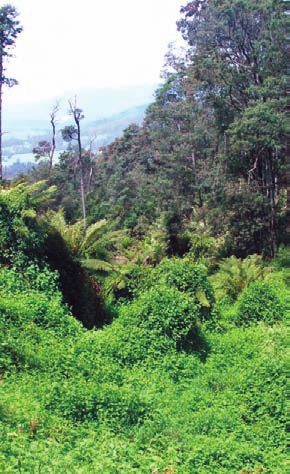
         • reducing the productivity of primary industries
         • degrading the natural environment and affecting biodiversity
         • restricting access to land and water
         • harbouring vermin
         • creating fire hazards.

    • Blackberry provides benefits for fruit and honey production, as fodder for
      browsing animals, and as harbour and food for some native fauna species.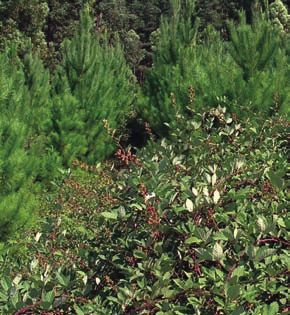
1.1 Blackberry in                                     History in Australia
     Australia                                             Species in the R. fruticosus agg. are among the
                                                           most devastating weeds in southern Australia
                                                           because of their invasiveness and their impact on
     Blackberry, a plant belonging to the Rubus genus,     productive land and natural ecosystems.
     is considered a significant weed in Australia
     because of the extent of its negative impacts.
                                                           The R. fruticosus aggregate
     First introduced to Australia in the 1830s, Rubus
     species originating in Europe, North America          Species from the R. fruticosus agg. were first
     and Asia have now become naturalised and              brought to Australia by early settlers to include
     infest over 8.8 million hectares of land from         in gardens and hedgerows. An article in the
     south‑eastern Queensland to southern Tasmania         Bathurst Free Press in 1851 reported that
     and across to south-western Australia.                blackberry was planted in the Bathurst area in
                                                           the 1830s. An article in the Sydney Morning
     The Rubus genus comprises many different
                                                           Herald in 1851 also recorded blackberry growing
     species of blackberry, including 10 that are
                                                           in a Sydney garden.
     native to Australia (which require protection),
     as well as raspberry species and cultivars such       Blackberry was grown to provide fruit for jams
     as dewberry (R. roribaccus) and loganberry            and pies. Records from a blackberry-picking
     (R. loganobaccus). The word ‘blackberry’ is often     enterprise in Bulli, New South Wales (NSW),
     applied indiscriminately to refer to any of the       document that four tonnes of fruit was sent to
     variety of species.                                   Sydney for manufacture into jams in 1894. By
                                                           1912, the amount of fruit sent had grown to
     Information in this manual relates to all known
                                                           200 tonnes.
     weedy Rubus species in Australia, particularly
     those from the Rubus fruticosus aggregate             In 1851, the Government Botanist in Victoria,
     (R. fruticosus agg.), which have been recognised      Baron von Mueller, and the first Curator of the
     as Weeds of National Significance (WoNS) (see         Gardens at Melbourne University, Alexander
     Figure 1.1).                                          Elliot, recommended that blackberry be planted
                                                           to control soil erosion along creek banks.
     The R. fruticosus agg. consists of hundreds of
                                                           Nine species of blackberry were planted in
     different named species in Europe. At least 16 of
                                                           Melbourne’s Botanic Gardens.
     these species have been introduced into Australia
     (see Table 2.1, p. 20).

                                               European origin – referred to as R. fruticosus agg. Species
                                              in this aggregate have been recognised as a Weed of National
                                              Significance in Australia (see Table 2.1, p. 20).

                                               Other introduced weedy Rubus species that have
                        Rubus species         naturalised in Australia (mainly of North American and Asian
                        present in            origin). These include species that have been cultivated in
                        Australia             Australia (e.g. raspberry, loganberry and keriberry)
                                              (see Table 2.2, p. 21).

                                               Native Rubus species (e.g. R. parvifolius and R. moorei)
                                              (see Table 2.3, p. 21).

                                                                Figure 1.1: Overview of the genus Rubus in Australia.

10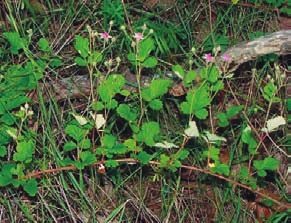
In spite of the plant’s recognised benefits, its                                    Problems, benefits and costs of
potential weediness and associated problems
were also quickly recognised. An article in the                                     blackberry
Sydney Mail in 1887 noted that ‘blackberry
planted for hedges was ruining farm land’. In                                       Problems
1906, landowners in the Armidale Protection
                                                                                    Blackberry can infest a large area quickly.
Board area in NSW were encouraged to burn
                                                                                    It grows vigorously; is prickly and able to
blackberry plants, as they harboured rabbits.
                                                                                    propagate vegetatively from cane tips; effectively
Blackberry was declared noxious in parts of
                                                                                    spreads seed through fruit-eating birds and
Victoria in 1894 and in the whole State in 1908.
                                                                                    mammals; and is relatively unpalatable to most
See Appendix 1 for details of current noxious                                       livestock. The plant can also quickly smother
weed legislation concerning blackberry in all                                       other vegetation under a dense canopy. Once
Australian States.                                                                  established, blackberry causes major problems,
                                                                                    as listed below.
Other weedy Rubus species                                                           Reduced productivity of primary industries.
The North American blackberry (e.g. R. laudatus)                                    Blackberry reduces the productivity of many
and keriberry (e.g. R. rugosus) species have                                        primary industries, including grazing, cropping
spread from cultivated plants. These species                                        and forestry enterprises. Dense blackberry
have now become naturalised in Australia.                                           thickets shade out pastures and crops and
                                                                                    compete for soil moisture and nutrients,
                                                                                    effectively suppressing productive vegetation
                                                                                    and reducing the stocking capacity of infested
                                                                                    pastures.
                                                                                    In plantation forestry, blackberry can prevent the
                                                                                    regeneration of natural hardwood forests and
                                                                                    reduce the capacity of softwood and hardwood
                                                                                    seedlings to establish and grow. The plant can
                                                                                    also hinder forest operations, particularly in
                                                                                    situations where infestations are heavy and
                                                                                    walking access is required.
                                                   Penny Richards (DPI, Victoria)

                                                                                                                                               Penny Richards (DPI, Victoria)

Blackberry can dominate other vegetation.                                           Blackberry can affect the establishment of forestry seedlings.

                                                                                                                                                                                11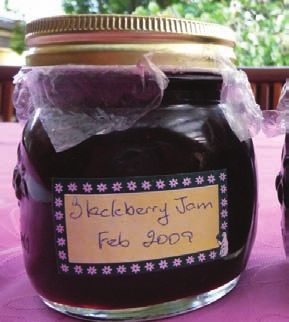
Degradation of natural environments. Substantial                               Harbour for vermin. Blackberry thickets provide
     displacement of native plants and loss of                                      harbour for vermin such as rabbits and foxes,
     habitat for native animals is occurring in many                                introduced wildlife that threaten native flora and
     environments invaded by blackberry. A report                                   fauna. Blackberry fruit provides seasonal food
     published by the Cooperative Research Centre                                   for exotic animals such as starlings, blackbirds
     for Australian Weed Management (CRC), 2006,                                    and foxes. The berries help to increase the
     identifies blackberry as the third most common                                 population of these species, and the animals
     weed threat in NSW, threatening 21 plant                                       effectively disperse berry seeds in their scat,
     and animal species, as well as ecological                                      aiding in the spread of the weed.
     communities.
                                                                                    Fire hazard. Dead blackberry material is a fire
     Blackberry also affects the visual and recreational                            hazard. Blackberry infestations can also obstruct
     values of public land, parks and reserves.                                     fire trails and access to water for controlling fires.
     Blackberry infestations in natural landscapes can
     be aesthetically displeasing and detract from the                              Benefits of blackberry
     appreciation of scenic views by visitors.
                                                                                    Fruit and honey production. Blackberry fruit
     Restricted access to land and water. Blackberry                                is collected by many people and eaten fresh
     can restrict stock access to pasture and water.                                or used in cooking. The leaves can be used to
     When it grows densely along a watercourse,                                     make herbal teas, medicinal products for chest
     stock seeking water may be forced to constantly                                ailments, and astringents used in skin care.
     use the same tracks, and this can cause severe                                 Beekeepers use blackberry flowers as a source of
     erosion. A combination of erosion and dense                                    nectar for honey production.
     blackberry overgrowth of a stream can reduce
     water quality and flow.                                                        Source of food. Browsing animals such as goats
                                                                                    and deer can use blackberry as a source of
     Recreational restriction. Blackberry can restrict                              food, and these animals are occasionally used
     access to land for management purposes and                                     to control the weed (see ‘Grazing by goats and
     recreational activities. For example, walking                                  other livestock’ in Part 4.2, p. 62). Many native
     tracks may be obstructed, or access to streams                                 and exotic birds also feed on blackberry fruit,
     by recreational fishers may be reduced.                                        especially when other food sources are not
                                                                                    available.
                                                                                    Protection for native animals. A number of native
                                                                                    animals and birds, such as bandicoots and blue
                                                                                    wrens, use blackberry thickets as protection from
                                                                                    predators and as a source of food.

                                                                                    The real costs of blackberry
                                                                                    The economic cost of blackberries as weeds in
                                                                                    Australia is high. In 1984, the estimated annual
                                                                                    aggregated cost across all Australian States
                                                                                    and Territories of the R. fruticosus agg. alone
                                                                                    was $42 million, and the annual aggregated
                                                                                    benefit was $660,000. The cost figure excludes
                                                                                    the social and biodiversity costs associated
                                                                                    with blackberry infestations. Costs have risen
                                                                                    considerably in recent years and in 2006 it was
                                                                                    estimated that annual production losses and
                                                           A. McCaffery (NSW DPI)

                                                                                    blackberry control costs are at least $70 million
                                                                                    (CRC, 2006).

     An example of the uses of blackberry.

12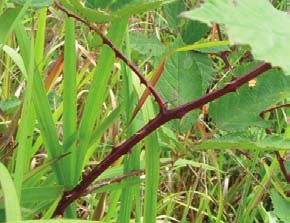
Distribution of current and                                                 Climate modelling has been used to provide an
                                                                            example of areas in Australia that are likely to
potential infestations                                                      be suitable for blackberry under climate change
Species in the R. fruticosus agg. infest about                              (Steel et al., 2008). This particular example
8.8 million hectares of land in Australia                                   predicts a change to the distribution of the
(see Figure 1.2). They are considered weeds in                              R. fruticosus agg. as a result of climate change
all States and Territories except the Northern                              (see Figure 1.4, p. 14). It suggests that, overall,
Territory. The aggregate is mostly restricted                               less of Australia will be suitable to the species,
to temperate climates (warm summers, cool                                   although some areas such as Tasmania and the
winters) with an annual rainfall of at least                                alpine regions in south-east Australia will become
700 millimetres. However, R. fruticosus agg.                                more suitable.
can grow in lower rainfall areas when other                                 As already noted, the potential for continued
environmental conditions are favourable                                     spread of each of the blackberry species
(e.g. along the banks of water bodies). It can                              is determined by its vigour, reproductive
occur at any altitude in Australia.                                         capacity and adaptability and the success of
The R. fruticosus agg. has probably reached                                 its seed‑dispersal mechanisms. The blackberry
the climatic limits of its potential range in                               leaf rust fungus (Phragmidium violaceum) is
Australia in terms of rainfall and temperature.                             a biological control agent for blackberry. It
However, individual species within the aggregate                            inhibits the operation of the above factors and
may not have done so. Some species such as                                  will potentially check the spread of susceptible
R. anglocandicans are widespread, whereas                                   blackberry species (see Part 4.3, p. 64). Species
others are still limited in distribution. Although                          that are resistant to the fungus or grow in
there may be minor differences in climatic                                  unfavourable climatic conditions for the rust are
and soil requirements among the species of                                  more likely to continue to spread.
the aggregate, each species probably has the                                Where blackberry is widespread, good planning
potential to spread to the full climatic range of                           and the implementation of appropriate control
the R. fruticosus agg. in Australia (see Figure 1.3).                       techniques can help landholders to reclaim or
Table 2.2 (p. 21) lists the known distributions of                          keep land free from infestation (see Parts 3, p. 28
other introduced blackberry species in Australia.                           and 4, p.39).

       Abundance & distribution                                                Climatic suitability for blackberry
                            abundant
   localised

               widespread

                                                                                     very high
                            common
                                                                                     high
                            occasional
                            present with unknown abundance & distribution            moderate

                            confirmed absent
                            unknown

Figure 1.2: Current distribution of the R. fruticosus agg. in               Figure 1.3: Potential distribution of the R. fruticosus agg.
Australia                                                                   in Australia
(Australian Government National Land and Water Resources Audit,             (Department of Primary Industries, Victoria, 2008 derived using
2008)                                                                       CLIMATE® modelling system)

                                                                                                                                              13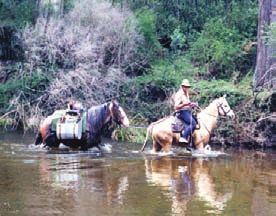
Within blackberry’s range, many areas that
                                                                     are currently free of the weed are under
                                                                     threat. Blackberry readily invades new areas,
                                                                     establishing itself on disturbed sites such
                                                                     as along access tracks, on freshly harvested
                                                                     forest lands, and in areas affected by fires
                                                                     and floods.

                                                                   1.2 Description
                                                                   Physical characteristics
        Projected climatic suitability for the
        R. fruticosus agg. in 2030 (1oC increase in
                                                                   Physical features vary between the three groups
        the global average surface temperature)                    of Rubus species in Australia (see Figure 1.1,
                                                                   p. 10). Those within the R. fruticosus agg. are
                                                                   similar in appearance and difficult to distinguish.
                                                                   Their key features are outlined below. However,
                                                                   the other introduced and native Rubus species
                                                                   vary in many details, including leaf shape, flower
                                                                   and fruit colour. Part 2 (p. 20) provides more
                                                                   detailed taxonomic information to help identify
                                                                   individual Rubus species.

                                                                     Rubus fruticosus agg. species are perennial,
                                                                     semi-deciduous, scrambling shrubs.
                                                                     The tangled prickly stems (canes) form
                                                                     impenetrable thickets several metres high.
                                                                     Species reproduce vegetatively and from
                                                                     seed.

        Projected climatic suitability for the
        R. fruticosus agg. in 2070 (5.3oC increase                 Root system
        in the global average surface temperature)
                                                                   The root system is the only perennial part of
     Climatic suitability                                          the plant. It comprises a woody crown that can
                                                                   grow up to 20 centimetres in diameter and a
           high                   likely
                                                                   main root that can grow down to four metres,
           moderately high        not suitable
                                                                   depending on the soil type. Numerous secondary
           moderate                                                roots grow horizontally from the crown for
                                                                   30 – 60 centimetres. These secondary roots then
     Figure 1.4: Climate-change modelling for the                  also grow down and further shoot thin roots in
     R. fruticosus agg.                                            all directions.
     Steel et al., 2008.

     The method used to produce these maps differs to that
     used to model the climate suitability for blackberry
     (see Figure 1.3, p. 13) so the results are not directly
     comparable. A detailed description can be found in the full
     report at www.climatechange.vic.gov.au (go to Resources/
     Publications/Climate change and potential distribution of
     weeds: whither the weeds under climate change?)

14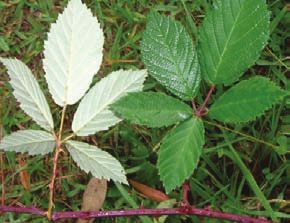
Stems or canes
The stems (canes) are erect or semi-erect, arched
or trailing, and grow up to seven metres long.
With the exception of one species (R. ulmifolius
var. anoplothyrsus) they are covered in sharp
prickles. Canes are generally biennial but may
occasionally live longer. Canes may be green,
purplish or red, depending on their exposure to

                                                                                                                                       Birgitte Verbeek (NSW DPI)
light.

                                                                                   Leaves are dark green on top with a lighter green
                                                                                   underside.
                                                      Birgitte Verbeek (NSW DPI)

                         primocane

                                                                                                                                       Auld and Medd (NSW DPI)
Example of a European blackberry primocane.

                                                                                   A typical R. fruticosus agg. blackberry shrub.

                                     floricane                                     Flowers
                                                                                   The flowers are white or pink and
                                                                                   2 – 3 centimetres in diameter. They occur in
                                                      Birgitte Verbeek (NSW DPI)

                                                                                   clusters at the end of floricanes (second-year
                                                                                   canes that bear fruit). The clusters of flowers
                                                                                   form either a cylinder or a pyramid, depending
                                                                                   on the species. Flowers may change colour
                                                                                   between bud and opening, depending on the
                                                                                   species. Flowering occurs from late November to
                                                                                   late February in R. fruticosus agg. species (see
Example of native blackberry floricane.                                            Table 1.1, p. 17).

Leaves
Rubus fruticosus agg. species leaves are usually
dark green on top with a lighter green underside.
Leaves are compound, with three to five leaflets
                                                                                                                                       Birgitte Verbeek (NSW DPI)

and are palmate (see Part 2.2, p. 22). The leaflet
veins and stalks are covered with short, curved
prickles. Leaves arise alternately along the canes,
and most are shed during winter, except in
warmer climates where leaves may be retained.

                                                                                   European blackberry (R. anglocandicans) flowers.

                                                                                                                                                                    15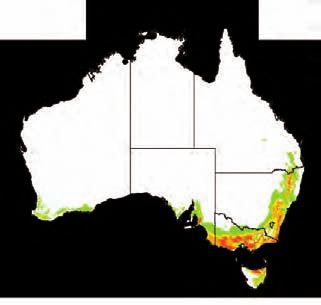
Fruit                                                                            Reproduction by seed
     The fruit is a 1 – 3 centimetre diameter berry,                                  Only one of the species of the R. fruticosus agg.
     which changes colour from green to red to black                                  species found in Australia (R. ulmifolius)
     as it ripens. Each berry consists of a number                                    produces seed sexually. The other species
     of fleshy segments (drupelets). Each drupelet                                    produce seed by pseudogamy: the pollen grain
     contains one seed. Fruit are found from late                                     stimulates the egg cell (ovum) but there is no
     December to April (see Table 1.1, p. 17).                                        fertilisation. The seed produced is an exact
                                                                                      duplicate of the mother plant  – a clone. There
                                                                                      is no clear evidence of hybridisation between
                                                                                      species in Australia, but, if it occurs, one of the
                                                                                      parents is likely to be the sexually reproducing
                                                                                      R. ulmifolius. Any resulting hybrids would
                                                                                      then be able to reproduce true-to-type by
                                                          Alyssa Schembri (NSW DPI)   pseudogamy.

                                                                                      Vegetative reproduction
                                                                                      In vegetative reproduction, young canes emerge
                                                                                      from buds on the crown each spring and grow
                                                                                      very rapidly (5 –  8 cm/day). These first-year canes
                                                                                      (primocanes) grow in either a prostrate or an
                                                                                      arching manner. In autumn the tips of the arching
     Fruit from a species in the R. fruticosus agg.                                   primocanes may touch the ground, sprout roots
                                                                                      and become new plants. These new plants, called
     Seeds                                                                            ‘daughter plants’, will produce a primocane in the
                                                                                      following spring (see Figure 1.5, p. 17).
     The seeds are light to dark brown, oval,
     2 – 3 millimetres long, and deeply and irregularly                               Axillary buds on second-year primocanes sprout
     pitted.                                                                          in spring producing short canes (floricanes)
                                                                                      that terminate in a panicle (branched cluster) of
                                                                                      flowers. Only two-year-old primocanes produce
                                                                                      floricanes with flowers and fruit (see Figure 1.5,
     1.3 Lifecycle, reproduction                                                      p. 17).
     and spread                                                                       After producing floricanes in the second year, the
                                                                                      primocane usually dies back to the crown over
     The information in this part refers predominantly                                autumn and winter and does not regenerate. In
     to blackberry in the R. fruticosus agg. There is                                 rare cases the primocane will last into a third
     little information available on the lifecycles and                               year. If a daughter plant has developed on
     spread of other introduced blackberry species                                    the tip of the primocane it will continue as an
     under Australian conditions.                                                     independent plant.
     As with all blackberry, species in the                                           Rubus fruticosus agg. species can also reproduce
     R. fruticosus agg. can reproduce vegetatively                                    from root fragments and other plant parts if
     and by seed. Germination of seed occurs                                          transported to a new area, for example by
     from September through to December (see                                          floodwaters.
     Table 1.1, p. 17). Each berry may contain from
     20 – 30 seeds. Up to 13, 000 seeds/m2 can be
     found under a blackberry bush. Plants in dense
     shade will produce fewer seeds than those in
     open areas. Seedling survival rate is considerably
     lower in shaded areas than in full sun.
     Seeds are spread over long distances by birds,
     mammals (including foxes and humans), water
     and contaminated soil.

16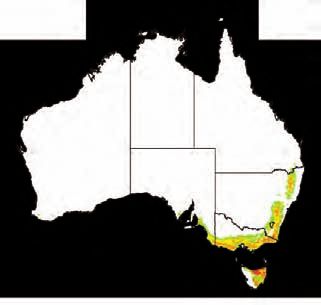
Table 1.1: Lifecycle of the R. fruticosus agg. in temperate southern Australia.

                        June    July     Aug     Sept       Oct    Nov     Dec     Jan      Feb     Mar      Apr     May

                        Winter                   Spring                    Summer                   Autumn

Germination

Flowering (2-y-o)

Fruiting (2-y-o)

Tip rooting (1-y-o)

Dormancy

Dark shading indicates most common timeframe for stage of life cycle. However, each stage can still occur during the
lighter shaded periods.

                                                                      panicles with flowers and fruit

                                                                                                                 floricane or
                                                                                                                 second year cane

                primocanes or first year canes

           daughter plant                                                                               sucker

                                                                         crown
                                                                                                                             (Bruzzese and Lane, 1996)

Figure 1.5: Growth pattern of R. fruticosus agg. species.

                                                                                                                                                         17
Case study • Recreational values. Walkers along the
Kowmung River expect to find riverbanks
Impact of blackberry and flats in their natural state. However,
The problem blackberry thickets make walking difficult,
reduce the number of camping spots and
Cattle, horses and pigs introduced blackberry
compromise the wilderness experience.
into the upper reaches of the Kowmung River
from nearby farms in the 1800s. Blackberry • Downstream impacts. As blackberry
infestations gradually spread along the river as infestations gradually move downstream,
stock moved further into the leased catchment their impact on natural and recreational values
lands. grows. The weed does not confine itself to
the river but spreads up side gullies into once
In 1975 the Kowmung catchment became part
pristine sub-catchments.
of the Kanangra-Boyd and Blue Mountains
National Park. Stock were removed from the What has been done?
area, but it was not possible to remove those Initially, NPWS staff and contractors concentrated
that had become feral. their blackberry control efforts on infestations
located along the riverbanks. Because the
Both the feral animals and the blackberry
catchment is relatively inaccessible, they set up
infestations compromise the significant
remote base camps for several weeks each year,
natural, recreational and economic values of
targeting a 15 kilometre stretch of river. They use
the region. In 1997 the NSW National Parks and
12‑volt electric pumps mounted on pack horses
Wildlife Service (NPWS) began to implement a
to apply herbicide to blackberry thickets – an
management plan to control blackberry and the
effective technique, because the added height of
feral animals.
the pumps allows the spray to reach the top and
Impacts of blackberry middle of the largest thickets.
• Competition. With few natural controls, In the upper reaches of the river and its smaller
blackberry quickly colonised disturbed areas sub-catchments, NPWS staff sprayed infestations
along the river, outcompeting native species. annually using vehicle-mounted spray units and
In the Kowmung River corridor, the main splatter guns.
causes of disturbed ground are fires, floods
By 2005, infestations along the river had been
and feral pigs.
significantly reduced and attention turned to
• Safe harbour. Blackberries provide harbour controlling upstream sources of blackberry,
for feral pigs, making it harder to undertake mostly on private property.
aerial culling. The thickets also protect young
The result
pigs from wild dogs, which would otherwise
help control pig numbers. When the blackberry control program started,
infestations along the river ranged from the
occasional individual blackberry bush to
thickets that were five metres high and covered
over 300 m2. As a result of the NPWS programs
there are:
• no remaining large blackberry infestations.
• the number of pig harbours has significantly
decreased.
• pig disturbance along the river is noticeably
Mikala Jones (NPWS)
less, and flats once infested with blackberry
are gradually regenerating with native
vegetation.
• NPWS staff, contractors, bushwalkers and
volunteers report that the recreational
The Kowmung River is extremely inaccessible and wilderness values of the riverine corridor have
had to be accessed and treated on horseback.
been enhanced.
18You can also read


