People Around the World Conference - Global to local for the goals: Harnessing the power of
←
→
Page content transcription
If your browser does not render page correctly, please read the page content below
The 4th Annual

People Around the World
      Conference
       A two-day, online event | February 2 & 3, 2021

Global to local for the goals: Harnessing the power of
   collaboration to re-emerge stronger and together

             internationaloffice.usask.ca/paw
Adopted by all United Nations Member States in 2015, the 2030 Agenda for Sustainable Development
provides a shared blueprint for peace and prosperity for people and the planet, now and into the future.
At the heart of this agenda are the Sustainable Development Goals (SDGs), an urgent call for action by all
    countries — poor, rich and middle-income — to promote prosperity while protecting the planet.
 They recognize that ending poverty must go hand-in-hand with strategies that build economic growth
and address a range of social needs including education, health, social protection, and job opportunities,
                       while tackling climate change and environmental protection.1

  COVID-19 is spreading human suffering, destabilizing the global economy, and upending the lives of
 billions of people around the globe. The pandemic is an unprecedented wake-up call, laying bare deep
 inequalities and exposing precisely the failures that are addressed in the 2030 Agenda for Sustainable
                        Development and the Paris Agreement on climate change.

 Leveraging this moment of crisis, when usual policies and social norms have been disrupted, bold steps
can steer the world back on track towards the Sustainable Development Goals. This is the time for change,
 for a profound systemic shift to a more sustainable economy that works for both people and the planet.

     The Sustainable Development Goals are vital for a recovery that leads to greener, more inclusive
                           economies, and stronger, more resilient societies.2

 The Sustainable Development Report 2020 presents the SDG Index and Dashboards for all UN member
   states and frames the implementation of the Sustainable Development Goals in terms of six broad
  transformations. It was prepared by teams of independent experts at the Sustainable Development
                        Solutions Network (SDSN) and the Bertelsmann Stiftung.

       The thematic sessions explored at the PAW 2021 conference have been inspired by the
     Six Transformations Framework for the SDGs of the Sustainable Development Report 2020.

            1                               2
                https://sdgs.un.org/goals       https://www.un.org/sustainabledevelopment/sdgs-framework-for-covid-19-recovery/
Welcome to PAW 2021
Greetings from the University of Saskatchewan International Office

It brings me great pleasure to welcome everyone to the       Inequities that lead to disparities can be minimized and
4th annual People Around the World Conference!               science can be conducted with transformative action in
                                                             mind by building bridges between local, regional, and
Since 2018, the University of Saskatchewan (USask)           global disciplines, initiatives, actors, and communities. As
International Office has hosted the PAW conference as        a connector for engagement with other higher education
a platform for global cooperation on the Sustainable         institutions, international education agencies, and
Development Goals (SDGs) and as an opportunity               sustainability networks, the USask International Office
to highlight cross-cutting international research and        plays a unique role in the implementation of the SDGs
global projects undertaken by USask researchers and          through its research, partnerships, and funding initiatives.
international partners.
                                                             On behalf of the PAW 2021 organizing committee and
The need to strengthen cooperative efforts around            the University of Saskatchewan International Office,
the world became alarmingly evident last year as the         I would like to sincerely thank all of our conference
COVID-19 pandemic forced individuals, communities,           partners, presenters, sponsors, and attendees. This event
businesses, academic institutions, and entire governments    would not be possible without your generous support
to reassess priorities and share resources to “flatten the   and enthusiasm. I would also like to thank our exclusive
curve.” As such, PAW 2021 organizers were compelled to       platinum sponsor, the Global Institute for Water Security
bring together expert research, applied knowledge, and       (GIWS), the top water resources research institute in
lived experiences to create the path forward for stronger,   Canada and one of the most advanced hydrology
more resilient societies in the wake of COVID-19, and on     research centres in the world.
the way to meeting the SDGs in 2030.
                                                             By working together and taking part in this profound and
Under the overarching theme "Global to local for             powerful movement toward creating a better future and
the goals: Harnessing the power of collaboration to          planet, we hope to provide a learning opportunity that
re-emerge stronger and together," we are excited             supports the power of research and education—based on
to engage with academics, the higher education               mutual trust, respect and understanding—with and from
community, governments and municipalities, industry,         people around the world.
and non-governmental organizations to share
innovative ideas, strategies, and collaborative efforts      Thank you for being part of PAW 2021.
to address the Decade of Action.

The PAW conference exists to address global challenges
and support the wellbeing of communities around
the world thanks to funding through the University
of     Saskatchewan       internationalization  plan—the                            Dr. Meghna Ramaswamy (PhD)
International Blueprint for Action 2025. This plan fosters                          Director, International Office,
initiatives that internationalize learning experiences,                             University of Saskatchewan
diversify our university community, strengthen our global
impact through discovery, and grow our global citizenship
and international community service.

                                                                             University of Saskatchewan PAW 2021 Conference | 3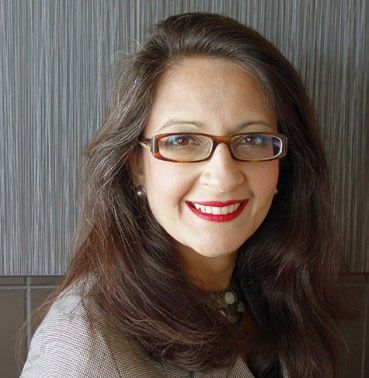
PAW 2021 program
Day One: Tuesday, February 2, 2021
Emcee: Dr. Meghna Ramaswamy (PhD) | Director, International Office, University of Saskatchewan
All program times are in Central Standard Time (CST): https://www.worldtimeserver.com/current_time_in_CA-SK.aspx

8–8:55 AM                  DAY ONE OPENING REMARKS
                           Introductory remarks and housekeeping
                           Dr. Meghna Ramaswamy (PhD)
                           Prayer and greetings
                           Elder Roland Duquette
                           National Anthem
                           Ms. Kiela Caudillo Ruiz — International partnerships specialist, International Office,
                           University of Saskatchewan
                           Welcome remarks
                           Dr. Peter Stoicheff (PhD) — President, University of Saskatchewan
                           Greetings from the City of Saskatoon
                           Charlie Clark — Mayor, City of Saskatoon
8:55–9:45 AM               KEYNOTE ADDRESS
                           The nexus of human rights, education, and research: facilitating collaboration
                           at the edge of the horizon
                           The Honourable Judge David Arnot — Chief Commissioner for the Saskatchewan Human
                           Rights Commission
                           Q&A moderator
                           Dr. Meghna Ramaswamy (PhD)
9:45–10 AM                 BREAK
10–11:20 AM                THEMATIC SESSION — HEALTH AND WELLBEING
                           COVID-19 research at Vaccine and Infectious Disease Organization (VIDO)
                           Dr. Volker Gerdts (PhD, DVM) — Director and chief executive officer, Vaccine and Infectious Disease
                           Organization; Professor, Department of Veterinary Microbiology, University of Saskatchewan
                           Mozambique-Canada Maternal Health Project — progress and prospects
                           during a pandemic
                           Dr. Nazeem Muhajarine (PhD) — Professor, Community Health and Epidemiology, College of Medicine;
                           Principal investigator, Mozambique-Canada Maternal Health Project, University of Saskatchewan
                           Dr. Jessie Forsyth (PhD) — Project director, Mozambique-Canada Maternal Health Project, Mozambique
                           Developing Indigenous-centric indicators for meaningful evaluation of Indigenous health
                           research: a first look at the NEIHR networks’ approach
                           Dr. Simon Lambert (PhD) — Associate professor, Indigenous Studies, College of Arts and Science,
                           University of Saskatchewan; Executive director, Network Environments for Indigenous Health Research
                           (NEIHR) National Coordinating Centre; tribal member of Tuhoe/Ngāti Ruapani (Aotearoa, NZ)
                           Session and Q&A moderator
                           Dr. Marek Radomski (MD, PhD, DSc) — Vice-dean research, College of Medicine, University of Saskatchewan

                                                                                              University of Saskatchewan PAW 2021 Conference | 4
PAW 2021 program
Day One: Tuesday, February 2, 2021 (cont'd)

11:20–11:25 AM   BREAK
11:25 AM–12 PM   KEYNOTE ADDRESS
                 Canada's Feminist International Assistance Policy in the COVID-19 world
                 The Honourable Minister Karina Gould — Minister, International Development,
                 Government of Canada
                 Q&A moderator
                 Moderated by Dr. Steven R. Webb (PhD) — Chief executive officer, Global Institute for Food Security
                 (GIFS), University of Saskatchewan
12–12:30 PM      SPECIAL VIDEO PRESENTATION
                 Culinary demonstration
                 Chef Dale MacKay — Award-winning culinary artist and celebrated restaurateur;
                 Canada’s first Top Chef winner
                 Download the recipe "Ricotta gnocchi with tomato butter sauce"
12:30–1 PM       LUNCH BREAK
1–1:10 PM        UNIVERSITY OF SASKATCHEWAN SUSTAINABILITY STRATEGY
                 Dr. Irena Creed (PhD) — Associate vice-president research, University of Saskatchewan;
                 Fellow of the Royal Society of Canada
1:10–2:30 PM     THEMATIC SESSION — FOOD, LAND, WATER (SECURITY AND SOVEREIGNTY)
                 Enabling sustainable development in Bangladesh through bilateral
                 collaboration and partnership
                 Mr. Stephen Visscher (CBE) — Director of strategic partnerships and chief operating officer,
                 Global Institute for Food Security (GIFS), University of Saskatchewan
                 Exploring the role of youth in community-based resource management
                 and conservation
                 Dr. Jim Robson (PhD) — Assistant professor, School of Environment and Sustainability (SENS); UNESCO
                 Co-chair in Biocultural Diversity, Sustainability, Reconciliation and Renewal, University of Saskatchewan
                 Dr. Marlene Soriano (PhD) — Program director, Bolivian Institute of Forest Research (IBIF), Bolivia
                 Three initiatives to promote equitable sustainability and share successes
                 Dr. Corinne Schuster-Wallace (PhD) — Associate professor, Geography and Planning, College of Arts
                 and Science; Associate director, Global Water Futures, University of Saskatchewan
                 Session and Q&A moderator
                 Dr. Irena Creed (PhD)
2:30–2:45 PM     SPECIAL LIVE PRESENTATION
                 Energizing yoga
                 Ms. Amanda Plante — Research ethics specialist (animal), Research Excellence and Innovation,
                 University of Saskatchewan

                                                                             University of Saskatchewan PAW 2021 Conference | 5
PAW 2021 program
Day One: Tuesday, February 2, 2021 (cont'd)

2:45–3 PM          BREAK
3–4:45 PM          THEMATIC SESSION — EDUCATION, GENDER AND INEQUALITY
                   An international perspective of teachers’ beliefs about inclusion: implication for
                   inclusive education in Canada
                   Dr. Pei-Ying Lin (PhD) — Associate professor, Educational Psychology and Special Education,
                   College of Education, University of Saskatchewan
                   Alliances as a key element to promote sustainable education
                   Ambassador Miguel Ruiz Cabañas Izquierdo — Director of the SDGs Initiative at Tecnológico de
                   Monterrey; Co-chair of the Mexican chapter of the Sustainable Development Solutions Network
                   (SDSN Mexico)
                   Rediscovering English for academic purposes in the context of the
                   UN Sustainable Development Goals
                   Ms. Sally Abu Sabaa — Manager, English for Academic Purposes, York University
                   Using design thinking and Facebook to solve a plastic pollution problem
                   in the Mediterranean Sea
                   Dr. Diane Pruneau (PhD) — Director of the Littoral et vie Research Group, Université de Moncton
                   Session and Q&A moderator
                   Dr. Dawn Wallin (PhD)—Associate dean (undergraduate programs, partnerships, and research),
                   College of Education, University of Saskatchewan
4:45–5:30 PM       SPECIAL VIDEO PRESENTATION
                   Visiting professors at the University of Saskatchewan
5:30 PM            DAY ONE WRAP-UP
                   Closing remarks
                   Dr. Meghna Ramaswamy (PhD)
                   END OF DAY ONE

"As the international community, regional organizations, and countries plan the post-COVID-19 recovery,
 it will be important to put the SDGs at the heart of policymaking. COVID-19 does not resolve the climate
   and biodiversity crises and is gravely amplifying income inequalities and other forms of inequalities.
    It also demonstrates that countries will only be able to protect themselves from global pandemics if
    health systems are strengthened in every country. The SDR2020 shows that significant progress was
                   achieved in many regions and on many goals over the past five years."
                            — Sustainable Development Report 2020 (SDR2020)

                                                                             University of Saskatchewan PAW 2021 Conference | 6
PAW 2021 program
Day Two: Wednesday, February 3, 2021
Emcee: Professor Jay Famiglietti (PhD) | Canada 150 Research Chair in Hydrology and Remote Sensing;
Executive director, Global Institute for Water Security (GIWS), University of Saskatchewan
8:30–8:55 AM        DAY TWO OPENING REMARKS
                    Introductory remarks and housekeeping
                    Dr. Jay Famiglietti (PhD)
                    Welcome remarks
                    Dr. Baljit Singh (PhD) — Vice-president research, University of Saskatchewan
8:55–9:45 AM        KEYNOTE ADDRESS
                    Pathways to Sustainable Development
                    Professor Jeffrey D. Sachs (PhD) — Professor, Columbia University; President, UN Sustainable
                    Development Solutions Network (SDSN)
                    Q&A moderator
                    Dr. Jay Famiglietti (PhD)
9:45–10 AM          BREAK
10–11:20 AM         THEMATIC SESSION — SUSTAINABLE, EQUITABLE, AND DIVERSE COMMUNITIES
                    Can money buy health? The nuts and bolts of a family income generation project
                    Dr. Ronald Siemens (MD, FRCP) — Assistant professor, Division of Pediatric Emergency, College of
                    Medicine, University of Saskatchewan
                    Responding to challenges of the COVID-19 pandemic through gender and
                    cultural-sensitive development programs in northern Luzon, Philippines
                    Dr. Marlowe Aquino (PhD) — Professor and core faculty member, Graduate School of Mariano Marcos
                    State University; Adjunct professor, Benguet State University, Philippines
                    Principles for transdisciplinary sustainability scholarship with Indigenous
                    and Rural Peoples
                    Dr. Maureen Reed (PhD) — Professor, School of Environment and Sustainability (SENS); UNESCO
                    Co-chair Biocultural Diversity, Sustainability, Reconciliation and Renewal, University of Saskatchewan
                    Session and Q&A moderator
                    Dr. Michelle Aihina Inkinsh Holhpokunna Johnson-Jennings (PhD) — Canada Research Chair in
                    Indigenous Community-Engaged Research; Associate professor, Indigenous Studies, College of Arts
                    and Science, University of Saskatchewan; tribal member of Choctaw Nation
11:20–11:25 AM      BREAK
11:25 AM–12 PM      KEYNOTE ADDRESS
                    Moving forward a provincial approach to International Education
                    Ms. Livia Castellanos
                    Executive Lead, International Education and Jurisdictional Initiatives, Ministry of Advanced Education,
                    Government of Saskatchewan
                    Q&A moderator
                    Dr. Jay Famiglietti (PhD)

                                                                                University of Saskatchewan PAW 2021 Conference | 7
PAW 2021 program
Day Two: Wednesday, February 3, 2021 (cont'd)

12–12:30 PM    SPECIAL PRESENTATION
               Collaborative learning, internationally
               Ms. Aditi Garg — Education development specialist, Gwenna Moss Centre for Teaching and Learning,
               University of Saskatchewan
               Dr. David Parkinson (PhD) — Professor, English, College of Arts and Science, University of Saskatchewan
12:30–1 PM     LUNCH BREAK
1–2:30 PM      TRAINEE RESEARCH COMPETITION
               Opening remarks and prayer
               Elder Roland Duquette
               Review the abstracts and presentation schedule | Join Room 1 | Join Room 2
2:30–2:45 PM   SPECIAL VIDEO PRESENTATION
               Bhangra dance: energize yourself by joining a traditional Punjab dance
               Mr. Gurdeep Pandher
2:45–4:10 PM   THEMATIC SESSION — CLIMATE ACTION AND ENERGY
               Climate change, agriculture, land and sustainable development
               Dr. Margot Hurlbert (PhD) — Professor and Canada Research Chair, Climate Change Energy and
               Sustainability Policy, Johnson-Shoyama Graduate School of Public Policy, University of Regina
               Three C’s: climate action through capacity building in community renewable energy
               Dr. Andrea Kraj (PhD, P.Eng) — Assistant professor, School of Environment and Sustainability (SENS),
               University of Saskatchewan
               Sustainable clean energy production from biomass
               Dr. Ajay Dalai (PhD) — Distinguished professor, Chemical and Biological Engineering and Canada
               Research Chair, Bioenergy and Environmentally Friendly Chemical Processing, College of Engineering,
               University of Saskatchewan
               Session and Q&A moderator
               Dr. Karsten Liber (PhD) — Interim executive director and distinguished professor, School of Environment
               and Sustainability (SENS), University of Saskatchewan
4:10–4:40 PM   AWARDS CEREMONY
               University of Saskatchewan Internationalization Recognition Awards
               PAW 2021 Trainee Research Competition Awards
               Presented by Dr. Meghna Ramaswamy (PhD) — Director, International Office,
               University of Saskatchewan

                                                                         University of Saskatchewan PAW 2021 Conference | 8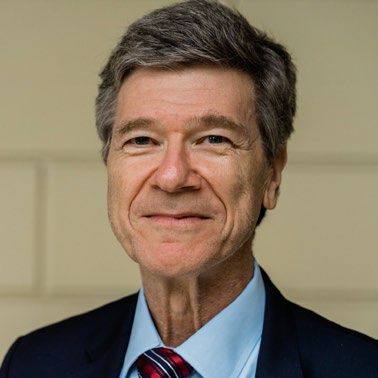
PAW 2021 program
Day Two: Wednesday, February 3, 2021 (cont'd)

4:40–5:30 PM         KEYNOTE ADDRESS
                     Technologies to help Canada meet net-zero emissions by 2050
                     Dr. Phil De Luna (PhD) — Director, National Research Council Canada (NRC); Member, Canadian
                     Commission for UNESCO Working Group on AI Ethics and the Sustainable Development Goals
                     Q&A moderator
                     Kirsten Marcia (P. Geo) — Director, president and chief executive officer, Deep Earth Energy Production
                     (DEEP)
5:30–5:35 PM         CONFERENCE WRAP-UP
                     Closing remarks
                     Dr. Jay Famiglietti (PhD)
5:35–6 PM            VIRTUAL CONCERT WITH JAY MAILLET
                     END OF DAY TWO

The International Blueprint for Action 2025
A vision for a globally significant university

CONNECTING WITH THE WORLD
Global problems cannot be solved by only thinking and acting locally. Moreover, the world is evolving, and so is the
University of Saskatchewan. The University of Saskatchewan is well-positioned to contribute to the global needs of
our society, and we will prepare our students, faculty and staff to appreciate, ask and then address society’s most
important challenges. Our academic excellence, partnered with international engagement and activity, will secure
our global presence and enhance the university’s impact in the world in which we live and share.

The University Plan 2025 highlights the importance of interdisciplinary and collaborative approaches to discovery,
Indigenization, teaching and learning, and community engagement. The International Blueprint for Action 2025
amplifies the university plan by focusing and enhancing our efforts across these same themes through an
internationalization strategy and goals distinctive of a truly world-class university.

                                                                                University of Saskatchewan PAW 2021 Conference | 9
Keynote speakers
Learn more about the distinguished experts at PAW 2021

                                                            Judge Arnot was honoured by the Canadian Bar
                                                            Association Saskatchewan Branch as a recipient of the
                                                            "Distinguished Service Award" for 2007.

                                                            Judge Arnot has been seconded from the Provincial
                                                            Court of Saskatchewan to be Chief Commissioner for the
     THE HONOURABLE JUDGE DAVID ARNOT                       Saskatchewan Human Rights Commission since January
                                                            15, 2009.
David Arnot attended the University of Saskatchewan
and received his LL.B. Degree in 1975. In 1978, he
became a Senior Crown Prosecutor. He was appointed a
Judge of the Provincial Court of Saskatchewan in 1981.
In September of 1994, Judge Arnot was seconded to
the Federal Department of Justice as Director General
of the Aboriginal Justice. In May 1996, Judge Arnot
was promoted to the position of Special Advisor to the
Deputy Minister of Justice for Canada.

On January 1, 1997, he was seconded by the Federal                  THE HONOURABLE KARINA GOULD
Government to be the Treaty Commissioner for the
Province of Saskatchewan for a 10 year period. Judge        The Honourable Karina Gould, Minister of International
Arnot’s work on the "Teaching Treaties in the Classroom     Development, was first elected as the Member of
Project" was specifically cited as a model for Canada by    Parliament for Burlington in 2015.
the United Nations Special Rapporteur on Racism in his
report presented in March 2004.                             A graduate of McGill University and the University
                                                            of Oxford, Minister Gould is passionate about public
In October 2005, the Office of the Treaty Commission was    service and international development. Before her
selected by the Canadian Race Relations Foundation to       election as the Member of Parliament for Burlington,
receive its biennial Award of Excellence for education      she worked as a trade and investment specialist for the
programs in the public and government sector. Judge         Mexican Trade Commission in Toronto, a consultant
Arnot introduced the phrase "We are all Treaty people" to   for the Migration and Development Program at the
capture the nature of the Treaty relationship in Canada.    Organization of American States in Washington,
                                                            D.C., and spent a year volunteering at an orphanage
Judge Arnot has produced and directed a number              in Mexico.
of video education projects. He has been involved in
education for the Judiciary through the National Judicial   Minister Gould has deep roots in her hometown of
Institute, the Western Judicial Education Centre, the       Burlington, Ontario, and is an active member of the
Canadian Association of Provincial Court Judges, and the    community and an advocate for women’s issues and
American Judges Association.                                affordable housing.

                                                                         University of Saskatchewan PAW 2021 Conference | 10
Keynote speakers (cont'd)
Learn more about the distinguished experts at PAW 2021
She has volunteered with and actively supports the
Iroquoia Bruce Trail Club, the Burlington chapter of
the Canadian Federation of University Women, the
Mississauga Furniture Bank, Halton Women’s Place, and
other local organizations.
Minister Gould lives in Burlington with her husband PROFESSOR JEFFREY D. SACHS
Alberto and son Oliver. With the birth of Oliver, Minister
Gould became the first federal cabinet minister to Jeffrey D. Sachs is a world-renowned economics
have a baby while holding office. She is passionate professor, bestselling author, innovative educator,
about breaking down barriers for women, youth, and and global leader in sustainable development. He is
underrepresented groups. widely recognized for bold and effective strategies
to address complex challenges including debt crises,
hyperinflations, the transition from central planning
to market economies, the control of AIDS, malaria, and
other diseases, the escape from extreme poverty, and
the battle against human-induced climate change.
Sachs serves as the Director of the Center for Sustainable
Development at Columbia University, where he holds
the rank of University Professor, the university’s highest
academic rank. Sachs held the position of Director of
The University of Saskatchewan’s draft the Earth Institute at Columbia University from 2002 to
Sustainability Strategy (2021-2030) 2016. He is President of the UN Sustainable Development
recognizes that sustainability isn’t merely Solutions Network, a commissioner of the UN Broadband
another problem to be tackled or solved, Commission for Development, and an SDG Advocate
rather, it is a culture that must pervade all for UN Secretary General Antonio Guterres. From 2001-
decisions within our institution. 18, Sachs served as Special Advisor to UN Secretaries-
General Kofi Annan (2001-7), Ban Ki-moon (2008-16), and
Brought to life by the UN Sustainable António Guterres (2017-18).
Development Goals, our Strategy is
meant to position our community to
Sachs has authored and edited numerous books,
be unapologetically ambitious and
including three New York Times bestsellers: The End of
appropriately impatient in our actions
Poverty (2005), Common Wealth: Economics for a Crowded
towards sustainability.
Planet (2008), and The Price of Civilization (2011).
Other books include To Move the World: JFK’s Quest
for Peace (2013), The Age of Sustainable Development
READ THE DRAFT STRATEGY
(2015), Building the New American Economy: Smart,
https://sustainability.usask.ca/about-us/policies-and-plans.php
Fair & Sustainable (2017), A New Foreign Policy: Beyond
American Exceptionalism (2018), and most recently,
University of Saskatchewan PAW 2021 Conference | 11Keynote speakers (cont'd)
Learn more about the distinguished experts at PAW 2021
The Ages of Globalization: Geography, Technology, and
Institutions (2020).
Sachs was the co-recipient of the 2015 Blue Planet Prize,
the leading global prize for environmental leadership.
He was twice named among Time magazine’s 100 most
influential world leaders and has received 35 honorary LIVIA CASTELLANOS
degrees. The New York Times called Sachs “probably
the most important economist in the world,” and With over twenty years of experience in the field of
Time magazine called Sachs “the world’s best-known International Education, Livia E. Castellanos is currently
economist.” A survey by The Economist ranked Sachs as on secondment from the University of Regina, where she
among the three most influential living economists. serves as the Associate Vice-President (International),
to the Ministry of Advanced Education, Government
Prior to joining Columbia, Sachs spent over twenty years of Saskatchewan. In her role as the Executive Lead for
as a professor at Harvard University, most recently as the International Education and Jurisdictional Initiatives
Galen L. Stone Professor of International Trade. A native within the Ministry of Advanced Education, Ms. Castellanos
of Detroit, Michigan, Sachs received his B.A., M.A., and will lead with a focus on elevating Saskatchewan's
Ph.D. degrees at Harvard. profile on a global front by championing the important
work required to reinforce Saskatchewan Growth
Plan priorities. Within this new portfolio her primary
responsibilities will be: a) policy related to international
The University the World Needs
education both in the provincial advanced education
sector and from a national and global perspective; b)
advancing Saskatchewan student study abroad efforts
The University of Saskatchewan is one of the top
including re-attracting students back to Saskatchewan
research-intensive, medical doctoral universities in with global competencies to support population labour
Canada, and is home to world-leading research in force targets, c) articulation of provincial positioning on
areas of global importance, such as water and food federal-provincial relations with respect to international
security and infectious diseases. Study and discovery education, international partnerships, the Council of
is enhanced by our outstanding facilities, including Ministers of Education Canada (CMEC); and d) lead policy
the Canadian Light Source synchrotron, VIDO, development and implementation processes on the
the Global Institute for Food Security, the Global Ministry’s Francophone affairs file.
Institute for Water Security and the Sylvia Fedoruk
Canadian Centre for Nuclear Innovation. During the last decade, Ms. Castellanos has been
responsible for leading, managing and spearheading
Learn more at usask.ca all international initiatives at the University of Regina.
She is the creator of UR International, a centralized
operation of six departments that manages all things
international at the University of Regina. Ms. Castellanos
led the successful formation of the Saskatchewan
University of Saskatchewan PAW 2021 Conference | 12Keynote speakers (cont'd)
Learn more about the distinguished experts at PAW 2021
Education Alliance, an alliance that works towards
the internationalization of higher education in the
Province of Saskatchewan, and was the catalyst for
the prestigious Confucius Institute at the University
of Regina.
Prior to coming to the University of Regina, Ms. DR. PHIL DE LUNA, PHD
Castellanos served as the Director of Enrolment and
Institutional Relations at the University of Winnipeg and Phil De Luna is currently leading a world-class, seven-
an International Relations Officer at University of Alberta year, $57M collaborative research program on Canada-
International. made clean energy technology as a Program Director at
the National Research Council of Canada. His mandate is
Ms. Castellanos has served as the Executive Secretariat to develop transformative technologies to help Canada
for Canada in the Inter-American Organization of Higher achieve net-zero GHG emissions by 2050. His moonshot
Education (IOHE), a board member and Chair of the is to make renewable fuels and chemicals from air
Membership Relations Committee for the Canadian and water.
Bureau of International Education (CBIE), and a member
of various provincial international education boards. De Luna is a pioneering carbontech expert with
She has consulted for several universities and higher experience spanning cutting-edge topics such as carbon
education organizations across North America and capture and conversion technologies, clean hydrogen,
written articles published by the European International and artificial intelligence for materials discovery. His
Association of Education. research has been published in high-impact journals
such as Nature and Science (>5000 citations in 5 years)
Ms. Castellanos has been recognized for her contribution and has been covered by mainstream media such as
to the field of International Education. She has been Newsweek, CBC, Forbes, Popular Science, etc.
honoured by receiving the United States Government
State Department’s premier award of the 2016 Phil was named to the 2019 Forbes Top 30 Under 30 –
International Visitor Leadership Program for foreign Energy list and was a finalist (1 of 10 worldwide) in the
emerging leaders, the 2017 Intercultural Dialogue $20M Carbon XPRIZE. He holds a PhD from the University
Institute’s Saskatchewan Multicultural Education of Toronto in Materials Science & Engineering where he
Award, the 2017 Consortium for North American was a Governor General Gold Medalist. He is Vice-Chair
Higher Education Collaboration’s (CONAHEC) Award of of the board of directors of CMC Research Institutes,
Distinction for exemplary leadership, and many others. a carbontech non-profit, a member of the OECD
Advanced Materials steering committee, and a member
Livia E. Castellanos, born and raised in Mexico, came of the Working Group on AI Ethics and Sustainable
to Canada during the late nineties as an international Development Goals at the Canadian Commission for
student. She is a lawyer by training, is married, and is a UNESCO. He is also a Mission Innovation Champion
mom to a 13-year-old son. for Canada, an Action Canada Fellow, and a Creative
Destruction Lab Mentor.
University of Saskatchewan PAW 2021 Conference | 13PAW 2021 emcees
Meet the masters of ceremony for each day of the conference
Prior to joining the University of Saskatchewan, Meghna
led the UK Centre for AIDS Reagents and served as an
expert advisor to the World Health Organization, the
European Commission and the Bill and Melinda Gates
Foundation. She chaired the External Advisory Board for
the European Research Infrastructures for Poverty Related
DR. MEGHNA RAMASWAMY (PHD) Diseases, and received over $19 million in grant funding.
Day one emcee
Meghna earned her BSc in microbiology from Kings
Dr. Meghna Ramaswamy (PhD) is the director of the College London, UK; MSc in virology from the London
International Office at the University of Saskatchewan, School of Hygiene and Tropical Medicine, UK, and PhD in
where she leads a team to advance the implementation clinical infection from University College London, UK.
of the university's internationalization plan known as the
International Blueprint for Action 2025.
Meghna has a special interest in the United Nations’ (UN)
Sustainable Development Goals (SDGs) and serves as an
executive committee member, and co-chair of several
subcommittees at the Commission of International
Initiatives at the Association of Public Land Universities.
As a steering committee member of the International
Relations Learning Community at the Canadian Bureau PROFESSOR JAY FAMIGLIETTI (PHD)
of International Education, and the Association of Day two emcee
Commonwealth Universities Higher Education and SDGs
Network, she advances global cooperation and dialogue Jay Famiglietti is the executive director of the Global
on the SDGs. In 2020, she contributed to Accelerating Institute for Water Security at the University of
education for the SDGs in universities — a guide from the Saskatchewan (USask), where he holds the Canada 150
Sustainable Development Solutions Network (SDSN). Research Chair in Hydrology and Remote Sensing, and
a faculty appointment in the School of Environment
Dr. Ramaswamy is a member of the International and Sustainability (SENS). Before moving to USask,
Education Strategy group of the SaskAlliance, and chairs Famiglietti served as the Senior Water Scientist at NASA’s
the SaskAlliance International Research, Development Jet Propulsion Laboratory. His research group uses
and SDGs Table at the Ministry of Advanced Education, satellites and develops advanced computer models to
Government of Saskatchewan. She is a member of the track how freshwater availability is changing around
global SDG Research Consortium hosted by the Centre the globe.
for Sustainable Development at Columbia University
and provides input to the Education and Academia A fellow of the American Geophysical Union and the
Stakeholder Group anchored to the United Nations (2013 Geological Society of America, Famiglietti is a regular
Resolution A/RES/67/290) to address the UN SDGs on SDG advisor to state, provincial, and federal government
4: Quality Education. officials on water security issues.
University of Saskatchewan PAW 2021 Conference | 14Thematic session speakers
Learn more about the research and topics being explored at PAW 2021
the first university in Canada to have a vaccine for COVID-19
Health and wellbeing in human clinical trials. In addition, VIDO currently works
Feb. 2, 2021 | 10 – 11:20 am with > 80 companies on solutions for COVID-19 ranging from
vaccines, to antivirals and therapeutics. The presentation
will provide an overview of the ongoing COVID-19 research
DR. VOLKER GERDTS (PHD, DVM) activities at VIDO and our vision to become Canada’s Centre
Director and chief executive officer, Vaccine and Infectious for Pandemic Research.
Disease Organization; Professor, Department of Veterinary
Microbiology, University of Saskatchewan
DR. NAZEEM MUHAJARINE (PHD)
Dr. Volker Gerdts is the director and CEO of the Vaccine Professor, Community Health and Epidemiology, College
and Infectious Disease Organization (VIDO), located at of Medicine; Principal investigator, Mozambique-Canada
the University of Saskatchewan in Saskatoon, Canada. Maternal Health Project, University of Saskatchewan
He previously served as associate director of research
of VIDO from 2007 until 2018. Dr. Gerdts is also a Dr. Nazeem Muhajarine (PhD) leads the Mozambique-
professor for veterinary immunology in the Department Canada Maternal Health Project, a gender-focused
of Veterinary Microbiology at the Western College of international development project to empower
Veterinary Medicine at the University of Saskatchewan. and enhance agency in women in their family and
community context as an approach to reduce maternal
He received a DVM in 1994 from Hanover Veterinary mortality and enhance newborn health. He is a professor,
School and a German PhD equivalent from the Federal an epidemiologist, mentor, father of two, and has been
Research Institute for Animal Health, Island of Riems settled in Saskatoon since 1990. Born in Sri Lanka to
and Hanover Veterinary School, Germany in 1997. He a Malay family, he completed two of his three post-
has served in various administrative roles and served on secondary degrees in the United States.
various editorial boards and national and international
scientific review panels including NIH, CEPI, STAR-IDAZ, DR. JESSIE FORSYTH (PHD)
CIHR, CFI, NSERC, the Gairdner Foundation, etc. Project director, Mozambique-Canada Maternal Health
Project, Mozambique
Presentation: COVID-19 research at Vaccine and Infectious
Disease Organization (VIDO) Dr. Jessie Forsyth (PhD) is the director of the Mozambique-
Canada Maternal Health Project. She has over 10 years’
Abstract: The University of Saskatchewan’s Vaccine and experience working in Mozambique on community-based
Infectious Disease Organization (VIDO) is a research centre health and women’s rights projects and holds a doctorate
on campus focused on infectious diseases of humans and from McMaster University in English and cultural studies
animals. With more than 160 staff, the organization currently with a graduate diploma in gender studies and feminist
operates Canada’s largest high containment laboratory. VIDO research. Her academic work has included comparative
has > 45 years of experience in the human-animal interface analysis of post-apartheid South African women’s
and specifically focuses on emerging diseases and zoonotics. literature and Indigenous women’s literature in Canada.
VIDO was the first in Canada to isolate the SARS-CoV-2 virus, Jessie works in both English and Portuguese as it relates
the first in Canada to have an animal model established, and to this project.
University of Saskatchewan PAW 2021 Conference | 15Thematic session speakers (cont'd)
Learn more about the research and topics being explored at PAW 2021
Presentation: Mozambique-Canada Maternal Health Project towards building capacity in the use of data and management
— progress and prospects during a pandemic and performance systems in our partner organizations
and foster policy discussions for the rest of Mozambique
Abstract: Funded by Global Affairs Canada, Mozambique- and globally.
Canada Maternal Health Project operates in 20 rural
communities within five of the most populous districts in
Inhambane, Mozambique, to empower women in their DR. SIMON LAMBERT (PHD)
families and communities, increase access to health care Associate professor, Indigenous Studies, College of Arts
services, increase gender-sensitive management and leadership and Science, University of Saskatchewan; Executive director,
capacity in the health care system, provide human-centered Network Environments for Indigenous Health Research
professional education for practitioners, build infrastructure (NEIHR) National Coordinating Centre; Tribal member of
(maternal clinics, maternal waiting homes), and enhance the Tuhoe/Ngāti Ruapani (Aotearoa, NZ)
use of research-based information in decision-making.
Dr. Lambert is a Māori researcher from Aotearoa, New
Building on 20 years of continuous resource-based partnership Zealand (Tūhoe and Ngāti Ruapani tribes), and faculty in
with Mozambican colleagues, current project partners include Indigenous Studies at USask. He is a principal investigator
the Inhambane provincial health directorate, Mozambique in the First Nations and Métis Health Research
Ministry of Health, Mozambique Planning and Cooperation, and Network, Saskatchewan’s CIHR-funded NEIHR (Network
two health training centres in Massinga and Inhambane city. We Environments for Indigenous Health Research), and
also partner with the NGO, Women and Law in Southern Africa executive director, NEIHR National Coordinating Centre.
(WLSA), to support the gender perspective. His research interests focus on Indigenous disaster and
emergency management, and Indigenous environmental
All of the project activities and outputs are directed at management with a particular focus on the biosecurity
achieving "SDG 3: Health and Wellbeing" for mothers, girls, of traditional biological heritages. Through his NEIHR
and newborns. Our aim is to reduce maternal mortality by work, he is now revisiting his master's research topic
10% over the five years of the project, reduce newborn deaths which looked at indicators and the integration of
as well as improve birth outcomes and newborn health. By Indigenous approaches.
identifying, supporting, and nurturing women as leaders in
their communities, particularly in matters related to health, we Presentation: Developing Indigenous-centric indicators for
aim to advance towards SDGs 5 and 10. Our "micro-projects," meaningful evaluation of Indigenous health research: a first
community-initiated, women-led and sustained economic look at the NEIHR networks’ approach
development projects, will aid women to be less financially
reliant on their male partners, and, in doing so, will help Abstract: The Canadian Institutes of Health Research has
them support children and themselves and attain a degree of made a $100.8M investment over 16 years in its Network
independence and agency. Environments for Indigenous Health Research (NEIHR)
Program, funding nine networks across Canada and a National
Advances are made towards achieving SDG 17 by the collection Coordinating Centre. The coordinating centre supports national
of new data, ensuring the quality and completeness of data, and international research collaborations, and evaluation of the
and using these data (via indicators) to monitor and account for individual networks, and the NEIHR networks as a whole. Since
achieving project goals and intermediate outcomes. We work launching in spring 2020, researchers and staff from these nine
University of Saskatchewan PAW 2021 Conference | 16Thematic session speakers (cont'd)
Learn more about the research and topics being explored at PAW 2021
networks have been collaborating with an external evaluator to Abstract: The presenter will outline the development of a long-
develop an evaluation framework, starting by identifying and term strategic partnership between GIFS and partners across
articulating our collective values: responsiveness; revitalization; the University of Saskatchewan campus, and internationally,
mentorship; self-determination; transformation; relationships; with the Bangladesh Agricultural Research Council, the National
respect; and sustainability. Agricultural Research Institutes and the leading agricultural
research university in Bangladesh. The purpose of the partnership
We are at the early stages in developing authentic Indigenous is to establish, develop and promote an ambitious sequence
methods of evaluation that are grounded in our communities of research, development, training and technology transfer
and reflect their priorities and needs. Not only do we need to programs focusing on sustainable food security in Bangladesh.
create values that reflect diverse First Nations, Métis and Inuit The goals include enhancing farmer incomes, addressing the
communities across Canada, we need to reflect the involvement effects of climate change, and enabling delivery of SDGs. A
of our Indigenous partners internationally. We also need to major element is focused on the transfer and application of
connect with, and inform others involved in evaluation research new technologies and building capacity and capability for the
in Canada and elsewhere, which we have started through the widespread application of such approaches. The framework for
Canadian Evaluation Society and the New Zealand Evaluation a new overarching Agricultural Technology Centre, with four
Association. We expect this work to be transformative for the major themes and cross-cutting elements, will be summarized.
health research landscape in Canada and elsewhere. The funding model and connectivity to wider bilateral trade
and other cooperation will also be described. This initiative is
promoting economic, environment and social sustainability
Food, land, water and will provide a particular focus on SDGs 1 (no poverty), 2
(zero hunger), 3 (gender equality), 12 (food waste and loss), 13
(security and sovereignty) (climate action) and 17 (partnerships).
Feb. 2, 2021 | 1:10 – 2:30 pm
DR. JIM ROBSON (PHD)
MR. STEPHEN VISSCHER (CBE) Assistant professor, School of Environment and Sustainability
Director of strategic partnerships and chief operating (SENS); UNESCO Co-chair in Biocultural Diversity,
officer, Global Institute for Food Security (GIFS), Sustainability, Reconciliation and Renewal, University
University of Saskatchewan of Saskatchewan
Stephen Visscher (CBE) joined the Global Institute for Jim Robson is an environmental social scientist with over
Food Security (GIFS) in 2018. A career in research policy 15 years of experience working with Indigenous and local
and funding led to forging innovative partnerships at communities in Latin America on natural resource and
national and international levels and strengthening the land management issues. His SSHRC Connection Grant,
involvement of science in diplomacy. His contribution to "Knowledge Mobilization on the Future of Forest Work
supporting UK research was recognized in the Queen's and Communities," built capacity to engage with youth
honours in 2013. in research and bridge community-practitioner-scholar
audiences. That work has provided the foundation for
Presentation: Enabling sustainable development in current project, "Youth engagement in community
Bangladesh through bilateral collaboration and partnership forestry in Bolivia," in which he collaborates closely
University of Saskatchewan PAW 2021 Conference | 17Thematic session speakers (cont'd)
Learn more about the research and topics being explored at PAW 2021
with the Instituto Boliviano de Investigación Forestal youth to feel a part of (and invested in) community life and
(IBIF), supported by a USask International Research governance is critical to securing vibrant and sustainable futures,
Partnership Fund. and, for researchers, the need to consider and involve youth as
key constituents in community-focused research. With regards
DR. MARLENE SORIANO (PHD) the latter, we discuss some of our methods for engaging youth,
Program director, Bolivian Institute of Forest Research both in the context of working in situ and remotely. Finally, in
(IBIF), Bolivia maintaining a strong focus on enhancing equity, diversity, and
inclusion in community and territorial governance, particularly
Marlene Soriano is program director (Integral of and among youth, our work has the potential to contribute
Development of Socio-Ecological Projects) at IBIF. She to several SDGs. We look at these particular goals and their
has a PhD in forest ecology and forest management targets to consider how real or nebulous these connections and
from Wageningen University. Her work at IBIF is built contributions are.
around developing more inclusive and just forest
business relations via multi-stakeholder platforms, in
which youth and gender are mainstreaming themes. DR. CORINNE SCHUSTER-WALLACE (PHD)
Her (and IBIF’s) work with the UNESCO Chair is centred Associate professor, Geography and Planning, College of
around building relations with partner communities Arts and Science; Associate director, Global Water Futures,
in Bolivia, implementing project meetings/workshops University of Saskatchewan
and outputs, and expanding opportunities for effective
knowledge mobilization. Dr. Corinne Schuster-Wallace focuses on coupled
systems approaches to water-health challenges. This
Presentation: Exploring the role of youth in community-based includes environmental change impacts and the
resource management and conservation linkages between local water security and wellbeing
in rural, remote, and marginalised communities.
Abstract: The UNESCO Chair in Biocultural Diversity,
Sustainability, Reconciliation, and Renewal was established Presentation: Three initiatives to promote equitable
in 2018, and brings together academic, practitioner, and sustainability and share successes
community partners to collaborate on community-based,
participatory action research and knowledge exchange. Abstract: This presentation will centre on the launch of three
In doing this, the chair works to promote productive and initiatives designed to contribute to sustainable development in
biodiverse landscapes and territories, emphasizing effective Canada, as a precursor to international engagement. These are:
governance, and securing livelihood and equitable decision- enhancing equity, diversity, and inclusion in water networks and
making opportunities, particularly for women and youth. In this water-related research; achieving the water-related sustainable
presentation, we draw on collaborations with chair partners in development goals and advancing the UN Decade of Action
Mexico and Bolivia, where we have been working with youth in Canada; and, promoting One Planet university campuses.
from forest-dependent communities to learn about their work, These multi-partner initiatives provide blueprints for action
study and life aspirations, and their (actual and prospective) and opportunities for engagement and knowledge sharing.
roles as local land managers and environmental stewards. We Knowledge is power and it is intended that participants will
discuss what we (and our partners) have learnt to date; for increase their knowledge of resources to act, ideas to act, and
communities, the realisation that engaging and empowering places to share their actions. Ultimately, the objectives are
University of Saskatchewan PAW 2021 Conference | 18Thematic session speakers (cont'd)
Learn more about the research and topics being explored at PAW 2021
for everyone to act to reduce inequities, improve health and Presentation: An international perspective of teachers’
wellbeing, and contribute to a sustainable planet. beliefs about inclusion: implication for inclusive education
in Canada
These initiatives collectively address elements of several SDGs,
including SDG 3 (health), SDG 5 (gender equality), SDG 6 Abstract: This presentation will begin by reviewing inclusive
(water), SDG 11 (sustainable communities), and SDG 13 (climate education in the Canadian and international contexts. I will
action). Together, we can start to build a better, healthier, more then present the results of a teacher survey completed by a
equitable and sustainable society. These initiatives provide group of preservice teachers recruited from concurrent B.Ed.
tools and platforms for individuals, universities, and water- programs in public universities in a southern county of Taiwan
related research to both harness the SDGs and contribute and a southern state of the U.S. (n = 75 and n = 56, respectively).
to them. The survey was developed for the present study to research
teacher candidates’ beliefs about inclusive education for
students with varied disabilities in two countries. This survey
consists of ten questions regarding what respondents think
Education, gender and inequality with respect to educating students with special needs in the
Feb. 2, 2021 | 3 – 4:45 pm general education classroom (e.g., “Do you think students
with learning disabilities can be educated in general education
classrooms?”). Each of the ten statements addresses one
DR. PEI-YING LIN (PHD) particular student population, including learning disabilities
Associate professor, Educational Psychology and Special (LD), emotional and behavioural disorders (EBD), hearing
Education, College of Education, University of Saskatchewan impairments (HI), visual impairments (VI), intellectual
disabilities (ID), physical (mobility) disabilities (MD), HIV/AIDS,
Dr. Pei-Ying Lin is an associate professor at the neurological disorders (ND), developmental disabilities (DD),
Department of Educational Psychology and Special and speech language impairments (SLI). Implications for
Education of the University of Saskatchewan, and has teacher education programs in Canada will also be discussed
worked with diverse populations of children, youth, in the presentation.
parents, in-service and pre-service teachers, university
faculty members and staff, and a number of testing
agencies over the years. AMBASSADOR MIGUEL RUIZ CABAÑAS IZQUIERDO
Director, SDGs Initiative, Tecnológico de Monterrey; Co-chair
Her research interests include the use of varied research of the Mexican chapter of the Sustainable Development
methods—quantitative, qualitative, and experimental Solutions Network (SDSN Mexico)
approaches—for studying instructional and assessment
practices and policies for students with special needs (e.g., Ambassador Miguel Ruiz Cabañas Izquierdo is the
learning disabilities, intellectual disabilities, emotional or director of the SDGs Initiative at Tec de Monterrey and
behavioural exceptionalities, autism spectrum disorders, a co-chair of the Mexican chapter of the Sustainable
etc.) and English language learners. She has continued Development Solutions Network (SDSN Mexico). He
working on an array of research projects since completing is a career diplomat and was appointed Ambassador
her PhD at the Ontario Institute for Studies in Education of in 1998. He has served as Mexico’s Permanent
the University of Toronto. Representative to the Organization of American States
University of Saskatchewan PAW 2021 Conference | 19Thematic session speakers (cont'd)
Learn more about the research and topics being explored at PAW 2021
(OAS). Subsequently, he was appointed Ambassador Presentation: Rediscovering English for academic purposes in
of Mexico to Japan (2004-2011), and, in 2011, he was the context of the UN Sustainable Development Goals
appointed Ambassador of Mexico to Italy and Permanent
Representative to the International Organizations Abstract: In an attempt to use education as a way of raising a
based in Rome (FAO, IFAD and WFP) (2011-2015). In socially responsible and engaged global citizen, the YU-Bridge
2015, he was appointed Undersecretary for Multilateral program, the largest and fastest pathway program of its kind
Affairs and Human Rights, a position he held until in North America, has embarked on the journey of integrating
November 2018. He has been professor at Universidad general themes from the UN’s Sustainable Developmental Goals
Iberoamericana, Tecnológico de Monterrey and the (SDGs) in its English for Academic Purposes (EAP) curriculum. The
College of National Defense. purpose of this initiative was to redefine the general philosophy
of ESL education in the middle of a pandemic and align with
Presentation: Alliances as a key element to promote York University’s University Academic Plan that was released
sustainable education in summer 2020 framed around the SDGs. Accordingly, a
community of knowledge exchange was spontaneously created
Abstract: This talk will reiterate the importance of multi- and facilitated by management. The SDGs became the solid
stakeholder alliances and international cooperation to pillars upon which we, academics and administrators of the
strengthen sustainable education (SDG 4.7), as well as YU-Bridge program, could build a new curriculum and shift our
governmental actions at all levels to contribute to the perspective from simply ESL education to language education
implementation of all 17 SDGs in Mexico. The presenter will with moral and ethical goals. In addition, experiences and
share with the attendees some actions that Tecnológico de reactions of students are being shared and measured through
Monterrey is carrying out in promoting sustainable education a thorough survey measuring the opportunities and challenges
and how universities can contribute to the achievement of with the integration of the SDGs in EAP. The outcome of the
sustainable development. Examples will highlight the multi- survey led to a discussion about the importance of weaving in
sectorial alliances and collaborations that Tec de Monterrey has the SDGs in all disciplines to raise global engaged citizens.
established in order to have a positive impact in the generation
of sustainable development solutions and the promotion of Students also participated in several on campus experiential
sustainable education. learning activities based on the SDGs and initiated student led-
webinar series. This project is supported by the UNESCO Chair in
Reorienting Education towards Sustainability at York University.
MS. SALLY ABU SABAA Examples of the student work will be displayed as part of the
Manager, English for Academic Purposes, York University presentation along with the outcome of the detailed survey of
the students.
Ms. Sally Abu Sabaa is a passionate educator and
a researcher in PSE for over 20 years. She is also an
English for Academic Purposes (EAP) manager and
a PhD candidate at York University. In both contexts, “We need to turn the recovery into a real
she is mainly concerned with raising consciousness in opportunity to do things right for the future.”
education and integrating the SDGs to prepare global — UN Secretary-General António Guterres
active citizens for the future.
University of Saskatchewan PAW 2021 Conference | 20You can also read


