Pierce County COOP Program Update - March 7, 2019
←
→
Page content transcription
If your browser does not render page correctly, please read the page content below

Pierce County COOP Program Update
            March 7, 2019
Hello and Welcome!

Training Objectives
1. Briefest of reviews: COOP and essential functions.
2. Overview of PCEM assistance.
3. Walkthrough the process analysis tool.
4. Share personal and organizational
   experiences from our recent winter
   storm event.
5. Discuss next steps for COOP update.
6. Provide additional COOP tools.

Emergency Management and COOP
 • “EM fatigue”

 • Several planning updates occurring
   simultaneously.

 • However, PCEM is here to help: specific
   staff assigned to each department.

 • Phased approach vs. all at once: consider
   similarities to strategic planning.
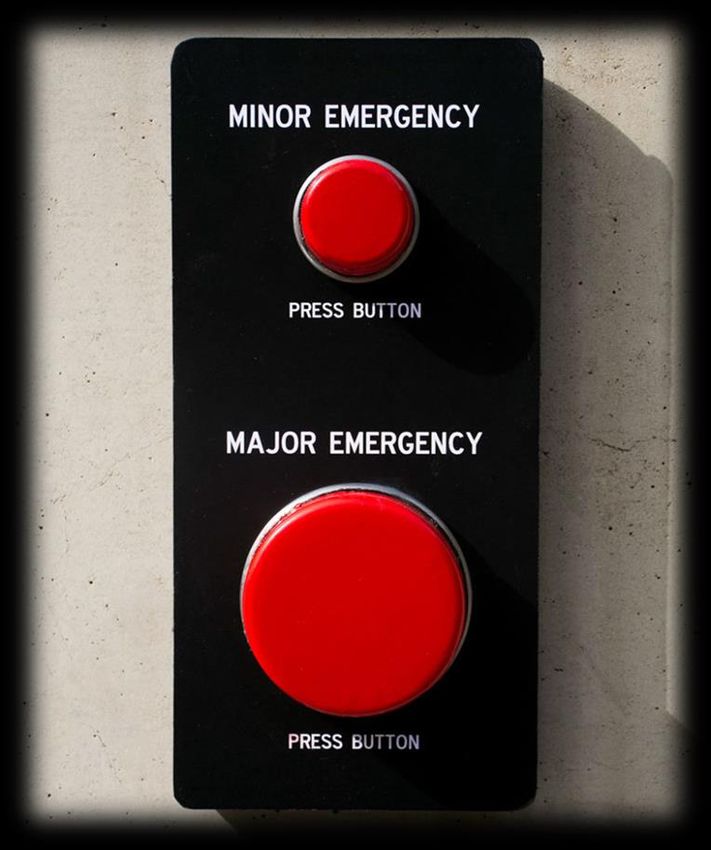
COOP: Not Just For Emergencies Anymore
 • Greater quantity and frequency of
   potential continuity events than the
   disasters we plan for.

 • COOP is not for disaster response.
   It is for maintaining the mission
   of an organization.

 • Examples of COOP “scenarios”.

 • BONUS: increased preparedness for staff,
   to include PC ALERT and PC WARN.

A quarter in review…
What you accomplished:
• Obtained the support of leadership.
• Created an overall continuity strategy
  for county government.
• Identified continuity program roles
  responsibilities.
• Established continuity planning teams.
• Identified essential function criteria.

Where we are going (the outcome)
End of June 2019:
• All functions identified, properly
  scoped, prioritized, and validated.
• Processes for essential functions
  thoroughly analyzed and described.
• Plans consistently updated using
  common practices for implementation
  and overall ease of use.

COOP Update Timeline                Phase 1
                                                 • Identify Teams OCT 2018
                                                 • Orient Teams DEC 2018

• Started 2018                   Phase 2
                                           • Departmental Functions
                                             Identification JAN 2019
                                           • Review FEB 2019

• Phased: one “bite” at a time      Phase 3       • Process Analysis
                                                  • MAR–MAY 2019

• Intuitive tools                Phase 4
                                              • Continuity Plan Updates
                                              • Completed JUN 2019

                                                  • Training and Exercises
• Continuous                        Phase 5       • Mitigation
                                                  • Devolution
Phase 2: Identify WHAT
WHEN
WHYPhase 2: Identify
Essential Function Process Analysis
Phase 3: Analyze

                   While essential functions define what an organization must do or
                   provide, process analyses explain how the organization performs
                   essential functions. The method of process analysis illustrates
                   COOP elements through examining:
                    • Staff and qualifications needed to implement essential functions.
                    • Leadership who supervise or authorize essential functions.
                    • Facility and equipment capability needs.
                    • Necessary communication and/or
                      information technology systems.
                    • Supporting relationships for
                      inputs and outputs.
                    • Workflows and procedures.

                        HOW(s)          WHO                WHERE AT/WITH WHAT
Process Analysis Tool Part I
Phase 3: Analyze
Essential Function Components Process Components
Budgetary Supporting Partners/
Function Name and Description Priority Qualifier(s) Staff and Qualifications Resource Requirements
Information Providers
Step 1: Name your organization's Step 6: Select a Summarize the 1. What is the 1. What are the staff positions (to 1. What facilities or equipment (to What providers (such as
functions. Consider combining like priority level based on situations, statutory typical (i.e. day-to- include leadership/managerial) include communications/IT systems) other county departments,
functions if they are similar in the required delivery requirements, or day) fund source for necessary to perform the essential are necessary to perform the essential vendors, suppliers,
requirement, processes, and/or use the timeframe for the dependencies the essential function? function? In your response, please distributors) are necessary
same resources. Describe projects, function. identified in Steps 3– function? 2. Performing this essential describe the task(s) that each facility for performing the essential
rather than programs (too broad) or 5 (on the department 2. How are function requires how many and/or equipment supports towards function?
tasks (to narrow). functions expenditures for persons (to include shift work performing the essential function.
identification tool) this essential requirements)? 2. Are there any unique specifications
Step 2: In parenthesis, describe the that make this function 3. Does this essential function or capabilities required for facilities or
supporting task(s) for implementing the function essential. authorized? require any specific skills or equipment supporting this essential
function. Be as specific as possible. qualifications? function?
Example: Food services (provide Example: High (within Example: Weekdays Example: Example: Example: Example: MacGuffin
nutritious meals to elementary students 72 hours) (M–F), excepting 1. National School 1. Cooks, food service supervisor, 1. Kitchen for preparation, cooking, Quality Foods.
twice a day) holidays and breaks, Lunch Program and food quality assurance manager refrigeration, freezer, and sterilization
in accordance with fees collected from (for receiving food orders). capabilities. Telephone and/or email
Chapter 28A.235 parents/guardians. 2. Three cooks, one food service for submitting food order(s).
RCW. 2. Principal. provider supervisor, one food 2. Workspace must meet OSHA and
quality assurance manager FDA cleanliness regulations.
(district employee): daily total of
four staff with one food quality
assurance manager receiving
weekly food orders.
3. State DOH food handler’s
certification.Process Analysis Tool Part II
Phase 3: Analyze
Process Workflow
Describe the process for the essential function as a sequential narrative or illustrate in
diagram form.
If opting to reference specific procedures, please create both a hyperlink and describe
the physical location of the procedure.
Example:
1. Administration staff provide yearly headcount for meals to food service supervisor.
2. Food service supervisor daily assigns cooks to fulfill meal requirements.
3. Cooks inventory food supplies against pre-approved menus. Any needed
replenishments go on order forms submitted to food service supervisor.
4. Food service supervisor reviews order form for completeness, then submits to
principal for approval.
5. Principal approves order form, and returns to food service supervisor for
purchasing.
6. Food provider supervisor emails form to food vendor.
7. Food vendor fills order and delivers to facility.
8. Upon arrival food quality assurance manager from the school district reviews order
form, then approves/disapproves.
9. If approved, order is received.
10. If not approved, grievance is placed with vendor.
11. Once order has been approved and received, cooks store items.
12. Cooks prepare menu for each meal.
13. Once meal service has concluded, cooks clean kitchen, and prepare for next meal.Example Essential Function Process Analysis
Function Staff and Qualifications Resource Requirements Supporting Partners/Providers Process Workflow
Fire Investigations Experienced fire Each deputy fire marshal Fire fighters for establishing a 1. Jurisdictional fire department or
investigator as determined vehicle contains all the safe working environment, law- district requests fire
and approved by the fire required equipment for enforcement for scene investigation support.
marshal. Staffing conducting fire preservation and access 2. Fire investigators receive
requirements are situation investigations. control, and medical examiner assignment and reporting
dependent based upon the for fires involving fatalities. location from the fire marshal.
size, complexity, or nature 3. Confirm necessary equipment is
of the fire investigation in vehicle prior to deploying.
scene. Requesting fire 4. Upon arrival at the scene,
department or district may check-in with Incident
specify the amount of fire Commander.
investigators desired. 5. Propose plan and obtain
approval from the Incident
Commander.
6. Upon obtaining approval from
the Incident Commander, begin
investigation.Example Essential Function Process Analysis
Function Staff and Qualifications Resource Requirements Supporting Partners/Providers Process Workflow
Contracts and Department director, Internet service, Finance Department, State 1. Finance division manager
agreements (MOUs, finance division manager, outlook/email, and Emergency Management, and requests approval from
MOA, Shelter, EMAC, one finance division staff access to MRSC Rosters. the promisers (i.e. vendors) for department director for an RFP.
WAMAS). member, and one each contract. 2. Upon approval, finance division
procurement officer from staff are assigned to complete
Finance Department: total the process.
of four persons 3. Assigned finance division staff
contact the Finance Department
(Procurement & Contact
Services) to request that RFP/bid
be added to open solicitations
on county website.
4. Finance division staff provide
desired qualifications and
evaluation criteria to Finance
Department.Example Essential Function Process Analysis
Function Staff and Qualifications Resource Requirements Supporting Partners/Providers Process Workflow
Deploy Washington US&R team, and all All necessary resources Task force members from 1. DHS-FEMA US&R Branch (for
Task Force 1 (activate available department staff: are located, to include participating agencies and all federal events) or WMD-EMD
the task force to approximately 75 persons. inventories and available department staff. (for non-federal events) formally
include supporting descriptions of items, are requests WA TF-1 assistance.
staff) located in the US&R 2. US&R team activates task force
warehouse. by requesting that members and
department staff report to
US&R warehouse.
3. Department personnel setup
assigned stations.
4. Task force members rotate
through each station, obtaining
signatures at each one.
5. Upon completing all stations,
task force members wait to
board buses for their
deployment.Process Analysis Exercise
Pierce County COOP Resources
Internal Website
   my.co.pierce.wa.us/3056/Continuity-of-Operations-COOP

External Website
   piercecountywa.gov/5902/Continuity-of-Operations

Todd Kilpatrick, todd.kilpatrick@piercecountywa.gov, 253-798-2214
Next Steps
Phase 3 (Essential Functions Process Analysis)
• Finish functions identification and prioritize: there is still time!
    • Meet with PCEM to review functions and receive feedback.
• Process analysis of essential functions: today to May 8, 2019.
    • Additional meetings with PCEM for providing assistance with tools.
    • Potential PCEM-hosted webinars for remaining tools.

Phase 4 (Continuity Plan Updates)
• Kickoff meeting: Thursday, May 9, 2019.
• Phase 4 concludes end of June 2019.

Phase 5 (Sustainment and Expansion)
Objectives Review 1. Ever so briefest of reviews for repetitive information. 2. Reiterated availability of PCEM assistance. 3. Exercised the process analysis tool. 4. Shared personal and organizational experiences from February 2019 winter storm. 5. Discussed next steps in COOP update. 6. Provided additional COOP tools.
Questions?
Thank You for Your Participation!
You can also read


