Playing for Life Baseball - AFTER SCHOOL MANUAL
←
→
Page content transcription
If your browser does not render page correctly, please read the page content below

AFTER SCHOOL MANUAL

Playing for Life
    Baseball
Contents
Introduction                       2

PLaying for Life - What is it?     3

How do I know when to CHANGE IT? 5

Overview of lessons                6

Lesson plans
         Lesson 1                   7
         Lesson 2                  13
         Lesson 3                  19
         Lesson 4                  24
         Lesson 5                  31
         Lesson 6                  37
         Lesson 7                  43

Australian Baseball League         47

Aussie T-Ball MLB                  54

Women’s Baseball                   57

                                        1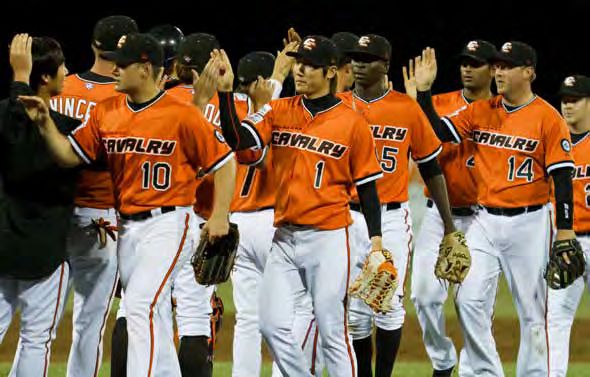
Introduction to

Aussie T-Ball is a modified version of baseball for children. The game is a
six a side, bat and ball game that is all about being active and having FUN.
Aussie T-Ball is nationally recognised by the Australian Baseball Federation,
affiliated State Associations, and the Australian Sports Commission as baseball’s
junior entry point program to introduce children to the game of baseball.
The program is run by local baseball clubs in your area and can also be included
as part of your school’s sport participation program, during or after school.

 The Active After-school Communities program
The Active After-school Communities (AASC) program is an Australian
Government initiative that provides primary school children with free sport and
other structured physical activity programs after school (3.00pm to 5.30pm).
The program is currently run in schools and after-school care centres right
across Australia.
The program aims to engage traditionally inactive children in sport and other
structured physical activities, and through a positive and fun experience,
develop a love of sport that motivates them to join a local sporting club.
The AASC program has partnered with the Australian Baseball Federation
to offer children participating in the AASC program a taste of
the Aussie T-Ball program. This program is specifically designed
for the AASC program with the aim of engaging children in
baseball and promoting the pathway to the Aussie T-Ball
program in the local community.
This delivery manual is a resource for schools
and after school care centres running the
AASC baseball program.

                     Copyright © 2011, Australian Baseball Federation Incorporated – All rights reserved
                                                                                                           2
Playing for Life - what is it?
The Playing for Life philosophy adopts a
‘game sense’ approach to physical activity.

 The game is the focus
Players develop skills through fun, game-like activities (by ’playing the game’ rather than
through traditional skills and drills).

 Coach is a facilitator
Coaches play more of a facilitator role than a director’s role. Rather than instructing
players how to perform a particular skill, coaches provide key coaching points for
performing the skill then set the players a challenge that they must solve through activity.
For example, they might ask:
» How many different jumps can you perform in 30 seconds?
» Where will you stand to field the ball?
» How can you work together to stop the opponents scoring?
» How can you include everyone?
This engages players in the activity at a level that suits their own ability,
and players learn through self-discovery rather than coach direction.

 Discrete coaching
Coach instructions and demonstrations are kept to a
minimum. Allow play to continue and support players
to develop their skills on the side in an unobtrusive way
during the course of the activity. This maximises player
participation and allows players to receive one-on-one
coach support where required.

 Role models
Use player role models during the activities to
demonstrate and emphasise good technique or
strategies. Be aware of cultural considerations
when adopting this strategy.

                      Copyright © 2011, Australian Baseball Federation Incorporated – All rights reserved
                                                                                                            3
Playing for Life - what is it?
Ask the players
The use of player questioning is a valuable strategy to engage the                                         REMEMB
players themselves in changing the activity to increase participation                                   The acti      ER!
                                                                                                                 vit
and to make the activity more or less challenging.                                                       the chall y sets
                                                                                                                   enge
                                                                                                        The ga
                                                                                                     the que me asks
                                                                                                              stions, a
CHANGE IT                                                                                          The play
                                                                                                            ers’ resp
                                                                                                                        nd
Simple variations to activities are introduced to make the activities                                  is the an      onse
                                                                                                                 swer
easier or harder in order to accommodate all player ability levels and
backgrounds. Use the CHANGE IT acronym to assist you in modifying
the activities, and remember to ‘Ask the players’:

           Coaching style e.g. deciding when to direct activities and when to
           ask the players. Knowing when to provide discrete coaching and
           when to ‘just let the kids play’

           How you score or win e.g. introduce zones for batting
           or target games

           Area (playing area) e.g. make the playing area smaller or larger;
           alter distances to targets or between players

           Number of players e.g. consider different team sizes to
           keep all players active. Have several games of 2 v 2 or,
           if focusing on defence skills, change to 3 v 2 or 2 v 1 etc

           Game rules e.g. allow 2 bounces before catching or
           stopping a ball, or introduce a no-go zone

           Equipment e.g. use a larger or softer ball;
           rackets instead of bats; bins or markers for targets

           Inclusion e.g. modify the game to maximise the involvement
           of all players. Ask the players how to change the game

           Time e.g. reduce or extend the time to perform actions;
           change the number of passes within a time limit; vary the length
           of time a player can hold the ball

It is more important to follow the concept of CHANGE IT than to
remember what each letter represents.

If it is not working…. CHANGE IT!!

                     Copyright © 2011, Australian Baseball Federation Incorporated – All rights reserved
                                                                                                                             4
How do I know when to CHANGE IT?
The first step is to play the game and
observe player involvement and responses.

When observing the game being played, and player involvement
and responses, ask yourself the following questions:

» Is the game safe?
» Are all players having fun?
» Are all players engaged in the game?
» Is the game working?
» Do all players understand the game?
» Is the objective of the game being achieved?
» Are all the players being included?
» Is participation being maximised?
» Is the game appropriate to the ability level of each player?
» Are all players being challenged?

If the answer to any of the above questions is No,
then CHANGE IT.
The diagram on the following page provides a step-by-step guide
about when and how to apply the CHANGE IT principles.

When and how to apply the CHANGE IT principles

                           WHAT IS HAPPENING?                    WHAT TO DO                              HOW TO CHANGE IT
                      Too easy (high success)                                          Add rules that incr ease difficulty
  OBSERVATION         Players not challenged enough
                                                                   C HANGE IT          Set challenges that make it mo       re difficult to sco re
                                                                        UP
                                                                                       Incr ease team sizes (perhaps one team only)
 Play the game        Both sides scoring                             Incr ease
                      often, with little ef fort                    challenge          Decr ease ar ea size (to make it mo     re difficult for attackers)
 Observe player       Skills r equired easily per formed
 involvement
 and responses:
                      Too difficult (low success)                                       Simplify the rules to make games easier to play

 Is the purpose                                                                        Change the equipment to help players with the skills
                      Little or no scoring                         C HANGE IT
 being achieved?                                                      DOW N            Set chalenges that make it easier to score
                      Poor levels of possession
 Are all players                                                     Decr ease         Vary the size of the playing area
 engaged?             Players not coping with
                                                                    challenge          Play more games with fewer players per team to
                      skills/poor execution
 Are players                                                                           increase the opportunity to perform skills
 coping with the      Little inter est or motivation
 skills r equired?
 Is it safe?          Too one-side d                                                   Shuffle the team - swap players around to balance teams

 Are players          (one-sided success)                                              Introduce additional rules to increase the challenge
 enjoying the game?                                                                    for the dominant side only e.g. a time limit to score
                                                                   C HANGE IT
                      One team dominating
                                                                                       Introduce zoned areas to restrict dominant players
                      Some players not getting a go                                    Develop a game scenario

                                 PLAY THE GAME         •   OBSERVE RESPONSES     •   MAKE FURTHER VARIATIONS AS NECESSARY

                      Copyright © 2011, Australian Baseball Federation Incorporated – All rights reserved
                                                                                                                                                            5
Overview of lessons
LESSON
OBJECTIVE HITTING THROWING FIELDING RUNNING HITTING FIELDING AUSSIE TBALL or
MODIFIED GAME
• Sharks and • Gulgul (10 mins) • Baseball Ladder • Form a Group • Warriors and • Sharks and • Cat and Mouse
Sardines (5 mins) • Gorri (10 mins) (5 mins) (5 mins) Dragons (5 mins) Sardines (5 mins) (10 mins)
• French Baseball • Rebound Catch • Get the Bean • Continuous • Bombard
(10 mins) (10 mins) Bag (5 mins) Tennis (10 mins) (10 mins)
START OUT
• Continuous • Underarm Relay • Hit 4 & Go • Base to Base • Long Ball • Roll a Goal • A game of Aussie
Tennis (20 mins) (10 mins) (20 mins) Relay (10 mins) (15 mins) T-Ball (40 mins); or
(20 mins)
• Hit 4 & Go • Runners v • Defend the • Runners Versus • Over the Line • One of your
• Beat the Ball
(20 mins) Passers (20 mins) Zone (2o mins) Passers (20 mins) (20 mins) favourite modified
(20 mins) games.
• Beat the Bomb
(15 mins)
GET INTO IT
• Put It Away • Run the Circle •Back to Back •What Did You • Four Corners • Bridge Stone • What Did You
(5 mins) (5 mins) Pass (5 mins) Learn? (5 mins) (5 mins) Tree Relay Learn/Like?
• What Did You • Stay Tuned (5 mins) (10 mins)
Like? (5 mins) (5 mins)
FINISH UP
• Aussie T-Ball • Who/what are • Which is your • Aussie T-Ball - • Do your kids • Has your local • How about
Web site - the 6 ABL teams? local ABL team? www.aussietball. know where they club made running this
www.aussietball. com.au. session at your
• Australian • Who are your can play Aussie contact with
• Have you invited
Copyright © 2011, Australian Baseball Federation Incorporated – All rights reserved
com.au. Baseball League T-Ball in their you for ongoing local club.
favourite players? the kid’s parents to
• How to source www.theabl. join in the session local community? participation? • How about
information com.au for week 7? inviting parents
• Find a Club
about Aussie • Is it possible to to this session,
locator on the
BASEBALL IN
T-Ball. conduct week 7 whether it is run at
and a local club Aussie T-Ball
YOUR COMMUNITY
the school or club?
near you? website.
6
Lesson 1

      Objective
      Hitting - Learning the basics through continuous activities.

      Time
      60 minutes.

      Area
      Area appropriate for playing numbers and safe hitting space.

      Equipment
      Marker cones, bases, hitting tees, bibs and sashes, foam covered safety bats,
      tennis racquets or similar, foam balls.

      Baseball in your community:
      Introduce kids to the Aussie T-Ball website - www.aussietball.
      com.au. Here they can source information about Aussie
      T-Ball, play fun games online, learn some great tips about
      Aussie T-Ball and have FUN!

Copyright © 2011, Australian Baseball Federation Incorporated – All rights reserved
                                                                                      7
Lesson 1: Sharks and Sardines                                                                 START OUT
Objective
On the coach’s call sardines attempt to cross from one side to the other without being munched by a shark.

                                                                                                           5min

What to do
• Set up a field with a “safe” line on either side of the playing surface.
• A designated player (“Shark”) must stay out of the safe zone i.e. in the middle; others
  (“Sardines”) at one side of play area, behind a safe line.
• On coach’s call, Sardines attempt to cross from one side to other without being “munched”
  (touched) by Shark. Any Sardines who are touched magically become Sharks and then assist
  catching the other Sardines until everyone has been caught.

What you need
• Marker cones.

                     Copyright © 2011, Australian Baseball Federation Incorporated – All rights reserved
                                                                                                                  8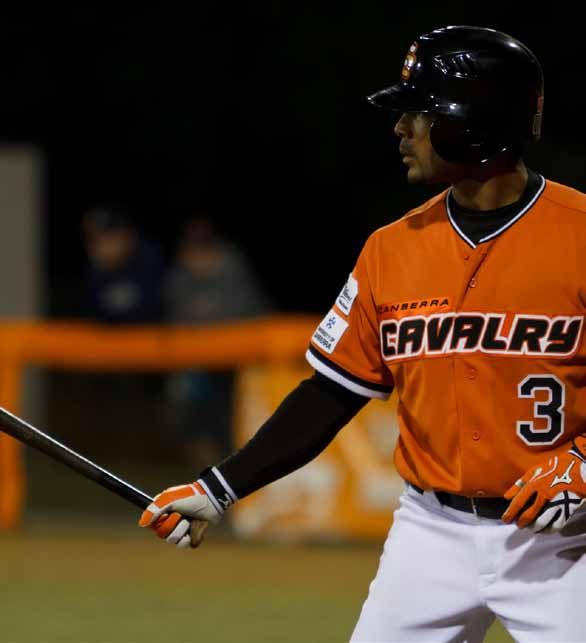
Lesson 1: French Baseball                                                                       START OUT
Objective
The batter aims to hit a ball which is thrown underarm without getting out.

10min

What to do
• One bat and a foam or whiffle ball per group.
• Create a fielder free zone in front of the batter.
• The batter stands with feet together and holds the bat in front of the legs.
• Fielders throw the ball underarm and the batter hits in any direction.
• The batter is out if the ball is caught on the full or they are hit on the legs.
• Ensure more mobile players pass the ball to a less mobile player so everyone has a “touch”
  of the ball over the course of the game.
• Ensure players adjust the speed of the pitch so less mobile players can hit the ball.

What you need
• Marker cones to establish batting line,
  fielder free zone and fielding zone.
• Baseball bat and foam safety ball.

Change it
•   Use a larger bat such as a tennis racquet bat.
•   The pitcher to bounce the ball once.
•   Increase the size of the fielder-free zone.
•   Allow the pitcher to move in or out and throw from any suitable distance to ensure a hittable ball.

                       Copyright © 2011, Australian Baseball Federation Incorporated – All rights reserved
                                                                                                             9
Lesson 1: Continuous tennis GET INTO IT
Objective
Players in small groups hit a ball over an obstacle and run to the back of the line making way for
the next player to receive a ball and hit it.
20min
What to do
• Start with underarm hits.
• After the first ball is hit, the player moves to the right and then to the back of the line.
What you need
• Playing area with net or alternative, such as marked “no-go” area or bench.
• One paddle bat or similar per player.
• Tennis ball or similar for each group.
• Markers or tape.
Change it
• 2 bounces allowed for less experienced players.
• Vary the racquet size, use a slower ball, don’t use the net, decrease the size of the playing area.
Copyright © 2011, Australian Baseball Federation Incorporated – All rights reserved
10Lesson 1: Hit 4 and go GET INTO IT
Objective
A batter hits 4 consecutive balls into the field and then runs between marker cones as many
times as possible. When the fielders have returned all 4 balls they call out “STOP!”
(6 or more per group).
20min
What to do
2 teams - batters and fielders.
Batter
• Hits 4 balls, one after the other, into the playing space.
• The balls can be hit from the ground, or off tees, you can toss the ball and hit it yourself, or
have a team mate toss the ball to you.
• When the last ball is hit, the batter runs between the marker cones as many times as possible.
Fielders
• Fielders return the balls to the home base - balls must be inside the hoop to count.
• Fielders call “STOP”, when the last ball reaches home base.
What you need
• A suitable indoor or outdoor playing area as shown.
• Range of bats, racquets and balls(sponge balls, softballs or tennis balls).
• Marker cones (for running and playing area).
• Batting tee(s).
Change it
• To manage large groups, have 2 or more groups playing at the same time using a “fan” system.
Balls must be hit forward.
• Players with less developed throwing/catching/fielding/batting skills can be assisted on the side.
• Batters - 2 players work in tandem, eg. one player hits and the other runs.
Copyright © 2011, Australian Baseball Federation Incorporated – All rights reserved
11Finish up: Put it away FINISH UP
Objective
The usual safety rules apply such as safe “traffic flow”, acting sensibly and being aware of
others. Use it for:
• Gathering markers, balls and other small equipment
• Putting away mats, benches etc.
Use teams. For this to work well, you need to be organised.
5min
Copyright © 2011, Australian Baseball Federation Incorporated – All rights reserved
12Lesson 2
Objective
Throwing – short, sharp energisers that teach the fundamentals of throwing.
Time
60 minutes.
Area
Area appropriate for playing numbers and required running space.
Equipment
Marker cones, bases, bibs or sashes, foam covered safety bats, tennis racquets
or similar, foam balls, large target balls (Swiss/beach ball).
Baseball in your community:
Introduce kids to the Australian Baseball League, Australia’s
premier Baseball competition. Information can be found on
the website – www.theabl.com.au. In lesson 3 kids will be
asked about the ABL, they have some FUN homework to do!
Copyright © 2011, Australian Baseball Federation Incorporated – All rights reserved
13Lesson 2: Gulgul START OUT
Objective
For a player to run between a start and destination point and, using a tennis racquet or similar, defend
the line by hitting away foam or whiffle balls being thrown by other players.
10min
What to do
• Mark out two lines. One for a defender to walk along and one for the remaining players to throw balls
from.
• Assign one player in the group to be the defender and provide them with a tennis racquet to defend
him or herself.
• Create a single line of players, each with a foam ball in their hand.
• The defender then walks a defined line, set out with markers, parallel to the line of the other players.
• The remaining players must stay behind the line and attempt to hit the defender with their ball.
• The defender fends balls off with a racquet (or dodges).
• NB: place a marker at each end of the defender’s path: other players can only throw when the
defender is between markers.
What you need
• Markers to define a walking and throwing line.
• Foam or whiffle balls, enough balls for one per player.
• A tennis racquet (or similar).
Copyright © 2011, Australian Baseball Federation Incorporated – All rights reserved
14Lesson 2: Gorri START OUT
Objective
A large ball is rolled and players try to hit it with a baseball.
10min
What to do
• A coach is designated as the roller calls out “gool-gool” (going-going) and rolls the ball in front of
the other players, who attempt to hit it with their baseballs (can choose between soft core, foam or
whiffle ball).
What you need Change it
• Markers to define a rectangular playing area. Vary the size of the target ball for varying abilities.
• 1 or 2 balls per player (to throw at the
moving target).
• A variety of balls to be used as targets
of different size.
Copyright © 2011, Australian Baseball Federation Incorporated – All rights reserved
15Lesson 2: Underarm return relay GET INTO IT
Objective
Players run to a point, return and on the way back pick up a ball and throw it underarm to the team-
mate next in line. This pattern continues. (Play with 4 or more).
10min
What to do
• Mark a starting line and a midway line, and place a distant marker to run around (turning point).
• Form teams of 4 - 6 players.
• Place the ball on the midway line.
• Player 1 runs around the turning point and back towards the team, picking up the ball on the
midway line.
• The ball is thrown underarm to player 2, player 1 joins the end of the team.
• Player 2 runs to the midway line, deposits the ball and continues to the turning point, then runs
back, picks up the ball and throws it underarm to player 3.
• Continue until player 1 is again at the head of the line.
Change it
Instead of placing the ball on the midway line, a player with limited mobility or ball throwing ability is
situated at the midway line and an appropriate pass or handover is made.
Copyright © 2011, Australian Baseball Federation Incorporated – All rights reserved
16Lesson 2: Runners v Passers GET INTO IT
Objective
A batting team and a fielding team. The first batter hits the ball and the entire team runs around the
markers. The fielders gather the ball and pass it to everyone in their team. When all the fielders have
touched the ball, they call out “STOP!” (4 or more per team).
20min
What to do
• Using a tee or drop shot, the ball is hit between B and C.
• All batters attempt to run as a group to the finish position.
• If the ball goes “wide” (A-B or C-D), the shot is taken again.
• Field the ball and then move onto the infield.
• The ball is passed to each fielder using a nominated throw, eg.
underarm throw.
• Fielders must be at least 2 meters apart.
• The last fielder to receive a pass calls out “STOP!”.
• The ball is passed to the next batter.
What you need Change it
• A suitable indoor or • Use player role models to emphasise and effective side-on batting
outdoor playing area stance, good ball placement and effective fielding plays.
as shown. • Vary the pass - allow any pass or vary the pass. Include novelty
• Any suitable light passes, eg. under a leg.
weight bat, tennis ball • Rolling - use rolling to pass among fielders.
or similar. • Distance between fielders - vary the distance and position, eg.
• Marker cones. all fielders along the line A-B.
• Batting tee. • Hitting direction - specify one or more allowable sides, eg. D-C
or B-C or A-B or any combination of these.
• False calls - provide bonus points to a runner if “STOP!” is called
too soon.
Copyright © 2011, Australian Baseball Federation Incorporated – All rights reserved
17Lesson 2: Run the Cirlce FINISH UP
Objective
Cooperative passing. Players walk or run around a circle receiving a ball from a feeder at the centre of
the circle. An easy option starts with walking and rolling the ball. Players with limited mobility or less
developed throwing/catching skills stands just off the circle - distance and type of pass will depend on
ability.
5min
Lesson 2: What did you like? FINISH UP
This is your chance to do some “customer surveying”. Ask for feedback during sessions or at the end.
• What were your favourite activites? (they will probably need reminding about what they did!)
• What didn’t you like?
• What would you like to do again?
5min
Copyright © 2011, Australian Baseball Federation Incorporated – All rights reserved
18Lesson 3
Objective
Fielding – learning the fundamental skills required for fielding and the various
positions and terminology for baseball through various games – some classics,
some new! This lesson also focuses on throwing, communication and team
work.
Time
60 minutes.
Area
Area appropriate for playing numbers and required running space. A solid
wall for rebound catch is required.
Equipment
Marker cones, bases, hitting tee’s, bibs or sashes, foam covered safety bats,
tennis racquets or similar, foam balls.
Baseball in your community:
Questions for kids surrounding the ABL. Which is their local
team? Out of all the ABL team logos, which one is their
favourite? Who are their favourite ABL players?
For girls wanting to play baseball there are lots of opportunities
including Aussie T-Ball, Little League, Club baseball and right
up to national representation.
Copyright © 2011, Australian Baseball Federation Incorporated – All rights reserved
19Lesson 3: Baseball Ladder START OUT
What to do
5min
• Organise players in pairs, sitting in two
lines facing each other so that feet are
touching the person opposite.
• Each pair sits two metres apart.
• The coach moves down the line giving
each pair a name in baseball terms. The
coach then calls out terms one at a time.
• Pairs named by that term, stand up and
down the line, stepping over the other
players legs, before running around
cones placed 5 metres in front of the lines.
• Players then run back down the outside to
cones placed at the back of the lines,
before returning over other players legs
back to their original position before
sitting down again.
Lesson 3: Rebound Catch START OUT
Objective
For a group of players to field and catch rebounding balls thrown off a wall.
What to do
5min
• Find a suitable wall large enough to
conduct the game (approximately 20m
wide at 10m high).
• Assign one player from the team to be
the thrower.
• Locate the group of players 3-4m away
from the wall.
• One player stands behind group and
throws ball into wall so that it re
bounds at them. Try to coach the
player so that some of the balls are
thrown high enough on the wall so
they can be caught by the fielding
players.
What you need • Group attempts to take rebound
• Durable balls such as foam balls or tennis balls. catches.
• A large enough wall to conduct the game. • Change thrower after 10 throws.
Copyright © 2011, Australian Baseball Federation Incorporated – All rights reserved
20Lesson 3: Hit 4 and go GET INTO IT
Objective
A batter hits 4 consecutive balls into the field and then runs between marker cones as many times as
possible. When the fielders have returned all 4 balls they call out “STOP!”
(6 or more per group).
20min
What to do
2 teams - batters and fielders.
Batter
• Hits 4 balls, one after the other, into the playing space.
• The balls can be hit from the ground, or off tees, you can toss the ball and hit it yourself, or have a
team mate toss the ball to you.
• When the last ball is hit, the batter runs between the marker cones as many times as possible.
Fielders
• Fielders return the balls to the home base - balls must be inside the hoop to count.
• Fielders call “STOP”, when the last ball reaches home base.
What you need
• A suitable indoor or outdoor playing area as shown.
• Range of bats, racquets and balls (sponge balls, softballs or tennisballs).
• Marker cones (for running and playing area).
• Batting tee(s).
Change it
• To manage large groups, have 2 or more groups playing at the same time using a “fan” system. Balls
must be hit forward.
• Players with less developed throwing/catching/fielding/batting skills can be assisted on the side.
• Batters - 2 players work in tandem, eg. one player hits and the other runs.
Copyright © 2011, Australian Baseball Federation Incorporated – All rights reserved
21Lesson 3: Defend the zone GET INTO IT
Objective
Runners start in the middle, move to one end and try to hit a target. After 4 steps they either bounce
the ball or pass it. Interceptors must prevent the ball from hitting the target. (Team of 3 or more).
20min
What to do
The game starts in the middle of the court - 4 v 4.
Runners (attack)
• Players are not permitted to enter the ‘no-go’ zone.
• Players must pass if tagged.
Runners (defence)
• Must prevent the ball from hitting the target.
• If the interceptors gain possession of the ball, they become runner and pass towards their cone.
What you need
• Target - large cone or cricket wicket or alternative.
• One ball per pair (volleyball size).
• Markers or tape to mark “no-go” zones.
• Suitable indoor or outdoor playing area (basketball court size).
Safety
• Ensure a smooth playing area with adequate space between groups.
• No contact between players.
• The ball cannot be taken from another players possession.
Copyright © 2011, Australian Baseball Federation Incorporated – All rights reserved
22Lesson 3: Back to back pass FINISH UP
Objective
In pairs, players are back to back and pass a ball to one another. (Play with 4 or more).
5min
What to do
• With one ball per pair, players pass the ball back and forth.
• Ball must change hands completely.
• Explore different passes - make up new ones.
• After exploration - set a time period, eg. number of passes in 20 seconds.
• Highlight successful passes. Ask children to show their successful passes.
Change it
• Swap partners.
• Easier - passer or receiver can move feet around.
• Harder - move apart.
• Move apart and introduce new passes or positions - e.g. rolling along ground, bounce pass.
Copyright © 2011, Australian Baseball Federation Incorporated – All rights reserved
23Lesson 4
Objective
Running – short, sharp energisers which teach the basics of running bases
through game sense activities. Team work is crucial, team relay members need
to encourage other team members!
Time
60 minutes.
Area
Area appropriate for playing numbers, placement of bases and required running
space.
Equipment
Marker cones, bases, hitting tees, bean bags, hoops, foam covered safety bats,
foam balls.
Baseball in your community:
Remind the kids about the Aussie T-Ball website – www.
aussietball.com.au
Have you invited a local representative from a club to join the
session? A list of local clubs can be found on the Aussie T-Ball
website.
REMINDER: Parents/club week for lesson 7. Organising should
start now – making contact with a local club, informing parents
of when, where, who and why! For assistance in organising
the session, a local development officer in your area can
provide assistance. Contact your State or Territory baseball
office for a local development officer. A list of development
officers can be found on the Aussie T-Ball website.
www.aussietball.com.au
Copyright © 2011, Australian Baseball Federation Incorporated – All rights reserved
24Lesson 4: Form a group START OUT
Objective
Players run around in different directions avoiding body contact with other players. The coach calls a
number and players form a group of that size.
5min
What to do
• Mark an area free of obstructions - disperse the players.
• Start with slow jogging.
• Try several group sizes before you get to the number you would like for a subsequent activity, eg. start
by calling 2s, then 6s and finally the group size you want, such as 4’s - you may want to add a “new
peoples to the group” rule for the second and third calls.
• As an option, use some bright music as a backdrop. Stop the music and call the number for the group
size.
Change it
• Vary the locomotion - eg. short bursts of running, hopping and fast walking before calling a group size.
• Players have to run to the nearest boundary and touch it with their feet before forming a group.
• Walk rather than run.
Copyright © 2011, Australian Baseball Federation Incorporated – All rights reserved
25Lesson 4: Get the bean bag! START OUT
Objective
For players to run to opposing team’s area and steal a ball, the first team to get a total of 5 balls wins.
5min
What to do
• Set up a field approximately 15-20m in length with enough lanes to accommodate for the
number of players per team.
• Split the players up into teams of two. Each team should have one player at either end
of the field.
• Allocate players on opposite sides of a playing area with 3 balls.
• Players run to the other side and steal one ball at a time.
• The winner is the first player to increase their total to 5.
What you need
• Marker cones to set up a field with lanes.
• Various types of balls (baseballs, foam,
tennis etc) or small bean bags.
Change it
• Can be an individual or team activity (Play with 6 or more).
• Set up a baseball diamond and allocate players a plate to store their balls
(dependant on team size).
Copyright © 2011, Australian Baseball Federation Incorporated – All rights reserved
26Lesson 4: Base-to-Base Relay GET INTO IT
Objective
For two teams to have a “relay race” against each other around all of the bases.
10min
What to do
• Set up a baseball diamond with base plates spaced at correct distances apart.
• Divide players into two teams.
• Place an equal number on each base.
• A runner from home runs to 1st base who tags their fellow team member who then
repeats the process until the final team member reaches home plate.
What you need
• Base plates.
Change it
• Depending on numbers the relay can be continuous (as shown in illustration).
• Runners start from home and 2nd base simultaneously (or all bases).
• Runners start anti clockwise.
• For large groups of players increase the number of bases to accommodate for
extra base runners.
• For players of varying abilities reduce the distance and or number of bases
to accommodate.
Copyright © 2011, Australian Baseball Federation Incorporated – All rights reserved
27Lesson 4: Runners v Passers GET INTO IT
Objective
A batting team and a fielding team. The first batter hits the ball and the entire team runs around the
markers. The fielders gather the ball and pass it to everyone in their team. When all the fielders have
touched the ball, they call out “STOP!” (4 or more per team).
20min
What to do
• Using a tee or drop shot, the ball is hit between B and C.
• All batters attempt to run as a group to the finish position.
• If the ball goes ‘wide’ (A-B or C-D), the shot is taken again.
• Field the ball and then move onto the infield.
• The ball is passed to each fielder using a nominated throw, eg.
underarm throw.
• Fielders must be at least 2 meters apart.
• The last fielder to receive a pass calls out “STOP!”.
• The ball is passed to the next batter.
What you need Change it
• A suitable indoor or • Use player role models to emphasise an effective side-on batting
outdoor playing area stance, good ball placement and effective fielding plays.
as shown. • Vary the pass - allow any pass or vary the pass. Include novelty
• Any suitable light passes, eg. under a leg.
weight bat, tennis ball • Rolling - use rolling to pass among fielders.
or similar. • Distance between fielders - vary the distance and position, eg.
• Marker cones. all fielders along the line A-B.
• Batting tee. • Hitting direction - specify one or more allowable sides, eg. D-C or
B-C or A-B or any combination of these.
• False calls - provide bonus points to a runner if “STOP!” is called
too soon.
Copyright © 2011, Australian Baseball Federation Incorporated – All rights reserved
28Lesson 4: Beat the Bomb GET INTO IT
Objective
A batting team must hit a ball from a batting tee, tag a fellow batting team member, and hit
another baseball before it explodes. Fielding team to count down till bomb explodes.
15min
What to do
• Place a batting tee on a hitting line with a marking cone 10m away (along batting line).
• Split players into two even teams. Fielding team is to be in front of batting line and batting
team at marker cone.
• Batters must bat behind the batting line.
• Batters hit the bomb off tee into field. Batter then runs around marker (10m away) and
tags next batter. Fielding team to count down bomb explosion.
• Fielding team must get bomb back to tee.
• Bomb is reset when placed on tee and will explode after 5 seconds.
• Use a whistle to indicate when the bomb detonates.
• Next batter must hit bomb off tee before it explodes.
What you need
• Hitting tee, baseball bat and baseball.
• Marker cones.
Change it
• Increase or decrease the time until the bomb will explode.
Copyright © 2011, Australian Baseball Federation Incorporated – All rights reserved
29Lesson 4: What did you learn? FINISH UP
Reinforce key skill or tacticle points.
Use:
• cue words, eg. “When you... keep it smooth”.
• tactical tips - these can relate to Ask the players questions, eg. “Remember when i asked Mary,
Kate and John to show us... What did you learn?”.
Link back to previous sessions.
5min
Copyright © 2011, Australian Baseball Federation Incorporated – All rights reserved
30Lesson 5
Objective
Hitting – applying some of the basic hitting skills learnt so far to some slightly
harder games and activities.
Time
60 minutes.
Area
Area appropriate for playing numbers and safe hitting space.
Equipment
Marker cones, bases, hitting tee’s, bibs or sashes, foam covered safety bats, ten-
nis racquets or similar, foam balls.
Baseball in your community:
Do the kids know where they can play Aussie T-Ball in their
community? A list of local clubs can be found on the Aussie
T-Ball website – www.aussietball.com.au.
Copyright © 2011, Australian Baseball Federation Incorporated – All rights reserved
31Lesson 5: Warriors and dragons START OUT
Objective
One team called Warriors pass the ball to the other Warriors and try to tag the opposing team called
Dragons. If Dragons are tagged they become Warriors. When the dragons are caught the teams swap
over.
5min
What to do
• Establish a playing area. A moat surrounds the playing area.
• 2 teams: Warriors and Dragons
• Dragons can run but not into the moat because dragons can’t swim.
• Warriors are not allowed to step with the ball or throw it at a Dragon.
• Warriors are not allowed to hold the ball for any longer than 3 seconds.
What you need
• 1 medium sized ball.
• Bibs for the Dragons.
• Marker cones.
Change it
• Team size - uneven team sizes. More Warriors speeds up the game and makes it harder for Dragons.
• Vary type and size of ball, type of pass, size of playing area, safe zones, immediately pass the ball -
“hot potato”, vary the locomotion.
Copyright © 2011, Australian Baseball Federation Incorporated – All rights reserved
32Lesson 5: Continuous tennis START OUT
Objective
Players in small groups hit a ball over an obstacle and run to the back of the line making way for the
next player to receive a ball and hit it.
10min
What to do
• Start with underarm hits.
• After the first ball is hit, the player moves to the right and then to the back of the line.
What you need
• Playing area with net or alternative, such as marked “no-go” area or bench.
• One paddle bat or similar per player.
• Tennis ball or similar for each group.
• Markers or tape.
Change it
• 2 bounces allowed for less experienced players.
• Vary the racquet size, use a slower ball, don’t use the net, decrease the size of the playing area.
Copyright © 2011, Australian Baseball Federation Incorporated – All rights reserved
33Lesson 5: Long ball GET INTO IT
Objective
To hit a ball as far as possible to a designated area.
15min
What to do
• Mark out a batting line with a batting tee.
• Mark out designated areas for the ball to be hit to: marked lines, cones, fence, etc.
• Commence hitting.
What you need
• Marker cones to establish batting line and designated hitting area.
• Hitting tees.
• Baseball bat and baseballs.
Copyright © 2011, Australian Baseball Federation Incorporated – All rights reserved
34Activity 5: Over-the-Line GET INTO IT
Objective
A competitive hitting game where a team attempts to hit a ball between two markers, at the same
time the defending team tries to prevent the batting team from scoring.
20min
What to do
• Place a hitting tee on the ground and then place two markers (10-25m away from the tee).
• Split players into two teams, a hitting and fielding team (can be played with 3-6 players a side).
• The hitter attempts to hit a ball from the tee between two markers.
• Ball must touch the ground on far side of markers to score a point.
• Defending team position themselves to prevent batted groundballs from passing
between markers, and to prevent fly balls from landing over the line between the markers.
• Hitter continues to hit until he/she fails to score.
• All players bat once, then the teams swap roles.
What you need
• Hitting tees.
• Baseball bat, balls and gloves.
• Marker cones to establish scoring line.
Copyright © 2011, Australian Baseball Federation Incorporated – All rights reserved
35Activity 5: Four corners FINISH UP
Objective
Players choose a corner to stand in and, as the game continues based on the call, must move in the
middle.
5min
What to do
• Give names to each corner eg. home, 1st, 2nd, 3rd, base.
• One player stands in the middle of the square with their eyes shut, counting down from 10.
• While the player is still counting, all the other players walk to a corner.
• When the counter gets to zero, they name one of the corners.
• All players in that corner come into the middle and count.
• Continue until all players are in the middle.
Activity 5: Stay tuned... FINISH UP
• Key dates, terms, holidays.
5min
• Forthcoming events - Lesson 6 & 7.
• Distribute flyers for upcomming events.
Copyright © 2011, Australian Baseball Federation Incorporated – All rights reserved
36Lesson 6
Objective
Fielding– applying some of the basic fielding skills learnt so far to some slightly
harder games and drills. This lesson also focuses on throwing, communication
and team work.
Time
60 minutes.
Area
Area appropriate for playing numbers and safe hitting space.
Equipment
Marker cones, bases, bibs or sashes, foam covered safety bats, tennis racquets
or similar, foam balls, large target balls (Swiss/beach ball).
Baseball in your community:
Has your local club made contact with you for ongoing
participation? Find a club locator on the Aussie T-Ball website
– www.aussietball.com.au.
Copyright © 2011, Australian Baseball Federation Incorporated – All rights reserved
37Lesson 6: Sharks and Sardines START OUT
Objective
On a coach’s call sardines attempt to cross from one side of the other without being munched by a shark.
5min
What to do
• Set up a field with a “safe” line on either side of the playing surface.
• A designated player (“Shark”) must stay out of the safe zone i.e. in the middle; others
(“Sardines”) at one side of play area, behind a safe line.
• On coach’s call, Sardines attempt to cross from one side to other without being “munched”
(touched) by Shark. Any Sardines who are touched magically become Sharks and then assist
catching the other Sardines until everyone has been caught.
What you need
• Marker cones.
Copyright © 2011, Australian Baseball Federation Incorporated – All rights reserved
38Lesson 6: Bombard START OUT
Objective
2 or more teams working in parallel throw tennis balls at a large target ball and try
to move the target ball over a goal line (4 or more players).
10min
What to do
• Mark out throwing line and goal line for both parallel teams.
• Each player is given two balls.
• Coach calls out PLAY BALL which is the sign that players are to throw baseballs at the
large target ball.
• If necessary, call “STOP!”, allowing players to retrieve balls that are in their playing area - this may
include some opposition balls. Restart play once all players have moved back out of the playing area.
• Allow time-outs to discuss tactics.
• First target ball to cross the goal line scores a point.
What you need Change it
• Playing area around half the size of a Vary the size of the target ball.
volleyball court divided into separate areas.
• Markers to define playing area, throwing
line and goal line.
• Two large target balls.
• 2 baseball per player.
Copyright © 2011, Australian Baseball Federation Incorporated – All rights reserved
39Lesson 6: Roll-a-Goal GET INTO IT
Objective
For one team to try and roll a ball over a target line which is being defended by the other team.
20min
What to do
• Mark out a field approximately half the size of a volleyball court with two goal lines at either end.
• Separate players into two teams of 6 per side.
• A team scores a point when a ball is rolled over the other team’s goal line. The ball must bounce
at least twice before it crosses the goal line.
• The defending team returns the ball after a point is scored or defended.
• The attacking team must throw the ball from where it is fielded.
• If the ball is caught on the full the player may take one step forward before throwing the ball.
What you need
• One baseball per game.
• Markers to define field, goal line and ‘no man’s land’.
• Baseball gloves.
Change it
• Create a marked line for players to roll the ball from.
• Use different balls, i.e. volleyball, soccer, football, etc.
Copyright © 2011, Australian Baseball Federation Incorporated – All rights reserved
40Lesson 6: Beat the ball GET INTO IT
Objective
The hitter hits a pitched ball and runs around all bases, attempting to beat the thrown ball by the
fielding team.
20min
What to do
Normal positions as for Baseball (can have more infielders or outfielders but must have four fielders
on bases). Hitting team hits pitched ball (underarm) into fair territory and attempts to run around all
bases to home base. Fielders field the ball and throw it to first base who tags base, to 2nd base who
tags base, to 3rd base who tags base, to home base, tag base. If ball beats runner to home then
runner is out. If runner gets to home base before ball then 1 run is scored. All hitters hit then change
positions.
(NB only way out is at home base).
What you need
• Bat and ball.
• Bases.
• Two even teams.
Copyright © 2011, Australian Baseball Federation Incorporated – All rights reserved
41Lesson 6: Bridge Stone Tree relay FINISH UP
Objective
The hitter hits a pitched ball and runs around all bases, attempting to beat the thrown ball by the
fielding team.
5min
What to do
• Form teams of 6 and line up behind marker cones.
• The coach signals and first team member runs out in front of team and makes a bridge; second
person runs out, runs under bridge and makes a stone; third person runs out, under bridge, over
the stone and makes a tree; fourth person runs out under bridge, over stone and around tree and
repeats on the way back to tag fifth member, who repeats and tags sixth.
• When sixth (last) person runs around tree, the tree follows them back, when the tree jumps over the
stone the stone follows back, the stone goes under bridge and the bridge follows back.
• First team back wins. Repeat 2-3 times then change bridge, stone and tree.
Copyright © 2011, Australian Baseball Federation Incorporated – All rights reserved
42Lesson 7
Objective
Game of Aussie T-Ball! Alternatively you or the participants may choose your
favourite game from the past 6 lessons. Kids get to apply all the skills learnt over
the past 6 lessons to a game of Aussie T-Ball – including hitting, throwing, field-
ing, running, communication, team work and good sportsmanship.
Time
60 minutes.
Area
Area appropriate for playing numbers and safe space between players.
Equipment
Marker cones, bases, foam covered safety bats, foam balls.
Baseball in your community:
How about running this session at a local club? A list of local
clubs can be found on the Aussie T-Ball website – www.
aussietball.com.au. For assistance in organising the session, a
local development officer in your area can provide assistance.
Contact your State or Territory baseball office for a local
development officer. A list of officers can be found on the
Aussie T-Ball website.
Alternatively, you may wish to invite parents to this session so
they can be involved in the games and activities.
Parents will ultimately be making the decision if their kid will
continue with ongoing participation – getting the parents
involved is essential.
Try to organise information flyers for how and where kids can
continue participation. Your local club or development officer
can help with this.
Copyright © 2011, Australian Baseball Federation Incorporated – All rights reserved
43Lesson 7: Cat and Mouse START OUT
Objective
For two teams to race each other around the bases of a baseball diamond.
10min
What to do
• Set up a baseball diamond with base plates spaced at correct distances apart.
• Divide players up into two teams, cat and mouse.
• Line the two teams up behind home plate.
• The mouse is released to run around the bases. The cat is then released and chases the mouse
around the bases. Release time can be varied based on ability.
• Both cat and mouse must touch every base.
• Continue until all players have had a turn at running around the bases.
What you need
• Base plates.
Change it
• Switch teams around so that mouse team becomes cat team.
Copyright © 2011, Australian Baseball Federation Incorporated – All rights reserved
44Lesson 7: Aussie T-Ball GET INTO IT
Objective
For participants to put skills learnt over the past 6 weeks into practice with a game of Aussie T-Ball.
40min
How to set up an Aussie T-Ball playing field
1. Place the home base plate on the ground and walk fifteen (15) metres on an angle, similar to a
diamond shape as shown in the field description on the previous page, and place first base on the
ground.
2. Continue to place second and third base, fifteen (15) metres apart, on the ground to make up your
‘diamond’.
3. The pitching plate is to be placed on the ground ten (10) metres from home base, in between home
and second base.
What to do
• Refer to the rules in the “In School Manual”.
• PLAY BALL!
Copyright © 2011, Australian Baseball Federation Incorporated – All rights reserved
45Lesson 7: What did you learn/like? FINISH UP
This is your chance to do some ‘customer surveying’. Ask for feedback during sessions or at the end.
• What were your favourite activites? (they will probably need reminding about what they did!).
• What didn’t you like?
• What would you like to do again?
10min
Copyright © 2011, Australian Baseball Federation Incorporated – All rights reserved
46Copyright © 2011, Australian Baseball Federation Incorporated – All rights reserved
47A long history and proud tradi-
tions are two ideals associated
with baseball in South Australia,
and the Adelaide ‘ETSA’ Bite added
two more words that they hope will be as-
sociated with the club for many years to
come … success and respect.
Playing out of the historic Norwood Oval,
a venue baseball has been linked to since
the early 1900’s, the Bite finished the sea-
son as the League’s inaugural runners-up after
stretching eventual title-winners the Perth Heat
to three games in the sold-out and nationally tel-
evised Championship Series.
Backed by a passionate fan base that resulted in the
ABL’s highest individual crowd during the playoffs,
the Bite rewarded their followers with an entertain-
ing style of play from a potent batting line-up that
included the likes of ‘Silver Slugger’ award winner
Jamie McOwen, and big-hitting outfielders Quincy
Latimore and Tom Brice.
Adelaide Bite contact details:
Phone: (08) 8431 0441
Website: www.adelaidebite.com.au
Email: info@adelaidebite.com.au
Copyright © 2011, Australian Baseball Federation Incorporated – All rights reserved
48Few sporting teams in Australia can claim
to play their home games in a more pic-
turesque and rustic location than the
Brisbane Bandits, with fans eagerly
flocking to the city-fringe RNA
Showgrounds to take in a
game on a warm summer
evening.
Baseball in Queensland
can trace its history to
1905, and since then the
Sunshine State has produced
a number of outstanding players
including a name who ranks as one
of Australian sports’ greatest ex-
ports, David Nilsson.
A veteran of almost a decade in Major
League Baseball and a bona fide All-
Star, Nilsson was the head coach of the
Bandits in their inaugural season, leading
them to 14 victories while instilling deter- Brisbane Bandits contact details:
mination and perseverance into his young Phone: (07) 3876 2222
roster that included former Atlanta Braves Website: www.brisbanebandits.com.au
pitcher Phil Stockman. Email: info@brisbanebandits.com.au
Copyright © 2011, Australian Baseball Federation Incorporated – All rights reserved
49A truly community-driven club, the Canberra Cavalry showed
enormous determination before they were even formed to
secure the ABL’s sixth and final team licence through the
sheer weight of support from their fans and corporate sup-
porters.
That fanatical support grew to even greater heights once
their Cavalry players took to the field, the scenic Nar-
rabundah Ballpark. Nicknamed ‘The Fort’ due to its
intimidating atmosphere for opposition players,
Narrabundah Ballpark proved to be one of the most
entertaining places to watch a game in Australia.
The Cavalry line-up performed with class on
the field both home and away, with team
leader and catcher Michael Collins winning
the ABL’s first Batting Champion award
after finishing the season with a
League-high average of
.360.
Canberra Cavalry contact details:
Phone: 0451 116 178
Website: www.canberracavalry.com.au
Email: info@canberracavalry.com.au
Copyright © 2011, Australian Baseball Federation Incorporated – All rights reserved
50Baseball was played on the Victorian goldfields
in the 1850’s by miners seeking recreation on their days
off, and a century and a half later, the state’s capital proudly
unveiled its newest professional team to take its place in the
Australian Baseball League, the ‘Jet Couriers’ Melbourne
Aces.
Boasting some of the ABL’s best talent from Australia, the
USA and Japan, the Aces took to the field with the likes
of Major League Baseball player Justin Huber, Japanese
big leaguer Yoshiyuki Kamei, and standout pitchers Adam
Bright and Travis Blackley all in their distinctive colours.
Proudly supported by their knowledgeable and fanati-
cal supporters, the Aces play their home games from
the fan-friendly confines of the Main Arena at the
Melbourne Showgrounds, just a short distance
from Melbourne’s Central Business District.
Melbourne Aces contact details:
Phone: (03) 9376 6754
Website: www.melbourneaces.com.au
Email: info@melbourneaces.com.au
Copyright © 2011, Australian Baseball Federation Incorporated – All rights reserved
51The ‘Alcohol Think Again’ Perth Heat are regard-
ed as one of the most successful clubs in Australian
baseball with a history that dates back several decades.
Their culture of winning continued in 2011 after claiming
the Australian Baseball League’s first title.
Boasting the likes of Australian and Minnesota Twins Ma-
jor League star Luke Hughes in their line-up, the Heat
won the championship in front of a sell-out crowd
and national television audience and proved once
again that teams from Western Australia are al-
ways a force to be reckoned with.
Fans flocked to their home games at Bar-
bagallo Ballpark to catch the world-
class action and the non-stop ex-
citement and entertainment Perth
Heat games are renowned for.
The Heat are determined to
use their success to grow
the sport of baseball in
their state, and have
been well and truly
embraced by the
community.
Perth Heat contact details:
Phone: (08) 9383 7735
Website: www.perthheat.com.au
Email: info@perthheat.com.au
Copyright © 2011, Australian Baseball Federation Incorporated – All rights reserved
52It was only fitting that one of Australia’s big-
gest nurseries of elite baseball talent would
take to the field with one of the ABL’s most
formidable teams, and fans packed Black-
town International Sports Centre to the rafters
week after week to catch a glimpse of the game’s
stars.
The team’s biggest names included ace pitcher and
Detroit Tigers signing Chris Oxspring, LA Dodgers
outfielder Trent Oeltjen, LA Angels of Anaheim’s
Rich Thompson and ABL Rookie of the Year Trent
Schmutter. Adding international flavour and an
imposing presence on the mound was former
Major Leaguer and Korean pitching legend
Dae Sung Koo who proved to be almost
untouchable under pressure.
The Blue Sox finished the 2010/11
regular season on top of the lad-
der and created history in the
Postseason when pitcher
David Welch threw the ABL’s
first no-hitter, and are cer-
tain to be a leading con-
tender once again next
season.
Contact details:
Phone: (02) 8006 1423
Website: www.sydneybluesox.com.au
Email: info@sydneybluesox.com.au
Copyright © 2011, Australian Baseball Federation Incorporated – All rights reserved
53Aussie T-Ball MLB
With nearly 30% of Major League Baseball players hailing from countries other than
the United States, opportunities for players have never been greater. Australia is well
and truly on the map for professional and collegiate recruiters - in the past decade
more than 200 MLB Australian Academy alumni have gone on to play at colleges and
universities in the US and/or professionally. While most professionals have signed
with one of the 30 Major League clubs others have pursued opportunities in Asia and
Europe.
The pathway for baseball players is now well defined and for talented and committed
players the opportunities have never been greater… from Aussie T-Ball to Little
League to the MLB Australian Academy to the Australian Baseball League to Major
League Baseball! We have all bases covered for young aspiring players…
Current and recent Australian
Major League Baseball players include:
Grant Balfour (NSW) Oakland A’s
Peter Moylan (VIC) Atlanta Braves
Rich Thompson (NSW) Los Angeles Angels
Luke Hughes (WA) Minnesota Twins
Brad Thomas (NSW) Detroit Tigers
Ryan Rowland-Smith (NSW) Houston Astros
Trent Oeltjen (NSW) Los Angeles Dodgers
Justin Huber (VIC) Kansas City Royals
Travis Blackley (VIC) San Francisco Giants
Chris Oxspring (QLD) San Diego Padres
Luke Prokopec (SA) Los Angeles Dodgers
Copyright © 2011, Australian Baseball Federation Incorporated – All rights reserved
54You can also read


