Pledging - The Daniel K ...
←
→
Page content transcription
If your browser does not render page correctly, please read the page content below
One who mixes ingredients, drugs or medications: a pharmacist

Kāwili Lā‘au
The Daniel K. Inouye College of Pharmacy at the University of Hawai‘i at Hilo
Winter 2018 • Volume 10, Issue 2

              Pledging
                               “...a lifetime of
                               service to others...”                            Winter 2018 | KĀWILI LĀ‘AU 1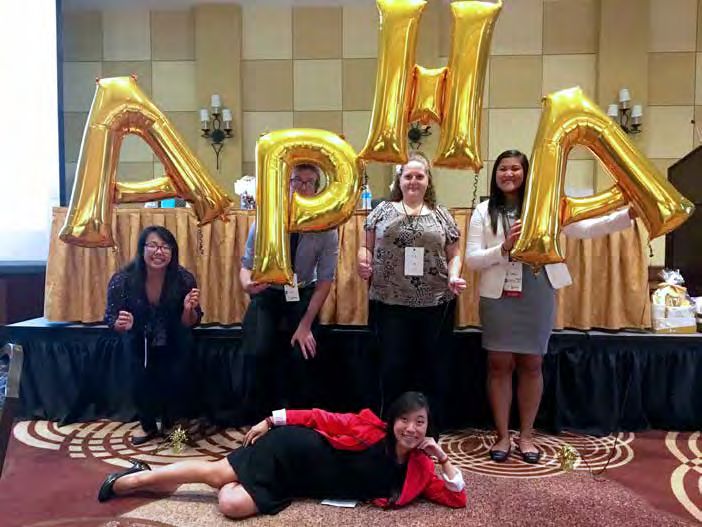
Dean’s Message
                               Every October for the past 11 years, our White Coat Ceremony begins as the
                           lights go down in the auditorium and students begin their procession to their
                           seats,holding their white coats over their arm with our beautiful logo facing
                           their family and friends. Clearly, the event is constructed as a realization of
                           identity, a welcome to pharmacy and to our college.
                               One of the parts that gives me what we call in Hawai’i “chicken skin” is the
                           recitation of the Oath of a Pharmacist. Beginning with the words “I promise
                           to devote myself to a lifetime of service to others through the profession of
pharmacy” to the promise to “consider the welfare of humanity and relief of suffering my primary
concerns,” I watch the faces of the students, my future colleagues. They get it.
     When the American Pharmaceutical Association (APhA) and the American Association of Colleges
of Pharmacy (AACP) approved the Oath of a Pharmacist in 1983, it was a signal that pharmacy was
headed to a new phase of recognition as members of the medical management team. I began my
career as a clinical pharmacist in Oncology Pharmacy at The Queen’s Medical Center in Honolulu,
amazingly now, several decades ago. Every morning, I would put on my white coat in preparation
to round on patients with my team of physicians, nurses, pharmacists, residents, social workers, and
dieticians, all of us focused on our patients’ needs, helping in our areas of expertise while advocating
for each other as well. Today, healthcare leaders continue to push for more efficient and higher
functioning interprofessional team not only to get the tasks done, but to make significant impact on
health.
     In this issue, we dedicate our Champion’s Corner, to Dr. Kurt Schanzenbach, a mentor who was
instrumental in beginning my career and who championed the development of clinical pharmacy in
Hawai’i. We owe, to our mentors and our colleagues, gratitude for paving, sometimes a difficult but
fulfilling road that shows pharmacy as a highly respected profession in the communities we serve.
Our annual Health Fair shows our high level of expertise while showing our appreciation to Hilo.
We try to live up to the confidence that they honor us with, demonstrated here with other stories
about instilling leadership in the students, collaborative studies that aim to help cancer survivors and
research about degenerative diseases that affect our population and our home.
     As I told the students at the end of last semester, I have enjoyed seeing them at work in the
classroom and at the various events, including at the ASHP Midyear conference and our offices on
O’ahu. I am proud of their accomplishments and professional representation of our school and our
profession. On a daily basis, their energy and commitment compels me, along with the faculty, to
fulfill our promise to continuously improve the college and our curriculum. I appreciate any and all
efforts to give us feedback and help us build a better pharmacy program.

Carolyn Ma
Dean
2 KĀWILI LĀ‘AU | Winter 2018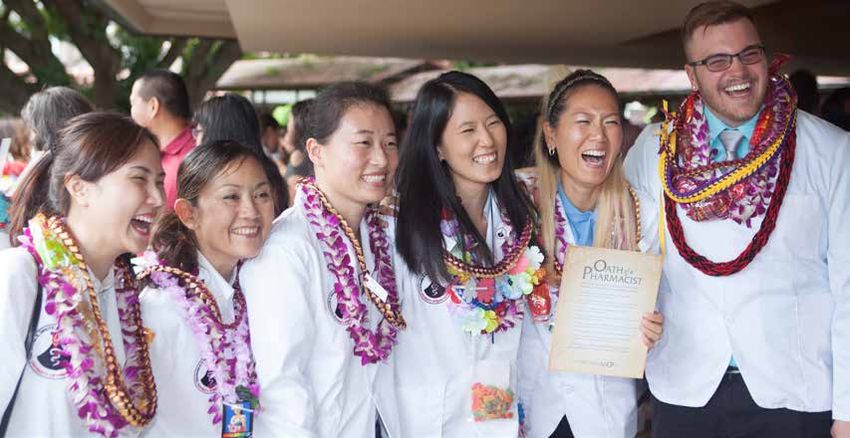
Contents
                                            Class of 2021 takes oath in White Coat Ceremony                                                 2

                                            Successful Health Fair reaches out to community                                                 7

    Kāwili Lā‘au                            Students exhibit leadership                                                                   10
Winter, 2018
Volume 10, Issue 2                               APhA Midyear Regional                                                                    10
Administration
Carolyn Ma                                       ASHP Midyear                                                                             11
   Dean
Aaron Jacobs                                Collaboration benefts cancer survivors                                                        14
  Interim Associate Dean
  for Academic Affairs
Linda Connelly                              Working group continues research on tropical disease                                          15
   Chair, Pharmaceutical
   Sciences                                 Construction update                                                                           16
Roy Goo
  Chair, Pharmacy Practice
                                            Career Fair breaks it down for aspiring professionals                                         17
Karen Pellegrin
   Director, Strategic Planning
   and Continuing Education                 Interprofessional partnership sets up health clinics                                          18
Daryl Masanda
  Director, Student Services
                                            Scholarships promote growth of community pharmacists                                          19
Lara Gomez
   Director, Clinical Education
                                            Regular Features
Kāwili Lā‘au Editor
  Maggie Morris
                                            Faculty Briefs                                                                                20
Graphic Production
   UH Hilo Graphic Services
                                            Student Organizations                                                                         22
Published by the
College of Pharmacy
University of Hawai‘i at Hilo               Rotation Report                                                                               26
200 W. Kāwili St. Hilo, Hawai‘i 96720
Phone: 808-933-2909
                                            Alumni Update                                                                                 27
Fax: 808-933-2974
http://pharmacy.uhh.Hawai‘i.edu
Pharmacy@Hawai‘i.edu                        Champion’s Corner                                                                             30
Kāwili Lā‘au is the magazine for the only
College of Pharmacy in the Pacific region,
the University of Hawai‘i at Hilo

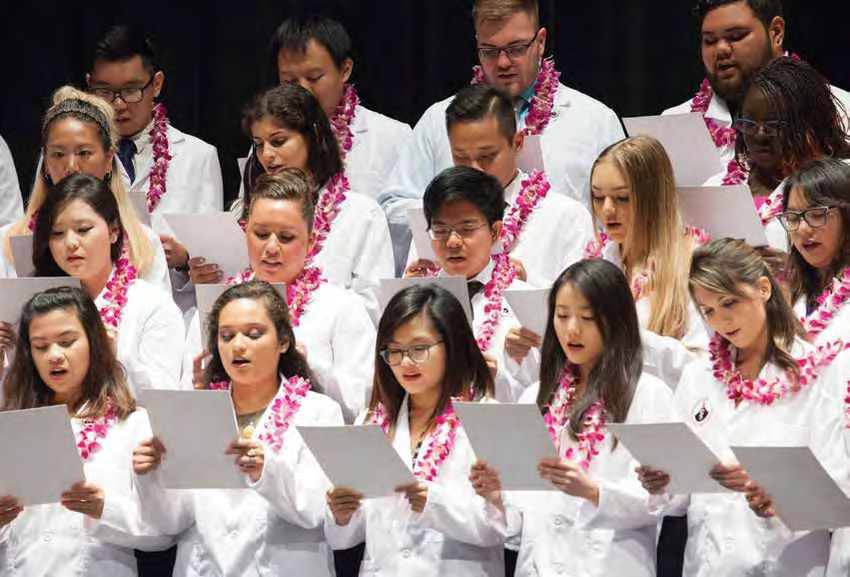
                                            On the cover: First-year students display the serious side of the day at the
                                            Class of 2021 White Coat Ceremony. (Photo by Robbyn Peck)
                                                                                                                     Winter 2018 | KĀWILI LĀ‘AU 3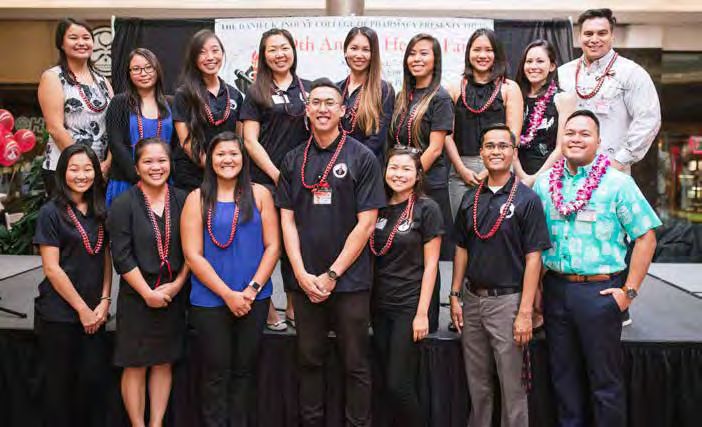
Class of 2021 leans in
to meet milestone at
UH Hilo White Coat
Ceremony
      Eighty-two student pharmacists listened to words of inspiration      father, David Mikami, who became Moloka‘i’s second pharmacist in
from the president of one of Hawai‘i’s few remaining independent           1969 after he married Richard’s daughter, Judy. An active member
pharmacies at this year’s University of Hawai‘i at Hilo Daniel K. Inouye   of the community, both professionally and personally, Mikami was
College of Pharmacy (DKICP) White Coat Ceremony on October 8 in            awarded the prestigious Bowl of Hygeia from the American Pharma-
the UH Hilo Performing Arts Center.                                        cists Association more than 20 years ago.
      Kimberly Mikami Svetin, the third president in the 82-year                 The Sunday afternoon annual ceremony, where new student
history of family-run Moloka‘i Drugs, gave the fledgling pharmacists       pharmacists recite the Oath of a Pharmacist, signifies a rite of
her view of “how to get the most out of life.” (See her speech below.)     passage for individuals entering their first year in the professional
She also talked about how the pharmacy staff at Moloka‘i Drugs             program. Students were cloaked with a short white coat symbol-
focuses on community and how that benefits their personal and              izing their student status and the values of the profession.
professional lives.                                                              Three pharmacy residents who are continuing their training
      Currently, Svetin oversees a staff of 29 employees, most of          with DKICP faculty on Kaua‘i and O‘ahu, as well as a new Ph.D.
whom work between the pharmacy and the family’s 48-flavor                  student at DKICP also participated in the ceremony.
ice cream shop. She is responsible for all management, human                     Ka Haka ‘Ula O Ke‘elikōlani College of Hawaiian Language
resources, marketing, community relations, purchasing, finance,            performed the mele ho‘okipa, or welcoming chant, Ua Ao Hawai‘i.
legal matters, provider relations and technology.                                DKICP Dean Carolyn Ma addressed the students, as well as, for
      Her grandfather, Richard Sakata, became the first pharmacist         the first time, UH Hilo Interim Chancellor Marcia Sakai.
on Moloka‘i when he opened Moloka‘i Drugs in Kaunakakai in 1935.                 The event was sponsored exclusively by Walgreens. Erin
Several members of the family have taken part in the growth of             Samura, Pharmacy Manager from Hilo, was the speaker on behalf of
Hawai`i’s oldest independent pharmacy since then, including her            Walgreens. (Photos by Robbyn Peck)

4 KĀWILI LĀ‘AU | Winter 2018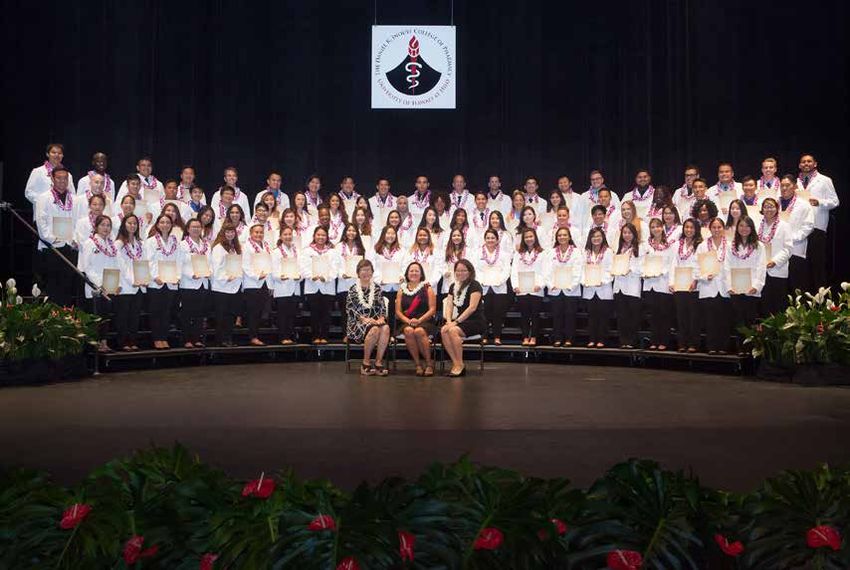
OATH of a
PHARMACIST
“I promise to devote myself to a lifetime of service to others
through the profession of pharmacy. In fulfilling this vow:
I will consider the welfare of humanity and relief of
suffering my primary concerns.
I will apply my knowledge, experience, and skills to the best
of my ability to assure optimal outcomes for my patients.
I will respect and protect all personal and health
information entrusted to me.
I will accept the lifelong obligation to improve my
professional knowledge and competence.
I will hold myself and my colleagues to the highest
principles of our profession’s moral, ethical and legal
conduct.
I will embrace and advocate changes that improve patient
care.
I will utilize my knowledge, skills, experiences, and values
to prepare the next generation of pharmacists.
I take these vows voluntarily with the full realization of the
responsibility with which I am entrusted by the public.”
(As adopted by the AACP House of Delegates in July 2007 and has been approved by
                     the American Pharmacists Association.)

                                          Winter 2018 | KĀWILI LĀ‘AU 5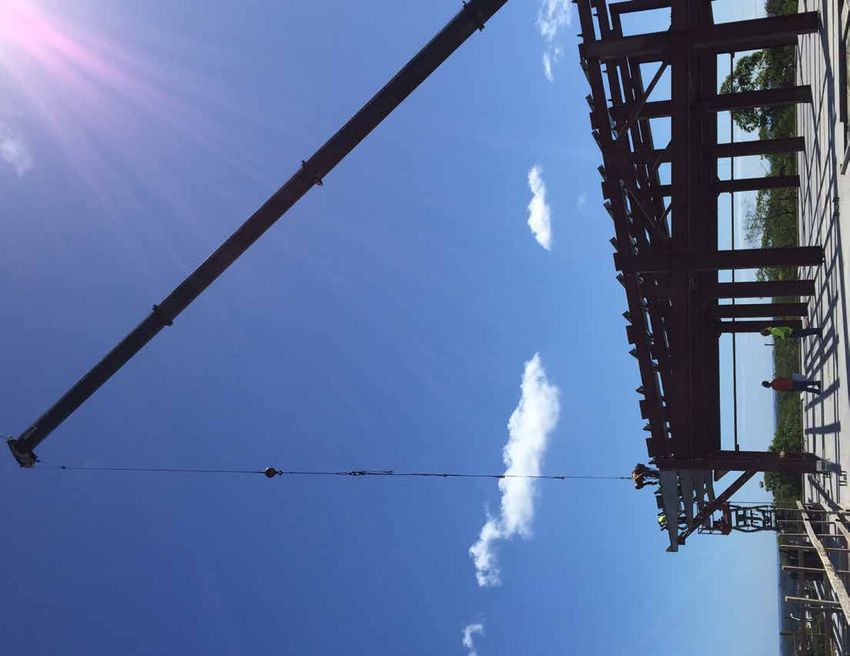
A challenge to all student pharmacists: Give
back with scholarship, gratitude
  By Kimberly Mikami Svetin
  Keynote speech, Class of 2021 DKICP White Coat Ceremony

A       lthough I am a businesswoman and
        manage three small businesses on
Moloka’i, including Moloka’i Drugs, I love
                                                     already graduated from medical schools and
                                                     are currently attending some of the best col-
                                                     leges in the US. If I was not at Moloka’i Drugs,
                                                                                                        individual’s passion for a particular long-term
                                                                                                        goal or end state, coupled with a powerful
                                                                                                        motivation to achieve their respective objec-
helping students succeed.                            I would have been a college admissions             tive. This perseverance of effort promotes
                            More than anything       counselor helping rural students go to and         the overcoming of obstacles or challenges
                      in my non-professional life,   succeed in college. Helping Moloka’i students      that lie within a gritty individual’s path to
                      I enjoy and love talking to    educate themselves is my non-professional          accomplishment, and serves as a driving
                      and mentoring students.        passion.                                           force in achievement realization.
                      My volunteer efforts on my     Life Lesson #2 – accept failure.                          Two examples of grit involved two
                      home island of Moloka’i              Less than two weeks ago, I experienced       pharmacists in my life. The first is my late
                       are focused on giving         one of the greatest failures of my professional    grandfather, Richard Sakata. He left Honolulu
Kimberly Mikami
                       opportunities to our public   life.                                              in 1935 on an unballasted barge. Grandpa
Svetin
                       school students.                    I am known to delegate and allowed           tossed and turned in the rough waters of
         You may wonder, why is the president        our pharmacy manager, who also happens             the treacherous Kaiwi Channel with nothing
of a small community pharmacy telling me             to be my sister, take complete charge of           more than a duffel bag and a few dollars.
about her passions?                                  the implementation of our new pharmacy             He went to Moloka’i sight unseen with the
         Over the past 48 years of post-college      computer system and a new point-of-sale (or        intention of being the island’s first pharmacist
life, I have learned so much about life lessons      POS) system. My sister, the pharmacist, was        and first pharmacy owner. When he finally
both personal and professional. I wanted to          focused on the pharmacy system and had             docked at the pier, he started the long walk
share with you my personal observations              four trainers fly in from Atlanta and Detroit. I   towards the one dim light shining in the dis-
as someone who has lived and worked on               allowed her to be the main point of contact        tance at the center of town, not knowing at
Oahu, Maui, Moloka’i, California, Washington         for our pharmacy and was not involved in           that time he would be spending the next 64
DC, the Pacific Northwest, and Europe about          the implementation of the system. I focused        years of his life happily working in and serv-
how to get the most out of life. We will briefly     on other pressing issues.                          ing this small and extremely special island
touch on seven life lessons that you can                   We had two of our best pharmacy              community. Can you imagine the obstacles
apply in the moments after your “White Coat          technicians trained in the new POS system.         and challenges of opening a pharmacy in the
Ceremony.” I will also give you a personal           One ended up going on a 24-day vacation            mid-1930s? Imagine the grit of this man!
challenge.                                           she had requested a year ago; the other was               The second example of grit involves my
Life Lesson #1 – be passionate.                      sick for most of the week leading up to our        father, David. A 1.8 gpa student at Hilo High
         Find meaning in something. Be pas-          “go live day.” On the first day, we realized       School, his parents sent him to Leilehua High
sionate.                                             how much we did not know about our cash            for his senior year. He was told by one of
         I am truly passionate about a lot – doing   registers and our POS system. Fortunately,         his teachers to go to work or to the military
things with my husband and two sons;                 we had bag stuffed every prescription bag,         after graduation. Dad said a few swear words
finding cool foodie destinations; traveling to       made personal phone calls, created posters,        under his breath and became the epitome
places new and old; continuous improve-              and even bought a Facebook ad to let               of grit, starting a ten-year college journey
ment in my personal and professional lives.          our customers know we appreciate their             from 1959-1969. He commuted every day
         I mentioned earlier one of my passions.     patience in advance. Knowing what I know           for six years from Wahiawa to the University
I enjoy working with students. I have helped         now, I would have brought a trainer from the       of Hawai‘i at Manoa for his undergraduate
edit dozens of college essays and I have             mainland to help us with the non-pharmacy          and graduate degrees in soil chemistry. He
written at least 50 letters of recommendation        issues. Although we discovered how to solve        paid his UH tuition by working at labs and
for college admissions and scholarships.             this problem a little too late, I was able to      in the pineapple fields. He met my mother
We even wrote a letter for a student in the          share these issues and how we would have           (Richard Sakata’s daughter) at UH, got mar-
College of Pharmacy Class of 2021.                   solved these problems with our McKesson            ried and changed his major to pharmacy.
         Since moving back to Moloka’i in 2005,      Drug Company representatives so other              He then flew to the mainland and garnered
the students I have mentored have received           community pharmacies would not have                a five-year pharmacy degree in 2 ½ years at
over $2 million dollars in scholarships and          been in the bind we experienced.                   the University of Kansas. He then moved
have graduated from community colleges as            Life Lesson #3 – be gritty.                        to Molokai in 1969 as the island’s second
well as UH system universities and mainland                As defined in psychology, grit is a          pharmacist with no college loans. This is a
colleges; several of these students have             positive, non-cognitive trait based on an          man who was told not to go to college.

6 KĀWILI LĀ‘AU | Winter 2018
Grit is a topic that I challenge you to   told him about her roommate’s company.               class or laboratory. Make this scholarship
learn more about. Dr. Angela Duckworth is a      My husband met with one of the managers,             fund one of your legacies. I will be the first to
professor from the University of Pennsylva-      who offered him a job in Hawai‘i. He left for        donate   to the UH Foundation 2021 fund!
nia who writes extensively about grit. Please    Hawai‘i two days later. Had he stayed on the         Life Lesson #7 – be grateful.
watch Dr. Duckworth’s TedX video which has       East Coast, my husband may have never                      My last “life lesson” is showing ap-
been viewed over 12 million times or read        found work in his field of study…or met and preciation and gratitude--taking the time to
her 2016 best-selling book also named, “Grit.”   married me!                                          say “mahalo” to parents, family, professors,
Life Lesson #4 – ask for help.                         In the next couple of years, some of           mentors, etc.
       So simple.                                you may have opportunities to live in places               A week ago, I ran into a customer who
       How hard is it to ask for help?           that you may never have considered. Weigh            was so grateful on how our pharmacists
       For many people, asking for help is       your options before taking the job, fellow-          and staff members helped her late mother
seen as a weakness. Believe it or not, I see     ship, post-doc, etc. You may find a place that during her last months fighting cancer. She
asking for help as a strength. There will        you love because you took a risk and left            was so appreciative.
be moments where you do not know the             your comfort zone.                                         Last month, I saw Aunty Lori, from
answer or need help with something in class      Life Lesson #6 – give more than you                  the  Moloka’i  High registrar’s office, at our
or on a project.                                 take.                                                pharmacy. She told me that my son went
       A few weeks ago, my oldest son, who             Dr. Adam Grant is the highest rated            to his high school the day before leaving
is a freshman engineering major in New           professor at the Wharton School of Business          for college and walked around the campus,
York, was not understanding a concept in         in Philadelphia. A couple of years ago, he           thanking everyone personally. In her 20
his physics class. He could interpret what       published a book called “Give and
his professor said during the lecture but        Take.” In his books and presenta-
was having a difficult time comprehending        tions, Dr. Grant mentions how
a theorem. So, my husband and I told him         there is a connection between
to ask for help. His college has a “success”     giving and kindness and its ef-
program and pays for one-on-one tutors           fectiveness in the workplace. I don’t
for certain subjects, including physics. He      have enough time today to discuss
met with his tutor three weeks ago and now       all of the book. However, for me,
meets one hour per week with this graduate       it was life changing. During your
student. As you can imagine, his grade shot      Christmas break, buy the book and
up and he understands physics, which he          listen to it or read it on your tablet.
will need to graduate.                                 Two examples of giving
       One of my mentors is currently a          involve my two sons.
visiting professor at Brown University for             Four years ago, my younger
a year. He said that the students that see       son handwrote a note on coin jars
him during his weekly visiting hours are the     at each of our pharmacy’s cash
students that normally do not need help.         registers. He was frustrated that
He told me that the students that need the       there weren’t enough balls for          Kimberly Mikami Svetin

help are normally the ones that do not see       kids to play with at his elementary
him during office hours.                         school, so he raised money for sports balls.         years of working at the school, she had
Life Lesson #5 – take educated risks.            His teacher at the time wanted each child            never seen any student do that gesture.
       An educated risk is taking an action,     to create a service project to make our              It was my son’s way of being grateful and
understanding the potential for success and      community better. Since starting his project, saying mahalo.
taking the risk anyway.                          he has raised over $4,000 dollars for balls for            My first challenge to you - start a
       My husband graduated with his             his school.                                          scholarship fund. My second challenge - I
construction management degree in 1991,                Two weeks ago, I saw a post on social          ask each of you in the Class of 2021 to spend
during the height of the Gulf War. No one        media where my oldest son was tagged.                15-20 minutes during the first semester of
was hiring project managers or construction      He was participating in an annual kickball           pharmacy school to craft at least one hand-
managers. He sent out at least 50 letters        tournament for his university. The proceeds          written thank you note to someone who
and resumes and did not receive one job          go to a scholarship fund and raised over             helped you in the path to pharmacy. Maybe
offer. He took a risk and moved from the East    $2,500.                                              a letter to your first chemistry teacher; your
Coast to Portland, Oregon, figuring there              As the Class of 2021, I challenge you          grandpa who gave you spending money
were more jobs on the West Coast. While          to create a scholarship fund for the College         so you would not have to work but could
dropping off another letter and resume,          of Pharmacy. Make it fun—maybe you can               study; or your church pastor or priest?
he met a woman from his home state who           create a fun run or have coin jars in each                 At our pharmacy, we receive so much

                                                                                                                        Winter 2018 | KĀWILI LĀ‘AU 7
more than we take. Our focus has been on           your future profession, please remember               I know that the people in this audito-
our island community and how this benefits         these seven life lessons in your lives as a      rium are hevre to support you and are so
our staff on a daily basis in our professional     pharmacist-in-training and as a contributing     proud of you.
and personal lives. In many ways, there is no      member of our community.                              Do not be afraid to ask.
line between our two lives.                             Be passionate. Accept failure. Be gritty.        We want you to succeed.
      I ask that when you put on your white        Ask for help. Take risks. Give genuinely. Be          Best wishes to all of you.
coat and have a chance to think about              grateful.                                             Mahalo and aloha.

Dean Carolyn Ma
delivers words of hope
  [Excerpts from her speech to the Class of 2021 at their White Coat
  Ceremony]

      Only a short while ago,         wa’a canoe Hokule’a and her
you began your chapter of             sister ship Hikianalea returned
being part of the history of this     home from her world-wide
college. You have, I think in this    voyage Malama Honua. In a
short time, endeared yourselves       quote from po navigator, Nainoa
to the faculty, staff and to this     Thompson, “the purpose of
quiet enclave of paradise called      Malama Honua, was in the
Hilo. Many of you were witness        message that the health and
and participated in our Health        wellbeing of our people are
Fair yesterday, and in seeing         inextricably intertwined with
how the community partners            the health and well-being of
with us in this annual event, you     our environment. Critical to the
may have begun to realize the         concept of Malama Honua is
degree of service and care that       the idea that people will fight to
pharmacists can impart upon           protect what they care about-
others. Today, we formalize           but they cannot take care of
your koula, a Hawaiian word           what they do not understand.”
that means “cord,” that is usually    The voyage of Hokule’a was to
used to be the structure of a lei.    weave a lei of hope, a journey
Today, the word koula is used         of connection of countries and       This school, your professors,         and data with the expectation
to describe the cord that has         understanding our differences,       your preceptors, your family will     that you apply this to this entity
begun not only to this school         our needs and how we can             help to build and strengthen          called “the patient.” The patient
                                                                           this koula, it is up to you to        is not merely letters on the

“
                                                                           create your lei.                      subject line, but the primary
   ...your voyage has begun. This                                                 When I first met you in mid    addressee. During the few short
                                                                           August, I asked you to, 1) take       years of your training you will
    school, your professors, your                                          care of yourselves, 2) to take of     learn about complex patient
preceptors, your family will help to                                       each other, your chosen ohana         conditions and treatments you
                                                                           or family, and 3) to dedicate         as a student pharmacist will,
build and strengthen this koula, it is

                                                                ”
                                                                           yourself to your studies. Today,      clearly function as an integral
     up to you to create your lei.                                         I ask that you take in the mes-       part of the health care team,
                                                                           sage of Malama Honua and              which I might add, includes
                                                                           commit to the care for others.        the patient and their families.
and but more importantly,             come to care for the environ-              Newly elected President         We hope that by the time you
to pharmacy as your chosen            ment and for ourselves. Only         of the American Pharmacists           graduate, that legislation will
profession.                           possible with a koula, that links    Association, Nancy Alvarez titled     help to show our worth, and we
      Your arrival in Hilo comes      together not necessarily flower,     her 2017 address “Treat the           will be considered as providers
in a time of both extreme chaos,      but of countries, of progressive     patient and not the number: A         and reimbursed for our value
turmoil, and at times violence,       ideas, of care and hope.             call to care.” In the coming years,   based care and we should stand
but also in a time of significant          So in analogy, Class of         you will be inundated with            firm in both our purpose and
hope. This past summer, the           2021, your voyage has begun.         mind boggling facts, figures          contribution.
8 KĀWILI LĀ‘AU | Winter 2018
Ninth annual health fair touches lives
  By, Cathlyn Goo (Class of 2019)

      The Daniel K. Inouye College of Phar-     health screenings performed and more than        Marrow Registry, the Center for the Study
macy (DKICP) 9th Annual Health Fair took        40 vaccinations administered. The College        of Active Volcanoes, East Hawai’i Al-Anon
place at the Prince Kuhio Plaza on Saturday,    of Pharmacy was fortunate enough to con-         Family Group, Gilead Sciences, Inc., Hawaii
October 7 from 10 a.m. to 2p.m.                 tinue its collaboration with CVS Pharmacy to     County Civil Defense, Hawaii Island Diabetes
      The event is the largest community        provide flu vaccinations at the Health Fair.     Coalition, Hawaii Island Family Dental,
outreach event hosted by the College of                According to student pharmacist Aaron     Hawaii Island AIDS/HIV Foundation, Hilo Vet
Pharmacy. Students, along with faculty          Brown (Class of 2019): During the health         Center, HMSA, Hui Malama Ola Na Oiwi, Med
preceptors and a variety of community           fair, a gentleman approached me and asked        QUEST, National Alliance of Mental Illness,
organizations, come together to provide         if we could test his blood glucose. He had       Partners in Development, Project Vision
health awareness information as well as free    eaten a meal, and he was concerned about         Hawaii, Senior Medicare Patrol, The Food
health screenings. There are also entertain-    hyperglycemia. He then told me that he did       Basket, UH Hilo LPN students, and United
ment performances and prize drawings            not have insulin with him. He explained that     Healthcare. Student pharmacists presented
throughout the event for the public to          he was hesitant to carry his insulin with him,   more than 20 educational booths educating
enjoy.                                          because he didn’t want to denature it due to     the community on topics such as hyper-
      The morning began this year with          the hot climate. I was able to share informa-    lipidemia, rat lung worm disease, proper
a Zumba class instructed by Carissa Pajo,       tion about carrying/storage containers that      medication disposal, and more. Community
followed by performances from the UH            allow him to have his insulin with him at all    members were able to take advantage of all
Hilo “Inspiring New Talent” dance group,        times. He expressed his gratitude. He said       these services and even enter to win a prize
commonly known as the INT Dance Squad,          that he was unaware of such containers. He       if they visited enough booths.
Lori Lei Hula Studio, Puna Taiko, the UH Hilo   then said that he’s scared to ask too many             The Health Fair positively impacts not
Samoan Club, and the UH Hilo Filipino Club.     questions about his diabetes management. I       only community members, but student vol-
Prize drawings occurred throughout the day      told him that healthcare professionals spend     unteers as well. This is a great opportunity
where community members were given              a lot of time in school to be able to help       for students to hone their health screening,
the chance to win gift baskets with various     others and he was very appreciative of this.     counseling, and communication skills and
fitness-related items inside.                          Several community organizations           truly understand the importance of their
      More than 200 community members           were also able to provide their services at      roles as student pharmacists. Two individuals
attended the event with more than 100           the event, including Aloha Care, the Bone        shared their positive experiences as a result

                                                                                                                  Winter 2018 | KĀWILI LĀ‘AU 9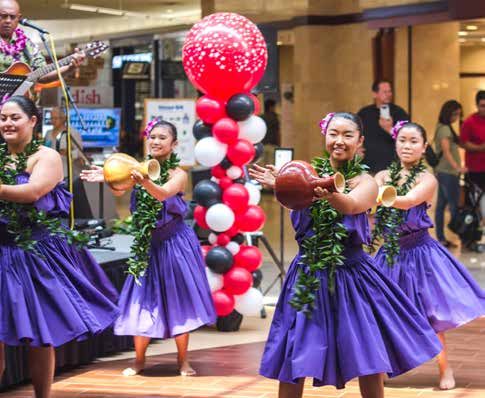
of participating in the Health Fair this year:
      In the words of Cami Kanahele (Class of
2019): This was my second year participating
in our Annual Health Fair. Last year, as a
second-year student, I was not very con-
fident in my abilities to adequately screen
our community (although I had passed my
screening sign-offs) so I decided to chair the
“Compounding for Kids-Silly Putty” board
instead. Chairing this board taught me how
to keep my composure when working with
children and how to properly delegate
different tasks to my other team members,
but also made me realize that I was already

                                                 in my second year of pharmacy school and
                                                 that I wasn’t going to gain more confidence
                                                 by just doing educational boards. After the
                                                 Health Fair, I immediately began participat-
                                                 ing in more ALOHA Project screenings
                                                 and APhA-ASP events to broaden my
                                                 experiences and gain more confidence for
                                                 the next Health Fair. A year later, the time
                                                 had come again for our Annual Health Fair.
                                                 This time around, as a third-year student,
                                                 I was more confident and excited about
                                                 screening members of our community. As
                                                 soon as the sign-up sheets were sent out,
                                                 I immediately signed up to be a health
                                                 screener. Through this whole process, I feel

10 KĀWILI LĀ‘AU | Winter 2018
that the Health Fair has pushed me to
move out of my comfort zone to bet-
ter myself as a pharmacy student as
well as gain the experiences needed
for a successful future. If it wasn’t for
the motivation and drive through this
event, I don’t think I would be where
I am today with the skills that I have
gained in preparing to be the best
screener that I can be.
The Health Fair melds together
various groups, individuals and ser-
vices to create an unforgettable and
long-lasting experience that can
touch the lives of everyone involved.
(Photos by Tracey Niimi)
In regards to our 2017
Health Fair:
Passports: Approximately 149 adult
passports and 79 children’s passports
were distributed. Exact total at-
tendance/participation is difficult to
gauge since there is no sign in and
booths are spread across the mall.
Screenings: We screened a total of
107 community members. Our Health
Screeners provided health assess-
ments relating to blood pressure,
cholesterol, blood sugar, asthma/
COPD, lifestyle/diet modification
counseling, and smoking cessation
counseling.
Smoking cessation: We were
able to reach out to 5 individuals
interested in smoking cessation
counseling and collaborated with
the Hawaii Tobacco Quitline to offer
resource materials to help with the
process.
CVS Flu Shots: Student Pharmacists
administered a total of 44 vaccina-
tions.
Project Vision Hawaii: There
were 31 community members who
received vision screenings.
Hawaii Island HIV/AIDS Founda-
tion (HIHAF): HIHAF screened 4
community members for HIV.
Bone Marrow Registry: About 15
individuals registered to become
bone marrow donors
Winter 2018 | KĀWILI LĀ‘AU 11LEADERSHIP
Student pharmacists who attended the Midyear Regional meeting were: Front Row: Kara Paulachak (Class of 2019); Second Row (from left): Halena Tran (Class of 2018),
Vance Hill (Class of 2019), Elaine Cottom (Class of 2020), Kathleen Nguyen (Class of 2021)
Five ‘begin their legacy’ of leadership at
APhA-ASP Regional Meeting
By Kara Paulachak (Class of 2019)
President, American Pharmacists Association - Academy of Student Pharmacists
T he Midyear Regional Meeting (MRM) is one of the only meetings in the United States held exclusively for student pharmacists. The
American Pharmacists Association – Academy of Student Pharmacists (APhA-ASP) holds the meeting every year for each of their 8
regions.
On November 2-5, five student pharmacists travelled from Hawai’i to Phoenix, Arizona to represent DKICP at the meeting. They were
joined by student pharmacists from 19 other schools, from the states of Nevada, California, Arizona, New Mexico, and Colorado.
At the meeting, APhA-ASP President Michael Murphy opened with this year’s theme, “Begin Your Legacy,” which inspired student
pharmacists to consider what kind of legacy (be it big or small) that they may be leaving behind, and the impact they have and WILL have
on those around them.
Throughout the meeting there were various workshops that featured topics such as networking as a student pharmacist, career
pathways in your community, and residency application bootcamps. Between sessions, there were planned social breaks and connection
opportunities that allowed student pharmacists to branch out their networks to students from other schools around the region. In addition,
the National and Regional Committees led Chapter Officer Breakout sessions, where student leaders from each chapter gathered to discuss
ideas and brainstorm new ways to improve the Academy starting at the chapter level.
The highlight of the meeting to many of us was the opportunity to review and discuss policies that each chapter submitted. Chapters
presented their policies, and highlighted what they hoped would change with their proposals. From there, each chapter voted on the
12 KĀWILI LĀ‘AU | Winter 2018individual submissions, ASHP
and the results were an-
nounced on the final day
of the meeting. Policies
selected were sent on
to the APhA Annual
Meeting in March 2018 for
a final vote. From there,
policies supported at the
Annual Meeting would be
proposed and supported
by APhA-ASP as a national
organization. These poli-
cies are the ones that the
Academy hopes will shape
the future of pharmacy, for
the students and for the
professionals already in
practice.
In addition to all
It’s NEVER too early to attend
of these proceedings,
student pharmacists had
‘midyear’
the opportunity to run for
positions on the Regional
Committee over the By Robyn Rector (Class of 2020)
course of the weekend,
and elections were held
on the final day of the T he American Society of Health-System Pharmacists (ASHP)
Midyear Clinical Meeting and Exhibition, also known more
commonly as “Midyear,” is the largest gathering of pharmacy
conference. Many student
pharmacists use this as professionals in the world. More than 25,000 attendees unite
an opportunity to expand annually for just under a week to network, brainstorm, advance
their role as leaders in the profession, recruit, prospect, and have fun. The 2017 meet-
the profession and often ing was held in Orlando, Florida and marked the 52nd Midyear
run for national positions and 75th Anniversary of ASHP.
thereafter. Midyear invokes varied reactions from all participants.
Overall, the meeting For students, Midyear is synonymous with the Clinical Skills
was a wonderful experi- Competition (CSC), research posters, and the daunting Residency Showcase. These three events garner the
ence for all of the students largest student participation, and inspire the tumultuous stories circulating from our predecessors. There is
that were able to attend. a plethora of experiences beyond these three components. However, this story will focus on them and the
Chapter leaders were able DKICP students that fiercely represented our college this year.
to learn about different Teams of skillful, clinically trained students gather on Saturday, the day before the official Midyear
ways to expand their opening, to compete in the semi-final round of the CSC. This year Karen Christian and Tiffany Alberg diligently
operations and improve represented DKICP. The CSC is a grueling battle, in which teams of two students have two short hours to
chapter functions, and generate a comprehensive care plan for a complex patient case.
members were able to The care plan (also known as SOAP, or Subjective Objective Assessment Plan) must address all pertinent
gain networking experi- disease states, ranking them in order of priority, and establish an exact treatment protocol beginning with the
ence and were exposed 5 rights (drug, dose, route, frequency, patient) and continuing through monitoring parameters and potential
to policy procedures and drug interactions. The plan must reference current guidelines and evidence based medicine.
other opportunities that This year’s case encompassed an elderly woman suffering from community acquired pneumonia
can only be found at and chronic obstructive pulmonary disease (COPD). The care plans are scored, and the top ten finalists are
the larger Regional and announced. The final round takes place the following day, contenders have two minutes to verbally endorse
National Meetings. their plan to a panel of three judges and spend eight eternal minutes answering arduous rapid-fire questions.
Midyear attendees are permitted to observe the final round and subsequent question and answer session
with the case writer.
Winter 2018 | KĀWILI LĀ‘AU 13LEADERSHIP
Current students who want a
chance to compete in the 2018 CSC
must partake in the qualifying local
competition, which will be held next
fall by Hawaii Student Society of Health-
system Pharmacists (HSSHP).
On Sunday evening, a two-hour
Student Society of Health-System Phar-
macists (SSHP) showcase propagated
brainstorming and revealed successful
student-led initiatives from across the
nation. As the name implies, student
chapters of ASHP showcased memo-
rable events that embodied creativity
and resourcefulness, striving to promote
service, outreach, and impact on the community as well as student body. I was fortunate to present a well-designed, and elegantly drafted,
collaborative event spurred by third-year students Nancy Wong (HSSHP) and Kara Paulachack (APhA-ASP). The event featured was the
Roundtable Session with our State Affiliate, the Hawaii Pharmacists Association (HPhA), and
faculty pharmacists, which took place in September. More than thirty students attended the
event and gained exposure to unique pharmacy career paths spanning hospital administra-
tion, acute care, ambulatory care, and residency preparation.
For the showcase, each poster was designed with pearls of wisdom. The aim was to
facilitate adaptive replication in which students take back successful examples to launch
modified endeavors catered to their specific communities. This exchange of ideas came
to me completely unexpected, and proved to be immensely beneficial. Each of us know
how hard it is to generate innovative and influential, yet feasible and concise, professional
projects. The forum and intellectual union was uniquely noncompetitive and genuinely
embraced sharing achievements to affect change for patients. The attendees embodied
professional collaboration, and everyone left full of new inspiration. Thank you HSSHP for
affording me this opportunity. Undoubtedly, it will shape my aspirations for the remaining
time I have at DKICP and beyond.
A few of the most memorable SSHP posters to me, included: Distribution of Goody
Bags for Chemotherapy Patients, included thoughtful items for patients recovering from
Student pharmacists presenting research at ASHP Midyear:
Trish Huynh: “Impact of International Pharmaceutical Student Garret Hino: “Evaluation of patients’ knowledge of Medicare Part
Pharmacist Campaigns on Student Pharmacist Knowledge” D plan annual assessment in a family medicine clinic”
Kelli Goo: “Implementation of a pharmacist-driven antibiotic Kimberly Wu: “Opioid utilization and cost among Medicare
timeout to assess the appropriateness of piperacillin-tazobac- beneficiaries: a state-level comparison”
tam and vancomycin within 72 hours of initiation” Quan Truong: “Development of a “N-Quest” (Naloxone reQuest)
Jessica Lee: “Retrospective evaluation of 4-factor prothrombin mobile application to prevent opioid-related overdose deaths”
complex concentrate administration for the reversal of oral Christopher Nakagawa: “Innovative hyperlipidemia screening
anticoagulants in patients with major bleeding” protocol focusing on 10-year risk of atherosclerotic cardiovas-
Macie Kim: “Effect of nasal PCR implementation on duration of cular disease”
vancomycin treatment in MRSA negative patients” Vicky Nguyen: “Retrospective Evaluation of Anti-Factor Xa Level
Niaz Nafisi: “The nation’s first college of pharmacy to be certified Monitoring in Patients Receiving Heparin Infusion for the
a Blue Zones Worksite” Treatment of Venous Thromboembolism and Acute Coronary
Marina Ortiz: “Retrospective evaluation of the appropriate use Syndrome”
of piperacillin-tazobactam at a small community hospital in Mari Takushi: “Assessment of a newly implemented oritavancin
Hawai’i” protocol in a community hospital in Hilo, Hawai’I”
Joann Phan: “Efficacy of a vaccine for Angiostrongylus costari- Robert McHugh: “Determining human exposure to Angiostron-
censis against rat lungworm disease caused by A. Cantonensis gylus cantonensis on east Hawai’i Island using a novel indirect
in wild Hawaiian Rats” ELISA serum test”
14 KĀWILI LĀ‘AU | Winter 2018treatment; Pharmacist for a Day Experience, for three hundred 4th graders complete with
mini white lab coats; Opioid Overdose Awareness for High School Students, instructions
on how to administer Naloxone; and Interprofessional Mock Rounds, illustrated the integral
nature of each discipline on a medical team.
On Monday, the convention center transformed as thousands of attendees gathered
for the keynote speaker, former First Lady, Michelle Obama. Celebrating the 75th ASHP
anniversary, she enthusiastically imparted a sense of purpose to the pharmacy profession
and highlighted the incredible opportunities available to impact patients.
Research poster presentations and the Residency Showcase ensued for the next three
days. Our college had a remarkable presence, close to thirty, fourth year students (and one
third year) presented posters. DKICP students literally spanned an entire segment of the
exhibit hall! Congratulations and well done to each of them for their dedication and follow
through.
Presenting is a stimulating challenge, but the drive for presenting at Midyear often
runs deeper than the experience. Over 5,000 student pharmacists journey to Midyear
annually. Many of these individuals will soon graduate and embark on their professional
pharmacy careers. For those attending Midyear, this beginning ideally involves a residency.
Currently, there are around 3,500 accredited PGY1 residency positions in the country and
approximately 14,000 student pharmacists graduate annually. Calculations has taught us
there is a surplus of eligible candidates in this equation, which prompts the questions: Why
Should the Residency Director Select You? and equally important, Why Should You Select
that Residency? Born out of this conundrum is The Match, or as some prefer, The Mystery
Match.
Despite the murky waters of matching, there is no mystery to preparing for the
endeavor. To truly be competitive, the one piece of advice I gathered from Midyear is: Start
Now, it is Never Too Early. Presenting a poster during fourth year is the proverbial icing on
the cake. However, the journey begins in the first year.
We are incredibly lucky to live in Hawai‘i. It’s beautiful, serene, and completely isolated
in the middle of the Pacific Ocean. Consequently, traversing to the Mainland periodically is
vital for success. Attending national conferences before the fourth year is imperative!
The adage, surround yourself with those who inspire you, absolutely applies here.
Observing success facilitates and expands our horizons beyond what we can imagine
independently. As a first-year student pharmacist, four years seems like eternity, but once
professional school is over, the opportunity to generate student-led endeavors is in the
past. In the blink of an eye, the time to apply for jobs or residency will come into focus, and
every interviewer will be assessing the impact we made during these formative years.
I hope this article will manifest a curiosity within a fellow first- or second-year student
pharmacist, so they will decide to partake in this event in the future despite the fact that
it always happens during finals. Words cannot convey the breadth of the experience and
expansion of creative ideas that will follow.
A huge Mahalo goes out to HSSHP (especially Nancy Wong) and faculty members
Mrs. Jusczak, and Dr. Lteif for making this experience a reality. Their support and direction
incited the motivation within me. It truly was an unforgettable experience.
Winter 2018 | KĀWILI LĀ‘AU 15Joint effort examines link between exercise
and well-being in cancer survivors
As a cancer researcher who uses associated with well-being in urine samples
cellular and molecular techniques to learn from study participants before and after a
about the biology of cancer, Linda Connelly period of exercise. The biomarkers chosen
rarely has a chance to see a direct impact on were C-reactive protein (CRP) and Brain
people who are affected by her work. Derived Neurotrophic Factor (BDNF)..
A collaboration with fellow UH Hilo “Our lab has many years of expertise
faculty members Cheryl Ramos and Lincoln in performing ELISA, or Enzyme-Linked
Gotshalk is helping her connect the dots Immunoabsorbent Assay, which is the way
from lab to real life. Connelly, associate we analyze biomarker levels. At Pharmacy,
professor and chair of the Department of we also have the necessary equipment to
Pharmaceutical Sciences at the Daniel K. prepare and then store the samples during
College of Pharmacy (DKICP), is teaming the collection period of the study,” Connelly
with Professors Ramos from the Department explained.
of Psychology (PSY) and Lincoln Gotshalk They hope to see whether taking part
from the Department of Kinesiology and in an exercise program leads to any changes
Exercise Sciences (KES) to determine the in levels of biomarkers that have been Alex Lindsay, a Physics major who is a participant of
effects of exercise on cancer survivors. associated with well-being. the Students of Hawai‘i Advanced Research Program
This look at the physical and psycho- Undergraduates from KES and PSY have (SHARP), works in the Connelly lab on the collabora-
tive project with the Departments of Psychology and
logical function of participants builds upon contributed to all aspects of the project,
Kineseology and Exercise Sciences. (Photo by Linda
Connelly’s expertise in researching cancer thereby given invaluable exposure as to Connelly)
biomarkers. The team hopes that the proj- how a research project operates, Gotshalk students created a training video
ect, which is funded by UH Hilo Research said. They have a chance to contribute to documenting the procedures for conducint
Training and Revolving Funds (RTRF), will the study protocol and the IRB application, anthropomorphic measures. Students work
lead to preliminary data for a federal grant to conduct literature reviews, and develop with study participants to to implement the
fund further research. study materials such as exercise logs, phone study exercise intervention, entering the
The project started in the spring of scripts, recruitment ads, project files, etc. data into computer programs for analysis,
2017 with a small pilot group of 10 par- “Students also gain one-on-one experi- and maintaining the study files.
ticipants from the East Hawaii community. ence with the public by making phone calls Undergraduate students who par-
The group was selected because they were to those who express interest in the study ticipated in this research in the fall of 2017
survivors of breast, colorectal or prostate and screening potential participants for included Molly Verseput, Kat Martinez, Lana
cancer who were not currently taking part in study eligibility by explaining the study and Queen, and Leighana Weaver (KES majors),
an exercise program. requirements for participation,” Ramos said. Brenna Cranswick (PSY major), and KES/PSY
During the summer, the pharmaceuti- They also assist by: scheduling assess- double-major Brian Ishola. Several other
cal sciences researchers determined the ments, meeting study participants in the students from the PSY & KES departments
feasibility of measuring two biomarkers lab for data collection (including collecting worked on the project in previous semes-
medical clearance ters, and new students joined the team in
forms, reviewing Spring 2018.
consent forms with Undergraduate students working
participants, complet- in Connelly’s lab included Kayuri Kadoya,
ing questionnaires majoring in Biology and Agriculture, who is
about cancer history, a participant of the Institutional Develop-
exercise behaviors, ment Award (IDeA) Networks of Biomedical
social support for Research Excellence (INBRE) program, and
exercise, and health), Alex Lindsay, a Physics major who is a par-
and conducting ticipant of the Students of Hawai‘i Advanced
physical assessments Research Program (SHARP). Postdoctoral
(e.g. blood pressure, fellow Stephanie Tsang Mui Chung helped
Front row (from left): Lana Queen (KES student); Molly Verseput (KES student);
Cheryl Ramos (Professor, Psychology; Brenna Cranswick (PSY student); Kayuri anthropomorphic supervise and train the students.
Kadoya (BIOL student)l Linda Connelly (Associate Professor, Pharmaceuticals measures, urine The project allows DKICP to contribute
Sciences); Alex Lindsay (PHYS student). Back row (from left): Brace Gotshalk sample collection, to the undergraduate student experience by
(KES Lab Manager); Brian Ishola (KES & PSY student); Lincoln Gotshalk (Profes-
sor, KES). (Photo by Tracey Niimi) etc). This semester providing laboratory research experiences as
16 KĀWILI LĀ‘AU | Winter 2018well as bringing students from each of the Pharmacy, and 2) our amazing students disciplines helps her think about research in
groups together for shared presentations who have fully immersed and committed different ways and come up with new ideas.
about the interdisciplinary research. themselves into every aspect of the project.” “Cheryl and Linc are both very excited
Ramos said: “The two essential Connelly is excited about the interdis- about the project and that excitement is
ingredients that made this project possible ciplinary aspect of the project and hopes it infectious. Not only are we learning new
are: 1) the strength of the collaboration we will lead to further collaborations. She said things but we are enjoying it too.”
have established between PSY, KES, and she has discovered that working with other
Research shows risk of disease greater than
expected; legislators vow to aid in fight
A UH Hilo research group supported by Hawai‘i Island legislators is urging more control measures be taken to lower the risks of the
spread of rat lungworm (RLW) disease.
Findings of a study headed by the Rat Lungworm Working Group at the Daniel K. Inouye College of Pharmacy (DKICP) are described in a
paper entitled “High prevalence of Angiostrongylus cantonensis (rat lungworm) on eastern Hawai‘i Island: a closer look at life cycle traits and
patterns of infection in wild rats” published in the journal PLOS ONE.
“Our study showed almost 94 percent of the rats in the Hilo area are infected with RLW,” said Susan Jarvi, director of
the working group who has been researching the progress of the disease for more than six years.
More than 30 other countries report data on RLW, including Australia, Brazil, Thailand and China. Jarvi suggests that
due to the lack of diagnostic tools and difficulty in diagnosis, the disease may be underreported. Her group has been
adding to the scientific evidence that gives legislators in Hawai‘i the proof they need to become more involved.
“Hawai‘i is able to take the lead globally on assessing the effects of this debilitating disease thanks to this scientific
Dr. Susan Jarvi evidence from UH Hilo,” said Sen. Kai Kahele, who represents Hawai‘i Senate District 1, which includes Hilo. “The first
step in conquering a threat is in knowing the enemy. We can get ahead of the terrifying risks, but these results certainly
show the urgency for more research.”
RLW disease is a parasitic infection that reproduces in rats and is transferred to slugs and snails, which can, if ingested intentionally or
not, infect people. While symptoms can be mild and flu-like, there have been cases that have resulted in long-term disability and even death.
“UH Hilo continues to support Dr. Jarvi’s efforts to safeguard public health
through her research on the system of this disease,” noted UH Hilo Interim
Chancellor Marcia Sakai. “We are exploring alternatives with state agencies that
will continue to fund this important research, which reflects our commitment to
help maintain the health of the community.”
Researchers in this study examined a total of 545 wild rats from multiple
sites in the South Hilo District of east Hawai‘i Island. Through evaluation of mul-
tiple stages and locations of development of the infection with A. cantonensis,
they were able to determine prevalence, and examine patterns of infection. The
purpose was to determine how these data can be used to improve risk assess-
ment and guide research development to better prevent and control human
infection.
“Defeating this threat to our islands is essential to perpetuating our way
Educating legislators
Members of the Hawai’i State Senate Ways and
of life,” said Rep. Chris Todd, who represents Hilo in the Hawai‘i State House of
Means committee visited DKICP Professor Susan
Representatives. “I believe in the research being done at UH Hilo, their work will
Jarvi’s lab on Oct. 27 to learn about her rat lungworm
help us ensure a healthy future for our keiki – we, as a legislature, need to do
research. Jarvi is the director of the Rat Lungworm Work-
more to support their mission.”
ing Group. (Photo by Tracey Niimi)
DKICP and the Hawai‘i Community Foundation – Medical Research sup-
ported research in this study. Authors were from DKICP: Jarvi, Stefano Quarta,
Steven Jacquier, Kathleen Howe, Deniz Bicakci, Crystal Dasalla, Noelle Lovesy,
Kirsten Snook and Robert McHugh; and Chris N. Niebuhr from the U.S. Depart-
ment of Agriculture Animal Plant Health Inspection Service’s National Wildlife
Research Center, Hawai‘i Field Station in Hilo.
“The clear and present danger of this difficult-to-eradicate disease warrants
increased measures to control its spread in both snails, slugs and rodents,” Jarvi
said. “Only by deliberate management can we hope to protect human and
animal populations.”
Winter 2018 | KĀWILI LĀ‘AU 17Construction continues
The $31.3 million Daniel K Inouye College of Pharmacy building
continues to rise up from its building site on Nowelo St. After years
of planning, the facility will finally provide a home for the college’s
faculty and staff currently located at several sites in Hilo. Dean
Carolyn Ma is actively working across the state to develop
private major gift support for DIKCP’s programs and
maintenance, refurbishment and equipment of the
space. Keep track of progress with more photos
from the Hawai’i Department of Accounting
and General Services on our Website
gallery at http://pharmacy.uhh.hawaii.
edu/galleries/ConstructionTime-
line/index.php.
Photo by Tracey Niimi
18 KĀWILI LĀ‘AU | Winter 2018Annual career fair/interview day gives head
start to transition between university/job
DKICP held its annual Career Fair on the UH Hilo campus Oct. 27 and Interview Day on O‘ahu Oct. 28.
The Career Fair included company representatives from CVS Health, Hilo Medical Center, McKesson, Safeway, and Walgreens. Dean
Carolyn Ma welcomed the representatives with breakfast and provided an overview of the college, which included student demographics
and building updates. Faculty members and student ambassadors were also available to address questions about the program. For the next
few hours, the representatives discussed internship and
future employment opportunities with current students,
resulting in 14 intern interviews with 10 first- and second-
year students and 13 interviews with five fourth-year
students
The following day, fourth-year students buttoned
up into their professional attire for DKICP’s Interview Day.
The event took place at Kapiolani Community College
in Honolulu. Company representatives from CVS Health,
Safeway, Times Supermarkets, and Walgreens conducted
a total of 59 interviews with 19 fourth-year student
pharmacists. (Photos by Tracey Niimi)
Winter 2018 | KĀWILI LĀ‘AU 19Teamwork results in Hawai‘i Interprofessional
Education and Collaborative Alliance
By Chad Kawakami
Assistant Professor, Department of Pharmacy Practice
September marked the start of a new Interprofessional Educa-
tion (IPE) partnership that involves the Daniel K. Inouye College of
Pharmacy (DKICP), University of Hawai’i-Manoa School of Nursing
and Dental Hygeine (SONDH) and John A. Burns School of Medicine
(JABSOM), the Hawai’i Keiki Program, and the Hawai’i State Center for
Nursing (HSCN). The overarching goal of the project is to accelerate
IPE while providing school-based health clinics (SBHC) primary care
sites for students to integrate the IPEC competencies into practice.
The IPEC team consists of student pharmacists enrolled in the
Pharm.D. program at DKICP, Doctor of Nursing Practice (DNP) Family
Nurse Practitioner (FNP) students, child/adolescent psychiatric fel-
lows and dental hygienists. The team provides services at Sanford B.
Dole Middle School in Kalihi on the island of O’ahu one day a week.
Every morning the team conducts a huddle prior to beginning From Left: Macie Kim (Class of 2018), Shelby Meador (Class of 2018), Robby
the SBHC clinical day. At the morning huddle, Melissa Owens, who is Cayetano (Class of 2018), Melissa Owens (SBHC APRN - Hawaii Keiki), Theresa Chin
(Child and Adolescent Psychiatry Fellow), Aaron Summers (DNP Student), Reid
the Hawai’i Keiki Nurse Practitioner at Dole, provides the team with Hamamoto (Child and Adolescent Psychiatrist)
information and follow-up on cases and appointments for the day.
The team also conducts debriefings after the SBHC clinic day to discuss patient cases as well as conduct an after-action review of the
day’s activities. The IPEC students produce recommendations to Melissa that are incorporated into students’ individual health plans that will
be shared with the school faculty, students’ families and students’ healthcare providers.
The SBHC sees about 40 students daily for various different ailments. Common ailments seen in the clinic include, skin and soft tissue
infections, conjunctivitis, head lice, cold and flu, wound care, and behavioral health interventions. Working with the DNP students, our
student pharmacists are able to hone their physical assessment and history taking skills.
“It was really enlightening to watch other healthcare practitioners assess patients utilizing their skill sets. Having different perspectives
and knowledge bases come together has a synergetic effect and allows for a better diagnosis and treatment of the patient.” said fourth-year
student pharacist Joshua Belcher.
Macie Kim (Class of 2018) said, “I gained an awareness and understanding that not all children have access to basic necessities like tak-
ing a shower, having a bed to sleep on, and health food to eat. It was really eye opening and made me think about things in a different way.”
The SBHC provides DKICP students with a unique practice environment to broaden their skills and understanding of interprofessional
collaboration. Through this experience, health care students are provided the opportunity to learn together to work together.
20 KĀWILI LĀ‘AU | Winter 2018You can also read


