Post-Election Landscape - BGR Group
←
→
Page content transcription
If your browser does not render page correctly, please read the page content below

Post-Election Landscape
BGR Group

About BGR Group
    With senior-level experience in the White House, Congress
    and the Executive Branch, coupled with uncommon strategic
    vision, policy expertise and close working relationships with
    decision-makers around the world, the BGR Government Af-
    fairs team is prepared to take on your greatest challenges. Our
    reputation for excellence is known in the nation’s capital and
    around the globe.
    A bipartisan lobbying firm, we specialize in creating, imple-
    menting and changing public policy. Whether you seek new
    legislation, need to modify regulation, or want to put a stop to
    adverse legislation, we have the skills to achieve results under
    the most difficult circumstances.

    Contents
    I.OVERVIEW						3
    II.TRANSITION						5
    III. BIDEN’S INNER CIRCLE and CABINET SHORT LIST			   7
    IV. FIRST 100 DAYS						13
    V. HEALTH CARE and LIFE SCIENCES						                15
    VI. COMMERCE/INFRASTRUCTURE/CLIMATE				19
    VII. FOREIGN POLICY/INTERNATIONAL RELATIONS			        23
    VIII. FINANCIAL SERVICES and REGULATION				           27
    IX. BUDGET, APPROPRIATIONS and TAX					31
    X. STATE and LOCAL GOVERNMENT						                   37
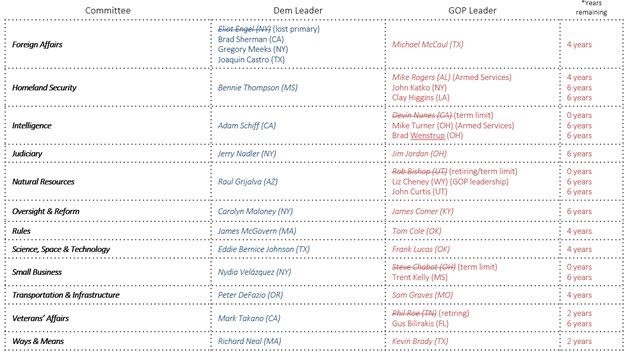
    ADDENDUM: POTENTIAL SENATE COMMITTEE LEADERS
    IN THE 117TH CONGRESS						39
2
Post-Election Landscape   BGRDC.com

I. Overview
After projections that he won the hard-fought bat-
tleground states of Pennsylvania and Nevada, for-
mer Vice President Biden declared victory in the
2020 presidential election and has already begun
the transition process. According to the Associated
Press, Biden’s electoral college vote count currently
stands at 290-214 over President Trump, although
the final results have not yet been certified.
President Donald Trump has not conceded, and his legal team is still fil-
ing lawsuits and calling for recounts in a handful of states to ensure every
legal vote is counted and certified. Any disputes at the state level must
be resolved by the safe harbor deadline of December 8th. The electoral
college will then meet on December 14th to officially cast their ballots.
Federal law requires states to deliver certified electoral college results to
the Senate by the 4th Wednesday in December, which this year is De-
cember 23rd. On January 6th, the 117th Congress will meet in a Joint
                                                                                The election
Session to announce the electoral college vote results. If a majority of the
electors cast their votes for Joe Biden and Congress accepts those results,
                                                                                results reinforced
Joe Biden will be declared the official winner of the 2020 election and
sworn in as the 46th President of the United States on January 20, 2021,        the fact that the
Inauguration Day.
                                                                                nation’s electorate
CURRENT BALANCE OF POWER                                                        is deeply divided.
After losing 2 incumbents in the states of Arizona and Colorado and
picking up a seat in the state of Alabama, Senate Republicans currently
stand at 50 Senate seats and Democrats at 48 seats, with 2 seats in Georgia
undecided pending runoffs scheduled for January 5, 2021.
The House will remain in Democratic control but with a much slimmer
margin. According to the Cook Political Report, as of November 15th the
Democrats have secured 221 seats and the Republicans 207. There are 7 seats
outstanding, most of which are leaning toward the Republican candidates.
The election results reinforced the fact that the nation’s electorate is
deeply divided. Even with a Democrat in the White House, a smaller
Democratic Majority in the House and a very slim Majority in the Sen-
                                                                                                      3
ate for either party, governing will be challenging. The Democrats
       are largely divided between party centrists and the more progressive
       wing and Republicans face internal policy disagreements of their
       own. Changes are likely to be more incremental than sweeping over
       the next two years.

       IMPACT OF GEORGIA RUNOFFS
       All eyes are on the state of Georgia, where the fate of the two January
       5th runoff races will determine which party controls the Senate. With
                                                       the outcome of the
                                                       Georgia Senate races
        A Biden presidency                             still     undetermined
                                                       and the control of the
            coupled with a                             Senate unknown, we
                                                       do not know whether
     Republican-controlled                             we will be looking at
                                                       a divided Congress or
     Senate would have an                              a narrowly controlled
                                                       Democratic Congress.
                                                       If Democrats control
      enormous impact on                               both the House and
                                                       the Senate, they will
    the Democratic Party’s                             be doing so with slim
                                                       margins that will pres-
                   agenda.                             ent huge challenges
                                                       to Democratic lead-
                                                       ers should they try to
                                                       move sweeping pieces
       of legislation. Expect Senate Majority Leader Mitch McConnell (R-
       KY) to be almost singularly focused on exercising his current power
       and protecting his GOP majority in the next Congress, where the
       2022 Senate map is challenging for Republicans. Similar to the 2020
       elections, several battleground states swill be up for grabs including
       Georgia (Loeffler seat), Florida (Rubio), Alaska (Murkowski), Mis-
       souri (Blunt), North Carolina (open), Ohio (Portman), and Wiscon-
       sin (Johnson). Potential retirees include Senators Grassley, Moran,
       and Shelby.
       A Biden presidency coupled with a Republican-controlled Senate
       would have an enormous impact on the Democratic Party’s agenda.
       Cabinet and other Executive Branch nominations, judicial nominees,
       and legislation will face GOP headwinds and require bipartisanship
       to succeed. Efforts by Democrats to pass major legislation through
       reconciliation (including rolling back much of the Trump Adminis-
       tration’s signature tax bill), a public option, Medicare for All, address-
       ing climate change, changing the number of justices on the Supreme
       Court, granting D.C. and Puerto Rico statehood, and changing the
       filibuster rules would not be possible under this scenario.
4
Post-Election Landscape   BGRDC.com

II.Transition
While President Trump has not con-
ceded the presidential race, Joe Biden
and Kamala Harris are moving forward
with their transition plans, preparing for
cabinet and policy announcements. The
Biden team recently updated its website
to highlight four policy areas their ad-
ministration plans to prioritize: COV-
ID-19, economic recovery, racial equity
and climate change. The transition also
                                                                  The transition team
has launched official social media ac-
counts on Facebook, Twitter and Insta-                            continues to be built
gram using the handle @Transition46.
                                                                  out, preparing for
Over the course of the next 70 days, the transition pro-
cess will continue moving ahead with overseeing the hir-          cabinet and policy
ing of more than 4,000 government appointees, prepar-
ing policy plans and initiating their execution, as well as       announcements.
organizing logistical tasks such as setting up offices. This
process is already underway but will proceed with some
limitations until the General Services Administration
officially “ascertains” the results of the election, a key step
to release federal funding to support the transition effort
and agency access.
The transition team itself continues to be built out. On
Monday, November 9th, Vice President Biden an-
nounced his coronavirus task force, to be led by former
U.S. Surgeon General Vivek Murthy and David Kessler, a
former head of the Food and Drug Administration. On
Tuesday, November 10th, the Biden-Harris Transition
also released the Agency Review Teams, which are tasked
with ensuring smooth transfers of power in each federal
agency. We expect senior White House staff announce-
ments to be made as early as this week and for cabinet
nominees to be announced sooner than is typical, pos-
sibly before the Thanksgiving holiday.
                                                                                          5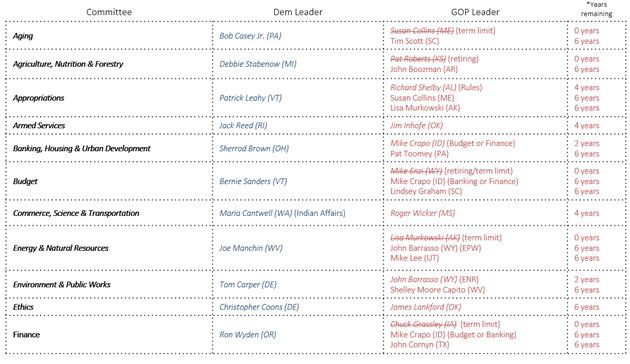
President-elect Biden is
surrounded by a deep team
of professionals who have
worked with him over his
many years in Washington.

6
Post-Election Landscape     BGRDC.com

III. Biden’s Inner Circle
and Cabinet Short List
                          President-elect Biden is surrounded by a deep team of pro-
                          fessionals who have worked with him over his many years
                          in Washington. As he builds out his administration, expect
                          diversity to be a key factor in appointments. Also expect his
                          team to have a sea of familiar faces as alumni from the Obama
                          Administration and from his time on the Hill return to jobs
                          at the White House and across the federal agencies. Some key
                          members of the Biden inner circle:
                          1. Kate Bedingfield                         8. Jen O’Malley Dillon
                             Biden 2020 Deputy Campaign Manager          Biden 2020 Campaign Manager
                             and Communications Director
                                                                      9. Bruce Reed
                          2. Valerie Biden Owens                         Former chief of staff to Vice President
                             President-Elect Biden’s sister              Biden
                          3. Tony Blinken                             10. Steve Richetti
                             Former Deputy Secretary of State and         Chair of the Biden campaign; former
                             Deputy National Security Advisor             Chief of Staff to Vice President Biden
                                                                          and Deputy Chief of Staff to President
                          4. Mike Donilon
                                                                          Clinton
                             Biden 2020 Chief Strategist
                                                                      11. Representative Cedric Richmond
                          5. Anita Dunn
                                                                          (D-LA)
                             Biden 2020 Senior Advisor; Managing
                             Director at SKDKnickerbocker;            12. Symone Sanders
                             former White House Communications            Biden 2020 Senior Advisor; national
                             Director                                     press secretary for Bernie Sanders’ 2016
                                                                          campaign
                          6. Senator Ted Kaufman
                             Former U.S. Senator (D – DE) and         13. Jake Sullivan
                             chief of staff to Senator Joe Biden          Former National Security Advisor
                                                                          to the Vice President and State
                          7. Ron Klain
                                                                          Department Deputy Chief of Staff and
                             EVP and General Counsel of
                                                                          Director of Policy Planning
                             investment firm Revolution; former
                             Chief of Staff to Vice President Biden
                             and Vice President Gore and Ebola
                             Response Coordinator

                                                                                                                     7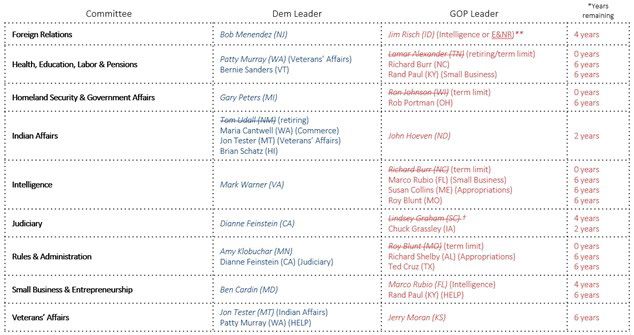
BIDEN CABINET SHORT LISTS

STATE                                                      Sally Yates – former Deputy Attorney General and US
                                                           Attorney for the Northern District of Georgia
Tony Blinken – former Deputy Secretary of State and
Deputy National Security Advisor
                                                           INTERIOR
Bill Burns – former Deputy Secretary of State
                                                           Jamie Rappaport Clark – President of Defenders of Wild-
Nicholas Burns – former Under Secretary of State for
                                                           life; former Director of the US Fish and Wildlife Service
Political Affairs, Ambassador to NATO
                                                           Representative Raul Grijalva (D-AZ)
Senator Chris Coons (D-DE)
                                                           Senator Martin Heinrich (D-NM)
TREASURY                                                   Governor Michelle Lujan Grisham (D-NM)
Lael Brainard – member of the Federal Reserve; former      Senator Tom Udall (D-NM)
Under Secretary of Treasury
Roger Ferguson – President and CEO of TIAA; former         AGRICULTURE
Vice Chair of the Federal Reserve
                                                           Former U.S. Senator Joe Donnelly (D-IN) – Partner at
Neel Kashkari – President of the Federal Reserve Bank      Akin Gump
of Minneapolis; former Assistant Secretary for Financial
                                                           Former U.S. Senator Heidi Heitkamp (D-ND) – board
Stability
                                                           member of the McCain Institute
Sarah Bloom Raskin – former Deputy Secretary of Treasury
                                                           Representative Jim McGovern (D-MA)
Senator Elizabeth Warren (D-MA)
                                                           Karen Ross – Secretary of the California Department
                                                           of Food and Agriculture; former Chief of Staff of the US
DEFENSE                                                    Department of Agriculture
Mayor Pete Buttigieg – former Mayor of South Bend,         Representative Peter Welch (D-VT)
Indiana and presidential candidate
                                                           Lieutenant Governor David Zuckerman (D-VT)
Senator Tammy Duckworth (D-IL)
Michele Flournoy – former Deputy Secretary of Defense      COMMERCE
Jeh Johnson – former Secretary of Homeland Security,       Mignon Clyburn – Lionsgate board member; former
General Counsel of Department of Defense                   FCC Commissioner
Senator Jack Reed (D-RI)                                   Governor Terry McAuliffe (D-VA)
                                                           Governor Gina Raimondo (D-RI)
JUSTICE                                                    Meg Whitman – CEO of Quibi; former CEO of eBay
Stacey Abrams – founder of Fair Fight Action; former       and Hewlett Packard
Georgia gubernatorial candidate; former minority leader
                                                           Jeff Zients – President of Cranemere; former Director of
of the Georgia House of Representatives
                                                           the National Economic Council
Xavier Becerra – Attorney General of California; for-
mer Congressman
                                                           LABOR
Preet Bharara – former US Attorney for Southern Dis-
                                                           Mayor Steve Benjamin – Mayor of Columbia, SC
trict of New York
                                                           Sarah Nelson – President of the Association of Flight
Senator Doug Jones (D-AL)
                                                           Attendants
Tom Perez – current DNC; former Assistant Attorney
                                                           Senator Bernie Sanders (I-VT)
General for Civil Rights; former Secretary of Labor
8
Post-Election Landscape BGRDC.com
Representative Andy Levin (D-MI) John Podesta – former White House Chief of Staff and
Counselor
Mayor Marty Walsh – Mayor of Boston
Elizabeth Sherwood Randall – former Deputy Secre-
tary of Energy
HEALTH AND HUMAN SERVICES
Dr. Mandy Cohen – Secretary of the North Carolina
EDUCATION
Department of Health; former Chief Operating Officer
of the Centers for Medicare and Medicaid Services Senator Michael Bennett (D-CO)
Governor Michelle Lujan Grisham (D-NM) Lily Eskelsen Garcia – former president of the National
Education Association
Dr. Vivek Murthy – former Surgeon General of the
United States Randi Weingarten – President of the American Federa-
tion of Teachers
Andrea Palm – Secretary of the Wisconsin Department
of Health Services; former Counselor and Chief of Staff
to the Secretary of Health and Human Services VETERANS AFFAIRS
Mayor Pete Buttigieg – former Mayor of South Bend,
HOUSING AND URBAN DEVELOPMENT Indiana and presidential candidate
Representative Karen Bass (D-CA) Dr. Carolyn Clancy – Deputy Under Secretary for
Health for Discovery, Education and Affiliate Networks
Mayor Keisha Lance Bottoms – Mayor of Atlanta
at the VA
Mayor Muriel Bowser – Mayor of Washington, DC
Senator Tammy Duckworth (D-IL)
Mayor Eric Garcetti – Mayor of Los Angeles
Jason Kander – founder of Let America Vote; former
Secretary of State of Missouri
TRANSPORTATION
Representative Earl Blumenauer (D-OR) HOMELAND SECURITY
Mayor Keisha Lance Bottoms – Mayor of Atlanta Representative Val Demings (D-FL)
Mayor Rahm Emanuel – former Mayor of Chicago, Governor Michelle Lujan Grisham (D-NM)
White House Chief of Staff and US Congressman (D-IL)
Alejandro Mayorkas –former Deputy Secretary of
Mayor Eric Garcetti – Mayor of Los Angeles Homeland Security
Sarah Nelson – President of the Association of Flight Lisa Monaco – former White House Homeland Security
Attendants Advisor and Assistant Attorney General for National
Janette Sadik-Khan – Chair of the National Association Security
of City Transportation Officials; former Commissioner of Representative Cedric Richmond (D-LA)
the New York City Department of Transportation
ENVIRONMENTAL PROTECTION AGENCY
ENERGY
Governor Jay Inslee (D-WA)
Carol Browner – former Director of the White House
Katie McGinty – served as an Environmental Advisor to
Office of Energy and Climate Change Policy and Admin-
V.P. Gore and President Clinton
istrator of the Environmental Protection Agency
Governor Christie Todd Whitman (R-NJ)
Governor Jennifer Granholm (D-MI)
Heather Zichal – former Deputy Assistant to the Presi-
Governor Jay Inslee (D-WA)
dent for Energy and Climate Change
9BIDEN CABINET SHORT LISTS
OFFICE OF MANAGEMENT AND BUDGET CENTRAL INTELLIGENCE AGENCY
Jared Bernstein – Senior fellow at the Center on Budget Tom Donilon – former National Security Advisor
and Policy Priorities; former Chief Economist and Eco-
Avril Haines – former White House Deputy National
nomic Adviser to Vice President Biden
Security Advisor and Deputy Director of the Central
Heather Boushey – President of Washington Center for Intelligence Agency
Equitable Growth; former Chief Economist for Clinton
Susan Rice – former National Security Advisor and US
Transition Team
Ambassador to the United Nations
Mayor Pete Buttigieg – former Mayor of South Bend,
Jake Sullivan – former National Security Advisor to the
Indiana and presidential candidate
Vice President and State Department Deputy Chief of
Heather Higginbottom – current head of JPMorgan Staff and Director of Policy Planning
Chase Policy Center; served as Deputy Secretary of State
for Management and Resources; former Deputy Direc-
WHITE HOUSE CHIEF OF STAFF
tor of OMB
Ron Klain – EVP and General Counsel of investment
firm Revolution; former Chief of Staff to Vice President
US REPRESENTATIVE TO THE UNITED NATIONS Biden and Vice President Gore and Ebola Response
Representative Karen Bass (D-CA) Coordinator
Mayor Pete Buttigieg – former Mayor of South Bend, Susan Rice – former National Security Advisor and US
Indiana and presidential candidate Ambassador to the United Nations
Mayor Eric Garcetti – Mayor of Los Angeles Steve Richetti – Chair of the Biden campaign; former
Chief of Staff to Vice President Biden and Deputy Chief
Ben Harris – Executive Director of the Kellogg Public-
of Staff to President Clinton
Private Interface at Northwestern University and Chief
Economist of Results for America; former Chief Econo- Representative Cedric Richmond (D-LA)
mist and Economic Adviser to Vice President Biden
Jake Sullivan – former National Security Advisor to the
Wendy Sherman – Director of the Center for Public Vice President and State Department Deputy Chief of
Leadership at Harvard’s Kennedy School; former Under Staff and Director of Policy Planning
Secretary of State for Political Affairs
NATIONAL SECURITY ADVISOR
US TRADE REPRESENTATIVE Tony Blinken – former Deputy Secretary of State and
Representative Jimmy Gomez (D-CA) Deputy National Security Advisor
Robert Holleyman – former Deputy US Trade Repre- Avril Haines – former White House Deputy National
sentative Security Advisor and Deputy Director of the Central
Intelligence Agency
Miriam Sapiro – former Deputy US Trade Representa-
tive Robert Malley – served on the NSC; former Director
for Democracy, Human Rights, and Humanitarian Af-
Rhonda Schmidtlein – member of the US International
fairs at the NSC
Trade Commission
Susan Rice – former National Security Advisor and US
Katherine Tai – trade counsel for the House Ways and
Ambassador to the United Nations
Means Committee
Jake Sullivan – former National Security Advisor to the
Vice President and State Department Deputy Chief of
Staff and Director of Policy Planning
10Post-Election Landscape BGRDC.com
NATIONAL ECONOMIC COUNCIL FEDERAL COMMUNICATIONS COMMISSION
Lily Batchelder – former Deputy Director of the Na- Mignon Clyburn – Lionsgate board member; former
tional Economic Council and Chief Tax Counsel for the FCC Commissioner
Senate Finance Committee
Anna Gomez – Partner at Wiley Rein; former Deputy
Jared Bernstein – Senior fellow at the Center on Budget Assistant Secretary for Communications and Informa-
and Policy Priorities; former Chief Economist and Eco- tion at the National Telecommunications and Informa-
nomic Adviser to Vice President Biden tion Administration
Sarah Bloom Raskin – former Deputy Secretary of Karen Kornbluh – Director of Digital Innovation and
Treasury Democracy at German Marshall Fund; former Ambas-
sador to the Organization for Economic Cooperation
Heather Boushey –President of Washington Center for
and Development and director of Legislative and Inter-
Equitable Growth; former Chief Economist for Clinton
governmental Affairs at the FCC
Transition Team
Jessica Rosenworcel – Commissioner of the FCC; for-
Lael Brainard – member of the Federal Reserve Board
mer Staff Director of the Senate Commerce Committee
of Governors; former Under Secretary of Treasury for
International Affairs Larry Strickling – former Assistant Secretary of the
National Telecommunications and Information Admin-
Don Graves – former Deputy Assistant to the President
istration
and Counselor to the Vice President; former executive
director of the President’s Council on Jobs and Competi- Louisa Terrell – Deputy General Counsel and Head of
tiveness Public Affairs at McKinsey & Company; former Execu-
tive Director of the Biden Foundation
Ben Harris – Executive Director of the Kellogg Public-
Private Interface at Northwestern University and Chief
Economist of Results for America; former Chief Econo- CONSUMER FINANCIAL PROTECTION BUREAU
mist and Economic Adviser to Vice President Biden
Michael Barr – Dean of the Ford School of Public
Service at the University of Michigan; former Assistant
CLIMATE CHANGE CZAR Secretary for Financial Institutions at Treasury
Carol Browner – former Director of the White House Rohit Chopra – Federal Trade Commissioner; former
Office of Energy and Climate Change Policy and Ad- Assistant Director of the CFPB and Special Adviser to
ministrator of the Environmental Protection Agency Secretary of Education
Governor Jay Inslee (D-WA) Amanda Fischer – Policy Director at the Washington
Center for Equitable Growth; former chief of staff for
Secretary John Kerry – former Secretary of State and
Rep. Katie Porter (D-CA)
Senator (D-MA)
Senator Ted Kaufman – former U.S. Senator (D-DE)
John Podesta – former White House Chief of Staff and
and chief of staff to Senator Joe Biden
Counselor
Representative Katie Porter (D-CA)
Tom Steyer – climate activist and former presidential
candidate Bharat Ramamurti – Managing Director of Corporate
Power program at the Roosevelt Institute; former Senior
Heather Zichal – former Deputy Assistant to the Presi-
Counsel for Banking and Economic Policy to Senator
dent for Energy and Climate Change
Elizabeth Warren
Graham Steele – Director of Corporations and Society
Initiative at Stanford Business School; former staff mem-
ber at the Federal Reserve Bank of San Francisco and
Minority Chief Counsel for Senate Banking Committee
11President-elect Biden
has laid out his plans
to get the economy
back up and running,
ensuring that our
communities are
safely reopening, and
that businesses get
the boost they need
from the federal
government.
12
12Post-Election Landscape BGRDC.com
IV. First 100 Days
With any incoming administration, there is keen interest in focusing
the first 100 days on key priority issues. Given the current trajectory of
COVID-19 in the US and the most optimistic timelines for vaccines, a
Biden-Harris Administration’s first 100 days are likely to be largely oc-
cupied by COVID response and reopening/rebuilding the US economy.
On Monday, November 9th, President-elect Biden with our allies to deal with significant global issues.
announced his COVID Task Force. The team, led The most notable of these being rescinding Presi-
by former Surgeon General Vivek Murthy and dent Trump’s decision to retreat from the World
former FDA Commissioner David Kessler, will Health Organization, rejoining the Paris climate
be working through the transition to ensure that accords, and identifying ways to reenter the Iran
a Biden-Harris Administration is prepared to help nuclear deal negotiat-
communities navigate the pandemic and plan for ed during the Obama
the distribution of treatments and vaccines, among Administration. The first 100 days
other priorities.
President-elect Biden has laid out his plans to get the
President-elect Biden
has also committed
are likely to be
economy back up and running, ensuring that our a series of actions on
communities are safely reopening, and that busi- immigration, includ-
largely occupied by
nesses get the boost they need from the federal gov- ing reinstating the
ernment. Biden’s Build Back Better plans, presented Deferred Action for COVID response
throughout the campaign, focus on mobilizing Childhood Arrivals
American manufacturing and innovation, as well as (DACA) program, and reopening/
building a modern infrastructure for clean energy. halting deportations,
Expect two other issues to be key factors in all of
creating a task force rebuilding the US
to reunite the more
Biden’s initial policy proposals: climate change and
racial equity. On climate change, the Biden Ad-
than 500 children economy.
who were separated
ministration seeks to make significant investments
from their families
in green infrastructure, transit, power, the auto in-
at the border, and re-
dustry and other sectors, with the dual benefit of
scinding the “Muslim ban”.
boosting our domestic economy while putting the
US on track to meet aggressive climate targets. In Expect President-elect Biden to seek opportuni-
his first 100 days, President-elect Biden will also ties to use executive orders to make immediate
seek ways to address the racial inequities in this changes, especially as he is not likely to find suc-
country, including police reform, criminal justice cess getting legislation through Congress unless
reform, and policies that will minimize the deep the Democrats are successful in both Senate runoff
racial economic gaps in the US. races in Georgia.
On foreign policy, expect a return to a more tradi-
tional diplomatic engagement, relying on partici-
pation in multilateral organizations and working
1314
Post-Election Landscape   BGRDC.com

V. Health Care
and Life Sciences
                                      OVERVIEW
   KEY COMMITTEE
                                      The last time the country faced a Senate of a different
   LEADERSHIP                         party than the newly elected President was in 2001.
   AT-A-GLANCE                        While the House will likely move quickly to introduce
                                      new versions of HR 1 – HR 10 from the 116th Congress,
   House Energy                       we do not expect substantial legislative action on these
   and Commerce                       efforts to occur in the Senate, unless they are tied to eco-
                                      nomic stimulus and COVID-19 packages. Health care
   Chairman                           policies that have a nexus to these priorities will be in
   Rep. Frank Pallone (D- NJ)         play (and there are many of these), and members will
   Ranking Member                     certainly begin to introduce legislation right away. How-
   Rep. Cathy McMorris Rogers         ever, the creation of large vehicles will still be the name
   (R-WA)/Rep. Michael Burgess        of the game in the 117th Congress.
   (R-TX)/Rep. Bob Latta (R-OH)       Regarding Committee leadership, should the Repub-
   are all running for the top seat   licans retain Senate control, it is widely expected that
                                      Senator Mike Crapo (R-ID) will be the new Chairman of
   House Ways and Means               the Finance Committee. He will certainly take a differ-
   Chairman                           ent tact on issues like drug pricing than Senator Grass-
   Rep. Richard Neal (D-MA)           ley did. Further, he will likely steer the Committee in a
                                      different direction when it comes to Medicare payment
   Ranking Member
                                      policy and Affordable Care Act (ACA) changes.
   Rep. Kevin Brady (R-TX)
                                      The HELP Committee will also see a new chairman as
   Senate HELP                        Senator Lamar Alexander (R-TN) will be retiring at the
                                      end of the year. Senator Richard Burr (R-NC) is the most
   Chairman
                                      senior Republican on the committee and would have
   (likely) Sen. Richard Burr (R-
                                      first choice on taking the gavel, but it is unclear how that
   NC)
                                      will play out. Senator Rand Paul (R-KY) and Senator
   Ranking Member                     Susan Collins (R-ME) are the two most likely candi-
   Sen. Patty Murray (D-WA)           dates should Senator Burr decide not to lead HELP. If
                                      anything is clear it’s that the HELP Committee will have
   Senate Finance                     wildly different health care agendas under a Burr, Paul,
                                      or Collins chairmanship. Under a Biden Administra-
   Chairman
                                      tion, many senior Democratic committee staff in both
   Sen. Mike Crapo (R-ID)
                                      the House and Senate will likely move over to the ad-
   Ranking Member                     ministration – opening the door for new staff steering
   Sen. Ron Wyden (D-OR)              legislation and known quantities guiding the health care
                                      ships in the Executive branch.
                                                                                                     15
Nominations will likely be a slow process. We expect Senate Health Care Coverage
confirmations for senior administration and cabinet posi-
The pandemic’s impact on employment and the health of
tions will take more than 6 months. Look for an early push to
many in the population would give a Biden Administration
install appointees at the Department of Health and Human
an easy hook with the public to bring the Democratic Party’s
Services given the President-elect’s focus on the COVID-19
long-standing priority of expanding health coverage into the
pandemic. At the beginning of the 115th Congress, with a
limelight. However, with a Republican Senate there is not
newly elected President Trump and Republicans controlling
a clear path forward for major legislation. Without the op-
both chambers and only needing a simple majority to con-
portunity for legislative changes, expect a Biden Administra-
firm in the Senate, HHS Secretary Price was confirmed in
tion to use executive actions and rulemaking powers to roll
February, CMS Administrator Verma in March, and FDA
back restrictive policies in the Medicaid program, reinstate
Commissioner Gottlieb in May. With the confirmation pro-
anti-discrimination protections for the LGBTQ community,
cess for these Biden nominees managed by Senate commit-
restrict short-term insurance plans and other coverage op-
tees run by Republicans, we expect much more contentious
tions that do not meet the ACA’s typical coverage standards
hearings and vetting processes. It is unclear whether a Biden
(so called “junk plans” by Democrats), and use demonstra-
Administration would be able to secure the necessary votes
tion authority to expand coverage. In particular, keep an eye
to confirm more progressive cabinet nominees. Specific to
on how a Biden Administration would use State Innovation
health, recall that in 2009 Republicans successfully chal-
waivers (or “1332 waivers”), which allow states to get creative
lenged both former Senator Tom Daschle’s bid to lead HHS,
in restructuring coverage rules.
as well as the nomination of Dr. Don Berwick to serve as the
first CMS Administrator even in a Democratic controlled While some of these early actions may be intuitive, a Biden
Senate, although the 60-vote threshold was still intact. Administration will also be faced with some difficult residu-
al decisions from the current administration. Rules mandat-
ing transparency for providers and drug makers, site neutral
POLICY AGENDA payments, and 340B enforcement issues have earned the ire
COVID-19 of vocal stakeholders in the health policy arena, who will
Health care policy out of the gate will be all COVID-19 all likely push a Biden Administration to consider overturning
the time. We do not know what the COVID-19 situation them. Add in any policies the Trump Administration rushes
will look like come January, or if we are headed for more to finalize in the remaining months, and a Biden Adminis-
local stay-at-home orders. Putting that unknown aside, ex- tration will have some tough decisions to make right off the
pect a Biden Administration to release and implement a bat.
national testing strategy and national vaccine distribution
and prioritization plan, and encourage states to adopt mask Drug Pricing
mandates. They will likely keep the things that have been
Drug pricing will continue to be an issue for a Biden Ad-
working, like Operation Warp Speed, but rebrand them and
ministration. Democrats care about overall health system
offer more transparency into the internal leadership and
costs and not just patient out-of-pocket expenses, which
processes being employed. We expect the role of CDC as a
presents more risk to manufacturers. The party platform
leader and communicator on pandemic response to be el-
would give the Medicare program authority to negotiate
evated, and don’t be surprised to see many of CDCs current
with drug manufacturers on the prices of most prescription
recommendations rebranded as the new administration’s
drugs and allow private insurers to use these prices as a ref-
own. We expect a continued focus on supporting American
erence. House Democrats have already passed H.R. 3, which
manufacturing of critical medications, either through leg-
includes Medicare negotiation and the so-called Interna-
islative proposals or through a re-branded executive order.
tional Price Index (IPI) that would peg the price of certain
Finally, look for Biden to identify administrative actions to
drugs in the U.S. to the price paid in other countries. While
stabilize Medicaid programs across the country, in addition
the platform does not mention IPI, expect the negotiation
to pushing Congress to provide additional federal support
conversation to be linked to such a limit. Expect H.R. 3 to be
for states.
reintroduced and move through the House again, in some
form. However, a Republican Senate will not have an appe-
tite for this type of reform.
16Post-Election Landscape BGRDC.com
Let us also not forget about the bipartisan drug pricing efforts
that were being discussed during the pre-pandemic part of the
116th Congress. This includes changes like a Medicare Part D
redesign to lower out of pocket expenses in Part D and limiting
price increases on marketed products.
User Fees
Expect the HELP and Energy and Commerce Committees to
begin preparing for the User Fee reauthorizations for prescrip-
tion drugs, generics, biosimilars and medical devices in 2022.
The negotiations between industry and FDA are beginning to
kick off this year and should conclude in 2021. In a situation
where the Trump Administration begins the negotiations and
a Biden Administration needs to own the final product, expect
there to be some internal consternation between FDA career
staff and new political appointees at the agency, HHS, and the
White House. We do not expect the contours of the FDA-in-
dustry agreements to drastically change as these are, for the
most part, weedy non-partisan products. Democrats will at-
tempt to use this legislative vehicle to advance more progres-
sive regulatory policies like greater post-marketing obligations
for drugs and devices, data sharing, clinical trial diversity, etc.
Legislation reforming how cosmetics and diagnostic tests are
regulated could potentially hitch a ride on this user fee package
as well as both have been the subject of bipartisan efforts over
the years.
HEALTH AND LIFE SCIENCES TEAM
Remy L. Brim, Ph.D., Co-Head, Health and Life Sciences Practice
Brent Del Monte, Co-Head, Health and Life Sciences Practice
Dan Farmer,Vice President, Health and Life Sciences Practice
Matt Hoffmann,Vice-President; Co-Lead, Access & Reimbursement Work-
ing Group, Health and Life Sciences Practice
Andy Lewin,Vice President, Financial Services Practice
Jennifer Larkin Lukawski, Principal, Commerce Practice
Jonathan Mantz, Principal, Co-Head, Commerce
Loren L. Monroe, Practice Head, Principal, State Advocacy and Govern-
ment Marketing
Ruth Osinski, Director of Health Policy and Research, Health and Life Sci-
ences Practice
John Stone, Principal, Co-Lead, FDA and Public Health Working Group,
Health and Life Sciences Practice
Sam Teague, Policy Analyst, Policy and Regulatory Analysis
Robb Walton, Principal; Co-Lead, Access & Reimbursement Working
Group, Health and Life Sciences Practice
Bob Wood, President and CEO
17Great expectations will
likely need to be scaled back
to accommodate divided
government.
18Post-Election Landscape BGRDC.com
VI. Commerce, Infrastructure,
Energy-Climate
As we turn the page from campaigning to governing, the number one ques-
tion that is being asked is, “what does this mean?” While the likely elec-
tion of a President Biden is significant in terms of policy direction from the
Executive Branch, there were not major swings in Congress. With more
narrow majorities in both chambers, moving legislation in this divided gov-
ernment will require bipartisan cooperation and coalition building. Great
expectations will likely need to be scaled back to accommodate divided
government. Below, we have examined issues relating to transportation,
telecommunications, technology, energy, and environment. While we will
know more once the election results are finalized and cabinet nominations
are made, below is a preview of what to expect.
POLICY AGENDA
KEY COMMITTEE LEADERSHIP TRANSPORTATION
AT-A-GLANCE & INFRASTRUCTURE
President-elect Biden campaigned heav-
Senate Commerce ily on making his Build Back Better sus-
D - Maria Cantwell (WA) tainable infrastructure plan a top tier leg-
R - Roger Wicker (MS) islative initiative. This plan encompasses
significant investments in traditional in-
House Energy & Commerce frastructure areas like roads, bridges, tun-
D - Frank Pallone (NJ) nels, airports, waterways and ports. It also
R - Michael Burgess (TX), Bob Latta (OH) or Cathy broadens the historical definition of in-
McMorris Rodgers (WA) frastructure. Biden’s plan will make major
investments in the aviation, auto, and rail
Senate Environment & Public Works industries that were badly impacted by
D - Tom Carper (DE) the COVID-19 pandemic. The Build Back
R - John Barrasso (WY) or Shelley Moore Capito (WV) Better plan will invest heavily in broad-
band and 5G to ensure the most under-
House Transportation & Infrastructure served communities have the access they
D - Peter DeFazio (OR) need. Biden will also make significant
R - Sam Graves (MO) investments in energy production with
19an emphasis on renewables and cleaner energy alternatives. be done to respond to the economic damage caused by the
Biden asserts that these investments will deliver carbon free pandemic and spending on infrastructure is the right prior-
electricity generation by 2035 and net zero emissions for the ity. Others, however, believe now is the time for government
entire economy by 2050. Biden is clearly proposing a very to be fiscally restrained. This group of at least 15 Republican
ambitious plan. There are expectations that he will make in- Senators could grow as some weigh their 2024 Presidential
frastructure a policy priority in his first 100 days. aspirations. Most importantly, it is unlikely Leader McCon-
nell will agree to a big infrastructure deal since he resisted
The price tag for the Biden Build Back Better plan will raise
a bold infrastructure package even when Republicans had
red flags for some in Congress. Cost projections are up-
unified control of government. As opposed to the House-
wards of $2 trillion in federal investment. It is unclear how
passed infrastructure package, a more realistic path forward
this large package gets funded in a divided government.
could be a surface transportation reauthorization as passed
Rolling back the Trump tax cuts seem highly unlikely if
by the Senate Environment and Public Works Committee.
Republicans control the Senate. Although deficit spending
This five-year, $287 billion authorization bill would be dra-
could be a possibility, several trillion dollars have already
matically smaller than the $1.5 trillion package passed by
been spent in support of COVID-19 relief. The appetite for
the House in July.
trillions more in federal spending may be difficult, if not im-
possible, to digest.
TELECOMMUNICATIONS & TECHNOLOGY
Congressional Democrats will likely share a Biden Adminis-
tration’s priority to move quickly with an infrastructure bill One of the most pressing issues facing the telecommunica-
in the 117th Congress. Speaker Pelosi will be motivated and tions space will be the Federal Communications Commis-
direct her committee chairs to get to work. Energy & Com- sion. FCC Chairman Ajit Pai is expected to step down under
merce Chair Frank Pallone, Transportation & Infrastructure a Biden Administration. While current FCC Commissioner
Chair Peter DeFazio, and Ways & Means Chair Richie Neal Jessica Rosenworsel and former Acting FCC Chair Mignon
will be asked to shepherd their portions of the bill through Clyburn have been mentioned as possible replacements to
their committees of jurisdiction and to the floor as early as Pai, there is discussion the Biden Transition Team would
the first hundred days of the new Congress. The blueprints look outside the agency to nominate its next Chairman, a
for this bill will be both HR 2, Moving Forward Act, and HR highly coveted position. With the Trump White House de-
4447, The Clean Economy Jobs and Innovation Act, which cision to rescind the renomination of Commissioner Mike
was passed in the 116th Congress. However, there are real O’Rielly, the FCC could start 2021 with a 2-1 Democrat ma-
differences that exist between Biden’s Build Back Better plan jority. This provides the FCC the ability to quickly take steps
that was endorsed by the Biden-Sanders Climate Task Force, re-establishing utility-style regulation over wired and wire-
and the progressive supporters of the Green New Deal re- less broadband networks, known as Net Neutrality, which
garding policy scope. While the Biden plan opposes a ban was in the Biden campaign platform and is a key priority for
on fracking and phasing out nuclear energy, supporters of Democratic lawmakers. To prevent a Democratic majority
the Green New Deal support these measures. Even as the on the FCC, Senate Republicans would need to move swiftly
number of House Democrats was reduced in size following to confirm a replacement for Commissioner O’Rielly. Right
the election, the size of the Progressive Caucus increased. It now, the path to reporting out President Trump’s replace-
will be interesting to watch internal negotiations between ment for Commissioner O’Rielly, Mr. Nathan Simington,
House Leadership, Progressives, and a Biden Administra- faces serious obstacles.
tion on this final product.
Another issue related to regulation of broadband would be
The big elephant in the room is Senate Majority Leader Mc- an attempt by a Biden Administration to prevent internet
Connell, should he remain in control of the Senate agenda. service providers from terminating their customers service
Without the looming shadow of Donald Trump, many Re- due to the inability to pay. Known as the “Keep Americans
publicans will struggle to support additional government Connected” pledge, this idea was put forward voluntarily by
spending without some type of user fee pay-for such as an the wired and wireless broadband providers to help custom-
increase in the gas tax. As we have learned during the stimu- ers through the COVID-19 crisis. A Biden Administration
lus discussions, the Republican Senate Conference is very would partner with Speaker Pelosi to identify ways to codify
divided on government spending. Some feel more needs to this idea over Republican objections.
20Post-Election Landscape BGRDC.com
Setting aside these specific policy differ- thing his campaign immediately walked
COMMERCE ences, we do not expect drastic changes back. This became a key issue down the
TEAM from the current work by the relevant stretch.
Committees in Congress. The Senate
While Biden has adopted more of the
Commerce Committee has been one of
Jonathan Mantz, Principal, Co- environmental goals pushed by Sen.
the most productive Committees in the
Head, Commerce Bernie Sanders and others in the par-
Senate. Much of this work could contin-
ty’s progressive wing, he will struggle
ue under a Biden Administration. Per-
Erskine Wells, Commerce Practice to implement a substantive energy re-
sistent focus on broadband deployment,
Co-Head, Defense Practice Co- form agenda with Congress. House
Head replacing Chinese telecom equipment,
Democrats will move quickly on climate
and developing industries of the future
change legislation in the next Congress.
Joseph Lai,Vice President, will maintain bipartisan support.
These efforts, however, would be met
Commerce Practice
In fact, President-elect Biden could lean with sustained Senate GOP opposition.
on his Senate experience to partner with
Pete Landrum,Vice President, This leads to a likely focus from a Biden
Defense and Aerospace Practice key Republican Committee leaders fo-
Administration on regulatory actions.
cused on legislating. Senate Commerce
As described in the Democratic plat-
Andy Lewin,Vice President, Chairman Roger Wicker (R-MS) could
form, a Biden Administration would
Financial Services Practice be a likely partner as would Armed Ser-
“take immediate action to reverse the
vices Chairman Jim Inhofe (R-OK).
Trump Administration’s dangerous and
Jennifer Larkin Lukawski, Principal,
Commerce Practice
Finally, reforming Section 230 of the destructive rollbacks of critical climate
Communications Decency Act, which and environmental protections.” Nota-
Justin Rzepka,Vice President,
provides liability protection for inter- ble for what is left out, the platform also
Commerce Practice net companies, will remain a top prior- states, “Recognizing the urgent need to
ity for Republicans and Democrats. The decarbonize the power sector, our tech-
Jerry Strickland,Vice President, momentum created by the Senate Com- nology-neutral approach is inclusive of
Texas Director, State Advocacy merce hearing on October 28th with the all zero-carbon technologies, including
and Government Marketing CEOs of Facebook, Google, and Twit- hydroelectric power, geothermal, exist-
ter will grow into legislative efforts to ing and advanced nuclear, and carbon
Bill Viney, Principal, State Advocacy reform Section 230. This will also be a capture and storage.”
and Government Marketing
priority for a Democratic House and a
These efforts would generate significant
Biden Administration, albeit for differ-
Nicole Werking, Government scrutiny and oversight from Senate Re-
ent reasons.
Affairs Coordinator, Commerce publicans starting with Cabinet nomi-
Practice
nations. While some nominations like a
ENERGY Secretary of Transportation or Defense
could move quickly and with bipartisan
President-elect Biden walked an envi-
support, Biden nominees for EPA, Inte-
ronmental tightrope throughout the
rior and Energy would be heavily scruti-
campaign, attempting to excite voters
nized and considered methodically un-
with a new climate plan without spark-
der a GOP majority.
ing fears among blue collar voters that
he will seek to end fracking, which has
been responsible for a boom in the do-
mestic energy industry and workforce
growth. Biden has said he would not
allow new oil and gas development on
federal land or waters. But in one debate
he misstated his own position, saying he
would allow "no new fracking" — some-
21It would be a mistake to
presume Biden foreign policy
will simply revert to Obama
foreign policy.
22Post-Election Landscape BGRDC.com
VII. Foreign Policy,
International Relations
While we can certainly look to Obama Administration foreign policy as an
indication of what to expect in the Biden Administration, it would be a mis-
take to presume Biden foreign policy will simply revert to Obama foreign
policy. Much has happened over the last four years, especially with respect to
China, Russia, the world-wide economic downturn, and of course, the COV-
ID-19 pandemic. In some cases, a Biden foreign policy may look surprisingly
like Trump foreign policy. But, as they say, the devil is in the details.
Traditional Democratic hot button issues will return to the fore-
KEY COMMITTEE front, including climate change, human rights, global health, and
LEADERSHIP multilateralism. Expect some of the more typical changes with a
party shift in the White House, including undoing Mexico City
AT-A-GLANCE Policy (the block of U.S. funding for NGOs that provide abor-
tion counseling or referrals) and restoring Cabinet level to the
Senate Foreign Relations
U.S. Ambassador to the United Nations. President-elect Biden
D - Bob Menendez (NJ)
can also be expected to seek a rebalance in the tools of state-
R - Jim Risch (ID)
craft, placing more emphasis on diplomacy and economic tools
over the default military tools. As such, his support for the im-
House Foreign Affairs
plementing agencies – to include resources and personnel – will
D - Gregory Meeks (NY),
reflect that shift.
Brad Sherman (CA) or Joaquin
Castro (TX) Needless to say, Republican leadership in the Senate and a tighter
R - Michael McCaul (TX) margin in the House will present challenges for President-elect
Biden and his administration.
Under President Trump, the Senate was more divided on foreign
policy matters than any other time in recent memory. Republicans
and Democrats on the Foreign Relations Committee broke comity
several times and could not agree on nominations, legislation, and
the general agenda of the committee. A notable exception to this
was a bipartisan rejection of the Trump Administration’s attempts
to cut funding for the State Department and foreign assistance
programs.
Under a President Biden, this situation could reverse. The Presi-
dent-elect once chaired the committee and maintains strong rela-
tionships with senators in both parties who sit on the committee.
Committee member Senator Chris Coons (D-DE) may be under
23consideration for Secretary of State. Chairman Jim Risch fight will spill over into domestic politics with various con-
(R-ID), who is very conservative but not a partisan warrior, stituencies.
could seek to work quietly with the administration behind
Republicans generally will focus their congressional policy
the scenes, much as he did during the Trump Administra-
initiatives on great power competition with China. Look
tion.
for Senators Risch, McConnell, Tom Cotton (AR), Lind-
Ranking Member Bob Menendez (NJ) will work closely sey Graham (SC), Marco Rubio (FL), Ted Cruz (TX), and
with the Biden administration on a variety of foreign policy a multitude of House Republicans (perhaps led by those on
issues, but may chart his own course in certain areas, espe- the Armed Services Committee) to hold the administra-
cially as it relates to Iran and Cuba. tion’s feet to the fire if President-elect Biden looks to accom-
modate Beijing in any way, even on a trade deal that they
Of course, with 51 or 52 votes, Republicans will be able to
might have found acceptable if crafted by President Trump.
block any Biden appointments to Senate-confirmed po-
Possible emerging Republican voices on national security
sitions, of which there are a multitude in foreign policy.
in the House of Representatives are Liz Cheney (WY) and
President-elect Biden may have to re-consider potential ap-
Mike Gallagher (WI), both of whom may be thinking about
pointees, including Susan Rice, a qualified and experienced
their paths to the White House.
operative, but a controversial figure with Republicans, to
any position requiring Senate confirmation. Look for her to
be a candidate for White House Chief of Staff, Counselor, COMMITTEE LEADERSHIP
or to return to the National Security Advisor post, none of
which require Senate confirmation. Other controversial fig- Three Democrats are vying for the spot of Chairman of the
ures are unlikely to be nominated. House Foreign Affairs Committee (HFAC): Gregory Meeks
(NY), Brad Sherman (CA), and Joaquin Castro (TX). Al-
On specific policy issues, Republicans will become much though Sherman is the most senior member of the commit-
more hawkish on Russia and China, no longer con- tee, followed by Meeks, it appears that Meeks has the in-
strained by Trumpian rhetoric or potential trade deals side track to becoming Chairman, as he is well-respected
with Beijing. Russia-sanctions legislation such as the De- and will have the full backing of the Congressional Black
fending Elections from Threats by Establishing Redlines Caucus. His focus on the committee has been Europe and
Act (DETER Act) and the Defending American Securi- Latin America, but it is expected that he will become greatly
ty Against Kremlin Aggression Act (DASKA Act), with involved on global issues, including a focus on trade and
massive sanctions-related provisions, will become more human rights.
popular with Majority Leader Mitch McConnell (R-KY)
and his conference. Those close to Meeks, who is a moderate, assert that he will
focus on all corners of the globe and seek to repair relations
On foreign affairs budget issues, Republicans will be sub- with alliances, including NATO. In particular, he believes
stantially less inclined to help a Biden Administration morale at the State Department is at an all-time low, and he
justify big numbers. Under Trump, they felt his budget is expected to focus on retooling the department to lift up
requests were poorly thought-out and antithetical to U.S. career Foreign Service Officers. Meeks is a strong supporter
interests. They will view Biden requests, which might call of Israel and a two-state solution, and he wants to keep sup-
for increased spending in controversial social policy ar- port for Israel bipartisan. He welcomed the Abraham Ac-
eas and climate change, as bloated, ineffective, and waste- cords and will work to get other countries to normalize rela-
ful. tions.
Biden’s approach to Iran will produce controversy and a His other priorities include educating Americans about for-
policy and political battle. Even in the Senate, Joe Biden eign policy and the importance of foreign aid; re-entering
sought rapprochement with Tehran. Republicans will em- the Iran deal without sunset provisions; building legislative
brace Trump’s maximum pressure policy and move to block coalitions between Democrats and Republicans; and follow-
any attempt to relieve sanctions or come to a new nuclear ing President Biden’s lead on foreign policy. Meeks is open-
deal that they view as inadequate. Their options will be lim- minded with great people skills, he commands respect from
ited as the Executive Branch maintains great flexibility on his colleagues, and he prefers constructive, behind-the-
sanctions and total control of diplomatic negotiations. This scenes work rather than public posturing.
24Post-Election Landscape BGRDC.com
POLICY AGENDA ing some of the most controversial immigration orders put
Climate change in place by President Trump, including the travel bans, asy-
lum policies, and refugee caps. He has committed to seek to
Climate change and its broader implications are likely to be
reconnect the families separated at the border. He has also
a key focus of much of President-elect Biden’s domestic and
said he would make the Deferred Action for Childhood Ar-
foreign policy. Biden has declared that climate change is the
rivals program (DACA) permanent on day one and that he
“greatest threat to our security.” He would rejoin the Paris
wants to make both permanent and temporary work visas
Climate Accords and work with allies to push for greater
more accessible. All of these actions would play into a more
progress to address climate change. Much of his Build Back
proactive and collaborative approach to relationships in
Better agenda during the campaign was focused on har-
Latin America.
nessing clean energy projects to help rebuild the American
economy. Expect that theme to translate into his foreign
policy agenda as well, although a Senate Republican major- Foreign Economic Policies
ity may limit his ability to devote significant budgetary re- Throughout the campaign, President-elect Biden used the
sources to this priority. line “economic security is national security.” Look for a do-
mestic economic angle through much of Biden’s foreign eco-
Human Rights nomic policies like trade. President-elect Biden has placed a
great deal of emphasis on a more stringent application of
Human rights issues are certain to be elevated in a Biden
the Buy American provision. There will certainly be con-
Administration. We expect a Biden Administration to be
tinued trade tensions with China and apprehension about
more forward leaning and with Biden speaking out himself
returning to a traditional free trade policy. A question hangs
on human rights issues and placing more emphasis on the
on the fate of the U.S.-Kenya trade agreement, in particular
issue privately and publicly in foreign policy, particularly
with concern about the impact on the rest of the region.
with traditional partner countries like Turkey and Saudi
Arabia, but also more broadly in multilateral fora and as
part of a “values-based” foreign policy agenda. Expect Pres- Iran
ident-elect Biden, rather than Congress, to take the next set On Iran, President-elect Biden is likely to work to rejoin the
of actions against the Chinese for their treatment of the Ui- JCPOA agreement and work with allies to strengthen it, if Iran
ghurs and continue to put pressure on China with respect agrees to return to compliance. He will also seek to lengthen
to Hong Kong. and strengthen the terms of the agreement moving forward
and seeking more bipartisan consultation on how to balance
Multilateral Organizations threats for Iran both in terms of the nuclear program and in
terms of its support for terrorism. We can expect a reversal of
Expect a rapid return to participating in multilateral orga-
the Trump Administration position on Iran.
nizations and leveraging our relationships with allies. Pres-
ident-elect Biden is expected to work with and lead multi-
lateral institutions to shape a global outlook: this includes Middle East
NATO on issues of Russian aggression; a combination of In the Middle East more broadly, President-elect Biden
the European Union and United Nations to address malign has praised the Abraham Accords but also has concerns
actors such as Iran, North Korea, and Venezuela; and multi- that it does not contribute to a resumption of direct ne-
lateral trade agreements to rein in China in the Asia-Pacific. gotiations on peace between Israel and the Palestinians.
He has publicly stated his intent to rejoin the World Health He will likely continue to push for movement towards this
Organization on day one to help ensure the international broader peace while also promoting new alliances that
community counters the COVID-19 pandemic together and build stability and prosperity across the Middle East. His
to strengthen institutions like the Human Rights Council. foreign policy will look to “right size” the military foot-
print in the region while reinvigorating diplomatic en-
Immigration gagement in the region and having frank and productive
exchanges with those partners who have gotten what has
President-elect Biden has committed to immediately revers-
been perceived as a “blank check” from the Trump team.
25You can also read


