PREP - Riverside Christian College Distance ...
←
→
Page content transcription
If your browser does not render page correctly, please read the page content below
Curriculum
PREP                                                    Sample
Booklets for Prep are designed to be bright and engaging for our young students, with clear
instructions for home-tutors. Please see some examples of the curriculum in pages following.

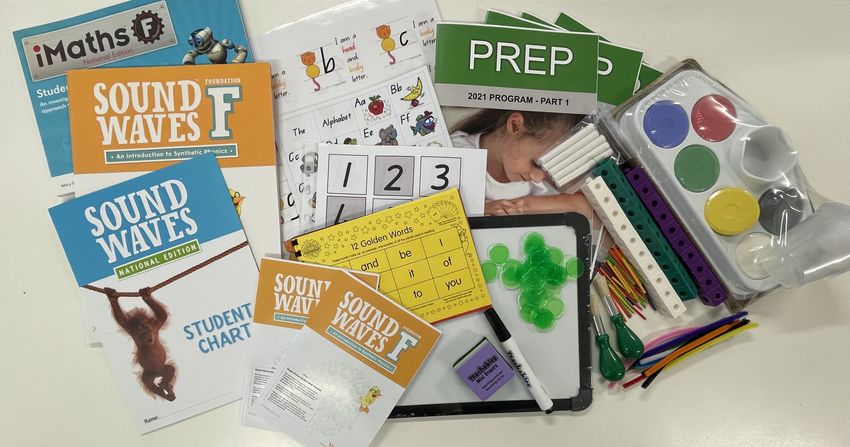
              We provide all of the resources pictured below for Prep students.
             This is a starter pack, with some additional supplies sent each term.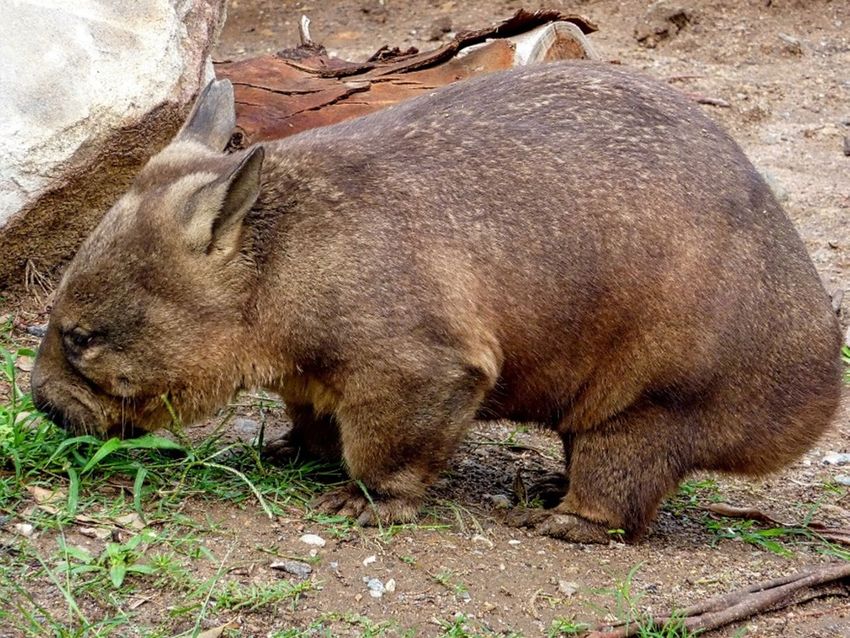
ENGLISH
PREP

Unit Outline
Students will engage with written and spoken text and language to continue to find meaning.

•   Students will blend and create words.
•   Students will explore word families and rhyme.
•   Students will create different text using the correct structure and format.
•   Students will draw on their personal experiences when reading to make text to self-
    connections.

                                                      E
•   Students will continue to learn to correctly form the letters of the alphabet.
•   Students will continue to explore books and begin to engage with the schools reading
                          PL
    program and read short predictable texts.
•   Students discuss their thoughts and feelings about what they are reading and make
    connections to their lives.
                         M
      SA
13
                                                                                                  WORKSHEET: Loud Like Lily

                                                                                                        Loud Like Lily
                                                                              Quiet – A picture or photo of me being Loud - A picture or photo of me being
                                                                                               quiet                                 loud
                                                                                                                                                             LOUD LIKE LILY

                                                                                                     SA
                                                                                 My sentence about being quiet           My sentence about being loud
                                                                                                                 M

ENGLISH TERM 3 | 2021 PREP – Riverside Christian College Distance Education
                                                                                                                  PL
                                                                                                                                    E
Week 3
ENGLISH                               Lesson 3
      Duration: 60 minutes

DEAR ZOO
Activity Instructions:

                                                                                         LEARNING INTENTIONS
1. Read the story ‘Dear Zoo’ by Rod Campbell.
                                                                                   •   They recognise the letters of
                                                                                       the English alphabet, in upper
2. Open the Soundwaves Student Book to page 73.                                        and lower case and know and
                                                                                       use the most common
3. Direct your student’s attention to the ‘Sound Box’ in the top left corner           sounds represented by most
                                                                                       letters
   of the page.
                                                                                   •   They read high-frequency
                                                                                       words and blend sounds
4. Encourage your student to identify the sound represented by the                     orally to read consonant-

                                                                   E
   grapheme /z/. Can they recall the chant? Model the sound a few times                vowel-consonant words
   and ask the student to copy.                                                    •   They read short, decodable
                                                                                       and predictable texts with
                                                                                       familiar vocabulary and

   two days.
                               PL
5. Ensure your student understands this is the focus sound for the next                supportive images, drawing
                                                                                       on their developing
                                                                                       knowledge of concepts of
                                                                                       print, sounds and letters and
6. Brainstorm words and names containing the focus sound (oral only).
                                                                                       decoding and self-monitoring
                                                                                       strategies
7. Display page 73 of the Student Book. Read the instructions to the               •   Their writing shows evidence
                              M
   student and discuss the images. Model what has to be done before the                of letter and sound
   student completes the activities independently.                                     knowledge, beginning writing
                                                                                       behaviours and
                                                                                       experimentation with capital
Raz Kids online:                                                                       letters and full stops
      SA

                                                                                          SUCCESS CRITERIA
 1. Invite your student to sit with you in a comfortable place.                    •   Recognise and name all
                                                                                       upper- and lower-case letters
 2. Using your online device, support your student in choosing a book from             (graphemes) and know the
    their reading level, from the school’s online reading programs.                    most common sound that
                                                                                       each letter represents
                                                                                       (ACELA1440)
 3. While your student is reading to you (or to themselves), we encourage          •   Understand how to use
    you to be available to them, in order to provide support with unknown              knowledge of letters and
    words/meaning etc.                                                                 sounds including onset and
                                                                                       rime to spell words
                                                                                       (ACELA1438)
 4. After your student has finished reading, discuss the book with them.           •   Know how to read and write
    Ask them to pick a character in the story. You could ask:                          some high-frequency words
                                                                                       and other familiar words
                                                                                       (ACELA1817)
                                                                                   •   Share feelings and thoughts
                                                                                       about the events and
                                                                                       characters in texts
                                                                                       (ACELT1783)

39   ENGLISH TERM 3 | 2021 PREP – Riverside Christian College Distance Education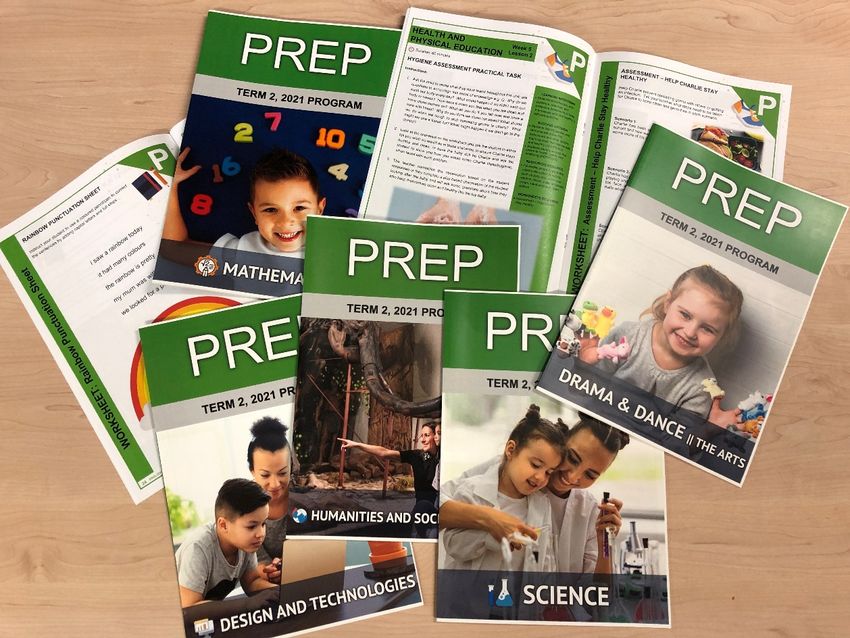
•   Who or what was the book about?
     •   Who was your favourite character in the story?
     •   Think about this character: how are they similar to you?
     •   How is this character different to you?
     •   How would you feel if you were this character in the story?
     •   What was the title of the book?
     •   Who is the author?
     •   Did you enjoy this book?
     •   Could the story really happen? Why or why not?
     •   Would you recommend this book to other people?

5.   Enjoy talking to your student about the story.

Word Families

 1. Read/listen to a book with rhyme e.g. ‘Dust Bunnies’, ‘Demolition’, ‘Cat in the Hat’ etc. to revise
    rhyme and word endings.

                                                                   E
 2. Look at the rhyming houses that you created in the lesson last Wednesday.
                               PL
 3. Use each ‘house’ to create a word-family-silly-sentence with the student. E.g. The fat cat sat on a
    mat with a hat.; The mop went pop into the shop.; The man with a fan rode in a van.

 4. Write these silly sentences, one at a time, on the whiteboard and draw a silly picture to match.

5. Have a bit of fun, they don’t have to make sense too much. Just focus on the student writing the
                              M
   rhyming words themselves and connecting that the end is the same.
         SA

40   ENGLISH TERM 3 | 2021 PREP – Riverside Christian College Distance Education
THE ARTS
PREP

Unit Outline
During this unit of Classroom Music, students will explore beat and dynamics (volume).
Students will hear, play and write LOUD and SOFT music with a steady beat. Students will
have opportunities to demonstrate their ability to sing in tune and match pitch, differentiate
between loud and soft music, keep the beat, combine lyrics and dynamics to compose and
describe the mood of different types of music.

                                                   E
                        PL
                       M
     SA
“HEY HEY LOOK AT ME"

                                 •   Fill the action box with your chosen action.
                                 •   Identify whether this action would be loud or soft.
                                 •   Record yourself keeping the beat while singing.
                                 •   Submit this to the submission point on your student's
                                     Schoology Course page.
WORKSHEET: Hey Hey Look at Me

                                     Dynamic:         ______________________________________________

                                                                              E
                                           HeyPL           hey                 look at            me
                                             M

                                             I am          _______                      you can    see.
                            SA

14          MUSIC TERM 3 | 2021 PREP – Riverside Christian College Distance Education
Week 5
MUSIC                                      Lesson 1
         Duration: 60 minutes

 LET’S GET LOUD

 Tasks to complete this week:
                                                                                     LEARNING INTENTIONS
 1. Understand turn-taking in group music making.                                • Students communicate about
                                                                                   the music they listen to, make
 2. Respond to loud and soft music through listening, singing and moving.          and perform and where and
                                                                                   why people make music
                                                                                 • Students improvise, compose,
 3. Respond to loud and soft music through singing and playing
                                                                                   arrange and perform music
    instruments.
                                                                                      SUCCESS CRITERIA
 Activity Instructions:                                                          • Students develop aural skills

                                                                       E
                                                                                   by exploring and imitating
                                                                                   sounds, pitch and rhythm
 1. Participate in the learning activities as per the online resources.
                                                                                   patterns using voice,
                                                                                   movement and body
                                   PL
 2. As you listen to the music this week:                                          percussion (ACAVAM106)

                                                                                    RESOURCES REQUIRED
        • Can you identify volume (dynamic) in the music where a performer
                                                                                 • Device to access Schoology
          may be loud?                                                             and YouTube
        • Can you identify volume (dynamic) in the music where a performer       • A soft toy
          may be soft?                                                           • Instruments: drum, triangle,
                                  M
        • Why do you think the performer used that dynamic?                        egg shaker, rhythm sticks
          SA

12   MUSIC TERM 3 | 2021 PREP – Riverside Christian College Distance Education
BEAT OR NO BEAT

                             Identify Whether Music Has A Beat or Not
                               • Listen to the audio samples.
                               • Circle the pictures that have a beat.
                               • Put a cross through the pictures with no beat.
                               • Submit this to the submission point on your student's
                                 Schoology Course page.
WORKSHEET: Beat or No Beat

                                                                             E
                                           PL
                                          M
                         SA

9          MUSIC TERM 3 | 2021 PREP – Riverside Christian College Distance Education
DESIGN AND                                               Week 2
TECHNOLOGIES                                            Lesson 1
      Duration: 30 minutes

    WOMBATS
    Instructions:
                                                                                                  LEARNING INTENTIONS
    1. Revise what habitat means (the place that they live, what their home                    • Students describe the
       and environment look like). Keep using the word habitat with your                         purpose of familiar products,
       student and reviewing what it means. Explain that the natural habitat                     services and environments
                                                                                                 and how they meet a range of
       of an animal is what it needs to survive in the wild.                                     present needs
                                                                                               • Students identify needs,
    2. Today we are going to do some research on wombats.                                        opportunities or problems and
                                                                                                 describe them
    3. Google: Wombat habitat (help your student to type these words into

                                                                      E
                                                                                                    SUCCESS CRITERIA
       the search engine – let them be as independent as possible, even if it                  • Students will identify how
       is really slow).                                                                          people design and produce
                                                                                                 familiar products, services
                                  PL
    4. YouTube and pages that might come in handy for you!                                       and environments and
                                                                                                 consider sustainability to
       https://kids.kiddle.co/Wombat
                                                                                                 meet personal and local
       https://study.com/academy/lesson/wombat-facts-lesson-for-kids.html                        community needs
       https://www.nationalgeographic.com/animals/mammals/c/common-                              (ACTDEK001)
       wombat/                                                                                 • Students will explore how
       https://www.youtube.com/watch?v=kKMZ6wJ5X9g                                               people safely use common
                                 M
                                                                                                 information systems to meet
       https://www.youtube.com/watch?v=TkCq54_ho-A
                                                                                                 information, communication
       You could also use any information books that you might have on this                      and recreation needs
       animal, or visit a library.                                                               (ACTDIP005)
                                                                                               • Students will create and
          SA

    5. Students fill in the worksheet on Wombats and their habitat. Assist                       organise ideas and
                                                                                                 information using information
       your student as you feel necessary. You can scribe for your student                       systems independently and
       and help them read information. If you watch YouTube clips, pause at                      with others, and share these
       appropriate times and discuss relevant information that they will need                    with known people in safe
       for their worksheet.                                                                      online environments
                                                                                                 (ACTDIP006)

                                                                                                  RESOURCES REQUIRED
                                                                                               • Internet access or animal fact
                                                                                                 books

                                                                                                 WORKSHEETS REQUIRED
                                                                                               • Wombats

7       DESIGN AND TECH. TERM 3 | 2021 PREP – Riverside Christian College Distance Education
WOMBATS
Draw a picture of a wombat in its natural habitat.
WORKSHEET: Wombats
E
PL
M
What is a wombat habitat like? (Where do they live?).
SA
______________________________________________________________________
______________________________________________________________________
______________________________________________________________________
Do wombats need to live close to water? Yes / No
What do wombats eat?
______________________________________________________________________
______________________________________________________________________
What needs of Wombat do we need to keep in mind when building them a new habitat?
______________________________________________________________________________
______________________________________________________________________________
8 DESIGN AND TECH. TERM 3 | 2021 PREP – Riverside Christian College Distance EducationInterested in learning more about our Distance Education
program?
We would be pleased to discuss our Curriculum program with
you further. For more information, please contact us:
07 4123 5599
distance-ed@riverside.qld.edu.au
Copyright © 2021 by Maryborough Christian Academy.
All rights reserved. No part of this publication may be reproduced, distributed or
transmitted in any form or by any means, including photocopying, recording, or other
electronic or mechanical methods, without the prior written permission of the
publisher, apart from any fair dealing or other statutory use permitted under the
Copyright Act 1968 Commonwealth of Australia.You can also read


