Primary School: Nursery to Grade 6 - Primary School: Nursery to Grade 6 Lakeside Campus Tanjong Katong Campus - Canadian International School
←
→
Page content transcription
If your browser does not render page correctly, please read the page content below
Primary School: Nursery to Grade 6
Lakeside Campus
Tanjong Katong Campus

                                     Primary School:
                                     Nursery
                                     to Grade 6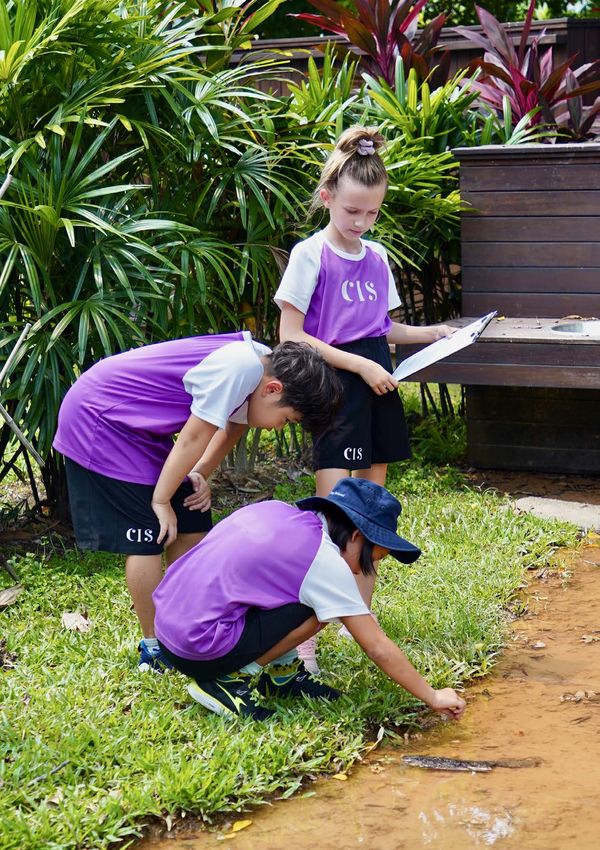
PRIMARY SCHOOL: NURSERY TO GRADE 6

Primary school:
Nursery to Grade 6
ABOUT                                Primary school at CIS (nursery to grade 6) is where your child’s
                                     learning journey begins. It is a place where we build on children’s
                                     natural curiosity about the world around them, and support them
                                     in gradually taking a greater responsibility and ownership for their
                                     own learning.

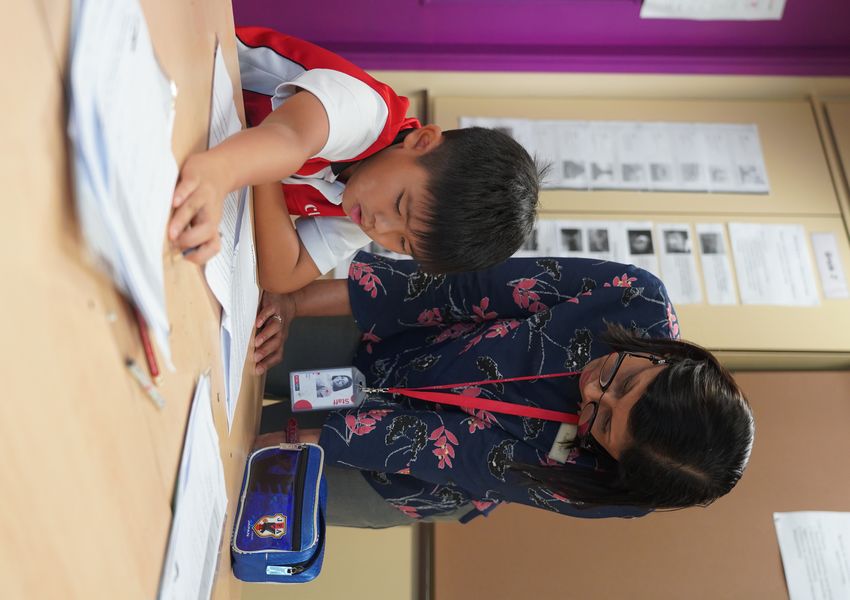
                                     Our teachers respond to the unique learning styles and needs
                                     of each individual, creating a community of happy, confident and
                                     engaged learners. They encourage students to think critically
                                     and creatively, work collaboratively, and communicate confidently
                                     around big ideas.

                                     Primary school is an important bridge to the increasingly complex
                                     academic challenges in secondary. Our students are prepared
                                     for the complex challenges they may face today or in the future,
                                     by learning how to: solve real world problems, develop their own
                                     ideas, and adapt their skills for the situation at hand.

                                     We offer a number of programme options for primary students, all
                                     of which follow the same curriculum. These include:

                                     Lakeside campus
                                     • English programme: all grades
                                     • Chinese - English bilingual programme: pre kindergarten to grade 6
                                     • French - English bilingual programme: grade 1* to 4
                                       (expanding to grade 5 in 2021**)

                                     Tanjong Katong campus
                                     • English programme: all grades
                                     • Chinese - English bilingual programme: junior kindergarten to grade 6

                                     *not offered in 2020/21
                                     **subject to enrolment number

                                     Our primary school is organised into grade level communities,
                                     ensuring each student feels a sense of belonging. The school day
                                     runs from 8.30am to 3.30pm, with half day options for our nursery
                                     students. Many students in grades 1 to 6 take part in our after
                                     school activities programme which ends at 4.30pm.

                                     Primary students spend most of the school day with their
                                     homeroom teacher. Classes in nursery to grade 1 are supported
                                     by an instructional assistant. Students also have single subject
                                     teachers for arts, physical education and language acquisition.

 2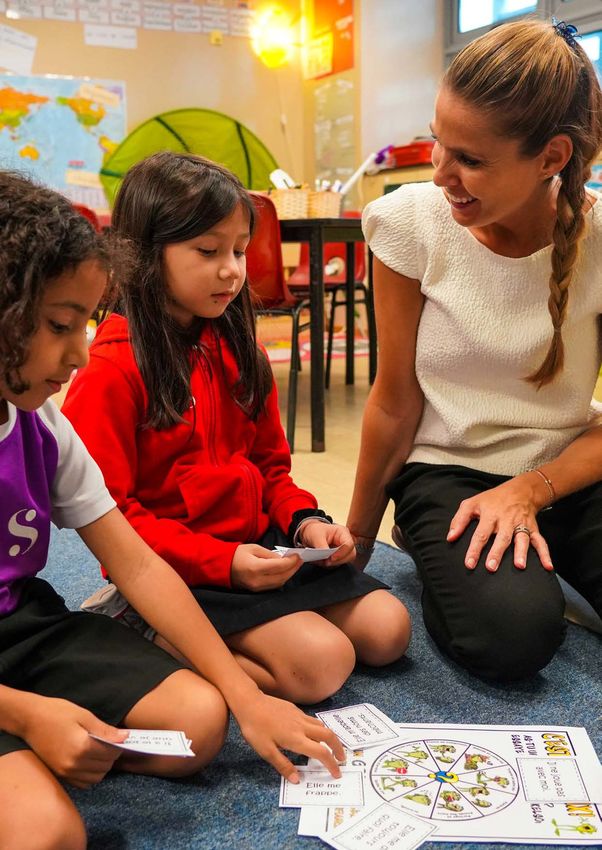
”   Primary school at CIS
    encompasses Kindergarten
    (nursery to senior kindergarten)
    and grades 1 to 6.

                                 3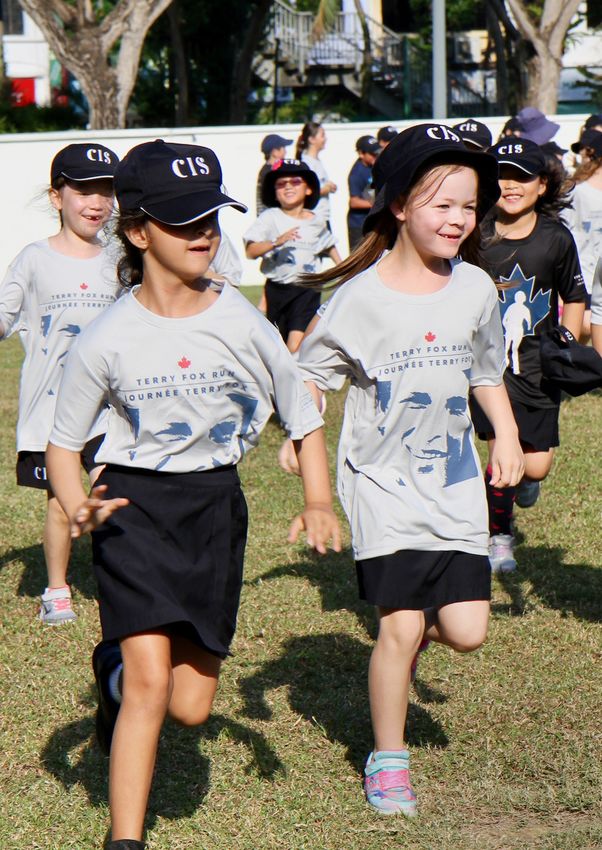
PRIMARY SCHOOL: NURSERY TO GRADE 6

The CIS curriculum.
                                     CIS is one of the few international schools in Singapore to offer all
                                     three International Baccalaureate (IB) programmes, from Primary
                                     Years through to the Diploma Programme. Our curriculum is
                                     benchmarked against national curricula globally, allowing students
                                     to transition to another school if and when required, or graduate
                                     and be admitted to leading universities around the world.

                                     The CIS curriculum is represented through learning standards
                                     and conceptual understandings. These are developmentally
                                     appropriate and provide guidance regarding expectations for
                                     students at each grade level. Their purpose is to ensure robust
                                     progression for students as they move throughout the grade
                                     levels.

CONCEPT-BASED                        Offering a concept-based curriculum allows for the necessary
CURRICULUM                           portability many of our families desire. Students are able to
                                     transfer knowledge and understandings not only between subject
                                     areas, but also between schools at which they may study in the
                                     future.

STANDARDS                            CIS has aligned its standards to the United Kingdom, Canada,
                                     the United States of America and Australia. These curriculum
                                     standards support the framework of our teaching and learning
                                     programme.

                                     Learning standards are concise, written descriptions of what
                                     students are expected to know and be able to do at a specific
                                     stage throughout their education. Standards apply to all grade
                                     levels from nursery to grade 12, and have been carefully selected
                                     to ensure a sequential and carefully guided development of
                                     concepts, knowledge and skills.

                                     Because of the global nature of our learning standards,
                                     students who join us from different countries are able to access
                                     the curriculum regardless of their educational background
                                     or programme. This also applies to students repatriating or
                                     transitioning to another international school.

 4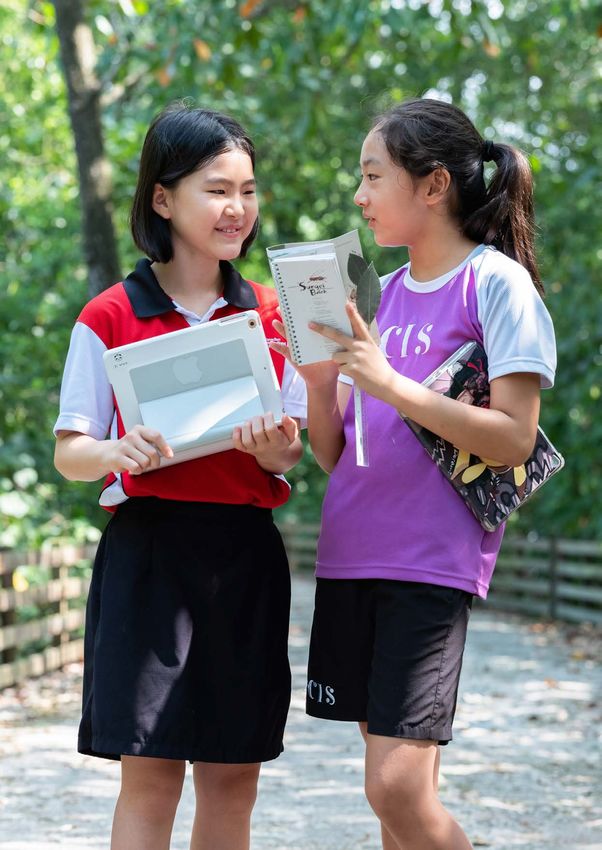
5
PRIMARY SCHOOL: NURSERY TO GRADE 6

The CIS curriculum.
CONCEPTUAL                           Our learning programme is concept-based. Concept-based
UNDERSTANDINGS                       instruction is driven by ‘big ideas’ rather than subject specific
                                     content. It promotes in-depth thinking, understanding and the
                                     application of knowledge. By having students consider the
                                     context in which they will use their understanding, concept-based
                                     learning brings ‘real world’ meaning to content, knowledge and
                                     skills.

                                     As an example, in a concept-based curriculum, students will learn
                                     their number facts and memorise them, but with a focus on how
                                     these number facts might be applied to everyday situations, along
                                     with their connections to other mathematical concepts.

APPROACHES                           The approaches to learning (ATLs) are a set of skills essential for
TO LEARNING (ATLs)                   success in the 21st century. They include communication,
                                     self-management, research, thinking and social skills.

                                     These approaches to learning are shared across all three IB
                                     programmes and provide a common language for students and
                                     teachers to reflect on and articulate the process of learning. The
                                     approaches to learning help students ‘learn how to learn.’ They
                                     can be learned and taught, and improved with practice.

 6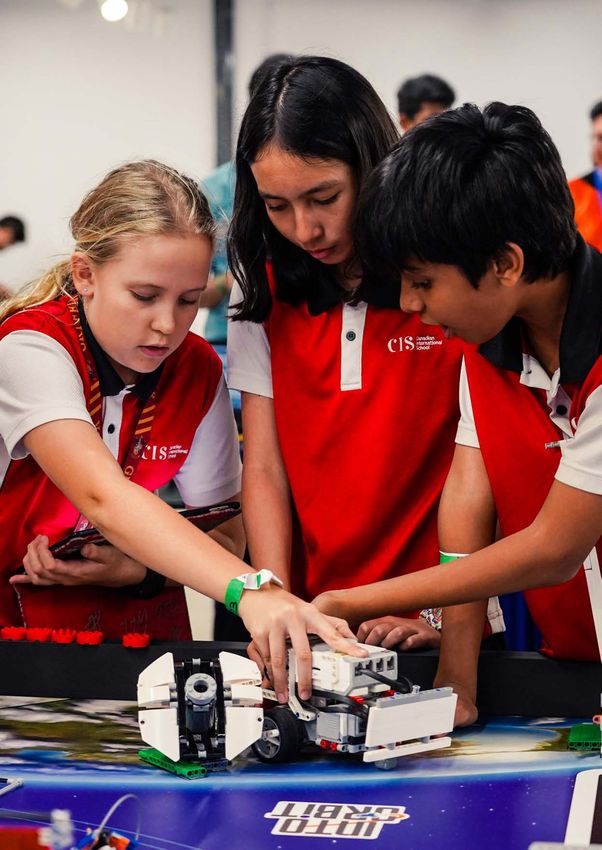
7

PRIMARY SCHOOL: NURSERY TO GRADE 6

Primary Years Programme (PYP)
ACADEMIC PROGRAMME                   Our primary (pre-kindergarten to grade 6) curriculum draws from
                                     the best curricula globally and is delivered within the IB Primary
                                     Years Programme (PYP) framework, while our nursery curriculum
                                     is PYP inspired. The PYP is an inquiry-based, curricular framework
                                     based on the most current best-practice educational research
                                     from around the world.

INQUIRY-BASED LEARNING               Our inquiry-based approach encourages students to take
                                     ownership and responsibility of their own learning. Inquiry-based
                                     instruction is not just about asking a student what he or she wants
                                     to know. It’s about triggering a student’s curiosity, and having them
                                     want to learn about a topic. Our teachers ask students to:

                                     • develop the questions they want to find answers to
                                     • research the topic collaboratively
                                     • present what they’ve learned
                                     • reflect on the process - what worked, what didn’t

                                     Through this process, our students are challenged to think deeply
                                     about an issue, work collaboratively, solve problems creatively, and
                                     communicate effectively using a wide range of media.

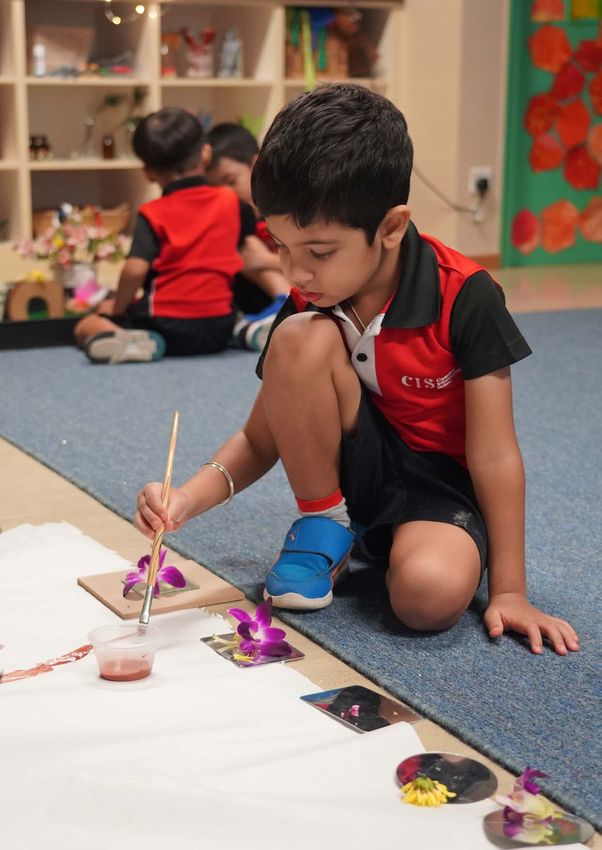
PLAY-BASED APPROACH                  Our youngest students learn through both an inquiry-based
                                     approach and purposeful play. Our engaging, hands-on teaching
                                     approach is based on substantial research that shows young
                                     children who engage in play develop greater language skills,
                                     social skills, more empathy, imagination and a better capacity to
                                     understand others.

                                     This play-based approach is not a chaotic way of teaching, rather
                                     it provides the optimal balance between a classroom rich in
                                     child-initiated play and focused learning activities guided by our
                                     teachers. For example in numeracy, our students explore concepts
                                     through hands-on activities such as water play for exploring
                                     volume and capacity, and coloured toys and blocks for sorting
                                     and classifying. While in literacy, our students build their language
                                     skills through different oral and written activities including
                                     drawing, art and music.

 8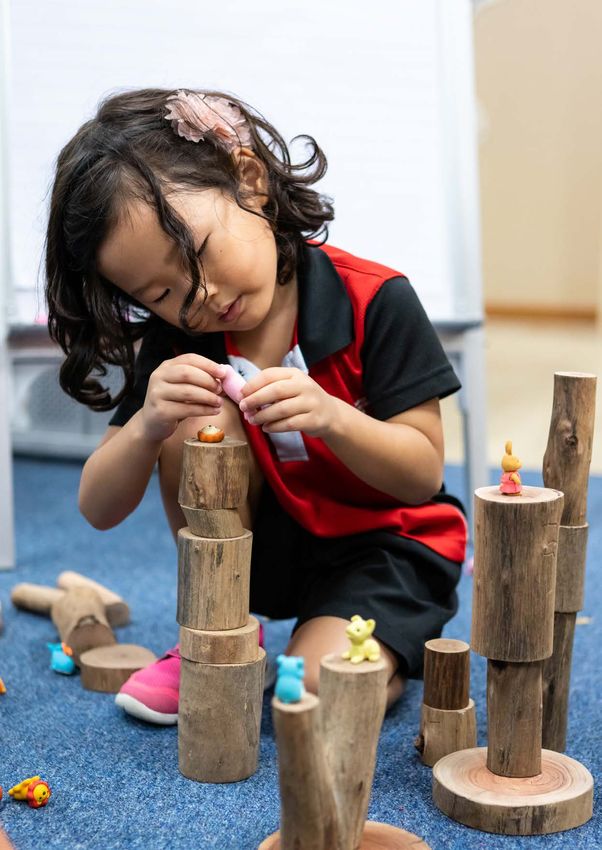
9
PRIMARY SCHOOL: NURSERY TO GRADE 6

The PYP framework.
ESSENTIAL ELEMENTS                   The CIS primary curriculum is built on the PYP framework of the
                                     five essential elements of: knowledge, concepts, skills, attitudes
                                     and action. This framework is designed to equip students with the
                                     skills and expertise needed to be successful - both today and in
                                     the future.

UNITS OF INQUIRY                     In the PYP, students engage in concept-based learning
                                     commonly referred to as the unit of inquiry (UOI), and different
                                     subject areas are integrated (as appropriate) as they explore a
                                     particular concept or topic. Students have dedicated English and
                                     mathematics lessons with homeroom teachers, while Chinese*,
                                     French*, Spanish* (Lakeside only), physical education, art, music
                                     and drama are delivered by specialist teachers. Where possible,
                                     learning in these specialist areas links back to the overarching
                                     unit concept(s). Science and social studies are learned exclusively
                                     in the context of the units of inquiry.

                                     *From junior kindergarten

10
11
PRIMARY SCHOOL: NURSERY TO GRADE 6

Learning.
LITERACY                             Our literacy programme develops students who are able to
                                     effectively and confidently communicate through:
                                     • reading
                                     • writing
                                     • listening
                                     • speaking
                                     • presenting

                                     Our programme addresses the development of phonological
                                     awareness, knowledge of the alphabet, knowledge of how words
                                     work, and recognition or spelling of familiar words (automaticity).
                                     Teachers work with individual students to develop their language
                                     proficiency through small group instruction, classroom ‘read
                                     alouds’, guided reading, reading and writing workshops and
                                     spelling (word study).

                                     We encourage students to think critically in order to determine the
                                     truthfulness and validity of the texts they are reading. As readers,
                                     our students learn to: make meaning of texts, use strategies that
                                     include the use of background knowledge (including knowledge
                                     relating to their culture, language, and identity), develop
                                     vocabulary knowledge, understand how language is structured,
                                     and use strategies to convey meaning.

MATHEMATICS                          Our mathematics programme, which is incorporated into theunits
                                     of inquiry or taught as a stand alone unit, is divided into five
                                     strands:
                                     • data handling
                                     • measurement
                                     • shape and space
                                     • pattern and function
                                     • number

                                     Mastery is the core focus of our mathematical instruction, as
                                     it promotes higher-level thinking with a focus on relationships
                                     and connections. Students are encouraged to verbalise and
                                     demonstrate their thinking strategies. Instruction involves a
                                     balance of written computation, mental computation, estimation
                                     and the use of mathematical tools. This approach supports
                                     students in consolidating their understanding and gaining
                                     confidence in their abilities as a mathematician.

12
13
PRIMARY SCHOOL: NURSERY TO GRADE 6

Learning.
LANGUAGES                            At CIS, we are committed to promoting multilingualism, whether
                                     through our language acquisition programme, our Chinese and
                                     English immersion programmes, or our bilingual programmes.

                                     Language acquisition
                                     All students have the opportunity to learn an additional language
                                     from junior kindergarten at CIS. Students from junior kindergarten
                                     to grade 6 can choose daily Chinese, French, or Spanish*.
                                     Students are placed in classes according to their language
                                     proficiency. Students new to English will take English as their
                                     additional language.

                                     *From grade 1 at Lakeside only

                                     English Language Learners (ELL)
                                     Beginning in grade 1, students new to English will join English
                                     language learner (ELL) classes during language acquisition time.
                                     Once they have reached a certain level of proficiency in English,
                                     they will exit the ELL programme and take daily Chinese, French
                                     or Spanish classes instead. Ongoing English language support
                                     will be provided by classroom teachers.

                                     Bilingual programmes
                                     CIS offers two bilingual programmes: Chinese-English and
                                     French-English*. Both bilingual programmes provide students
                                     with experiences to learn equally in both languages. This model
                                     is achieved by offering two and a half days of instruction each
                                     week in each language. A critical component of our bilingual
                                     programmes is to ensure that students learn about, experience
                                     and appreciate, the cultural heritage of both languages.

                                     The overarching goal of our Chinese-English bilingual programme
                                     is to develop students language proficiency (speaking, reading
                                     and writing) to a point where they can move into the respective
                                     grade 7 language programme.
                                     *Grades 2 to 4 in 20/21 at Lakeside campus only. Expanding to Grade 1 to 5 in 21/20
                                     subject to enrollment numbers

14
15
PRIMARY SCHOOL: NURSERY TO GRADE 6

Learning.
SOCIAL STUDIES                       Social studies and science are delivered entirely within the
AND SCIENCE                          units of inquiry. There are specific standards and benchmarks
                                     connected to each unit.

                                     Social Studies
                                     Our social studies programme allows students to learn about
                                     topics and concepts in a unique environment, while the greater
                                     Singapore community provides opportunities to apply learning in
                                     a real world context.

                                     Social studies topics are:
                                     • human systems and economic activities
                                     • social organisations and culture
                                     • continuity and change through time
                                     • human and natural environment
                                     • resources and the environment

                                     Science
                                     As students learn about science concepts, they develop the skills
                                     and processes needed to support scientific understandings,
                                     which include: observing, measuring, explaining, scientific
                                     vocabulary, interpreting and questioning, planning and carrying
                                     out investigations, predicting and testing, interpreting and
                                     evaluating, and representing and communicating.

                                     Science topics are:
                                     • living things
                                     • earth and space
                                     • materials and matter
                                     • forces and energy

16
17
PRIMARY SCHOOL: NURSERY TO GRADE 6

Learning.
PE AND HEALTH                        CIS’s physical and health education (PE) curriculum focuses
                                     on the development of each student’s holistic well-being.
                                     The programme supports and guides the development of
                                     the knowledge, skills and attitudes that will contribute to the
                                     understanding of self, the development and maintenance of
                                     relationships with others and a balanced, active and healthy
                                     lifestyle. Our programme is designed to encourage all students to
                                     be active, informed and excited about the benefits of health and
                                     wellness.

THE ARTS                             The arts (drama, music and visual art) are a powerful learning tool
                                     for communication and expression, and are an essential part of
                                     the kindergarten to grade 6 curriculum. The arts help students
                                     explore, shape and communicate their sense of identity and
                                     understanding of the world, and in turn develop creativity, self
                                     confidence, resilience and adaptability.

STEAM                                Science, technology, entrepreneurship, arts and mathematics
                                     (STEAM) is an integral part of all that we do in primary. We have
                                     a dedicated STEAM teacher, as well as resources and spaces for
                                     students to innovate, create, problem solve and engage in design
                                     thinking. Our STEAM teacher collaborates with other teachers to
                                     integrate STEAM opportunities into units of inquiry and specific
                                     subject areas.

18
19
PRIMARY SCHOOL: NURSERY TO GRADE 6

Learning.
LIBRARY                              The library is a dynamic place and an intrinsic part of daily life at
                                     CIS. We support a lifelong love of reading and writing by offering
                                     a vast selection of books and digital media, as well as a range of
                                     online educational resources.

                                     Our libraries contain a wide variety of curriculum related
                                     resources which are appropriate for the different age ranges,
                                     cultural backgrounds, and language abilities of our students. Our
                                     teacher librarians support classroom instruction, and collaborate
                                     with classroom teachers in fostering students’ research,
                                     information literacy, technology, communication, and critical
                                     thinking skills.

DIGITAL LITERACY                     Technology is integrated into the curriculum and classroom
                                     activities in order to provide rich and meaningful 21st century
                                     learning experiences.

                                     Our ‘One to World’ programme ensures our students learn how
                                     to think critically and ethically as they harness technology in their
                                     learning; behave safely and appropriately online; identify what
                                     information is important online; and use technology as a tool to
                                     showcase their skills and talents.

20
21
PRIMARY SCHOOL: NURSERY TO GRADE 6

Activities.
ACTIVITIES                           Activities are an integral part of school life and student learning
                                     in grades 1 to 6. Opportunities are wide in scope, promote the
                                     development of the whole child, and allow students to come
                                     together to discover and develop individual talents and passions.

COMMUNITY BUILDING                   Our house colour system and primary student council encourage
                                     a strong sense of community, leadership and team spirit. Students
                                     are engaged in a wide range of musical ensembles, choral groups
                                     as well as full-scale school productions and performances each
                                     year.

EXTRA CURRICULAR                     An extensive extra curricular activities (ECAs) programme provides
ACTIVITIES (ECAS)                    students with additional linguistic, recreational sporting, and
                                     enrichment opportunities, if desired. ECAs are run by independent
                                     providers and are a paid service.

COMPETITIVE SPORTS                   A range of competitive sports (ACSIS sports) are available to older
                                     primary students across three seasons each school year. Through
                                     ACSIS sports, students compete against other international
                                     schools in age-based teams.

22
23
PRIMARY SCHOOL: NURSERY TO GRADE 6

Outdoor excursions.
                                     All students engage in a range of age appropriate learning
                                     experiences outside of the classroom.

FIELD TRIPS                          Field trips often connect the local community and support or
                                     extend what is being learnt in class. This hands-on learning
                                     develops an excellent understanding about the real world as well
                                     as a sense of independence.

EXCURSION WEEK                       Excursion week for students in grades 4 to 6 is Singapore based
                                     and offers students challenging opportunities that: encourage
                                     collaboration, stimulate curiosity about the world around us, and
                                     empower taking action.

OPEN MINDS                           Open Minds is an innovative programme that moves students in
                                     grades 1 to 6 out of the classroom and into a range of Singapore
                                     settings for up to four days. Sites include Sungei Buloh, East
                                     Coast and Chinatown, and students get to experience the
                                     environment, artifacts, and field experts first hand.

                                     Open Minds experiences have the potential to change a student’s’
                                     perspective and can be instrumental in building understanding
                                     of a particular area of inquiry. The programme provides students
                                     with the opportunity to engage in stimulating hands-on activities
                                     that focus on developing their thinking, research, observation and
                                     questioning skills.

24
25
PRIMARY SCHOOL: NURSERY TO GRADE 6

Service.
                                     At CIS, we value the connections we have with one another as a
                                     school community as well as those we cultivate locally, regionally
                                     and globally. We are committed to promoting positive change
                                     through taking action. Service in primary school is often focused
                                     within our school and the local community.

                                     Sustainability initiatives, such as composting, recycling and
                                     making connections with local community gardens, are examples
                                     of service and action that can be found in the classrooms of even
                                     our youngest learners. Annual participation in the Singapore Terry
                                     Fox Run, other support for various local charities, and connections
                                     made with local teachers and schools, also provide students with
                                     opportunities for service.

26
27
PRIMARY SCHOOL: NURSERY TO GRADE 6

Communication and reporting.
                                     We encourage parents to be involved in their child’s school
                                     experience. We encourage face to face communication, and
                                     parents are welcome to schedule a meeting with their children’s
                                     teachers at a mutually convenient time to discuss progress and
                                     well-being.

ASSESSMENT                           CIS personalises the learning process for every student through
AND REPORTING                        ongoing assessment and reporting. This ensures our teachers
                                     understand each child’s needs, helping them to guide and
                                     support them as they progress in their learning and development.

                                     To provide the best possible feedback and ensure the best
                                     learning outcomes for each child, we:

                                     • Have consistently high expectations of all students.
                                     • Regularly assess and report on each child’s growth.
                                     • Provide consistent feedback on children’s work.
                                     • Include students in the assessment and reporting process.
                                     • Participate in standardised testing (Measures of Academic
                                       Progress).

REPORTING TO PARENTS                 In primary, we provide many opportunities to discuss your child’s
                                     growth and progress. These include:

                                     • Back to school night.
                                     • A phone call home in the first two weeks of school (new
                                       students only).
                                     • Three-way conferences (parents, teachers and students) each
                                       semester, with student-led conferences in semester 2.
                                     • A personalised student digital online portfolio (Seesaw).
                                     • End of semester report cards (December and June).

SEESAW                               Seesaw is an online platform that houses each student’s digital
                                     portfolio, providing parents with engaging insights into what their
                                     child is learning.

MANAGEBAC                            ManageBac is the teaching and learning platform at CIS. It is used
                                     for curriculum planning and reporting, and parents can follow
                                     their child’s academic progress as UOI (unit of inquiry) information
                                     is added to the progress tab. End of semester report cards are
                                     available electronically through ManageBac.

28
29
PRIMARY SCHOOL: NURSERY TO GRADE 6

Student well-being.
                                     In primary school, the social and emotional well-being of our
                                     students is paramount. Our teachers work in partnership with
                                     parents to help students acquire the skills and knowledge needed
                                     to manage themselves and their relationships, and to make
                                     responsible decisions.

                                     We provide opportunities for students to learn about personal
                                     relationships, mindfulness, peer support, daily outdoor activities,
                                     regular physical education lessons and involvement in leadership
                                     opportunities.

                                     When needed, there are opportunities for students to learn
                                     about emotional well being, and to receive support from our
                                     highly trained primary counsellors, vice principals and school
                                     psychologist.

30
31
PRIMARY SCHOOL: NURSERY TO GRADE 6

Who to contact.
                                     We understand that selecting a school for your child is a big
                                     decision. Our school administrators, counsellors and teachers
                                     would be happy to answer any questions you might have.

                                     Whether you are looking for more information, or just want to talk
                                     to someone about your child and how they will fit into school life,
                                     we are here to help. We look forward to speaking with you.

PRIMARY SCHOOL                       Angela Hollington		    Principal
LAKESIDE CAMPUS                      Tonia Whyte Potter-Mal Vice-Principal (nursery to grade 2)
                                     Celeste Krochak		      Vice-Principal (grade 3 to 6)
                                     Anika Sommer		         Primary Maths Coordinator
                                     Emilija Stojanovski		  Primary Literacy Coordinator
                                     Simone Lieschke		      Primary Years Programme Coordinator
                                     Huali Xiong			         K - 12 Principal for Chinese Language
                                     				and Culture

PRIMARY SCHOOL                       Angela Henderson		 Principal
TANJONG KATONG                       Cherie Boltong		   Vice-Principal
CAMPUS                               Patricia Pope			   Primary Years Programme Coordinator
                                     Huali Xiong			     K - 12 Principal for Chinese Language
                                     				and Culture

            Admissions hotline
            +65 6734 8088

            Inquire
            admissions@cis.edu.sg

32
33
Notes.
The Canadian International School (CIS) attempts to ensure that the information contained in this publication is correct at the time of
           production (July 2020), however, please note that information may be amended, without notice, at any time.
Contact us
+65 6734 8088
www.cis.edu.sg/inquire
Lakeside Campus
7 Jurong West Street 41
Singapore 649414
Tanjong Katong Campus
371 Tanjong Katong Road
Singapore 437128
CPE Registration No: 199002243H.
Period of Registration: 8 June 2019 - 7 June 2023
V3.0 July 2020You can also read


