PROCEEDINGS OF SPIE The first International Day of Light in Spain
←
→
Page content transcription
If your browser does not render page correctly, please read the page content below
PROCEEDINGS OF SPIE
       SPIEDigitalLibrary.org/conference-proceedings-of-spie

                   The first International Day of Light in
                   Spain

                   Moreno, Ignacio, Yzuel, María, Calvo, María

                                  Ignacio Moreno, María J. Yzuel, María L. Calvo, "The first International Day of
                                  Light in Spain," Proc. SPIE 10741, Optics Education and Outreach V,
                                  1074109 (14 September 2018); doi: 10.1117/12.2320591

                                  Event: SPIE Optical Engineering + Applications, 2018, San Diego, California,
                                  United States

Downloaded From: https://www.spiedigitallibrary.org/conference-proceedings-of-spie on 06 Feb 2021 Terms of Use: https://www.spiedigitallibrary.org/terms-of-use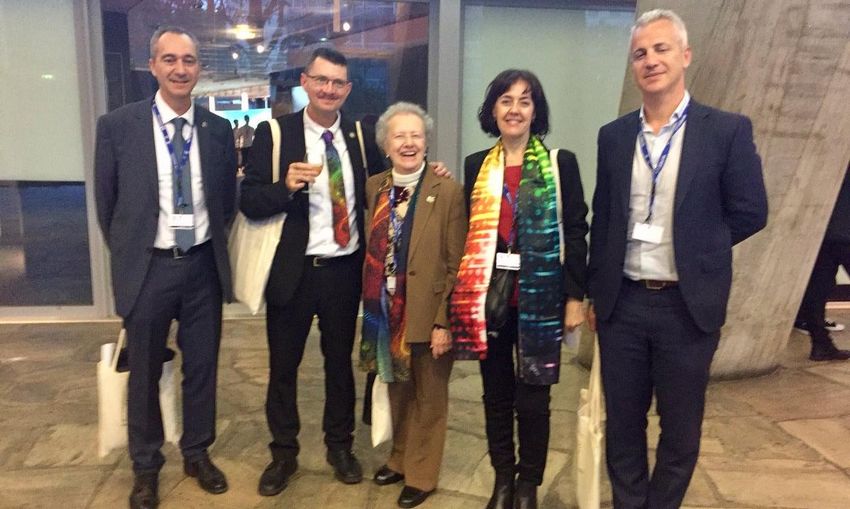
Invited Paper

                                            The first International Day of Light in Spain
                                                     Ignacio Morenoa,*, María J. Yzuelb, María L. Calvoc
                     a
                         Departamento de Ciencia de Materiales, Óptica y Tecnología Electrónica, Universidad Miguel
                                                 Hernández de Elche, 03202 Elche, Spain.
                                    b
                                      Departamento de Física, Universitat Autònoma de Barcelona, Spain.
                                  c
                                     Departamento de Óptica, Universidad Complutense de Madrid, Spain.

                                                                                     Abstract
                In this work, we review the main activities related to the International Day of Light (IDL) in Spain. We describe the
                actions of the Spanish Committee for IDL that has been created in Spain, reactivating the Spanish Committee for the
                International Year of Light created in 2015. The Spanish Committee of the IDL has been very active in promoting the
                realization of events, and providing tools for the IDL related information dissemination, as the specific related webpage
                for the IDL in Spain. The Spanish Committee also was the Spanish contact with the International Secretariat of the IDL.
                We describe the flagship IDL event in Spain that was organized in the Faculty of Physics Sciences of Universidad
                Complutense de Madrid on May 16th 2018. And we report on many other activities that have been developed in different
                places in Spain. These activities of the IDL in Spain are intended to make the society aware of the importance of the light
                and the light based technologies for the progress and well-being of the humankind. They have also been oriented to
                attract young talent to the studies of science and engineering.
                Keywords: International Day of Light, Outreach.

                                                                          1. INTRODUCTION
                After the great success of the International Year of Light (IYL) in Spain, the Spanish related community very well
                perceived the initiative of the International Day of Light (IDL). In 2014, a Spanish Committee for the International Year
                of Light (2015) was constituted and was very active and important for the success of the event in Spain. Therefore, right
                after the initiative of the IDL was announced, the interest of reactivating and renewing the committee and constitute a
                new Spanish Committee for the International Day of Light was clearly relevant. This new committee was created in
                2017, even before the final IDL proclamation by UNESCO, and worked hard to promote the IDL event in Spain.
                The Faculty of Physics Sciences of Universidad Complutense de Madrid (UCM) organized the main flagship event of
                the IDL in Spain. A full day event with two sessions, a morning and afternoon ones, was organized with great success of
                audience and participation. As a complementary artistic activity, the event finished at evening and night with the
                realization of a light painting happening.
                Many other different activities have been developed in different places in Spain. Next, we describe and review all these
                activities in Spain related to the IDL. According to the goals of the IDL proclamation [1], these activities are intended to
                enable global appreciation of the central role that light and light-based technologies play in the lives of the citizens of the
                world in areas of science, technology, culture, education, and sustainable development. Also, they were intended to
                emphasize the importance of basic research in the fundamental science of light, the need for investment in light-based
                technology to develop new applications, and the necessity to promote careers in science and engineering in these fields.

                                                   2. THE SPANISH COMMITTEE FOR THE IDL
                First contacts and conversations started in June/July 2017, where partial meetings were organized in Barcelona, Madrid,
                Granada and Santiago de Compostela, in order to directly communicate with the main involved community the idea of
                the IDL and the necessity to be prepared for the moment when the IDL was officially approved.
                During these first meetings, since the very beginning, the Faculty of Physics of UCM offered their facilities to organize a
                main event in Spain to commemorate the first edition of the IDL.

                *
                    i.moreno@umh.es; presidente@sedoptica.es; phone (+34) 96 665 8409.

                                      Optics Education and Outreach V, edited by G. Groot Gregory, Proc. of SPIE Vol. 10741, 1074109
                                                  © 2018 SPIE · CCC code: 0277-786X/18/$18 · doi: 10.1117/12.2320591

                                                                        Proc. of SPIE Vol. 10741 1074109-1
Downloaded From: https://www.spiedigitallibrary.org/conference-proceedings-of-spie on 06 Feb 2021
Terms of Use: https://www.spiedigitallibrary.org/terms-of-use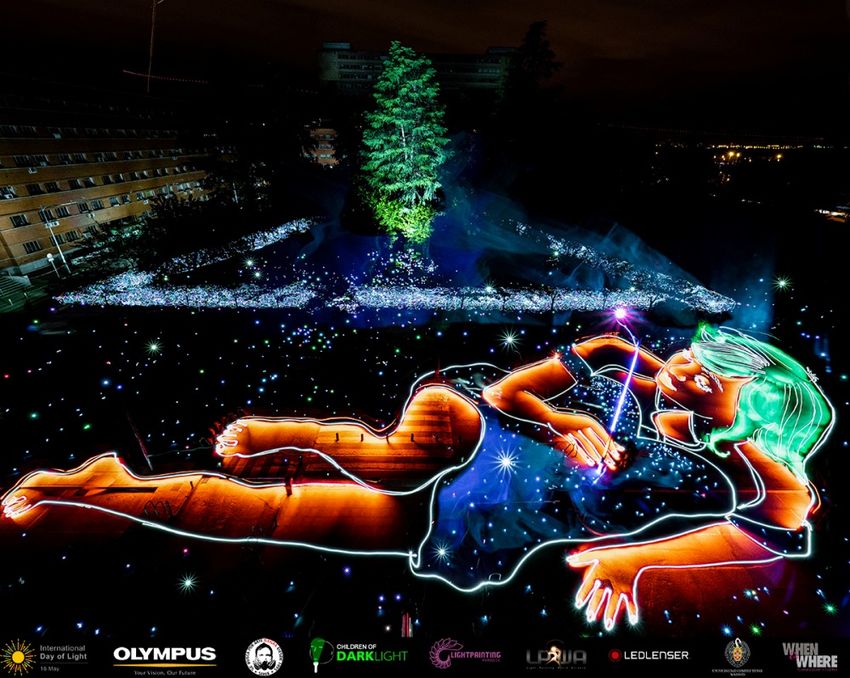
All these first contacts were very successful and, a first official meeting was organized in Madrid, on October 26th, 2017,
                at the Institute of Optics “Daza de Valdés”, at Consejo Superior de Investigaciones Científicas (IO-CSIC), where the
                Spanish Committee for the IDL was officially created. Following the previous Spanish Committee of the IYL, this
                committee was intended to join all the different agents in Spain related to light science, to light technologies, and to
                optics and photonics. This includes scientific societies and organizations, research centers, universities, industrial
                platforms and professional associations.

                           Figure 1. Picture at the end of the first meeting of the Spanish Committee of the IDL held at Consejo Superior de
                      Investigaciones Científicas (CSIC), Madrid, on November 2017. From left to right: Juan Diego Ania, Javier Alda, Maria J.
                      Yzuel, Lara Elbaz, Ignacio Moreno, Santiago Vallmitjana, María L. Calvo, and Sergio Sáez. This meeting was also attended
                      on site by Gastón García, Lydia Sanmartin (representing ICFO), Carmen Vázquez, Luis Martín (representing FECYT) and
                           by Enrique Hita, Santiago Royo, Juan Luis Nieves, María Teresa Flores and María Aymerich via teleconference.
                The 2018 Spanish Committee for the International Day of Light has been composed by the following members:
                -   María Josefa Yzuel, President of the Spanish Committee for the IDL, Professor Emeritus at Universitat Autònoma
                    de Barcelona, and Academic Member of RACAB - Reial Acadèmia de Ciències i Arts de Barcelona.
                -   Ignacio Moreno, Vice-President of the Spanish Committee for the IDL, Professor at University Miguel Hernández
                    of Elche, President of SEDOPTICA – Spanish Society of Optics.
                -   María Luisa Calvo, Vice-President of the Spanish Committee for the IDL, Professor Emeritus at Universidad
                    Complutense de Madrid, Representative of RSEF - Real Sociedad Española de Física.
                -   Javier Alda, Professor at Universidad Complutense de Madrid, Director of the Deparrtment of Optics, UCM.
                -   Juan Diego Ania, Director of the Instituto de Óptica “Daza de Valdés”, Consejo Superior de Investigaciones
                    Científicas, Madrid (IO-CSIC).
                -   Caterina Biscari, Director of ALBA Synchrotron Facility, Barcelona.
                -   Carmen Carreras, Honorific Professor at UNED – Universidad Nacional de Educación a Distancia, and
                    representive of RSEF - Real Sociedad Española de Física.
                -   Antonio Corrons, Vice-President of CEI - Comité Español de Iluminación (Spanish Committee for Lighting).
                -   Paloma Domingo, General Director of FECYT – Fundación Española de Ciencia y Tecnología (Spanish Foundation
                    for Science and Technology).
                -   Lara Elbaz, representative of APDI - Asociación de Profesionales del Diseño de la Iluminación (Association of
                    Lighting Design Professionals)
                -   Gastón García, Adjunt Director of ALBA Synchrotron Facility, Barcelona.
                -   Enrique Hita, Professor Emeritus at University of Granada, and President of the Academy of Exact, Physical,
                    Chemical and Natural Sciences of Granada.

                                                                        Proc. of SPIE Vol. 10741 1074109-2
Downloaded From: https://www.spiedigitallibrary.org/conference-proceedings-of-spie on 06 Feb 2021
Terms of Use: https://www.spiedigitallibrary.org/terms-of-use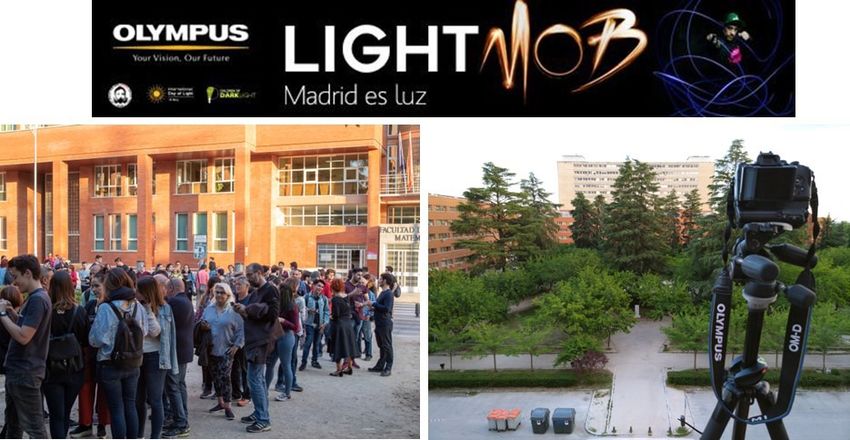
-   Humberto Michinel, Professor at Universidade de Vigo, President Elect of the European Optical Society – EOS,
                    and Secretary General of the International Commission for Optics – ICO.
                -   Beatriz de Munck, Director of the Presidency Cabinet and Institutional Relations of Red Eléctrica de España.
                -   Luis Roso, Professor at University of Salamanca, Director of CLPU - Centro de Láseres Pulsados de Salamanca.
                -   Santiago Royo, Director of CD6-UPC – Center for Development of Sensors, Instrumentation and Systems,
                    Universitat Politècnica de Catalunya, and representative of FOTÓNICA21.
                -   Sergio Sáez, Manager of SECPhO – Southern European Cluster in Photonics.
                -   Joan Sarroca, Vice-Presidente of CEI - Comité Español de Iluminación.
                -   Lluis Torner, Professor at Universitat Politècnica de Catalunya, Director of ICFO - Institut de Ciències Fotòniques,
                    Barcelona.
                -   Santiago Vallmitjana, Professor at Universitat de Barcelona, Past President of SEDOPTICA.
                Prof. María Yzuel and Fernando Crespo (in representation of Red Eléctrica de España) were the members in
                representation of the Spanish Committee of the IDL at the International event of the IDL held in Paris on May 16th.
                Other Spanish representation in the event were Prof. Humberto Michinel, who attended as representative of ICO and
                EOS, Lydia Sanmartin from ICFO, and Prof. Augusto Beléndez and Prof. Inmaculada Pascual, from University of
                Alicante, invited by the IDL International Steering Committee.

                       Figure 2. Pictures of the Spanish representation at the IDL event in Paris. On the left: Humberto Michinel, María J. Yzuel
                      and Fernando Crespo. On the right: Augusto Beléndez, John Dudley (IDL 2018 Steering Committee Chair), María J. Yzuel,
                                                               Inmaculada Pascual and Fernando Crespo.

                                                                             3. RESOURCES
                The main goal of the Spanish Committee for the IDL was to disseminate and announce the IDL to all the related
                community. For that purpose, articles and notes with information about the IDL were published in some of the Spanish
                related journals, like those published in Optica Pura y Aplicada [2], the journal edited by SEDOPTICA, in Luces [3], the
                journal edited by CEI, or in Revista Española de Física [4], the journal edited by RSEF.
                One major task was to provide our community with a website where all the related information could be available. For
                that purpose a new website (www.diadelaluz.es) was programmed [5], specifically developed to collect all the
                information related to the IDL in Spain and to provide resources to people interested in organizing new activities. The
                webpage was arranged in various sections: news, resources, conferences, workshops, educational, industrial, awards,
                publications, and media. Social networks like Facebook, Twitter and Instagram related to the IDL in Spain were also
                opened and maintained. Figure 3 illustrates the main page of this website. The webpage was also connected to the
                international webpage [6], where the Spanish Committee was indicated as the national node in Spain.

                                                                        Proc. of SPIE Vol. 10741 1074109-3
Downloaded From: https://www.spiedigitallibrary.org/conference-proceedings-of-spie on 06 Feb 2021
Terms of Use: https://www.spiedigitallibrary.org/terms-of-use
/ D Dfa Internacional de la Luz x \\ Migsworld
E C ( fi Seguro I https://www.diadelaluz.es
Acceso Usuario
® Email
Dia Internaciona
RED
ELÉCTRICA
de la Luz
DE ESPAÑA
P Password
Acceder q% MECENAS ZAFIRO
Regístrate y recibe información
personalizada
ACTIVIDADES
Noticias
ABC Cultura. Madrid celebra el Día
Recursos Internacional de la Luz
Congresos
El evento "Madrid es Luz" se ha celebrado el 16 de mayo con
fj Conferencias el motivo del Día Internacional de la Luz, tras el Acto Central
celebrado en la Universidad Complutense. De la mano de
- Jornadas Olympus, y bajo la técnica del LightPainting, se creó una
imagen masiva realmente impactante. Por primera vez, artistas
s Talleres y ciudadanos crearon unidos un mismo lienzo. El Lightpainting
se puede definir como el arte de poder pintar con luz, bajo la
Ir, Docentes técnica fotográfica de larga exposición, se realizan fotografías
durante varios minutos, donde los asistentes son los
a Industriales auténticos protagonistas y creadores.
12 Premios
Ver más
OLYMPUS
Publicaciones
q> MECENAS RUBÍ
Medios
Figure 3. Main window of the Spanish website for the IDL.
RED
CT
Real
SLDOI'TICA
f=2.. SOCIEOAD ESPAÑOLA DE OPTiCA
Sociedad
Española de
FUNDACIÓN
RAMÓN ARECES
ELÉCTRICA
DE ESPAÑA
Física
4 MECENAS ZAFIRO
i
R.S.E.F.
SIC
SPIE. PHILIPS
41 MECENAS RUBI
401 NIECENAS RUS!
Valeo
,sis
suNnvswcvwrse
ICFO9 lasing CÁTEDRA VALEO -UCM
The Institut. of Photonio
Sciences
BA Comité Español MECENAS RUBÍ
LUZ Y AUTOMOCIÓN
ti1 MECENAS RUBÍ
de Iluminación
o nica2l
QEsp ,,,. recDO ógKa
SECPhe A 13 D
Light Technologies Cluster
OLYMPUS
$1 MECENAS RUBÍ
mtb'
TECNOLOGÍA DE PRECISIÓN
e> MECENAS RUBÍ
Figure 4. Sponsors (left) and patrons (right) of the IDL in Spain.
Proc. of SPIE Vol. 10741 1074109-4
Downloaded From: https://www.spiedigitallibrary.org/conference-proceedings-of-spie on 06 Feb 2021
Terms of Use: https://www.spiedigitallibrary.org/terms-of-use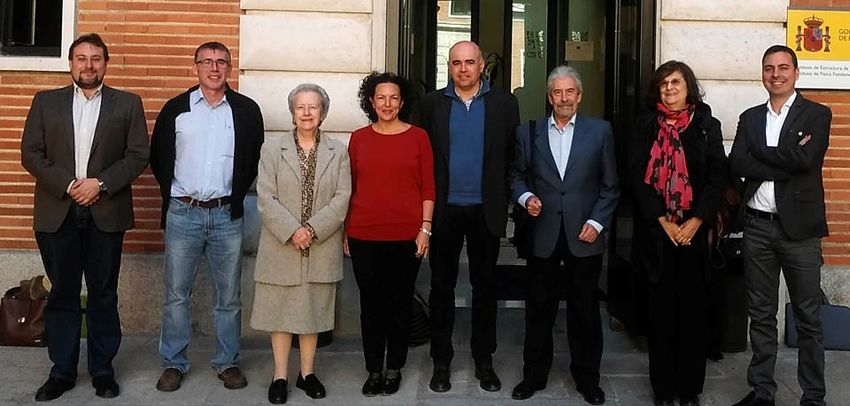
The realization of this website was possible thanks to the initial sponsorship of the Spanish Committee for the IDL
                provided by the following sponsor institutions: SEDOPTICA, IO-CSIC, ALBA, ICFO, CD6, FOTONICA21, SECPHO,
                APDI and CEI. These funds were essential to start to move on the IDL in Spain.
                The Spanish Committee for the IDL defined four different levels of patronage of the event in Spain, which received the
                names of Sapphire, Garnet, Ruby and Quartz, thus relating them to gemstones used in lasers and optics. Seven different
                companies became patrons of the IDL in Spain: Red Eléctrica de España – REE, that became sapphire patron, and other
                six companies that became ruby patrons: Indizen Optical Technologies (IOT), Philips, Valeo-UCM, Lasing, MTB and
                Olympus.

                         4. THE FLAGSHIP EVENT AT UNIVERSIDAD COMPLUTENSE DE MADRID
                The main flagship event of the IDL in Spain was held at Universidad Complutense de Madrid (UCM). It consisted in two
                sessions held at the Faculty of Physics of UCM. All the local organization was supported by the Dean of the Faculty,
                Prof. María Luisa Lucía, who conducted many of the internal activities needed to assure a correct development.
                Moreover, the Local Organizing Committee was very active in all the programmed activities. This Local Organizing
                Committee was presided by María L. Calvo in coordination with the Dean and Vice-Dean, Julio Serna, as well as the
                Director of the Optics Department, Javier Alda, and professors Rosa Weigand, Carmen Carreras and Pablo Nacenta.
                Also the Director of the Institute of Optics CSIC, Juan Diego Ania, and Lara Elbaz from the Association of Professional
                Lighting Designer (ADPI) had active participation. The Committee had regular meetings starting October 2017.
                The complete event at UCM can be viewed at the following links:
                Morning Session: https://www.youtube.com/watch?v=9pFtjYzjlaQ
                Afternoon Session: https://www.youtube.com/watch?v=PdVIvkKYEaw
                The morning session consisted in a first conference delivered by Rosa Weigand on the history of lasers and three key
                talks on the ALBA Sincrotrón, by Gastón García, on virtual reality by Rubén Mohedano and on gravitational waves by
                Alicia Sintes. The session ended with a round table on the projection of optics and photonics in our daily life, and
                connections with the industry and educational programs with participation of various professionals of the relevant
                sectors.
                A special guest for the IDL Flagship event in Madrid was Prof. Glenn Boreman, 2017 SPIE President. The funds to
                cover the trip of Prof. Boreman to Spain were provided by SPIE, RSEF via its agreement with Fundación Ramón Areces,
                and by a Travelling Lecturer of ICO. On May 16th, Prof. Boreman participated at the IDL event in Spain where he
                delivered a Plenary Talk in the afternoon session entitled “Photonics in our World”.

                         Figure 5. Left: Prof. Glenn Boreman with Prof. Carlos Andradas, Rector of UCM. Right: Prof. Boreman with some
                       members of the Spanish Committee of the IDL and Local Organizing Committee. From left to right Javier Alda, María L.
                       Calvo, Glenn Boreman, María Luisa Lucía, Dean of the Faculty of Physics of UCM, Ignacio Moreno, Lara Elbaz, Pablo
                                          Nacenta, professor at IES “Alameda de Osuna”, and Carmen Carreras from RSEF.

                                                                        Proc. of SPIE Vol. 10741 1074109-5
Downloaded From: https://www.spiedigitallibrary.org/conference-proceedings-of-spie on 06 Feb 2021
Terms of Use: https://www.spiedigitallibrary.org/terms-of-use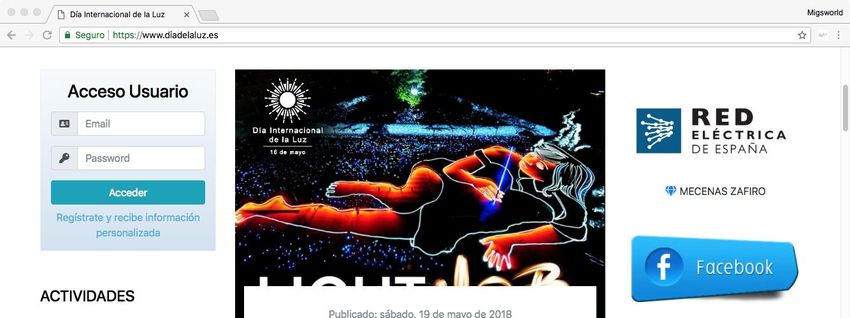
4.1 The Photon Awards
                The afternoon session also included the ceremony of delivery of a new award initiative of the Institute of Optics “Daza
                de Valdés” of CSIC. This award received the name of Premio Fotón (Photon Award), and it had two categories: Emitted
                Photon, and Absorbed Photon. The Emitted Photon Award intends to recognize and promote the works on scientific
                communication and dissemination related to light, optics and photonics. The Absorbed Photon Award is intended to
                recognize educational works and projects related to light science and technology.
                Two prizes were delivered for the Emitted Photon Award. The first prize was delivered to Fernando Gomollón, for a
                work entitled “Yo, fotón” (I, photon) published in the Principia Magazine [7]. The second prize was delivered to Patricia
                Luna, for the article “Fotónica. El genio (invisible) de la luz” (Photonics. The (invisible) genius of light), published the
                supplement of the journal Heraldo de Aragón [8]. The Absorbed Photon Award was delivered to the project “Grupo
                Gusto y Pasión por investigar”, from the IES “El Cairat”, from Esparreguera (Barcelona).

                                 PREMIO
                               FOTÓN
                              DE COMUNICACIÓN
                                 CIENTÍFICA

                                 2018

                       Figure 6. Winners of the Photon Awards together with Prof. Victor Velasco, Vice-President of CSIC, and Prof. Juan Diego
                                                                    Ania, Director of IO-CSIC.

                                                                                                                                   1
                                         OLYMPUS
                                                                     LIGHT1C
                                                                                                                              o

                                                it.ion

                                                         T           Madrid es Luz

                            Figure 7. Announcement of the Light MOB event and some pictures. Images courtesy of Children of Dark Light:
                                       https://childrenofdarklight.com/2018/05/20/hydra-olympus-lightmob-madrid-es-luz-2018/.

                                                                        Proc. of SPIE Vol. 10741 1074109-6
Downloaded From: https://www.spiedigitallibrary.org/conference-proceedings-of-spie on 06 Feb 2021
Terms of Use: https://www.spiedigitallibrary.org/terms-of-use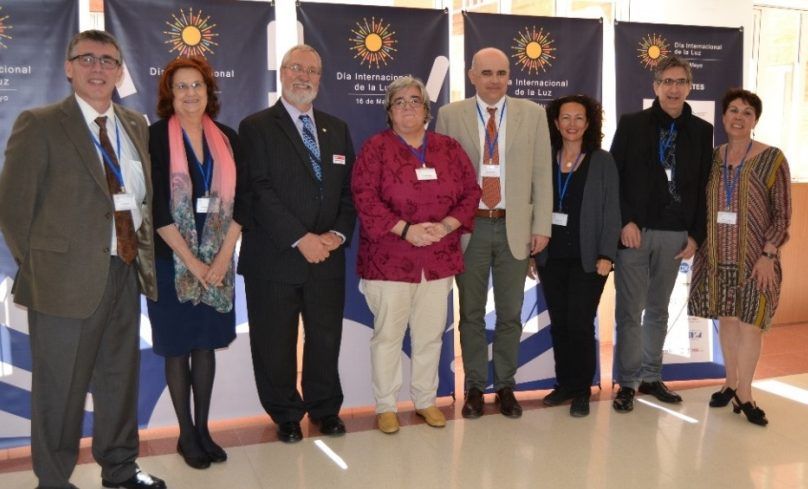
Figure 8. Final result of the Light MOB event. Image courtesy of Children of Dark Light:
                                         https://childrenofdarklight.com/2018/05/20/hydra-olympus-lightmob-madrid-es-luz-2018/.

                4.2 The light painting happening
                The day ended with a magnificent happening organized by the group Children of Dark Light dedicated to organize shows
                of light painting. This happening and light painting activity was financed by Olympus Co. Children of Dark Light
                already participated at the International Year of Light with a happening with light design of the IYL logo at the Oviedo
                Cathedral. This time, the UCM happening took place at the gardens of the Moncloa Campus in front of Faculty of
                Physical Sciences, and it was named as “Light MOB, Madrid es Luz”. A great number of participants collaborated on the
                formation of the lighting art representation. Figure 7 shows an announcement of the event, people preparing to
                participate, and a view from the top of the roof of the Faculty of Physical Sciences, the place from where the image was
                taken. The final result is shown in Fig. 8. This was publicized and commented on many Madrid newspapers enhancing
                the nice initiatives of the IDL.

                                                                       5. OTHER ACTIVITIES
                Many other activities were developed in different cities in Spain. In this section, we briefly describe some of them. A
                more complete detail of all the activities can be found at the web page: www.diadelaluz.es.

                                                                        Proc. of SPIE Vol. 10741 1074109-7
Downloaded From: https://www.spiedigitallibrary.org/conference-proceedings-of-spie on 06 Feb 2021
Terms of Use: https://www.spiedigitallibrary.org/terms-of-use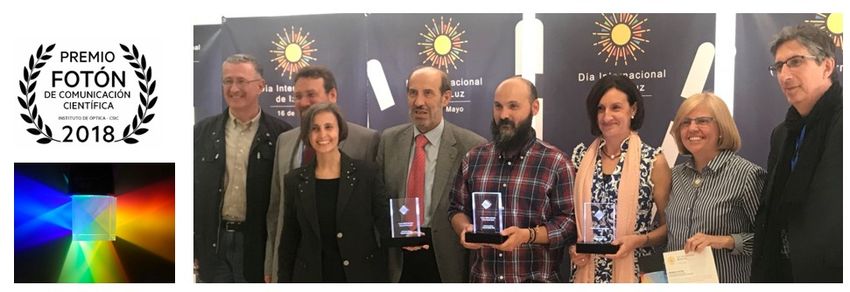
5.1 Activities in Barcelona
                In the area of Barcelona different activities were organized at different universities and research centers in the area. The
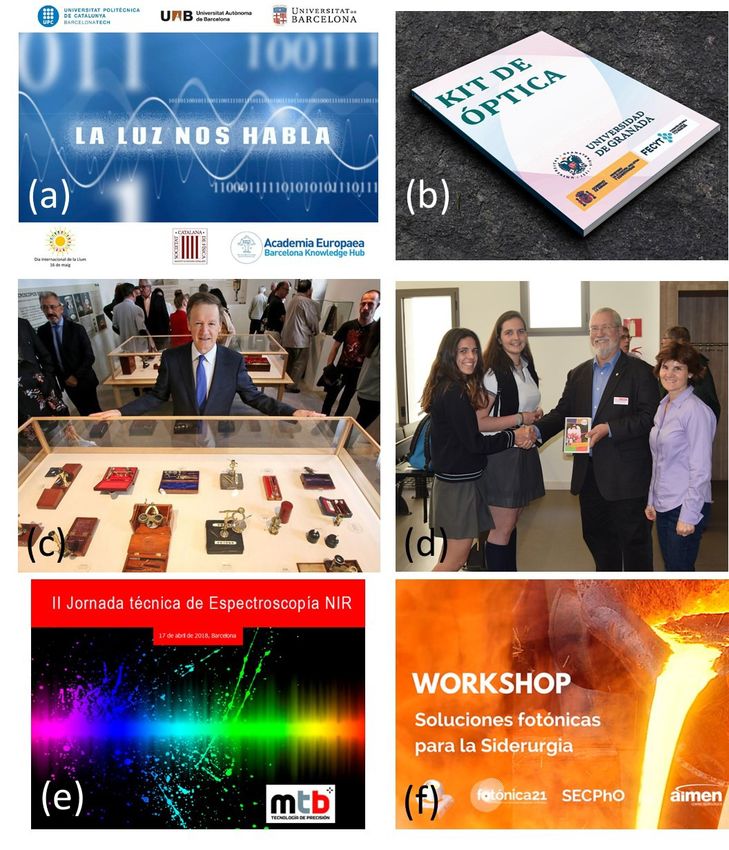
                common title “La llum ens parla / La luz nos habla” (Light talks to us) joined the different activities developed at the
                major universities: the University of Barcelona (UB), the Autonomous University of Barcelona (UAB), the Polytechnical
                University of Catalonia (UPC), as well as at the Institut d’Estudis Catalans (IEC), and coordinated by the Academia
                Europaea-Barcelona Knowledge Hub and the Catalan Society of Physics (SCF). Each university designed an individual
                program developed in May 16th and 17th, adapted to their students at the Faculties of Physics and at the Engineering
                Schools. Other relevant research centers in the area like ICFO and ALBA provided speakers to these events. Other
                activities and demonstrations for secondary schools were also developed at the School of Optics and Optometry of
                Terrassa.
                5.2 Activities in Andalucía: Granada and Malaga
                At the University of Granada, Prof. Enrique Hita delivered a conference entitled “Natural Light Phenomena”, and a new
                set of experiments named “Kit de Optica” with demonstrations in optics intended for primary and secondary schools, and
                developed by José A. García, Francisco J. Perales and Javier Romero were presented and illustrated. A tutorial for this
                kit is freely available as a resource provided by FECYT and the University of Granada [9].
                In Málaga, different astronomical observations were organized around the IDL by AstroLab.
                5.3 Activities in northern Spain: Salamanca, Santander, Bask Country and Galicia
                In northern Spain, the University of Salamanca, the University of Cantabria and the University of Santiago de
                Compostela organized different conferences, workshops and activities. The “I Encontro da Noite” organized at the
                Agrupación Astronómica Coruñesa was a workshop devoted to light pollution and obscurity preservation. In the Bask
                Country, the Faculty of Science and Technology of the UPV/EHU, elaborated a program that included a divulgation talk
                on short laser pulses and the Sgiker Laser Facility opened its doors in a guided visit to the lab.
                In the city of Vigo, the exhibition “A Luz e a lente: Historia do microscopio a través da colección Camacho y Pallas”
                was organized. This exhibition collects a selection of historical microscope pieces, property Dr Tomás Camacho and Dr.
                Estrella Pallas. Two emblematic pieces of this exhibition are one Leeuwenhoek microscope, built in 1680, and one
                original edition of the book “Micrographia: or some Physiological Descriptions of Minute Bodies Made by Magnifying
                Glasses”, published by Robert Hooke in 1665. This exhibition stated in May 16th, and will be opened until September
                23th at the Museum of Contemporary Art of Vigo.
                5.4 Activities in the Mediterranean area: Castellón – Valencia – Alicante – Elche – Murcia
                In the Valencian region, the University Jaume I of Castellón (UJI), the University of Valencia, the University of Alicante
                and the University Miguel Hernandez of Elche (UMH), they all organized different activities. Also, at the University of
                Murcia some activities related to secondary schools were developed.
                Prof. Glenn Boreman visited the University Miguel Hernandez of Elche (UMH), invited by the Alicante local section of
                the RSEF, and he delivered the talk “How Photonics Lights the World” on May 21st, at the Polytechnic School of Elche,
                with great success of students and professors.
                5.5 The role of the industry
                The participation and involvement of the industry in these events is also very important. The participation in the Spanish
                Committee of the IDL of members of Fotónica21 and SECPhO, the two industrial platforms in Photonics in Spain,
                allowed us to have access to the local industry.
                Different activities were developed by different companies. Some of the companies patrons of the IDL, like for instance
                the company MTB, included their activities around May 16th in the activities announced in the ILD webpage. Other
                workshops and conferences organized by Fotonica21 and SECPhO in these dates were also part of the information
                provided to all people registered in the IDL webpage.

                                                                        Proc. of SPIE Vol. 10741 1074109-8
Downloaded From: https://www.spiedigitallibrary.org/conference-proceedings-of-spie on 06 Feb 2021
Terms of Use: https://www.spiedigitallibrary.org/terms-of-use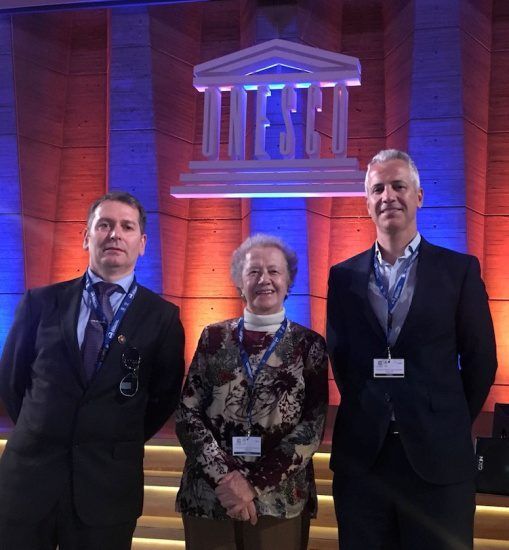
®OXIVER9ITAT POLITÉCNICA                        U IVF.RSITATe.
                              OECATALOXVA
                              RARCELO\'/.TFCX
                                                        UBw[wawR.w1d         BARCELONA

                                                                                 .,OIOOUIIIIUIII.I1oIII

                                 LA LUI NOS HABLA
                                                             \\a./
                                                              i 1000111110101010 U110.111

                                                                       Academia Europaea
                                                                       Barcelona Knowledge Hub

                           II Jornada técnica de Espectroscopia NIR

                                                                                                          WORKSHOP
                                                                                                          Soluciones fotónicas
                                                                                                           ara la Siderurgia

                                                                                                                1ttónicazi SECPhO          amen
                       Figure 9. Some examples of activities developed at different cities in Spain: (a) Common program of activities “La luz nos
                       habla” organized in the area of Barcelona by UB. UAB and UPC. (b) Optics Kit Tutorial for primary and secondary schools
                       developed at the University of Granada; (c) Dr. Tomás Camacho at the opening of the exhibition on microscopy “A luz e a
                         lente”, organized at Vigo; (d) Glenn Boreman with María M. Sánchez, President of the Alicante Local Section of RSEF,
                      giving the SPIE Women in Optics Planner to young students from Newton College, after the talk of Prof. Boreman at UMH.
                      (e) Announcement of a Workshop on Spectroscopy by the company MTB, patron of the IDL in Spain, and (f) announcement
                                   of the Workshop on Photonics for Steelmaking organized by Fotonica21 and SECPhO with AIMEN.

                                                                        Proc. of SPIE Vol. 10741 1074109-9
Downloaded From: https://www.spiedigitallibrary.org/conference-proceedings-of-spie on 06 Feb 2021
Terms of Use: https://www.spiedigitallibrary.org/terms-of-use
6. CONCLUSIONS AND FUTURE PERSPECTIVES
The success of the IDL event in Spain allows us to be optimistic about the continuity of this activity. The academic,
research and industrial community related to Optics & Photonics is growing importance in Spain. It is the important task
of all of us to be able to align efforts of the different related institutions and companies for the mutual benefit.
A major goal of our community should be let the society be aware of the importance of the field and how relevant is for
our country to invest in science and development in general, and in Optics and Photonics in particular. The IDL
represents a unique opportunity for this goal and we consider the number of activities and success of participation in this
first edition as an excellent sign for the subsequent impact in the next years.
We intend to arrive to the students in primary and secondary schools and also to the professors at those levels of
education. The resources are open for them. They are also invited to the talks given at the IDL activities and there are
open doors visits for students at the universities, research institutes, and museums. The involvement of the Photonics
industry should be also of great importance for the success of the activities in future.
We plan to continue and start to prepare the 2019IDL!
ACKNOWLEDGEMENTS
The authors of this paper acknowledge the members of the Spanish Committee of the International Day of Light, and the
support of the different organizations and companies that were sponsors and patrons of the IDL in Spain: SEDOPTICA,
RSEF, Fundación Ramón Areces, Universidad Complutense de Madrid, ICO, SPIE; IO-CSIC, ICFO, ALBA CD6, CEI,
Fotónica21, SECPhO, APDI, Red Eléctrica de España, IOT, Philips Lasing, UCM-Valeo, MTB and Olympus.
REFERENCES
[1] https://www.lightday.org/unesco-proclamation.
[2] I. Moreno, M. J. Yzuel, “El Día Internacional de la Luz,” Opt. Pura Apl. 51 (2), i-iii (2018).
http://doi.org/10.7149/OPA.51.1.i.
[3] M. J. Yzuel, I. Moreno, “Día Internacional de la Luz,” Luces CEI, No. 64, pp 13/14 (May 2018).
[4] J. Dudley, J. Rivero González, “Día Internacional de la Luz, 16 de mayo: una celebración anual”, Revista Española
de Física 32 (2), (2018). http://revistadefisica.es/index.php/ref/article/view/2437.
[5] http://www.diadelaluz.es.
[6] http://www.lightday.org.
[7] F. Mogollón, “Yo fotón,” Principia Magazine, 27/Dec/2017 https://principia.io/2017/12/27/yo-foton.IjczOCI/
[8] P. Luna, “Fotónica. El genio (invisible) de la luz,” III Milenio, Heraldo de Aragón (18/Apr/2017).
http://www.idibell.cat/sites/idibellpt.dd/files/DWebRevistatemp20170418%20%20000178244063008079%20%20
Heraldo%20de%20Aragn%20III%20Milenio.pdf.
[9] J. A. García, F. J. Perales and J. Romero, “Kit de experiencias de Óptica para primaria y ESO”, FECYT,
Universidad de Granada (2017). https://educa.ugr.es/wp-content/uploads/2018/04/cuaderno-kit-optica.pdf.
Proc. of SPIE Vol. 10741 1074109-10
Downloaded From: https://www.spiedigitallibrary.org/conference-proceedings-of-spie on 06 Feb 2021
Terms of Use: https://www.spiedigitallibrary.org/terms-of-useYou can also read


