PROCUREMENT STRATEGY April 2018 to March 2021 - Version 1.0 - West Yorkshire Combined Authority
←
→
Page content transcription
If your browser does not render page correctly, please read the page content below
PROCUREMENT
  STRATEGY

  April 2018
      to
  March 2021

   Version 1.0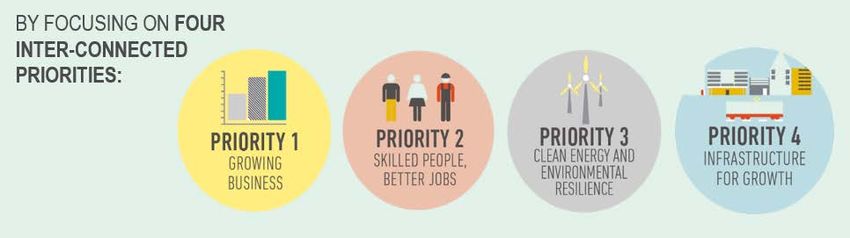
WYCA Procurement Strategy                                                                                         2018 to 2021

Table of Contents
1.   Introduction ............................................................................................................ 1
2.   Scope ...................................................................................................................... 2
3.   Structure.................................................................................................................. 4
4.   Roles and Responsibilities ...................................................................................... 5
5.   Context.................................................................................................................... 7
6.   Aims of the Strategy ............................................................................................... 8
7.   Implementation Plan ............................................................................................. 12
9.   Contacts ................................................................................................................ 17
Appendix A: Procurement Route Decision Tree ........................................................... 0
Appendix B: Improving the Procurement Process......................................................... 1
Appendix C: LGA National Procurement Strategy (2017) Diagnostic ......................... 2

                                                        Page 2 of 22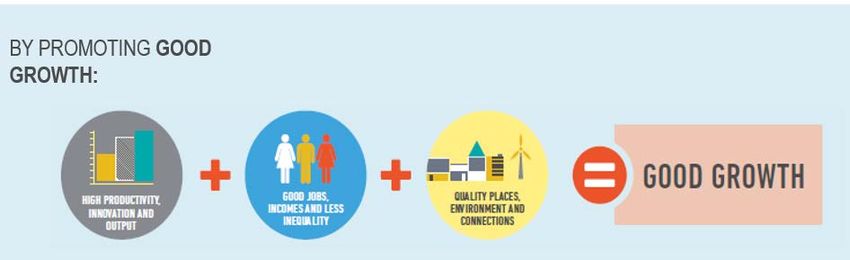
WYCA Procurement Strategy                                                        2018 to 2021

1. Introduction
   1.1. The West Yorkshire Combined Authority (WYCA) is a collaboration between the
        West Yorkshire authorities. It brings together the public sector in the form of the five
        West Yorkshire districts plus York, and the business sector through the Leeds City
        Region Enterprise Partnership (LEP). The Combined Authority is also the Transport
        Authority for West Yorkshire.

   1.2. The Combined Authority is a governing board of nine political leaders, plus the
        Chair of the Leeds City Region Enterprise Partnership (LEP). It is supported by an
        officer organisation that undertakes their Boards’ policies and actions

   1.3. As a public sector organisation, WYCA has a duty to ensure that its business is
        conducted in accordance with the law and proper standards and that public money
        is safeguarded and properly accounted for. It also has a duty to secure continuous
        improvement in the way in which its functions are exercised, having regard to a
        combination of economy, efficiency and effectiveness.

   1.4. There is therefore a sound system of internal controls in place to ensure the
        effective exercise of its functions and include arrangements for the management of
        risk. These risks and controls are regularly assessed by both internal and external
        auditors.

   1.5. The aim of this strategy is to clearly set out a framework for committing spend and
        undertaking procurement activities throughout the authority. This should be done
        ensuring best value through that spend whilst reflecting and promoting the wider
        aims of the authority’s Corporate Plan.

                                               1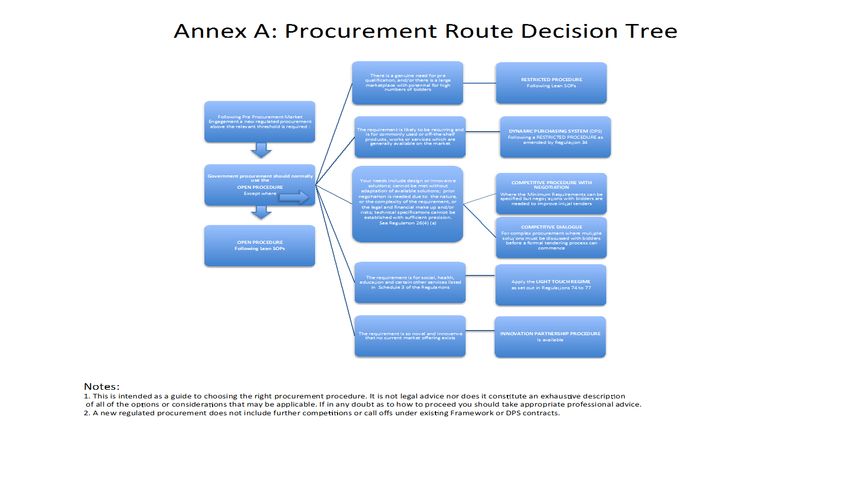
WYCA Procurement Strategy                                                     2018 to 2021

2. Scope
   2.1. WYCA has income of around £300m per annum of which approximately £150m
        can be identified as procurement spend. Funding will vary over the lifetime of this
        strategy depending on changes to grant income and funding from central
        government. As such it is important that any approach to procurement can be both
        reactive and flexible where needed.

   2.2. All departments depend to some extent on external organisations to provide goods
        and services. It is therefore important for the organisation to maintain a clear
        strategy for selecting, contracting with and managing its suppliers.

   2.3. This can be achieved via its new procurement function which has an involvement
        in the whole process, spanning the cycle from identification of needs, assisting with
        making sure the specification is clear and unambiguous, appraising options,
        identifying correct and appropriate procurement procedures, to the end of the
        contract or life of the asset.

   2.4. This Procurement Strategy also needs to support the organisations wider
        objectives as outlined in its Corporate Plan. These can be seen in the diagram as
        below and are a key factor in determining procurement approaches and
        specifications.

   2.5. A key priority for the authority is to promote “Good Growth” within the Leeds City
        Region. Procurement will play a vital role in enabling good growth within the region.

                                             2
WYCA Procurement Strategy 2018 to 2021
2.6. Collaboration will be a key objective within this strategy. There are long term links
with other public sector organisations that discuss and share procurement issues
which. These include:
• Public Buying Organisations such as Yorkshire Purchasing Organisation
and Crown Commercial Services.
• Regional Networks such as the Yorkshire & Humberside Strategic
Procurement Group
• Regional Framework suppliers such as YORhub
The long term objective of developing these collaborative procurements is reflected
in the strategy.
3WYCA Procurement Strategy 2018 to 2021
3. Structure
3.1. A new procurement function was established in November 2017 following a major
review of its procurement and purchasing requirements. This new function also saw
the introduction of a new Head of Procurement role undertaking a Head of Service
position.
3.2. The new team will report to the Director of Resources as one of the corporate
functions. The team includes dedicated Procurement Managers plus a Contracts &
Framework Manager supported by a Procurement Officer and a Procurement
Assistant.
3.3. The procurement function will also work closely with internal departments,
especially Legal, Finance and Audit to ensure a compliant end to end procurement
service. Close links will also be maintained with other directorates to ensure a full
understanding of their needs and requirements.
3.4. All procurement officers will be fully qualified member of the Chartered Institute of
Procurement and Supply (CIPS). Further training and development will be
undertaken as required. The function will also utilise any free training provided by
partners and legal suppliers.
4WYCA Procurement Strategy 2018 to 2021
4. Roles and Responsibilities
4.1. For procurement exercises to be successful and achieve their goals, active and
positive participation of key stakeholders is essential. To assist this, a clear
definition of the Procurement Teams and Business Areas roles is in place.
4.2. The role of the Procurement Team is to:
• Provide the organisation with a coherent direction of travel in terms of an agreed
corporate approach to procurement
• Lead on major procurement exercises facilitating the pre-selection of suppliers,
tendering, the evaluation of returned bids and awarding contracts
• Identify potential savings that can be gained by following good procurement
techniques such as consolidation of requirements or focussed negotiation
• Advise business areas in the best procurement method and documentation to
satisfy a requirement
• Ensure that the organisation achieves value for money in relation to purchases
made through tenders and quotes
• Ensure all procurement activities comply with public sector, UK and European
regulations and the Organisations Contract Standing Orders
• Provide a fit for purpose Contract and Supplier Management system, helping the
organisation to achieve consistency in its relationships with contractors and
service providers.
• Operate, control, review and monitor the organisations electronic purchasing
system and procurement card scheme
• Monitor procurement performance and activity, including savings and benefits
tracking
• Liaise with external partners around collaboration and any other initiatives.
• Provide training and support to organisation’s staff on contract procurement,
contract management, the Purchase to Pay System (Proactis), procurement
card system and the eProcurement Portal (In-tend)
• Ensure management of contracts and frameworks it has in place
• Ensure thorough vetting of potential suppliers and contractors
• Ensure that information provided by suppliers / contractors is up to date
• To ensure Social Value is obtained through the commitment of public funds
• Ensure that there is adequate segregation of duties between the raising,
receiving and the payment of an invoice
• Ensure that adequate authorisation levels have been applied and are being
adhered to so that decisions are made on accurate information
• Ensure that commercial related transparency requirements are met
4.3. The role of individual business areas is to:
5WYCA Procurement Strategy 2018 to 2021
• Comply with policies and strategies as published by the organisation whilst
complying with wider legislation.
• As part of the business planning process have a forward pipeline of expected
procurements
• Manage contracts and ensure that every contract has a dedicated contract
manager
• Prepare (with the assistance of the Procurement Team where needed)
specifications, drawings and other documentation required to form the tender
package
• Obtain quotations where Contract Standing Orders allow
• Engage in the Procurement Team’s work to develop strategic sourcing and
procurement initiatives.
6WYCA Procurement Strategy 2018 to 2021
5. Context
5.1. This strategy sets out the organisation’s priorities for procurement and draws
together many elements, including:
• The organisation’s Corporate Plan
• The organisation’s “Maximising Good Growth Benefits through Procurement”
Policy
• The award of funding for the West Yorkshire Plus Transport Fund
• The requirements identified in the Local Transport Plan
• The Government’s existing and developing agenda for public sector
procurement through the National Procurement Strategy
• The targets of the National Procurement Strategy for Local Government by the
Local Government Association (LGA)
• The Public Service (Social Value) Act 2012
• The Equality Act 2010
• The Governments Clean Growth Strategy
• The amalgamation of the Leeds City Region Enterprise Partnership (LEP)
under the Authority’s scope
• Local Government Transparency Code 2015
• Issues identified by internal and external audit reports
• A need to generate efficiency savings
• The continuous need for business improvement within the procurement
function
5.2. These elements are combined to produce a 3-year strategy for the organisation.
This strategy will be reviewed annually to make sure the short term and long term
aims are achieved and on track.
7WYCA Procurement Strategy 2018 to 2021
6. Aims of the Strategy
6.1. The Government recognises procurement as a key area for efficiency gains. Public
sector organisations are therefore expected to develop and maintain these gains
through improved practices. These are referred to in the National Procurement
Strategy 2014 and the updated draft National Procurement Strategy due for
publication in late 2018.
6.2. The strategy is aimed at promoting effective and efficient procurement across the
organisation. It sets out specific targets and objectives with a plan covering the
period of this strategy.
6.3. Appreciating that the organisation, and the procurement function, needs to react to
the businesses changing requirements, this strategy must not only embed the new
procurement function within the organisation but also allow for it to take account of
the ever-changing needs of the business.
6.4. Undertake Efficient and Effective Procurements
The main priority will be to ensure that all procurements are undertaken in an
efficient and effective way to ensures value for money is obtained. The new
Procurement Function also needs to be embedded within the organisation. Key
activities will be:
• Forward pipeline planning with directorates to plan resources and
activities accordingly
• Update existing templates and where needed create templates to form a
standard set of procurement documents
• Implementation of corporate spend analytics system to highlight common
areas of spend and any contract leakage
• Increase use of frameworks where value of money can be obtained so
avoid The Official Journal of the European Union (OJEU) tenders where
possible
• Implement the Crown Commercial Services Procurement Decision Tree
(Appendix A) to allow for the more appropriate procurement route to be
selected
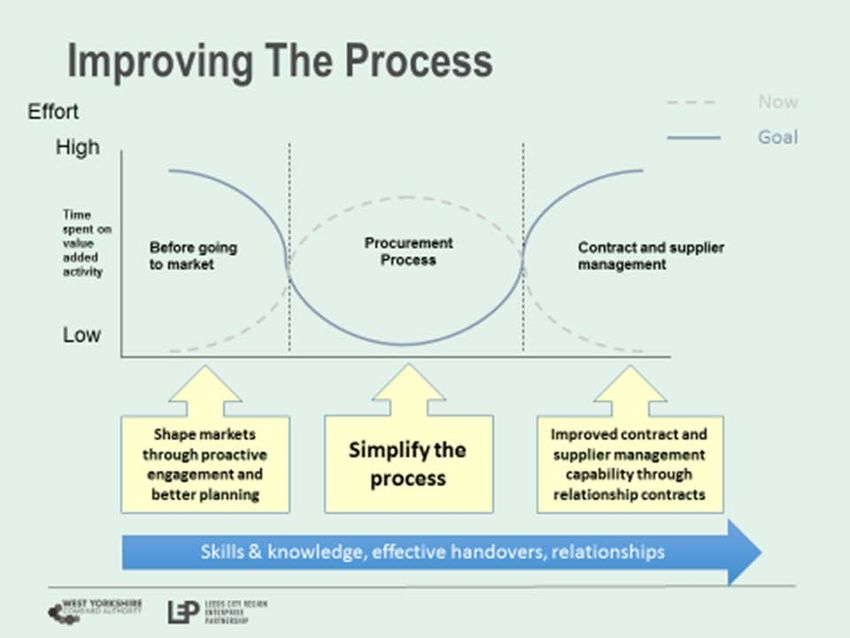
• Ensure effort is focused on the pre-market engagement and contract
management as part of the procurement cycle as per Appendix B
6.5. Create Social Value from Procurement
Social Value and Inclusive Growth is a key priority for the organisation and
procurement should play a vital role in implementing polices around it. This will
include social, economic and environmental impacts. Key activities will be:
• Mandatory weighting for social value contribution for all tenders over £75,000.
This will be a minimum of 10% to establish supplier responses with an ambition
to raise to a minimum of 20% by the expiry of this strategy.
• Encourage suppliers to pay the real living wage by initially asking their position
and evaluating the impact on costs should it be applied as a mandatory
condition.
8WYCA Procurement Strategy 2018 to 2021
• Increase SME and local spend to support the growth principles. The current
figures are around 10% for SME spend and 70% for local spend but includes
large payments to member authorities. Specific activities will be needed to
increase the SME spend to meet the government’s 30% target.
• Implement the policy for “Clean growth and sustainability” within procurement
when agreed. This new policy will ensure that, where necessary, tenders are
evaluate d against any environmental impact.
• Review the organisations current “Good Growth Procurement Policy” and
update or replace in line with latest organisational wider objectives and policies.
• Ensure all procurement policies and procedures are undertaken in an ethical
manner and comply with the principles of the CIPS Ethical Code.
• Where appropriate ensure that green procurement considerations are included
in specifications and tender documents to ensure reduced waste, reduced
carbon emissions and minimise impact on the natural environment.
6.6. Improve Transparency
The organisation aims to be transparent in all areas, especially around its
expenditure and contracting. Key activities will be:
• Publishing a pipeline of expected procurements to allow the market to
prepare for tenders
• Publishing all spend over £500 monthly
• Publishing a contract register monthly of all contracts over £5,000
• Publishing all spend on Government Procurement Cards monthly
• Publishing details of all purchase orders over £500 monthly
All items will be published by the end of the previous month on a dedicated area
of the organisations web site in a downloadable CSV format.
6.7. Increase Procurement Awareness & Training
A lack of commercial skills internally has been identified with work needed to
strengthen staff in this area. Upskilling of both suppliers and commissioners will
therefore be required for the strategy to be successful. Any emerging policy or
government changes should also be accounted for. This will involve:
• Training for commissioners that will be mandatory for budget holders and
budget controllers. This will ensure compliance to regulations and
awareness of key policies impacting on procurements.
• Training for suppliers to ensure they can successfully bid for the
organisations tenders and understand they key policy points that the
organisation requires.
• Training for procurement staff to ensure updated with recent case law and
sector thinking. Procurement staff will also be encouraged to engage with
industry bodies such as the Chartered Institute of Procurement and Supply
(CIPS) and Society of Procurement Officers (SOPO).
• Update information online regularly, both internally via the corporate
intranet, and externally on the corporate web site so common queries can
be answers and basic information and updates shared.
• Ensure a watching brief on BREXIT and the possible impact on the
organisations current supply chains.
9WYCA Procurement Strategy 2018 to 2021
6.8. Increased Use of Government Procurement Cards
The organisation over the last few years has used both credit cards and the
Government Procurement Cards (GPC). These can offer operational flexibility and
process efficiencies when used correctly in a controlled manner. Work is needed
to formally roll out GPC within the organisation including:
• Phasing out of current credit cards as these no longer offer best value
• Reviewing operational areas where GPC will offer service and process
improvements, including the use of embedded cards.
• Implementing reporting and management information systems as
provided by GPC providers to ensure easy processing of invoices
• Implementing a revised GPC usage policy to ensure the organisation is
clear on correct usage
6.9. Further Develop eTendering & Purchase to Pay (P2P) Solutions
The organisation currently uses Proactis for its raising of orders and invoice
payments. The eTendering system In-tend is used for the online management of
procurements.
A review of corporate systems was undertaken that has made a number of
proposals to replace and amend systems. In-tend offers additional functionality that
could offer substantial benefits. The planned strategy is therefore:
• A review of the Proactis system to allow for improvement P2P functionality.
• The introduction of wizards within In-tend to allow for improved processing
of procurements, especially by business areas for lower values.
• The implementation of the Contract Management module to allow for
increased visibility of contracts and improved Key Performance Indicator
(KPI) monitoring.
• The implementation of a supplier self-service function to allow for a “tell us
once” approach for standard information and documentation such as
insurance certificates and health & safety policies.
6.10. Introduce a Standard Approach to Contract Management
There is currently no standard approach to Contract Management across the
organisation and no common KPIs being used. This will have significant impact
when trying to embed social value and monitor its success. The new strategy needs
to embed contract management and contract monitoring across the organisation.
This will include:
• Creation and implementation of a contract management toolkit to allow for
a standard and templated approach
• Introduction of standing corporate wide KPIs to allow for benchmarking
and common monitoring of key suppliers
• Agreed usage of the Contract Management module within In-tend to
automate creation of key management information
10WYCA Procurement Strategy 2018 to 2021
6.11. Further Promote Collaborative Procurement
Good progress has been made recently with regards to collaborative procurement
and this needs to be continued. This needs to be on a regional, organisational and
category level. Key activities will include:
• Continued membership and collaboration with the Yorkshire and
Humberside Strategic Procurement Group covering the wider regions local
government procurement functions
• Improved links to other Combined Authorities, especially those with
devolution agreements to learn from their experiences
• Closer working with Public Buying Organisations (PBOs) such as Yorkshire
Purchasing Organisation and Crown Commercial Services to understand
and influence new frameworks and procurement solutions
• Strong links being developed with key procurement framework owners that
are critical to the implementation of the organisations objectives.
• Creating links with the regions anchor organisation’s such as key
employers, wider government organisations within the region and the
further and higher education sectors. This could be as part of the
organisation’s wider Inclusive Growth strategy.
6.12. Ensure Compliance to LGA National Procurement Strategy (due late 2018)
The LGA's wide ranging remit includes procurement policy guidance, best practice
and training, led by its National Advisory Group (NAG) for local government
procurement. A key output is the National Procurement Strategy that has identified
over 30 key business value codes. Work has been undertaken to prioritise these
for the organisation. A summary can be found in Appendix C. Once the national
strategy is published key activities will be:
• Update this procurement strategy where needed to reflect the new national
strategy
• Ensure good progress is made on the priority business value codes so that
the aspirational levels can be obtained
• Further outputs from the LGA are reviewed with plans amended where
needed
11WYCA Procurement Strategy 2018 to 2021
7. Implementation Plan
7.1. The Procurement Strategy will be implemented according to the plan as below.
This plan maybe amended as requirements for the organisation change.
7.2. Short Term Plan – Year 1
Short Term Plan Notes
Undertake Efficient and Effective
Procurements
Agree 18/19 Procurement Pipeline Issue PINs where appropriate and pipeline
Review all current templates and plan replacements
Implement Spend Analytics solution Quarterly updates needed
Update Procurement Manual Ensure Frameworks and decision tree clear
Create Social Value from Procurement
Communicate changes in weightings and update
current procurement templates
Draft questions around social value and real living
wage
Draft plan for SME and local business engagement
Start workgroup on establishing social value criteria Internal and external stakeholders needed
Improve Transparency
Review current publishing regime
Update website so information clearer and in open
formats
Increase Procurement Awareness &
Training
Undertake budget holder training & add to inductions
Plan for supplier training with partners
Review intranet and internet content and
requirements
Update intranet with “how to” guides and FAQs.
Increased Use of GPC
Replace credit cards with GPC cards
Identify areas for GPC usage
Create and implement a GPC usage policy
Investigate use of improved MI and reporting systems
Further Develop eTendering & P2P
Solutions
Implement wizards in In-tend
Implement Contact Mgmt Module in In-tend
Create specification for P2P solution In conjunction with Finance Dept.
Introduce a Standard Approach to
Contract Management
Set up group to create corporate KPIs.
12WYCA Procurement Strategy 2018 to 2021
Training business users in use of In-tend CM module
Draft Contract Management toolkit Based on CCS toolkit
Further Promote Collaborative
Procurement
Plan regular updates with key partners
Agree collaboration agreements where required
7.3. Long Term Plan – Year 2 and 3
Long Term Plan Notes
Undertake Efficient and Effective
Procurements
Create library of standard procurement documents Review after 1 year’s usage.
Update Procurement Pipeline as annual activity Issue PINs where appropriate and pipeline
Create Social Value from Procurement
Review “Good Growth Procurement Policy” Update or replace as needed.
Review compliance to CIPS ethical code
Implement agreed social value criteria
Improve Transparency
Review mandatory transparency requirements Review usage and formats
Review optional transparency requirements for
possible inclusion within policy
Implement additional transparency requirements
where agreed
Increase Procurement Awareness &
Training
Undertake supplier training with partners Could collaborate with other councils
Update internet site with “doing business with” and
“how to” guides with FAQs.
Increased Use of GPC
Review card usage
Investigate need for embedded cards Review where high number of invoices
Review MI and reporting systems
Further Develop eTendering & P2P
Solutions
Issue tender for P2P solution if needed
Implement/amend P2P solution With finance as needed
Review use of In-tend and new modules
Implement supplier self service
Introduce a Standard Approach to
Contract Management
Implement KPI monitoring
Roll out Contract Management Toolkit
Review Contract Management Toolkit and update
where needed
13WYCA Procurement Strategy 2018 to 2021
Further Promote Collaborative
Procurement
Review current collaborations and amend where
needed
Ensure Compliance to LGA National
Procurement Strategy
Review National Procurement Strategy Due late 2018
Update local Procurement Strategy where needed
Review progress on business value codes and amend
approach as needed
14WYCA Procurement Strategy 2018 to 2021
8. Procurement Policy
8.1. This Procurement Policy summarises the organisation’s approach to Procurement.
It will look to follow the principles of Public Procurement Policy as set out by the
Cabinet Office and any sector procurement related policies issued by the Local
Government Association.
8.2. The organisation is committed to setting rigorous quality standards and the
retention of a robust procurement and monitoring procedure to ensure that
supplies, services and works are delivered at the most economical advantageous
cost. All supplies, services and works should be procured in accordance with this
principle of obtaining maximum value for money whilst considering any wider
policies and objectives.
8.3. Procurement involves a range of decisions including identifying needs, assessing
delivery and sourcing options (whether to provide in-house or otherwise), engaging
with suppliers, establishing a secure position within the marketplace, purchasing
activity, and consideration of how the purchase will be used and disposed of at the
end of its life.
8.4. Procurement will:
• secure the provision and delivery of supplies, works and services that
meet customer expectations;
• be driven by desired outputs and results;
• be aware of and meet internal customers’ deadlines;
• minimise the burden on administrative and monitoring resources;
• expedite simple or routine transactions;
• allow flexibility in developing alternative procurement and partnership
arrangements;
• encourage competition;
• seek to minimise any barriers to entry for local suppliers and small to
medium-sized enterprises (SMEs) and small agencies;
• consider social value and inclusive growth;
• ensure that suppliers are dealt with fairly, honestly, efficiently and
professionally;
• be flexible in the implementation of the purchasing function.
• use collaborative procurement where appropriate;
• comply with regulations and all applicable legislation;
8.5. In addition, the organisation requires all services to demonstrate:
• commitment to users of the services;
• commitment to wider organisational policy objectives;
• value for money;
• compliance with service aims and objectives;
• commitment to continuous improvement;
• commitment to quality and equality;
• operational efficiency;
15WYCA Procurement Strategy 2018 to 2021
• effective management, systems and procedures;
8.6. The organisation will continue to encourage the development of new methods or
approaches to procurement that will deliver services more efficiently, effectively and
economically. This will enable local businesses to be able more easily to tender
for the organisations requirements.
Social Value and Inclusive Growth
8.7. All procurements over £75,000 (and where able for lower values) will ensure that
they have at their core the social value and inclusive growth principles of the
organisation.
Staff Training and Development
8.8. The organisation will maintain and enhance the skills and experience it has in its
Procurement function using regular Development Reviews to identify staff training
and development requirements.
Records
8.9. The organisation will maintain management information systems to provide
detailed analysis of purchasing activity and performance, and use these to inform
decision making. These will be published externally where appropriate.
16WYCA Procurement Strategy 2018 to 2021
9. Contacts
9.1. If you have any questions about WYCA’s Procurement Strategy or any other
matters that relate to the procurement of goods or services, spend data or
the management of contracts you can contact the Procurement Section as
below.
Email: Procurement@westyorks-ca.gov.uk
Tel: 0113 251 7236
9.2. Further information can be found online as below:
• “Doing business with WYCA” - http://www.westyorks-ca.gov.uk/what-we-
do/business/.
• Details of “What we spend and how we spend it” - http://www.westyorks-
ca.gov.uk/foi/spending/.
• Details on European and UK Procurement Regulations
- http://www.ojec.com/directives.aspx.
• General information about WYCA and its activities - www.westyorks-
ca.gov.uk
17WYCA Procurement Strategy 2018 to 2021
Appendix A: Procurement Route Decision Tree
Source: https://www.gov.uk/government/uploads/system/uploads/attachment_data/file/454417/PPN_12_15.pdf
0WYCA Procurement Strategy 2018 to 2021
Appendix B: Improving the Procurement Process
1WYCA Procurement Strategy 2018 to 2021
Appendix C: LGA National Procurement Strategy (2017)
Diagnostic
Following internal workshops the following sub section of the LGA Business Value Codes were identified as a priority for the
organisation. The current and target scores were also identified. The LGA is expected to publish the full National Procurement
Strategy late 2018 with early drafts being taken account of in this document.
Current Target
Business Value Code Title
Score Score
Making Savings
1 Spend Analysis 1 4
5 Contract & Relationship Management 2/3 4
Supporting Local Economies
12 Social Value (Both) 2 5
13 Economic Growth & Well Being 2 5
Demonstrating Leadership
23 Commercial Skills Training
2
4
Modernisation
26 Procurement Role in Providing Commercial Expertise 2 4
1 = Disengaged 5 = Exceptional
Background information via https://local.gov.uk/national-procurement-strategy.
2You can also read


