Professional Helicopter Flight Training with Helicopters Otago - Taieri Airfield Mosgiel Dunedin
←
→
Page content transcription
If your browser does not render page correctly, please read the page content below
Flight Training
Professional Helicopter
Flight Training with
Helicopters Otago
Taieri Airfield Mosgiel Dunedin
Welcome...
To the first step to becoming a Helicopter Pilot
                                          This is an exciting and rewarding recreation or
                                          the initial step toward a career as a helicopter
                                          pilot. There are many different types of helicopter
                                          operations you can become involved in as a pilot.
                                          But they all start at this point, where you have
                                          made the decision to become a pilot.

                                          The cost of learning to fly can be spread over
                                          however long it may take you to achieve your
                                          goal as a pilot. We recommend flying on a regular
                                          basis, as this way you obtain the full benefit of the
                                          new skill you will learn.

The cost may seem expensive, but we have tried to include every conceivable cost we        can
think of when preparing the following estimates.

Why Taieri Airport?
Taieri Airport is an uncontrolled airport which has been operating since the early 1920’s.
It is a low key airport with low traffic volumes, where the users look after each other and
themselves. This gives our students confidence and allows them to concentrate on the task
at hand, which is learning to fly.

The Dunedin International Airport is only five minutes flight away and is a controlled airfield
with a manned control tower. Flying in this area adds to our students overall capabilities by
giving them additional confidence to operate in a controlled and uncontrolled environment.

Situated in the valley, on the outskirts of Mosgiel township, the Taieri Airports climate
is such that you do not lose too many days flying because of bad weather conditions.
Also nearby is a unique forestry area for confined area training. The mountain flying is
undertaken in either the Silver Peak mountains or the Rock and Pillar mountains, which are
only 5 minutes and 15 minutes flying time away from our base.

Dunedin City is 10 minutes drive away and has everything a city can offer, from the night
life through to shopping. This is a friendly city with a low crime rate, numerous café,
restaurants, night clubs and is home to Otago University and Otago Polytechnic with a
range of accommodation available.

Professionalism you can depend on
Our instructors are highly qualified and above all else friendly. We take the time to
carefully consider your needs and aim to provide you with a level of service and enjoyment
second to none.

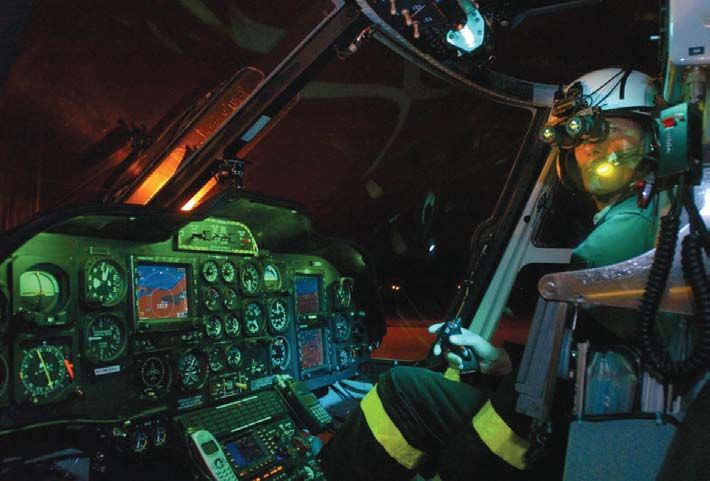
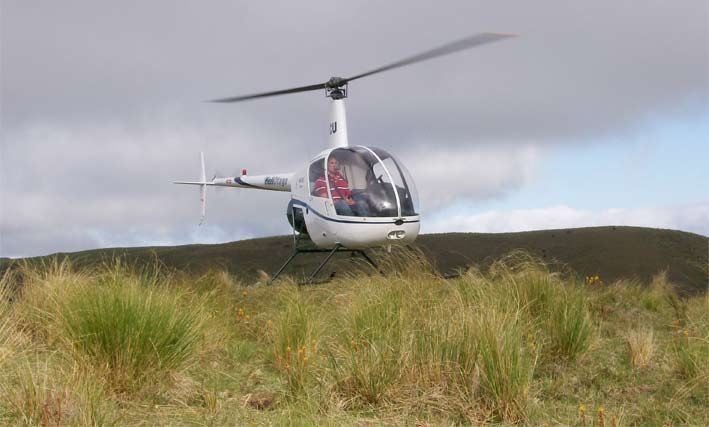
Your training will be conducted in a Robinson R22 helicopter. This is a very robust and
reliable helicopter and is maintained by one of the most competent and professional
maintenance organisations in New Zealand.

Our commitment is to maintain the highest standards of education, safety and reliability.

              Professional Helicopter Flight Training with Helicopters Otago 1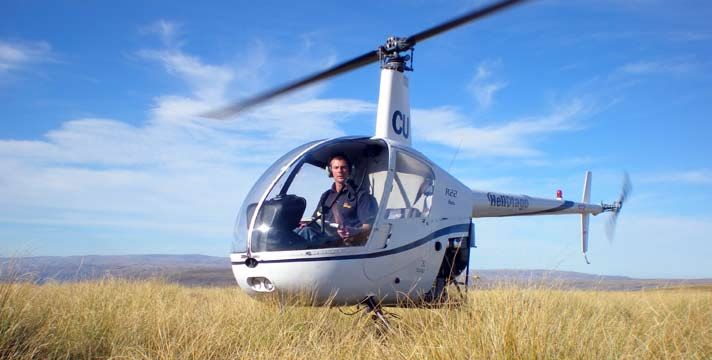
A Personal Training Programme
Flight training involves your resources of time and money. We place great emphasis on
personal and individual instruction and believe that student progress is only continuous if
you receive personalised attention. This attention also gives you a thorough understanding
of the fundamentals of flying from an early stage in your training, which is essential.

Individuals learn at varying rates depending upon their ability to receive information, prior
experience, maturity, motivation and adaptability to the environment of flying. In any
training programme that is constrained by time, or cost sensitive, it is critical to the overall
success of the student to have a training programme to suit his or her needs.

What Steps Are Involved
In Obtaining Your Licence?
Introduction Flight
We recommend that you undertake a hands on trial flight with one of our instructors. The
U-Fly Trial Flight time, flown in our Robinson R22 helicopter, counts towards your licence.
You can start your training before obtaining a pilot medical certificate but to fly solo you
will need to obtain a Class 2 Medical as the minimum requirement.

Obtaining a pilot’s medical
This is a straight forward medical examination performed by an approved doctor. We will
supply you with a list of CAA approved doctors who are situated throughout the South
Island. The first step is to obtain your Class 2 Medical which is the minimum for a Private
Pilots Licence. If you are considering a Commercial Pilots Licence we suggest you obtain a
Class 1 Medical which is the requirement for this licence.

The local Doctor is - Dr R Morton, Mosgiel Health Centre, Ph – 03 489 5135

               Professional Helicopter Flight Training with Helicopters Otago 2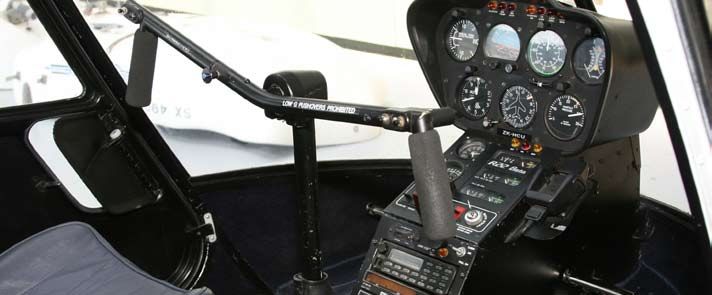
Some Commonly Asked Questions?
Do I need a fixed wing licence?
No, If you want to fly helicopters you should get as much time flying them as possible.
There are some emergency responses that contradict each other.

Why is it so expensive to fly a helicopter?
The major costs in operating a helicopter is the maintenance cost of parts and insurance.
Because of the number of moving parts, more frequent inspections are required for safety
reasons. These combined make a helicopter more expensive to operate then a fixed wing
aircraft.

How long will my training take?
As long as you like, or as short as you like. Your training programme is tailored to suit
your time and budget. If studying full-time the training may take anything from 12 to 24
months for a commercial pilots licence. If part time, it depends on your availability and
budget.

What is the difference between PPL and a CPL?
The holder of a Private Pilot Licence is able to fly themselves and friends, but is not
allowed to charge passengers. The holder of a Commercial Pilot Licence is able to be
employed as a pilot on aerial or charter work where the passengers are charged.

What makes Helicopters Otago unique?
It is the professional and friendly atmosphere that makes the difference as well as the
personal attention you will receive. We are one of the largest commercial helicopter
operators in the South Island and you as a student will benefit from learning to fly in this
commercial environment, making you a more attractive candidate for employment after
completion of your licence.

              Professional Helicopter Flight Training with Helicopters Otago 3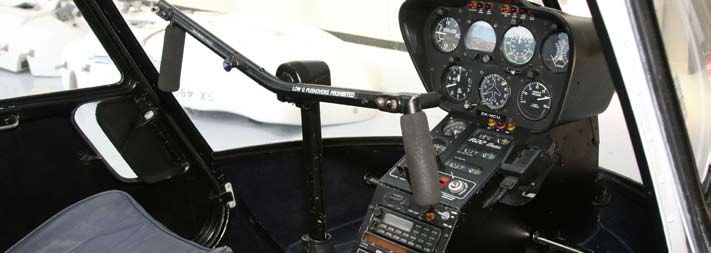
What pattern will my training follow?
You will begin your flight training with an instructor who will teach you to fly the helicopter
until you are competent to fly your own… your first solo. Each lesson begins with a power
point briefing about the exercise you are about to fly there will be a short debrief with your
instructor to answer any questions you may have.

The power point briefings are very clear in their
explanation of the lesson plan and principles of flight.
Page 1 of the Transitions briefing is displayed to the
right.

What is a cross country?
                                                           This is flying from Taieri Airport to
                                                           other South Island locations including
                                                           aerodromes and small airstrips. This
                                                           teaches you the practical application
                                                           of map reading, navigation, and radio
                                                           operation skills.

What aircraft will I train in?
The Robinson R22 has been manufactured with pilot training as one of its principle
functions of uses. This helicopter is ideal for the task as it is cost effective to both train in
and operate.

Robinson R22

               Professional Helicopter Flight Training with Helicopters Otago 4
Private Pilot Licence
“…. A current Private Pilot Licence anthorises the holder to act, but not for hire or reward,
as the pilot in command of the aircraft….”

This is an extract from the New Zealand Civil Aviation Rules.

A Private Pilot Licence is a recreational licence and is the minimum qualification required
before you may fly a helicopter to carry non fare paying passengers.

To hold a Private Pilot Licence you must be 16 years of age and hold a current Class 2
Medical Certificate. You must also have passed the 6 Private Pilot theory exams and have a
minimum of 50 hours flight time in a helicopter.

Flight Training Syllabus.

 Dual
 Lessons flown with your instructor                                                20 Hours
 Solo
 Lessons flown on your own with the instructors authorisation                      15 Hours
 Specialised exercises
 Cross Country Navigation
 This is made up of 5 hours of Dual instruction and 5 hours of Solo
 navigation                                                                        10 Hours
 Mountain Flying
 Flights to teach you the necessary skills to fly in the mountains                 5 Hours
 TOTAL                                                                             50 Hours

               Professional Helicopter Flight Training with Helicopters Otago 5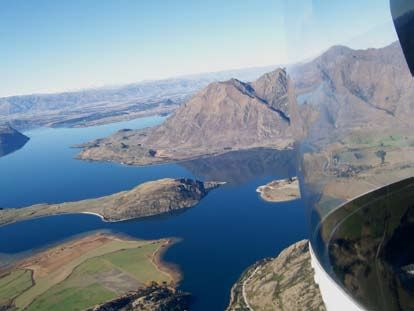
Commercial Pilots Licence
A current Commercial Pilots Licence allows the pilot to receive payment for his or her
service as a pilot.

To hold a current Commercial Pilots Licence Helicopter you must be 18 years of age, hold
a current Class 1 Medical Certificate and a Private Pilots Licence Helicopter. You must also
have passed a further 6 Commercial Pilots theory exams and have a minimum of 150 hours
helicopter flight time.

The NZ Civil Aviation Authority rules state that a pilot must have a bare minimum of 35
hours dual and 35 hours solo with a total time of 150 hours. These time requirements
are made up of the following exercises in addition to your Private Pilot times plus time
practicing the Private Pilot exercises, so that you are more accurate in your flying
techniques. Specialised exercises such as advanced cross country navigation, sling load
operations and advanced mountain flying are also required to complete your training to
achieve the professional pilot standard.

Flight Training Syllabus

 Dual
 Flights with an instructor to improve your skill level                      35 Hours
 Solo
 Flights on your own to improve your confidence and further your skill       35 Hours
 Specialised exercises
 Cross Country Navigation                                                    20 Hours
 Sling Load Operations
 Lessons Flown with a load suspended under the helicopter                    10 Hours
 Mountain Flying techniques                                                  10 Hours
 TOTAL                                                                       100 Hours
 PLUS Private Pilots Licence                                                 50 Hours
 GRAND TOTAL                                                                 150 Hours

              Professional Helicopter Flight Training with Helicopters Otago 6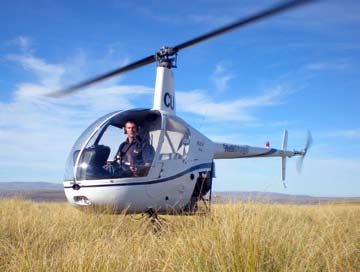
The Theory
There are six main categories of theory training in the Private Pilot and Commercial Pilot
training curriculum. For each of these categories you will be required to sit an examination
and pass the examination with a minimum of a 70% pass mark.

The PRIVATE PILOT LICENCE categories are:
• Aviation Law and Publications

• Flight Navigation

• Meteorology

• Helicopter Technical Knowledge & Performance of Flight

• Human Factors

• Flight Radio Telephone Operator

• English Language Proficiency

At the Private Pilot Licence stage the Helicopter Technical Knowledge is a combined subject
of technical knowledge and performance of flight. While for the Commercial Pilots Licence
this subject is split into two separate exams.

The COMMERCIAL PILOT LICENCE categories are:
• Aviation Law & Publication

• Flight Navigation

• Meteorology

• Helicopter Technical Knowledge

• Helicopter Performance of Flight

• Human Factors

You can study for one exam at a time or all six together, the decision is yours, but we
recommend that you do at least 5 hours flying before you begin the theory. This way you
will better understand some of the finer points described to you.

There are various options open to you to obtain the theory information. Attending full-time
or part-time classes at one of the Aviation Colleges or purchasing a series of books and
manuals on each subject and studying at your own pace. Either way our instructors are
here to answer all your questions and help you through.

The text books can be purchased through Helicopters Otago or direct from Aviation Theory
Centre - Ph (03) 548 1654 or Pilot books - www.pilotbooks.co.nz

              Professional Helicopter Flight Training with Helicopters Otago 7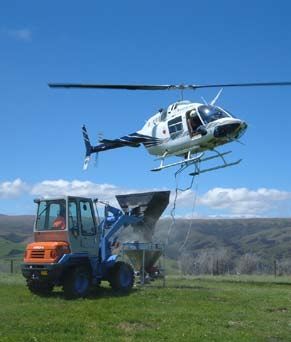
Cross Crediting Fixed Wing
                                         Experience
                                         The New Zealand Civil Aviation Authority rules
                                         state that the holder of a current PPL Aeroplane
                                         licence may credit up to a maximum of 10 hours
                                         from the past 12 months flying toward a PPL
                                         Helicopter Licence. This reduces the minimum
                                         mandatory time for a PPL Helicopter to around
                                         40 hours total time. The holder of a current CPL
                                         Aeroplane Licence operating on air transport
                                         operations may credit up to a maximum 70 hours
                                         of aeroplane time from the past 12 months to a
                                         CPL Helicopter licence.

Our Helicopters
The primary trainer is the Robinson R22, www.robinsonheli.com. This is a two seater
helicopter powered by the reliable Lycoming piston engine. Advanced design and
technology has been utilized in the manufacture of this helicopter, resulting in excellent
handling capabilities, rugged and reliable construction and optimum passenger and pilot
safety.

   Robinson R22

              Professional Helicopter Flight Training with Helicopters Otago 8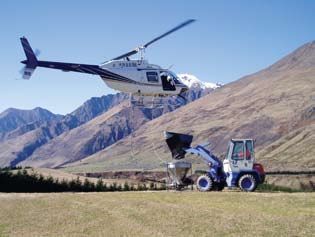
Now That You Have Your Licence…..
What Next?
You would have been taught the necessary skills to safely control the helicopter in all
phases of flight and on the ground.

It is then up to you to put these skills into practice.

Practice your new skill and build confidence by flying in a variety of conditions and
achieving new goals by flying to different places.

Once you have achieved a few extra hours as a pilot, there are many new and exciting
things to do. Learning to carry a load that is suspended under a helicopter improves
pilot’s skill. This is called sling loading and is an optional part of the Private Licence and a
compulsory part of the Commercial licence.

Learning to fly at night is an exciting and rewarding adventure. Progressing onto larger
helicopters that carry more passengers is a very satisfying experience.

Becoming an instructor is also very rewarding.

What ever is next for you there are certainly many options open, we suggest you call in
and talk to us about your licence.

               Professional Helicopter Flight Training with Helicopters Otago 9
Gas Turbine Rating
This is another addition to your existing
licence and is the rating required to pilot
larger helicopters that carry more passengers.
You will be taught to operate a larger
helicopter which is powered by a Gas Turbine
Engine.
The first step toward this rating is to attend a
Basic Gas Turbine Course and pass the theory
examination. This can be a formal classroom/
lecture situation a computer based course or
self studied.
It is preferable that you have a few more hours helicopter experience than just the basic
Private Pilot hours before progressing into these larger helicopters.
As a general rule of thumb you will be required to spend approximately 5 hours being
taught how to start and shut down the turbine engine as well as the skills involved to pilot
a larger helicopter type.
We would be only too pleased to quote you these prices on request.
Helicopter Instructors Rating
This rating allows you to teach people to fly.
To qualify to become an instructor you must accumulate a total of 200 hours of helicopter flying. You must also
have a minimum of 150 hours as the Pilot in Command of a helicopter. These are all the bare minimums required
by the New Zealand Civil Aviation Authority.
The training consists of 25 hours of dual instruction by an ‘A’ or ‘B’ Category Instructor which will teach you the
skills necessary to pass the knowledge of how to fly a helicopter onto a student. You are required to know the theory
subjects of Helicopter Performance of Flight and Technical knowledge in depth because you will be instructing the
students in these theory subjects. A mandatory requirement of attending an Instructional Techniques Course will
complete your education as an instructor. Once all this has been completed and the instructor is confident you will
pass the flight test you are eligible to sit your ‘C’ Category Instructors Rating.
This rating is a considerable way down the track and requires you to have a reasonable
amount of experience before you undertake this. We recommend that you come and talk to
us at length before you undertake your Instructors Rating.
Professional Helicopter Flight Training with Helicopters Otago 10Night Flying
Night flying is an exciting and rewarding extension of your licence and pilot skills. It is a
reasonably demanding skill which is added as a rating to your existing licence.
A syllabus and requirement of the minimum hours has been set out by the NZ Civil
Aviation Authority.
The night rating is split into two categories. Firstly, a rating to fly a helicopter within 25
nautical miles of an airport with suitable lighting, and secondly beyond 25 nautical miles of
an airport with lights. To fly beyond the 25 nautical mile limitation you will be required to
complete several cross country flights at night to other airports. You will also be taught to
fly the helicopter by using the basic instruments that are in the helicopter. This is not an
instrument rating but is a safety procedure only
Private Pilot Requirements Commercial Pilot Requirements
Within 25nm of a lit airport Within 25nm of a lit airport
Instrument Flying 2 Hours Instrument Flying 2 Hours
Dual Night Flying 3 Hours Dual Night Flying 5 Hours
Solo Night Flying 2 Hours Solo Night Flying 5 Hours
Beyond 25nm of a lit airport Beyond 25nm of a lit airport
Instrument Flying 5 Hours Instrument Flying 10 Hours
Dual Night Flying 5 Hours Dual Night Flying 5 Hours
Solo Night Flying 2 Hours Solo Night Flying 2 Hours
Cross Country Night Flying 3 Hours Cross Country Night Flying 3 Hours
Professional Helicopter Flight Training with Helicopters Otago 11Call in and talk to us… You’re always welcome Taieri Airfield Mosgiel, New Zealand P.O. Box 88 Mosgiel New Zealand Telephone +64-3-489 7322 Fax +64-3-489 7732 Email heliotago@xtra.co.nz www.helicoptersotago.co.nz
You can also read


