Profile of BC Corrections 2021 - Province of British Columbia
←
→
Page content transcription
If your browser does not render page correctly, please read the page content below
Profile of BC Corrections
2021
By The Numbers
BC Corrections statistics.

         2,700 employees, in 10 correctional centres and
                              56 community corrections offices,
         supervising 2,400 individuals in custody and

                              21,500 in BC communities.

         Over 60% of the individuals under our supervision have been diagnosed with
                 having mental health or addictions needs.

                Indigenous people make up
         35% of the individuals we help in custody and
                                   27% in the community.

                           6% are women in custody and
         Of the people we help,

                  17% are women under community supervision.

                 The    average length of stay in custody is 65 days
         for sentenced individuals. In the community, the

                                average length of supervision is 375 days.

PR O FI LE O F B C CO R R EC TI O NS   |   2021									 PAGE 2
Table of Contents

                         9                  34            15                 32                         21
2        By The Numbers                                   9    Our Strategic Operations Team
         BC Corrections statistics.                            Ensures our information technology systems,
                                                               policies and programs are effective.
4        Leadership
         Meet the senior management team at               15 Our Community
         BC Corrections.                                     Corrections Team
                                                               Supervises individuals serving sentences in the
5       Meet the Assistant                                     community to support behavioural change.
        Deputy Minister
         Lisa Anderson is Assistant Deputy Minister for   21 Our Adult Custody Team
         BC Corrections.                                       Operates correctional ccentres to provide safe &
                                                               secure custody to incarcerated individuals.
6        Why We Exist
         Our staff want to help people get on the         32 Our Capital Team
         right path.                                           Plans & builds the spaces we need to do our work.

7        Our Mission                                      33 Our Employees Are Among
         BC Corrections values and priorities.               the Best in BC
                                                               An Award Winning Organization.
8        Who We Are
         Four divisions of dedicated teams.               34 We Are in the Business of
                                                             Helping People
                                                               Our staff are passionate about their work.

PR O FI LE O F B C CO R R EC TI O NS   |   2021									 PAGE 3
Leadership
Meet the senior management
team at BC Corrections.
Lisa Anderson
Assistant Deputy Minister

Kimberley McLean
Provincial Director
Strategic Operations

Bill Small
Provincial Director
Community Corrections

Stephanie Macpherson
Provincial Director
Adult Custody

Dave Friesen
Provincial Director
Capital Division

Jason Herasemluk
Deputy Provincial Director
Adult Custody

Matt Lang
Deputy Provincial Director
Adult Custody
                                                    B C CO R R EC TI O NS: H E AD Q UARTERS O FFI CES
Elliott Smith                                       AD D R ESS: 7 T H FLO O R , 1001 D O UGL A S STR EE T, VI C TO R IA , B C
Deputy Provincial Director                          PH O N E: (250) 387- 6366
Adult Custody

Simon Glen
Deputy Provincial Director
Community Corrections

Amy Lapsley
Director                                            PR O FI LE O F B C CO R R EC TI O NS | 2021
Strategic Communications & Information Management
                                                    CO PYR I GH T © 2021, PR OVI N CE O F B R I TISH CO LU M B IA .
                                                    ALL R I GH T S R ESERVED. TH IS M ATER IAL IS OWN ED BY TH E
Ryan Day
                                                    GOVER N M EN T O F B C AN D PR OTEC TED BY CO PYR I GH T L AW. I T
Director                                            M AY N OT B E R EPR O DU CED O R R ED ISTR I BU TED WI TH O U T TH E
Budgets & Financial Planning                        PR I O R WR I T TEN PER M ISSI O N O F TH E PR OVI N CE O F B C.

PR O FI LE O F B C CO R R EC TI O NS   |   2021									 PAGE 4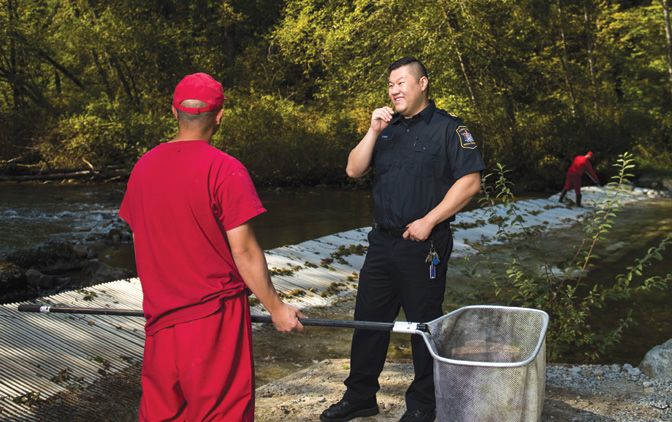
Meet the Assistant                                 Colleagues and friends,

                                                   We created this resource to share who we are at BC

Deputy Minister                                    Corrections, what we do, and why we do it.

                                                   At the heart of everything we do is the belief that
Lisa Anderson is Assistant Deputy                  people can change and by supporting adults
                                                   under our supervision we protect communities.
Minister for BC Corrections.
                                                   Our teams in correctional centres, community
                                                   corrections offices, and at headquarters are deeply
                                                   driven to care for and help others. Ask them why
                                                   they work in corrections and they will answer, “I
                                                   want to make a difference in people's lives.”

                                                   To give people the best chance at success, we are
                                                   on a steady path to shifting our practices and the
                                                   ways we work with people who come in contact
                                                   with BC Corrections. The individuals under our
                                                   care and supervision in correctional centres and
                                                   communities are increasingly complex. Many have
                                                   experienced significant trauma and violence and
                                                   are living with addiction and mental health needs.

                                                  “At the heart of everything
                                                   we do is the belief that people
She is responsible for the provi-                  can change.”
sion of safe and secure custody                    In response, we are embracing new approaches
                                                   for supporting our staff, modernizing correctional
of individuals awaiting trial and                  supervision, addressing the over-representation
                                                   of Indigenous people in the justice system, and
for those serving sentences less                   supporting individuals with complex needs.
than two years in 10 correctional                  Our commitment to improving outcomes for the
centres across BC. She is also                     individuals we work with will not waiver.

accountable for the operation                      This is an inspiring time at BC Corrections, driven
                                                   by compassion, new ideas and action. Thank you
of 56 community corrections                        for taking the time to learn more about us.
offices that supervise individuals                 Lisa Anderson
serving community sentences                        Assistant Deputy Minister
                                                   BC Corrections
such as bail, probation or
conditional sentence orders.
PR O FI LE O F B C CO R R EC TI O NS   |   2021									 PAGE 5
Why We Exist
Our staff want to help people get on the right path.

One of the most important questions we like to ask        Our teams in probation offices and correctional centres
our staff is, “What is your why?”. We want to know why    help individuals gain education and work skills, access
they choose their career and what brings them to work     culturally appropriate services, plan for their future
each day because their purpose is important. Our staff    success and ensure court-ordered conditions are being
want to make a difference in people’s lives, and we are   followed for those serving a sentence in the community.
deeply committed to helping people improve their lives
through changing their thinking and behaviour.            We also deliver programs for individuals who need
                                                          support with substance use disorders, violence and
We safely support people 18 years or older who            relationship violence, and essential life skills.
are in provincial custody or serving sentences in
the community and help them learn better ways of
responding to the world around them. We are shifting
correctional practice in BC, and the ways we supervise
and work with individuals who come in contact with the
justice system.

PR O FI LE O F B C CO R R EC TI O NS   |   2021									 PAGE 6
Our Mission
BC Corrections values and priorities.

                                       WE BELIEVE PEOPLE C AN CHANGE AND BY SUPPORTING ADULTS UNDER OUR
     Mission                           SUPERVISION, WE PROTEC T COMMUNITIES.

                                       COUR AGE | PASSION | TEAMWORK | SERVICE
     Values                            ACCOUNTABILIT Y | CURIOSIT Y | INTEGRIT Y

     Priorities
                                       »       SAFETY FIRST: Enhance our practices, policies, technology and facilities.
                                       »       TAKE IT TO THE NEXT LEVEL: Enhance training to deliver exceptional
                                               correctional services.
                                       »       ATTRACT AND RETAIN: Implement strategies to find and keep talented, caring and
      SUPPORT                                  passionate people.
      OUR STAFF                        »       DEVELOP LEADERS: Provide tools and training to empower, support, and motivate staff.
                                       »       HARNESS IDEAS: Engage with, listen to, and enable staff to use their expertise in
                                               correctional supervision.
                                       »       BE MINDFUL: Foster a respectful culture that supports individual and
                                               organizational health.

                                       »       LEAD BY EXAMPLE: Treat individuals under supervision with compassion,
                                               respect and dignity.
      ADVANCE
      CORRECTIONAL                     »       EVERYONE HAS A PAST: Weave trauma-informed practices through our work.
      SUPERVISION                      »       RESPECT OUR DIFFERENCES: Ensure interactions & programs are culturally appropriate.
                                       »       STAY WITH IT: Adopt and adapt interventions and technology to create better outcomes.

                                       »       HISTORY MATTERS: Inform staff about the lasting impacts of colonization on
      ADDRESS                                  Indigenous people.
      INDIGENOUS
                                       »       UNDERSTAND OUR DIFFERENCES: Incorporate cultural awareness in our work.
      OVER -
      REPRESENTATION                   »       SUPPORT HEALING: Provide culturally appropriate programs and holistic services.
                                       »       WE ALL HAVE A ROLE: Engage Indigenous communities and justice partners.

                                       »       IT’S COMPLICATED: Recognize and respond appropriately to people with complex
                                               needs and people in crisis.
      SUPPORT                          »       OVER 60% DIAGNOSED: Partner broadly to improve outcomes for people with mental
      INDIVIDUALS                              health and/or addiction’s needs.
      WITH COMPLEX                     »       SEGREGATION AS A LAST RESORT: Implement changes to promote safety and ensure
      NEEDS                                    humane conditions.
                                       »       PLAN TO SUCCEED: Enhance release planning practices to support successful
                                               community reintegration.

PR O FI LE O F B C CO R R EC TI O NS       |   2021									 PAGE 7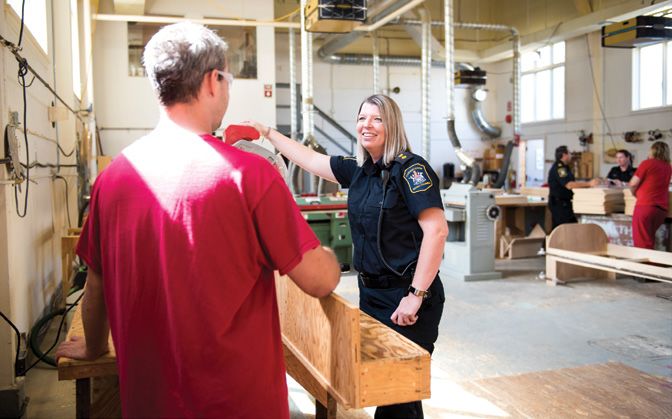
Who We Are
Four divisions of dedicated teams.

Our dedicated team of 2,700 staff work in four divisions     »   Adult Custody – Operates correctional centres
and use evidence-based and trauma-informed                       to provide care and safe and secure custody to
approaches to change behaviour:                                  incarcerated individuals awaiting trial or serving a
                                                                 sentence of less than two years.
»     Strategic Operations – Provides support to the
      operational divisions to achieve their respective      »   Capital Division – Plans and builds the spaces we
      strategic direction and ensures our information            need to do our work.
      technology systems, policies and programs are as       Additionally, two teams within the assistant deputy
      effective as possible.                                 minister's office support corporate administration and
»     Community Corrections – Supervises and offers          management of communications, privacy and finance.
      programs to individuals on bail or serving sentences
      in the community to support behavioural change
      and reduce re-offending.

PR O FI LE O F B C CO R R EC TI O NS   |   2021									 PAGE 8
Our Strategic Operations Team
Ensures our information technology systems, policies and programs
are effective.

This division supports the operational divisions to          Policy and program analysts regularly consult with staff
enhance pubic safety by ensuring the right research,         throughout our organization, jurisdictional partners
programs, policy, legislation and technology are in place    and stakeholders to identify approaches that are fully
to best support correctional staff in their work with the    informed and aligned with our overall strategic direction
people in custody and the clients in the community.          and core priorities.
This team ensures BC Corrections provides culturally
appropriate and trauma informed programs and services        The division also develops programs for delivery in
rooted in research and best practices.                       communities and correctional centres to reduce the
                                                             factors that contribute to crime and enhance public safety.
Our Strategic Operations staff stay curious. When
analysing, creating and evaluating policy, programs          These programs include:
and leading-edge technologies, they rely on research
and evidence to guide the development of correctional        »   Cognitive behavioural programs that use systematic
practices and procedures.                                        and goal-oriented teaching methods, help people
                                                                 improve their coping skills, learn how attitudes
POLICY, PROGRAMS AND INTERVENTIONS                               lead to behaviour and develop more positive
The Strategic Operations team supports the develop-              ways of thinking and reacting to the world around
ment, analysis and evaluation of BC Corrections’ policies,       them. Examples include intimate partner violence
programs and procedures. This includes drafting                  and treatment for sexually motivated offenses for
legislation, regulations and service delivery standards to       individuals in custody and the community.
support our work.

PR O FI LE O F B C CO R R EC TI O NS   |   2021									 PAGE 9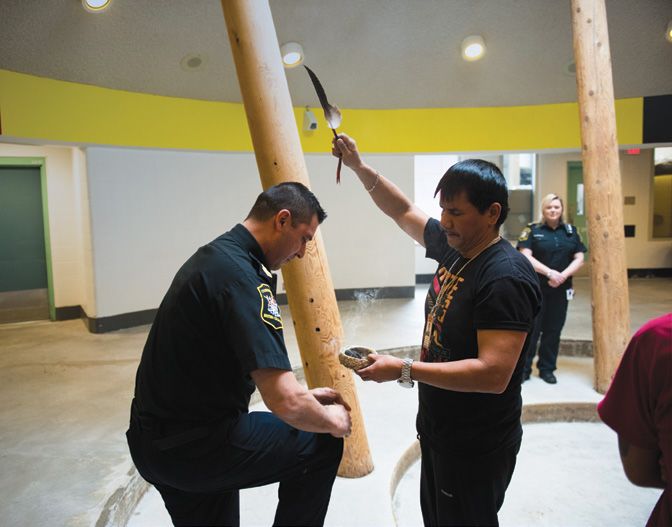
»     Workshops for individuals in custody that help with              We are evolving and learning even more about the
      employability and living skills.                                 complex people in our care in order to create a more
                                                                       seamless support system with better outcomes, improved
»     Intervention to help individuals overcome obstacles
                                                                       access to services and an enhanced continuity of care for
      to improve their mental health, low literacy, lack of
                                                                       this vulnerable population with complex needs.
      social skills and address their addictions.

»     Educational and vocational courses to give individ-              We are establishing a coordinated framework for mental
      uals the foundation they need for a better life.                 health and substance use services and programs to
                                                                       improve outcomes for individuals with complex needs.
BC Corrections refines and expands these programs
through continuous research and evaluation.                            The framework will align our work with other provincial
                                                                       strategies focused on mental health and addictions,
The Strategic Operations team is also responsible for:
                                                                       and help us identify available resources, find gaps and
                                                                       opportunities for improvements, establish priorities and
»     Supporting the Integrated Transitional and Release
                                                                       measure our progress.
      Planning program, where operational staff work
      with high risk individuals while they are in custody
                                                                       Through this work, we are partnering broadly with
      to develop plans for their successful reintegration
                                                                       cross-government working groups, individuals with
      into the community after their release from custody;
                                                                       lived experience and community-based partners to
»     Supporting the operational divisions in their efforts            better understand our shared challenges and strengthen
      to help individuals with complex needs to achieve                working relationships.
      better outcomes and improve access to services
      and continuity of care;                                          TRAUMA INFORMED PRACTICE
                                                                       Many of the individuals in our care have personal and
»     Ongoing professional development activities
                                                                       intergenerational histories of violence and trauma. Trauma-
      and training;
                                                                       informed practice reframes the perspective of “what is
»     Guiding our work to enhance the effectiveness of                 wrong” with an individual to “what happened” to them.
      programs and services for Indigenous people and
      be more responsive to their needs; and                           Our Trauma Informed Practice Guide team, comprised
                                                                       of representatives from the Strategic Operations,
»     Researching ways we can enhance our use and                      Community Corrections and Adult Custody divisions,
      awareness of trauma informed practice in all                     focuses on the ways we can enhance our use and
      aspects of our work with the individuals in our care.
                                                                       awareness of trauma informed practice.

MENTAL HEALTH AND SUBSTANCE USE PLAN                                   Approaching our work with this awareness emphasizes
Over 60% of the individuals under our supervision in                   physical, psychological, and emotional safety, and
correctional centres and communities in BC have been                   creates opportunities for individuals to rebuild a sense of
diagnosed with mental health and/or addictions needs.                  positive self control and empowerment.

                                                               % OF COMMUNIT Y                      % OF ADULT
    DIAGNOSIS
                                                              CLIENT POPUL ATION                CUSTODY POPUL ATION

    Mental health or substance use disorder                          63%                                   69%

    Both mental health and substance
                                                                     31%                                   42%
    use disorder

PR O FI LE O F B C CO R R EC TI O NS   |   2021									 PAGE 10
The four principles of trauma informed practice that Our Indigenous Programs and Relationships section
are being introduced into all aspects of our work are: was created in 2008 to guide us into building and
strengthening relationships with Indigenous people,
» Realize the widespread impact of trauma; understanding the value of culture and its role in
healing, and learning new ways to meet the needs of
» Recognize the signs and symptoms of trauma; Indigenous clients. This team collaborates with staff
» Respond by fully integrating and collaborating; and across BC, other jurisdictions, and Indigenous partners
to help us implement culturally appropriate initiatives
» Resist re-traumatization. in justice, education and health.
In 2016, BC Corrections intensified our efforts in
INDIGENOUS PROGRAMS
new ways. The first step toward reconciliation is
AND RELATIONSHIPS
understanding the truths about our history. We are
BC Corrections is deeply committed to addressing the
committed to providing our staff with opportunities
over-representation of Indigenous people in the justice
to learn about the lasting impacts of colonization and
system, transforming our organization and healing
building relationships. To date, we have held three
broken relationships.
cultural training events for nearly 400 front-line staff
and justice partners:
Indigenous people comprise nearly 6% of BC’s adult
population, and yet they represent 35% of the people
in adult custody and 27% of people under supervision
» Letsemot (2016):
One heart, one mind;
with community corrections.
» Èy te Sqwalewal (2017):
Filled with goodness and good feelings; and
» Yeqwethet (2019):
To heal or free yourself.
These gatherings were immersive learning experiences,
guided by the teachings and support of Sts’ailes Elders
and knowledge keepers, that provided new awareness
AB OVE: I N D I GEN O US PR O GR A MS AN D R EL ATI O NSH I PS - and an understanding of the systemic challenges
I N CLUSIVI T Y LO GO Indigenous people face. For example, participants who
attended Èy te Sqwalewal and Yeqwethet visited the
We envision a justice system that respects all cultures, Kwikwèxwelhp Healing Village and Longhouse located
responds to the needs of Indigenous people and their in a facility run by the Correctional Service of Canada
communities and implements justice initiatives that are near Qwolts (Harrison Hot Springs), BC.
based on culture and led by Indigenous communities.
SERVICES FOR INDIGENOUS CLIENTS
For more than a decade, we have been working to We are listening to our Indigenous partners and are
understand and truly address the many complex learning from them how we can create services and
factors that contribute to the over-representation of programs that meet the needs of Indigenous people.
Indigenous people in the justice system, including the Correctional centres in BC now have dedicated spaces
impacts of colonization and intergenerational trauma for sweat lodges, smudges, healing ceremonies and
from residential schools because we know the first step talking circles. Program offerings at each centre may
to reconciliation is understanding our history. also include traditional singing and drumming, National
Indigenous People's Day celebrations, traditional craft
making, art programs and traditional cooking.
PR O FI LE O F B C CO R R EC TI O NS | 2021 PAGE 11“I have been participating in the Indigenous Cultural Liaisons and Elders in all of BC’s
correctional centres provide culturally informed
available Indigenous activities support, individual and group counselling, crisis
intervention and connect Indigenous individuals
for several months now. As with groups that help them reintegrate into
inmates we deal with stress their communities. Elders and spiritual advisors
also deliver cultural awareness programming to
and difficulty. Activities such individuals from other ethnicities to help foster peace
and understanding.
as smudging and medicine bag
BC Corrections contracts with the Native Courtworker
making are an opportunity to and Counselling Association of British Columbia
embrace our spirituality and to (NCCABC) to help Indigenous people involved in the
justice system receive fair, equitable and culturally
be in an environment of peace sensitive treatment as they navigate the justice system.
The NCCABC staff help individuals with timely and
and respect.” accurate information about charges, their rights, court
– I N D IVI DUAL AT N O RTH FR A SER PR E TR IAL CEN TR E
procedures, and alternative justice processes.
PR O FI LE O F B C CO R R EC TI O NS | 2021 PAGE 12In 27 communities Indigenous Justice Program RESEARCH AND EVALUATION
workers provide culture-based services that range The performance, research and evaluation (PREv) unit
from court diversion, client support and supervision, uses an evidence-based approach to develop, implement
community reintegration planning and support, and evaluate BC Corrections’ programs. The PREv unit
and co-facilitate evidence-based programs in the combines empirical research with tested best practices to
community that address addictions and intimate support the work that happens across our organization
partner violence in a culturally relevant and safe way. every day. Team members use their expertise to analyze
data and examine trends to inform our practices, inves-
We contract with 34 Indigenous organizations and tigate the effectiveness of correctional programs and
communities to deliver substance abuse manage- interventions, help evaluate and provide key performance
ment and relationship violence programs to BC indicators for cross-ministry initiatives, and consult and
Corrections’ clients in the community to enhance collaborate with our federal counterparts and academics.
the cultural relevancy of our programming. Our
Indigenous justice partners are trained in these INFORMATION TECHNOLOGY SUPPORT
programs to support community-based initiatives. AND DEVELOPMENT
Our operations run 24-hours a day, seven days a week and
This enhances our programming and complements there is a significant amount of technology that is critical
the supports and services offered by Indigenous to supporting our work and ensuring public safety. To
Cultural Liaisons within our correctional centres. support our operations, we build, operate and maintain
this technology in collaboration with other justice and law
enforcement agencies, and government ministries.
PR O FI LE O F B C CO R R EC TI O NS | 2021 PAGE 13Following provincial privacy requirements, BC The long-term investment in these technologies and
Corrections' technology stores critical information related services helps keep victims, the public, our staff
about the individuals we supervise, which helps us and the individuals under our supervision safe by ensuring
make informed decisions about the strategies we use, staff have the tools they need.
measure our effectiveness, protect vulnerable people
and assess risk. It also lets us prepare compelling OUR TECHNOLOGY
reports that explain and enhance our correctional Biometrics capture an individual’s fingerprints when
practices, security and programs. they are admitted to a correctional centre. Individuals
must verify their biometric identity any time they enter
Our Operations Support Unit (OSU) manages or leave a centre.
operational information systems for three provincial
ministries responsible for adult and youth corrections, Using their biometric fingerprint as identification,
sheriffs and victim services. individuals can use self-serve applications that let them
see information about their trust accounts, key dates,
There are approximately 6,000 internal and external court-ordered conditions, visit schedules, and submit
justice agency personnel who use our systems to confidential requests to health care.
manage an average of more than 16,400 admissions of
adults into the provincial correctional system each year.
BC Corrections also uses electronic supervision with
GPS-enabled ankle bracelets to monitor clients in the
community when such supervision is ordered by the
courts. Our 24/7 central monitoring unit is alerted
when curfew, house arrest or ‘no go’ area restrictions
are violated.
PR O FI LE O F B C CO R R EC TI O NS | 2021 PAGE 14Our Community Corrections Team
Supervises individuals serving sentences in the community to support
behavioural change.
On any given day, there are 21,500 individuals under » Bail – Requires an individual accused of a criminal
court-ordered supervision in communities throughout offence to abide by conditions while they remain in
the province. Community Corrections staff are motivated the community until they appear in court to address
and resilient in their efforts to lead change with their their charges.
clients every day.
» Probation – Imposes a sentence or part of a
Probation officers at 56 Community Corrections offices sentence to be served in the community for a
across BC seek better outcomes for everyone, by specified period of time, with conditions and under
ensuring individuals are following their court orders the supervision of a probation officer.
and working closely with them to connect them with » Conditional Sentences – A sentence with a
supports in the community, change their behaviour and maximum length of two years less a day, served in
reduce reoffending. the community rather than in custody and super-
vised by a probation officer.
WHY IS SOMEONE UNDER SUPERVISION?
Individuals come under community supervision for a » Section 810 Recognizance – Under section 810
variety of reasons, such as being convicted of intimate of the Criminal Code of Canada, the court may order
partner violence (24%), sexually motivated offences a recognizance (commonly referred to as a peace
(10%), both (2%) and general offences (64%) which can bond) for a period no more than 24 months when
include personal harm offences, property offences and there is a perceived threat of harm to the safety of
administrative offences. Sentences can be as long as a community or person. No convictions or charges
three years; however, the average is 375 days. need to be laid.
In BC, the courts determine if an individual is placed
» Alternative Measures – An alternative to court
that provides an opportunity for people charged
under community supervision, including the conditions
with less serious offences to be diverted out of the
they must follow. This can occur through different types
court system.
of court orders or alternative measures:
PR O FI LE O F B C CO R R EC TI O NS | 2021 PAGE 15HOW WE HELP PEOPLE CHANGE » Risk – An individual should receive a level of service
Our probation officers use case management strategies that matches their risk.
and interventions that have been proven through
research to reduce re-offending. They lead by example » Need – An individual should receive a level
and use communication skills, problem-solving strategies of service that addresses the cause of their
and risk assessment techniques to help individuals learn criminal behaviour.
better ways of responding to the world around them. » Responsivity – The kinds of support an individual
receives should work with their motivations,
As peace officers and officers of the court, probation strengths and abilities.
officers receive extensive training focused on the legal
system, report writing, case management, Indigenous
justice and program facilitation to support clients under The strategies a probation officer might use include:
supervision in the community.
» Balancing supervising and enforcing court orders
Probation staff in BC are trained in Strategic Community with helping individuals to make positive changes
Supervision (SCS), an internationally recognized in their lives;
approach to community supervision shown to reduce
recidivism by nearly 40%. Using Strategic Community
» Applying the appropriate level of support and
programming to individuals assessed as medium to
Supervision, probation officers lead by example, build
high risk to reoffend;
rapport with the individuals they supervise, challenge
thinking errors and reinforce positive behaviours that » Identifying any needs that must be addressed to
influence change and reduce the risk someone might reduce reoffending; and
pose in the community.
» Matching individuals with methods that work with
Probation officers develop collaborative relationships their personal characteristics and learning styles.
with the people they supervise. All our case manage-
ment practices are based on the evidence that they
Probation staff are also trained to be aware of the
change attitudes and behaviour and reduce reoffending.
trauma many individuals may have experienced in their
lives, and strive to provide services that are welcoming,
At the heart of case management in Community
appropriate and feel safe.
Corrections is a set of important principles known as
risk-need-responsivity:
PR O FI LE O F B C CO R R EC TI O NS | 2021 PAGE 16COMMUNITY CORRECTIONS PROGRAMS THAT CHANGE LIVES Individuals serving a sentence in the community may be enrolled in one or more of BC Corrections’ cognitive behavioural programs that are proven to reduce criminal behaviour. Using systematic and goal-oriented teaching methods, probation officers deliver programs that help people improve their coping skills, learn how attitudes lead to behaviour and develop more positive ways of thinking and reacting to the world around them. These programs help change an individual’s thinking and behaviour by targeting the underlying issues that led to their criminal behaviours, such as addic- tions, violence, intimate relationship problems and emotional challenges. LIVING WITHOUT VIOLENCE PROGR AM Helps individuals recognize the source of their anger, improve their communications skills and learn respectful, non-violent problem solving. This program has been shown to reduce the likelihood of violent recidivism for men in the community by as much as 31% one year after its completion. REL ATIONSHIP VIOLENCE PREVENTION PROGR AM Helps individuals identify abusive behaviour, under- stand its harmful impact and learn how to avoid it in relationships. An evaluation of the community program (in 2019) found it reduced general reoffending by 27% with a two-year follow-up. A cultural edition of the program is delivered in Lower Mainland communities by contracted therapists in a variety of languages such as Cantonese, Punjabi and Farsi. BC Corrections contracts with 34 Indigenous organ- izations and communities to deliver this program to our clients to enhance the cultural relevancy of our programming. Additionally, 175 Indigenous justice partners are trained in this program to support community-based initiatives. PR O FI LE O F B C CO R R EC TI O NS | 2021 PAGE 17
TREATMENT AND MAINTENANCE PROGR AMS FOR                      OUR PARTNERS
SEXUALLY MOTIVATED OFFENCES                                  Integrated service delivery is part of our culture.
The initial treatment program is delivered by Forensic       Community Corrections works with many other govern-
Psychiatric Services and the follow-up maintenance           ment agencies and public safety partners to meet the
program is delivered by probation officers to manage         needs of the people we supervise and improve the
individuals who have been charged with a sexually            overall effectiveness of the justice system. Some of our
motivated offence and help them retain what they learn       partnerships include:
during treatment.
                                                             »   Vancouver’s Downtown Community Court:
SUBSTANCE ABUSE MANAGEMENT PROGR AM                              Opened in 2008 to manage individuals in down-
Uses practical strategies to reduce the negative conse-          town Vancouver with an integrated response to
quences of substance abuse, ranging from safer use, to           their legal, social and health care needs. The court is
managed use, to abstinence. This program has been                a partnership of justice, social and health agencies
found to reduce recidivism among people serving                  and the provincial court judiciary, with help from
a community sentence by 25% and by 30% among                     local community and business organizations. These
Indigenous individuals serving a community sentence.             partners work together to address the root causes
                                                                 of street crime, such as addiction, homelessness and
THINKING LEADS 2 CHANGE PROGR AM                                 poverty. They treat the whole individual, not just the
This is our newest program for medium and high-risk              person’s offence. An evaluation in 2013 found this
women to explore the roots of their thoughts, beliefs and        court reduced recidivism for a sub-group of individ-
emotions that led to their anti-social or criminal behav-        uals. Participants had almost twice the reduction of
iours. Using a trauma-informed approach, participants            offences compared to similar individuals.
add to their existing skills base while learning new or
advanced strategies to increase their competence in areas    »   The Drug Treatment Court of Vancouver:
such as conflict resolution, problem-solving, self-regula-       Open since 2001, this court provides integrated
tion, effective communication and boundary setting.              correctional interventions, justice services and
                                                                 health treatment services to prevent people
By understanding and learning skills to manage                   with addictions on the Downtown Eastside from
or overcome their problems, individuals can make                 reoffending. An evaluation done by Simon Fraser
better life choices and be more positive members of              University found that drug-related recidivism was
their communities.                                               reduced by 50% over a two-year period.

PR O FI LE O F B C CO R R EC TI O NS   |   2021									 PAGE 18
» Vancouver Integrated Supervision Unit: We also work closely with our colleagues in BC’s 10
A specialized team of probation officers and mental correctional centres. Incarcerated people transitioning
health professionals who provide intensive super- to the community may face a lot of challenges, such as
vision and interventions on the Downtown Eastside having no money, job or place to live.
to prevent individuals with mental health needs
from being admitted to hospitals and jails. Through the Integrated Transitional and Release Planning
program, Community Corrections and Adult Custody
» Integrated Community Outreach Team staff work together to connect individuals who are at
(Victoria, Surrey, Langley and Prince George): high-risk for reoffending with community resources
Inter-agency, coordinated teams that enhance upon their release from custody.
community safety and work together to improve
individuals’ access to housing, financial support, life Collectively, we work together to develop a case plan
skills, and mental health and addictions services. to help them live crime-free in the community. This
Depending on the community, team members may program has been shown to reduce reoffending by 49%
include a probation officer, mental health social for women and 43% for men, when using a three-
worker, mental health outreach worker, psychiatric month follow-up.
nurse, income assistance worker and a police officer.
» High-Risk Recognizance Advisory Committee: Housing is a basic need and foundational to begin
A coordinated approach by justice agencies to transitioning to living as a contributing member of the
obtain court supervision orders for individuals when community. In cases where an individual is homeless or
they are released from federal or provincial custody at risk of homelessness when they leave a correctional
at the end of their sentence and continue to pose a centre, the Integrated Transitional and Release Planning
high risk to reoffend. and Homelessness Intervention Project team works
together to find housing. The team also links individuals
» Indigenous Justice Partners: with mental health and addictions services and a
Trained Indigenous justice workers partner with community outreach worker who will follow up and
probation officers to co-facilitate addictions and help the individual as needed.
intimate partner violence programs.
PR O FI LE O F B C CO R R EC TI O NS | 2021 PAGE 19CREATING RESPECTFUL FUTURES Through a partnership with Stroh Health Care and the Ministry of Education, we led the development of Respectful Futures, a six-module learning resource for youth 12 to 18 years old in schools and the community that reinforces a better understanding of healthy and respectful relationships. Respectful Futures was modeled on Respectful Relationships, a BC Corrections program offered to men convicted of assault that has been found to reduce intimate partner violence recidivism. Many of the men who have completed Respectful Relationships have told us that they strongly believe they would not have been abusive if they had been given the tools for respectful relationships when they were younger and still in school. Developing resources for schools and community organizations based on Respectful Relationships concepts has the potential to provide youth with the tools needed to develop healthy and respectful relationships and to improve outcomes for them and their future relationships. The materials were developed from a gender-neutral perspective and in a form relevant to relationships of all kinds: friendships, romantic, family and community. Get the free Respectful Futures facilitation guide for educators, a mindful handbook, six modules and video clips online at: www.surreyschools.ca/respectfulfutures PR O FI LE O F B C CO R R EC TI O NS | 2021 PAGE 20
Our Adult Custody Team
Operates correctional ccentres to provide safe & secure custody to
incarcerated individuals.

Our Adult Custody division is adopting new ways of         People can be sentenced to custody for a variety of
supporting individuals in custody through innovative       reasons, such as domestic violence, sexual offences and
approaches and correctional practices founded in           general offences which include crimes against people,
building relationships that support people’s unique        crimes against property and administrative offences.
needs and set them up for success on release.
                                                                                             Administration of Justice:
Our staff believe people generally want to succeed,
                                                                                             9%
but their histories are complex. We recognize that
many of the people in custody have experienced
                                                                                             Crimes Against Property:
significant trauma. Accepting people where they are
                                                                                             28%
at and recognizing their past does not have to define
them allows us to understand their needs and support
                                                                                             Crimes Against the Person:
meaningful change. Breaking the cycle of reoffending
                                                                                             39%
creates positive life changes for these individuals, and
keeps communities safe.
                                                                                             Criminal Code Traffic:
                                                                                             3%
With more than 1,900 staff across BC, this division
operates 10 correctional centres that house people who                                       Federal Statute:
are awaiting trial, serving a custodial sentence of less                                     7%
than two years, or being detained by the Canada Border
Services Agency (CBSA). Of those individuals:                                                Other:
                                                                                             14%
»     63% are awaiting trial;
                                                           SO U RCE: GOVER N M EN T O F B R I TISH CO LU M B IA:
»     36% are sentenced; and                               B C CO R R EC TI O NS (2019). CO R N E T: CO GN OS BUSI N ESS
                                                           I N TELLI GEN CE SYSTEM , [CO M M U N I T Y C A SELOAD I NVEN TO RY
»    1% are detained by CBSA.                              AN D I NSTI T U TI O NAL I NVEN TO RY ] E X TR AC TED J U LY 2019.

PR O FI LE O F B C CO R R EC TI O NS   |   2021									 PAGE 21
The majority of Adult Custody’s staff are correctional officers
who support individuals through mentoring (providing
education and skills-based training), and supporting their
daily needs. Correctional officers also facilitate the delivery
of a variety of cognitive based programs. They are skilled
communicators with training in conflict resolution, case
management and crisis intervention.
WHERE WE WORK
BC’s 10 correctional centres located throughout the
province house individuals at secure, medium, and open
classification levels.
FORD MOUNTAIN CORRECTIONAL CENTRE
Year built: 1981. Custody type: Medium, open.
» Secure classification: Capacity: 94 cells. Location: Chilliwack, BC
Individuals whose risk assessments based on
prior criminal history and/or institutional behavior
deem them to require a higher level of supervision
supported by structure and physical restrictions.
» Medium classification:
Individuals who do not meet the definition of secure
custody based on a risk assessment but require a
level of supervision and structure that includes only
the necessary physical restrictions to manage their
movements and behaviour based on prior criminal
history and/or institutional behaviour.
» Open Classification:
Individuals who require only a minimum level of FRASER REGIONAL CORRECTIONAL CENTRE
supervision based on prior criminal history and Year built: 1990. Expanded in 2008. Custody
type: Secure, medium, open. Capacity: 304 cells.
institutional behavior. These individuals present the
Location: Maple Ridge, BC
lowest level of risk within the centre and are also a
low risk to the safety of the public.
ALOUETTE CORRECTIONAL CENTRE KAMLOOPS REGIONAL
FOR WOMEN CORRECTIONAL CENTRE
Year built: 2004. Expanded in 2008 and 2012. Year built: 1989. Expanded in 2008. Custody
Custody type: Secure, medium, open. type: Secure, medium, open. Capacity: 185 cells.
Capacity: 188 cells. Location: Maple Ridge, BC Location: Kamloops, BC
PR O FI LE O F B C CO R R EC TI O NS | 2021 PAGE 22PRINCE GEORGE REGIONAL
NANAIMO CORRECTIONAL CENTRE CORRECTIONAL CENTRE
Year built: 1953. Custody type: Medium, open. Year built: 1996, expanded in 2010. Custody
Capacity: 190 cells. Location: Nanaimo, BC type: Secure, medium, open. Capacity: 193 cells.
Location: Prince George, BC
NORTH FRASER PRETRIAL CENTRE SURREY PRETRIAL SERVICES CENTRE
Year built: 2001. Custody type: Secure. Year built: 1991, expanded in 2014. Custody type:
Capacity: 300 cells. Location: Port Coquitlam, BC Secure. Capacity: 383 cells. Location: Surrey, BC
VANCOUVER ISLAND REGIONAL
CORRECTIONAL CENTRE
OKANAGAN CORRECTIONAL CENTRE Year built: 1913, extensively renovated and
Year built: 2016. Custody type: Secure, medium, expanded in 1984. Custody type: Secure, medium.
open. Capacity: 378 cells. Location: Oliver, BC Capacity: 207 cells. Location: Victoria, BC
PR O FI LE O F B C CO R R EC TI O NS | 2021 PAGE 23WE DO OUR WORK SAFELY SUPERVISING PEOPLE AND
Nothing matters more than safety — for our staff and SUPPORTING CHANGE
for those in our care. We continually review and adapt Individuals are supervised in correctional centres in a
our practices, policies, technology and facilities to number of ways, depending on their security assess-
minimize risks. ment and the physical design of the centre.
All individuals are assessed to determine the level of As an example, high-risk individuals or those with
security they require. The assessment process: complex needs are often housed in smaller living units
with enhanced staffing while low-risk individuals may be
» Assigns individuals to a suitable correctional centre, housed in larger living units.
living unit and cell;
Our staff are well trained first responders who work in
» Provides individuals with access to appropriate highly complex situations. Correctional officers model
health care, education, behavioural programs, work positive behaviour, and treat individuals with respect,
activities, and social and recreational opportunities; dignity, compassion and care, and use motivational
» Offers opportunities for self-improvement to those interviewing skills to better support people, understand
who meet the criteria for special programs; their circumstances and change problematic behaviours.
» Gives individuals the chance to engage in They are equipped with technology that provides
community service; and support and safety to everyone — officers and individ-
uals. All centres have closed-circuit television feeds, and
» Connects them with culturally appropriate
officers carry two-way radios and personal alarms that
programs and services.
deploy help to their location.
PR O FI LE O F B C CO R R EC TI O NS | 2021 PAGE 24WE ARE SHIFTING OUR PRACTICES Another new alternative placement option is Right Living
We continually develop and adopt new approaches to Units, which bring a positive, ‘pro-social’ approach to a
support the individuals who are in our custody. Some of living unit for individuals who show they are committed
them have complex needs and have experienced significant to changing their lives. To reside on a Right Living Unit,
trauma. That can sometimes make accepting our help diffi- individuals make a public commitment to the Right
cult at times, so our correctional officers are being trained Living philosophy and must follow the community rules,
to use trauma-informed practices that emphasize physical, which include no violence, no use of non-prescribed
psychological and emotional safety for everyone. substances or weapons. Right Living is a safe and healing
environment that prepares members to maintain a
BC Corrections has also proactively reviewed both its use healthy life on the ‘outside’.
of segregation and the disciplinary process that can lead
to segregation. As part of that review, we have worked As well, health care and mental health professionals,
closely with partner agencies and stakeholders to help Indigenous Cultural Liaisons, Elders and other
inform action items that will reform segregation and lead professionals have frequent, regular interactions with
to using segregation only as a last resort. individuals on all living units.
To support that goal, we are enhancing the use of alterna- We have completed an independent and
tive placements for individuals in correctional centres comprehensive review of our practices and policies
such as Complex Needs Units, which provide intensive with respect to how and when force is used to safely
supervision in an environment better suited for individuals manage individuals who pose a threat to safety to
with unique complex needs. ensure we are meeting standards of excellence within
the correctional field.
Additional measures such as increasing time out of cells,
improving the physical environment in segregation
units, enhanced case management, and increasing “Inspiring excellence,
opportunities for more meaningful interactions with
others are all underway.
changing lives.”
PR O FI LE O F B C CO R R EC TI O NS | 2021 PAGE 25ADULT CUSTODY PROGRAMS THAT HELP Other success-building programs:
CHANGE LIVES
Our correctional officers facilitate behavioural, EDUC ATIONAL UPGR ADING
educational and work programs, to help Provides adult basic education to high
change individuals’ thinking and behaviour, and school graduation.
reducing reoffending.
ESSENTIAL SKILLS TO SUCCESS PROGR AM
Using systematic and goal-oriented teaching methods, A series of interactive modules that help
cognitive behavioural programs help people improve remanded and sentenced individuals develop
their coping skills, learn how attitudes lead to behav- the essential life skills people need to succeed
iour and develop more positive ways of thinking and at work and in learning, such as communica-
reacting to the world around them. tions skills, goal setting and resume writing.
Participation also helps ready an individual’s
Meta-analyses have clearly demonstrated that responses to other behavioural change programs.
cognitive behavioural programs are the most effective
correctional tools for reducing recidivism. Larger INDIGENOUS PROGR AMS
reductions are found for programs that target higher Indigenous Cultural Liaisons and Elders help
risk offenders, have high-quality treatment imple- Indigenous individuals connect or reconnect
mentation/good program integrity, and include anger with their culture and community through
control and interpersonal problem solving. one-on-one and group activities, spiritual
ceremonies, and other traditional activities like
Some of the behavioural programs available to singing and drumming, and arts and crafts. They
sentenced individuals in provincial custody include: also provide counselling and crisis intervention
and deliver cultural awareness programming to
REL ATIONSHIP VIOLENCE individuals from other ethnicities to help foster
PREVENTION PROGR AM peace and understanding.
Helps individuals identify abusive behaviour,
understand its harmful impact and learn how to We partner with universities to offer post-secondary
avoid it in relationships. courses to classes of university students and incarcer-
ated students who learn as peers.
SEX OFFENDER TREATMENT PROGR AM
Delivered by Forensic Psychiatric Services Students in the Inside-Out University Exchange
Commission to teach self-management skills that Program at Vancouver Island University and Kwantlen
reduce risk factors. Polytechnic University are exposed to a powerful
learning experience with the potential to shift
SUBSTANCE ABUSE attitudes. Together, students take criminology courses
MANAGEMENT PROGR AM at Nanaimo Correctional Centre and Vancouver Island
Uses practical strategies to reduce the negative Regional Correctional Centre, and a variety of courses
consequences of substance abuse, ranging from from Astronomy to Literature at Surrey Pretrial
safer use, to managed use, to abstinence. Services Centre.
THINKING LEADS 2 CHANGE PROGR AM The University of Victoria’s Faculty of Humanities
A program for medium and high-risk women brings inside and outside students together for
under community supervision to explore the philosophy courses about justice, free will and
roots of their thoughts, beliefs and emotions that human nature. This makes philosophy accessible to
led to their anti-social or criminal behaviours. incarcerated students and encourages UVic students
to learn from those with different life perspectives
and experiences.
PR O FI LE O F B C CO R R EC TI O NS | 2021 PAGE 26GUTHRIE HOUSE Individuals work to maintain their centres, from helping in We partner with the John Howard Society of BC to the kitchen to laundry, painting and landscaping. Centres deliver a unique program for individuals with addictions also work closely with community partners to provide at the Nanaimo Correctional Centre. Guthrie House is a opportunities to earn technical certifications, such as 55-bed therapeutic community separate from the rest of building maintenance, industrial first aid, FOODSAFE Level 1, the centre that combines work, treatment, counselling basic electrical, forklift operation and drywall installation. and round-the-clock behavioural modeling to give people the chance at a new beginning. Some of the other work skills programs in centres include: PROVIDING PEOPLE WITH A HEAD -START ANIMAL C ARE PROGR AM TOWARD EMPLOYMENT A unique program on the grounds of Okanagan Individuals in BC’s correctional centres are engaged Correctional Centre trains individuals to care for horses. in programs that offer opportunities to gain positive Through a partnership with the Okanagan Indian Band, employment skills and do meaningful work. The skills trained handlers guide up to six participants as they feed, they learn and the confidence they gain can help with groom and wash horses. Horses have long been used to their transition back into the community, making a enhance the emotional, behavioural and cognitive skills significant difference in their own circumstances and of people who have experienced trauma and they are an ultimately safer communities for us all. integral part of Indigenous culture in the Okanagan. PR O FI LE O F B C CO R R EC TI O NS | 2021 PAGE 27
WILDFIRE SUPPRESSION CREWS                                     ROOFING APPRENTICESHIP PROGR AM
Specially trained crews from correctional centres provide      The Fraser Regional Correctional Centre, Ford Mountain
vital support to the BC Wildfire Service and allow the         Correctional Centre and North Fraser Pretrial Centre
men to feel more connected to their communities, and           partner with the Roofing Association of BC to help
help save property and lives:                                  individuals earn their Level 1 Roofing Apprenticeship
                                                               and gain meaningful, well-paying employment
»     Crews from the Fraser Regional and Prince George         upon release.
      Regional Correctional Centres set up and take down
      firefighting base camps, keep inventory of supplies,     SERVICES FOR C AMPS, PARK S AND
      and maintain camp equipment and facilities.              COMMUNIT Y GROUPS
                                                               Individuals with the appropriate security clearance give
»    A Ford Mountain Correctional Centre crew cleans,          back to the community by providing maintenance, path
     inspects, tests and repairs all firefighting hand tools   clearing, cleaning and building for parks, municipal and
     in BC, such as axes, sledgehammers, shovels and           non-profit groups. They can also help set-up festivals
     rakes, and fire hoses.                                    and events, as they did at the 2010 Winter Olympics.
These services save public dollars by extending the life of    These crews are supervised and undergo strict risk
fire equipment.                                                assessments to participate.

C ARPENTRY AND METAL FABRIC ATION                              ROAD CLEANUP AND INVASIVE WEED REMOVAL

Many centres teach carpentry and metal work, including         We work with the Ministry of Agriculture to train individ-
fabrication, power-tool use, welding and repair. Crews         uals to identify and safely remove invasive plants from
learn to build items like gazebos, lawn furniture, and         provincial roads and highways, and cleanup roadside
picnic tables that are often used in the community             areas. Individuals who successfully complete the training
when finished.                                                 can earn a pesticide applicator certification.

PR O FI LE O F B C CO R R EC TI O NS   |   2021									 PAGE 28
TAILOR SHOP PROGR AM
The Tailor Shop at Surrey Pretrial Services Centre is a
“The tailor shop has had a
skill-building, Premier’s Award winning work program vast impact on my life. Before
that makes and mends clothing for people in custody
in custody and other items for all 10 correctional coming to Surrey Pretrial
centres in BC, and creates much-needed items
for local community groups and international aid Services Centre I had done a
organizations.
lot of jobs, never finding one I
This innovative work program gives individuals the could see turning into a career
opportunity to develop valuable skills, and it creates
essential items for community groups without the I could do for the rest of my life.
ability to purchase or make items, while also allowing
for immense cost savings to BC’s correctional system.
I’ve now found that job. I’m
now the lead hand of the shop
Each order comes with special requests, and the
men work hard to meet them with accuracy. Bed and help with the business side,
rolls for shelters, dog beds for the BC Society for the
Prevention of Cruelty to Animals and bandanas with including inventory control,
embroidered logos for Cops for Cancer cyclists, to
name just a few projects, are made in this shop.
training the new workers and
repairing all of the machines.”
– A TAI LO R SH O P PR O GR A M PARTI CI PAN T
PR O FI LE O F B C CO R R EC TI O NS | 2021 PAGE 29ALLCO FISH HATCHERY MENTAL HEALTH AND ADDICTIONS
In partnership with the Alouette River Management We care about helping individuals meet their
Society a crew from the Fraser Regional Correctional challenges with mental health and addictions.
Centre keep salmon stocks healthy in the Alouette River
and other watersheds. Every person in custody in BC is assessed within 24
hours of admission to determine their mental health
The crew raises salmon fry from eggs, releases them and and addictions needs, with an emphasis on identifying
then collects new eggs from returning salmon to begin ill patients, preventing self-harm and providing support
the cycle again. The Allco hatchery has released more and treatment.
than 45 million salmon fry into the wild.
All correctional centres have mental health profes-
FOOD SERVICES sionals who coordinate services for individuals with
Around three million meals are served in correctional mental illness and mental health liaison officers who
centres every year. Food services at all 10 centres are correctional officers with specialized training
are supplied by a private service provider to ensure in supporting individuals with complex mental
consistent quality and cost control. health needs.
A registered dietician provides analysis and advice on Individuals who need mental health support while in
menus that are based on gender and activity levels, and custody have specific case plans developed with their
are compliant with the Canada Food Guide. Vegetarian, input, which may include individual or group therapy.
vegan and religious diets are accommodated. Centre
physicians prescribe therapeutic diets to help manage Release plans are also developed to connect individuals
health conditions, such as diabetes and hypertension. with services and supports that will be available to
them in the community when they are released.
PR O FI LE O F B C CO R R EC TI O NS | 2021 PAGE 30HEALTH CARE SERVICES This has led to more seamless and better-quality care for
All Canadians, from every walk of life, have the right to individuals needing physical, mental, dental and emer-
high quality health care. gency healthcare services. It also provides more consistent
care for individuals with significant mental health and
In BC’s correctional centres, the Provincial Health Services addictions issues.
Authority’s (PHSA) Correctional Health Services team
provides health care, mental health supports and addic- Each correctional centre has a well-equipped health care
tions services. The PHSA assumed these responsibilities unit with an examination room, nursing station, treatment
in 2017 to enhance the continuity of care for individuals room and dispensary for medication. Whenever an
in custody. individual comes to a correctional centre, they are assessed
by qualified medical and mental health care staff as part
In 2019 the International Corrections and Prisons of the admissions process. Individuals are referred to the
Association (ICPA) recognized the Correctional Health centre physician for routine or urgent care. Health care
Services team and BC Corrections for successfully trans- units provide a wide range of services, including basic
ferring health care services to the PHSA and significantly first aid, primary care by a centre’s physician, isolation for
improving health and mental health care for individuals communicable diseases, and rapid response to emergency
in custody in BC. situations. In every situation, medical staff ensure privacy
and respect for their patients.
PR O FI LE O F B C CO R R EC TI O NS | 2021 PAGE 31You can also read


