Proliferated Commercial Satellite Constellations - NDU Press
←
→
Page content transcription
If your browser does not render page correctly, please read the page content below
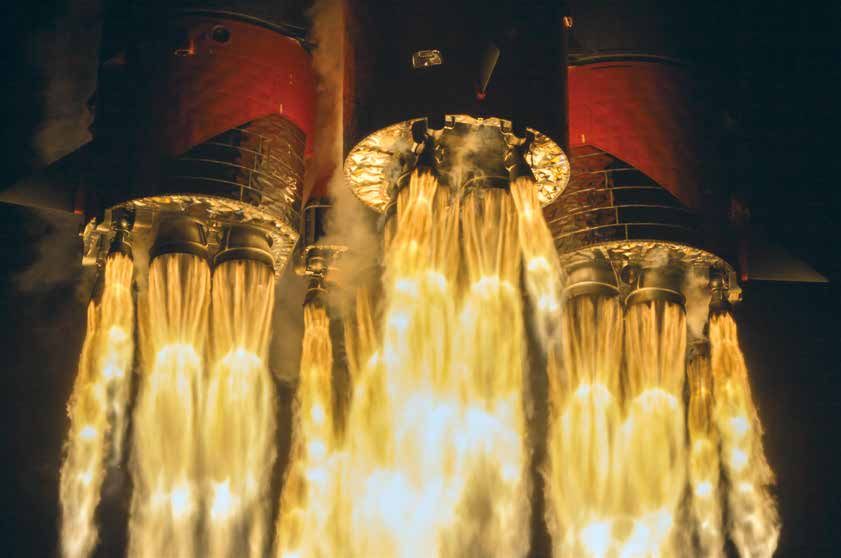
Soyuz-2.1b rocket lifts off from Baikonur
                                                                                                               Cosmodrome in Kazakhstan, together with
                                                                                                                   34 OneWeb communication satellites
                                                                                                                                  (Courtesy Roscosmos)

Proliferated Commercial
Satellite Constellations
Implications for National Security
By Matthew A. Hallex and Travis S. Cottom

      he falling costs of space launch               Commercial space actors—from tiny                    of these endeavors will result in new

T     and the increasing capabilities of
      small satellites have enabled the
emergence of radically new space archi-
                                                     startups to companies backed by bil-
                                                     lions of dollars of private investment—
                                                     are pursuing these new architectures
                                                                                                          space-based services, including global
                                                                                                          broadband Internet coverage broadcast
                                                                                                          from orbit and high-revisit overhead
tectures—proliferated constellations                 to disrupt traditional business models               imagery of much of the Earth’s surface.
made up of dozens, hundreds, or even                 for commercial Earth observation and                     The effects of proliferated con-
thousands of satellites in low orbits.               satellite communications. The success                stellations will not be confined to the
                                                                                                          commercial sector. The exponential in-
                                                                                                          crease in the number of satellites on orbit
Matthew A. Hallex is a Research Staff Member at the Institute for Defense Analyses. Travis S. Cottom is
                                                                                                          will shape the future military operating
a Research Associate at the Institute for Defense Analyses.                                               environment in space. The increase in

20   Forum / Proliferated Commercial Satellite Constellations                                                                JFQ 97, 2nd Quarter 2020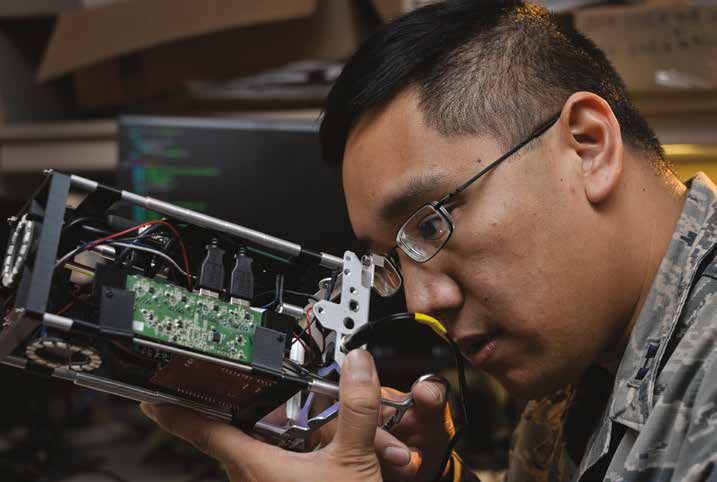
the availability of satellite imagery and         Table 1. Planned Proliferated Communications Constellations
communications bandwidth on the open
                                                  Satellite Operator                    Proposed Satellites        Satellite Design Life (Years)
market will also affect the operating
                                                  OneWeb                                > 2,000                    7–10
environment in the ground, maritime,
and air domains, offering new capabilities        SpaceX Starlink                       ~ 12,000                   5–7
that can address hard problems facing             Boeing                                > 3,000                    10–15
the U.S. military, such as tracking mobile        Telesat                               292–512                    10
targets, operating in the Arctic, or pro-         Kepler Communications                 140                        10
viding resilient space support in the face
                                                  LEOSat                                84                         10
of growing counterspace threats. These
trends will also create new challenges as         Sources: Tereza Pultarova and Caleb Henry, “OneWeb Weighing 2,000 More Satellites,” SpaceNews
adversaries ranging from Great Power              (February 24, 2017); Jon Brodkin, “FCC Tells SpaceX It Can Deploy Up to 11,943 Broadband Satellites,”
                                                  Ars Technica (November 15, 2018); Grant R. Cates, Daniel X. Houston, Douglas G. Conley, and Karen
competitors to hostile nonstate actors            L. Jones, “Launch Uncertainty: Implications for Large Constellations,” The Aerospace Corporation,
gain cheap access to space capabilities and       November 2018, 2; Caleb Henry, “Telesat Says Ideal LEO Constellation Is 292 Satellites, but Could Be
the emergence of space-based Internet             512,” SpaceNews (September 11, 2018).
reshapes the cyber battlespace.
     This article discusses some of the
proposed commercial proliferated con-            gated Teledesic constellation and the                competitive with terrestrial broadband
stellations being developed in the United        struggles of Iridium in the 1990s.2                  communications. This will not only
States and abroad and explores the poten-             Growing global demand for infor-                allow satellite communications to
tial effects of proliferated constellations on   mation services, the greater availability            compete for long-distance backhaul
the space, terrestrial, and cyber domains.       of capital compared to previous eras of              and mobile users but also address
It identifies the multidomain challenges         commercial satellite growth, the increas-            underserved populations. Much of the
and opportunities these trends create for        ing affordability of access to space launch,         developing world lacks access to ter-
the warfighter and proposes steps that the       and greater economies of scale in produc-            restrial broadband infrastructure, and
Department of Defense (DOD) and the              ing small satellites, however, may make              57 percent of the global population
broader national security community can          proliferated constellations more viable              does not have access to the Internet.3
take to prepare.                                 commercial endeavors. The availability of            Mega-constellations could allow the
                                                 space-based broadband communications,                developing world to skip laying costly
Emerging Commercial                              for instance, will likely drive the growth           fiber-optic cable in the same way the
Proliferated Satellite                           of Internet-of-Things applications leading           proliferation of cellular phone technol-
Constellations                                   to further demand for communications                 ogy provided communications without
Commercial proliferated constellations           services. Even if only a handful of prolif-          the need to build phone lines in the
will change how satellite communica-             erated constellation efforts succeed, it will        developing world. LEO-proliferated
tions and Earth observation services are         produce both a paradigm shift in how                 constellations will also be able to
provided. Not all the projects detailed          space services are provided and a substan-           provide communications to high-lat-
below will enter service. The total              tial growth in the number of satellites on           itude populations in Alaska, northern
market for high bandwidth communi-               orbit.                                               Canada, Scandinavia, and Russia, which
cations is estimated to reach 3 terabits                                                              are poorly served by terrestrial com-
of data by 2024. If all the projected            Communications                                       munications infrastructure and outside
proliferated communications constel-             Satellites in geosynchronous orbit                   the coverage of GEO communications
lations and other projected satellite            (GEO) have traditionally provided satel-             satellites.4
communications services become acces-            lite communications where satellites can                 OneWeb and SpaceX are pursuing
sible, 20 to 30 terabits will be available       broadcast to large areas of the Earth.               the most ambitious proposals for LEO
by that year. The small satellite imagery        These satellites have provided low data              communications proliferated constella-
market is expected to grow from its very         rates and relatively high latency commu-             tions (see table 1). OneWeb has raised
small base, but government customers             nications, good enough for niche appli-              more than $1.7 billion in investments
still dominate the demand for satellite          cations but not competitive with fiber               to build a first-generation constellation
imagery.1 In addition to potential limits        optics and other terrestrial alternatives            of 648 satellites, expected to enter
on demand, some industry experts                 for broadband communications. Prolif-                commercial service by 2020, and plans
have raised concerns about shortages             erated communications constellations,                to expand the constellation with 2,000
in investment capital necessary to com-          often referred to as mega-constellations             satellites in the future.5 Plans for SpaceX’s
plete various competing efforts, and             because of their size, are in low-Earth              Starlink proliferated constellation are
other critics have compared the current          orbit (LEO) and aim to provide high                  even more ambitious. The first genera-
era to the failures of the large, disaggre-      bandwidth, low latency communications                tion of Starlink is planned to consist of

JFQ 97, 2nd Quarter 2020                                                                                                     Hallex and Cottom        21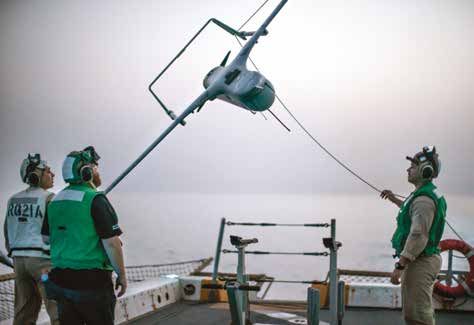
national security and other government
 Table 2. Planned Proliferated Earth Observation Constellations
                                                                                                         purposes.11
 Satellite Operator                Proposed Satellites                Resolution                              The U.S. Government has been the
 Planet                            ~ 150                              0.72m–5m                           largest and most stable customer for
 Spaceflight Industries            60                                 1m                                 commercial satellite imagery, including
 Satellogic                        300                                1m                                 resources from new imagery prolif-
 Hera Systems                      48                                 .5m                                erated constellations. For instance, a
                                                                                                         significant share of Planet’s growth has
 UrtheCast                         16                                 0.75m–22m
                                                                                                         been through multiple contracts with
 Capella Space                     30                                 1-30m SAR
                                                                                                         the National Geospatial-Intelligence
 Canon                             > 100                              1m                                 Agency.12 Commercial Earth observa-
 DigitalGlobe                      6                                  0.3m                               tion companies, however, are seeking
                                                                                                         to diversify their customer base and
 Sources: “Planet Imagery and Archive,” Planet.com; Jeff Foust, “Spaceflight Raises $150 Million for
 BlackSky Constellation,” Space News, March 13, 2018; Caleb Henry, “Satellogic on Its Way to Launching
                                                                                                         reach new markets—to rely less on
 300 Satellite Constellation for Earth Observation,” Satellite Today, March 17, 2016; Bhavya Lal et      U.S. Government spending and, con-
 al., Global Trends in Small Satellites (Washington, DC: IDA Science and Technology Institute, July      sequently, to potentially reduce its sway
 2017); “Sensor Technologies,” UrtheCast.com; Nobutada Sako, “Utilizing Commercial DSLR for High
 Resolution Earth Observation Satellite,” paper presented at the AIAA/USU Conference on Small
                                                                                                         over commercial actors. With lower
 Satellites, Logan, UT, August 2018, 1–3; “CE-SAT 1,” Space Flight 101; Stephen Clark, “DigitalGlobe     prices and increasingly on-demand im-
 Books Two Launches with SpaceX for Earth-Imaging Fleet,” Spaceflight Now, March 28, 2018.               agery services, proliferated constellation
                                                                                                         companies are trying to focus on new,
                                                                                                         nontraditional satellite imagery markets:
more than 4,000 satellites, and SpaceX                   The most mature of the disaggregated            industrial monitoring, agriculture, util-
has secured U.S. Government approval                 Earth observation constellations are those          ities, marine transportation analytics,
for a final constellation of almost 12,000           operated by Planet and Spire Global. By             insurance, resource management, busi-
satellites.6 Other proliferated constellation        the end of 2017, Planet operated a con-             ness intelligence, and other data-driven,
proposals have come from established                 stellation of 140 Dove imagery CubeSats,            decisionmaking practices.13 This broader
companies such as Boeing and Canada’s                5 RapidEye medium-resolution, and 13                range of services will help drive market
Telesat, as well as smaller startups like            higher resolution SkySat satellites that            expansion, and the Institute for Defense
Kepler Communications and LeoSat.7                   can image Earth’s entire landmass daily.8           Analyses’ Science and Technology Policy
While these are only nascent projects,               In July 2018, Spire operated 61 of its              Institute projects the overall commercial
the potential for large quantities of                Lemur satellites (out of a planned 125)             small satellite imaging market will grow
communications bandwidth entering                    that track the Automatic Identification             from $15 million in 2015 to $164 mil-
the market from LEO communications                   System (AIS) beacons of ships that collect          lion in 2020.14
mega-constellations, as well as smaller              weather data by monitoring the radio
numbers of high-throughput GEO com-                  occupation of GPS signals.9                         Foreign Proliferated
munications satellites, have led traditional             Traditional remote-sensing providers            Constellation Efforts
satellite communications providers to                such as Digital Globe and other larger,             Interest in proliferated constellations is
delay purchasing new and replacement                 established companies including Canon,              not confined to the United States and
communications satellites that could                 the Japanese manufacturer of cameras                Western commercial space actors—both
struggle to compete in the future busi-              and other imagery products, are planning            China and Russia are pursuing their
ness environment.                                    disaggregated imagery constellations                own proliferated constellation projects.
                                                     (see table 2). Additional startup com-              The development of foreign proliferated
Earth Observation                                    panies are also aiming to join the ranks            constellations will allow not only their
The Earth observation market has                     of the more mature Earth observation                owners to access these capabilities, but
already moved toward commercial                      constellations offering optical imagery,            potentially access also to a wider range
constellations of large numbers of small             high-revisit, all weather, and nighttime            of actors. Given China’s willingness
satellites. While these constellations are           Synthetic Aperture Radar,10 as well as              to allow for commercial dealings with
smaller than planned communications                  radio signal collection satellites that can         countries hostile to the United States,
mega-constellations, ranging from                    geolocate signals emissions—essentially             these systems could pose a significant
dozens to hundreds of satellites, this               offering commercial electronic intel-               threat to U.S. interests.
disaggregation of commercial space                   ligence capabilities that can support                   The state-owned China Aerospace
capability has increased access to Earth             transportation and logistics, emergency             Science and Technology Corporation
observation capabilities useful for                  search and rescue, or spectrum mapping              (CASC) is planning the 300-satellite
national security applications.                      in addition to its existing applications for        Hongyan LEO broadband communica-
                                                                                                         tions proliferated constellation, and the

22   Forum / Proliferated Commercial Satellite Constellations                                                              JFQ 97, 2nd Quarter 2020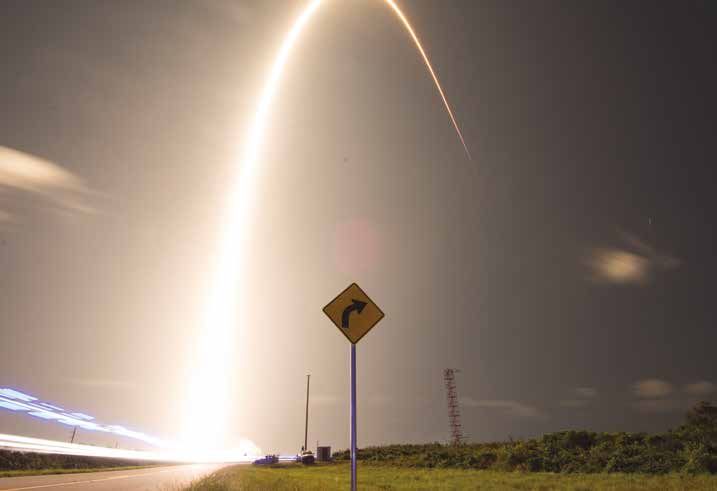
Airman with 707th Communications Squadron Special Missions Flight repairs connection on CubeSat, in Laurel, Maryland, January 2018 (U.S. Air Force/
Alexandre Montes)

state-owned China Aerospace Science                commercial space capability to bolster its         the Russian civil and commercial space
and Industry Corporation plans its own             military and civil space systems as part           programs in recent years, Russia is a less
156-satellite Xingyun communications               of its policy of “civil-military fusion,”          likely proliferated constellation competi-
constellation. The first Hongyan satellite         making militarily useful proliferated              tor than China.
was launched in late 2018, and CASC has            constellations likely candidates for gov-
established a factory in Tianjin capable of        ernment support.16 Chinese proliferated            Spillover Effects:
producing 130 satellites a year. In 2015,          constellations are also likely to be able to       Satellite Manufacturing
China launched the first of its Jilin com-         rely on government financing and other             and Space Launch
mercial imagery satellites to complement           support to offer services to emerging              The emergence of proliferated con-
the Gaofen civil imagery constellation.            markets in Africa, Central Asia, and Latin         stellations is reshaping other areas of
The Jilin constellation is planned to reach        America as part of China’s One Belt, One           the commercial space world by driving
60 satellites by 2020 in order to provide          Road development and trade initiative.17           expansion of satellite manufacturing
global, 30-minute revisit rates, and then              Russia also has proliferated con-              and space launch capacity. The large
138 satellites by 2030 to obtain 10-min-           stellation aspirations. Roscosmos, the             numbers of satellites that comprise
ute revisit rates worldwide.15                     Russian state-owned space corporation,             proliferated constellations require sat-
     While ostensibly commercial, be-              has announced plans to build the                   ellites to be mass-produced quickly and
cause China has raised private funds and           288-satellite Efir constellation to provide        less expensively—a shift from the usual
intends to sell products and services to           global broadband Internet by 2025.                 paradigm of uniquely designed, exqui-
stakeholders beyond the government,                This project is part of a larger projected         site, and expensive space systems. To
Chinese proliferated constellations are            proliferated constellation comprising 600          produce the hundreds of satellites that
likely to be less responsive to market             communications and optical imagery                 will make up the OneWeb constellation,
pressures than Western commercial pro-             satellites to provide global coverage from         Airbus has opened a production line in
liferated constellations. China is pursuing        low orbits.18 Given the difficulties facing        Toulouse, France, and is planning an

JFQ 97, 2nd Quarter 2020                                                                                                    Hallex and Cottom         23
additional high-capacity satellite manu- China wants to build its own prolifer- Debris Program Office suggests that a 99
facturing plant in Florida.19 In August ated constellations for communications percent end-of-life disposal rate may be
2018, Boeing agreed to acquire Millen- and surveillance. The development of necessary to maintain a sustainable orbital
nium Space Systems, which is building a proliferated constellations will further environment.26 The disposal level for
manufacturing center in California that the democratization of space; capa- LEO satellites, however, has not reached
will annually produce hundreds of small bilities will become cheaper and more 20 percent in any of the last 25 years.27
satellites.20 Similarly, in 2018, Planet readily available to a range of state and Unless proliferated constellations become
opened a facility in San Francisco that nonstate actors.24 Adapting to the emer- far more reliable, they could pose a long-
can produce 40 small imagery satellites gence of proliferated constellation is not term threat to the ability of the United
each week.21 simply a problem for space warfighters. States and other space actors to operate
The deployment of proliferated It requires a joint multidomain solution safely in space.
constellations will continue to drive to take advantage of the operational While potentially threatening the
demand for space launch capacity. Small opportunities provided by these systems sustainability of safe orbital operations,
satellites have traditionally been launched and to address the new threats in the new proliferated constellations also offer
as rideshare or secondary payloads, but space, air, maritime, land, and cyber opportunities for the United States to
the demand for these opportunities ex- domains detailed below. increase the resilience of its national se-
ceeds the rate of large payload launches. curity space architectures. Increasing the
Rideshare opportunities also bound a sat- Satellite Proliferation resilience of U.S. national security space
ellite to the orbit of the primary satellite, and Space Security architectures has strategic implications
which may not be the optimal inclination The space operational environment is beyond the space domain. Adversaries
or orbit for smaller satellites. The lack of increasingly congested, contested, and such as China and Russia see U.S. depen-
rideshare availability is driving the small competitive. The emergence of satellite dence on space as a key vulnerability to
launch vehicle market; companies such proliferated constellations will accelerate exploit during a conflict. Resilient, pro-
as Vector Launch, Rocket Lab, Firefly these trends but will also offer oppor- liferated satellite constellations support
Aerospace, and Virgin Orbit are devel- tunities for the United States to better deterrence by denying adversaries the
oping new vehicles to capture part of this deter adversaries from initiating con- space superiority they believe is necessary
demand. China also has an active small flicts and to address growing adversary to initiate and win a war against the
launch program with three operational counterspace capabilities. United States.28 Should deterrence fail,
small launch vehicles.22 The OneWeb satellite constellation these constellations could provide assured
Demand is not confined to small alone would increase the number of space support to U.S. forces in the face of
launch vehicles. Larger launch vehicles operational satellites by almost 50 per- adversary counterspace threats while im-
will permit proliferated constellations cent compared to today, and the SpaceX posing costs on competitors by rendering
to be rapidly deployed by manifesting constellation would triple the number of their investments in counterspace systems
dozens to hundreds of small satellites in operational satellites compared to today.25 irrelevant. Proliferated constellations can
a single launch. For instance, in February The addition of hundreds or thousands of support these goals in four main ways.
2017, Planet launched 88 Dove satellites proliferated constellation satellites would First, the extreme degree of disag-
on a single Indian Polar Satellite Launch increase congestion, stress existing U.S. gregation inherent in government and
Vehicle.23 The relatively short planned space situational awareness (SSA) and commercial proliferated constellations
lifespan of proliferated constellation space traffic management capabilities, and could make them more resilient to attacks
satellites will also result in a continuous could create a more dangerous debris en- by many adversary counterspace systems.
demand for launch services to replace vironment. More satellites and associated A constellation composed of hundreds
satellites as they end their service lives, debris would threaten orbital safety and, or thousands of satellites could with-
potentially resulting in larger econo- at the very least, increase the number of stand losing a relatively large number of
mies of scale that reduce the cost of all conjunction warnings—notices of possi- them before losing significant capability.
launches. ble collisions between satellites and other Conducting such an attack with kinetic
objects in space—that the Combined antisatellite weapons—like those China
Proliferated Constellations Space Operations Center issues, distract- and Russia are developing—would
and National Security ing it from its national security mission. require hundreds of costly weapons to
While commercial interest is driving the Proliferated constellation operators destroy satellites that would be relatively
development of proliferated constella- intend to address the risk of debris from inexpensive to replace.
tions, these new space architectures can their satellites by ensuring that they are Second, proliferated constellations
provide capabilities previously available disposed of through atmospheric re-en- would be more resilient to adversary elec-
only to a few spacefaring great powers. try at the end of their operating lives. A tronic warfare. Satellites in LEO can emit
These new useful capabilities will not recent study by the National Aeronautics signals 1,280 times more powerful than
only be available to the United States. and Space Administration’s Orbital signals from satellites in GEO.29 They
24 Forum / Proliferated Commercial Satellite Constellations JFQ 97, 2nd Quarter 2020SpaceX Falcon 9 rocket launches Starlink at Cape Canaveral Air Force Station, Florida, on May 23, 2019, putting 60 satellites into orbit (U.S. Air Force/
Alex Preisser)
also are faster in the sky than satellites in of satellites will drive the development new joint operational concepts to better
more distant orbits, which, combined of low-cost launches to a much higher exploit space systems in support of the
with the planned use of small spot beams rate than is available today. Inexpensive, joint fight as well as address new force
for communications proliferated con- high-cadence space launch could provide protection challenges when fighting
stellations, would shrink the geographic a commercial solution to operationally space-enabled state and nonstate actors.
area in which an adversary ground-based responsive launch needs of the U.S. Proliferated constellations will
jammer could effectively operate, making Government. In a future where space substantially increase the availability of
jammers less effective and easier to geolo- launches occur weekly or less, the launch communications bandwidth for military
cate and eliminate.30 capacity needed to augment national operations. These satellites would provide
Third, even if the United States security space systems during a crisis or to high bandwidth to forces with less latency
chooses not to deploy national secu- replace systems lost during a conflict in than existing GEO satellites,32 which, in
rity proliferated constellations during space would be readily available.31 turn, would improve access to reachback
peacetime, industrial capacity for communications to forward-deployed
mass-producing proliferated constellation The Fight on Earth: military forces, and would also help meet
satellites could be repurposed during a Opportunities and Threats the growing demand for transfer capacity
conflict. Just as Ford production lines The emergence of proliferated con- for data collected by unmanned systems
shifted from automobiles to tanks and stellations will lead to easier access to and other forward sensors.
aircraft during World War II, one can eas- satellite communications, space imagery, Proliferated LEO communications
ily imagine commercial satellite factories and other capabilities that can support constellations would also offer coverage
building military reconnaissance or com- U.S. and adversary military opera- in theaters that are poorly served by
munications satellites during a conflict. tions in the ground, maritime, and air commercial satellite communications
Fourth, deploying and maintaining domains. Adapting to these changes today. Satellites in GEO do not suffi-
constellations of hundreds or thousands will likely require the development of ciently support operations in the Arctic
JFQ 97, 2nd Quarter 2020 Hallex and Cottom 25radar, and electronic intelligence satellites
in order to track U.S. carrier groups.
Chinese commercial imagery proliferated
constellations would bolster these capa-
bilities and provide a resilient capability to
track U.S. forces worldwide.
Nonstate actors will also be able
to conduct global surveillance using
commercial proliferated constellations.
Global Fishing Watch, an environmental
nonprofit organization that aims to reduce
overfishing, already uses commercial
satellites as part of what is essentially a
space-based kill chain to eliminate envi-
ronmental crime at sea.35 It monitors AIS
beacons that seagoing vessels are required
to carry to track their locations to avoid
collisions. When they detect unusual
behavior, such as ships turning off their
AIS signals, they use Planet’s imagery
Marines lower RQ-21A Blackjack unmanned aerial system from recovery system aboard USS John P.
constellation to locate the ship and then
Murtha, Gulf of Aden, July 2019 (U.S. Marine Corps/Adam Dublinske)
cue higher resolution satellites to collect
and other high-latitude regions that satellites that can see through clouds— images of illegal activity. Hostile actors
are growing in economic and national combined with ground processing with goals less noble than environmental
security importance.33 Similarly, naval capabilities that can automatically detect conservation—such as pirates, antiship
and air forces operating in the Pacific changes in imagery would also make missiles, or armed Houthi rebels—could
theater have less access to commercial adversary deception operations less use commercial proliferated constellations
communications than other theaters due effective.34 Because the United States is to track and target ships at sea with simi-
to the lack of commercial customers in likely to be on the defensive in the most lar effectiveness.
the open ocean. Proliferated commer- worrying scenarios for conflict—such as
cial LEO constellations would provide defending allies in Eastern Europe or East Space Internet and the
greater communications handling in both Asia—these new capabilities will support Cyber Battlespace
regions because of their global coverage. U.S. efforts to detect adversary mobiliza- Proliferated constellations may also
While unable to provide the high-res- tion and to avoid operational surprise. shape the future cyber battlespace by
olution imagery and other specialized Of course, these new capabilities will supplanting the traditional physical
capabilities of existing national security also be available to potential adversaries. infrastructure that underlies the Inter-
satellites, proliferated LEO constella- The development of proliferated constel- net and creating a new orbital layer for
tions could help to address some of the lations allows other nations to replicate cyber operations.
intelligence challenges the U.S. military the U.S. ability to support space global Today, more than 90 percent of
faces. During the first Gulf War, the power projection. The global coverage Internet traffic is carried by undersea fiber
United States was unable to track and LEO communications constellations optic cables that stretch over thousands
target Iraq’s Scud missile systems despite enable would also allow China to support of miles of ocean floor. These cables are
enjoying almost total air superiority. Since forces deployed far from its mainland, vulnerable to accidental cuts and are likely
then, mobile missiles and other elusive including ships deep in the Pacific or de- targets of enemy action during wartime.
targets have multiplied as potential ad- ployed to Djibouti or elsewhere in Africa. Speaking at the opening of SpaceX’s
versaries seek to defeat U.S. conventional These capabilities will also heighten Seattle location in 2015, Elon Musk
precision and nuclear strike systems. the challenge of protecting U.S. forces highlighted SpaceX’s goal of carrying
Imagery proliferated constellations could and bases. High-revisit commercial im- “more than half of the long-distance
provide continuous or near-continuous agery could also track mobile targets like traffic” on its satellite network.36 Satellite
coverage of missile operating areas to bet- U.S. naval vessels or U.S. aircraft using constellations would become increasingly
ter enable the United States to find and smaller “adaptive bases” in Europe or the critical infrastructure for the U.S. and
eliminate these threat systems. Pacific to avoid attack. In support of its global economy if they facilitated a larger
The near continuous imagery “counter-intervention” strategy, China, share of global telecommunication traffic.
coverage proliferated constellations like the Soviet Union before it, has in- Ownership of the infrastructure
offers—particularly if they include radar vested substantially in optical imagery, that underlies the Internet can produce
26 Forum / Proliferated Commercial Satellite Constellations JFQ 97, 2nd Quarter 2020intelligence and cyber warfighting ad- future, and to better understand the military space capabilities in response to
vantages. Analysts have raised concerns strategic consequences that shifting new threats.
over the cyber security implications of the balances in space and other domains will In addition to developing and
increasing number of Chinese companies have for the competitive balance among deploying its own satellites, DOD
that own and operate long-distance fiber the United States, China, Russia, and could improve its engagement with the
optic cables. Chinese commercial prolif- other space-enabled state and nonstate industry to better capitalize capabilities
erated constellations could augment these threats.39 offered by new commercial proliferated
cables to compete for global Internet Potential starting points for this effort architectures. The Defense Department
traffic, exacerbating the trend identified include examining how best to integrate has strong ties with traditional aerospace
by Eric Schmidt, former Google CEO, of new communications and intelligence, companies, some of which are part of the
a bifurcation into Chinese and non-Chi- surveillance, and reconnaissance (ISR) manufacture and launch of proliferated
nese Internets that operate on different capabilities at the tactical level, and what constellations. Many of these new space
infrastructure, standards, and levels of kind of denial and deception capabilities systems, however, are being developed
government control.37 will best enable U.S. operations in a fu- by small and agile startup companies—
Proliferated constellations themselves ture characterized by ubiquitous orbital Silicon Valley tech companies that build
are a likely target for cyber operations. surveillance. Experimentation need not satellites rather than apps—that DOD
The mass production of satellites for a be limited to tabletop exercises or simu- has struggled to connect with. A key
proliferated constellation could easily lations—the lower cost of manufacturing part of the effort to improve DOD’s
result in the cyber vulnerabilities of any and launching space systems will allow relationship with Silicon Valley and its
particular satellite replicating across a net- DOD to operate more on-orbit exper- broader ability to harness commercial
work, making it easier to attack the entire iments. Along with demonstrating and innovation is improving the acquisitions
architecture. It may also be easier to carry maturing new space technologies, DOD process. Commercial proliferated con-
out a cyber attack on satellites intended can make greater use of prototype space stellation operators aim to offer data and
to directly interface with the Internet systems and architectures to support field information services rather than the raw
than on satellites that require more exercises and experiments aimed at dis- imagery or transponder leases of tradi-
specialized communications interfaces.38 covering how best to use these new space tional commercial space operators. These
The challenge of attacking proliferated technologies to support U.S. forces. companies also aim to move quickly—
constellations with kinetic counterspace A joint, multidomain campaign of inexpensive, rapidly manufactured,
weapons may lead adversaries to a greater experimentation will also help to define frequently launched satellites with short
reliance on cyber threats against U.S. new requirements for DOD use of lifespans that enable rapid technology
national security and commercial space proliferated satellite constellations. This refresh and evolution of capability. DOD
architectures. As the joint force makes should help DOD determine the best processes need to move at the speed of
greater use of proliferated satellite con- path to making use of new space capabil- the commercial sector to exploit these
stellations, cyber defense of U.S. and ities and the balance between acquiring new space services or to develop U.S.
commercial satellite systems will likely be- DOD-operated satellites and improving Government proliferated constellations
come an increasingly important mission. engagement with industry to make better to meet military and intelligence needs.
use of the commercial proliferated satel- One step in this direction would be
A Path Forward for DOD lite capabilities discussed above. the expanded use of waivers that allow
Making use of the new capabilities This could involve DOD deploying venture capital funded companies to
provided by proliferated satellite constel- its own proliferated constellations. The participate in DOD Small Business
lations and addressing the threats posed Space Development Agency (SDA), Innovation Research contracts they are
by new adversary space capabilities is established in 2019, aims to develop otherwise excluded from.42
not a niche issue for space warfighters. proliferated constellations that can In addition to developing space capa-
Adapting to the future that these new provide communications, ISR, missile bilities to address the needs of the joint
space capabilities will create requires a warning, and an alternative to legacy GPS warfighter, DOD needs to prepare for
joint, multidomain effort. The heart of satellites.40 The SDA builds on existing new requirements for SSA and space traf-
this effort should be a joint campaign of efforts to leverage emerging commer- fic management resulting from increases
experimentation—including wargaming, cial constellations such as the Defense in satellites and debris on orbit. Beyond
discovery exercises, and prototyping— Advanced Research Projects Agency’s investing in new military capabilities, the
that develops understanding of the Blackjack program.41 These efforts would Defense Department should consider
challenges and opportunities proliferated produce new satellites to augment exist- investments to improve the integration
constellations create for warfighters in ing national security architecture, but at of foreign and commercial SSA data
space and other domains, to develop a much lower cost, and could allow for into its systems. Alternatively, DOD
new operational concepts to make U.S. fast and inexpensive expansion of U.S. could support the transfer of space traffic
forces more capable and lethal in this management responsibilities to a civilian
JFQ 97, 2nd Quarter 2020 Hallex and Cottom 27agency, which would reduce the burden Iridium to restructure its debt through via/december-2018/greg-wyler-the-defini-
tive-2018-interview/>.
on existing military organizations.43 bankruptcy. This intervention enabled 6
Jon Brodkin, “FCC Tells SpaceX It Can
The Defense Department can also Motorola to spin off Iridium as an inde- Deploy Up to 11,943 Broadband Satellites,”
play a large role in shaping the future pendent company that has since become Ars Technica, November 15, 2018, available at
commercial space environment by economically viable and provides vital .
stellations and related technologies from around the world.45 As commercial 7
Chuck Black, “SpaceX, Telesat & Kepler
interference by foreign companies and proliferated constellations enter service, Just Three of the Dozen Satellite Constella-
governments. It should be prepared to DOD should identify systems with par- tions Currently on the FCC Table,” Commer-
address the failures of commercial prolif- ticular military value and use its unique cial Space, November 20, 2016, available at
erated constellation efforts and to act to role as one of the largest consumers of .
maintain the viability of commercial con- space services to preserve capabilities in 8
Jeff Foust, “With ‘Mission 1’ Com-
stellations with particular strategic value. case a future economic downturn threat- plete, Planet Turns Focus to Data Analysis,”
Acquiring access to technologies ens the viability of strategic commercial Space News, November 17, 2017, available at
developed by U.S. companies is a key capabilities. JFQ .
9
Caleb Henry, “From Silicon Valley to
match U.S. economic and military
Singapore: Spire’s Ambitious Remote Sensing
power. Tactics include hacking, indus- Notes Strategy,” Satellite Today, September 25, 2014,
trial espionage, and investments in U.S. available at .
approach to protecting U.S. technologies 3-7. 10
See UrtheCast Web site, available at
and expanded use of existing tools for 2
Debra Werner, “Analysts See Demand ; Jeff Foust,
monitoring and blocking foreign efforts for Two or Three Megaconstellations,” Space “Capella Space Raises $19 Million for Radar
to acquire strategic technologies from News, October 9, 2018, available at ; 2018, available at .
ufacturers of commercial proliferated tion,” Space News, March 13, 2018, available at 11
See Hawkeye360 Web site, available at
constellations should be an ongoing . Satellite-Imagery Contract,” Space News, July
on Foreign Investment in the United 3
Sarah Scoles, “SpaceX Wants to Launch 20, 2017, available at . Mega-constellations in Segret, “Challenges for NewSpace Commercial
low-Earth orbit plan to offer latency on the or- Earth Observation Small Satellites,” New Space
mercial constellation operators in the der of 30 milliseconds (ms), comparable to the 5, no. 4 (December 2017), 242; Lal et al.,
new Trusted Capital Marketplace, which 10–50 ms latency of terrestrial fiber systems, Global Trends in Small Satellites, 3-6, 3-7.
links companies crucial to defense supply and far lower than the ~ 600 ms latency of geo- 14
Bhavya Lal et al., Trends in Small Satellite
chains with trusted sources of commercial synchronous orbit communications satellites. Technology and the Role of the NASA Small
investment.44 See Ward A. Hanson, “Satellite Internet in the Spacecraft Technology Program (Washington,
Mobile Age,” New Space 4, no. 3 (Septem- DC: IDA Science and Technology Policy Insti-
The DOD part in preserving ber 2016), 143; Jon Brodkin, “Low-Latency tute, March 28, 2017), 9.
Iridium—the $5 billion LEO com- Satellite Broadband Gets Approval to Serve 15
“China to Set 300-Plus-Satellite Constel-
munications constellation that was a U.S. Residents,” Ars Technica, June 23, 2017, lation to Serve Communication,” Xinhua, Feb-
forerunner of today’s emerging prolifer- available at . China’s Hongyan LEO Communications Satel-
future commercial environment. When 4
Hanson, “Satellite Internet in the Mobile lite Constellation Revealed,” GB Times, March
Iridium faced bankruptcy in 1999, its Age,” 148. 12, 2018, available at ;
Space News, February 24, 2017, available at Andrew Jones, “China to Launch First
future liability resulting from satellite ; Mark Holmes, lite Constellation on Saturday,” GB Times,
Motorola against future liability, as well “Greg Wyler, the Definitive 2018 Interview,” December 27, 2018, available atstellation-on-saturday>; Peter B. de Selding, 26
J.-C. Liou et al., “NASA ODPO’s Large 38
Jason Fritz, “Satellite Hacking: A Guide
“China Launches High-Resolution Commercial Constellation Study,” Orbital Debris Quarterly for the Perplexed,” Culture Mandala: Bulletin
Imaging Satellite,” Space News, October 7, News 22, no. 3 (September 2018), 4–5. of the Centre for East-West Cultural and Eco-
2015, available at . Debris Mitigation,” Journal of Space Safety 39
Kevin M. Woods and Thomas C.
16
Lorand Laskai, “Civil-Military Fusion and Engineering 4, no. 2 (July 2017), 6. Greenwood, “Multidomain Battle: Time for
the PLA’s Pursuit of Dominance in Emerging 28
For a discussion of Chinese and Russian a Campaign of Joint Experimentation,” Joint
Technologies,” China Brief 18, no. 6 (2018), counterspace intentions and capabilities, see Force Quarterly 88 (1st Quarter 2018), 14–20;
12–16. Challenges to Security in Space (Washington, Tom Greenwood and Jim Greer, “Experimen-
17
Jose Del Rosario, “China’s LEO Con- DC: Defense Intelligence Agency, January tation: The Road to Discovery,” The Strategy
stellation Ambitions,” Northern Sky Research, 2019). Bridge, March 1, 2018, available at .
18
“Russia to Create Orbital Internet Satellite Space Operations Telecon, August 22, 2018, 40
David Vergun, “Space Development
Cluster by 2025,” TASS, May 22, 2018, avail- slide 7. Agency Addresses Growing Capability Gaps,”
able at ; 30
Tyler G.R. Reid et al., “Leveraging Com- Department of Defense, July 23, 2019, avail-
“Roscosmos: ‘Sphere’ Will Receive Elements mercial Broadband LEO Constellations for able at ; Andrew Jones, “Jilin-1: of the Institute of Navigation (Manassas, VA: 41
Thomas, “Blackjack,” slides 6–7.
China’s First Commercial Remote Sensing Institute of Navigation, 2016), 2311. 42
Sanrda Erwin, “Thornberry Bill Would
Satellites Aim to Fill the Void,” GB Times, May 31
Malcom Davis, “Elon Musk’s ‘BFR’ and Help Venture-Backed Startups Compete for
12, 2016, available at .
Space News, September 12, 2017, available Satellites Poised to Make a Mark in Military 43
Owen Brown et al., Orbital Traffic Man-
at . by Under Secretary of Defense Lord on DOD
Entree into Small Satellite Market, to Acquire 33
Andrew H. Boyd, Satellite and Ground Acquisition Reforms and Major Programs,”
Millennium Space Systems,” Defense Daily, Au- Communication Systems: Space and Electronic Department of Defense, May 10, 2019, avail-
gust 16, 2018, available at .
of-the-Art Satellite Manufacturing Factory in 34
Adam G. Lenfestey et al., “Achieving 45
John Bloom, Eccentric Orbits: The Iridi-
San Francisco,” Planet.com, September 12, Secrecy and Surprise in a Ubiquitous ISR Envi- um Story (New York: Grove Press, June 2016),
2018, available at . 2018), 85–90. Iridium constellation were erased through
22
Carlos Niederstrasser, Small Launch 35
Jeff Tarr and Will Marshall, “How bankruptcy, Iridium has since been able to not
Vehicles—A 2018 State of the Industry Survey Satellite Surveillance Is Hauling in Illegal only meet its operating expenses but also afford
(North Logan: Utah State University Research Fishers,” World Economic Forum, October 3, to recapitalize its space architecture by building
Foundation, 2018), 2. 2017, available at .
Planet Daily,” Planet.com, February 14, 36
Elon Musk, “SpaceX Seattle 2015,”
2017, available at . 37
Stacia Lee, “The Cybersecurity Implica-
24
Dave Baiocchi and William Welser IV, “The tions of Chinese Undersea Cable Investment,”
Democratization of Space: New Actors Need East Asia Center, Henry M. Jackson School of
New Rules,” Foreign Affairs (May/June 2015), International Affairs, University of Washing-
available at ; Lora Kolodny,
Orbital Debris Impacts: Case Studies of One- “Former Google CEO Predicts the Internet
Web and SpaceX Proposals,” conference paper Will Split in Two—And One Part Will Be
delivered at the American Institute of Aeronau- Led by China,” CNBC, September 20, 2018,
tics and Astronautics Space and Astronautics available at .
JFQ 97, 2nd Quarter 2020 Hallex and Cottom 29You can also read


