Proposed Hotel Indigo, Barbican, London - Market and Viability Study London City Shopping Centre Ltd & Lamb's Passage Real Estate Ltd June 2016 ...
←
→
Page content transcription
If your browser does not render page correctly, please read the page content below
Proposed Hotel Indigo, Barbican, London
Market and Viability Study
London City Shopping Centre Ltd & Lamb’s Passage Real Estate Ltd
June 2016
PROPOSED HOTEL INDIGO, BARBICAN, LONDON

Executive Summary
We are pleased to present our report on the proposed Hotel Indigo development, Barbican detailing our
assessment of the viability of the scheme which is to comprise a 61 bedroom hotel, plus food and beverage
concept. Key areas that we have considered include:

1.    Overview of the London and the London Borough of Islington hotel markets – including supply and
      demand.
2.    An assessment of the suitability of the site for hotel use.
3.    Consideration as to whether the proposed scheme will create an over-concentration of hotels of similar
      uses (such as other visitor accommodation, hostels and student accommodation) in the surrounding
      area (generally within a 500 m radius of the site).
4.    The proposed hotel’s market position and offer in the context of the immediate area and existing supply
5.    The background to the viability of the proposed mixed use scheme.

We carried out a site visit and background research to assess the proposed hotel site’s suitability for hotel
use, its accessibility and location in relation to potential demand generators, both corporate and leisure. We
also undertook primary market research into The City of London and the London Borough of Islington and
carried out desktop research into potential demand generating sources for the proposed Hotel Indigo.

In addition, we have conducted research into the potential future hotel supply in the area of relevance as well
as local hotel market performance utilising AM:PM full-service market data.

Based on this research we have reviewed the expected average annual room occupancy levels, average
room rates, total revenue and gross operating profit for the first five years of operation for the proposed Hotel
Indigo, Barbican against the immediate competition.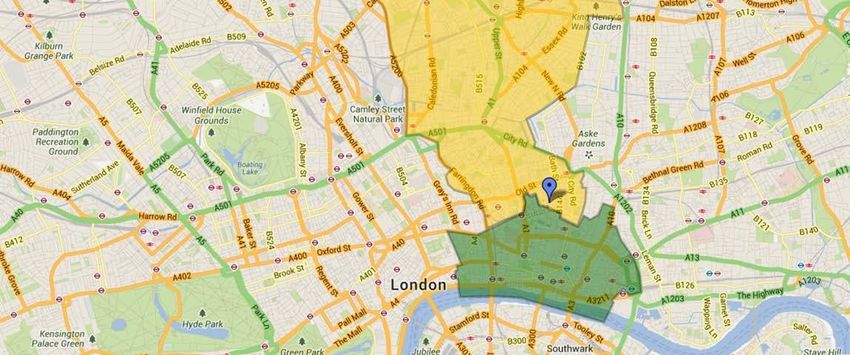
Key Findings and Conclusions
The hotel site characteristics at Barbican present as a clear opportunity for a Hotel Indigo. The
proposed Hotel Indigo will benefit from prominent positioning to key demand generators in the
immediate vicinity and excellent accessibility to/from The City, central London and surrounding
areas.
London remains one of the world’s most popular tourism destinations, welcoming c.18.8 million
international visitors in 2015, being ahead by c.4.4% on the previous year, contributing more than
£36 billion to the capitals economy. Due to strong market fundamentals, London remains one of
Europe’s best performing hotel markets with the highest occupancy in Europe in 2015. The hotel
sector remains a vital part of London’s tourism economy, supporting significant jobs.
Hotels in the local hotel market of relevance accommodate high-yielding transient corporate demand
during weekdays and price-sensitive leisure demand at weekends. Whilst midweek demand appears
robust, the area surrounding the Barbican market remains a secondary leisure location relative to
central London, reflected in the lower rates commanded during the weekend period.
The potential for hotel developments earmarked to enter the local Barbican area market will remain
due to the strong hotel market fundamentals, demonstrating the strength of market interest and the
opportunity for additional hotel accommodation. However, more than half of the 18,000 rooms
entering the London market since 2012 have been in the budget sector.
The proposed location of the development as well as an increasing overall appeal of East London
combined with the evident success of the Hotel Indigo brand elsewhere in London will enable the
proposed development to successfully compete within the wider hotel market and achieve a strong
market position in the local area.
As a full service Boutique hotel brand, Hotel Indigo represents a distinctive four star product that
reflects a strong design lead hotel offer, with the emphasis on each Indigo hotel being individual, the
design incorporating a “neighbourhood” theme reflecting the heritage of its location. Allied to the
hotel, the Indigo brand has developed around a strong food & beverage offer and restaurant, with a
focus on locally sourced and seasonal ingredients. The utilisation of the vaults will provide a unique
dining experience that will help to create a dining destination.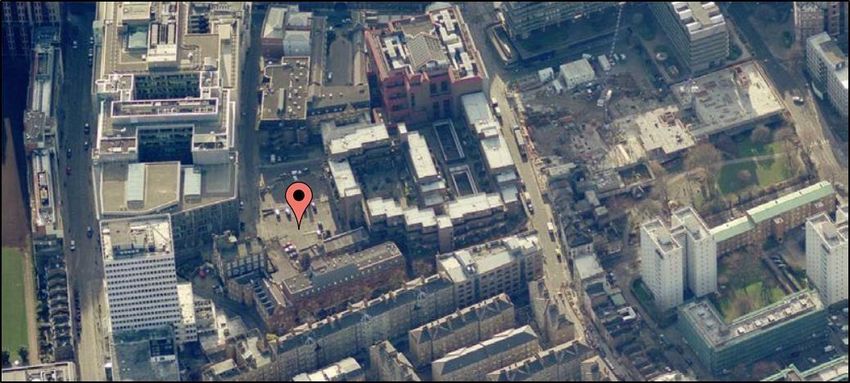
We envisage that under the development scenario the proposed Hotel Indigo will occupy a strong
and sustainable market position by the third and stabilised year of operation (2020/21). The following
table summarises the projections for key performance indicators for the proposed Hotel Indigo.
Operating Period
2018/19 2019/20 2020/21 2021/22 2022/23
(Year commencing 1 September)
61 61 61 61 61
Rooms available
Average Annual Room
% 85.4 89.4 93.4 93.4 93.4
Occupancy
Average Room rate £ 141.17 149.03 155.34 155.34 155.34
We see the proposed hotel as an important element of this proposed mixed use scheme, by virtue
of the fact that it increases the vitality of the scheme and facilitates the place making of the rest of
the development.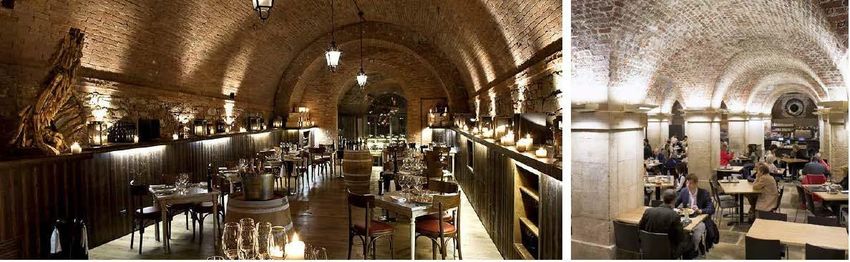
1 Background
Background
London City Shopping Centre Ltd and Lamb’s Passage Real Estate Ltd plans to develop a 61-bedroom hotel
on Lamb’s Passage in London’s Barbican area. Lambert Smith Hampton Hotels has been commissioned by
Sanguine Hospitality Limited to undertake a market review and viability study for the proposed development
of a full-service hotel on Lamb’s Passage, branded under Intercontinental Hotel Group’s (IHG) Hotel Indigo
brand.
In May 2016, we visited Lamb’s Passage and Barbican as well as the surrounding area, undertaking research
into the existing supply of and demand for hotel accommodation. We examined the site identified for the
proposed Hotel Indigo, assessing its accessibility as well as its suitability and relationship to other hotels,
transport routes and termini, commercial and tourist areas and other main facilities in the area. During our field
research we:
obtained current and historic market and operational data on the hotel, leisure and other relevant
commercial sectors;
determined the existing and future characteristics of markets, which we consider to be of relevance to
this project;
determined the present supply of hotel accommodation serving those markets and obtained the
available data from sources considered authoritative on other relevant planned developments;
obtained other pertinent information relating to the economy, communications infrastructure and
general economic development of the area; and
assessed the economics of and general climate for the operation of the proposed Hotel Indigo at
Lamb’s Passage.
In light of our primary research, we assessed the current commercial and economic environment of the local
area relevant to the proposed development within London, its hotel and tourism industries, the likely future
market environment in which the proposed Hotel Indigo will operate, the impact that the opening of the
proposed development will have on existing local and wider regional markets and the hotel’s recommended
market position within the current and future hotel market of competitive relevance.
We have commented on the proposed development at Lamb’s Passage in terms of the standard and scale of
facilities and projected average room occupancy, average room rate, revenues, costs and profit levels for the
project.
1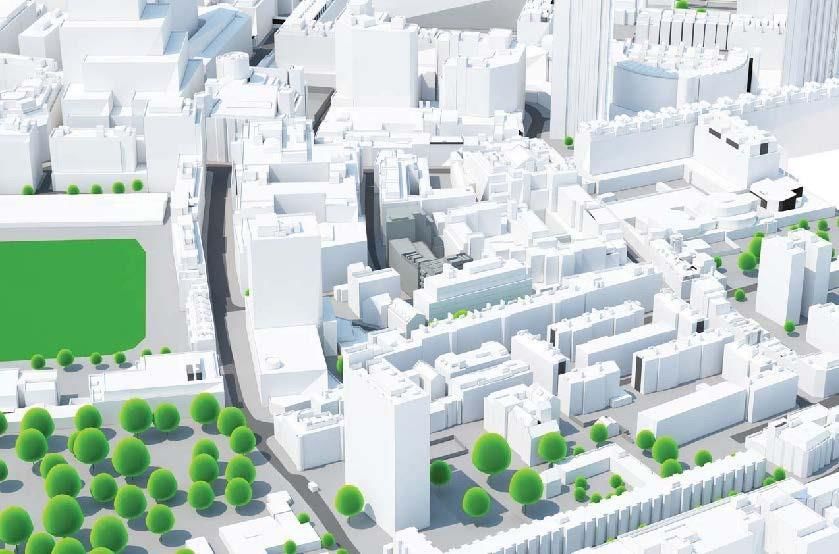
2       Site and Location Analysis

Site and Location Analysis

Introduction

In this section, we present our analysis and comments regarding the site for the Hotel Indigo, the
communications infrastructure in and around Barbican, the location characteristics of the site and the potential
benefits and opportunities that a hotel operation on the site represents.

Site Appraisal

The following maps represent the site locations of the proposed hotel development on lamb’s Passage
(highlighted by the blue marker) within Islington and on the border of The City of London (highlighted by the
yellow and green shaded areas respectively) in relation to the wider London area.

Source: Google Maps, 2013

                                                        2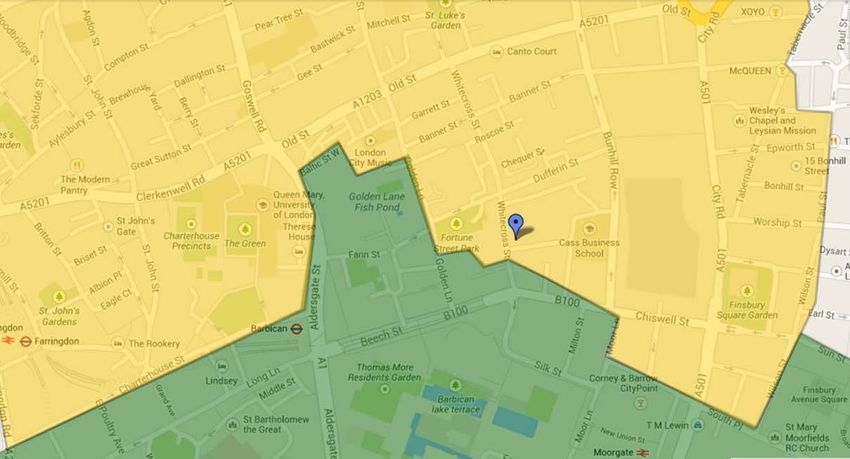
Source: Google Maps, 2013

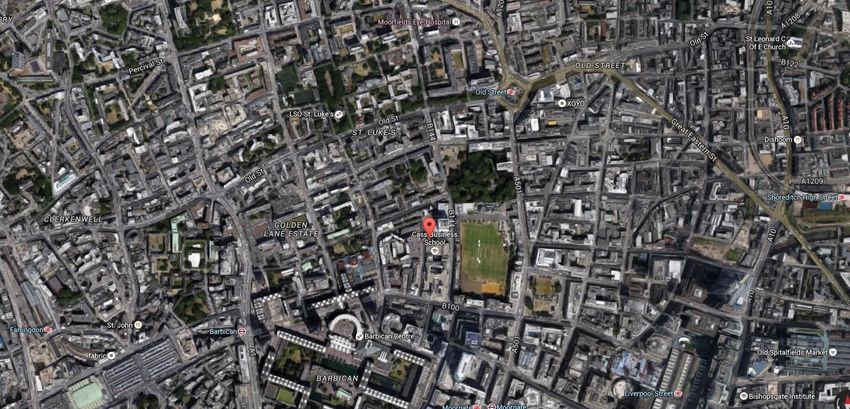
The following aerial photographs show the location of the site for the proposed Hotel Indigo within the Barbican
area.

                                                        3
Source: Google Maps, 2013
Comment
The site for the proposed Hotel Indigo benefits from a strong location north of the Square Mile,
London’s financial hub. The proposed site on Lamb’s Passage is perpendicular to Chiswell Street
(B100), which in turn connects with City Road to the east and Aldersgate Street (A1) to the west, and
borders with Islington and The City of London boroughs. The site also benefits from proximity to
several London Underground and National Rail stations including Old Street, Liverpool Street,
Moorgate and Barbican.
The proposed site is opposite the Barbican Centre, Europe's largest multi-arts and conference venue.
The 35-acre Barbican Estate is home to schools, a museum, a YMCA, over 2,000 high-end residential
apartments, the Barbican Arts Centre and the London Symphony Orchestra. Furthermore, the
proposed site is in proximity to the Brewery Exhibition Centre.
Put in a wider context, 75 per cent of the Fortune Global 500 companies have an office in London and
one third of the companies choose the capital for their European Headquarters. London is the financial
and business capital of Europe and with approximately 450 international banks. The City is the single
largest concentration of contributing companies, creating robust midweek accommodation demand for
hotels in the local area.
4Communication
Road
With the A40, A10 and A3 less than five minutes’ drive from the proposed Hotel Indigo, the site benefits from
excellent communication links to the M25 and M40 motorways. Lamb’s Passage is located off Chiswell Street
in proximity to the A1 (Aldersgate Street), which in turn connects to the north circular and the M1. The A501
(City Road), provides access to the west of London and Kings Cross, St Pancras, Euston, Marylebone and
Paddington stations, ultimately connecting with the A40 and the M4. The road connectivity of Chiswell Street
is excellent.
In the following table we provide approximate distances and travel times (by road) from the proposed hotel site
to key locations within London and the UK. It should be noted that the stated drive times are for indicative
purposes only.
Approximate Drive Times
Lamb’s Passage to/from Major London Locations and UK Cities
Approx. Drive Time -
Key Locations Drive Distance - Miles
Minutes
London Locations
Liverpool Street 0.9 7
St Pauls 1.2 9
Covent Garden 2.2 18
Kings Cross/St Pancras 2.7 19
Victoria 3.8 33
Oxford Circus 3.9 30
Hyde Park Corner 4.7 35
Canary Wharf 4.2 25
Paddington 4.6 32
ExCel 6.7 28
Greenwich Peninsula 7.1 38
Wembley 12.8 55
London Airports
London City Airport 7.6 31
London Heathrow Airport 18.5 67
Stansted Airport 33 52
London Luton Airport 34.5 70
Gatwick Airport 51 77
Source: Google Maps, 2016
5Barbican is well serviced by London’s bus system, with numerous services into central, north and east
London.
Rail
Lamb’s Passage is situated in proximity to various underground and railway stations. The following table
details rail links available to/from Barbican.
Rail Services to/from the Barbican Area
Station Distance Rail Link Type Destinations
Circle Line London Underground West, Central and East London
0.3
Barbican Hammersmith & City Line London Underground West, Central and East London
miles
Metropolitan Line London Underground North-west, Central and East London
West, Central and East London
Circle Line London Underground
West, Central and East London
0.5 Hammersmith & City Line London Underground
Moorgate North-west, Central and East London
miles Metropolitan Line London Underground
Welwyn Garden City, Hertford North
Southeastern Line London Underground
Gordon Hill, Stevenage
0.7 Northern Line London Underground North, Central and South London
Old Street
miles First Capital Connect National Rail Service Central and North London
0.7
St Paul’s Central Line London Underground West, central and East London
miles
Central Line London Underground West, central and East London
Metropolitan Line London Underground North-West, central and East London
Liverpool 0.7 Circle Line London Underground West, Central and East London
Street miles Hammersmith & City Line London Underground West, Central and East London
Stansted Express National Rail Service London Stansted Airport
Greater Anglia National Rail Service Cambridge, East Anglia
Northern Line London Underground North, Central and South London
0.9
Bank Central Line London Underground West, central and East London
miles
Waterloo & City Line London Underground Waterloo, Bank
City
1.0 mile First Capital Connect National Rail Service Bedford, Central London, Brighton
Thameslink
Circle Line London Underground West, Central and East London
Hammersmith & City Line London Underground West, Central and East London
London 1.1 First Capital Connect National Rail Service Luton, central and South-East London
Blackfriars miles Bedford, Brighton, Sevenoaks, St
Southeastern National Rail Service Albans, Sutton
Source: Transport for London, Google Maps
6Comment
Within a one-mile radius, the proposed site is connected to various railway and underground stations,
serviced by the Northern, Central, Circle, Hammersmith & City, Metropolitan, Waterloo & City lines as
well as national rail services.
The proposed site is easily accessible from St Pancras International station, which is London’s primary
Eurostar terminal and offers high-speed rail services to destinations in continental Europe including
Paris, Lille, Brussels and onwards.
The £6.5 billion Government sponsored Thameslink programme is to improve journeys running from
the north to south of London, and will form part of the £14.8 billion Crossrail scheme, which, when
completed by the end of 2018, will improve journeys from east to west London including direct links to
Gatwick, Heathrow and Luton airports with Stansted and London City Airport an interchange away.
The closest Crossrail links to the proposed site, set equidistant, are Farringdon station and Liverpool
Street station.
Crossrail will link the combined financial and business districts of the West End, City of London and
Isle of Dogs to Heathrow Airport in the west and the Thames Gateway in the east.
Air
The proposed site is well located with respect to the major London international airports. The nearest major
airports to the site are London City (2015 annual passenger volume - 4,319,749) and London Heathrow Airport
(2015 annual passenger volume - 74,985,748).
The table below summarises the journey time from the proposed site to all London airports by road and
public transport.
Travel Time to and From London Airports
Journey Time By Journey Time by
Airport Distance
Car Public Transport
London City Airport 31 minutes 42 minutes 7.6 miles
London Heathrow Airport 67 minutes 53 minutes 18.5 miles
London Stansted Airport 52 minutes 73 minutes 33 miles
London Luton Airport 70 minutes 57 minutes 34.5 miles
London Gatwick Airport 77 minutes 64 minutes 51 miles
7Comment
London City Airport (LCY) is located approximately 7.5 miles east of the proposed site. City Airport is
easily accessible by road and public transport directly connected with the Docklands Light Railway.
The airport is the closest private jet centre to The City and mainly serves the financial district of London.
At present, London City Airport serves 50 destinations in the UK and Europe, with transatlantic flights
direct to New York (including an exclusive business-class only flight operated by British Airways)
currently operating two flights per day (Monday to Friday). 2015 was a record year in terms of
passenger numbers at 4.2 million which was an 18% increase on 2014 making the airport the thirteenth
busiest in the UK. Approximately £7 million was invested into the terminal in 2011. The London City
Airport masterplan forecasts handling eight million passengers and creating an additional 2,500 jobs
by 2030, with no plans to modify the existing rigid operating hours (London City Airport is closed at
night and for 24 hours at the weekend) or to develop an additional runway.
London Heathrow Airport (LHR) is located approximately 18 miles west of Barbican and is not
connected directly with The City. The fastest link is the non-stop Heathrow Express train to London
Paddington station (journey time of approximately 15 minutes). The average journey time to Barbican
from Heathrow Airport is approximately 1 hour and ten minutes. Future rail extension schemes (i.e.
Crossrail) will connect Liverpool Street and Farringdon to London Heathrow Airport, reducing travel
time to approximately 40 minutes.
In 2014, the airport handled a record 73.4 million passengers. Terminal 5 is Heathrow’s busiest
terminal, handling 31.6 million passengers and approximately 207,000 flights in 2014. The busiest
day every recorded for passenger numbers was in August 2014 with 241,412. 93% of passengers
were international in 2014. The newly redeveloped terminal 2 opened in June 2014 marking the
completion of 11 billion investment programme which began in 2003. The project was completed in
November 2013 with the new terminal 2 being renamed as The Queens Terminal undergoing
operational trails and extensive testing before being opened to the public. The Queens Terminal
houses 26 airlines and is expected to have been utilised by approximately 10 million passengers in
2015 and growing to 17 million by 2019.
London Stansted Airport (STN) is approximately 34 miles north east of Lamb’s Passage. The Stansted
Express train service departs from Liverpool Street station and takes approximately 35 minutes. The
average journey time by train from Stansted airport to Lamb’s Passage is approximately one hour.
London Stansted Airport is the fourth busiest airport in the UK after Heathrow, Gatwick and Manchester
in terms of passenger numbers (22.5 million in 2015) this was a 12.8% increase on 2014.
In the 12 months ending April 2016 the total number of passengers using Stansted grew to over 23.2
million which was an increase of 10.1% over the previous year and the high annual total since July
2008.
London Luton Airport (LTN) is situated approximately 34 miles north west of Lamb’s Passage. East
Midlands Trains operate services to and from City Thameslink with an average journey time of 40
8minutes. In 2015, the airport handled 12.3 million passengers providing scheduled and charter flights
to major UK and European destinations such as Glasgow, Edinburgh, Amsterdam and Paris.
London Gatwick Airport (LGW) is located approximately 29 miles south of the proposed site. The most
efficient transport link to Gatwick Airport from Lamb’s Passage is the First Capital train service to
Blackfriars rail station, which runs four trains per hour with a journey time of approximately 45 minutes.
London Gatwick is the second busiest airport in the UK, handling over 40 million passengers in 2015.
Site and Location Analysis – Key Insights
The following bullet points summarise the key insights of the site and location appraisal for the proposed Hotel
Indigo development on Lamb’s Passage.
The site occupies a strong strategic location in proximity to a number of key communication links which
will be further strengthened by the opening of Crossrail.
Portrayed as an up-and-coming location, the proposed Hotel Indigo will be in proximity to a number of
diverse midweek demand generators for accommodation, such as the Barbican Centre and a plethora of
technology and professional service firms located in The City of London.
The location of the development in proximity to a number of communication links and corporate demand
generators should enable the proposed Hotel Indigo to attract significant levels of higher yielding
corporate demand. Whilst not an established destination for leisure demand, the branding of the hotel
and strategic location will be key to creating an attractive proposition to comparatively lower yielding
weekend/leisure demand.
93 Islington and The City of London – General Background
Islington and The City Of London – General Background
Introduction
This section examines the economic characteristics of the Islington and The City of London borough areas
profiling current employment structure and significant development projects in the surrounding area relevant
to the proposed Hotel Indigo. We also examine London’s tourism economy.
Islington and The City of London
Although the site for the proposed Hotel Indigo is located in the London Borough of Islington, it is situated on
the fringe of The City of London based on our research. The City of London is considered to become the key
business demand generating area for the proposed Hotel Indigo and therefore is analysed alongside Islington.
Islington
Islington has become one of the most desirable places to live in London, reflected by property prices
considerably higher than those achieved in comparable west London districts such as Chelsea and Notting
Hill.
Islington is home to many renovated Victorian and Georgian townhouses as well as luxury developments,
popular with City professionals. Old Street, located approximately half a mile from the proposed Hotel Indigo,
runs west to east from Clerkenwell, in the London Borough of Islington to Shoreditch in the London Borough
of Hackney.
Old Street is developing into a major European technological hub and is set to continue its expansion, further
highlighting its reputation as the ‘Silicon Valley of Europe’. It is envisaged that Old Street, along with the
Government’s Tech City initiative, will help create the next generation of British technologies and attract
research and development companies to the area, helping to keep the UK at the forefront of innovation. Since
the Tech City initiative launched in 2010, the number of tech firms in proximity to the Old Street roundabout
area more than quintupled, from 200 to 1,300. Wired Magazine updated this figure in 2012 and suggested
that some 5,000 tech companies were located in the wider area centred on the Old Street Roundabout.
In December 2012, Prime Minister David Cameron committed £50 million to regenerate the Old Street
roundabout area into Europe's largest indoor "civic space", equipped with state-of-the-art 3D printing
technology. Microsoft has announced that it will establish a technology centre in east London and Amazon has
opened a development centre 0.3 miles from the proposed Hotel Indigo.
The City of London
10London’s Square Mile in the City of London is the world’s leading international financial and business centre
and a key component of the national economy. The Square Mile is ‘a global powerhouse’ at the heart of the
UK’s financial services industry, which is focused around Bishopsgate, Liverpool Street and Tower Hill. With a
population of circa 7,400 (2011, Office for National Statistics), over 300,000 commute each day into the ‘Square
Mile’ to work in The City of London.
An estimated additional population of 250,000 is employed in The City fringes extending from Holborn to St
Katherine’s Dock. Over 500 banks have offices in the City and financial services accounted for approximately
ten per cent of the UK’s GDP in 2010, according to The City of London Corporation.
Economic Structure
The latest figures (2014) suggest that The City of London’s unemployment (based on Job Seekers Allowance
Claimants) stands at 0.8 per cent, whilst the London average stands at 1.7 per cent.
The following table details the structure of the labour market by industry sector in The City and London (2014
latest available figures).
City of London City of Great
Industry Sector (Employee London London Britain
Jobs) (%) (%) (%)
Primary Services 400 0.1 0.1 0.4
Energy and Water 800 0.2 0.5 1.1
Manufacturing 1,000 0.3 2.4 8.5
Construction 5,400 1.3 3.1 4.5
Wholesale and Retail, Including Motor
Trades 10,800 2.7 12.6 15.9
Transport Storage 4,400 1.1 4.8 4.5
Accommodation and Food Services 19,200 4.8 7.6 7.1
Information and Communication 34,400 8.6 7.9 4.1
Financial and Other Business Services 303,500 75.6 33.0 22.2
Public Admin, Education and Health 12,000 3.0 23.0 27.4
Other Services 9,500 2.4 5.1 4.4
Source NOMIS
11Comment
Unsurprisingly, the employment structure in the local area of relevance is dominated by the service
sector, in particular, the finance/IT/other business activities sector which accounts for the majority of
employment (81.1 and 43.2 per cent respectively).
The health of The City’s economy relies heavily on financial services. Financial services employment in
The City has been falling steadily since 2000, as companies have relocated to Canary Wharf due to
lower rents and easier availability of space. Most notably, JP Morgan Chase has begun to move to 25
Bank in Canary Wharf, vacating its 753,000 square feet occupation in The City. Additionally, the
economic recession and subsequent uncertainty has resulted in significant job losses in The City.
Despite the current pressure on the banking sector, The City is expected to remain a global hub for the
financial services sector in the long term with several large developments announced.
The Old Street roundabout has quickly become the silicon-valley of Europe and continues to be one of
the fastest growing areas for IT and Technology based firms to establish their central offices.
The following table presents a sample of the largest occupiers within proximity to Lamb’s Passage and thus
illustrates the significant corporate-related accommodation demand in the immediate area for the proposed
Hotel Indigo.
Major Occupiers in Proximity to Lamb’s Passage, EC1Y Area – Top 15
Occupier Postcode Number of Office Type Business Type
Employees on
Site
Cass Business Universities & Medical
School EC1Y 8TZ 600 Single Site Schools
Sage Publications EC1Y 1SP 350 Head Office Music Publishers
Yougov plc EC1Y 8RT 125 Single Site Market Research
Waitrose EC1Y 8NX 120 Branch Supermarkets
Admill Investments
Ltd EC1Y 0UJ 109 Undetermined Unconfirmed
Czarnikow EC1Y 4SG 105 Head Office Commodity Brokers
Metalweb Ltd EC1Y 4AG 101 Undetermined Unconfirmed
Character Options Ltd EC1Y 4UO 100 Undetermined Unconfirmed
Business &
Management
Rule Financial Ltd EC1Y 8YZ 100 Head Office Consultants
Leisure & Recreation
Virgin Active EC1Y 8LP 100 Branch Centres
Digital Marketing Marketing Consultants
Agency EC1Y 2BP 100 Head Office & Services
Newspaper &
Henley Media Group EC1Y 2BP 80 Branch Magazine Publishers
12Excelian EC1Y 8RN 80 Single Site Computer Consultants
The Human
Fertilisation & Trade Association &
Embryology Authority EC1Y 8HF 70 Single Site Regulatory Bodies
Egencia EC1Y 4TY 70 Head Office Accountants
The City of London – Top 15
Occupier Postcode Number of Office Business Type
Employees on Site Type
Newton Investment Investment
Management EC4V 4LA 500 Single Site Companies
Taylor & Francis EC4A 1AG 350 Branch Book Publishers
Hodder & Stoughton EC4Y 0DZ 305 Single Site Book Publishers
T Rowe Price Investment
International EC4N 4TZ 300 Single Site Companies
Head Banks & Financial
C Hoare & Company EC4P 4DO 300 Office Institutions
Head Food Products -
Unilever EC4Y 0DY 300 Office Manufacturers
Friends Ivory & Sime
Managed Pension Funds Head
Ltd EC4M 9AF 300 Office Underwriters
Arthur J Gallagher
Insurance Brokers Head
Limited EC4N 8AW 300 Office Insurance – Other
Insurance – Car &
Xchanging EC4N 8AQ 300 Single Site Motor
Schools –
Independent &
City of London School EX4V 3AL 250 Single Site Preparatory
Head
David Reid EC4Y 7EU 250 Office Barristers
Investment
Towry EC4A 3BF 200 Branch Consultants
Telecommunication
Tata Communications EC4M 7AN 200 Branch s Services
Head Radio & Television
CNBCEMEA EC4M 7QS 200 Office Stations
Wall Street Journal EC4M 7RB 200 Single Site Journalists
Source: Estates Gazette, 2016
13Development Projects
Other major commercial developments relevant to the proposed Hotel Indigo that have recently been
completed and are currently planned and/or under construction and expected to generate significant room
night demand once completed are presented below.
Formerly known as Walbrook Square, The Bloomberg Place Project comprises the development of
two buildings connected by glazed bridges across a retail arcade that bisects the 3 acre site which is
bounded by Canon, Queen Victoria, Walbrook and Bucklersbury Street. The scheme will provide a
combined total of 110,000 sq. m. of commercial office space, with the projected completion date
scheduled for Summer 2017.
Located 1.7 miles from the proposed site, the 38-storey Walkie-Talkie building (20 Fenchurch Street)
has been developed by Land Securities and Canary Wharf Group Plc providing 690,000 square feet
of commercial space. Construction completed in Spring 2014.
In July 2014 British Land opened The Leadenhall Building (also known as The Cheese Grater), a 48-
storey office development comprising 620,000 square feet of office space. The development is 1.4
miles from the proposed Hotel Indigo. The development has succeeded in attracting tenants such as
insurance brokers Aon Corporation, Amlin and Rogers, Shirk, Harbour and Partners.
22 Bishopsgate (previously known as The Pinnacle and The Helter-Skelter) is a 62-storey office
development. It is estimated the tower will provide approximately 120,000 square metres
(1,291,700 sq ft) of office space and 4,000 square metres (43,100 sq ft) for restaurants, retail outlets
and viewing galleries. Construction began in 2008, but was suspended in 2012 due to funding issues.
In 2015, the site was sold by Arab Investments to a consortium led by AXA Real Estate. Construction
of the new building commenced in January 2016 with completion scheduled for 2019.
100 Bishopsgate is a mixed-use development currently under construction, situated on the eastern
edge of the City of London financial district and located 1.3 miles from the proposed site. The
development comprises two buildings of 40 and 7 storeys respectively.
Goldman Sachs, one of the largest office space occupiers in The City, has been granted approval to
develop a £1 billion head quarters building of approximately one million square feet at Fleet Street.
Located less than 0.5 miles from the proposed site, the development of Moorgate Exchange completed
in June 2014. The property provides 218,000 sq ft Grade A office space over 12 storeys. Brookfield
Property Partners reportedly acquired the site in December 2014 for £211m.
14Tourism Profile
Overview
Tourism is a key part of the London economy, valued at over £36 billion per annum. A record 31.5 million
people visited the capital during 2015, which is an increase of 20% when compared to 5 years ago. Figures
realised by The Office of National Statistics show 18.6 million International visitors in 2015, together with 12.9
million visits from GB residents.
As a leading global hub and one of the world’s most popular international city destinations as well as its
gateway status, the capital continues to out-perform the rest of the UK. London receives over 50 per cent of
all overseas visits to the UK and plays a key role as a gateway to the rest of the nation.
The 2012 Olympic Games enhanced the profile of London even further on the global scale and continues to
have positive effects on tourism levels to the capital. Indeed, London is the first modern city to have hosted
the Games on 3 separate occasions which is an incredible achievement.
Heritage and Leisure
In addition to The City of London’s business and finance reputation, within the ‘Square Mile’ are a range of
galleries, theatres, historic churches, The Tower of London, St Paul’s Cathedral, museums and concert halls.
Furthermore, there is the famous Barbican Arts Centre situated only minutes from the proposed Hotel Indigo.
Visitor Attractions
The following table presents the 10 most visited tourist attractions in London in 2014 and their distance from
Lamb’s Passage.
Attraction Distance from Visitors
Lamb’s Passage (000s)
St Paul’s Cathedral 1.0 mile 1,782
Tower of London 1.6 miles 3,081
Tower Bridge Exhibition 1.6 miles 646
Houses of Parliament and Big Ben 2.6 miles 1,253
Westminster Abbey 2.6 miles 1,786
Churchill Museum and Cabinet War Rooms 2.6 miles 472
ZSL London Zoo 3.7 miles 1,318
Royal Observatory Greenwich 6.1 miles 785
Royal Botanic Gardens, Kew Gardens 10.0 miles 1,367
Hampton Court Place 14.4 miles 566
Source: Visit England
15Relevant Event Venues
The City is home to a number of major conference and event venues such as the Brewery and the Barbican
Centre, which do not provide on-site accommodation and consequently generate significant demand for local
hotels during event days. The following section profiles the venues of most significance to the proposed Hotel
Indigo, namely the Brewery and Barbican Centre.
The Brewery
Situated within the former Whitbread Brewery, and within immediate proximity to the proposed hotel site, the
Brewery is a well-known, high-end events venue, specialising in award nights and other large-scale bespoke
events. The venue was established in 1976 and offers 2,300 square metres of events space, hosting more
than 700 events per annum.
The Brewery is primarily driven by private events, including large-scale weddings of up to 400 people,
Christmas parties and private dinners. During the summer months the permanent facilities are complemented
by a marquee in the central courtyard, with the majority of events using private catering services. The venue
also attracts a number of large exhibitions, conferences and other corporate events. The vast majority of clients
at the Brewery are based locally in the City.
With its central location, easy accessibility and unique facilities, the Brewery benefits from a strong penetration
of the London business and private event party market and generates significant overnight accommodation
demand for the local hotel market.
The Barbican Centre
Located opposite the proposed Hotel Indigo, the Barbican Centre is one of the largest dedicated multi-arts and
conference venues in London and is also home to the London Symphony Orchestra. The venue comprises a
full range of meeting and event/function rooms and the conservatory is a popular venue for receptions, dinners,
graduation ceremonies as well as corporate hospitality events and weddings.
The year 2014/15 was a record one for audiences at the Barbican Centre. A total of 1.2 million people attended
a Barbican event during the year, a rise of 27% on 2013/14 and even surpassing audience numbers during
the record 2012 Olympic year.
The following table illustrates the facilities available at the Barbican Centre:
16The Barbican Centre - Conference and Event Facilities
Facility Capacity
Barbican Hall 1,950 seats theatre
Barbican Theatre 1,160 seats theatre
Milton Court 600 seats theatre
Cinema 1 280 seats theatre
Frobisher Auditoriums 250/160 seats theatre
10 - 170 seats theatre
Frobisher Rooms 30 – 100 seats cabaret
Frobisher Boardroom 20 seats theatre
80 seated dinner
Conservatory 150 standing
168 seated dinner
Conservatory Terrace 200 standing
280 seated dinner
Garden Room 300 standing
Source: The Barbican Website
Hamlet
Sonia Friedman Productions’ Hamlet, starring Benedict Cumberbatch, saw phenomenal demand for tickets
and was one of the UK’s fastest selling theatre shows ever. Demand for the show was truly global. Bookings
were received from 74 different countries and the play was broadcast via NT Live to 25 nations and 87% of
UK cinemas, making it the highest grossing ‘event cinema’ opening of the year. The production also attracted
a significant new audience to the Centre, with 56% of tickets being booked by customers who had never bought
tickets to a Barbican event before.
A Creative Destination
The Barbican is playing a leading role in the development of the cultural hub in the north west of the Square
Mile. Working alongside the unrivalled collection of arts, cultural and learning organisations, together with the
City of London Corporation, they aim to transform the area around the Centre into an internationally renowned,
distinctive, vibrant and welcoming destination for the arts, heritage, learning and entertainment.
17Nearly one million additional visitors a year are expected in the area from 2018 as Crossrail opens stations at
Farringdon and Moorgate, and the North-South Thameslink line is upgraded. Coinciding with these major
developments there are plans to contribute to the wider regeneration of the area through improving links
between venues, upgrading infrastructure, enhancing the public realm and environment, and enlivening
spaces.
There will be an increasingly coordinated and collaborative offer, animating the area seven days a week and
creating a place where people want to spend the day. It will deliver the highest quality arts, culture, education,
outreach and learning experiences alongside an integrated offer for families.
As part of this, The Barbican Centre is increasingly working to produce programmes jointly with neighbouring
venues and organisations. This includes collaborating with the Museum of London and the London
Metropolitan Archives to create the schools day City Stories (piloted with City of London Academy Southwark),
and creating a Schools Visit Fund to enable students from across London to visit the City’s venues.
Creative Use of The Barbican’s Spaces
With unique architecture and design, the centre remains a source of inspiration for many, with an increasing
number of filmmakers and photographers using the Centre for location shoots. These have included recent
shoots for German Vogue and BBC One’s The Apprentice. In 2015 two free foyer exhibitions were presented
exploring the history and architecture of the Barbican, as well as popular architecture tours of the Barbican
Centre and estate.
The Barbican remains an outstanding venue as well as a welcoming space for visitors and audiences. In 2015
new catering contracts with restaurant, bar and event specialist Searcys, alongside high street brand Benugo
were announced. These new relationships place an emphasis on locally sourced produce and sustainable
catering, and offer visitors to the Centre a range of new eating spaces and dining options.
Business events
The Barbican’s reputation as one of London’s leading event venues continues to grow. The Business Events
team exhibited at over twenty local and international trade events in 2015, with increased visibility resulting in
a significant growth in business. Highlights include winning £1 million worth of event contracts in a single
week, largely through international bookings and receiving industry recognition as Coolest Exhibition and
Conference Centre at the Cool Awards 2015.
18The Barbican Centre does not provide accommodation on-site and reports in excess of 12,000 room nights
per annum being accommodated at local hotels (mainly four-star) at an average room rate of approximately
£290 (inclusive of VAT) for visiting orchestras and performers. Management at the Barbican Centre also stated
there continues to be additional external demand created through events, however they were unable to supply
exact figures as this is not tracked.
Given the excellent location of the proposed Hotel Indigo in direct proximity to the venue, market positioning
and product offering, there is clearly an opportunity for the proposed Hotel Indigo to attract significant demand
from the Barbican Centre.
194 Hotel Market Analysis
Hotel Market Analysis
In considering the market opportunity for the proposed Hotel Indigo, we examined the current and future supply
of, and demand for, hotel accommodation in the Barbican and surrounding area in order to understand historic,
current and anticipated future demand and supply trends.
This section summarises our research profiling individual hotels of competitive relevance, market performance
benchmark information and anticipated future hotel supply relevant to this project. We also present our
qualitative and quantitative research into the current hotel supply of relevance to the proposed hotel and our
assessment of the strengths and opportunities for the proposed Hotel Indigo through a detailed analysis.
Current Hotel Supply
As part of our analysis we examined the presence of all hotels within a ½ mile radius of the site for the proposed
Hotel Indigo, highlighting the general market characteristics in terms of star rating, size and type of brand. The
following graphs provide an overview of the structure of hotel supply in the area local to the proposed Hotel
Indigo.
The YMCA Hostel located on Errol Street is set to close for 2 years from July 31st 2016 for major refurbishment,
thus we have chosen to omit this property from the table.
Identified Hotel Supply 2016
No of Hotels
Hostel Apartments 3 star 4 star 5 star
20Identified Bedroom Supply 2016
1200
1000
No of Bedrooms
800
600
400
200
0
Comment
Currently there are 20 hotels and serviced apartments trading within a ½ mile radius of the proposed Hotel
Indigo, equivalent to approximately 2,780 bedrooms, with an average size of 139 bedrooms.
Of the 20 identified properties within a ½ mile radius, 6 hotels, equivalent to 30 per cent of bedrooms,
operate within the four-star sector, whilst there are 6 serviced apartment properties, also equivalent to
approximately 30 per cent of total bedroom supply.
The budget/limited-service sector accounts for approximately 38 per cent of total bedroom supply,
whilst the five-star sector accounts for approximately 12 per cent of total bedroom supply, equivalent
to two hotels.
30 per cent of hotel bedroom supply of relevance has an association with a global or international
brand, whilst 35 per cent of bedroom supply in the market of relevance has an association with a
national or regional brand. The remaining 35 per cent, equivalent to 7 hotels, are independent and
have no affiliation to any brand or association.
Hotel properties offering 100 bedrooms or fewer account for 55 per cent of hotel supply within the
vicinity of Lamb’s Passage. That said hotel properties offering more than 200 bedrooms also represent
a significant proportion of hotel supply, accounting for 35 per cent of total hotel supply.
The hotel market benefits from strong high-yielding corporate demand levels during the midweek period.
21Many hotels typically achieve “fill nights” on Tuesday, Wednesday and Thursday nights throughout the
year.
The market also enjoys significant leisure demand on Saturday nights with average room
occupancy levels in excess of 85 per cent. On Sunday nights however, room occupancies drop to
approximately 65 per cent on average and comprise mainly price-sensitive leisure-related demand.
As a result of the significant corporate demand in the local hotel market of relevance, leisure-related
demand is limited in comparison and is driven by more extensive discounting of published room
rates. That said it is clear from the market sample that leisure-related demand is being attracted to
the area. This is evidenced by the average occupancy on Saturday evenings being 89.2 per cent
over the past three years, being the third highest average daily occupancy.
22Hotel Market of Relevance
The table and the map on the following pages identify 16 hotels, equivalent to 3,722 bedrooms, which we
consider to be of primary and secondary competitive relevance to the proposed hotel developments in
Barbican.
Best
Available
Rate Online
Hotel
Standard Room
Standard Room
No. Conference
No. Bedrooms
Restaurants
Star Rating
No. of Bars
Weekend
Capacity
Midweek
facilities
Parking
Leisure
Rooms
No. Of
Hotels of Primary Competitive Relevance
Thistle City Barbican 3 463 152 169 13 170 1 2 Y 10
Malmaison Hotel (Barbican) 4 97 299 219 2 30 1 1 - -
The Zetter Hotel and Townhouse 4 72 290 290 3 50 1 1 - -
Apex London Wall Hotel 4 89 296 152 1 10 1 1 Y -
2
Crowne Plaza London Shoreditch 4 264 259 151 7 110 1 1 Y
9
Hoxton 4 210 269 169 6 30 1 1 - -
Novotel Tower of London 4 203 274 209 7 90 1 1 Y -
Doubletree by Hilton London – Tower of London 4 583 319 169 13 220 3 1 Y Y
Apex City of London 4 179 323 134 3 80 1 1 Y -
Crowne Plaza London The City 4 203 260 151 4 160 2 3 Y -
Grange St Paul’s 4 434 202 178 14 600 2 4 Y -
Montcalm London City at Brewery 4 235 210 164 5 100 1 1 Y -
Subtotal 3,032
23Hotels of Secondary Competitive Relevance
South Place Hotel 5 80 411 185 5 100 2 3 Y Y
Autograph Collection Threadneedles 5 74 475 161 3 35 1 1 - -
Andaz Liverpool Street 5 267 399 229 13 250 5 3 - -
M by Montcalm Shoreditch London Tech 5 269 182 112
Subtotal 690
TOTAL 3,722
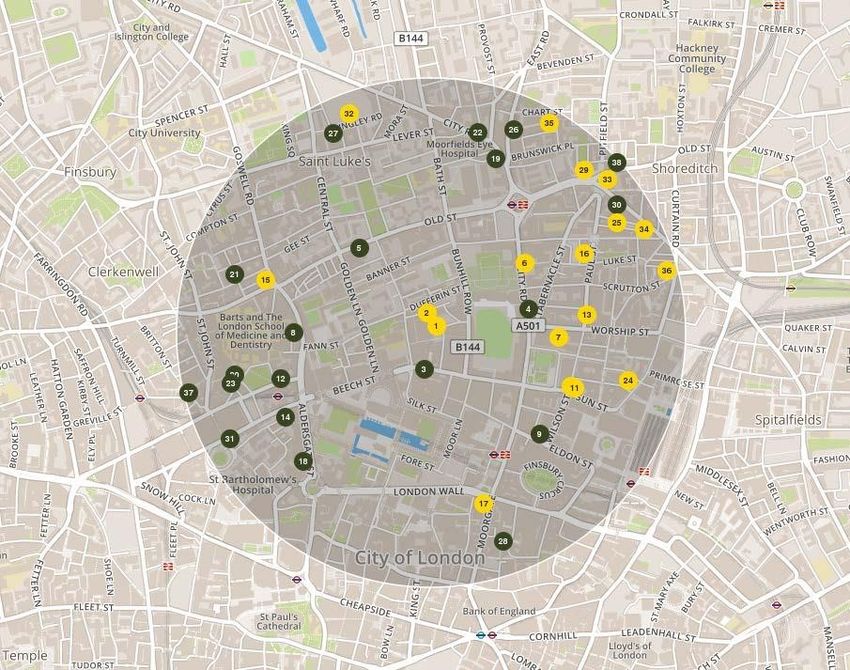
The map below details the current hotel supply (marked in green) as well as the current pipeline (marked
in yellow) as taken from AM:PM.
24Key
Marker Pipeline/Supply Hotel
1 Pipeline Hotel Indigo London - Barbican
2 Pipeline Errol St YMCA
3 Supply Montcalm at The Brewery
4 Supply Travelodge London Central
5 Supply EasyHotel London Old Street
6 Pipeline SACO Aparthotel
7 Pipeline Square London City
8 Supply Citadines Barbican
9 Supply South Place Hotel
10 Pipeline Flying Horse
11 Pipeline One Crown Place Boutique
12 Supply Carthusian House Apts
13 Pipeline Tune Hotel Shoreditch
14 Supply Cloth House Apts
15 Pipeline Mercure London Clerkenwell
16 Pipeline Pocket
17 Pipeline 67-71 Moorgate Apts
18 Supply London House
19 Supply Z Shoreditch
20 Supply Malmaison London
21 Supply City Marque Apts
22 Supply M by Montcalm
23 Supply Fox and Anchor
24 Pipeline Club Quarters
25 Pipeline Nobu Hotel Shoreditch
26 Supply Premier Inn
27 Supply Thistle City
28 Supply Apex London Wall
29 Pipeline Tech-City Hostel
30 Supply Hoxton Shoreditch
31 Supply Hills Chambers
32 Pipeline Nhow London
33 Pipeline Art’otel London Hoxton
34 Pipeline Park Regis Shoreditch
2535 Pipeline Blakes Shoreditch
36 Pipeline Curtain Hotel
37 Supply Rookery Hotel
38 Supply Holiday Inn Express
Future Hotel Supply
In the following table we provide an overview of anticipated and potential future additions to supply within
½ mile which we consider to be of relevance to the proposed Hotel Indigo, Barbican.
No. Grade
Project Bedrooms
Under Construction – Due in 2016
Curtain Hotel & Private Members’ Club 120 4
Nobu Hotel Shoreditch London 156 4
Tune Hotel Shoreditch 181 Budget
Square London City 256 5
Under Construction – Due in 2017
Park Regis Shoreditch 125 4
Under Construction – Due in 2018
Nhow London 190 4
Probable – Hotels with detailed planning permission
Tech-City Hostel (on hold) 12 Hostel
Club Quarters London Liverpool Street 392 4
67-71 Moorgate 25 Apts
Pocket (on hold) 213 Budget
Mercure London Clekenwell (on hold) 150 4
One Crown Place Boutique 32 4
Flying Horse 8 3
Errol St YMCA 146 Hostel
Probable – Hotels without detailed planning permission
Blakes Shoreditch 87 5
Art’otel London Hoxton 346 4
Source: AM:PM
Whilst there are a number of potential new hotels proposed, we consider the proposed Hotel Indigo at
Lamb’s Passage to be well-positioned within the market. This is due to its strong location within proximity
to key transportation links and commercial developments taking place, boutique product offer, market
positioning and affiliation to the IHG reservation and marketing networks and system.
26We would refer to the commentary within the Hotels in Islington report prepared by Ramidus Consulting
Limited on behalf of LB Islington regarding supply. It generally concurs with our findings and states that
the majority of new openings have been larger budget hotels, or at the luxury end of the market. Further,
in terms of pipeline it states that “relatively little of the new supply (proposed) is to be in Islington”.
Further, the report also points out that “ the likely growth in the number of hotel rooms in Islington is less
than many other areas in London”.
Evidently, the proposed scheme is neither a budget brand or a large hotel and therefore will provide
additional rooms to a market segment that is arguably undersupplied.
Whilst the number of potential or extant hotel schemes may appear significant, hotel use will always
compete against other potentially more lucrative uses. Therefore the viability of schemes and the returns
that developers are seeking will inevitably influence the number of hotel projects that actually commence.
Analysis
The following analysis highlights the strengths and opportunities for the proposed Hotel Indigo on Lamb’s
Passage.
Strengths
The proposed hotel site occupies a prime location offering excellent accessibility to a wide range
of corporate demand generators, which will underpin demand and drive premium average room
rates during peak midweek periods.
The proposed hotel is located adjacent to some of London’s most renowned event venues, The
Brewery and Barbican Centre, which attract a large number of events throughout the year and are
a source of significant accommodation demand for local hotels.
The site is excellently positioned to a number of main roads and public transport links ensuring
quick access to key business districts and leisure attractions across London and beyond.
The London hotel market has enjoyed robust levels of room occupancy and average room rates in
recent years in the fullservice sectors, clearly illustrating the strength of the local accommodation
market.
Due to high levels of corporate accommodation demand, competitive City hotels achieve premium
average room rates during peak midweek periods and demand at weekends continues to increase
as the profile of The City continues to evolve.
Major regeneration and development projects, recent, planned and underway in proximity to the
proposed hotel site, including Aldgate Tower and numerous residential developments, are
improving its attractiveness as a commercial and leisure destination.
The proposed Hotel Indigo will benefit from a leading international brand, delivery and distribution
system.
27 Differentiated food and beverage offer with the Marco’s New York/Italian concept will generate
significant chance trade.
Opportunities
Our analysis of the existing and potential future hotels facilities in the area demonstrates that there
is need for more 3 and 4 star hotels particlarly in the boutique arena.
Market evidence suggests that location and proximity to work are the key determining features in
corporate accommodation demand decision-making, affording the proposed hotel a competitive
advantage over other hotels located further away from The City and Old Street Roundabout.
The growing reputation of East Central London as an alternative leisure destination.
The continued effort of The City of London Corporation to increase the awareness of The City to
attract leisure demand through marketing campaigns, encouraging extended opening hours for
retail outlets as well as improved transport links to The City will assist in attracting weekend trade
to the proposed hotel.
Despite growing demand for quality accommodation (as opposed to budget accommodation),
particularly during the midweek period, the Barbican area remains relatively under-supplied,
presenting a clear opportunity for the proposed hotel to establish itself successfully in the Barbican
hotel market.
The ongoing development of iconic buildings will add to the attractiveness of the local area in
proximity to Lamb’s Passage.
IHG’s brand strength would allow the proposed hotel to benefit from the sales and marketing
network of a leading international hotel group and its reservation system
Comment
The hotel site characteristics present as a clear opportunity for a Hotel Indigo. The proposed Hotel
Indigo will benefit from the excellent accessibility to/from The City, Old Street, Central London and
surrounding areas.
Hotels in the market of relevance accommodate high-yielding transient corporate demand during
weekdays and relatively price-sensitive leisure demand at weekends. Whilst midweek demand
appears robust, The City hotel market remains a secondary leisure location relative to central
London, reflected in the lower rates commanded during the weekend period.
28 The strengths and opportunities of the proposed Hotel Indigo development site in our view,
underline the market opportunity for this project in Barbican. The proposed location of the
development as well as an increasing overall appeal of East London combined with the evident
success of the Hotel Indigo brand elsewhere in London, will enable the proposed development to
successfully compete within the wider hotel market and achieve a strong market position in the
Barbican area.
The Proposed Hotel Indigo Development, Barbican
Development Recommendations
In the following paragraphs we provide our comments and assumptions regarding the proposed Hotel
Indigo development at Lamb’s Passage, based upon information provided to us by London City Shopping
Centre Ltd and Lamb’s Passage Real Estate Ltd.
In assessing the opportunity for the hotel and its associated facilities we have also taken into account:
the location of the proposed Hotel Indigo, and the strengths and opportunities of the site;
the proposed market positioning (i.e. Hotel Indigo), in terms of standard of product, service and
branding for a new Hotel Indigo in this location;
the current and future hotel environment in the Barbican area, and the market positioning and
specific target markets appropriate to the proposed Hotel Indigo;
the comprehensive branded food and beverage offer;
the benefit of the proposed hotel being conveniently located for leisure and corporate demand
generators; and
provision of facilities capable of appealing to and serving the envisaged demand at the hotel.
We have based the scale, range and type of facilities for the proposed Hotel Indigo on information provided
to us by Sanguine Hospitality Limited and our knowledge of the development brand standards of Hotel
Indigo as well as on the leisure, conference and dining facilities of competitive hotels in the surrounding
area and our assessment of demand for the proposed hotel facilities.
29The following table summarises the facilities at the proposed Hotel Indigo development.
Component Characteristics
Operator Agreement Franchise Agreement
Bedrooms 61 bedrooms
Proposed Marco Pierre White’s New York/Italian Restaurant
Food and Beverage
Bar
Other Business Services
Rating Upper 3 star/ 4 star boutique
Source: Sanguine Hospitality Limited
We envisage the hotel will be in a position to operate both effectively and successfully within the local hotel
market, particularly those with less recognisable branding.
Based upon the existing provision of hotel accommodation in Barbican, the surrounding area and the
demand characteristics of the local hotel market, we consider that the development of a Hotel Indigo in this
location will represent a complementary source of accommodation to the existing hotel supply in East
London and the Barbican area in particular.
We consider the proposed Hotel Indigo, with the assumed facilities as outlined and locational
characteristics, will be able to establish a sustainable trading position within the local market place within a
three-year timeframe.
In the following paragraphs we discuss each of the proposed hotel components in more detail.
Hotel Bedrooms
The hotel will provide 61 bedrooms with the following facilities included in the standard en-suite bedrooms:
en-suite bathroom with power shower;
direct-dial telelphone;
complimentary high speed Wi-Fi;
air conditioning;
work space offering connectivity to in-room technology for guests’ own portable technology devices
such as notebooks, tablets and smartphones;
flat-screen TV with on-demand movies and internet;
laptop-size safe;
tea and coffee-making facilities;
iron and ironing board;
30 hair dryer.
Food and Beverage
According to the development plans provided by Sanguine Hospitality Limited the proposed Hotel Indigo,
Barbican, will offer the following food and beverage facilities:
The development of a branded restaurant associated with Marco Pierre White offering a higher
quality and wide food offer for breakfast, lunch and dinner.
The restaurant and bar are to be situated within a basement vault with a separate entrance/exit from the
hotel. The use of this space as a restaurant in our opinion is wholly appropriate given the intrinsic character
of these historic parts and is complementary to the hotel, yet provides a business use that may not otherwise
be attracted to the location.
Based on information provided by Sanguine Hospitality Limited, the restaurant for the proposed Hotel Indigo
will be branded under Marco Pierre White’s new restaurant brand, Marco’s New York/Italian. The menu
comprises American and Italian dishes including salads, pizzas, pastas and hamburgers, made using local
produce. Particular attention has been given to the interior design which replicates New York Italian
eateries, as illustrated in the picture below.
Proposed Marco Pierre White Restaurant
Based on information provided by Sanguine Hospitality Limited, we understand that Marco Pierre White
branded restaurants in other locations (Birmingham, Stratford and Newcastle) and also situated within Hotel
Indigo properties, not only achieve a high sleeper/diner ratio, but are effectively operating as a stand-alone
product within the local food and beverage market. A key strength for the proposed food and beverage
facilities is the proposed Hotel Indigo’s location in proximity to major corporate demand generators, as well
as several key tourist attractions.
31You can also read


