PWC INDIA NEXT GEN STUDY 2018 DRIVING GROWTH THROUGH CHANGE
←
→
Page content transcription
If your browser does not render page correctly, please read the page content below

PwC India Next Gen Study 2018
Driving growth through change

                83%
                of the next gen think it’s important
                to continuously innovate products
                and services.

                81%
                feel that it’s necessary to have a strategy
                fit for the digital age.

                81%
                have clear ideas on taking the
                business forward.

                50%
                expect to manage the family business
                one day.

                                          www.pwc.in
‘The expectation is to continuously
innovate, evolve and bring new
technology to our marketplace. The most
exciting part about our business is the
ever-evolving technology. We are well
prepared for innovation. I think one of
the reasons why our customers like us is
because we go to them with technology
that should come after 3–5 years.’
Arjun Jindal
Machino Polymers. Third generation

‘The only thing that has
happened between my
father’s generation and
ours is that we have a
lot more opportunities
to learn. There is
absolutely no difference
in the attitude and the
willingness to learn
and to adapt.’
Devesh Bansal
Skipper Ltd. Third generation

2 PwC

Contents
4    Foreword

6    Dealing with business issues

10   Working in the family business

14   Maximising the next gen advantage

18   Driving change and implementing ideas

     Digitisation, technology changes and
22   innovation

29   Looking ahead
                                      Next Gen Study 2018 3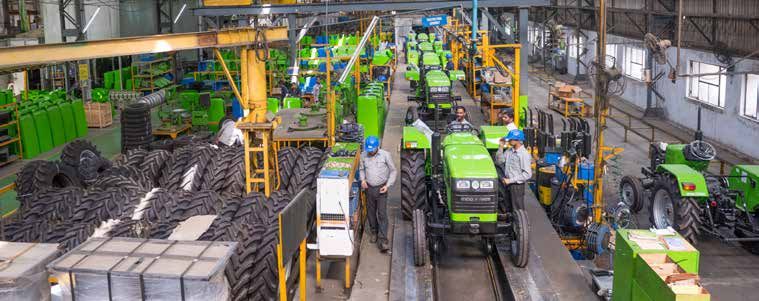
Foreword

                      A couple of years back, we at PwC surveyed 268 next gen entrepreneurs across the world
                      and our findings were published in the report Next Gen Survey 2016, ‘Great Expectations:
                      The next generation of family business leaders’.1 This year, we carried forward some of our
                      conversations to assess what steps the next gen have taken to handle some of the challenges
                      they spoke about. How are they bringing about change in their business and their views on
                      business strategy? How are they enabling their businesses to adapt to and adopt digital and
                      technology? What are their views on innovation? How are they making themselves heard
                      by family business leaders? How are they exploring the set-up of their own ventures?
                      This year, globally, we spoke to/polled 137 next gen entrepreneurs. The findings of
                      this research are presented in our report ‘Same passion, different paths’,2 which speaks
                      about four categories of next gens: stewards, who focus on protecting the profitability
                      of the family business and ensuring its long-term sustainability; intrapreneurs, who set
                      up their own venture within the family business, often with family business backing;
                      transformers, who look at driving change in the firm; and entrepreneurs, who set up
Ganesh Raju K
                      their own venture outside the family firm. The report further says that irrespective
Partner and Leader,
                      of the path chosen by the next gen, there are five factors which determine success:
Entrepreneurial and
                      culture, communication, clarity, credibility and commitment.
Private Business
                      In India, we had in-depth conversations with 9 next gen leaders and their stories
                      are captured in this report. We also polled 36 next gen entrepreneurs and our study
                      captures both the global and Indian findings. We also share with you some personal
                      insights from the next generation of family business leaders—the path they took, how
                      they work with the family and how they look at leading through change.

                      The family business case: Reinvention, regeneration
                      and adaptability
                      Family businesses are the backbone of the Indian economy. In our Family Business
                      Survey 2016, ‘Aligning with India’s growth story’,3 we spoke about the role of family
                      businesses. I would like to reiterate some of the thoughts here: ‘In India, the role of
                      family businesses in nation building, wealth creation, employment generation and
                      contribution to the exchequer is both significant and commendable. While some Indian
                      family businesses have followed the same lines of businesses started by their fathers
                      or grandfathers and grown these significantly, others have diversified considerably
                      by setting up new businesses, exploring new sectors and markets, expanding
                      geographically and increasing their global footprint.’
                      Each successive generation reinvents, regenerates and adapts on account of changes in
                      thought processes across generations as well as changes in the external environment.
                      This could not be truer today when we see technology both disrupting and enabling
                      business enterprises. While some are able to leverage technology and stay ahead of the
                      curve, those who aren’t able to, or perhaps are not willing to, are unfortunately getting
                      left behind. The cause for digital, innovation and technology change is one which is
                      very close to every next gen’s heart.

                      Dealing with digital and technology changes and innovation
                      Perhaps that’s why 81% of the Indian next gen leaders feel that is important to have a
                      strategy in place for the digital age. Yet only 53% felt that their company performed
                      well on this front (of which only 11% say they performed very well). Futher, 83% feel
                      it’s necessary to continuously innovate their product or services.

                      1PwC. (2016). Next Generation Survey 2016. Retrieved from https://www.pwc.com/gx/en/services/
                         family-business/next-gen-survey.html (last accessed on 29 March 2018)
                      2 PwC. (2017). Next Gen Study 2017 – Same passion, different paths. Retrieved from https://www.
                         pwc.com/gx/en/services/family-business/next-gen-study.html (last accessed on 29 March 2018)
                      3 PwC. (2016). PwC India Family Business Survey 2016. Retrieved from https://www.pwc.in/
4 PwC                    publications/family-business-survey-2016.html (last accessed on 29 March 2018)
Strategising for the future                                           company and an openness to accepting new thoughts and
                                                                      ideas. Modernisation, professionalisation and bringing in
Most of the next gen we spoke to have postgraduate
                                                                      external subject matter experts, digital and innovation—all
degrees, a number of them in entrepreneurship, business
                                                                      of these are important to the next gen. Again, a lot of this
management, engineering or finance. A few have also
                                                                      can be attributed to the education and experiences of the
worked outside the family business, both in India and
                                                                      next gen while away from their family businesses.
overseas. With their global outlook, the next gen are keen
on bringing their learnings and experiences into the family           The next gen acknowledge that to make their transition
business. This could very well be the reason why most                 into the business smooth, it is imperative that they have
(97%) lay emphasis on the need for having a clear-cut mid-            patience, listen to experienced business leaders—family
term strategy along with a clear and documented long-term             or non-family—and convince their parents and teams
plan (67%). Our survey of family business leaders in 20164,5          by making decisions and executing them on the basis of
revealed that planning for the middle years was not given             information, study, trials and preparation. Commitment to
as much importance as the long-term strategy. The next gen            the business and willingness to invest time are critical for
are more than ready to recognise the need for bridging the            the two generations to work together.
gap between the present and the long term.
                                                                      Ownership vs management
Working with the family in the                                        When we surveyed Indian family business leaders in 2016,
family business                                                       we found that only one-third planned to pass the business
From our conversations with family business leaders and               fully on to the next generation, while half planned to pass
the next gen, we have historically found that the next gen            on ownership of shares while bringing in professional
faced three kinds of gaps with the current generation—the             management. Let’s compare this to what we have heard
credibility gap, the generation gap and the communication             the next gen say: 50% expect to be managing the business;
gap. Family dynamics, the culture of the business and                 however, till date, this has this been agreed upon only
the degree of autonomy and independence given to the                  for 19%. Further, 16% are in senior roles/expect to take
next gen play a crucial role in defining the next gen’s               up senior roles but don’t expect to manage the company,
career paths and decision-making ability. Most of the next            while another 17% are looking at ownership and not
gen we spoke with said that they performed better and                 management. As more and more next gens get inducted
learned more when they were given the room to make                    into the family business or leverage the family business for
decisions and, more importantly, make mistakes. There                 their own ventures, it is necessary that next gen roles are
is an ask from the next generation to move away from the              clearly articulated while considering their expectations and
traditional, hierarchical way of doing things and to delegate         ambitions as well as the current generation’s outlook. This
and decentralise more while ensuring there is clarity                 is imperative for successful transition, in the business and
and demarcation of roles and responsibilities across the              in the family.

   Methodology

   45            Interviews were conducted
                 in India, including 9 personal
                 in-depth conversations
                                                            Interviews and e-polls were conducted between
                                                            1 June and 15 August 2017. The findings in the

   137
                                                            report are based on the global and Indian samples.
                      Interviews were
                      conducted globally

4 PwC. (2016). PwC India Family Business Survey 2016. Retrieved from https://www.pwc.in/publications/family-business-survey-2016.html
   (last accessed on 29 March 2018)
5PwC. (2016). 2016 Family Business Survey. Retrieved from https://www.pwc.com/gx/en/services/family-business/family-business-
   survey-2016.html (last accessed on 29 March 2018)

                                                                                                                  Next Gen Study 2018 5
Dealing with business issues

An overwhelming majority (97%) of India’s next gen                       We noticed that development of a long-term strategy is
leaders have told us that it is necessary to put in place a              low on the list of business priorities, perhaps because this
clear mid-term strategy for the success of a business. They              is a given in most organisations and thus not many view it
have ranked this as the most important business issue in                 as a concern. However, while most family businesses may
their organisations. It is evident that the next gen leaders             have envisaged a long-term strategy, 67% of the next gens
are trying to bring into the family fold the learnings they              in India (73% globally) feel that it’s important to have it
have acquired through their education and exposure to                    clearly documented, perhaps to ensure that the organisation
global and Indian work cultures outside the family business.             remains focussed and goal oriented. Yet, only 44% of Indian
                                                                         and global next gen leaders feel that this business issue is
The ‘missing middle’, which is the gap between the current
                                                                         being tackled well (refer to the graph alongside).
and the long-term plan, is an essential aspect of business
planning, and our Global Family Business Survey 20166                    While long-term planning is visionary, a mid-term
highlighted how this doesn’t figure as a business priority in            strategy is developed for operational planning. Disruption
family business houses. Family businesses advance keeping                and the ever-changing landscape are compelling next gens
their long-term vision in mind, and at times, become more                to focus on this missing middle. It is also vital to revisit the
absorbed with the day-to-day functioning of the business.                long-term plan frequently and suitably mould the mid-
Amidst all this, medium-term planning around matters such                term strategy.
as technology and talent gets ignored.

Importance of business issues

                                                                                                                      India       Global

                            Having a clear mid-term strategy             47 %                     50%                 97%           90%

                    Continually innovating products/services             47 %                   36%                   83%           82%

                       Having a strategy fit for the digital age           53%                  28%                   81%           75%

                                 Being prepared to take risks        33%                  39%                         72%           68%

  Bringing in external expertise to address current challenges     25%                 44%                            69%           64%

          Having a clear and documented long-term strategy           36%                31%                           67%           73%

                     Making a positive contribution to society       36%               28%                            64%           61%

                      Moving into new geographical markets         22%           28%                                  50%           52%

                                     Diversifying the business 14%         25%                                        39%           47%

                                                      Essential          Very important

Q: How important do you think the following issues are for your company?
Base: All India respondents (n = 36), all global respondents (n = 102)

6 P
   wC. (2016). 2016 Family Business Survey. Retrieved from https://www.pwc.com/gx/en/services/family-business/family-business-
  survey-2016.html (last accessed on 29 March 2018)

6 PwC
Technological and digital disruption has made it mandatory                            set and the rapid pace of technological changes is making
that companies think continuously of innovation in their                              products and processes obsolete faster.
products, services, processes and practices. India ranks
                                                                                      More than half of the next gens we spoke to (53%) (refer
60th on the Global Innovation Index of 2017.7 A majority
                                                                                      the graph alongside) have stated that digital is one of the
of Indian family business leaders (56%) feel that the need
                                                                                      most essential issues which needs to be looked at by the
to continuously innovate is a key challenge over the next
                                                                                      business. However, we find that only 11% of the next gen
five years.8 The next gen realise this need even more, with
                                                                                      feel they are performing very well on this front, while 42%
47% saying that it is an essential issue which needs to be
                                                                                      opine that they are performing fairly well. The significant
tackled and another 36% saying it is very important (refer
                                                                                      pace at which technology is enabling platforms, processes
to the graph alongside). Yet, while there is an appreciation
                                                                                      and systems to bring about expansion in the business is
of this concern, only 14% of the next gen feel their company
                                                                                      something which cannot be ignored. From retail companies
is responding very well to this issue, while 58% feel they
                                                                                      to manufacturing, from healthcare and pharma to oil
are performing fairly well. There is clearly a need to further
                                                                                      and energy businesses, digital platforms are being set up,
push the cause of innovation, particularly in the current
                                                                                      enabled, expanded and modified continuously. For Anindith
economic environment, where public policy and reforms
                                                                                      Reddy, Apollo Hospitals (third generation), ‘The digital
are paving the way for an increased entrepreneurial mind-
                                                                                      health consumer in the country is very mature. Rebuilding

Company performance on business issues

                                                                                                                             India   Global
   High
                                                  Having a clear mid-term strategy 8%                      64%               72%       66%

                                          Continually innovating products/services    14%                  58%               72%       70%
   Issues ranked by importance

                                             Having a strategy fit for the digital age 11%         42%                       53%       48%

                                                      Being prepared to take risks    14%            42%                     56%       69%

                                                   Bringing in external expertise to
                                                                                     8%           42%                        50%       60%
                                                       address current challenges

                                 Having a clear and documented long-term strategy      17%         27%                       44%       44%

                                          Making a positive contribution to society     25%                      56%         81%       71%

                                            Moving into new geographical markets       19%            33%                    52%       52%

                                                          Diversifying the business 6%          39%                          45%       55%
   Low
                                                                          Very well          Fairly well

Q: And how do you think your company is performing in terms of addressing these issues?
Base: All India respondents (n=36), all global respondents (n=102)

7 Cornell, INSEAD, & WIPO. (2017). The Global Innovation Index 2017. Retrieved from https://www.globalinnovationindex.org/gii-2017-report
   (last accessed on 29 March 2018)
8 PwC. (2016). PwC India Family Business Survey 2016. Retrieved from https://www.pwc.in/publications/family-business-survey-2016.html
   (last accessed on 29 March 2018)

                                                                                                                             Next Gen Study 2018 7
the whole system takes time. So we looked for small wins in           the enterprise. Which is perhaps why only 8% of the next
terms of integration with and directly complementing SBUs             gen feel that their organisations are handling this issue
or service lines. At the same time, we continued to look at           very well. Read more on professionalisation, career paths
a larger integration strategy. Some of those were standards           and business transition on page 10. Also read our 20th
that have been defined by international healthcare                    CEO Survey10 – Private company view, ‘Undaunted, but
organisations.’ Read more on the digital outlook of the next          underprepared?’ which lists some tips on attracting and
gen leaders on page 22.                                               retaining talent.
Given this background and the ever-changing landscape,                The next gen take a lot of pride in contributing to
the next generation is cognisant of the fact that the                 philanthropic projects. The values of a family business
business will need to take risks to achieve growth. The               are defined by previous generations and in India, given
entrepreneurial spirt of the next gen is high, and while 72%          that family businesses have been contributing to social
of the next gen in India recognise risk-taking as an issue,           causes for a while, the next gen are more than happy
only 56% feel that their business is sufficiently organised           to continue the legacy. Which is perhaps why 25% feel
to handle the risks it faces—internal or external. For the            that their businesses are performing very well in this
rest, perhaps there is an impetus to engage in risk-taking,           area—a stark difference compared to other business
but they are more cautious as they feel their business is             issues, where a majority of the responses stand at ‘fairly
more vulnerable. This could be because their business is              well’. Social contribution is usually centred around the
not appropriately designed to handle risk or they don’t               upliftment of employees and their families and giving
have an appropriate methodology for risk management.                  back to areas around the business premises/within the
With the five megatrends9 reshaping business dynamics,                business community. Funding of independent schemes
business risks will evolve and perhaps be magnified                   and projects is rarer.
exponentially. Therefore, businesses will need to evolve
                                                                      Today, India is one of the fastest growing major
their risk management strategies and build a buffer against
                                                                      economies in the world. According to India’s Economic
changes—expected and unexpected. Today, there is a
                                                                      Survey 2017-18, the country is expected to achieve 7–7.5%
business imperative to have a suitable risk framework in
                                                                      growth in 2018–19,11 which will reinstate India as the
place. Globally, 68% of the next gen recognise risk as an
                                                                      world’s fastest growing major economy. The next gen
issue and 69% feel that they will be able to handle risks well
                                                                      in India are leveraging the current growth momentum
by ensuring self-preparedness as well as preparedness of
                                                                      through proper planning and strategising; focusing on
the business to manage risk.
                                                                      digital, technology and innovation; and exploring external
There is a growing recognition within family businesses               expertise when needed. Venturing into new markets and
that some of the challenges may warrant the help of                   geographies and diversification of businesses are also on the
external subject matter experts—either as employees or as             cards. However, 50% of the next gen prefer to stick to the
consultants. Promoters are increasingly recognising the role          markets they operate in, while 61% echo their belief in the
that professionals/external subject matter experts can and            existing business. These responses indicate that India is still
do play in business success across functions. Additionally,           a land of opportunities and the next gens here are satisfied
having worked outside family businesses, the next gen                 with the potential of domestic markets vis-à-vis next gens
recognise that there is a need to consult external experts            globally who are more open to diversification outside their
and, more importantly, take their suggestions on board on             existing businesses.
specific areas. Our survey of family businesses revealed
that attracting external talent is a major challenge given
that professionals are often not given a clear career path in

9 PwC. (n.d.) Megatrends. Retrieved from https://www.pwc.co.uk/issues/megatrends.html (last accessed on 29 March 2018)
10PwC. (2017). Undaunted, but underprepared? A private company view from the 20th CEO Survey. Retrieved from https://www.pwc.com/
    gx/en/ceo-survey/2017/deep-dives/private-company-view-ceo-survey.pdf (last accessed on 29 March 2018)
11 M
    inistry of Finance, Government of India. (2018). Economic Survey 2017-2018. Retrieved from http://mofapp.nic.in:8080/economicsurvey/
   pdf/001-031_Chapter_01_ENGLISH_Vol_01_2017-18.pdf (last accessed on 29 March 2018)

8 PwC
Arjun Jain
                            Varroc Group. Second generation
                            Driving change in the automotive industry

Varroc was founded in 1990. The auto company expanded            Today, the biggest challenge Arjun faces is designing,
significantly over the years by identifying gaps in the market   developing and producing technology. The second gen
and developing relevant products. Arjun Jain is a second         entrepreneur makes the following admission: ‘Disruption
generation entrepreneur who joined the business strategy         for any established player is a scary word. The speed
division four years back after working for a couple of years     of technology makes it impossible to ignore and we are
outside the family business. Since May 2015, he has been         continuously evaluating when it makes sense to bring
heading the electrical and electronics business. He says,        more technology into products and processes. We know
‘Before joining I was not necessarily married to the idea that   if we implement change when needed, we will accrue
I was going to do this for the rest of my life. Now I am. The    early-mover benefits and rewards rather than being forced
ability to influence the direction of the company was always     to implement it from a position of relative weakness. We
important to me. There was never a question in my mind           look at digitisation as a way of better enabling the offering
that if everything worked out, Varroc would definitely be        we can give to customers, whether in terms of speed,
the place where I would have the biggest impact.’                quality, or cost.’
After working for not so hierarchical professional               The biggest advantage in a family business is that you are
organisations, Jain felt that the environment and culture        less likely to succumb to quarterly or yearly pressures.
at Varroc were different. Right after becoming the business      Arjun is a believer of principles and says, ‘The best form of
head, he had a strike in his largest plant and that was very     accountability to a shareholder is if you are driving long-
stressful for him as someone who had no experience of            term growth and if you are a sustainable business. If you
running a plant, leave alone a business unit. Reduction          do social service professionally, you have to create impact;
of sales during demonetisation was also challenging,             you play professional sports to be #1 and in business, if
and ensuring that the organisation was nimble enough             you are not achieving financial success, you should try
to adapt and yield profits was important. As a long-term         something else.’
strategy, hiring was one of his first focus areas as that,
according to Arjun, directly impacts the culture: ‘I am
ultimately responsible for profit and loss and the health
and growth of the business. So is my father. We build
our teams around the values that we have and the way
we like to operate. Our teams have also gone on to build
their teams in the same way. This way it’s a lot easier to
build the culture that you want.’ Moving one step further,
Arjun is focused on achieving sustainability in his business
processes. Rather than being people dependent, he would
be systems dependent as he believes that will help drive
long-term growth and enable Varroc become a true Indian
multinational company: ‘We have had experiences in the
past where the plant head changed and that transformed
the plant outlook. We should not fluctuate to that degree
and should be able to tackle business challenges with
minimal stress in the system, and have systems and
processes that achieve that naturally.’
However, driving change in an organisation is challenging.
In certain cases, Arjun would run a pilot in his business unit
and if it was successful, it would be implemented across the
organisation. He says, ‘We are a democratic organisation;
our decision-making process is consensus based. Unless I
am able to convince everyone who sits around the table or
at least the people affected by the action I am talking about,
it’s unlikely that I would be able to implement that change.’

                                                                                                          Next Gen Study 2018 9
Working in the family business

The Indian family business house is still largely traditional          working at junior or middle management levels. Globally, as
and a majority (91%) of the next gen we profiled occupy                the graph below shows, the percentage is lower (67%).
senior/board-level positions; there are very few next gens

Current role

                                                                                                      30%
                                                      Board level
                                                                                                                         47%

                                                                                                              37%
                                             Senior management
                                                                                                                     44%

                                                                                        16%
                                            Middle management
                                                                       3%

                                                                      1%
                                               Junior role or level
                                                                       3%

                                                                       2%
                                      Trainee/executive assistant
                                                                      0%

                                                                             6%
          I don't work in the business but have an ownership role
                                                                       3%

                                                                                   8%
                                                            Other
                                                                      0%

                                                            Global         India

Q: Which of the following best describes your current job level within the company?
Base: All India respondents (n = 36), all global respondents (n = 102)

  Transition, succession and professionalisation
PwC India’s Family Business Survey 2016 highlighted that               With regard to future roles that the next gen expect to
35% of family business leaders plan to pass on management              play within the family business, 50% say that they expect
to the next gen, while 48% plan to pass on ownership but               to be managing the business one day, though only 19%
will bring in professional management. Further, 72% say                acknowledge that this has been agreed on. Globally, 57%
that they will look to get professionals into the business over        expect that they will be running the company and for 32%,
the next few years, while 81% acknowledge that they have               this has been agreed upon. Another 16% (22% global) are in
non-family members on the board. These statistics seem a bit           senior roles/expect to take on senior roles but do not expect
adverse considering most next gens occupy board positions/             to manage the business. Finally, 17% of the Indian next gen
senior levels in the organisation. What could be the reason            are looking at ownership only.
for this gap? Could it be that the current gen is under-
                                                                       Transparent communication between the two generations is
confident of its next gen? Were the next gen not groomed
                                                                       imperative to facilitate discussions around career paths and
sufficiently by the current gen or not suitably mentored by
                                                                       goals and ensure that the outlook of the current generation
their appointees? Did the next gens have enough opportunity
                                                                       and the ambitions of the next gen are aligned. More and
to grow and learn from peers? Were the next gen given
                                                                       more companies are looking at putting in place family
enough room to perform? Were the next gen given authority
                                                                       constitutions and family protocols. For business continuity,
with responsibility? These are some questions which need to
                                                                       it is necessary that succession plans be formulated,
be answered by both generations to manage expectation gaps
                                                                       documented and agreed upon for all key roles and positions
which may arise during business transition and succession.
                                                                       in the company. In India, this number is very low at 15%.12
12 P
    wC. (2016). PwC India Family Business Survey 2016. Retrieved from https://www.pwc.in/publications/family-business-survey-2016.html
   (last accessed on 29 March 2018)

10 PwC
Future role
I expect to manage the company 32%
one day and this has been agreed 19%
I would hope to be managing the company 25%
one day but this has not yet been agreed 31%
I expect to take on a senior role in the company in 14%
the future but don't expect to manage the company 8%
I am already in a senior role in the 8%
company but don't expect to manage it 8%
I expect to have an ownership 12%
role but not a management role 17%
6%
Other 11%
3%
Don't know/prefer not to say 6%
Global India
Q: Which one of the following statements best describes your possible future role in the company?
Base: All India respondents (n = 36), all global respondents (n = 102)
The next gen acknowledge that there may be a business
imperative to seek external expertise at the board /senior levels ‘If you ask me what my ambition is, it
as businesses look to cash in on the growth momentum in India. would be to lead the business. Having
As Devesh Bansal, Skipper (third generation), puts it: ‘In the last said that, I am cognisant of the fact that
three years, we would have brought on board possibly some of the I have to be capable of leading a nearly
best talent in the industry. In some of our businesses, our company 2 billion USD plus growing business.
is probably one-tenth the size of the market leader, to be able to If I am not, I am doing everybody a
attract that kind of talent – to switch from them to us – it takes a disservice by leading the business. It is a
lot of effort. We are very sure that going forward, with the kind tremendous responsibility and I should
of professionals that have come in and joined us, this journey is be able to deliver on that responsibility.’
going to be that much more positive.’ More often than not, the
Arjun Jain
perception that all decisions lie with the promoter and very little
Varroc Group. Second generation
authority is given to the non-family managers prevents leading
professionals from joining family enterprises. In order to attract
and retain experienced professionals, it is critical that definitive
career paths be agreed on with them.
‘It is essential to build a culture that
In addition, the next gen emphasise that seeking the help of enables healthy debate within the
external consultants and experts is necessary as businesses promoter family and professionals.
navigate ever-changing political, economic and growth Even though the ultimate call rests
environments. More importantly, they feel that family businesses with the promoter, unity of objective
need to be more conducive and amenable to taking the advice of ensures better decision making.’
external experts on board.
Nihaal Mariwala
To the next gen, professionalisation and seeking external expertise
OmniActive Health Technologies.
also include setting up systems and processes, building stronger
Fifth generation
and independent teams, empowering middle management,
clearly demarcating roles and responsibilities, automating
tasks in specific areas (say finance and customer relationship
management), professionalising the legal function, and
diversifying the portfolio and customer base.
Next Gen Study 2018 11Kaushal Dugar
Teabox. Third generation
Fuelling passion with tea
The tea business was started by Kaushal’s grandfather who
moved from Rajasthan to Bengal before independence in
search of entrepreneurial opportunities. When I suggested to my family firm that we
start selling direct to consumers via the web,
they were very sceptical.
Tea is essentially the world’s second most
consumed beverage. As a kid, I spent a lot of time
visiting the plantations with my father. There I The tea industry in India is huge, there are
was exposed to drinking tea as it was made. That about a billion kilograms produced every year.
kind of quality was probably the best because it The scale at which we operate today is not even
was the freshest. In my travels I realised that the 1 or 2% of that. Even if we grow 10x or 20x,
quality I was used to as kid when I was growing there is still a scope for a lot of people. The idea
up and the quality available to consumers all was that I could still do what I wanted to do
around the world, there is a difference of around and create my own niche without affecting or
100x. If that kind of quality could be made disturbing the existing family businesses. The
available to consumers around the world, it could best thing which has happened now is that we
then be a very big business. realised everything is complementary.
Find out more about Kaushal’s story here: http://www.pwc.in/services/entrepreneurial-and-private-business/pwc-india-
next-gen-study-2018.html
12 PwCAnshul Khadwalia
Indofarm Equipments Limited. Second generation
Long-term benefits, ethics and
empowerment: Three pillars
of tractor manufacturing
Indofarm was set up in 1982 by Mr. R S Khadwalia, Anshul’s approach to this one. But my father gave me the freedom
father and a first-generation entrepreneur. For 14 years, the to make decisions and more importantly make mistakes.
company focused on trading tractors, post which it decided Eventually, I started my own dealership and today we have
to get into manufacturing and secured crucial technological four. I sell almost 350 tractors from every dealership. Now
and business tie-ups with overseas manufacturers. Anshul my CFO asks me, “Why can’t we have 50?”’
started his training in 2009 while pursuing his education
Anshul strongly abides by the three pillars set by his father,
in the UK. About his decision to join the family business, he
which form the foundation of the business. Firstly, not
says, ‘My father made it clear that I could not be part of the
working for short-term transitory profit: ‘I can save 20,000
family business just because it was a family business. He
INR by going to tier B suppliers, but we will not do that.
said that I would have to be fully capable of handling the
My father is the son of a farmer; he wants a farmer to
business. My father even asked me if I wanted to start my
feel delighted when he buys a tractor, not just satisfied.’
own business. He said, “I will give you the required funds,
Secondly, being ethical and honouring commitments.
but if you decide to do this you have to 100% co-own it.” He
Thirdly, he states, ‘We believe in delegation of control and
gave a purpose to my goal. I entered the business at 21 and
in empowering people. My state head has as much power
people would come up to me and say, “Hi, I have 21 years of
as maybe I do. He will take some good decisions, some bad
work experience.”’
ones, but we have to give him the power to work like an
When Anshul returned from Birmingham to join the owner and not like an employee.’
business, he first had to unlearn whatever he had learnt
Today, the company has two divisions—the tractor division
since this was not the UK. He realised he needed a strong
and the construction equipment division. One of the biggest
team and spent four years trying to create one. Now, he
challenges facing the business is that the end customer
has a 400-member team reporting to him. Anshul says, ‘I
is worried about the down payment he needs to make
can sell an average tractor if I have the right people, and I
and the resale value. Finance options are the need of the
couldn’t sell the best one if I didn’t have the right people.
hour. This business imperative made Indofarm venture
Employees are the biggest asset to any organisation. Our
into NBFC options.
manpower attrition rate is less than 2%. I have confidence
that even if someone offers my state head five times the The company’s punchline is now ‘Thank you, Kisan’. ‘We
salary, he will not move.’ want to bring the pride back to farming,’ says Anshul. In 20
years, Anshul wants to provide a 360-degree solution for
Anshul recalls that within six months of joining he
the farmer—right from his pesticides, his seeds, his know-
pitched the dealership concept to the board, which he
how to everything he needs. He adds, ‘If farming is done
was very wary about since the company had not had a
right, I think we can solve the hunger problem of one-third
good experience earlier. He says, ‘My CFO had a negative
of the world.’
Next Gen Study 2018 13Maximising the next gen advantage
How are the next gen capitalising on the significant better utilised. Further, a significant number (64%)
opportunities available to them? Well, for one, most feel that the skills and knowledge they have are not
of them are postgraduates with degrees, from India or sufficient for future roles. These concerns together point
overseas, in finance, banking, engineering, management, to two problems which the next gen face—resistance to
law and/or entrepreneurship. Next, a number of them have change and not being heard, particularly when it comes
gained work experience outside the family business. Our to matters around modernisation, digital, innovation,
Global Next Generation Survey 201613 revealed that 70% of technological changes, professionalisation, etc. Coupled
the next gen had gained outside experience and for 43%, with this is the lack of mentoring or grooming or
this was part of a structured plan. availability of sufficient room for the next gen to grow,
make mistakes and learn. There is a compelling case
The chart alongside highlights four areas of concern:
to push for better integration of next gen in the family
1. Credibility gap between the current and next business and the need for next gen to be primed as they
generation: 64% of the next gen strongly agree that they assume higher responsibilities.
challenge decisions when they consider their input to be
3. Succession planning: Only 28% of the next gen strongly
beneficial to the business. However, the fact that more
feel they have clarity on their future role.
than a third of the next gens we surveyed don’t do so is
a worrying trend, particularly where they feel it could 4. Vision: Nearly one-fifth of the next gen strongly feel that
have a bearing on the business. their vision differs from that of the current generation.
This may, at times, be a blessing in disguise. In a
2. Apprehension around preparedness: While 56% of
highly competitive environment, different visions, if
the next gens feel that the knowledge and experience
handled in good spirit and with harmony, could present
they gained from working outside the family business
two directions in which an organisation can grow
has been invaluable to their family business, an equal
and function. Again, an open dialogue and flexible
number feel that their skills and knowledge could be
environment can make this happen.
‘In a family business, your preparation
starts from when you are born. I have
been going to office with my grandfather
since as far back as I can remember. After
kindergarten or even elementary school, I
would sit with a colouring book on his table, but
I would hear his voice – he would be speaking to
people about business and about issues, about
doing whatever needs to be done and that has
always stayed with me.’
Arjun Jindal
Machino Polymers. Third generation
‘A fresh MBA graduate would certainly
not have been hired to take on the
responsibility that I was given right after
my MBA. In a family firm, you are given
opportunities that can sometimes far exceed
your immediate known abilities to handle
them. It pushes you in a very different way to
step up.’
Zahabiya Khorakiwala
Wockhardt Hospitals. Second generation
13 P
wC. (2016). Next Generation Survey 2016. Retrieved from https://www.pwc.com/gx/en/services/family-business/next-gen-survey.html
(last accessed on 29 March 2018)
14 PwCAgreement with statements about their skills and knowledge
India Global
I challenge decisions when I feel my
64% 25% 89% 86%
input would benefit the business
I bring an important and different skill set 56% 33% 89% 85%
I'm lacking skills and experience that I will need for my future role 14% 50% 64% 70%
My skills and knowledge could be better utilised 25% 31% 56% 63%
The knowledge and experience gained from other companies
34% 22% 56% 56%
has been invaluable for our business
I’m clear what my future role will be/it’s been planned out 28% 22% 50% 50%
My vision is different to that of the current generation 19% 19% 38% 37%
Agree strongly Agree slightly
Q: How strongly do you agree with the following statements?
Base: All India respondents (n = 36), all global respondents (n = 102)
Next Gen Study 2018 15Aditya Bhaskaran
Indus Biotech. Second generation
‘I have always set my own path.’
Aditya Bhaskaran is the son of the founder of Indus learned hands-on how to run an organisation. Business
Biotech—a fast-growing business which is already selling its is about so much more than just numbers; day-to-day
products across the world. Aditya has always seen his future operations and managing people are a huge part of it.’
as a steward of the family business and chose his academic
It’s no surprise, then, that Aditya sees no downside to
path with that in mind. He says, ‘I studied corporate
investing his career in his family firm. He says, ‘Being the
law both in India and in the US and did an internship in
boss’s son has meant I’ve been part of the management
intellectual property. That’s a key area in our industry and I
team much earlier than other people my age. That’s been a
wanted to be sure I’d be making a real contribution.’
huge challenge and I’ve really enjoyed it. But you need to
He joined Indus three years ago, immediately after he work for it. You can’t just sit there and expect it to be given
graduated. Aditya states, ‘Even though I always saw Indus to you on a plate. You have to work hard to understand the
as my destination, I didn’t expect it to happen so quickly. I basics, get your hands dirty, and only then expect to start
thought I’d work in a corporate environment or in litigation, moving up the ladder. So, I have always set my own path
but it just happened. I had a talk with my father when and always worked in my own way with the aim of doing a
he came to my graduation and he said, “Why don’t you good job without any attempt to outperform what my father
come on board? You’ll learn a lot, both about business and has achieved. Pressure like that isn’t helpful to either him or
the law.” I liked the idea of stretching myself beyond my me. Yes, I’d love to run the business one day, but right now I
core competence into areas like science and finance. That just see the next job in front of me.’
challenge excited me.’
Looking ahead, Aditya would like to effect change in Indus
Describing his experience thus far, Aditya says, ‘So far, it’s in an evolutionary rather than a revolutionary way: ‘Our
been fantastic. I don’t think I could have expected more. business is in an industry that’s leading technological
The learning curve has been steep and my dad and the transformations and we have to keep up with that change.
others in the management team have been great mentors. I would like to build on what we’ve already achieved and
When I first joined, it was as a lawyer and I was tasked modernise how we do it. Perhaps digitise more of our
with streamlining all the legal processes, where I tried operations and integrate newer techniques into the way
to professionalise the legal. But over time, I’ve also got we work. I want us to do more to reach our customers
exposure to operations and now I am heading the business digitally and look at building new ventures by using digital
development team as well. I do see myself as a professional media. My ambition is for us to be entirely digitally driven
within the organisation who is going to bring more products within the next three years. That’s a huge challenge but
to the market and that’s something I really like. I’ve had the an enormously exciting one. I never thought working here
chance to explore functions which would never have been would interest me so much, but it really does.’
possible in a conventional corporate environment, and I’ve
16 PwCThe next gen – in their own words
On different working approaches, On learning from mistakes,
yet the same core values… challenges and experience…
‘I think we are definitely different people ‘Usually, transition in Indian businesses
and there is no question about that. My is not handled well. You are given the
father is running a 10,000 crore business, while command but not the full power or authority
I am running a 1,000 crore business. Having to fulfil it. But, in my case, at 21, I was given
said that, I think the way we think about what full support and liberty to make my decisions.
constitutes a successful business is the same. I did make some bad decisions but they are my
We might have slightly different styles on how strength now. I learned from them. And when
to go about things, but I think that creates more you are given that playground to play with, you
openness for suggestions. I think a year after grow, you make mistakes and you stand up.
I became a business head, he became more Also, if you experience a setback earlier in life, it
receptive to some of my ideas even if they were helps you grow. My father says you never learn
contrary to conventional auto component wisdom. anything from success; you only learn from
He has generally always been open, whether it challenges and from experience.’
was my first day or now. In terms of actually going
ahead with things, he is more comfortable now.’ Anshul Khadwalia
Indofarm Equipments Limited.
Arjun Jain Second generation
Varroc Group. Second generation
On expanding the business… On transitioning into
‘The tea industry has run the same way the business…
for 150 years, and the attitude has been, ‘Once people realised that I was willing to get
“If it’s not broken, why fix it?” When down to the basics, work with them, learn
I suggested to my family firm that we start from them and give them the due respect, it was
selling direct to consumers via the web, they very smooth. Within a month of joining, I had
were very sceptical. So I decided not to try built good professional relationships because
to make myself heard in my family, but make they felt that I was willing to sit and listen rather
myself heard to myself. I wanted to get it done, than sit and talk. I was willing to learn. They felt
so I went my own way. And now they are an my sincerity towards my work and my job and so
investor in our firm and helping us scale up.’ I was taken more seriously as opposed to what
could have been. It took some time because I
Kaushal Dugar was young then, but over a period of time, there
Teabox. Third generation has been a change in the way I am perceived.’
Aditya Bhaskaran
Indus Biotech. Second generation
‘An early operational role is a good idea; ‘Gain credibility; work outside the business and
don’t be afraid of the work. Initially, you will within the first few years, take a few initiatives
have to get into the nitty-gritties to really which will have amazing results and implications for
understand the business and build credibility.’ the company and which can be seen by everyone.’
Next gen owner Next gen owner
‘Be patient and try conveying the message across ‘Lead the change you want to see but keep it
in different ways. If required, appoint external practical without sacrificing existing revenue.’
consultants to pass the message across.’ Next gen owner
Next gen owner
Next Gen Study 2018 17Driving change and
implementing ideas
‘I think a fundamental to change is having the right culture in the organisation. If you have the right
culture, then the next question to ask is, how effectively are you managing the change and do you have
an openness and hunger for improvement? Once you are change-enabled, it is important to understand
how change will be driven and delivered. You need to be extremely clear about your baseline and about
how long the change is going to take, the people who are going to be affected, how you are updating
related documents, how you are training people to adopt the change and then communicating it all repeatedly.
Today, my business unit is looking at an almost reckless level of change. We know if we implement change
when needed, we will accrue early-mover benefits and rewards rather than being forced to implement it from
a position of relative weakness. When you are implementing change, there is never any guarantee that you will
achieve success. The only thing you can do is increase the probability to the maximum.’
Arjun Jain
Varroc Group. Second generation
Agreement with statements about their role in the business
India Global
I’ve a sufficient impact on the decision making 53% 33% 86% 75%
I’ve clear ideas about how to take the business forward 42% 39% 81% 72%
I’ve already taken steps to implement some of my own ideas 33% 47% 80% 75%
We’ve retained a strong entrepreneurial culture 33% 36% 69% 68%
I’m well supported by the wider business in achieving my goals 31% 36% 67% 65%
I’ve clearly articulated my ideas/plans for the business 17% 42% 59% 50%
There is a clear and well-planned succession plan 19% 28% 47% 49%
The current generation are resistant to change 14% 17% 31% 36%
I’m frustrated that they don't fully
17% 11% 28% 36%
understand the potential for digital
I find it difficult to get myself heard by the current generation 11% 11% 22% 25%
Agree strongly Agree slightly
Q: How strongly do you agree with the following statements?
Base: All India respondents (n = 36), all global respondents (n = 102)
Working in senior positions (47% at the board and 44% at Further, 81% of the next gen in India (72% globally) have
other senior levels) in their family businesses allows the clear ideas on how to take the business forward. It implies
next gen to sufficiently impact decision making to a higher that the next gen in India are forward looking. However,
extent than their global counterparts. While more than half on digging a little deeper, we find that while 42% strongly
the next gens we spoke to strongly agree with this, about feel that they have clear ideas on how to take the business
one-third say that they were able to influence decision forward, only 33% have taken concrete steps to implement
making only in some situations. these ideas. Thus, there could be a gap between idea and
implementation or perhaps there is a larger communication
gap, as only 17% of next gens have clearly articulated their
plans for the business.
18 PwCThe question which then arises is, why are plans not On a related note, Nihaal Mariwala, OmniActive Health
documented or discussed with family business leaders? Our Technologies (fifth generation), says, ‘The thing is that, you
survey indicates various factors: resistance from the current have to be judicious about the issues you want to fight for.
generation when trying to bring about change (31%), Sometimes you just have to let go but sometimes you need
difficulties faced by the next gen in making themselves to pursue them. I think people appreciate it when you stick
heard on ideas/plans for the business (22%) or the current with something because it is important.’
generation’s inability to appreciate the full potential of
A company’s innovation and entrepreneurial mindset are
digital for the business (28%). At the same time, there are
evident through expansion, exploration of new markets
situations within family businesses where the next gen are
and territories, and diversification. It is also reflected in
successfully implementing their ideas despite resistance.
the set-up of entrepreneurial ventures by the next gen
This could be attributed to support extended to the next
within the family business umbrella by leveraging on family
gen within the family business as well as the family’s
connections, knowledge, reputation, resources, funding
entrepreneurial culture. As Anshul Khadwalia, Indofarm
and/or infrastructure. Sixty-nine percent of the next gen
Equipments Limited (second generation), puts it, ‘The
feel that their company has retained its entrepreneurial
biggest challenge was the perception that people form—“he
spirit. Nearly an equal number of the next gen claim that
is too young, what would he know?” The challenge is
the family business supports their goals.
in them accepting me wholeheartedly as a leader and
believing in me. As a leader, I need them to do what I want When we carried out our Family Business Survey in
but I need to make them feel motivated and that they want 2016, only 15% of Indian family businesses had a clearly
to do it. I don’t want them to go “yes sir, yes sir” on my face documented and agreed upon succession plan in place.
and think the exact opposite. I had to prove my worth by The trend remains largely unchanged, with only 19% of
meeting challenges and targets. Eventually, people did the next gen strongly agreeing that a succession plan has
accept me.’ been put in place. As discussed earlier, this matter needs
attention by family businesses for the sake of the family
and the business.
What are the factors which determine how the What are the skills and approaches which the
next gen can make themselves heard in their next gen can imbibe to get their ideas heard
family business and make an impact? and implemented?
The culture of a family business is paramount. Building credibility through not just education but also
Indian next gens feel strongly about their family the learnings from successful work experiences outside
business which makes them want to work in the family business is important. Demonstrating hard
and make the family business successful. Trust work and commitment to the values and ethos of the
and respect by family and non-family members family business goes a long way, as does being patient
who wish to see them succeed help. Further, and persistent and not giving up at the first hurdle.
what helps are family businesses with fewer It is necessary to work hard to convince stakeholders
stakeholders to convince. instead of trying to storm in and make changes on
day one. Effective communication with non-family
In addition, next gens find it easier to make an
members is crucial. At the same time, to truly make a
impact in situations where a mid- to long-term
difference, it is also important to challenge seniors and
strategy was laid down and where they were
not become ‘yes men’ or ‘yes women’.
given clear areas of responsibility. A move away
from the traditional, hierarchical set-up to one The current as well as the next generation should listen
with clear business structures was found to make to each other’s perspectives and experiences. This
the transition easier. Also, the most successful ‘two-way listening’ will go a long way in bridging the
next gen stories were those where the next gen generation gap, especially in matters such as digital
were given the freedom to make mistakes and and technology change.
learn from them.
Having a clear plan/strategy/idea backed by studies,
experiments, trials and results helps in getting
ideas accepted and implemented. Any new idea will
have greater acceptability if it has been successfully
implemented elsewhere.
Next Gen Study 2018 19Devesh Bansal
Skipper Limited. Third generation
Electrifying villages and delivering
water to the remotest of locations
Skipper was incorporated in 1981 by Devesh’s grandfather The company has grown significantly since 2001. One of
as part of a group of companies run by a joint family. the factors which Devesh attributes this success to is the
Skipper transitioned from a trading company to a willingness of the team to take hard calls. In 2014, the steel
manufacturing company in the 1980s, focusing on steel tubes business contributed almost 35–40% to the company’s
tubes and pipes. In 2001, the family business was demerged top line. However, the margin delivery from this vertical
and Devesh’s father took charge of Skipper Limited which as well as its future prospects was not very promising.
he subsequently made the flagship company of his group. Even though it was a significant part of the top line, the
The company has two major verticals—water and power, management of Skipper decided to shut down this business
which manufacture PVC pipes, transmission towers and because it was not in line with the company’s vision for
poles. Devesh joined Skipper when he was 19 years old the next 20–30 years. Devesh says, ‘Our attachment is
and has spent 16 years in the business. Today, Skipper’s only to bottom lines and cash flows. Shutting down the
management team includes his father and his two brothers, steel business was a major decision that we took and that
each of who look after different operating verticals; yet in is what really defined us as a company. Even if it meant
times of change, all operating vertical heads along with going through a difficult time, this is what made sense in
board members reach a consensus before adopting any the medium to long run. What is great about our team is
major change, as ‘by ensuring such inclusiveness no one that there were very few egos at play. This was a 30-year-
feels left out’. old family business that was very close to our hearts; we
knew it in and out. To take a call like that was obviously
very emotional not just for my father but also for us. But
we decided to do it because we knew it wasn’t going to add
value for us going forward.’
Devesh adds, ‘We are a fairly young management; my
brother is 38 years old, I am 35 and my younger brother is
30. We probably have at least another 30 years ahead of us.
With age on our side, we like to take a long-term view on
things. It makes sense to go through changes today rather
than dragging them out when we’re 45 years old.’
As the company expanded its products and looked at
unchartered territories, the team undertook a huge drive
to bring on board the right professionals and key industry
stakeholders. This was made possible by demonstrating the
management’s sincerity towards the business and its growth
plans. The company has proactively been looking at digital
solutions—a step which Devesh feels will set them apart
from their competition.
Devesh draws strength from the social impact his products
have in India. He adds, ‘The satisfaction that comes with
hearing that our products are being used to electrify
villages and deliver water to the remotest of locations
is unparalleled. Over the next 20–30 years, we would
definitely like to see different pillars of the company create
that kind of social impact and, at the same time, make
business sense.’
20 PwCYou can also read


