Recommendations to the Committee on the Rights of the Child - United Nations Day of General Discussion 2021 on Strengthening Kinship Care in ...
←
→
Page content transcription
If your browser does not render page correctly, please read the page content below

JOINT SUBMISSION

    Recommendations to the Committee on the
    Rights of the Child - United Nations Day of
    General Discussion 2021 on Strengthening
     Kinship Care in Aotearoa, New Zealand

INTRODUCTION

This submission examines the particular vulnerable groups and the
important role whānau care (family or kinship care) in New Zealand
                                                                                              CONTRIBUTING ORGANISATIONS
can play in reducing unnecessary separation of children from families
and placement in state care. It is based on consultations with local                          Grandparents Raising Grandchildren
non-governmental organisations (NGOs) working on alternative care                             (GRG) is a charitable trust supporting
in New Zealand. The NGOs have a deep understanding of the current                             grandparents and whānau kin carers who have
concerns prevailing in the country. It also includes a review of recent                       children in their full-time care throughout New
reports. Importantly, we have sought to include the voices of the                             Zealand. It is the only organisation providing
often underrepresented tamariki (children) and rangatahi (young                               information, advice, support and advocacy for
people) with lived experience of the state care system or who are                             full-time grandparent caregivers.
cared for within whānau, often following State intervention. Their
views are crucial and were accessed through organisations who work
                                                                                              VOYCE – Whakarongo Mai is an independent
directly with them.
                                                                                              charity organisation that is co-designed by
                                                                                              tamariki and rangatahi with care experience.
The consultations highlighted the damaging effect of family
                                                                                              They advocate for the nearly 6000 tamariki
separation due to placing a child in state care. It also includes the
                                                                                              currently in State care (including residential
impact on children when one or both parents are in prison, and the
                                                                                              placements as well as whānau and non-
children are left behind with an uncertain future. Whānau care can
                                                                                              whānau foster care).
significantly reduce the need to separate children from their families
and provide a vital supportive and caring family for children. However
                                                                                              Te Whānau o Waipareira supports positive
it is imperative that the state recognises      the specific needs of
                                                                                              life changes for Māori families. For over 30
tamariki, grandparents and other whānau caregivers who have
                                                                                              years, they have provided services covering
tamariki under their care. This requires financial, practical, emotional
                                                                                              health, housing, social justice and education.
and legal support to be readily available.

For Māori – ‘whānau’ encompasses the members of their immediate and extended family           Pillars is a registered charity that supports
group through which there is a physical, emotional and spiritual dimension that is based on   tamariki who have a parent in prison. They do
their whakapapa (genealogical links). This extension of the concept of whānau also            this via a range of programmes across
encompasses their extended whānau grouping (hapu) and tribe (iwi) through which the child     mentoring for the children, and wrap around
has these whakapapa links and a sense of belonging and identity.                              services for the families, caregivers and
                                                                                              whānau.
The recent Māori inquiry into Oranga Tamariki (New Zealand Ministry
for Children) is referenced to help provide a comprehensive                                   Family for Every Child is a global alliance of
understanding of the situation with clear recommendations.                                    currently 40 local civil society organisations in
                                                                                              36 countries. All members are deeply-rooted
The paper also highlights the impact of COVID-19 on families                                  where they work, so their models for change
especially on children in alternative care. These children clearly                            grow directly out of the needs of their unique
articulated the need to improve the quality of their lives and reduce                         communities.
the impact of COVID-19 on their education.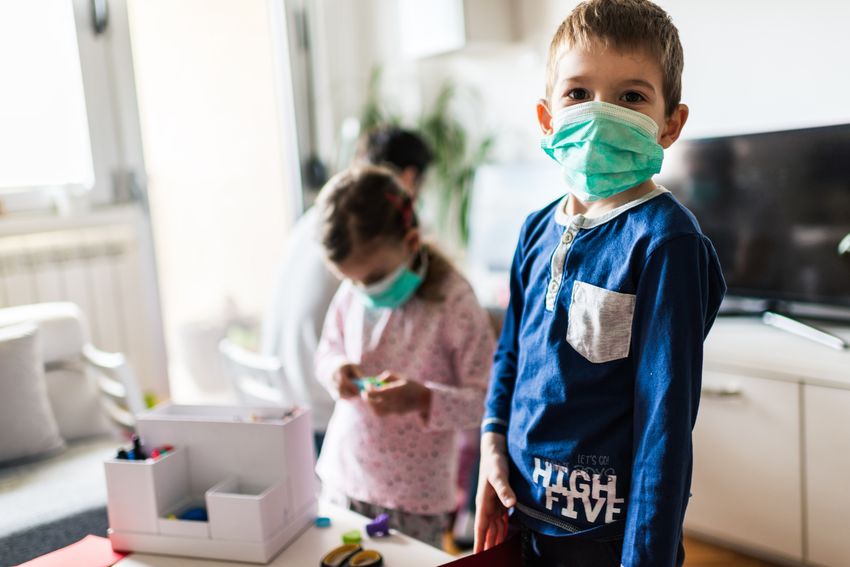
THE CONTEXT
According to Family for Every Child’s 2019 study, kinship care
represents a paradox. It is the most widely used and valued form of
care when children cannot be looked after by parents, yet it is also
frequently neglected by those seeking to support vulnerable children
who are separated from parents. In global policy debates, kinship
care receives only peripheral attention. Kinship care cannot continue
to be ignored. It is one of the most valuable resources available to
the most vulnerable children in the world. It provides better
outcomes for children than many other forms of care.

Family for Every Child’s briefing paper, Prioritising kinship care in responses to COVID-19 further shows how
COVID-19 exacerbates the vulnerabilities of kinship care households. Further, Children’s Rights Alliance’s June
2020 report has shown the pandemic has had an ongoing significant impact on children and their rights in New
Zealand; highlighting existing inequities and, in some instances, worsening these inequities. The lack of focus on
children will have created unintended and, as yet, unquantifiable and unknown consequences and impacts for
children which is deeply concerning.

KEY ISSUES

1. OVERREPRESENTATION OF MĀORI CHILDREN IN STATE CARE

To understand the background specific to New Zealand it is useful to provide an overview of Oranga Tamariki—
the Ministry for Children that was launched in April 2017. The importance of whānau relationships is
embedded in the Oranga Tamariki Act 1989 (Children’s and Young People’s Well-being Act 1989). This includes
the principle that “the child’s or young person’s place within their family, whānau (extended family), hapū
(kinship group), iwi (tribe), and family group should be recognised”, and “wherever possible, these relationships
should be maintained and strengthened”. However, these principles have not always been adhered to. Māori
overrepresentation in care and accusations that Oranga Tamariki have not allowed for Māori families to care for
children, in instances where this was the best option, are still to be addressed. These accusations were raised
amid a damning report into child removals by Oranga Tamariki.

                                                   In 2017, the Ministry was tasked with transforming the care and
                Māori voices                       protection system of New Zealand by 2022. The vision of the new
        When our tamariki are                      Ministry was to put the safety and wellbeing of tamariki and
   uplifted into state care, they are              rangatahi first by ensuring they get access to the care and support
                                                   they need, and have a say in decisions that affect them.
   not just being taken away from
   mum or dad, but from a whole
                                                   In some cases, children are granted interim state custody without
   ecosystem made up of a rich
                                                   parents and the whānau having the opportunity to be heard. At
   whāriki (tapestry) of wider                     times the children are taken into custody soon after birth which
   whānau, culture, history and                    was brought to public attention through media’s reporting of the
   ancestry, which are all things                  Hawke’s Bay incident when the agency attempted to uplift a
   we know to be vital to the                      newborn infant from a Māori mother.
   positive        growth        and
   development of any child.                       The impact of this separation is most traumatic on children with
                                                   long-lasting negative consequences on their development.
                                                   Children become cut-off from the rich history, culture and
   Source: Ko Te Wā Whakawhiti, It’s time for      tradition of the kinship ecosystem. The family, especially the
   change. A Māori Inquiry into Oranga Tamariki:
   Report 2020                                     mother, feels a great intensity of grief immediately following the
                                                   removal and has to endure this loss for a very long time. It has
                                                   created unspeakable agony to thousands of children and their
                                                   families.
2.      DIFFICULTIES                      FACED             BY       AT       RISK          AND          VULNERABLE                      EXTENDED
   FAMILIES
    Children often come into grandparents’ care having experienced difficult situations. These can range from issues
    including developmental problems often leading to them having significant disabilities such as ADD/ADHD, fetal
    alcohol syndrome, behaviour disorders, cerebral palsy and learning disabilities, which affect health, education
    and social development and can require high levels of care (Kresak et al)

    According to GRG’s report, grandparents and whānau carers are facing significant social and economic
    challenges. Grandparents love having the children in their care but they need to be provided with appropriate
    support to enable them to fulfill the care responsibilities of children placed with them. There are also several
    difficulties including the processes to access the Unsupported Child Benefit causing financial difficulties for most
    families
                                                                                                              Voices from the community
    Grandparents often take on the care role through the Hui-a-
    whānau process, a meeting that aims to use Māori protocols,
                                                                                                                 When we do things with our
    facilitated by either Māori families or Oranga Tamariki staff for the
                                                                                                         family and friends, that’s when I feel
    placement of the child. In practice, these meetings do not meet
                                                                                                         like I can do better and achieve my
    the state's objectives or follow Māori protocols, instead becoming
    informal meetings at which decisions are quickly and often loosely
                                                                                                         goals because I see us all doing it.
    made for the placement of a child. As a result, there is often no
    financial or professional support from the State for the child or                                    Rangatahi from Tūranganui-a-Kiwa
    their grandparent. This is because they are assessed to be in a                                      Source: What Makes a Good Life? Tamariki and
    “safe placement”. In most of these cases there are no orders                                         Rangatahi Māori Mai World Cohort Summary
    defining the grandparents’ legal status of care and no eligibility                                   report, Office of the Children’s Commissioner,
                                                                                                         November 2019
    for the foster care allowance*.

   3. CHILDREN OF                         INCARCERATED PARENTS
    According to Pillars, children of incarcerated parents are the most vulnerable in the community. The findings of a
    Pillars study, emphasise the difficulties that these groups face throughout childhood. They are more at risk of
    physical, mental and emotional health problems. Their education is likely to be disrupted and many do not
    complete schooling. Most are brought up in benefit-led households, often implying that they live in a household
    below the poverty line. Because of these cumulative factors, by adolescence they are highly at risk of forming
    poor peer relationships leading to alcohol and drug abuse, risky practices and crime.

    There are more than 23,000 tamariki and rangatahi with a mother, father or both in prison. Many are living a
    precarious existence with complex health and social needs. Many of the families, especially Māori and Pacific
    families, are very much impacted by intergenerational trauma and its hold on their lives and direction. Social
    workers at Pillars, support these families to understand the impact and address it.

 * The Foster Care Allowance is paid to approved caregivers where the Chief Executive of Oranga Tamariki has a guardianship and custody order for the child under the
Oranga Tamariki Act 1989
4. COVID-19 AND ITS IMPACT ON CHILDREN IN ALTERNATIVE CARE

COVID-19 pandemic is having a significant impact on the lives of
children. GRG surveys highlighted the challenges being faced by
caregivers in the provision of quality care to the children. Key
emerging issues are related to the learning capacity of children as
schools continue to run online, inaccessibility to devices and the
internet, difficulties managing troubling behaviour pertaining to
children with past experiences of trauma. COVID-19 represented a
further triggering experience for these children that caused increased                Community voices
stress and anxiety for caregivers. Key findings from the GRG’s June                 The most difficult aspect of
2021 survey (cf: May 2020 Survey) are:
                                                                            lockdown was the school learning.
                                                                            It was poorly managed and
   67% of the respondents reported being worried about the ongoing
                                                                            disjointed, unengaging and very
   impact of the pandemic on themselves and their whānau. Up 7%
   from the May 2020 survey.
                                                                            socially isolating for the younger
   20% reported that there aren’t enough devices in their homes for         children. Our grandchild's anxiety
   everyone who needs them, especially children for attending online        around learning went through the
   classes. Down 5% from the May 2020 survey                                roof and managing mental health
   28% of the caregivers agreed that they are struggling to manage          became the priority.
   the children's behaviour during this time. Up 3% from the May
   2020 survey                                                                         GRG survey response

 RECOMMENDATIONS

 The paper stresses that “positive change towards better outcomes for tamariki Māori and whānau Māori is a
 multi-layered process and requires attention to short, medium and long-term actions in order to support
 robust and transformative change”. This involves inclusive, wrap-around ‘by Māori, with Māori, for Māori’
 services that are designed from the true lived experiences of whānau, and which offer long term solutions for
 all tamariki and their whānau to flourish.

 For any child at risk of harm and in need of care and protection, the most effective approach to ensuring their
 wellbeing and good outcomes, is to place the child at the earliest opportunity into the care of a member of
 their whānau who can respond to the child’s needs for safety and security and promote the child’s wellbeing
 and sense of belonging and identity within the whānau.

 For kinship care to be safe and effective, children, grandparents and whānau caregivers must have financial,
 practical and emotional support, and help with schooling. The caregivers need timely referral to support and
 advocacy assistance such as that provided by GRG. Mechanisms must be put in place to protect children from
 abuse and discrimination, and to help manage relationships with birth parents and support reintegration. The
 needs of other children in the household must also be recognised and addressed. Appropriate attention needs
 to be given to the health and social needs of children of incarcerated parents. Their carers must be provided
 practical information like the one provided by one of Pillars fact sheets on how to care for children whose
 parents are in prison.

 Children have the right to put their views forward, to be consulted and participate in decisions about their care
 according to their emerging capability. That is why it is important to listen to VOYCE who makes children’s
 opinions count.

 Effectively responding to kinship care specially during the COVID-19 pandemic requires providing a full
 package of support for children and caregivers that reflects these multiple vulnerabilities. This in turn involves
 collaborations among a range of sectors including child protection, social protection, education, health and
 justice.

 The need of the hour is not a top-down approach but to work through localised solutions.
Submitted by: Family for Every Child, a global Alliance of local CSOs

INTRODUCTION

Family for Every Child is a diverse, global alliance of 40 local civil society organisations in 36 countries. We work
with millions of children in extended family care, alternative care, detention, and those on the move or without
adequate care in their own families. Our goals are to prevent family separation, strengthen families, ensure high
quality alternative care when needed, and protect children outside of any adult care. Our members are deeply-
rooted where they work, so their models for change grow directly out of the needs of their unique communities.
Together, we achieve collaborative projects that deliver impact and change at a larger scale than our members
could do separately. These include global campaigns and advocacy, international research, and programme pilots
to achieve change in multiple countries.

In 2019, Family for Every Child contributed to the inter-agency efforts behind the UN General Assembly’s
resolution on children without parental care (CWPC). As an active member of the UNCRC Committee’s CSO Task
Force, we welcome the 2021 DGD topic. We believe that this discussion is an opportunity for the global
community to question what is required to create an environment that places support to families and child
wellbeing at the centre of all government policy to ensure more equitable, non-violent and sustainable societies.
Our submission stresses the importance of locally rooted responses, as it explores frequently ignored issues
including care for sexually exploited children (particularly boys), the role of kinship care, the needs of and care
opportunities for children on the move and in detention, re/integration from alternative care, and the impact of
COVID-19.

KEY ISSUES AND RECOMENDATIONS

1- Greater investments in preventing family separation of children by supporting kinship care
through locally rooted solutions

Prevention starts with identification of children at risk. In any given setting, many children who are at risk are
unknown to the child protection system and this needs to be tackled. Investment is needed to ensure that the
damaging and often traumatic impact of family separation is avoided, that families are kept together and
children are kept out of stranger care and the formal child protection system wherever possible. Prevention needs
to be the major focus of care reform but requires recognition of the intense and sustained support needed for
highly complex families. Family strengthening efforts can be long and complicated and there is no quick fix
solution. This means that the child's best interest needs to be considered.

Kinship care is a highly valued and commonly used traditional response in most cultures. It has proven to be the
vital mechanism to ensure children are not placed in stranger care but are kept within their extended family with
all the attendant benefits of family bonds, relationships and identity.
Many children are pushed into kinship care as a result of poverty, lack
of access to services, abuse and neglect. These children are therefore                        EXAMPLES OF LOCALLY
likely to be more vulnerable than the general population, and                                     ROOTED SOLUTIONS
caregivers need assistance to help them reach their full potential.                              FROM OUR MEMBERS
These risks are not intrinsic to kinship care- most could be addressed
through further investments and are not an indication that that                                  JUCONI (Mexico) - works to build
kinship care should be used less or with a high degree of caution.                               safe relationships with and within
Rather, kinship care families should be provided with proper financial,                          families with high levels of domestic
legal, practical and emotional support. Investments must be made in                              violence. It uses an educational and
order to maximise the potential of kinship care to enhance children’s
                                                                                                 therapeutic process to break
well-being.
                                                                                                 intergenerational cycles of violence.
In conclusion, rather than top-down universal approaches being                                   80% of the families successfully
applied to various contexts, investment is needed in the existing                                complete the programme and end
informal child protection systems, building on the strengths of                                  violence in their households. This in
traditional approaches and practices that are reflective of their local                          turn strengthens family unity.
contexts.
                                                                                                 FSCE (Ethiopia) and Voice of
2- Recognition and attention to family care and protection of                                    Children (Nepal) work with street-
children on the move and children in detention                                                   connected children to determine if
                                                                                                 reintegration back to families of
The scale of the issues related to these groups of children is far greater
                                                                                                 origin including kinship care is
than often presented or addressed. Preliminary research on children
                                                                                                 appropriate and if not, use
on the move in a number of contexts finds that support by
governments and agencies is largely focused on cross-border                                      alternative care programmes.
movement, and on those at the highest risk such as trafficked*.                                  Interventions that include supportive
Attention also needs to be focused on support to children who move                               caregivers have a much greater
within their own countries, which is often neglected. This movement is                           chance of long-term success.
caused predominantly by rural-urban inequalities, and opportunities                              Families can also be helped to
and services available in the urban setting. It is often hastened in the                         provide longer-term support once
more immediate term by family violence, dysfunction and the desire                               external services end.
of young people to improve their situation and that of their families.

                                                                                                 FOST (Zimbabwe) implements the
Sexual violence against unaccompanied boys is more prevalent than is
acknowledged and requires specialised prevention and care                                        Supporting Orphaned and
measures**. Our member Voice of Children (Nepal) reported that many                              Vulnerable Children (SOVC)
boys who migrate from rural to urban areas find it difficult to obtain                           programme in which kinship care is
gainful employment and out of desperation accept exploitative labour                             a core component in preventing
condi-                                                                                           family separation.

*Findings from a Family for Every Child literature review on children on the move within and between countries in Africa, 2021 (unpublished)
**Caring for Boys affected by Sexual Violence, Family for Every Child, 2018.
tions, where they are at risk of sexual violence. Boys without adequate
ACCORDING TO RESEARCH parental care who experience sexual violence often do not receive the
CARRIED OUT BY FAMILY protection, healthcare, education and psychosocial support that they
require. Older unaccompanied refugee boys can often be difficult to
FOR EVERY CHILD,
place in alternative care and are usually placed in shelters with adult
KINSHIP CARE IS OFTEN men- a situation which poses a risk of sexual violence. Boys without
THE PREFERRED CARE adequate parental care who experience sexual violence often do not
OPTION FOR CHILDREN receive the protection, healthcare, education and psychosocial
support that they require.
WHO CANNOT LIVE WITH
PARENTS, FOR THE Older unaccompanied refugee boys can often be difficult to place in
FOLLOWING REASONS: alternative care and are usually placed in shelters with adult men- a
situation which poses a risk of sexual violence. Unaccompanied boys
Children prefer it to other need to be identified proactively and offered quality services that they
choices such as institutional find accessible. These groups of boys should not be accommodated
or foster care, and many with adult men. Instead, tailored, family placements should be sought
or independent living arrangements created and then monitored.
children in kinship care are
loved and well cared for;
Children on the move who are intercepted often end up in the
detention system instead of being immediately re-integrated with
Kinship care offers continuity family members. This can introduce yet another traumatic experience
and stability for some into the lives of children who have already experienced a significant
children, and the opportunity amount, and the impact of long-term detention can be catastrophic,
to enhance important social exacerbating psychological harm and suffering. Government detention
of children is a last resort and must be overseen by an independent,
networks for others;
child-focused body.
Kinship care is undoubtedly a If a parent is in detention, the remaining child will be in need of a
better alternative to harmful supportive temporary living arrangement. Kinship care is often the
institutional care; solution, though still requires specialised support to address any
issues that may arise.
Children in kinship care can
often maintain relationships
with parents;
Kinship care benefits
caregivers, providing
companionship, practical
support and the satisfaction
of helping a much loved child
to flourish;
Kinship care supports
household livelihood
strategies by enabling
migration, and can save the
state resources otherwise
spent on costly residential or
foster care.3. Strengths and needs-based reintegration or integration into
a new community EXAMPLES OF LOCALLY
ROOTED SOLUTIONS
Reintegration is a process in which children should be engaged at FROM OUR MEMBERS
every step, and acting in their best interests should be the primary
consideration of all involved. It is necessary to prepare both children The Detained Immigrant Children
and families, and intensive work is needed where there is a history of ´s Project - run by our US member,
violence, abuse and neglect within the family. In some cases it may Legal Services for Children -
not be possible or in their best interests for children to be provides a model for attending to
reintegrated back into their families, or such efforts may fail. Several the psychosocial needs of children
of our members work closely and over prolonged periods with
(with support from social workers)
children to determine if reintegration back into families of origin-
as well as providing legal
including kinship care placement- is appropriate, and where it is not,
representation to those who have
alternative care programmes are used.
been released and are now
Reintegration efforts should involve an understanding of the capacity beginning the integration process in
of the family to support the child, as well as ways of assessing the risk their new community.
of and preventing further abuse or re-separation. Families may need
to be supported to provide the protection children need, with special Our Greek member METAdrasi
attention given to addressing stigma, discrimination and developed the foster care
marginalisation.
programme in which refugee and
Successful reintegration of children affected by sexual exploitation
migrant children are placed in foster
and abuse requires a specific and holistic approach to ensure that
care with families who wish to take
their needs are met. The idea of acceptance is a key indicator of
success for them and it starts with themselves - accepting that they care of unaccompanied children on
are not to blame for their exploitation, that they are a 'survivor’, as either a short-term or long-term
well as the acceptance of family members, particularly parents. basis. The aim is to prevent children
from being placed in detention
Research led by Family for Every Child looked at the importance of centres or camps in which they
independence for boys and girls affected by sexual exploitation in would be exposed to further trauma.
Nepal, and their integration into an urban community of friends and
colleagues. In many cases, both boys and girls had moved away from
Interventions should include
their family home (in the rural area) and were living in the city
addressing harmful social norms
independently from their families, often with friends. Many had not
reintegrated with their families because they had found employment relating to masculinity and sexual
or education in the city and, particularly for the boys, these violence, such as Family for Every
opportunities were not available in rural communities. The possibility Child’s ‘Blue Umbrella Day’
of supporting formerly rural young people to live with their peers and awareness campaign. Through this
set up integration programmes in urban communities is worthy of locally embedded campaign our
research and support. members aim to raise awareness of
families and communities to protect
Family reintegration for children affected by armed conflict presents
their boys, along with girls, from any
particular challenges. In Colombia, many children recruited by armed
harm including sexual violence.groups have come from violent homes, and after witnessing and
CHILDREN'S EXPERIENCES being forced to commit violence themselves in the context of armed
conflict, these children need specialised reintegration support.
DURING COVID-19 AS
Taller de Vida uses a psychosocial intervention based on art and
SHARED WITH FAMILY FOR music therapies with high levels of success.
EVERY CHILD
METAdrasi’s Supported Independent Living prepares young people
These along with their creative (16-18) to make a smooth transition to independent living, adulthood,
expressions will be available and integration into Greek society. Along with an appropriate level of
care and supervision, its model supports the young person's self-
through a virtual exhibition from
reliance, along with their acquisition and development of life skills.
July 2021
Globally, LGBTQI+ children are particularly likely to face family
‘When I heard about coronavirus, separation, and are also at a higher risk of being sexually abused and
I didn’t feel good and I was exploited. When given a choice, many of these children opt for
scared for my family, me and my independent living and community integration, rather than family
siblings’ Boy, 13, from Syria reintegration. LGBTI+ children need to be listened to, as this
autonomy can be deeply protective and is to be encouraged.
living in a shelter home for
unaccompanied minors in Greece
4- Covid-19 local issues and responses
‘My parents income diminished
and I am afraid for my studies’,
COVID-19 has exacerbated the challenges of reintegration. Decision
Boy, 14, Senegal, living with makers are having to choose between leaving children in risky
grandparents situations or pushing them through rushed, ineffective and uncertain
reintegration processes. School closures due to lockdown have
“During COVID-19 I live as a impacted not only children’s education but also their lack of
prisoner in my home’ Girl, 13, protection. COVID is also leading to a significant rise in number of
Senegal, living with parents children in absolute and relative poverty, and this is leading to
increase in child labour, child marriage and child trafficking.
‘The situation was not good at all
Coordination and collaboration with community-based actors is
[...] But everyone learned
essential where decision-making has moved to virtual processes in
something good during this time. many areas. Our member in Guatemala - CONACMI - worked in
Firstly, gratitude for having a alliance with government agencies in the face of the overcrowding
home, a place of safety, and a and closures of institutions, using the inter-agency global
family to spend these difficult Reintegration Guidelines for assessing and effectively reintegrating
times with, unlike many other children back into families.
people who didn’t have a place
to protect themselves, or a family Processes of integration and reintegration in many countries have
stalled due to the closure of services, and border closures have left
to support them, or a job to earn
many children stuck in protracted and precarious states of ‘limbo’ in
a living.’ Girl, 16, Colombia
asylum and refugee camps. It is essential that during a period of cri-crisis, children requiring alternative care receive it in a timely manner whether they are still in care or trying to live back with their family. Unfortunately, the stress associated with the pandemic is leading to more domestic violence and abuse within the home; as explained in Family for Every Child’s paper on reintegration and COVID- 19, this is directly affecting the reintegration of children. Efforts must be made to assess and attempt to address risk before children return home. In conclusion, Family for Every Child argues strongly that locally grown solutions should be recognised and invested in to ensure relevant and sustainable solutions are provided to uphold children’s rights.
You can also read


