Reef 2050 Integrated Monitoring and Reporting Program - STRATEGY update 2018 - GBRMPA ELibrary
←
→
Page content transcription
If your browser does not render page correctly, please read the page content below
Reef 2050
Integrated Monitoring
and Reporting Program
S T R A T E G Y u p d at e 2 0 1 8

                                     1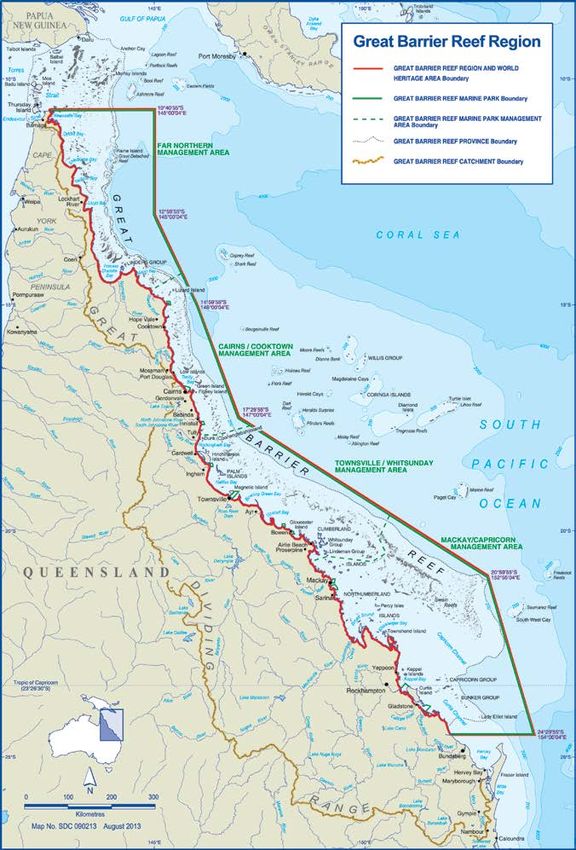
© Commonwealth of Australia (GBRMPA) 2018.
    Published by the Great Barrier Reef Marine Park Authority
    ISBN 978-0-6480965-5-9

    This document is licensed by the Commonwealth of Australia for use under a Creative Commons By Attribution 4.0 International
    licence with the exception of the Coat of Arms of the Commonwealth of Australia, the logo of the Great Barrier Reef Marine
    Park Authority, any other material protected by a trademark, content supplied by third parties and any photographs. For licence
    conditions see: http://creativecommons.org/licences/by/4.0

    This publication should be cited as:
    Great Barrier Reef Marine Park Authority and Queensland Government 2018, Reef 2050 Integrated Monitoring and Reporting
    Program strategy update 2018.

    Comments and enquiries regarding this document should be addressed to:
    Great Barrier Reef Marine Park Authority
    PO Box 1379
    TOWNSVILLE QLD 4810, Australia
    Phone:          (07) 4750 0700
    Email:          info@gbrmpa.gov.au
                    www.gbrmpa.gov.au
                    www.gbr.qld.gov.au

    IMAGE ACKNOWLEDGMENTS

    Cover images from left to right: ©Matt Curnock, ©GBRMPA, Rock art depictions of a turtle and dugong on an offshore island in
    Cape York, ©GBRMPA, Mark Fitz
    Page 7: ©GBRMPA, Pine Creek Pictures
    Page 10: ©GBRMPA, Chris Jones
    Page11: ©GBRMPA
    Page 13: ©GBRMPA

     R E E F 2 0 5 0 I N T E G R AT E D M O N I T O R I N G
2    A N D REPORTING PROGRAM
     STRATEGY
Foreword
This Reef 2050 Integrated Monitoring and Reporting Program     To ensure the integrity of highly valuable long-term data
Strategy provides an overview of the Reef 2050 Integrated      sets, funds have been directed to filling monitoring gaps
Monitoring and Reporting Program, its progress to date, and    and ensuring data continuity. These include aerial dugong
pathway for 2018–2020.                                         surveys, the Marine Monitoring Program, zoning plan, socio-
                                                               economic and shoals monitoring. As well as contributing to
It updates the 2015 Reef 2050 Integrated Monitoring and
                                                               program development, data from these activities will inform
Reporting Program Strategy by strengthening the program’s
                                                               the 2019 Great Barrier Reef Outlook Report.
critical role and foundational work in supporting the Reef
2050 Long-Term Sustainability Plan (Reef 2050 Plan). The       Projects have been commissioned to provide program
program’s primary purpose is to enable timely and suitable     managers and partners with a better understanding of
responses by Reef managers and partners to emerging            management information needs. The outputs of these
issues and risks, and underpin the evaluation of whether the   projects are helping guide program development to ensure
Reef 2050 Plan is on track to meet its outcomes, objectives    they provide maximum benefit for Reef managers and the
and targets.                                                   overall health of the Great Barrier Reef.
Since the summer of 2015–16, the Great Barrier Reef has        Program development work is continuing based on
faced an unprecedented combination of impacts, including       the Driver–Pressure–State–Impact–Response (DPSIR)
two consecutive years of mass coral bleaching, outbreaks of    framework. This will help coordinate and integrate core
coral disease and crown-of-thorns starfish, and a category     monitoring, modelling and reporting programs, and provide
4 tropical cyclone which crossed reefs in the Whitsundays.     a holistic approach considering both biophysical and human
The resulting decline in the ecological health of the Reef     dimensions of the Reef and its catchment.
is unprecedented in our lifetime. It has focused attention
                                                               Work is underway to develop the complementary program
on both climate change as the primary driver of change
                                                               technical capability, including spatial data management,
for the Reef, as well as the importance of resilience-based
                                                               analysis, visualisation and reporting. This will enable
management actions to address the impacts of climate
                                                               integrated monitoring data to be used for management and
change. In turn, this has focused attention on the Reef 2050
                                                               reporting. Some of this work includes an audit of the data
Integrated Monitoring and Reporting Program as the key
                                                               available for Reef management and how it is stored, which
enabler of resilience-based management under the Reef
                                                               among other things sets the groundwork for negotiating
2050 Plan.
                                                               data sharing agreements to support an operational Reef
Establishing an integrated monitoring program across the       knowledge system.
Great Barrier Reef and its adjacent catchment — a vast area
                                                               Program managers recognise partners’ and stakeholders’
almost as big as New South Wales — is a major undertaking.
                                                               interest in the program and continue to communicate the
It has required program managers and partners to navigate
                                                               program’s purpose, challenges and progress.
a wide range of complex and challenging issues — many
of which are still being assessed — and draw together          Ongoing commitment from program managers and partners
multiple environmental, social and economic monitoring and     is essential to achieving the program’s purpose.
modelling programs. It has also seen many outputs and
achievements to date.

                                                                                                                             3
R E E F 2 0 5 0 I N T E G R AT E D M O N I T O R I N G
4   A N D REPORTING PROGRAM
    STRATEGY
Contents
Foreword                                                        3
The Reef 2050 Integrated Monitoring and Reporting Program       6
      Bringing knowledge together and making it easier to use   6
      Knowledge system characteristics                          7
      Spatial scope                                             9
      Guidance from the Integrated Monitoring Framework         9
      Recognising relationships                                 10
Program delivery 2018–20                                        11
      Evaluation and continual improvement from 2020            12
      Progress against the Integrated Monitoring Framework      12
      Communication and engagement                              12
Appendix A – Program logic                                      14

                                                                     5
The Reef 2050 Integrated
    Monitoring and Reporting
    Program
    PURPOSE
    The Reef 2050 Long-Term Sustainability Plan (Reef 2050
    Plan) provides an overarching strategy for managing the
    Great Barrier Reef. It contains actions, targets, objectives
    and outcomes to address threats, and protect and improve
    the Reef’s health and resilience while allowing ecologically
    sustainable use. The Reef 2050 Plan has been developed
    in consultation with partners, including Traditional Owners
    and industry, ports, fishing, agriculture, local government,
    research and conservation sectors.
    Key to the Reef 2050 Plan is the establishment of the Reef      ecosystem health; biodiversity; water quality; heritage;
    2050 Integrated Monitoring and Reporting Program (the           community benefits; economic benefits and governance.
    program). The program will provide a comprehensive and
    up-to-date understanding of the Great Barrier Reef — the        The intent of the program is not to duplicate existing
    values and processes that support it and the threats that       arrangements, but to coordinate and integrate existing
    affect it. This knowledge is fundamental to informing actions   monitoring, modelling and reporting programs across
    required to protect and improve the Reef’s condition and to     disciplines. For example, the Reef 2050 Water Quality
    drive resilience-based management.                              Improvement Plan underpins the Reef 2050 Plan’s water
                                                                    quality theme and its Paddock to Reef Integrated Monitoring,
    There are currently more than 90 monitoring programs            Modelling and Reporting Program will form a key part of the
    operating in the Great Barrier Reef World Heritage Area         new integrated program.
    and adjacent catchment. These programs have been
    designed for a range of purposes and operate at different
    spatial and temporal scales. The comprehensive strategic
    assessments of the Great Barrier Reef World Heritage Area
                                                                    Bringing knowledge together and making it
    and adjacent coastal zone –– both of which formed the           easier to use
    basis for the Reef 2050 Plan –– identified the need to ensure   As the key enabler of resilience-based management under
    existing monitoring programs align with each other and with     the Reef 2050 Plan, the program’s primary purpose is to
    management objectives. The program will drive coordination      enable timely and suitable responses by Reef managers and
    of existing monitoring programs to fulfil this need.            partners to emerging issues and risks, and underpin the
    The program will provide information across seven themes        evaluation of whether the Reef 2050 Plan is on track to meet
    that make up the Reef 2050 Plan outcomes framework:             its outcomes, objectives and targets.

                         The program’s vision is to develop a knowledge system that
                         enables resilience-based management of the Great Barrier Reef
                         and its catchment, and provides managers with a comprehensive
                         understanding of how the Reef 2050 Plan is progressing.

     R E E F 2 0 5 0 I N T E G R AT E D M O N I T O R I N G
6    A N D REPORTING PROGRAM
     STRATEGY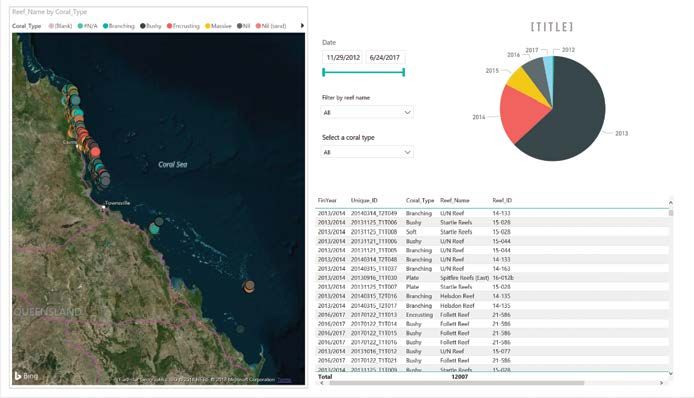
GOALS 1                                                                             The program will be central to ensuring decisions regarding
                                                                                    the protection and management of the Great Barrier Reef
This knowledge system will be:                                                      are based on the best available science, transparent and
•    Effective in enabling the early detection of trends                            accountable, and underpinned by a partnership approach.
     and changes in the Reef’s environment, inform the
     assessment of threats and risks, and drive resilience-
     based management.                                                              Knowledge system characteristics
•    Efficient in enabling management priorities and                                Market research undertaken to inform program development
     decisions to be cost effective, transparent and based on                       identified the information products desired by managers and
     cost-benefit and risk analyses.                                                other stakeholders.
•    Evolving based on the findings of Great Barrier                                The ideal product identified by more than 75 per cent of
     Reef Outlook reports, new technologies and priority                            survey participants was a digital spatial data (mapping)
     management and stakeholder needs.                                              platform that incorporates visual information through a
                                                                                    web-mapping portal, includes a navigation tool as well as a
To achieve its purpose, vision and goals, the program will                          function to access predictive information.
coordinate, align and integrate existing monitoring, modelling
and reporting programs to provide a comprehensive and                               Recognising this need, the program will deliver web-based
up-to-date understanding of the Great Barrier Reef system,                          tools that inform reporting products and management/
including its values, the processes that support its values,                        operational decision-making. These tools will seek to
and the pressures that affect them. In doing so it will also                        consolidate monitoring and modelling data on the
capitalise on existing program investment, provide value for                        Reef’s values in a platform that enables the data to be
money, improve efficiency and avoid duplication of effort.                          mapped and analysed (e.g. Figure 1).

1   As part of program planning, the program’s three goals have been underpinned by a series of development (to 2018 and 2019) and implementation
    objectives. These objectives and their contribution to the program’s goals, vision and purpose, are shown in Appendix A.

                                                                  E X A M P L E O N LY

Figure 1. User interfaces will ideally provide access to consolidated monitoring and modelling data in a platform that provides mapping and an analysis feature/
capability. Functionality is expected to evolve and expand over time.

                                                                                                                                                                   7
Figure 2. Great Barrier Reef World Heritage Area and Reef catchment. The geographical scope of the program includes the Great Barrier Reef World Heritage
    Area (red line) led by the Great Barrier Reef Marine Park Authority and the adjacent catchment (orange line) led by the Queensland Government.

      R E E F 2 0 5 0 I N T E G R AT E D M O N I T O R I N G
8     A N D REPORTING PROGRAM
      STRATEGY
The platform will provide access to information for a broad                       Integrating monitoring programs across the catchment to
range of reporting products such as compliance and incident                       the marine environment is complex but necessary to allow
reporting, environmental impact assessments, state of                             processes, changes and activities in the catchment to be
environment and management effectiveness. This system will                        linked to processes, changes and activities in the marine
inform reporting on the Reef 2050 Plan as well as reporting                       environment, and vice versa.
products such as the annual Great Barrier Reef Report Card,
                                                                                  Importantly, integration must also occur for both
annual regional report cards and the five-yearly Great Barrier
                                                                                  the environmental systems and processes, and the
Reef Outlook Report, which in turn feeds into the review and
                                                                                  socio-economic and cultural systems and processes.
continuous improvement of the Reef 2050 Plan.
                                                                                  For example, existing integration involves linking land
The system will evolve to further enhance the use of                              management practices to water quality in rivers discharging
predictive modelling. This will allow improved forecasting of                     to the marine system to the consequences for marine
environmental processes and changes, and facilitate better                        species and habitats. It then builds on this to also evaluate
resilience-based management decisions. The system will                            the subsequent benefits and costs of these changes for
provide the best means of managing the Great Barrier                              communities living in the catchment.
Reef in the face of a changing climate.

                                                                                  Guidance from the Integrated Monitoring
Spatial scope                                                                     Framework
The geographic scope of the program is the Great Barrier                          The program’s development process follows the Integrated
Reef World Heritage Area and its adjacent catchment (Figure                       Monitoring Framework for the Great Barrier Reef World
2) — a combined area as big as New South Wales. It builds                         Heritage Area (the framework). The framework was the result
on existing monitoring programs within this area which are                        of a 2013 project funded by the Australian Government
currently used to inform marine park management. Among                            through the Regional Sustainability Planning program. The
others these include the Great Barrier Reef Marine Park                           project drew on expertise and networks from three National
Authority’s Eye on the Reef program, programs undertaken                          Environmental Research Program (NERP) Hubs (the NERP
by the Australian Institute of Marine Science and James                           Marine Biodiversity Hub, NERP Tropical Ecosystems
Cook University to monitor the effectiveness of the Great                         Hub and NERP Environmental Decisions Hub), the Great
Barrier Reef Marine Park Zoning Plan 2003, and the Paddock                        Barrier Reef Marine Park Authority and the Australian
to Reef Integrated Monitoring, Modelling and Reporting                            Institute of Marine Science. It provides the foundation for a
Program that links the Reef catchment and Great Barrier                           standardised and integrated ecological, social and economic
Reef World Heritage Area.

                                  Management objectives                                              Prerequisites

                                                                                      Management objectives – to provide
                                                                                      clarity about management needs and
                             IMF 1 Define monitoring objectives                       priorities and inform the Identification of
                                                                                      monitoring objectives

                   IMF 2 Review                                                            Essential monitoring functions
                                            IMF 3 Conceptual models
                  existing program
                                                                                      1.   Clearly defining the purpose of the
                                                                                           integrated monitoring program and
                         IMF 4 Develop indicators, sampling design                         the monitoring objectives
                                                                                      2.   Compiling and analysing relevant
                                                                                           information on existing monitoring
                          IMF 5 Develop and implement monitoring
                                                                                           programs
                                        protocols
                                                                                      3.   Developing conceptual models
                                                                                      4.   Developing overall sampling design
                                  IMF 6 Data management
                                                                                           for integraded monitoring:
                                                                                           a. selecting indicators
                                                                                           b. selecting monitoring programs
                                     IMF 7 Analysing data                                  c. developing sampling design
                                                                                      5.   Developing monitoring protocols
                                                                                      6.   Managing data
                            IMF 8 Reporting and communication
                                                                                      7.   Analysing data
                                                                                      8.   Reporting and communicating
                                         IMF 9 Review
                                                                                      9.   Reviewing and auditing

Figure 3. Prerequisites for monitoring and essential monitoring functions to be addressed based on the framework.

                                                                                                                                                  9
monitoring program. It identifies the steps to develop                                     As well as facilitating integration of existing monitoring
     efficient and effective monitoring and reporting, and support                              and modelling programs, the DPSIR framework helps
     management.                                                                                guide the development of new indicators to monitor the
                                                                                                condition, trend and resilience of the Reef’s components
     In doing so, the framework provides authoritative guidance
                                                                                                and processes. This will help to provide Reef and catchment
     and has been adopted as the foundation for program
                                                                                                managers with a better understanding of the cause-and-
     development.
                                                                                                effect links between those components and processes.
     Among other things, the framework identifies a series
     of processes to ensure the integrated monitoring
     framework meets the evolving needs of managers. As
     part of this it sets out the prerequisites for monitoring and the
     essential monitoring functions to be addressed, and explains
     what is required in each of these steps to integrate existing
     and future monitoring programs (Figure 3).

     Recognising relationships
     Following the recommendations of the Integrated Monitoring
     Framework for the Great Barrier Reef World Heritage Area
     report, the Driver–Pressure–State–Impact–Response (DPSIR)
     Framework (Figure 4) has been adopted as a unifying
     framework to characterise the Great Barrier Reef system.
     The use of the DPSIR framework helps bring together
     elements of a complex system where environmental, social
     and economic values are linked and interdependent.
     The DPSIR framework helps to describe how drivers
     such as population and economic growth, technological
     development and climate change, give rise to pressures
     directly and indirectly through activities. Pressures –
     including sea temperature increase, cyclone activity and
     nutrients from catchment run-off (among many others) –
     affect the state of the ecological–human system which in-
     turn impacts on human wellbeing. Management influences
     the system through responses that may be focused on
     drivers, pressures or state. By promoting appreciation,
     enjoyment and understanding of the Reef and catchment
     system, management can enhance community support for a
     mandate to implement response actions.

                                          DRIVERS                       PRESSURES

                                                                                                           Ecological         Human
                                                                                                            system STATE      system
                                             Avoid

                                                                  tea
                                                                tig
                                                                Mi

                                                                                     re
                                                                                  sto
                                                                               Re

                                                                        Promote appreciation,
                                                                        enjoyment,                            IMPACTS TO HUMAN
                                                     RESPONSE
                                                                        understanding                            WELL-BEING

     Figure 4. Driver–Pressure–State–Impact–Response framework. Monitoring of indicators provides an understanding of cause and effect relationships between
     DPSIR components (solid arrows), which in turn can inform management actions (dashed arrows).

       R E E F 2 0 5 0 I N T E G R AT E D M O N I T O R I N G
10     A N D REPORTING PROGRAM
       STRATEGY
Program delivery Development of an integrated monitoring program
2018–20 Program
Design
Synthesis Data
and Management
The program’s vision is to develop a knowledge system Reporting and Systems
that enables resilience-based management and informs
assessment of outcomes achieved. The Integrated
Monitoring Framework for the Great Barrier Reef World
Heritage Area (the framework) (Figure 3) provides the Development of systems to enable the use of data
foundation to achieve this vision. for management and reporting
Program development began in 2016 and involves two
distinct components:
1. Development of an integrated monitoring program for Figure 5. The program’s vision involves two distinct components – devel-
the Reef and its catchment (IMF 1–5). opment of an integrated monitoring program, and development of systems
to enable data use. To develop these components, program delivery is
2. Development of data management and other tools occurring across three parallel but related streams (as above).
required to enable use of data for management and
reporting (IMF 6–8).
To develop these components, program delivery is occurring In parallel to the program design stream, work to establish
across three parallel but related streams: program design, the program’s data management and systems infrastructure,
synthesis and reporting and data management and systems and synthesis and reporting capability, is progressing
(Figure 5)2. and scheduled for completion by mid–2019. Work in
these streams is interdependent because the capability
The program design stream will deliver a proposed design to synthesise and report on data depends on how data is
for the integrated monitoring program in mid-2018. This managed, including the platforms and systems that support
proposed design will integrate the recommendations of data management.
expert groups that considered monitoring across 10 Great
Barrier Reef and catchment themes including the physico- Work in the data management and systems stream includes:
chemical environment, seagrass, coral, fish, megafauna, developing protocols for managing culturally sensitive
Indigenous heritage, human dimensions, catchment and information, negotiating data sharing agreements including
estuaries, islands, and microbes. The final design will include access, licensing and intellectual property arrangements,
priority monitoring indicators, and the methods, locations designing and evaluating data delivery mechanisms, and
and frequency to measure indicators. It will also take into designing and evaluating prototype systems and interfaces.
account feasibility, efficiency and priority in relation to
management and monitoring objectives.
2 More information on work packages within each of these streams can be found on the Great Barrier Reef Marine Park Authority’s website.
11— audit of existing monitoring programs
2016 — identification and funding of critical monitoring gaps
— formation of expert groups to provide specific advice on program design
— market research to determine information and reporting needs
2017 — research to assess management needs and information required for decision making
— preliminary conceptual modelling and identification of indicators
NOW
— ongoing alignment of existing monitoring programs
— refinement of conceptual models and indicators, and program design
— program design integration, costing, and trade-off analysis
2018 — development of protocols for managing culturally sensitive and other information and data handling
— negotiating data sharing agreements
— audit of existing data platforms
— scoping of potential data platforms
2019 — delivery of prototype
— Reef 2050 Plan effectiveness assessed
2020 — continuous development and improvement
Figure 6. Major milestones achieved and work remaining for the period to 2020. Additional information about deliverables is included in the development and
implementation objectives in the program logic (Attachment A).
Work in the synthesis and reporting stream includes: As part of implementation planning, an evaluation and
developing visualisations and web-based systems, continual improvement plan will be developed to ensure that
mock-ups of reporting products, refining reporting the knowledge system evolves over time. This will include
requirements and core indicators, developing consistent a process to ensure the science underpinning the program
approaches for data collection and aggregation into reporting continues to be sound.
metrics, and automation of synthesis and reporting products.
By 2019, the outputs of work across all three streams will
be integrated to produce an operational prototype. The Progress against the
operational prototype — the first edition of the program’s Integrated Monitoring Framework
knowledge system — will help inform the first full review of Table 1 (next page) indicates how program delivery aligns
the Reef 2050 Plan in 2020 (Figure 6). with the Integrated Monitoring Framework for the Great
Barrier Reef World Heritage Area, based on progress as at
May 2018.
Evaluation and continual improvement from 2020
The knowledge system delivered by June 2019 will be
based on integrated on-ground monitoring and will provide Communication and engagement
managers with more comprehensive knowledge compared Market research was undertaken to inform program
to what is currently available. While this will be a great leap development, and results assisted program managers
forward, it will only be the first edition of the operational and partners to understand the information needs and
knowledge system and will improve over time. expectations of users. Commonly occurring themes identified
Some of the opportunities for improvement have been during the market research included the large number and
mentioned earlier. For example, providing a predictive diversity of existing monitoring programs and products, the
modelling capability will allow improved forecasting of wide variety of stakeholder requirements and low levels of
environmental processes and changes. This capability is not awareness of available information sources and products.
expected to occur in the first system edition, but will evolve Among other things, the market research indicated effective
over time. communication with stakeholders about the program, its
Issues that have arisen during program development provide development and its current and future capabilities, is critical
other opportunities to improve the system. For example, to successful implementation. In response to this, program
many of the outcomes, targets and objectives in the Reef managers established an online communications tool to
2050 Plan can potentially be measured in a number of provide clear and up-to-date information on the development
different ways, using different combinations of information and implementation of the program, as well as access
(indicators), or different assumptions about process linkages to information about existing monitoring and modelling
or cause-and-effect pathways. While early editions of the programs. In addition, standard communication products
knowledge system will provide information that will enable such as e-newsletters, steering group communiqués,
evaluations of progress towards Reef 2050 Plan outcomes, monitoring videos, case studies and brochures will continue
objectives and targets, the quality of that information — its to be published.
comprehensiveness and degree of certainty — is expected
to improve over time.
R E E F 2 0 5 0 I N T E G R AT E D M O N I T O R I N G
12 A N D REPORTING PROGRAM
STRATEGYTable 1: Progress against the Integrated Monitoring Framework
Prerequisites Summary of progress at May 2018
Management objectives — to provide Complete – Management objectives are defined by the targets, objectives and
clarity about management needs and outcomes prescribed in the Reef 2050 Plan. The Reef 2050 Plan includes all current
priorities and inform monitoring priorities and foundational management initiatives. In addition, work to synthesise and
and objectives summarise management needs is guiding the development of monitoring objectives
and program design.
Essential monitoring functions
1. Clearly defining the purpose of the Complete – The purpose of the program is defined in this document. The
integrated monitoring program and monitoring objectives are defined by the need to achieve this purpose with respect
Development of an integrated monitoring program for the
the monitoring objectives. to the management objectives in the Reef 2050 Plan.
2. Compiling and analysing relevant Underway – Expert theme groups are preparing recommendations that will include
information on existing monitoring a synopsis of existing monitoring programs, an evaluation of their adequacy and
programs identification of gaps in current monitoring effort.
3. Developing conceptual models Underway – Expert theme groups have developed conceptual models or compiled
Reef and its catchment
existing ones. Recommendation reports that will include information on the current
understanding of Reef and catchment systems are being prepared. These will
include conceptual models and describe the relevant cause-and-effect pathways
based on the Drivers Pressures State Impact Response framework.
4. Developing overall sampling design Underway – Expert theme groups are preparing reports that will provide
for integraded monitoring; rrecommendations for monitoring design, including priority indicators, and the
a. selecting indicators methods, locations, and frequency to measure indicators. These recommendations
b. selecting monitoring programs will be integrated into a final overall design that considers feasibility, efficiency and
c. developing sampling design priority in relation to management and monitoring objectives.
5. Developing monitoring protocols Underway – To be completed as part of implementation planning. Suitability
of existing monitoring protocols (i.e. instructions and standards for how data is
collected, managed, analysed and reported) are being assessed. Further protocols
will be developed pending resolution of final program design. Among other things,
protocols will need to be sensitive to funding constraints and priority gaps, while
addressing management and monitoring objectives.
6. Managing data Underway – Prototype due to be completed by June 2019. Work to deliver
systems necessary to enable the use of data for
the necessary infrastructure to display data, processes and standards that enable
Development of data management and other
storage of data, and the discovery and access to data generated by the selected
monitoring programs is underway. Some elements are progressing independent of
program design and others are dependent on the final program design
management and reporting
7. Analysing data Underway – Prototype due to be completed by June 2019. Work to deliver the
program’s data synthesis and reporting capability is progressing largely in parallel
with the program design. Actual data analysis and preparation of reporting products
will not commence until the program becomes operational.
8. Reporting and communicating Underway – Due to be completed by June 2019. Work to deliver the program’s
reporting capability is progressing largely in parallel with the program design work
and is expected to be complete in 2018–19. Reporting and communication of
monitoring results by the program will not commence until the program becomes
operational in 2019. In the meantime, reporting and communication of monitoring
results will continue to be undertaken through report cards, the forthcoming Outlook
Report 2019 and through existing monitoring programs.
9. Reviewing and auditing Not yet commenced – Review and audit of program effectiveness will occur on a
regular basis when the program is operational.
13APPENDIX A - PROGRAM LOGIC
PROGRAM LOGIC
To enable timely and suitable responses by Reef managers and partners to emerging issues and risks and enable the
PURPOSE
evaluation of whether the Reef 2050 Long-Term Sustainability Plan (Reef 2050 Plan) is on track to meet its outcomes,
objectives and targets.
VISION OF
SUCCESS
Production of a knowledge system that enables resilience-based management of the Great Barrier Reef and its
catchment, and provides managers with a comprehensive understanding of how the Reef 2050 Plan is progressing.
An effective knowledge system An evolving knowledge system
An efficient knowledge system
that enables the early detection of based on the findings of Great
in management priorities and
GOALS
trends and changes in the Reef’s Barrier Reef Outlook Reports,
decisions to be cost effective,
environment, inform the assessment new technologies and priority
transparent, and based on cost-
of threats and risks, and drive management and stakeholder
benefit and risk analyses.
resilience-based management. needs.
Fit-for-purpose Cost-effective Fit-for-future
By June 2020, the program is being used By June 2020, long-term program, By June 2020, the program is being used
by managers to inform/guide management funding is secured to ensure Reef 2050 by partners to help inform the review of
decisions, planning, actions and evaluation. Plan evaluation objectives can be met. the Reef 2050 Plan targets.
Fit-for-future
Inform the Reef 2050 Plan
Maximise investment outcomes: The program should be future focused
evaluation and review:
Funding will be prioritised based on cost- and its lifespan should be at least as long
Effectiveness of the Reef 2050 Plan
IMPLEMENTATION OBJECTIVES (AFTER 2019)
benefit, risk and trade-off analyses to as the planning horizon, and natural and
including progress towards outcomes,
meet management needs. anthropogenic pressures it is designed to
objectives and targets is assessed.
evaluate.
Monitoring, evaluation, reporting
Detecting change: and improvement:
Early detection of trends and changes in the Prioritisation: Monitoring, modelling The program should be reviewed on
Reef region informs the timely assessment and reporting will be integrated a regular basis and include means for
of key threats, future risks, cumulative and coordinated to inform priority continual improvement. This includes but
effects and impacts to inform adaptive management decisions. is not limited to reviews in response to the
management. findings of the Great Barrier Reef Outlook
reports every five years.
Accessibility: Program information is Effective governance:
Useability: Data and information is reliable, discoverable, easliy accessed, well- The governance structure will be
understandable and available in appropriate documented and transparent through a periodically reviewed by program partners
formats within required timeframes. well-supported knowledge management to ensure the effective implementation and
system. improvement of the program.
Research and development:
Research and development: Critical Research and modelling will underpin
Research and development: Reef
knowledge gaps that limit program the program so it can adapt to
research and development priorities will
and management effectiveness are changing pressures, environmental
be based on critical knowledge gaps
identified and prioritised to guide research conditions and knowledge, and inform
identified by the program.
investment. better understanding of the effect of
management changes.
The program will coordinate, align
and integrate accessible monitoring,
A prototype guidance system that
modelling and reporting programs Existing governance arrangements for
demonstrates how integrated monitoring
to capitalise on existing program component programs have been reviewed
can inform resilience-based management of
investment, provide value for money, and a plan for their integration is in place.
DEVELOPMENT OBJECTIVES
coral reef ecosystems.
improve efficiency and avoid duplication
of effort.
(BY 2019)
Reef and regional report cards drawing on
data from multiple sources (AIMS Long-
term Monitoring Program, Paddock to The governance structure for the
Data sharing agreements have been
Reef program, Eye on the Reef program, operational program has been developed
negotiated.
Social and Economic Long-term Monitoring and endorsed.
Program and eReefs information) are
developed.
Monitoring for highly valuable long-term
Baseline values mapping has been
data sets is funded to ensure data
completed for Great Barrier Reef.
continuity.
R E E F 2 0 5 0 I N T E G R AT E D M O N I T O R I N G
14 A N D REPORTING PROGRAM
STRATEGYPROGRAM LOGIC
Program design recommendations show
The governance structure including a
how integrated monitoring will be explicitly A fit-for-purpose integrated monitoring
technical working group is refined and
linked to management needs, and the and modelling program design is agreed
endorsed by partners to ensure the
Reef 2050 Plan targets, objectives and and costed.
effective development of the program.
outcomes.
Program design recommendations show
DEVELOPMENT OBJECTIVES
how monitoring, research and modelling Data accessing, licencing and IP
The secretariat supports the governance
(BY 2018)
will be explicitly linked through the arrangements and challenges have been
of the program.
Driver– Pressure–State–Impact–Response identified.
framework.
Management requirements for the The program is supported by a group of
knowledge management and guidance partners that are committed to and are
system will be scoped. advocates for the program.
Scoping opportunities to use environmental
exposure and connectivity layers to identify
a network of resilient reefs.
Supporting existing Reef management, decision making and reporting
FOUNDAITONS
Monitoring Communication Stewardship Field Science Fill key Continuous Governance Integrated
programs and and management coordination monitoring improvement monitoring
engagement partnerships gaps and
decision-
making
framework
152018-0276
R E E F 2 0 5 0 I N T E G R AT E D M O N I T O R I N G www.gbrmpa.gov.au
16 A N D REPORTING PROGRAM
STRATEGYYou can also read


