Reinfection or Reactivation of Severe Acute Respiratory Syndrome Coronavirus 2: A Systematic Review
←
→
Page content transcription
If your browser does not render page correctly, please read the page content below
MINI REVIEW
                                                                                                                                                published: 11 June 2021
                                                                                                                                       doi: 10.3389/fpubh.2021.663045

                                              Reinfection or Reactivation of Severe
                                              Acute Respiratory Syndrome
                                              Coronavirus 2: A Systematic Review
                                              Xiujuan Tang 1† , Salihu S. Musa 2,3† , Shi Zhao 4,5 and Daihai He 2*
                                              1
                                               Shenzhen Center for Disease Control and Prevention, Shenzhen, China, 2 Department of Applied Mathematics, The
                                              Hong Kong Polytechnic University, Hong Kong, China, 3 Department of Mathematics, Kano University of Science and
                                              Technology, Wudil, Nigeria, 4 Jockey Club School of Public Health and Primary Care, Chinese University of Hong Kong,
                                              Hong Kong, China, 5 Shenzhen Research Institute of Chinese University of Hong Kong, Shenzhen, China

                                              As the pandemic continues, individuals with re-detectable positive (RP) SARS-CoV-2
                                              viral RNA among recovered COVID-19 patients have raised public health concerns. It is
                                              imperative to investigate whether the cases with re-detectable positive (RP) SARS-CoV-2
                                              might cause severe infection to the vulnerable population. In this work, we conducted a
                                              systematic review of recent literature to investigate reactivation and reinfection among the
                                              discharged COVID-19 patients that are found positive again. Our study, consisting more
                         Edited by:
          Bathri Narayan Vajravelu,           than a total of 113,715 patients, indicates that the RP-SARS-CoV-2 scenario occurs
     MCPHS University, United States          plausibly due to reactivation, reinfection, viral shedding, or testing errors. Nonetheless, we
                      Reviewed by:            observe that previously infected individuals have significantly lower risk of being infected
                     Marat Slessarev,
                                              for the second time, indicating that reactivation or reinfection of SARS-CoV-2 likely have
           Western University, Canada
                         Shigui Yang,         relatively less impact in the general population than the primary infection.
            Zhejiang University, China
                                              Keywords: COVID-19, pandemic, re-detectable positive, reactivation, reinfection
                   *Correspondence:
                             Daihai He
                daihai.he@polyu.edu.hk
                                              INTRODUCTION
     † These   authors have contributed
                    equally to this work      Severe acute respiratory syndrome coronavirus 2 (SARS-CoV-2) is a respiratory virus from the
                                              family coronaviradae and order nidovirales. Other viruses from the same family include the
                    Specialty section:        severe acute respiratory syndrome coronavirus (SARS-CoV) and middle east respiratory syndrome
          This article was submitted to       coronavirus (MERS-CoV), which are known to infect humans and caused hundreds of thousands
    Infectious Diseases - Surveillance,       of deaths worldwide (mostly in Asia and the middle east) (1, 2). COVID-19 is caused by SARS-
            Prevention and Treatment,         CoV-2 and has been considered a devastating public health problem globally since its emergence
                a section of the journal
                                              in China in late 2019. The disease has, as of 29 March 2021 affected about 127 million people with
              Frontiers in Public Health
                                              over 2.7 million deaths across the globe (3). Due to effective and timely interventions, more than
         Received: 02 February 2021           70 million people have already recovered from the SARS-CoV-2 infection, indicating the impact of
            Accepted: 26 April 2021
                                              timely interventions and treatment which showed remarkable progress by facilitating the recovery
           Published: 11 June 2021
                                              of large number of patients even before the emergence of vaccines against the infection (3–5).
                             Citation:
                                                  Recently, the issue of reinfection (SARS-CoV-2 subsequent infection after recovery from
 Tang X, Musa SS, Zhao S and He D
 (2021) Reinfection or Reactivation of
                                              previous episode of the infection) and reactivation (also known as relapse, a re-detectable positive
 Severe Acute Respiratory Syndrome            SARS-CoV-2 viral RNA in recovered patient which occurs within the first 4 weeks of previous
 Coronavirus 2: A Systematic Review.          infection) have been reported in several studies [see for instance (6–21), and the references
       Front. Public Health 9:663045.         therein]. These studies highlighted the possibility of reactivation and reinfection of SARS-CoV-2
    doi: 10.3389/fpubh.2021.663045            which needs urgent attention from the researchers as well the public health policymakers. A

Frontiers in Public Health | www.frontiersin.org                                    1                                             June 2021 | Volume 9 | Article 663045
Tang et al. Reinfection of COVID-19
re-detectable positive (RP) SARS-CoV-2 infection is ascertained reinfection in recovered COVID-19 patients were asymptomatic
commonly by using reverse transcriptase-polymerase chain or have mild to moderate symptoms (27, 35) which typically
reaction (RT-PCR) test from a COVID-19 patient after recovery recover within 14 days interval. Table 1 summarizes the
from the primary infection before confirmation of reactivation characteristics of RP-SARS-CoV-2 in recovered patients, which
or reinfection. Moreover, the positivity of RT-PCR can also be occurs plausibly due to reactivation or reinfection, including the
detected due to RNA viral shedding (22) or diagnostic testing population-based observational study in Denmark consisting of
errors likely due to technical issues of RT-PCR assays (23). A 4 million individuals with possible reinfection of 2.11% (16).
recent retrospective study by Agarwal et al. (22) who analyzed
851 SARS-CoV-2-positive patients with at least two positive PCR
tests found that 99 of them remained SARS-CoV-2-positive after METHODS
28 days from their initial diagnosis date. The report showed that Searching Strategy and Study Screening
the median lower and upper bounds for viral RNA shedding in
COVID-19 patients occurred between 2 to 3 weeks (22). Process
This raises serious concerns on whether a more precautionary We conducted a systematic review on the possibilities of
measures should be considered in declaring the recovery phase reactivation and reinfection of SARS-CoV-2 in recovered patients
from COVID-19 infection, and the significance of follow-up, that covered published peer-reviewed articles in the literature
especially in the most vulnerable population (24). In this work, from Nov 1, 2019, to Mar 29, 2021. Following the guidelines by
we reviewed some primary studies that evaluated the possible the “Preferred Reporting Items for Systematic reviews and meta-
reactivation and/or reinfection of SARS-CoV-2 mostly based on Analyses” (PRISMA) (34), we searched the following databases:
clinical or laboratory reports to shed more light on possible MEDLINE; PubMed; and Embase for papers published in
reactivation and/or reinfection of SARS-CoV-2 by recovered English, among which only human participants were studied.
patients after satisfying the standard discharge criteria. Our study Our search strategy includes (severe acute respiratory syndrome
aimed to provide recommendations to help to prevent further coronavirus 2 OR SARS-CoV-2 OR 2019-nCoV OR coronavirus
spread of the virus since most clinical features, significance, and disease 2019 OR COVID-19) AND (reinfection OR reactivation
the potential cause of RP-SARS-CoV-2 patients remain unclear. OR relapse OR RNA shedding OR viral shedding OR re-
detectable positive) AND (recovered patients OR discharge
patients OR post-COVID-19 patients). Related references were
Standard Discharge Criteria for also searched through preprint servers (bioRxiv and medRxiv)
SARS-CoV-2 Patients and general google search, and reviewing the reference list of
The standard discharge criteria from the isolation/hospitalization the included articles. Letters to editors and commentaries were
process for a COVID-19 patient who recovered from a primary also included to ensure robust coverage of the existing literature.
episode of the infection (4, 5, 9, 10, 25–28) are summarized All retrieved records were imported into the ENDNOTE citation
as follows: software and duplicates were removed using the ENDNOTE
built-in “Find Duplicates” feature. Finally, the titles, abstracts,
1) Normal temperature (Frontiers in Public Health | www.frontiersin.org
Tang et al.
TABLE 1 | Recurrence of SARS-CoV-2 in recovered patients.
Country Age (years) Gender (among RP) Number of Symptoms on first Symptoms on Time interval Rate of infection Remark References
patient involve in infection second infection between discharged
study and RP (days)*
Hong Kong, China 33 M 1 Symptomatic Asymptomatic 123 Reinfection (6)
USA 25 M 1 Symptomatic Symptomatic with 48 Reinfection (36)
hospitalization
Belgium 52 F 1 Symptomatic Symptomatic 93 Reinfection (37)
Ecuador 46 M 1 Symptomatic Symptomatic 63 Reinfection (38)
India 25% 28 F = 1, M = 1 2 Asymptomatic Asymptomatic 100 and 101 Reinfection (39)
China 46 F=1 1 Mild Mild 6 Reactivation (40)
Mexico At least 20 F = 53.9% among 100,432 Asymptomatic or mild Mild to severe 28 258/100432 = Reinfection (7)
reinfection to severe 0.26%
China 30–36 F = 2; M = 2 4 3 Mild to moderate, Asymptomatic 5–13 Reactivation (9)
and 1 asymptomatic
China 27–89 (Median age = F = 12; M = 11 651 Mild to moderate 12 = moderate, 9 = Median = 15 23/651 = 3% Reactivation (10)
56) severe, and 2 = critical
China F>M 209 Mild to moderate Mild to moderate 2–13 22/209 = 10.5% Reactivation (11)
ChinaFrontiers in Public Health | www.frontiersin.org
Tang et al.
TABLE 1 | Continued
Country Age (years) Gender (among RP) Number of Symptoms on first Symptoms on Time interval Rate of infection Remark References
patient involve in infection second infection between discharged
study and RP (days)*
China Median age = 34 F = 57,M = 36 7–14 Reactivation (52)
China Mild to moderate Mild to moderate 7–11 Reactivation (29)
China 2–7 14 7–17 Reactivation (53)
China 18–90 (Median age = F = 157,M = 128 285 Mild to moderate and Mild to moderate and 5–8 F = 65.6, M = Reactivation (54)
48) severe severe 44.4
China 40 M 1 Mild to moderate and Mild to moderate 5 Reactivation (55)
severe
China Median age = 54 F = 70.6%,M = 29.4% 98 Mild to moderate Mild to moderate 80 8922 Asymptomatic to mild Median = 19 Reactivation (59, 60)
ChinaTang et al. Reinfection of COVID-19
References
were conducted independently by two reviewers/authors (SSM
and SZ).
(84)
(85)
(86)
(87)
(88)
(89)
(90)
(91)
(34)
(92)
(93)
Data Extraction and Analysis
Relevant data were extracted independently by SSM and SZ to
ensure accurate reporting. The generated results were compared,
Reactivation and any inconsistency in the data was resolved by further
Reactivation
Reactivation
Reactivation
Reactivation
Reactivation
Reactivation
Reactivation
Reactivation
Reinfection
Reinfection
discussions among the authors. The generated results were then
Rate of infection Remark
further synthesized. The data analyzed included the incidence of
SARS-Cov-2 reactivation and reinfection in recovered COVID-
19 patients.
*Time interval between discharged and RP represents the period between the discharge and the time during which a patient tested positive again. Gender represents the RP of each gender.
RESULTS
Search Findings
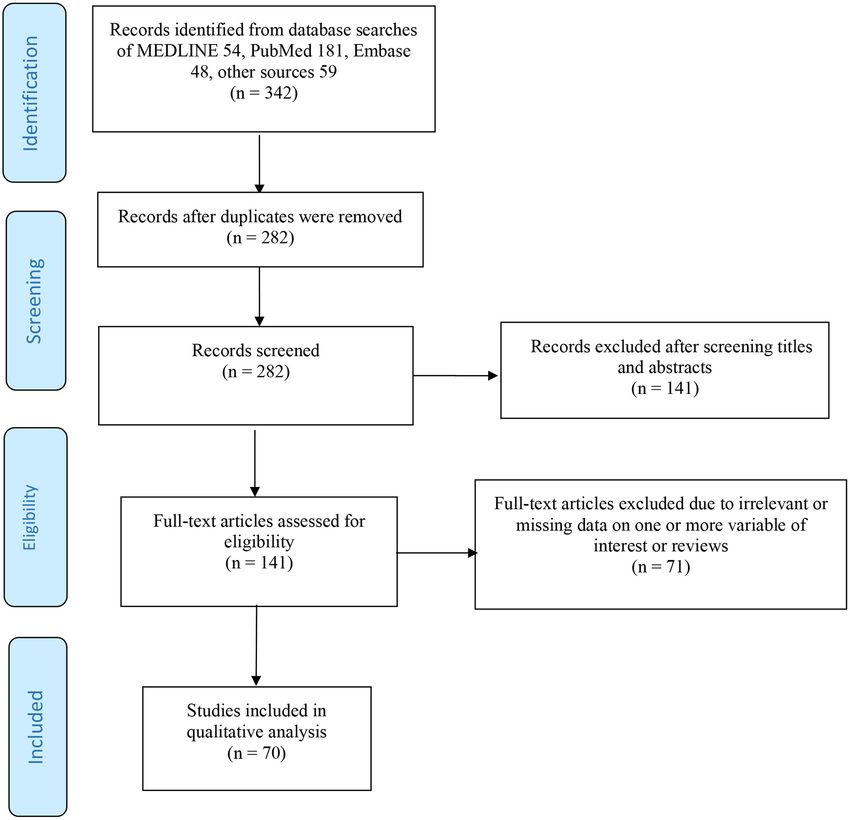
In total, 342 articles were identified in total (54, MEDLINE;
between discharged
181, PubMed; 48, Embase; and 59, other sources). There were
and RP (days)*
282 studies left after removing the duplicates. After 141 articles
Time interval
were excluded by screening the titles and abstracts, we retrieved
141 articles eligible for the full-text screening. We excluded
14–21
7–13
3–14
71 articles based on the aforementioned exclusion criteria.
30
30
17
15
14
23
4
6
Eventually, 70 studies that satisfied the eligibility criteria were
Moderate and severe
included in this review for further analyses, and they include
second infection
Mild to moderate
primary research studies, letters to editors, commentaries, and
Symptoms on
Asymptomatic
Asymptomatic
Asymptomatic
case reports. Overall, the included studies recruited more than
Moderate
113,715 patients.
Severe
Mild
Mild
Epidemiological Findings
The reviewed studies covered SARS-CoV-2 incidence of possible
Symptoms on first
reactivation, reinfection, or viral shedding worldwide. The
Mild to moderate
Mild to moderate
majority of the studies were from China. Subsequently, the
included studies (Table 1) estimated the time interval for RP-
patient involve in infection
Moderate
Moderate
Moderate
Moderate
Severe
SARS-CoV-2 in recovered patients after follow-up, following
Mild
Mild
Mild
discharge from isolation, or hospitalization after satisfying
standard discharge criteria.
Number of
study
RP-SARS-CoV-2 Reinfection Possibilities
1
1
1
2
1
1
2
1
1
Following previous reports (6, 7, 12, 32), we re-examined some
of the clinical features, infection ratios, recovery, and potential
reasons of possible reactivation and/or reinfection of SARS-
Gender (among RP)
CoV-2 to shade more light on the current issue of RP-SARS-
CoV-2 in recovered patients, and provide suggestions for public
M = 4 (57.1%)
health policy-makers to guide effective control of SARS-CoV-2
transmission. Our study would be valuable to policy-makers since
M=1
M=1
M=1
M=2
M=1
M=1
F=2
F=1
F=1
there was until recently no clear epidemiological underpinning
explanation for the resurgence of COVID-19 infection among
patients that tested positive on a retest.
Here, we reported some scenarios that analyze possible
reinfection of SARS-CoV-2 in recovered patients. A recent
Age (years)
21 and 55
77 and 81
retrospective cohort study in Mexico by Murillo-Zamora et al. (7)
30–56
revealed some possible factors that predict severe symptomaticTang et al. Reinfection of COVID-19 FIGURE 1 | Flow diagram of the searching strategy and article selection process. = 4.3%, while the overall infection attack rate in Mexico, as of 18 with some underline health conditions (including a history January 2021, was 1.273% with a case fatality rate as 8.572%. Note of advanced Parkinson’s disease, insulin-dependent diabetes, that, as of November 17, 2020, Mexico has 1,641,428 COVID-19 chronic kidney disease, and hypertension). After recovery, the cases, including 140,704 associated deaths (3, 95). Their results patient tested positive to SARS-CoV-2 on a re-test at least 48 days also revealed some multiple factors related to an increased risk of after the first infection, indicating that the RP was likely due to severe symptomatic SARS-COV-2 reinfection, which was asthma reinfection. Also, a study by To et al. (6) in Hong Kong reported 1.26 (95% CI: 1.06–1.50), older age 1.007 (95% CI: 1.003–1.010), a situation of RP-SARS-CoV-2 by a 33-year-old man that was obesity 1.12 (95% CI: 1.01–1.24), type 2 diabetes mellitus 1.22 detected 123 days after the previous episode of the infection (95% CI: 1.07–1.38), and previous severe SARS-CoV-2 infection (following discharge). During the period of the first infection, 1.20 (95% CI: 1.03–1.39). the symptoms were mostly mild, which was resolved/improved Another recent clinical study by Duggan et al. (31) examined during the isolation or hospitalization process. A total of 2 weeks an 82-year-old COVID-19 patient who has been identified later, the patient satisfied the standard discharge criteria and Frontiers in Public Health | www.frontiersin.org 6 June 2021 | Volume 9 | Article 663045
Tang et al.                                                                                                               Reinfection of COVID-19

was discharged from the hospital, following two consecutive              reinfection rather than testing errors or prolonged viral shedding
negative SARS-CoV-2 results carried out by RT-PCR test at                (16). However, this issue needs urgent attention to investigate
least 24-h apart. The second infection was detected and found            whether RP-SARS-CoV-2 patients could be a serious public
to be asymptomatic but a different strain from the previous              health problem. However, some studies reported that a small
episode. This showed that the RP differs from the first infection        proportion (about 1%) of the population can be RP for SARS-
(strain) which was verified by whole-genome analysis. The two            CoV-2, and possibly due to reactivation or reinfection (16, 17).
strains belonged to different origin or clades with 24 nucleotide        Furthermore, previous reports (7, 34, 35) highlighted that RP-
differences, which was of high quantity considering the relatively       SARS-CoV-2 is less likely to cause serious problems to public
slow mutation rate detected for SARS-CoV-2 up-to-date. The               health since the rate of RP seems low (about 1%), and new
first strain identified has a similar origin to the viruses that         infections declining after recovery from the first episode of
originated from Hong Kong, while the second strain identified            the infection (16, 35), which is likely due to the suspected
has a similar origin to viruses from Spain. Consequently, another        herd immunity (97, 98). This suggests that previously infected
useful way to detect the positivity of RT-PCR is due to viral            individuals have a significantly lower risk of being infected
shedding from previous infections (22).                                  for the second time. Consequently, the aforementioned studies
                                                                         highlighted the possibility of reactivation and/or reinfection of
Possible Relapse Rather Than Reinfection of                              SARS-CoV-2, which is less likely to cause a serious public health
SARS-CoV-2                                                               problem. However, we argue that these issues of RP-SARS-CoV-
In this section, we reported scenarios that analyzed the possible        2 need further investigation, even though a small proportion
reactivation of SARS-CoV-2 in recovered patients. According to           has been reported to be RP after discharge. This is due to the
a clinical report by Lan et al. (9), four medical workers aged           fact that, despite numerous studies on COVID-19 as part of the
30–36 years old were found to be RP-SARS-CoV-2 within 5–                 efforts to curtail the spread of the virus, up to date, a lot of its
13 days from recovery from the first episode of the infection.           epidemiological features remained unknown.
The patients were discharged from the isolation following the                Overall, we observed that (i) if the time lag between discharge
standard discharge procedure (9). This highlighted that some             and RP of SRAS-CoV-2 is at most 28 days, these might be
recovered COVID-19 patients can still be positive (or carriers)          reinfection or relapse of previous infection; (ii) if the time
on a retest. This draws wide attention and raises a lot of public        lag is 2 months, it is more likely to be reinfection; and (iii)
health concerns. Moreover, a study by Mei et al. (10) showed             if the time lag is 3 months or above, it is very likely to be
that 23 of 651 patients (about 3%) who satisfied the standard            true reinfection (17). However, the most reliable way is to
discharge criteria tested positive on a retest during the follow-        perform sequencing twice and get two different strains of the
up processes after recovery from the first infection. The median         virus. Also, a possible reactivation usually occurs when the
age of the RP group was 56 years, and there were slightly more           time lag is at most 15 days following discharge from the first
women than men. Thus, we observed that the average duration              episode of the infection (9, 11). It is worth mentioning that
from discharge to subsequent infection within 15 days is more            the reactivation of SARS-CoV-2 by RT-PCR found at least 28
likely to be reactivation.                                               days were associated with substantial genetic differences. We
   Furthermore, a study by Tang et al. (11) carried out in               also observed that few infected individuals were able to generate
Shenzhen, China, re-examined 209 patients that recovered from            second-time infection following the RP-SARS-CoV-2, which is
COVID-19 infection following the standard discharge criteria.            regarded as possible reactivation or reinfection (depending on
After follow-up, they found that 22 of the patients (about 10.5%)        the period for subsequent infection), and this can be identified
were RP for SARS-CoV-2 on a retest, highlighting a possibility           using a RT-PCR test.
of relapse, as the second time (RT-PCR) results were found to                However, we emphasized that caution should be exercised
be positive at the interval of 2–13 days between discharge and           especially for vulnerable populations even after recovery from
subsequent infection (re-positive on re-test).                           SARS-CoV-2. Also, close monitoring on an outpatient basis
                                                                         appears crucial, since the clinical features and potential reasons
DISCUSSION                                                               for possible reactivation and reinfection remained unclear. Like
                                                                         other studies, our work is not free from limitations; for instance,
It has been more than a year since the COVID-19 pandemic                 the time interval to remark on a possible reason for RP of
started in Wuhan, China, and rapidly spread across the globe.            SARS-CoV-2 is short considering the emergence of the new
Although a large portion of COVID-19 patients has gradually              COVID-19 strain in some parts of the world, and this may
recovered, it is imperative to follow up with recovered patients         cause exclusion in some reinfected group of individuals. Thus,
to investigate possible reasons for RP-SARS-CoV-2. There are             further studies should be done as more COVID-19 data is being
still a lot of unknown clinical features related to COVID-19             collected worldwide.
epidemiology, especially in recovered patients. In this regard,
it is necessary to understand the epidemiological features of
RP-SARS-CoV-2 in recovered patients and to examine whether               CONCLUSION
they are potential threats to public health (96). Several studies
that reported the situations of RP-SARS-CoV-2 suggested that             In this work, we reported the plausibility of SARS-CoV-2
subsequent infection mostly occurs due to reactivation or                reactivation and reinfection in the context of the growing body

Frontiers in Public Health | www.frontiersin.org                     7                                       June 2021 | Volume 9 | Article 663045
Tang et al. Reinfection of COVID-19
of literature surrounding the dynamic of SARS-CoV-2 using review & editing. All authors listed have made a substantial,
RT-PCR test results. Our findings suggested the importance of direct and intellectual contribution to the work, and approved it
dynamic surveillance of SARS-CoV-2 viral RNA for infectivity for publication.
examination or assessment. Although there is currently no clear
evidence that the RP-SARS-CoV-2 patient causes severe infection FUNDING
in a vulnerable population, more precautionary measures should
be taken in declaring recovery from COVID-19 infections. This work is partly supported by Shenzhen Key Medical
Our study also emphasized the importance of follow-up in Discipline Construction Fund (No. SZXK064); Sanming
recovered patients to prevent further spread of the virus. Project of Medicine in Shenzhen (SZSM202011008); and
Finally, we found that previously infected individuals have a The Science and Technology plan project of Shenzhen (No.
significantly lower risk of being infected again than the first JSGG20200225152848007).
time infection.
ACKNOWLEDGMENTS
AUTHOR CONTRIBUTIONS
We are grateful to the handling editor and reviewers for the
XT, SSM, and DH: conceptualization. XT, SSM, SZ, and DH: useful comments that helped to strengthen the initial draft of
formal analysis and writing - original draft. DH: writing - our manuscript.
REFERENCES 14. Dos Santos LA, de Góis Filho PG, Silva AM, Santos JV, Santos DS, Aquino
MM, et al. Recurrent COVID-19 including evidence of reinfection and
1. Hu B, Guo H, Zhou P, Shi ZL. Characteristics of SARS-CoV-2 and COVID-19. enhanced severity in thirty Brazilian healthcare workers. J Infect. (2021)
Nat Rev Microbiol. (2020) 19:141–54. doi: 10.1038/s41579-020-00459-7 82:399–406. doi: 10.1016/j.jinf.2021.01.020
2. Li Q, Guan X, Wu P, Wang X, Zhou L, Tong Y, et al. Early transmission 15. Harvey RA, Rassen JA, Kabelac CA, Turenne W, Leonard S, Klesh
dynamics in Wuhan, China, of novel coronavirus–infected pneumonia. N R, et al. Association of SARS-CoV-2 seropositive antibody test
Engl J Med. (2020) 382:1199–207. doi: 10.1056/NEJMoa2001316 with risk of future infection. JAMA Inter Med. (2021) 181:672–9.
3. WHO. World Health Organization (WHO), Coronavirus Disease (COVID- doi: 10.1001/jamainternmed.2021.0366
19) Dashboard. (2020). Available online at: https://covid19.who.int/ (accessed 16. Hansen CH, Michlmayr D, Gubbels SM, Mølbak K, Ethelberg S. Assessment
November 15, 2020). of protection against reinfection with SARS-CoV-2 among 4 million PCR-
4. World Health Organization (WHO). COVID-19 Vaccines. (2021). Available tested individuals in Denmark in 2020: a population-level observational study.
online at: https://www.who.int/emergencies/diseases/novel-coronavirus- Lancet. (2021) 397:1204–12. doi: 10.1016/S0140-6736(21)00575-4
2019/covid-19-vaccines (accessed April 1, 2021). 17. Perez G, Banon T, Gazit S, Moshe SB, Wortsman J, Grupel D, et al.
5. Gao Z, Xu Y, Guo Y, Xu D, Zhang L, Wang X, et al. A systematic A 1 to 1000 SARS-CoV-2 reinfection proportion in members of a large
review of re-detectable positive virus nucleic acid among COVID- healthcare provider in Israel: a preliminary report. medRxiv. (2021) 1–16.
19 patients in recovery phase. Infect Genet Evolut. (2020) 85:104494. doi: 10.1101/2021.03.06.21253051
doi: 10.1016/j.meegid.2020.104494 18. BBC News. COVID-19 Immunity: Can You Catch it Twice? (2021). Available
6. To KK-W, Hung IF-N, Ip JD, Chu AW-H, Chan W-M, Tam AR, et al. online at: https://www.bbc.com/news/health-52446965 (accessed January 14,
COVID-19 re-infection by a phylogenetically distinct SARS-coronavirus- 2021).
2 strain confirmed by whole genome sequencing. Clin Infect Dis. (2020) 19. Bloomberg. South Africa Has Found About 4000 COVID-19 Reinfections.
ciaa1275. doi: 10.1093/cid/ciaa1275 (2021). Available online at: https://www.bloomberg.com/news/articles/
7. Murillo-Zamora E, Mendoza-Cano O, Delgado-Enciso I, Hernandez-Suarez 2021-02-24/south-africa-has-found-about-4-000-covid-19-re-infections
CM. Predictors of severe symptomatic laboratory-confirmed SARS-COV-2 (accessed on 25 February 2021).
reinfection. Public Health. (2020) 193:113–5. doi: 10.1016/j.puhe.2021.01.021 20. Advisory Board. Just How likely are You to Catch the Coronavirus Twice? Here’s
8. European Centre for Disease Prevention and Control (ECDC). Reinfection What New Research Reveals. (2021). Available online at: https://www.advisory.
With SARS-CoV: Considerations for Public Health Response. (2020). Available com/daily-briefing/2021/03/02/reinfection (accessed March 02, 2021).
online at: https://www.ecdc.europa.eu/sites/default/files/documents/Re- 21. Pilz S, Chakeri A, Ioannidis JP, Richter L, Theiler-Schwetz V, Trummer C, et al.
infection-and-viral-shedding-threat-assessment-brief.pdf (accessed January SARS-CoV-2 re-infection risk in Austria. Eur J Clin Invest. (2021) 51:e13520.
1, 2021). doi: 10.1101/2021.02.08.21251362
9. Lan L, Xu D, Ye G, Xia C, Wang S, Li Y, et al. Positive RT-PCR test 22. Agarwal V, Venkatakrishnan AJ, Puranik A, Kirkup C, Lopez-Marquez
results in patients recovered from COVID-19. JAMA. (2020) 323 :1502–3. A, Challener DW, et al. Long-term SARS-CoV-2 RNA shedding and its
doi: 10.1001/jama.2020.2783 temporal association to IgG seropositivity. Cell Death Discov. (2020) 6:138.
10. Mei Q, Li J, Du R, Yuan X, Li M, Li J. Assessment of patients who tested doi: 10.1038/s41420-020-00375-y
positive for COVID-19 after recovery. Lancet Infect Dis. (2020) 20:1004–5. 23. Lu J, Peng J, Xiong Q, Liu Z, Lin H, Tan X, et al. Clinical, immunological
doi: 10.1016/S1473-3099(20)30433-3 and virological characterization of COVID-19 patients that test re-
11. Tang X, Zhao S, He D, Yang L, Wang MH, Li Y, et al. Positive RT-PCR positive for SARS-CoV-2 by RT-PCR. EBio Med. (2020) 59:102960.
tests among discharged COVID-19 patients in Shenzhen, China. Infect Contr doi: 10.1016/j.ebiom.2020.102960
Hospit Epidemiol. (2020) 41:1110–2. doi: 10.1017/ice.2020.134 24. Center for Disease Prevention and Control (CDC). Re-infection With COVID-
12. An J, Liao X, Xiao T, Qian S, Yuan J, Ye H, et al. Clinical characteristics 19. (2021). Available online at: https://www.cdc.gov/coronavirus/2019-ncov/
of recovered COVID-19 patients with re-detectable positive RNA test. Ann your-health/reinfection.html (accessed March 16, 2021).
Translat Med. (2020) 8:1084. doi: 10.21037/atm-20-5602 25. China National Health Commission (CNHC) Diagnosis and Treatment of
13. Hanrath AT, Payne BA, Duncan CJ. Prior SARS-CoV-2 infection is associated 2019-nCoV pneumonia in China. (2020). Available online at: http://www.
with protection against symptomatic reinfection. J Infect. (2020) 82:e29–e30. nhc.gov.cn/yzygj/s7653p/202002/d4b895337e19445f8d728fcaf1e3e13a.shtml
doi: 10.1016/j.jinf.2020.12.023 (accessed February 19, 2020).
Frontiers in Public Health | www.frontiersin.org 8 June 2021 | Volume 9 | Article 663045Tang et al. Reinfection of COVID-19
26. European Centre for Disease Prevention and Control (ECDC). Guidance for 45. Li J, Long X, Fang X, Zhang Q, Hu S, Lin Z, et al. SARS-CoV-2 positivity in
Discharge and Ending Isolation in the Context of Widespread Com-munity a discharged COVID-19 patient: a case report. Clin Microbiol Infect. (2020)
Transmission of COVID-19–First Update. (2020). Available online at: https:// 26:1115–7. doi: 10.1016/j.cmi.2020.04.032
www.ecdc.europa.eu/sites/default/files/documents/covid-19-guidance- 46. Li Y, Hu Y, Yu Y, Zhang X, Li B, Wu J, et al. Positive result of Sars-Cov-2 in
discharge-and-ending-isolation-firstupdate.pdf (accessed March 30, 2021). faeces and sputum from discharged patients with COVID-19 in Yiwu, China.
27. Dao TL, Gautret P. Recurrence of SARS-CoV-2 viral RNA in recovered J Med Virol. (2020) 92:1938–47. doi: 10.1002/jmv.25905
COVID-19 patients: a narrative review. Eur J Clin Micro Infect Dis. (2020) 47. Liu F, Cai ZB, Huang JS, Niu HY, Yu WY, Zhang Y, et al. Repeated COVID-19
40:13–25. doi: 10.1007/s10096-020-04088-z relapse during post-discharge surveillance with viral shedding lasting for 67
28. World Health Organization (WHO) Criteria for Releasing COVID-19 Patients days in a recovered patient infected with SARS-CoV-2. J Microbiol Immunol
From Isolation. (2020). Available online at: https://www.who.int/news-room/ Infect. (2021) 54:101–4. doi: 10.1016/j.jmii.2020.07.017
commentaries/detail/criteria-for-releasing-covid-19-patients-from-isolation 48. Liu HQ, Yuan B, An YW, Chen KJ, Hu Q, Hu XP, et al. Clinical
(accessed November 15, 2020). characteristics and follow-up analysis of 324 discharged COVID-19 patients
29. Zhang B, Liu S, Dong Y, Zhang L, Zhong Q, Zou Y, et al. Positive rectal swabs in Shenzhen during the recovery period. Int J Med Sci. (2021) 18:347–55.
in young patients recovered from coronavirus disease 2019 (COVID-19). J doi: 10.7150/ijms.50873
Infect. (2020) 81:e49–52. doi: 10.1016/j.jinf.2020.04.023 49. Peng D, Zhang J, Ji Y, Pan D. Risk factors for redetectable positivity
30. Zhang W, Du RH, Li B, Zheng XS, Yang XL, Hu B, et al. in recovered COVID-19 children. Pediatr Pulmonol. (2020) 55:3602–9.
Molecular and serological investigation of 2019-nCoV infected doi: 10.1002/ppul.25116
patients: implication of multiple shedding routes. Emerg 50. Tian M, Long Y, Hong Y, Zhang X, Zha Y. The treatment and follow-up of
Microb Infect. (2020) 9:386–9. doi: 10.1080/22221751.2020.17 ’recurrence’ with discharged COVID-19 patients: data from Guizhou, China.
29071 Environ Microbiol. (2020) 22:3588–92. doi: 10.1111/1462-2920.15156
31. Duggan NM, Ludy SM, Shannon BC, Reisner AT, Wilcox SR. Is novel 51. Wu J, Liu X, Liu J, Liao H, Long S, Zhou N. Coronavirus disease
coronavirus 2019 reinfection possible? Interpreting dynamic SARS-CoV-2 2019 test results after clinical recovery and hospital discharge
test results through a case report. Am J Emerg Med. (2020) 39:256.e1–3. among patients in China. JAMA Netw Open. (2020) 3:e209759.
doi: 10.1016/j.ajem.2020.06.079 doi: 10.1001/jamanetworkopen.2020.9759
32. Chen D, Xu W, Lei Z, Huang Z, Liu J, Gao Z, et al. Recurrence of positive 52. Yang C, Jiang M, Wang X, Tang X, Fang S, Li H, et al. Viral RNA level,
SARS-CoV-2 RNA in COVID-19: a case report. Int J Infect Dis. (2020) serum antibody responses, and transmission risk in recovered COVID-19
93:297–9. doi: 10.1016/j.ijid.2020.03.003 patients with recurrent positive SARS-CoV-2 RNA test results: a population-
33. Xiao AT, Tong YX, Gao C, Zhu L, Zhang YJ, Zhang S, et al. based observational cohort study. Emerg Microb Infect. (2020) 9:2368–78.
Dynamic profile of RT-PCR findings from 301 COVID-19 patients in doi: 10.1080/22221751.2020.1837018
Wuhan, China: a descriptive study. J Clin Virol. (2020) 127:104346. 53. Zhao W, Wang Y, Tang Y, Zhao W, Fan Y, Liu G, et al. Characteristics of
doi: 10.1016/j.jcv.2020.104346 children with reactivation of SARS-CoV-2 infection after hospital discharge.
34. Ravioli S, Ochsner H, Lindner G. Reactivation of COVID-19 pneumonia: a Clin Pediatr. (2020) 59:929–32. doi: 10.1177/0009922820928057
report of two cases. J Infect. (2020) 81:e72–3. doi: 10.1016/j.jinf.2020.05.008 54. Zheng J, Zhou R, Chen F, Tang G, Wu K, Li F, et al. Incidence, clinical course
35. He Y, Dong YC. A perspective on re-detectable positive SARS-CoV-2 nucleic and risk factor for recurrent PCR positivity in discharged COVID-19 patients
acid results in recovered COVID-19 patients. Disast Med Publ Health Prepar. in Guangzhou, China: a prospective cohort study. PLoS Negl Trop Dis. (2020)
(2020) 1–9. doi: 10.1017/dmp.2020.392 14:e0008648. doi: 10.1371/journal.pntd.0008648
36. Tillett RL, Sevinsky JR, Hartley PD, Kerwin H, Crawford N, Gorzalski 55. Zhou X, Zhou J, Zhao J. Recurrent pneumonia in a patient with
A, et al. Genomic evidence for reinfection with SARS-CoV-2: a case new coronavirus infection after discharge from hospital for insufficient
study. Lancet Infect Dis. (2021) 21:52–8. doi: 10.1016/S1473-3099(20) antibody production: a case report. BMC Infect Dis. (2020) 20:500.
30764-7 doi: 10.1186/s12879-020-05231-z
37. Van Elslande J, Houben E, Depypere M, Brackenier A, Desmet S, André E, 56. Zhu H, Fu L, Jin Y, Shao J, Zhang S, Zheng N, et al. Clinical features of COVID-
et al. Diagnostic performance of seven rapid IgG/IgM antibody tests and the 19 convalescent patients with re-positive nucleic acid detection. J Clin Lab
Euroimmun IgA/IgG ELISA in COVID-19 patients. Clin Microbiol Infect. Anal. (2020) 34:e23392. doi: 10.1002/jcla.23392
(2020) 26:1082–7. doi: 10.1016/j.cmi.2020.05.023 57. Gousseff M, Penot P, Gallay L, Batisse D, Benech N, Bouiller K,
38. Prado-Vivar B, Becerra-Wong M, Guadalupe JJ, Márquez S, Gutierrez B, et al. Clinical recurrences of COVID-19 symptoms after recovery: viral
Rojas-Silva P, et al. A case of SARS-CoV-2 reinfection in Ecuador. Lancet Infect relapse, reinfection or inflammatory rebound?. J Infect. (2020) 81:816–46.
Dis. (2020) 21:e142. doi: 10.1016/S1473-3099(20)30910-5 doi: 10.1016/j.jinf.2020.06.073
39. Gupta V, Bhoyar RC, Jain A, Srivastava S, Upadhayay R, Imran M, et al. 58. Du HW, Chen JN, Pan XB, Chen XL, Yixian-Zhang, Fang SF, et al.
Asymptomatic reinfection in 2 healthcare workers from India with genetically Prevalence and outcomes of re-positive nucleic acid tests in discharged
distinct severe acute respiratory syndrome Coronavirus 2. Clin Infect Dis. COVID-19 patients. Eur J Clin Microbiol Infect Dis. (2021) 40:413–7.
(2020): ciaa1451. doi: 10.1093/cid/ciaa1451 doi: 10.1007/s10096-020-04024-1
40. Wu F, Zhang W, Zhang L, Wang D, Wan Y. Discontinuation of antiviral drugs 59. Kang Y-J. South Korea’s COVID-19 infection status: from the perspective
may be the reason for recovered COVID-19 patients testing positive again. Br of re-positive test results after viral clearance evidenced by negative test
J Hosp Med. (2020) 81:1–2. doi: 10.12968/hmed.2020.0156 results. Disaster Med Public Health. (2020) 14:762–64. doi: 10.1017/dmp.20
41. Ao Z, Li Y, Wei J, Jiang J, Wang X, Zhang P, et al. Clinical characteristics and 20.168
potential factors for recurrence of positive SARS-CoV-2 RNA in convalescent 60. KCDA. Findings From Investigation and Analysis of Re-positive Cases.
patients: a retrospective cohort study. Clin Exp Med. (2021) 271:1–7. (2020). Available online at: https://www.cdc.go.kr/board/board.es?mid=
doi: 10.1007/s10238-021-00687-y a30402000000&bid=0030 (accessed September 7, 2020).
42. Atici S, Ek ÖF, Yildiz MS, Sikgenç MM, Güzel E, Soysal A. Symptomatic 61. Deng W, Guang T-W, Yang M, Li J-R, Jiang D-P, Li C-Y, et al. Positive results
recurrence of SARS-CoV-2 infection in healthcare workers recovered from for patients with COVID-19 discharged form hospital in Chongqing, China.
COVID-19. J Infect Dev Ctries. (2021) 15:69–72. doi: 10.3855/jidc.14305 BMC Infect Dis. (2020) 20:429. doi: 10.1186/s12879-020-05151-y
43. Chen Y, Bai W, Liu B, Huang J, Laurent I, Chen F, et al. Re-evaluation of 62. Yuan B, Liu H-Q, Yang Z-R, Chen Y-X, Liu Z-Y, Zhang K, et al.
retested nucleic acid-positive cases in recovered COVID-19 patients: report Recurrence of positive SARS-CoV-2 viral RNA in recovered COVID-19
from a designated transfer hospital in Chongqing, China. J Infect Public patients during medical isolation observation. Sci Rep. (2020) 10:11887.
Health. (2020) 13:932–4. doi: 10.1016/j.jiph.2020.06.008 doi: 10.1038/s41598-020-68782-w
44. Lancman G, Mascarenhas J, Bar-Natan M. Severe COVID-19 virus 63. Yuan J, Kou S, Liang Y, Zeng J, Pan Y, Liu L. PCR assays turned positive
reactivation following treatment for B cell acute lymphoblastic leukemia. J in 25 discharged COVID-19 patients. Clin Infect Dis. (2020) 71:2230–2.
Hematol Oncol. (2020) 13:131. doi: 10.1186/s13045-020-00968-1 doi: 10.1093/cid/ciaa398
Frontiers in Public Health | www.frontiersin.org 9 June 2021 | Volume 9 | Article 663045Tang et al. Reinfection of COVID-19
64. Li C, Luo F, Xie L, Gao Y, Zhang N, Wu B. Chest CT study of fifteen COVID- 84. Loconsole D, Passerini F, Palmieri VO, Centrone F, Sallustio A, Pugliese S,
19 patients with positive RT-PCR retest results after discharge. Quant Imaging et al. Recurrence of COVID-19 after recovery: a case report from Italy. Infect.
Med Surg. (2020) 10:1318–24. doi: 10.21037/qims-20-530 (2020) 16:1–3. doi: 10.1007/s15010-020-01444-1
65. Habibzadeh P, Sajadi MM, Emami A, Karimi MH, Yadollahie M, Kucheki 85. Peng J, Wang M, Zhang G, Lu E. Seven discharged patientsturning positive
M, et al. Rate of re-positive RT-PCR test among patients recovered from again for SARS-CoV-2 on quantitative RT-PCR. Am J Infect Contr. (2020)
COVID-19. Biochem Med. (2020) 30:355–6. doi: 10.11613/BM.2020.030401 48:725–6. doi: 10.1016/j.ajic.2020.03.017
66. Cao H, Ruan L, Liu J, Liao W. The clinical characteristic of eight patients of 86. Zhang J-F, Yan K, Ye H-H, Lin J, Zheng J-J, Cai T. SARS-CoV-2 turned
COVID-19 with positive RT-PCR test after discharge. J Medic Virol. (2020) positive in a discharged patient with COVID-19 arouses concern regarding
92:2159–64. doi: 10.1002/jmv.26017 the present standards for discharge. Int J Infect Dis. (2020) 97:212–4.
67. Chen M, An W, Xia F, Yang P, Li K, Zhou Q, et al. Clinical characteristics doi: 10.1016/j.ijid.2020.03.007
of rehospitalized patients with COVID-19 in China. J Medic Virol. (2020) 87. Alonso FO, Sabino BD, Guimarães MA, Varella RB. Recurrence of SARS-
92:2146–51. doi: 10.1002/jmv.26002 CoV-2 infection with a more severe case after mild COVID-19, reversion of
68. Liu BM, Yang QQ, Zhao LY, Xie W, Si XY. Epidemiological characteristics RT-qPCR for positive and late antibody response: case report. J Medic Virol.
of COVID-19 patients in convalescence period. Epidemiol Infect. (2020) (2021) 93:655–6. doi: 10.1002/jmv.26432
148:e108. doi: 10.1017/S0950268820001181 88. Dou P, Zhang S, Wang C, Cai L, Liu Z, Xu Q, et al. Serial CT features in
69. Liu C, Ye L, Xia R, Zheng X, Yuan C, Wang Z, et al. Chest computed discharged COVID-19 patients with positive RT-PCR re-test. Eur J Radiol.
tomography and clinical follow-up of discharged patients with COVID-19 (2020) 127:109010. doi: 10.1016/j.ejrad.2020.109010
in Wenzhou City, Zhejiang, China. Ann Am Thorac Soc. (2020) 17:1231–7. 89. Jiang M, Li Y, Han M, Wang Z, Zhang Y, Du X. Recurrent PCR positivity
doi: 10.1513/AnnalsATS.202004-324OC after hospital discharge of people with coronavirus disease 2019 (COVID-19).
70. Qiao XM, Xu XF, Zi H, Liu GX, Li BH, et al. Re-positive cases of nucleic acid J Infect. (2020) 81:147–78. doi: 10.1016/j.jinf.2020.03.024
tests in discharged patients with COVID-19: a follow-up study. Front Med. 90. Wang H, Li Y, Wang F, Du H, Lu X. Rehospitalization of arecovered
(2020) 7:349. doi: 10.3389/fmed.2020.00349 coronavirus disease 19 (COVID-19) child with positivenucleic acid
71. Wong J, Koh WC, Momin RN, Alikhan MF, Fadillah N, Naing L. Probable detection. Pediatr Infect Dis J. (2020) 39:e69. doi: 10.1097/INF.00000000000
causes and risk factors for positive SARS-CoV-2 test in recovered patients: 02690
evidence from Brunei Darussalam. J Medic Virol. (2020) 92:2847–51. 91. Yoo SY, Lee Y, Lee GH, Kim DH. Reactivation of SARS-CoV-
doi: 10.1002/jmv.26199 2 after recovery. Pediatr Intl. (2020) 62:879–81. doi: 10.1111/ped.
72. Xing Y, Mo P, Xiao Y, Zhao O, Zhang Y, Wang F. Post-discharge surveillance 14312
and positive virus detection in two medical staff recovered from coronavirus 92. Bentivegna E, Sentimentale A, Luciani M, Speranza ML, Guerritore L,
disease 2019 (COVID-19), China, January to February 2020. Eurosurveillance. Martelletti P. New IgM seroconversion and positive RT-PCR test after
(2020) 25:2000191. doi: 10.2807/1560-7917.ES.2020.25.10.2000191 exposure to the virus in recovered COVID-19 patient. J Med Virol. (2021)
73. Zheng KI, Wang X-B, Jin X-H, Liu W-Y, Gao F, Chen Y-P, et al. A case series 93:97–8. doi: 10.1002/jmv.26160
of recurrent viral RNA positivity in recoveredCOVID-19 Chinese patients. J 93. Chae KJ, Jin GY, Lee CS, Lee HB, Lee JH, Kwon KS. Positive conversion
Gen Intern Med. (2020) 35:2205–6. doi: 10.1007/s11606-020-05822-1 of COVID-19 after two consecutive negative RT-PCR results: a role of
74. Zou Y, Wang BR, Sun L, Xu S, Kong YG, Shen LJ, et al. The issue of recurrently low-dose CT. Eur J Radiol. (2020) 129:109122. doi: 10.1016/j.ejrad.2020.
positive patients who recovered from COVID-19 according to the current 109122
discharge criteria: investigation of patients from multiple medical institutions 94. Moher D, Shamseer L, Clarke M, Ghersi D, Liberati A, Petticrew
in Wuhan, China. J Infect Dis. (2020) 222:1784–8. doi: 10.1093/infdis/jiaa301 M, et al. Preferred reporting items for systematic review and meta-
75. Xie C, Lu J, Di Wu LZ, Zhao H, Rao B, Yang Z. False negative rate of COVID- analysis protocols (PRISMA-p) 2015 statement. Syst Rev. (2015) 4:1–9.
19 is eliminated by using nasal swab test. Travel Med Infect Dis. (2020) doi: 10.1186/2046-4053-4-1
37:101668. doi: 10.1016/j.tmaid.2020.101668 95. World Meter (WM). Mexico Population. (2020). Available online at: https://
76. Wang G, Yu N, Xiao W, Zhao C, Wang Z. Consecutive false-negative rRT- www.worldometers.info/world-population/mexico-population/ (accessed
PCR test results for SARS-CoV-2 in patients after clinical recovery from November 17, 2020).
COVID-19. J Med Virol. (2020) 92:2887–90. doi: 10.1002/jmv.26192 96. Bongiovanni M, Basile F. Re-infection by COVID-19: a real threat
77. Ye G, Pan Z, Pan Y, Deng Q, Chen L, Li J, et al. Clinical characteristics of for the future management of pandemia? Infect Dis. (2020) 52:581–2.
severe acute respiratory syndrome coronavirus 2 reactivation. J Infect. (2020) doi: 10.1080/23744235.2020.1769177
80:e14–7. doi: 10.1016/j.jinf.2020.03.001 97. Britton T, Ball F, Trapman P. A mathematical model reveals the influence of
78. Landi F, Gremese E, Rota E, Benvenuto F, Ciciarello F, Monaco MR, et al. population heterogeneity on herd immunity to SARS-CoV-2. Science. (2020)
Positive RT-PCR nasopharyngeal swab in patients recovered from COVID- 369:846–9. doi: 10.1126/science.abc6810
19 disease: when does quarantine really end?. J Infect. (2020) 81:e1–3. 98. He D, Artzy-Randrup Y, Musa SS, Stone L. The unexpected dynamics of
doi: 10.1016/j.jinf.2020.08.034 COVID-19 in Manaus, Brazil: Herd immunity versus interventions. medRxiv.
79. Li J, Wei X, Tian W, Zou J, Wang Y, Xue W, et al. Clinical features (2021) 1–23. doi: 10.1101/2021.02.18.21251809
of discharged COVID-19 patients with an extended SARS-CoV-2 RNA
positive signal in respiratory samples. Virus Res. (2020) 286:198047. Conflict of Interest: DH was supported by an Alibaba (China)-Hong Kong
doi: 10.1016/j.virusres.2020.198047 Polytechnic University Collaborative Research Project. The funders had no role in
80. Dou C, Xie X, Peng Z, Tang H, Jiang Z, Zhong Z, et al. A case presentation study design, data collection and analysis, decision to publish, or preparation of
for positive SARS-CoV-2 RNA recurrence in a patient with a history of type 2 the manuscript.
diabetes that had recovered from severe COVID-19. Diabetes Res Clin Pract.
(2020) 166:108300. doi: 10.1016/j.diabres.2020.108300 The remaining authors declare that the research was conducted in the absence of
81. Fu W, Chen Q, Wang T. Letter to the editor: three cases of redetectable any commercial or financial relationships that could be construed as a potential
positive SARS-CoV-2 RNA in recovered COVID-19 patients with antibodies. conflict of interest.
J Medic Virol. (2020) 92:2298–301. doi: 10.1002/jmv.25968
82. Gao G, Zhu Z, Fan L, Ye S, Huang Z, Shi Q, et al. Absent immune response to Copyright © 2021 Tang, Musa, Zhao and He. This is an open-access article
SARS-CoV-2 in a 3-month recurrence of coronavirus disease 2019 (COVID- distributed under the terms of the Creative Commons Attribution License (CC BY).
19) case. Infect. (2021) 49:57–61. doi: 10.1007/s15010-020-01485-6 The use, distribution or reproduction in other forums is permitted, provided the
83. Liu F, Cai ZB, Huang JS, Yu WY, Niu HY, Zhang Y, et al. Positive original author(s) and the copyright owner(s) are credited and that the original
SARS-CoV-2 RNA recurs repeatedly in a case recovered from COVID-19: publication in this journal is cited, in accordance with accepted academic practice.
dynamic results from 108 days of follow-up. Pathogens Dis. (2020) 78:ftaa031. No use, distribution or reproduction is permitted which does not comply with these
doi: 10.1093/femspd/ftaa031 terms.
Frontiers in Public Health | www.frontiersin.org 10 June 2021 | Volume 9 | Article 663045You can also read


