Remote Learning Contingency Plan September 2021 - Created: September 2020 Last update: September 2021
←
→
Page content transcription
If your browser does not render page correctly, please read the page content below
Remote Learning Contingency Plan September 2021/22

Remote Learning Contingency
   Plan September 2021

Created: September 2020

Last update: September 2021

                                                     1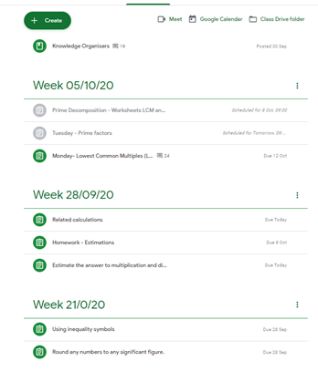
Remote Learning Contingency Plan September 2021/22

Contents
1.      Context ............................................................................................................................................ 3
2.      Aim .................................................................................................................................................. 3
3.      Preparing for remote learning ........................................................................................................ 3
4.      Roles and responsibilities................................................................................................................ 4
     4.1 Teachers ........................................................................................................................................ 4
     4.2 Teaching Assistants ....................................................................................................................... 7
     4.3 Learning Support Assistants .......................................................................................................... 8
     4.4 Subject Leads ................................................................................................................................ 8
     4.5 Senior Leaders ............................................................................................................................... 8
     4.6 IT staff ........................................................................................................................................... 9
     4.7 Pupils and parents......................................................................................................................... 9
     4.8 Governing board ......................................................................................................................... 10
5.      Who to contact ............................................................................................................................. 10
6.      Data protection ............................................................................................................................. 10
     6.1 Accessing personal data .............................................................................................................. 10
     6.2 Sharing personal data ................................................................................................................. 11
     6.3 Keeping devices secure ............................................................................................................... 11
7.      Safeguarding ................................................................................................................................. 11
8.      Monitoring arrangements ............................................................................................................. 11
9.      Links with other documents ......................................................................................................... 12

                                                                                                                                                              2
Remote Learning Contingency Plan September 2021/22
1. Context
The Remote Learning Contingency Plan links to relevant Government Guidance (see documents
towards the end of this plan). This is a live document and subject to change in line with updated
guidance. Major changes will be communicated with the school community. This document should be
read in conjunction with:
School Risk Assessment
Behaviour policy
Child Protection and Safeguarding policy
Quality of Education Policy
Regardless of Tier of National or local restrictions in dealing with Covid-19, Special Schools are to
remain open for all students. (Guidance - COVID-19 contain framework: a guide for local decision-
makers 28 August 2020, New National Restrictions from 5 November 2020 and Schools and childcare
settings: return in January 2021 from 17 December 2020, Restricting attendance during the national
lockdown: schools, January 2021, Contingency framework: education and childcare settings August
2021)
Governors will be consulted regarding any potential partial or full closure; however, the School
remains mindful that the expectations are that they remain open.
2. Aim
Though the current directive is for Special Schools to remain open regardless of Tier of national or
local restrictions, and our contingency plan achieves this, pragmatic decisions and changes to the plan
may need to be made. For instance, there may not be enough staff onsite to safeguard all children. In
such circumstances, the timetable may require adjustment, similar to that offered during summer
term 2020, and students in specific bubbles may be asked to remain at home. Such decisions will be
made based on pupil individual risk assessment and in consultation with SLT and Governors.
The contingency plan ensures that where a class, group or small number of pupils need to self-isolate,
or there is a local lockdown requiring most of the pupils to remain at home, teachers at Maplewell
Hall School will be in a position to offer immediate remote education. The plan also covers the ongoing
education of pupils if:
they have tested positive for COVID-19 but are well enough to learn from home; or
attendance at Maplewell setting has been temporarily restricted
3. Preparing for remote learning
Google Classroom (GC) – will remain our main platform for the delivery of remote lessons.
The remote education will be equivalent in length to the core teaching pupils would receive in
school and will include both recorded or live direct teaching time, and time for pupils to
complete tasks and assignments independently
Pupils will receive Google Classroom refresher sessions (and specific Google Meet instruction)
in their Computing / IT lessons during first half of autumn term
Staff and pupils can log in on a computer, tablet or mobile device (using the GC app). Students
also would be able to access the remote through a PlayStation or Xbox.
3Remote Learning Contingency Plan September 2021/22
Google Classroom can be used to communicate with; individual students or a whole class, set
individual or whole work tasks and mark work. It will also provide opportunities for reviewing
and reflecting.
Student timetable for 2021-2022 will be used for home learning, this will allow minimal
disruption to planning and supporting students and parents/carers to provide structure. This
will also support the reintegration of formal schooling for students on their return.
Parents and pupils are to be made aware in advance of the arrangements in place for the
continuity of education.
Pupils and parents will receive a remote learning timetable via Weduc or post with an
indication of which lessons are delivered as ‘live lessons’
If the school remains open, teachers will have greater capacity to provide printed resources,
such as textbooks and workbooks to pupils who do not have suitable online access.
Teachers will provide 5 hours of remote education per a day plus morning registration.
Students who are in school and students who are learning from home will be following the
same curriculum.
Teachers will use the Go4schools platform for checking daily whether pupils are engaging with
their work, and work with families to rapidly identify effective solutions where engagement is
a concern.
4. Roles and responsibilities
4.1 Teachers
Teachers must be available between 9:00am and 3:30pm, Monday to Friday. If they are unable to
work for any reason during this time, for example due to sickness or caring for a dependent, they
should report their absence using the normal procedures on the designated absence number. If your
absence affects the completion of any work required, ensure that arrangements have been made with
the year group partners or SLT to ensure work is completed.
Setting work
From the beginning of September 2020, all teachers will record their daily lesson resources on
to Google Classroom (GC). All the resources on GC will support home revision and blended
learning.
When creating lessons on GC, teachers should follow the same steps to ensure consistency in
representing the work on the platform. Topic - labelled Week (add the date of the week
commencing) e.g. 05/10/2020 Assignment or Quiz/ Materials and include a due date for
each topic.
4Remote Learning Contingency Plan September 2021/22
Example:
When uploading lessons on Google Classroom (GC) teachers need to:
- Provide frequent and clear explanations of the new content either using a
PowerPoint with voice over for students whose reading age isRemote Learning Contingency Plan September 2021/22
When holding/attending virtual meetings or pre-recording lessons, teachers need to follow:
- Dress code, dress as for school
- Locations (e.g. avoid areas with background noise, nothing inappropriate in the
background, sit against a neutral background)
- Avoid recording in their bedroom where possible (if that's not possible, use a neutral
background)
- Remember that other tabs that are open in browser need to be appropriate for a child
to see, when sharing their screen
- Use professional language
When using Google Chat and Google Meet school will let pupils communicate in Google Chat.
If the chat function is not used appropriately or is a distraction from learning, the function
will be turn off by the administrator (Mark Lewin)
Teachers should record the Meeting for easy cloud access at a future date and time -
particularly for those pupils who are unwell.
Teachers should keep a log of who is doing live streams and when.
Feedback and Assessment
Monitoring progress on GC will ensure timely intervention for individuals, or restructuring a
unit for a whole class without waiting until the end of unit assessment piece.
Pupils complete tasks in GC and can use tools like Google Docs and Google Sheets
Pupils can submit any completed work to teachers with comments via GC or email.
Teachers will need to establish regular assessment opportunities through questioning, quizzes
and other suitable retrieval practice tasks to evaluate what has been learnt and the progress
made by pupils.
Teachers will need to ensure that adjustments are made in response to assessments to confirm
extended understanding, including where necessary, revising material or simplifying
explanations more to ensure pupils’ understanding.
Teachers will make use of self-marking Google Forms, to aid student retention.
Where possible, at least once a week, contact is made with families and pupils to maintain and
support their academic achievement and personal development.
Subject teachers will regularly monitor students’ engagement and give them on going
feedback.
Feedback may include written or audio feedback, general class feedback, short feedback
statements or a mark for correct answers.
Key scenarios for the Continuity of Education:
1. The majority of the class Teachers will upload on GC pre-recorded videos or deliver live
and teachers are in school, lessons. When a live lesson is arranged, students will receive an
but some pupils are email with a link.
isolating at home. When recording videos during lessons, teachers can use a
combination of Google Meet (to record/stream the audio and
visuals), PowerPoint and visualiser (to support the presentation
of content). The teacher’s laptop will be presenting to the
classroom, displaying, while at the same time recording on
Goggle Meet. Teachers will disable specific features e.g. camera,
sound (if too loud or behaviour is out of control). Suggestion:
6Remote Learning Contingency Plan September 2021/22
record time 10-15 min of the lesson. This may include a starter,
modelling and addressing misconceptions.
To prioritise the wellbeing and long-term futures of students
who are identified as “clinically extremely vulnerable” and
advised by their GP to not attend school during the period this
advice is in place (national lockdown). Tutors will be arranging
with students and their parents to deliver a regular virtual
contact during tutor time e.g. registration and reading time.
2. Whole year group has to Whole class or year group at home – the subject lead and subject
isolate. teachers will co-ordinate together, then deliver work to each year
group through GC or GM. This can be as a pre-recorded lesson
where teachers will be able to give presentations remotely by
sharing their screen or using visualiser to do modelling. Students
should expect 2 to 3 pre-recorded lessons per week – with a
priority schedule for core subjects; Maths, English and Science.
Foundation subject teachers need only record 1 lesson per week
for each year group, prioritising KS4. Lessons will continue to
follow the normal student timetable.
3. Staff member has to isolate Teaching staff will be able to set work through GC and GM to their
but is well. groups - work will be carried out in school under staff supervision
in their normal lesson slot. Staff based at home can either pre-
record lessons or stream live lessons. Teachers will need to
schedule meetings in GC each time they schedule a live lesson.
The invite is only to be sent to staff in the classroom and not the
students. When streaming live lessons teachers need to follow
their normal timetable and the staff members in the classroom
will relay questions/answers or any misunderstanding etc. of the
remote learning. Minimum of 2 live lessons or pre-recorded
lessons per day. In order to safeguard both students and staff all
live lessons will also be recorded.
4. Staff member has to isolate The Subject lead will coordinate with the other year group
but is unwell. teaching staff to ensure that suitable work is set – this may mean
utilising Oak Academy resources if the staff absence is lengthy.
4.2 Teaching Assistants
When assisting with remote learning, teaching assistants must be available between 9:00am
and 3:30pm Monday to Friday.
If they are unable to work for any reason during this time, for example due to sickness or
caring for a dependent, they should report their absence using the normal absence
procedure.
During this time, they are expected to check work emails and be available when called upon
to attend school.
Teaching assistants are responsible for:
- Supporting pupils with learning remotely by giving them academic advice
- Supporting teachers with marking, setting small tasks - under the close supervision of
the subject teacher
7Remote Learning Contingency Plan September 2021/22
4.3 Learning Support Assistants
When assisting with remote learning, learning support assistants must be available between
9:00am and 3:30pm Monday to Friday.
If they are unable to work for any reason during this time, for example due to sickness or
caring for a dependent, they should report their absence using the normal absence
procedure.
During this time, they are expected to check work emails and be available when called upon
to attend school.
Learning support assistants are responsible for:
- Well-being phone calls to parents that are recorded chronologically on My Concern.
The schedules for the phone calls will be led by Designated lead officer.
- Supporting pupils with their learning remotely
- Supporting teachers with marking, setting small tasks - under the close supervision of
the subject teacher
Attending virtual meetings with teachers, parents and pupils under the guidance of Pastoral
Lead
4.4 Subject Leads
Continually update information on the school website relating to Online Learning.
Ensure the curriculum that is delivered will be broad and ambitious; and will include a variety
of activities across different subjects.
School leaders, in collaboration with subject leaders will regularly review the curriculum
plans/maps, to ensure that pupils learn the most important things they need to know.
Subject leaders will review work set by teachers weekly and the impact this is having upon
pupils’ learning.
4.5 Senior Leaders
School will try to provide IT equipment where possible, prioritising year 11 and 10 and the
most disadvantaged students.
In the event of a long term, whole school lockdown, it will be necessary to issue a separate
home learning timetable (as was implemented in May 2020), to support both students and
staff with planning and delivery of lessons.
Staff will receive regular training to support the use of online tools and resources.
School will purchase additional laptops and visualisers to access and improve remote learning
for staff and students as required.
Pupils and staff will receive safeguarding training in the safe use of the internet at home.
School will issue all new parents/carers with guidance on how to access remote learning.
Upload any updated information on the school website relating to Online Learning.
Regularly review curriculum plans/maps provided by subject lead, to ensure that pupils learn
the most important things they need to know.
Continuously review and adapt remote/home learning offer, so that it supports the intended
impact of our curriculum and will continue to support those students who are not able to
attend school.
Monitor the security of remote learning system, including data protection and safeguarding
considerations
8Remote Learning Contingency Plan September 2021/22
Maintaining pupil contact, collating, passing on information and responding to any concerns
raised. See the COVID-19 amendments to the Child Protection Policy
4.6 IT staff
IT staff are responsible for:
Fixing issues with systems used to set and collect work
Supporting staff and parents with any technical issues they experience
Reviewing the security of systems and flag any data protection breaches to the data protection
officer
Assisting pupils and parents with accessing the internet or devices
Setting up automatic weekly email digests to parents. These will summarise class activity and
work that's due or overdue.
Adjusting settings to log messages for safe guarding purposes.
4.7 Pupils and parents
Staff can expect pupils to:
Be contactable during the hours of the school day 8:50am – 3:15pm, although they may not
be in front of a device the entire time
Engage with a daily ‘Tutor Time’ registration and when possible follow live lesson timetable
Before a Live Session, students should:
- Wear appropriate clothing.
- Ensure a responsible adult is around.
- Be in a shared space in their house, rather than in their bedroom.
- Make others in the house aware that they are taking part in an online session.
- Be prepared for the online lesson e.g. have equipment ready for the live lesson (for example
textbook, pen)
During the live Session, students should:
- Use the ‘hand up’ feature if they wish to ask a question.
- At all times, unless directed otherwise by the teacher, their microphone function must remain
switched off.
- During a live lesson, students will be able to hear and/or see teachers. However, they should
not be able to use their cameras so they will not be able to see each other.
- Students will be able to communicate with the teacher through the typed chat function.
- As part of a live lesson, students might be asked to turn on their cameras or microphones, but
there is no obligation for them to do so.
- Live lessons or pre-recorded lessons remain the intellectual property of the school and/or
class teacher and must not be recorded, copied or shared online via social media or otherwise
in any format.
- All live lessons will be recorded by the school and if appropriate, made available later on
Google Classroom. The live lessons will also be recorded for the purposes of safeguarding and
support. They will be archived securely within Google Classroom and not publicly accessible.
- Recorded live lessons published on Google Classroom will allow students to go back to the
lesson to refresh their memory when completing any further learning or tasks related to this
topic.
9Remote Learning Contingency Plan September 2021/22
- Students must not share their Google Classroom logins.
- Any misconduct will result in the teacher removing the student from the live lesson.
- All the normal rules that we follow at school apply online too.
- Seek help if they need it, from teachers or teaching assistants
Staff can expect parents to:
Be able to check in with their children during the live lessons
Seek help from the school if they need it – staff should refer parents to the ‘Google Classroom’
platform and ‘Online Learning’ section on our website.
Not to share any part of a live lesson or pre-recorded lessons online or otherwise.
Be respectful when making any complaints or concerns known to staff.
4.8 Governing board
The governing board is responsible for:
Monitoring the school’s approach to providing remote learning to ensure the education
remains as high quality as possible.
Ensuring that staff are certain that remote learning systems are appropriately secure, for both
data protection and safeguarding reasons.
5. Who to contact
If any staff have any questions or concerns about remote learning, they should contact the following
individuals:
Issues in setting work – talk to the relevant subject lead/SLT
Issues with behaviour – in first instant talk to parents, if further support required, talk to the
relevant head of key stage: Jacqui Tarry KS3, Craig Palmer KS4, Nicky Smith-Watson KS5 or
COMPASS team
Issues with IT – talk to IT staff Mark Lewin or Adam Hartshorn
Issues with their own workload or wellbeing – talk to your line manager/SLT
Concerns about data protection – talk to the data protection officer: Business Manager,
Andrew Patterson or Office Manager Mandy Paris
Concerns about safeguarding – talk to the lead DSL Rob Cooper or the remaining team of DSL
All staff can be contacted via their school email addresses
6. Data protection
6.1 Accessing personal data
When accessing personal data, all staff members will:
Have access to MyConcern to record any parent contact or concerns about children, this is
accessed via a secure password. Ensure you log out after use. Do not allow access to the site
to any third party.
10Remote Learning Contingency Plan September 2021/22
Teachers are able to access parent contact details via Go4schools and MyConcern using a
secure password. Do not share any details with third parties and ensure you have logged out
of Go4schools or MyConcern.
School laptops and tablets are the school’s preferred devices to be used when accessing any
personal information relating to pupils.
6.2 Sharing personal data
Staff members may need to collect and/or share personal data such as emails or phone numbers as
part of the remote learning system. Such collection of personal data applies to our functions as a
school and doesn’t require explicit permissions.
While this may be necessary, staff are reminded to collect and/or share as little personal data as
possible online.
6.3 Keeping devices secure
This information is based on our protocol on GDPR. Talk to data protection officers (Andrew Patterson
and Mandy Paris) for more help, and IT lead (Mark Lewin) if you want to include details on how to put
these measures in place.
All staff members will take appropriate steps to ensure their devices remain secure. This includes, but
is not limited to:
Keeping the device password-protected – strong passwords are at least 8 characters, with a
combination of upper and lower-case letters, numbers and special characters (e.g. asterisk or
currency symbol)
Ensuring the hard drive is encrypted – this means if the device is lost or stolen, no one can
access the files stored on the hard drive by attaching it to a new device
Making sure the device locks if left inactive for a period of time
Not sharing the device among family or friends
Installing antivirus and anti-spyware software
Keeping operating systems up to date – always install the latest updates
7. Safeguarding
Please see the following for updates concerning safeguarding in relation to home learning:
COVID-19 amendments to the Child Protection Policy- this also details reference to remote learning
curriculum and risks online. This policy is available on our website.
8. Monitoring arrangements
This policy will be reviewed as and when updates to home learning are provided by the Government,
or by Kasia Glinka (Assistant Head). Every review will be approved by Jason Brooks (Head teacher) and
SLT.
11Remote Learning Contingency Plan September 2021/22
9. Links with other documents
Documents and links related to remote (Blended) learning:
Pupils and parents
A guide for Students/Parents/Carers to logging in to Google Classroom
Student Guide to Google Classroom –Video:
https://drive.google.com/file/d/1U9XTfsY-GNLZzkLA9VTysD3xcfsyQyoT/view
School website – homework learning https://www.maplewell.leics.sch.uk/online-learning/
Education online resources https://www.gov.uk/government/publications/coronavirus-covid-19-
online-education-resources
Teachers
Google Classroom instructions for Teachers: https://get-help-with-tech.education.gov.uk/about-
bt-wifi
Google Classroom guide converting and adding files
Google Meet-Recording lessons:
https://www.loom.com/share/4d1218b7a75c41e0b9b37bf59a105382
Guidance - How schools can plan for tier 2 local restrictions (Published 28 August 2020):
https://www.gov.uk/government/publications/how-schools-can-plan-for-tier-2-local-
restrictions/how-schools-can-plan-for-tier-2-local-restrictions
Guidance - COVID-19 contain framework: a guide for local decision-makers (Updated 28 August
2020):
https://www.gov.uk/government/publications/containing-and-managing-local-coronavirus-
covid-19-outbreaks/covid-19-contain-framework-a-guide-for-local-decision-makers
Education and childcare settings: New National Restrictions from 5 November 2020:
https://www.gov.uk/guidance/education-and-childcare-settings-new-national-restrictions-from-
5-november-2020
Tier 1
The default position for areas in national government intervention is that education and childcare
settings will remain open. In education settings where pupils in Year 7 and above are educated,
face coverings should be worn by adults and pupils when moving around the premises, outside of
classrooms, such as in corridors and communal areas where social distancing cannot easily be
maintained. All nurseries, childminders, schools, colleges and other educational establishments
should remain open and continue to allow all their children and young people to attend, on site,
with no other restrictions in place.
Tier 2
Early years settings, primary schools and alternative provision (AP) providers, special schools and
other specialist settings will continue to allow all children/pupils to attend on site.
Tier 3
Childcare, nurseries, primary schools, AP, special schools and other specialist settings will continue
to allow all children/pupils to attend on site.
Tier 4
Special schools and other specialist settings will allow for full-time on-site attendance of all pupils.
Guidance- Schools and childcare settings: return in January 2021, Published 17 December
2020https://www.gov.uk/government/publications/schools-and-childcare-settings-return-in-
january-2021/schools-and-childcare-settings-return-in-january-2021#schools-with-secondary-
age-pupils
Guidance for all schools in England, January 2021- Restricting attendance during the national
lockdown:
12Remote Learning Contingency Plan September 2021/22
https://assets.publishing.service.gov.uk/government/uploads/system/uploads/attachment_data
/file/952443/210114_School_national_restrictions_guidance_FINAL_14012021.pdf
Guidance School inspection handbook, Updated 1 September:
https://www.gov.uk/government/publications/school-inspection-handbook-eif/school-
inspection-handbook
Contingency framework: education and childcare settings, August 2021:
https://assets.publishing.service.gov.uk/government/uploads/system/uploads/attachment_data
/file/1011704/20210817_Contingency_Framework_FINAL.pdf
13You can also read


