RENEWABLE NEWSTEAD NEWSTEAD 2021 ... Supporting the development of a vibrant, informed & sustainable community
←
→
Page content transcription
If your browser does not render page correctly, please read the page content below
RENEWABLE NEWSTEAD
  NEWSTEAD 2021 ... Supporting the development of a
     vibrant, informed & sustainable community

         2018 Future of Local Government Summit
            Genevieve Barlow and Geoff Park
                     30TH MAY 2018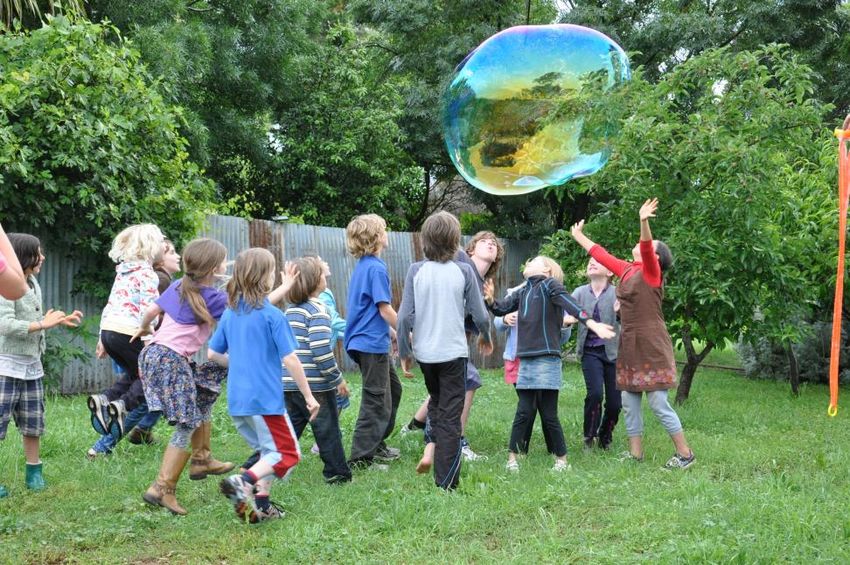
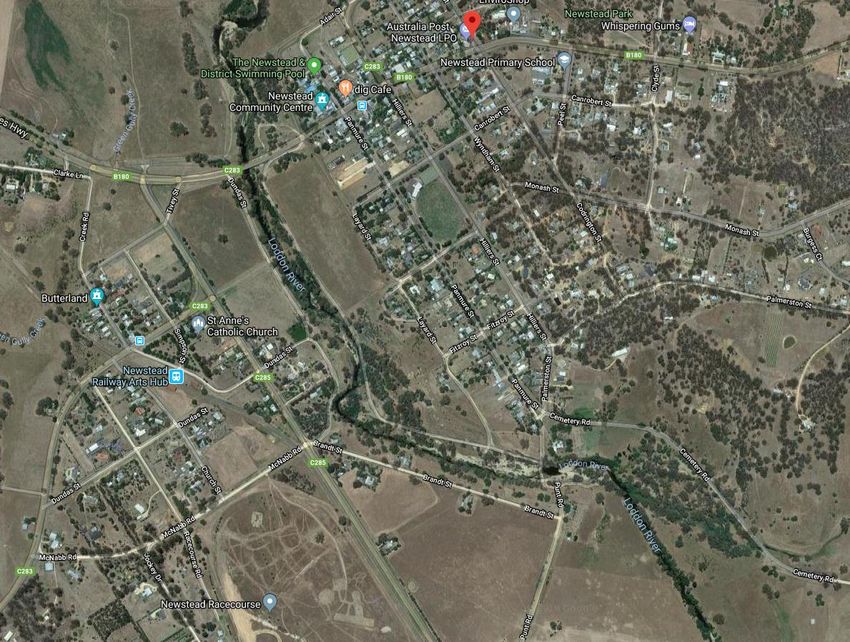
About Newstead
■ Primary School
■ Rural Transaction Centre and Community Bank agency, library, laundry, internet access &
  op shop
■ Two pubs
■ Milkbar
■ Café
■ Supermarket
■ Butcher
■ Mechanic
■ Environmental (tree) Management company
■ Native plant Nursery
■ Unknown number of home businesses, from builders to organisational consultants
■ Volunteer-managed swimming pool
■ Art exhibition space
About our community
■   15 mins from Castlemaine (& train line to Bendigo & Melbourne)
■   Close to schools – Steiner, local primary & secondary schools in Castlemaine, Maryborough &
    Bendigo
■   Population 754 (Source: Census 2016)
■   310 houses
■   Biggest age group 60-64 yrs (10.9%) Smallest age groups 25-29 yrs & 80-84 yrs (each @ 3.2%)
■   300 people employed 50.3% FT, 41% PT
■   Little cultural diversity – 82.6% of residents born in Australia
■   Internet accessed at home 81.4%, no internet at home 17%

■   IRSAD (INDEX OF RELATIVE SOCIO-ECONOMIC ADVANTAGE AND DISADVANTAGE) SCORE … 927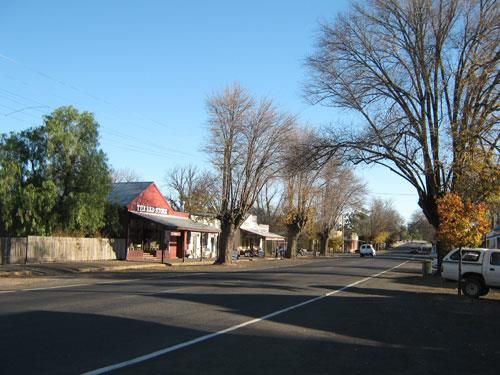
Shaping our future

■ Community summit held May 2008 – run by locals for locals
■ To dream about the place we wanted to live in in the year 2021
■ Acknowledged our elders & their efforts
■ Involved all ages
■ Called for ideas
■ Kicked off informal groups & projects
We got to work

■   Newstead 2021 Inc. formed
■   Newstead Community Garden established (2009)
■   Newstead playground overhauled & wooden pirate ship installed (2010)
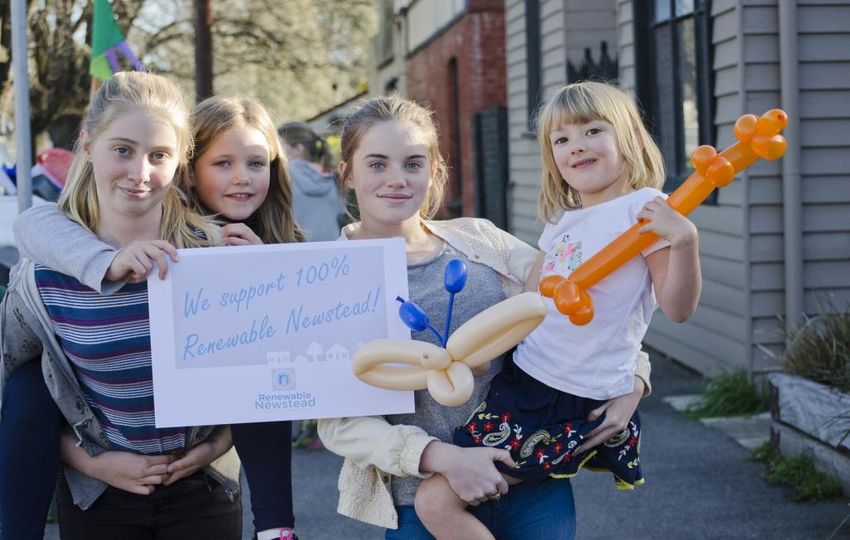
■   Energy group established – currently working to switch town to 100% renewable energy on commercially viable basis.
■   Rocket Science Community Conversation series started
■   Transport group established & community bus funded by Community Bank
■   Disability access in main street businesses addressed
■   Paths & trails group working on bike/walking paths to nearby towns
■   Old railway station restored & opened as Arts Hub (2015)
■   Establishment of new Sports Pavilion (2014)
■   Developed an exemplar Community Plan (2013)
Newstead 2021 Inc.

■ Newstead 2021 has been established to support the
  development of a vibrant, informed and sustainable
  community in our town and surrounds.

■ The group comprises interested members of the local
  community who actively and collaboratively work towards
  this goal.
N2021 Inc. – how we work
■ Meet only when required (recognises people have jobs & families)
■ Acts as a link into our community (handy for councils, departments)
■ Gather people for input when needed
■ Locals with a shared interest/idea/project often seek funds with N2021 Inc as
  auspicer
■ A community-led organisation that encourages community-led projects

■ It’s COMMUNITY PROBLEM SOLVING … OUR MOTTO IS “First, do no harm”
How we work … a ‘boring’ story
RENEWABLE NEWSTEAD: Ambition
                       Transition to 100% renewable energy

Project Goals for Newstead - Victorian town of 500 NMIs
 -  Renewables must be opt in only
 -  Demonstrate new social model for sharing grid costs - ensure all can benefit
    from solar, not just those with the right roof-space and budget - “do no harm”
    principle.

Project Goals beyond Newstead
 -  Prove a scalable, replicable model for community transitions to renewable
    energy that will not need subsidy once new business norms established
 -  Prove that renewables can lower bills with no compromise to reliability or
    power quality
 -  Mitigate social risk of the solar ‘haves’ and ‘have nots’
History (1)
Project Development Background:
- Developed out of community consultation in 2008
- Project started with energy efficiency assessments and local capacity building
- Technology options assessed for 100% renewable energy supply in 2012 -
solar the obvious choice but investment costs not yet compelling
2015 - current:
- $200,000 from Victorian Labour Government to design a model for
community-scale renewables
- MOU signed with Powercor to work together
- Detailed options assessment and scenario modelling undertaken
In 2017, dialogue with Powercor and AER led to innovative new tariff trial to
enable local solar farm and grid sharing at community level.History (2) New Powercor Tariff Trial Commences July 1, 2018. - Tariffs reflect real cost of unconstrained network asset - $1/day connection, $2/kW capacity, $0c/kWh usage charge - encourages enhanced network utilisation and so lower effective c/kWh rate - New tariff also rewards fuel switching away from wood and gas to electricity - Savings of 10-25% on the bill appears plausible, with larger energy users benefiting most from new network tariff 2018 - Preferred model chosen Partner with a retailer who will build, own, operate local solar farm of 2MW+. This internalises risk/reward for the retail partner and gives the project the best chance of success
Renewable Newstead: The Model

         Newstead                    Retail          Commercial offtake
         Community                   partner

      Community Finance           2MW                    Addition 8MW to commercial offtake
                                                         partner if necessary for scale

                                 SolarFarm EPC and
        Optional complementary
                                  finance package
         finance to bring down
             cost of capital
Status
Options assessment complete … Preferred Model Chosen:
- Shared 2MW solar farm on fringe of town, partner retailer to “build/own/operate”
- Storage integration delayed until storage costs come down - can occur at
household or grid scale.
Investment Risk Remains:
- Network tariff is a two year trial, with three year extension should 50% of
customers sign up. Mis-match with 15yr+ renewable investment horizon
- No guarantee of customer sign up and long term loyalty - local customers using
local solar farm output is critical to viability
- Policy uncertainty also makes long term solar farm offtake pricing difficult
BUT on paper, all project goals can be met...So how do we de-risk investment?De-risking investment is key
Options are:
- CAPEX funding support from Government for solar farm
• When compared to rooftop solar, the 2MW solar farm saves consumers
approximately $850,000 via avoided STC rebates
• We estimate $850,000 is sufficient to de-risk investment in 2MW solar farm
If rooftop solar and community-scale solar farm has equal treatment under
renewable energy policy, Newstead project would be bankable.
• LGCs can go to zero without affecting project outcomes - solar farm remains
viable, customer’s save on bills.
- New customer contracts that create long term loyalty incentive - requires
establishing new business norms
- Private negotiation of longer term network tariff trial - will take time
All options outlined above are in playLet’s Assume Success in Newstead
What do we learn?
Communities can transition to 100% renewable energy, while driving down costs for
all customers, not just those with rooftop solar. How?
1. Cost-reflective network pricing leads to enhanced network utilisation and lower
effective c/kWh for delivered energy.
2. Network price setting timeframes need to adapt to decentralised renewables
3. Network tariff innovation ($0/kWh) puts rooftop solar and front of meter solar
farm on equal footing, with least cost renewables investment (front of meter
solar farm) resulting in lower c/kWh delivered energy
4. Long term customer loyalty aligned to local renewable energy asset investment
horizon reduces churn costs for renewable gentailers and helps to drive down
whole of bill costs - contractual models between retailers and customers are key
to enabling this outcomeLet’s Assume Success in Newstead
What does the market learn?
1. Network pricing needs to respond to changing energy technology costs and
customer expectations, to ensure the grid remains a utilised asset and death
spiral risks can be mitigated
2. Network tariff structures and their duration need to better align to renewable
energy investment timeframes, to underpin community-scale renewable energy
supply, and ultimately decentralised microgrids
3. Retailers need to better align customer contract terms with investment in
renewable generation, creating incentives for customer loyalty without creating
unfair contract termination clauses
4. Regulators across all jurisdictions can help the market innovate by proactively
supporting development of new tariff and contractual models.In conclusion SMALL RURAL COMMUNITIES … Can collaborate and innovate to really effectively and efficiently tackle and solve complex problems … Need trust and commitment from Government and the private sector to succeed.
You can also read


