Reopen Plan SPRING SEMESTER - Commencing 16 January 2021 - Reopening UConn
←
→
Page content transcription
If your browser does not render page correctly, please read the page content below
Reopen Plan

SPRING SEMESTER
  Commencing
 16 January 2021
UConn Reopen Plan – Spring Semester 2021
TABLE OF CONTENTS
UCONN SENIOR COVID-19 COORDINATOR …………………………………………………………….1
PROGRAMS …………………………………………………………………………………………………....2
TIMEFRAME……………………………………………………………………………………………………..3
OPENING CONSIDERATIONS………………………………………………………………………………..3
PART 1 - PLAN FOR SPRING 2021 REOPENING ……………………………………………………...…3
  A. CAMPUS POPULATION……………………………………………………………………………....4
  B. ACADEMIC INSTRUCTION……………………………………………………………………….…..5
  C. PHYSICAL SPACE …………………………………………………………………………………….6
  D. PERSONAL PROTECTIVE EQUIPMENT……………………………………………………….…15
  E. DISINFECTION/CLEANING ……………………………………………………………………..…..16
  F. CAMPUS ACCESS ………………………………………………………………………..……….....17
  G. MOVE-IN PROCESS…………………………………………………………………………………..17
  H. STUDENT PROGRAMS AND ACTIVITIES…………………………………………………………19
  I.   ATHLETICS…………………………………………………………………………………………….20
  J. CAMPUS TRANSPORTATION ………………………………………………………………………21
  K. STAFFING ………………………………………………………………………………………………21
  L. TRAVEL ………………………………………………………………………………………………....23
  M. PUBLIC EDUCATION, COMMUNITY BUILDING, & OUTREACH…………………………….…23
  N. ENFORCEMENT …………………………………………………………………………………….…26
  O. LIABILITY …………………………………………………………………………………………….…26
PART 2 – PLAN FOR MONITORING THE HEALTH OF STUDENTS, FACULTY, AND STAFF….….27
  A. STUDENT TESTING……………………………………………………………………………………27
  B. FACULTY AND STAFF TESTING SUMMARY………………………………………………….….30
  C. INTERNAL COMMUNICATION OF COVID-19 CASES……………………………………………33
  D. STUDENT MEDICAL CARE …………………………………………………………………………..34
  E. MENTAL HEALTH AND BEHAVIORAL HEALTH SERVICES………………...…………………34
  F. COVID-19 INFORMATION …………………………………………………………………………….35
PART 3 - PLAN FOR CONTAINMENT………………………………………………………………………..36
  A. ISOLATION AND QUARANTINE ……………………………………………………………………..36
  B. CONTACT TRACING ……………………………………………………………………………….….37
  C. HOSPITALS AND HEALTH CARE FACILITIES …………………………………………….…….39
PART 4 - PLAN FOR ALTERING OPERATIONS/CAMPUS - SHUTDOWN ……………………………39
CONCLUSION……………………………………………………………………………………………………42
UConn Reopen Plan – Spring Semester 2021

                               This page is intentionally blank.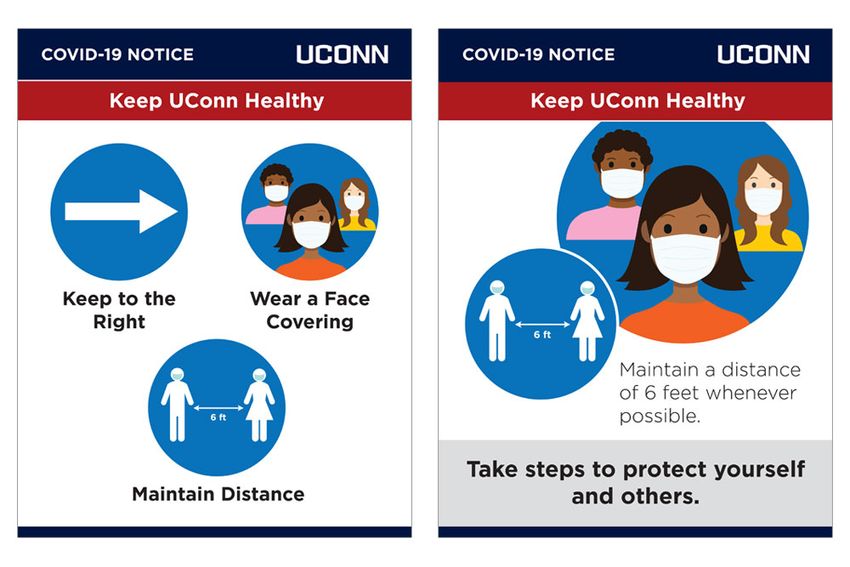
UCONN SENIOR COVID-19 COORDINATOR
Scott Jordan, Executive Vice President of Administration and Chief Financial Officer
University of Connecticut
352 Mansfield Road, Unit 1122
Storrs, CT 06269-1122
Phone: (860) 486-3455
Email: evpacfo@uconn.edu
PROGRAMS
The UConn programs/departments to be opened during CT’s Reopen Spring Semester 2021 include:
•   Undergraduate residential programs (Storrs and Stamford) and non-residential and commuter
    students at all campuses.
•   Graduate programs.
•   Athletics.
•   Research.
•   Normal business operations across departments and all campuses.
TIMEFRAME
Intended date of classes starting: 19 January 2021
Last day of in-person classes: 9 April 2021 (Students will not return following Spring Break; the
remainder of the semester, 19 April to 8 May, will be entirely online to allow for the completion of the
required curriculum and final exams).
Spring Break: 11 April to 17 April 2021
The intended duration of the semester: 8 May 2021
OPENING CONSIDERATIONS
The Higher Education Subcommittee of Reopen Connecticut established “gating conditions” which, if
satisfied, allowed colleges and universities to reopen in the fall of 2020. The University of Connecticut
met these conditions for the fall semester and will continue to monitor these gating conditions to ensure
the safety of campus operations this spring.
On 11 January 2021, the Connecticut Department of Public Health issued new recommendations for
consideration in their Interim Guidance for the Reopening of Higher Education Campuses with
On-Campus Residential Populations for the Spring 2021 Semester (01-08-2021). The purpose of
this guidance is to provide best-practice recommendations for the reopening of campus facilities and
the repopulation of students on campuses with residential populations at Institutions of Higher
Education (IHE). Although not intended for IHE campuses that serve predominantly or strictly commuter
students, DPH does recommend that those institutions encourage their students who live in high-risk
communities to seek regular testing at one of the many free community-based COVID-19 testing
locations across the state. A list of free community COVID-19 testing sites can be found at
https://portal.ct.gov/Coronavirus/Priority-Populations

                                                                                        15 January 2021 | 1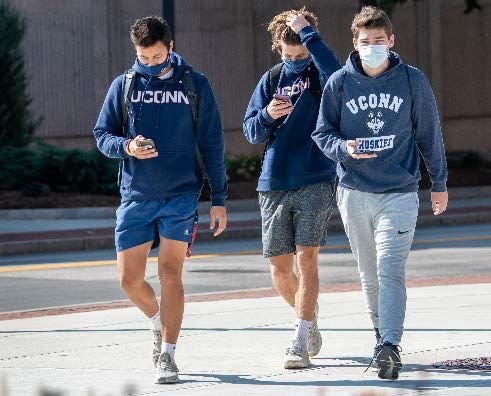
UConn Reopen Plan – Spring Semester 2021

The Connecticut Department of Public Health (DPH) is offering the following recommendations as a set
of best-practice strategies to minimize the COVID-19 transmission and outbreak risks involved with
reopening residential campuses during this time.
•   Test and Quarantine All Residential Students Before Fully Opening Campuses
    DPH recommends the following related to testing and quarantine procedures.

            DPH Recommendation                                            UConn Action

     Residential students should              Pre-Arrival Testing: Storrs Residential students traveling to
     receive a negative PCR test              campus will complete a mail-in COVID-19 test through Vault
     within the 7 days prior to their         Health 5-7 days prior to coming to campus.
     “move-in” date.
                                              Positive Tests: Students who test positive will remain at home
                                              to self-isolate until medically cleared by Student Health and
                                              Wellness (SHaW) – Medical Care to arrive on campus.
                                              Negative Tests: Students who test negative will be allowed to
                                              arrive on campus for move-in.
                                              Unable to Test: Students arriving from outside the U.S. may
                                              not be able to access testing through Vault Health. These
                                              students are encouraged to obtain a test before traveling to
                                              campus if able and will be tested upon arrival.

     Residential students should              Arrival Testing: All residential students will be tested upon
     receive an antigen or PCR test           arrival as part of the Res Life Check-In process. Testing will
     upon arrival on campus (Day 0)           be performed during Check-In, no prior action is required.
     and entry into quarantine.

     Residential students should              Arrival/Residential Quarantine: All residential students on
     observe their entire quarantine          campus will operate under a residential quarantine until 1
     period in residence on campus            February 2021. All academic instruction will be online until 1
     (i.e. in the dormitory where             February 2021. Dining services will be Take-Out only from
     movements can be controlled)             16-30 January. The Rec Center will be closed to the public.
     rather than at their permanent
     home residence or elsewhere.

     Residential students should              All residential students will be scheduled for a PCR test
     receive a PCR test at Day 7 of           approximately 7 days after arrival on campus.
     quarantine or later.

     Establish a quarantine 1 period          Everyone on campus will operate under a residential
     based on DPH guidance.                   quarantine until 1 February 2021. Any student who
                                              experiences symptoms of COVID-19 should seek immediate
                                              medical evaluation through SHaW – Medical Care before
                                              engaging with the campus community.

1 It is recommended schools refer to the DPH Interim Guidance on the Length of Quarantine for Contacts of Persons with
SARS-CoV-2 Infection in determining the appropriate quarantine period for their specific campus repopulation plan
(https://portal.ct.gov/-/media/DPH/HAI/COVID19-CTquarantineguidance12-16-20v2.pdf).
                                                                                                     15 January 2021 | 2
UConn Reopen Plan – Spring Semester 2021

     Non-residential students should    Off-campus and commuter students, both graduate and
     be advised to severely limit       undergraduate, for all UConn regional campuses who are
     their interactions with            registered for in-person instruction or who will be
     individuals outside of their       regularly working or doing research on campus are
     household (including with the      required to submit verification of a COVID-19 negative test
     surrounding community) prior to    result prior to attending their on-campus commitments
     the beginning of the academic
                                        This test must be collected within 7 days of the start of in-
     semester.
                                        person classes on February 1, 2021.
                                        The university is making COVID-19 PCR testing available
                                        through a mail-in option at no cost through Vault Health.
                                        Students may also obtain testing on their own at their own
                                        expense and upload the results through the SHaW Patient
                                        Portal.
                                        Any student who tests test positive will seek medical care and
                                        clearance from isolation from their local provider.

•   Increase testing protocols for students through the end of February 2021.
    DPH recommends that schools plan to increase their cadence for testing of students to ensure that
    all residential students, as well as any traditional undergraduate students residing in off-campus
    housing who will be accessing campus to attend classes or otherwise, are tested a minimum of
    once per week for January and February 2021. UConn has a robust plan in place to meet this
    recommendation. Testing will include the following:
    o   Routine surveillance testing.
    o   Symptomatic Testing
    o   Pooled Sampling Testing
    o   Waster Water Testing.
    Details on UConn’s testing strategy is found in Part 2 – Plan for Monitoring the Health of Students,
    Faculty, and Staff.

PART 1. PLAN FOR SPRING 2021 REOPENING
The Spring 2021 Reopen Plan covers all UConn campuses statewide (except UConn Health), including
residential and commuter students, and assumes a combination of in-person, remote learning, and
hybrid classes. Important to the ability to reopen campuses is UConn’s ability to continue compliance
with social and physical distancing requirements in all spaces, the use of PPE (face coverings), and
other barriers to prevent the spread of COVID-19, especially in areas where maintaining 6-ft of physical
distancing is difficult, and following strict cleaning and disinfecting protocols across all campuses.
UConn’s goal is to provide the best educational and campus experience for all students wanting to
come to UConn.
                                                                                        15 January 2021 | 3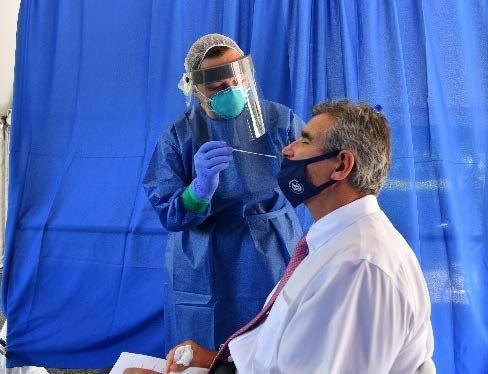
UConn Reopen Plan – Spring Semester 2021
A. CAMPUS POPULATIONS
The total number of students, faculty, and staff to be on campus during the Spring semester will continue
to be severely limited. There are over 27,000 (undergrad and graduate) currently students registered
for the Spring semester across UConn campuses. Based on reduced housing and limited in-person
classes, approximate campus population numbers for Spring 2021 will be:
• Residential Campuses:
o Storrs
Living on campus: 4,559 (in-person and all online).
Living off-campus but attending in-person classes: 6,385
Online only students: 10,423
Staff and Faculty: 2,804
o Stamford[1]
Living on campus: 143 (in-person and all online).
Living off-campus but attending in-person classes: 225
Online only students: 1,920
Staff and Faculty: 74
• Non-Residential Campuses
o Avery Point
Students in-person classes: 301
Online only students: 164
Staff/Faculty: 141
o Hartford
Students in-person classes: 917
Online only students: 1,867
Staff/Faculty: 101
o Waterbury
Students in-person classes: 316
Online only students: 499
Staff/Faculty: 54
o Law School
Students in-person classes: 187
Online only students: 337
[1]
The Stamford Residence Hall is located a couple of blocks from the Stamford Campus. Not all requirements for residential
students will pertain to those living in Stamford residential halls and will be clearly indicated ias such n this document.
15 January 2021 | 4
UConn Reopen Plan – Spring Semester 2021
Staff/Faculty: 46
o UConn Health [2]
Students in-person classes: 779
Online only students: 55
Staff/Faculty: 46
B. ACADEMIC INSTRUCTION
Flexible modes of course delivery planned for Spring 2021 will enable UConn to continue delivering the
same outstanding education to all students while keeping safety at the forefront. These modes of
instruction include:
• Online (WW) - These classes never meet in person, nor are students expected to be available at
any particular time for classroom instruction. These courses are taught asynchronously with no
pre-assigned meeting times. Students will have access to class materials online using HuskyCT.
• Distance Learning (DL) - These classes never meet in person, but faculty are expected to deliver
instruction synchronously at the times for which the class is scheduled. Students will participate
online using WebEx, Blackboard Collaborate, or Microsoft Teams.
• Hybrid/Blended (HB) - These classes have both in-person and online components. Classes will
not meet in person for all scheduled meetings. At least 25% of mandatory instruction for the class
will occur in person.
• Hybrid/Blended Reduced Seat Time (HR) - These
classes have both in-person and online
components. Classes will not meet in-person for
all scheduled meetings. Less than 25% of
mandatory instruction for the class will occur in
person
• Split (SP) - These classes will meet during all
scheduled class times. However, groups of
students in the class will alternate in-person and
virtual attendance as designated by the instructor
to maintain reduced density in classrooms.
• In-Person (P) - These classes will meet in person during all scheduled class times.
• Service Learning (SL) - This mode indicates a service learning class, with instruction times and
locations to be determined by the instructor.
• By Arrangement (AR) – These are meant for clinical placements, field placements, independent
study, internships, and research hours. They do not require a classroom or meeting time but are
considered to be in person.
• Study Abroad – All Spring 2021 Education Abroad programs that require international travel are
canceled. UConn has virtual Education Abroad programs for Spring 2021.
[2]
Graduate, professional students, and faculty/staff at UConn Health fall under UConn Health’s COVID-19 protocols and are
not included in this plan. Included here for informational purposes only.
15 January 2021 | 5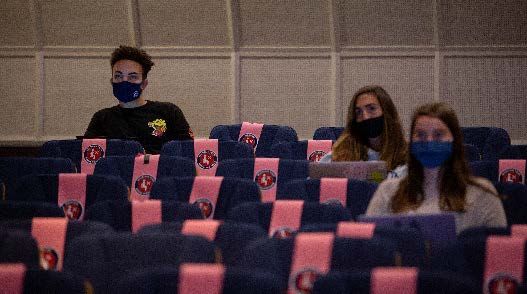
UConn Reopen Plan – Spring Semester 2021

C. PHYSICAL SPACE
•   Classrooms
    Physical distancing is achieved through a mixed approach to instruction
    described in the previous section, with many distance learning courses, all
    or part of the time, and some courses platooning smaller cohorts of students
    for face-to-face meetings. Utilizing UPDC’s space analysis, a classroom
    optimization team takes class enrollment information and assigns classes
    with a face-to-face component to spaces that can accommodate a 3-ft
    radius “bubble” for each student. Centers for Disease Control and
    Prevention (CDC) defines physical distancing as at least 6-ft or approximately two arms’ length.
    Some larger spaces on campuses typically not used for classroom instruction will serve this
    purpose.
    Program directors for clinical training follow UConn established a set of guidelines that include
    directions concerning maximum site density, PPE (in some cases face shields and/or N-95 masks
    replacing cloth masks), and disinfecting procedures.
    UPDC completed detailed diagrams of classroom capacity based on physical spacing requirements
    for Storrs and the Regional campuses. All have new seating configurations or “Do Not Sit Here”
    signs on chairs consistent with social distancing guidelines. Facilities Operations will configure the
    rooms and coordinate signage placement.
    Proposed COVID-19 capacity assumptions:
    o   Each person is allocated a 3-ft radius “bubble” equating to 28.27 sf. Given the realities of egress
        around seating and space for the instructor, 28.27 sf/person increases dramatically to ~60+
        sf/person.
    o   Matching social distancing models to actual room layout (especially in rooms with fixed seating)
        results in a further reduction in seating capacities, in some cases up to 80% to 85%.
    o   COVID-19 capacity was calculated based on similar room configurations and furniture type.
    o   Each classroom will have a sign with the classroom diagram to show the 6-ft physical distancing
        layout.
               General Purpose Classroom

                                                                                        15 January 2021 | 6
UConn Reopen Plan – Spring Semester 2021
• Dining Halls
Dining Services will continue to offer a variety of menu options and all-day dining for students with
meal plans. However, such offerings will be limited to meet current COVID-19 social distancing
guidelines and mandates (“Dining Health Requirements”).
Dining Services will follow the State of Connecticut guidance established for restaurants.
Reopen Connecticut – Restaurant Sector Rules (updated 23 December 2020)
UConn safety measures include:
o Plexiglass separating servers from students.
o Using recycled and disposable utensils and containers.
o Traffic patterns for entering and exiting have been designed to reduce the risk of COVID-19
risk of exposure.
o Dining Halls will offer take-out only during residential quarantine (first two weeks of the
semester).
o Open dining halls include South, Putnam, Gelfenbien, Northwest, and McMahon.
o North and Buckley Dining Hall was assigned specifically for quarantine student meals.
o Reduced indoor seating and monitoring plan developed for indoor spaces.
o Unlimited meal plan accessible to students.
o Will have outdoor seating and tent options around campus as weather permits.
o Dining halls offer take-out only to quarantine students.
o Meal delivery is provided to students under medical isolation. Dining Services staff will deliver
three meals daily to students assigned to isolation spaces.
o Maintain retail as take-out and follow state and university guidance related to building
occupancy.
15 January 2021 | 7UConn Reopen Plan – Spring Semester 2021
• Residence Halls - Storrs and Stamford campuses only
The ongoing COVID-19 pandemic will not allow the residential areas to be open at full capacity for Spring
2021. The reduced occupancy model will remain at slightly less than 50% occupancy. Safety measures
implemented in the fall semester will continue. Spring housing will not be available to students who are
enrolled in online-only classes for the Spring semester unless the student lived on campus during the
fall 2020 semester.
o Storrs
Occupancy will be 5,500 students with priority given to returning residential students, in-
person learning, hardship, athletics, and incoming students.
Reduced density” refers to the occupancy levels of rooms or spaces on campus. The number
of students has been limited on each to reduce the number of students sharing bathrooms to
provide additional social and physical distancing for on-campus residents.
Students in traditional doubles will not have a roommate in their space and that suite spaces in
Busby and Garrigus will only have 2 residents per room.
Some spaces that may already be considered reduced density (such as 4 Person – 4 Bedroom
apartments, South Suites, double efficiency apartments, or doubles with private bathrooms)
will not have the number of residents reduced for the Spring semester.
For the Spring semester, isolation space has been expanded to 350 beds at the Graduate
Hotel. Quarantine space has been expanded to 700 quarantine rooms.
o Stamford
Apartments in 900 Washington and Prospect will be fully occupied, the Lillian Residential Hall
will be used as comfort housing for students not feeling well, etc.
o All Residential Campuses.
Students wanting to live on campus for the Spring semester will have to agree to the Temporary
Health and Safety Procedures (8 October 2020) in addition to the On-Campus Housing
Contract. These procedures include, but are not limited to:
Roommates/suitemates/hall mates will be treated as a “family pod”. The family pod or family
unit term describes groups of individuals living in close proximity to one another within
university residence halls. Within the ‘family unit’ structure, students can operate as they
would in a home environment. Family units include:
− Residents in apartments.
− Residents in a suite (two rooms connected).
− Residents assigned to a residential floor (floor section) who share a communal
bathroom.
− The wearing of masks/face coverings and social distancing outside of the family pod
will follow the guidelines as outlined in this plan. It specifically states: students will be
expected to wear face coverings at all times while in the presence of others and when
social distancing cannot take place. The only exception to this would be for students
living in a “Family Pod.”
Students will be assigned to single rooms if living in a traditional residence hall unless the
room has a private bathroom.
15 January 2021 | 8UConn Reopen Plan – Spring Semester 2021
Limited access to common areas/lounges/laundry rooms following physical distancing
guidelines.
Health and Safety procedures for COVID-19 and UCONN Promise will be publicly available
and consented to by students. Students will be informed of the likelihood of being placed on
quarantine throughout the academic term.
Once residents begin occupying their on-campus housing, they should plan to remain on
campus and limit any off-campus travel for the duration of the Spring semester.
Spring semester housing will end on Saturday, 10 April 2021. Residents are expected to
remove all of their belongings and move out of on-campus housing.
Residents who cannot leave the University may submit a request to Student Affairs to remain
on campus.
Residents assigned to apartments, suites, and rooms with semi-private bathrooms are
responsible for the cleaning of their bathrooms. These may be inspected periodically by
University staff. A schedule will be developed and shared with residents.
UConn will follow State recommendations for Dormitory Bathrooms as issued in the State of
Connecticut Update # 3 to the Higher Education Report, as amended, including advising
bathroom users to:
− Minimize time in all shared bathrooms.
− No cell phone use in shared bathrooms.
− Personal items should not be stored in shared bathrooms.
Guests are defined as anyone not assigned to your residence hall room/suite/apartment.
This includes Storrs residential students, Stamford residential students, and all off-campus
guests.
− For Spring 2021, students will not be permitted to have any guests in their
room/suite/apartment at any time (day or night), including other UConn residential
students.
− Storrs on-campus residents may gather with any Storrs on-campus residential student
in residential building common spaces (lounge spaces and residential area community
centers.) Students need to wear a mask, practice physical distancing, and comply with
all posted room capacity limits.
− Family members are welcome to visit their students but these meetings cannot take
place in the residential buildings. Parents and family members are considered guests
and students are not permitted to host any guests in their rooms for the Spring semester.
Social Gatherings
− The maximum room capacity limit for people allowed to gather in each lounge area will
be prominently posted. Residents are prohibited from gathering in numbers that exceed
the maximum room capacity limit posted.
− Outdoor recreation areas adjacent to residential facilities may not exceed the Governor’s
stated guidelines.
− Game rooms located within a residential area will not be open for use.
15 January 2021 | 9UConn Reopen Plan – Spring Semester 2021
Face Coverings and Physical Distancing
− Residents must comply with all University guidelines and State of Connecticut public
health mandates regarding the use of facemasks and social distancing in residential
public spaces. Residents must also comply with all University guidelines related to public
health in public spaces. As used herein, residential public spaces mean all spaces
outside of a resident’s room/apartment/suite, including but not limited to stairwells,
hallways, and laundry rooms.
Stairwells
− The University may restrict residential stairwells and hallways to one-
way use. Except in times of emergency, residents are required to abide
by these restrictions and limit their movement to the one-way direction so
identified.
• Museums
UConn will follow state guidance established for museums on the UConn campuses.
Reopen Connecticut – Sector Rules for Museums (23 December 2020)
• Libraries
UConn Library 2 will offer limited onsite services. While there is currently extensive access to materials
and research support available digitally, the Library will enhance these offerings by adding curbside
pickup of physical materials at Homer Babbidge Library in Storrs, and at each of the Regional Library
locations. The hours available for pickup and the specific mechanisms for “curbside” offerings are still to
be determined.
UConn will follow state guidance established for libraries.
Reopen Connecticut – Sector Rules for Libraries (23 December 2020)
• Recreation Center
The Student Recreation Center 3 in Storrs and the Avery Point Athletic Facility will be open and
operate with limited capacity, services, and programs. UConn Rec is committed to the health and
safety of our students, faculty, and staff, and will therefore follow all University and State-issued
guidelines.
Reopen Connecticut – Sector Rules for Sports and Fitness Facilities (24 December 2020)
2
COVID-19 | UConn Library
3
Home | UConn Recreation
15 January 2021 | 10UConn Reopen Plan – Spring Semester 2021
• Department and Administrative Offices
To protect the health and safety of the campus community and visitors, departments are required
to perform a detailed risk assessment and set site-specific prevention protocols. The completion of
the Return to Campus Form 4 and risk assessment template serves as the department’s
Protection Plan.
Instructions for completing the assessment:
o Complete the Workplace Risk questions applicable to your department’s physical workspace
and activities performed.
o Identify the activities, locations, and/or items associated with the risks present in your
department.
o Review the Prevention Protocols presented within the last column for strategies to minimize
risks. These are in keeping with the State of CT Rules.
o For each Workplace Risk that is present in your department, including the prevention protocols
you will use in the Department Protection Plan (i.e., how you will be implementing the
prevention protocols for each identified activity, location, and/or item). Be specific. For
example: What will the occupancies be for each conference room, how will an activity take
place, who will be cleaning shared items, etc.
UPDC’s COVID-19 Guidebooks for Departmental Offices provides layouts for conference rooms,
huddle rooms, open environment workspaces, workstations, and other office lounge areas to
provide workers with strategies to work 6-ft apart. Examples include:
Office Space Layouts
4
The Return to Campus form will be on the EH&S webpage. https://ehs.uconn.edu/ehs-covid-resources/
15 January 2021 | 11UConn Reopen Plan – Spring Semester 2021
• Other Ways to Prevent Transmission - Plexiglass Barriers/Screens
o Plexiglass barriers may be installed in high traffic retail locations, residential dining areas, and other
high traffic areas that cannot accommodate alternative strategies for doing face-to-face business.
Examples of these types of areas include mailrooms, dining serving areas, key distribution
operations, and cash operations.
o Before considering plexiglass barriers, departments should first exhaust all opportunities to utilize
6-ft physical distancing strategies, such as visual cues and markers, moving desk space and
workspace, and alternative business practices to avoid person-to-person contact.
o For detailed plexiglass guidelines and request form go to https://ehs.uconn.edu/wp-
content/uploads/sites/1131/2020/06/COVID-19-plexiglass-barriers-workplace.pdf.
If the requesting department’s operation does not allow for 6-ft physical distancing and meets all
other guidelines Facilities will perform a site visit with the requestor to design a solution, then
schedule the construction of the barrier with the requestor. If necessary, EH&S may be consulted
to review the request and make recommendations.
• Signage
o Signage is a simple tool to inform individuals of precautionary actions
for preventing and stopping the spread of the coronavirus on campus.
Signs are posted across all UConn campuses. All signage will be
standardized, reviewed, and approved by University Communications.
Signage to download and print as needed. A list of COVID-19 baseline
signage and signage available to download and print is available on
the EH&S website. Signage includes, but is not limited to:
Directional signage arrows are posted throughout academic areas
that include strategies such as “walk on right”, “wear mask”, etc.
Classroom capacity and layout to support 6-ft physical distancing.
Visual cues to assist physical distancing.
Protocols for laboratories, shops, studios, kitchens, breakrooms, and lactation rooms.
Elevators, stairwells, etc.
Examples
15 January 2021 | 12UConn Reopen Plan – Spring Semester 2021
15 January 2021 | 13UConn Reopen Plan – Spring Semester 2021
15 January 2021 | 14UConn Reopen Plan – Spring Semester 2021
D. PERSONAL PROTECTIVE EQUIPMENT
PPE should be used and made available to staff with valid work-related needs. PPE protects the wearer
from hazards. Cloth face coverings worn to protect other people from an infected wearer are not
considered PPE. CDC and OSHA have guidelines for potentially exposed populations of employees
who should wear PPE to protect against COVID-19 and/or cleaning/disinfecting chemical hazards:
health care providers, first responders, housekeeping staff, etc.
• Masks/Face Coverings
UConn requires every member of our community to wear a
face-covering/mask in public areas and, common/shared
spaces, including classrooms. If someone is unable to wear
a mask, due to a medical condition, for example, Student
Affairs will work with students, and Human Resources (HR)
will work with faculty and staff, to identify an alternative
before they return to campus. UConn provides two cloth
masks to all students, faculty, and staff. Individuals should
also have additional masks. Efforts are made to provide
direction, signage, and supplies of face coverings. Special
attention will be paid to provide guidance in busses, dining
halls, lecture halls, conference rooms, elevators, and shared hallways of buildings where close
contact may be otherwise unavoidable.
o Face coverings/masks
Students - students are expected to wear face coverings at all times while in the presence
of others and when social distancing cannot take place. The only exception to this would be
for students living in a "Family Pod."
Employees - face coverings must be worn in the workplace per CT rules. Currently, they are
allowed to be removed once you arrive at your office/cubicle and to eat/drink.
Non-employees - CT rules require cloth face coverings when people cannot maintain a 6-ft
or more distance from others. Visitors will be required to wear a cloth face-covering/mask to
enter a University building.
Face coverings/masks need to be laundered regularly.
Supplies:
- On the Storrs campus, Residential Life provides facemasks to students. Masks can also
be picked up at the UConn Book Store - free of charge with a valid UConn ID.
- Academic staff and faculty will be able to get masks from their respective Schools. All
other staff receives masks through their department.
- Regional campuses have their own distribution program under the auspices of the
Campus Director.
- Masks will be University-supplied to the extent feasible but students, faculty, and staff
may also supply their own.
o N95 Masks
N95 Masks need only be used by staff, students, or faculty who have a valid work-related
need for that level of protection, and who have been fit-tested.
15 January 2021 | 15UConn Reopen Plan – Spring Semester 2021
Those currently required to wear this level (N-95 masks) will continue to use PPE.
o Education on what mask is appropriate (N95/cloth/surgical masks)
• Are based on the Center for Disease Control and Prevention (CDC) and the Occupational
Safety & Health Administration (OSHA) guidelines.
• Gloves - Handwashing and hand sanitizer use should be encouraged over glove use.
E. DISINFECTION/CLEANING
Cleanliness and sanitation of all facilities is an important practice in the mitigation of COVID‐19
transmission. UConn will follow the State of Connecticut, Department of Public Health, and CDC
guidelines to ensure proper sanitation of facilities on an ongoing basis. Instruction and support will be
given to Facilities and custodial staff to ensure that all facilities are being sanitized appropriately to
prevent the spread of infection. UConn’s plan for cleaning and disinfecting includes, but is not limited to
the following areas:
• Hand Sanitizer
Hand sanitizer dispensers will be available at entrances for all
buildings, as well as entrances for classrooms, and dining halls
stocked by Facilities. Hand sanitizer in gallon jugs with pumps may
be used where appropriate. Supplies will be checked and dispensers
refilled as necessary.
• Spray Bottle With Disinfectant
Facilities will provide cleaning/disinfecting supplies 5 for commonly used surfaces. Spray bottles
containing a disinfectant and paper towels or disposable wipes will be available for all classrooms,
bathrooms, and shared spaces on all campuses.
• Hand Washing
Students, faculty, and staff are reminded frequently to wash their hands through
clear and accessible messaging utilizing numerous UConn platforms, including
but not limited to:
o EH&S Mandatory COVID-19 safety training 6 that includes instruction on
physical distancing, wearing of face coverings, hand hygiene, and
sanitation.
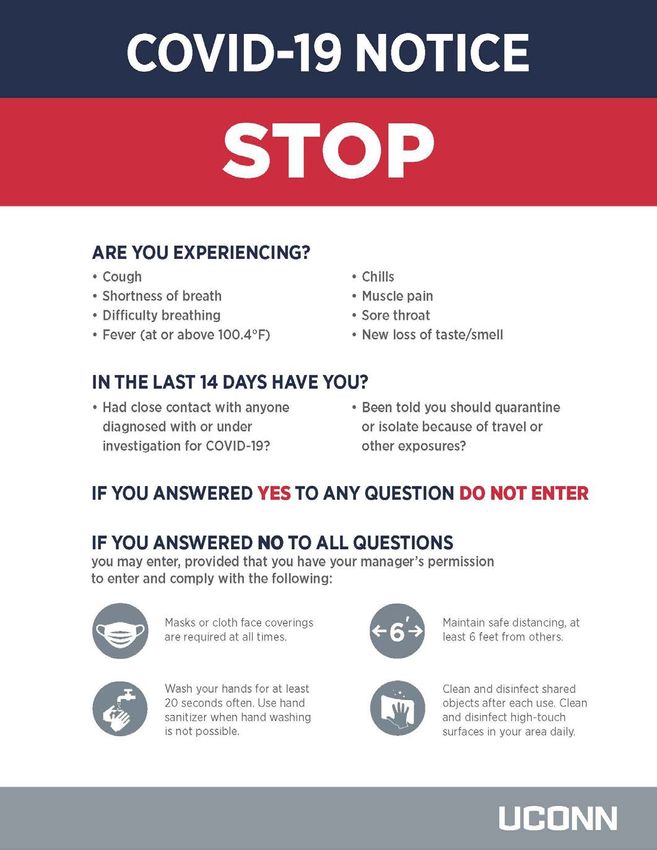
o Signs at all building entrances alert people to not enter the building if they
are experiencing symptoms of COVID-19 and provide safety information
including promoting handwashing.
o A community commitment to follow health and safety protocols.
o SHaW Website 7 - COVID-19 FAQs – “What I can do to stay healthy and protect myself.”
o Messaging will follow CDC guidance:
5
Facilities Operations COVID-19 Resources | Facilities Operations (uconn.edu)
6
https://ehs.uconn.edu/ehs-covid-resources/
7
Student Health and Wellness | Student Health and Wellness (uconn.edu)
15 January 2021 | 16UConn Reopen Plan – Spring Semester 2021
Wash your hands often with soap and water for at least 20 seconds especially after you
have been in a public space, or after blowing your nose, coughing, or sneezing.
If soap and water are not readily available, use a hand sanitizer that contains at least 60%
alcohol. Cover all surfaces of your hands and rub them together until they feel dry.
Avoid touching your eyes, nose, and mouth.
• General Cleaning
o High touchpoints such as doorknobs, light switches, and handrails are cleaned multiple times
daily, in addition to thorough and regular cleaning of bathrooms, common areas, and open
spaces.
o The sanitizing of high-risk areas are done frequently.
o Where appropriate, doors should be propped open to limit touch areas.
• Cleaning Plan in Residence Halls
o Spray bottles with a 10% bleach solution or acceptable alternative will be provided to suite and
apartment bathrooms 8.
o Facilities can accommodate Monday-Friday disinfection and cleaning utilizing existing staff.
o Weekend Cleaning in Traditional Style Residential Areas: State guidance recommends, “Multi-
stall communal bathrooms should be fully cleaned/disinfected by housekeeping staff a minimum
of once daily, using products that meet EPA’s criteria for use against COVID-19.” 9
o Facilities will add weekend staffing to meet state guidelines.
• Classroom Cleaning
o Classrooms will be supplied with disposable wipes or spray bottles and paper towels for students
and faculty to disinfect between classes, as appropriate.
F. CAMPUS ACCESS
In support of efforts to protect health and safety during the COVID-19 pandemic, access to campus
buildings and facilities, including regional campuses and the Law School (not including UConn Health),
is limited to authorized students and employees or others who have a defined need and approval for
access. Limiting visitor access is consistent with recommendations in the report from the Higher
Education Subcommittee – Reopen Connecticut and CDC guidance to Institutions of Higher Education,
which advises limiting non-essential visitors. The UConn Campus Visitor Guidelines are based on
the sector rules of the Connecticut departments of Public Health and Economic and Community
Development as of November 15, 2020, and will remain in effect at UConn until further notice.
G. MOVE-IN PROCESS10
• Storrs Move-In Plan
o Students offered on-campus housing must sign up for a time to check into their assignment.
o Check-in will be conducted on 16-17 January 2021.
8
Update #7 to the Higher Education Report: Recommendations for Reopening Undergraduate Colleges and. Universities.
9 Update #3 to the Higher Education Report Recommendations for Dormitory Bathrooms
10
Spring Semester Arrival Information | Residential Life (uconn.edu)
15 January 2021 | 17UConn Reopen Plan – Spring Semester 2021
o There will be no early arrivals or late arrivals (unless the student is recovering from COVID-19
at home), and preventative residential quarantine is required.
o Students are tested upon check-in. Students will receive their COVID-19 test and room key
before moving into their residential facilities.
o Students who test positive will be moved to medical Isolation spaces and will return to the
residential community only when medically cleared; spaces will include bedding packs,
cleaning supplies.
o Residential students will self-quarantine for 14 days upon arrival. Classes begin on 19 January
and will be online the first two weeks of the semester.
o Students will be assigned to one of the following locations to be tested and to pick up their keys.
Each location is based on where their Spring 2021 housing assignment is.
Innovation Partnership Building (IPB) at UConn Tech Park, 159 Discovery Drive, Storrs,
CT 06269
Hugh S. Greer Field House (Blue Gym), 2111 Hillside Road, Storrs, CT 06269
Wolff-Zackin Natatorium, 2095 Hillside Road, Storrs, CT 06269
• Stamford Move-In Plan
o Students offered on-campus housing must sign up for a time to check into their assignment.
o Check-in will be 16-17 January 2021.
o There will be no early arrivals or late arrivals (unless the student is recovering from COVID-19
at home), and preventative residential quarantine is required.
o Park at Government Center Garage, 888 Washington Blvd, Stamford, CT.
o Proceed to 900 Washington Blvd, Stamford, CT check-in location for room assignment, keys,
and COVID-19 testing. COVID-19 test will be required for all residential students.
• Families Dropping Off Students
The parents and families dropping off students will need to comply with the parameters established
by the Governor’s Travel Advisory according to Executive Order 9S. While it is an individual
responsibility to abide by the Travel Advisory, the guidance that we will be sending out to the
students includes details regarding the Travel Advisory to include direct links to the state website.
• Emergency Operations Center
The UConn Emergency Operations Center (EOC) will be Virtually Partially Activated to support the
Move-In Weekend from Saturday, 16 January 2021 to Sunday, 17 January 2021. Key UConn
Departments and Division Liaisons will log in and a daily in-briefing will be conducted at 0800 hrs
(8:00 a.m.) each day via WebEx. This will be followed by two additional updates at 1130 hrs (11:30
a.m.) and 1545 hrs (3:45 p.m.) each day. After the activation, EOC Liaisons will be on-call.
The following Departments and Divisions within UConn will be represented.
o UConn Police Department
o UConn Fire Department
o Office of Emergency Management
o Student Affairs
15 January 2021 | 18UConn Reopen Plan – Spring Semester 2021
o University Construction, Planning, & Design
o University Communications
o Facility Operations
o Parking Services
o Human Resources
o Provost’s Office
o Others On-Call as needed.
H. STUDENT PROGRAMS AND ACTIVITIES
• Student Orientation
Due to ongoing concerns about COVID-19, UConn’s Student Orientation program will continue to
be online for all students entering UConn in Spring 2021. Online Orientation is a module that helps
first-time degree-seeking students (First-Year, Transfer & International) make a smooth transition
to the University of Connecticut. The online Orientation module is comprehensive and designed to
cover all the academic and business processes that would have been completed in the on-campus
Orientation program. The online Orientation program will take all new students through a module
that covers important university information, support services, and presentations that are important
to a new student’s transition to UConn. The module also contains academic and pre-advising
information that will prepare students to meet with an academic advisor to register for classes. There
are specific orientation programs for Storrs and each of the regional campuses.
• Campus Community Events and Activities
The Department of Student Activities developed the Spring 2021 Campus Community Event,
Activities, and Recreation Implementation Plan to establish processes that try to balance the
physical distancing needs, and reduced program space capacity, with the desire to create
community among members of the University community, especially for students. The plan contains:
o Key State of Connecticut rules and University guidelines.
o Review capacity restrictions of indoor and outdoor space and the corresponding procedures to
facilitate a revised reservation process.
o Framework for holding programs and
activities in place of new rules and
guidelines.
o Review of major University events to
determine compatibility with current rules
and guidelines
o UConn Recreation Reopening plan.
o Reimagined community development
opportunities for the quarantine period and
the duration of the Spring semester.
15 January 2021 | 19UConn Reopen Plan – Spring Semester 2021
I. ATHLETICS
UConn Athletics continues to follow its COVID-19 Action Plan that contains all
appropriate state, federal, and NCAA health, and safety guidance for student-
athletes, coaches, and staff.
Student-athletes, coaches, and other Athletic personnel are trained on current
recommendations for infection control through a variety of methods with special
emphasis on physical distancing, hygiene, symptoms, and health monitoring.
• UConn Athletics will follow state and NCAA regulations/restrictions on athletic programs.
Additionally, Avery Point Athletics is guided by the NJCAA.
o Reopen Connecticut – Sector Rules for Sports and Fitness Facilities (24 December 2020)
o http://www.ncaa.org/sport-science-institute/coronavirus-COVID-19
o https://www.njcaa.org/general/2019-20/releases/20200618nx2y02
• Spring Athletics
o Arrival - January 3-4th, 2021- All fall and spring student-athletes
(except football and rowing: approx. 320 athletes) will be
returning to campus.
o Re-entry testing will occur upon arrival.
o Student-athletes will quarantine until test results are available.
o After the first negative test, a modified quarantine will begin.
o Surveillance testing will occur 2-3x per week for a full 14 days
after arrival.
o Student-athletes will be able to access athletic facilities only with their family pod.
o Family pods will combine as dictated by the health of the team and the proximity of their first
competition scheduled. This is to allow for safe acclimatization of activity.
o Athletics staff will be tested on arrival and undergo 2-3x weekly testing for the first 14 days.
o Athletes and Athletics staff will be subject to all the same risk mitigation strategies and
guidelines that applied in the fall.
o Testing will be performed weekly on all fall/spring sport athletes and all inner bubble staff
affiliated with those sports
o Testing will be performed three times a week on all winter sports athletes and all inner bubble
staff affiliated with those sports.
o All isolation guidelines remain the same as last semester.
o Quarantine guidelines may be altered based on the new updated CDC guidance as it pertains
to how early teams can start to practice with one another if certain criteria are met during
quarantine. However, any team placed into quarantine based on presumed exposure would
continue to follow all quarantine protocols (masking, social distancing, no in-person classes,
eating in quarantine dining hall) when outside of athletic activities with his/her team.
o As of now, no athlete exposed to COVID-19 and therefore in quarantine will be permitted to
compete against another team until the full 14-day quarantine is complete.
15 January 2021 | 20UConn Reopen Plan – Spring Semester 2021
J. CAMPUS TRANSPORTATION
Protocols for operating campus HuskyGo transit to reduce interaction
between the drivers and riders, and between riders is provided below.
This guidance is from the CT Department of Transportation on how
they are operating public buses during the pandemic.
• Where possible only allow rear door boarding except in the case where a rider needs access to a
ramp.
• Riders must wear a mask unless they have a medical reason not to.
• Seats are marked for social distancing. On smaller vehicles, consider installing sneeze guards
between rows of seats.
• Driver barriers are installed.
• Where possible, increase service to reduce the potential for crowding.
• Drivers should monitor passenger loads and pass by stops if they can’t take more passengers.
• High touch surfaces should be cleaned twice a day and more intense cleaning once a day.
K. STAFFING
In response to the coronavirus, UConn Human Resources (HR) has developed policies, procedures,
and flexible work options to provide for the health and safety of all UConn faculty and staff.
Beginning on March 12, 2020, UConn HR has continually provided guidance to staff and faculty on what
to do if they were diagnosed with or exposed to COVID-19, along with the general reminder for
individuals not feeling well to stay home from work. This information along with isolation and quarantine
guidance was issued through university email and the UConn coronavirus public education webpage. 11
UConn’s HR continues to update staff and faculty with information and advice as necessary. Employees
11
Home | Human Resources (uconn.edu)
15 January 2021 | 21UConn Reopen Plan – Spring Semester 2021
who come to work and become ill while there are advised to immediately separate themselves from
others, inform their supervisor of their illness, and go home. Individuals are advised to contact their
primary care physicians.
• Special considerations may need to be made for staff and faculty with a higher likelihood of serious
illness from COVID-19. These individuals include:
o Employees with underlying health conditions. 12
o Employees whose household member has documented underlying health conditions.
o Employees over age 65.
• Flexible Work Options for Faculty and Staff
o Faculty
Where possible, UConn allows faculty or instructors to provide instruction online or with limited
class sizes to reduce health concerns. It is up to the faculty member to work with their dean on
these issues. Faculty members will not be denied reasonable accommodations. Students and
faculty will have the option to have an exclusively online semester.
o Staff
Where possible, the University encourages employees to work with their manager about
telecommuting or establishing a flexible/rotational schedule that ensures the employee’s safety
to the greatest extent possible while in the workplace. The current policy is to encourage
telecommuting. Individuals on campus are responsible for following all applicable safety
protocols, including social distancing, and wearing face coverings/masks.
Employees may also work with their manager and HR to participate in the Employee Exchange
Program to pursue an appropriate temporary reassignment.
Employees who are unable to find a solution among the above options may request to use
accrued time off (personal, compensatory, vacation). Employees who are caregivers may
request FMLA caregiver leave. Upon exhausting their accrued time off, employees may request
an unpaid personal leave, which is subject to management approval based on operational
needs. Work options are:
− Telecommuting: Employees plan to work from home with supervisor approval for positions
where telecommuting is possible and appropriate. Return to campus will be at the direction
of the individual’s manager or supervisor. Telecommuting is highly encouraged by the
Governor.
− Schedule Changes: Work and class schedules may be modified through shifts or days of
operation. Staggered shifts or rotational shifts should be encouraged whenever and
wherever possible, for students, faculty, and staff. Faculty could offer the option for students
to either attend classroom sessions or view live instructions remotely, resulting in fewer
students on campus. Additionally, a phased approach to returning students to campus is
recommended.
− Rotational Schedule: In certain instances, managers may use “rotational” schedules for
areas that are not conducive to telecommuting.
12
CDC Guidance – People Who Are at Higher Risk For Severe Illness
15 January 2021 | 22You can also read


