NOPOLITICS NCAMPUS Violations of the Rights to Freedom of Expression, Peaceful Assembly, and Association Against University Students in Malaysia ...
←
→
Page content transcription
If your browser does not render page correctly, please read the page content below
NO
                             JUNE 2018
                            INVESTIGATE

“                               ENGAGE
                            STRENGTHEN

    POLITICS
     CAMPUS”
ON

     Violations of the
     Rights to Freedom
     of Expression,
     Peaceful Assembly,
     and Association
     Against University
     Students in Malaysia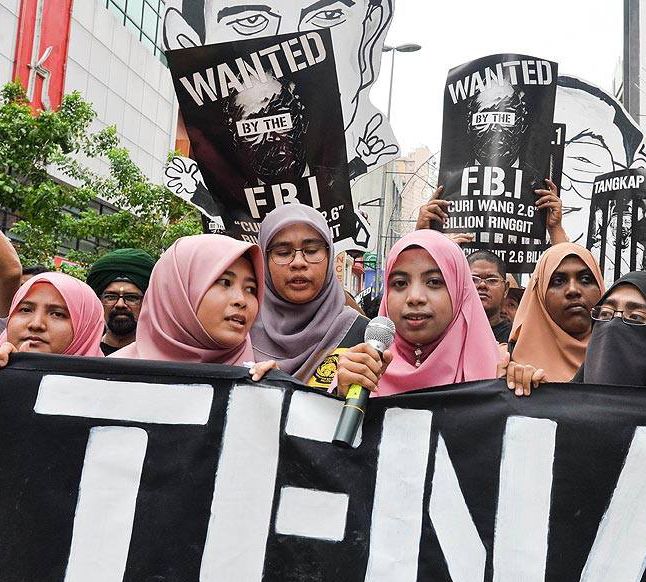
NO
“
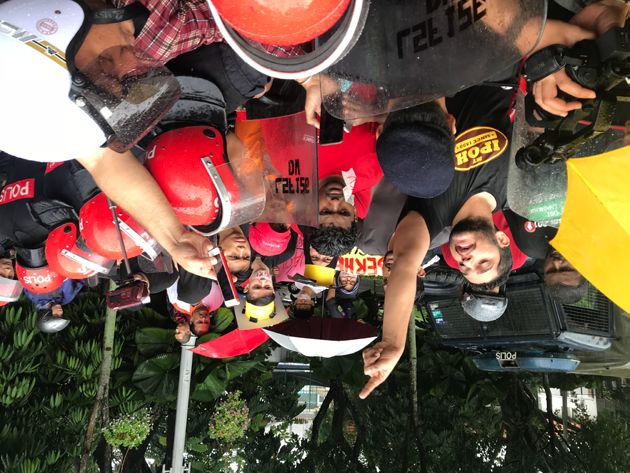
                                         Cover:
                                         Police block students and
                                         supporters from marching
                                         towards Parliament to deliver
                                         a memorandum calling for the
                                         repeal of the Universities and
                                         University Colleges Act (AUKU).

    POLITICS
                                         ©Fortify Rights, March 2018

     CAMPUS”
ON

    Violations of the
    Rights to Freedom
    of Expression,
    Peaceful Assembly,
    and Association
    Against University
    Students in Malaysia

                           Fortify Rights works to ensure
                           human rights for all. We believe in
                           the influence of evidence-based
                           research, the power of strategic
                           truth telling, and the importance
                           of working in close collaboration
                           with individuals, communities,
                           and     movements     pushing   for
                           change. Fortify Rights envisions
                           a world where human rights
                           and fundamental freedoms are
                           recognized, respected, and realized
                           for all people.
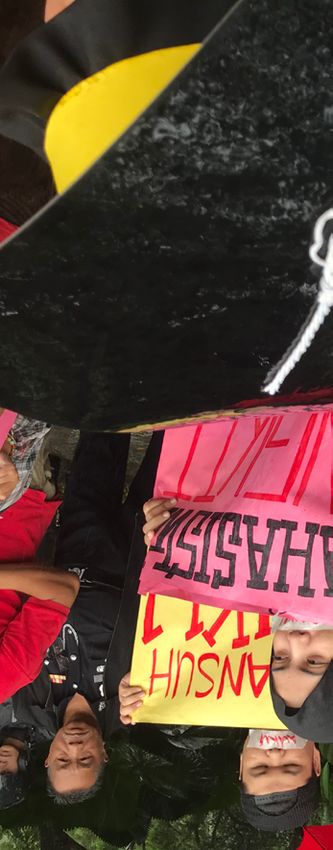
TABLE OF CONTENTS

Summary                                                      5

Methodology                                                  15

Background                                                   17

I. Human Rights Violations                                   27
Restrictions on the Right to Freedom of Expression           28
Restrictions on the Right to Freedom of Assembly             35
Restrictions on the Right to Freedom of Association          44

II. Legal Analysis                                           47
Right to Freedom of Expression                               50
Right to Freedom of Peaceful Assembly                        51
Right to Freedom of Association                              51

III. Human Rights Defenders                                  53
University of Malaya Association of New Youth (UMANY)        54
Anis Syafiqah binti Md Yusof, Universiti Malaya              55
Asheeq Ali bin Sethi Alivi, Universiti Kebangsaan Malaysia   56
The Student Movement to Abolish AUKU                         57

Recommendations                                              59
To Public Universities in Malaysia                           59
To the Government of Malaysia                                60

Acknowledgments                                              63
▶

Student leaders Nur Aqilah and Anis
Syafiqah, speaking at the Tangkap
MO1 rally on August 27, 2016.
©Alyaa Abdul Aziz Alhadjri,
Malaysiakini, August 27, 2016

▶
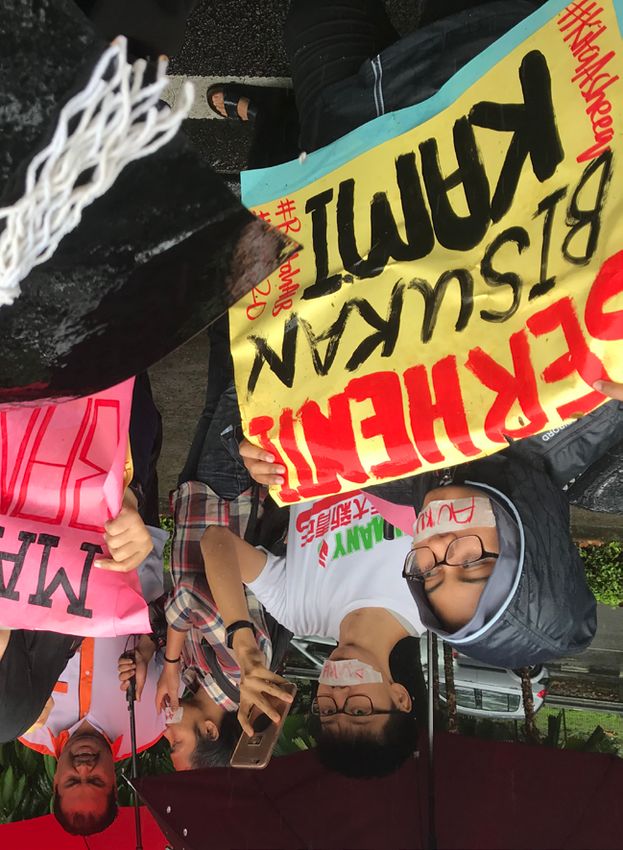
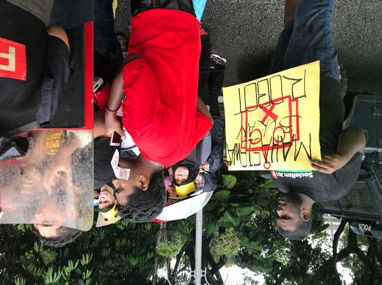
Student activists hold placards at a
public event to protest the alleged
misappropriation of public funds
by government officials.
©Lau Li Yang, October, 2016
“No Politics on Campus”

SUMMARY

“[We will] continue to stand up for what is right as students ... We see this
as a continuing fight for the future generations, not just for ourselves. We
need to create a safe space for students to express themselves freely.”

    —Mr. Mukmin Nantang, Universiti Malaysia Sabah student who
    faced disciplinary action for participating in the Bersih 5 rally

“How does the university expect us to be world class thinkers when our
thoughts and voices are filtered?”

    —Ms. Ming, 22-year-old Universiti Malaya student

F
      or more than 45 years, Malaysian authorities and public universities
      have worked in concert to restrict the fundamental rights of
      university students. The former Barisan Nasional government
enacted laws and rules to prevent students from engaging in political
life and discourse, restricting their rights to freedom of expression,
peaceful assembly, and association. The demonstrated aim of these
restrictions was to prevent Malaysian students from challenging the
political status quo.

This report documents recent violations of Malaysian university
students’ rights to freedom of expression, peaceful assembly, and
association and exposes the laws and rules used to restrict their
rights. Specifically, the Universities and University Colleges Act
1971 (AUKU) and the University (Discipline of Students) Rules 1999,
referred to in this report at the Disciplinary Rules, contain explicit
provisions to prevent students from engaging in otherwise lawful
political activities.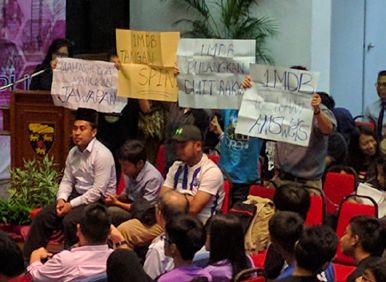
Summary                                                                                                      8

Poster from the Special Affairs
Department of the Prime Minister’s
Office announcing details and
speakers at the “1MDB Townhall”
held at the Universiti Malaya on
October 11, 2016
©Lau Li Yang, October 11, 2016.

                                     Digital poster expressing solidarity for student leaders Mukmin Nantang
                                     and Nur Aqilah, who faced disciplinary action for their involvement in the
                                     Bersih 5 rally in Sabah, East Malaysia
                                     ©Nurul Aqilah Mohamad Zanuzi, January 19, 2017.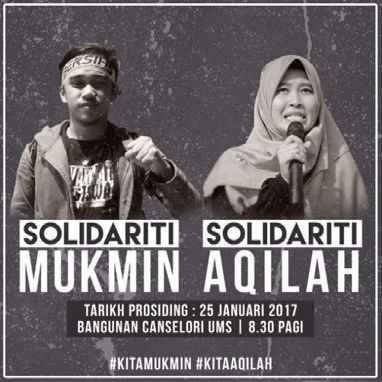
Summary                                                                                                   9
▶
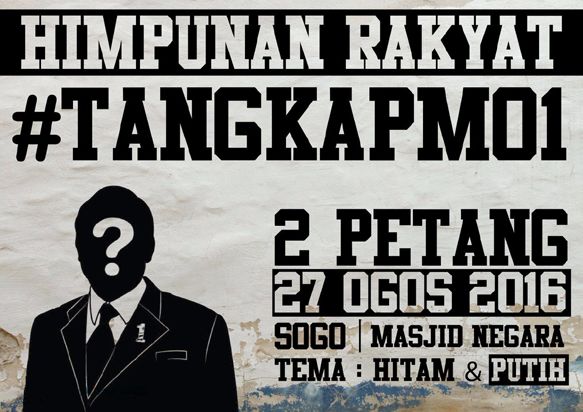
    Digital poster in Malay announcing   Since the 1970s, Malaysian authorities and universities
    details for the Tangkap MO1 rally.
    Students shared the poster widely    have used AUKU and the Disciplinary Rules to silence
    through social media during the      student voices and limit student activism. On March
    weeks leading up to the rally        18, 1971, the ruling government under Tun Abdul Razak
    ©Asheeq Ali, Tangkap         MO1
                                         Hussein enacted AUKU to give the State control over
    Coalition, August 26, 2016
                                         universities and students who had become increasingly
                                         politically active and critical of the government. From
                                         1975 to 2012, the former ruling government amended
                                         AUKU five times—initially increasing prohibitions on
                                         students’ activities on and off campus and imposing
                                         stiff penalties for violations, including potential
                                         imprisonment under the 1975 amendment. Later
                                         amendments in 2009 and 2012 removed prohibitions for
                                         off-campus activities and reduced penalties to expulsion
                                         and monetary fines, but key restrictions remained.

                                         In 2010, four political science students from Universiti
                                         Kebangsaan Malaysia successfully argued before the
                                         Malaysian Court of Appeal that the prohibition on
                                         expressing support, sympathy, or opposition to a
                                         political party violated the Federal Constitution, which
                                         protects freedom of speech and expression. The Court of
                                         Appeal found in favor of the students.

                                         Members of UMANY and other student activists, including student leaders
                                         Anis Syafiqah and Luqman Hakim, expressing solidarity with the “UMANY4”
                                         students facing disciplinary action for exercising free speech.
                                         ©Fortify Rights, March 7, 2017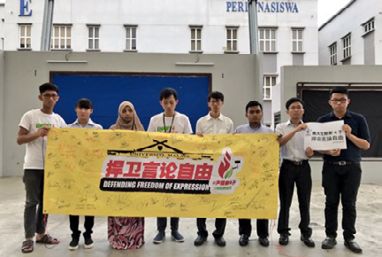
Summary                                                                              10

“Universities should be the breeding ground of reformers and thinkers,
and not institutions to produce students trained as robots,” said Judge
Mohd Hishamudin Yunus in his ruling judgment. “Clearly the provision is
not only counter-productive but repressive in nature.”

The court’s decision resulted in the last amendment to AUKU in 2012, which
allows students to become members of societies, organizations, bodies,
or groups or persons—including political parties—and to freely express
support, sympathy, or opposition to them. But the law would not protect
these freedoms if the groups are determined by a university’s Board of
Directors to be “unsuitable to the interests and well-being of the students
or the University.” The 2012 AUKU amendment still prohibited students
from “being involved in political party activities within the campus.”

Dato’ Saifuddin Abdullah, then Deputy Minister of Higher Education
who led the amendment process in 2012, told Fortify Rights that several
ministers criticized him for the amendment that expanded students’
freedoms, but that former “Prime Minister Najib Razak eventually agreed
on the amendment with the compromise of “no politics on campus.”

As a result, universities in Malaysia still wield extraordinary powers
to control students’ activities anywhere—on campus or off campus—
under the Disciplinary Rules. The Disciplinary Rules allow universities to
discipline students for any activities considered “detrimental or prejudicial
to the university or to public order, safety or security, morality, decency
or discipline.” The Disciplinary Rules also restrict public assemblies on
campus. University disciplinary committees can impose penalties ranging
from a warning to expulsion.

                                                      Student leaders Luqman
                                                      Hakim, Anis Syafiqah, and
                                                      Asheeq Ali with their eight-
                                                      member legal team and
                                                      supporters following a trial
                                                      hearing at the Kuala Lumpur
                                                      High Court to challenge the
                                                      constitutionality of AUKU
                                                      and the Disciplinary Rules.
                                                      ©Fortify Rights, May 19,
                                                      2017
Summary 11
Bersih 5 rally participants in Kuala This report analyzes nine cases of Malaysian universities
Lumpur, calling for free and fair
elections in Malaysia.
disciplining students under AUKU and the Disciplinary
©Fortify Rights, November 19, Rules for exercising their rights to freedom of expression,
2016 peaceful assembly, and association from 2014 to
2017. In disciplinary proceedings documented in this
report and commenced by Universiti Malaya, Universiti
Kebangsaan Malaysia, and Universiti Malaysia Sabah
between September 2016 and June 2017, the universities
warned, fined, or suspended students for organizing
and/or participating in off-campus public rallies, raising
placards at university events, and organizing press
conferences to discuss issues of concern to university
students. In some cases, the Malaysian authorities called
upon universities to take disciplinary action against
specific students, and the universities complied.
The cases analyzed in this report are representative;
however, many more students in Malaysia have faced
penalties for exercising their basic freedoms beyond
those analyzed.Summary 12
Summary   In at least two cases documented in
          this report, university officials in 2016
          cracked down on students for expressing
          concern about the notorious 1 Malaysia
          Development Berhad or 1MDB scandal,
          in which members of the former ruling
          government and their associates and
          families allegedly embezzled several billion
          dollars from a state-owned fund.

          Today, however, historic changes are afoot
          in Malaysia. On May 9, 2018, the political
          opposition coalition, Pakatan Harapan, won
          the 14th General Elections in a landmark
          victory, ending six-decades of rule by
          Barisan Nasional, which had been in power
          since Malaysia gained independence from
          Britain in 1957. In its campaign materials,
          the new government vowed to “rebuild the
          nation.”

          Former Prime Minister Tun Dr. Mahathir
          Mohamad—who saw through the 1975,
          1983, and 1996 amendments to AUKU
          during his tenures as both the Minister
          of Education and Prime Minister—came
          out of retirement to lead the Pakatan
          Harapan coalition, and on May 10, 2018 he
          became Prime Minister again, adopting
          an unprecedented reform agenda.

          In March, during the election campaign,
          Pakatan Harapan issued a manifesto
          entitled, “Buku Harapan: Rebuilding Nation,
          Fulfilling Hopes,” detailing 60 promises
          for reform. Among those promises is a
          commitment to amend AUKU.

          “This is a manifesto that reflects the
          aspiration of the people,” wrote Prime
          Minister Tun Dr. Mahathir Mohamad in
          the foreword to the manifesto. “It was
          written based on inputs from the people
          for the people.”
“No Politics on Campus”
This report, “No Politics on Campus”: Violations of the Rights
to Freedom of Expression, Peaceful Assembly, and Association
Against University Students in Malaysia, is a testament to
the importance of the new government’s promise to
amend AUKU and protect university students’ rights.
AUKU, the Disciplinary Rules, and disciplinary action
by the universities named in this report violate rights
protected by the Federal Constitution of Malaysia and
international law, including the rights to freedom of
expression, peaceful assembly, and association.
The Government of Malaysia should amend AUKU without
delay and unlock the potential of Malaysian universities
to contribute fully to the political life of the country.
Anis Syafiqah Asheeq Ali
Universiti Malaya Universiti Kebangsaan MalaysiaChua Hun Ti Ho Chi Yang Lau Li Yang
Universiti Malaya Universiti Malaya Universiti Malaya
Nur Aqilah Luqman Hakim Mukmin Nantang
Universiti Malaysia Sabah Universiti Malaya Universiti Malaysia Sabah
Student activists in Malaysia,
profiled in this report, who
faced violations of their rights
to freedom of expression,
peaceful assembly, and
association.
©Private, 2018 Suhail Wan Azhar Tan Jia You
Universiti Malaya Universiti Malaya“No Politics on Campus”
METHODOLOGY
F
ortifyRights interviewed more than 60 students
and five academics at ten of the 20 public universities
in Malaysia between November 2016 and June
2018.1 Fortify Rights also interviewed the Co-Chair of
the Malaysian Bar Council Human Rights Committee,
five representatives of civil society organizations
focused on human rights issues in Malaysia, two lawyers
representing students facing disciplinary actions for
exercising their rights, and the former Deputy Minister
of Higher Education.
Fortify Rights conducted all interviews in English,
Malay, or Mandarin Chinese. No one interviewed for this
report received compensation, and all were informed of
the purpose of the interview, its voluntary nature, and
1 Interviews for this report included students and academics from
Universiti Malaya, Universiti Kebangsaan Malaysia, Universiti Putra
Malaysia, Universiti Teknologi Mara, Universiti Teknologi Malaysia, Universiti
Sains Malaysia, Universiti Utara Malaysia, Universiti Malaysia Pahang,
Universiti Malaysia Sarawak, and Universiti Malaysia Sabah. For a list of all
public universities in Malaysia, see, “Directory of Public Universities,”
Online Portal of the Ministry of Higher Education, http://jpt.mohe.
gov.my/index.php/ipta/institusi-pendidikan-tinggi-awam/direktori-
universiti-awam (accessed June 5, 2018). Some public universities in
Malaysia are specialized institutions, such as the National Defense
University of Malaysia, or Universiti Pertahanan Nasional Malaysia in
Malay, which is a military training academy.Methodology 18 the ways that the information may be used. All provided informed consent. In the interests of security, the names of some interviewees and other identifying information are withheld. Fortify Rights also obtained and analyzed copies of letters from the former Ministry of Higher Education to universities and from universities to students as well as court documents and media files, including videos. These documents and videos are catalogued and remain on file with Fortify Rights. Fortify Rights conducted desk research and reviewed historical documents and parliamentary debates on file at the National Archives of Malaysia relating to the development of AUKU. Fortify Rights also monitored student protests and rallies, including the Bersih 5 rallies in Kuala Lumpur and Kuching that called for free and fair elections in Malaysia. On June 9, 2018, Fortify Rights sent a letter to the Minister of Education Dr. Mazslee Malik summarizing the findings of this report and requesting a meeting to discuss potential solutions. The Attorney General of Malaysia Tommy Thomas, Chair of the Malaysian National Human Rights Commission (Suruhanjaya Hak Asasi Manusia Malaysia or “SUHAKAM” in Malay) Tan Sri Razali Ismail, Vice-Chancellor of Universiti Malaya Datuk Dr. Abdul Rahim Hj. Hashim, Vice-Chancellor of Universiti Kebangsaan Malaysia Professor Tan Sri Dato’ Seri Dr. Noor Azlan Ghazali, and Vice-Chancellor of Universiti Malaysia Sabah Datuk Dr. D. Kamaruddin D. Mudin were copied.
“No Politics on Campus”

BACKGROUND

“Our government needs to realize that the more they impose
fear of authoritative governance in the universities, the more
students will retaliate.”

         —Ms. Siti Aisyah, 22-year-old              Universiti
         Kebangsaan Malaysia student
Background 20
The Malaysian Parliament passed Akta Universiti dan Kolej Universiti 1971 (AUKU) or
the Universities and University Colleges Act on March 18, 1971, largely in response
to increased student activism and student-led protests on university campuses
during the late 1960s.2 AUKU provided for the “establishment, maintenance and
administration” of public universities and imposed restrictions on students,
faculty, and others from having affiliations or doing anything that could be
construed as “expressing support, sympathy or opposition to any political party
or trade union ... or any unlawful body or group of individuals.”3
Students and opposition political parties quickly rose in unison to oppose
AUKU, criticizing the government for undermining freedom of expression and
peaceful assembly.4 Students also ignored AUKU and continued to engage in
political protests and rallies. For example, not long after AUKU’s enactment on
June 14, 1971, more than 2,000 Universiti Malaya students held a demonstration
against the Thai government’s oppression of Muslims in Patani, resulting in
the arrest of 19 students and injury of 12 students by the police.5
To give AUKU further effect, the Malaysian Parliament passed an amendment
on April 8, 1975 that increased restrictions on student activities both on and
2 Student activism in Malaysia escalated in the 1960s with students increasingly opposing
government actions and calling for rights and protections. In 1967, students with the first
university political club, the Socialist Club of Universiti Malaya, along with the Universiti Malaya
Students Union (UMSU) and the Universiti Malaya Malay Language Society joined the Teluk Gong
street protests in the state of Selangor to oppose the government’s eviction of residents from
land occupied by the residents for generations. Two years later, in the months leading up to the
May 1969 general elections, student rallies called for Prime Minister Tunku Abdul Rahman to step
down because of his inability to resolve racial tensions in the country. These tensions led to mass
race riots in Kuala Lumpur following Tunku Abdul Rahman’s reelection on May 10, 1969. Students
continued to protest his reappointment until he eventually resigned on September 22, 1970. In
1968, police used tear gas for the first time against student protesters during a demonstration
outside the Soviet Embassy in Kuala Lumpur to oppose the invasion of Czechoslovakia by the
Soviet Union. On August 29, 1969, the police entered the Universiti Malaya campus to stop an
anti-government demonstration for the first time, detaining UMSU President Syed Hamid Ali
and several students. The rise of student activism led the National Operations Council—an
emergency body formed to restore law and order after the race riots in 1969—to establish the
Campus Investigative Committee in 1970. The Committee recommended the enactment of a law
to regulate universities and student activities. Hasan Karim, With the People! The Student Movement
in Malaysia, 1967 – 74, (Kuala Lumpur: Institute for Social Analysis,1984), p. 1-7.
3 AUKU applies to universities and university colleges. For brevity, this report uses “university”
to apply to both. The Private Higher Educational Institutions Act 1996 [Act 555] governs private
universities. Under section 5A of AUKU, the King of Malaysia is able to establish a university where
AUKU would not apply. The King has never used this power. The bill for AUKU indicates that
the 1971 enactment contained language derived from the Emergency (Essential Powers) Ordinance
(No.74) 1971 issued by the King of Malaysia. Laws of Malaysia, Act 30, Universities and University
Colleges Act (AUKU), “Preamble,” 1971. See also, Tan Sri Dr. Tan Chee Khoon, Official Report: House
of Representatives, Third Parliament, First Session, February 25, 1971, p. 256; Universities and
University Colleges Bill, “Explanatory Statement,” March 9, 1971.
4 Karim, With the People!, p. 6.
5 Ibid.21
off campus.6 The amendment prohibited students from being members of or
associating with a “society, political party, trade union or any other [group]”
anywhere, unless provided for under the Constitution or approved by the Vice-
Chancellor of the University.7 The amendment imposed further restrictions on
expressing support, sympathy, or opposition to any political parties or trade
unions or support or sympathy for an “unlawful” group.8 University groups
were subject to similar prohibitions.9
At the time of the amendment, AUKU provided penalties of up to six months’
imprisonment and/or a maximum fine of 1,000 Malaysian Dollars (approximately
US$250), a substantial amount at the time.10 Subject to exemption by the
Minister of Education, students charged with any criminal offense faced
immediate suspension and expulsion upon conviction or detention.11 Any
student suspended or expelled under AUKU could only be admitted to another
university upon approval of the Minister of Education.12
A 2009 amendment retained restrictions on student engagement with
or commentary on political parties but reduced restrictions on student
membership and support of other groups that are “unlawful” or that the
Minister has specified in writing to be “unsuitable to the interests and well-
being of the University.”13 The 2009 amendment also replaced criminal
penalties with disciplinary penalties imposed by the Vice-Chancellor under
the Disciplinary Rules.14 Under this amendment, the Vice-Chancellor had
discretion to discipline students charged with criminal offenses or detained.15
6 Universities and University Colleges (Amendment Act No. A295), 1975. See also, Meredith Weiss,
Still with the People? The Checquered Path of Student Activism in Malaysia, (London: School of Oriental
and Asian Studies, 2005), p. 18.
7 For brevity this report uses the term “group” where AUKU refers to an “organization, body or group
of persons.” AUKU, section 15(1), amended by AUKU (Amendment Act A295) 1975, section 2.
8 AUKU, section 15(3), amended by AUKU (Amendment Act A295) 1975, section 2.
9 Under AUKU, any office-bearer or person managing or assisting in the management of a group
could be held responsible for an offense carried out in the name of that group unless they are able
to show the offense was committed without their knowledge and they exercised due diligence to
prevent its commission. AUKU imposed other prohibitions on students and university groups
collecting money or other property. AUKU, sections 15A, 15B(1), 15(2), and 15(4), amended by
AUKU (Amendment Act A295) 1975, section 3.
10 AUKU, sections 15(5) and 15A(2), amended by AUKU (Amendment Act A295) 1975, section 3.
11 AUKU, section 15D, amended by AUKU (Amendment Act A295) 1975, section 2. This includes the
imposition of any “preventative detention” or “internal security” order.
12 AUKU, section 15D, amended by AUKU (Amendment Act A295) 1975, section 3. Failure to comply
with a suspension or expulsion decision by re-entering the university campus was an offense
punishable by up to six months’ imprisonment and/or a maximum fine of 1,000 Malaysian Dollars
(US$250). AUKU, section 15D(6), amended by AUKU (Amendment Act A295) 1975, section 3.
13 AUKU, section 15(1), (2), and (5), amended by AUKU (Amendment Act A1342) 2009, section 8.
14 AUKU, section 15(7), amended by AUKU (Amendment Act A1342) 2009, sections 8 and 9. Section
15A(2) also replaced the criminal penalties for collecting money with disciplinary action. AUKU,
section 15B, amended by AUKU (Amendment Act A1342) 2009, section 10.
15 AUKU, section 15D, amended by AUKU (Amendment Act A1342) 2009, section 12.Background 22
In 2010, four political science students—Mr. Mohammad Hilman Idham, Mr. Woon
King Chai, Mr. Muhammad Ismail Aminuddin, and Ms. Azlin Shafina Adza—from
the Universiti Kebangsaan Malaysia successfully argued before the Malaysian Court
of Appeal that the prohibition on expressing support, sympathy, or opposition to
a political party violated Article 10(1)(a) of the Federal Constitution, which protects
freedom of speech and expression.16 The Court of Appeal found that the restriction
was not “reasonable” because there was no conceivable impact on public order or
public morality.17 In reaching his decision, Judge Mohd Hishamudin Yunus said:
In my opinion such a provision as section 15(5)(a) of the [AUKU] impedes
the healthy development of the critical mind and original thoughts of
students—objectives that seats of higher learning should strive to achieve.
Universities should be the breeding ground of reformers and thinkers, and
not institutions to produce students trained as robots. Clearly the provision
is not only counter-productive but repressive in nature.18
The decision resulted in a final amendment to AUKU in 2012, allowing students
to become members of societies, organizations, bodies, or groups or persons,
including political parties, and to express support, sympathy or opposition to them
provided that universities’ Boards of Directors do not find the groups “unsuitable to
the interests and well-being of the students or the University.”19 The amendment
retained a prohibition on “being involved in political party activities within the
campus.”20 In an interview with Fortify Rights, Dato’ Saifuddin Abdullah, the
former Deputy Minister of Higher Education who led the 2012 amendment process,
said several ministers criticized him for the amendment but that former “Prime
Minister Najib Razak eventually agreed on the amendment with the compromise
of “no politics on campus.”21
16 Muhammad Hilman Bin Idham & Ors v Kerajaan Malaysia & Ors, Putrajaya Court of Appeal, MLJU 770,
Judgment (Appeals), October 31, 2011, p. 1-2.
17 Ibid., p. 2-3.
18 Ibid., p. 3.
19 AUKU, sections 15(2)(a), (b), and (3), amended by AUKU (Amendment Act A1433) 2012, section 5.
20 However, students are permitted to make statements on academic matters relating to subjects
they study or research as well as express themselves at events that are not organized or sponsored
by unlawful bodies or bodies determined “unsuitable to the interests and well-being of students.”
AUKU, sections 15(2)(c) and 15(4), amended by AUKU (Amendment Act A1433) 2012, section 5.
21 Fortify Rights interview with Dato’ Saifuddin Abdullah, Chief Secretary of the Pakatan Harapan
and former Deputy Minister of Higher Education, Selangor, Malaysia, December 21, 2016.23
Universities and University Colleges Act (Amendment), 201222
***
15. Activities of students or students’ society, organization, body or
group3. General prohibitions
(1) Subject to subsection (2), a student of the University may become a member of any
society, organization, body or group of persons, whether in or outside Malaysia, including
any political party.
(2) A student of the University shall not –
(a) become a member of any political or any unlawful society, organization, body or
group of persons, whether in or outside Malaysia.
(b) become a member of any society, organization, body or group of persons, not
being a political party, which the Board determines to be unsuitable to the interest
and well-being of the students or the University; or
(c) be involved in political party activities within the Campus.
(3) A student of the University and any society, organization, body or group of students
of the University which is established by, under or in accordance with the Constitution,
shall not express or do anything which may reasonably be construed as expressing
support for or sympathy with or opposition to –
(a) any unlawful society, organization, body or group of persons, whether in or
outside Malaysia; or
(b) any society, organization, body of persons which the Board determines to be
unsuitable to the interests and well-being of the students or the Universit
Despite the 2012 amendment, AUKU continues to give universities extraordinary
control over students’ activities on and off campus through their residual
power to “regulate the activities of students and a society, an organization, a
body or group of students ... within the campus” and enact disciplinary rules as
the disciplinary board “deems expedient or necessary” and “create disciplinary
offenses ... and punishments as the Board may deem appropriate.”23 Under
this power, in 1999, Malaysian public universities enacted a uniform set of
22 AUKU (Amendment Act A1433) 2012.
23 AUKU, section 15(5), amended by AUKU (Amendment Act A1433) 2012, section 5; AUKU, section
16C, amended by AUKU (Amendment Act A295) 1975, section 5.Background 24
disciplinary rules to regulate the activities of students. Universities established
after 1999 adopted the same disciplinary rules without amendment.
The Disciplinary Rules prohibit on-campus assemblies of five or more persons
as well as off-campus conduct considered “detrimental or prejudicial to the
interests, well-being or good name of the University, any of the students, staff,
officers, or employees of the University, or to public order, safety or security,
morality, decency or discipline.” The rules also vaguely prohibit organizing,
carrying out, or participating in activities that have “a direct adverse effect on
the University or which is prejudicial to the interests of the University.”24
University (Discipline of Students) Rules, 199925
***
PART II: GENERAL DISCIPLINE
***
3. General prohibitions
A student shall not—
(a) conduct himself, whether within the Campus or outside the Campus, in any
manner which is detrimental or prejudicial-- (i) to the interests, well-being or good
name of the University, any of the students, staff, officers, or employees of the
University; or (ii) to public order, safety or security, morality, decency or discipline;
(b) violate any provision of any written law, whether within the Campus or outside the
Campus;
(c) disrupt or in any manner interfere with, or cause to be disrupted or in any manner
interfered with, any teaching, study, research, administrative work, or any activity
carried out by or under the direction of or with the permission of the University;
***
9. Organizing assemblies
(1) No student, organization, body or group of students shall, without the prior
permission of the Vice-Chancellor, hold, organize, convene or call, or cause to be held,
24 Universiti Malaya (Discipline of Students) Rules, 1999, rules 3, 13, and 9.
25 Disciplinary Rules, rules 3, 9, 11, and 13.25
organized, convened or called, or be, in any manner, involved in holding, organizing,
convening or calling, or in causing to be held, organized, convened or called, or be, in any
manner, involved in doing any act towards holding, organizing, convening or calling, any
assembly of more than five persons in any part of the Campus or on any land or in any
building belonging to or under the possession or control of the University or used for the
purposes of the University.
***
10. Loudspeakers
(1) No student, organisation, body or group of students shall own, or use, or have in his
or its possession, custody or control, for public address purposes, any loudspeaker,
loudhailer, amplifier, or other similar appliance without the prior approval of the Vice-
chancellor.
***
11. Banners
No student, organization, body or group of students, shall--
(a) make or cause to be made or do any act towards making or causing to be made;
(b) fly, exhibit, display or in any manner make use of, or cause to be flown, exhibited,
displayed or in any manner made use of; or
(c) own or have in his or its possession, custody or control, any flag, banner, placard,
poster, emblem or other device which is conducive to the promotion of indiscipline,
disorder, disobedience or contravention of these Rules.
12. Publication, etc., of documents
(1) No student, organisation, body or group of students, without the prior permission
of the Vice-Chancellor, shall publish, distribute or circulate any document within the
Campus or outside the Campus.
(2) In granting the permission under subrule (1), the Vice-Chancellor may impose such
restrictions, terms or conditions as he may deem necessary or expedient.
(3) The permission required under this rule shall be in addition to any licence, permit or
any other form of authorization which may be required under any other written law.Background 26 13. Student’s activities outside Campus (1) No student, organization, body or group of students, shall organize, carry out or participate in any activity outside the Campus which has a direct adverse effect on the University or which is prejudicial to the interests of the University. In accordance with AUKU, public university Vice-Chancellors delegated their authority under the Disciplinary Rules to impose disciplinary punishments and suspend or dissolve on-campus bodies to a Disciplinary Committee administered by the Head of Student Affairs and Alumni Department or the Jabatan Hal-ehwal Pelajar dan Alumni within each university.26 The Disciplinary Committee wields power to punish students with a warning, a maximum fine of 200 Malaysian Ringgit (US$50), exclusion from areas of the University for a specified period, suspension for a specified period, and/or expulsion for a violation of AUKU or Disciplinary Rules.27 Students who are disciplined may also be barred from participating in university activities, contesting campus elections, and staying in residential colleges.28 Upon graduation, any disciplinary infringement is listed on a student’s academic record, which may have an adverse effect on future employment prospects.29 Any student who fails to appear after being called before the Disciplinary Committee for an alleged infraction is automatically suspended until they appear at a later time specified by the Committee.30 The government under Barisan Nasional controlled Malaysia since its independence in 1957 and for decades exerted control over universities, exercising direct and indirect power to discipline students.31 In addition to a number of administrative controls, the Minister of Education (subsequently the Minister of Higher Education) appoints the Vice Chancellors of Malaysia’s public universities, who in turn hold disciplinary power and are authorized to determine whether an expelled or suspended student may be admitted to another university.32 The Minister of Higher Education also has the power to appoint a majority of a university’s Board of Directors, which in turn has the 26 AUKU, section 16B(1). 27 AUKU, sections 16 and 16B(1), amended by AUKU (Amendment Act A295) 1975, section 4. 28 Universiti Malaya Student Representative Council, Rules and Regulation Handbook, 2017/2018 Council Session, rule 13(1)(c). 29 Disciplinary Rules, rule 62(1). 30 Disciplinary Rules, rule 50. 31 Damien Kingsbury, Politics in Contemporary Southeast Asia: Authority, Democracy and Political Change, (London: Taylor and Francis, September 13, 2016), p. 70-72. 32 AUKU, section 3, which says, “The Minister shall, subject to the provisions of this Act, be responsible for the general direction of higher education and the administration of this Act
27

power to determine the lawfulness of political parties on campus. 33

As discussed in this report, Malaysian universities use AUKU and the Disciplinary
Rules to repress free speech and engagement in peaceful assemblies both on
and off campus, at times upon the explicit direction of the Ministry of Higher
Education or upon receipt of information from the Royal Malaysian Police
or Polis Diraja Malaysia, who inform universities when students are under
investigation.34 Commenting on AUKU following its enactment, then Minister
of Education Tun Hussein Onn said it was “not intended to prevent students
in their individual capacity from having or expounding their personal political
views.”35 However, the implementation of AUKU and impacts on students’
political engagement tells a different story.

   which shall be in accordance with the national policies, strategies and guidelines on higher
   education formulated or determined by an authority established under any written law for such
   purposes.” On October 1, 1995, the Malaysian government established the Department of Higher
   Education under the Ministry of Education to oversee the development of both public and private
   higher education in Malaysia. On March 27, 2004, the government separated the Department of
   Higher Education from the Ministry of Education and reestablished it as the Ministry of Higher
   Education, a full ministry under the purview of a Federal Minister. In May 2013, former Prime
   Minister Najib Razak announced the merger of two ministries into a single Ministry of Education.
   However, in July 2015, the government again split the Ministry of Higher Education from the
   Ministry of Education following a cabinet reshuffling. At the time of writing, it is unclear if the
   new Pakatan Harapan government will maintain the Ministry of Higher Education or merge its
   responsibilities within the Ministry of Education. See also, Study Malaysia, “The Malaysian
   Higher Education System – An Overview,” website, March 14, 2015, https://www.studymalaysia.
   com/education/higher-education-in-malaysia/the-malaysian-higher-education-system-an-
   overview (accessed June 7, 2018).
33 AUKU, sections 13-14, schedule 1 holds that “Members of the Board of Directors—comprised
   of a Chairman, the Vice-Chancellor, two public servants, one community representative, one
   professor elected by the Senate, three people from the private sector, one alumni and one other
   person from within the university, are appointed by the Minister for a term of three years.” See
   also, AUKU, section 15(3), amended by AUKU (Amendment Act A1433) 2012, section 5.
34 AUKU, section 4, which says, “For the purpose of enabling more effective discharge of the
   Minister’s responsibility for higher education and the administration of this Act, the Minister
   may, from time to time, appoint any person or body to investigate into any of the activities or
   the administration of any higher educational institution and to report to him the result of such
   investigation with recommendations relating thereto.” See also, AUKU, sections 15D(5) and (6).
35 Federal Gazette, House of Representatives, Universities and University Colleges Bill, Hansard, DR
   Deb. 1/14, March 17, 1971, p. 1465-1466.
“No Politics on Campus”

I. HUMAN RIGHTS
VIOLATIONS

                                                                         UMAN RIGHTS
I
    n 2016 and 2017, Fortify Rights investigated cases of
   students in Malaysian public universities disciplined
   under AUKU and the Disciplinary Rules for their
political activism both on and off campus.36 Between
September 2016 and June 2017, the Universiti Malaya,
Universiti Kebangsaan Malaysia, and Universiti Malaysia
Sabah commenced disciplinary proceedings against
students for their participation in events in which they
expressed political views about the ruling government
or matters within their University.37 Through student
testimonies and court records, the following chapter
documents restrictions on the students’ freedom of speech
and assembly through disciplinary action by Malaysian
universities. This chapter also illustrates similar cases
prior to the cases investigated by Fortify Rights.

36 The cases analyzed in this report are representative; however, many
   more students in Malaysia have faced penalties for exercising their
   basic freedoms beyond those analyzed.
37 Kate Mayberry, “‘Why Should We be Afraid?’ 1MDB Scandal Awakens
   Fighting Spirit in Malaysian Students,” SEA-GLOBE, February 13,
   2017, http://sea-globe.com/in-response-to-endemic-corruption-
   malaysian-youth/ (accessed November 19, 2017).
I. Human Rights Violations 30 RESTRICTIONS ON THE RIGHT TO FREEDOM OF EXPRESSION Holding Placards at a “1MDB Townhall” Event In 2015, news broke that billions of dollars were allegedly embezzled from a state-owned Malaysian investment fund called 1 Malaysia Development Berhad, or 1MDB. The 1MDB scandal implicated former Prime Minister Dato Seri Mohammad Najib Tun Abdul Razak, members of his family, and associates. The United States Department of Justice filed lawsuits to seize more than US$1 billion in assets believed to be stolen from the fund and laundered in the U.S., including expensive real estate in New York and California, expensive artwork, and financing for the Hollywood film The Wolf of Wall Street.38 In what was described as the “largest single action ever brought” by the U.S. Department of Justice, the lawsuit alleged that a “high-ranking official in the Malaysian government” identified as Malaysian Official 1, or MO1—widely believed to be former Prime Minister Najib Razak—personally received US$681 million from the state-owned fund.39 The legal action alleges that up to US$6 billion may have been stolen from the Malaysian people and laundered through the U.S.40 Other investigations have begun around the world. Former Prime Minister Najib Razak and the previous government of Malaysia consistently denied the allegations.41 To deal with domestic fallout from the scandal, the Special Affairs Department of the Prime Minister’s Office held events at selected Malaysian public universities, dubbed “1MDB Townhall,” to discuss the lawsuit filed by the U.S. Department of Justice.42 On October 11, 2016, the Special Affairs Department of the Prime Minister’s Office held a “1MDB Townhall” at the Universiti Malaya. The University of Malaya Association of New Youth (UMANY)—a student movement that strives for the restoration of campus and student autonomy and advocates for democracy and equality across all universities in Malaysia— requested to invite 38 The Department of Justice claims various people embezzled hundreds of million dollars from the fund during three “phases.” United States of America v “The Wolf of Wall Street” Motion Picture, United States District Court for the Central District of California (Complaint), 18 U.S.C. § 981(a)(1)(A) & (C), July 20, 2016, https://www.justice.gov/archives/opa/page/file/877166/download (accessed June 7, 2018). 39 The Department of Justice claims various people embezzled hundreds of million dollars from the fund during three “phases.” “The Wolf of Wall Street” Motion Picture, 18 U.S.C. § 981(a)(1)(A) & (C). 40 Edward Helmore, “Wolf of Wall Street Film Linked to Money ‘Stolen from Malaysian Fund,’ US Claims,” The Guardian, July 21, 2016, https://www.theguardian.com/world/2016/jul/20/us- justice-department-1mdb-fund-seizure-fraud-investigation (accessed June 7, 2018). 41 “Everything is Going to be Okay in the End – Axed Apandi’s Response,” Malaysiakini, June 5, 2018, https://www.malaysiakini.com/news/428341 (accessed June 5, 2018). 42 Ministry of Communications and Multimedia, Special Affairs Department, Townhall JASA: Jelajah Isu Ansuran JASA Malaysia, http://www.jasa.gov.my/bm/public/kandungan-popular/24-tender/343- townhall-jasa-jelajah-isu-anjuran-jasa-malaysia.html (accessed November 19, 2017).
31

then opposition Member of Parliament Tony Pua to speak at the event. The
organizers rejected the request, foreshadowing the nature of the event.43 Arul
Kanda, 1MDB’s Chief Executive Officer, and Tun Faisal Ismail Aziz, Director
of Strategic Communications of the Special Affairs Department, spoke at the
Universiti Malaya event.44 University officials attempted to incentivize students
to attend the event, telling them that they would be given “merit marks” for
attendance.45

The first speaker, Arul Kanda explained how the government used 1MDB funds,
saying they “did not make a loss by investing [the] public funds.”46 He did
not directly address allegations of embezzlement. During the question-and-
answer session following the presentation, UMANY students asked Arul about
the identity of “MO1” and the involvement of Prime Minister Najib Razak’s
stepson Riza Aziz, who was implicated in the U.S. lawsuit. Arul refused to
answer, saying the questions were irrelevant.47

Four students affiliated with UMANY—Mr. Ho Chi Yang, 22, Mr. Lau Li Yang, 22,
Mr. Tan Jia You, 21, and Ms. Chua Hun Ti, 23, now known as “the UMANY4”—stood
up towards the end of the question-and-answer session with Arul Kanda and held
placards that read “Mahasiswa mahu jawapan” [“Students want answers”], “1MDB
jangan spin” [“Do not spin the facts of 1MDB”], “1MDB We Want Answers,” and
“1MDB pulangkan duit rakyat” [“1MDB, return the people’s money”].

Five personnel from the Special Affairs Department forcefully pulled down the
student’s placards, eventually confiscating them.48 Recalling the incident, one
of the students involved, Li Yang, told Fortify Rights:

           I stood up and shouted “Siapa MO1? Siapa MO1?” [“Who is MO1? Who is
           MO1?”]. Chi Yang, Jia You, Hun Ti, and I then stood up and raised our
           placards. [The Special Affairs Department officials] immediately came
           towards us and tore off our placards and urged us to sit down. They even
           pulled my shirt and pants to force me to sit down. Our friend Ching
           Siew’s phone was also snatched by them, and she was told to delete

43 University officials did allow Syed Saddiq Abdul Rahman, leader of the youth wing of the Malaysian
   United Indigenous Party or Parti Pribumi Bersatu Malaysia (PPBM) to attend the 1MBD Townhall
   event after initially telling him it was a student-only event. Fortify Rights interview with Ho Li
   Yang, Selangor, Malaysia, February 14, 2017.
44 Fortify Rights interviews with Ho Li Yang and Kon Hua En, Selangor, Malaysia, February 14, 2017.
45 The accrual of merit marks affects students’ qualification to hold certain positions in their
   respective residential colleges and clubs and are reflected on their final academic transcript.
   Fortify Rights interview with Ho Li Yang, Selangor, Malaysia, February 14, 2017; Universiti Malaya
   “The Division of Students Merit,” website, http://www.hepa.um.edu.my/kolej-kediaman-
   bestari-kk4/college-rules/merit (accessed June 7, 2018).
46 Fortify Rights interview with Ho Li Yang, Selangor, Malaysia, February 14, 2017.
47 Ibid.
48 Video 1 of 1MDB Townhall event, October 11, 2016, 0:26 – 2:03 minutes.
I. Human Rights Violations 32
the photos or video taken when we raised our placards. The students
just watched anxiously, and some used their phones to record what the
[Special Affairs Department] staff had done.49
The Universiti Malaya sent “show cause” letters to the UMANY4 on November
1, 2016, stating that the students created “a situation of indiscipline and
disruption,” “destroyed public order, decency and discipline,” and interfered in
an official event when they raised their placards.50 Universiti Malaya alleged that
the students’ actions violated Disciplinary Rule 3(a)(ii), which prohibits conduct
that is “detrimental or prejudicial to public order, safety or security, morality,
decency or discipline;” Rule 3(f), which prohibits boycotting of any “legitimate
activity carried out by or under the direction, or with the permission, of the
University;” and Rule 11(b), which prohibits students from exhibiting “any
flag, banner, placard, poster, emblem or other device which is conducive to
the promotion of indiscipline, disorder, disobedience or contravention of these
Rules.”51 On February 22, 2017, the Universiti Malaya’s Disciplinary Committee
subsequently amended the alleged violation from Rule 3(f) to Rule 3(c), which
prohibits the disruption or interference with “any activity carried out by or
under the direction of or with the permission of the University.”52
Li Yang of the UMANY4 told Fortify Rights, “Raising placards is a means to protest
[and is our] basic human right as citizens of Malaysia.”53 On January 11, 2017, by a
letter signed by Associate Professor Datin Dr. Hasmah Zanuddin, Universiti Malaya’s
Disciplinary Committee called the UMANY4 to appear before the Disciplinary
Committee from March 7 to 31.54 On March 6, 2017, Ho Chi Yang asked the Universiti
Malaya to provide clarification of the charges against the UMANY4, all evidence
that would be relied upon during the proceedings, a list of names of the panel
members on the Disciplinary Committee, and a list of expected witnesses to be
called during the hearing.55 He did not receive a response.56
49 Fortify Rights interview with Ho Li Yang, Kuala Lumpur, Malaysia, November 7, 2017.
50 Letters from Universiti Malaya to Ho Chi Yang, Lau Li Yang, Tan Jia You, and Chua Hun Ti, November
9, 2016.
51 Disciplinary Rules, rules 3(a)(i), (f), and 11(b).
52 Ho Chi Yang & Ors v Student Disciplinary Appeal Committee, Universiti Malaya, High Court of Kuala
Lumpur, WA-25-213-08/2017, Judicial Review (Affidavit in Support), August 16, 2017, para 23. See
also, Disciplinary Rules.
53 Fortify Rights interview with Li Yang, Selangor, Malaysia, February 14, 2016.
54 Universiti Malaya scheduled Ho Chi Yang’s hearing on March 7, Lau Li Yang’s hearing on March 14,
Tan Jia You’s hearing on March 28, and Chua Hun Ti’s hearing on March 31. Letters from Universiti
Malaya to Ho Chi Yang, Lau Li Yang, Tan Jia You, and Chua Hun Ti, January 11, 2017; Letters from
Universiti Malaya to Ho Chi Yang, Lau Li Yang, Tan Jia You, and Chua Hun Ti, February 21, 2017.
55 Ho Chi Yang & Ors, WA-25-213-08/2017, Judicial Review (Affidavit in Support), para 24.
56 The Disciplinary Committee panel included Associate Professor Datin Dr. Hasmah Zanuddin as
the Chair and Dr. Mohamad Azam Ismail and Dr. Rafidah Agaa Mohd Jaladin as members. Final
year law student Kalaivanaan Murthy represented Ho Chi Yang. Ibid., para 25.33
During Ho Chi Yang’s hearing on March 7, 2017, UMANY students held a press
conference to protest the university’s actions.57
Between March 14 and April 6, 2017, the Universiti Malaya held that the
UMANY4 violated the Rules when they held up their placards because they “led
an uncertain and chaotic situation.”58 They fined Lau Li Yang 600 Malaysian
Ringgit (US$150), Ho Chi Yang and Chua Hun Ti 300 Malaysian Ringgit (US$70)
each, and Tan Jia You 150 Malaysian Ringgit (US$35).59 The Universiti Malaya also
issued a warning to each of the UMANY4 students.60
On April 5, 2017, UMANY issued a press release claiming that the proceedings
were “flawed and unjust.”61 Lau Li Yang told Fortify Rights:
The proceedings contained a lot of mistakes and were conducted
unprofessionally by the hearing panels. [The Universiti Malaya students
representing us] were stopped several times from defending us by
the panels during the proceeding ... [T]he appeal by Tan Jia You was
rejected. The reason given by the university was that his petition was not
submitted within 14 days [although] credible law lecturers confirmed
that his appeal was submitted in time.62
The UMANY4 students appealed the decision on March 28 and April 14 and
presented arguments before the Universiti Malaya Student Disciplinary Appeal
Committee between May 7 and June 7, 2017.63 The Universiti Malaya Disciplinary
57 Fortify Rights interviews with Lau Li Yang, Anis Syafiqah, and Ho Chi Yang, Selangor, Malaysia,
March 7, 2018.
58 Ho Chi Yang & Ors, WA-25-213-08/2017, Judicial Review (Affidavit in Support), para. 50.7; Ho Chi
Yang & Ors v Student Disciplinary Appeal Committee, Universiti Malaya, High Court of Kuala Lumpur,
WA-25-213-08/2017, Judicial Review (Applicants’ Outline Submission), December 4, 2017, paras.
56, and 58. Ho Chi Yang’s affidavit in support of his application for judicial review states that the
university made the decision on the basis that the students had “other options of expressing
[their] dissatisfaction and chose to resort to an act which in some way left an impact on the
organisers of the event.” Written decision from Universiti Malaya to Ho Chi Yang, March 14, 2017;
Written decision from Universiti Malaya to Lau Li Yang, March 23, 2017; Written decision from
Universiti Malaya to Tan Jia You, March 31, 2017; and Written decision from Universiti Malaya to
Chua Hun Ti, April 6, 2017.
59 Written decision from Universiti Malaya to Ho Chi Yang, March 14, 2017; Written decision from
Universiti Malaya to Lau Li Yang, March 23, 2017; Written decision from Universiti Malaya to Tan Jia
You, March 31, 2017; and Written decision from Universiti Malaya to Chua Hun Ti, April 6, 2017.
60 Ibid.
61 University of Malay New Youth Association, “Four UM Students Received Stern Warning and Fines
Over 1MDB Protest,” Universiti Malaya New Youth Association Facebook Page, April 5, 2017, https://
www.facebook.com/umany2001/posts/1481522411878313:0 (accessed November 19, 2017).
62 Fortify Rights interview with Lau Li Yang, Kuala Lumpur, Malaysia, May 17, 2017.
63 Ar. Saifuddin Ahmad, Professor Goh Kim Leng, and Dato Seri Othman Zainal Azmi conducted the
appeal hearings. Petitions of Appeal from Lau Li Yang, Chua Hun Ti, and Ho Chi Yang to Universiti
Malaya’s Student Disciplinary Appeal Committee, March 28, 2017; Petition of Appeal from Tan Jia
You to Universiti Malaya’s Student Disciplinary Appeal Committee, April 14, 2017.I. Human Rights Violations 34 Appeal Committee upheld the decision of the Disciplinary Committee but revoked the imposition of fines.64 The Appeal Committee did not provide detailed reasons for their decision and rejected Ho Chi Yang’s request for a copy of the appeal-hearing transcript.65 On August 17, 2017, the UMANY4 filed an application in the High Court of Kuala Lumpur for judicial review of their case.66 The students explained to the Disciplinary Appeal Committee that they believed the misappropriation of public funds was linked to the government’s higher education budget cuts in 2016.67 In a hearing on December 4, 2017, the UMANY4 argued that Universiti Malaya violated their rights to freedom of expression and assembly by disciplining them for engaging in a peaceful protest.68 During the appeal, they argued that the disciplinary action violated Article 10(1)(a) and (b) of the Federal Constitution of Malaysia, which protect every citizen’s rights to “freedom of speech and expression” and “the right to assemble peacefully and without arms,” respectively.69 The UMANY4 students also argued that the hearings violated Rule 53 of the Disciplinary Rules, which requires the Vice-Chancellor to summon witnesses to a Disciplinary Committee hearing; however, in the UMANY4 case, the Disciplinary Committee allegedly summoned the witnesses.70 The students also alleged that the Disciplinary Committee violated Disciplinary Rule 54, which requires students to give evidence after the Committee has heard all evidence against the student.71 According to the UMANY4, the Disciplinary Committee acted as “investigator, prosecutor and adjudicator” and with bias by requiring the students to submit evidence to defend themselves before determining that there was a basis for the case and that the Disciplinary Committee acted “irrationally,” “unreasonably,” and “arbitrarily” in reaching their conclusion.72 64 Letters from Universiti Malaya to Lau Li Yang, Chua Hun Ti, and Ho Chi Yang, May 17, 2017; Letters from Universiti Malaya to Tan Jia You, June 7, 2017. 65 Ho Chi Yang & Ors, WA-25-213-08/2017, Judicial Review (Affidavit in Support), para 45. 66 Fortify Rights interview with Ho Li Yang, Kuala Lumpur, Malaysia, August 18, 2017. 67 Ho Chi Yang & Ors, WA-25-213-08/2017, Judicial Review (Affidavit in Support), para 13. 68 Rule 54 provides that a student shall be invited to give evidence after the Disciplinary Committee has heard all evidence against the student and determined that they have a case to answer, but according to the UMANY4, the Disciplinary Committee asked them to testify during the presentation of evidence against them and before the Committee determined they had a case to answer. Ho Chi Yang & Ors, WA-25-213-08/2017, Judicial Review (Applicants’ Outline Submission), paras. 9.11-9.12; Ho Chi Yang & Ors, WA-25-213-08/2017, Judicial Review (Affidavit in Support), para 50.1. 69 Ibid. 70 Ibid. 71 Ibid. 72 Ho Chi Yang & Ors, WA-25-213-08/2017, Judicial Review (Applicants’ Outline Submission), para 59; Ho Chi Yang & Ors, WA-25-213-08/2017, Judicial Review (Affidavit in Support), para 50.1.
35

On February 27, 2018, High Court Judge Azizah rejected the Universiti Malaya’s
decision on the basis that the university did not comply with Rule 54 of the
Disciplinary Rules.73 However, Judge Azizah did not provide a ruling on the
students’ arguments pertaining to the rights to freedom of expression and
peaceful assembly.74

Organizing a Press Conference without Permission
Before facing disciplinary action for his role in the 1MDB Townhall event,
Universiti Malaya student Ho Chi Yang faced discipline along with five other
Universiti Malaya students for holding a press conference on December 14, 2015
without permission.75 Universiti Malaya accused Ho Chi Yang, Chua Hun Ti, Mr.
Suhail Wan Azhar, 22, Mr. Muhammad Luqman Hakim bin Mohd Fazli, 23,
Mr. Muhammad Fahmie Nuaiman Bin Noor Azmi, and Ms. Nur Hananie Binti
Muhammad Amir Chow, of violating provisions under Rule 3(a), which prohibits
students from conducting themselves in a manner considered detrimental or
prejudicial “to the interests, well-being or good name of the University” or “to
public order, safety, security, morality, decency or discipline.”76 At the press
conference, the students condemned a reported proposal by the university to
impose a monthly limit on students’ internet usage.77 The university denied the
claim and, after a disciplinary hearing on February 15, 2016, issued a warning to
all six students.78

These types of disciplinary actions threaten larger penalties and can have a
chilling effect on university students in Malaysia.

Speech at Speaker’s Corner
On August 4, 2015, Universiti Kebangsaan Malaysia reportedly disciplined student
leader Mr. Asheeq Ali bin Sethi Alivi, 22, for delivering a speech at Universiti

73 Asila Jalil, “High Court Quashes Universiti Malaya’s Conviction of 4 Students,” The Malaysian
   Insight, February 27, 2018, https://www.themalaysianinsight.com/s/40112/ (accessed March 22,
   2018); Fortify Rights Interview with Lim Wei Jiet, Kuala Lumpur, Malaysia, February 27, 2018.
74 Fortify Rights interview with Lim Wei Jiet, Kuala Lumpur, Malaysia, February 27, 2018.
75 Fortify Rights interview with Ho Chi Yang, Selangor, Malaysia, February 14, 2017.
76 Disciplinary Rules, rules 3(a)(i) and (ii).
77 Fortify Rights interview with Suhail Wan Azhar, Selangor, Malaysia, August 7, 2017. See also, Alyaa
   Alhadjri, “UM May Charge Students for Internet, as Budget Cuts Loom,” Malaysiakini, December
   14, 2015, https://www.malaysiakini.com/news/323304 (accessed June 8, 2018).
78 Fortify Rights interview with Suhail Wan Azhar, Selangor, Malaysia, August 7, 2017; Fortify Rights
   interview with Ho Chi Yang, Selangor, Malaysia, February 14, 2017. See also, “Six UM Students
   Face Hearing for ‘Unauthorized Press Conference,’” Malaysiakini, February 6, 2016, https://www.
   malaysiakini.com/news/329604 (accessed June 8, 2018); “UM6 Found Guilty over Press Event,
   Given Warning,” Malaysiakini, February 16, 2016, https://www.malaysiakini.com/news/330618
   (accessed June 8, 2018).
You can also read


