Be part of the team Residential volunteering on RSPB nature reserves 2020
←
→
Page content transcription
If your browser does not render page correctly, please read the page content below
be part of
the team
Residential volunteering on
RSPB nature reserves 2020
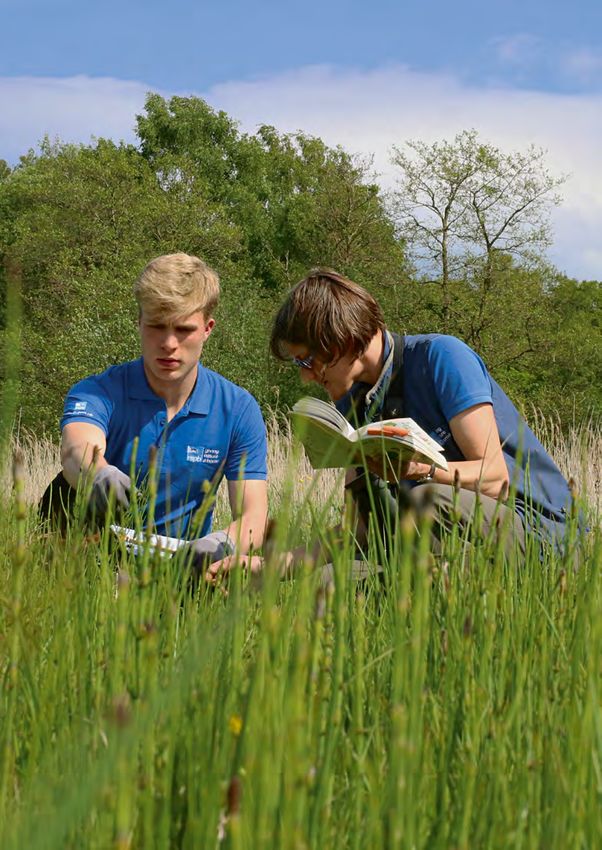
“I couldn’t have picked
    a better place, or had
    a better experience.”
                              David Andrews

    Sarah Hudson, Coll

2
Welcome aboard...                                                                          Contents
                    ...or welcome back! Either way, we are so pleased
                    you have decided to join us as an RSPB Residential
                                                                                                           4   Join the team
                    Volunteer. We hope this brochure will inspire you to
                    help us give nature a home. Newbie or regular, it’s                                    5   An intern’s story
                    great to have you with us, and we look forward to                                          Sydney Henderson
                    welcoming you to one of our amazing reserves or                                        6   Your questions answered
                    projects in 2020.                                                                      8   Where would you
                                                                                                               like to go?
                    Whatever your age, skills and free time, we have something for you. A week                 RSPB nature reserves map
                    or two showing people birds at a viewpoint high on the cliffs, or six months
                    out in all weathers managing habitat for rare species, you will find the perfect       9   England
                    volunteering opportunity at one of our fantastic locations. Age 16 and just
                    wondering what to do with your career? We can help! Older and wiser but still          25 Northern Ireland
                    looking for an adventure? We have just the thing! From practical conservation to
                    enthusing our visitors, we need your time and talents for our vital conservation       28 Scotland
                    work. Don’t just take our word for it – residential volunteers share their stories
                    on pages 46, 48 and 49.                                                                38 Wales

                    And for the view from the inside, turn to page 40, where one of our wardens            40 A warden’s view
                    talks about the fantastic contribution volunteers make, and what life is really like      What it’s like to be a
                    on a nature reserve.                                                                      warden in Wales
                    Nothing speaks louder that volunteers’ own words, and as you look through              43 More questions answered
                    the brochure, you’ll read lots of quotes for our 2019 residential volunteers.
                    Nearly 650 people took up placements last year, all of us working together for         45 Further information
                    conservation and sharing our passion for nature and our mission to save it.
                    A third of those are young people (and some not so young) volunteering for             46 Your words
                    six months or more as a first step on the ladder to a career in conservation.             Pete Ramsey
                    Whether in practical conservation or visitor engagement, these volunteers are
                    honing their skills and building their expertise. Read about the time spent by one     47 How to make a booking
                    of our volunteer interns on page 5.
                                                                                                           48 Your words
                    The others are just like you! From all walks of life, in all shapes and sizes, on         Paul Gallagher
                    your own or with a friend, becoming part of the RSPB family of volunteers is a
                    rewarding and fulfilling experience which we would love you to share. And help         49 Your words
                    us to inspire others – tell us about your volunteering placement and you could            Ralph Collingridge
                    find yourself in print too!
                                                                                                           50 Nearer to home
                    Want to join in? What are you waiting for?
                                                                                                              contact details
                    Do something different today!
Ben Andrew (RSPB)

                    Jane Shah and Rachael Carson
                    Residential Volunteering Team                                                                                      3
Join the team
                                     The RSPB Residential Volunteering Scheme                          We aim to make sure our residential volunteers:
                                     began in the late 1970s. Now, after nearly                        • feel welcome, are valued and thanked
                                     40 years, we offer places at 48 sites in                          • understand what the RSPB is and does
                                                                                                       • are part of the team and included in appropriate social events
                                     England, Scotland, Wales and Northern Ireland.
                                                                                                       • receive appropriate training and supervision
                                     If you are interested in nature and the environment, this is an   • know who they can talk to if there are problems
                                     ideal opportunity to help our conservation work, gain practical     or difficulties
                                     or people engagement experience, meet new people, explore         • know who they are answerable to
                                     new areas, enjoy a working holiday or simply make good use
                                                                                                       • receive regular and constructive feedback
                                     of your spare time, whilst keeping fit in the great outdoors.
                                                                                                       • have safe working conditions
                                     For more information about our work or joining the RSPB,          • have adequate insurance cover
                                     please contact us (details are on the back cover).                • are taken seriously
                                     Find out more at rspb.org.uk                                      • can say “no” to unreasonable requests
                                                                                                       • have an acceptable standard of accommodation
                                                                                                       • enjoy their volunteering.
                                                                                                       We ask our volunteers to:
Catherine Bullen (rspb-images.com)

                                                                                                       • extend to your fellow volunteers and staff the same
                                                                                                         degree of courtesy you would expect to receive
                                                                                                       • adhere to the RSPB’s rules, procedures and standards,
                                                                                                         including health and safety and equal opportunities
                                                                                                       • be reliable and responsible – you are acting as advocates
                                                                                                         of the RSPB
                                                                                                       • respect confidentiality
                                                                                                       • inform us immediately if you have to cancel a booking
                                                                                                         or will be arriving late
                                                                                                       • carry out the agreed work
                                                                                                       • give constructive feedback if appropriate
                                                                                                       • be accountable and accept constructive feedback
                                                                                                       • take part in relevant training
                                     Working together to save nature.                                  • ask for support if you need it
                                                                                                       • keep accommodation in a clean, safe and tidy state.
Ric Else (RSPB)

                                     Working as part of a team to help nature at Rathlin Island. Read more about Paul Gallagher’s volunteering experience on
                                     page 48 (he’s pictured third from the left).

                                     4
An intern’s story

Sydney, surrounded
by nature in Scotland
After a six-month internship last summer, I am now employed by the RSPB, doing
something I love, in a place that is healing me, reports Sydney Henderson.
I have moved from my parent’s

                                                                                                                                         Paul Turner (RSPB)
street-slotted, garden-allocated house
in West London to the North of
Scotland. Growing up in London and
on anti-depressants, I felt tiny,
insignificant and powerless in the
climate crisis. Now I live surrounded
by nature and empowered by a passion
that is shared with those around me.

A woman in the wild
I slowly explore the hills and lochs near
my house, trying to shake off the former
creeping sense of ‘Trespassers will be
prosecuted!’. “I have lots of experience
in hill walking and wild swimming” –
I write on my CV, but always with
my father.
Now I am alone, a woman in the wild.
At the summit, I lie on the moss and
breath in the smell of damp wet earth,
imagining golden spores travelling
through my nose into my lungs and
lifting me, buoyant into the cold wet
cloud. Being so close to nature makes
my heart hurt with the burden of caring
for it.
Connecting with nature as a
young woman
My first early solo adventure, I
carefully google walks, and finger-trace,   a better method, but it is my own and a         A young woman in 2019, I feel the hope
fact-check, follow them. Heart races        purposeful reaction against the mindset         and power of my generation propelling
in case of getting lost, or breaking        of value only coming from ownership             me onwards. My social media feeds
my ankle, or men yelling at me with:        – you don’t need to “bag” a Munro to            are full of young human beings of all
“What are you doing here?”. Soon my         experience one.                                 nationalities and backgrounds inspiring
confidence grows. I begin to roam the                                                       me with their actions and words.
land, my battered walking boots let         My choice of news
                                                                                            This is my choice of news outlet and I
water in with every step and my feet are    The deep peat, which creaks under my            can ignore the generic white noise that
wrinkled and pale as petals by the end      feet, and the water-swollen sphagnum            fills mainstream media. I have been
of the day.                                 moss are not interested in me as I stomp        empowered by my femininity and my
I swam in a loch and the black water felt   along. This is how I like it. I close my eyes   youth (both attributes which the status
like silk. I couldn’t pinpoint where my     and hear the skylarks, buoying up and up        quo snort at) to act. And act I shall, for
body ended in its numb, lapping shores.     and up, their full total generation of noise    youth and for the natural world.
I am addicted to the rhythm of my body      not getting any quieter. My generation is
projecting itself under its own steam.      not getting any quieter either.
My focus is not speed and distance, but
sensation driven. I’m not saying this is
                                                                                                                                     5
Your questions answered
What do residential volunteers do?                                     weather. Tasks can be repetitive and may involve walking long
                                                                       distances over rough terrain. However, we will not ask you to
The work varies from reserve to reserve. It often includes
                                                                       do anything beyond your capabilities.
practical management tasks, working with visitors and
helping with survey work. Here are some examples:                      Visitor experience tasks are also crucial to our mission to
                                                                       save nature, and this can involve membership recruitment
• cutting, clearing and burning dead vegetation
                                                                       and meet and greet activities. These opportunities are less
• directing visitors to points of interest and showing
                                                                       strenuous, but you will need to feel happy talking to people.
  them wildlife
                                                                       They are available mainly through the summer months, April
• surveying, such as counting rare butterflies
                                                                       to September.
• staffing visitor centres
• managing livestock                                                   When you apply, please tell us about any medical condition or
• general chores, including litter picking, visitor centre cleaning.   disability that may affect your volunteering. There is a section
                                                                       on the application form for you to give us details, together
Please note that the RSPB is not a bird or animal welfare              with any medication you that you take regularly. It is important
organisation. We do not have the expertise or facilities to            that you give as much information as possible, so that we
cater for sick birds, so you will not be involved in work of           can take all necessary steps to ensure your safety, should an
this kind.                                                             emergency arise. Please take any medication with you, and
                                                                       on arrival tell your line management where you will leave it.
Who can take part?                                                     All information you give us will be kept strictly confidential.
Nature has no borders, and neither do we.                              We welcome applications from volunteers with disabilities,
                                                                       but please bear in mind that there are limitations at some
Anyone over the age of 16 can be a residential volunteer,
                                                                       reserves, due to the nation of the location, tasks or
but some reserves can only accept over 18s. If you’re from
                                                                       accommodation. Based on any information you give us, we
outside the UK, unfortunately there are some restrictions.
                                                                       will give full consideration to your request. If you have a
Please see page 45 for details.
                                                                       disability and would like to volunteer, please contact Jane or
We’re committed to doing everything practically possible               Rachael for more information about the most suitable sites.
to make our residential volunteering an enjoyable, inclusive           We’re experienced in advising to ensure you get the best
and safe experience, open and accessible to as wide a                  possible experience.
range of people as possible. We’ll be pleased to hear
                                                                       We’re always pleased to accept applications from placement
from you whatever your ability, gender, national and ethnic
                                                                       students who need to undertaking a period of volunteering
background, sexual orientation, religious and political belief
                                                                       as part of a college of university task. Please apply well in
and marital status.
                                                                       advance, and tell us if there is any project work you need to
You’re very welcome to volunteer on your own, but if                   compete, together with any paperwork from your project
you’d like to volunteer with a friend or partner, we can               officer. Please note, however, that we’re unable to guarantee
accommodate you on some reserves, in double or twin                    that we can meet your specific requirements, and we do not
bedded rooms, providing you both participate. Each person              enter into contracts with, or behalf of, our volunteers (ie the
should complete a separate application form, and indicate on           Erasmus+ programme).
it that you’re happy to share a bedroom. These spaces are not
available at every location, so please send in your application
as early as possible to avoid to avoid disappointment. Look            Do I need any special skills
for the      symbol for the reserve entries from page 9.               or experience?
We have different tasks that suit different interests.                 You will not need special skills for most of the volunteering
                                                                       opportunities we have. However, some reserves need
Practical management tasks are an important part of our work
                                                                       volunteers who have good bird identification skills and these
at most of our locations, so if you’re doing this, you should be
                                                                       are noted in the reserve details in this brochure – look for the
prepared to undertake strenuous manual labour outside in all
                                                                            symbol.

Loch Lomond, Gartocharn

6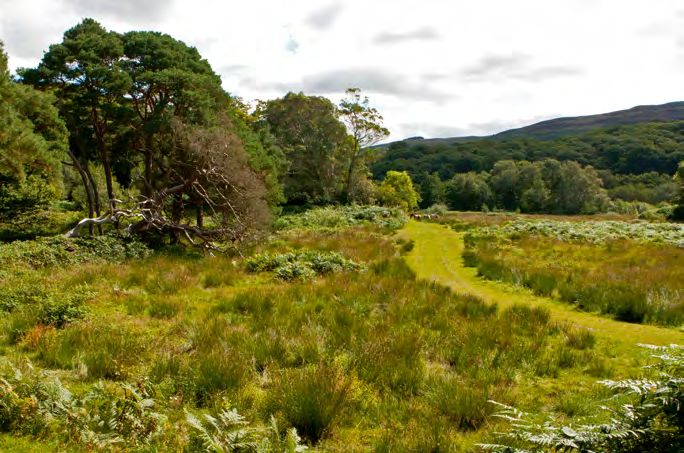
A genuine interest in and enthusiasm for birds and wildlife        issues to your line manager immediately. You are expected to
conservation is essential.                                         provide and cook all your own food. Unless told otherwise,
You should be willing to help, even with mundane jobs.             please take provisions for at least two days: you will be able to
At reserves where the work includes helping visitors, you          obtain further supplies locally.
must feel comfortable talking to people. Volunteers from           Not all accommodation has central heating – some may have
overseas must have good conversational English. Long-term          an open fire or wood-burning stove instead.
placements usually require a driving licence so that you can       At most sites you need to bring your own pillowcase and
drive RSPB vehicles.                                               sheets/duvet cover, or a sleeping bag. Pillows, duvets and
                                                                   blankets will be provided. Most, but not all, reserves have
Is there any charge to take part?                                  items such as a washing machine, TV, microwave, iron, etc.
                                                                   However, TV reception is a problem on a few sites and
There is no charge to take part in the scheme. However,
                                                                   an internet connection is a rarity. Reserve details containing
administering each application does cost us a little money, so
                                                                   all this information will be sent to you along with your booking
we invite applicants to make a donation – see the application
                                                                   confirmation. Please note, all our bedrooms are single sex.
form enclosed.
                                                                   We do not put men and women in the same bedroom unless
It is your responsibility to cover the cost of your transport to   they are partners or related. If you are booking with someone
and from the reserve, and to provide and cover the cost of         else and wish to share a room with them, please indicate this
your food during your stay.                                        on the application form. We will do our best to accommodate
The RSPB will provide accommodation, together with basic           your wishes, but this is not always possible.
services, free of charge for the period you are volunteering,      We can’t guarantee whether or not anyone else will be
and cover any expenses incurred as a necessary part of your        volunteering during your stay, or tell you the gender of other
work on the reserve.                                               volunteers. It’s possible that you will be staying alone in a
                                                                   remote location. Please consider this when choosing a
                                                                   nature reserve.
Where will I be staying?
                                                                   Please note: pets are not allowed on RSPB reserves, or in
Accommodation varies from reserve to reserve, but we aim
                                                                   the volunteer accommodation. All buildings, vehicles and
for it to be safe and clean and to meet basic standards. We
                                                                   accommodation are non-smoking.
provide a cooker, cooking utensils, cutlery, crockery, a fridge
and food storage at all reserves. We expect you to maintain        More frequently asked questions can be found on
the volunteer accommodation accordingly, and to report any         pages 43–45.

Key
On the following pages you will find a guide to all our reserve placements. Each entry will have
a combination of the following symbols, to help you compare the placements and decide which
is best for you.
ST1    Short-term/long-term                                              People engagement work – membership recruitment,
       placement and minimum                                             guided walks, shop/café work and showing people wildlife.
LT4    stay in weeks.
                                                                         Suitable for couples.
       Internship place(s) available.
       See page 44 for details.
                                                                         Practical estate maintenance, and habitat and species
       Research, surveying and species protection                        management work. Livestock farm work at some locations.
       work. Good bird identification skills
       required at some locations at certain times.

16 +   Minimum age.
                                                                                                                                         Becky Austin

                                                                                                                                     7
Where would you
like to go?
                                                                   Shetland

                                                                                      Sumburgh Head

                                                                  Onziebust
                                                 Orkney

                                                        Hoy

       Western Isles

                                               Forsinard
                                               Flows
                                     North
                                    Scotland
                                                                                Loch of Strathbeg
                                     Central
                                     Highland
                                     reserves            Abernethy and
                                                         Loch Garten Nature Centre
                                         Insh Marshes
                                                      East
           Isle of Coll
                                                    Scotland

                 Oronsay                     Loch Leven

           Loch Gruinart
                                             Loch Lomond

                                             South and West                         Coquet Island
               Rathlin                          Scotland

             Northern                        Mersehead              Geltsdale
              Ireland
                                                                  Northern
                                                                  England              Saltholme
                   Portmore      Mull of Galloway
                   Lough
                                                              Haweswater

                                                                  Leighton Moss and
                                                                  Morecambe Bay                       Bempton Cliffs

                                                                  Aire Valley

                                                                   Dearne Valley          Blacktoft
                                                                                          Sands
                           South Stack
                                               Burton Mere
                                                                         Coombes Valley                      Titchwell Marsh
                                                           Lake Vyrnwy              Frampton Marsh
                                                                                                    Mid Yare Valley

                                                  Ynys-hir           Midlands                                Minsmere
                                                                                          Eastern
                                                                                          England
             Ramsey Island
                                           Wales                   Symonds Yat
                                                                                          Old Hall Marshes

                                                                          Farnham and
                                                                         Hazeley Heaths
                                                         West                           South East        North Kent
                                                                                                          Marshes
                                                         Sedgemoor                       England
                                                Aylesbeare
                                                Common                      Franchises Lodge
                                    South                                                                        Dungeness
                                                                           Arne
                                    West
                                   England              Exe         Little Tern
                                                        Estuary     Recovery Project

8
Residential volunteering in

       England

                               “I spent a wonderful
                               week with committed
                               staff and volunteers.”
Ben Andrew (rspb-images.com)

                               Elaine King

                                                        9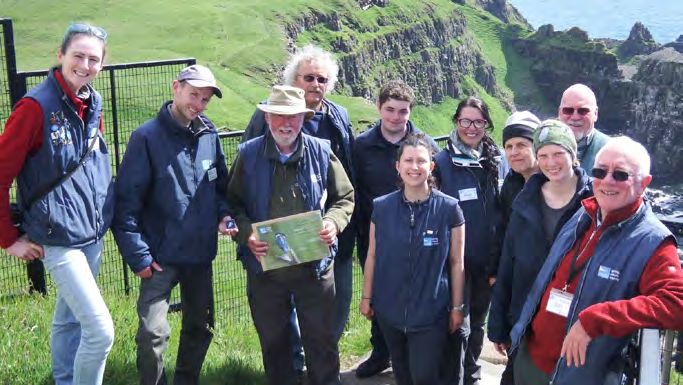
England
Aire Valley reserves West Yorkshire                                            LT26 ST2                     18+
What?

                                                                                                                   Mike Richards (rspb-images.com)
         Fairburn Ings and St Aidan’s are products of the coal mining industry,
         now restored to nature with open water, wet grassland, reedbed,
         dry grassland and woodland. Just a stone’s throw from Leeds and
         Wakefield, they are important havens for wildfowl, wading and
         farmland birds as well as bitterns and bearded tits. The reserves are
         home to butterflies, dragonflies and small mammals including harvest
         mice. Both Fairburn and St Aidan’s have visitor centres with
         well-established trails, while Fairburn is a popular family site.
When?    Short-term: one placement available all year.
         Long-term: one long term volunteer, and one practical intern only.
Where?   Railway station at Castleford (3 miles/ 4.8km from Fairburn Ings) and
         Micklefield (5 miles/8km). Very limited public transport; pick up by prior
         arrangement. Accommodation is 1.25 miles/1.9km from the Fairburn
         Ings visitor centre in a semi-detached house with three bedrooms,
         each with a single bed. Car or bicycle useful, bicycle is available.
Why?     Practical habitat management and estate maintenance throughout
         the year, including woodland work and scrub bashing in winter.
         Infrastructure maintenance and invasive species control in summer.
         Work may be strenuous and repetitive. Some wildlife survey or
         monitoring work, particularly in spring and summer.

Who?     Call the team on 01977 628191 or 0113 232 0529.

                                                                                      Bearded tit

Aylesbeare Common Exeter, Devon                                                       LT26                  18+
What?

                                                                                                                   Andy Hay (rspb-images.com)
         Part of the East Devon Pebblebed Heaths, originally formed by river
         deposits during the Jurassic Era, Aylesbeare Common now makes up
         one of the largest areas of lowland heathland in South West England.
         The reserve is nationally important for its populations of Dartford
         warblers, nightjars, southern blue damselflies and a wide range of
         both heathland and woodland species.
When?    Short-term: no placements available.
         Long-term: three placements available all year.
Where?   Railway station at Exeter (8 miles/13km from reserve).
         Regular bus route (9A or B). Car or bicycle useful.
         Accommodation is a newly-built log cabin with one single and two
         double bedrooms, next to the office and close to the reserve.
Why?     Practical habitat management work all year round, bird surveys,
         vegetation surveys, farm work, estate work, working with livestock,
         assisting with events and working within the wider team in Devon.
         Work can be heavy at times with scrub clearance and tree-felling over
         the winter months, and bracken control during summer.
Who?     Call Toby on 01395 233655.

                                                                                                    Bog asphodel

10
England
Bempton Cliffs Bridlington, East Yorkshire LT12 18+
What?
Kevin Groocock
Spectacular 120-metre (400-foot) chalk cliffs supporting England’s
Puffins largest seabird colony. Almost 500,000 seabirds make Flamborough
and Bempton their home during summer, including guillemots,
kittiwakes and puffins. The reserve is also home to the UK’s largest
mainland gannetry. In summer, you will also find beautiful carpets of
red campion flowers, and grassland with farmland birds such as corn
buntings, tree sparrows, skylarks and meadow pipits.
When? Short-term: no placements available.
Long-term: three placements available.
April to July inclusive for seabird research.
March to September for learning and social media.
Where? Railway station at Bempton (1.5 miles/2.4km from reserve).
Local bus routes to Bempton village (1 mile/1.6km from reserve).
House in Bempton village, one single bedroom and a twin room.
Why? Long-term placement one – seabird research assistant. Monitoring
populations and breeding success throughout the colony. An integral
part of the team, you will help deliver research and monitoring
priorities for the season.
Long-term placement two – learning assistant.
Leading our school and youth group education sessions to inspire our
young visitors, using fun resources, games and play.
Long-term placement three – social media assistant.
Regularly updating social media to promote Bempton Cliffs. This may
include photographing and videoing events and activities.
Who? Call Dave on 01262 422204 for seabird research.
Call Kerry on 01262 422203 for learning.
Call Maria on 01262 422202 for social media.
Blacktoft Sands Whitgift, East Yorkshire LT26 ST1 16+
What?
Sara Marcias Rodriguez (RSPB)
This is the largest tidal reedbed in England, where 270 bird species
have been recorded. In summer, the reserve is especially important
for breeding marsh harriers, avocets, bearded tits and bitterns, while in
spring and autumn the saline lagoons attract large numbers of migrant
wading birds. In winter, good numbers of ducks and wading birds can
be seen, as well as hen harriers and merlins. The reserve has up to
26,000 visitors a year, mostly between April and September.
When? Short-term: placements for individuals, couples or a pair of friends
available all year.
Long-term: one long-term placement all year.
Where? Railway station at Goole (8 miles/13km from reserve).
A bus passes by the reserve entrance. Volunteers are housed
nearby, in a modern, semi-detached house, with one single and
one twin bedroom.
Why? Year-round duties include all aspects of reserve wardening including
practical management, bird and other wildlife monitoring, people
engagement, livestock work and estate maintenance. During spring
and summer there will be an emphasis on bird monitoring and people
engagement, while autumn and winter work will largely be land
management, which can be physically demanding. You may be asked
to help with work at other reserves along the Humber Estuary.
Who? Call Gareth or Stuart on 01405 704665.
Blacktoft Sands lagoon management
11England
Burton Mere Wetlands Burton, Cheshire LT26 18+
What?
Andy Hay (rspb-images.com)
The hub of the Dee Estuary nature reserve. Over 6,500 hectares
of Special Area of Conservation saltmarsh, hosting internationally
important numbers of wintering ducks and geese and overwintering
raptors. In spring, brilliantly diverse wet grassland hosts over 100 pairs
of lapwings and over 50 pairs of avocets, as well as a little tern colony
in North Wales and one of the most important black-necked grebe
colonies in the UK at Woolston Eyes in Warrington. The England/Wales
border runs directly through the reserve.
When? Short-term: no placements available.
Long-term: two placements available all year.
Where? Railway station at Hooton (4.3 miles/7km from the reserve).
Car or bicycle useful. Accommodation is an upstairs flat in a large
house on the reserve, adjoined to the office.
Why? Placement to cover both practical conservation and visitor operations.
Practical habitat management work and estate work all year round.
Seasonal activities include bird surveys, vegetation surveys, working
with livestock. Meeting and greeting visitors, membership recruitment
and assisting with events. Work can be physical at times with scrub
clearance and tree-felling over the winter months, and invasive plant
control during summer.
Who? Call Liz on 0151 353 2726.
Teal
Coombes Valley Leek, Staffordshire 18+
What?
Mel Brown (RSPB)
Stunning oak woodland, with steep-sided valleys and babbling
brooks. A magical place at any time of year, especially in spring when
pied flycatchers and redstarts arrive. Other special species include
the greater butterfly orchid, argent and sable moths and a host of
woodland wildflowers. Coombes Valley is a peaceful reserve with a
visitor centre and several family-friendly trails.
When? Short-term: no placements available.
Long-term: three interns only.
Where? Railway stations at Stoke-on-Trent (12 miles/19km from the reserve)
and Macclesfield (17 miles/27km). Buses are available infrequently
to the market town of Leek 5 miles/8km away. Own car or bicycle
recommended. Accommodation is a converted farm building next to
the visitor centre, with three single bedrooms.
Why? Two interns are needed to work alongside our Warden. You’ll get
involved in a variety of tasks, such as the management of the
woodland understorey, scrub management in our grasslands, the
construction and maintenance of livestock fencing and the monitoring
and maintenance of the site’s visitor trails and infrastructure. In the
spring and summer, there will also be the opportunity to get involved
in some woodland bird monitoring too. One intern is required to work
alongside our Site Manager to deliver our visitor experience. This
involves meeting and greeting our visitors, helping to run our events
programme and maintaining our natural play trail.
Who? Call Paul on 01538 384017 or 07919 301911.
Canopy walkway
12England
Coquet Island Amble, Northumberland ST2 18+
What? Coquet Island, about one mile off Amble, Northumberland, is occupied
Paul Morrison
by the RSPB in spring and summer. It’s home to a large colony of
nesting seabirds. It has the only UK colony of roseate terns and has
nesting Sandwich, Arctic and common terns. Placements are outside
the main breeding season and focus on practical seabird habitat work.
When? Short-term: one or two placements during March, April, August
and September. Minimum stay two weeks.
Long-term: no placements available.
Where? Railway station at Alnmouth (6 miles/8km from Amble harbour).
Lifts are available from the station, and buses run between
Alnwick and Ashington, stopping at Amble (Monday to Saturday).
We have a rigid inflatable boat, moored at Amble Marina, and
volunteers must be able to climb in and out of it, often in rough seas,
and traverse very uneven and rocky terrain. There are two single
bedrooms in the lighthouse keeper’s cottage. The kitchen and office
are in the old engineers’ quarters to the rear.
Note: there is no mains water on the island, but a recently
commissioned desalination plant produces water for drinking, cooking
and washing. There is a shower, but with limited water and 110v.
Trips to the mainland are approximately once a week. Lighting is a
solar system with a 240v generator for back up. We cook on gas and
heating is a log burner fed with driftwood.
Why? The work on Coquet is at the mercy of the tide, weather and light.
Practical work involves grassland management, habitat restoration
Roseate tern and creation, and infrastructure maintenance.
Who? Call Paul on 07811 191928.
Dearne Valley – Old Moor LT26 18+
Barnsley, South Yorkshire
What? The RSPB Dearne Valley team works across eight very different
Matthew Capper (RSPB)
reserves, managing wet grassland, fen, reedbed, new woodland, an
orchid meadow and more for a range of wildlife including bitterns,
bearded tits, willow tits, avocets, dingy skippers and water voles.
The team maintains a visitor infrastructure, that supports up to
110,000 visitors a year, with a varied and exciting events and
activities programme.
When? Short-term: no placements available.
Long-term: one or two placements available all year, plus one or
two interns.
Where? Railway stations at Wombwell and Swinton (both about 3 miles/
4.8km from the reserve). Bus stop at reserve entrance. Bicycle or car
useful. Three-bedroom cottage within the Old Moor courtyard.
Each room has a single bed.
Why? Our residential volunteers work with the teams on all areas of the
reserve, including habitat management, wildlife monitoring, visitor
experience, reserve marketing and promotion, event planning and
delivery, estate management and occasional work with livestock.
Who? Call Karen on 07876 741018.
Bee orchid
13England
Dorset reserves Wareham, Dorset LT26 18+
What? The RSPB Dorset team works across nine reserves managing coppice
Andy Hay (rspb-images.com)
woodlands, reedbed, heathland, wet grassland and more for a huge
host of wildlife including the Dartford warbler, marsh harrier, dormouse
and smooth snake. The team is known for its innovative management
and is at the forefront of people engagement.
Working across varying habitats, our practical placement is ideal for
anyone wanting to gain a broad understanding of what the RSPB
does. Our visitor experience placement offers a chance to gain
experience, support and lead in our work to inspire the public.
When? Short-term: no placements available.
Long-term: three placements based at Arne.
Where? Arne is near Wareham, on the Isle of Purbeck. Railway station
at Wareham (5 miles/8km from reserve). Car or bicycle useful.
Chalet in the heart of Arne reserve with three single bedrooms.
Why? Practical placement: Scrub, gorse and heather management, as well
as other habitat-related tasks. Other tasks including bird and insect
surveying, hen harrier roost counts. Estate tasks may involve fencing
and footpath work. This role involves the safe and effective use and
maintenance of tools and machinery.
Visitor experience placement: Assist with the day-to-day running
of visitor operations at nine reserves, focusing on Arne and Radipole
Lake. You’ll help visitors to connect with wildlife and will take on
people engagement projects. The role includes events, activities,
visitor welcome, social media and publicity.
Who? Call 01929 553360 and ask for Stewart (practical placement) or Bell heather
Luke (visitor experience placement).
Dungeness Lydd, Kent 18+
What? Dungeness is an incredibly fascinating reserve rich in history and
Craig Edwards
wildlife. Miles of protected, vegetated shingle important for a variety
of rare lichens, mosses and insects blends into fields of wildflowers
humming with life. Open water pits and reedbed areas are dotted
throughout the reserve, providing a home to high numbers of
seabirds, ducks, geese and wading birds. Jutting out into the English
Channel, Dungeness is an important stop-over place for migrating
birds. Species of interest include bitterns and marsh harriers, which
are seen on the reserve all year round, medicinal leeches, great
crested newts and the Sussex emerald moth, which is only found
here. The Dungeness peninsular is also home to one third of the UK’s
wildflowers and provides an important home for many of Britain’s rare
bumblebees.
When? Short-term: sometimes available, please enquire for details.
Long-term: three interns only.
Where? Railway stations at Folkestone (17 miles/27.4km from reserve), Ashford
(18 miles/29km) and Rye (12 miles/19.3km). Bus service from Hastings
to Folkestone, via Rye and Lydd, or the Ashford to Lydd bus goes direct
to the reserve. Volunteers stay in a newly-renovated farmhouse with
three double bedrooms on the reserve. This is a remote site.
Why? A wide range of tasks including estate management, maintenance
of visitor facilities, wildlife surveying and monitoring, data entry and
report writing, working with livestock, assisting with public events
and helping deliver our habitat management programme in the winter,
which can be physically demanding.
Dungeness
Who? Call Craig on 01797 320588.
14Exe Estuary Exminster, Devon LT26 18+
What? The Exe Estuary reserves are internationally recognised as important
Andy Hay (rspb-images.com)
sites for thousands of ducks, geese and wading birds, along with
many rare dragonfly, aquatic plant and mammal species. Although
based in Exminster, the team manages nine diverse reserves, such
as marsh, woodland, mudflat and agricultural land. As a residential
volunteer, you will play an integral role in surveying and maintaining
the reserves, so that they provide the perfect home for nature.
The Lookout at Bowling Green Marsh provides one of the premier
birdwatching sites in the south west of England, with regular events
being held to get people inspired by nature.
When? Short-term: no placements available.
Long-term: three six-month placements available all year round.
Where? Railway station at Topsham (1 mile/1.6km from reserve)
or Exeter (6 miles/9.6km). A short ferry ride can be taken from
Topsham to Exminster. Local bus routes to Exminster village from
Exeter. Pick-up by prior arrangement possible. Volunteers stay in
a house in the village, with one double and two good sized single
bedrooms. The house is a five-minute cycle ride or 15 minute walk
from the reserves office.
Why? Gain experience in a wide range of tasks including: habitat
management, surveying and monitoring endangered species of birds,
insects and mammals (including lapwings, cirl buntings, moths and
dormice), infrastructure repairs, water level management and more.
Get involved in our vital visitor engagement at the popular Bowling
Green Marsh.
Exe Estuary
Who? Call the team on 01392 833311.
Farnham and Hazeley Heaths 18+
Fleet, Hampshire
What? Two strikingly different heathland reserves in Surrey and on the
Craig Edwards
Surrey/Hampshire border. Farnham Heath is one of the RSPB’s largest
heathland reserves with over 97 hectares (240 acres) of new heath.
The site supports grayling butterflies, sand lizards, field crickets, tree
pipits and nightjars and attracts over 60,000 visitors a year. Hazeley
Heath is a newer, quieter reserve with a feeling of space that belies
its size. It is part of the internationally-important Thames Basin Heaths
Special Protection Area for birds such as woodlarks and nightjars. It
supports beautiful silver-studded blue butterflies and the carnivorous
plant, sundew. There is also a resident herd of fallow deer.
When? Short-term: no placements available
Long-term: two interns only.
Where? Railway station at Fleet is 1.25 miles/2km from the accommodation.
Pick-up from station by prior arrangement. Driving licence essential;
own transport highly desirable. Volunteers live in a large bungalow
with two bedrooms (one twin and one double), 5 miles/8km from
Hazeley and 9 miles/14km from Farnham.
Why? Practical habitat management, estate work and patrols carried out
all year round, with survey and monitoring of birds, reptiles and
invertebrates in the spring and summer. The work can be strenuous
and demanding, especially in the winter. Opportunities to help with
people engagement and guided walks on and off both reserves,
including running and attending events.
Dartford warbler
Who? Call Tom on 01252 795632.
15England
Frampton Marsh Boston, Lincolnshire LT26 18+
What? On the edge of The Wash – the largest and most important wetland
Andy Hay (rspb-images.com)
for birds in the UK – Frampton Marsh has a developing reedbed, three
large freshwater scrapes for nesting and migrant wading birds, wet
grasslands and one of the largest areas of saltmarsh in the world.
Hen harriers are winter visitors and we see the largest variety of
wading birds on any reserve in the country. Our visitor centre is open
daily throughout the year, with an exciting programme of events.
When? Short-term: no placements available.
Long-term: one placement September to March, and two interns.
Where? Railway station at Boston (4 miles/7km from the reserve).
Car or bicycle useful. Accommodation: there are two double
bedrooms in a large Georgian, Grade II listed farmhouse, which also
hosts the offices.
Why? Practical intern: assisting the site Wardens with habitat management
and estate maintenance, including vegetation control, and fencing
and footpath maintenance. Also survey and monitoring work,
such as breeding bird surveys and lagoon invertebrate sampling.
Visitor services intern: assisting the Visitor Experience Manager
with welcoming and recruiting visitors, events, producing
interpretation, and promoting the reserve through traditional
and new media.
Who? Call Toby on 01205 725141 for the practical intern position.
Call Chris on 01205 725143 for the visitor services intern position.
Redshank
Andy Hay (rspb-images.com)
Frampton Marsh
16England
Franchises Lodge New Forest, Wiltshire LT26 18+
What? Franchises Lodge in Wiltshire is a 386-hectare (almost 1,000 acre)
Terry Bagley (rspb-images.com)
woodland of deciduous and coniferous trees that has been largely
inaccessible to the public for many years. We are still finding our
more about the site, but initial surveys confirm that there’s a good
woodland bird community including wood warblers, hawfinches,
spotted flycatchers, firecrests and redstarts. These woods are also
known to be fascinating botanically, with internationally-important
lichens. There’s currently no visitor infrastructure and often no staff on
site. With 1,000 pairs of breeding toads using the lake, more than 50
firecrest territories and an array of bats and other creatures populating
this remote site, you can have an immersive, magical experience.
When? Short-term: no placements available.
Long-term: two placements available all year.
Where? Railway station at Salisbury or Southampton. There are buses from
Southampton to the village of Lover, but this is a fair walk away. We
recommend a car, or contacting us to arrange transport from a mutually
agreeable location. There will be a site vehicle available. Accommodation
is in a newly-decorated two-bedroom cottage in the heart of the reserve.
Why? Help us to discover more about our new reserve and manage the
habitats. Tasks include practical habitat management all year round,
survey work (including birds, bats, butterflies and moths), vegetation
surveys, leading walks and work parties and assisting the team in the
New Forest. Work can be heavy at times with scrub clearance and
tree-felling in the winter months, and bracken control in summer.
You’ll need to be comfortable working alone and in a team.
Wood anemone
Who? Call Anneka on 07711 385587.
Matt Pringle
Franchises Lodge
17England
Geltsdale Brampton, Cumbria ST2 LT4 18+
What? Breathtaking fell views sum up this large and remote upland site
Ian Ryding
showcasing moorland, woodland and farmland. Geltsdale forms
the north-western part of the North Pennines Area of Outstanding
Natural Beauty. Annually, about 10,000 people visit to see black
grouse, birds of prey and breeding wading birds. Ideal for walking
and seeing rare upland bird species, flowers, butterflies, the
occasional otter and the rare, iconic and much-persecuted hen harrier.
When? Short-term: mid-January to the end of March.
Long-term: placements available all year except September. Good
bird identification skills and upland experience required to assist with
hen harrier monitoring and potentially nest protection April to July.
Where? Railway station at Brampton near Carlisle (4 miles/6.4km from
reserve), with pick-up by prior arrangement. Car or bicycle useful.
Volunteers live in a remote, terraced cottage on the reserve,
with two double bedrooms, 1 mile/1.6km from the office.
Why? Upland conservation work including fencing, drystone walling and
footpath maintenance. Monitoring, protection and survey work
is available at certain times of the year. There may be occasional
opportunities to assist with visitor work – on guided walks, with
school groups and membership recruitment. The work can be
physically demanding, outside in all weathers.
Who? Call Ian on 01697 746717 for practical placements, and Steve on
01697 740033 for hen harrier enquiries.
Foxgloves at Geltsdale
Haweswater Penrith, Cumbria ST2 LT8 18+
What? A ruggedly romantic mixture of woodland and mountain grassland,
Andy Hay (rspb-images.com)
with tumbling becks and imposing crags, surrounding Haweswater
reservoir in the Lake District National Park.
When? Short-term: one or two placements available all year.
Long-term: one or two placements available all year.
Where? Railway station at Penrith (10 miles/16km from reserve),
with pick-up by prior arrangement. Car or bicycle useful.
Farmhouse with two single bedrooms and one twin bedroom
on the reserve.
Why? Physical land management work in summer, autumn and
winter. This can be physically demanding and repetitive.
Survey/research assistance is required in spring and summer
if you have specialist skills. At all times of the year manual work
is required, including bracken cutting, drystone walling, general
farm work and tree planting. This is a remote site.
Who? Call Spike on 01931 713376.
Juniper
18England
Leighton Moss and Morecambe Bay LT26 18+
Silverdale, Lancashire
What? Nestled in the heart of the Arnside and Silverdale Area of
David Mower
Outstanding Natural Beauty, Leighton Moss is one of the RSPB’s
flagship sites. The reserve is home to all sorts of wonderful wildlife
including bitterns, otters, eels and a whole host of rare butterflies.
With a busy visitor centre, shop, café, hides and trails, there’s loads to
get involved in.
When? Short-term: no placements available.
Long-term: two interns (one practical and one visitor experience
placement) and one long-term practical volunteer placement all year
round (6 or 12 months) .
Where? Railway station at Silverdale, next to the reserve. Lancaster
is 20 minutes by train and Carnforth is six minutes by train.
Volunteers live in a renovated farm building on the reserve,
with two twin bedrooms.
Why? Practical: spring/summer: breeding bird surveys, butterfly transects,
elver monitoring, habitat assessments, installing and maintaining
electric fence to protect nesting avocets. Extensive training is given in
wildlife survey and monitoring. Practical work is mostly maintenance
with some habitat management for butterflies on Warton Crag.
Autumn/winter: habitat management such as reed cutting, fen
management, coppicing and woodland restoration, this can be
physically demanding. Other tasks involve estates maintenance and
Wetland bird surveys around Morecambe Bay.
Otter Who? Practical: call Nick on 01524 703014.
Visitor experience: call Jon on 01524 703017.
Little Tern Recovery Project Chesil Beach, Dorset LT10 18+
What? Chesil Beach is home to the only little tern colony in south west
Ben Andrew (rspb-images.com)
England. Little terns are the UK’s second rarest breeding seabird and
are highly vulnerable to predation and disturbance while breeding.
Chesil’s small, but significant colony has suffered serious declines in
the past, largely due to predation. Since the RSPB and local partners
set up the protection project in 2009, the colony is now recovering
and going from strength to strength.
When? Short-term: no placements available.
Long-term: four placements available: three night wardens and one
project assistant mid-May to the end of July.
Where? Railway station at Weymouth then a bus to the accommodation.
The little tern colony is on Chesil Beach, a ten-minute walk from the
Chesil Beach Centre, half way along the causeway (A354) between
Weymouth and Portland. Accommodation will be provided, details
unavailable at time of going to press.
Why? The little tern colony is protected and monitored 24 hours a day,
throughout their breeding season. The night wardens will spend the
majority of the time working night shifts to protect the little terns from
predation and will have opportunities to spend time involved in other
project activities during the day. The project assistant will support the
project officer with a range of tasks and will be able to experience
night shifts so that the whole team can maximise their experience
from their time at the project.
Who? Call the team on 01392 457190.
Little tern
19England
Mid Yare Valley Strumpshaw, Norwich, Norfolk LT20 18+
What? On the Norfolk Broads along the banks of the River Yare, this
Matthew Wilkinson
large reserve includes grazing marshes, wet woodlands, fen and
reedbeds, which in turn provides scope for a broad range of skills and
experiences. Many internationally important birds and other wildlife
are found here, including bearded tits, bitterns, marsh harriers, Norfolk
hawker dragonflies, swallowtail butterflies and spectacular numbers of
ducks, geese and wading birds in the winter.
When? Short-term: no placements available.
Long-term: two or three placements available all year, plus one visitor
intern from March for six months.
Where? Railway station at Brundall (2 miles/3.2km from reserve). Detached
cottage in the heart of the reserve, with three single bedrooms
and wi-fi.
Why? Typically, physical habitat management involves fen work in late
summer, and reedbed work, scrub clearance and woodland tasks in
autumn and winter. You will help with the visitor reception and events.
Survey work will include breeding bird surveys in spring and summer,
and wetland bird counts in autumn and winter. Maintenance of visitor
facilities required throughout the year. Some assistance required
with the reserve’s Highland cattle. People engagement opportunities
available all year round.
Who? Call Matthew on 01603 715191.
Bittern
Minsmere Westleton, Saxmundham, Suffolk LT26 18+
What? Minsmere is one of the RSPB’s flagship reserves, featuring an
Ian Barthorpe
outstanding variety of habitats, including reedbed, heathland, coastal
lagoons, dunes and woodland. The reserve supports several nationally
important populations of breeding birds, including bitterns and avocets,
and nationally important populations of wintering ducks and geese.
It is also rich in other wildlife, with more than 1,000 species of moth
recorded, plus 33 species of butterfly, 23 species of dragonfly and
damselfly, as well as red deer, otters and water voles. Konik and Exmoor
ponies and Highland cattle graze a variety of habitats on the reserve.
When? Short-term: no placements available.
Long-term: one conservation intern and one education intern starting
in March, two conservation interns starting in September.
Where? Railway station at Darsham (5 miles/8km from reserve) where you
can get a bus, taxi, or pick-up from the station (by prior arrangement).
Purpose-built chalet for volunteers on site with two single bedrooms.
Why? Habitat management at Minsmere involves managing the scrape
lagoons and islands in late summer, and reedbed work, scrub
clearance and woodland tasks in autumn and winter. There are often
opportunities to help with visitor reception, events and education
groups, mostly in spring and summer. There are people engagement
opportunities aplenty. Survey work includes breeding bird surveys
in spring and summer, wetland bird counts throughout the year and
others such as water vole surveys. Other work includes visitor facility
maintenance throughout the year, and daily stock checks of our Konik
and Exmoor ponies.
Catkins
Who? Call Katie on 01728 648075.
20England
North Kent Marshes Rochester, Kent 18+
What?
Ruth Gillies
A diverse range of sites between Gravesend in the west and
Whitstable in the east. We manage scrub, grassland, reedbed
and grazing marsh, with high densities of breeding lapwings and
redshanks in spring, and spectacular flocks of wading birds and
wildfowl in winter. Northward Hill also has an area of woodland that
supports nightingales, the UK’s largest colony of breeding herons,
several species of owl plus rare white-letter hairstreak butterflies.
Nearby Cliffe Pools is an exciting reserve where we have created a
unique complex of saline lagoons, attracting internationally important
numbers of wintering wildfowl and waders.
When? Short-term: sometimes available, please enquire for details.
Long-term: three interns only, starting in March or September.
Where? Railway station at Strood (5.5 miles/8.9km from the reserve). Bus
stops at High Halstow (1.5 miles/2.4km). Pick-up by prior arrangement.
Volunteers stay in a beautiful farmhouse with three double bedrooms.
Why? Habitat management on grazing marsh, woodland and saline lagoons.
Estate maintenance, talking to visitors on the reserves, bird and other
wildlife surveys and data recording. Work can be physically demanding,
especially in winter.
Who? Call the team on 01634 222480.
Lapwing
Andy Hay (rspb-images.com)
North Kent Marshes
21England
Old Hall Marshes Maldon, Essex 18+
What? Old Hall Marshes is 450 hectares of wet grassland with a grazing
Andy Hay (rspb-images.com)
tradition that goes back centuries. Situated on the Blackwater
Estuary in Essex, the reserve is designated as an area of national
and international importance. It comprises ancient grazing marsh
(characterised by thousands of ant hills made by yellow meadow ants),
improved fields, reedbeds, estuarine saline lagoons and scrub
habitats. The habitats support breeding birds such as lapwings,
redshanks, avocets, shovelers, pochards, marsh harriers, bearded
tits and Cetti’s warblers. In winter, thousands of dark-bellied brent
geese feed on the pastures, and diving birds and grebes can be
seen in the estuarine channels. Peregrines, merlins and short-eared
owls regularly hunt and roost on the reserve. It’s also important for
water voles and unusual plants and invertebrates, including
scarce emerald damselflies.
When? Short-term: no placements available.
Long-term: two interns only.
Where? Railway and coach station at Colchester (14 miles/22km from reserve)
and railway station at Kelvedon (9 miles/14km). Pick-up by prior
arrangement. Mid-terraced cottage for volunteers, 0.75 miles/1km
from the reserve, with two double bedrooms. Bicycles provided.
Why? Habitat management on wet grassland, reedbeds, saline lagoons
and scrub. Monitoring of birds and other wildlife, and working
with livestock.
Who? Call Neil on 01621 869015.
Watercourse at Old Hall Marshes
Saltholme near Middlesbrough, Tees Valley LT16 18+
What? Nestled in the Tees Valley, surrounded by many industrial neighbours,
Ben Andrew (rspb-images.com)
Saltholme offers a dramatic landscape and stunning wildlife. Hundreds
of pairs of common terns breed on cockleshell islands in the summer
and thousands of wildfowl spend the winter here. With habitats such
as reedbeds, wet grassland, open pools and scrapes, Saltholme
attracts lapwings, water voles, golden plovers, brown hares and
sand martins.
When? Short-term: no placements available.
Long-term: three placements available all year.
Where? Railway station at Middlesbrough (7.2 miles/11.5km from the reserve).
Direct bus from Middlesbrough bus station. Pick-up from station by
prior arrangement. Seaton Carew station (4.5 miles/7.2km) is a
five-minute walk from the accommodation – a spacious first-floor
flat with views of the sea. It has two double bedrooms, one single
bedroom, and a fish and chip shop just across the road! Direct bus
route to the reserve.
Why? Long-term placements one and two: working alongside the estate
team on a variety of reserve management activities, and survey/
monitoring tasks.
Long-term placement three: working alongside the visitor
experience team. This includes meeting and greeting visitors, shop
work, helping with family activities and school groups, and assisting in
planning and implementing events.
Who? Call Ed or Craig on 01642 546625.
Water vole
22England
Somerset reserves Langport, Somerset LT26 18+
What? West Sedgemoor is an internationally important area of low-lying
Nick Upton (rspb-images.com)
wet meadows, attracting large numbers of ducks, geese and wading
birds in winter and breeding wading birds in spring. Greylake is a wet
grassland reserve, attracting breeding and overwintering wading birds,
ducks and geese. Swell Wood is an ancient woodland with the largest
heronry in the south west. Ham Wall is a mosaic of reedbed and
woodland and is becoming a very popular wetland with wildlife such
as bitterns.
When? Short-term: no placements available.
Long-term: two or three placements available all year.
Where? Railway and coach station at Taunton (10 miles/16km from reserve).
A large farmhouse with three double bedrooms.
Why? Placements one and two: A combination of practical work, surveying
and monitoring, and people engagement. Practical tasks may include
maintenance of fencing, visitor facilities and water control structures,
hedge-laying, coppicing and livestock handling. Visitor work and
face-to-face people engagement is across the Somerset reserves
at Greylake, Swell Wood and Ham Wall. This may include meeting
visitors, undertaking guided walks, planning and leading events, and
writing blogs and newsletters. Survey work is carried out March
to June. Please note practical and survey work can be physically
demanding, especially in winter.
Placement three (mid-March to July only): The role will specialise in
the protection of nesting cranes and breeding wading birds. There may
be an opportunity to survey and monitor other species. Juvenile common cranes
Who? Call Paul on 01458 252805.
Symonds Yat – peregrine ST1 LT4 18+
falcon viewpoint near Coleford, Gloucestershire
What? Symonds Yat Rock is perched 500 feet above the River Wye with
Drew Buckley (rspb-images.com)
spectacular views of Coldwell Cliffs, where a pair of peregrines has
nested for more than 30 years. This is a Forestry Commission site
with public access, but no hide. You may be asked to work alone on
some days.
When? Short-term: April to August (excluding mid-June to mid-July –
see long-term below).
Long-term: one placement, 8 June to 13 July.
Where? Railway station at Lydney (7 miles/10km from the viewpoint). Bike or
car essential. The accommodation is a caravan with a double bed and
two singles. Suitable for a couple, two friends or one volunteer. This is
on a nearby caravan site.
Why? Welcoming visitors to the viewpoint, showing them the peregrine
falcons and other wildlife, and helping visitors to use our telescopes.
Talking to visitors about the work of the RSPB and ways they can
support our work is an important part of this role. Specialist knowledge
is not essential as you will work with knowledgeable local volunteers
during your stay. However, enthusiasm and good people skills are
necessary. This is a people facing project with no physical land
management work, although you will need to be able to stand for
large parts of the day. International volunteers must speak very
good English.
Who? Call the Gloucestershire reserves team on 01594 562852.
Symonds Yat
23England
Titchwell Marsh Hunstanton, Norfolk ST4 LT26 18+
What? Located on the scenic north Norfolk coast, the North West Norfolk
Andy Hay (rspb-images.com)
reserves, including Titchwell Marsh and Snettisham, are some of the
best places for wildlife in the UK. From marsh harriers and avocets to
rare dune tiger beetles and thousands of wintering waders, there’s
something for everyone. There are excellent trails and several hides as
well as a busy visitor centre, shop and café.
When? Short-term: one placement available from June to September.
Minimum stay four weeks.
Long-term: conservation intern and a visitor experience intern plus
three month placements available from September to May.
Where? King’s Lynn railway and coach station (23 miles/37km from reserve),
then bus via Hunstanton. Pick-up from Hunstanton by prior
arrangement. A bicycle is useful. Comfortable volunteer house, with
three double bedrooms and one single bedroom, about
0.75 miles/1km from the reserve.
Why? Visitor experience intern: writing posts and articles for social and
print media, supporting the visitor centre, helping on the information
desk, maintaining reserve interpretation, assisting with volunteer
newsletter, planning and delivering reserve events throughout
summer, and work with local schools. Conservation intern: habitat
management work, estate maintenance and species monitoring.
During the summer you will be surveying key breeding species,
maintaining reserve infrastructure and leading day volunteers. During
the winter, you’ll lead on completing the annual habitat management
programmes. Short-term volunteers: species monitoring, site
maintenance, and visitor operation. Avocet
Who? Call Lizzie (conservation) or Carrie (visitor experience)
on 01485 211970.
“I had an incredible
time at Titchwell
Marsh. Everyone there
was so friendly.”
Olivia Coleman
24Residential volunteering in
Northern
Ireland
“I had an incredible
time – I learnt so much
and met so many
Ben Andrew (rspb-images.com)
interesting people.”
Dakota Reid
25You can also read


