RESUMPTION OF TOURISM ACTIVITIES GOOD PRACTICES - COVID SAFE TOURISM (continually being updated)
←
→
Page content transcription
If your browser does not render page correctly, please read the page content below
RESUMPTION OF TOURISM
        ACTIVITIES

   GOOD PRACTICES

    COVID SAFE TOURISM
    (continually being updated)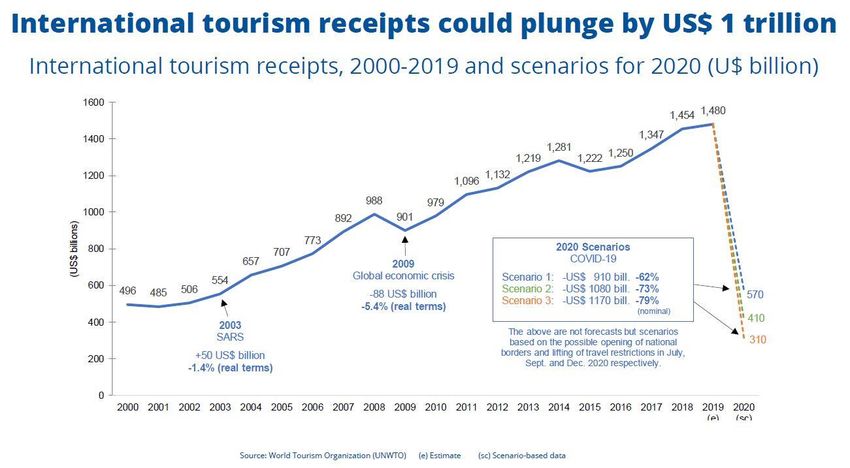
Regional Secretary for Tourism and Culture
                                                                                                                                                        2020-08-05

Index
Introduction .......................................................................................................................................................... 4
Overall Framework ............................................................................................................................................... 7
Specific Framework ............................................................................................................................................12
Recommendations..............................................................................................................................................13
   1.              Reopening of the tourist activity ................................................................................................... 13
   2.              European COVID-19 Aviation Health Safety Protocol ................................................................... 13
   3. Specific Health Control Measures for Trips to the Autonomous Region of Madeira ............................... 15
   3.1 Air Transport Accessibility to the Autonomous Region of Madeira ........................................................ 15
   3.2. Transport ................................................................................................................................................ 19
   3.2.1. Public Collective Passenger (Buses, Aerobus) ..................................................................................... 19
   3.2.2. Public Individual Passenger (Taxis, TVDE) ........................................................................................... 19
   3.3. At the accommodation .......................................................................................................................... 20
   3.3.1           Check-in ......................................................................................................................................... 20
   3.3.2           Accommodation ............................................................................................................................ 20
   3.3.3           Restaurants in Hotel units ............................................................................................................. 21
   3.3.4           Common areas............................................................................................................................... 22
   3.3.4.1         Elevators ........................................................................................................................................ 22
   3.3.4.2         Swimming pools (indoor and outdoor) ......................................................................................... 23
   3.3.4.3         Spa, Saunas, Jacuzzis and Turkish Baths ....................................................................................... 24
   3.3.4.4         Bars ................................................................................................................................................ 24
   3.3.4.5         Business Centres ............................................................................................................................ 25
   3.4             Operational areas .......................................................................................................................... 25
   3.4.1           Attendance register ....................................................................................................................... 25
   3.4.2           Uniforms and accessories .............................................................................................................. 25
   3.4.3           Lockers and changing rooms ......................................................................................................... 26
   3.4.4           Canteens and cafeterias ................................................................................................................ 26
   3.4.5           Kitchen ........................................................................................................................................... 26
   3.4.6           Suppliers and deliveries ................................................................................................................. 27
   3.4.7           Occupational Health ...................................................................................................................... 27
   3.5. Local Accommodation, Rural Tourism and other accommodation........................................................ 28
   3.6. MI - Meeting and Incentives .................................................................................................................. 28
   3.7.            Tourist Entertainment ................................................................................................................... 30
   3.7.1. Private Passenger Transport (Buses, Vans) ......................................................................................... 30
   3.7.2.          Tours, Walking tours and Outdoor Activities ................................................................................ 30

                                                                                 Pág. 2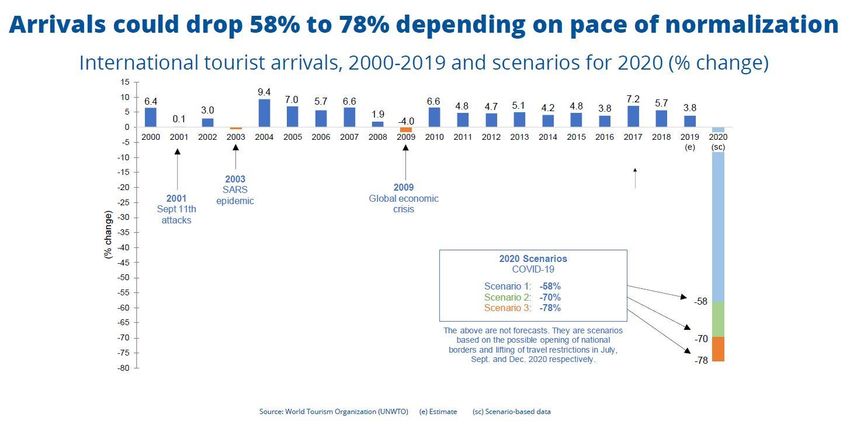
Regional Secretary for Tourism and Culture
                                                                                                                                                      2020-08-05

   3.7.3.         Maritime Tourist Activities (Boats) ................................................................................................ 31
   3.8. Tourist Offices......................................................................................................................................... 32
   3.9. Travel Agencies ....................................................................................................................................... 32
   3.10. Public areas .......................................................................................................................................... 33
   3.10.1. Viewpoints under management of the Forestry and Nature Conservation Institute (IFCN) ........... 33
   3.10.2.        Recommended Walking Routes / other paths under management of the IFCN .......................... 34
   3.10.3. Gardens and Quintas under management of the IFCN ................................................................... 35
   3.10.4. Visits to Nature Reserves by sea (Desertas and Porto Santo Islets) ................................................ 35
   3.10.5. Camping ............................................................................................................................................ 36
   3.11. Public swimming pools and beaches .................................................................................................. 36
   3.12. Ports and Marinas ................................................................................................................................ 36
   3.13. Tourist Entertainment Events.............................................................................................................. 37
   3.14. Museums / Cultural Centres / Monuments /Galleries / Archives / Libraries / and other similar public
   areas   38
Conclusion ..........................................................................................................................................................39

                                                                               Pág. 3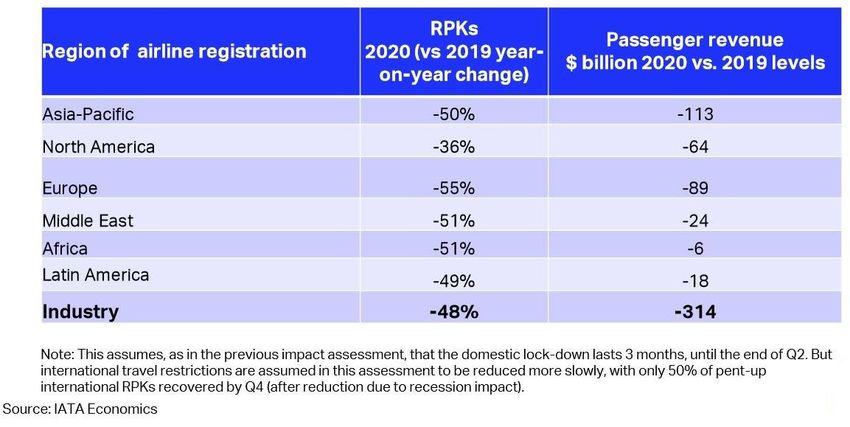
Regional Secretary for Tourism and Culture
                                                                                                              2020-08-05

Introduction

Following the international public health emergency, declared by the World Health Organization (WHO) on
January 30th, 2020, as well as the classification, on March 11th, 2020, of the disease COVID-19 as a pandemic,
as well as the epidemiological situation of COVID-19 in Portugal, constituting a public calamity, the President
of the Republic declared, on March 18th, 2020, the state of emergency, through Presidential Decree no. 14-A
/ 2020, of March 18th, authorized by National Assembly Resolution no. 15-A / 2020, 2020-03-18 and regulated
by Decree no. 2-A / 2020, of March 20th, amended by Amendment Declaration no. 11-D / 2020, of March
20th.
By Presidential Decree no. 20-A / 2020, of April 17th, the declaration of state of emergency was renewed,
based on the verification of the situation of public calamity, having ceased at 11:59 pm on May 2nd, 2020.
The aforementioned declaration was authorized by National Assembly Resolution no. 23-A / 2020, of April
17th and regulated by Decree no. 2-C / 2020, of April 17th.
By Council of Ministers Resolution no. 33-A/2020, of April 30th, the national condition was updated to a
disaster situation, in the scope of COVID-19 pandemic.
Successive exceptional and temporary measures have been taken to respond to the epidemiological situation
caused by the coronavirus SARS-CoV-2 and the disease COVID-19, in Portugal, relating not only to matters of
prevention, containment, mitigation and treatment of epidemiological infection by COVID- 19, but also aimed
at supporting and protecting citizens, public and private entities, companies and professionals, as well as
measures to restrict economic activities and freedom of movement, mobility and transport.
Prior to the national declaration of state of emergency, the situation of alert in the entire territory of the
Autonomous Region of Madeira had already been declared with immediate effect, by Order of the Regional
Secretariat of Health and Civil Protection - Order No. 100/2020, published in JORAM, II Série, no. 51,
Supplement, March 13th - valid for an estimated period of 30 days counting from the order’s signature date
which occurred on March 12th.
With regard specifically to the Autonomous Region of Madeira, and to the Tourism and Culture sectors, in
addition to the impact of the above-mentioned order, several legal diplomas were issued over the time, in
order to prevent, contain, mitigate and treat epidemiological infection by COVID-19, and to support and
protect citizens, public and private entities, companies and professionals, as well as measures to restrict
economic activities and freedom of movement, mobility and transport, taking into account the regional
peculiarities.
Among them, it is worth mentioning, with interest to the Tourism and Culture sectors, Government Council
Resolution No. 101/2020, published in JORAM, I Série, No. 46, of March 13th; Order no. 101/2020, by the
Regional Secretary for Health and Civil Protection published in JORAM, II Série, no. 52, Supplement of March
                                                     Pág. 4
Regional Secretary for Tourism and Culture
2020-08-05
14th, Government Council Resolution No. 115/2020, published in JORAM, Series I, No. 46, of March 15th; No.
118/2020, published in JORAM, Series I, No. 47, of March 16th, amended by Amendment Declaration no.
12/2020, of March 17th; no. 119/2020, published in JORAM, Series I, no. 48, Supplement of March 17th,
amended by Amendment Declaration no. 13/2020, of March 18th; no. 120/2020, published in JORAM, Series
I, no. 48, 3rd Supplement, of March 17th; No. 121/2020, published in JORAM, Series I, No. 48, Supplement, of
March 19th; Ordinance No. 86/2020, of March 22nd, from the Vice President of the Regional Government and
Parliamentary Affairs, the Regional Secretary for Health and Civil Protection and the Regional Secretary for
Tourism and Culture, as amended by Ordinance No. 96/2020, of March 28th, Joint Order No. 38/2020,
published in JORAM, Series II, No. 57, of March 22nd; Government Council Resolution No. 149/2020, published
in JORAM, Series I, No. 59, 2nd Supplement, of March 30th; No. 153/2020, published in JORAM, Series I, No.
62, Supplement, of April 2nd; No. 156/2020, published in JORAM, Series I, No. 63, of April 3rd, No. 161/2020,
published in JORAM, Series I, No. 63, of April 3rd, No. 197/2020, published in Joram, Series I, no.67, 2nd
Supplement, from 14th of April, No. 207/2020, published in JORAM, Series I, no. 71, of April 18th, Ordinance
no.142/2020, published in JORAM, Series I, no. 76, of April 24th and Joint Order No. 52/2020, published in
JORAM, Series II, no.81, of April 27th, of the Vice President of the Regional Government and Parliamentary
Affairs, the Regional Secretary for Health and Civil Protection and the Regional Secretary for Tourism and
Culture.
Subsequently, by Government Council Resolution No. 272/2020, published in JORAM, Series I, No. 80, 2nd
supplement, of April 30th, amended by Government Council Resolution No. 274 / 2020, published in JORAM,
Series I, no. 82, 2nd supplement, of May 4th, that the calamity situation was declared, as well as its material,
temporal and territorial scope defined, for public health reasons, for the containment of the pandemic COVID-
19, in the Autonomous Region of Madeira, with the calamity situation being extended by Government Council
Resolution No. 334/2020, published in JORAM, Series I, No. 93, 3rd supplement, of May 15th, declared by
Government Council Resolution No. 357/2020, published in JORAM, Series I, No. 102, supplement, of May
28th, Order No. 240/2020, published in JORAM, Series I, No. 103, of May 29th and Joint Order No. 64/2020,
published in JORAM, Series II, No. 104, of May 29th, of the Vice President of the Regional Government and
Parliamentary Affairs, the Regional Secretary for Health and Civil Protection and the Regional Secretary for
Tourism and Culture; and by Government Council Resolution No. 484/2020, published in JORAM, Series I, No.
118, of June 24th, rectified by the Rectification Statement No.31/2020, published in JORAM, Series I, No. 119,
of June 25th and Joint Order No. 71/2020, published in JORAM, Series II, No. 124, of June 30th.
By Resolution No. 551/2020, published in JORAM, Series I, No. 143, of July 30th, the situation of calamity in
the Autonomous Region of Madeira was declared, for public health reasons with the intention to contain the
pandemic COVID-19, as from 0:00 am of August 1st, 2020 until 23:59 pm of August 31st, 2020, as well as the
material, temporal and territorial scope of the referred situation of calamity defined.
Pág. 5Regional Secretary for Tourism and Culture
2020-08-05
With the positive development in the containment, mitigation and treatment of the epidemiological infection
by COVID-19, it is now of interest, with the possible prudence, to implement measures leading to the gradual
recovery of economic activity, with the aim of achieving a balance between the actions taken, based on Public
Health, guaranteeing to all, legal, economic, social and health security, and the appreciation, enhancement
and promotion of Tourism through a pondered and reflected return, with efficient and effective gains.
In this context, reference is made to Government Council Resolution no. 297/2020, published in JORAM,
Series I, No. 87, supplement, of May 8th, Government Council Resolution no. 282/2020 , published in JORAM,
Series I, no. 88, of May 10th, Government Council Resolution no. 326/2020, published in JORAM, Series I, no.
92, supplement, of May 14th, rectified by Rectification Statement no. 23/2020, published in JORAM, Series I,
no. 94, of May 16th, Government Council Resolution no. 358/2020, published in JORAM, Series I, no. 102,
supplement of May 28th and Government Council Resolution. 387/2020, published in JORAM, Series I, no.
108, of June 5th, Government Council Resolution no. 442/2020, published in JORAM, Series I, no. 110, 2nd
Supplement, of June 9th, Resolution no. 478/2020, published in JORAM, Series I, no. 116, of June 20th,
Government Council Resolution No. 492/2020, published in JORAM, Series I, No. 121, of July 27th, Government
Council Resolution No. 509/2020, published in JORAM, Series I, No. 128, of July 8th, Government Council
Resolution No. 535/2020, published in JORAM, Series I, No. 134, of July 17th.
This resumption anticipates and requires, in the current plan, guidelines for the proportionate and significant
accomplishment of activities and the adoption of a new concept of action in the field of Tourism, conformed
to the new requirements of Public Health.
Pág. 6Regional Secretary for Tourism and Culture
2020-08-05
Overall Framework
Tourism is currently one of the hardest hit sectors by the COVID-19 outbreak, with impacts on both travel
supply and demand. This represents an increased risk of disadvantage in the context of a weaker world
economy, geopolitical, social and commercial tensions, as well as an uneven performance between the main
outbound travel markets.
Considering the evolution of the situation, it is too early to estimate the total impact of COVID-19 on
international tourism. For its initial assessment, WHO considers the 2003 SARS scenario as a reference,
considering the size and dynamics of global travel and current disruptions, the geographical spread of COVID-
19 and its potential economic impact:
• UNWTO estimates a reduction in international tourism between 60 and 80%, compared to the
previous year, which represents a loss of 840 million up to 1,1 billion euros in export earnings
worldwide.
• During a summer season (June to August), on average, residents of the European Union make 385
million tourist trips and spend 190 million euros (Eurostat data).
It should be noted that any estimate should be treated with caution due to the volatile and uncertain evolution
of the outbreak, which may lead to further revisions (https://webunwto.s3.eu-west-1.amazonaws.com/s3fs-
public/2020-05/Barometer_May2020_full.pdf).
Pág. 7Regional Secretary for Tourism and Culture
2020-08-05
Date: May 7th2020
Estimated impact of COVID-19 on air transport in 2020
The significant contribution that tourism represents in the formation of the Regional Gross Domestic Product
expresses, objectively, the impact that this pandemic originates in the regional economy.
Pág. 8Regional Secretary for Tourism and Culture
2020-08-05
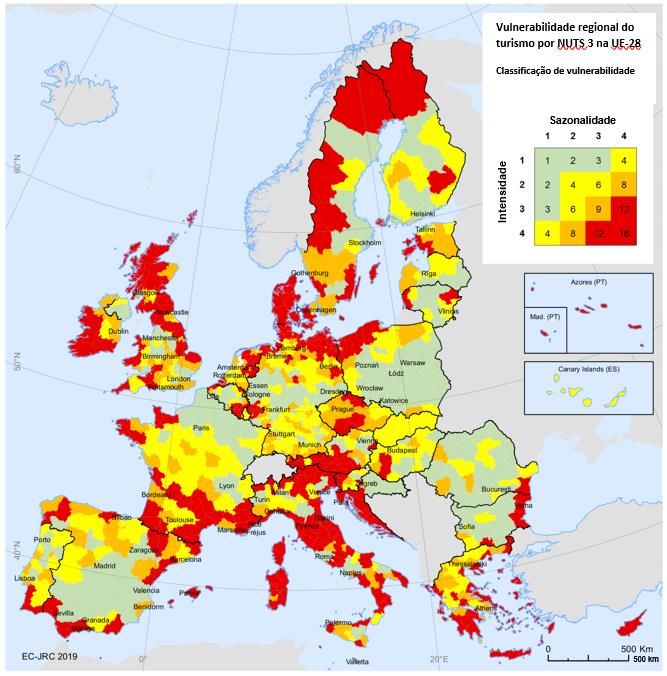
According to the most recent data published within the scope of the Tourism Satellite Account, the weight of
this activity in the Autonomous Region of Madeira is 26% of GDP, and employment in activities which are
characteristic of tourism represents 16.7% of regional employment.
Thus, each day of non-operation in the sector represents a loss of 0.07% of the regional GDP. If we consider
the time span of a week, the impact is greater than 0.5%, which corresponds to a monthly expression that
reaches 2.2%.
Considering the tourism activity alone, a two-month suspension will represent a direct drop of approximately
4.4% of the GDP of the entire Autonomous Region of Madeira.
The aggravated effects of the COVID-19 crisis in regions dependent on tourism activities and air transport
accessibility, of which the Autonomous Region of Madeira is an example, are recognized by the European
Commission. 1
2
The report of the Council of the European Union in relation to the 2020 European Semester regarding
Portugal, also points out the socioeconomic consequences of the pandemic in Regions heavily dependent on
Tourism, such as the Autonomous Region of Madeira.
Regional Vulnerability Map 3
Note: The vulnerability index is a classification evaluated by peers, whose calculation is based
on two indicators: tourism intensity and seasonality. Source: CCI
1
Communication by the European Commission, May 13th, - Tourism and Transport in 2020 and beyond:
https://euricando/legal-content/EN/TXT/PDF/?uri=CELEX,52020DC0550&from=EN
2
COM(220) 522 final: https://ec.europa.eu/info/sites/info/files/2020-european-semester-csr-comm-recommendation-
portugal_pt.pdf
3
https://eur-lex.europa.eu/legal-content/PT/TXT/PDF/?uri=CELEX:52020DC0550&from=EN
Pág. 9Regional Secretary for Tourism and Culture
2020-08-05
The magnitude of this expression determines and reinforces the need to adopt measures that allow the sector
to return to normality and recover the economic and social contributions that tourism has been generating.
The tourism sector depends not only on what is done in the Autonomous Region of Madeira (RAM) but also
and mainly, on the measures taken in our source markets. It is so under normal conditions, and even more in
a world pandemic situation such as the one we are experiencing.
In this context, the establishment of guidelines that can lead this sector, recommending the most appropriate
behaviours that must be followed, are essential so as to start the process of reopening the tourist activity.
Everything will certainly have to be gradual, consistent and accompanied, considering the following priorities:
• infection control;
• confidence recovery;
• airspace capacity resumption;
• tourism sector reactivation.
In order to contribute, the sector was heard, and different surveys were carried out to identify what other
destinations are choosing as good practices, always taking into consideration the set of guidelines emanated
by the World Health Organization.
On May 13th, the European Commission 4 identified the following criteria for the gradual and safe opening of
tourist activities:
1. Low level of COVID-19 incidence - assessed by epidemiological evidence and stabilization of the
contagion phase;
2. Health System's responsiveness - ensure that the health system is responsive to locals and tourists
in a situation of sudden increase of new cases. In some regions, it may be necessary to establish
the possibility of additional mechanisms (medical evacuations);
3. Robust surveillance and active monitoring - at a local / regional level to prevent the spread of the
virus on the reopening to tourism;
4. Ability to test - Ensure the necessary tests are performed to detect, identify, isolate and treat.
Ensure access to tourists and non-residents;
5. Tracking of contacts - Ensure the tracking of COVID-19 contacts according to ECDC guidelines and
respecting the protection of citizens' data;
4
Communication by the European Commission - COVID-19: EU guidelines on the progressive resumption of tourism
services and health protocols in hotel establishments:
https://ec.europa.eu/info/sites/info/files/communication_tourismservices_healthprotocols. pdf
Pág. 10Regional Secretary for Tourism and Culture
2020-08-05
6. Existence of Coordination and Communication mechanisms - essential coordination between
authorities and tour operators, between local / regional / national authorities and good
communication of information to tourists, including digital media, about local epidemiological
conditions and what to do in COVID-19 situation.
Pág. 11Regional Secretary for Tourism and Culture
2020-08-05
Specific Framework
The tourism industry faces new and great challenges as well as several opportunities that require the discovery
of different ways of acting.
Thus, and having heard the tourism sector, various aspects are considered:
• The post-COVID-19 reality requires a deep, permanent and continuous involvement of all
stakeholders that intervene in the tourism business;
• The success of the rehabilitation of the entire sector depends on the adoption of good practices
that will allow, in addition to the health requirement, the recovery of travellers' confidence;
• The resumption of activities is dependent on the evolution of the pandemic effective control;
• The evolution of the recovery will depend on the dynamics of the sector, where air transport is of
paramount importance and the measures that may be adopted certain to safeguard the safety
levels of travellers / tourists;
• Each entity must evaluate its entire Organization and implement specific measures according to
its structure;
• It must also reflect on its models, processes and internal procedures;
• The good practices adopted must be widely disseminated to the organization itself and to all
customers, suppliers and partners;
• The current Contingency Plans must evolve in view of the status of the activity which is reopening
and must be in force with the activity evolution;
• WHO/ECDC, Portuguese Health Authority (DGS) and Madeira Health Authority guidelines should
be followed, including with regards to personal protective equipment, as well as cleaning and
hygiene procedures;
• The existence of an updated Plan is understood as an essential condition for the activity’s regular
operation;
• The tourist destination’s differentiation will largely depend on the implementation of the actions
and measures that constitute the good practices for the post-COVID19 moment and should result
in an asset of strong competitive importance, opening doors to a positioning based on health
security and trust resulting thereof, not excluding the possibility of exploring, simultaneously,
quickly and conveniently, other ways of gaining this competitive advantage for the Region;
• This is document is continually evolving, reflecting the situation up to its reference date.
• The recommendatory nature of this document is expressed objectively in point 3 et seq.
Pág. 12Regional Secretary for Tourism and Culture
2020-08-05
Recommendations
1. Reopening of the tourist activity
• Gradual and phased:
o Depending on external accessibilities;
o Depending on the measures to be taken:
▪ Social distancing;
▪ Use of personal protection equipment (PPE):
▪ Health security:
• Following the evolution of source markets, regarding the lifting of restrictions, behaviour of the
tendency observed in the registration of new positive cases, as well as the mortality associated
with COVID-19;
• Exception for Ports – Cruise Tourism should occur later, depending also on international
guidelines.
2. European COVID-19 Aviation Health Safety Protocol
In line with the Communication of the European Commission of May 13th, “COVID-19: Guidelines on the
progressive restoration of transport and connectivity services” 5 in the aviation sector, the European Union
Aviation Safety Agency (EASA) and the European Centre for Disease Prevention and Control (ECDC) jointly
6
issued the technical operational guidelines of the COVID-19 Aviation Health Safety Protocol for the safe
establishment of air transport in Europe, which reflect current knowledge of the pandemic and preventive
measures to deal with the outbreak of COVID-19.
In this sense, they will be subject to regular assessment and updating by EASA / ECDC based on the evidence,
the risk of transmission, the evolution of the pandemic or the development of other diagnostic or preventive
measures.
The operational guidelines are addressed to all players in air transport, including passengers, crews, airlines
and airports, who must observe and guarantee the procedures related to the fulfilment of the requirements
placed at the level of social distance, the use of personal protective equipment and health security.
5
Communication by the European Commission - COVID-19: Guidelines on the progressive restoration of EU transport
services and connectivity: https://ec.europa.eu/info/sites/info/files/communication_transportservices.pdf
6
COVID-19 Aviation Health Safety Protocol: https://www.easa.europa.eu/documentlibrary/general-publications/covid-
19-aviation-health-safety-protocol
Pág. 13Regional Secretary for Tourism and Culture
2020-08-05
Airport operators should, in accordance with their airport plan, appoint a coordinator to ensure uniform
application of applicable operational guidelines, who should be in direct contact with the airport's public
health authorities and the local (and / or regional / national) public health Authority.
The following is a summary of the measures set out in the EASA / ECDC COVID-19 Aviation Health Safety
Protocol.
SUMMARY OF THE EASA/ECDC GUIDELINES
Measures Airport Airline Airport Service Crew Passengers
Operators Companies Personnel Providers Members
Physical
Whenever possible Whenever possible Whenever possible Whenever possible Whenever possible Whenever possible
Distancing - 1,5 m
Hand hygiene,
Yes Yes Yes Yes Yes Yes
respiratory etiquette
Surgical mask, gloves,
Personal Protective uniforms/protective
Surgical mask Surgical mask Surgical mask Surgical mask Surgical mask
equipment (PPE) clothing, visors/gel
disinfectant
Yes - must follow the Yes - must follow the Yes - must follow the Yes - should read and
Information material recommendations and recommendations recommendations and follow the
disseminate the and disseminate the disseminate the recommendations
regarding the use of
Yes, in coordination materials / information, materials / materials / information,
PPE and health when necessary, in their information, when when necessary, in their
safety tasks necessary, in their tasks
tasks
Cleaning and
Yes Yes N/A Yes N/A N/A
Disinfection
Yes - must complete
the statement
Health status Yes, in electronic format. Coordinate format
N/A N/A N/A provided within 12
Statement and evaluation
hours before the
flight
Possible, if the airport Possible, if the Possible, if the Airline Yes, when required by
operator has not employer has not has not implemented a the airport in
Yes, when required
implemented a implemented an crew health assessment coordination with
Thermal Screening by national N/A
programme to assess employee health programme national authorities
authorities
the health of its assessment
employees programme
Yes, suspected COVID
Passenger cases should be
Yes N/A N/A N/A N/A
evaluation Booths assessed in more
detail.
Yes, only essential Yes - should follow
Reduced crew - services. WC lines recommendations
passenger N/A should be avoided. N/A N/A Yes
interaction WC assigned to the
crew
Yes, when applicable, Yes, when applicable, Yes, apply instructions Yes, follow the
Special must carry out they must carry out received from public instructions of the
Yes, in coordination with local public health
disembarking authorities.
instructions received instructions received health authorities crew and ground
procedures from public health from public health personnel
authorities authorities
In coordination with the aviation authority,
Passenger Locator Must provide the
contact details should be passed to local N/A N/A N/A
card / data - (PLC) requested data
public health authorities.
Source: EASA /ECDC https://www.easa.europa.eu/documentlibrary/general-publications/covid-19-aviation-health-safety-protocol
Pág. 14Regional Secretary for Tourism and Culture
2020-08-05
7
The programme launched on the 26th of May by the European Aviation Safety Agency with a view to
monitoring the implementation of the guidelines of the COVID-19 Aviation Health Safety Protocol by European
airports and airlines, should also be noted.
3. Specific Health Control Measures for Trips to the Autonomous Region of Madeira 8
The Autonomous Region of Madeira considers that there are significant advantages if an effective system to
control the health condition of passengers is implemented even before the start of the respective trip. This
would allow the transmission risks to be mitigated, as much as possible, in all air transport players, allowing
boarding only to those who prove they are not infected with COVID-19, thus contributing to minimize the risk
of contagion in the arrival airport and / or the destination region.
Therefore, it is important to take into account the specific characteristics of the Autonomous Region of
Madeira, as an insular and outermost territory and with almost total dependence on air passenger transport
accessibility, namely in what is necessary in preventing the possibility of importing new cases of COVID-19.
It is scientific evidence that the control of the transmission of COVID-19 does not only depend on one sanitary
measure alone, but on a set of sanitary measures that are interconnected and complement each other in the
assessment of the health condition of the citizen and / or the community as a whole.
In this context, in the Autonomous Region of Madeira, a specific control system of the health condition of
passengers disembarking at airports located in the Region will be implemented, which will complement the
operational guidelines of the EASA / ECDC COVID-19 Aviation Safety Protocol.
3.1 Air Transport Accessibility to the Autonomous Region of Madeira
The Government of the Autonomous Region of Madeira has established a Standardization Plan coming into
effect as of July 1st, with regards to Air Transport Accessibility and concerning travellers having as
destinations the Madeira and Porto Santo airports.
7
https://www.easa.europa.eu/newsroom-and-events/news/easa-launches-programme-monitor-implementation-its-
covid-19-operational
8
Resolution No. 484/2020, published in JORAM, Series I, No. 118, of June 24th June
https://joram.madeira.gov.pt/joram/1serie/Ano%20de%202020/ISerie-118 -2020-06-24.pdf, rectified by Statement of
Rectification No. 31/2020, published in JORAM, Series I, No. 119, of June 25th
https://joram.madeira.gov.pt/joram/1serie/Ano%20de % 202020 / ISerie-119-2020-06-25.pdf and Joint Order No.
71/2020, published in JORAM, Series II, No. 124, of June 30th
https://joram.madeira.gov.pt/joram/2serie/ Year% 20of% 202020 / IISerie-124-2020-06-30Supl2.pdf
Pág. 15Regional Secretary for Tourism and Culture
2020-08-05
The measures set out in this Plan have been subject to review in light of the evolution of the pandemic and
the guidelines of the Health Authorities.
• Traveller registration, filling out and submitting an epidemiological survey
It is mandatory to fill out the traveller's registration in the 12 to 48 hours prior to boarding, through the WEB
APP: www.madeirasafe.com, which includes filling out the survey of the Regional Health Authority, published
on the website of the respective airlines, on the official website of IASAUDE or, in an alternative case,
completed on arrival at Madeira and Porto Santo airports.
• Thermal screening
All passengers disembarking at airports in the Autonomous Region of Madeira are subject to thermal
screening, even if they carry a negative COVID-19 test, carried out within 72 hours prior to boarding, in
laboratories certified by national or international authorities.
• COVID-19 test
All passengers on flights from abroad, with a negative PCR test for COVID-19 disease carried out within 72
hours prior to departure in laboratories certified by national or international authorities, proceed, upon
disembarkation, to their destination, upon presentation of the respective report, which can also be submitted
in advance together with the epidemiological survey at www.madeira.safe.com.
Passengers disembarking at airports in the Autonomous Region of Madeira who have not tested for COVID-19
disease, will do so at the respective airport, upon arrival, with an estimated maximum period of 1 hour for the
completion of the inherent process.
After carrying out the PCR test, the passenger will proceed to their destination, where they must wait for the
result in confinement. The passenger will be informed of the result within an estimated period of 12 hours.
In exceptional cases of refusal to perform the test on arrival, passengers will have to comply with voluntary
isolation, for a period of 14 days, at their home or at the hotel where they are staying, and if the
accommodation is less than 14 days, the confinement will have the duration of the accommodation period.
Or, return to the destination of origin or any other destination outside the territory of the Autonomous Region
of Madeira, fulfilling, until the time of the flight, isolation at home or in the hotel establishment where they
are staying. In these cases, accommodation costs will be charged to the traveller.
Pág. 16Regional Secretary for Tourism and Culture
2020-08-05
• Monitoring
All passengers will be monitored through a WEB APP www.madeira.safe.com from the Regional Health
Authority, of voluntary but recommended use, or by telephone.
• Positive COVID-19 test result
The passenger must comply with mandatory confinement, compulsory if necessary, for a period of 14 days, in
a health establishment, at the respective home or in a hotel, upon decision of the competent health
authorities. The same will apply to citizens for whom the health authority or other health professionals have
determined active surveillance. The Government of the Autonomous Region of Madeira will assume the
respective costs of treatment, accommodation and meals.
If the disease manifests itself during the stay, the respective hotel will not close, without prejudice to the
guidelines issued by the Regional Health Authority.
• Repatriation
The Government of the Autonomous Region of Madeira collaborates with all the Diplomatic Authorities and
operators involved.
The charges relating to the repatriation operations must be covered by the passenger’s travel insurance policy.
The health control measures applicable to trips to the Autonomous Region of Madeira are presented below.
• Diverged Flights
Travellers on diverted flights from Madeira Airport to Porto Santo Airport should remain in mandatory
isolation at the airport until boarding, by air, to Madeira.
a) Travellers who wish to stay in Porto Santo or travel to Madeira, by sea, should perform a PCR test at
Porto Santo Airport, by a team appointed by the Municipal Health Authority;
b) The travellers referred to in the previous point, should remain in mandatory isolation until
obtaining the results of the PCR tests;
c) Travellers who proceed by air from Porto Santo Airport to Funchal Airport, should be identified and
the identifications reported to the Health Authority present at Madeira Airport who will then assess,
according to the criteria that are defined, on the exemption of the test if a negative PCR is presented, the
verification of exceptions or the determination of performing the PCR test.
Pág. 17Regional Secretary for Tourism and Culture
2020-08-05
AUTONOMOUS REGION OF MADEIRA HEALTH CONTROL MEASURES 9
Measures Airport Airline Airport Service Crew Passengers
Operators Companies Personnel Providers Membe
rs
Information /
Dissemination of
Yes, in coordination with the Regional Health Authority Yes, should read and follow the guidelines
IASAÚDE
measures
Epidemiological Provide information on the
Yes - must complete the survey 48h to 12h before
various existing options
Survey - Regional the trip, available on the Airline companies
N/A (IASAUDE website, Airline N/A N/A N/A
Health Authority website, on IASAÚDE website or via APP.
companies website or Via
www.madeirasafe.com
- IASAÚDE APP)
Monitoring -
Regional Health All passengers will be monitored through an APP
(mobile application), voluntary use, although
Authority – N/A N/A N/A N/A N/A
recommended, or telephonically
IASAÚDE- Mobile www.madeirasafe.com
application (APP)
Specific Yes, must apply the instructions
Yes, follow the instructions of the crew and ground
disembarkation Yes, according to Regional Health Authority received from the Regional Health
personnel
procedures Authority
Yes,
when Yes, all passengers are subject, even if they have a
Thermal
N/A N/A N/A N/A they land negative COVID-19 test, carried out in the 72 hours
screening in the prior to boarding.
Region
It is recommended that passengers carry a negative
test, performed within 72 hours prior to departure,
presenting it on arrival or submitting it online
together with the epidemiological survey.
Passengers who have not been tested will be
Yes, tested at the airport upon arrival.
COVID-19 test bearers In exceptional cases of refusal to perform the test
carried out in of a on arrival, passengers will have to comply with
laboratories negative voluntary isolation, for a period of 14 days, at their
test, home or in the hotel establishment where they are
certified by N/A N/A N/A N/A
performe staying, and if the accommodation is less than 14
national or d in the days, the confinement will have the duration of the
international 72 hours accommodation period. Or, return to the
prior to destination of origin or any other destination
authorities
boarding. outside the territory of the Autonomous Region of
Madeira, fulfilling, until the time of the flight,
isolation at home or in the hotel establishment
where they are staying. In these cases, the
accommodation costs will be charged to the
traveller.
The passenger must comply with mandatory
confinement, compulsory if necessary, for a period
of 14 days, in a health establishment, at the
respective home or in a hotel, upon decision of the
competent health authorities. The same will apply
Confinement N/A N/A N/A N/A N/A
to citizens for whom the health authority or other
health professionals have determined active
surveillance. The Government of the Autonomous
Region of Madeira will assume the respective costs
of treatment, accommodation and meals.
9
Resolution No. 551/2020, published in JORAM, Series I, No. 143, of July 30th
https://joram.madeira.gov.pt/joram/1serie/Ano%20de%202020/ISerie-143-2020-07-30.pdf, rectified by Statement of
Rectification No. 31/2020, published in JORAM, Series I, No. 119, of June 25th
https://joram.madeira.gov.pt/joram/1serie/Ano%20de% 202020 / ISerie-119-2020-06-25.pdf and Joint Order No.
71/2020, published in JORAM, Series II, No. 124, of June 30th
https://joram.madeira.gov.pt/joram/2serie/Ano % 20de% 202020 / IISerie-124-2020-06-30Supl2.pdf
Pág. 18Regional Secretary for Tourism and Culture
2020-08-05
3.2. Transport
3.2.1. Public Collective Passenger (Buses, Aerobus)
TRANSPORT 10
PHASE DATE CAPACITY
1 June 1st to June 30th 2020 70% of the transport capacity
2 From July 1st to July 31st 2020 90% of the transport capacity
3 From August 1st, 2020 100% of the transport capacity
3.2.2. Public Individual Passenger (Taxis, TVDE)
TAXIS, TVDE 11
PHASE DATE CAPACITY
Total occupancy of all seats is allowed, except the
1 Until July 30th, 2020
front seat, next to the driver
Vehicles can circulate with the maximum capacity
2 From the 1st of August
allowed
Recommended sanitary measures:
Measures 12 Transport
According to the defined capacity
Social
Distancing
Use of protective mask by customers and employees
Use of PPE
Obligation to disinfect the vehicles after each service.
Hand sanitizer available in all vehicles;
Health Security
Disinfection machine available at the vehicle door, as well as "single use" gloves for
customers when loading and unloading.
Put ISAUDE information with preventive measures and contacts on the backs of the chairs.
Information /
dissemination
measures
10
Government Council Resolution No. 358/2020:
https://joram.madeira.gov.pt/joram/1serie/Ano%20de%202020/ISerie-102-2020-05-28sup.pdf
11
Government Council Resolution No. 385/2020
https://joram.madeira.gov.pt/joram/1serie/Ano%20de%202020/ISerie-104-2020-06-01.pdf
12
Government Council Resolution No. 326/2020:
https://joram.madeira.gov.pt/joram/1serie/Ano%20de%202020/ISerie-092-2020-05-14Supl.pdf
Pág. 19Regional Secretary for Tourism and Culture
2020-08-05
3.3. At the accommodation 13
3.3.1 Check-in
• Social Distancing:
o Installation of protective equipment at attendance area, namely wickets; or
alternatively, the use of PPE (visors and masks);
o Define well-marked waiting zones;
o Promote pre-check-in or online check-in.
• Mandatory use of PPE by employees in the front office:
o Make disinfectant available at the entrance of establishments, masks and disposable
tissues;
o Employees must wear masks and gloves.
• Health security:
o Reinforce the cleaning frequency on surfaces with greater contact (tables, chairs,
counter, computer, papers, envelopes, etc.);
o Place supplies for both employee and/or guest to disinfect the payment terminal and
mobile phone/telephone;
o Identification scanning (ID or passport) by the client or employee according to health
security procedures;
o Disinfection of the guest's luggage after informing him of the procedure;
o Disinfection of room key at guest’s presence.
• Dissemination of Information / measures.
o Place Regional Health Department signage/information;
o Communicate best practices to guests;
o Broadcast communication via TV in rooms or apps.
• Other recommendations:
o Ensure isolation areas.
3.3.2 Accommodation
• Social Distancing:
o In assigning the rooms to the reservations, whenever possible:
13
Communication from the European Commission - COVID-19: EU guidelines on the progressive resumption of tourism
services and on health protocols in hotel establishments:
https://ec.europa.eu/info/sites/info/files/communication_tourismservices_healthprotocols.pdf
Pág. 20Regional Secretary for Tourism and Culture
2020-08-05
▪ Avoid occupying rooms with easy contact via balconies (with exception to
members of the same family).
o Limit maximum capacity to 2 persons per room (except for children up to 12 years
old);
o In case of families with children, allow connecting rooms.
• Mandatory use of PPE:
o Provide an anti-COVID-19 kit in each room (mask, gel and gloves) per guest.
• Health security:
o Reinforce the cleaning frequency of the rooms;
o Room occupancy frequency should consider the necessary cleaning and disinfection
procedures before reoccupation.
• Information / dissemination of measures.
o Provide information on cleaning procedures in the rooms and regularity;
o Provide Information / flyer from Regional Health Department with procedures and
contacts in several languages and also through other means, namely television in the
room.
3.3.3 Restaurants in Hotel units
• Social Distancing:
o Shift and booking management;
o Limit space occupancy to a 1-person ratio per 4 m2;
o Promote proper spacing between tables or place glass/acrylic separators between
tables;
o Limit reservations to a maximum of 4 people (except families);
o Prefer à la carte menu, preferably in digital format, providing customer access through
his mobile device;
o Promote room service menus;
o Avoid self-service/buffet solutions. When impractical:
▪ Prevent shared use of serving cutlery/utensils in the buffet;
▪ Provide employees to serve guests at buffet counters;
▪ Coordinate customer frequency for service (spacing required);
▪ At breakfasts privilege individual solutions and meals "grab and go”.
• Mandatory use of PPE:
o Use of mask and gloves by employees.
Pág. 21Regional Secretary for Tourism and Culture
2020-08-05
o Use of mask by customers during circulation.
• Health security:
o Compliance with safety and hygiene standards:
▪ Permanent cleaning and disinfection as well as between the use of different
customers;
▪ Keep records of frequency of actions;
o Ensure availability of alcohol-based hand sanitizer and signage at the entrance to
emphasize hand hygiene;
o Ensure sufficient ventilation in accordance with restaurant ventilation guidelines;
preferably using the ar conditioner in air extraction mode;
o Ensure that air conditioning filters are regularly cleaned;
o Minimize, when possible, the re-circulation of air conditioning
3.3.4 Common areas
• Social Distancing:
o Avoid, as much as possible, customer contact with door handles and elevator buttons:
▪ Adopt automatisms;
▪ Involve specific employees (elevator operator).
o Limit usage to a maximum number of users simultaneously to avoid proximity,
ensuring social distancing;
o Review the maximum capacity of spaces such as bars and gym:
▪ 1 pax / 4m2
o Maintain specific spaces for isolation/quarantine zones.
• Mandatory use of PPE:
o Both in service areas (for employees) or in public areas, hand sanitizer should be made
available.
• Health security:
o Specific cleaning and hygiene plan, namely, for the equipment used, after each use;
o Create strict health safety protocols;
o Register cleaning of all public areas, namely: elevators, handrails, door handles, windows,
books, among others.
3.3.4.1 Elevators
• Placing safety instructions in a visible way;
Pág. 22Regional Secretary for Tourism and Culture
2020-08-05
• Ensuring adequate social distance:
o Reduced lift occupancy to 60% of technical capacity;
o Promote the use of stairs (assigning rooms on lower floors);
o Discourage as much as possible the shared use of the elevator by people who do not share
the same room;
o Give priority to the use of the elevator by people with special physical needs and people
with luggage
• Mandatory use of PPE inside:
o Masks.
• Health security:
o Ensure that lift buttons are regularly disinfected;
o Keep elevator floors and other touchable areas properly disinfected;
o Install hand sanitizer dispensers at the entrance or inside elevators;
o Ensure adequate ventilation of the elevator;
o Recourse to elevator operator whenever possible.
3.3.4.2 Swimming pools (indoor and outdoor) 14
• Social Distancing:
o Limit occupation of swimming pools to 50% of its capacity;
o Social distancing of the layout of sun beds - 1 metre spacing between them;
o Avoid shared use of chairs and changing rooms.
• Respiratory etiquette.
• Mandatory use of PPE:
o Masks when in circulation.
• Health security:
o When using sun beds, hygiene should be guaranteed after each use;
o Ensure availability of alcohol-based hand sanitizer and access to hand washers;
o Cleaning and disinfection of the pool should be carried out with the usual procedure, and
water should be replaced whenever possible and chlorinated as defined in the internal
protocol.
o Automated outdoor showers are recommended. If there is manual contact, they should
be cleaned frequently.
14
Government Council Resolution No. 358/2020:
https://joram.madeira.gov.pt/joram/1serie/Ano%20de%202020/ISerie-102-2020-05-28sup.pdf
Pág. 23Regional Secretary for Tourism and Culture
2020-08-05
• Dissemination of information / measures.
3.3.4.3 Spa, Saunas, Jacuzzis and Turkish Baths 15
• Preferably, kept closed until the evolutionary phase that allows the use of spaces with greater
security guarantees;
• In case of opening:
o Social Distancing:
▪ Limit occupancy of the premises to 50% of the capacity;
▪ Schedule appointments in the SPA ensuring social distancing and sanitizing all
materials used.
o Mandatory use of PPE:
▪ Masks;
▪ Disinfectant gel.
o Health security:
▪ It is recommended to empty the jacuzzi water, followed by washing and
disinfection. Refill with clean, disinfected water after each use;
▪ Registration of all cleaning and disinfection actions.
• Dissemination of information / measures.
3.3.4.4 Bars
• Social Distancing:
o Rearrange the distribution of tables and chairs - keep the spacing of 2 metres between the
tables;
o Avoid counter service, privileging table service.
• Use of PPE:
o Masks;
o Gloves - employees.
• Health security:
o Frequent cleaning and disinfection of common spaces;
o Reinforce the cleaning frequency on surfaces with greater contact (tables, chairs, counter/bar,
menus, etc.).
• Dissemination of information / measures.
15
Government Council Resolution No. 478/2020:
https://joram.madeira.gov.pt/joram/1serie/Ano%20de%202020/ISerie-116-2020-06-20.pdf
Pág. 24Regional Secretary for Tourism and Culture
2020-08-05
3.3.4.5 Business Centres
• Social Distancing:
o Rearrange the distribution of tables and chairs;
o Maximum occupancy of 50% of installed capacity.
• Use of PPE:
o Masks;
o Disinfectant gel dispensers;
o Gloves.
• Health security:
o Reinforce cleaning frequency on surfaces with greater contact (tables, chairs, etc.) after use
by customers.
• Dissemination of information / measures.
3.4 Operational areas
3.4.1 Attendance register
• Social Distancing:
o Define well-marked waiting zones;
o Ensure distance by at least 1 metre between each employee.
• Mandatory use of PPE by employees:
o Provide disinfectant at service entrance;
o Employees must wear masks and gloves.
• Health security:
o Reinforce the cleaning frequency on surfaces with greater contact.
• Dissemination of information / measures:
o Place Regional Health Department signage/information;
o Communicate best practices to employees.
• Other recommendations:
o Ensure isolation areas.
3.4.2 Uniforms and accessories
• Social Distancing:
o In the changing rooms, ensure distance by at least 1 metre between each employee.
• Mandatory use of PPE by all employees:
Pág. 25Regional Secretary for Tourism and Culture
2020-08-05
o Employees must wear masks and gloves.
• Health security:
o Daily cleaning of uniforms and all accessories (aprons, caps, etc.), following WHO and
Portuguese Health Authority (DGS) guidelines.
3.4.3 Lockers and changing rooms
• Social Distancing:
o Ensure distance by at least 1 metre between each employee;
o The shift change will have to allow an interval of 15 minutes to avoid employees gathering in
these public areas;
• Mandatory use of PPE by all employees:
o Employees must wear masks and gloves.
• Health security:
o Allow employees to wash their hands;
o Provide a dustbin with pedal, disinfectant packaging and disposable paper rolls;
o Cleaning of lockers and changing rooms after shift change and before the entrance of new
employees.
3.4.4 Canteens and cafeterias
• Social Distancing:
o Shift management;
o Limit the presence of employees at the same time to no more than 50% of total occupancy;
o Promote proper spacing between tables.
• Mandatory use of PPE:
o Use of mask and gloves for employees.
• Health security:
o Compliance with safety and hygiene standards:
▪ Permanent cleaning and disinfection between different users
▪ Keep records of the frequency of actions.
3.4.5 Kitchen
• Social Distancing:
o Limit staff number to the minimum required;
o Staff should be organized into teams to reduce interactions between them;
Pág. 26Regional Secretary for Tourism and Culture
2020-08-05
o Workstations must be placed in such a way that employees can keep the proper social
distance.
• Mandatory use of PPE:
o All personnel should wear disposable masks, gloves, hair nets and all other safety equipment.
• Health security:
o Compliance with safety and hygiene standards:
▪ Operating kitchens should be disinfected at regular intervals;
▪ Ensure proper cleaning of vegetables, meats and all other materials that are
needed in kitchens;
▪ Reinforce the use of disinfection products approved by WHO and the Portuguese
Health Authority (DGS);
▪ Ensure that all tools are disinfected after each use;
▪ Records of the frequency of actions.
3.4.6 Suppliers and deliveries
• Social Distancing:
o Manage schedule deliveries by limiting the number of simultaneous suppliers to keep the
proper social distance.
• Mandatory use of PPE:
o All employees and suppliers must wear disposable masks, gloves and other safety equipment.
• Health security:
o Define disinfection area;
o Disinfection of all materials received.
• Dissemination of information / measures:
o Notify all suppliers in due time;
o Preference for suppliers with food safety certifications (Ex: ISO2200).
3.4.7 Occupational Health
• Improvement of intervention plans of entities responsible for hygiene and safety at work, aiming
to:
o Ensure regular and proper health checks for employees;
o Regularly check the temperature of employees.
Pág. 27Regional Secretary for Tourism and Culture
2020-08-05
3.5. Local Accommodation, Rural Tourism and other accommodation
• Social distancing:
o Subject the operation of Local Accommodation units, in residential buildings, depending on
the health risk to the local resident population, to be ascertained by the Madeira Health
Authority;
o Limit the maximum capacity per room to 2 people, except in the case of children (up to 12
years old) and in hostel dormitories at 50%;
• Mandatory use of PPE:
o Provide an anti-COVID-19 kit in each Local Accommodation establishment (mask, gel and
gloves), per guest;
o Mandatory use of masks and gloves by employees.
• Health security:
o o Provide suitable cleaning products in each accommodation;
o Registration of cleaning and disinfection actions.
• Dissemination of Information / measures
o Provide Regional Health Department information / flyer with procedures and contacts in
several languages.
3.6. MI - Meeting and Incentives 16
• It is mandatory:
o The use of a mask inside the spaces;
o All lines can be occupied, respecting a place of interval between spectators, except
in cases where they cohabit;
o The cleaning of spaces between sessions;
o Raising awareness of compliance with rules, correct hand washing, respiratory
etiquette, as well as other personal and environmental hygiene measures.
• It is recommended:
o Social distancing:
▪ Avoid pre / post-event receptions and meetings;
16
Government Council Resolution No. 358/2020:
https://joram.madeira.gov.pt/joram/1serie/Ano%20de%202020/ISerie-102-2020-05-28sup.pdf
Government Council Resolution No. 442/2020: https://joram.madeira.gov.pt/joram/1serie/Ano%20de%202020/ISerie-
110-2020-06-09sup2.pdf
Pág. 28You can also read


