REVIVING THE OCEAN ECONOMY - The case for action 2015 2015
←
→
Page content transcription
If your browser does not render page correctly, please read the page content below
SUMMARY
  INT

2015

    REVIVING THE
    OCEAN ECONOMY
    The case for action - 2015
        in association
        with

                         Reviving the Ocean Economy: the case for action – 2015 │ SUMMARY │ page 1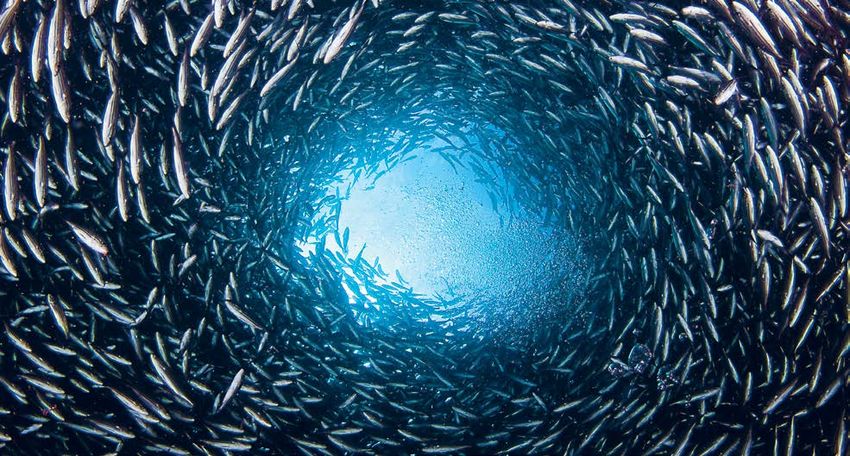
Front cover
A fisherman shows some of his catch in Mafamede,
Mozambique, part of the Primeiras and Segundas
Environmental Protection Area.
© WWF-US / James Morgan

The Global Change Institute (www.gci.uq.edu.au) is
an Australian-based research institute that is focused on
evidence-based solutions to global challenges such as food
security, clean energy, sustainable water, and healthy oceans.
Professor Hoegh-Guldberg also undertakes research on coral
reef ecosystems and their response to rapid environmental
change, which is supported primarily by the Australian
Research Council (Canberra), National Oceanic and
Atmospheric Administration (Washington, D.C.), Catlin Group
(London), and Great Barrier Reef Foundation (Brisbane). He
did not receive salary for writing this report.
The Boston Consulting Group (BCG) is a global
management consulting firm and the world’s leading advisor
on business strategy. We partner with clients from the
private, public, and not-for-profit sectors in all regions to
identify their highest-value opportunities, address their most
critical challenges, and transform their enterprises. Our
customized approach combines deep insight into the dynamics
of companies and markets with close collaboration at all
levels of the client organization. This ensures that our clients
achieve sustainable competitive advantage, build more capable
organizations, and secure lasting results. Founded in 1963,
BCG is a private company with 81 offices in 45 countries. For
                                                                   A WWF International production
more information, please visit bcg.com
                                                                   Printed by NCP SA, Switzerland
WWF is one of the world’s largest and most experienced
independent conservation organizations, with over                  The designation of geographical entities in this report, and
5 million supporters and a global network active in                the presentation of the material, do not imply the expression
more than 100 countries.                                           of any opinion whatsoever on the part of WWF concerning
                                                                   the legal status of any country, territory, or area, or of its
WWF’s mission is to stop the degradation of the planet’s
                                                                   authorities, or concerning the delimitation of its frontiers
natural environment and to build a future in which humans
                                                                   or boundaries.
live in harmony with nature, by conserving the world’s
biological diversity, ensuring that the use of renewable natural   Published in April 2015 by WWF – World Wide Fund For
resources is sustainable, and promoting the reduction of           Nature (Formerly World Wildlife Fund), Gland, Switzerland.
pollution and wasteful consumption.                                Any reproduction in full or in part must mention the title, the
                                                                   lead author, and credit the above-mentioned publisher as the
                                                                   copyright owner.
Lead author: Professor Ove Hoegh-Guldberg
                                                                   © Text 2015 WWF. All rights reserved
Global Change Institute, University of Queensland,
St Lucia, 4072, Australia                                          ISBN 978-2-940529-20-9
The Boston Consulting Group: Douglas Beal, Taz Chaudhry.
Additional contributors: Hassan Elhaj, Amer Abdullat, Petra
                                                                   The full report is available at: ocean.panda.org
Etessy, Marty Smits
Editor-in-chief: John Tanzer
                                                                   Recommended citation: Hoegh-Guldberg, O. et al. 2015.
Managing editor: Paul Gamblin
                                                                   Reviving the Ocean Economy: the case for action - 2015.
Contributing editor: Valérie Burgener                              WWF International, Gland, Switzerland., Geneva, 60 pp.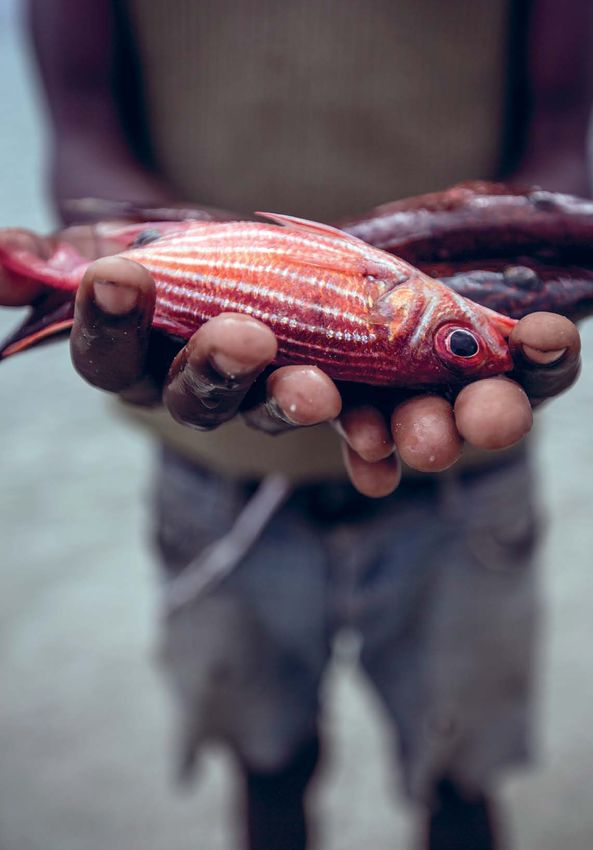
SUMMARY       Earth is distinguished from all other known
              planets by the presence of a warm, salty
              ocean that covers more than two-thirds
              of its surface. Its value to our planet is
     incalculable, but has been brought into sharp focus
     by the fact that the future of humanity is dependent
     on the health of the ocean, and the goods and
     services it provides.
     Yet this invaluable resource that feeds us, stabilizes the climate and provides
     countless other benefits is showing serious signs of failing health. Ocean health is
     declining due to local stresses such as habitat destruction, overfishing and pollution,
     as well as global phenomena such as rapid and unprecedented changes in ocean
     temperature and acidity.

     WWF’s Reviving the Ocean Economy report clearly spells out what we all stand to
     lose if the mismanagement of ocean assets continues. Recognizing that science alone
     is an insufficient motivator, we have combined the evidence of serious environmental
     degradation with the economic case for urgent action.

     Working with the eminent scientist Professor Ove Hoegh-Guldberg and in
     collaboration with leading business consultancy The Boston Consulting Group, WWF
     looked at the bottom-line implications leaders should consider based on current
     policies and practices. The results illustrate the economic case for ocean conservation
     in stark terms. The range of goods and services that flow from coastal and marine
     environments can be valued conservatively at US$2.5 trillion each year, and the
     overall value of the ocean as an asset is 10 times that. We emphasize that this is an
     underestimate, as outputs that are not generated by the ocean – offshore oil and gas,
     and wind energy, for example – were excluded, as were valuable intangibles such as the
     ocean’s role in climate regulation.

                                                                                               © naturepl.com / David Fleetham / WWF

            Reviving the Ocean Economy: the case for action – 2015 │ SUMMARY │ page 3
The report brings together the latest assessments of some of the most valuable ocean
                          assets, from fish stocks to corals, and shows how rapidly they are declining. To
                          revive the ocean’s productive capacity before it is too late, the world must take urgent
                          action. The eight actions proposed are achievable and all are important; however, we
                          recommend that the first three be prioritized for action in 2015.

                          ACTION 1   Ensure ocean recovery features strongly in the UN Post-2015 Agenda,
                                     including the Sustainable Development Goals (SDGs). The Post-2015
                                     Agenda will establish global ambition, outline practical policy steps and
                                     guide investment in sustainable development for the next 15 years or more.
                                     Goal 14 of the SDGs focuses specifically on the ocean, namely to “conserve
                                     and sustainably use the oceans, seas and marine resources for sustainable
                                     development.” Indicators under this goal must address issues such as
                                     habitat destruction, overfishing, illegal fishing and marine pollution, and
                                     solutions must be crafted in an equitable and participatory way. If all
                                     this is achieved, the scene will be set for unprecedented and concerted
                                     international action, which is crucial for steering our ocean toward a more
                                     sustainable future.

                          ACTION 2   Address the problems of ocean warming and acidification. We must listen
                                     to science and make the deep cuts in emissions that will prevent further
                                     increases in dangerous climate change. It is vital that the world signs on to
                                     an ambitious international agreement in Paris in December 2015 (COP21)
                                     that will allow the rapid decarbonization of our economies and societies.
                                     Failure to solve the climate change problem will frustrate, and in many
                                     cases defeat, attempts to bring sustainable practices to the world’s ocean.

                          ACTION 3   Countries should deliver against the agreed target for at least 10 per cent
                                     of coastal and marine areas to be protected and effectively managed by
                                     2020, with an increase to 30 per cent by 2030. This is not just about the
                                     extent of area protected; it is about establishing representative networks of
                                     marine protected areas that are most important for delivering outcomes for
                                     biodiversity, food security and livelihoods.

                          ACTION 4   With 61.3 per cent of the world’s fisheries now fully exploited, and 28.8
                                     per cent over-exploited, depleted or recovering from depletion, there is
                                     an urgent need to revise policies to ensure that the over-exploitation and
                                     destruction of fisheries does not continue, and to deal with the problem of
                                     illegal fishing. Habitat protection and fisheries management must go hand
                                     in hand, with the goal being ecologically sustainable fisheries.

                          ACTION 5   Given the transboundary nature of the ocean, we need appropriate
                                     international mechanisms for negotiation and collaboration to ensure its
                                     sustainable management. Formation of a “Blue Alliance” of concerned
                                     maritime countries will provide leadership and build the case for a rapid
                                     and comprehensive set of actions on behalf of the ocean.

                                     Such a coalition could build international will and foster the shared
                                     global responsibility and informed decision-making that are important
                                     when it comes to ocean resources. It will also be important to establish a
                                     global fund to support countries that have fewer resources and are more
                                     vulnerable to the impacts of ocean degradation.

page 4 │ Reviving the Ocean Economy: the case for action – 2015 │ SUMMARY
ACTION 6   Appropriately structured public-private partnerships that take into account
           the well-being of communities, ecosystems and business have the potential
           to revolutionize how sectors work together sustainably. Enabling a network
           of such cross-sector partnerships to share ideas, solutions and blueprints for
           sustainable practices will ensure that even the poorest countries have access
           to necessary resources.

ACTION 7		Communities and countries must develop complete, transparent and public
           accounting of the benefits, goods and services that the ocean provides.
           Valuing the ocean’s assets is vitally important to effective decision-making.

ACTION 8   Develop an international platform to support and share ocean knowledge
           and solutions through which problems can be understood, and solutions
           and methodologies evaluated and applied. Such a platform must be
           interdisciplinary and informed by biological, social and economic data.
           This platform will build capacity and improve access to critical information
           and expertise.

WWF has brought together the research and conclusions of an expert community
and marries this scientific evidence with a common-sense economic case for action
to safeguard the value of our ocean. The message is clear: We are running down our
ocean assets and will push the ocean economy into the red if we do not respond to
this crisis as an international community. A prudent treasurer or CEO would not wait
until the next financial report to correct course. They would act now.
The eight actions outlined here can provide a sustainable future for the hundreds of
millions of people who depend directly on the ocean for their food and jobs, and for
all humanity, which depends on the ocean as an essential contributor to the health of
our planet.

      Reviving the Ocean Economy: the case for action – 2015 │ SUMMARY │ page 5
OCEAN ASSET VALUES
FIGURE 1 - GLOBAL OCEAN ASSET VALUE
The ocean provides wide- OCEAN-RELATED TOTAL
ACTIVITIES AND ASSETS VALUE
ranging value, from food
and tourism to coastal Direct output of the ocean from:
protection and much more.
US$ 6.9tn
Marine Coral
Mangroves Seagrass
fisheries reefs
Trade and transport:
THE OCEAN Shipping lanes US$ 5.2tn
Adjacent assets:
Productive coastline
US$ 7.8tn
Carbon absorption US$ 4.3tn
Direct Outputs Indirect/Intangible Outputs
FIGURE 2 - ANNUAL GROSS MARINE PRODUCT
The annual gross marine product, the
equivalent of a country’s GDP,
1st USA would make the ocean the world’s 7th
GDP: US$17.4tn
2nd CHINA
largest economy.
GDP: US$10.4tn
3rd JAPAN
GDP: US$4.8tn
4th GERMANY
GDP: US$3.8tn
5th FRANCE
GDP: US$2.9tn
6th UK
GDP: US$2.9tn
7th THE OCEAN 8th BRAZIL
GDP: US$2.2tn
14th S. KOREA
GDP: US$1.4tn
US$2.5tn
9 ITALY
th
GDP: US$2.1tn
10th RUSSIA
GDP: US$2.1tn
11th INDIA
GDP: US$2.0tn
12th CANADA
GDP: US$1.8tn
13th AUSTRALIA
GDP: US$1.6tn
page 6 │ Reviving the Ocean Economy: the case for action – 2015 │ SUMMARYUS$24tn The ocean’s asset
value would dwarf the
world’s largest sovereign
wealth funds:
US$893bn
NORWAY
Government Pension Fund
US$773bn
ABU DHABI
The ocean is ADIA
valued at more
than US$24 trillion; US$757bn
however, its actual SAUDI ARABIA
value is likely to be much SAMA
higher because many key
US$653bn
ecosystem services are
difficult to quantify.
CHINA
China Investment Corp.
FIGURE 3 - OCEAN ECONOMY DEPENDENT ON HEALTHY ASSETS
Gross marine product
is the ocean’s annual
economic value.
More than two-thirds of
the gross marine product
is dependent on healthy
ocean assets.
Analysis for this © The Boston Consulting Group, Inc. All rights reserved.
section is provided by: For more information on the BCG methodology, please visit: ocean.panda.org
Reviving the Ocean Economy: the case for action – 2015 │ SUMMARY │ page 7UNDERPERFORMING ASSETS: GLOBAL OCEAN ECONOMY IN DECLINE
DECLINE OF FISHERIES
90% OF GLOBAL FISH PACIFIC BLUEFIN TUNA
STOCKS ARE OVER- NUMBERS HAVE DROPPED
EXPLOITED OR FULLY 96% FROM UNFISHED
EXPLOITED LEVELS
As natural assets are
degraded, the ocean is
losing its capacity to feed
and provide livelihoods for
hundreds of millions of people.
The downward trends are 61%
steep and reflect major FULLY
EXPLOITED
changes in species abundance
and diversity, as well as
habitat extent, most over a
single human lifespan. 29%
OVER-
EXPLOITED
96%
DECLINE
References:
FAO 2014, ISC 2012, WWF/ZSL 2014, Hoegh-Guldberg 1999,
Hoegh-Guldberg et al. 2007, Waycott et al. 2009, UNEP 2014.
90%
page 8 │ Reviving the Ocean Economy: the case for action – 2015 │ SUMMARYDECLINE OF HABITATS
DECLINE OF MARINE SPECIES DEFORESTATION
3-5x
RATE OF MANGROVES
EXCEEDS EVEN THE
LOSS OF FORESTS
BY 3-5 TIMES
THE MARINE LIVING PLANET INDEX* 50% OF THE ALMOST ONE-THIRD OF
SHOWS A DECLINE OF 39% BETWEEN WORLD’S CORALS ALL SEAGRASSES HAVE
1970 AND 2010 HAVE DISAPPEARED BEEN LOST
*The marine Living Planet
Index is an indicator
of the state of global
29%
biological diversity, based
on trends in more than
900 marine species of
mammals, birds, reptiles
39%
and fish.
50%
2050
AT CURRENT RATES OF TEMPERATURE
RISE, CORAL REEFS WILL DISAPPEAR
BY 2050
Reviving the Ocean Economy: the case for action – 2015 │ SUMMARY │ page 9© WWF-US / James Morgan TIME TO HIT THE RESET BUTTON The message is clear: We are running down our ocean assets and will push the ocean economy into the red if we do not respond to this crisis as an international community. It's time to act and provide a sustainable future for the hundreds of millions of people who depend directly on the ocean for their food and jobs, and for all humanity, which depends on the ocean as an essential contributor to the health of our planet.
The ocean in numbers

                                                                                                                                                                                         • REVIVING THE OCEAN ECONOMY
                                                                                                                                        100%
                                                                                                                                       RECYCLED

                                                                                            US$24TN
                                                                                            The overall value of key
                                                                                            ocean assets is more than

2/3
                                                                                            US$24 trillion

Two-thirds of the base economic
value of the ocean is produced
by assets that rely on healthy
ocean conditions

                        2050
                                                                                                                        7TH
                        At current rates of
                        temperature rise, coral
                        reefs will disappear
                        by 2050
                                                                                                                        Based on the gross
                                                                                                                        marine product, the
                                                                                                                        ocean is the 7th
                                                                                                                        largest economy in
                                                                                                                                                                                             INT

                                                                                                                        the world
                                                                                                                                                                                         OCEAN.PANDA.ORG
                                                                                                                                                  © Brent Stirton / Getty Images / WWF

                                                                                                       SUSTAIN OUR SEAS
                        Why we are here
                        To stop the degradation of the planet’s natural environment and
                        to build a future in which humans live in harmony with nature.

                        panda.org

© 1986 Panda symbol WWF – World Wide Fund For Nature (Formerly World Wildlife Fund)
® “WWF” is a WWF Registered Trademark. WWF, Avenue du Mont-Blanc, 1196 Gland, Switzerland
Tel. +41 22 364 9111 Fax +41 22 364 0332. For contact details and further information,
please visit our international website at www.panda.org
You can also read


