Rheological Additives in Cosmetics - pure in cosmetics
←
→
Page content transcription
If your browser does not render page correctly, please read the page content below
Rheological Additives
in Cosmetics

             p u re in cos m etics
Contents

                                                                                Introduction                                  2
                                                                                Cosmetics and Rheology                        4
                                                                                ELEMENTIS Specialties Rheological Additives
                                                                                for cosmetics                                 6
                                                                                Aqueous-Phase Additives                       7

                                                                                      •    Rheoluxe® Associate Thickeners     7

                                                                                      •    Hectorite - The Benefits           8

                                                                                      •    BENTONE® Hydrophilic Clays
                                                                                Non-Aqueous-Phase Additives
                                                                                                                              8
                                                                                                                              10

                                                                                      •    BENTONE® Organophilic Clays        10

                                                                                      •    BENTONE GEL®                       11

                                                                                      •    THIXCIN® R Rheological Additive
                                                                                Product Application and Selection
                                                                                                                              13
                                                                                                                              14
                                                                                Incorporation & Equipment Guideline           15
                                                                                INCI References                               16

                                                                                RHEOLUXE®
                                     Today’s successful cosmetics products
                                                                                BENTONE®
                                      need the right rheological properties.
                                                                                BENTONE GEL®
                              And the correct choice of rheological additive
                                      enhances the product in production,       NANOX™
                                           storage stability and application.   THIXCIN®
                               ELEMENTIS Specialties rheological additives
                                                                                are trade names of
                                for aqueous and non-aqueous formulations
                                                                                ELEMENTIS Specialties
                               are valuable and proven tools for you to use.
                                           Personal care, skin care, sun care

Personal Care                                     and decorative cosmetics;
                                     single-phase, suspension or emulsion;
                                                        all can benefit from
Skin Care                                            ELEMENTIS Specialties
                                                      rheological additives.
Sun Care
Decorative Cosmetics

p u r e i n co s m e t i cs
The way the viscosity changes at varying shear rates
                                                                        greatly influences the overall product stability and        The rate of recovery of a system when stress is
                                                                        performance. A material which maintains a constant          removed is also very important. When a shear
                                                                        viscosity, regardless of shear rate, has Newtonian flow     thinning system shows delayed viscosity

    Cosmetics and Rheology
                                                                        (Fig.2). Dilatant flow (Fig.2) is a form where viscosity    recovery, it is described as thixotropic (Fig.3).
                                                                        increases with shear, sometimes encountered in highly       This is one of the most important types of flow in
Strong partners to create the best possible products                    pigmented/filled systems.                                   cosmetics. Controlling the degree of thixotropy
                                                                                                                                    enhances the application of a cream, eliminates
                                                                        Pseudoplastic flow (Fig. 4), also known as shear thinning   dripping of a roll-on antiperspirant or allows
                                                                        behaviour, and typical of many commercial systems,          brushmarks in a coat of nail lacquer to disappear,
            Rheology is the science of flow. Every time a lotion is     is when viscosity decreases with increasing shear rate.     leaving a smooth film.
              poured, a cream squeezed from a tube or a lipstick
           applied, rheology is involved. Even when products are        Flow may require a specific stress to be initiated. This    Viscosity can be temperature dependent.
                  at rest, it plays an important part in controlling    particular stress value is known as the yield point.        Correct choice of rheological additive allows you to
                                          stability and suspension.     A system having both shear thinning flow and a yield        create the ideal flow characteristics (Fig. 1) and
                                                                        point can be described as having plastic flow.              also achieve thermostable rheology.
                Understanding a formulation’s rheological needs
                enables you to create the best possible products.

                            The rheology of a system is described
                                           in terms of its viscosity.
                Viscosity is the resistance to flow and defined as:

                Shear stress is the force per unit area applied and
                      shear rate is the resulting velocity gradient.
                        Cosmetics experience shear rates varying
                         from 0.001 s-1, from gravitational forces;
                   to over 20,000 s-1, when a cream is spread or
                         an aerosol antiperspirant sprayed (Fig 1).

                                                                                                                                                                                           5
Aqueous-Phase Additives

                                                               Rheoluxe® Associative Thickeners                                         Associative thickeners – mechanism of action
                                                                                                                                        Associative thickeners increase the viscosity of aqueous
                                                               The Rheoluxe® family of rheology modifiers are non-                      systems through a system of molecular associations and
                                                               ionic polymeric thickeners designed specifically for the                 interactions. The thickeners consist of water soluble
                                                               personal care market. Rheoluxe® consists of Urethane                     polymeric chains modified with hydrophobic caps.
                                                               based and Polyether Polyol based associative thickeners                  The hydrophobic caps of the polymer associate, that is
                                                               with superior performance in difficult systems such as                   build a structured network with other hydrophobes in
                                                               those containing high salt levels or with extremes in pH.                the formula. This results in micelle type structures that
                                                               Due to its structure, Rheoluxe® is soluble in water, but                 form a network resulting in significant viscosity build.
                                                               associates with lipophilic materials to build viscosity.
                                                                                                                                        Associative thickeners | Mechanism of action

                                                               Rheoluxe structure

                                                                                      Hydrophilic
                                                                                        Chain                       Hydrophobic
                                                               Hydrophobic
                                                                                                                        Cap
                                                                   Cap

                                                                                                                                        The Rheoluxe range of products provides viscosity
                                                                                                                                        control in all types of emulsion systems, creating an

ELEMENTIS Specialties                                                                                                                   exceptional sensory profile. Supplied as easy to handle
                                                                                                                                        solutions, Rheoluxe can be added at any point in the
 Rheological Additives                                                                                                                  production process. Rheoluxe is heat stable, although

        for Cosmetics
                                                                                                                                        cold process systems are possible.

      Improving aqueous, anhydrous and
                                                                                                                 INCI Name                               Typical use level:      Chemistry
               emulsion-based products
                                                                                          Bis-Lauryl Cocaminopropylamine/HDI/PEG-100 Copolymer (and)
                                                                 Rheoluxe® 812                                                                            1.0 – 3.0%           Polyurethane
                                                                                          Butylene Glycol
   ELEMENTIS Specialties rheological additives can be
  broadly divided between aqueous-phase thickeners               Rheoluxe® 880            Bis-C16-20 Isoalkoxy TMHDI/PEG-90 Copolymer                     1.0 – 3.0%           Polyurethane
                    and non-aqueous-phase thickeners.
       But it is important to remember the advantages
                                                                 Rheoluxe® 8015           PEG/PPG-450/50 Trimethylolpropane Dodecyl Ether                 0.5 – 5.0%           Polyether Polyol
    of oil-phase viscosity modification that can greatly
                      improve emulsion based products.
     ELEMENTIS Specialties additives for cosmetics are
                  based on naturally occurring materials:
                         highly refined and beneficiated
                   hectorite clay or castor oil derivatives.

                                                                                                                                                                                                    7
Non-Aqueous-Phase Additives
Hectorite - The benefits The two products are stable across the range pH 6-11 BENTONE® rheological additives are non-abrasive. BENTONE® Organophilic Clays
and offer good tolerance to electrolytes. The skin feel imparted by BENTONE® hydrophilic clays
Hectorite is a unique swelling clay offering several is a pleasant silkiness, quite different to that Hectorite is now reacted with special vegetable
BENTONE® LT forms a similar network,
advantages. Hectorite’s special properties, compared associated with the majority of cellulose, polymer quaternary ammonium salts to produce organoclays
but it is strengthened by the presence of a special
with bentonite, are:
••
cellulose, greatly enhancing stability and thickening and polysaccharide-based thickeners. able to thicken and gel organic liquids. The correct
lower iron content characteristics. BENTONE® LT is stable across a choice of BENTONE® additive is determined largely by
••
lighter colour broader range, pH 3-11, and is also the least Furthermore, as hectorite itself is insensitive to the polarity of the system to be thickened.
higher swelling capacity temperature variations, the BENTONE® products impart
electrolyte-sensitive product.
•
greater gel strength a thermostable viscosity control.
no crystalline silica BENTONE® MA and EW are in compliance with ECOCERT;
The ecological and organic cosmetics standards. Additive Application
Due to its small size, platelet shape and large surface
area, hectorite is able to form strong, stable viscous gels.
Surfactants can influence the rheological behaviour
of hydrophilic clays.
BENTONE® 27 V •
Intermediate to high-polarity
organic systems such as esters
and triglycerides - for nail lacquers,
Non-ionic surfactants, if they are highly ethoxylated,
skin care, antiperspirants and
can adsorb onto the clay surface. This rarely causes
lip products
problems either in flow control or activity of the
formulation.
BENTONE® 38 V
• Low to intermediate-polarity
organic systems such as volatile
Anionic surfactants can act as dispersing agents and
silicones and mineral oil - for
weaken the gel structure. Alternatives that eliminate
antiperspirants, creams, lotions,
or minimise any problems can normally be found.
eye products and suntan products
However, cationic surfactants interact strongly and
should be avoided.
INCORPORATION Hydrophilic Clays Organic and silicone-based liquids used in oil and
wax-based cosmetics, and as the non-aqueous-phase in
••
Wetting emulsions, benefit greatly from ELEMENTIS Specialties
Medium to high-shear mixing
Add clay to water before addition of other rheological additives. Outstanding rheological
properties are developed using BENTONE® organoclay
•
ingredients
Disperse at moderate pH rheological additives in their powder form or,
even better, with BENTONE GEL® additives, their
•
Shear predispersed forms.
Low shear (< 10 ms-1)
•
= long mixing time (> 30 mins)
High shear (> 15 ms-1) The benefits gained are:
••
Hectorite is a very effective thickener of water. Because = shorter mixing time (10-15 mins)
of this and its other exceptional properties, it forms the thermostable viscosity control
•
basis of the BENTONE® hydrophilic clays. Time
••
thixotropic flow
10 minutes hydration before adding other
suspension control of pigments and actives
ingredients
•
emulsion stabilisation
BENTONE® Hydrophilic Clays silky skin feel
Heat
BENTONE® MA, EW, and LT rheological additives Water at up to 60°C (140°F) reduces hydration time
provide thixotropy and suspension control to the
It is important to have only unadulterated water
aqueous phase.
present at the dispersion stage. Surfactants or
BENTONE® MA and EW additives form gels by producing electrolytes should not be added until dispersion is
an open, 3-dimensional network of the individual clay completed
platelets as shown in Figure 5. For additional guidance see page 14
8 9
INCORPORATION

                                                                                                                     BENTONE GEL® additives can be added at any
                                                                                                                     convenient suitable stage in the manufacturing cycle.
                                                                                                                     BENTONE GEL® additives are very high-viscosity, shear
                                                                                                                     thinning products. To ensure good homogeneous
                                                                                                                     mixing is achieved, care must be taken to overcome
                                                                                                                     large viscosity differentials existing between the
                                                                                                                     BENTONE GEL® and the other lower-viscosity
                                                                                                                     components. Choice of mixing equipment and the
                                                                                                                     configuration within the mixing vessels are critical
                                                                                                                     factors in developing the optimum performance of
     BENTONE® additives need to be efficiently dispersed
                                                                                                                     the BENTONE GEL® additive. The use of medium- to
     using high-shear equipment and then to be activated
                                                                                                                     high-shear mixing equipment is recommended.
     with the optimum level of a chemical activator, such
     as propylene carbonate.
                                                                                                                     For additional guidance see page 14
     BENTONE® organoclays form thixotropic gels by
                                                                                                                     Batch Processing
     developing hydrogen bond bridges between the
     edges of adjacent platelets as shown in Figure 7.
                                                                                                                     •   Single-Phase Systems
                                                                                                                         Always add the BENTONE GEL®, under shear,
                                                                                                                         to a portion of the organic component or solvent
                                                                                                                         with which it is most compatible. Mix until
                                                                                                                         homogeneous before adding the other ingredients.
                                                             BENTONE GEL®

                                                            BENTONE GEL® additives are optimally dispersed
                                                                                                                     •   Multi-Phase Systems (eg. emulsions)
                                                                                                                         As for the single phase, but always ensure the
                                                            and activated predispersions of ELEMENTIS Specialties        BENTONE GEL® additive is thoroughly mixed in
                                                            organoclays.                                                 before the emulsification stage.

                                                            Benefits include:

                                                            •   optimally dispersed                                  Continuous processing

                                                            •   high-shear dispersion not necessary

                                                            •   no polar activation required
                                                                                                                     The BENTONE GEL® should be added to the oil phase at

                                                            •
                                                                                                                     any convenient point that meets the above guidelines
                                                                easy to handle and use                               for the batch processing. In multi-manifold systems,

                                                            •   can be added at any appropriate and
                                                                convenient stage in manufacture
                                                                                                                     a flowable pre-mix of the BENTONE GEL® with a
                                                                                                                     compatible oil or solvent should be made in a side pot.

                                                            A wide range of gels made from various cosmetics oils,   Where only lower-shear mixing equipment is available,
                                                            esters and solvents are available.                       stir the BENTONE GEL® alone, in a small mixing vessel,
                                                            The use of a BENTONE GEL® enables you, the formula-      if necessary, and then slowly add the most compatible
                                                            tor, to achieve the maximum efficiency from the          component by portions, always ensuring the mixture is
                                                             organoclay without the need for careful shearing and    homogeneous at each stage.
                                                              activation. On the production scale, time is saved
                                                               and the highest degree of reproducibility attained,
                                                                 leading to potenial cost savings.

10                                                                                                                                                                             11
Product Application
and Selection
Choosing the right
rheological additive
Cosmetic products range from pressed
dry powders to suspensions in liquids;
from single-phase solid or liquid
formulations to emulsions. The choice
of rheological additive and level of use
depends on the system and the desired
performance criteria (Table pages 20/21).
The properties imparted by the rheological
THIXCIN® R Rheological Additive
additive benefit different cosmetics in different
ways. The advantages of using ELEMENTIS
For the highest degree of thixotropy in aliphatic liquids, INCORPORATION THIXCIN® R additive
Specialties rheological additives are
THIXCIN® R additive is the product to use. In addition to not always only the obvious ones, for instance:
Wetting
its effective rheological properties, it gives water
High-shear mixing
repellency, stabilises emulsions and acts as a stiffening
••
Stick products (lipstick and antiperspirant)
Add THIXCIN® R to oil
agent in lipsticks and ointments. It can also be used as maintain homogeneity in molten and setting stages
Disperse to deagglomerate
••
a dry binder in pressed powder systems. gain improved pay-out
increase high-temperature integrity
Heat
•
(Where high-temperature resistance is needed, eliminate oil migration
Temperature range 55-60°C (130-140°F) reduce “creasing” around lips and eyes
BENTONE® or BENTONE GEL® additives are
recommended).
••
Shear Mascara
Shear for 20 minutes within this temperature range improve film-build
THIXCIN® R is a castor oil derivative. It requires
•
to activate increase water-resistance
temperature-controlled activation within the range eliminate oil migration
55-60°C (130-140°F) and high-shear mixing to develop
Cool
its full structure.
•
Emulsions
Maintain shear to below 35°C (95°F) when cooling
elevate drop-point temperature
••
THIXCIN® R is in compliance with ECOCERT; The ecologi- of water-in-oil creams
For additional guidance see page 15 eliminate syneresis
cal and organic cosmetics standards.
••
improve emulsion stability
enable cold-process emulsification
create novel viscosity effects
••
UV Sunscreen
eliminate ultrafine Ti02 skin-whitening problems
••
enhance sun protection factor (SPF)
optimise use of sunscreen actives
reduce separation and settlement
••
Antiperspirant Aerosols
uniform distribution of active ingredients
p ure in cos m etic s ••
soft and dry skin feel
significant less whitening
reduced separation and settlement
13
Incorporation & Equipment Guideline                                                                                                  INCI References
                                                                                                                                             Trade Name                    INCI Name

                                                                                                                                             RHEOLOGICAL MODIFIERS FOR AQUEOUS-PHASE
                                                                                                                                             BENTONE® EW                   Hectorite
                                                                                                                                             BENTONE® EW CE                Hectorite
          Shear Development      Low                Low              Medium             Med-high         Med-high           Very high        BENTONE® LT                   Hectorite, Hydroxyethylcellulose
          Generic Type           Paddle             Propeller        Planetary          Rotor/stator     Impeller           Homogeniser
                                                                                                                                             BENTONE® MA                   Hectorite
          BENTONE® MA, BENTONE® EW and BENTONE® LT additives – powders needing high-energy mixing                                            RHEOLATE® FX 1100             Steareth-100/PEG-136/HDI Copolymer
                                                                                                                                             NEW! RHEOLUXE® 880            Bis-C16-20 Isoalkoxy TMHDI/PEG-90 Copolymer
          Conditions             Suitable only for                   Suitable for BENTONE® MA, EW, LT additive              Suitable for
                                 BENTONE® EW additive                                                                       BENTONE®         NEW! RHEOLUXE® 812            Bis-Lauryl Cocaminopropylamine/HDI/ PEG-100 Copolymer, Butylene Glycol
                                 Use highest speeds                  Use highest speeds and carefully                       MA, EW, LT       NEW! RHEOLUXE® 8015           PEG/PPG-450/50 Trimethylolpropane Dodecyl Ether
                                 (> 3000 rpm).                       observe optimum mixer/vessel                           additives.
                                                                     configuration.
                                                                                                                                             RHEOLOGICAL MODIFIERS FOR NONAQUEOUS-PHASE
          Order of addition      Clean water and rheological additive only.
                                                                                                                                             BENTONE® 27 V                 Steraralkonium Hectorite
                                 Avoid addition of surfactants or electrolytes until dispersion completed.
                                                                                                                                             BENTONE® 27 V CG              Steraralkonium Hectorite
          Special factors        BENTONE® EW < 5                     BENTONE® MA                  1500 rpm.                                                                 adding other
                                                                                                                            ingredients      BENTONE GEL® OMS V            C11-12 Isoparaffin, Disteardimonium Hectorite, SD Alcohol Denat
                                                                                                                            by increments.   BENTONE GEL® PTIS V           Pentaerythrityl Tetraisostearate, Disteardimonium Hectorite, Propylene Carbonate
          Order of addition      Gel first, then oil or solvent      Add gel to portion of oil/solvent                      Add oil to       BENTONE GEL® PTM V            Phenyl Trimethicone, Disteardimonium Hectorite, Triethyl Citrate
                                 in ratio 60:40 gel to oil.          under shear. Maintain shear                            gel stepwise.    BENTONE GEL® SS71 V           Petroleum Distallates, Disteardimonium Hectorite, Propylene Carbonate
                                 Mix and add other                   until homogeneous.
                                 components in steps.                                                                                        BENTONE GEL® TMF V            Methyl Trimethicone, Disteardimonium Hectorite, Triethyl Citrate
                                                                                                                                             BENTONE GEL® TN V             C12-15 Alkyl Benzoate, Stearalkonium Hectorite, Propylene Carbonate
          Special factors        Ensure mixture is                   Ensure mixture is homogeneous at each dilution stage.
                                 homogeneous at each                 Particulate materials, such as antiperspirant salts                     BENTONE GEL® VS-5PC V         Cyclopentasiloxane, Disteardimonium Hectorite, Propylene Carbonate
                                 dilution stage until flowable       will assist in the dispersion in low-viscosity media.                   BENTONE GEL® VS-5V            Cyclopentasiloxane, Disteardimonium Hectorite, SD Alcohol Denat
                                 consistency achieved.
                                                                                                                                                     Natural product

14                                                                                                                                                                                                                                                                  15

     18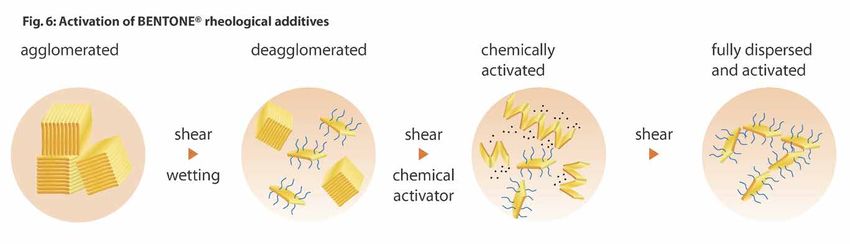
Before using any of our products please consult our Safety Data Sheets.

The information in this publication is, to the best of our knowledge,
true and accurate, but since the conditions of use are beyond our control,
no warranty is given or to be implied in respect of such information.
In every case, caution must be exercised to avoid violation or infringement
of statutory obligations and any rights belonging to a third party.
We are, at all time, willing to study customers’ specific outlets involving
our products in order to enable their most effective use.

                               Local representative

ELEMENTIS Specialties
       Consumer Products
EUROPE ELEMENTIS GmbH
       Stolbergerstrasse 370
       50933 Cologne
       Germany
       Tel: +49 221 2923 2000
       Fax: +49 221 2923 2010
       e-mail: consumer@elementis.com

U.S.      ELEMENTIS Specialties
          469 Old Trenton Rd.
          East Windsor, NJ 08512
          Tel: +1 609 443 2000
          Fax: +1 609 443 2422
          e-mail: consumer@elementis.com

Visit our website:
www.elementis.com

                                                          p ure in cos metics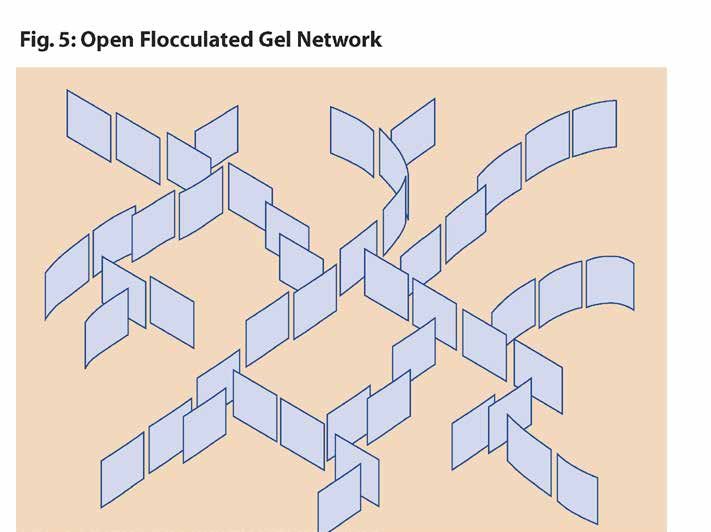
You can also read


