Focused on unmet needs in women's reproductive health - January 2021 - ObsEva
←
→
Page content transcription
If your browser does not render page correctly, please read the page content below

Focused on unmet needs
in women’s reproductive
health
January 2021

                          1
Disclaimer
Matters discussed in this presentation may constitute forward-looking statements.           We expressly disclaim any obligation to update or revise the information herein,
The forward-looking statements contained in this presentation reflect our views as of       including the forward-looking statements, except as required by law. Please also
the date of this presentation about future events and are subject to risks,                 note that this presentation does not constitute an offer to sell or a solicitation of an
uncertainties, assumptions, and changes in circumstances that may cause our actual          offer to buy any securities.
results, performance, or achievements to differ significantly from those expressed or
                                                                                            This presentation concerns products that are under clinical investigation and which
implied in any forward-looking statement. Although we believe that the expectations
                                                                                            have not yet been approved for marketing by the U.S. Food and Drug
reflected in the forward-looking statements are reasonable, we cannot guarantee
                                                                                            Administration. It is currently limited by federal law to investigational use, and no
future events, results, performance, or achievements. Some of the key factors that
                                                                                            representation is made as to its safety or effectiveness for the purposes for which it
could cause actual results to differ from our expectations include our plans to develop
                                                                                            is being investigated. The trademarks included herein are the property of the
and potentially commercialize our product candidates; our planned clinical trials and
                                                                                            owners thereof and are used for reference purposes only. Such use should not be
preclinical studies for our product candidates; the timing of and our ability to obtain
                                                                                            construed as an endorsement of such products.
and maintain regulatory approvals for our product candidates; the extent of clinical
trials potentially required for our product candidates; the clinical utility and market     This presentation also contains estimates and other statistical data made by
acceptance of our product candidates; our commercialization, marketing and                  independent parties and by us relating to market size and growth and other data
manufacturing capabilities and strategy; our intellectual property position; and our        about our industry. This data involves a number of assumptions and limitations, and
ability to identify and in-license additional product candidates. For further information   you are cautioned not to give undue weight to such estimates. In addition,
regarding these risks, uncertainties and other factors that could cause our actual          projections, assumptions and estimates of our future performance and the future
results to differ from our expectations, you should read he risk factors set forth in our   performance of the markets in which we operate are necessarily subject to a high
Annual Report on Form 20-F for the year ended December 31, 2019 filed with the SEC          degree of uncertainty and risk.
on March 5, 2020 and the risk factors disclosed in the Report on Form 6-K filed with
the SEC on November 5, 2020, and our other filings we make with the Securities and
Exchange Commission from time to time.

                                                                                                                                                                                       2
Investor highlights
    Pursuing promising large indications for serious conditions that compromise women's reproductive health
1
    and beyond, with the potential to extend into other indications including prostate cancer

    Ebopiprant, the only oral PGF2α receptor antagonist in development, has positive phase 2 data and favorable
2
    safety that support a Phase 2b dose ranging study (initiation in EU/Asia planned in 2H:21)

    Yselty® has potential best in class efficacy, a favorable tolerability profile, and unique flexible dosing
3   options; multiple value-generating milestones in the next year, including:
    • Phase 3 uterine fibroids PRIMROSE 76 W data (1Q:21); NDA submission (1H:21); MAA approval for
      uterine fibroids and regional commercial partnerships pending
    • Phase 3 endometriosis EDELWEISS 3 primary endpoint readout (4Q:21)

4   Strong global partnerships and collaborations support ObsEva approach

5   Seasoned leadership team with a track record for success to drive meaningful patient data

                                                                                                                  3
Product overview
             YSELTY®                    EBOPIPRANT
                                                              NOLASIBAN
          (LINZAGOLIX)                   (OBE022)

        Potential to relieve symptoms   Potential to delay   Potential to improve
         of heavy menstrual bleeding     preterm birth to       live birth rate
          due to uterine fibroids and   improve newborn        following IVF &
             pain associated with       health and reduce      embryo transfer
                endometriosis             medical costs

                                                                                    4
Multiple development programs drive value
                           Phase 1               Phase 2             Phase 3                  Next Milestones
                                                                               •   PRIMROSE 1: 76W data (1Q:21)
                      Uterine Fibroids – Ph3 PRIMROSE 2 (EU & U.S)             •   NDA submission (2Q:21)
                                                                               •   Regional commercial partnerships (1H:21)
YSELTY®               Uterine Fibroids – Ph3 PRIMROSE 1 (U.S)                  •   MAA for uterine fibroids expected approval
(LINZAGOLIX)                                                                       (4Q:21)
Oral GnRH
receptor antagonist
                                                                               • EDELWEISS 3: Primary endpoint readout
                      Endometriosis – Ph3 EDELWEISS 3 EU & U.S.
                                                                                 expected (4Q:21)

EBOPIPRANT                                                                     • Initiation Phase 2b dose ranging study in EU
Oral PGF2α            Preterm Labor – Ph2b
                                                                                 and Asia (4Q:21)
receptor antagonist

NOLASIBAN                                                                      • Nolasiban Phase 1 in China (1H:21)
                      IVF – Ph1/2 in China
Oral oxytocin
receptor antagonist

                                                                                                                           5
EBOPIPRANT
P OT E N T I A L TO D E L AY
P R E T E R M B I R T H TO
I M P R OV E N E W B O R N
H EA LT H A N D R E D U C E
MEDICAL COSTS

                               66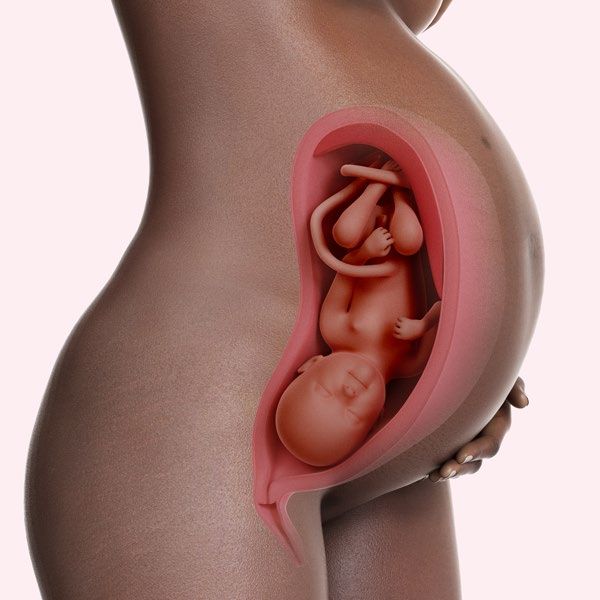
Preterm birth is delivery before 37 weeks of pregnancy
Life altering & costly

$26B
U.S. economic burden
                      /yr              >1
                                       In 10 babies are born
                                                                                                  1        million
                                                                                                  preterm related
                                       preterm                                                    deaths in 2015
                                                                                                  WW *

LEADING                                Preterm birth, a costly burden per baby
cause of death
in children
under age 5                           $16.9B+                          U.S. infant medical costs

Babies surviving early birth
face greater likelihood of
                                      $195K+                           average cost per U.S. survivor
                                                                       infant born 24-26 weeks

lifelong disabilities
                                      $50K                             average U.S. cost for a
                                                                       preterm infant

                               WHO ‘Born Too Soon: The Global Action Report on Preterm Birth’ (2012); Kissin et al. NEJM, 2014
                               Behrman et al., National Academies Press, 2007
                                                                                                                                 7
                               * WHO: 15 million babies born preterm each year worldwide, and number is rising.
Ebopiprant: an advancement in treatment of preterm labor
Orally active, selective prostaglandin F2α (PGF2α) receptor antagonist

                              Phospholipids

                             Arachidonic Acid

           PGHS-1/2 = COX1/2
                                                           ebopiprant           Potential to treat preterm labor
                                 PGH2                      Selectively blocks   with improved safety over non-
                                                              the PGF22α        selective COX *inhibitors
                                                               receptor         (NSAIDS)
                  PGE2                          PGF2α
                                                  x
                   EP1             EP2
                                                  FP
                   EP3             EP4

       UTERUS:    contract         relax        contract

                                                                                           *COX: cyclooxygenase    8
Ebopiprant represents an evolution of therapy for
preterm labor (PTL)
 • No FDA-approved PTL treatment available in the US*
     ‒ Treatment includes off-label use of COX (non-selective
       prostaglandin inhibitors), calcium channel blockers, beta-mimetics
     ‒ Current treatments associated with safety issues that limit use

 • Atosiban (intravenous oxytocin receptor antagonist) approved in EU
   and some Asian countries

 • Ebopiprant is an oral selective prostaglandin inhibitor
    ‒ Potential for similar efficacy with improved safety

                                                    *Makena is a progestin used for the prevention of PTL in women with a prior
                                                                                                                                   9
                                                           history of preterm birth; it is not approved for the treatment of PTL
Ebopiprant is designed to delay delivery by at least 48 hours
           Short-term prolongation of pregnancy (at least 48 hours)
           provides a critical window for impact on neonatal outcomes:

               • Allows full effect of corticosteroids on neonatal lung
                 maturity
                   ‒ Prematurity associated with respiratory complications
                     due to insufficient lung maturation
                   ‒ Corticosteroids used to speed up maturation process
                   ‒ Maximum effect occurs ~48+ hours after administration
               • Allows patient transfer to centers with NICU*

                                                                       *NICU=neonatal intensive care unit   10
Ebopiprant Phase 2a PROLONG study
Dosing period and FU visit Maternal and neonatal FU Infant follow-up
- Visits at site - - Site visits or medical records - - Non-interventional, no site visits -
Screening End of Follow-up
and day 1 treatment visit
visit
D1 D2 D3 D7 D14 Delivery Delivery Term# Term# Term#
+28 D +6 M +12 M +24 M
≤24h ebopiprant or
placebo # Expected Term
Atosiban
Hospitalisation
Study design: Endpoints:
• Double-blind, randomized • Incidence of delivery within 48 hours and 7 days of treatment
• Atosiban + Ebopiprant vs • Time to delivery and delivery prior to 37 weeks of gestation
• Atosiban + Placebo • Maternal, fetal, neonatal safety
11Ebopiprant Phase 2a PROLONG study
Demographics and baseline characteristics
Atosiban + Placebo Atosiban + Ebopiprant
n=55 n=58
Mean age –years (SD) 29.6 (5.1) 29.7 (5.7)
Race
White – n (%) 39 (70.9%) 42 (72.4%)
Asian – n (%) 16 (29.1%) 14 (24.1%)
Mean (SD) gestational age – weeks 29 (3.0) 30.2 (2.6)
24 to 30 weeks – n (%) 23 (41.8%) 25 (43.1%)
30 to 34 weeks – n (%) 32 (58.2%) 33 (56.9%)
Singleton – n (%) 41 (74.5%) 42 (72.4%)
Twin – n (%) 14 (25.5% 16 (27.6%)
Mean (SD) contractions /30 mins 3.19 (2.93) 3.37 (2.97)
12Overall delivery rate within 48 hours reduced by > 50%
Percentage of women delivering within 48 hours
30% Placebo + atosiban ebopiprant + atosiban
Percentage of subjects
26.8%
21.8% 22.6%
20% 20.8%
12.5% 12.0% 12.9% 12.5% 12.5%
10%
7.1%
n=55 n=56 n=24 n=25 n=31 n=31 n=41 n=40 n=14 n=16
0%
Overall GA 24 to GA 30 to Singletons Twins
30 weeks 34 weeks
OR (90% CI) 0.52 (0.22, 1.23) 1.05 (0.20, 5.43) 0.77 (0.21, 2.89) 0.39 (0.15, 1.04) 2.05 (0.23, 18.1)
13Singleton delivery rate within 48 hours reduced by > 50%
Percentage of women delivering within 48 hours
40% Placebo + atosiban ebopiprant + atosiban
Percentage of subjects
30%
30.0%
26.8%
23.8%
20%
15.8%
10% 12.5%
9.5%
n=41 n=40 n=21 n=21 n=20 n=19
0%
Overall GA 24 to GA 30 to
30 weeks 34 weeks
OR (90% CI) 0.39 (0.15, 1.04) 0.34 (0.08, 1.49) 0.44 (0.12, 1.62)
14Singleton 24-30wk delivery rate within 7 days reduced by 40%
Percentage of women delivering within 7 days
50% Placebo + atosiban ebopiprant + atosiban
Percentage of subjects
40% 42.1%
40.0%
30% 31.7%
27.5%
20% 23.8%
10% 14.3%
n=41 n=40 n=21 n=21 n=20 n=19
0%
Overall GA 24 to GA 30 to
30 weeks 34 weeks
OR (90% CI) 0.81 (0.36, 1.83) 0.53 (0.14, 2.01) 1.09 (0.37, 3.18)
15Ebopiprant, a potential breakthrough for preterm labor
Over 50% Favorable Supports
reduction of maternal, advancing
premature delivery fetal and ebopiprant
within 48 hrs neonatal safety into Phase 2b
Enabling administration of Maternal, fetal and Phase 2b study will include higher
critical drugs for neonatal neonatal safety doses to more fully define
protection comparable to placebo ebopiprant potential and the longer-
term benefits for babies
Ebopiprant has demonstrated proof of concept in delaying preterm birth,
enabling ObsEva to plan its further development
16D E S I G N E D TO T R EAT M O R E WOMEN SUFFERING FROM UTERINE FIBROIDS Yselty®, our proposed trade name for linzagolix, is conditionally acceptable for the FDA. Linzagolix has not been approved by FDA for any indication for use. Linzagolix is an investigational drug.
Uterine fibroids
A significant unmet need translating into a multibillion market

$34B                   /yr
total U.S. costs from direct
                                         9        million
                                         women in the U.S.
                                                                                                     70
                                                                                                     of women have
                                                                                                                       %+

costs, lost workdays and                 affected by fibroids                                        fibroids by age 50
complications

Quality                                  600,000                                                     >4 million
of Life                                  hysterectomies are
                                         performed annually
                                                                                                     women in the U.S.
                                                                                                     are treated annually
premenopausal women                      in the U.S.                                                 for fibroids
may experience heavy

                                         300,000
menstrual bleeding,
anemia, bloating, infertility,
pain and swelling
                                         are because of
                                         uterine fibroids

                                 Cardozo et al., Am J Obstet Gynecol 2012; Stewart et al. NEJM, 2015; Flynn et al., Am J Obstet Gynecol 2006; Truven Health,
                                 Fibroid Foundation website; Epidemiology of women’s health, Jones & Bartlett Learning, Ruby T. Senie, 2014
                                                                                                                                                               18
The promise of the GnRH antagonists
Dose dependent reduction of estradiol (E2)
Yselty® is the only GnRH antagonist being developed to provide differentiated options for
women suffering from uterine fibroids
1 200 mg with ABT 2 100 mg without ABT
Full suppression virtually eliminates Partial suppression reduces E2 into
100 E2, requiring ABT to return to the the optimal zone, minimizing BMD
E2 concentration (pg/mL)
optimal zone and minimizing BMD loss and eliminating the need for Symptoms
loss ABT
60
Optimal
+ ABT Range
20
BMD loss
0
ABT = Add Back Therapy (1mg estradiol + 0.5 mg norethindrone acetate)
BMD = Bone Mineral Density
19Uterine fibroids are ruining lives…
No two women are the same, but millions share a common problem: suffering the daily
consequences of uterine fibroids
Yselty® 200 mg once daily Yselty® 100 mg once Yselty® 200 mg once
with concomitant ABT daily without ABT daily without ABT
For long-term use for women For long-term use for women with For short-term use (up to 6 months)
for whom ABT is appropriate a contraindication to or who prefer when rapid reduction in fibroid and
to avoid ABT uterine volume is desired
…Yselty®, designed to treat more women
The hypothetical patients represented on this slide are for illustrative purposes only as no strength of linzagolix has 20
been approved nor is there FDA-approved Prescribing Information to guide clinical decisionsPhase 3 registration studies
PRIMROSE 1 (US) and PRIMROSE 2 (EU/US)
P1/P2 2 full menstrual cycles 24 weeks 28 weeks 24 weeks
Placebo (P1 only)
n = 103/102 Placebo 200 mg + ABT
n = 94/97 100 mg 100 mg
24-Week
n = 107/101 Screening 100 mg + ABT 100 mg + ABT Post Treatment
Follow-up
n = 105/103 200 mg 200 mg + ABT
n = 102/98 200 mg + ABT 200 mg + ABT
Double-Blind Treatment Double-Blind Treatment
Primary efficacy endpoint
Key secondary endpoints, Safety
Primary efficacy endpoint is proportion of women with menstrual blood loss ≤ 80 Patients in the studies received no
mL (by alkaline hematin method) and ≥ 50% reduction from baseline Vitamin D or calcium supplementation
ABT = Add Back Therapy (1mg estradiol + 0.5 mg norethindrone acetate)
21PRIMROSE 1 and 2 achieved primary endpoint for both doses
Responder* analysis at week 24
PRIMROSE 1 PRIMROSE 2 PRIMROSE 1 and 2
Week 24 Week 24 Week 24 pooled
100% PPRIMROSE 1 and 2 achieved sustained reduction in MBL
Responder* analysis at week 52
PRIMROSE 1 PRIMROSE 2 PRIMROSE 1 and 2
Week 52 Week 52 Week 52 pooled
100%
91.6% 89.3%
80% 86.4%
Proportion of women
60%
60.7%
56.4%
53.2%
40%
38.7%
20%
n=31 n=61 n=66 n=79 n=83 n=140 n=149
0%
Placebo Linzagolix Linzagolix Linzagolix Linzagolix Linzagolix Linzagolix
100 mg 200 mg + ABT 100 mg 200 mg + ABT 100 mg 200 mg + ABT
*Proportion of women with menstrual blood loss ≤ 80 mL (by alkaline hematin method) and ≥ 50% reduction from baseline 23Significant pain reduction maintained at weeks 52 and 64
PRIMROSE 1 PRIMROSE 2
P1 Wk 24 P1 Wk 52 Week 24 Week 52 Week 64
0
n=63 n=62 n=65 n=21 n=47 n=44 n=83 n=76 n=80 n=55 n=73 n=49 n=54
-0.6 -0.7
baseline in pain score
-1
Mean change from
-1.2
-1.9
-2 -2.2 -2.1
-2.6
-2.8 -2.8
-3 -3.3
-3.7
-3.9
Placebo
-4
LGX 100 mg
LGX 200 mg + ABT
-5 Error bars are 95% CI
Pain assessed on Numerical Rating Scale: 0-10 24LGX 200 mg without ABT significantly reduces uterine volume
Substantial reduction compared to placebo & LGX 200 mg with ABT at Week 24
PRIMROSE 1 PRIMROSE 2
100 100 Placebo LGX 200 mg + ABT LGX 200 mg/200 mg + ABT
uterine volume cm3
0 0
Mean CFB
-100 -100
Error bars are 95% CI
-200 -200
Baseline 12 24 36 52 Baseline 12 24 36 52
Weeks Weeks
2524-week efficacy data support Yselty® (linzagolix) as potential
best-in-class GnRH antagonist
Caution advised when comparing across clinical trials. Below data are not head-to-head comparison,
and no head-to-head trials have been completed, nor are underway
Yselty® (Linzagolix) Elagolix Relugolix
Pooled Pooled Pooled
PRIMROSE 1 PRIMROSE 2 ELARIS 1 ELARIS 2 LIBERTY 1 LIBERTY 2
Analysis Analysis Analysis
200mg + ABT 300 mg + ABT 40mg + ABT
Dose Regimen Once daily Twice daily Once daily
Mean Age (y) 41.6 43.1 42.6 42.5 41.3 42.1
Baseline MBL (mL per cycle) 197 212 238 229 229 247
Responder* Rate (RR) (%) 75.5 93.9 84.7 68.5 76.5 72.2+ 73.4 71.2 72.3++
Amenorrhea
Pain NR NR
Fibroid Volume NR** NR**
Uterine Volume NR** NR**
Menstrual Blood Loss
Anemia
Quality of Life
Source: Company information Note: NR = Not reported.
*Primary endpoint: Proportion of women with menstrual blood loss ≤ 80 mL (by alkaline hematin method) and ≥ 50% reduction from baseline ** P-value not reported 26
+ Simon et al, Obstet Gynecol 135, 1313-1326 2020 ++ Venturella R et al, ESHRE 2020 abstract.Minimal BMD change with both doses, plateauing after
week 24
Expected age-related BMD decline observed in placebo arm at Week 52
PRIMROSE 1 PRIMROSE 2
2% Week 24 Week 52 2% Week 24 Week 52
n=52 n=78
Mean % change from baseline
0% 0%
0.4% -0.8% 0.5%
-1.3% -1.4%
lumbar spine BMD
-2.0% -2.1% -2.0%
-2% n=56 -2.3% -2% -2.4%
n=72
n=38 n=71 n=60
-3.6% n=55
n=50 -4%
-4%
n=20
-6% n=40 -6%
-8% Placebo -8%
Linzagolix 100 mg Error bars are 95% CI
Linzagolix 200 mg + ABT -10%
-10%
Recovery at 6 months post-treatment (in subjects with a decrease at Week 52):
Median % BMD increase: LGX 100 mg about 0.8%, LGX 200 mg + ABT about 1.2%
27Bone mineral density – no change in z-scores
BMD remains well within age-matched normal ranges during and after
treatment for both doses
P1 Placebo P1 LGX 100 mg P1 LGX 200 mg + ABT
6 6 6
4 4 4
2 2 2
z-score
z-score
z-score
0 0 0
-2 -2 -2
-4 -4 -4
24
52
e
24
52
e
24
52
e
in
in
in
k
k
el
k
k
k
k
el
el
ee
ee
ee
ee
ee
ee
as
as
as
W
W
W
W
W
W
B
B
B
P2 Placebo P2 LGX 100 mg P2 LGX 200 mg + ABT
6 6 6
4 4 4 Z-score compares BMD to the
2 2 2 average values of a person of
z-score
z-score
z-score
0 0 0
the same age and gender.
A score < -2 is a sign of less
-2 -2 -2
bone mass than expected
-4 -4 -4
24
52
76
e
24
24
52
76
e
e
in
in
in
28
k
k
k
k
k
k
k
el
el
el
ee
ee
ee
ee
ee
ee
ee
as
as
as
W
W
W
W
W
W
W
B
B
BFavorable tolerability profile
Summary of adverse events—week 24 to 52
PRIMROSE 1 PRIMROSE 2
Yselty® Yselty®
Number (%) of women Yselty® (Linzagolix) Yselty® (Linzagolix)
Placebo (Linzagolix) (Linzagolix)
100 mg 200 mg + ABT
100 mg 200 mg + ABT
n=31 n=62 n=70 n=79 n=84
Subject with at least one TEAE 12 (38.7) 25 (40.3) 25 (35.7) 22 (27.8) 21 (25.0)
TEAE leading to discontinuation 1 (3.2) 2 (3.2) 1 (1.4) 7 (8.9) 1 (1.2)
SAE related to linzagolix 0 0 0 0 0
Occurrence after week 24 of most frequently reported AEs (> 5%) up to week 24
Hot flush 0 1 (1.6) 0 2 (2.5) 3 (3.6)
Headache 1 (3.2) 3 (4.8) 0 1 (1.3) 1 (1.2)
Anemia 1 (3.2) 0 0 2 (2.5) 1 (1.2)
29Designed to treat more women
Excellent clinical data driving differentiated profile
Favorable Unique set
Potentially
tolerability of treatment
best-in-class
profile options
• Unique PD/PK Profile • No safety signal of concern for any of • Unique low dose option without ABT
• Efficacy sustained up to 52 weeks for the Yselty® regimens showing clinically meaningful &
all dose regimens • BMD remains within age-matched sustained efficacy
• Potentially best-in-class symptom normal ranges during and after • Significant uterine volume reduction
control for 200 mg with ABT treatment for 200 mg without ABT
ABT-containing regimens may be contraindicated in up to 50% of US women
with uterine fibroids based on the elagolix US label* and analysis of CDC data**
*U.S. FDA elagolix PI, section 4. Contraindications and section 5.1. Warnings and precautions – thromboembolic disorders and vascular events (see slide 26)
** See slide 27
30Investor highlights
Pursuing promising large indications for serious conditions that compromise women's reproductive health
1
and beyond, with the potential to extend into other indications including prostate cancer
Ebopiprant, the only oral PGF2α receptor antagonist in development, has positive phase 2 data and favorable
2
safety that support a Phase 2b dose ranging study (initiation in EU/Asia planned in 2H:21)
Yselty® has potential best in class efficacy, a favorable tolerability profile, and unique flexible dosing
3 options; multiple value-generating milestones in the next year, including:
• Phase 3 uterine fibroids PRIMROSE 76 W data (1Q:21); NDA submission (1H:21); MAA approval for
uterine fibroids and regional commercial partnerships pending
• Phase 3 endometriosis ELDELWEISS 3 primary endpoint readout (4Q:21)
4 Strong global partnerships and collaborations support ObsEva approach
5 Seasoned leadership team with a track record for success to drive meaningful patient data
31Thank you
32You can also read


