RPAYC SAFETY BOAT OPERATOR MANUAL - FOR VESSELS: 2021-22 MOSQUITO DOODIE NORTON MCMEE
←
→
Page content transcription
If your browser does not render page correctly, please read the page content below
RPAYC Safety Boat Operator
         Manual
            2021-22

          FOR VESSELS:
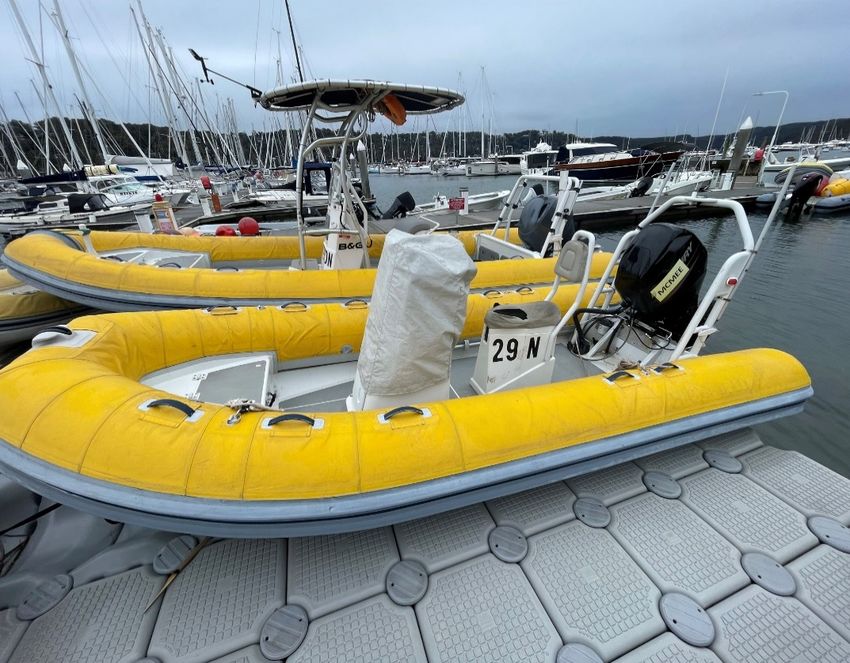
            Mosquito

          Doodie Norton

             McMee

            Alfreds 3

            Alfreds 4

                          Version 1.1 – September 2021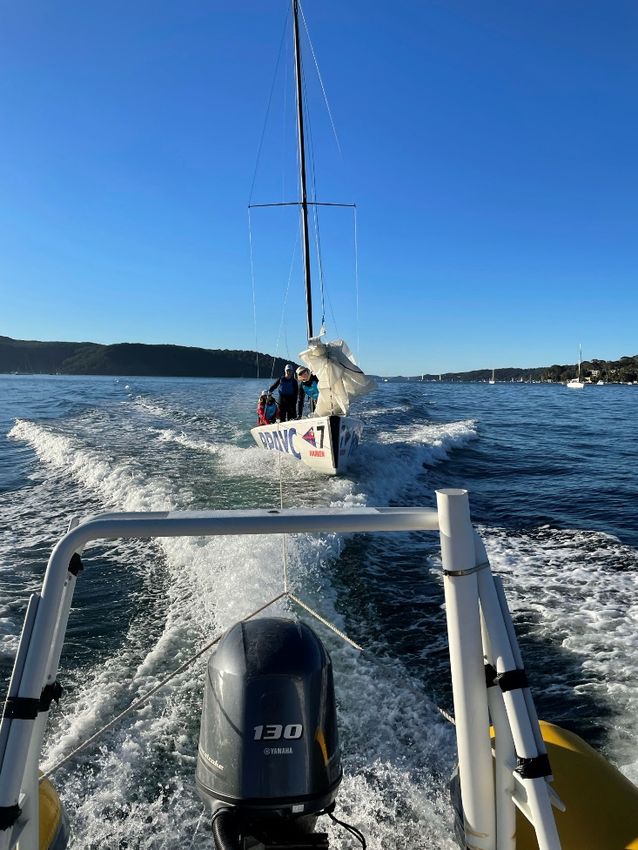
Contents
1.      Introduction ..................................................................................................................................... 3
2.      Club Rib Policies ............................................................................................................................. 3
3.      Vessel Sign Out/Sign In Procedure & Pre-departure Checklist .................................................... 4
4.      Operator Requirements .................................................................................................................. 5
5.      Safety & Race Management Equipment........................................................................................ 5
6.      Pontoon Dock Launching Procedure............................................................................................. 6
7.      Basic Fault Finding ......................................................................................................................... 7
8.      Using a VHF Radio .......................................................................................................................... 7
9.      Powerboat Handling ....................................................................................................................... 8
10.     Recovery of People & Craft ............................................................................................................ 9
11.     Pontoon Dock Recovery Procedure ............................................................................................. 11
12.     Pack up .......................................................................................................................................... 11
13.     Reporting Damage ........................................................................................................................ 12
14.     Refueling ....................................................................................................................................... 12
15.     RPAYC Emergency Procedures ................................................................................................... 13

Document Revisions
REVISION             AMENDMENTS                                                                                                             DATE

S:\Vessels & Equipment\RIBs\RIB Operator Manual 2021-22.docx

      RPAYC Safety Boat Operator Manual                                                                                                           Page 2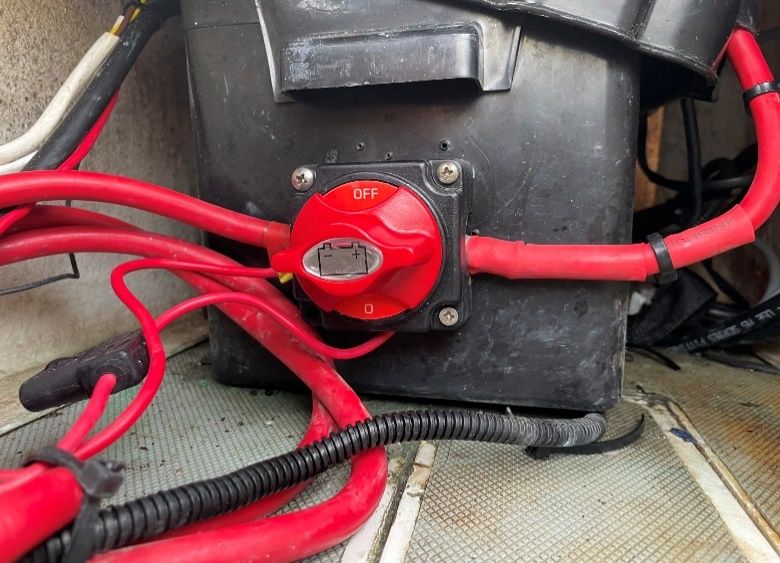
1. INTRODUCTION
  The purpose of this Handbook is to support Safety Boat Operators to understand the correct
  procedures of using RPAYC support boats. This book covers the vessels Mosquito, Doodie
  Norton, McMee, Alfreds 3 & Alfreds 4.
  Please note the RMS Boating Handbook should also be referred to for understanding local
  boating rules and laws. The RMS Boating Handbook is free to access either online or at a
  Service NSW centre.

2. CLUB RIB POLICIES
  RIB OPERATION POLICY (SA09).
  Purpose To ensure correct operation and appropriate safety measures are taken when
  operating club Ribs.
  Procedure
        1. Only RPAYC members, RPAYC staff and authorized persons over the age of 16, are
           permitted to drive RPAYC Ribs.
        2. All drivers must carry a current NSW Boat License, and in the case of a RIB being
           used as a rescue boat for centreboard racing, it is preferred that they hold a current
           Safety Boat qualification.
        3. All Rib drivers, crew and passengers must wear an approved lifejacket. Lifejackets
           are available from the Sailing Office.
        4. The Rib driver must use the vessel’s ‘Kill Cord’.
        5. When a Rib is too seaward of a line between West Head and Barrenjoey the minimum
           number of persons on board shall be two (2).
        6. All Rib drivers must have been inducted in accordance with the RPAYC SA10 Driver
           Induction Policy.

  DRIVER INDUCTION POLICY (SA10)
  Purpose To ensure all drivers of club vessels understand the safety aspects and the correct
  operating procedures. Also ensuring drivers are capable of completing required tasks when
  operating a club vessel.

  Procedure
        1. Only RPAYC members, RPAYC staff or authorized persons, qualified and inducted in
           accordance with the club policies, shall operate RPAYC vessels.
        2. All drivers must have a current NSW Boat License.
        3. Qualified drivers wishing to become inducted must contact the Sailing Office and
           schedule a time for induction.
        4. Drivers seeking induction will be required to fill in their details on the driver induction
           sheet and have it signed by the nominated person, once training is complete. Copies
           of NSW Boat License, other safety boat, commercial qualifications and Radio
           operators Licences, should also accompany the induction sheet.
        5. A file is to be kept by the Sailing Office of the inducted drivers, the file to be kept up
           to date of the approved and signed driver induction sheets and relevant copies of
           qualifications.

  RPAYC Safety Boat Operator Manual                                                            Page 3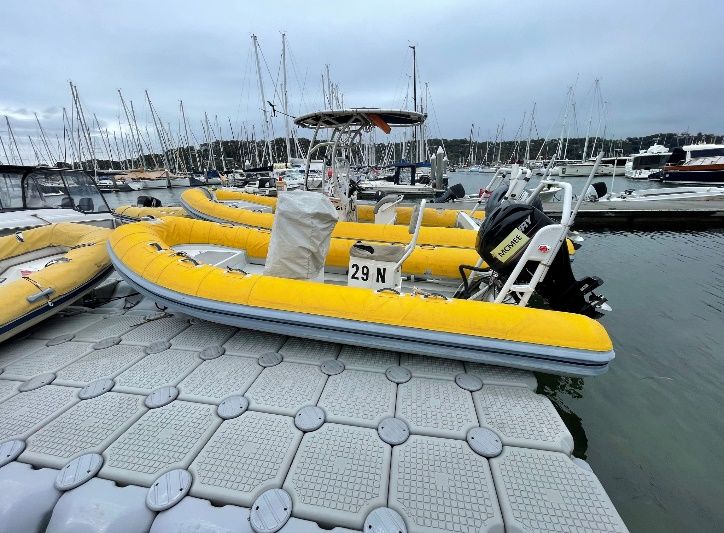
3. VESSEL SIGN OUT/SIGN IN PROCEDURE & PRE-DEPARTURE CHECKLIST
  Prior to the use of a club RIB, the driver/crew must sign out the vessel at club reception, and
  complete a pre-departure checklist.
        1. Complete the vessel sign out details in the Vessel Log Book. Record the time of
           collection and purpose of use. Complete the pre-departure checklist and take a photo
           (or photocopy) once completed*
        2. Pickup vessel keys (with kill cord attached)
        3. Pickup yellow safety grab bag and enough lifejackets for the number of crew onboard
  *Clubs affiliated with Australian Sailing are expected to provide a checklist for vessel operators to
  complete and present to a Boating Safety Officer (maritime) if requested.

                             RPAYC Safety Boat Log Book
                           VESSEL SIGN OUT / SIGN IN & SAFETY CHECKLIST

     Drivers of RPAYC powerboats must have a completed checklist readily accessible
                 to show a Boating Safety Officer (Maritime) upon request.

                             Take a photo of this completed checklist.

    Driver Name:                                      Purpose:

    Vessel Name:                                          Date:

    Operator Checklist:                               Safety Equipment Checklist:
        ! All crew wearing lifejackets                    ! Anchor & ground tackle
        ! Kill cord is fitted, operational, and           ! Bucket or bailer with lanyard
            worn by driver                                ! Fire extinguisher
        ! Yellow bag is onboard with First                ! Waterproof floating torch
            Aid Kit, safety knife & tool                  ! Flares
        ! VHF switched on Channel 77                      ! Sound signal
        ! Boat is seaworthy & operational                 ! Oars/paddles fitted

    Sign out (depart):                                Sign in (return):

    Upon return please list any damage, missing equipment and/or maintenance required:

  RPAYC Safety Boat Operator Manual                                                            Page 4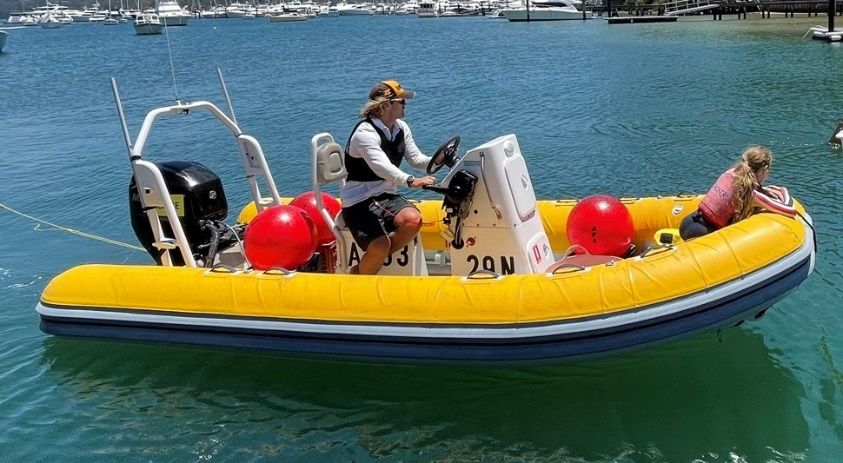
4. OPERATOR REQUIREMENTS
  RIB drivers must meet the following requirements when providing safety boat support at club
  racing and training activities. A copy should be provided to the Sailing Office.
      1. Hold a current RMS Boating Licence
      2. Complete a Powerboat Handling and/or Safety Boat Operator course
         (Australian Sailing accreditation)
      3. Attend an annual Club RIB Operator Induction (RPAYC)
      4. Obtain your VHF Radio Operator Certificate (SROCP)
      5. Optional: Hold a First Aid Certificate and Working With Children Check
  Operators and crew are encouraged to complete additional training courses through the
  RPAYC’s Discover Sailing Centre.
  Contact the sailing office to learn more about Powerboat training, and obtaining your VHF Radio
  Licence.

     Lifejackets must be                            Kill cords must be
    worn by all occupants                               worn by the
     onboard club RIBs.                               operator at all
                                                           times.

5. SAFETY & RACE MANAGEMENT EQUIPMENT
  All club ribs are equipped with safety equipment in accordance with Maritime, Australian Sailing
  and RPAYC requirements.
  Please ensure the yellow grab bag is onboard at all times, and is returned to reception following
  use with the keys.

                                  LOCATION OF VESSEL EQUIPMENT
   Stowed Onboard                    Yellow Grab Bag                   Race Management
   Not to be removed                 (Pick up from Reception)          (not onboard)
   Bilge pump                        Compass                           Inflatable rounding marks
   Bucket                            First aid kit                     Mark tackle
   Fire extinguisher                 Handheld flares (2 orange / 2     Race flags
   Foam PFD’s - under seat           red)                              Race management box &
   Horn (sound signal)               Knife / tool                      scribe resources
   Navigation lights
   Throw line
   Tow rope(s) with bridle
   VHF radio

  BILGE PUMP
  The bilge pumps on all RPAYC vessels are electric and located under the floor (at the inspection
  port hatch). The bilge pump can be operated if there is a dedicated switch (labelled ‘Bilge
  Pump’) on the dashboard.
  If there is no switch, then the bilge pump will be automatically enabled when there is water
  detected in the bilge and the battery is switched on.

  RPAYC Safety Boat Operator Manual                                                         Page 5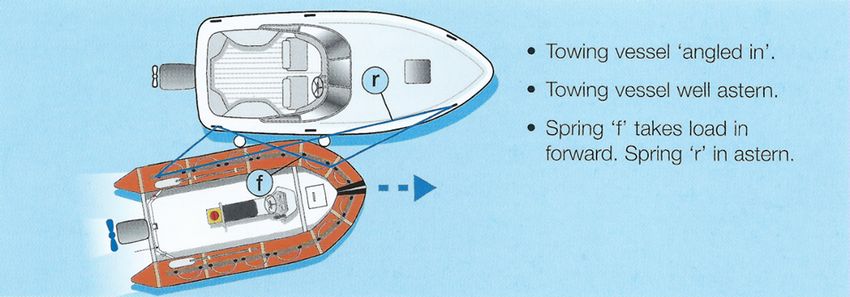
ELECTRIC HORN
  The RIBs have an electric horn. This can be sounded by pressing the round chrome button on
  the dashboard.
  NAVIGATION LIGHTS
  The navigation lights switch will turn on the port (red) and starboard (green lights). These
  should be switched on between sunset and sunrise and in restricted visibility (rain, fog, smoke).
  Some dashboards will have a separate switch for the white all-round light. This must be
  switched on in the conditions as described above when driving and at anchor.
  THROW LINE
  On each boat there is a small yellow bag with a Burke ‘Throw Line’. This is useful for a person
  overboard recovery. Please note – this is NOT a tow line or mooring line.

6. PONTOON DOCK LAUNCHING PROCEDURE
  VESSEL PREPARATION
  All of the RPAYC ribs have slightly different layouts, based on their age and use. There are a few
  things to do before you leave:

     1.   Remove console cover
     2.   Check the bung is in and the water ‘scupper’ drains are closed
     3.   Check all of the required safety equipment is onboard
     4.   Switch battery isolator to the ON position
     5.   Turn on the VHF radio (ch.77 for RPAYC communications)
     6.   Trim the engine down, check that the propeller is clear of lines and debris
     7.   Insert the key and check the fuel level
     8.   Untie the ‘painter’ bow line
     9.   All crew to wear lifejackets

  FOR DRIVING OFF THE PONTOON:
     1. Ensure ‘painter’ line is untied, and secured to the
        boat
     2. Driver to attach kill switch to vessel & themselves
     3. Turn engine on. Ensure engine is down and there is
        water running out of tell-tale
     4. Check the water for obstructions
        (people or other boats)
     5. Engage REVERSE, and apply more throttle as required until the boat begins to slide back
        off the pontoon. As soon as the boat is sliding off the pontoon into the water, move the
        throttle back to NEUTRAL. Wait for the boat to drift away from the pontoon before
        manoeuvring.
  If it is low tide, operators must be aware of the shallow water (rock shelf) in the launch area. To
  launch in low tide, keep the engine trimmed up (and switched off).

     •    PUSH the boat off the pontoon, with the help of one or two people, and wait for the boat
          to slide off the dock before trimming down the engine and switching on.
     •    Only trim the engine down enough to start the engine, and be mindful of the propeller
          near the rocks.

  RPAYC Safety Boat Operator Manual                                                           Page 6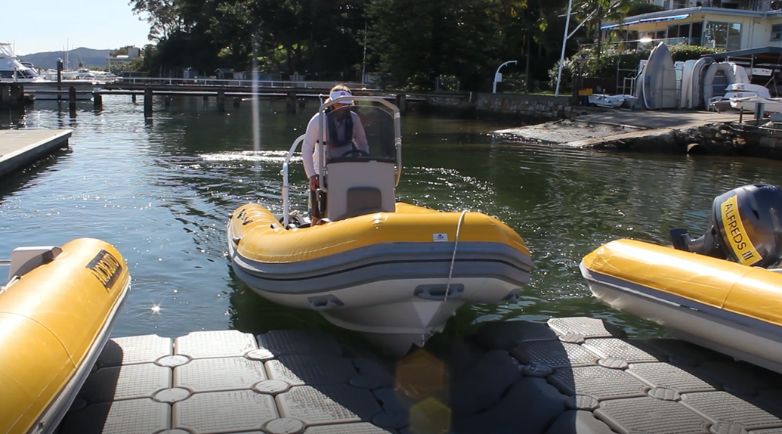
7. BASIC FAULT FINDING
  There is no expectation of Safety Boat Operators to be mechanics! There are some simple
  solutions to common problems/occurrences:
  There is no power to the auxiliary units (VHF, navigation lights, bilge pump) or engine trim….
     •   Check the battery switch is in the ‘ON’ position
     •   There could be a loose battery connection or wiring issue – please pack the boat up,
         report the issue in the logbook & inform RPAYC staff.
  The engine does not start, but there is power to controls and switches….
     •   Check the kill switch is properly attached. Disconnect and reconnect.
     •   Check the throttle is in NEUTRAL

  The engine starts, but is then cutting out…
     •   Check the propellor / engine leg for any debris, ropes and lines caught up. If there is
         anything on the propellor, switch off the engine before removing.
     •   Check there is fuel – the fuel line may have disconnected
     •   The engine may need to warm up. Use the ‘fast idle’ control in NEUTRAL.
     •   It could also mean the engine is overheating – switch off if you hear an alarm and/or the
         engine temperature is high.
  For any engine or vessel faults, please report it by writing in the log book and informing an
  RPAYC sailing or waterfront staff member.

8. USING A VHF RADIO
  TURNING ON THE RADIO
  Turn the radio on by turning the volume dial up on a fixed unit, or by holding the power button
  on a handheld video.

  SELECT CHANNEL
  Use the channel selector to choose your preferred channel.

     •   Channel 77 – Royal Prince Alfred Yacht Club communication channel
     •   Channel 16 – International Distress, Safety & Calling channel.

  VOLUME / SQUELCH CONTROL
  The volume control affects how loud the communications you receive are.
  The squelch control is used to reduce the background noise. If the squelch is turned up too
  much, you will not receive or transmit messages over a long distance. The squelch should be
  turned down as much as possible without hearing the static background noise.

  SPEAKING OVER THE RADIO
  To speak, PRESS AND HOLD the ‘push to talk’ (PTT) button. Speak clearly and directly into the
  microphone. Speak away from wind noise.
  Saying ‘OVER’ after your message means you are inviting the other station to respond. Saying
  ‘OUT’ signals the end of conversation. Never say over and out as they mean the same thing!

  RPAYC Safety Boat Operator Manual                                                           Page 7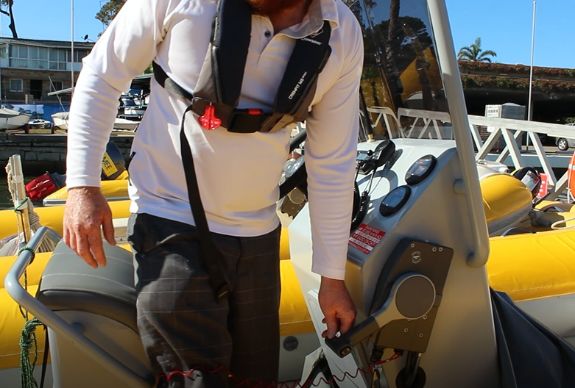
9. POWERBOAT HANDLING
  Here are some simple tips for driving a powerboat!

             Operators must wear a kill switch at all times while the engine is running.
    The kill switch is a vital piece of safety equipment that could save your life, should you fall
    way from the controls, and occupants of other nearby vessels. Under the RPAYC RIB usage
                           policy, the wearing of a kill switch is compulsory.

  TURNING THE BOAT
  The ‘pivot point’, or the point at which the boat can pivot on itself, is forward of the console
  (think opposite of a car). When in reverse, the ‘pivot point’ is directly at the engine. This means
  the boat has a much smaller turning circle when operating in reverse.
  LOW SPEED MANOEUVRES
  Keep one hand on the throttle, and
  one hand on wheel.
  Even when turning the boat in a
  confined area, this will allow you to
  use the throttle to assist your
  steering.
  Steer first, then engage in gear.
  Using more throttle on the exit of a
  turn will encourage the boat to go in
  a straight line. You don’t need to
  oversteer!
  Changing gears: always move into NEUTRAL. Never skip from FORWARD straight into REVERSE
  (or other way around) as it will damage the gearbox.
  At any point you think you may bump into something at low speed, or run over a line or object in
  the water, simply stop the boat by pulling out the kill switch.
  STANDING OFF
  To ‘stand-off’ another vessel, keep the vessel in idle speed reverse, with the stern pointing
  towards the wind. Keep your boat between your engine and a sailing dinghy or person in the
  water.
  DRIVING AT HIGH SPEED
  Communicate with vessel occupants that you are increasing speed.
  Apply enough FORWARD power to get the boat onto the ‘plane’ (bow drops & boat accelerates).
  Trim the engine up a few degrees to prevent the bow from digging into waves (flat water).
  Gradually pull the throttle back to bring the boat to a stop.
  DRIVING IN SWELL / CHOPPY WATER
  If driving in swell or choppy water, trim the engine down when driving into the wind and wave
  direction, and trim the engine UP when driving with the wind and waves.

  Trimming the engine down will assist you with steering the boat in high speed turns. This
  prevents cavitation (air bubbles around the propeller).

  RPAYC Safety Boat Operator Manual                                                            Page 8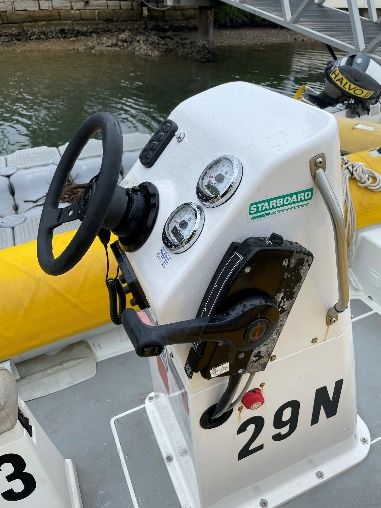
10. RECOVERY OF PEOPLE & CRAFT
  RECOVERING A PERSON IN THE WATER
  Always approach a person in the water by heading across the wind, and at a low speed. Switch
  off the engine and remove the kill cord when in close proximity to a person in the water to
  prevent a ‘prop-strike’. Recovery methods:

      •   Basic lift - move the person to the lowest part of the boat, facing in towards the boat (to
          prevent back injury) and lift in towards the boat.
      •   The roll/slide - Lie the conscious person alongside the lowest part of the boat with their
          head towards the bow. Lift one leg up with their hands on the side of the boat. Reach
          down to get a firm grip of the person and roll them into the boat

  RECOVERY OF CRAFT
  It is important to consider if a person is in the water or onboard their craft. If a craft is in need of
  assistance, take the approach that you are recovering a person from the water first, and then
  complete the recovery of the craft.
  DINGHY
  To come alongside a dinghy, approach the boat using the same method as coming alongside a
  dock (slow and at an angle). If a dinghy is capsized, approach across the wind so you are in a
  position to see the sailor(s).

      •   To right a capsized dinghy, try lifting the mast out of the water and ask the crew to be
          positioned at the centreboard. Work your way slowly up the mast to keep control of the
          dinghy and it comes alongside the safety boat.
      •   To tow a boat upright, pass a line to the dinghy and attach it to a strong point. The
          safety boat should reverse, pulling the ‘gunwale’ towards the wind and bringing the boat
          upright. The sailor should remain on the centreboard in this process so they can step
          onto the windward side of the boat as it is righted. As the boat is righted, the safety boat
          crew should pull the line in tight to move closer to the craft. This will prevent it capsizing
          again.
  WINDSURFER
  Approach a windsurfer and equipment from the mast tip and switch off your powerboat engine.

      •   Make your way down the mast edge (luff) of the sail, drawing the rig over the safety boat
          and the board and sailor closer.
      •   Bring the boom in the boat if possible and raise the daggerboard if there is one
      •   Lie the rig across the safety boat with the mast foremost into the wind (at the front if
          going upwind or at the back if going downwind)
      •   Windsurf boards and rigs have a lot of power so it is critical to take care at all times - do
          not adjust the controls on the board unless you have knowledge of the systems!
  KITESURFER
  Approach a ‘downed’ kite surfer on a line from them that is approximately 90˚ to the wind. This
  will keep the rescue craft clear of any broken/trailing lines (these are very thin & difficult to see).

      •   Make contact with kite surfer rider so they are on the downwind side of the safety boat.
      •   Ask the rider to pack away the kite (if they are able to do so). If they are unable to do so,
          then approach from downwind and deflate the kite to prevent take-off. Pickup the rider
          from the water.

  RPAYC Safety Boat Operator Manual                                                               Page 9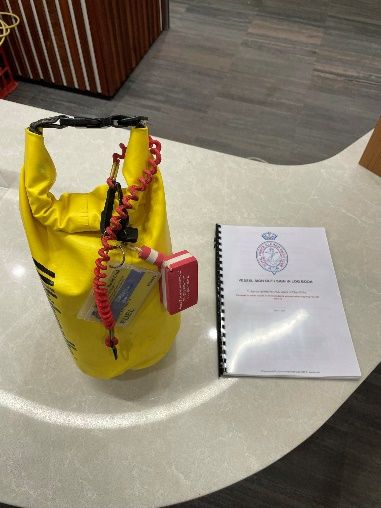
TOWING
It is important to have one person driving and one person observing. Choose your tow type
depending on conditions and the type of boat being towed.
STERN TOW
This is the method for ‘pulling’ the boat(s) behind. This
method is good for long distances and in large
swell/choppy water.

   •   Use a long tow line that absorbs shock. Two
       wavelengths in swell, or a few boat lengths.
   •   Attach to the tow vessel either on the bow or
       through a fairlead. Try and attach the line
       forward of the engine if possible, or use a bridle.
   •   Set the tow speed appropriately according to the
       weather and sea conditions, and other factors
       such as speed limits and stopping etc
   •   If towing a sailing vessel, manage the apparent
       wind
   •   Be cautious of the propellor when lines are in the
       water

TOWING ALONGSIDE
Effectively, we are pushing the boat (like a tug tow). This method is good for short distances
and manoeuvring vessels alongside a dock.

   •   The towed vessel must be toed-in slightly (nose in)
   •   The outboard engine of the towing vessel must be behind the towed vessel
   •   Use the bowline to keep the vessels nose-in
   •   The stern line holds the vessel while turning
   •   A tug’s fore spring takes the weight when moving forward
   •   A tug’s aft spring takes the weight when operating astern

RPAYC Safety Boat Operator Manual                                                        Page 10
11. PONTOON DOCK RECOVERY PROCEDURE
When it is time to return the RIB back to the pontoon, we must
take our time and follow the steps below to ensure we do not
damage the vessel or cause injury.
Think… ‘TOUCH… PAUSE… ENGAGE’
1. Approach the pontoon at a low speed. If the tide is low,
ensure there is enough water.
If you are unsure, it is best to leave the boat in the water
and tied to the dock.
2. Trim the engine up slightly.
3. TOUCH: Let the boat make contact with the pontoon and
leave the boat in FORWARD (idle speed only)
4. PAUSE: Wait for the boat to settle. Straighten the steering so the bow is pointing
forward.
5. ENGAGE: Once you are ready to drive up, slowly apply more forward throttle, but just
enough for the boat to slide onto the pontoon.
6. Switch off the engine and commence the packup procedure (next section).
12. PACK UP
To ensure the RIB’s stay in good condition and do not suffer any damage while not in use, it is
important to pack up the ribs correctly. Please ensure the following items are checked:
! Hull is out of the water
! Engine is switched off and trimmed up out of the water.
! VHF radio, bilge pump and navigation lights are
switched off on the dashboard panel.
! Battery isolator switched to the OFF position
! Bow ‘painter’ line is tied to the pontoon
RPAYC Safety Boat Operator Manual Page 11! Rubbish and personal items are removed
! Boat is hosed down. Please hose off all sand and mud
from mark tackle.
! Console cover is put on
For Doodie and McMee: the zip points to the stern.
For Alfreds 3 & 4: The angled edge points to the bow
! Yellow grab bag and boat key (with kill switch attached)
are returned to the sailing office.
! Sign the boat back in and report any damage or issues
in the RIB log book.
13. REPORTING DAMAGE
The immediate reporting of damaged vessels, missing equipment and/or need for urgent
maintenance, is extremely important as RPAYC requires the club RIBs for various activities
multiple times a week all year around.
1. Write details of issue in the club RIB log book.
2. Inform the RPAYC Sailing Office or waterfront team as soon as possible. Providing a
photo or video of the issue can also be helpful to explain the issue.
14. REFUELING
RPAYC has fuel cards for all vessels to be fuelled at Royal Motor Yacht Club fuel wharf.
1. Head to the inside fuel wharf at RMYC
1. Go to a pump dock which has UNLEADED 91.
2. An RMYC staff member will unlock the pump and assist you.
3. To complete payment – present the fuel card attached to boat keys, or provide the boat
name, at the marina office.
4. Please keep the receipt and give it to the sailing office when you return.
RPAYC Safety Boat Operator Manual Page 1215. RPAYC EMERGENCY PROCEDURES
RPAYC INCIDENT CHECKLIST
RPAYC Incident Checklist
This checklist provides a “What to Do” guide for those involved in organising or conducting
RPAYC Centreboard Division sailing events forms part of the RPAYC’s Incident Management
Plan (IMP).
Pre Race Preparation Note: IO (Incident Officer) = RO (Officer of the Day)
o As per RO / Support Boat Personnel & Vessels on water / Weather details on the day
o Note Incident Contact list details & update specific vessel contact details
Procedure to be followed by all Race Officials (RO’s) when NOTIFYING INCIDENTS
o Immediately notify Incident Officer of nature and location of incident
o Assess nature of incident and decide on Incident Priority
o If external emergency assistance NSW Water Police 000 direct – IO to coordinate RPAYC
assistance with NSW Water Police
o IO/IM to keep a log of all calls and events relating to all Incidents
Incident /Response (If in doubt on Priority – Escalate) Who
Notification or Observation of a Minor Incident
o Instruct support boats (SB) to standby and assist as required and coordinate additional IO
resources if appropriate
o Support boat to provide feedback to IO if further assistance is required, VHF 77 SB
o IO to reassess Incident Priority based on feedback and escalated Priority if required IO
o Storm Imminent – IO to make decision on whether to postpone start and if Race in IO
progress whether to have support boats direct fleet to pre-identified safe locations
o Storm Imminent - If instructed by IO notify fleet of pending storm and quickest safe SB
location to shelter
o IO to reassess Incident Priority based on feedback and escalated Priority if required IO
Notification, Observation or Escalation to a Moderate Incident
o Call NSW Water Police 000 (or VHF 16) and requests assistance as appropriate IO
Note: NSW Water 000 Police will coordinate involvement of all other Emergency
Response Agencies
o IO advises Incident Manager of nature and locations of Incident IO
o IM takes control of coordinating RPAYC involvement as directed by NSW Water Police IM
o IO and support boats to provide assistance as appropriate until directed by IM of IO/SB
further actions
o Advise Incident Director of nature and potential outcome of incident IM
o Storm Hits Fleet – Support boats to overturn boats and recover crew and advise IO/IM IM
of additional assistance required – IM to coordinate additional craft and involvement
of NSW Water Police
o IM assess appropriateness of current Priority and escalates if appropriate IM
Notification, Observation or Escalation to a major Incident
o Call Water Police 000 (or VHF 16) and advise nature of incident and location IO/SB/IM
o Provide support and assistance as required by NSW Water Police – coordinated by All
IM
o Contact Incident Director who will set up Incident HQ at RPAYC as per IMP IM
RPAYC Safety Boat Operator Manual Page 13Incident
Priority
CENTREBO ARD YACHTING
RISK MATRIX – INCIDENT PRIORITY
Minor Personal Injuries unlikely to require external medical intervention
(eg. cuts, bruises & abrasions etc)
MINOR
Slips & Falls on Land
Capsize or damage to boat requiring prolonged assistance
Potential threat of storm
Personal Injuries requiring external intervention or advice (eg.fractures,
MODERATE
minor head injuries - non life threatening)
Multiple Capsize requiring assistance or with prolonged immersion
Sudden storm/gale with threat to sailors/boats
Multiple concurrent minor incidents needing additional assistance
Potential life threatening incident or Injuries (requiring urgent external
intervention eg.spinal injury, major head injuires, cardiac arrest etc )
MAJOR
Fatality
Missing Person
INCIDENT CONTACT LIST
Name Telephone/Mobile VHF
Incident Officer (IO/RO) Refer to CB roster Via VHF 16 / 77
RPAYC Reception / VHF Base 02 9998 3700 VHF 16 / 77
000 / 112
NSW Water Police – Broken Bay via VHF16
02 9910 7899 / 0412 162 093
NSW Water Police – Sydney Marine 000 / 112
via VHF16
Area Command ‘MAC’ 02 9320 7499
RPAYC Incident Officer (IO) Refer to roster Via VHF 77
Incident Manager (IM)
9998 3700 Via VHF 77
(Race Director)
Alternative Incident Managers
9998 3700 Via VHF 77
(Sailing Mgr / Club Coach)
Incident Director (ID)
9998 3700 Via VHF 77
(General Manager)
Alfred’s 1 0428 276 409
VHF 16 / 77
Alfred’s 2 0458 787 500
RPAYC Safety Boat Operator Manual Page 14CALLING AN AMBULANCE RPAYC Safety Boat Operator Manual Page 15
AMBULANCE PICK UP POINTS

RPAYC Safety Boat Operator Manual   Page 16
You can also read


