RUNNING OUT OF CREDIT? - THE DECLINE OF THE FOREIGN OFFICE AND THE CASE FOR SUSTAINED FUNDING - British Foreign Policy Group
←
→
Page content transcription
If your browser does not render page correctly, please read the page content below
British Foreign
                             Policy Group

              RUNNING
         OUT OF CREDIT?
  THE DECLINE OF THE FOREIGN OFFICE
AND THE CASE FOR SUSTAINED FUNDING
                       BFPG.CO.UK   | JUNE 2019

Foreword by
                                          Sir Simon Fraser
                                      •	My views on Brexit are well known, but if the UK is to have any hope of restoring, let
                                          alone expanding its global influence as promised by the champions of Global Britain, it is
Sir Simon Fraser is a founder             clear diplomacy will play a central role. During my time as Permanent Under-Secretary at
and managing director of Flint            the FCO we made tough decisions in the face of funding cuts which bit deep for a
Global, a business advisory firm.
He is also one of the founding
                                          department already stretched taut across the widening gap between sky high expectations
trustees of the Patchwork                 of British diplomacy to project power globally, and the declining appetite (or capacity) to
Foundation, a charity which               fund such a role.
works to promote and encourage
the positive integration of
under-represented, deprived and       •	Despite the herculean efforts of many of my former colleagues, it is now painfully clear
minority communities into British         to our allies and adversaries alike that the FCO is way beyond any ability to do ‘more with
democracy and civil society. He is        less’ and is now drawing ever deeper on irreplaceable reserves of long nurtured capital —
a BFPG Honorary President and             whether that be the sale of high status property around the world or simply the goodwill
Deputy Chairman of Chatham                of our friends, and of course staff.
House (the Royal Institute of
International Affairs).
                                      • P erhaps there was and is more we could do to make the case persuasively for investing
He served as Permanent                               in diplomacy which is after all, short of violence, the only tool we have to systematically
Secretary at the Foreign and                         secure the friends and deter the foes necessary to ensure the safety and prosperity of
Commonwealth Office (FCO)
                                                     our country, and the world. So this report from the British Foreign Policy Group is very
and Head of the UK Diplomatic
Service from 2010 to 2015.                           timely, offering for the first time a clear picture of the steady decline in investment in UK
Before that he led the UK                            diplomacy by both Labour and Conservative governments, as well as a comparison with
Department for Business and                          our French and German counterparts who have continued to invest and now significantly
              British
held a succession       Foreign
                    of senior       Policy Group
                                roles                surpass
              Supporting national engagement on UK Foreign Policy UK capacity in a number of regions and capabilities.
in the British Government and
the European Commission. He
was also the UK Civil Service         •             	Tellingly, the report author finds that the UK used European Union membership as a
Champion for Inclusion and                            ‘crutch’ to arrest declining global influence whilst our French and German counterparts
Diversity.                                            have used their membership as a ‘springboard’ to support and enhance their global
                                          profiles and trade priorities.

© BPGF 2019                           • S o it seems clear that continuing on the current trajectory, where core FCO spending is
                                          forecast to dip below 0.1% of GDP in coming years, raises significant questions regarding
               British Foreign            the credibility of the UK’s global ambitions post-Brexit. The Treasury may, as it has in the
               Policy Group               past, brush aside such concerns, but our counterparts around the world, perhaps partly
                                          as a result of the cuts we have made, now often read our actions far more closely than
                                          we read theirs.
Sponsored by

                                      •	This report compellingly highlights the challenge, as well as the ever-increasing urgency
                                          of identifying the solution in a world of growing threats to the UK both from home, and
                                          abroad.

The British Foreign Policy Group is an independent not for profit organisation established to improve the quality
of national engagement on UK foreign policy, and generate new thinking around how the UK can pursue our common
national interests from our international engagements. The group takes no institutional position and all views expressed
are those of the authors. Established in Autumn 2016, the British Foreign Policy Group engages people across the UK and
our Overseas Territories through events, accessible, reliable information and digital outreach.

     If you would like more information please contact Edward Elliott:                                                                                             British Foreig
     Edward.Elliott@bfpg.co.uk                                                                                                                                     Supporting nationa

                                                                                           JUNE 2019   |   TH E B R I TI SH FO R EI G N P O LI C Y G R O U P   3
Foreword by
                                               Tom Tugendhat MP
                                          •	Not since the Second World War has Britain’s foreign policy been more important to our
                                               future prospects.
    Tom Tugendhat was elected
    the Conservative MP for
    Tonbridge and Malling in 2015.
                                          • S ince   becoming chair of the Foreign Affairs Committee two years ago I have argued
                                               that today’s circumstances mean that we need a more coherent, strategic and empowered
    Since 2017, Tom has been Chair
    of the House of Commons                    foreign policy.
    Foreign Affairs Committee,
    which examines and scrutinises
    the work of the Foreign and
                                          • T he   good news is that the UK starts from a strong position. We are a foreign policy
                                               heavyweight and soft power superpower. Our expert diplomacy, trusted BBC World
    Commonwealth Office.
                                               Service, world-leading aid programmes and strong financial markets, give us unique
    Before being elected Tom                   influence. So too does the credible threat of force.
    served on operations in Iraq
    and Afghanistan for the British
    Army. He was an Arabic-
                                          • B ut  to make the most of these advantages, we need a clear strategy and effective
                                               coordination.
    speaking intelligence officer
    serving with the Royal Marines.
    His final appointment was as the      • T he FCO should be at the heart of this process. But, as this report makes all too clear, it
    military assistant for the Chief of        is now a shadow of its former self. Once one of the great offices of state, its role directing
    the Defence Staff.                         foreign policy has been gradually hollowed out, as new government departments
                                               responsible for aid and trade have been created, and it has faced a tug-of-war over key
                                               aspects of policy with the Cabinet Office. The FCO’s entire budget now amounts to a
                                               rounding error — at barely 0.1% of Government spending.

                                          • T his report sets out the trajectory and impact of cuts to the FCO back to 1973, demonstrating
                                               the huge impact this has had on Britain’s capacities, relationships and influence around
                                               the world.

                                          • A s the UK redefines its role in the world, it is more important now than ever that the FCO
                                               takes full strategic control over the full spectrum of resources that can give us worldwide
                                               influence.

                                          • T o do so our foreign policy needs properly resourcing. That is why this report calls for 3%
                                               of GDP, including 0.7% on development aid and 2% on defence, to be spent on securing
                                               the UK’s international interests.

                                          •W
                                            e are at our best when both at home and abroad we boldly champion our values to meet
                                               and shape the defining challenges of our time. To do this we need to restore to the FCO
                                               the authority it once had and to invest properly in our diplomatic capabilities which are
                                               now critical to our security and prosperity in the years ahead. That is why this report is so
                                               very timely and welcome.

4     THE B RI TI S H F O REIGN POLICY GROUP    |   JUNE 2 0 1 9
Introduction

                             Running out of credit?
Sam Goodman is an            The decline of the Foreign
                             Office and the case for
Associate of the British
Foreign Policy Group and
the author of the Imperial
Premiership: The Role of

                             sustained funding
the Modern Prime Minister
in Foreign Policy Making,
1964-2015 (Manchester
University Press: 2015).

He is currently working
as a political adviser
to Peter Dowd MP the         By Sam Goodman                 @SamGoodman22
current Shadow Chief
Secretary to the Treasury
and has previously
worked for a variety of      Since the 1960s British foreign policy has                            The Foreign Office has found itself a victim
Labour Members of
                             been dogged by the US Secretary of State                              of the spending battles of Whitehall,
Parliament including:
Julie Cooper MP, Sir Mark    Dean Acheson’s maxim that, ‘Britain has lost                          neither benefiting substantially from the
Hendrick MP, Michael         an empire and struggled to find a role in                             pre-Financial crisis enhanced government
Dugher MP, and Rt. Hon       the world’. This reflected Britain’s declining                        spending, nor adequately protected from
Jack Straw MP.               influence in the world, and its lack of a clear                       the spending cuts that have taken place
Sam has also spent time
                             defined role in global relations. It has been                         since 2010. While diplomats have been ill-
working in the US House      used by academics and policymakers alike                              equipped and the institution itself too timid
of Representatives for       to summarise the UK’s inability to reconcile                          to fight its corner, the UK’s overseas network
Congressman Bobby            its past with a realistic foreign policy for the                      has paid a heavy price losing 270 posts from
L Rush from Illinois’s 1st
                             future.                                                               2012-2017 alone 1.
Congressional District.

                             To borrow the phrase, recently it appears                             Of course, the reduced stature of the Foreign
                             all too evident that the Foreign Office itself                        Office has not happened overnight but
                             has lost an empire and struggled to find                              rather reflects a culmination of budgetary
                             its role in the 21st century. This ‘empire’                           and resource decisions. Since the 1970s,
                             was built upon the Foreign Office’s historic                          governments of all political persuasion
                             dominance across Whitehall on all matters                             have presided over the slow erosion of staff
                             related to international affairs as well as its                       numbers and the reduction of resources in
                             vast diplomatic network abroad manned by                              the Foreign Office as a department, which
                             a world class diplomatic corps. However, like                         inevitably has impacted on the articulation and
                             Britain, the Foreign Office is a pale imitation                       advancement of British foreign policy aims.
                             of its former self. Its monopoly on foreign
                             affairs has been eroded by globalisation,                             The research in this report, which is based
                             EU integration, and reorganisations that                              primarily on the FCO’s annual departmental
                             have moved trade and development aid                                  accounts 2, suggests that there is a distinct
                             to separate departments outside of its                                correlation between Britain’s declining
                             grasp. A generation ago it would have been                            influence and the resources under the
                             unimaginable for a department to even dare                            Foreign Office’s direct control. Furthermore,
                             to discuss areas of foreign policy without the                        with an up-coming departmental spending
                             Foreign Office being present, now it finds                            review, the report outlines why stable
                             itself shut out of the biggest diplomatic crisis                      investment in our diplomatic infrastructure
                             and foreign policy issue the UK has arguably                          is paramount if Britain is to maintain its
                             faced since Suez: Britain’s exit from the EU.                         status on the world stage.

                             1
                                 See Table 8
                             2
                                 Foreign and Commonwealth Office Annual Report & Accounts from 1972-73 to 2017-18 (most recent publicly available)

                                                                                                 JUNE 2019    |   TH E B R I TI SH FO R EI G N P O LI C Y G R O U P   5
Despite public expenditure being roughly                                 co-ordinate its work with other departments.
                                27 times larger than it was in 1972 3, the                               This change in status and work practice was
                                Foreign Office has found itself at the mercy                             reflected by the creation of two joint junior
                                of numerous reorganisations and cuts 4.                                  ministerial posts sitting in both the Foreign
                                                                                                         Office and the Department of International
                                In comparison with other government                                      Development in June 2017.
                                departments the Foreign Office core budget
                                is substantially smaller, standing in 2017-                              This diffusion of responsibility and
                                18 at just £1.2 billion out of £306.1 billion                            requirement for different government
                                worth of departmental expenditure 5. To put                              departments to cooperate has in turn led to
                                this into context, former Foreign Secretary                              the creation of the National Security Council
                                David Miliband stated that an entire year’s                              and cross-departmental pools of funding
                                spending from the FCO is spent on the NHS                                such as the Prosperity Fund and the Conflict,
                                roughly every day . While former Foreign                                 Stability and Security Fund. In recent times
                                Secretary William Hague has noted that the                               the Foreign Office has increasingly drawn on
                                department’s spending was less than that of                              both funds as a way of bolstering its meagre
                                Kent County Council 6.                                                   budget. In 2017, the Foreign Office received
                                                                                                         a third of the CSSF’s total budget to spend
                                Exacerbating this, Ministers have spending                               on the UK’s peacekeeping contribution to
                                discretion on over less than half their total                            the UN and EU, as well as the majority of
                                budget after various allocated subscriptions,                            the £46 million Prosperity Fund which was
                                and funding for the British Council, are taken                           earmarked for development projects 8.
                                into account 7. This matters as ultimately it
                                ties the hands of the Foreign Office and its                             While the introduction of these cross-
                                Ministers, limiting the resources available                              departmental pools of funding is welcome,
                                to direct foreign policy and in turn ensures                             the short term nature of them paired
                                that there is little room for flexibility when it                        with the growing competition between
                                comes to foreign policy priorities.                                      departments for funding demonstrates why
                                                                                                         they are not an alternative to a stable long
                                This reduction in spending control internal                              term funding model for the Foreign Office.
                                to the FCO has taken place against the                                   Of course, this hasn’t stopped the Foreign
                                background of the establishment of separate                              Office from including the funds in its yearly
                                departments for international development,                               accounts, which has the impact of distorting
                                exiting the EU, and trade, which has meant                               its overall budget.9
                                other departments taking a greater role
                                in the field of international relationship                               While increased cooperation appears a
                                building and its associated cost. Within this                            welcome development within Whitehall,
                                context the Foreign Office’s ability to act                              it has come at a cost. Without overarching
                                independently to pursue British foreign                                  strategic coordination, departments are left
                                policy priorities is greatly diminished. Instead                         to compete rather than collaborate, for a
                                the FCO finds itself increasingly having to                              limited pot of resources.

                                3
                                    See Annexe Table 1
                                4
                                    N
                                     otable cuts: in the late 1970s, early 1980s, 1990s, 2001-02, 2006-07, 2012-13, 2014-15, 2015-16, 2016-17
                                    (see Annexe Table 1)
                                    Notable reorganisations: creation of a separate Ministry of Overseas Development (1975-75), administration of UK passport
                                    offices transferred to Home Office (1982-83), transfer of Mi6 from the Foreign Office to its own department (1992-93 off books),
                                    creation of the Department for International Development transferring UK aid from the Foreign Office (1997), creation of the
                                    Department for Exiting the European Union transferring the Europe Directorate from the Foreign Office (July 2016), creation of
                                    the Department for International Trade transferring UK Trade and Investment from the Foreign Office (July 2016).
                                5
                                    S
                                     pring Budget Report 2017, 8th March 2017, pg21: https://assets.publishing.service.gov.uk/government/uploads/system/uploads/
                                    attachment_data/file/597467/spring_budget_2017_web.pdf
                                6
                                    H
                                     ouse of Commons Foreign Affairs Select Committee, The Role of the FCO in UK Government, 27th April 2011, pg23:
                                    https://publications.parliament.uk/pa/cm201012/cmselect/cmfaff/665/665.pdf
                                7
                                    House of Commons Foreign Affairs Select Committee, The FCO and the 2015 Spending Review, 20th October 2015, pg3:
                                    https://publications.parliament.uk/pa/cm201516/cmselect/cmfaff/467/467.pdf
                                8
                                    House of Lords & Commons Joint Committee on the National Security Strategy, Conflict, Stability and Security Fund 30th January
                                    2017, pg7: https://publications.parliament.uk/pa/jt201617/jtselect/jtnatsec/208/208.pdf & Foreign & Commonwealth Office Annual
                                    Report & Accounts 2017-18, 5th July 2018, pg57: https://assets.publishing.service.gov.uk/government/uploads/system/uploads/
                                    attachment_data/file/722730/FCO1119_FCO_Annual_Report_2018_-_ONLINE.PDF
                                9
                                    Foreign & Commonwealth Office Annual Report & Accounts 2017-18, 5th July 2018, pg140: https://assets.publishing.service.gov.
                                    uk/government/uploads/system/uploads/attachment_data/file/722730/FCO1119_FCO_Annual_Report_2018_-_ONLINE.PDF

6   THE B RI TI S H F O REIGN POLICY GROUP    |   JUNE 2 0 1 9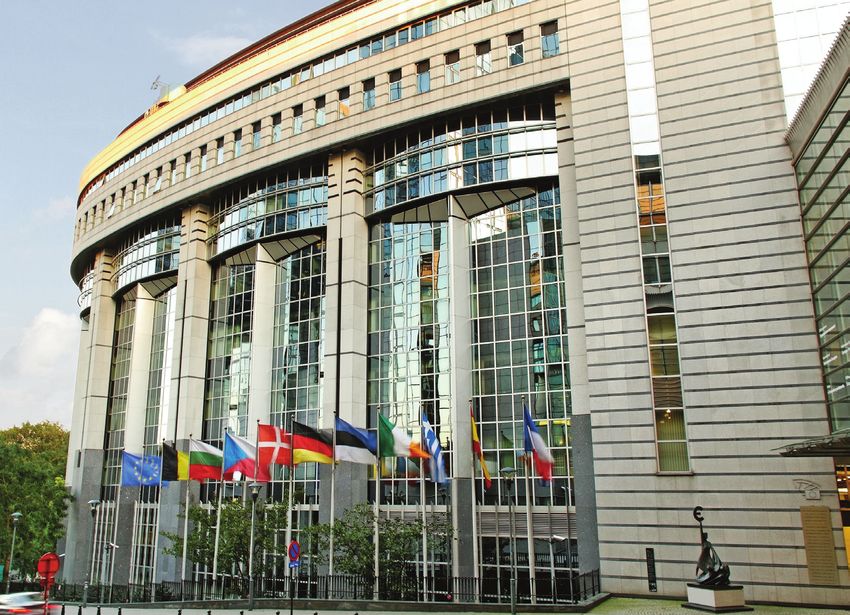
1

The True Value of Diplomacy
                                   The Foreign Office’s under-funding rests                          Department for International Development
                                   heavily on the inability of the political class                   have succeeded in demonstrating their value.
                                   to explain to the public the true value of                        Although ‘aid’ to experts often means long
                                   our diplomacy; the work of its front-line                         term infrastructure support, or third party
                                   staff around the world; and, by extension,                        involvement in trade deals, the department
                                   the impact British foreign policy has on the                      has managed to project an image of concrete
                                   public’s day to day lives. This in turn has left                  results that the public — and therefore
                                   the Foreign Office vulnerable and an easy                         the Treasury — can conceptualise: e.g. the
                                   target for Treasury expenditure cuts, and                         provision of clean drinking water to a country
                                   has resulted in the proportion of funding                         in need.
                                   available to the FCO to spend at its discretion
                                   being capricious and unstable. In one budget                      The Foreign Office on the other hand has
                                   cycle alone (2014-15 to 2015-16) the Foreign                      suffered from an inability to translate what
                                   Office’s administration and programme                             are often abstract concepts into tangible
                                   expenditure was cut by £178 million (17.2%),                      assets or, for the concern of the Treasury,
                                   and according to the FCO’s own accounts,                          something that can be measured as ‘good
                                   is yet to return to its 2014-15 level despite                     value for money’. Diplomacy is built upon the
                                   the department given additional money to                          forging of relationships and the influencing
                                   prepare for Brexit 10. Meanwhile its meagre                       of allies to develop and maintain soft power,
                                   capital budget lost £104 million (63%) from                       which is both hard to quantify or evaluate.
                                   2014-15 to 2016-17 and this year is projected                     Relationships, intelligence, and presence
                                   to still be 25% smaller then in 2013-14 11.                       may take years to pay off, leaving one
                                                                                                     government’s Exchequer the bill for a future
                                   The rationale is not inexplicable: after all,                     government’s benefit. It also requires a
                                   it is comparatively easy for the public to                        stable level of funding and certainty of assets
                                   understand the direct link between a police                       that the Foreign Office has rarely enjoyed.
                                   officer and lower crime rates, or a nurse and
                                   improved healthcare. Although both nursing                        And yet, due to an increasingly globalised and
                                   and policing have not been saved from the                         interconnected world, the UK’s foreign policy
                                   swinging axe of austerity, public opposition                      capabilities are critically intertwined with
                                   notably emphasises their importance.                              the country’s future economic prosperity
                                   Similarly, the archetypal success of the                          and security. Diplomats and the consular
                                   Ministry of Defence in securing extra funding                     infrastructure of embassies dotted across
                                   from the Treasury has in part been aided by                       the world play a vital role in helping open up
                                   an understanding in the public’s mind that an                     foreign markets, increasing inbound foreign
                                   increase in departmental budget will in turn                      investment, promoting cultural exchanges,
                                   produce a concrete outcome, for example                           and protecting citizens abroad and at
                                   new aircraft for the Royal Air Force. Even                        home. The value, although intangible, is the
                                   relatively young departments such as the                          thread that ties the legacy of the past to the
                                                                                                     potential of the future.

    The value, although intangible,                                                                  As Britain looks to the future it is clear there
                                                                                                     needs to be a more honest identification
is the thread that ties the legacy                                                                   and assessment of our diplomatic resources
                                                                                                     and manpower. Errors in judgment must be
of the past to the potential of                                                                      accounted for, but equally the context which
                                                                                                     facilitated them must be questioned, if the
the future.                                                                                          Foreign Office is to be revitalised and its
                                                                                                     potential fully met.

10
     F oreign & Commonwealth Office Annual Report & Accounts 2017-18, 5th July 2018, pg139:
     https://assets.publishing.service.gov.uk/government/uploads/system/uploads/attachment_data/file/722730/FCO1119_FCO_Annual_Report_2018_-_ONLINE.PDF
11
     S ee Annexe Table 2

                                                                                                   JUNE 2019    |   TH E B R I TI SH FO R EI G N P O LI C Y G R O U P   7
2

    Closer to Home: the Foreign
    Office’s Network in Europe
                                 Lord Hannay, the former UK Permanent                                    inter-governmental institutions or diplomatic
                                 Representative to the United Nations,                                   missions (this includes staff employed by the
                                 believes the question of available resources                            20 EU agencies headquartered in Brussels
                                 cannot be separated from perception of the                              and the 4,578 staff employed by NATO) 14.
                                 UK as a declining power 12. Historically Britain
                                 could afford a relatively small diplomatic                              While the Foreign Office spent a large portion
                                 corps as countries would make the effort                                of the ten years prior to the EU referendum
                                 to beat a path to the Foreign Office’s door,                            (2016) cutting UK staff serving overseas 15,
                                 investing large amounts of their diplomatic                             the EU has invested in its newly created
                                 resources in London. Now it is Brussels                                 diplomatic service. Established by the
                                 not London that has become a global                                     Lisbon Treaty, the European External Action
                                 diplomatic hub. Brussels has nearly twice                               Service at the end of 2017 had 4,067 staff
                                 the amount of diplomats than Washington                                 based at its headquarters in Brussels, 1,963
                                 DC 13 and in 2017 recorded that 13,546                                  deployed overseas, and a further 3,616
                                 people were employed by international,                                  Commission staff deployed to delegations

                                 12
                                      H
                                       ouse of Commons Foreign Affairs Select Committee, Oral Evidence: The UK’s Influence in the UN, 19th December 2017, pg17:
                                      http://data.parliament.uk/writtenevidence/committeeevidence.svc/evidencedocument/foreign-affairs-committee/the-uks-
                                      influence-in-the-un/oral/75940.pdf
                                 13
                                      T
                                       here was 5,400 diplomatic staff in Brussels in 2016 compared to 2,988 in Washington DC. See: Brussels-Europe the Figure 2016,
                                      Office of the Brussels Commissioner for Europe and International Organisations, 2016, pg31:
                                      https://visit.brussels/site/binaries/content/assets/pdf/figures_en_1.pdf
                                 14
                                      B
                                       russels-Europe the Figure 2016, Office of the Brussels Commissioner for Europe and International Organisations, 2016, pg31:
                                      https://visit.brussels/site/binaries/content/assets/pdf/figures_en_1.pdf
                                 15
                                      See Annexe Table 5

                                                                                                                                                                        ADOBE STOCK

    The European
    Parliament building
    in Brussels.

8    THE B RI TI S H F O REIGN POLICY GROUP    |   JUNE 2 0 1 9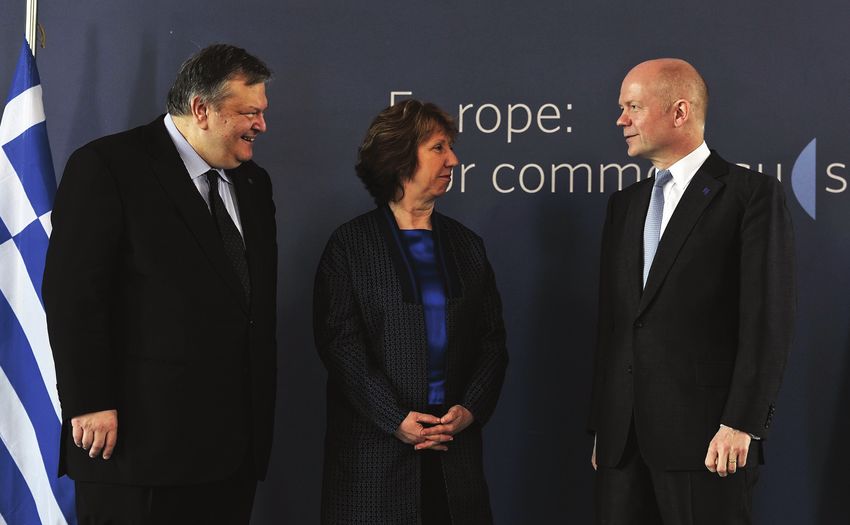
embassies in Eastern Europe and increasing

                                                                                     ADOBE STOCK
                                                                                                    staff numbers in Turkey and Russia 20 looking
                                                                                                    at staff numbers published by the Foreign
                                                                                                    Office more recently indicates our European
                                                                                                    embassies have a fraction of the manpower
                                                                                                    they once enjoyed 21.

                                                                                                    Former Foreign Secretary William Hague
                                                                                                    confirms that cuts in key European embassies
                                                                                                    continued through his tenure in the Foreign
                                                                                                    Office 22. Data provided by the Foreign Office
                                                                                                    shows that from 2012-13 to 2016-17 there
                                                                                                    were staff reductions in key European cities
                                                                                                    including Lisbon, Berlin, Madrid, Dublin,
                                                                                                    Vienna, and Stockholm 23, UK diplomatic
                                                                                                    posts were also closed in Dusseldorf, Munich,
                                                                                                    Milan, and Amsterdam 24. Perhaps just as
                                                                                                    worrying, UK embassies in Luxembourg,
                                                                                                    Lisbon, and Ljubljana have three or less UK,
                                                                                                    as opposed to local, staff 25.
Greece's Foreign        across the world 16. The opening of EU
Minister Venizelos,     delegations across the world, particularly in
EU foreign policy
                        areas where the UK has a smaller diplomatic
chief Ashton and
                        presence (such as Africa where nearly a third
Britain's Foreign
Secretary Hague talk    of the European External Action Service                                         Historically
before an informal
meeting of EU foreign
                        are based 17 ), has naturally led to the UK
                        collaborating more with EU representatives                                  Britain could afford
                                                                                                    a relatively small
ministers in Athen.
                        and sharing resources, despite strong
                        assurances from the Government that they
                        would complement and not replace the UK’s                                   diplomatic corps
                                                                                                    as countries would
                        diplomatic network 18.

                        The growing role of Brussels as an arena to
                        settle diplomatic disagreements, negotiate
                                                                                                    make the effort to
                        trade deals, and forge fresh European
                        consensus, has allowed the UK’s European
                                                                                                    beat a path to the
                        embassies to fall into metaphorical disrepair.                              Foreign Office’s
                        The Foreign Office’s Diplomatic List (released
                        yearly until 2006) shows from 1972 to 2006                                  door, investing large
                        there were substantial cuts to UK diplomatic
                        staff in key embassies across Europe. These
                                                                                                    amounts of their
                        include in Finland, Belgium, Denmark, Italy,                                diplomatic resources
                        the Netherlands, Norway, Portugal and
                        Sweden 19. While the Foreign Office has                                     in London.
                        offset some of these cuts by opening new

                        16
                             E
                              uropean External Action Service, Human Resources Annual Report, May 2018, pg39:
                             https://eeas.europa.eu/sites/eeas/files/2018_05_15_hr_report_2017_final.pdf
                        17
                             Ibid.
                        18
                             F
                              oreign Affairs Select Committee, Fourth Special Report of Session 2009–10, Foreign and Commonwealth Office Annual Report
                             2008–09: Government Response to the Committee’s Fifth Report of Session 2009–10, April 2010, pg8:
                             https://publications.parliament.uk/pa/cm200910/cmselect/cmfaff/538/538.pdf
                        19
                             See Annexe Table 3
                        20
                             Ibid.
                        21
                             Ibid.
                        22
                             H ouse of Commons Foreign Affairs Select Committee, Oral Evidence: The Future of UK Diplomacy In Europe, 31st October 2017:
                             http://data.parliament.uk/writtenevidence/committeeevidence.svc/evidencedocument/foreign-affairs-committee/the-future-of-
                             britains-diplomatic-relationship-with-europe/oral/72417.html
                        23
                             See Annexe Table 3
                        24
                             Ibid.
                        25
                             Ibid.

                                                                                                   JUNE 2019   |   TH E B R I TI SH FO R EI G N P O LI C Y G R O U P   9
3
The Spending Breakdown
Diplomatic Expenditure Core Diplomatic Spending
& Resourcing
After taking account of this expenditure, the
Like many foreign ministries across the balance is spent on the UK’s core diplomatic
world, the Foreign Office’s budget funds budget: the day to day running of the Foreign
multiple facets of foreign policy ranging Office; diplomatic staff; and the diplomatic
from soft power initiatives, such as the infrastructure of British High Commissions,
recent funding of mediation and conflict embassies, and consulates outside the
prevention training programmes in Turkey, United Kingdom. This stands at just over half
to more traditional diplomacy. The Foreign of total departmental spending.
Office directly funds the British Council,
international scholarships, some grants for Since Britain joined the European Economic
the BBC World Service, peacekeeping and Community in 1973, core diplomatic spending
conflict prevention programmes, as well as a percentage of public sector current
as the UK’s membership subscriptions to expenditure has fallen from 0.5% (1972-73) to
international organisations. It also creates 0.1% (2018-19); diplomatic core expenditure
and leads a number of cross-Government as a percentage of GDP has consistently been
Prosperity Fund programmes designed to at 0.1% since 1973. Significantly, for the first
support the United Nations Sustainable time ever, it is set to fall to below 0.1% of GDP
Development Goals by promoting growth for the years 2018-19 and 2019-20 as the
and prosperity in developing countries 26. Foreign Office faces further cuts 27.
FCO: Core Diplomatic Spending
%PSCE %TME %GDP
0.5%
0.4%
0.3%
0.2%
0.1%
0%
1972-73
1974-75
1976-77
1978-79
1980-81
1982-83
1984-85
1986-87
1988-89
1990-91
1992-93
1994-95
1996-97
1998-99
2000-01
2002-03
2004-05
2006-07
2008-09
2010-11
2012-13
2014-15
2016-17
2018-19
Data: See Annexe Table 1
26
F
oreign & Commonwealth Office Annual Report & Accounts 2017-18, 5th July 2018, pg90:
https://assets.publishing.service.gov.uk/government/uploads/system/uploads/attachment_data/file/722730/FCO1119_FCO_
Annual_Report_2018_-_ONLINE.PDF
27
See Annexe Table 1
10 THE B RI TI S H F O REIGN POLICY GROUP | JUNE 2 0 1 9Overseas Representation Spending by Prime Minister (£m)
400
300
200
100
0
Heath Wilson Callaghan Thatcher Thatcher Thatcher Major Blair 1 Blair 2 Blair 3 Brown Cameron May
1 2 3
-100
1972-1974 1974-1976 1976-1979 1979-1983 1983-1987 1987-1990 1990-1997 1997-2001 2001-2005 2005-2007 2007-2010 2010-2016 2016-2020
*current
expenditure
plans
-200
-300
Data: See Annexe Table 1
While a large proportion of cuts to the UK’s Such a short term and erratic policy distorts
diplomatic expenditure happened in the spending figures, and gives the Foreign
immediate years after 1973, it wasn’t until Office little time to plan and invest the gained
2000-01 that spending returned to its 1974- resources adequately. Strategic and long-
75 levels 28. Despite New Labour’s increase in term oversight would be curtailed for any
public expenditure, diplomatic funding as a department experiencing such disparity in
percentage of current expenditure and GDP funding, but for a department whose core
remained stagnant, with the Government function is to oversee and establish enduring
choosing to prioritise other departments relationships and insight into its global
throughout simultaneous budgets. partners, the Foreign Office has suffered
immeasurably.
It is clear that government spending on
diplomacy since 1973 has been volatile, Every prime minister has been guilty of
falling victim to short term political and cutting core diplomatic funding at one
budgetary decision-making and has lacked point or another during their tenure, and
the stability needed for a long-term strategy as such, fuelling this unsettling, gradual
and foreign policy goals. decline 30. Most worrying of all, if the current
Government continues with its projected
This turbulence has been particularly evident programme of cuts for 2019-20, core
over the last few years, where the current diplomatic funding will stand at its lowest
Government has cut diplomatic funding in level for twenty years, just as Britain leaves
both 2016 and 2017, increased the budget the European Union 31.
by 20% in 2018, and was projected to cut
it by 21% in 2019, wiping out any gains 29.
28
Ibid.
29
See Annexe Table 1 2015-16, 2016-17, 2017-18, 2018-19 & 2019-20
30
Ibid.
31
See Annexe Table 1
JUNE 2019 | TH E B R I TI SH FO R EI G N P O LI C Y G R O U P 11Tracking a Decade of FCO not been shielded from government cuts.
Departmental Spending: While the FCO’s grant to the British Council is
a relatively small funding stream, this did not
2009-2019
stop ministers in the Coalition Government
from reducing it by 22.2% (£43 million) from
Reviewing the FCO’s annual accounts over 2009-10 to 2014-15. Subsequently, the
the past decade, we can conclude that there FCO’s funding to the British Council has been
has been a decline in the amount of funding marginally increased; however, it is still £29
the Foreign Office controls directly. In 2009- million below its 2009-10 level 35. Analysing
10 the amount of discretionary spending the data available, it is clear that the FCO’s
within the gift of the department, through annual grants to international organisations
its central administration and programme were consistently an easy target for Coalition
expenditure budget, stood at 44.7% of total Ministers who were tasked with finding
resource spending. This rose during the departmental savings. By the end of the
Coalition Government to over half (55.4%) of Coalition Government in 2015 the UK’s
all departmental spending. However, since contributions to international organisations
2014-15 the amount of discretionary funding delivered through the FCO grants had
available to the FCO has fallen to 37% 32. been cut by 45% (£122 million) although,
on returning to office with a parliamentary
The collapse in discretionary spending has majority, Conservative Ministers redressed
been met in part by an increase in ODA funds this shortfall doubling the budget for grants
available to the FCO from cross-departmental in a year and subsequently increasing it from
pools of funding — such as the Prosperity 2015-16 to 2018-19 by a further 21% 36.
Fund and the Conflict, Stability and Security
Fund — which are ear-marked for specific The FCO’s funding towards peacekeeping
projects. On the whole these additional funds operations has also fluctuated over the past
have stabilised the FCO’s overall budget decade, initially receiving a £50 million (15%)
and account for nearly a quarter of total uplift in 2010-11. The preceding years saw
departmental spend 33; they in fact mask a its funding levels modestly recede. While the
depletion in budgetary control 34. proportion the FCO spends on peacekeeping
is larger than in 2009-10, it is still less than its
Similarly, the FCO’s grants to international 2010-11 peak 37.
organisations and the British Council have
Administration and Programme Expenditure as a percentage
of FCO Total Department Spending (Resource DEL)
60.0%
50.0%
40.0%
30.0%
20.0%
10.0%
0.0%
2009-10 2010-11 2011-12 2012-13 2013-14 2014-15 2015-16 2016-17 2017-18 2018-19
Data: See Annexe Table 9
32
See Annexe Table 9
33
23.7%, factoring in Prosperity Fund & Conflict Prevention Programme Expenditure together.
34
See Annexe Table 9
35
See Annexe Table 9
36
See Annexe Table 9
37
See Annexe Table 9
12 THE B RI TI S H F O REIGN POLICY GROUP | JUNE 2 0 1 9Conflict Prevention Programme Expenditure as a percentage
of FCO Total Department Spending (Resource DEL)
25.0%
20.0%
15.0%
10.0%
5.0%
0.0%
2009-10 2010-11 2011-12 2012-13 2013-14 2014-15 2015-16 2016-17 2017-18 2018-19
Data: See Annexe Table 9
Programme and International Organisation Grants as a percentage
of FCO Total Department Spending (Resource DEL)
18.0%
16.0%
14.0%
12.0%
10.0%
8.0%
6.0%
4.0%
2.0%
0.0%
2009-10 2010-11 2011-12 2012-13 2013-14 2014-15 2015-16 2016-17 2017-18 2018-19
Data: See Annexe Table 9
Consideration should also be given to funds to both departments as part of this
the complicated internal market that ‘Machinery of Government Change’. This
exists in Whitehall, defined by a cycle has included the transfer of £2.8 million of
of funding deductions and transfers funding for its European Union functions
between departments with overlapping to the Department for Exiting the EU, and a
responsibilities. While much of the £412 transfer of a £0.9 million to the Department
million cost of setting up the Department for International Trade to cover office space;
for Exiting the EU and the Department taken from the FCO’s administration and
for International Trade in preparation for programme expenditure and capital budget
Brexit has come from the Treasury 38, the respectively 39.
FCO has also been required to transfer
38
H
ouse of Commons Committee of Public Accounts, Exiting the European Union, 29 January 2018, pg13:
https://publications.parliament.uk/pa/cm201719/cmselect/cmpubacc/467/467.pdf
39
F
oreign & Commonwealth Office Annual Report and Accounts 2016–17, 6 July 2017, pg37: 2017
https://assets.publishing.service.gov.uk/government/uploads/system/uploads/attachment_data/file/625651/FCO-annual-report-
2017-web-accessible.pdf
JUNE 2019 | TH E B R I TI SH FO R EI G N P O LI C Y G R O U P 134
Staffing and Resources Analysis
FCO Staffing Levels — to protect their diplomatic capabilities whilst
An Overview suffering from diminished budgets.
Analysing the trend in the Foreign Office’s Although the growing number of locally
staffing levels, the number of FCO U staff engaged staff has brought much value to the
has been cut by 928 since 2010 (18.8%). At UK’s diplomatic network overseas — they
one point FCO staff numbers would have have a depth of local knowledge, culture
included MI6 staff (removed in 1992-93), and politics, and many are native language
development staff (transferred to DFID in speakers — it is impossible to assess
1997-98), UK Border Agency Staff (removed accurately the Foreign Office’s reliance
in 2007-08), as well as staff working at Wilton on them in key diplomatic posts, since it
Park, and at FCO services (removed in 2007- currently provides no data on local staff
08) which have since been transferred from beyond an overall head count.
the FCO’s accounts 40.
However, the Foreign Affairs Select Committee
and PCS (the civil servants union) have
The Use of Locally recorded key differences between the working
Engaged Staff arrangements of locally engaged staff and UK
staff serving in embassies overseas, which
should be taken into consideration when
Consecutive UK Governments have favoured assessing their increased role. These include
the model of UK embassies hiring locally the fact that locally engaged staff do not
based staff to compensate for cuts to UK receive a similar level of security clearance
staff serving overseas, something which has as UK staff; or benefit from full diplomatic
become common practice for most countries immunity. They are contracted to work local
across the world. Initially this was clearly a office hours, and these conditions limit the
costing saving decision, and the Foreign Office type of work and roles local staff can undertake
has argued that it has allowed UK embassies in UK embassies and their utility in a crisis 41.
UK FCO Manpower
FCO Staff Numbers
10,000
9,000
8,000
7,000
6,000
5,000
4,000
3,000
2,000
1,000
0
6
8
0
2
4
6
8
0
2
4
6
8
0
2
4
6
8
-8
-8
-9
-9
-9
-9
-9
-0
-0
-0
-0
-0
-1
-1
-1
-1
-1
85
87
89
91
93
95
97
99
01
03
05
07
09
11
13
15
17
19
19
19
19
19
19
19
19
20
20
20
20
20
20
20
20
20
Figures from Foreign & Commonwealth Expenditure Reports & Accounts 1985-2018
40
See Annexe Table 4
41
Foreign Affairs Select Committee, FCO performance and finances 2011–12, 19th March 2013, pg25:
https://publications.parliament.uk/pa/cm201213/cmselect/cmfaff/690/690.pdf
14 THE B RI TI S H F O REIGN POLICY GROUP | JUNE 2 0 1 9For the purposes of this report, these
known limitations taken together with the
incomplete data published by the Foreign
Turning to the
Office on locally engaged staff, make it
impossible to treat them as the same as UK
distribution of FCO
staff serving overseas. However, this has not staff by pay-band and
grade, the majority of
stopped the Foreign Office from doing so
and using the overall headcount of locally
engaged staff to disguise the extent of
staffing cuts.
staff cuts since 1997
In 1989 there were 7,000 locally based staff
have targeted junior
in UK embassies, which peaked in 2008 at roles.
10,000. Since then the number of locally based
staff has been cut to just 7,496 in 2018 42.
This recent decline without reintroduction
of UK nationals has blunted any rebutting time available for quality research and analysis.
argument put forward by Government that Senior grade staff have also had their
cuts to UK staff in diplomatic posts are part numbers reduced over the years. Under
of an innovative strategy and are efficiency reforms enacted by Jack Straw running from
savings. Rather they reinforce the view that 2004 to 2007 senior management was cut by
cuts to the diplomatic network are motivated nearly 20%, and this included both reducing
purely by budgetary considerations. senior posts in Europe and closing a small
number of lower priority posts outside of it.
The money raised from these cuts was then
Staffing Cuts by Grade used to open new posts in India, Pakistan,
China, and increase the UK’s diplomatic
Turning to the distribution of FCO staff by presence in Iraq and Afghanistan 45.
pay-band and grade, the majority of staff
cuts since 1997 have targeted junior roles. Sir William Patey, the former British
The lowest staff grade A1 has seen a 78% Ambassador to Iraq, Saudi Arabia, and
reduction in staff, the number of A2 staff has Afghanistan, has said that there simply is ‘not
been cut by over 1,000, and the number of time anymore’ for diplomatic staff to travel
B3 staff grade has been more than halved to the country and engage at length with the
just 614 since 1997 43. These cuts to junior local populace 46. This has limited the ‘time to
staff were well underway by 2007 when the reflect’ which reveals a depth of knowledge
Foreign Office decided to discontinue the being lost in each and every campaign
lower pay-bands, between 1995-2006, of undertaken, with no meaningful alternative
nearly one third of A1 and A2 grade staff and to replace it.
4.8% of B3 staff 44.
To address this, the Foreign Affairs Select
To the untrained eye, the reduction in junior Committee in the past has recommended
staff over the more senior and experience that the Foreign Office learn from previous
staff may be welcomed. Realistically however, it diplomatic crises 47 where important UK
has had huge consequences for the workload interests were at risk in the event of political
of UK embassies across the world. The fall upheaval, and as such UK embassies should
in junior staff serving overseas has led to a have at least one officer working full-time on
heavier workload, which in turn has reduced internal political affairs: knowing the local
the UK’s diplomatic capability, particularly the language, ideally with previous experience
42
See Annexe Table 6
43
See Annexe Table 7
44
Ibid.
45
T
he Foreign and Commonwealth Office, Active Diplomacy for a Changing World The UK’s International Priorities, March 2006,
pg47-48: https://assets.publishing.service.gov.uk/government/uploads/system/uploads/attachment_data/file/272260/6762.pdf
46
S
ir William Patey, “21st Century Diplomats: The Changing Role of British Diplomats”, 22 January 2015, Chatham House:
www.chathamhouse.org/sites/files/chathamhouse/field/field_document/2015012221stCenturyDiplomats.pdf
47
N
amely British policy on Iran 1974-78, and Argentina before 1982. Foreign Affairs Select Committee, The Role of the FCO in UK
Government, 27 April 2011, pg12 & pg47: https://publications.parliament.uk/pa/cm201012/cmselect/cmfaff/665/665.pdf
JUNE 2019 | TH E B R I TI SH FO R EI G N P O LI C Y G R O U P 15in the country; and time to travel outside trade, aid, and defence staff and offering
the capital. At least one of the team in little distinction between local and UK staff.
London covering the country should have
served there, and desk officers should be This only changed in 2013 when, for the
given time to read and study the country 48. first time, the yearly Foreign Office accounts
From at least a funding perspective, recorded a list of the UK embassies and the
these recommendations have not been total amount of UK staff deployed there 49,
implemented, and resources have not been before being discontinued again for the most
ring-fenced to supply this strategic safety net. recent Foreign Office accounts report (2017-
18 50). All the same, this snapshot provides an
important insight into the recent geographic
Geographic Distribution distribution of the UK’s diplomatic corps and
of UK Diplomatic Staff where staff cuts have fallen.
Overseas — A Snapshot Looking at the recent geographical
distribution of reductions in UK staff levels,
The unifying backdrop of this report it is clear that the Government has taken a
remains critical that the Foreign Office has targeted approach rather than implementing
characteristically failed to provide the public cuts across the board. The data available
with a detailed picture of the geographic shows that from 2012-13 to 2016-17 the
distribution of UK staff serving overseas. UK diplomatic network was reduced by 270
Even the Diplomatic List, which was regularly posts (15%). Central, South, and South-East
issued by the Foreign Office until 2006, Asia have faced the brunt of those cuts:
failed to set out clearly the UK’s diplomatic losing 166 UK overseas staff, constituting
personnel, lumping them together with nearly a third of UK staff between them
Table 8: FCO Diplomatic Manpower by Geographical Region (2012-13 to 2016-17)
Region 2012-13 2016-17 Change
Europe 354 (19.8%) 349 (23%) -5 (-1.4%)
North & Central America 135 (7.5%) 118 (7.7%) -17 (-12.5%)
South America & South Atlantic 70 (3.9%) 54 (3.5%) -16 (-0.5%)
Middle East & North Africa 263 (14.7%) 251 (16.5%) -12 (-4.5%)
West Africa 108 (6%) 77 (5%) -31 (-28%)
Central Africa 69 (3.8%) 73 (4.8%) +4 (+5.7%)
South Africa 54 (3%) 35 (2.3%) -19 (-35%)
Central & South Asia 262 (14.6%) 175 (11.5%) -87 (-33%)
South East Asia 267 (14.9%) 188 (12.4%) -79 (-30.1%)
Pacific 30 (1.6%) 23 (1.5%) -7 (-23.3%)
UK Reps to Multilateral Organisations 172 (9.6%) 171 (11.2%) -1 (-0.5%)
Total 1,784 1,514 -270 (-15.1%)
Foreign & Commonwealth Office Annual Report & Accounts: 2016-17 (pg64), 2015-16 (pg72), 2014-15 (pg28),
2013-14 (pg45) & 2012-13 (pg116)
Region 2012-13 2016-17 Change
Commonwealth 421 (22.4%) 301 (19.8%) -120 (-28.5%)
Total 1,784 1,514
48
F
oreign Affairs Select Committee, The Role of the FCO and UK Government, 27th April 2011, pg77:
https://publications.parliament.uk/pa/cm201012/cmselect/cmfaff/665/665.pdf
49
Foreign & Commonwealth Office Annual Report & Accounts 2012-13, 1st July 2013, pg116: https://assets.publishing.service.gov.
uk/government/uploads/system/uploads/attachment_data/file/318816/Annual_Report_2012-2013_-_update_June2014.pdf
50
Foreign & Commonwealth Office Annual Report & Accounts 2017-18, 5th July 2018, pg49: https://assets.publishing.service.gov.uk/
government/uploads/system/uploads/attachment_data/file/722730/FCO1119_FCO_Annual_Report_2018_-_ONLINE.PDF
16 THE B RI TI S H F O REIGN POLICY GROUP | JUNE 2 0 1 9the promotion of trade and economic ties,
The reduction in UK staff all depend upon a fully staffed diplomatic
network. For example there is generally a
serving abroad has far reaching consensus on the need for diplomatic staff in
consequences for British foreign crisis management, whether it is the provision
of consular services to UK citizens stranded
policy beyond a simple reduction in a country after a natural disaster — such
as the recent hurricanes Irma and Maria in
in manpower. the Caribbean — or the role diplomatic staff
play in reporting intelligence on the ground
when there is a political crisis.
(31.3%) 51. Similarly, West and South Africa However, what is not often considered is
received equally large cuts, losing 50 staff the important role diplomatic staff play in
between them. It is pertinent to mention intelligence gathering, research, and analysis.
that the downsizing of resources in Asia has The institutional memory of regional experts
not been met with an increase of resources and senior diplomats is key to informing
in other geographic regions. In fact, every foreign policy decisions and exerting
region — bar central Africa — saw cuts to UK British influence across the world — this
diplomatic staff over the four-year period for is particularly important in countries with
which records are available. long term, unchanging political leaders and
establishments.
UK diplomatic resources outside of Asia
and South and West Africa have remained Staff cuts have also had a detrimental impact
largely stable, with the percentage of UK on the expertise, analytical capability, and
staff serving in embassies in North, Central, language skills available to the Foreign
and South America in this period having Office. It was noted at the time of the Arab
remained largely unchanged. However it is Spring that the Foreign Office’s response
Europe, North Africa, and the Middle East that was hindered by a lack of expertise and
continue to have the largest concentration connections to opposition and civil society
of UK diplomatic staff, reflecting the UK’s figures that emerged as leaders 54. More
foreign policy priorities 52. recently, similar deficits have been found in
relation to Russia. Sir Nigel Sheinwald, the
Similarly, a large number of diplomatic staff former British Ambassador to the USA, has
cuts have previously targeted embassies argued that by the time of the Ukraine crisis
in Commonwealth countries, which as a in 2014, the old cadre of British Cold War
collection lost 120 UK staff (28.5%) between experts, with their historic analytical capacity,
2012-13 and 2016-17 53. were simply not there to provide the insight
and clarity needed 55. The immediate scaling
down of FCO resources in Russia and
The Impact of Cutting UK Eastern Europe after the Cold War 56, while
Diplomatic Resources a rational financial decision at the time, has
left the Foreign Office without vital expertise
as a whole generation of diplomats have
The reduction in UK staff serving abroad retired and taken invaluable experience and
has far reaching consequences for British institutional knowledge with them, resources
foreign policy beyond a simple reduction which are now needed more than ever given
in manpower. The success or failure of renewed tensions with Russia and increased
the Foreign Office’s strategic objectives, tension in the Black Sea states. The reality is
which include the protection of UK citizens that once this expertise is lost, it is costly —
abroad, and the projection of influence; and and time-consuming — to regain.
51
See Table 8
52
See Table 8
53
Ibid. See also Table 8 and Annexe Table 3 which demonstrates a sustained decline of resources in key Commonwealth countries
54
ouse of Commons Foreign Affairs Select Committee, British Foreign Policy and the Arab Spring, 3rd July 2012, pg20:
H
https://publications.parliament.uk/pa/cm201213/cmselect/cmfaff/80/80.pdf
55
“Britain’s Foreign Office loses direction as cuts loom”, FT Online, November 2014:
https://www.ft.com/content/f7e4c1e8-69ab-11e4-8f4f-00144feabdc0
56
See Annexe Table 3 — Eastern Europe & Soviet Union 1972, 1982 & 1990
JUNE 2019 | TH E B R I TI SH FO R EI G N P O LI C Y G R O U P 175
The Diplomatic Umbrella
The Foreign Office is no longer the prime many UK staff are currently posted overseas
actor when it comes to the UK’s diplomatic and how many of those employed are
engagement abroad. Instead, it is increasingly recruited locally as this figure is not published
part of a wider ‘diplomatic umbrella’ that in the Department’s annual accounts. This
includes the Department for International undermines the ability to critically evaluate
Development; overseas intelligence agencies their use of staff.
(MI6); the Ministry of Defence; and the newly
created Department for International Trade. Similarly, the Ministry of Defence regularly
All of these have staff serving overseas and posts military attaché’s in key diplomatic
operating throughout the UK’s diplomatic posts across the world to enhance and foster
infrastructure. military relations. In 2010-11 there were 110
military attaches covering 143 countries, in
The number of UK staff from other 2017-18 this number has dropped to 85 61.
departments working overseas has grown
exponentially in the last decade. In 2006 Given this list of additional diplomatic
there were just 850 staff from 22 other resources abroad, some might argue that
government departments working in UK cuts to UK FCO staff serving overseas has
embassies 57. Ten years later, in 2016, the been cushioned by the stabilisation-or
FCO provided a platform for over 6,000 staff growth in-staff posted in the wider
from 29 other government departments in diplomatic umbrella from other international
more than half of the UK’s overseas posts 58, facing departments. However, this may well
an increase of 85%. be misleading, as it assumes that these
resources are strategically coordinated, that
While the number of UK FCO staff serving staff are pooled appropriately as a common
overseas has dropped, the number of pot of resource, rather than individual
development aid staff posted abroad has departments working as silos; and perhaps
steadily risen since the establishment of an most importantly, that the work of FCO staff
independent Department for International in embassies can simply be replicated by
Development from 47 in 1997-98 to 1,313 another department’s staff.
in 2017-18 59. Similarly, the creation of a new
Department for International Trade in 2016 Of course, DFID, the MoD and the FCO
has seen an additional 1,386 staff working in regularly coordinate efforts to respond to
overseas posts, of which 146 are UK staff 60. crises abroad and protect UK citizens, as
is evident from the cross-departmental
Like the Foreign Office, both departments response to Hurricanes Irma & Maria
rely heavily on employing locally engaged which involved personnel from all three
staff to deliver on their key priorities abroad. departments. Similarly, in the area of
In the case of DFID it remains unclear how economic diplomacy there has also already
57
F
oreign and Commonwealth Office, Active Diplomacy for a Changing World, The UK’s International Priorities, March 2006, pg42:
https://assets.publishing.service.gov.uk/government/uploads/system/uploads/attachment_data/file/272260/6762.pdf
58
Future FCO Report, Foreign & Commonwealth Office, 9th May 2016, pg14:
https://assets.publishing.service.gov.uk/government/uploads/system/uploads/attachment_data/file/521916/Future_FCO_Report.pdf
59
D
epartment for International Development, Annual Report & Accounts 1998-99, pg65: https://assets.publishing.service.gov.
uk/government/uploads/system/uploads/attachment_data/file/67968/deptreport98-99.pdf & Department for International
Development, Annual Report & Accounts 2017-18, pg19: https://assets.publishing.service.gov.uk/government/uploads/system/
uploads/attachment_data/file/750989/DFID-Annual-Report-Accounts-2017-18-amended-Oct18.pdf
60
D
epartment for International Trade, Single Departmental Plan, 9 October 2018:
https://www.gov.uk/government/publications/department-for-international-trade-single-departmental-plan/department-for-
international-trade-single-departmental-plan-may-2018
61
M
inistry of Defence, Annual Report & Accounts 2017-18, pg42:
https://assets.publishing.service.gov.uk/government/uploads/system/uploads/attachment_data/file/727618/CCS207_
CCS0318104056-1_MOD_ARA_2017-18_-_Web_PDF.pdf & Ministry of Defence, Annual Report & Accounts 2011-12, pg10:
https://assets.publishing.service.gov.uk/government/uploads/system/uploads/attachment_data/file/35009/20121206_mod_
annual_report_12.pdf
18 THE B RI TI S H F O REIGN POLICY GROUP | JUNE 2 0 1 9been successful diplomatic collaboration There is a similar concern when it comes to
between FCO, DIT and DFID staff posted the spending of overseas development aid.
overseas. Working together, they recently Taking into account the amount of additional
identified opportunities for UK businesses funding the FCO receives from cross-
to invest in £6 billion worth of infrastructure Government Conflict, Stability, and Security
development in East Africa 62. and the Prosperity Funds, the Foreign Office is
the largest spender of UK aid outside of DFID.
However, aside from rapid response to crises, While all UK Official Development Assistance
this kind of inter-departmental collaboration (ODA) spending falls under the Government’s
is relatively new and not without its teething aid strategy and must meet the Organisation
problems. For example, in the area of trade for Economic Co-operation and Development’s
policy there remains continuing ambiguity definition, both the National Audit Office
over the FCO’s role when it comes to trade and the International Development Select
policy and the relationship between FCO Committee have raised concerns that there
and DIT staff working overseas. One of the is the potential for divergence in objectives
Foreign Office’s key priorities remains to help across departments 64. The Foreign Office in
establish the UK’s independent trade policy, particular has been criticised over its poor
which includes ensuring the UK’s transition ranking when it comes to the transparency of
to becoming an independent member of its ODA spend 65.
the World Trade Organisation 63. Yet there
is currently available very little detail in the The International Development Committee
public domain on how the FCO is coordinating in a recent inquiry, found that a considerable
its work with the Department for Trade and portion of FCO ODA is being spent on
ensuring that they complement rather than administrative costs for overseas FCO
replicate work. posts, where Ministers are effectively using
The Secret
ADOBE STOCK
Intelligence Service
(MI6) building in
London. MI6 was
previously an agency
of the FCO, before
becoming its own
department in
1992-3.
62
F
oreign & Commonwealth Office Annual Report & Accounts 2017-18, 5th July 2018, pg31-32:
https://assets.publishing.service.gov.uk/government/uploads/system/uploads/attachment_data/file/722730/FCO1119_FCO_
Annual_Report_2018_-_ONLINE.PDF
63
Ibid pg6.
64
H
ow the UK spends its aid budget, Institute for Fiscal Studies, 12th October 2018, pg265:
https://www.ifs.org.uk/uploads/publications/budgets/gb2018/GB8.pdf
65
T
he 2018 Aid Transparency Index: http://www.publishwhatyoufund.org/the-index/2018
JUNE 2019 | TH E B R I TI SH FO R EI G N P O LI C Y G R O U P 19You can also read


