SAFELY RETURNING TO THE OFFICE DURING COVID-19 - Presented by The New York Committee for Occupational Safety and Health (NYCOSH) - The NewsGuild ...
←
→
Page content transcription
If your browser does not render page correctly, please read the page content below
SAFELY RETURNING TO THE
             OFFICE DURING COVID-19
             Presented by The New York Committee for Occupational Safety and Health (NYCOSH)

                                                                                                Marina Jabsky, MPH
                                                                                                Industrial Hygienist
NYCOSH [08.16.2021]                                                                            mjabsky@nycosh.org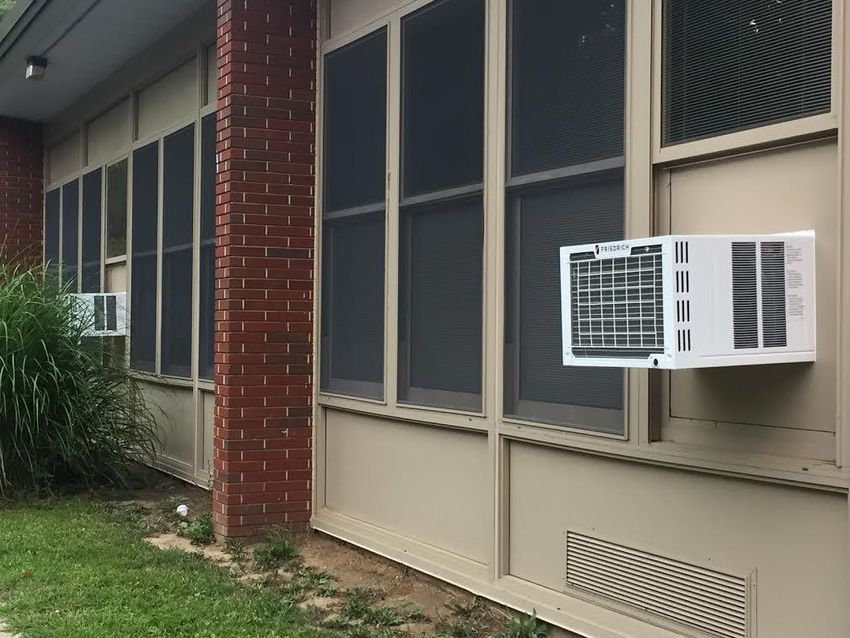
TRAINING AGENDA
                      1.   Review COVID Basics as they pertain to control methods
                      2.   Virus variants
                      3.   Vaccines
                      4.   --break – 5 min --
                      5.   Controlling the spread / ventilation
                      6.   Organizing response (Chris)

                                                                                    2
NYCOSH [08.16.2021]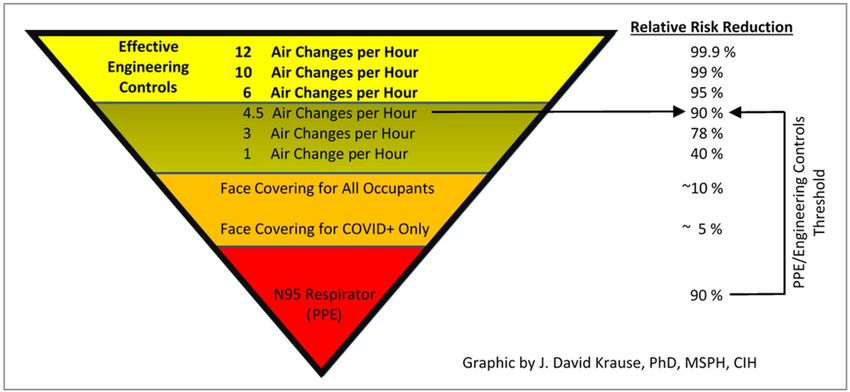
▪ (Control = controlling
                       or preventing
                       exposure)

                      ▪ Preventing additional
                       waves is not an
                       individual
                       responsibility, but a
                       community responsibi
                       lity

                      ▪ Controls are required
                       on multiple levels

                                                 3
NYCOSH [08.16.2021]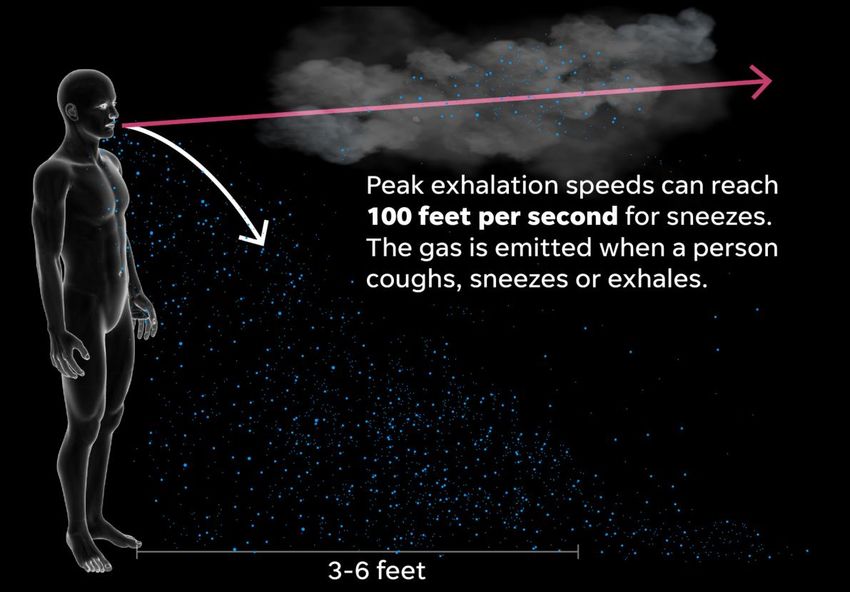
4

NYCOSH [08.16.2021]
HOW IS COVID-19 TRANSMITTED?                                       COVID-19 = disease
                                                                                 SARS-CoV-2 = virus

            ▪ Person-to-person
                ▪ Between people who are in close contact (6 feet)
                  with one another
                      ▪ Respiratory droplets produced when an infected
                       person coughs or sneezes (can stay in air up to ~3 hrs)
                        ▪ Droplets can land in mouths or noses of people
                      who are nearby and be possibly inhaled into
                      the lungs
                ▪ Airborne aerosol transmission (factsheet)

            ▪ Contaminated surfaces
                ▪ Touching a surface or object that has the virus on it
                  and then touching your own mouth, nose, or eyes
                                                                                                      5
NYCOSH [08.16.2021]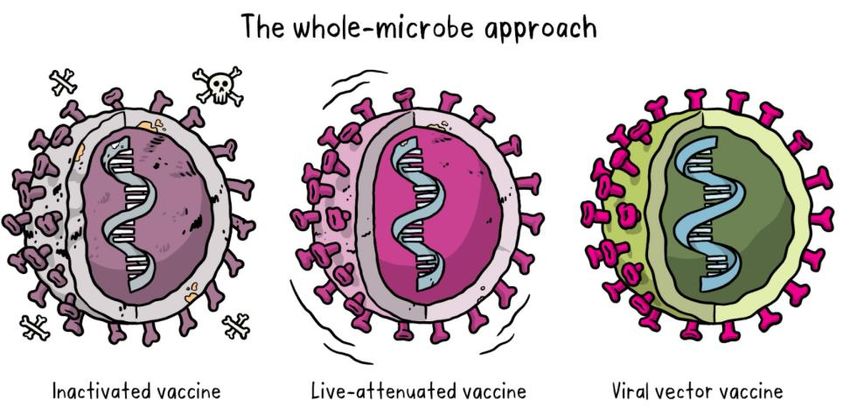
COVID-19 = disease
                                                                                                                                                       SARS-CoV-2 = virus

                                                                                      ▪ SARS-CoV-2 is spread through droplets and aerosols
                                                                                        ▪ Droplets are particles of moisture larger than 300µm and
                                                                                          fall to the ground within seconds
                                                                                           ▪ **When humidity is low, droplets will become aerosols
                                                                                              due to evaporation
                                                                                        ▪ Aerosols are particles of moisture smaller than 100µm and
                                                                                          can remain suspended in the air for hours
                                                                                           ▪ One study found that aerosols can remain in the air and
                                                                                              infectious after 16 hours1

                                                                                      ▪ While masks and social distancing are effective outdoors,
                                                                                       indoors, they are a lot less effective
                                                                                        ▪ Graphics based on Spanish public health data and the
            https://www.condair.com/humidity-health-wellbeing/dry-air-and-airborne-       COVID-19 Airborne Transmission Tool Estimator show the
            infection                                                                     difference in SARS-CoV-2 transmission in ventilated and
                                                                                          unventilated indoor spaces.
                                                                                                                                                                            6
                                                                                                       1   https://wwwnc.cdc.gov/eid/article/26/9/20-1806_article
NYCOSH [08.16.2021]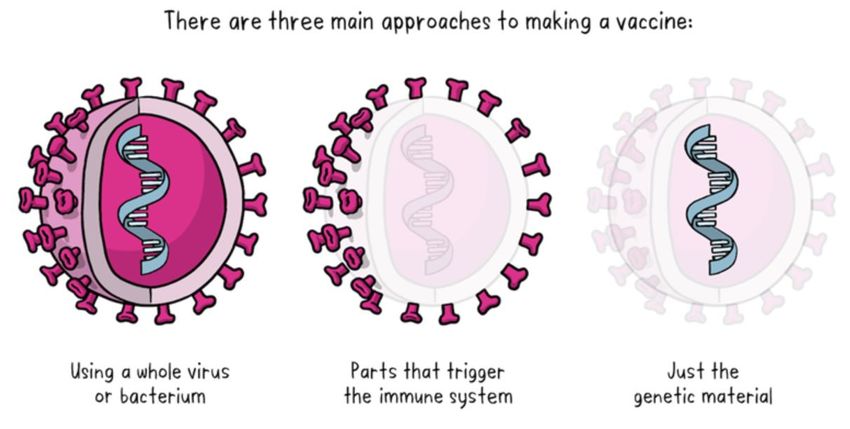
▪ Will social distancing help decrease
              the likelihood of airborne
              transmission?
                      ▪ Yes…. and no.
                          ▪ Outdoors – yes.

                          ▪ Indoors – no.

            *for droplet transmission (getting sneezed on, for example), social
                                distancing will still help mitigate transmission.

            In many indoor spaces, you may see the combination of plexiglass
       barriers to prevent droplet exposure, AND indoor ventilation to exhaust
                                                      out airborne particles.

                                                                                    Bourouiba L. Turbulent Gas Clouds and Respiratory Pathogen Emissions: Potential
                                                                                    Implications for Reducing Transmission of COVID-19. JAMA. 2020;323(18):1837–1838.
                                                                                    doi:10.1001/jama.2020.4756                                                          7
NYCOSH [08.16.2021]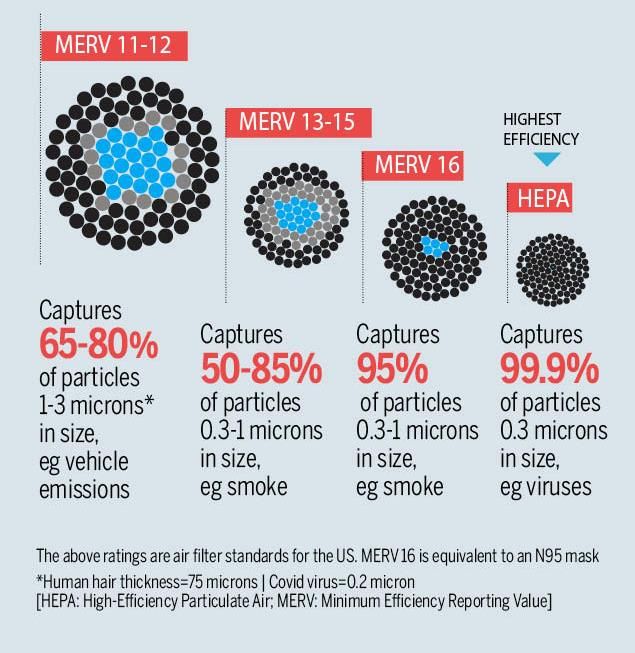
WHAT ABOUT THOSE NEW VIRUS STRAINS?
             ▪ Virus mutation is very normal – as the virus population size expands, mutations
                spontaneously occur.
                 ▪ Since Jan. 2020, we know SARS-CoV-2 has already mutated many times. A virus typically
                      mutates every time it moves from host to host, and even within a single host.

             ▪ Many virus mutations are inconsequential – the virus still looks and functions just as its
                parent did before.
                 ▪ Over time, sets of mutations can “layer” on top of each other, and the virus can begin to
                      function differently.
                       ▪ Some of these may give the virus and advantage – for example, increased transmissibility.

             ▪ The more people in a population are vaccinated, the less chance the vaccine has to
                mutate (because mutations occur when a virus moves from person to person).
                 ▪ Therefore, even if vaccines are less effective against specific variants, having a large
                      percentage of the population vaccinate will still help drive down transmission, even among the
                      new variants.                                                                                      8
                                                       https://www.cdc.gov/coronavirus/2019-ncov/variants/variant.html
NYCOSH [08.16.2021]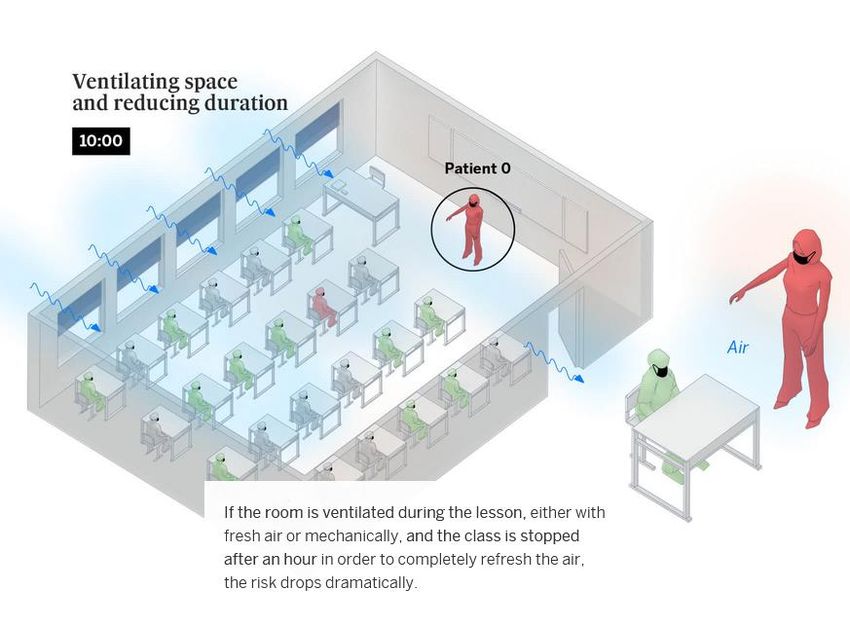
▪ The Delta variant is more transmissible than the viruses that cause MERS, SARS, Ebola,
                 the common cold, the seasonal flu and smallpox, and it is as contagious as chickenpox,
                 according to internal CDC document.1
              ▪ Why?
                  ▪ Although many mutations do not impact virus functionality, Delta has some that do
                      cause significant changes:
                      ▪ Increased viral load – the amount of viral load in a person infected with Delta is a
                        thousandfold more than what is seen in people infected with the alpha version of the virus. 2
                      ▪ Denser spike protein, which helps the virus more easily invade cells and evade the body’s
                        defenses. 3
                      ▪ Shorter incubation time – 4 days for Delta vs 6 days for alpha – so people are contagious
                        earlier. 4

                                             1   https://www.nytimes.com/2021/07/30/health/covid-cdc-delta-masks.html
                                             2   https://virological.org/t/viral-infection-and-transmission-in-a-large-well-traced-outbreak-caused-by-the-delta-sars-cov-2-variant/724
                                             3   https://www.salon.com/2021/08/05/this-is-very-much-a-mystery-in-progress-scientists-explain-everything-we-know-about-delta-so-far/      9
                                             4
NYCOSH [08.16.2021]                              https://www.nature.com/articles/d41586-021-01986-w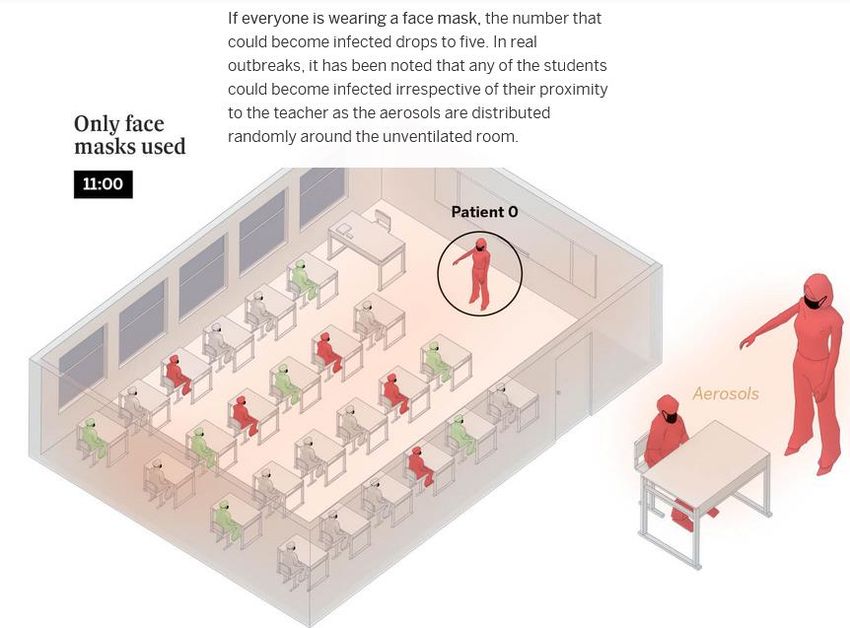
▪ Delta is spreading FAST – 50% faster than alpha, which was 50% more contagious
                 than the original strain.
                  ▪ “In a completely unmitigated environment—where no one is vaccinated or wearing masks—it’s
                      estimated that the average person infected with the original coronavirus strain will infect 2.5 other
                      people,” Dr. Wilson says. “In the same environment, Delta would spread from one person to maybe
                      3.5 or 4 other people.” 1

              ▪ Vaccinated people are becoming infected
                  ▪ Due to the variant’s properties (increased ability to enter mucous lining; increased viral load),
                      vaccinated people are more likely to experience breakthrough infections. (Still, this happens much
                      easier in unvaccinated people, and those who are vaccinated are much better able to combat the
                      variant.)

              ▪ In the short term, we are likely to see COVID resurgences across the country,
                 especially places with low vaccination rates.2
                  ▪ Hyperlocal outbreaks – what happens when a low-vaccination area is surrounded by high vaccination
                      areas, so the virus is “contained” within the borders.
                                                1   https://www.yalemedicine.org/news/5-things-to-know-delta-variant-covid                                                               10
                                                2   https://www.salon.com/2021/08/05/this-is-very-much-a-mystery-in-progress-scientists-explain-everything-we-know-about-delta-so-far/
NYCOSH [08.16.2021]
▪ So far, Delta does not appear to cause more severe illness than any other COVID
variants – the severity of illness and symptoms is similar to the original strain.
▪ However, it can still be more lethal in impact, because it can infect so many more people
and more quickly, so we may yet see higher death rates.1
▪ The variant infects unvaccinated people more easily and makes them sicker by
being able to replicate with fewer obstructions. But it also seems to be more
effective in attacking younger people, pregnant people, and people with chronic
diseases who are unvaccinated.2
1 https://www.khou.com/article/news/health/coronavirus/delta-variant-contagious-different-covd-coronavirus/285-603f8524-ce9e-4fc8-
a1ae-b60f8ff81690
2
11
https://www.salon.com/2021/08/05/this-is-very-much-a-mystery-in-progress-scientists-explain-everything-we-know-about-delta-so-far/
NYCOSH [08.16.2021]▪ Almost certainly yes.
▪ The nature of a virus is to mutate. New variants are not just likely, they’re inevitable.
▪ There is a Lambda variant spreading, which originated in Peru and is now in 44 states. We
do not know much about it yet, but it appears to be similar to Delta in its ability to be more
transmissible.
▪ We have not yet seen a huge uptick in Lambda cases, possibly because Delta is preventing
Lambda from gaining a foothold.1
▪ So then what can we do to protect ourselves?
12
1 https://triblive.com/local/regional/5-things-to-know-about-lambda-and-other-covid-variants/
NYCOSH [08.16.2021]Different types of vaccines
What is available?
What does it mean for us?
13
NYCOSH [08.16.2021]Johnson & Johnson
Pfizer,
Moderna
Oxford-AztraZeneca
https://www.who.int/news-room/feature-stories/detail/the-race-for-a-covid-19-vaccine-explained 14
NYCOSH [08.16.2021] https://www.cnn.com/2020/11/24/health/covid-vaccines-design-explained/index.html▪ In New York, vaccines are being distributed in phases. At this point, the vaccine is available to
people in NYS who are:
▪ Age 12 and older (for people aged 12 to 17, Pfizer is the only available vaccine)
▪ Resides in the United States
▪ NYC eligibility & vaccination sites: https://www1.nyc.gov/site/doh/covid/covid-19-vaccine-
eligibility.page
▪ Incentives: https://www1.nyc.gov/site/coronavirus/vaccines/vaccine-incentives.page
▪ NYS appointment scheduling: https://am-i-eligible.covid19vaccine.health.ny.gov/
▪ There is a hotline - 1-833-NYS-4-VAX (1-833-697-4829) - which you can call to schedule an
appointment. It is currently operating from 8:00am - 9:00pm, 7 days a week
▪ Walk-in appointments are also accepted at NYS mass vaccination sites.
15
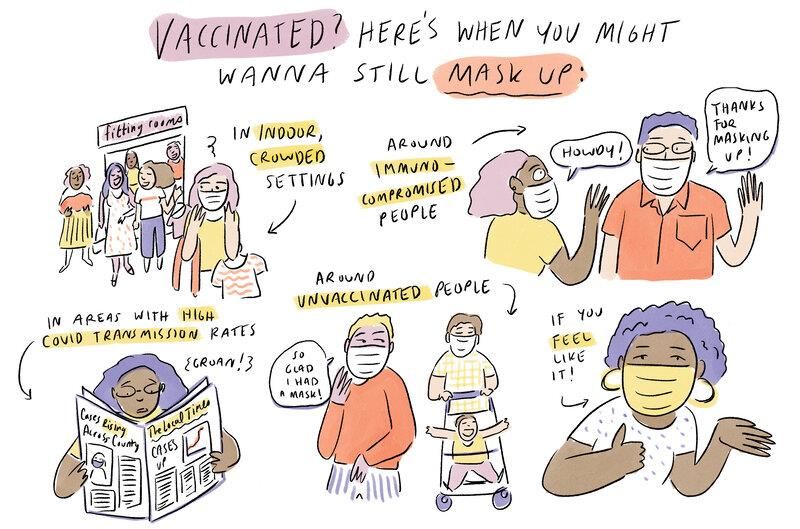
NYCOSH [08.16.2021]▪ Should I still be wearing a mask after
getting the vaccine?
▪ Yes.
▪ The WHO has always recommended wearing
masks even after full vaccination because:
▪ Breakthrough infections will happen with any
vaccine
▪ The majority of the world has not been
vaccinated yet
▪ If breakthrough infections spread to an
unvaccinated community, there could be new
outbreaks
▪ CDC also issued new guidance on
07/27/2021 in light of spread of Delta. https://www.npr.org/sections/goatsandsoda/2021/06/29/1011270829/coronavirus-faq-im-vaccinated-and-confused-
do-i-need-to-mask-up-or-not
16
NYCOSH [08.16.2021]▪ New CDC guidance as of 07/27/2021
▪ CDC now recommends that fully vaccinated people wear masks in public indoor
settings.
▪ CDC recommends masking in areas of high transmission, but adds that fully vaccinated people
may choose to mask regardless of transmission level, particularly if immunocompromised, have
someone in household who is immunocompromised, are at increased risk for severe disease, or
have someone in their household who is at risk or is not fully vaccinated.
▪ CDC recommends that fully vaccinated people who have come into close contact with
someone suspected or confirmed to have COVID-19 to be tested 3-5 days after exposure,
and to wear a mask in public indoor settings for 14 days or until they receive a negative
test result.
▪ CDC recommends universal indoor masking for all teachers, staff, students, and visitors
to schools, regardless of vaccination status.
17
https://www.cdc.gov/coronavirus/2019-ncov/vaccines/fully-vaccinated-guidance.html
NYCOSH [08.16.2021]▪ NY State and City workers will be required to either be vaccinated or
wear masks & submit to weekly testing for the virus.
▪ In private sector, push to make vaccination mandatory for variety of
indoor activities – indoor dining, gyms, performance & event venues.
▪ Mayor de Blasio’s “Key to NYC” plan to mandate vaccines for most indoor
activities.
▪ 50 NYC businesses1 have signed on that they will require proof of vaccination for entry.
The three acceptable forms of proof are: CDC-issued vaccine card, NYS Excelsior Pass,
and the NYC COVID Safe app.
18
NYCOSH [08.16.2021] 1 https://abc7ny.com/key-to-nyc-vaccine-mandate-proof-of-vaccination-delta-variant/10945185/19 NYCOSH [08.16.2021]
SARS-COV-2 IN INDOOR ENVIRONMENTS

                                    https://english.elpais.com/society/2020-10-28/a-room-a-bar-and-
                                    a-class-how-the-coronavirus-is-spread-through-the-air.html        20
NYCOSH [08.16.2021]
SARS-COV-2 IN INDOOR ENVIRONMENTS
However, if the windows or
door are closed, then it’s
back to the first scenario
https://english.elpais.com/society/2020-10-28/a-room-a-bar-and- 21
a-class-how-the-coronavirus-is-spread-through-the-air.html
NYCOSH [08.16.2021]DO WINDOWS PROVIDE RELIABLE VENTILATION?
▪ No.
▪ According to the American Society of Heating, Refrigeration, and Air-
conditioning Engineers (ASHRAE)-
▪ “Many buildings are fully or partially naturally ventilated. They may use operable
windows and rely on… openings in the building envelope… Obviously, the airflow in
these buildings is variable and unpredictable, as are the resulting air distribution
patterns, so the ability to actively manage risk in such buildings is much
reduced.” (ASHRAE Position Document on Infectious Aerosols, 04/14/2020)
▪ When using natural ventilation, air flow depends on the location of doors,
windows, other exhaust openings, the configuration of the room, and whether or
not it’s windy outside.
22
NYCOSH [08.16.2021]Comfort systems ventilation Industrial systems ventilation
• Used for comfort in commercial and • Used for control of hazardous airborne
residential buildings substances
• Temperature, humidity, indoor air quality • Toxic fumes, dusts, vapors, etc.
• Professional standards set by the American • Professional standards set by the
Society of Heating, Refrigerating, and Air-
conditioning Engineers (ASHRAE) American Conference of Governmental
• ASHRAE 62.1 and 62.2 for Indoor Air
Industrial Hygienists (ACGIH)
Quality • ACGIH Manual of Recommended Practice
• Most public buildings are designed to this • Laboratories and mechanical shops may
standard, but it is not sufficient for already be designed to ACGIH standards
infection control.
• Healthcare settings – ORs, clean rooms,
pharmaceutical compounding rooms, etc.
meet other standards that are also
designed to control hazardous airborne 23
NYCOSH [08.16.2021] substancesConsider: If all the HVAC units are at
the ceiling level, what does this mean
for air circulation in the room?
24
NYCOSH [08.16.2021]diffuser
▪ Diffuser (ceiling) supplies a mix of
return fresh and recirculated air
▪ Return (right wall) takes air back to
the fan
▪ If these are on the ceiling next to
each other, what does that mean for
the air exchange elsewhere in the
room?
http://www.ilocis.org/documents/chpt45e.htm
25
NYCOSH [08.16.2021]26 NYCOSH [08.16.2021]
https://www.the74million.org/wp-content/uploads/2020/10/aiha-Reducing-the-Risk-of-COVID-19-using-Engineering-
 Controls-Guidance-Document-1-1.pdf
                                                                                                                 https://timesofindia.indiatimes.com/india/how-to-set-your-ac-
                                                                                                                 to-fight-covid/articleshow/78493267.cms

                                                                                                                                                                             27
NYCOSH [08.16.2021]
• Similarly important to understand
where the outside air comes from.
▪ Proper duct and filter
maintenance are necessary
to a fully functional
ventilation system. http://www.ilocis.org/documents/chpt45e.htm
28
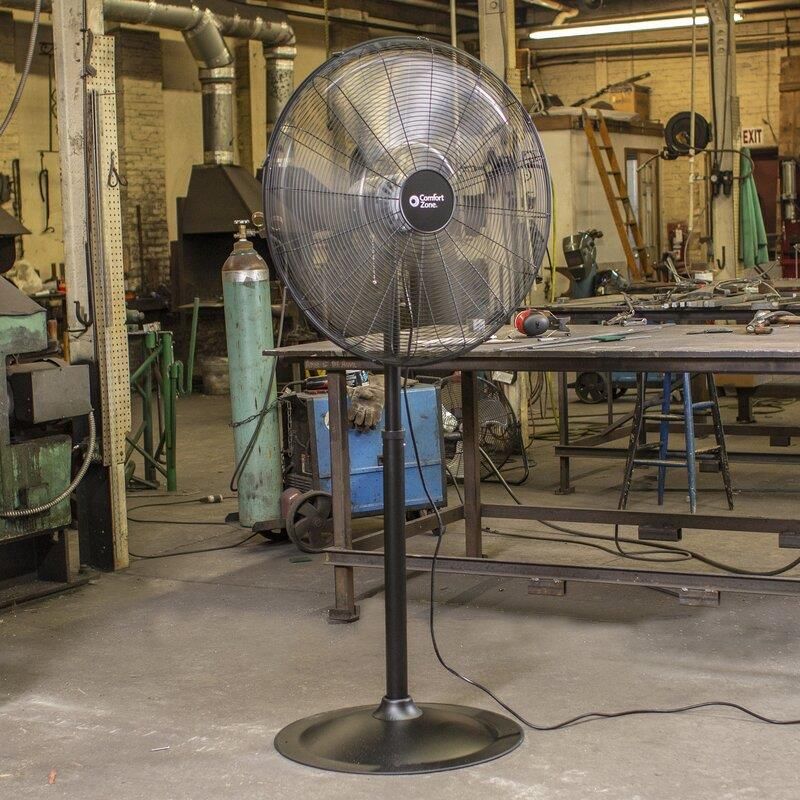
NYCOSH [08.16.2021] 28https://www.wayfair.com/home-improvement/pdp/comfort-zone-
https://ed.co/cool/
30-pedestal-fan-dvj10024.html?piid=
• Window air conditioning units do not
provide fresh air; they ONLY provide air
cooling.
• They filter for dust and similar, not for
viral contaminants. 29
NYCOSH [08.16.2021] 29There is positive pressure in front of the fan from the air drawn in
and negative pressure outside where the fan is drawing air in
FSTOP IMAGES - EMILY KEEGINGETTY IMAGES
https://www.ecoair.info/exhaust-fan.html
If there are openings near a fan (such as at the For a functional exhaust fan, the only
window) where the air can go back out, it will. pathway for the air must be through the
fan. 30
NYCOSH [08.16.2021] 30▪ Portable air cleaners/air purifiers/air sanitizers are designed to filter air in a single room or
area.
▪ They can reduce indoor air pollutants, including viruses, BUT are not sufficient to protect
against SARS-CoV-2 on their own.
▪ Portable air cleaners depend on air flow in the room; if the room air is still, the air cleaner
will not be able to provide equal filtration throughout the room.
▪ Placement of air cleaners impacts efficacy.
▪ In places with highest airflow (windows, doorways, etc.; NOT in corners)
▪ Near source(s) of pollutants
▪ 3-5 feet off the ground, to be in breathing zone
▪ Must be sized to the room.
▪ Room sizing needs to include ceiling height; most units are sized for an 8ft ceiling
▪ Must calculate filter efficiency at 0.3 microns
▪ Be mindful that filter only provides filtration, and does not generate ionization or ozone
▪ E.g., no UV light units 31
NYCOSH [08.16.2021] 31Respiratory protection
• Masks (cloth, surgical/hospital, bandanas, towels, etc.)
• Respirators (N95s, elastomeric, PAPR, etc.)
Face shields
• Are NOT a form of respiratory protection. They provide protection from splash only.
Gloves
• Be mindful not to touch your face while wearing gloves
For all PPE, be mindful of:
• Proper donning/doffing.
• Face coverings should be removed last – be careful to remove by straps only, never by the facepiece
• Gloves turned inside out, take care not to touch your skin; wash hands afterwards
• Proper disposal and/or sterilization
32
NYCOSH [08.16.2021] 3233 NYCOSH [08.16.2021]
WHAT CAN YOU DO TO PROTECT YOURSELF AS AN
       INDIVIDUAL?
      ▪ Wear a mask that covers your nose AND mouth when in
         public spaces.
      ▪ Maintain at least 6 feet of distance from people.

      ▪ Avoid touching your eyes, nose, and mouth.

      ▪ WASH YOUR HANDS: OFTEN, AND WITH SOAP AND
         WATER
         ▪ Handwashing is the most effective method, but if you
           can’t wash your hands, use sanitizer with at least 60%
           alcohol.
      ▪ Clean and disinfect frequently touched objects and
         surfaces (using a regular household cleaning spray or
         wipe).
      ▪ Stay home when you are sick.
                                                                    Source: https://www.instagram.com/p/CADmDiGA8_k/

                                                                                                                       34
NYCOSH [08.16.2021]
HOW CAN THIS BE APPLIED TO SARS-COV-2?
▪ Preventing SARS-CoV-2 transmission isn’t a one-and-done deal.
▪ A combination of strategies must be enacted for effective control.
▪ Ventilation
▪ Filters
▪ Portable air cleaners
▪ Administrative changes
▪ PPE
35
NYCOSH [08.16.2021]CDC Guidance
• CDC Guidance to Employers, Business Owners, & Community
Leaders
• CDC Guidance for Fully Vaccinated People
New York State
• Forward NY
• Most of the COVID restrictions in NYS have been lifted as of
06/15/2021, as 70% of adult New Yorkers have received their first
dose of the vaccine.
36
NYCOSH [08.16.2021]37
You can also read


