School of Electronic Engineering and Computer Science Postgraduate Study 2018 - eecs.qmul.ac.uk
←
→
Page content transcription
If your browser does not render page correctly, please read the page content below
School of Electronic Engineering
and Computer Science
Postgraduate Study 2018

                                   eecs.qmul.ac.uk
Developed by Dr Andrew McPherson,
                    the magnetic resonator piano (MRP) is
                    a hybrid acoustic-electronic instrument
                    augmenting the grand piano. The MRP
                    allows the performer to continuously
                    shape the sound of every note
2 eecs.qmul.ac.uk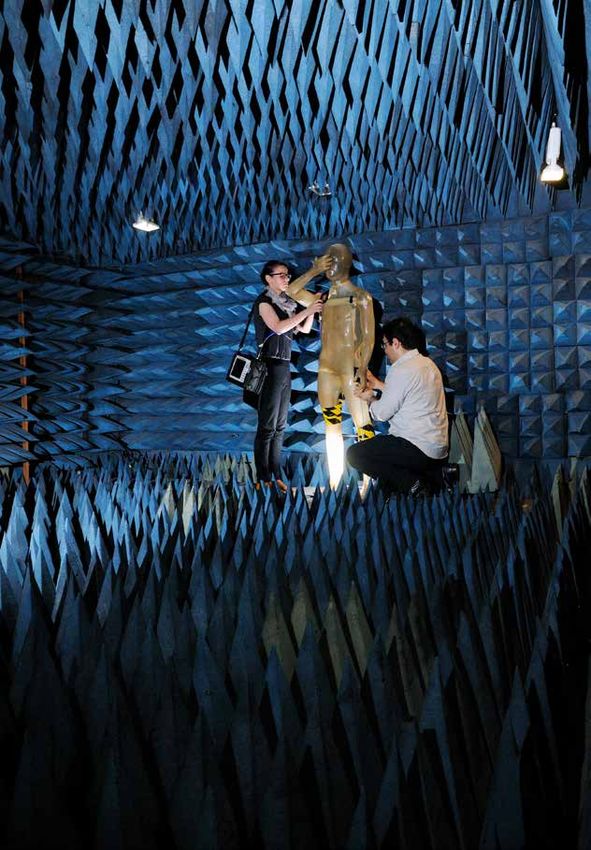
Contents

Welcome to Queen Mary                        Networks and the internet of things
University of London (QMUL)              4   Electronic and Electrical
                                             Engineering MSc
Join Queen Mary                          6   (conversion programme)                  30
Why choose us?                           8   Electronic Engineering
                                             by Research MSc                         32
Careers and alumni                   12
                                             Internet of Things MSc
Our masters programmes               16      (three pathways: Data
                                             Processing, Engineering
Our research                         48      and Intelligent Sensing)              34–35
                                             Network Science MSc                     36
Funding your masters                 52
                                             Telecommunication and
Essential information                54      Wireless Systems MSc                    38
                                             Telecommunication and Wireless
Your guide to London                 56      Systems Management MSc                  40

 Our masters programmes A−Z                  Cognitive and creative computing
 Computing and data science                  Cognitive Science MSc
                                             (four pathways: Cognitive Science,
 Big Data Science MSc               16       Cognitive Science of Language,
 Computer Science MSc               18       Computational Methods in Cognitive
                                             Science, and Music Cognition)      42–43
 Computer Science by Research MSc   20
                                             Media and Arts Technology
 Computing and Information
                                             by Research MSc                         44
 Systems MSc (conversion
 programme)                         22       Sound and Music Computing MSc           46
 Financial Computing MSc            24
 Machine Learning for
 Visual Data Analytics MSc          26
 Software Engineering MSc           28

                                                                           eecs.qmul.ac.uk 3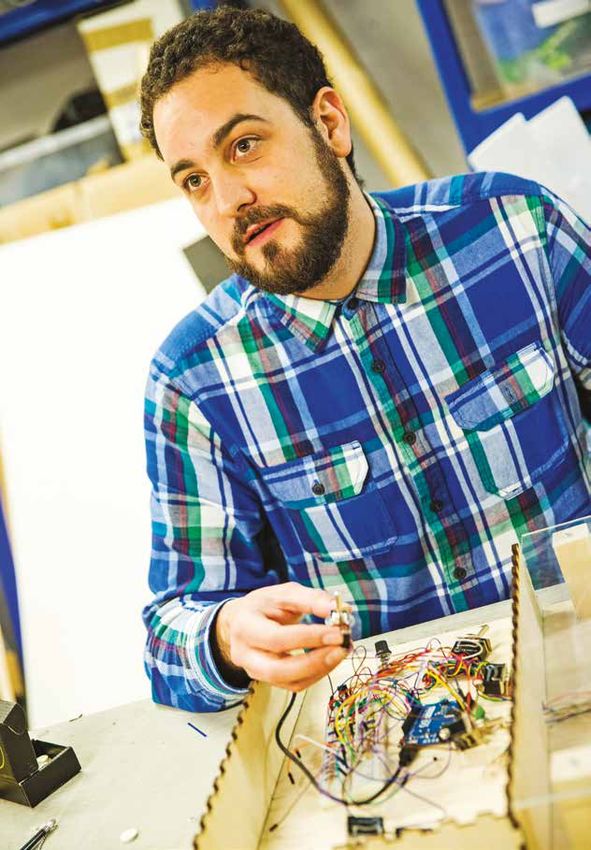
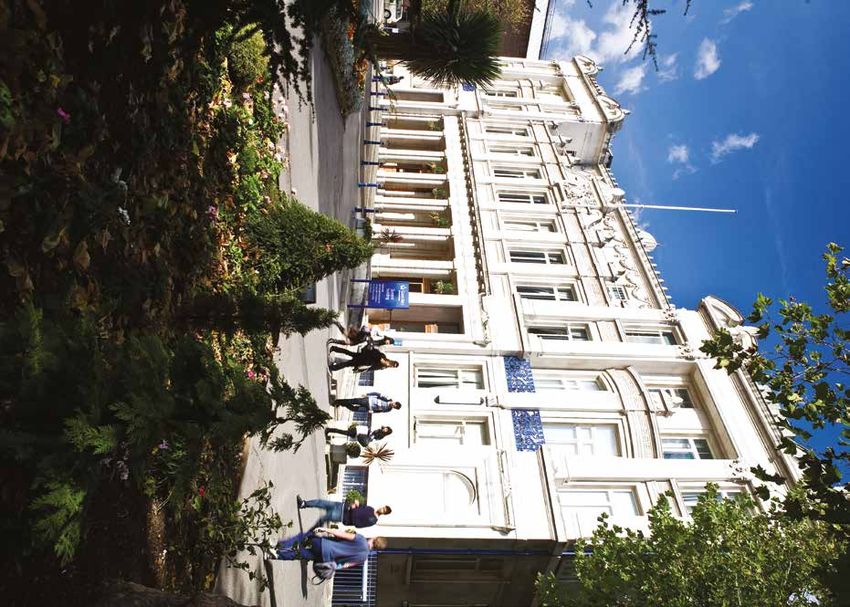
The Queens’ Building, Mile End, has a proud
 association with not one, but four queens:
 Queen Victoria; Queen Mary (wife of King
 George V); Queen Elizabeth The Queen
 Mother; and our Patron, Queen Elizabeth II

                                               QMUL highlights
                                               • 9th in the UK among multi-faculty
                                                  universities (Research Excellence
                                                  Framework 2014)
                                               • 162 nationalities among students and
                                                  staff making us one of the world’s most
                                                  diverse universities (December 2016)
                                               • Brand new £39m Graduate Centre with
                                                  dedicated space for postgraduates
                                               • £137m research income (2015/16)
                                               • More than 550 masters students
                                                  benefited from scholarships in 2016/17
                                               • 130 years of education, support and
                                                  success in the capital (est. 1887)
                                               • One of the largest residential campuses
                                                  in London at Mile End
                                               • Member of the Russell Group of leading
                                                  UK universities.

4 eecs.qmul.ac.uk
Welcome to Queen Mary
University of London (QMUL)

Queen Mary has been at home in the                Become a part of the capital
East End since 1887. Starting out as a            We retain close links with our local
                                                  communities across London and remain
Victorian ideal, our founders aspired to
                                                  dedicated to public good. We are an intrinsic
create a place where everyone would               part of east London, and have five campuses
have access to the same opportunities             across the capital. Set beside the beautiful
in education, recreation and culture –            and historic Regent’s Canal, our main site
regardless of background.                         at Mile End is one of the largest residential
                                                  campuses in the city and is home to our
We’ve continued to grow throughout our            new £39m Graduate Centre. With the City of
130 years, opening centres across the city        London to our west, the Queen Elizabeth II
and bringing students and staff together          Olympic Park to our east, Canary Wharf and
to study from all over the world. One of the      Docklands to our south and beautiful Victoria
first colleges to provide higher education to     Park to our north, you’ll be in the perfect
women, Westfield College, joined us in 1989,      position to explore the capital.
and the internationally distinguished medical
colleges of St Bartholomew’s and the Royal        Meet us – in person or online
London Hospitals combined to form our own         Our Postgraduate Open Evenings offer you
medical school in 1995.                           the chance to explore our campus and meet
                                                  our tutors and students. If you can’t visit in
Today, we are one of the UK’s top                 person, don’t worry; we run Postgraduate
research universities and our postgraduate        Virtual Open Days online too. We also have
programmes offer a chance to explore              representatives in 51 countries and staff who
subjects as diverse as the world in which we      regularly travel overseas. For more information
live. We would love for you to become a part      and a list of open events, see page 55 or
of our story.                                     qmul.ac.uk/postgraduate/meet-us
Come and share our knowledge
We know our postgraduate students are
passionate about their subjects. In the
tradition of our early expansion, we’ve
continued to develop degrees across our
world-leading expertise, from humanities and
social sciences to medicine, dentistry, science
and engineering. Our programmes are directly
informed by our academics’ latest research.
As professionals, they work side-by-side with
industry, government, business, communities
and charities. In doing so, they understand
the demands of modern-day society and can,
in turn, share their insights with you.
                                                                                 eecs.qmul.ac.uk 5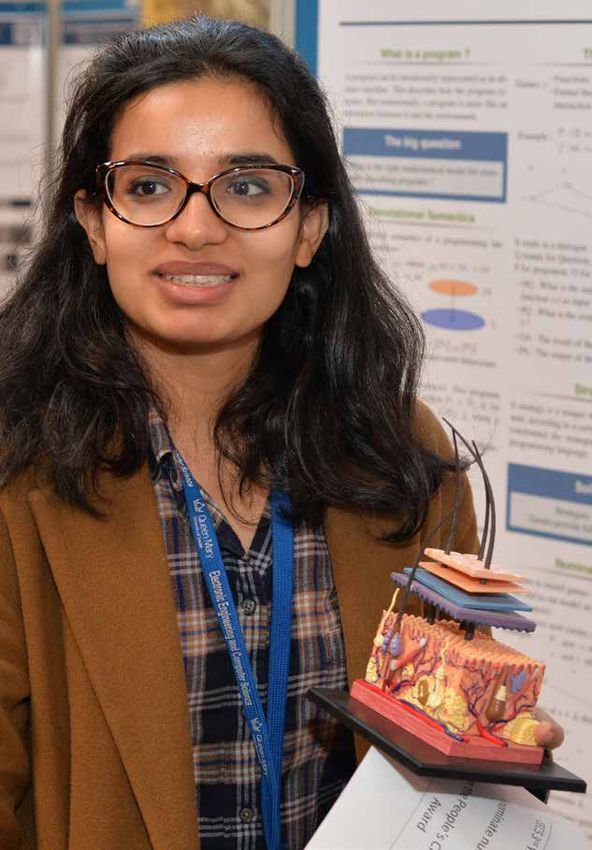
Join Queen Mary and become
a part of our story

  Love London
  Immerse yourself in a capital city
  Explore your passion
  Work side-by-side with top
  academics
  Join a global community
  Meet people from across the world
  Empower others
  Contribute to society
  Advance your career
  Stand out in a competitive
  jobs market

6 eecs.qmul.ac.uk
View from our Mile End campus

               eecs.qmul.ac.uk 7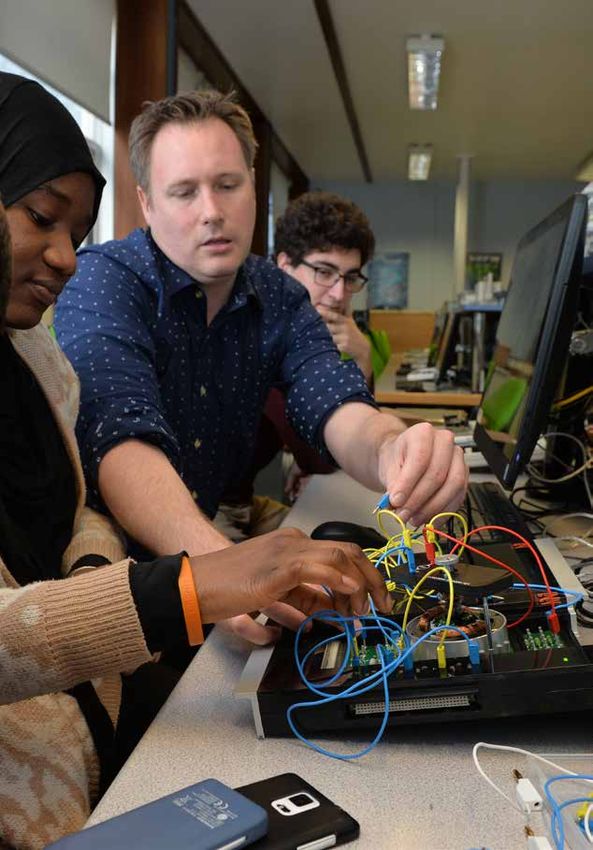
Why choose us?

The School of Electronic Engineering             Our outstanding resources
and Computer Science has grown out               Our students have access to our RIBA award-
of some of the oldest departments                winning Informatics Teaching Laboratory (ITL),
                                                 which offers more than 300 workstations,
of their kind in Britain. We are proud           specialist software and powerful servers all
of this history of innovation, but               interconnected by high-bandwidth networks.
our passion is for the future. Our               All the systems are accessible remotely, with
pioneering research, award-winning               wireless networking across the campus.
teaching and innovative approach to              To support our research-led teaching,
public engagement are what make                  we also have specialist laboratories in
us special.                                      multimedia, digital signal processing,
                                                 antennas and electroencephalography
Our research-led approach                        (EEG), and network quality. You will have
You will be taught by leading academics who      access to these to carry out your own
are actively engaged in research. We work on     research.
core developments and novel technologies,
making meaningful and long-lasting               Media and Arts Technology students have
contributions that help to solve real-world      access to our Augmented Human Interaction
problems. We have:                               (AHI) laboratory, which combines pioneering
                                                 technologies including full-body and
• 	150 members of academic and research staff
                                                 multi-person motion capture, virtual and
• 3,100 students based in the UK and China       augmented reality systems and advanced
• 129
  	  years of teaching electronic engineering   aural and visual display technologies.
  and 46 years of teaching computer science.
                                                 Some of the ‘tech toys’ students get to play
Our researchers work with industry partners      with and explore include a dedicated mobile
and academic colleagues around the world         virtual reality (VR) and augmented reality
in a variety of sectors and disciplines. Our     (AR) resource including: a suite of HTC
research has left indelible marks in areas as    Vive headsets, Oculus Rift headsets, six 4k
diverse as the foundations of programming        cameras and a 360° degree camera rig; Leap
languages, digital signal processing,            Motion sensors with VR mounts; headphones
parallel computing, graphene applications,       for independent head-tracking; Kolor video
internet and network quality, augmented          stitching software and prototyping equipment
human interaction, body-centric wireless         such as a Ricoh Theta camera, and Samsung
communications and networks, and intelligent     Gear VR headset.
systems.

8 eecs.qmul.ac.uk
Music Boxes – the School,
               along with students from Hunan
               University (China), developed
               these interactive artifacts
               inspired by the Dong ethnic
               minority culture during a 10-day
               innovation challenge in rural
               China

     “Studying for a masters is a big
  step up from undergraduate study,
   but it’s fantastically rewarding for
   those that have a real passion for
the subject – it’s great to see people
    graduating each year, fired up to
          start new careers and apply
                            new skills”
                Dr Matthew Purver, Reader in
                   Computational Linguistics

                              eecs.qmul.ac.uk 9
Why choose us?

Our links with industry                             Choosing your MSc programme
Our students benefit from our strong links with     Our main programmes are intended for
industrial partners. We have collaborations,        applicants with an undergraduate degree in
partnerships, industrial placement schemes          computer science or electronic engineering:
and public engagement programmes with a             see computer and data science (page 16) and
variety of organisations, including Samsung,        networks and internet of things (page 30).
Google, IBM, Goldman Sachs, NASA, BBC
                                                    However, we also offer programmes designed
and Microsoft.
                                                    for applicants with a broader range of
We nurture and foster an entrepreneurial spirit     backgrounds, including those with unrelated
among our staff and students. We’ve been            degrees – such as those in the arts and
home to a number of original research ideas         humanities – who are interested in converting
that have subsequently become successful            to a career in computing and IT-related fields:
spin-out companies, including:                      • Computing
                                                      	          and Information Systems MSc
• Actual
  	     Experience plc – assesses how well           (page 22) is for applicants new to computer
  network-based services perform, providing           science with a background from non-
  services for a range of organisations               technical areas.
  from large blue chips to governmental             • Electrical
                                                      	         and Electronic Engineering MSc
  organisations                                       (page 30) is for applicants new to these
• Agena
  	     Ltd – provides risk management               disciplines, but who have a background
  software for a range of major clients               in maths or science.
  including NASA, US Strategic Command,             • Big
                                                      	 Data Science MSc (page 16) is
  GE Healthcare, Procter & Gamble, Boeing,            for applicants with experience in either
  VocaLink, Milliman, Partnership Life                computer science or a mathematically
  Assurance, and the World Agroforestry               oriented field.
  Centre
                                                    • Media
                                                      	     and Arts Technology by Research
• 	Chatterbox Labs Ltd – provides natural            MSc (page 44) is for applicants with
  language processing software to understand          experience in a science, engineering
  brand-related discussions                           or a design-oriented discipline.
• Monoidics
  	          Ltd – specialises in automatic        • Internet
                                                      	      of Things MSc (pages 34–35) brings
  verification tools detecting errors in software     together aspects of computing, electronics,
  systems, and was bought by Facebook in              networks and artificial intelligence (AI) and is
  2013                                                open to applicants with a background in any
• 	QApps – provides smartphone and social            of these related topics.
  networking apps                                   • Cognitive
                                                      	        Science MSc (pages 42–43)
• Vision
  	     Semantics Ltd – develops software            combines computer science, linguistics
  to manage facilities and enhance security.          and psychology and is open to applicants
                                                      with backgrounds in any of these areas.
10 eecs.qmul.ac.uk
One of our students analyses real-
time digital signal processes using
a BeagleBone Black with an audio
cape device
School highlights
• All
relevant degrees are
accredited by the Institute
of Engineering and
Technology (IET) or the
British Computer Society
(BCS)
• Close links with Tech City
and industry, including
Intergence, Juniper
Networks, IBM, BT, the
BBC and Microsoft
• Current research grant
portfolio of more than
£40m
• Excellent teaching
and research facilities,
including our state-of-
the-art video and audio
recording and post-
production studios
• Staff draw on their
research and commercial
consultancy work to
develop their teaching
materials.
eecs.qmul.ac.uk 11Careers and alumni
Whether you are mid-career looking for How we can help
your next move or a recent graduate Our strong links with industry through our
wanting to explore your subject in research collaborations, industrial placement
and degree apprenticeships programmes
more depth, one of our postgraduate have helped our students find graduate
qualifications can give you an edge in opportunities. Help is also available from
today’s competitive job market. the QMUL Careers and Enterprise Centre,
as well as our dedicated specialist Industrial
There is currently a shortage of highly Placement Manager.
qualified graduates in computer science and
electronic engineering, meaning there are lots Samsung, Amazon, Facebook, IBM and
of exciting career opportunities for graduates Microsoft Research are just some of our
with the right skills. current partners. We work with them on
collaborations, partnerships, student industrial
Your future plans may involve working placement schemes and public engagement
on the research and development of new programmes.
technologies and applications – either in the
laboratories of a large manufacturer or in a Industrial experience programme
smaller contract research and development We offer an industrial experience option
company, where you would be able to work on all our full-time taught MSc programmes,
with a variety of clients. Alternatively, you may combining academic study with a one-year
prefer to work on large projects that require industrial placement.
organisational skills and leadership, with the
potential to lead on to senior project and Taking this option as part of your degree
company management. will give you a chance to apply your skills
in a professional context. Although we
We work closely with partners to ensure cannot guarantee a placement (employers
our graduates are more than ready for conduct their own application and interview
developing a successful career. Nearly processes), we provide help to identify
all our programmes are accredited by the suitable opportunities and, as a leading
Chartered Institute of IT(BCS) and the research School, we have excellent links with
Institute of Engineering and Technology industry. We can also help you with writing
(IET) up to entry in 2020. Please check our your job applications and preparing for
website for the most up-to-date information interviews.
for individual programmes eecs.qmul.ac.uk/
pg-professional-accreditation.
12 eecs.qmul.ac.ukEECS student demonstrating her
‘Can you match my emotion?’ project,
programmed using a NAO robot
eecs.qmul.ac.uk 13Careers and alumni
If you are an international student, the Enterprise support
placement option also allows you to get Many students and graduates across Queen
valuable UK work experience; as well as Mary start new or grow existing business and
this, registering for a degree with industrial social ventures each year. QMUL’s Enterprise
experience will mean your student visa will team can help you with support through:
cover the duration of your two-year course.
• funding
Recent graduate destinations: • one-to-one advice and workshops
• Computing Analyst, Bank of America • workspace
Merrill Lynch • access to experts and entrepreneurial
• Electronic Engineer, TfL networks.
• IT Infrastructure Support, Octavia Housing Visit: careers.qmul.ac.uk
• Analytics Consultant, Accenture
Alumni profile: Zhanelya Subebayeva
• Network Engineer, Huawei Technologies
Studied: Computer Science
• Senior Engineer, Qualcomm
MSc 2015
Careers support Currently: IT Developer,
QMUL’s Careers team can work with you to Alan Blunden & Co Ltd
support your career planning and to connect
What did you enjoy about
you to employers through their fairs and
your time at QMUL?
events. Services include:
Being a student in London opens a vast
• one-to-one appointments to help with range of possibilities of what you can learn
career direction, to review your skills and and what you can do in the city. Being
experience to-date, to give advice on London-based helps you to kick-start your
job applications, to offer insight into the career straight after your studies, and
job market and to give mock interview also get valuable life experience of living
preparation in a different city. Queen Mary has good
• tailored workshops for career preparation computer facilities, and a great career
and job hunting advice service, thanks to which I was able
to make my CV attractive to the job market.
• employer-led events focusing on sectors
relevant to your knowledge or area of How has your degree from QMUL helped
interest your current career?
Obtaining an MSc degree at Queen Mary
• recruitment support for internships,
gave me an advantage against many other
part-time jobs and work placements.
job seekers because it is a Russell Group
university, and having a masters degree is
quite desirable to recruiters.
14 eecs.qmul.ac.ukDr Eliane Bodanese, Senior Lecturer
“I lead research into developing
rapid and resilient communications
between civilian mobile devices and
outside agencies (eg paramedics)
in remote regions. Challenges
lie in creating self-forming and
self-configuring networks using
smartphones and sensors when no
infrastructure exists: for example,
in mountain areas containing
‘dead’ zones blind to radio and
cellular radio communications”
Dr Eliane Bodanese, Senior Lecturer”
eecs.qmul.ac.uk 15Our masters programmes
Computer and data science
Big Data Science MSc You will cover the fundamental statistical (eg
One year full-time, two years part-time, machine learning) and technological tools (eg
cloud platforms, Hadoop) for large-scale data
two years full-time with industrial
analysis.
experience
qmul.ac.uk/msc-big-data Programme outline
Key themes: Data analytics, machine learning, Core modules
big data processing, cloud computing, • Applied Statistics
statistical methods
• Big Data Processing
This programme is designed for those who • Data Mining
want to pursue a career as data scientists, • MSc Project module
deriving valuable insights and business-
related information from large amounts of Option modules
data.
• Cloud Computing
Overview • Data Analytics
The big data science movement is
• Digital Media and Social Networks
transforming how internet companies and
researchers all over the world address • Deep Learning and Computer Vision
traditional problems. Big data refers to • Introduction to the Internet of Things
the ability to exploit the massive amounts
• Introduction to Object-Oriented
of unstructured data that are generated
Programming
continuously by companies, users and
devices, and extract key understanding from • Machine Learning
them. The job market has a current shortage • Natural Language Processing
of trained professionals with this set of skills,
• Semi-structured Data and Advanced Data
and demand for data scientists is expected to
Modelling
increase significantly in future years.
• Machine Learning for Visual Data Analysis
The programme leverages expertise in
• The Semantic Web
research with our strategic partnership with
IBM and other leading companies in the IT
Who is this programme suitable for?
sector. It is taught by academics from the
This programme is suitable for students who
Networks, Centre for Intelligent Sensing, Risk
have previously studied computer science,
and Information Management, Computer
maths or related topics, or who have significant
Vision and Cognitive Science research
relevant work experience.
groups: a team of more than 100 members
performing world-leading research.
16 eecs.qmul.ac.uk“My research interests explore
some of the major emerging uses
of computer science: big data
and cloud computing. I see the
processing of the massive amount
of data we now hold as a kind of
magic trick: one that the Big Data
Processing module I teach helps
to uncover”
Dr Félix Cuadrado, Senior Lecturer
eecs.qmul.ac.uk 17Our masters programmes
Computer and data science
Computer Science MSc • Functional Programming
One year full-time, two years part-time, • Interactive Systems Design
two years full-time with industrial • Introduction to Object-Oriented Programming
experience • Security and Authentication
qmul.ac.uk/msc-comp-sci • Semi-structured Data and Advanced
Data Modelling
Key themes: software development, advanced
data modelling, parallel systems, data mining, Option modules
NoSQL databases, machine learning • Advanced Object Oriented Programming
The demand for better products and • Big Data Processing
commercial services drives the search • Business Technology Strategy
for creative solutions using computing • Cloud Computing
based systems, and has also established • Data Analytics
a dependence between computing and • Design for Human Interaction
practically every other industry and sector. • Foundations of Intellectual Property Law
This flexible programme offers a broad range and Management
of advanced study options, reflecting the • Information Retrieval
emerging technologies in industry.
• Introduction to Computer Vision
Overview • Introduction to Law for Science and
You can shape your programme to match Engineering
your interests and career ambitions, choosing • Machine Learning
modules from a range of areas including • Mobile Services
the development of human–computer
• Natural Language Processing
communications (dialogue systems),
• Parallel Computing
ubiquitous computing, applying interactive
digital multimedia techniques, security and • Program Specifications
surveillance. • Real-Time and Critical Systems
• Software Analysis and Verification
This is a multidisciplinary programme
• Techniques for Computer Vision
and, in addition to pure computer science
modules, you can choose options where • The Semantic Web
computer science intersects with other fields Who is this programme suitable for?
and build on your undergraduate degree. This programme is suitable for students
Programme outline who have previously studied computer
Core modules science, maths or related topics, or who
have significant relevant work experience.
MSc Project module
And a further two from:
• Bayesian Decision and Risk Analysis
18 eecs.qmul.ac.uk“My QMUL qualification helped
me secure an internship that will
later result in a full-time job at the
company I really wanted to work
for. They were impressed with the
selection of modules I have taken
and my deep understanding of the
subject”
Yekaterina Rudenko, Computer Science
with Industrial Experience MSc 2018
eecs.qmul.ac.uk 19Our masters programmes
Computer and data science
Computer Science by Research MSc Programme outline
One year full-time, two years part-time • You will join one of our research groups,
qmul.ac.uk/msc-comp-sci-research completing an extended research project
• You will take four taught modules, chosen
Key skills: research methods, in-depth
from any of the modules offered in the
focused project, independent study,
School, in line with what is most appropriate
publishable research
for your chosen research project.
This MSc involves an extended individual
research project carried out as part of one of Teaching and assessment
our established research groups, combined • Teaching for all modules includes a
with selected taught modules. combination of lectures, seminars and
a virtual learning environment
Overview • Taught modules are assessed through
This programme offers you the chance to a combination of coursework and written
undertake an advanced masters programme examinations
through an extended research project.
• The individual MSc Research Project will
The programme is suitable for outstanding
be conducted under close supervision
students who have an interest in advanced
throughout the academic year, and is
research-based study in one of our
evaluated by thesis, presentation and
specialisms: Computer Vision, Cognitive
viva examination.
Science, Risk and Information Management,
Game AI, Computational Creativity, and
Who is this programme suitable for?
Theoretical Computer Science.
This programme is suitable for students who
The expectation is that every graduate possess a good honours degree (minimum
from the degree will publish at least one upper second-class) in computer science,
conference paper as part of their research. maths or related topics.
The MSc by Research programme will give
you solid theoretical and practical research
competences in your chosen field of
study and will enhance your employability.
Successful completion of the programme
may also provide a route to further study at
doctoral level or for a research position in
industry.
20 eecs.qmul.ac.uk“We have logicians, theorists, and
people working with music and
cognitive science all in one stretch
of the corridor. It’s so refreshing to
go to seminars with lots of maths in
them and seminars when an artist
analyses a piece of experimental
music for you”
Dr Mehrnoosh Sadrzadeh, EPSRC Career
Acceleration Fellow and Lecturer
eecs.qmul.ac.uk 21Our masters programmes
Computer and data science
Computing and Information Systems You will be able to extend your areas of
MSc (conversion programme) technical expertise to specialist areas by
choosing from a variety of option modules,
One year full-time, two years part-time,
such as Mobile Services, Business Technology
two years full-time with industrial Strategy, and Graphical User Interfaces.
experience
qmul.ac.uk/msc-comp-info-sys You can personalise your programme to follow
a technical or business route, developing
For graduates of non-computing disciplines practical and theoretical skills that will be
Key themes: software development methods, highly relevant in today’s job market.
object-oriented programming, interactive
system development and evaluation, mobile Programme outline
services, network planning, information Core modules
systems for business • Database Systems
Graduates who are able to fully exploit the • Information Systems (double module)
potential of computing and information
• IT Programming (double module)
systems by combining specialist technical
skills with other knowledge and experience • MSc Project module
are highly sought after. If your undergraduate
degree contained little or no technical Option modules
experience, but you’re now looking to change • Bayesian Decision and Risk Analysis
direction or enhance your employability by • Business Information Systems
developing your skills in this area, then this • Business Technology Strategy
programme (commonly referred to as a
‘conversion course’) is for you. • Cloud Computing
Overview • Distributed Systems and Security
Guided by academics with a wealth of • Graphical User Interfaces
industrial experience, this is an intensive • Introduction to the Internet of Things
one-year MSc programme for highly
motivated graduates with a good honours • Mobile Services
degree, but with little prior experience of • Security and Authentication
computer science. You will develop your
theoretical knowledge and practical technical Who is this programme suitable for?
development skills through extensive training This programme is suitable for students who
in the subjects at the heart of computing, are not coming from a Computer Science
including object-oriented programming (using background. You may have previously
Java), database systems, and information studied a subject not related to Computer
systems (covering system design, networking Science, or a degree with less than 50 per
and computer architecture). cent of the modules in computer science.
22 eecs.qmul.ac.uk“Computer Science is a constantly
evolving subject and I enjoyed being
challenged with new problems and
having the chance to learn about the
latest developments in my studies.
The final year project was my favourite
part of the postgraduate degree, as I
had the freedom to work independently
and acquire knowledge in a subject
I am enthusiastic about”
Aminah Sayed, Computer Science MSc 2014
eecs.qmul.ac.uk 23Our masters programmes
Computer and data science
Financial Computing MSc Overview
One year full-time, two years part-time, The Financial Computing MSc is aimed at
science and engineering graduates with
two years full-time with industrial
mathematical exposure and some experience
experience in computer programming. The content of the
qmul.ac.uk/msc-fin-comp programme is a combination of technology
Key themes: mathematical modelling, GPU and financial mathematics.
programming, portfolio management, risk
analysis Programme outline
Core module
Financial institutions rely on a blend of • Financial Computing MSc Dissertation
mathematics, technology and finance
to develop, enhance and sustain their Compulsory modules
competitive edge. Run jointly with the School • Financial Programming
of Mathematical Sciences, this unique • Foundations of Mathematical
programme provides numerate graduates with Modelling in Finance
the expertise needed to develop a professional
• Introduction to Object-Oriented
career in the profitable and intellectually
Programming
challenging triangle formed by mathematics,
technology and finance. • Topics in Scientific Computing
The financial industry is undergoing a second Option modules
wave of technological transformation related • Advanced Computing in Finance
to new electronic trading platforms, improved • Advanced Objected-Oriented Programming
risk management and pricing accuracy,
• Big Data Processing
and the high-performance computing
implications of enhanced regulatory • Functional Programming
requirements. As a result, there is a high • Machine Learning
demand from investment banks, hedge funds, • Parallel Computing
financial software companies, brokerage
• Portfolio Theory and Risk Management
and consultancy firms for numerate and
technologically capable graduates. Other • Stochastic Calculus and Black–Scholes
types of businesses are also developing Theory
similar ways of working, where numerate, Who is this programme suitable for?
technologically able staff form an essential This programme is suitable for students who
part of innovation and decision-making. have previously studied a subject with some
exposure to computer programming and
some mathematical component: for example,
computer science, mathematics, physics,
statistics, or engineering.
24 eecs.qmul.ac.uk“Financial Computing is an exciting
area to work in – there are lots of
opportunities to develop skills which
are desirable to the industry, like
programming and mathematical
modelling”
Mincai Hu, Financial Computing MSc 2017
eecs.qmul.ac.uk 25Our masters programmes
Computer and data science
Machine Learning for Visual Data You will be taught by world-class researchers
Analytics MSc in the fields of multimedia analysis, vision-
based surveillance, structure from motion,
One year full-time, two years part-time,
and human motion analysis. In addition to
two years full-time with industrial your lectures, you will be working on live
experience research projects, developing hands-on
qmul.ac.uk/msc-machine-learning-vda experience.
Key themes: machine learning, face
recognition, surveillance systems, Programme outline
neural nets, intelligent imaging systems Core modules
• Introduction to Computer Vision
How can we design smartphones that sense
• Machine Learning
your mood by reading your facial expressions
or recognising hand gestures as a way to make • Machine Learning for Visual Data Analysis
a call? And how do we develop systems that • Deep Learning and Computer Vision
quickly and reliably analyse medical scans?
• MSc Project module
Whether assisting with cancerous tumour
diagnosis or improving the safety of self-driving Option modules
cars with in-vehicle technology able to detect
and modify a vehicle’s behaviour – these are • Artificial Intelligence
just some of the fascinating scenarios that you • Big Data Processing
will explore while studying with our experts on
• C++ for Image Processing
this programme.
• Computer Graphics
Overview • Data Mining
This programme is intended to respond to
the growing shortage in research and industry • Digital Media and Social Networks
of engineers with a high level of training in
the analysis and interpretation of images and Who is this programme suitable for?
video. The MSc covers both low-level image This programme is suitable for students who
processing and high-level interpretation have previously studied computer science,
using state-of-the-art machine learning maths or related topics, or who have significant
methodologies. In addition, it also offers high- relevant work experience.
level training in the programming languages,
tools and methods needed for the design and
implementation of practical computer vision
systems.
26 eecs.qmul.ac.ukOne of our students exploring eye data
observation with a remote tracking
camera to measure gaze direction and
pupil diameter
eecs.qmul.ac.uk 27Our masters programmes
Computer and data science
Software Engineering MSc Programme outline
One year full-time, two years part-time, Core modules
two years full-time with industrial • MSc Project module
experience And a further three from:
qmul.ac.uk/msc-soft-eng
• Bayesian Decision and Risk Analysis
Key themes: robust software development, • Big Data Processing
reliable systems, embedded, real-time
• Functional Programming
systems, risk analysis, advanced programming,
interface design and evaluation • Interactive System Design
• Program Specifications
Whether it’s the computers in our offices, the
• Real Time and Critical Systems
smartphones in our pockets, the electrics in
our cars or the technology that enables us to • Software Analysis and Verification
monitor patients in critical care, software is at Option modules
the heart of our society. This MSc programme
focuses on advanced theoretical and practical • Advanced Data Modelling
techniques in programme design, and the • Advanced Object Oriented Programming
management of software project risk. • Cloud Computing
• Data Analytics
Overview
You will learn advanced techniques in • Distributed Systems
programme design (including software • Introduction to the Internet of Things
patterns and component technologies) and • Introduction to Object-Oriented
information handling (structured information Programming
and databases). You will also cover vital
• Machine Learning
areas such as security, specification, risk
management, usability, and design integrity. • Mobile Services
• Parallel Computing
Software Engineering and Security • Security and Authentication
MSc pathway • Semi-structured Data and
If you are interested in this specialism, we
• Techniques for Computer Vision
have added a new security pathway using
specific pre-requisite modules in our main • The Semantic Web
Software Engineering MSc. Contact the School
for more details. Who is this programme suitable for?
This programme is suitable for students
who have previously studied computer
science, maths or related topics, or who
have significant relevant work experience.
28 eecs.qmul.ac.uk“As society becomes increasingly
reliant on software-based systems,
my work on the process of
automatically finding errors in
software systems becomes ever-
more crucial. I am the School’s
Professor of Software Verification,
and also the co-founder and CEO of
Monoidics, a code-checking start-
up company that was bought by
Facebook in 2013”
Professor Dino Distefano
eecs.qmul.ac.uk 29Our masters programmes
Networks and internet of things
Electronic and Electrical Engineering Programme outline
MSc (conversion programme) Pre-sessional course
One year full time, two years part-time, • Digital electronics (new distance
two years part-time with industrial learning module)
experience Core modules
qmul.ac.uk/msc-eee-con • Electronics
Key themes: electronic engineering for • Digital Systems Design
scientists, analogue and digital systems, • MSc Project module/Industrial project
control engineering
Option modules
This conversion masters programme • Advanced Control Systems
is designed for students with a science
• Control Systems
background who are looking to change
direction and specialise in electrical • Digital Electronics
and electronic engineering. It builds • Electrical Power Engineering
on the strengths of our world-leading • Embedded Systems
research in networks, antenna design and
• Integrated Circuit Design
electromagnetics, computer vision and
computer theory. • Microwave and Millimetre-wave
Communication Systems
Overview • Microwave and Millimetre-wave Electronics
This conversion masters programme features a • Power Electronics
common first semester of analogue electronics,
digital systems design (incorporating an online • Principles and Applications of Bioelectricity
pre-sessional module in digital circuit design), • Real-Time and Critical Systems
control systems, and embedded systems • Real-Time Digital Signal Processing
(incorporating C programming). In the second
semester, the electronic engineering stream Who is this programme suitable for?
features choices from advanced control This programme is suitable for students
systems, critical systems, integrated circuit who are not coming from an electronic
design, and real-time DSP, while the electrical and electrical engineering background, but
engineering stream features choices from who have had some exposure to scientific
bioelectricity, microwave and millimetre-wave components. You may have previously studied,
communication systems, power electronics, for example, maths, physics, biology, chemistry
and electrical power engineering. Both streams or computer science, or a degree with less
have a project or industrial project during the than 50 per cent of the modules in electronic
third (summer) semester. and electrical engineering subjects.
30 eecs.qmul.ac.uk“The focus of my research in
the Real-time Power and Control
Laboratory is power converter
technology and battery management
systems for electrical vehicles. We
are currently developing advanced
and integrated control algorithms to
increase the efficiency of novel dc-dc
converters using high-switching
silicon carbide devices, and to
enhance the life-time of lithium-ion
battery packs”
Dr Kamyar Mehran
Lecturer in Power Engineering
Student groups are learning the
principals of an induction motor using
their electrical machine training set.
Induction motors have numerous
applications including electric vehicles
and Dyson vacuum cleaners
eecs.qmul.ac.uk 31Our masters programmes
Networks and internet of things
Electronic Engineering Programme outline
by Research MSc • You will join one of our research groups,
One year full-time, two years part-time, taking four selected taught modules and
completing an extended research project
two years full-time with industrial
experience • You can choose four taught modules from
any of the modules offered in the School,
qmul.ac.uk/msc-elec-eng-res
in line with what is most appropriate for
Key themes: research methods, evaluation, your chosen research project
performance, dissertation project, • Teaching for all modules includes lectures,
independent study, publishable research seminars and a virtual learning environment
On this programme, you will use theoretical • Modules are assessed through a
and experimental research techniques to combination of coursework and written
explore and create innovative technologies, examinations.
enabling you to transfer your knowledge for
practical application in the future. Who is this programme suitable for?
This programme is suitable for students who
Overview possess a good honours degree (minimum
An MSc by Research will provide you with the upper second-class) in electronic engineering,
necessary skills to undertake research either computer science, maths or a related
in an academic or industrial environment. The discipline.
expectation is that every graduate from the
degree will publish at least one conference
paper as part of their research. You will
develop excellent technical skills, and will be
able to demonstrate to employers your ability
to undertake high-level independent research.
The programme is suitable for outstanding
students who have an interest in advanced
research-based study in one of our
specialisms: Antennas and Electromagnetics,
Centre for Digital Music (C4DM), Multimedia
and Vision (MMV), and Networks. This
programme is a pathway to a PhD, providing
the necessary training to prepare for a career
in research and development.
32 eecs.qmul.ac.uk“I work on body-centric networks,
from large scale to nano-devices
inside human tissues for next
generation medical technologies.
I am passionate about outreach
and communicating the impact of
research to society. My research
and industrial links feed directly into
my teaching activities and also soft
skills on delivering ideas”
Dr Akram Alomainy, Senior Lecturer
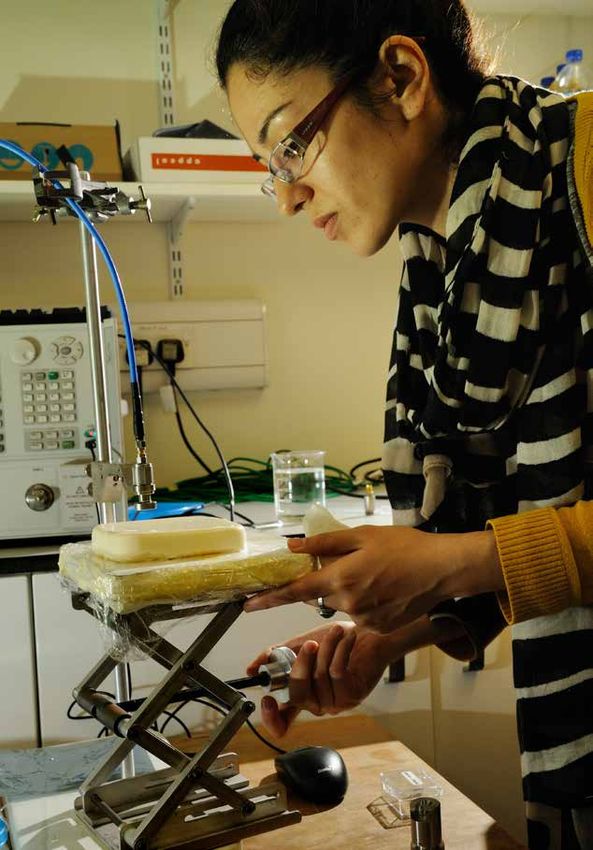
EECS student preparing and
Characterising Artificial Human
Tissue Mimicking Materials for
Bioengineering Applications
eecs.qmul.ac.uk 33Our masters programmes
Networks and internet of things
Internet of Things MSc (three Machine-to-machine interaction will allow a
pathways: Data Processing, greater number of physical ‘things’ to interact
with other ‘things’ without human intervention
Engineering and Intelligent Sensing)
for scalability.
One year full-time, two years part-time
two years full-time with industrial The IoT MSc is designed to meet the demand
experience for a new kind of IT specialist, who can:
qmul.ac.uk/msc-iot • engineer new interactive products – ‘things’
Key themes: connected world, smart devices, • acquire, fuse and process the data they
wearables, smart environments, machine-to collect from ‘things’
machine (M2M), smart cities, healthy living, • interact with, and interconnect, these ‘things’
intelligent tagging and sensing as part of larger, more diverse, systems.
A futuristic connected world where we could The School of Electronic Engineering and
interact with smart objects – on-body, in Computer Science draws on the strengths of
buildings, in cities and in distant, harsher its highly regarded research and development
environments – was once science fiction. This centres of excellence in core subject areas,
is now a reality: parts of buildings can now comprising networks, cognitive science, and
interact with each other, smart vehicles can antennas, together with interdisciplinary
be autonomously controlled, and humans centres such as the Centre for Intelligent
can interact with all of the above using smart Sensing (CIS) and the Centre for Digital Music
phones and wearables. This innovative Internet (C4DM).
of Things (IoT) MSc programme will help
you to become one of the highly skilled and Programme outline
in-demand engineers who can fully exploit the Core modules for all Internet of Things-related
potential that these technologies offer. MSc programmes:
Overview • Enabling Communication Technologies
The Internet of Things (IoT) focuses on a for IoT
vision of more connected, different, ‘things’ (or • Introduction to IoT
digital devices) than in previous visions of the • Mobile Services
internet. A greater number of ‘things’ become
part of the physical world, connecting to form • Research Project
smart environments. Humans are constantly • Security and Authentication
increasing the frequency and range of ‘things’
• MSc Project module
(sensors, tags, cards, phones, actuators,
wearables) they interact with in the world.
34 eecs.qmul.ac.ukInternet of Things MSc Internet of Things MSc
(Data Processing) (Intelligent Sensing)
The interaction and communication between This MSc is focused on developing devices,
billions of devices produces and exchanges systems and services that can communicate
data related to real-world smart objects. This and analyse, process and interpret data from
MSc develops your skills in data mining and multi-modal sources and devices.
big data analysis to better understand, utilise
and leverage this data. Programme outline
Additional programme-specific core modules:
Programme outline
Additional programme-specific core modules: • Fundamentals of DSP
• Applied Statistics • Graphical User Interfaces
• Data Analytics Additional programme-specific option modules:
• Cloud Computing
Additional programme-specific option modules:
• Design for Human Interaction
• Big Data Processing
• Introduction to Computer Vision
• Cloud Computing
• Machine Learning
• Data Mining
• Real-time Digital Signal Processing
• Digital Media and Social Networks
• Techniques for Computer Vision
• Machine Learning
• The Semantic Web Who is this programme suitable for?
These programmes are suitable for students
Internet of Things MSc (Engineering) who have previously studied electronic
This MSc explores the human and machine engineering, computer science, maths,
interfaces and interaction between embedded physics or a related discipline.
systems, smart objects and humans.
Programme outline
Additional programme-specific option modules:
• 21st Century Networks
• Cloud Computing
• Embedded Systems
• Interactive System Design
• Mobile and WLAN Technologies
• Network Modelling and Performance
• Real-Time and Critical Systems
eecs.qmul.ac.uk 35Our masters programmes
Networks and internet of things
Network Science MSc Your dissertation project will be led by
One year full-time, two years part-time a member of the Complex Systems and
Networks research group based in the
qmul.ac.uk/msc-net-sci
School of Mathematical Sciences. There are
Key themes: communications theory, research opportunities available in different
probability, stochastic processes, network areas including epidemiology and public
analysis and modelling, network optimisation health, complex networks and multiplexes,
infrastructure, transportation and energy
This specialist masters programme is run networks, time series analysis and networks,
jointly with the School of Mathematical and systems biology.
Sciences, providing a thorough grounding in
analytical and numerical methodologies as Programme outline
well as mathematical modelling as applied Core modules
to networks, opening up a host of career
• Graphs and Networks
opportunities in network and modelling-related
industries. It is aimed at students with an • MSc Dissertation
undergraduate degree in mathematics or a • Processes on Networks
related discipline, such as physics, computer
• Research Methods in Mathematical Sciences
science or engineering, who wish to enter a
career involving the analysis and optimisation • Topics in Scientific Computing
of diverse networked systems.
Option modules
Overview • Computational Statistics
Network theory is a very active and rapidly
evolving research field that stands at • Complex Systems
the crossroads of graph theory, complex • Digital Media and Social Networks
systems and data analysis. It addresses the • Machine Learning
mathematical and numerical description,
modelling of the architecture, and the • Data Mining
dynamics of the complex systems composed • Database Systems
by the many interacting units that show • Financial Programming
collective behaviour. Its impact and
applications outside academia pervade Who is this programme suitable for?
technological sectors such as communications This programme is suitable for students
(internet, transportation networks), biostatistics who have previously studied a subject with
and network biology (brain modelling, a substantial mathematical component: for
postgenomic era), infrastructures (energy example, mathematics, statistics, physics,
networks, road networks, urban mobility) and computer science, engineering, or economics.
public health (epidemic spreading models),
to mention but a few.
36 eecs.qmul.ac.uk“This programme not only allows
you to focus on the underlying
mathematical concepts, analysis, and
modelling of complex networks but
also to develop important transferable
skills in computing and data analysis”
Harvie Chiu, Network Science MSc 2016
eecs.qmul.ac.uk 37Our masters programmes
Networks and internet of things
Telecommunication and Wireless WLAN technologies, software for network and
Systems MSc services design, network modelling, the new
realm of sensors and the Internet of Things.
One year full-time, two years part-time,
Your tutors will be international experts in the
two years full-time with industrial fields of converged all-IP networks, modelling,
experience measurements and quality of experience, and
qmul.ac.uk/msc-telco-wireless-sys wireless technologies.
Key themes: mobile, 5G, network planning, Programme outline
network design and performance, simulation Core modules
This programme is designed to educate • 21st Century Networks
a generation of network engineers in the • Communication Theory
fundamental science, mathematics and
technologies that have made global networking • Mobile and WLAN Technologies
possible and will develop it further in the • Mobile Services
future. If you want to pursue a career shaping • MSc Project module
and defining a new generation of converged
networks, responding to rapid developments • Network Modelling and Performance
(such as social networking, seamless • Software and Network Service Design
mobility, mobile data and the proliferation of
applications for mobile and handheld devices), Option modules include
then this MSc programme is for you. • Business Technology Strategy
Overview • Digital Media and Social Networks
This MSc programme teaches Java • Network Planning, Finance and
programming for network and service Management
design, provides an in-depth treatment of
the technological foundations of converged • Security and Authentication
all-packet networks, and covers current
mobile networks from WCDMA 3G to LTE Who is this programme suitable for?
and LTE-Advanced. It will enable you to This programme is suitable for students who
develop an extensive understanding of have previously studied electronic engineering,
21st-century networks, current mobile and computer science, maths or related topics, or
who have significant relevant work experience.
38 eecs.qmul.ac.uk“This programme is very
comprehensive – modules like
‘Communication Theory’ deal with
the basic modulation generation;
‘IoT’ and ‘Mobile Services’ represent
today’s technological advancements;
Our students using the Terahertz
and the social media elements
Time Domain Test Bench emphasised the importance of
system, part of one of the most
comprehensive Antenna Test
behavioural web. It’s a programme any
Range and Electromagnetic tech head would love to study”
Characterisation laboratories
among European universities Divyendra Bagchi, Telecommunication and Wireless
Systems with Industrial Experience MSc 2017
eecs.qmul.ac.uk 39Our masters programmes
Networks and internet of things
Telecommunication and Wireless At the end of the programme, you will
Systems Management MSc be equipped with the skills needed for
a wide range of jobs in the expanding
One year full-time, two years part-time,
telecommunications industry, with an emphasis
two years full-time with industrial on those that are relevant to business/financial
experience needs, particularly in the small business and
qmul.ac.uk/msc-telco-wireless-sys-man start-up sector.
Key themes: mobile, network planning, network
Programme outline
management and finance, network security,
Core modules
authentication
• 21st Century Networks
This programme provides training in the
• Business Technology Strategy
principles of converged networking, network
planning, network management and network • Communication Theory
performance through an integrated curriculum • Mobile and WLAN Technologies
designed to respond to rapid developments
and growing demand in the discipline. • MSc Project module
• Network Planning, Finance
Overview and Management
The programme will provide a greater
• Software and Network Services Design
appreciation of the business context in which
networked applications and underlying Option modules include:
information and communications technologies
• Digital Media and Social Networks
are used by organisations. Increased exposure
to, and understanding of, the benefits of • Mobile Services
technology, business, and strategic knowledge • Network Modelling and Performance
and thinking will prepare you thoroughly for
• Security and Authentication
management roles within such organisations.
This programme prepares you for a career in Who is this programme suitable for?
telecommunications and its applications; for This programme is suitable for students who
example, in the integration of voice and data have previously studied electronic engineering,
applications within a business context. The computer science, maths or related topics, or
programme combines in-depth coverage of the who have significant relevant work experience.
main technical aspects of telecommunications
with advanced business modules.
40 eecs.qmul.ac.ukWearable mobile wireless devices being
tested in the Mobile Antenna EMC
Screened Anechoic Chamber
“My masters study introduced
the right balance of key concepts
and provided an insight into business
aspects required in the field. It helped
me earn an EECS scholarship to
pursue a PhD in the Internet of
Things and its application in mental
health sector”
Mathangi Sridharan, Telecommunications
Systems Management MSc 2015, currently
undertaking a PhD in Electronic Engineering
eecs.qmul.ac.uk 41Our masters programmes
Cognitive and creative computing
Cognitive Science MSc (four pathways: Programme outline
Cognitive Science, Cognitive Science Core modules for all Cognitive Science-related
of Language, Computational Methods MSc programmes
in Cognitive Science, and Music • Advanced Research Methods 1
Cognition) • Advanced Research Methods 2
One year full-time, two years full-time • Artificial Intelligence
with industrial experience • Cognitive Modelling
qmul.ac.uk/msc-cognitive-sci • Cognitive Psychology
(subject to approval) • MSc Project module in Cognitive Science
Key themes: artificial intelligence, psychology,
Option modules available for all Cognitive
neuroscience, music cognition, linguistics,
Science-related MSc programmes
biology, computational creativity
• Animal Cognition
How do we make computers understand and • Design for Human Interaction
act like the human mind? Can a computer
be creative? Understanding the mind is • Neuroscience: From Molecules to Behaviour
one of the greatest challenges in scientific • Resilience: A Concept of Psychological
research, linking academic disciplines such Resistance
as psychology, neuroscience, philosophy,
linguistics, and artificial intelligence. Cognitive Science MSc
One year full-time, two years full-time
Overview with industrial experience
This multidisciplinary programme explores a (subject to approval)
variety of different fields of study within the
unified framework of cognitive science. You will This programme offers an integrated approach
have the option to work with our internationally to the study of human behaviour in domains
renowned researchers in Computer Science, such as language, decision-making, reasoning
Centre for Digital Music (C4DM), Psychology, and the construction of cultural structures and
Linguistics, and the Centre for Mind in Society. social structures.
The programme is organised around five core
modules, three option modules, and a final Programme outline
dissertation-based research project. We offer a Programme-specific option modules include:
set of related degrees on the theme of cognitive • Animal Cognition
science, with specialisations into computational • Design for Human Interaction
cognitive science, language cognition, and • Neuroscience: From Molecules to Behaviour
music cognition.
• Resilience: A Concept of Psychological
Resistance
42 eecs.qmul.ac.ukYou can also read


