Senior Course Booklet Year 11 2020 - Name: Auckland Girls Grammar School
←
→
Page content transcription
If your browser does not render page correctly, please read the page content below
Senior Course
   Booklet
  Year 11
    2020
 Name: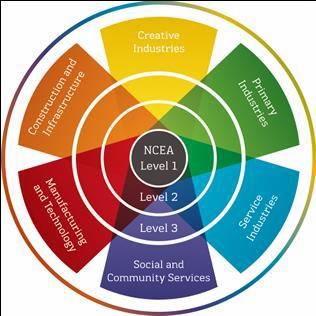
ABBREVIATIONS USED
AS          Achievement Standards
US          Unit Standards
NCEA L1 National Certificate of Educational Achievement Level 1
NCEA L2 National Certificate of Educational Achievement Level 2
NCEA L3    National Certificate of Educational Achievement Level 3
NC          National Certificate – specialised E.g. National Certificate in Computing Level 2
LPC         Learning Programme Co-ordinator
FC          Faculty Co-ordinator
TBC         To be confirmed

Course availability:
The courses outlined in this booklet are all expected to run in 2020, except when there are insufficient students
choosing a particular course for it to be viable. While we make every effort to meet students’ needs, it is
possible that some individual courses may not run, or in some cases, they may be combined with another level
of that subject.

Course Advice:
Parents are encouraged to participate in the Option Choice process. Deans, Deputy Principals and Career
staff are all available to advise students on their choices. Please contact the school if you would like to arrange
an appointment time for the next few weeks.

                                                          1
CONTENTS
Principal’s Introduction 3
Staff to see for advice 4
AGGS Course Structure 5
Course Selection Process for 2020 7
National Certificate of Educational Achievement (NCEA) 8
What are the Vocational Pathways? 9
Choosing the right courses for your future 10
Health Academy Science 11
Arts Faculty 12
English Faculty 14
Health and Physical Education Faculty 15
Languages Faculty 16
Mātauranga Māori Faculty 16
Mathematics Faculty 17
Science Faculty 18
Social Sciences Faculty 19
Technology Faculty 20
2August 2019
Dear Students, Parents and Caregivers
Over the next few weeks, you will be making important decisions on subject choices for next year. This Course
Booklet provides information to assist you to make the appropriate course selection. It outlines the curriculum
offered at Auckland Girls’ for Years 11, including possible course pathways, and individual subject
descriptions, along with subject prerequisites and the credits offered towards qualifications.
Students are encouraged to choose a programme that allows them to optimise their potential as individuals
and achieve the highest possible levels of success. We offer a wide range of courses that lead to national
qualifications and awards and prepare our girls for their future pathways. We encourage each of our students
to study a broad range of subjects from several different curriculum areas, for as long as possible. Diversity of
subject choice will support changes in direction and better prepare students for the expectations of tertiary
institutions. It is also important to plan educational pathways with care, checking entry requirements for tertiary
courses and ensuring that special requirements for qualifications, such as literacy and numeracy, are fulfilled.
I hope that you find this booklet useful in guiding your decision making. Further advice and guidance are
available from the Deputy Principals, Faculty Coordinators, Deans, and the Careers Advisor at school.
Ngaire Ashmore
Principal
3STAFF TO SEE FOR ADVICE
ARTS Ms Moller (FC) & Director of Music
Ms Dugdale - Visual Arts
Ms Sullivan - Dance
Ms Smith-Roy - Drama
Mr McQuillan – Media Studies
CAREERS/STUDENT SUPPORT Mrs Hames (Director of Student Support / Careers Advisor)
Ms Riley (Learning Centre)
ENGLISH Ms Stone (FC)
LANGUAGES Miss Malins (FC)
MATAURANGA MAORI Koka Rhonda Tibble (FC)
MATHEMATICS Ms Towes (FC)
PHYSICAL EDUCATION Ms Jobe (FC)
SCIENCE Ms Denny (FC) & Biology
Ms Tudor - Chemistry
Ms Rhode - Physics
SOCIAL SCIENCES Miss Rhodes (FC) & History
Mr Issacs - Geography
Ms Wilson - Social Studies / Classics
Ms Sturme - Economics / Business Studies
TECHNOLOGY Mr Summerville (FC)
VOCATIONAL PATHWAYS Ms Ashmore (FC)
SENIOR COURSE ADVISOR Ms Rhode
DEANS 2020 Mrs Fakaosi (Yr 9)
Ms Wikaire (Yr 10)
Mrs Lee-Cooper (Yr 11)
Ms Thom (Yr 12)
Ms Harridge (Yr 13)
Ms Sturme (International)
Whaea Joey Rogers (Kahurangi)
DEPUTY PRINCIPALS Ms Flannery – Student Services
Ms Lamberton – Curriculum and Assessment
Mr Morgan – Teaching and Learning
PRINCIPAL Ms Ashmore
4Year 9 Year 10 Year 11
Visual Art Visual Art Visual Art
Drama/Dance Dance Dance
Design (Practical Art)
Drama Drama
Arts
Music Music
Music Photography
English Advanced English Advanced English Advanced
English English English
English
Media Studies
Physical Education and Health Physical Education and Health Physical Education and Health
Health
Health Studies
& PE
Healthy Lifestyles
French French
Languages
Japanese Japanese Japanese
Samoan Samoan Samoan
Lea Faka-Tonga Lea Faka-Tonga
Course Structure
Te Reo Maori Te Reo Maori Te Reo Maori
Māori
Mathematics Mathematics Advanced Mathematics
Mathematics General Mathematics
Mathematics
Practical Mathematics
Science Science General Science
Science for Life
Science
Social Studies Social Studies Economics with Business
Geography
Social Science
History
Senior Social Studies
Technology Design & Visual Communication Design & Visual Communication
Digital Technologies Digital Design Technology
Technology
Food Technology Digital Technology Programming
Textiles Technology Textiles Technology
Hospitality
Pathways
Note: Courses will only be offered if there are sufficient
numbers.
5Year 12 Year 13 Multi-Level Courses
Art History Art History
Dance Dance
Design (Practical Art) Design (Practical Art)
Drama Drama
Music Music
Painting Painting
Photography Photography
English Advanced English Advanced Foundation English (ESOL)
English English Intermediate English (ESOL)
Media Studies English Enrichment Literacy
Media Studies
Health Studies Health Studies
Physical Education and Health Physical Education and Health
Japanese Japanese
Samoan Samoan
Lea Faka-Tonga Lea Faka-Tonga
Te Reo Maori Te Reo Maori
Mathematics Mathematics with Calculus
Mathematics and Statistics Mathematics and Statistics
General Mathematics General Mathematics
Applied Science Applied Health Science
Biology Biology
Chemistry Chemistry
Physics Physics
Sustainability (cross-curricular) Sustainability (cross-curricular)
Business Studies Business Studies
Classical Studies Classical Studies
Economics Economics
Geography Geography
History History
Senior Social Studies Senior Social Studies
Tourism & the Travel Industry Tourism & the Travel Industry
Design & Visual Communication Design & Visual Communication
Digital Design Technology Digital Design Technology
Digital Technology Programming
Textiles Technology Textiles Technology
Hospitality
Pathways Pathways Childcare
Gateway Gateway
6Course selection process for the 2020 school year
Senior Course Booklet for 2020 is published for students and
staff and is also available on the school website.
1 Students discuss their choices with parents, caregivers,
teachers, Deans, Careers Advisor, Senior Course Advisor,
Faculty Co-ordinators, Deputy Principals.
Parents are encouraged to make contact with the school to
discuss their daughter’s choices.
2
In Term 4, Deans and subject teachers check subject
lists and make recommendations for any changes to
3 individual students’ courses.
During the timetabling process, some students may
be contacted to discuss their courses.
January 2020: once external results are available, students
4 must notify the Dean or Senior Course Advisor of any last-
minute changes to their option choices.
The Deans & Senior Course Advisor checks each student’s
course against prerequisites & examination results.
Late January 2020: All senior students should check for
5 their course confirmation on the school intranet. The school
website will have details and dates. There will be a Course
Confirmation day held for each senior year level where each
student discusses & finalises her course with a Dean.
Students with confirmed courses need not attend this day.
2020 Timetable begins: Thurs 20th January (to be confirmed)
7NATIONAL CERTIFICATE of EDUCATIONAL ACHIEVEMENT
NCEA (National Certificate of Educational Achievement) is New Zealand's main national qualification for secondary school
students and is part of the National Qualifications Framework (NQF). Each subject offers a range of standards that are designed to
assess how well students perform in different skill and knowledge areas. When a student achieves a standard they gain credits on
the National Qualifications Framework (NQF).
The NQF contains two types of national standards: Achievement Standards and Unit Standards. The credits from all Achievement
Standards and Unit Standards count towards NCEA.
Achievement Standards may be internally or externally assessed. External assessment is by NZQA (New Zealand Qualifications
Authority) at the end of the school year. Internal assessment of Achievement Standards is carried out by subject teachers throughout
the year in such form as tests, project work, practical work and performances. Achievement Standards are assessed as follows:
“Achieved”, “Achieved with Merit”, “Achieved with Excellence” or “Not Achieved”.
Unit Standards are all internally assessed and also earn credits on the National Qualifications Framework. Some Unit Standards are
linked to tertiary or vocational industry-based courses. Unit Standards are assessed on the basis of meeting the required standard
and therefore the result will be generally shown as “Achieved” or “Not Achieved”.
There are rigorous external and internal moderation systems in place to ensure that internal assessment is fair, student work is
authentic, and marking is accurate and consistent with national standards.
NCEA Level 1 is gained by accumulating a minimum of 80 credits, at least 10 of which show numeracy skills and 10 other credits
which show literacy skills.
NCEA Level 2 requires a minimum of 60 credits at Level 2 or above and 20 credits at any other level, plus Level 1 literacy and
numeracy. Credits can be used for more than one qualification, so some NCEA Level 1 credits can count towards NCEA Level 2.
NCEA Level 3 requires a minimum of 80 credits, of which 60 must be at Level 3 or above and 20 at Level 2 or above, plus Level 1
literacy and numeracy. Credits can be used for more than one qualification, so some NCEA Level 2 credits gained in a previous year
can count towards NCEA Level 3.
Certificate Endorsements
NCEA Level 1 – 3 Certificates will be endorsed as follows:
Endorsement with Merit for a student who achieves 50 credits or more at Merit or Excellence.
Endorsement with Excellence for a student who achieves 50 credits or more at Excellence.
Course endorsement
A course endorsement provides recognition for a student who has performed exceptionally well in an individual subject course.
Students will gain an endorsement for a course if for that course, in a single school year, they achieve:
14 or more credits at Merit or Excellence
and at least 3 of these credits are from externally assessed standards and 3 credits from internally assessed standards.
Note: this does not apply to Physical Education, Religious Studies or Level 3 Visual Arts.
NZ Scholarship is a monetary award designed to extend and recognise top-level students. Most subject areas at AGGS that offer
Level 3 also offer entry into NZ Scholarship. This should be discussed with the appropriate FC.
For more information on NCEA visit: http://www.nzqa.govt.nz/ncea/index.html
For more information on Scholarship visit: http://www.nzqa.govt.nz/scholarship/index.html
8What are the Vocational Pathways?
The Vocational Pathways provide new ways to achieve NCEA
Level 2 – the foundation for success in further education and the
world of work. The pathways help students see how their
learning and achievement is valued in the ‘real world’ by aligning
the NCEA Level 2 Assessment Standards including specific
‘sector-related’ standards with six industries:
Primary Industries
Services Industries
Social & Community Services
Manufacturing & Technology
Construction & Infrastructure
Creative Industries
These six pathways represent ways to structure and achieve NCEA Level 2 by providing a more coherent framework for vocational
education; students can develop their own individual education plans, are better informed and able to make better choices to meet
their goals.
Government agencies, the industry training sector, secondary and tertiary representatives and industry and employer
representatives worked together to develop the six Vocational Pathways for NCEA Level 2 as the foundation of the journey to
employment. These groups are now in the process of developing pathways through qualifications achieved in NCEA Level 3 and
beyond.
What is the Vocational Pathways Award?
The award enables employers to assess whether potential employees’ skills align with their industry requirements more easily.
To receive a Vocational Pathways Award, students must first gain NCEA Level 2, which is 60 credits from Level 2 and 20 credits
from any other level; 80 credits in total. 10 of these 80 credits must satisfy the literacy requirements, and 10 of these 80 credits must
satisfy the numeracy requirements. To get a Vocational Pathways Award, 60 of the Level 2 credits must be from the recommended
standards in one or more pathways, including 20 Level 2 credits from sector-related standards.
The following diagram shows this relationship:
The Vocational Pathways Award(s) will be awarded to students on their NZQA Record of Achievement. You can follow your
Vocational awards on your ROA or through your student portal. They can be a real advantage when they look for work and training
opportunities in the sector.
9Choosing the right courses for your future:
‘Educated at Auckland Girls’, Equipped for the world’
Your choices at school can make a difference to your pathway when you leave school, so choose
carefully and remember these important points:
Think about the subjects that you enjoy and also the ones that you are succeeding in now
Don’t specialise too soon - keep your overall course as broad as possible
Research the subject requirements for your possible career choices
Always have a backup plan for your future pathway
Think about how you prefer to work and learn E.g. practical subjects, written subjects, performance
subjects, creative subjects, scientific subjects
Check that you will have the pre-requisites for your 2020 subjects
Discuss your options with as many people as possible E.g. Tutor teacher, Dean, Careers Advisor
Involve your parents in your decision-making – they know you well!
Course Requirements at AGGS in 2020
Course
Equivalent of 6 full year NCEA Level 1 subjects
Yr 11 Requirements
Compulsory English, Mathematics and Science – full year, 1 semester of Healthy Lifestyles
Course
Equivalent of 6 full year NCEA Level 2 subjects
Y12 Requirements
Compulsory English – full year
Course
Equivalent of 5 full year subjects (at Level 3 or combination L2/L3)
Y13 Requirements
Compulsory Study – full year
In some individual cases, students may study at more than one level of NCEA in the same year.
Pre-requisites for Courses:
Continuing on to Year 12 & 13 in most subjects requires that you have gained a minimum standard (prerequisite) this year. The
prerequisites are listed within the individual course information. Some courses will have open entry or no prerequisite. You will not be
able to take the course if you have not gained the prerequisites.
Portfolio subjects: (Visual Art, Design, Design & Visual Communication, Painting, Photography, Technology)
These are subjects that require you to submit a major collection of work at the end of the year for the external assessment. For
workload reasons, it is recommended that you only take one portfolio subject, but exceptions to this may be made at the discretion of
your teachers, and in consultation with both you and your parents.
Course availability and credits:
Each course offered in this booklet will run in 2020, provided that sufficient students choose to take it. For senior school subjects, the
credit value offered in each course is an approximate indication and may be subject to change. Course outlines issued by teachers
at the start of 2020 will confirm the details of assessments and credits to be offered.
10Health Science Academy – Māori and
Pasifika
Auckland Girls Grammar School is the only school in Auckland offering Health Science Academies (HAS) for
both Māori and Pasifika students. This programme is for students in Years 11, 12 and 13 who are interested
in a career in the Health Sciences. There are more than 80 different careers in this field, including medical
specialists, public and community health workers, technicians, midwives, nurses, dental workers,
rehabilitation workers, therapists and mental health workers. Students in the academy will be mentored to
help them develop an academic pathway and to achieve their goals. The Academies are run in partnership
with the Waitemata, Auckland and Counties-Manukau District Health Boards and Massey University.
Required Subjects
Year 11 - English, Mathematics, Science, Healthy Lifestyles and two options plus a compulsory Health
Science semester
Year 12 - English, Maths, at least two Sciences and/or Health Studies and other options that contribute to
your chosen career pathway.
Year 13 – Language rich subject (Table A), Maths, at least two Sciences and/or Health Studies and other
options that contribute to your chosen career pathway.
There is an expectation that students in the academy will attend special events, extra tutoring and work
experience placements that are organised. Most of these extra experiences will have no cost associated with
them. Some of them will be outside of school hours, including in the holidays.
Where does it lead to?
At the completion of the first year, students will have the option of continuing to be part of the Health Science
Academy for Years 12 and 13. The school and the District Health Boards will continue to support these
students through their studies.
At the end of Year 13, those students who are still interested in continuing into the health industry will be
mentored through the process of applying for scholarships and tertiary courses. There is likely to be
continued support from the DHBs through their first year of tertiary study.
Applications
Students will need to fill in an application form to apply for the Academy. They will then be shortlisted and be
interviewed.
To gain success in the Academy, students need to have a good work ethic, be dedicated to their studies and
show a passion or interest in the health sector. Students will also need to have the ability to cope with a high
workload and maintain their grades under pressure.
Application forms will be available later in Term 3.
11ARTS FACULTY
This is the learning area which explores and celebrates the processes and products of creativity and personal expression. The Arts
are powerful forms of expression, providing essential learning for living and developing a wide range of general and specific skills,
vital for employment, study, leisure and recreation.
The Arts are the basis of international communication and understanding as they cross all boundaries and link all areas of thought
and personal endeavour. The Arts subjects enable students to explore, understand and communicate ideas in creative ways. They
encourage individuality and an ability to be adaptable and innovative in the face of change.
YEAR 11 COURSES
11ART VISUAL ART
Visual Arts are the study of various processes, procedures, techniques and materials in Credits available
art-making. This course consists of learning some formal aspects of art-making,
L1 AS
including the close study of established artists from New Zealand and overseas. This
course is an introduction to Senior NCEA Visual Arts study, where students learn to Internal 10
extend and expand on their own strengths and interests. It is designed to prepare External 12
students for any of the fields offered in Visual Arts. It is recommended, but not
imperative, that students have taken at least 2 semesters of Junior Visual Arts. Total 22
11DAN DANCE
Dance is the study of human movement through creative expression. In Year 11 Dance Credits available
you will learn a variety of dance styles, choreograph group dances and analyse
L1 AS
professional dance works. Taking Dance as a subject is a unique opportunity to develop
creative thinking and problem-solving skills and to work collaboratively with others. As Internal 16
well, this course will involve a field trip to watch a live performance which will cost External 4
approximately $15. There are no prerequisites for this course, however, the majority of
Total 20
this course is practical. It is an expectation that you are to participate in movement most
lessons and bring appropriate gear for dancing.
11DES* DESIGN (semester)
Design is the study of using various technologies to explore the possibilities for creating Credits available
visual art. Year 11 Design will include elements of Photography and Design. There will
L1/ L2 AS
be opportunities for students to generate work in a variety of media and discover where
their interests lie. This could include digital photography, animated GIFs, stop motion, Internal 11
short film, digital painting, screen printing and more. External
This course will prepare students for further study in Design, Photography or Digital
Painting. There are no pre-requisites for this course although some previous study of Total 11
visual arts would be useful.
11DRA DRAMA
Drama techniques of voice and movement to create a range of roles. Participation in a Credits available
variety of group performances, explore a specific theatre style and perform a scripted
L1 AS
play. Written work is expected throughout the year. Students will be expected to perform
to a public audience in the DWC for one of the standards. Internal 18
External 4
Total 22
11DRS* DRAMA (semester)
This course will include two performances and the opportunity to sit an external Credits available
examination. Students will explore the play Blood Brothers. They will make a
L1 AS
presentation about the world of the play and then rehearse scenes to perform in an
evening performance in the DWC. Internal 10
External 4
Total 14
1211MED MEDIA STUDIES
Media Studies is the study of media texts, their creation and influence on society, media Credits available
technologies, media industries and media history. The course contains both written, academic
elements and practical, hands-on activities in project-based assessments. L1 AS
Preference will be given to those who have completed Year 10 Media Studies or others, Internal 15
subject to approval by Faculty Co-ordinator. External 4
Total 19
11MUP* MUSIC PERFORMANCE (semester)
Music is a study of performance, songwriting and technology. This is a predominantly Credits available
practical course that will provide you with useful skills of learning how to set up for a band
and to use sound equipment for live performances. You will learn relevant events L1 AS
management skills for running a concert/event. You will also develop music technology skills Internal 14
that teach you how to use today’s music sequencing and notation software. You will need to External
be prepared to perform as part of a group. This course leads to a pathway in the performing
Total 14
arts. Students must have done either 10 Music full-year or half-year. Or seek permission from
Ms Moller to take this course.
11MUS MUSIC
Music is the study of performance, composition, songwriting, research, technology and Credits available
notation. This course focuses on developing the skills of students learning to play an
L1 AS
instrument, learning to create a song or a composition for their instrument, as well as
developing notation literacy, aural ability, and the use of music technology. This course Internal 24
includes both internal and external credits. External 8
Total 32
11PHO PHOTOGRAPHY
Photography is the study of using the photographic process to communicate information, Credits available
ideas and personal insights. This course will introduce the basic materials and processes of
L1 / 2 AS
photographic practice. Students will use film cameras and learn all of the steps to produce
images from advanced camera techniques to printing photographs in the darkroom. There will Internal 16
be a cost of $50 for materials including film and photographic paper. There may also be External
ongoing costs for additional materials. There are no pre-requisites for this course although
some previous study of visual arts would be useful. Total 16
13ENGLISH FACULTY
English is about making sense of the written, visual and oral texts we encounter every day. It empowers us to understand texts and
see how people use language to influence the way we think and feel about the world.
English is compulsory at Year 11 so you will need to choose one of the following courses.
YEAR 11 COURSES
Students need to discuss with their English teacher which course would best suit their needs.
11EAD ENGLISH ADVANCED
This is a challenging course in which you are required to think critically and engage Credits available
with more stimulating written and visual texts. You will study a variety of written texts
L1 AS
and develop close viewing skills. You will spend time crafting different forms of writing,
making connections across texts and the wider world as well as developing our ability Internal 17
to think critically. Entry is at the discretion of the HOF. External 8
Total 25
11ENG ENGLISH
This is for students who enjoy reading and exploring ideas in literature. The course Credits available
involves the study written texts, close viewing of film and making connections across
L1 AS
different texts which link to the wider world. A variety of texts will be studied.
Internal 13
External 8
Total 21
11ENR ENGLISH ENRICHMENT
This course is for students who need extra assistance in their literacy to help them Credits available
achieve in all their subjects. The course uses similar standards to 11ENG, but with
L1 AS
carefully selected texts to focus on developing reading and writing skills.
Entry is at the discretion of the HOF Internal 13
External 8
Total 21
ESOL COURSES
14FOU1 FOUNDATION ENGLISH
This course focusses on developing English language skills while learning about New Credits available
Zealand culture and using a variety of English texts. Vocabulary enrichment will include
students' other subjects and their topics to provide support. Students will be assessed by ESOL AS
both ESOL and Literacy standards. Entry is based on diagnostic testing at enrolment. L1 Literacy 12
Total 24
14FOU2 FOUNDATION ENGLISH
This course focusses on developing English language skills while learning about New Credits available
Zealand culture and using a variety of English texts. Vocabulary enrichment will include
ESOL AS
students' other subjects and their topics to provide support. Students will be assessed by
both ESOL and Literacy standards. Entry is based on diagnostic testing at enrolment. L1 Literacy 12
Total 24
14INT INTERMEDIATE ENGLISH
This course further develops students' written and spoken language skills, with a focus Credits available
on widening vocabulary to help them achieve in all their subjects. We use a variety of
L1 AS
written and visual texts to prepare students for assessment by a range of Level 1
Achievement standards for their first contact with NCEA. You should have been Internal 14
successful in the Foundation class or entry can be based on diagnostic testing at External 8
enrolment.
Total 22
14HEALTH AND PHYSICAL EDUCATION FACULTY
In Health and Physical Education, the focus is on the well-being of students, other people, and society, through learning in health-
related and movement contexts.
YEAR 11 COURSES
11PED PHYSICAL EDUCATION
This is an exciting course that will enable students to participate in a variety of physical Credits available
activities including turbo touch, multisport, softball and many more. Students will need to
L1 AS
apply their knowledge in both practical and written contexts. Some areas of focus will be
on understanding how the human body works, demonstrating interpersonal skills, Internal 15
responsible behaviours and leadership. An outdoor trip may include rock climbing, External
mountain biking and/or white water rafting, kayaking and stand up paddling. Some
payment may be required for this course. Total 15
11HEA HEALTH STUDIES
This is an introductory course for students who enjoy learning about health and Credits available
wellbeing related contexts. Students will learn and develop an understanding of
L1 AS
personal, interpersonal and societal influences, on topics such as nutrition, sexuality
and relationships. They will also examine the consequences and strategies involved Internal 16
when studying these topics. External 4
Total 20
This course is compulsory at Year 11. You will need to choose another semester course for the second half of the year.
11HLS* HEALTHY LIFESTYLES (semester)
The objective of this course is to introduce students to a variety of activities that will help Credits available
them to focus on making healthy lifestyle decisions. Students will learn about
L1 AS
mindfulness and strategies to help manage self. They will learn how to take action and
improve their own physical wellbeing. Students will need to apply their knowledge in Internal 8
both practical and written contexts. External 0
Total 8
15LANGUAGES FACULTY
Everyone benefits from learning languages. Communicating with people within and across communities, cultures and nations
enables us to engage with new ways of thinking, questioning, and interpreting our world.
Students with more than one language enhance their employment and lifestyle opportunities. They are able to participate as citizens
of a world in which many different languages are spoken and most people can use more than one language.
YEAR 11 COURSES
11JAP JAPANESE
In Japanese, students learn to communicate in an additional language, develop their Credits available
capacity to learn further languages and explore different worldviews in relation to their
L1 AS
own. This course aims to consolidate basic reading, writing, listening and speaking skills
and the topics studied include self-introduction, making arrangements for a visit/trip, Internal 14
everyday life, hobbies and holidays. This course can also provide an opportunity to visit a External 10
Japanese restaurant and to host students from our Japanese sister schools. You will
need to have studied Japanese in Year 10 or equivalent or have an Asian language Total 24
background.
11SAM SAMOAN
In Samoan, students learn to communicate in the Samoan language and explore Credits available
aspects of Samoan culture through a range of contexts. This course aims to consolidate
basic reading, writing, listening and speaking skills. It also provides an opportunity to L1 AS
experience the annual Samoa Independence Day celebration as part of Samoan Internal 14
language week and the study of Samoan history. You will need to have studied External 10
Samoan in Year 10 or equivalent or have a basic understanding of Samoan language.
Total 24
11TGN LEA FAKA-TONGA
Lea Faka-Tonga is the study of the Tongan language and culture through a range of Credits available
contexts. This course provides students with the opportunity to develop comprehensive
L1 AS
skills through speaking and writing in Lea Faka-Tonga. You will need to have a Lea
Faka-Tonga language background. Internal 14
External 10
Total 24
MATAURANGA MAORI FACULTY
The Faculty of Mātauranga Māori will be responsible for the delivery of Te Reo Māori (Māori Language), Tikanga Māori (Cultural
Processes) and Nga Toi Whakaari (Cultural Performance). In addition to this, the Faculty of Mātauranga Māori will oversee initiatives
which are designed to raise Māori achievement across the whole school. We encourage open communication between teachers,
learners and their whānau, on all or any aspects of the learning journey of Māori students.
YEAR 11 COURSES
11TRM TE REO MAORI
This course consists of a study of Te Reo Māori being able to communicate about: Credits available
problems and solutions; immediate plans, hopes, wishes and intentions; formal
L1 AS
situations: Students will cover themes such as ASB Polyfest, Ngā Manu Korero, Te
Kainga, Te Kura Tuarua, Ngā Iwi o Inaianei and Tā Moko. Internal 18
External 12
Total 30
16MATHEMATICS FACULTY
Mathematics at secondary school will give you the skills, understanding and confidence to use mathematics in everyday life. You will
develop a variety of approaches to problem-solving, learn to discover patterns and relationships, interpret information and statistics
and communicate your ideas using mathematical language.
There are courses that will prepare you to go on studying mathematics and courses to give you the mathematical skills and concepts
needed to take a responsible role in our society.
Mathematics is compulsory at Year 11 so you will need to choose one of the following courses.
YEAR 11 COURSES
NOTE: Our Year 10 Mathematics courses offer one or more Achievement Standards. If students achieve,
they will go into Year 11 with Level 1 credits banked in their achievement records.
Your Year 10 Mathematics teacher will recommend which one of these courses are most suitable for you:
11MAT MATHEMATICS
This course is for students who enjoy Mathematics and are successful. Students taking Credits available
this course will probably want to continue with Mathematics at higher levels. They will be
L1 AS
prepared for Mathematics at L2, leading on to L3 and university study. Topics covered
will include algebra, graphs, number, statistics and probability. Internal 8
External 12
Total 20
11MAG GENERAL MATHEMATICS
This course is for students who need extra help with Mathematics in order to achieve Credits available
Numeracy and the necessary background to continue to L2 Mathematics. Topics
L1 AS
covered will include algebra, measurement, number, statistics and probability.
Internal 16
External 4
Total 20
11MAP PRACTICAL MATHEMATICS
Practical mathematics for use in everyday life. This course will provide students with the Credits available
opportunity to gain Numeracy for NCEA L1 through both Unit and Achievement
Standards. Topics covered will include number, statistics, probability, measurement and L1 US/AS
geometry. US 10
AS 13
Total 23
17SCIENCE FACULTY
Learning in Science is fundamental to understanding the world in which we live and work. Science finds patterns by making careful
observations of the world around us. It helps people to clarify ideas, to ask questions, to test explanations through measurement
and observations and to use their findings to establish the worth of an idea. Science makes an important contribution to the
decisions which are shaping our world and the world of future generations.
Māori and Pasifika students interested in the Health Science academies can see the information on page 11.
Science is compulsory at Year 11 so you will need to choose one of the following courses.
YEAR 11 COURSES
11SCI GENERAL SCIENCE
Science is a way of investigating, understanding and explaining our natural and physical Credits available
worlds. By studying Science, students develop the knowledge, problem-solving and
L1 AS
critical thinking skills needed to inform decision making at both an individual and societal
level. In this course you will cover key concepts from the specialist areas of Biology, Internal 11
Chemistry and Physics in order to provide you with the background to understand External 8-12
everyday Science, prepare for the workforce or to choose further study pathways
Total 23
(secondary and tertiary) in all specialist science areas.
11SCL SCIENCE FOR LIFE
Science is a way of investigating, understanding and explaining our natural and physical Credits available
worlds. By studying Science, students develop the knowledge, problem-solving and L1 AS
critical thinking skills needed to inform decision making at both an individual and societal
level. In this course, you will cover key concepts from a wide range of science Internal 17
disciplines in order to provide you with the background to understand everyday Science, External 4
prepare for the workforce or to choose further study pathways. The topics covered in Total 21
Science for Life will be chosen to meet the interests and needs of the students.
18SOCIAL SCIENCES FACULTY
The Social Sciences Faculty consists of a range of subjects which all centre on the world and the people in it. Students are
challenged to thinking critically, whilst learning more about themselves, their values and the views they hold. They have the
opportunity to study a wide range of subjects including Business Studies, Classical Studies, Senior Social Studies, Economics,
Geography, History and Travel and Tourism. Most of our courses are open entry so that you can choose subjects you most enjoy
and have a passion for. The Social Science faculty has a group of well qualified and experienced teachers who believe in supporting
all students to achieve their personal best.
YEAR 11 COURSES
11ECB ECONOMICS WITH BUSINESS
This course is a mix of Economics and Business Studies standards and will give an insight Credits available
into the business world and how the New Zealand economy works. Topics include Demand
L1 AS
e.g. what influences a consumer to buy, supply e.g. what decisions do businesses need to
make, The Market e.g. how prices are determined. Students will also apply the marketing Internal 11
mix to a product and investigate the recruitment process of a business. There is a field trip to External 12
a local business in Term 2. This is an open entry course.
Total 23
11GEO GEOGRAPHY
Geography is a course designed to develop an understanding of the world we live in and Credits available
make critically evaluated, informed decisions using this understanding. We study how we
L1 AS
interact and shape the natural environment. Our contexts of study include the sustainability
of Tourism in fragile environments, global fertility rates and their effects on countries, how Internal 10
New Zealand’s location caused the 2011 Canterbury Earthquake, and using field research to External 8
understand the weather patterns Auckland experiences. This course is open entry, and
students are encouraged to be confident in their writing skills. Total 18
11HIS HISTORY
History is the study of how people's lives have been affected by events in the past. History is Credits available
a useful subject that helps to develop literacy skills, critical thinking and persuasive writing. It
L1 AS
also helps us to understand change and why society is the way it is. This course consists of
two main topics. The First World War and Gallipoli, and the Black Civil rights movement of Internal 12
the 1950s. This is an open entry course. External 8
Total 20
11SOS SENIOR SOCIAL STUDIES
The study of culture and society is about how our society is the way it is. In this course, we Credits available
look at culture and find out where it comes from. We look at how societies deal with social
L1 AS
problems, and how and why societies change. We have two case studies: the first is on
human rights and hatred in New Zealand, and the second is on the Holocaust in Europe. Internal 14
This is an open entry course, but an interest in culture and society is recommended. External 8
Total 22
11GES* GEOGRAPHY (semester)
Semester Geography is a course designed to develop an understanding of the world we live Credits available
in and make critically evaluated, informed decisions using this understanding. We study how
L1 AS
we, as humans, interact with the natural environment and shape it. Our contexts of study will
include the sustainability of Tourism in fragile environments, global fertility rates and their Internal 10
effects on countries, and using field research to understand the weather patterns Auckland External
experiences. This course is open entry.
Total 10
11HSS* HISTORY (semester)
Semester History is the study of how people's lives have been affected by events in the past. Credits available
History is a useful subject that helps to develop literacy skills, critical thinking and persuasive
L1 AS
writing. It also helps us to understand change and why society is the way it is. This course
consists of two main topics. The First World War and Gallipoli, and the Black Civil rights Internal 8
movement of the 1950s. This course is open entry. External
Total 8
19TECHNOLOGY FACULTY
Technology is the creative and purposeful use of human knowledge, skills and physical resources to solve practical problems. It
involves developing objects, systems or environments. Technology is part of our daily lives, both at home and at work. Technology
education develops a wide range of skills including problem-solving, design, construction, critical thinking, analysis, synthesis and
evaluation.
YEAR 11 COURSES
11DVC DESIGN AND VISUAL COMMUNICATION
Design and Visual Communication encompasses two different design disciplines of Credits available
Spatial and Product which are best presented using any media or digital technologies.
L1 AS
Spatial meaning designed space of Architecture, Interior, Landscape, Public and Private.
Product design involves imagining and creating objects meant for mass production. This Internal 16
course consists of Architectural Design and Product Design using Designed Heritage, External 3
Design Principles, Designer Theory with Graphics practice skills of sketching, rendering,
Total 19
drawing, analysis, decision making whilst resolving a design brief. You will need to be
able to project manage your time well. Sketching, Drawing, creative thinking and be able
to problem-solve are valuable skills.
11HOS* HOSPITALITY (semester)
Hospitality at Year 11 provides students with an opportunity to gain practical skills and Credits available
knowledge of food preparation in the kitchen, before embarking on a full-year course at
L1 AS
Year 12. The course will foster both independent and creative thinking, while the ability
to break tasks into sequential activities is of prime importance. The learning is taken Internal 10
from Industry standards and will lead to future qualifications in the food and beverage External
Sector. This course leads on to 12 HOS.
Total 10
11TCT TEXTILES TECHNOLOGY
Textiles Technology uses a range of materials to develop a brief. Students further Credits available
explore, learn and apply knowledge to find creative solutions to problems, either
L2 AS
conceptual or practical. Students will further develop their independent working and
learning habits, their ability to think objectively and critically as well as develop their own Internal 16
style and skills. This course follows on from Year 10 Textiles and students need to have External 3
good project management skills.
Total 19
11TDD DIGITAL DESIGN TECHNOLOGY
Studying Digital Media Design enables you to develop applied digital skills, understand Credits available
effective design and the elements of an interactive digital product combining multimedia
L1 AS
that make it fit for purpose. You will manage your own project and have creative
direction over the look and function of your design. Suitably qualified professionals with Internal 16
design skills and understanding of user experience are in short supply. This course External 4
prepares Year 11 students for 12TDD.
Total 20
11TDP* DIGITAL TECHNOLOGY PROGRAMMING (semester)
Digital Technology is the study of the computational concepts, design skills and Credits available
technical understandings that underpin the creation of digital products and systems. A
L1 AS
focus of this course will be on the interaction between humans and computers and
particular emphasis will be on the user's experience online quiz interfaces. Students will Internal 9
learn the programming and user interface development skills through the creation of External
their own programming project. This course leads on to 12 TDP.
Total 9
20You can also read


