Services for Tall Buildings Cost Model - For Building Magazine February 2018 - Alinea Consulting
←
→
Page content transcription
If your browser does not render page correctly, please read the page content below
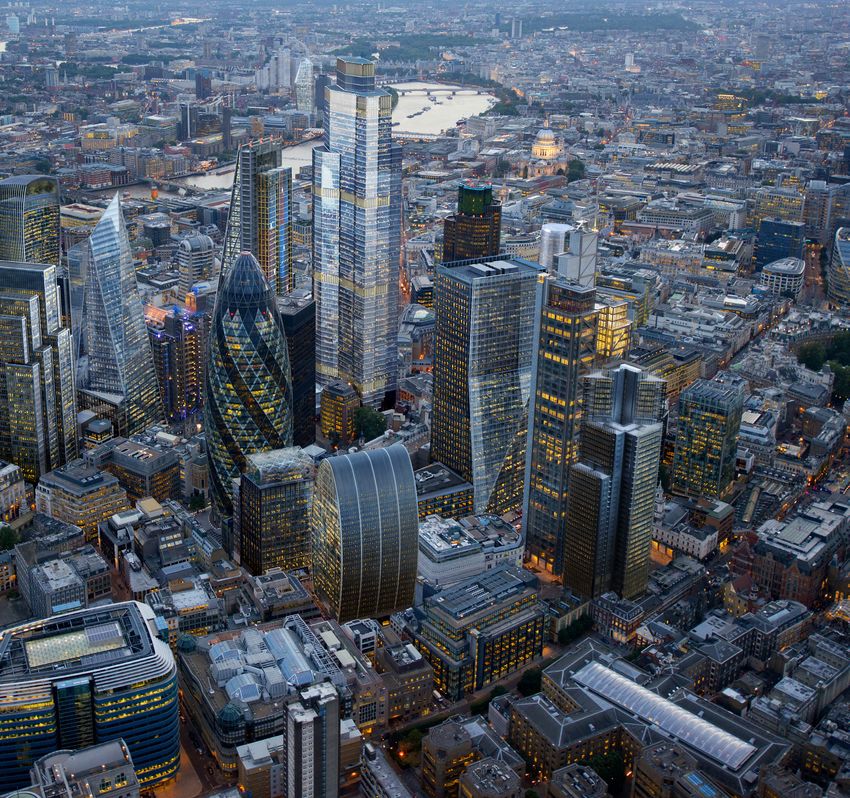
Services for Tall Buildings
              Cost Model
       For Building Magazine
                 February 2018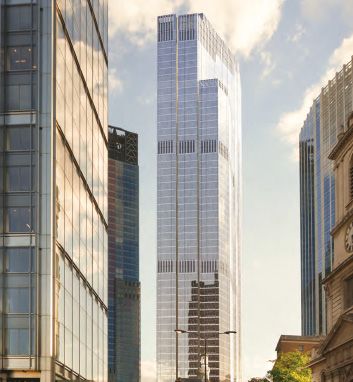
Services for Tall Buildings Cost Model | For Building Magazine

Cost Model Services for Tall Buildings

Mechanical, electrical and plumbing systems are a particular challenge for tall buildings,
with their own considerations and commercial drivers. We outlined the factors and
costs for office buildings in an article for Building Magazine published on 23.02.2018.

01 / The world is getting taller

Tall buildings are being delivered              more than a million people on the                         – from perspectives of cost, value,
in greater numbers, at greater                  planet urbanise each week.”                               operation and environment – all
heights, and in more locations                                                                            against the inherent challenges
around the world: more than 70                  London is not a premier league                            such buildings present. This article
of
 200the world’s tallest 100 buildings
                                                player in terms of numbers, but its                       outlines the key considerations and
were completed in the last decade.              skyline has changed dramatically                          commercial drivers in the design of
 180
This  premier league of towers has              over the past 15 years, and its array                     mechanical, electrical and plumbing
an average height of around 370m                of high-quality tall architectural                        (MEP) services for tall buildings,
 160
(the corresponding figure in 2000               forms and engineering solutions                           and provides a cost model for these
was 285m). Last year, towers of least           are admired around the globe.                             elements for a high-rise London
 140
200m high were built in 65 cities               The experience gained by the                              office building.
across
 120
        23 countries, with 13 cities            various professionals involved has
seeing their first 200m-plus building.          enabled them to export their talents
As
 100Antony Wood, executive director             internationally. This includes London-
of the Council on Tall Buildings and            based M&E engineers, who can
Urban
  80    Habitat (CTBUH), puts it: “Tall         demonstrate their skills in making
buildings are becoming the accepted             a landmark tower’s services as
global
  60    model for densification as              effective and efficient as possible
  40

  20

Figure 1: Global completions of tall buildings
   0
       1960
       1961
       1962
       1963
       1964
       1965
       1966
       1967
       1968
       1969
       1970
       1971
       1972
       1973
       1974
       1975
       1976
       1977
       1978
       1979
       1980
       1981
       1982
       1983
       1984
       1985
       1986
       1987
       1988
       1989
       1990
       1991
       1992
       1993
       1994
       1995
       1996
       1997
       1998
       1999
       2000
       2001
       2002
       2003
       2004
       2005
       2006
       2007
       2008
       2009
       2010
       2011
       2012
       2013
       2014
       2015
       2016
       2017
       2018

 200
                                 # of 200m-plus completions       # of 300m-plus completions   # of 600m-plus completions
 180

 160

 140

 120

 100

  80

  60

  40

  20

   0
       1960
       1961
       1962
       1963
       1964
       1965
       1966
       1967
       1968
       1969
       1970
       1971
       1972
       1973
       1974
       1975
       1976
       1977
       1978
       1979
       1980
       1981
       1982
       1983
       1984
       1985
       1986
       1987
       1988
       1989
       1990
       1991
       1992
       1993
       1994
       1995
       1996
       1997
       1998
       1999
       2000
       2001
       2002
       2003
       2004
       2005
       2006
       2007
       2008
       2009
       2010
       2011
       2012
       2013
       2014
       2015
       2016
       2017
       2018

                                 # of 200m-plus completions       # of 300m-plus completions   # of 600m-plus completions
                                                              2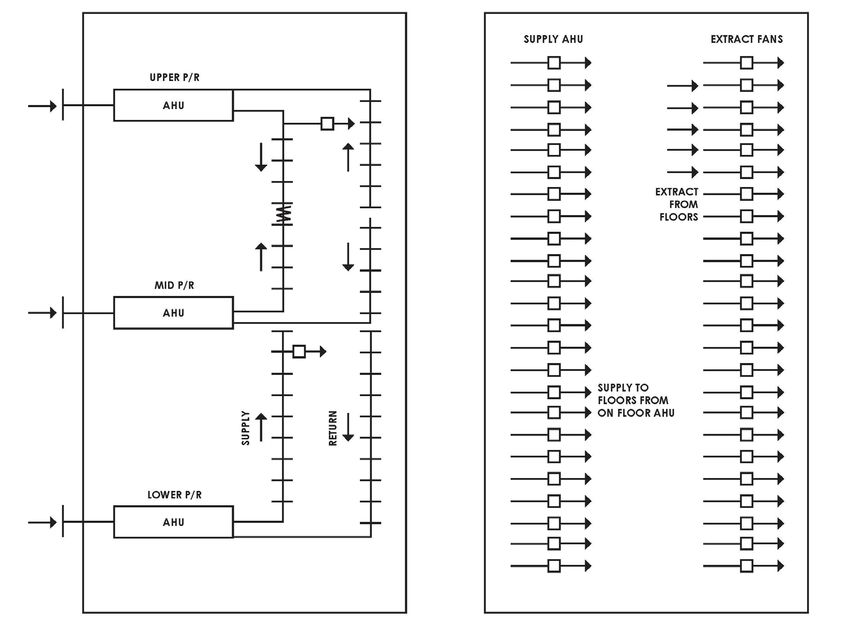
Services for Tall Buildings Cost Model | For Building Magazine

Cost Model Services for Tall Buildings

02 / Early strategic decisions will determine efficacy

Towers contend with a difficult             of a tall office building. With plant      the arrangement of services up and
balance between risk and                    and risers accounting for up to 10%        around the core. These decisions
reward, and the margins between             of total gross internal floor area, the    should factor in not only capital
commercial success and failure can          stakes are high.                           costs and their various drivers (such
be small. Success relies on achieving                                                  as buildability), but also operational
the optimal balance between                 The design of MEP services will            costs, ease of maintenance,
cost, floor area and construction           require some key strategic decisions       spacetake and carbon impacts.
efficiencies, which must be                 to be made early on, with careful
considered in the initial development       consideration and analysis of all          With a limited pool of trade
of massing and geometry. This               relevant factors. Not least of these       contractors having the capabilities
applies to mechanical, electrical           is the environmental strategy and          and capacity to undertake larger and
and plumbing (MEP) services just            how it can support the orientation         more complex towers, procurement
as much as it does to any other             of the building, the centralisation        requires careful thought too, with
element. MEP services generally             or decentralisation of services, the       early engagement advisable.
constitute 20% to 25% of the total          location of mechanical plant, the
elemental (trade) shell and core cost       distribution of incoming power, and

03A / Key decisions - plant location, hydraulics and air distribution

Plant location                              the tall building where space is           heat exchangers and pump
                                            tightest. Ideally, plant such as cooling   sets to distribute further distances
The predominant MEP considerations          towers, boilers and generators would       to higher floors. If more than 20
for tall buildings are the selection        be roof-mounted, but most tall             floors are served without the use of
of main plant locations and how             buildings have little or no such roof      hydraulic breaks, higher-pressure-
services are distributed up and down        space to locate these key pieces of        rated pipework and associated
the building.                               plant, at heights that offer premium       valves will be required – which could
                                            office rents and opportunities for         result in the introduction of on-floor
Tall buildings typically have multiple      other valuable functions such as           hydraulic breaks between the shell
basements, which tend to suit the           restaurants and viewing platforms.         and core and fit-out installations.
accommodation of the electrical
high-voltage (HV) incoming                  Part of the answer often lies in           The same issues apply with plumbing
switchgear, water-cooled chillers,          interstitial plant floors, which could     services. Drainage in tall buildings
cold-water tanks and sprinkler              mean that a 60-storey building, in         has to be dealt with in a particular
tanks. This invariably requires the         terms of MEP services provision, is        way, with several high and low-rise
fitting together of puzzle pieces to        the equivalent of three buildings          stacks rising next to each other
achieve the most efficient fit with         stacked on top of one another.             serving different sections of the
the smallest possible gaps. The                                                        building. There could be two to
competition against other demands           Hydraulic breaks                           three times the amount of pipework
for these below-ground spaces has                                                      compared with a building of the
become more intense in recent years         Generally, the maximum vertical            same total area but less height.
with the proliferation of bicycles. The     distribution distance for water            Water services can serve a maximum
London Plan, and its calculations           systems tends be around 20 floors,         of 150m because of the limitations
based on the total gross internal area      before a hydraulic break is required       of WTAS approved fittings and the
of a building, defies tall commercial       on low temperature hot water               practicalities of pressure on larger
buildings to fit in vast numbers of         (LTHW), chilled water (CHW) and            towers: pressure breaks will therefore
cycle spaces, lockers and showers.          condenser water systems. The               be required.
                                            requirement of hydraulic breaks
However, it is at the other end of          introduces an additional expense of        This justifies a classic cost-benefit

                                                    3
Services for Tall Buildings Cost Model | For Building Magazine

Cost Model Services for Tall Buildings

analysis, with the capital cost and         fresh air to the office floorplates.               on the building management
space-take implications of the              Each of these strategies carries some              system
alternatives to be worked through           important issues:                              •   Involve connections through
and compared, so that a decision can                                                           the facades for air intake and
be made and schematics developed.           Centralised AHUs:                                  exhaust
                                            •  Have larger ductwork risers                 •   Need access to their on-floor
Air distribution                               for the movement of greater                     plant rooms, and maintenance
                                               air volumes up and down the                     access may need to be allowed
There are several ways of distributing         building                                        through tenants’ floor spaces
air around a tall building, with no         •  Rely on a few larger pieces                 •   Should make commissioning a
obvious, preconceived answer for               of kit to serve more floors,                    simpler process.
any project (which is why both the             raising questions of resilience
current and proposed batches of                (particularly in a multitenanted            There are advantages and
London’s tall buildings have adopted           environment)                                disadvantages with either of these
a variety of solutions).                    •  Make it more difficult to install           two options, but perhaps the
                                               large AHUs, with thought                    greatest factor in the decision is the
That said, there are two principal             required on issues of logistics             effect on net internal floor area. The
options:                                       and buildability – especially               options will usually involve more than
                                               for the plant at the top of the             two strategies, as the extremes of a
•   Centralised air handling units             building.                                   completely centralised versus a floor-
    (AHUs) – possibly with interstitial                                                    by-floor solution are supplemented
    plant floors                            On-floor AHUs:                                 by the option to provide intermittent
•   On-floor AHUs                           •  Require the increased capital               plant floors with their individual
                                               cost of additional CHW/LTHW                 AHUs.
Figure 2 shows how these can be                connections, power supplies, and
respectively configured to supply              additional points and interfaces

                                                      Figure 2: Air distribution options

                                                            CENTRAL AIR PLANT                    FLOOR BY FLOOR AIR HANDLING

                                                      4
Services for Tall Buildings Cost Model | For Building Magazine

Cost Model Services for Tall Buildings

03B / Other key decisions

Incoming electrical load                    building is more cost-effective but is      at HV, in fire-protected routes, to
                                            deemed less resilient. There may also       substations at a higher level in the
Tall buildings demand a high overall        be capacity issues with UKPN, but if        building. The LV distribution thus
electrical load. Given the additional       these can be resolved at affordable         becomes a combination of supplies
requirements for resilience, the            levels then this is a valid option.         taken from these substations
incoming power is often fed directly                                                    and distributed both up from the
to the building from one of the       The location of the UKPN                          basement and down from the higher
main 132kV substations at 33kV,       transformers requires careful                     substations.
sometimes by dual supplies for        consideration as the supplier insists
resilience.                           on 24/7 access to their transformers;             There is often the need for expensive
                                      recently we have seen UKPN pushing                power distribution controls
Utilising a high-voltage (HV) 33KV    for these transformer rooms to be                 (“supervisory control and data
incoming power supply not only adds located at ground floor level.                      acquisition”, referred to as “SCADA”)
considerable capital cost but also                                                      to regulate and manage the start-up
requires a large area to be set aside Electrical distribution                           of the generators and the complex
for a UKPN 33kV transformer, which                                                      distribution of electrical loads.
in turn steps down the supply to 11KV In most low-rise buildings the HV/LV
before the power can be distributed   plant is placed in the basement and               Multi-tenant provisions
around the building to the various    power is distributed by low-voltage
distributed substations.              (LV) busbar up the building. In a tall            Tall buildings normally have to be
                                      building it is normally commercially              designed for a number of possible
Introducing power at 11KV into the    better to distribute up the building              tenancies, large and small. MEP

Figure 3: Electrical distribution of a dual 33kV incoming supply   Figure 4: Amenity spaces and plant locations at 22 Bishopsgate

                ELECTRICAL DISTRIBUTION

                                                    5
Services for Tall Buildings Cost Model | For Building Magazine

Cost Model Services for Tall Buildings

systems therefore need to be                top of the building, with oil storage     the trend for individuals to be able
designed with multiple service              located in the basement, resulting in     assess the quality of their working
distribution risers to serve these          distribution pipework and pumps to        environment, a subject covered in a
tenancies, requiring                        supply the generator sets, together       Building article on the WELL Building
multiple:                                   with significant acoustic treatment       Standard published in May 2017.
                                            and fire protection.
•   Soil and vent stacks for                                                          To facilitate smart buildings,
    kitchenettes                            Amenities                                 more communication systems are
•   Cold water services for                                                           having to be brought into the base
    kitchenettes                            Increasingly, the developers              specification. These include:
•   Chilled water risers                    of commercial towers look to
•   Low-temperature hot water risers        incorporate amenity spaces, terraces,     •   Landlords’ fibre backbone
•   Supply ductwork risers                  viewing galleries, restaurants,           •   Wifi within landlord areas
•   Extract ductwork risers                 and other functions throughout            •   Wifi within lifts
•   Electrical busbar distribution          the building, to differentiate their      •   Mobile boosting technology
•   IT containment risers.                  product and invest in features that       •   Meeting room booking systems
                                            have a direct influence on occupiers’     •   Audiovisual display screens in
All these distribution systems have         health, happiness and productivity.           landlord areas,
not only a capital cost associated                                                        lifts, and so on.
with them, but they also demand             Each of these areas needs servicing
extra space, eating into net internal       with specialist air-conditioning          Another provision found in tall
floor areas, which must be balanced         plant, ventilation, separate power        buildings is the inclusion of a
with the perceived value (lettability)      requirements, drainage, specialist        comprehensive blind control
that they offer.                            waste disposal, gas, water and toilet     system linked to the cladding
                                            provisions, and dedicated areas such      system (particularly where “active”
Enhanced specifications and                 as cool rooms and catering facilities     facades are promoted). These can
tenant provisions.                          – all needing to be incorporated into     be controlled individually or set
                                            the design as efficiently                 by elevation as part of the BMS
It is difficult to find space for           as possible. Even if these areas          installation.
potential tenants’ plant and it             are provided as shell-only with the
is equally logistically difficult to        incoming tenant responsible for the
add plant at a later date. These            fit-out, the developer has to allow for
challenges, together with the multi-        all the shell and core provisions to be
tenancy letting profile of most tall        incorporated into the overall services
buildings, mean that they may be            design, not least the infrastructure
provided with a higher specification        provisions for servicing these
of MEP plant, including:                    spaces (including discrete access
                                            and egress). The logistics of these
•   fresh air provision                     fit-outs, and any potential overlap
•   electrical load                         with the base build programme, are a
•   cooling provision                       further factor to contemplate.
•   full building standby electrical
    back-up.                                Communications

These specification and tenant              Tall buildings have the opportunity
enhancements not only have a                to invest in smart infrastructure. We
capital cost implication but they           are starting to see links to security
also pose some space planning               access, lift calling, navigation around
challenges within the building. An          the building, control of the air-
example of one of the challenges            conditioning and lighting, all from
associated with such enhancements           a personal mobile device to give
is the provision of full building           people a seamless experience and
electrical back-up. Generators              personal control. This is part of
would typically be installed at the

                                                      6
Services for Tall Buildings Cost Model | For Building Magazine

Cost Model Services for Tall Buildings

Residential Towers

 The fundamental commercial measures that underpin               •   Envelopes for residential towers typically focus
 a tall office building – cost, time and floor area                  on amenity spaces (such as balcony options) and
 efficiencies – are of equal importance in residential               daylighting. This contrasts with the approach of
 tower developments. They may have their respective                  office towers, which are more likely to focus on
 areas of focus and their own cost and value profiles,               making an architectural statement that also works
 but both can reference the key ratios of wall/floor and             as part of the environmental strategy (in particular
 net/gross as clear indicators of viability (even if they            addressing solar gain).
 perform differently in these terms, not least due to the
 more slender form of residential high rises as they seek        •   Localised ventilation through the facade is typical
 to optimise apartment sizes and daylighting). In MEP                for residential towers, as opposed to the more
 terms, residential towers tend to demand a greater co-              centralised form of ventilation typically used for
 ordination between the base build and fit-out designs.              offices.
 Allied to this is the co-ordination of vertical services
 with unit mixes and the configuration of apartments             •   A low-voltage power network is used in residential
 around the core. Stacking is critical to achieving cost             towers, compared with the combination of high and
 and construction efficiencies. Other notable differences            low voltage used in office buildings.
 between the two typologies include:

04 / Preliminaries and site construction issues

The extended construction                   the building, and from the workface        their supplies of materials and plant
programmes of tall buildings                to welfare facilities. Some of this non-   are managed correctly. Pressures on
trigger higher preliminaries costs          productive time has been reduced in        programme may also compel some
for the main contractor and trade           recent times with the introduction of      deliveries to be made out of hours,
contractors – not least MEP trade           jump lifts: they climb with the core       which again attracts additional costs
specialists, who also contend               structure as it progresses, assisting      not typically seen on other projects.
with the involved co-ordination of          the transportation of both labour
their respective works with other           and materials. Jump lifts do come          The use of prefabrication is another
contractors. Further, extended              with a cost premium of £250,000-           way in which site constraints can
warranties are typically required           £300,000 per jump lift, depending          be mitigated and the programme
as plant is usually brought to site         on the solution and number of levels       protected, by reducing site
relatively early in the programme           served, but this cost can be offset        installation times, in turn easing
in order to be incorporated into the        by programme reductions. Main              the number of operative hours on
basement construction. This means           contractors have also realised the         site. Careful planning by the main
that the plant requires maintenance         importance of providing canteens           contractor is needed with MEP
up to practical completion and full         and toilets at regular intervals           prefabrication to ensure there
warranty periods after it. At the           throughout a tower, reducing               is adequate hook time to drop
other end of the programme, roof            downtime inefficiencies.                   prefabricated risers and plant into
mounted plant and equipment will                                                       position. It has been known for
not be available until near the end of      Higher plot ratios (more building          prefabricated modules to lose out
construction, causing additional costs      area placed on a site) may ultimately      in the competition for hook time to
associated with water treatment and         create value for backers, but they         items that are on the critical path.
additional commissioning.                   also imply restrictions on areas           This would obviously erode the time
                                            for storage and staging. This has          advantages, as a cost premium has
Tall buildings also attract additional      encouraged a “just in time” approach       already been paid for breaking down
cost premiums due to site constraints       to deliveries, supported by the use        the plant into modules and using
and the simple fact of their height,        of consolidation centres off-site. This    multiple deliveries, plant handling,
causing significant non-productive          does require trades to have adequate       installation and retesting on site.
time in getting labour up and down          resources in place to ensure that

                                                    7
Services for Tall Buildings Cost Model | For Building Magazine

Cost Model Services for Tall Buildings

                                                                  Vertical Transportation

                                                                  This cost model focuses on MEP services: a separate
                                                                  article could be dedicated to vertical transportation
                                                                  in tall buildings. Lifts and escalators are a major part
                                                                  of the design and a key influence on net:gross floor
                                                                  area efficiencies as well as operational efficiencies.
                                                                  Together with MEP they can constitute up to a third of
                                                                  the total net trade costs in a tall building construction
                                                                  project. Getting the right solution from a number
                                                                  of strategic options (single or double decks, twin
                                                                  lifts, express lifts) and sub-options (number, speed
                                                                  and arrangement of lifts; destination control) is vital
                                                                  in optimising cost and space-take, interfacing with
                                                                  architecture, structure and services to achieve a tight
                                                                  core and workable main entrances. As occupancy
                                                                  rates and tenancy expectations have increased
                                                                  in recent years, this has put more pressure on lift
                                                                  systems to meet the current BCO waiting times. The
                                                                  advent of additional amenity provisions and specialist
                                                                  areas in towers often requires separate express
                                                                  passenger and goods lifts, which also need to be
                                                                  considered in the core design and often need their
                                                                  own lobby areas separate from the main passenger
                   22 Bishopsgate uses insterstital plant rooms
                                                                  lifts, with distinct servicing.

05 /Summary of the key cost drivers

MEP services in tall buildings play         •    Hydraulic separation between              provision and associated facilities
a critical part in the commercial                risers and plant or landlord              and additional basement
performance of the scheme. Making                and tenant areas, and hydraulic           plant often results in multiple
the correct early decisions on some              separation versus higher ratings          basements and extensive
crucial strategic options, and paying            of pipework and valves.                   servicing and smoke extract
close attention to the development                                                         systems
of these design routes, will go a long      •    Increased plant provision due
way towards mitigating the inherent              to a lack of available space for      •   Construction issues produce
challenges of high-rise schemes,                 tenants’ plant, which prompts             higher contractors’ preliminaries
ensuring best fit between capital                an enhanced specifi cation of air         costs due to extended
costs, area efficiencies, construction           provision, electrical loading and         programmes and initiatives to
programme and operational                        cooling provision, and very often         reduce them: the use of jump lifts
effectiveness. Tall building MEP key             100% standby generation (and              and extensive welfare facilities,
cost drivers can be distilled into:              power management controls                 prefabrication techniques,
                                                 to manage the complex power               just-in-time deliveries using
•   Plant location – centralised                 distribution systems)                     consolidation centres, extended
    versus on-floor plant versus                                                           warranties and maintenance and
    interstitial plant rooms; efficient     •    More landlord areas to the larger         commissioning.
    design of extensive plant in                 cores and split lift scenarios,
    the basement and on the roof,                staircases, entrance areas and lift   •   Smart building technologies
    aiming to alleviate the increased            lobbies, which all need servicing         such as blown fibre, wifi, phone
    distribution of ductwork,                                                              boosting systems, blind control
    pipework and electrical systems         •    Greater proportion of bike                systems and specialist waste

                                                      8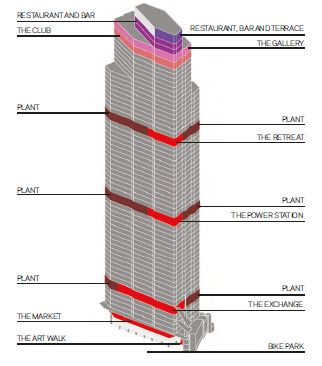
Services for Tall Buildings Cost Model | For Building Magazine

Cost Model Services for Tall Buildings

    disposal systems are often incorporated into the             07 /About the cost model
    base specification to reflect a building of the highest
    quality and comfort for its occupants.                       This cost model is based on a generic 50-storey office
                                                                 tower (plus two basement levels) in central London,
                                                                 using current day fluctuating prices. It assumes a
                                                                 total gross internal floor area of 90,000m2 with a net
06 /Regulation changes                                           internal floor areas of 60,000m2, and is designed for an
                                                                 occupancy of one person per 8m2 NIA. The building has
The gestation period of tall buildings leaves them open          11kV incoming power, on-floor air handling units, 100%
to changes in legislation, regulation and guidance.              standby generator provision, water-cooled chillers in the
Furthermore, the impacts of such developments may                basement and roof-mounted boiler plant and cooling
be substantial: given the size of the endeavour, large           towers.
quantities and the fact that components can be repeated
thousands of times through the building mean that scale          It is a base building cost that excludes any enabling
can act as either an economy or a diseconomy.                    works and services infrastructure/diversions, fitting out
                                                                 beyond shell and core construction and tender price
A recent example affecting MEP services, which has a             inflation beyond first quarter 2018.
substantial cost impact on commercial tall buildings
– because of the volume of basement space usually
involved – is the change to the regulations for smoke              Acknowledgments
extract ductwork (BSEN1366). This regulation has meant             This article and cost model were prepared by
that the capital cost of fire-rated ductwork (per metre            Nick Mulholland, Rob Butler, Sophie Rogers and
run) has increased by about 50%, together with the                 Kostas Dellas of alinea’s MEP team, together with
additional scope requirements across both supply and               Steve Watts, alinea partner and CTBUH chair.
extract ductwork, including higher levels of insulation.

                                                    9
Services for Tall Buildings Cost Model | For Building Magazine
Cost Model Services for Tall Buildings
08 /Generic MEP cost plan for a 50-storey office tower
Total (£) £/m2 % Total (£) £/m2 %
Sanitaryware installation Flues from boilers to
atmosphere: 120m 72,000
included in toilet fit-out @£600/m
package
Space heating and air
11,955,000 132.83 23.7
Disposal installations 1,260,000 14.00 2.5 treatment
Water cooled chillers:
Rainwater installation 1,520,000
9,500kw @ £160/Kw
including attenuation tank: 450,000
90,000m2 @ £5/m2 Closed circuit cooling
towers: 10,900kw @ £110/ 1,200,000
Soil waste and vent to
kw
sanitary appliances (final
576,000
run-outs in toilet fit-out Condenser water
package): 1,600nr @ £360 installation: 90,000m2 @ 810,000
£9/m2
Capped-off soil and vent
stacks for tenants’ Chilled water including
99,000
kitchenettes and retail pumps, pressurisation
units units,
2,610,000
pipework, risers, valves
Allowance for condensate
and fittings:
drainage: 135,000
90,000m2 @ £29/m2
90,000m2 @ £1.5/m2
LTHW water including
Water installations 1,635,000 18.17 3.2 pumps, pressurisation
Allowance for incoming units, pipework, risers, 2,070,000
MCWS, storage tank, valves and fittings:
booster, meter, water 325,000 90,000m2 @ £23/m2
conditioner and On-floor supply and
distribution pipework 2,350,000
extraction AHUs
Cold water service to Fresh air intake and
sanitary appliances exhaust ductwork to 300,000
280,000
(risers only; run-outs in fit- on-floor AHUs
out package)
Supply and extract
Central hot water ductwork for AHUs to
generation and risers to 650,000 500,000
office floors, including
fit-out area dampers
Capped-off water supplies Air-conditioning to
for future tenants’ 260,000
80,000 entrance area
kitchenettes and retail
areas Heating to stairs and
95,000
circulation areas
Grey water installation to
WCs (run-outs in fit-out 300,000 Supplementary DX cooling
75,000
package) systems
Cooling to lift lobbies by
Heat source 434,000 4.82 0.9 165,000
fan coil units
Gas fired condensing Ventilation systems 2,610,000 29.00 5.2
boiler, primary pumps,
pressurisation units, Central toilet air-extraction
212,000 560,000
dosing pot and primary system
distribution pipework:
5,300kW @ £40/kW Toilet supply via makeup
130,000
from the office floors
Heat pump, primary
pumps, pressurisation Supply and extraction
units and primary 150,000 AHU and distribution
135,000
distribution pipework: serving basement shower
600kW @ £250/kW area
10Services for Tall Buildings Cost Model | For Building Magazine
Cost Model Services for Tall Buildings
Total (£) £/m2 % Total (£) £/m2 %
Basement ventilation Gas installation 155,000 1.72 0.3
900,000
systems
Gas installation to boilers
Fire fighting lobby vent,
and capped-off 155,000
mechanically assisted
600,000 services to retail unit
BRE type system: 100
landings @ £6000 Protective installations 2,500,000 27.78 5.0
Capped-off ductwork for
Wet riser installation:
future tenants’ 60,000 420,000
permanent and temporary
kitchenettes
Sprinkler installations,
A3 unit kitchen extract
225,000 complete with tanks,
riser – fire rated
pumps,
1,800,000
Electrical installation 14,645,000 162.72 29.0 risers and coverage to
landlord areas:
HV distribution: 11kV 90,000m2 @ £20/m2
incoming mains;
Gas suppression in
distribution through 1,350,000
communications rooms;
building: 90,000m2 @ £15/ 100,000
protection to generator
m2
room
LV distribution, including
Lightning protection:
switchgear, cables, 180,000
4,050,000 90,000m2 @ £2/m2
rising busbars, etc:
90,000m2 @ £45/m2 Communications, security
6,570,000 73.00 13.0
and controls installations
Full building back-up
generation, including flues Fire detection and fire
and oil storage: 4nr 4,240,000 alarm system: 1,080,000
generators @ 2,650kVA @ 90,000m2 @ £12/m2
£400/kVA
Voice alarm system:
720,000
Power management 90,000m2 @ £8/m2
500,000
system (SCADA)
Landlord’s data backbone
Power to mechanical (landlord’s mobile
270,000 220,000
services: 90,000 @ £3/m2 boosting and wifi
coverage excluded)
Landord’s small power
installations: 90,000 @ 180,000 Security/CCTV
350,000
£2/m2 installations
Lighting to landlord areas, Turnstiles in reception:
250,000
circulation, lift lobbies, 10nr @ £25,000 each
2,200,000
shower areas, lighting
Disabled alarm, refuge and
control, etc 250,000
fire telephone installations
Feature lighting to
450,000 Building management
reception
and energy management 3,700,000
Aircraft warning lights 80,000 system
Allowance for feature General items 8,696,000 96.62 17.2
275,000
external lighting
Allowance for testing and
836,000
Containment for security/ commissioning @ 2%
CCTV/fire alarms/
720,000 Subcontractor
communications: 6,390,000
preliminaries @ 15%
90,000m2 @ £8/m2
Allowance for renewable
Earthing and bonding: 1,470,000
180,000 technologies @ 3%
90,000m2 @ £2/m2
Allowance for power TOTAL 50,460,000 560.67 100.0
interfaces to PV 150,000
installations
11Services for Tall Buildings Cost Model | For Building Magazine
Cost Model Services for Tall Buildings
Author contacts
A culture of constant learning
Applying learning from both live projects and research
Steve Watts studies, and feeding them into each other, is how we
Partner try to ensure that our clients and their teams get the
best possible advice from us. This is why we have been
steve.watts@alineaconsulting.com
committed to research from the day we launched.
Whilst data and information are the lifeblood of
our business, we understand that they alone do not
represent knowledge – which requires analysis, insight
Rob Butlier
and questioning.
Partner
For these reasons we involve everyone at alinea, and
rob.butler@alineaconsulting.com we share our desire to innovate across borders: of
discipline, geography and perspective. That way, we
can learn from each other.
Nick Mulholland
Partner
nick.mulholland@alineaconsulting.com
Sophie Rogers
Senior Project Surveyor
sophie.rogers@alineaconsulting.com
Kostas Dellas
Assistant Surveyor
kostas.dellas@alineaconsulting.com
12alinea consulting LLP 90 Cannon Street London, EC4N 6HA alineacostconsulting.com
You can also read


