Sexually Transmitted Infections: What is new in 2022 for OBGYNs? - The webinar will begin shortly.
←
→
Page content transcription
If your browser does not render page correctly, please read the page content below
Sexually Transmitted Infections:
 What is new in 2022 for OBGYNs?
                   The webinar will begin shortly.

This webinar is sponsored by the NYC STD Prevention Training Center (PTC)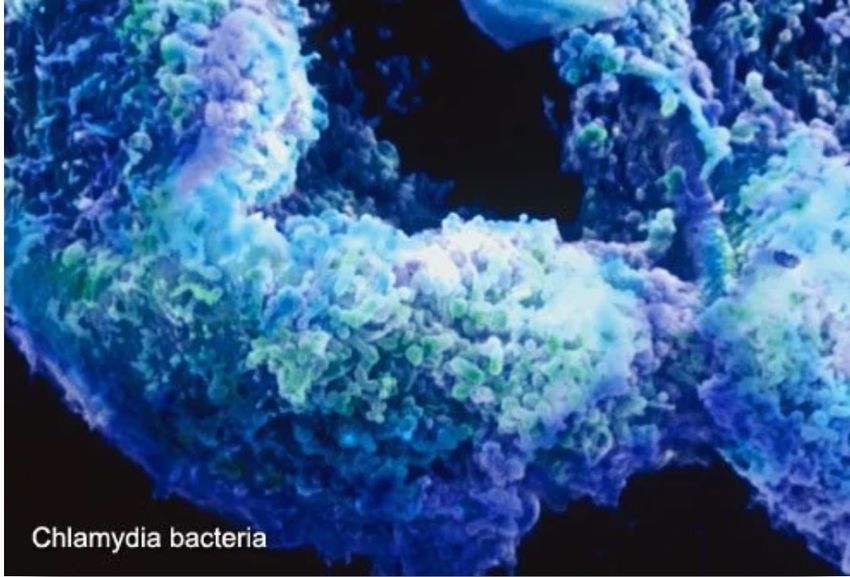
NYC STD Prevention  Training Center
NYC STD Prevention Training Center

The CDC-funded NYC STD Prevention Training Center at Columbia University
provides a continuum of education, resources, consultation and technical
assistance to health care providers, and clinical sites. www.nycptc.org
Didactic Presentations                               Clinical Consultation Warmline
Webinars, conferences, trainings                     Clinical guidance regarding STD cases; no
and grand rounds presentations to                    identifying patient data is submitted
enhance and build knowledge                          www.stdccn.org

Technical Assistance                                 Resources
Virtual and on-site technical assistance regarding   Clinical guidance tools regarding the STD
quality improvement, clinic implementation and       treatment guidelines, screening
best practices around sexual health provision        algorithms and knowledge books, such
     For more information please contact:
                                                     as the Syphilis Monograph.
         Gowri Nagendra Soman MPH                    To download a copy please visit:
         gn103@cumc.columbia.edu                     http://bit.ly/SyphilisMonograph2019PTC
Housekeeping

   • Please be sure to remain on mute during the webinar

   • Please send your question(s) Q&A chatbox and not the chat. We will do
     our best to address questions.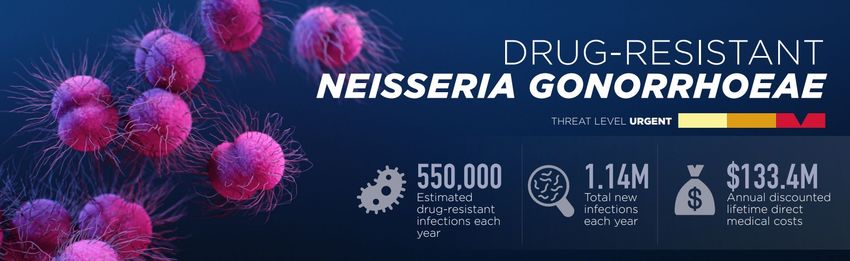
Continuing Education
   • Continuing Education is available through the CDC Training and Education Online
     System for the live webinar. This is a separate system from your registration.
   • Instructions for completing evaluation and obtaining CE will be emailed to
     attendees after the webinar.
   • Deadline for obtaining CE is May 28th 2022.

   WEBINAR RECORDING
   • Today’s webinar is being recorded and you will receive a link to the presentation at
     a later date.
NYS and NYC STI Epidemiology
Gale Burstein, MD, MPH, FAAP
Commissioner of Health, Erie County, NY
Clinical Professor of Pediatrics, Jacobs School of Medicine
Buffalo, NY
NYC STD Prevention and Training Center

2020 STI Diagnoses Highlighted for New York State                                                        6
                                                     (excluding New York City)

                CHLAMYDIA                                  GONORRHEA                             EARLY                              CONGENITAL
                                                                                                SYPHILIS                             SYPHILIS
            - 14.8%                                         + 45%                           - 6.7%                                   + 20%
           2019: 48,183 | 2020: 41,032                 2019: 11,923 | 2020: 17,291        2019: 1,582 | 2020: 1,478                  2019: 10 | 2020:12
         First decrease after 5                       6   consecutive years of            First decrease after 9                4   consecutive years of
     consecutive years of increases                          increases                 consecutive years of increase                    increase

                                                   60%             55%               20%              82%
   18%
   decrease in               66%
                                                   increase
                                                   among
                                                                   of diagnoses
                                                                   among
                                                                                     increase in
                                                                                     females
                                                                                                      of diagnoses
                                                                                                      among males              77.8%
   males                                           females         males                                                       of potential
                             of diagnoses
                             among                                                   11%                                       congenital syphilis
                                                                                                                               cases were averted in
   13%                       females
                                                   69%
                                                                                     decrease in males
                                                                                                                               2020
   decrease in
   females                                         increase in                       38%
                                                   cases in the                      decrease in cases
* Regional data displays region with the largest   Rochester Region*                 in the Central Region*            Office of Sexual Health and Epidemiology
  percent change
Congenital syphilis cases and primary & secondary syphilis diagnoses among persons
                                                                             7
                  of reproductive capacity, NYS (excluding NYC), 2020
        Number of Primary & Secondary Syphilis diagnoses
         among persons of reproductive capacity (n = 424)

                     0 cases               4 - 14 cases

                     1 - 3 cases           > 14 cases

                        Congenital Syphilis Cases
                                (n = 53)

* Colors among non-zero case counties were determined using quartiles   Office of Sexual Health and Epidemiology
NYC STI Overview
                                                                                                              8

•   After several years of STI increases in NYC Health Department, large
    decreases observed in chlamydia and gonorrhea rates in 2020 vs 2019

•   Decreases in selected STI rates likely related to COVID-19 public health
    emergency
     o Reduced STI detection due to combination of reduced screening and testing and
       decreased transmission

•   Among reported STI cases, notable inequities persist

           https://www1.nyc.gov/assets/doh/downloads/pdf/std/sti-2020-report.pdf   Office of Sexual Health and Epidemiology
Number and percentage of congenital syphilis-related pregnancies related9 to
                syphilis acquired during pregnancy, NYC, 2010-2020

                                                   Other missed opportunities:
                                                   • Lack of prenatal care
                                             25    • Inadequate syphilis treatment during pregnancy                                              100%
Number of pregnancies linked to congenital

                                                                                                                                                        % related to syphilis acquired in pregnancy
                                                   • Missed syphilis screening
                                                   • Errors in public health response to syphilis laboratory results
                                             20
                                                                                                                                                 75%

                                             15
                syphilis

                                                                                                                                                 50%
                                             10

                                                                                                                                                 25%
                                              5

                                              0                                                                                                  0%
                                                  2010    2011     2012     2013      2014     2015      2016     2017   2018   2019   2020
                                                                                               Year

                                                                                                                                       Office of Sexual Health and Epidemiology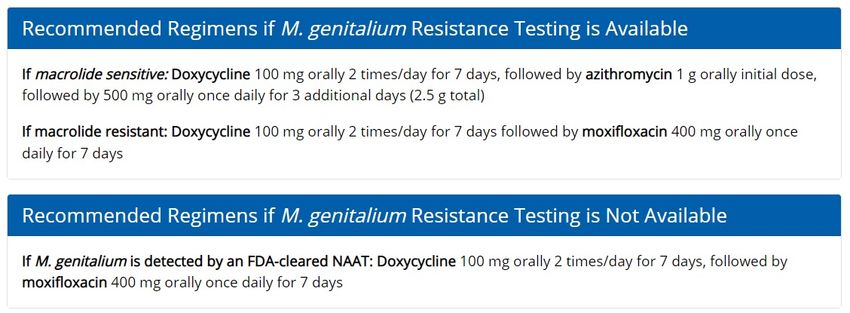
Characteristics of pregnant people linked to congenital syphilis cases
                            (n = 129), NYC, 2010-2020
            Characteristic                  Number      Percentage
            Age group (years)
              15 – 19                          9           (7.0)
              20 –29                          77          (59.7)
              30 – 39                         37          (28.7)
              40 – 49                          6           (4.7)
            Race/ethnicity
              Black, non-Hispanic/Latino      63          (49.2)
              Hispanic/Latina                 34          (26.6)
              White, non-Hispanic/Latino       9           (7.0)
              Asian, non-Hispanic/Latino       5           (3.9)
              Other                           17          (13.3)
            Country of birth
              Born outside of the US          52          (46.4)
              Born in the US                  60          (53.6)
            Area-based poverty level
              Low (
Syphilis
11
• Syphilis is increasing among NYC women, especially young women of
color
• Congenital syphilis is a sentinel event because it represents system
failures, usually at multiple levels: patient, provider, hospital, public health
system
• Pregnant New Yorkers must be screened for syphilis 3 times
o At first prenatal examination (NYS law)
o During 3rd trimester between 28-32 weeks (NYC regulation) (NYS bill)
o At delivery (NYS law)
Office of Sexual Health and Epidemiology12
STI Clinical Updates

  Elana Tal, MD, MS
  Clinical Assistant Professor of Obstetrics and Gynecology
  Complex Family Planning
  Jacobs School of Medicine and Biomedical Sciences
  Buffalo, NY

I have no relevant financial relationships with the manufacturer(s) of any commercial
  product(s) and/or provider(s) of commercial services discussed in this CME activity.

     I do not intend to discuss an unapproved/investigative use of a commercial
                          product/device in my presentation.
X
Outline

     • Syphilis
     • Gonorrhea
     • Chlamydia
     • Trichomoniasis
     • PID
     • Mycoplasma genitalium
     • Hepatitis C
     • Metronidazole and alcohol
     • Fluconazole in pregnancy
Syphilis
Syphilis: diagnosis

   • Diagnosis requires non-treponemal (eg RPR) + treponemal
      • Traditional algorithm = non-treponemal à treponemal
      • Reverse algorithm = treponemal à non-treponemal

   • Non-treponemal titers used to follow response to treatment

   • Treponemal tests often positive for life

   • Make friends with ID, lab, and/or health department
Syphilis: diagnosis
• Atypical presentations are more common than previously thought
• 50% have multiple lesions
• 37% have painful lesions
• Consider syphilis if HSV is negative
• RPR takes 14-21 days to turn positive
• Bring back patients with ulcers to review results and possibly retest
• Consider treponemal testSyphilis: treatment
Penicillin Allergy
Non-pregnant: doxycycline 100 mg PO BID x 14 day
Pregnant: desensitization and penicillinSyphilis in pregnancy: diagnosis
• Maternal testing @ NOB, ~28 weeks, delivery
• UNIVERSAL 3rd trimester screen
• Get detailed ultrasound if patient diagnosed >20 weeks
• Evidence of fetal or placental syphilis increases risk of treatment failure
• Signs include fetal hepatosplenomegaly, ascites, hydrops, anemia, thickened
placenta
• Repeat testing at delivery for any stillbirth >20 weeks
• Neonates should not be discharged from hospital without maternal
RPR resultSyphilis in pregnancy: treatment
• Adequate maternal treatment = PCN initiated at least 30 DAYS before
delivery
• Give 2nd dose of PCN to reduce risk of congenital syphilis
• Need to restart series if >9 days since last doseSyphilis in pregnancy: Jarisch-Herxheimer reaction
• Acute febrile reaction with headache, myalgia, rash, hypotension
• Due to endotoxin release
• Onset usually within 1-2 hours of treatment, peak at 8 hours, resolve
24-48 hours
• Associated with contractions, preterm labor, NRFHT (stillbirth is rare)
• CFM is recommended for treatment after viabilitySyphilis Key Points • What’s new: increase in congenital syphilis • What to do: be diligent about diagnosis and treatment during pregnancy to prevent congenital syphilis
Gonorrhea
Gonorrhea: diagnosis

   • NAAT preferred
      • Clinician-collected and patient-collected vaginal swabs equivalent in
        sensitivity and specificity
      • First-void urine or liquid based cytology for Pap smears acceptable

   • With test for chlamydia

   • If cephalosporin resistance suspected, do culture with sensitivities
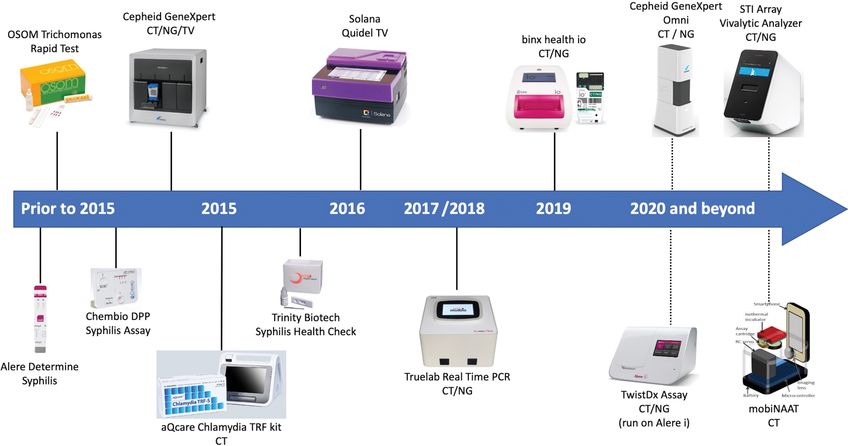
Point of care tests
Visby Medical
Sexual Health
Click TestGonorrhea: treatment New
Penicillin Allergy
Gentamicin 240 mg IM + Azithromycin 2 g PO
[Cross reactivity with 2nd and 3rd generation
cephalosporin isGonorrhea: resistance
Gonorrhea: resistance

                        https://www.cdc.gov/drugresistance/pdf/threats-report/gonorrhea-508.pdf
Gonorrhea: new potential treatments • Solithromycin (macrolide) • Zoliflodacin (topoisomerase inhibitor) • Gepotidacin (triazaacenaphthylene) • Chlosthioamide (DNA gyrase inhibitor)
Gonorrhea: follow-up

   • TOC only if pharyngeal infection or symptoms do not resolve
      • CDC recommends pharyngeal swab for patients with urogenital gonorrhea
        who report oral sex

   • Retest in 3 months for reinfection

   • Retest in 3rd trimester if pregnant

   • Notify health department of treatment failures
Gonorrhea Key Points • What’s new: increased drug resistance • What to do: treat with ceftriaxone 500 mg IM (1000 mg if >150 kg)
Chlamydia
Chlamydia: treatment New
Chlamydia: treatment

        • 567 male and female participants with urogenital
          chlamydia
        • Directly observed therapy
        • Cure rate 100% in doxycycline group vs 97% in
          azithromycin group
Chlamydia: treatment
• 625 men who have sex with men with rectal chlamydia
• Cure rate 97% in doxycycline group vs 77% in azithromycin groupChlamydia: treatment
• 416 female patients self-collected vaginal and rectal swabs
• High rates of coinfection (77%) despite low report of recent anal
intercourse (3%)
• Cure rate for urogenital chlamydia 95% in doxycycline group vs
94% in azithromycin group
• Cure rate for rectal chlamydia 96% in doxycycline group vs 79% in
azithromycin groupChlamydia: treatment
• Azithromycin is effective at genitourinary sites
• BUT high rates of rectal chlamydia in patient with genital infections
• AND doxycyline is superior in anorectal chlamydia cure
• Link between persistent rectal chlamydia and urogenital chlamydia
unclear, but complete eradication is the goalChlamydia: treatment
Azithromycin Doxycycline
Benefits of azithromycin Benefits of doxycycline
- Directly observed therapy - Higher cure rates for rectal chlamydia
Benefits
- On site administration with no need for
pharmacy
- More privacy from partners and parents
Drawbacks of azithromycin Drawbacks of doxycycline
- Lower cure rates for rectal chlamydia - Lack of adherence (14 pills, risk of
Drawbacks
esophagitis)Chlamydia Key Points • What’s new: recognition of rectal chlamydia and superiority of doxycycline for this site • What to do: treat with doxycycline 100 mg BID x 7 days in non-pregnant patients
Trichomoniasis
Trichomoniasis: diagnosis

                      • No universal screening recommendation
                         • Liberal testing with NAAT advisable for
                           patients at risk

                      • If concern for resistance:
                         • Obtain InPouch TV culture medium from
                           CDC to send for testing
                         • In the meantime keep escalating treatment
Trichomoniasis: treatment New
Trichomoniasis: treatment

   • 623 female participants
   • Retest at 4 weeks more likely to be negative in 7-day-dose group
     (11%) than the single-dose group (19%)
Trich Key Points • What’s new: data showing superiority of 1 week of metronidazole over single dose • What to do: treat female patients with metronidazole 500 mg BID x 7 days
Pelvic Inflammatory Disease
PID: treatment New
PID: treatment

     • 233 female participants
     • No difference at 3 days
     • At 30 days, metronidazole group were less likely to have endometrial
       anaerobes, pelvic tenderness, or M. genitalium
PID: follow-up
• IUDs should not be routinely removed
• Outpatients should be re-evaluated 3 days
• Sex partners from last 60 days should be evaluated and/or
presumptively treated for gonorrhea and chlamydia regardless of
patient results
• Retest in 3 monthsPID Key Points • What’s new: data showing benefits of metronidazole • What to do: add metronidazole to regimens
Expedited Partner Therapy
Expedited partner therapy

             • For gonorrhea, chlamydia, or trichomoniasis
                • Cefixime 800 mg PO once ± doxycycline 100 mg BID x 7 days
                  appropriate for gonorrhea if partner cannot access ceftriaxone
                  IM

             • Can call in or write script if have partner’s name and DOB
                • Can write for “Expedited Partner” with DOB 1/1/1901 if
                  unknown
                • Write “EPT” in notes field

             • Okay to prescribe to minors

                                           https://www.health.ny.gov/publications/21282.pdf
Mycoplasma genitalium
Mycoplasma genitalium

   • Common cause of non-gonococcal urethritis in men
   • Weak data show associations with cervicitis, PID, infertility,
     spontaneous abortion, preterm birth
Mycoplasma genitalium: diagnosis
• NAAT
• Wide macrolide resistance
• Culture takes months, only available in
research settings
• Molecular markers of resistance under
evaluation
• Screening of asymptomatic people is
not recommended
• Beware STI panels
• Test in cases of recurrent cervicitis,
consider for PIDMycoplasma genitalium: treatment
If no resistance testing and no access to moxifloxacin, use
doxycycline then azithromycin regimen and do TOC in 3 weeksMycoplasma genitalium Key Points • What’s new: mycoplasma genitalium • What to do: look out for more guidance in coming years
Hepatitis C
Hepatitis C: screening in pregnancy New
Metronidazole and alcohol
Metronidazole and alcohol

   • Not necessary to advise patients to abstain from alcohol

                    Fjeld H, Raknes G. Er det virkelig farlig å kombinere metronidazol og alkohol? [Is combining metronidazole and
                                     alcohol really hazardous?]. Tidsskr Nor Laegeforen. 2014 Sep 16;134(17):1661-3. Norwegian.
Fluconazole in pregnancy
Fluconazole in pregnancy

   • Increased risk of heart defects
     after 1st trimester exposure
     (OR 1.79, 95% CI 1.18-2.71)

   • Use topical instead
Outline
• Syphilis
• Gonorrhea
• Chlamydia
• Trichomoniasis
• PID
• Mycoplasma genitalium
• Hepatitis C
• Metronidazole and alcohol
• Fluconazole in pregnancyOutline
Diligently screen all
• Syphilis
pregnant people
• Gonorrhea
• Chlamydia
• Trichomoniasis
• PID
• Mycoplasma genitalium
• Hepatitis C
• Metronidazole and alcohol
• Fluconazole in pregnancyOutline
• Syphilis
• Gonorrhea Ceftriaxone 500-1000 mg IM
• Chlamydia
• Trichomoniasis
• PID
• Mycoplasma genitalium
• Hepatitis C
• Metronidazole and alcohol
• Fluconazole in pregnancyOutline
• Syphilis
• Gonorrhea
• Chlamydia Doxycycline 100 mg BID x 7 days
• Trichomoniasis
• PID
• Mycoplasma genitalium
• Hepatitis C
• Metronidazole and alcohol
• Fluconazole in pregnancyOutline
• Syphilis
• Gonorrhea
• Chlamydia
Metronidazole 500 mg BID x 7 days
• Trichomoniasis
for women
• PID
• Mycoplasma genitalium
• Hepatitis C
• Metronidazole and alcohol
• Fluconazole in pregnancyOutline
• Syphilis
• Gonorrhea
• Chlamydia
• Trichomoniasis
Add metronidazole
• PID
to regimens
• Mycoplasma genitalium
• Hepatitis C
• Metronidazole and alcohol
• Fluconazole in pregnancyOutline
• Syphilis
• Gonorrhea
• Chlamydia
• Trichomoniasis
• PID
• Mycoplasma genitalium Be aware of it
• Hepatitis C
• Metronidazole and alcohol
• Fluconazole in pregnancyOutline
• Syphilis
• Gonorrhea
• Chlamydia
• Trichomoniasis
• PID
• Mycoplasma genitalium
• Hepatitis C
• Metronidazole and alcohol No need to abstain
• Fluconazole in pregnancyOutline
• Syphilis
• Gonorrhea
• Chlamydia
• Trichomoniasis
• PID
• Mycoplasma genitalium
• Hepatitis C
• Metronidazole and alcohol
Avoid PO especially
• Fluconazole in pregnancy
in 1st trimesterHSV
HSV

  • No updates in 2021
  • Chronic, lifelong viral infection
  • Symptoms are self-limited, recurrent, painful, vesicular or
    ulcerative lesions
  • Many infections are asymptomatic
  • Increasing proportion of anogenital HSV infections
    attributable to HSV-1
      • HSV-1 less likely to cause recurrences or subclinical viral shedding
HSV
…
• Significant emotional
component to diagnosis
…
• Can be challenging to
counsel patients
• CDC has very helpful
…
guidance re counseling
points
• Support groups existHSV
• Screening among the general population is NOT recommended
• Viral detection tests:
• NAAT from lesions are most sensitive
• Culture sensitivity is low especially as lesions are healing
• Important to know if HSV-1 vs HSV-2 to counsel about what to expect
with recurrences or need for suppressive therapy
• Antibody detection tests:
• HSV-2+ means +genital infection
• HSV-1+ harder to interpret because identified from oral or anogenital
infectionsHSV
• Treatment depends on indication
• Valacyclovir has least frequent dosing
Indication Valacyclovir dosing
Primary (non-pregnant or 1 g BID x 7-10 days
pregnant)
Episodic 500 mg BID x 3 days
1 g QD x 5 days
Suppressive (non-pregnant) 1 g QD
Suppressive (pregnant) 500 mg BIDYou can also read


