Patterns of recurrence after radiation therapy for high-risk neuroblastoma
←
→
Page content transcription
If your browser does not render page correctly, please read the page content below
Original Article
 Radiat Oncol J 2019;37(3):224-231
 https://doi.org/10.3857/roj.2019.00353
 pISSN 2234-1900 · eISSN 2234-3156

   Patterns of recurrence after radiation therapy for high-risk
                        neuroblastoma
               Ji Hwan Jo, Seung Do Ahn, Minji Koh, Jong Hoon Kim, Sang-wook Lee, Si Yeol Song,
           Sang Min Yoon, Young Seok Kim, Su Ssan Kim, Jin-hong Park, Jinhong Jung, Eun Kyung Choi
            Department of Radiation Oncology, Asan Medical Center, University of Ulsan College of Medicine, Seoul, Korea

  Purpose: To investigate the patterns of recurrence in patients with neuroblastoma treated with radiation therapy to the primary
  tumor site.
  Materials and Methods: We retrospectively analyzed patients with high-risk neuroblastoma managed with definitive
  treatment with radiation therapy to the primary tumor site between January 2003 and June 2017. These patients underwent
  three-dimensional conformal radiation therapy or intensity-modulated radiation therapy. A total of 14–36 Gy was delivered to the
  planning target volume, which included the primary tumor bed and the selected metastatic site. The disease stage was determined
  according to the International Neuroblastoma Staging System (INSS). We evaluated the recurrence pattern (i.e., local or systemic),
  progression-free survival, and overall survival.
  Results: A total of 40 patients with high-risk neuroblastoma were included in this study. The median patient age was 4 years (range,
  1 to 11 years). Thirty patients (75%) had INSS stage 4 neuroblastoma. At the median follow-up of 58 months, there were 6 cases
  of local recurrence and 10 cases of systemic recurrence. Among the 6 local failure cases, 4 relapsed adjacent to the radiation field.
  The other 2 relapsed in the radiation field (i.e., para-aortic and retroperitoneal areas). The main sites of distant metastasis were the
  bone, lymph nodes, and bone marrow. The 5-year progression-free survival was 70.9% and the 5-year overall survival was 74.3%.
  Conclusion: Radiation therapy directed at the primary tumor site provides good local control. It seems to be adequate for disease
  control in patients with high-risk neuroblastoma after chemotherapy and surgical resection.

  Keywords: Neuroblastoma, Neoplasm recurrence, Survival, Progression-free survival, Radiotherapy, Retrospective studies

                           Introduction                                             Patients with high-risk neuroblastoma, which require
                                                                                 multimodality treatment, account for approximately 50% of
Neuroblastoma is the second most common solid tumor in                           all patients with neuroblastoma. These patients are treated
childhood and is the most common extracranial solid tumor                        with chemotherapy, surgical resection, autologous stem-
in children. Approximately 90% of cases occur in children
Radiation therapy for neuroblastoma
surgical bed after the patient has recovered from stem-cell
transplantation. Several studies have shown that RT to the
primary tumor site improves the local control rate [4-10].
At the time of the initial diagnosis, approximately 50% of
patients have metastatic disease and distant recurrence is a
major obstacle to the treatment of these patients. However, the
patterns of recurrence have rarely been reported. Therefore,
we investigated the patterns of recurrence in patients with
neuroblastoma treated with RT to the primary tumor site.
Materials and Methods
We retrospectively analyzed patients with high-risk
neuroblastoma managed with definitive treatment (i.e.,
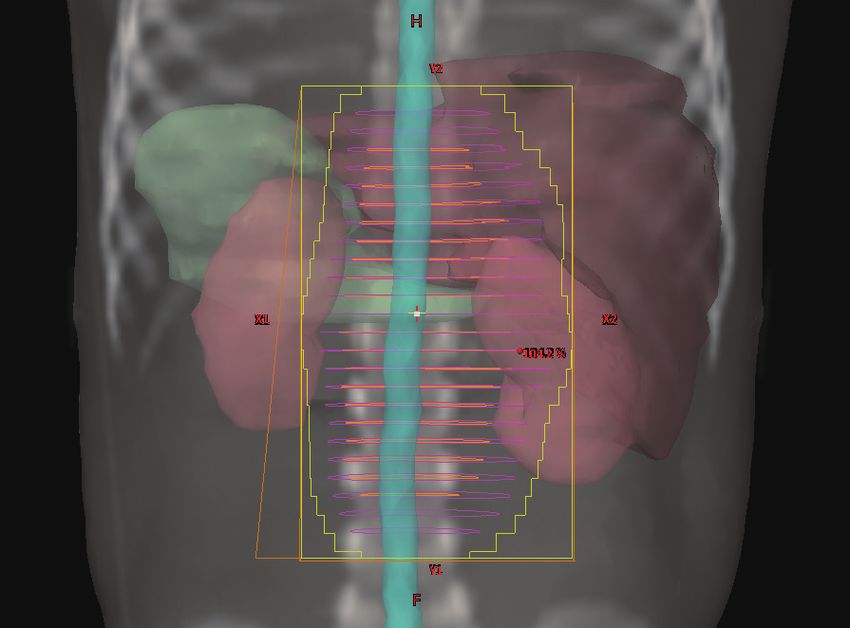
Fig. 1. Radiation therapy treatment field for a patient with
chemotherapy, surgical resection, or stem-cell transplantation)
a left adrenal primary neuroblastoma who underwent left
with RT to the primary tumor site between January 2003 and adrenalectomy.
June 2017.
High-risk neuroblastoma was defined according to the
Children’s Oncology Group risk stratification system [11]. fractions was delivered to the planning target volume, which
The disease stage was determined using the International included the primary tumor bed and the selected metastatic
Neuroblastoma Staging System (INSS). Computed tomography site (the same dose of radiation was delivered to the primary
(CT), whole-body magnetic resonance imaging (WB-MRI; n site and the metastatic site).
= 39, 97.5%), iodine-123 (123I) meta-iodobenzylguanidine We evaluated the recurrence pattern (i.e., local or systemic),
single-photon emission computed tomography (MIBG SPECT; progression-free survival (PFS), and overall survival (OS). Local
n = 27, 67.5%), bone scan, bone marrow aspiration, and biopsy recurrence was defined as disease recurrence in the primary
were performed for staging. tumor site or regional lymph nodes. Further, we defined
Most of the patients underwent chemotherapy according adjacent-field failure as recurrence or progression of disease at
to the COGANBL00P1 study [12] or the CCG3891 study [13]. sites outside the planning target volume that received 5% of the prescribed dose. Local failure included both
WB-MRI, CT, bone scan, 123I-MIBG SPECT, and bone marrow adjacent-field failure and in-field recurrence. PFS was defined
aspiration. as the time from the initiation of RT to disease recurrence or
After induction chemotherapy, surgical resection, and stem- progression or death of any cause. OS was defined as the time
cell transplantation, RT was delivered to the primary tumor from the initiation of RT to the date of the last follow-up or
sites or residual tumor. In some patients, RT was concurrently the date of death. SPSS software (SPSS Inc., Chicago, IL, USA)
administered to the metastatic site. Patients who received RT was used for statistical analysis, and the Kaplan-Meier method
with a palliative intent and those who did not receive RT to was used to calculate the PFS and OS.
the primary tumor site were excluded from the current study.
The gross target volume consisted of the post-induction Results
chemotherapy, pre-surgical tumor volume. The clinical target
volume consisted of the primary tumor bed and regional lymph From March 2003 to June 2017, 40 patients (22 male, 18
nodes. The planning target volume was set by expanding female) with high-risk neuroblastoma treated with RT were
the clinical target volume by 0.5–1 cm. The treatment of enrolled in this study. All patients received RT to the primary
metastatic disease was different for each patient; however, we tumor site. The median age at the time of RT was 4 years (range,
usually included the gross tumor and the surrounding 1–2 cm 1 to 11 years). The patient characteristics are listed in Table 1.
(Fig. 1). A CT-based planning was used for treatment planning. Most of the patients had INSS stage 4 neuroblastoma (n = 30,
The patients were treated with three-dimensional conformal 75%). The primary tumor sites were mainly in the abdomen
RT or intensity-modulated RT. A total of 14–36 Gy in 7–20 (i.e., 19 adrenal and 14 abdominal). MYCN amplification was
https://doi.org/10.3857/roj.2019.00353 www.e-roj.org 225Ji Hwan Jo, et al
Table 1. Patients’ characteristics (n = 40)
Status
Dead
Dead
Dead
Dead
Dead
Dead
Dead
Dead
Dead
Alive
Alive
Alive
Characteristic Value
Age (yr) 4 (1–11)
46.5 (19–97)a)
Survival (mo)
Sex
148
18
12
58
80
13
41
3
3
5
3
6
Male 22 (55)
Female 18 (45)
MYCN status
Adjacent to the field & distant
Adjacent to the field & distant
Adjacent to the field & distant
Amplified 21 (52.5)
Not amplified 16 (40)
Adjacent to the field
Recurrence pattern
In-field & distant
Unknown 3 (7.5)
Primary site
In-field
Distant
Distant
Distant
Distant
Distant
Distant
Adrenal 19 (47.5)
Abdominal 14 (35)
Other site 7 (17.5)
Initial bone marrow status
INSS, International Neuroblastoma Staging System; RT, radiation therapy; LN, lymph node; BM, bone marrow; Rt., right; Lt., left.
Involved 24 (60)
Not involved 16 (40)
INSS stage
Abdominal, LN, Paratesticular
2 1 (2.5)
Abdominal, BM, Bone,
3 9 (22.5)
Liver, BM, Bone, LN
BM, Brain, Bone
Recurrence site
4 30 (75)
Abdominal
Abdominal
Rt. kidney
LN, Lung
Brain
Values are presented as median (range) or number (%).
Bone
Bone
Bone
INSS, International Neuroblastoma Staging System.
a)
Calculating age in months.
Table 2. Treatment characteristics
Value
Time to recurrence
Extent of resection
Gross total resection 36 (90)
(mo)
17
34
62
13
21
11
2
4
1
3
3
2
Subtotal resection 4 (10)
Stem-cell transplantation
Table 3. Characteristics of patients with relapsed neuroblastoma
Yes 35 (87.5)
No 5 (12.5)
Resection
Subtotal
Subtotal
Subtotal
Radiation therapy
Total
Total
Total
Total
Total
Total
Total
Total
Total
Technique 3DCRT or IMRT
Dose (Gy/fx) 14–36/7–20
Values are presented as number (%).
RT dose (Gy)
3DCRT, three-dimensional conformal radiation therapy; IMRT,
20
24
18
20
21
21
21
21
21
21
21
21
intensity-modulated radiation therapy.
observed in 21 patients (52.5%).
Primary site
Mediastinal
Mediastinal
Rt. adrenal
Rt. adrenal
Abdominal
Abdominal
Abdominal
Abdominal
Abdominal
Abdominal
Lt. adrenal
Lt. adrenal
The treatment characteristics are summarized in Table 2.
Thirty-six patients underwent gross total resection (GTR) and
4 patients underwent subtotal resection. After surgery, 35
stage
Patient INSS
patients underwent stem-cell transplantation. A total of 40
4
4
4
4
4
4
4
2
4
3
4
4
patients received RT to the primary tumor site. The median
radiation dose was 21 Gy (range, 14 to 36 Gy). The most
no.
12
10
11
1
2
3
4
5
6
7
8
9
commonly used RT regimen was 21 Gy at 1.5 Gy per fraction
226 www.e-roj.org https://doi.org/10.3857/roj.2019.00353Radiation therapy for neuroblastoma
1.0 1.0
0.8 0.8
0.6 0.6
0.4 0.4
0.2 0.2
0.0 0.0
0 12 24 36 48 69 72 84 96 108 120 132 144 157 168 180 0 12 24 36 48 69 72 84 96 108 120 132 144 157 168 180
Time (mo) Time (mo)
Fig. 2. Overall survival in all patients (n = 40). Fig. 3. Progression-free survival of all patients (n = 40).
AA pp
== 0.090
0.090 BB pp
== 0.409
0.409
1.0
1.0 1.0
1.0
0.8
0.8 BM
BM notnot involved
involved (n=16)
(n=16) 0.8 BM
0.8 BM notnot involved
involved (n=16)
(n=16)
0.6
0.6 0.6
0.6 BM invovled (n=24)
BM invovled (n=24)
BM
BM involved
involved (n=24)
(n=24)
0.4
0.4 0.4
0.4
0.2
0.2 0.2
0.2
0.0
0.0 0.0
0.0
0 012122424363648486060727284849696108
108 120
120 132
132 144
144 156
156 168
168 180
180 0 012122424363648486060727284849696108
108 120
120 132
132 144
144 156
156 168
168 180
180
Time
Time (mo)
(mo) Time
Time (mo)
(mo)
Fig. 4. Overall survival (A) and progression-free survival (B) according to the status of bone marrow (BM) involvement.
AA p =p 0.009
= 0.009 BB p =p 0.096
= 0.096
1.01.0 1.01.0
MYCN
MYCN notnot amplified
amplified (n=16)
(n=16) MYCN
MYCN
notnot
amplified
amplified
(n=16)
(n=16)
0.80.8 0.80.8
0.60.6 0.60.6 MYCN
MYCN
amplified
amplified
(n=21)
(n=21)
0.40.4 MYCN
MYCN amplified
amplified (n=21)
(n=21) 0.40.4
0.20.2 0.20.2
0.00.0 0.00.0
0 012 1224 2436 3648 4860 6072 72
84 8496 96
108108
120120
132132
144144
156156
168168 0 012 1224 2436 3648 4860 6072 7284 8496 96
108108
120132 144144
120132 156156
168168
180180
Time
Time
(mo)
(mo) Time
Time
(mo)
(mo)
Fig. 5. Overall survival (A) and progression-free survival (B) according to the status of MYCN amplification.
https://doi.org/10.3857/roj.2019.00353 www.e-roj.org 227Ji Hwan Jo, et al
Table 4. Local control rate of high-risk neuroblastoma in recent studies
Study Year No. of patients Median RT dose (Gy) Local control rate (%)
Wolden et al. [5] 2000 47 21 84 at 5 years
Kushner et al. [6] 2001 99 21 89.9 at 3 years
Bradfield et al. [7] 2004 21 21 93 at 2 years
Gatcombe et al. [10] 2009 34 22 94 at 3 years
Casey et al. [8] 2016 246 21 90.2 at 5 years
Ferris et al. [9] 2017 67 21.6 94.0 at 5 years
RT, radiation therapy.
two times per day (26 patients). In 8 patients, RT was delivered the main cause of treatment failure [14,15]. Moreover, surgical
to the primary site and the initial metastatic site at the same resection of the primary tumor combined with systemic
time. The decision to treat the metastatic disease was at the therapy improves the local control of the disease and the
discretion of the treating physician. Usually, the decision survival of the patient [15,16]. Several studies have used RT
for administering RT to metastatic sites was based on the as a consolidative therapy and have reported successful local
presence of persistent disease after induction chemotherapy control [4-10].
or if any residual bulky disease remains. At the median follow- One previous randomized controlled trial compared patients
up of 58 months (range, 3 to 180 months), there were 12 who received RT with those who did not [4]. Patients older
cases of recurrence. The individual characteristics of patients than 1 year at the time of the diagnosis of Pediatric Oncology
with relapsed neuroblastoma and the details of the sites of Group stage C neuroblastoma were included in this study.
recurrence are shown in Table 3. Most of the relapsed patients After surgery, the patients received RT to the tumor bed/
had INSS stage 4 neuroblastoma (10 patients). Among the 12 residual tumor and regional lymph nodes. The control group
relapsed patients, 5 had both local and distant recurrence. received no RT, and all patients were treated with the same
There were 6 local failure cases and, among these, 4 relapsed chemotherapy regimen. Patients who received RT showed
adjacent to the radiation field. The other 2 relapsed in the superior treatment outcomes (event-free survival, 59% vs.
radiation field (i.e., para-aortic and retroperitoneal areas). No 73%; OS, 32% vs. 41%). The results of other studies that
disease progression was observed at the irradiated metastatic showed good local control rates are summarized in Table 4.
sites. The main sites of distant metastasis were the bone, Bradfield et al. [7] reported a 7% local failure rate at 2 years
lymph nodes, and bone marrow. At the time of analysis, 11 from RT. RT was delivered to the primary site and to the initial
patients had already died (2–80 months after RT). metastatic sites. Gatcombe et al. [10] reported a 3-year local
The 5-year OS was 74.3% (Fig. 2) and the 5-year PFS was control rate of 94%. RT was delivered to the primary tumor
70.9 % (Fig. 3). There were only 2 cases (5.0%) of in-field sites regardless of the resection status and metastatic sites
recurrence. OS and PFS tended to be worse in the presence of according to chemotherapy response. The median RT dose
MYCN amplification or bone marrow involvement. However, was 22 Gy, and most common fraction scheme used was 21.6
there were no statistically significant differences in other Gy at 1.8 Gy/day. Casey et al. [8] reported that the cumulative
results except for OS in patients with MYCN amplification (Figs. incidence of local failure at 5 years after RT (1.5 Gy/fraction,
4, 5). 2 times a day, 21 Gy in total) was 9.8% in patients with
Most cases of acute toxicities were grade 1, which mainly high-risk neuroblastoma. In this study, all patients received
included nausea, vomiting, and diarrhea. Severe toxicity of RT chemotherapy and underwent GTR. Thereafter, the patients
(>grade 2) was not observed in the current study, although received RT to the primary site. Ferris et al. [9] reported that 67
there was a lack of a detailed description of treatment toxicity patients with high-risk neuroblastoma received consolidative
in the medical records of our hospital. RT at a median dose of 21 Gy. RT was delivered to patients
with high-risk neuroblastoma as part of definitive treatment.
Discussion and Conclusion All patients were treated with RT to the primary site, and some
of them also received RT to the metastatic sites. The overall
In patients with high-risk neuroblastoma, local recurrence is local control rate was 92.5%, and no disadvantages were seen
228 www.e-roj.org https://doi.org/10.3857/roj.2019.00353Radiation therapy for neuroblastoma with respect to pathologic positive nodes, positive surgical the metastatic sites. Of these patients, 4 experienced disease margins, or gross residual disease. Although there is only 1 progression, all of whom had an out-of-field recurrence. In randomized controlled trial, these data may suggest that RT the other 4 patients without recurrence, long-term survival to the primary tumor site is effective for the local control of was achieved (98–167 months). There was no case of disease high-risk neuroblastoma. Further, considering the results of progression within the RT field. Currently, data supporting the current study and the other previously published papers, the efficacy of RT to the metastatic site are insufficient; 21–24 Gy is adequate for local disease control in patients with however, considering that recurrence is common in previously high-risk neuroblastoma. involved sites in patients with neuroblastoma [13,23,24], RT Although some studies reported that a higher dose is to metastatic sites may improve the tumor control and may needed to control gross residual tumor after incomplete be effective in preventing disease progression and prolonging surgery [17,18], the optimal dose of RT is still unclear. In this the long-term disease control. RT to the metastatic sites study, 2 patients received boost RT for gross residual tumor may therefore be beneficial in the treatment of patients with with a total radiation dose of 27 and 36 Gy, respectively. distant tumor involvement. Additional studies are needed to Local failure was not observed in these patients. Owing to the clarify whether RT to metastatic sites is beneficial. small number of patients who received boost RT, it is difficult In the older treatment protocol, total body irradiation to conclude the adequate RT dose. However, given that only (TBI) was used as part of a consolidative treatment with patients with residual gross tumor had in-field recurrence chemotherapy and bone marrow transplantation [13,26]. and no local failure was observed in patients who underwent Although TBI was excluded from the treatment protocol boost RT, a higher dose may be effective in treating patients because of its long-term toxicity, some articles reported the with gross residual tumor. It seems necessary to scrutinize the efficacy of TBI [22,25]. In our study, 2 patients received TBI. It is results of ongoing studies. important to analyze the treatment outcome according to TBI; In our study, most of the patients underwent GTR (90%). however, it is difficult to evaluate the role of TBI because of The local control rate at the irradiated site was 95%. Only the small number of patients who received TBI in our patient two cases of in-field progression were detected in the current cohort. study, and complete resection was not performed in all The current study has several limitations, including its patients. This result correlates with that of previous reports retrospective nature. First, the composition of the enrolled suggesting the role of RT in improving the local control rate. patients is not uniform. Most of the patients enrolled in Given that there is evidence that survival is associated with the this study had INSS stage 4 neuroblastoma with distant local control rate [19], this result suggests that RT plays a vital involvements. Although these patients are included in a single role in the treatment of high-risk neuroblastoma. Moreover, group (stage 4), they may have different prognoses based on considering that only patients who had not undergone the location of the metastatic disease. A further limitation is complete resection experienced recurrence within the RT field, the heterogeneity of the chemotherapy protocols. Most of GTR might have an important role in improving local control. the chemotherapy regimens were based on COGANBL00P1 This result is consistent with that of a previous study showing and CCG3891, although other protocols were included in the favorable outcomes in patients undergoing complete resection patient cohort, with diverse differences in the chemotherapy [20]. regimen for patients with recurrence. In addition, only a small Although metastatic disease is the main cause of death number of patients were analyzed, thus leading to insufficient in patients with high-risk neuroblastoma, the role of RT to statistical power. However, owing to the rarity of the disease, it metastatic sites is still unclear. Some retrospective studies have would be difficult to conduct a large study. The current study demonstrated that RT directed to metastatic sites improves presents the treatment outcome of RT in patients with high- the local control at the irradiated metastatic site [7,21-25]. risk neuroblastoma in a single hospital, where the treatment Casey et al. [21] reported the treatment results of 159 patients was provided by the same medical team using a relatively who received RT to metastatic sites as a consolidative therapy. homogeneous protocol. The 5-year local control rate of the treated metastatic site was In conclusion, RT seems to be adequate for disease control 81%. Further, the local control rate was better in the treated in patients with high-risk neuroblastoma. RT directed to the sites that were cleared with induction chemotherapy. In our primary tumor site provides good local control. However, study, 8 patients were treated in both the primary site and in considering that metastatic disease is an important factor https://doi.org/10.3857/roj.2019.00353 www.e-roj.org 229
Ji Hwan Jo, et al

that worsens the prognosis of patients with high-risk                       margins, or nodal involvement. Int J Radiat Oncol Biol Phys
neuroblastoma, preventing distant recurrence is essential                   2017;97:806-12.
to improve the treatment outcome. It may be effective to                10. Gatcombe HG, Marcus RB Jr, Katzenstein HM, Tighiouart M,
irradiate the metastatic sites; however, supporting evidence is             Esiashvili N. Excellent local control from radiation therapy
still lacking. Therefore, additional studies are needed to clarify          for high-risk neuroblastoma. Int J Radiat Oncol Biol Phys
whether RT to metastatic sites is adequate for treating patients            2009;74:1549-54.
with high-risk neuroblastoma.                                           11. Brodeur GM, Pritchard J, Berthold F, et al. Revisions of the
                                                                            international criteria for neuroblastoma diagnosis, staging,
                   Conflict of Interest                                     and response to treatment. J Clin Oncol 1993;11:1466-77.
                                                                        12. Seif AE, Naranjo A, Baker DL, et al. A pilot study of
No potential conflict of interest relevant to this article was              tandem high-dose chemotherapy with stem cell rescue
reported.                                                                   as consolidation for high-risk neuroblastoma: Children's
                                                                            Oncology Group study ANBL00P1. Bone Marrow Transplant
                         References                                         2013;48:947-52.
                                                                        13. Matthay KK, Villablanca JG, Seeger RC, et al. Treatment of
 1. Gurney JG, Ross JA, Wall DA, Bleyer WA, Severson RK, Robison            high-risk neuroblastoma with intensive chemotherapy,
    LL. Infant cancer in the U.S.: histology-specific incidence and         radiotherapy, autologous bone marrow transplantation, and
    trends, 1973 to 1992. J Pediatr Hematol Oncol 1997;19:428-              13-cis-retinoic acid. N Engl J Med 1999;341:1165-73.
    32.                                                                 14. Halperin EC. Long-term results of therapy for stage C
 2. Laverdiere C, Liu Q, Yasui Y, et al. Long-term outcomes in              neuroblastoma. J Surg Oncol 1996;63:172-8.
    survivors of neuroblastoma: a report from the Childhood             15. Matthay KK, Atkinson JB, Stram DO, Selch M, Reynolds CP,
    Cancer Survivor Study. J Natl Cancer Inst 2009;101:1131-40.             Seeger RC. Patterns of relapse after autologous purged bone
 3. Woods WG, Tuchman M, Bernstein ML, et al. Screening for                 marrow transplantation for neuroblastoma: a Children’s
    neuroblastoma in North America: 2-year results from the                 Cancer Group pilot study. J Clin Oncol 1993;11:2226-33.
    Quebec Project. Am J Pediatr Hematol Oncol 1992;14:312-9.           16. Haase GM, O'Leary MC, Ramsay NK, et al. Aggressive surgery
 4. Castleberry RP, Kun LE, Shuster JJ, et al. Radiotherapy                 combined with intensive chemotherapy improves survival in
    improves the outlook for patients older than 1 year with                poor-risk neuroblastoma. J Pediatr Surg 1991;26:1119-24.
    Pediatric Oncology Group stage C neuroblastoma. J Clin Oncol        17. Casey DL, Kushner BH, Cheung NV, Modak S, LaQuaglia
    1991;9:789-95.                                                          MP, Wolden SL. Dose-escalation is needed for gross
 5. Wolden SL, Gollamudi SV, Kushner BH, et al. Local control with          disease in high-risk neuroblastoma. Pediatr Blood Cancer
    multimodality therapy for stage 4 neuroblastoma. Int J Radiat           2018;65:e27009.
    Oncol Biol Phys 2000;46:969-74.                                     18. Haas-Kogan DA, Swift PS, Selch M, et al. Impact of
 6. Kushner BH, Wolden S, LaQuaglia MP, et al. Hyperfractionated            radiotherapy for high-risk neuroblastoma: a Children's Cancer
    low-dose radiotherapy for high-risk neuroblastoma                       Group study. Int J Radiat Oncol Biol Phys 2003;56:28-39.
    after intensive chemotherapy and surgery. J Clin Oncol              19. Pai Panandiker AS, McGregor L, Krasin MJ, Wu S, Xiong X,
    2001;19:2821-8.                                                         Merchant TE. Locoregional tumor progression after radiation
 7. Bradfield SM, Douglas JG, Hawkins DS, Sanders JE, Park JR.              therapy influences overall survival in pediatric patients with
    Fractionated low-dose radiotherapy after myeloablative stem             neuroblastoma. Int J Radiat Oncol Biol Phys 2010;76:1161-5.
    cell transplantation for local control in patients with high-risk   20. LaQuaglia MP, Kushner BH, Heller G, Bonilla MA, Lindsley KL,
    neuroblastoma. Cancer 2004;100:1268-75.                                 Cheung NK. Stage 4 neuroblastoma diagnosed at more than
 8. Casey DL, Kushner BH, Cheung NK, Modak S, LaQuaglia                     1 year of age: gross total resection and clinical outcome. J
    MP, Wolden SL. Local control with 21-Gy radiation therapy               Pediatr Surg 1994;29:1162-6.
    for high-risk neuroblastoma. Int J Radiat Oncol Biol Phys           21. Casey DL, Pitter KL, Kushner BH, et al. Radiation therapy to
    2016;96:393-400.                                                        sites of metastatic disease as part of consolidation in high-
 9. Ferris MJ, Danish H, Switchenko JM, et al. Favorable local              risk neuroblastoma: can long-term control be achieved? Int J
    control from consolidative radiation therapy in high-risk               Radiat Oncol Biol Phys 2018;100:1204-9.
    neuroblastoma despite gross residual disease, positive              22. Li R, Polishchuk A, DuBois S, et al. Patterns of relapse in high-

230    www.e-roj.org                                                                                      https://doi.org/10.3857/roj.2019.00353
Radiation therapy for neuroblastoma
risk neuroblastoma patients treated with and without total 25. Sibley GS, Mundt AJ, Goldman S, et al. Patterns of failure
body irradiation. Int J Radiat Oncol Biol Phys 2017;97:270-7. following total body irradiation and bone marrow
23. Mazloom A, Louis CU, Nuchtern J, et al. Radiation therapy transplantation with or without a radiotherapy boost for
to the primary and postinduction chemotherapy MIBG-avid advanced neuroblastoma. Int J Radiat Oncol Biol Phys
sites in high-risk neuroblastoma. Int J Radiat Oncol Biol Phys 1995;32:1127-35.
2014;90:858-62. 26. George RE, Li S, Medeiros-Nancarrow C, et al. High-risk
24. Polishchuk AL, Li R, Hill-Kayser C, et al. Likelihood of bone neuroblastoma treated with tandem autologous peripheral-
recurrence in prior sites of metastasis in patients with high- blood stem cell-supported transplantation: long-term survival
risk neuroblastoma. Int J Radiat Oncol Biol Phys 2014;89:839- update. J Clin Oncol 2006;24:2891-6.
45.
https://doi.org/10.3857/roj.2019.00353 www.e-roj.org 231You can also read


