SEYCHELLES COUNTRY REPORT - Author For use in Radiology Outreach Initiatives - RAD-AID International
←
→
Page content transcription
If your browser does not render page correctly, please read the page content below
SEYCHELLES COUNTRY
      REPORT
For use in Radiology Outreach Initiatives

             Author
Mohammad Ziaul Haque, MBBS, M.phil

                  -: 1 :-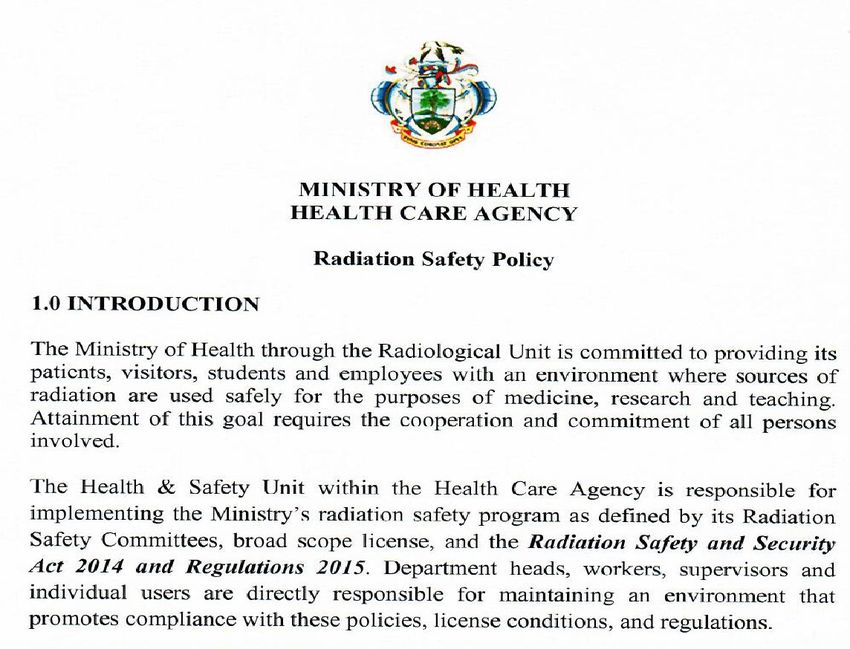
Table of Contents
General Country Profile
 A. Geography and Population                               3
 B. History and Culture                                    7
 C. Government and Legal System                            9
 D. Economy and Employment                                10
 E.   Physical and Technological Infrastructure           14

National Health Care Sector Review
 A. National Health Care Profile                          16
 B. National Health Care Structure                        24

National Radiology Profile
 A. Overview of Imaging in Seychelles                     27
 B. Workforce, Training and Professional Representation   30
 C.   Radiology Regulation and Policy                     32

Conclusion                                                33

References                                                36

Appendix A                                                38

                                  -: 2 :-
SEYCHELLES
“The Paradise”
General Country Profile
Figure 1: Seychelles Flag (CIA, 2018) [1] Figure 2: Seychelles Map (CIA, 2018) [1]
A. Geography and Population
The Republic of Seychelles is an island nation that lies more than 1,500 km from the east
coast of Africa and north of Madagascar in the Indian Ocean. Its 155 scattered islands have a
combined land area of 455 sqkm with an exclusive economic zone of 200 nm.
The islands fall into two main physical types. The islands of the central group, including the
main island ‘Mahé’, are formed from granite and consist of a mountainous heart surrounded
by a flat coastal strip. The “Outer Islands” are made up of coral accretions at various stages of
formation, from reefs to atolls. These are generally smaller and almost entirely flat, lying
only a few meters above sea level. The majority of these islands have no water, and only a
few are inhabited. The three main islands, housing nearly the entire population, are deemed
the “Inner Islands” and include: Mahé, Praslin, and La Digue. The main islands enjoy high
humidity and rainfall, feeding the lush tropical rainforest. Wildlife include the rare Giant
Land Turtle and colorful reef animals such as the Green Sea Turtle. The islands have in the
past suffered from human incursions but are now strictly preserved and maintained. The
-: 3 :-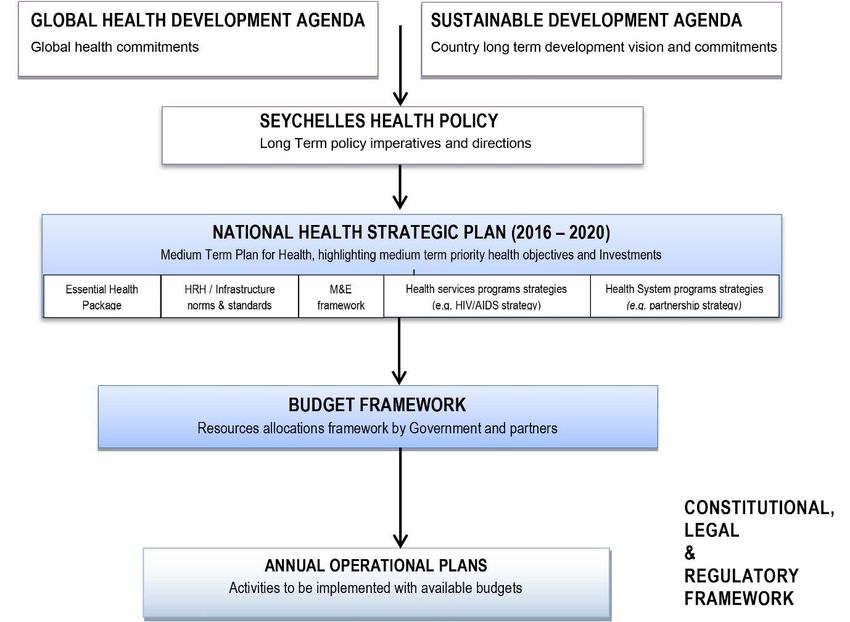
islands are valued greatly for their unique forests and wildlife, some of which are only found
within these islands.
June to September is the drier, cooler, southeast trade winds season. January, the wettest
month, brings 380 millimeters of precipitation to Mahé, where rainfall is heaviest.
Precipitation drops to less than 63 millimeters in June, the driest month. The government has
established several marine parks and placed about half of the nation's land area under
environmental protection to preserve biodiversity. (CIA, 2018)[1]
Geographic coordinates: 4 37 S, 55 27 E
Time difference: UTC+4 (9 hours ahead of Washington, DC, during Standard Time)
Population: 95,834(National Bureau of Statistics, Seychelles. 2017) [2]
-: 4 :-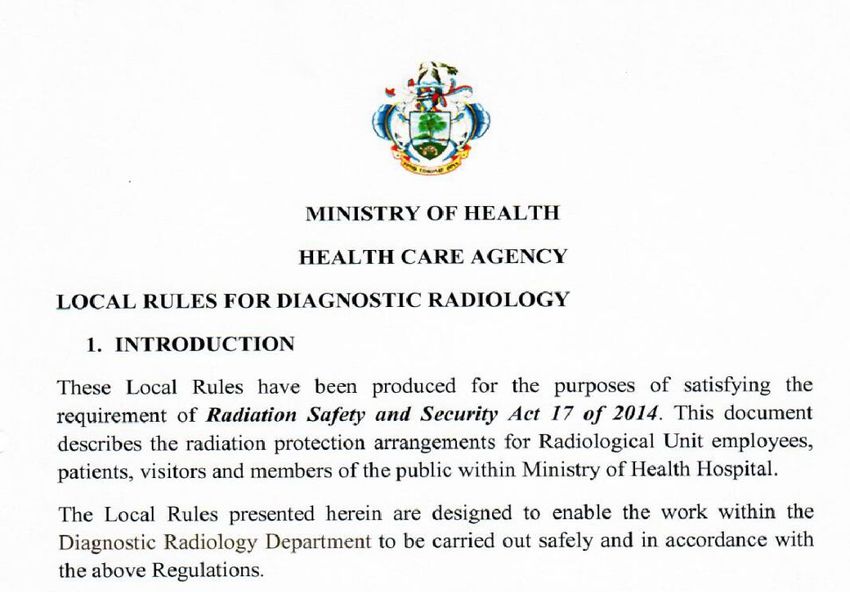
Table 1: Mid-year population estimates 2013-2017(National Bureau of Statistics, Seychelles.
2017) [2]
-: 5 :-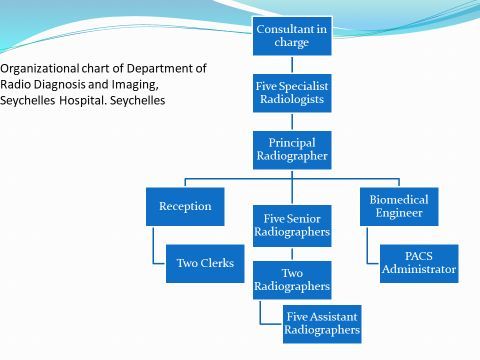
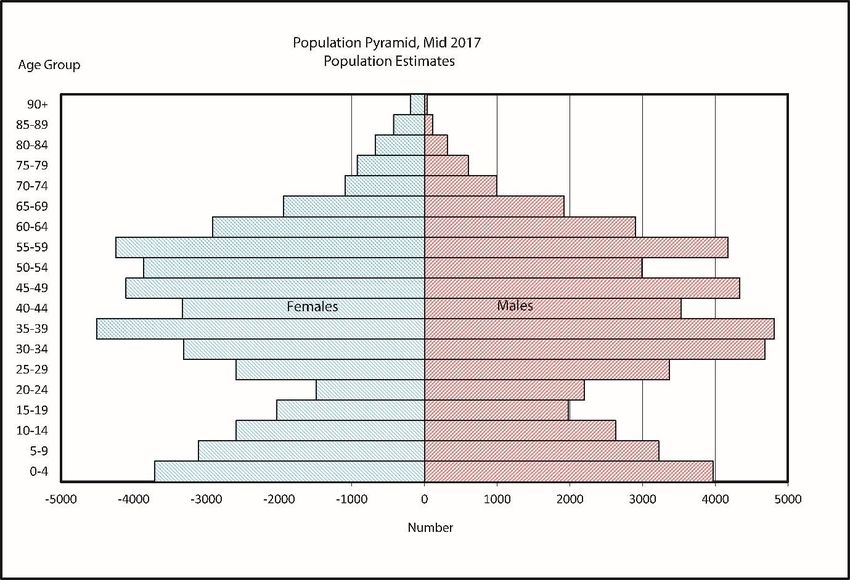
Figure 3: Population pyramid; total 95,834(National Bureau of Statistics, Seychelles.
2017,June 30) [2]
Roughly 90% of Seychellois live on Mahé; its population is concentrated around the nation's
capital city, Victoria. About eight percent of the population lives on nearby Praslin, and
another one percent is on La Digue. The remaining 152 islands are sparsely populated or
uninhabited.
Nationality: Seychellois (singular and plural).
Ethnic Group: Mixed French, African, Indian, Chinese, and Arab
Language: Seychellois Creole (official) 89.1%, English (official) 5.1%, French (official)
0.7%, other 3.8%, unspecified 1.4% (2010 est.)
Religion: Roman Catholic 76.2%, Protestant 10.6% (Anglican 6.1%, Pentecostal Assembly
1.5%, Seventh-Day Adventist 1.2%, other Protestant 1.6), other Christian 2.4%, Hindu 2.4%,
Muslim 1.6%, other non-Christian 1.1%, unspecified 4.8%, none 0.9% (2010 )
(CIA, 2018)[1]
-: 6 :-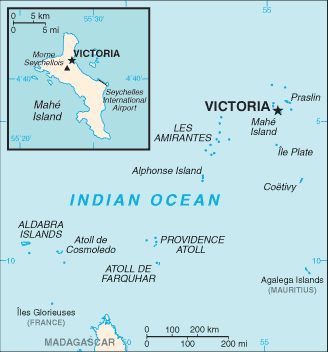
Demographic profile
The population of Seychelles is composed of the descendants of African slaves, South
Indians, French planters, and later British settlers, Africans, and Indian, Chinese, and Middle
Eastern traders. The majority of the population is concentrated on three of its 155 islands, the
vast majority on Mahé, and lesser numbers on Praslin and La Digue. Seychelles’ population
grew rapidly during the second half of the 20th century, largely due to natural increase, but
the pace has slowed due to fertility decline. The total fertility rate dropped sharply from 4.0
births per woman in 1980, to 2.3 births per woman in 2016. This was largely due to
implementation of a family planning program, free education and health care, and increased
female labor force participation. By 2035, the predicted population will be 106,000,
exhibiting further growth rate decline. In 20 years, there will be fewer births per year, and
longevity of the elderly will increase the need for regenerative and restitutive care.
Life expectancy has increased steadily, but women on average live 9 years longer than men, a
difference higher than that of typical developed countries.
This change of population structure is seen in a growing number of citizens over the age of
65. Due to gradual but significant economic growth and sanitation and health sector
developments, quality of life improvement remains an essential goal of all future strategic
plans.
An increasing number of migrant workers, predominately young males, have been migrating
to Seychelles in recent years to work in the construction and tourism industries. As of 2011,
foreign workers made up nearly a quarter of the workforce. Indians are the largest
non-Seychellois population, representing half of the country’s foreigners, followed by
Malagasy. (CIA, 2018)[1]
B. History and Culture
Colonial Roots
Seychelles was named by French Captain Corneille Nicholas Morphey after Jean Moreau de
Séchelles, the finance minister of France in 1756. Seychelles was not permanently inhabited
until the 18th century, though Arab sailors may have possessed knowledge of the islands as
early as the 7th century. Seychelles Archipelago first appeared on European maps at the
beginning of the sixteenth century after Portuguese explorers sighted the islands during
voyages to India. (The Ministry of Foreign Affairs, Seychelles. The National Humanitarian
Affairs Committee, Seychelles, 2004) [3] The crew of the British ship “Ascension” became
the first Europeans to set foot in Seychelles when they anchored off the coast of Mahé in
1609.Pirates later used the islands as safe havens, as their remoteness made them of little
interest to other seafarers. The governor of the then French territory Mauritius (an island
southeast of Seychelles), François Mahé de Labourdonnais, sent an expedition to Seychelles
-: 7 :-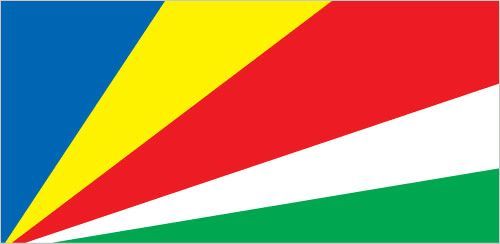
in 1742. After a second expedition two years later, the island of Mahé was named in his
honor. It was not until 1756, when the French feared the British would attempt to occupy
Seychelles, that the French formally claimed it. The first settlers arrived in 1770, and the
French established a military base on Mahé in 1786. Possession of Seychelles passed to the
British in the 1814 Treaty of Paris. After Britain abolished slavery in 1835, it liberated over
6,500 African slaves from captured slave ships and relocated them to Seychelles, where they
became laborers on plantations that produced coconut oil, cinnamon oil, and vanilla.
In 1903, the islands became a crown colony and separated from Mauritius. Chinese, Indians,
and other ethnic groups settled in Seychelles; by the 20th century intermarriage between the
islands' various groups had created the cosmopolitan Seychellois population that exists
today.(CultureGramsTM World Edition 2014 Republic of Seychelles,2014.p.1)[4]
Independence and Democracy
The involvement of Seychellois in their own political affairs began in 1948 after World War
II, when Britain granted suffrage to approximately 2,000 adult male property owners.
Two political parties, the Seychelles Democratic Party (SDP) and Seychelles People's United
Party (SPUP), were formed in 1964.
The SPUP represented a socialist ideology, favoring worker oriented policies and pressing for
complete independence from Britain and a non aligned foreign policy. The SDP was
characterized by a more laissez-faire, capitalist approach, supporting continued association
with Britain and allowing British and United States bases on the islands. The SDP, led by
James Mancham, won the islands' next two elections and formed a coalition government with
the SPUP to prepare the colony for independence. Finally, Britain granted the colony
complete independence, and on June 29, 1976, the Republic of Seychelles became a
sovereign nation.Mancham became president and SPUP leader France Albert René became
prime minister.
In 1977, René staged a coup while Mancham was out of the country and established himself
as the president of a socialist state under a single party which he referred to as the Seychelles
People's Progressive Front(SPPF).In the1990’s, the economy declined, due in part to the
expiration of foreign support (from both the United States and the Soviet Union) that
followed with the end of the Cold War, as the country's strategic location lost importance. In
1991, a resolution was adopted by the SPPF Congress to liberalize the political system; the
government invited all political stakeholders to assist in rewriting the Constitution and
re-establishing multiparty politics.
France Albert René defeated Mancham in the 1993 presidential poll and was reelected in
1998 and 2001. The SPPF continued to win the majority of parliamentary seats. After nearly
three decades in power, René stood down in 2004 to make way for his long time vice
president James Michel, who won the 2006 presidential election and was reelected in 2011.
Upon taking office, Michel encouraged open communication within the government and has
since made significant progress in stabilizing and privatizing the economy. In October 2016,
James Michel resigned and handed over the presidency to his Vice-President, Danny Faure.
-: 8 :-(The Ministry of Foreign Affairs, Seychelles. The National Humanitarian Affairs Committee,
Seychelles, 2004) [3], (CultureGramsTM World Edition 2014 Republic of Seychelles,
2014.p.2) [4]
C. Government and Legal System
Figure 4: Coat of arms of Seychelles
The Seychelles form of government is a “Presidential System,” based on the concept of the
“Separation of Powers Doctrine” between the judiciary, executive, and legislature branches.
The offices of Head of the State, Head of the Government, and Commander-in-Chief of the
Defense Forces are held for a period of five years by a citizen who is not disqualified from
registration as a voter under the Constitution (Articles 50, 51). (The Ministry of Foreign
Affairs, Seychelles, The National Humanitarian Affairs Committee, Seychelles, 2004) [3]
The Constitution establishes an articulated system of checks and balances to ensure proper
governance.
Chief of State and Head of Government is currently President Danny Faure (since 16 October
2016); the office of Vice President is currently held by Vincent Meriton (since 28 October
2016).
The president of Seychelles is elected by universal adult suffrage, empowered under the 1993
Constitution to rule by decree, and serves a five year term.(The Ministry of Foreign Affairs,
Seychelles, The National Humanitarian Affairs Committee, Seychelles, 2004)[3] The legislative
branch is made up of an National Assembly, with 34 seats in total elected by universal adult
suffrage through combinations of the “first-past-the-post system” (twenty five seats) meaning
that the candidate with the plurality of votes is the winner of the parliament seat. The losing
party or parties win no representation at all, and proportional representation of nine seats.
Members of the National Assembly serve a four year term.
The Seychelles government is a socialist, multiparty republic with the“PartiLepep” (People’s
Party) currently in power. Administratively, the country is divided into 25 districts, each as
signed a District Administrator responsible for the wellbeing of its Constituents. The judicial
power of Seychelles is divided into the following:
● The Court of Appeal (highest court)
● The Supreme Court
● Other subordinate courts and tribunals established under the Constitution
-: 9 :-Chapter IX of the Constitution calls for an independent “Constitutional Appointments
Authority”, established to select and recommend to the executive branch appointments of
judges, the Office of the Attorney General, Auditor General, Ombudsman, and Electoral
Commissioner. (The Ministry of Foreign Affairs, Seychelles., The National Humanitarian
Affairs Committee, Seychelles, 2004)[3] The Authority comprises of members nominated by
both opposition and government. The removal of a Justice of Appeal or judge from office for
inability or misbehavior shall be the consequence of a presidential decision, based on a
recommendation made by an “ad hoc” tribunal appointed by the Constitutional Appointment
Authority to investigate the matter (Chapter VII, Cap 143(3)). (The Ministry of Foreign
Affairs, Seychelles, The National Humanitarian Affairs Committee, Seychelles, 2004)[3]
Civil law is based on the French Napoleonic Code adapted to Seychelles and is known as the
“Civil Code of Seychelles”. Criminal law is based on British laws. The current Constitution
was approved by 73.9% of voters in a referendum held on June 18, 1993, effective June 23,
1993(The Ministry of Foreign Affairs, Seychelles., The National Humanitarian Affairs
Committee, Seychelles, 2004)[3]. The most recent elections took place September 8-10,
2016(next to be held in 2021), and the election results were:
Percent of vote by party: LDS 49.6%,PL 49.6%,other 1.2%
Seats by party: LDS 19,PL 14.(CIA, 2018) [1]
Main Political Parties in Seychelles:
● Lafors DemoKratik Seselwa (LDS).
● Parti Lepep (PL) (formerly SPPF).
● Seselwa (Seychelles) United Party (SUP) (formerly the New Democratic Party or
NDP).
● Seychelles National Party (SNP) (formerly the United Opposition or UO).
● Seychelles Party for Social Justice and Democracy (SPSD).
● Seychelles Patriotic Movement (SPM).
● Seychelloise Alliance (Lalyans Seselwa)
● Seychellois Democratic Alliance(Linyon Demokratik Seselwa)(alliance consisting of
SNP, Seychelloise Alliance ,SPSD, and SUP) (CIA, 2018)[1]
D. Economy and Employment
The economy of Seychelles grew in 2016, driven primarily by tourism. However, GDP
growth slowed to an estimated 4.8% from 5.7% in 2015. The medium-term growth outlook is
moderate, with GDP projected to grow by 3.5% in 2017 and 3.3% in 2018. The country
reached high-income status in 2015.The traditional tourism and fisheries sectors are expected
to remain the main drivers of growth, along with information and communications
technology (ICT). Prudent fiscal and monetary policies, coupled with continued political
stability, have helped consolidate macroeconomic stability, and inflation is expected to
remain in single digits, in December, 2017 inflation rate is 2.9 % (12 months average).
(Central Bank of Seychelles, 2018) [5]
-: 10 :-Despite having one of the highest per capita incomes in Africa, Seychelles is economically
vulnerable due to its small size, isolation, limited natural resources, and dependence on
tourism, which accounts for the bulk of foreign-exchange earnings.
Challenges facing the country include insufficient economic diversification and vulnerability
to external shocks such as world recession. Growth needs to be made greener and more
inclusive in order to protect Seychelles’ fragile natural environment against the adverse
impacts of climate change and to ensure that growth benefits all members of the society. The
development of the private sector is paramount to achieving a more diversified economy, but
it requires a more enabling environment to exploit its potential and expand into new business
areas.(African Development Bank Group, 2017).)[6]
Seychelles will no longer be eligible for trade benefits under the US African Growth and
Opportunities Act after having gained developed country status.
Seychelles Country Profile
Source: World Development Indicators database
1990 2000 2010 2016
Population, total (millions) 0.07 0.08 0.09 0.09
Population growth (annual %) 0.5 0.9 2.8 1.3
Surface area (sq km) (thousands) 0.5 0.5 0.5 0.5
Population density (people per sq km of land area) 151.1 176.4 195.2 205.8
Poverty headcount ratio at national poverty lines (% of .. .. 39.3 39.3
population)
Poverty headcount ratio at $1.90/day (2011 PPP) (% of .. 0.6 1.1 1.1
population)
GNI, Atlas method (current US$, billions) 0.35 0.59 0.92 1.46
GNI per capita, Atlas method (current US$) 5,030 7,290 10,190 15,410
GNI, PPP (current international $, billions) 0.62 1.13 1.69 2.69
GNI per capita, PPP (current international $) 8,860 13,870 18,840 28,390
-: 11 :-Income share held by lowest 20% .. 5.7 5.4 5.4
People
Life expectancy at birth, total (years) 71 73 73 73
Fertility rate, total (births per woman) 2.7 2.1 2.1 2.3
Adolescent fertility rate (births per 1,000 women ages 68 58 60 57
15-19 yrs)
Contraceptive prevalence, any method (% of women .. .. .. ..
ages 15-49 yrs)
Births attended by skilled health staff (% of total) 98 99 99 ..
Mortality rate, under 5 yrs (per 1,000 live births) 17 14 14 14
Prevalence of underweight, weight for age (% of 5 .. 3.6 ..
children under 5yrs)
Immunization, measles (% of children ages 12-23 86 97 99 98
months)
Primary education completion rate, total (% of relevant 102 99 111 109
age group)
School enrollment, primary (% gross) 99.7 105.5 110.7 102.3
School enrollment, secondary (% gross) 111 73 74 82
School enrollment, primary and secondary (gross), 1 1 1 1
gender parity index (GPI)
Environment
Forest area (sq km, thousands) 0.4 0.4 0.4 0.4
Terrestrial and marine protected areas (% of total 0 0 .. 0.1
territorial area)
Annual freshwater withdrawals, total (% of internal .. .. .. ..
resources)
Improved water source (% of population with access) 96 96 96 96
Improved sanitation facilities (% of population with 98 98 98 98
access)
-: 12 :-Urban population growth (annual %) 0.5 1.2 3.3 1.9
Energy use (kg of oil equivalent per capita) 541 .. 2,411 ..
CO2 emissions (metric tons per capita) 2.16 7.05 7.68 7.18
Economy
GDP (current US$, billions) 0.37 0.61 0.97 1.43
GDP growth (annual %) 7 1.5 6 4.5
Inflation, GDP deflator (annual %) 6.8 4 -4.2 -5
Agriculture, value added (% of GDP) 6 3 3 3
Industry, value added (% of GDP) 21 35 17 14
Services, etc., value added (% of GDP) 103 83 80 83
Exports of goods and services (% of GDP) 15 75 94 83
Imports of goods and services (% of GDP) 51 82 108 98
Gross capital formation (% of GDP) 25 25 37 34
Revenue, excluding grants (% of GDP) 55.9 38.7 32.8 32.5
Net lending (+) / net borrowing (-) (% of GDP) 0.7 -13.9 1.1 1
States and Markets
Time required to start a business (days) .. .. 33 32
Domestic credit provided by financial sector (% of 42.3 110.1 49.6 40.2
GDP)
Tax revenue (% of GDP) 36.8 26.1 27.9 28.3
Military expenditure (% of GDP) 4 1.7 0.7 1.3
Mobile cellular subscriptions (per 100 people) 0 32.5 128.9 158.1
Individuals using the internet (% of population) 0 7.4 41 58.1
High-technology exports (% of manufactured exports) 1 2 4 7
Overall level of statistical capacity (scale 0 - 100) .. .. 59 70
Global Links
-: 13 :-Merchandise trade (% of GDP) 66 87 143 104
Net barter terms of trade index (2,000 = 100) 78 100 86 94
Total debt service (% of exports of goods, services and 9.1 4.2 5.7 5.7
primary income)
Net migration (thousands) 1 3 -2 ..
Personal remittances, received (current US$, millions) 8 3 17 18
Foreign direct investment, net inflows (BoP, current 20 24 160 106
US$, millions)
Net official development assistance received (current 35.6 23.6 53.9 6.8
US$, millions)
Table 2: Seychelles country profile. Source: World Development Indicators database. Last updated
December 22, 2017. World Bank.org, 2017. [7]
E. Physical and Technological Infrastructure
Electricity-production (2015): 347 million kWh (CIA, 2018) [1]
Electricity-consumption (2015): 322.7 million kWh (CIA, 2018) [1]
Electrification - total population: 97 %( CIA, 2018) [1]
Number of registered air carriers: 1(CIA, 2018) [1]
Airports (2013): 14(CIA, 2018) [1]
Airports - with paved runways (2013): Total: 7(CIA, 2018) [1]
Roadways (2015): Total: 526 km (CIA, 2018) [1]
Major seaport: Victoria (CIA, 2018) [1]
-: 14 :-Telecommunications in Seychelles
Local and international telecommunications lines are operated by Cable & Wireless. Digital
microwave systems were introduced to the Seychelles in 1992 and Cable & Wireless offers
other services from its Seychelles radio coast station. Direct international calls are available
to over 100 countries worldwide.
Telephone –Landline
Total subscriptions: 20,836
Subscriptions per 100 inhabitants: 22 (July 2016) (CIA, 2018) [1]
Telephones - Mobile Cellular
Total:151,857
Subscriptions per 100 inhabitants: 163 (July2016) (CIA, 2018) [1]
Internet
There are three internet service providers in Seychelles: Atlas, Intelvision, and Kokonet.
Atlas was formed by the three main computer companies in Seychelles: Space 95, VCS, and
MBM. Internet was introduced in Seychelles by Atlas Seychelles Ltd in September, 1996.In
2012, Seychelles East Africa System’s (SEAS) submarine cable (1,930-km) landed at Beau
Vallon, on the island of Mahé, connecting Seychelles with Tanzania. [8]
The Department of information and communication technology (DICT) recently unveiled its
latest e-service, which they have been working on with the Seychelles Land Transport
Agency (SLTA).This e-service provides online booking services for the Vehicle Testing
Services (VTS). In order to get a vehicle tested, an appointment has to be booked with VTS
so prior to the launch of this new service, the customer had to call the vehicle testing station
and place an appointment with the cashier, following the new online system established by
the Seychelles Planning Authority. (Office of the President, Department of Information
Communications Technology, Seychelles.2017) [9] There are an estimated 52,664 internet
users country-wide, representing 56.5% of the population (July 2016).(CIA, 2018)[1]
Newspaper
The main daily newspaper is “The Seychelles Nation”, dedicated to local government views
and current affairs. Other political parties operate other papers such as “Regar”. Foreign
newspapers and magazines are readily available in most bookshops and newsagents. The
papers are mostly written in Seychellois Creole, French, and English.
-: 15 :-Television and Radio
The main Television and Radio network is operated by the Seychelles Broadcasting
Corporation (SBC) which broadcast all kinds of programs in the three national languages
(Creole, English and French): music, news, documentaries, panel games, drama and
children’s programs and International productions in 24 hours service.
The SBC also broadcast foreign television services; BBC News, CNN World, CCTV News,
France 24, Russia Today as well as Korean broadcasting System’s KBS World.
The popular SBC Radio stations include AM (Amplitude modulation) Radio and Paradise
FM (Frequency modulation). The SBC Radio also broadcast two foreign radio stations, Radio
France International (RFI) and the British Broadcasting Corporation (BBC).
(Seychelles Broadcasting Corporation (2018).)[10]
The FEBA Seychelles Radio [The Far Eastern Broadcasting Associates (later known as
“Feba Radio”)] transmits from Mahé to over 30 countries in the Indian Ocean and throughout
Eastern Africa in numerous languages. [8].
National Health Care Sector Review
A. National Health Care Profile
Right to Health Care
“The State recognizes the right of every citizen to protection of health and to the enjoyment
of the highest attainable standards of physical and mental health and with a view to ensuring
the effective exercise of this right, the State undertakes:
● To take steps to provide for free primary health care in state institutions for all its
citizens;
● To take appropriate measures to prevent, treat and control epidemic, endemic and
other diseases;
● To take steps to reduce infant mortality and promote the healthy development of the
child;
● To promote individual responsibility in health matters;
● To allow, subject to such supervision and conditions as are necessary in a democratic
society, for the establishment of private medical services.”
Article 29
Constitution of the Republic of Seychelles, p.30, 1994
(Ministry of Health, Seychelles, 2017)[11]
-: 16 :-The Government of Seychelles provides free health services to the entire population and has
very strong policies and programs in place for newborns, youth, and the elderly. Highly
specialized treatment takes place overseas, with the government providing the majority of the
funding. This principle is enshrined in the Constitution of the Republic of Seychelles and the
Health Policy Declaration, which underscore the principles of basic human rights and health
equity.
Seychelles is now at an important crossroads where the epidemiological shift from
communicable to non communicable diseases is posing new and significant challenges. Of
significant concern are the noncommunicable diseases: diabetes, cerebrovascular disease,
hypertension, cancer and mental health disorders, as well as some communicable diseases:
HIV/AIDS and hepatitis.
Every citizen has the right to protection of health and to the enjoyment of the highest
attainable standard of physical and mental health. (Larue. M. H. 2016). [12]
Figure 5: Planning framework for health sector of Seychelles. (Ministry of Health, Seychelles,
2016)[13]
-: 17 :-Seychelles is currently working towards achieving the United Nations Millennium
Development Goals (MDGs). To achieve the targets for reduction of child mortality (MDG
4), Seychelles must reduce “under-five deaths” (death of children younger than 5 years) per
1,000 live births to six, and increase measles immunization to 100% by 2015. In 2013,
“under-five” mortality stood at 14 deaths per 1,000 live births, and measles immunization at
99%. The Fact Sheets of Health Statistics 2016 MDG progress report for Seychelles
highlighted the need for more inclusive medical and health service provision for mothers and
children, including widespread improvements in antenatal, delivery and postnatal services,
with the aim of conforming to international standards. (Commonwealthhealth.org,2016)[15]
The Global MDG 5 target for maternal health is to reduce the number of women who die in
pregnancy and childbirth by three quarters between 1990 and 2015. In 2008, maternal
mortality in Seychelles was 57 deaths per 100,000 live births (an estimate from UN
agencies/World Bank). There is insufficient data available to assess Seychelles’ progress
towards this goal. The 2012 MDG progress report for Seychelles highlights the issue of low
contraceptive use in the country, which has led to a high adolescent birth rate, causing
ongoing concern. There have been numerous programs throughout the country aimed at
reducing teenage motherhood such as sex education in school, availability of contraceptive
pills depending on age group, and youth program etc.(Bonte, R.,2016)[14], nevertheless there
is still significant work to be done. Other health concerns include the rate of drug use within
the 15-25 yrs. Age group (specifically targeting the number of heroin-dependent mothers),
improving health education for adolescents, and combating child sexual abuse.
MDG 6 aims for a reduction in the prevalence of HIV, malaria, and other diseases. Progress
must be made in reducing tuberculosis deaths and stopping the spread of HIV/AIDS in order
to achieve MDG 6 by 2015. The 2013 MDG progress report for Seychelles highlights the
need for widespread surveying of key populations, including sex workers and prison inmates,
in a bid to develop prevention and intervention programming, as well as methods of
sustaining national HIV and AIDS programs. The MDGs status report of 2015 clearly
indicates that Seychelles is well on track for meeting the set health targets.
(Commonwealthhealth.org, 2016)[15]
As of the year 2011, there were 1.2 mental health outpatient facilities and 47.3 beds in
psychiatric hospitals per 100,000 people. (Commonwealthhealth.org, 2016)[16]
There is no local pharmaceuticals manufacturing in Seychelles, thus all pharmaceutical
requirements are imported. Additionally, there are no legal provisions for regulating the
private sector pharmaceutical market. (Commonwealthhealth.org, 2016)[16]
-: 18 :-Health expenditures (2014): 3.4% of GDP. (CIA, 2018)[1]
Hospital bed density (2011): 3.6 beds/1,000population. (CIA, 2018) [1]
Total expenditure on health as % of GDP (2014) 3.4(WHO, Seychelles, 2016) [17]
Total expenditure on health per capita (Intl $, 2014) 844(WHO, Seychelles, 2016) [17]
Total number of registered physicians in Seychelles (2016): 368
(Ministry of Health, Seychelles, 2017)[18]
Total number of registered nurses in Seychelles (2016): 844
(Ministry of Health, Seychelles, 2017)[18]
Number of registered midwives in Seychelles (2016): 352
(Ministry of Health, Seychelles, 2017)[18]
Hospital bed occupancy rate (2016):
76%
(Ministry of Health, Seychelles, 2017)[18]
-: 19 :-Table 3: Seychelles progress on the MDGs (WHO Regional office for Africa, 2016). [19]
-: 20 :-Mortality Trends and Disease Burden of Seychelles
Mortality levels for specific age groups are low in Seychelles and have remained stagnant.
Over the past 5 years, Seychelles had an average of 15 neonatal deaths, 27 perinatal deaths,
20 infant deaths, and 1 maternal death for just under 1,600 live births. (Ministry of Health,
Seychelles, 2016) [13]
The top 30 contributors to morbidity and mortality, measured in disability adjusted life years
(DALYs)and the top 30 conditions whose burden has increased most in Seychelles in 2014
are shown below:
Contributors to Morbidity and
Conditions with Increased Burden
Mortality
Cause of death % of Cause of death DALYs %
or injury or injury annual
total DALYs
change
1 Ischemic heart 8.40% HIV/AIDS 10.33%
disease
2 Cerebrovascular 6.24% Kidney cancer 6.69%
disease
3 Lower 5.90% Larynx cancer 5.74%
respiratory
infections
4 Diabetes 4.08% Other 5.45%
mellitus unintentional
injuries
5 Low back and 3.89% Liver cancer 4.78%
neck pain
6 Hypertensive 3.87% Endocrine, 4.70%
heart disease metabolic,
blood, &
immune
disorders
-: 21 :-7 Sense organ 3.37% Leukemia 4.56%
diseases
8 Chronic 2.66% Multiple 4.45%
obstructive sclerosis
pulmonary
disease
9 Depressive 2.25% Cirrhosis due to 4.13%
disorders hepatitis C
10 Road injuries 2.23% Ovarian cancer 3.97%
11 Drowning 2.08% Non-Hodgkin 3.96%
lymphoma
12 Congenital 2.04% Cirrhosis due to 3.88%
anomalies other causes
13 Skin and 1.96% Prostate cancer 3.75%
subcutaneous
diseases
14 Chronic kidney 1.85% Pancreatic 3.70%
disease cancer
15 Other 1.71% Tetanus 3.53%
cardiovascular
& circulatory
diseases
16 Migraine 1.63% Diabetes 3.51%
mellitus
17 Drug use 1.55% Paralytic ileus 3.40%
disorders and intestinal
obstruction
-: 22 :-18 Self-harm 1.47% Atrial 3.35%
fibrillation and
flutter
19 Breast cancer 1.46% Cirrhosis due to 3.16%
hepatitis B
20 Interpersonal 1.44% Breast cancer 3.05%
violence
21 Tracheal, 1.34% Testicular 3.03%
bronchus, and cancer
lung cancer
22 Prostate cancer 1.33% Medication 2.82%
overuse
headache
23 Preterm birth 1.31% Cirrhosis due to 2.55%
complications alcohol use
24 Colon and 1.31% Vascular 2.19%
rectum cancer intestinal
disorders
25 Alzheimer 1.25% Rheumatoid 2.12%
disease and arthritis
other dementias
26 Paralytic ileus 1.05% Appendicitis 1.99%
and intestinal
obstruction
27 Schizophrenia 0.97% Gallbladder and 1.95%
biliary tract
cancer
-: 23 :-28 Anxiety 0.97% Gout 1.92%
disorders
29 Cervical cancer 0.95% Maternal deaths 1.80%
aggravated by
HIV/AIDS
30 Asthma 0.90% Protein-energy 1.80%
malnutrition
Table 4: Distribution of mortality cause and increases in disease burden. (Ministry of Health,
Seychelles, 2016) [13]
B. National Health Care Structure
The Seychelles health system is organized into primary, secondary, and tertiary care, with a
patient referral system from primary to secondary and tertiary care centers. Seychelles
Hospital, the highest institution for acute and chronic inpatient care, is the only referral center
of the country.
Seychelles Hospital
The role of Seychelles Hospital is to ensure that a high level of health services are provided
to the population; the hospital is the implementer of the Ministry of Health’s secondary and
tertiary care strategy for the entire country. Clinical services include: inpatient and outpatient
services, internal medicine, general surgery, urology, orthopedics, pediatrics, cardiology,
nephrology, neuromedicine, neurosurgery, dental and maxillofacial surgery, ENT,
gynecology and obstetrics, ICU, NICU, dermatology, physical medicine, accident and
emergency care, mental health care, pathology, hematology, biochemistry and blood bank,
oncology, and a department of radio diagnosis and imaging.
Despite the existence of other centers in the south and north of Mahé, and on the islands of
Praslin and La Digue, Seychelles Hospital meets the majority of demand.
-: 24 :-Community Health Services of Seychelles
Community health services provide primary health care as the first point of contact. They
specifically aim to bring health services closer to the people, remove congestion at the
Seychelles Hospital and make better use of existing facilities, and to provide specialist
outpatient services in the Community. They are responsible for the promotion of health and
for the prevention and control of communicable and noncommunicable diseases at a primary
care level. Therefore, community health services are the main arm of the health sector
entrusted with the delivery of the primary health care package. It comprises 17 health districts
for primary care service delivery, three cottage hospitals (Anse Royale Hospital on Mahé,
Baie St. Anne Hospital on Praslin, and Logan Hospital on La Digue), and various satellite
centers (such as the psychiatric center, geriatric and terminal care centers, a chronic care
center at the North East Point, and the Acute Psychosis and Drug Addict Rehabilitation
Centerat Les Cannelles).
The country’s growing population with various pathologies requires further planned
development of the health sector. This includes the development of a comprehensive master
plan for the six hospitals in Seychelles to address both current and future needs and the
evolution of the healthcare sector, such a “Briefing Document For The Concept Master plan of Six
Hospital In Seychelles” has been prepared for the Seychelles Ministry of Health, and considers the
existing Seychelles Health Facilities and their functioning, and seeks to propose a functional
overlay in the form of a master plan, against which an improvement in services and spatial
operational relationships can be proposed for implementation. (Miodrag, T., MD, FCS, MSc.
2015)[20]
Services and Programs of Community Health Services of Seychelles:
● Medical consultation
● Dental consultation
● Dental therapy services
● Mother and child program
● Antenatal care program
● Reproductive health program (includes family planning)
● Youth health program
● Domiciliary care program
● Rehabilitation services (physiotherapy, occupational therapy, speech therapy)
● Community mental health program
-: 25 :-Private Health Sector in Seychelles
The private sector is also playing a key role in improving access to healthcare. Economic
expansion as a part of the reform process that started three years ago has seen an
improvement in both the variety and quality of services available to people.
In the last two to three years Seychelles private health sector has recorded unprecedented
growth. New health cottages have been constructed, offering more diversified services
previously unavailable at private healthcare facilities.
Seychelles government is encouraging investment in the private health sector, according to
the country’s regulatory framework. (Lablache, J., Uranie, S. and Kabukuru, W. 2014) [21]
The Following organizations contribute their services in the private health sector:
● The Euro medical Family Clinic.
● Le Chantier Health Services (Pty) Ltd.
● Eureka Medical Specialist Clinic.
● Nawaloka Hospitals International.
● Health Centre Dr. K.S. Chetty.
● Dr. Murthy’s Medical and Gastro Clinic.
Undergraduate and Postgraduate Medical Training
There are no medical teaching institutes in Seychelles; students receive their undergraduate
and postgraduate training abroad, with the government providing full funding. Medical
graduates complete a two-year internship in Seychelles Hospital under the Ministry of
Health. A main focus has been to secure postgraduate training venues for the large number of
young doctors who have returned to Seychelles over the past four to five years.
The Health Department was able to secure positions for two pediatricians at the University of
Pretoria in 2017.The next step will be to develop clear procedures for applications to South
African Universities. There is an ongoing process to officially formalize relationships with
the Health Professionals Council of South Africa in a Memorandum of understanding (MoU).
The Health Department has also explored training opportunities in Malaysia, specifically with
the Universiti Sains Malaysia (USM).Postgraduate training in Malaysia opens up
opportunities for those young doctors who completed their training in Malaysia, but could not
complete their internship there.
-: 26 :-Five doctors continued postgraduate training in 2016(Ministry of Health, Seychelles. 2017)
[18]. In 2017, one doctor continued his postgraduate study in radiology at Yerevan State
University, Armenia. There were 53 students who participated in undergraduate medical (48)
and dental (5) courses in 2016 from abroad. The majority of these students were from Cuba,
(14) followed by Slovakia, (9) and India (8).The three dental student received training from
New Zealand, India, and Hungary.
Five new medical graduates are expected in 2017 and eleven more are expected in 2018.
(Ministry of Health, Seychelles. 2017) [18]
National Radiology Profile
A. Overview of Imaging in Seychelles
Seychelles Hospital was established on Sunday, November 30, 1924. In 1929, an X-Ray and
Electro-Therapeutic department was created to serve patients, an initiative of the resident
surgeon Dr. Maxime Paul Lanier. (Health Care Agency, Ministry of Health, Seychelles.)[22]
There currently exists a Department of Radio Diagnosis and Imaging, Seychelles Hospital at
The H.H Sheikh Khalifa Bin Zayed Al Nahyan Diagnostic Centre, donated by the H.H
Sheikh Khalifa Bin Zayed Al Nahyan, President of the United Arab Emirates. It opened on
April25th, 2011and is the main radiology service delivery center of the country. It is a modern
radiological center, providing 24 hour service for Seychellois and foreign patients. Available
modalities include: general radiography, fluoroscopy, ultrasound, mammography, MDCT
scan, MRI, portable and operating room x-ray, and portable ultrasound.
Goals and Targets of the Department of Radio Diagnosis and Imaging, Seychelles
Hospital:
1. “Do no harm”
2. Provide high quality, 24 hour diagnostic service.
3. Maintain high performance level of services for all diagnostic modalities: X-ray,
fluoroscopy, mammography, ultrasound, MDCT, and MRI
4. Perform medical radiation imaging according to standards
5. Keep diagnostic center equipment in working condition through close contact with
biomedical engineering groups and Ireland Blyth Limited, Mauritius(IBL).
6. Implement infection control procedures on a regular basis
7. Increased public awareness about ionizing radiation hazards,
8. Protection and safety, especially among the referring clinicians
9. Special attention to pediatric, women's, and geriatric imaging
-: 27 :-10. Follow the evidence based need and justification of the imaging procedure
11. Minimize patient waiting time
12. Coordinated report delivery as per the clinicians’ requests.
13. Decentralization of radiology service, especially X-ray and ultrasound services at
English River Health Centre (ERC) and Anse Royale Hospital and Health Centre
(ARC).
Major Achievements of the Department of Radio Diagnosis and Imaging, Seychelles
Hospital :( Kovalska,O., MD. 2017) [23]
1. New MDCT 20 slice scanner functioning for the emergency department and ICU and
for brain, spine, and musculoskeletal work. It reduced work load on the MDCT 64
slice scanner. Simultaneous work on 2 MDCT scanners lead to more intensive and
productive CT scan service, a significant decrease in waiting times
2. Renewed maintenance contract with Ireland Blyth Limited, Mauritius (IBL)for
radiology equipment servicing during 2016-2018.
3. Created the post of Radiation Safety Officer
4. Updated National Radiation Protection Policy and Local Radiation Protection Rules
5. Extended the use of MRI to the cervix and endometrial cancer with the high
diagnostic value
6. More intense use of ultrasound and MDCT guided biopsy and drainage, preventing
many open surgeries
7. Increased number of coronary angiography cases, preventing unnecessary overseas
referrals and saving many patients’ lives
8. Performing peripheral angiography for planning diabetic patient vascular surgery,
vascular angioplasty, and amputation
9. Providing breast cancer screening mammograms.
Constraints of the Department of Radio Diagnosis and Imaging, Seychelles Hospital:
(Kovalska,O., MD. 2017)[23]
1. The Department of Radio Diagnosis and Imaging, Seychelles Hospital is seriously
understaffed. Management of the night shift duty is very difficult.
2. Absence of nurses for CT scan patient cannulation.
3. Absence of PACS network in the hospital ward and especially in medicine, surgery
and orthopedic department
4. Absence of user licenses for the new MDCT 20 slice scanner, portable X-ray,
portable ultrasound, and mammography unit, preventing access to the PACS system
5. Absence of reporting and reconstruction station in the new MDCT 20 slice scanner
-: 28 :-6. Absence of dual syringe power injector in new MDCT20 slice scanner
7. Absence of high capacity external storage/discs, so unable to archive imaging data
past 5 years
8. Absence of the radiology assistant on night duty, causing problems, especially when
the radiographer is working in OT
9. All radiological equipment Maintenance Licenses are out of date. They require
immediate renewal for continuous maintenance and repair to ensure radiation safety.
10. Absence of radiological library, periodic literature, and special refresher training for
radiologists, radiology technologists, radiology assistants, and IT technologist.
Number of examination per modality. Radiology Statistical Annual Report, 2017
Department of Radio Diagnosis and Imaging, Seychelles Hospital, Seychelles.
Modality MRI CT Scan X-Ray Ultra Fluorosco Mammogr Total per
sonogram py am month
Month
January’17 158 683 2,616 977 14 59 4,507
February’17 68 264 1,074 435 1 26 1,868
March’17 182 675 2,664 1,047 29 58 4,665
April’17 149 613 2,438 974 15 47 4,236
May’17 183 674 3,072 1,286 17 66 5,298
June’17 156 609 2,788 1,013 4 21 4,591
July’17 147 531 2,250 937 - 54 3,919
August’17 139 735 2,866 1,179 14 59 4,992
September’17 141 629 2,682 1,089 18 32 4,591
October’17 150 605 3,095 1,081 12 80 5,023
November’17 166 659 2,775 953 20 20 4,593
December’17 127 651 2,353 900 17 - 4,048
Total per 1,766 7,328 30,673 11,871 161 522 Grand
modality total:
52,321
Table 5: Number of examination per modality. Radiology Statistical Annual Report, 2017.
Department of Radio Diagnosis and Imaging, Seychelles Hospital, Seychelles.
-: 29 :-B. Workforce, Training, and Professional Representation
Figure 6: Organizational chart of Department of Radio Diagnosis and Imaging, Seychelles Hospital
(Kovalska,O., MD. 2017)[23]
The Ministry of Health organized training of the occupational staffs of Department of Radio
Diagnosis and Imaging, Seychelles Hospital in collaboration with WHO and other
international organizations.
Equipment Inventory and Distribution
The H.H Sheikh Khalifa Bin Zayed Al Nahyan Diagnostic Centre is equipped with the
following medical devices: (Kovalska,O., MD. 2017)[23]
Digital X-ray:3
Fluoroscopy: 1
Digital Mammography: 1
Ultrasound: 4
Portable ultrasound: 1
X-ray C-arm: 1
MDCT 64 slice scanner: 1
MDCT 20 slice scanner: 1
MRI 1.5T: 1
-: 30 :-Portable X-Ray: 2
Operating room X-Ray: 1
PACS and RIS systems:
1. XS server: Syngo XS and Syngo Plaza
2. RIS server: Syngo Workflow and Portal Radiologist
3. Speech server (voice detection):SpeechMagic-Nuance
An additional radiology unit in Praslin Hospital and Health Centre (one digital X-ray, one
portable X-ray, and one ultrasound machine) operates with 24 hour X-ray service and
monthly ultrasound clinics. The hospital has a separate reporting system that allows written
reports to be sent immediately to a specialist.
Additionally two digital X-ray machines are under process of installation at Praslin Hospital
and Health Centre and Anse Royale Hospital and Health Centre, Mahé. In the private sector,
only The Euro medical Family Clinic operates one ultrasound machine.
Almost 90% of equipment are donations, some of which lack specifications and
standardization, creating challenges for operation, maintenance, repair, and acquisition of
spare parts. Planning for new equipment and infrastructure must include a detailed budget for
running costs, including preventive maintenance and calibration.
A MRI compatible ICU monitor, ventilator, and injector were installed in Department of Radio
Diagnosis and Imaging, Seychelles Hospital .in December 2015( Kovalska,O., MD. 2017)[23].It
has allowed performance of MRI scans for ICU and pediatric patients groups.
The original Seychelles Hospital, the building now referred to as the “Red Roof Building”, is
now used as the administration block. The current hospital is a series of newer buildings
behind the Red Roof Building. The former sanatorium is now the Hermitte(Female) and
D’Offay(Male) surgical wards. The pavilion which constitutes the square shape of the Red
Roof ensemble is used as both the dialysis and oncology units.
The H.H Sheikh Khalifa Bin Zayed Al Nahyan Diagnostic Centre (Aquamarine Roof)
contains a brick frame with lead shielding and an steel sheet roof. Colorful steel/tin sheet
roofing is a part of the heritage of Seychelles architecture. The flooring consists of mosaic
tiles. There is also one 500kV electric power substation specifically for The H.H Sheikh
Khalifa Bin Zayed Al Nahyan Diagnostic Centre, maintained by PUC, Seychelles. Indoor
temperatures are maintained at 15-25 degrees centigrade. The building has adequate space
and is well furnished, though it is gradually losing its beauty due to lack of proper
maintenance.
-: 31 :-Another two buildings include “Yellow Roof”, used as an outpatient department and “Green
Roof”, used as the pharmacy and occupational health department. The Biomedical
Engineering Unit works in a separate building.
C. Radiology Regulation and Policy of Seychelles:
Figure 7: Radiation Safety Policy, Ministry of Health, Seychelles. (Ministry of Health, Seychelles,
2016) [24]
-: 32 :-Figure 8: Local Rules for Diagnostic Radiology, Ministry of Health, Seychelles. (Ministry of
Health, Seychelles, 2016) [25]
The Health & Safety Unit within the Health Care Agency is responsible for implementing the
Ministry of Health radiation safety program as defined by the radiation Safety Committees,
broad scope license, and the Radiation Safety and Security Act 2014 and Regulation 2015.
The local Rules have been produced for the purpose of satisfying the requirement of
Radiation Safety and Security Act 17 of 2014.The rules describe the radiation protection
arrangements of radiological unit employees, patients, visitors, and members of the public
within the Ministry of Health.
The Radiation Safety Policy shall be reviewed and updated every three years.
Some important guideline of Radiation Safety Policy:
● Plan of action for x-ray tube monitoring in case of leakage
● Plan of action for patient radiation protection and safety
● Radiation safety for occupational staffs.
● Risk package for the radiology classify workers
● Increased public awareness of ionizing radiation hazards and protection and safety,
especially among referring physicians
● Reduce rate of portable x-ray in ward and ICU
● Establish international registration of the Seychelles Radiology unit in the
International Atomic Energy Agency (IAEA) and The African Regional Cooperative
Agreement for Research, Development and Training Related to Nuclear Science and
Technology (AFRA).(Ministry of Health, Seychelles, 2016) [24, 25]
Conclusion
Seychelles is an archipelago of beauty, worth of its nickname “The Paradise”. Seychelles
forms part of the planet’s longest coral reef system and has some of the world’s best scuba
diving sites. It is often referred to as “a living museum” for rare species of flora and fauna.
Situated outside of the cyclone belt, it enjoys a pleasant tropical climate all year round.
In spite of the country’s improved health status, a multitude of challenges remain. Its ranking
as a high-income country has affected Seychelles’ eligibility for certain global funding
opportunities, but areas of poverty still exist.
-: 33 :-The population’s health is not solely determined by biological and genetic factors, but also by
gender-based behavior, socio-economic status, income levels, education, and social support
systems. Thus, all health sectors have a responsibility to address the social determinants of
health in Seychelles, radiology included. Radiology can play an important role in leading and
supporting inter sectoral collaboration and community actions to improve population health
and well-being.
The department of Radio Diagnosis and Imaging in Seychelles Hospital plays a central role in
integrated patient care. Imaging professionals do a remarkable job with severely
resource-constrained environments, where retaining trained personnel is difficult.
Major health challenges in Seychelles, specific to the radiology sector, include: a weak health
system, insufficient trained human resources, inadequate financing, shortages of essential
supplies, equipment, and infrastructure, and absence of continuous maintenance and repair.
To improve radiology services, the following initiatives should be undertaken:
● Urgent recruitment of radiologist, medical physicist, radiographers, radiology
assistants, IT technologists, PACS administrator, and part time nurses
● Extend PACS with all 30 licenses to connect the hospital wards, peripheral clinics,
and Praslin Hospital.
● Upgrade from Syngo.plaza to Syngo. via picture archiving and communication system
(PACS), Radiology information system( RIS) system
● Urgent purchase of new reconstruction and reporting station for new MDCT 20 slice
scanner
● Organize radiation safety training for biomedical engineer and radiation safety officer
● Upgrade software for MDCT 64 slice scanner for advanced reconstruction
● Supply main PACS server with additional high capacity external discs for image
archiving
● Installation of urgent power supply (UPS) system in the main server, CT scanners,
and MRI PC to prevent system failure
● Procurement of MRI breast coil
● Create radiologist post for Baie St. Anne Hospital, Praslin
● Establish x-ray and ultrasound unit at Logan Hospital, LA Digue Island
● Organize training for radiologists, radiology technologists, radiology assistants and IT
technologists
● Purchase modern radiological books and magazine
● Organize essential course training in angiography, neuroradiology and interventional
radiology
● Online institutional access to Journal of The American College of Radiology, www.
elsevier.com, and Radiological Society of North America(RSNA)
● Establish Medical Teaching Institute and Radiology Technologist Teaching Institute
-: 34 :-● Establish RAD-AID chapter to improve efficiency and quality of diagnostic imaging
services in Seychelles and active participation with radiology in global health
initiatives
Support from international organizations such as the Commonwealth, UN agencies, and
international voluntary organizations such as RAD-AID International present valuable
opportunities to participate in sustainable and appropriate diagnostic radiology care in order
to achieve advanced and quality health services for the country of Seychelles.
-: 35 :-References
1. Central Intelligence Agency CIA.(2018, January 03).The World Factbook, Africa,
Seychelles. Retrieved from
https://www.cia.gov/library/publications/resources/the-world-factbook/geos/se.html
2. National Bureau of Statistics, Seychelles. (2017, August 31). Population and vital Statistics
mid-year population estimates 2017.National Bureau of Statistics Statistical Bulletin.
Catalogue Number: Population 2017/2, Released 31 August 2017. Retrieved from
https://www.nbs.gov.sc/downloads/data-acquisition-census/population-and-vital-statistics/201
7
3. The Ministry of Foreign Affairs, Seychelles, The National Humanitarian Affairs Committee,
Seychelles. (2004). Report by the Government of the Republic of Seychelles to the
African Commission on Human and Peoples Rights 1994-2004.Retrieved from
http://www.achpr.org/files/sessions/39th/state-reports/2nd-1994-2004/staterep1_seychelles_2
004_eng.pdf
4. CultureGramsTM World Edition,2014, Republic of Seychelles ,(2014).p.1-2.Retrieved
from
http://burnet.twpunionschools.org/subsites/slama/documents/CultureGrams/unit_7/file%20-4
5-.pdf
5. Central Bank Of Seychelles.(2018,January 06).Retrieved from
http://www.cbs.sc/inflation.jsp
6. African Development Bank Group. (2017).Seychelles Economic Outlook, Source:
African Economic Outlook. Retrieved from
https://www.afdb.org/en/countries/east-africa/seychelles/seychelles-economic-outlook
/
7. World Bank.org.(2017, December 22). Seychelles, Country profile. Source: World
Development Indicators database. Retrieved from
http://databank.worldbank.org/data/Views/Reports/ReportWidgetCustom.aspx?Report_Name
=CountryProfile&Id=b450fd57&tbar=y&dd=y&inf=n&zm=n&country=SYC
8. Fibre-optic cable on its way to Seychelles. (2008). Retrieved from
http://seychellesweekly.com/May%2013,%202012/econ2_fiber_optic.html.
9. Office of the President, Department of Information Communications Technology,
Seychelles. (2017, May 22). Retrieved from http://www.ict.gov.sc/
10. Seychelles Broadcasting Corporation (2018).Retrieved from
http://www.sbc.sc/About%20Us.htm
11. Ministry of Health, Republic of Seychelles. (2017).The Seychelles Constitution and
Health. Retrieved from
http://www.health.gov.sc/index.php/about-us/the-seychelles-constitution-and-health/
12. Larue. M. H. (2016).Health in Seychelles. Commonwealth Health Online.
Retrieved from http://www.commonwealthhealth.org/africa/seychelles/
13. Ministry of Health, Seychelles. (2016, November 01). Seychelles National Health
Strategic Plan 2016-2020.p.4.Retrieved from
-: 36 :-http://moh.seydevplus.com/wp-content/uploads/SEYCHELLES-NATIONAL-HEALTH-STR
ATEGIC-PLAN.pdf
14. Bonte. R. (2016).Teenage Pregnancy/ Innovating Prevention Techniques. Retrieved
from
http://www.missseychelles.info/sites/default/files/downloads/Contestant%205.pdf
15. Commonwealthhealth.org. (2016). Current Health Issues and Progress in Seychelles.
Commonwealth Health Online. Retrieved from
http://www.commonwealthhealth.org/africa/seychelles/current_health_issues_and_progress_i
n_seychelles/
16. Commonwealthhealth.org. (2016). Health System in Seychelles. Commonwealth
Health Online. Retrieved from
http://www.commonwealthhealth.org/africa/seychelles/health_systems_in_seychelles/
17. WHO, Seychelles. (2016) .The Global Health Observatory. Retrieved from
http://www.who.int/countries/syc/en/
18. Ministry of Health, Seychelles. (2017, March 10). Health Department Secretariat
(HDS)
Annual Report 2016. Retrieved from
http://www.health.gov.sc/wp-content/uploads/Health-Department-Annual-Report-2016-10TH
-ARCH-Prefinal-Noon.pdf
19. WHO Regional office for Africa. (2016). Seychelles Fact sheets of Health Statistics
2016. Retrieved from
http://www.aho.afro.who.int/profiles_information/images/c/ca/Seychelles-Statistical_Factshe
et.pdf
20. Miodrag, T., MD, FCS, MSc, Lead Consultant. (2015, November 9).Briefing
Document for the Concept Master plan of Six Hospital in Seychelles. Ministry of
Health, Seychelles. Retrieved from
http://moh.seydevplus.com/wp-content/uploads/Seychelles-Hospital-Masterplan-Conc
ept.pdf
21. Lablache, J., Uranie, S. and Kabukuru, W. (2014, July 30).Seychelles health care
grows as private health providers join in race to offer more choices to the islanders.
Seychelles News Agency. Retrieved from
http://www.seychellesnewsagency.com/articles/1049/Seychelles+health+care+grows+
as+private+health+providers+join+in+race+to+offer+more+choices+to+the+islanders
22. Health Care Agency, Ministry of Health, Seychelles. Seychelles Hospital History.pdf.
Retrieved from http://hca.seydevplus.com/index.php/seychelles-hospital/
23. Kovalska, O., MD. Consultant in charge (2017). 2016 Annual Report, Department Of
Radio Diagnosis and Imaging, Seychelles Hospital. Seychelles.
24. Ministry of Health, Seychelles, (2016, July 27). Radiation safety Policy (Radiation
Safety and Security Act 2014 and Regulation 2015), Ministry of Health, Seychelles.
25. Ministry of Health, Seychelles, (2016, July 27). Local Rules for Diagnostic Radiology
(Radiation Safety and Security). Ministry of Health, Seychelles.
-: 37 :-You can also read


