Sharing Good Practice - Taking Citizen Science Outdoors to support your teaching Natalie White-Scottish Natural Heritage
←
→
Page content transcription
If your browser does not render page correctly, please read the page content below
Sharing Good Practice
Taking Citizen Science Outdoors
   to support your teaching
      Thursday 16th March 2017
           Natalie White –
 Outdoor Learning Development Officer
      @natsywhite @EdScotOL
What is Citizen Science?
  Citizen Science gives young people and their
 communities the chance to get hands-on with
 science and STEM subjects, in an exciting and
     meaningful way. It provides them with
 opportunities to learn new skills, discover the
world around them, to engage with the scientific
community and to find out how science impacts
           on their lives and on society.
Policy support
Our vision for outdoor learning in Scotland:

• all children and young people are participating
  in a range of progressive and creative outdoor
  learning experiences which are clearly part of
  the curriculum.
• schools and centres are providing regular,
  frequent, enjoyable and challenging
  opportunities for all children and young
  people to learn outdoors throughout their
  school career and beyond
• teachers and educators embed outdoor
  learning in the curriculum so that learning in
  the outdoor environment becomes a reality
  for all children and young people
   Published 2010
Recommendation 1.1:

As part of this entitlement, outdoor learning
should be a regular, progressive curriculum-
led experience for all learners.

Scottish Government Response:

Outdoor learning is a key approach to
learning within the curriculum and
practitioners are encouraged to make
outdoor learning a natural and normal
part of practice. The frequency with
which outdoor learning activities take
place in schools should be determined by
the needs of the curriculum and learners.
The current priorities for the National
Improvement Framework are:

• Improvement in attainment, particularly
in literacy and numeracy
• Closing the attainment gap between the
most and least disadvantaged children
• Improvement in children and young
people’s health and wellbeing
• Improvement in employability skills and
sustained, positive school leaver
destinations for all young people;
National Improvement
                                                     Framework
Parental Engagement;
• Family homework
• Family events
• Wider achievement awards

Assessment of children’s progress;
• Use of evaluation tools            School leadership;
• Impact reports                     • Policy references
• Benchmarks – applying in new       • How Good is Our School 4
   context
• Wider achievements                 Teacher professionalism;
                                     • CLPL courses
                                     • Building capacity with teachers
                                     • Professional recognition
Outdoor Learning is not a subject –
   it is an extension to your learning
               environment

  Planning for outdoor
 learning should not be
 additional or separate
   from the rest of the
    planning. Outdoor
 Learning should not be
view as additional work,
we are simply using the
outdoor environment to
   enhance a learning
       experience.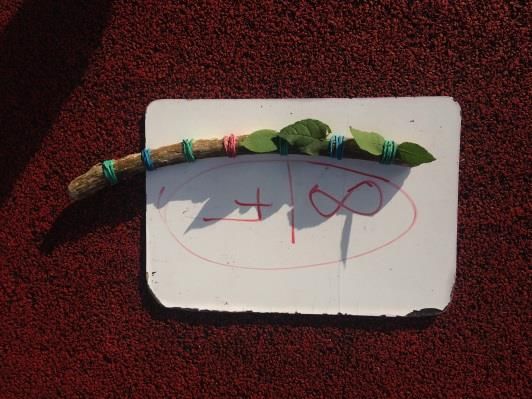
Observing and Monitoring
Citizen science offers, all teachers, the opportunity to take their
class outside to gather information. This information can be
shared through displays, presentations or uploading to national
sites and apps.
                       ‘Listening and talking’ within literacy
                       experiences and outcomes,
                       responsibility of all. – to help me
                       when interacting or presenting
                       within and beyond my place of
                       learning.

                       ‘Data and analysis’ , within
                       numeracy experiences and
                       outcomes, responsibilities of all.

                            Opal resources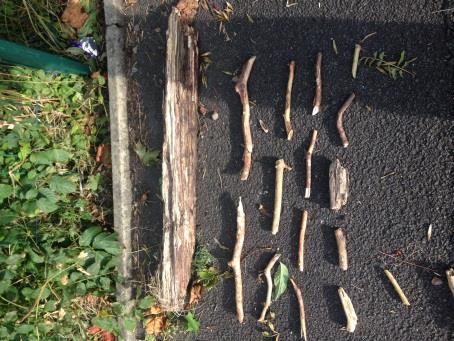
Informing action
Using Community Resilience as an approach to learning
schools can;
• Embed within the curriculum to understand the causes
  of emergencies and how they can affect communities;
• Nurture the skills, capabilities and attributes of
  learners to help them become confident and resilient
  individuals
• Discuss scenarios as a class - what would you do if…?
• Help learners and families prepare for emergencies,
  how can they stay informed with plans in place.
• Raise awareness of important websites, phone
  numbers and supports available
Promoting Learning
Using curriculum subjects to
engage learners;
• Describe the effects of weather and
  climate on living things(SOC)
• Compare and contrast land use of
  local environment and that of a
  contrasting environment (SOC)
• Use apps to collect information and
  upload to national databases ie
  WOW/Met office (TCH)
• Collecting data about local
  environment and creating habitats
  (SCN)
Helping children and
                 communities learn about
                   their local environment
Encouraging pupils and families to engage in
their local greenspace has multiple benefits.
Natural Connections report;
STEM outdoors
How do we make a
                                       difference?
• Remove barriers; myths, risk assessments,
  ‘dementors’
• Engage staff in creating meaningful learning
  experiences.
• Identify the key teaching points in lessons
• Ensure opportunities for pupil led learning;
  collaboration, metacognition, self
  assessment
• Support staff to celebrate and recognise
  success
In every walk with nature one receives far more than he seeks – John Muir
You can also read


