Shorelines - Chesapeake Conservancy
←
→
Page content transcription
If your browser does not render page correctly, please read the page content below
Shorelines
           CHESAPEAKE CONSERVANCY       2020 SUMMER NEWSLETTER

Saving the Chesapeake’s Great Rivers and Special Places

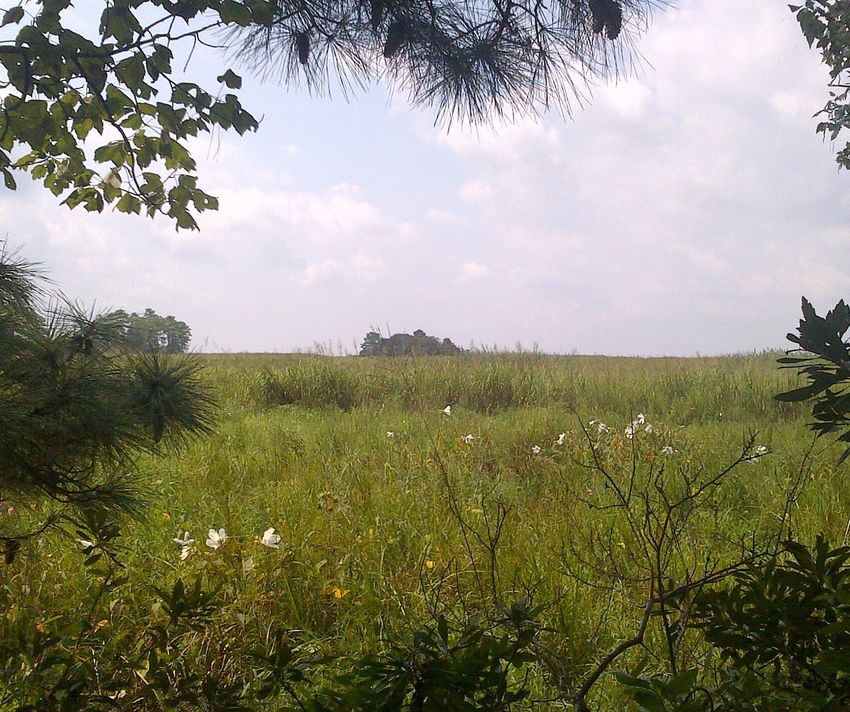
                                               Jackpot! 438 Acres Conserved
                                               PHOTO BY DAN MURPHY/USFWS

                                               COVER STORY PAGE 4

                                                                Scaling Up Solar   3
                                                                Podcast Launch     5
                                                             New Board Member      7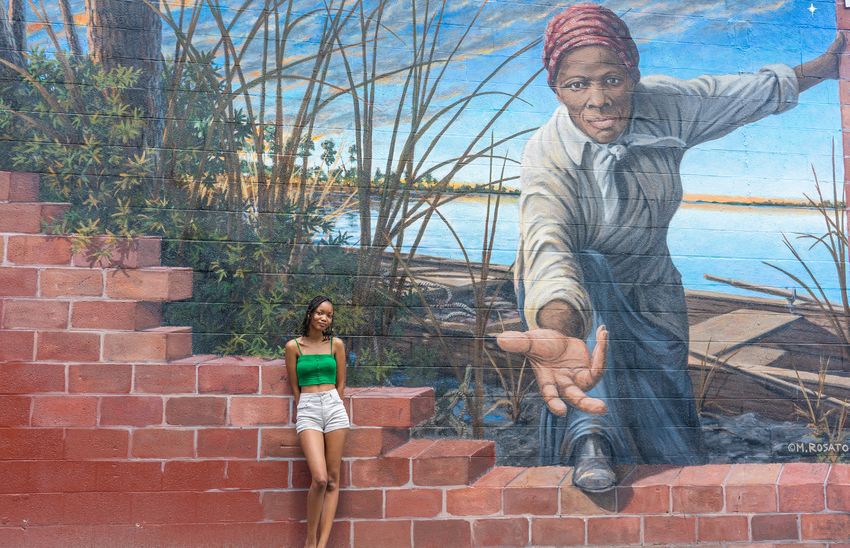
From the President & CEO

Mission
                                                               A Bold Vision
The Chesapeake Conservancy’s mission is to conserve and        Many would agree that the summer
restore the natural and cultural resources of the Chesapeake
Bay watershed for the enjoyment, education, and inspiration
                                                               months bring out some of life’s best
of this and future generations. We serve as a catalyst for     moments in the Chesapeake Bay. A calm
change, advancing strong public and private partnerships,      morning sunrise and the silhouettes
developing and using new technology, and empowering
environmental stewardship.                                     of watermen carefully tending to crab
                                                               pots. An osprey making a magnificent
Board of Directors                                             dive into the water for a fish. A boat
Randall W. Larrimore, Chair                                    ride down the river. An afternoon walk
Molly Joseph Ward, Vice Chair                                  on a shaded trail with your family.
Leslie Delagran, Treasurer                                     A fresh piece of corn and a slice of
Marc Bunting, Secretary
Maite Arce                                                     watermelon from a Chesapeake farm.
Mark Belton
Thad Bench                                                     Woven together, these moments make
Michael Brubaker                                               up the story of the Chesapeake and our
Joel E. Dunn
Verna Harrison
                                                               relationship to this amazing landscape.
Stephanie Meeks                                                The relationship between people and             Chesapeake Conservancy President & CEO Joel Dunn
                                                                                                               PHOTO BY MARK HAMILTON
John G. Neely                                                  our nation’s largest estuary is among
Mamie A. Parker, PhD
                                                               the richest and oldest of any landscape         sites where the National Park Service
John J. Reynolds
Chief G. Anne Richardson                                       in the country, dating back thousands           would connect visitors to the story of the
Jeffrey Sabot                                                  of years to when the first humans               Chesapeake and recreational opportunities
Richard Scobey                                                 arrived on the Chesapeake Bay.                  in the community. It would enable
Nancy B. Walters, PhD
                                                                                                               partner parks, like existing local and
                                                               The story of the Chesapeake Bay and its         state parks, to benefit from the powerful
Honorary Members
                                                               lands includes significant moments in           branding and marketing opportunities
Gilbert M. Grosvenor
US Senator Paul Sarbanes (ret.)
                                                               our nation’s history: Powhatan’s empire         associated with the National Park Service.
US Senator John Warner (ret.)                                  at Werowocomoco, Captain John Smith’s           A Chesapeake National Recreation
                                                               voyage up the Chesapeake, the arrival of        Area would unify these community
Emeritus Directors                                             the first African slaves at Old Port Comfort,   hubs and partner parks to establish a
Patrick F. Noonan                                              the founding of the nation’s capital on         common, coherent, and widely accessible
Charles A. Stek                                                the Potomac, the Civil War battles of           narrative for the Chesapeake Bay.
                                                               Bull Run, Antietam, and Gettysburg,
Chesapeake Conservancy Staff
                                                               and Harriet Tubman’s heroic journeys            This is a bold vision for the Chesapeake
Joel E. Dunn, President & CEO
Patty Allen, Vice President of Administration
                                                               to freedom, just to name a few.                 Bay, and this is the right time. With
Michael Bowman, Partnership Communications Coordinator                                                         your help we can increase Bay access for
Mark Conway, Executive Vice President of Programs              These pivotal moments in history, the           everyone. As we pursue a Chesapeake
Jody Couser, Senior Vice President of Communications           beauty and bounty of the lands and              National Recreation Area, Chesapeake
Jacob Czawlytko, Senior Geospatial Analyst                     waters, and the culture and traditions
Carly Dean, Program Manager                                                                                    Conservancy invites you to join us in
Melissa Ehrenreich, Senior Vice President of                   we cherish today are what make the              building support in your communities
  Development & Business Strategy                              Chesapeake Bay a national treasure. To          and networks. Watch for information
Jessica Elliott, Chesapeake Conservation Corps Member          properly share this story, and to enhance       coming soon on how you can help.
Kelsey Everett, Partnership Digital Resources Associate        public access to the Chesapeake’s many
Ellen Gardner, Senior Vice President of Finance /
  Chief Financial Officer                                      natural, cultural, and historical resources,    Sincerely,
Adrienne Gemberling, Project Manager                           Chesapeake Conservancy is calling
John Griffin, Program Manager,                                 for the establishment of an official
  Chesapeake Conservation Partnership
                                                               unit of the National Park System to be
Louis Keddell, Geospatial Program Manager
Emilie Lahneman,                                               dedicated to the Chesapeake Bay.
  Development and Annual Fund Coordinator
Jacob Leizear, Senior Geospatial Analyst                       A Chesapeake National Recreation Area
Kumar Mainali, Geospatial Data Scientist                       would bring the National Park Service            Joel E. Dunn, President and CEO
Joseph McCauley, Chesapeake Fellow
Emily Mills, Geospatial Technology Manager
                                                               and the Chesapeake Bay to the people
Susan Minnemeyer, Vice President of Technology                 by establishing community-based hub
Mary Molloy, Geospatial Analyst
Erin Montgomery, Communications Associate
Mende Naylor, Executive Assistant
Reed Perry, Manager of External Affairs
Matthew Provost, Vice President of Development
Gabrielle Roffe, Manager, Equity & Community Engagement
                                                                                        Chesapeake Conservancy Receives
David Saavedra, Geospatial Technical Lead
Helen Sieracki, Human Resources Coordinator
Rachel Soobitsky, Geospatial Project Manager
                                                                                        4-Star Rating From Charity Navigator
Lisa Spallitta, Accounting Coordinator
Susan Stephenson, Grants & Contracts Specialist
Katie Walker, Senior Geospatial Analyst/Project Coordinator
                                                                                        for the Third Year in a Row!
Emily Wiggans, Geospatial Analyst

2|   Shorelines | The Chesapeake Conservancy Newsletter                                                                                                 SUMMER 2020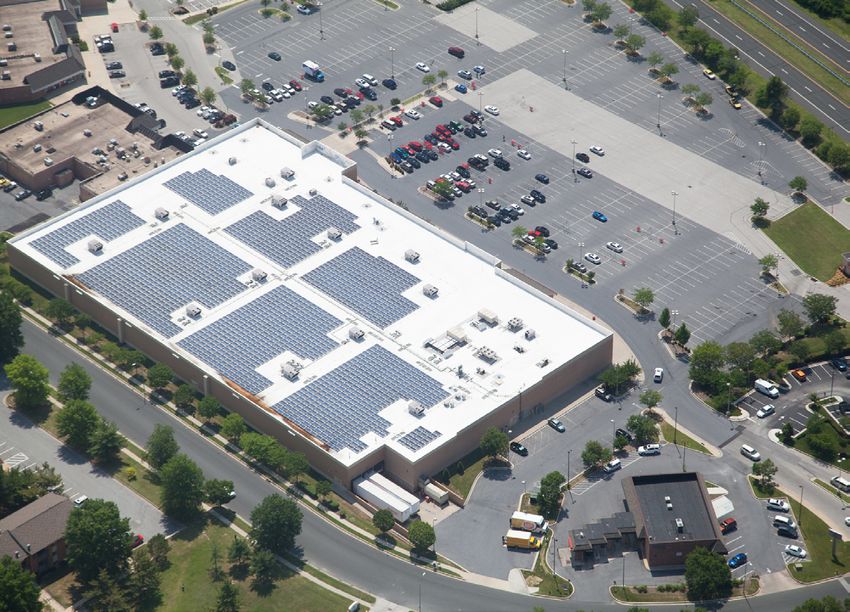
Engagement

 We Need to Talk

 Our partners at the National Park Service Chesapeake Bay Office have started a new web-based discussion series called, “We
 Need to Talk,” to amplify the voices of people of color working in Chesapeake conservation and recreation fields. The first
 conversation was among distinguished Black professionals in honor of Juneteenth. Two additional sessions have featured Latinx
 colleagues. The “We Need to Talk” series explores the intersection of race, history, and the outdoors and its relationship to the
 shared work in connecting people with and conserving important Chesapeake places.

 We were pleased to contribute promotional support and are proud of our partner for hosting these important conversations.
 To view the first three sessions visit the “Chesapeake NPS” YouTube page.

 Scaling Up Solar with Optimal Siting
 Maryland is one of 30 states in the US with a renewable portfolio standard, which requires 50 percent of the electricity
 sold by utilities to come from renewable sources, with 14.5 percent to come from solar. To accomplish this goal, careful
 consideration must be given to where the solar panels will be located and how to avoid the use of prime farmland
 and adverse environmental impacts, such as loss of forest, wetlands, or other ecologically important areas.
A recent analysis of Baltimore County and the City of
Baltimore by Chesapeake Conservancy’s Conservation
Innovation Center used geospatial analysis to identify
optimal solar sites and to answer the key question:
“Are enough optimal sites available to meet Maryland’s
renewable energy goals for solar energy?”

“The results of our analysis showed extensive opportunities
for solar panel placement on optimal sites, including
previously degraded lands; rooftops of commercial,
industrial, and residential buildings; and creating solar
canopies on parking lots,” said Chesapeake Conservancy’s
Vice President of Conservation Technology Susan
Minnemeyer. “By maximizing solar on optimal sites we
can avoid using land now dedicated to farming or nature.”

Valleys Planning Council, a nonprofit based in Towson,
commissioned the report “Solar Siting Methodology for
State and Local Governments Pilot: Baltimore County
and City.” A draft was recently shared with the Governor’s
Task Force on Renewable Energy Development and                 The Target store in Middle River, Maryland, is one of four Target stores in Baltimore
Siting, established by Governor Larry Hogan in 2019.           County with rooftop solar installations. PHOTO BY WILL PARSON/CHESAPEAKE
                                                               BAY PROGRAM WITH AERIAL SUPPORT BY LIGHTHAWK
For more information, visit chesapeakeconservancy.org.

SUMMER 2020					 		                                                                             Shorelines | The Chesapeake Conservancy Newsletter | 3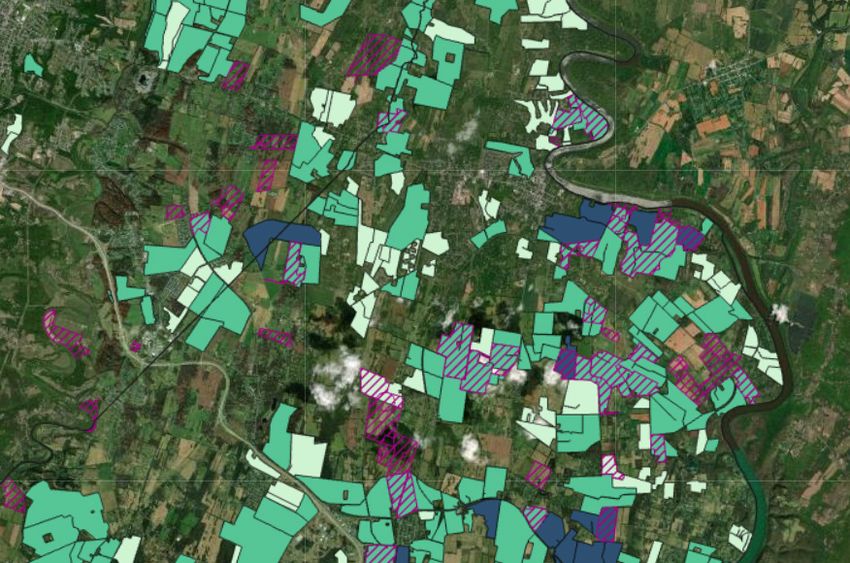
Conservation

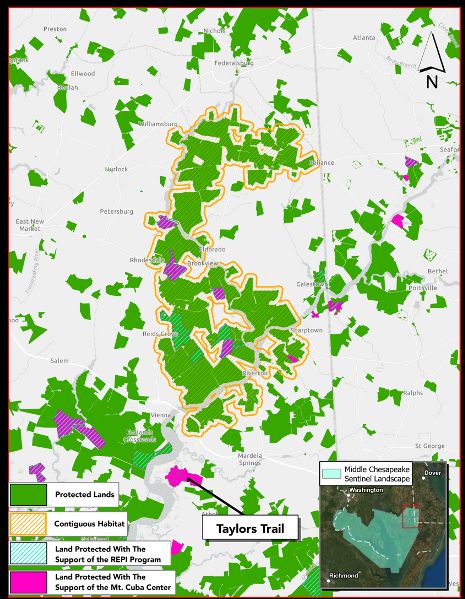
 Partnership Conserves 438 Acres in Wicomico County, Maryland
 The Taylors Trail Sand Ridge           Once again, Mt. Cuba
 Ecologically Sensitive Area            Center was there to help us
 (ESA) in Wicomico County,              bring another high priority
 Maryland, is home to an                conservation project over the
 additional 438 acres of                finish line,” said Joel Dunn,
 conserved land at Blackwater           Chesapeake Conservancy’s
 National Wildlife Refuge,              president and CEO. “This parcel
 thanks to a partnership                includes 95 acres of forest and
 between the US Fish and                is located just downstream
 Wildlife Service (USFWS),              from a previously protected
 The Nature Conservancy, and            corridor of more than 19,000
 Chesapeake Conservancy.                acres that was made possible
 The Nature Conservancy                 through a partnership with
 and USFWS collaborated to              Mt. Cuba Center, Chesapeake
 identify the property’s natural        Conservancy, The Nature
 attributes and worked with             Conservancy, the Department
 the landowner to include it            of Defense, and other partners.”
 in the national refuge system.
 Private funds secured by the           “Mt. Cuba Center is committed
 Chesapeake Conservancy                 to the conservation of open
 from the Mt. Cuba Center               space and natural habitats,”
 and funds from the sale of             said Ann Rose, Mt. Cuba
 the federal migratory bird             Center’s president. “We thank
 hunting and conservation               Chesapeake Conservancy
 stamps, commonly known as              for their leadership in this
 “Duck Stamps” also helped              important project, and we’re
 make the project possible.             gratified that our support
                                        helped bring partners
  “We can only succeed in               together to conserve these
 conserving wildlife on a               precious landscapes.”
 landscape level through
 partnerships with organizations        “We were so fortunate to
 like Chesapeake Conservancy            find this unique gem of
 and local communities. The             diverse plant and wildlife
 Duck Stamp is an excellent             habitat right in the heart of
 example of how waterfowl               the Nanticoke watershed. We
 hunters and others who buy             are pleased that the efforts of
 them can directly contribute,          this coalition of private and
 with 98 percent of the funds           public partners resulted in
 going to land acquisition. Each        the permanent protection of
 partner plays an important             this property that had been
 role which ultimately protects         in the landowner’s family for
 habitat and provides a place           generations,” said Elizabeth
 where the public can still             Carter, land protection director
 enjoy wildlife, whether by             for The Nature Conservancy.
 bird watching, hunting,
 hiking, or fishing, all vital          The property, now part of
 to the economic as well                Blackwater National Wildlife
 as ecological health of the            Refuge, is comprised of upland
 Nanticoke watershed,” explains         forest, more than 275 acres of
 Marcia Pradines, complex               tidal and non-tidal wetlands, a
 manager for the Chesapeake             stand of mature Atlantic white
 Marshlands National Wildlife           cedars, and a unique dune
 Refuge Complex, US Fish                habitat that will be restored
 and Wildlife Service.                  to native short-leaf pine.

 “Conservation success stories          In addition to its location in
                                        the heart of the Taylors Trail     The newly conserved land added to Blackwater National Wildlife Refuge includes a
 often involve many partners.                                              stand of mature Atlantic white cedars, considered a rare community in Maryland due
                                                (continued on page 5)      to intensive logging in the 19th century. PHOTO BY DAN MURPHY/USFWS

4|   Shorelines | The Chesapeake Conservancy Newsletter                                                                                                   SUMMER 2020
Innovation

Partnership Conserves 438 Acres (continued from page 4)
Sand Ridge ESA, it is proximate to the             continue to develop, test, and evaluate safe                 one or two individuals in forests that were
Barren Creek ESA and more than 200 acres           and effective aircraft for our nation’s service              dominated by maples, black gum, and
of protected Chesapeake forest land.               men and women,” said Kristin Thomasgard,                     bald cypress (another rare tree). Atlantic
                                                   director of the Readiness and Environmental                  white cedar forests are considered a rare
“The Department of Defense celebrates              Protection Integration (REPI) Program.                       community in Maryland due to intensive
this conservation achievement. While we                                                                         logging in the 19th century. Thank you
were not directly involved in this project,        “I can’t claim to have seen all of the forested              to Chesapeake Conservancy for playing
it complements the Navy’s conservation             wetlands on Maryland’s Eastern Shore, but                    an integral role in this project,” said
projects in the Middle Chesapeake Sentinel         I’ve been in a few, and this is the largest                  Dan Murphy, chief, Division of Habitat
Landscape, ensuring that Atlantic Test Ranges      stand of large Atlantic white cedar trees                    Conservation, US Fish and Wildlife
and Naval Air Station Patuxent River can           I have seen. Previously, I had only seen                     Service Chesapeake Bay Field Office.

                                                   President Signs Great American Outdoors Act
                                                   On August 4, 2020, President Trump signed the Great American Outdoors Act (GAOA) , a
                                                   truly historic moment for conservation here in the Chesapeake and across the nation. GAOA
                                                   permanently and fully funds the Land and Water Conservation Fund (LWCF), effectively
                                                   doubling, in perpetuity, conservation funds for our national parks and public lands as well
                                                   as our state parks. GAOA also provides substantial funding to address deferred maintenance
                                                   at national parks, wildlife refuges, and other public lands over the next five years. Thank
                                                   you to all the members of Congress who supported this once-in-a-generation conservation
                                                   legislation!

Technology for H20
Chesapeake Conservancy’s Conservation Innovation Center
(CIC) recently joined with the Safe Water Conservation
Collaborative, a vibrant network of more than 25 partners,
including water utilities, land conservation organizations, and
community groups working to protect safe, clean drinking water
for communities in the Eastern Panhandle of West Virginia.

In June, the collaborative published an interactive map and a
story map with support from the Land Trust Alliance’s Land
& Water Initiative and the CIC to identify land in Jefferson
and Berkeley counties essential to drinking water safety.

“Land conservation has a direct impact on water quality,”
said Chesapeake Conservancy’s Geospatial Analyst
Mary Molloy. “By using GIS to prioritize conservation
projects, together we can create more impact using fewer
resources. This is precision conservation at work.”

Learn more at chesapeakeconservancy.org or
https://arcg.is/1jHXDS                                                   This image shows priority parcels and protected areas in West Virginia. The map is a product of the Safe
                                                                         Water Conservation Collaborative’s prioritization model.

                                                Tune In to Our New Podcast!
                                                Cleaning up the Chesapeake Bay is one of the largest and longest running ecosystem
                                                restoration efforts in the world. Over the last 50 years, billions of dollars have been invested
                                                to restore the Bay, and the world is watching to see how the Chesapeake responds. Our new
                                                podcast, “Chesapeake Conversations,” hosted by Joel Dunn takes an in-depth look at what’s
                                                working for the Chesapeake and what’s not, and will feature interviews with a diverse group of
                                                conservation leaders. “Chesapeake Conversations” is produced by Platform Media, LLC, with
                                                music by Scott McDaniel from Wild Echo Media. Special thanks to our partners and donors
                                                who make our work possible. Find us on Apple, Spotify, or wherever you download your
                                                podcasts. Subscribe now!

SUMMER 2020					 		                                                                                    Shorelines | The Chesapeake Conservancy Newsletter | 5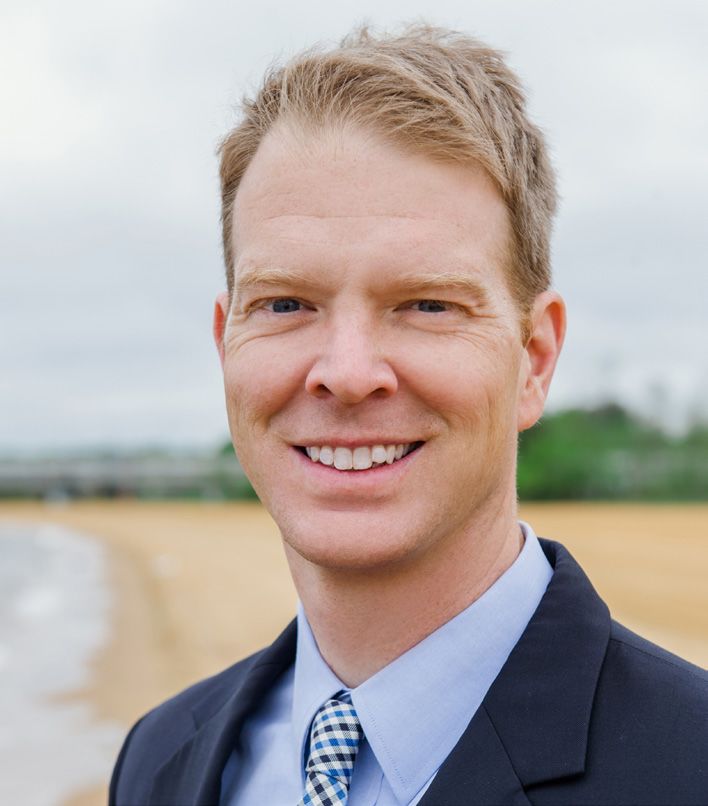
Donor Spotlight

 Charles and Mary Dankmeyer
     For Charles and Mary Dankmeyer, soaking in       The couple first approached Chesapeake
     the wonder of the Chesapeake is a daily joy.     Conservancy to explore donating a property
                                                      they owned on the Eastern Shore that had
     “We have a real fondness for the Chesapeake,”    become a rookery for blue herons. Working
     Charles said recently from the home along the    with the Conservancy, they helped fully
     Magothy River he shares with his wife, Mary.     conserve the property and became avid
     “When we started living here in 1975, people     supporters of the Conservancy’s work.
     would walk on the shorelines with a wheeled
     soft crab basket and would just roll it along    “We have traveled to many different areas of
     the bottom and pick up the soft shells! You      the world, and the Chesapeake is as stunning
     could almost time when the weather would         as any other place we have ever experienced.
     change by the thousands of swans that would      Chesapeake Conservancy’s work is important
     visit in November. That is the wonderful thing   to us, not to just conserve it but to make sure
                                                                                                                  George and Georgette were frequent visitors to the
                                                                                                                  Dankmeyers’ yard on the Magothy River in Maryland.
     about nature—you get to enjoy the beauty,        that more people can enjoy it,” Charles said.               COURTESY PHOTO
     the migratory birds, and harvest the bounty.”
                                                      Earlier this spring, Charles and Mary decided               “When we are gone, what is going to do
     The couple describes a fellow Chesapeake         to include Chesapeake Conservancy in their                  the most good? We have made a home
     pair for life, George and Georgette,             estate plans. They became members of the                    with nature; we’ve enjoyed it. Now it
     mating Canada geese that visited them            Seven Generations Society, named in honor                   is incumbent upon us to pass those
     regularly, marking the passage of time           of the Native American principle of making                  treasures on to future generations.”
     before development began changing the            decisions mindful of seven generations to
     coastline and the character of the Bay.          come. Charles and Mary join others who                      We invite others to join Charles and Mary and
                                                      are taking long-term action to ensure this                  become members of the Seven Generations
     “The swans are almost all gone, and              national treasure is protected and shared with              Society. Contact us at 443.321.3610 or
     there has been so much change. We                future generations by including Chesapeake                  mehrenreich@chesapeakeconservancy.org.
     really want to recover the Bay for               Conservancy in their estate planning.
     future generations,” said Mary.

 Summer Employees Create Legacy of Multicultural Interpretive Projects
     Hello! My name is Yazan Hasan and I am an interpretive outreach
     assistant at Chesapeake Conservancy, a position funded by and part
     of the National Park Service Chesapeake Bay Gateways Program,
     along with my talented coworkers Julian Segovia, Isabel Layton,
     and Carly Sniffen. We have been tasked this summer to provide
     interpretive services and education to those who want to enjoy the
     Chesapeake, with an emphasis on under-represented communities
     who may not have access to nature the way others do. With the
     pandemic, our jobs have had to be restructured, and many of the
     programs and workshops we’ve done in previous years have had to be
     adapted. With these new challenges come many new opportunities
     for growth.

     In the short time we’ve been here, we’ve been fortunate to start
     working on some very exciting projects. My projects have focused on         Thank you to the NPS Chesapeake Bay Office for funding our Chesapeake Gateways summer
     YouTube, taking a bilingual approach to digital media and traveling         youth employees. From left to right, top to bottom: Bilingual Interpretive Outreach Assistant
     across the Chesapeake in search of stories to tell and opportunities        Julian Segovia, Interpretive Outreach Specialist Yazan Hasan, Bilingual Interpretive Outreach
     to educate. So far we’ve started a series on the native animals of the      Assistant Isabel Layton, and Interpretive Outreach Specialist Carly Sniffen, pictured here at one
     Chesapeake and exploring overlooked parks. We hope to start a series        of their many Zoom meetings.
     on Black history in the region and how it ties to conservation.            tribes and highlighting the importance of expressing cultural heritage
                                                                                through tribal art and storytelling from the indigenous perspective.
     Julian Segovia has been working on developing mentorship
     opportunities for Latinx in Maryland public schools. He has also           Isabel Layton began an inventory of online Spanish resources and
     been working on creating online content, such as educational arts          education programs to identify the gaps in content. She has been
     integrated programs and information about indigenous history.              translating programs such as the “Create Your Own State Park”
                                                                                activity on the Maryland Park Service website. Isabel is now creating
     Carly Sniffen is involved in numerous projects, such as writing blog       videos and other content for ESL (English as a Second Language).
     articles and website content, working with me on video content,            Additionally, she planned and moderated a youth roundtable event
     creating educational resources and lesson plans related to the             for Latino Conservation Week.
     Chesapeake Bay and promoting stewardship, and creating visual
     components for various websites. Carly hopes to work on a series of        Moving forward we would like to create more content focusing on the
     blog articles spotlighting artists from various American Indian            historic communities of the Chesapeake Bay and their stories, which
                                                                                                                             (continued on page 7)

6|   Shorelines | The Chesapeake Conservancy Newsletter                                                                                                           SUMMER 2020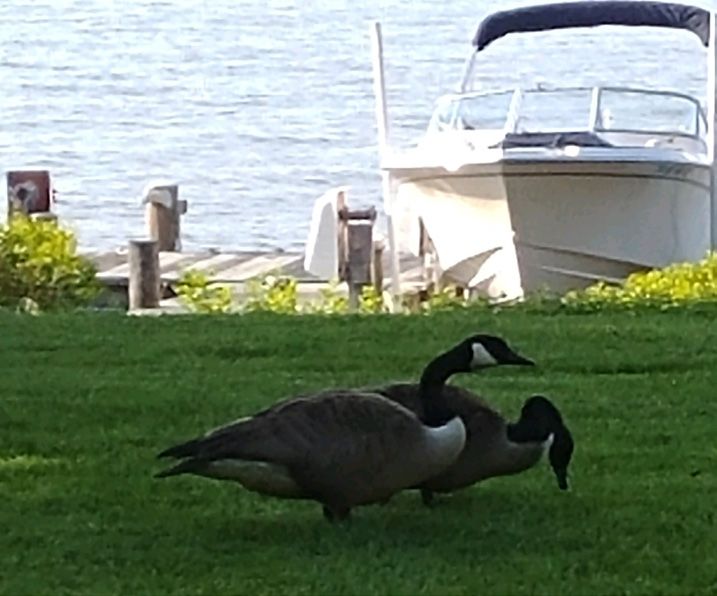
Conservancy Board & Staff News

New Board Member: Stephanie Meeks
                                                Student Conservation Association                “I have dedicated my career to
                                                President and CEO Stephanie Meeks has           organizations that value conservation
                                                been elected to the Board of Directors.         of land and cultural resources while
                                                “We are pleased to welcome Stephanie            helping to build the next generation
                                                Meeks to the board. She brings a wealth         of conservationists. Now as a board
                                                of expertise in nonprofit management,           member for Chesapeake Conservancy,
                                                the protection of cultural resources and        I look forward to making a difference
                                                land conservation, and strengthening            here in my own community and in
                                                the next generation of conservation             communities throughout the Chesapeake
                                                leaders,” said Chesapeake Conservancy           Bay watershed,” said Meeks.
                                                Board Chair Randall Larrimore.

Board & Staff Updates                                                                             Conway Joins
Retired NPS Director Bob Stanton recently
stepped down from the board to spend
                                                affairs; Matthew Provost, vice president
                                                of development; and Katie Walker, senior
                                                                                                  Conservancy Staff
more time with family and other projects.       geospatial analyst and project coordinator.
We thank him for his years of service to
our organization and helping to grow our        Helen Sieracki transferred from the
partnership with the National Park Service.     development team to pursue her passion
                                                for human relations as the Conservancy’s
We recently said farewell to three staff        HR coordinator. We welcome Emilie
members who have contributed greatly to         Lahneman as the new development
Conservancy programs. Jeff Allenby, who as      and annual fund coordinator. A recent
director of conservation technology has been    graduate of the University of Maryland,
instrumental in developing the Conservation     Lahneman spent the last year serving with
Innovation Center, left to accept a position    AmeriCorps in Montana, working with a
with the Lincoln Institute of Land Policy.      small watershed restoration nonprofit as the
Susan Shingledecker, former vice president      volunteer and education coordinator. Erin
and director of programs, has joined Earth      Montgomery is the new communications              In July, Mark Conway joined
Science Information Partners (ESIP) as          associate focusing on the Captain John            Chesapeake Conservancy as executive
the executive director. John Davy, Virginia     Smith Chesapeake National Historic
                                                                                                  vice president of programs. Conway
project and partnership coordinator, retired    Trail, a shared position with the National
                                                                                                  brings a wealth of experience in public
this summer. We wish Davy a very happy          Park Service. Most recently, Erin has been
                                                                                                  policy, state government, and nonprofit
retirement and Allenby and Shingledecker        handling communications for the Maryland
the best of luck on their new adventures. We    Chamber of Commerce. She previously               management.
hope to partner with them on future projects.   served as director of communications for          Conway is the second most senior
                                                Maryland Governor Larry Hogan and as his          manager at Chesapeake Conservancy,
Following a substantial reorganization to       press secretary during his election campaign.     overseeing the organization’s programs,
meet the needs of our growing nonprofit,                                                          partnership with the National
several Chesapeake Conservancy team             We thank our seasonal staff and summer            Park Service, and the work of the
members have new titles: Patty Allen, vice      interns for their contributions to our
                                                                                                  Conservation Innovation Center. He
president of administration; Jody Couser,       important work: Intern Morgan Bench,
                                                                                                  will work closely with the president
senior vice president of communications;        Intern Grace Chamberlain, Interpretive
                                                                                                  and CEO and the board of directors
Melissa Ehrenreich, senior vice president       Outreach Specialist Yazan Hasan, Bilingual
of development and business strategy;           Interpretive Outreach Assistant Isabel            to provide strategic direction and help
Ellen Gardner, senior vice president of         Layton, Bilingual Interpretive Outreach           the team accomplish the organization’s
finance and chief financial officer; Emily      Assistant Julian Segovia, and Interpretive        mission.
Mills, geospatial technology manager;           Outreach Specialist Carly Sniffen.                Previously, Conway was the executive
Susan Minnemeyer, vice president of                                                               director for Baltimore Tree Trust, where
technology; Reed Perry, manager of external                                                       he was responsible for expanding the
                                                                                                  Trust’s programs, along with securing
                                                                                                  $2.7 million from grants, corporations,
Summer Employees                         (continued from page 6)
                                                                                                  individual funding, and earned revenue.
                                                                                                  He also led the city’s implementation
are so often overlooked. We would also like     By the end of our time here at Chesapeake         of OutcomeStat as deputy director of
to create a resource of videos encompassing     Conservancy we hope to have created a             CitiStat. Conway is the Democratic
environmental education, Chesapeake             legacy for the Chesapeake Gateways Network        nominee for Baltimore City Council–
history, and nature safety. Already well on     in the form of lesson plans, educational          District 4 (unopposed).
our way to accomplishing these goals, we        content, mentorship opportunities, and
look forward to every part of the journey.      increased access to online environmental
                                                education in both English and Spanish.

SUMMER 2020					 		                                                                       Shorelines | The Chesapeake Conservancy Newsletter | 7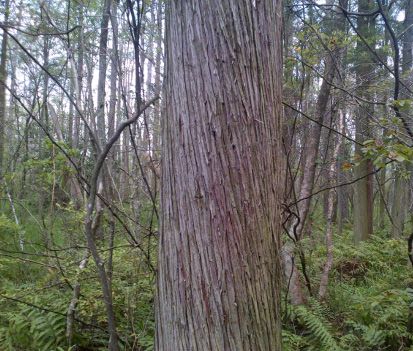
NON-PROFIT
                                                                                                U.S. POSTAGE
                                                                                                    PAID
                                                                                                PERMIT #273
  716 Giddings Avenue, Suite 42 | Annapolis, Maryland 21401
                                                                                              ANNAPOLIS, MD

  Let’s Keep in Touch!
        443.321.3610

        info@chesapeakeconservancy.org

        chesapeakeconservancy.org

        facebook.com/chesapeakeconservancy

        twitter.com/chesconserv

                                                              CHESAPEAKE CONSERVANCY RELIES ON OUR MANY FRIENDS
        instagram.com/chesapeakeconservancy
                                                              TO PROTECT AND CONSERVE THE CHESAPEAKE’S GREAT
                                                              RIVERS AND SPECIAL PLACES. YOUR TAX-DEDUCTIBLE
        linkedin.com/company/chesapeake-conservancy           CONTRIBUTION OF ANY AMOUNT IS TRULY APPRECIATED.
                                                              CHESAPEAKE CONSERVANCY HAS A 4-STAR RATING FROM
                                                              CHARITY NAVIGATOR. OUR TAX ID NUMBER IS 26-2271377.
        FindYourChesapeake.com

LEAVE A LEGACY OF
THE CHESAPEAKE
FOR FUTURE
GENERATIONS
Please consider making a special
gift to Chesapeake Conservancy
by naming the organization
in your will or by designating
Chesapeake Conservancy as a
beneficiary of your bank account,
401(k) or other retirement
account, or life insurance policy.
You can help immediately
by joining the Chesapeake
Stewards Club and providing
monthly support for
Chesapeake Conservancy’s
ongoing habitat and land
conservation programs. For more
information, call 443.321.3610.

                                                                                                      Photo by Yazan Hasan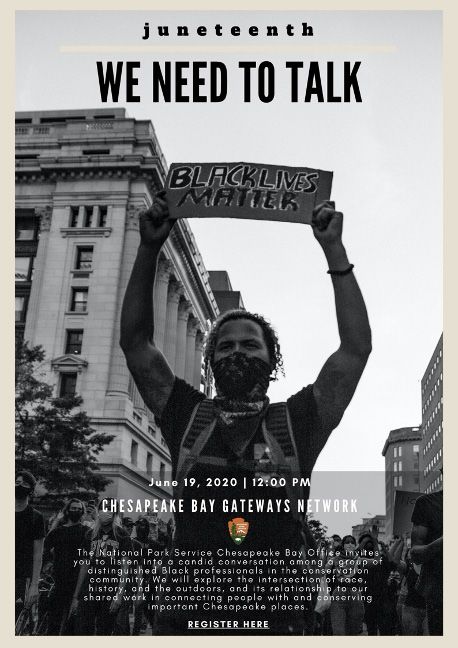
You can also read


