Snakes and Ladders Play your way through the history - Heritage Ireland
←
→
Page content transcription
If your browser does not render page correctly, please read the page content below
St Audoen’s Church

                       Medieval
    Snakes and Ladders
                                                               St Audoen’s church was founded in 1190, just 20 years after
                                                               the arrival of the Normans in Dublin. It played a central role
                                                               in the social, religious and economic life of Dubliners. The
                                                               success of the Normans in Ireland relied on creating a
      Play your way through the history                        strong colonial community, where every new Norman could
            of St Audoen’s Church                              be integrated into the existing community. Religion was an
                                                               important glue that held the Norman colony together. St
                                                               Audoen’s, with its links across the wider Norman world, was
                                                               well placed to provide that bond.

                                                                            How to assemble the game
     The history of snakes and ladders
                                                                 Cut out the two boards and stick them together so that
The game of Snakes and Ladders was played over 1000 years        the two arrows match.
ago in India. The ladders represented virtue, speeding your      Each player needs a game piece; you can use stones.
journey to heaven. The snakes were people’s vices, leading       You will also need a dice.
down to cycles of re-birth. The dice represented fate and
destiny. There were more snakes than ladders, reminding                              How to play
people that the path to heaven is the more challenging one.
                                                               Starting with the youngest player, each person shakes the dice
                                                               and moves in the direction and sequence of the numbers.
In this game of Snakes and ladders, we follow the ups and
                                                               If you land on a ladder, you move up to the square at the top
downs of the medieval community around St Audoen’s church
                                                               of the ladder.
in Dublin as it evolved. The ladders represent the
                                                               If you land on a snake you move down to the square at the
improvements in the lives of Dubliners. The snakes represent
                                                               bottom of the snake.
their set backs. Once again, the dice represents fate.
                                                               The first person to reach number 84 wins.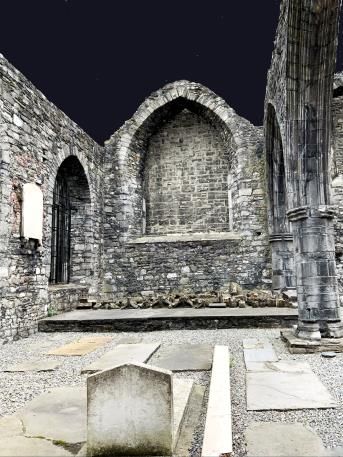
1882
         84
St Audoen’s
                             83                  82            1829
                                                                        81                 80               79         1820
                                                                                                                                78
                                                              Catholic                                                 The roof was
buildings were                                                                                                         removed from
                                                              Emancipation
handed over to                                                                                                         the South Nave.
                                                              Act
the state.

         71         1758
                              72 1773 73
                    Wide Streets
                                       The roof of the
                                                                        74         1801
                                                                                          75
                                                                                   The Act of
                                                                                                            76                  77
                    Commission
                                       east end of the                             Union between
                    established to
                                       church was                                  Great Britain
                    improve Dublin
                                       removed.                                    and Ireland.
                    streetscape.
1690
          70
Catholics are no
                             69              68                1667
                                                                        67                 66      1650
                                                                                                             65        1649
                                                                                                                                 64
                                                               Storm damages                                             Cromwell
longer allowed                                                                                     Plague arrives in
                                                               St Audoen's                                               arrives in
to be officers of                                                                                  Dublin.
                                                               tower.                                                    Ireland.
St Anne’s
Guild.
1597
        57          1597
                              58
                    St Anne’s Guild
                                                  59          1598
                                                              Increased
                                                                        60                 61      1611
                                                                                                             62
                                                                                                   Catholic worship
                                                                                                                                 63
 Famine
 sweeps the         pays for repairs                          taxation                             no longer
 city of Dublin.    to St Audoen’s                            during the 9                         permitted in St
                    tower                                     year war.                                  Audoen’s.

1597
Gunpowder
           56                55        1540s
                                                    54 1534 53Silken Thomas’
                                                                                           52       1506
                                                                                                              51                50
explosion on the                         Reformation                                               Guildhall for
                                                              rebellion against                    Carpenters
quays damages                            enforced in
                                                              the English starts                   established at
St Audoen’s                              Ireland.
                                                              in Dublin.                           St Audoen’s.
tower.

         43         1430
                              44                  45                    46                 47                48        1480
                                                                                                                                49
                    St Anne’s                                                                                          Portlester
                    Guild                                                                                              Chantry added
                                                                                                                       to St Audoen's
                    established.       St Anne’s Guild Seal                                        Portlester cenotaph church.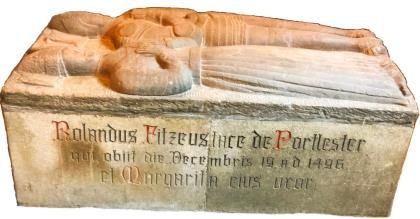
1423
         42                   41        1350
                                                   40                  39        1348
                                                                                           38              37                  36
3 new bells cast Famine Strikes                                                  Plague
for St Audoens                          St Audoen’s
                 Dublin                 north chancel is                         arrives
and the western
                                        added                                    in Dublin.
tower built

         29         1314
                             30                   31                   32        1317
                                                                                          33
                                                                                 Bruce Invasion
                                                                                                           34                   35
                    Famine sweeps
                                                                                 prompts fires
                    through Dublin
                                                                                 in west Dublin.

        28                   27         1260
                                                   26         1260
                                                                       25                 24       1250
                                                                                                            23
                                                                                                    Dublin now
                                                                                                                                22
                                        Pillory installed     Larger boats are                      has a public
                                        in Castle Street      now able to                           water and
                                                              dock at a new                         sewage system.
                                                              stone quay wall

c. 1228
          15
       Dublin
                             16         1229
                                                  17          1240
                                                                       18                  19              20        c. 1240
                                                                                                                                21
                                                                                                                     St Audoen’s church
       Castle                           Freemen of         St Audoen’s gate                                          doubles in size due
       towers                                              and city wall                                             to increased
                                        Dublin elect                                                                 number of
       are built.                       their first Mayor. built.                                                    parishioners

         14         1221
                              13
                    Toll gates are
                                                  12          1209
                                                                        11
                                                              Black Monday;
                                                                                           10             9                        8
                    introduced to                             500 Normans
                    help pay for city                         were killed by
                    walls.                                    Gaelic clans

1170
            1                    2      1171
                                                      3                    4 1188 5                            6      1190
                                                                                                                                   7
The Normans                                                                                                            St Audoen’s
                                                 Henry II
capture Dublin                                   arrived in                      Newgate Prison
                                                                                                                          church
                                                 Dublin                          opens
                                                                                                Romanesque Door        established
                      Strongbow                                                                 St Audoen’s Church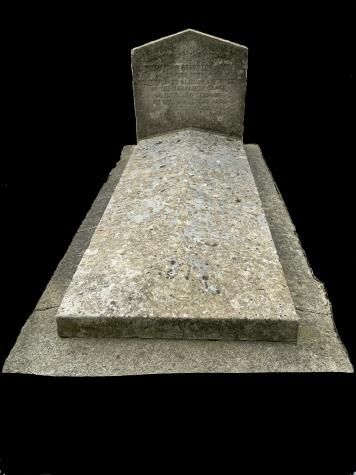
The Story of St Audoen’s church,                                    By 1310, St Audoen’s Church was settled and prosperous. Donations
     the longest serving parish church in Dublin.                              continued to flood into the parish and these funded a new north chancel.
Stroll along Dublin’s High Street on Sunday morning and listen to the          Church rituals were becoming increasingly elaborate. By moving the altar
bells of St Audoen’s. You will be listening to the same bells that have        into the new north chancel, they maintained a sense of distance between
peeled in St Audoen's since 1423.                                              the clergy and the congregation. This also increased the dignity and
                                                                               sense of mystery of the ceremonies. Burial within the church was popular
A new Church for a new Norman colony                                           with wealthier parishioners.
St Audoen’s church was built in 1190, just as the Norman colony in             Famine, invasion and plague
Dublin was established. King Henry II had arrived in Dublin less than 20
years earlier and his descendants would go on to rule Ireland for the next     But the church was also facing into extremely challenging times. In 1314,
800 years. Henry II granted Dublin to the men of Bristol with the              famine struck. In 1317, facing the threat of the Scottish Bruce invasion, the
instruction that they establish a colony as if this were unoccupied land.      western suburbs of the city were set alight, fires that must have felt very
They built St Audoen’s and named the church after St Ouen, a French            close to St Audoen’s. But the biggest challenge came in
saint that had a large following in the Norman world.                          1348, when plague arrived on a boat from France. Over
                                                                               2 years, it killed half the population of Dublin. Priests
St Audoen’s Church brings the new colony together                              visiting the sick soon followed parishioners into the
Within 70 years of the founding of St Audoen’s, the church had cemented        grave. Plague returned again in 1360, 1370, 1383,
its status as a core part of Dublin life. Many wealthy Dubliners built homes   1390 and 1398. Dublin struggled to recover, as
around the church, connecting the parish to the power base at Dublin           people lived their lives close to death.
Corporation and Dublin Castle. During that time, the north nave was
                                                                               St Anne’s Guild
constructed, doubling the size of the church. The population of the city
continued to grow, as did it’s dedication to St Audoen’s. Side chapels were    In the face of adversity, the parishioners of St Audoen’s came together to
installed to accommodate devotion to particular saints. Religion provided a    form St Anne’s Guild in 1430. They believed that before their souls could
system of shared beliefs that was important in building trust                  ascend to heaven, they spent time in purgatory so that they could be
between the founding Normans and the waves of new arrivals                     purified. Masses sung or said for people after death could speed up this
in the following years as the colony expanded. Dublin                          journey through purgatory and into heaven. Supported
continued to grow under the watchful eye of Dublin Castle.                     by a Royal Charter, the guild accepted donations and
The walls were fortified further and St Audoen’s Arch was                      accumulated a substantial portfolio of properties.
completed by 1240, allowing merchants to access their                          Income from these properties funded six chaplains and
warehouses at the quays.                                                       six altars within St Audoen’s. Sir Robert Dowdall, a
                                                                               knight, gave a gift of 100 marks (about £66) to be
The Guilds of Dublin
                                                                               invested and the income used to support two priests
St Audoen’s also had strong links to the guilds in Dublin and many guild       who were to pray for him after his death. He believed      St Anne’s Guild Seal
members donated generously to the church. The Tanners Guild met in the         that these prayers would speed his journey to heaven. Richard Talbot,
church tower and the Bakers Guild occupied an adjoining                        merchant, bestowed properties to St Anne’s Guild on condition that guild
building. The Merchants Guild was the most important                           chaplains on the Saturday before the feast of St Barnabas walk around
guild; its members held positions of power in the city                         Dublin ringing a bell and announcing the anniversary of his death and the
during the week and attended services in St Audoen’s on                        following day sing mass for his soul.
Sundays and holy days.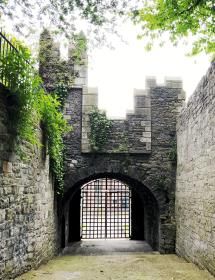
St Audoens managed to continue to serve both religious communities in
Although independent of St Audoen’s church, St Anne’s guild supported
                                                                               the church, thanks to its integration into the social and economic life of
the work of the parish. They provided grants for the support of priests
                                                                               the wealthy and elite in Dublin. However, by 1611, Catholic worship was
and the upkeep of the building. Every year on the 26th of July, the
                                                                               outlawed in the church. Catholics continued to meet in St Audoen’s
members of St Anne’s guild held a procession around St Audoen’s
                                                                               college on the site of the Catholic St Audoen’s church today.
church in full regalia and donated money to the local poor.
New bells for St Audoen’s                                                      The Reformation and St Anne’s Guild
                                                                               St Anne’s guild continued to play an important part in the life of St
Donations to St Audoen’s continued throughout the 15th century, as
                                                                               Audoen’s church. However, from the 1630s there was a concerted effort
Dublin began to look forward to better times. Almost every corner of the
                                                                               by the state religion to seize the assets of St Anne’s guild. There was
church was occupied by devotional altars to different saints. In
                                                                               suspicion that the guild was using its resources to promote and protect
1423, three new bells were cast for St Audoen’s church. These
                                                                               the Catholic church, especially as there existed a Papal Bull dating to
three bells still ring out every Sunday to this day, accompanied
                                                                               1569, saying that the resources of the Catholic lay guilds should be
by three additional bells. The bells were located in the newly
                                                                               applied only to Catholics. This attack on the guild failed, but it was not the
built western tower.
                                                                               last one. From 1690, as part of the penal laws, Catholics were forbidden
Portlester Chapel                                                              from becoming officers of the guild, but could remain as members. The
In 1482, Sir Roland FitzEustace, First Baron Portlester endowed a private      guild survived until at least 1740 and was one of the few religious
chapel at St Audoens and a new south chancel was built. At the time of         institutions that had both Catholic and Protestant members.
his donation to St Audoen’s church, he was granted the use of lands by         A church in decline
St Anne’s Guild. The religious and economic
                                                                               Throughout all these difficulties, St Audoen’s church
interests of the parishioners were closely linked. He also donated a life-
                                                                               continued as a parish church for the protestant Church
He donated a life-size cenotaph of himself and
                                                                               of Ireland parishioners. It remained a popular place for
his wife Margaret to lodge in the newly created
                                                                               burial. Fees for maintaining the graves within the
Portlester chapel, lest anyone forget his generosity after his death.
                                                                               church continued to be paid into the 20th century.
The Reformation divides the parish of St Audoen’s                              However, the church had begun a period of decline.
The rebellion of Silken Thomas, Lord Deputy of Ireland in 1534, was the        As the number of parishioners fell, the finances came
first sign that turbulent times lay ahead for St Audoen’s church. Following    under strain. In 1777, the east side of the chapel was
the capture of Silken Thomas, King Henry VIII began to take a closer           unroofed to reduce the cost of maintaining the
interest in the affairs of Ireland. Embroiled in disputes with the church in   building. In 1820, the south nave was also unroofed.
Rome, Henry VIII established the Church of England. In 1536, Henry VIII        Church of Ireland services are now restricted to the north nave.
began enforcing the Reformation in Ireland. While some in Ireland              A new chapter for St Audoen’s
adopted this new protestant religion, the vast majority of people remained
loyal to the pope in Rome. In the winter of 1580, Margaret Ball was carried    A new chapter in St Audoen’s history opened in 1882, when all but the
on a wooden palette to the dungeons of Dublin Castle. Her crime was that       north nave was handed over to the state. The south nave was re-roofed
she was a Catholic and refused to take the oath of Supremacy . Her             and now houses a heritage centre that tells the unique history of the
persecutor was her son Walter, recently converted to the protestant faith      longest serving parish church in Dublin. When you hear the church bells
and Lord Mayor of Dublin. Margaret died in the Dungeons three years            ringing out on Sunday morning, think of Margaret Bell, Richard Talbot and
later aged 69, willing to die for her Catholic faith. She is buried in St      Roland FitzEustace who shared that moment with you so many years ago.
Audoen's church.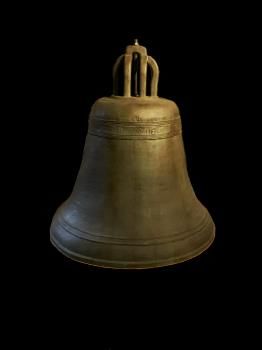
Cheat Sheet
                                                                  Impress your guide when you visit St Audoen’s church!

                                                                  Altar: a type of table used in church services
                                                                  Catholic: a member of the Roman Catholic Church, who continued to
                                                                  follow the Pope in Rome after the reformation
                                                                  Cenotaph: a monument to someone buried elsewhere
                                                                  Chancel: the part of the church containing the altar and seats for the
                                                                  clergy
                                                                  Chantry: an endowment for a priest to celebrate masses for the soul
                                                                  of the founder
                                                                  Clergy: a body of people ordained for religious duties in the Christian
                                                                  churches

                                                                  Endowed: to give or bequeath income or property for a purpose
                                                                  Guild: medieval association of people pursuing a common goal
                                                                  Nave: the central part of the church where the congregation sit. In
                                                                  medieval churches, it was separated from the chancel by a screen,
                                                                  step or rail.
                                                                  Papal Bull: a public decree issued by the pope in Rome

                                                                  Parish: a small administrative district having it’s own church and priest
                                                                  Parishioner: a person living in in a particular parish, usually a regular
                                                                  churchgoer
                                                                  Plague or Bubonic plague: a contagious bacterial disease usually
                                                                  causing fever, delirium and often causing death. There were no
                                                                  medical treatments for plague in medieval times.
                                                                  Protestant: a member of the Christian churches that separated from
                                                                  the Roman Catholic Church during the Reformation
                                                                  Purgatory: a place where the souls of the dead waited for purification
                                                                  before entering heaven
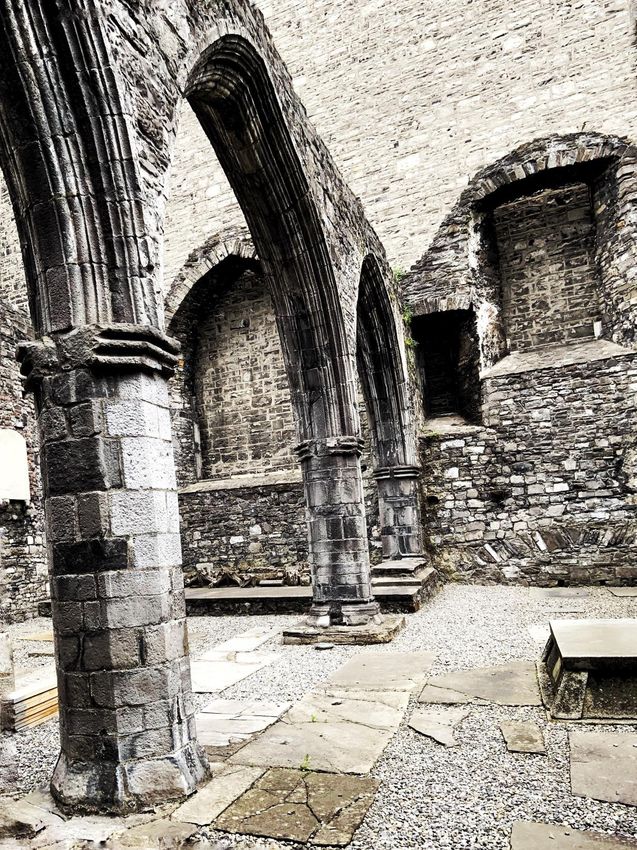
    Gothic arches of the unroofed chancel at St Audoen’s Church
                                                                  Reformation: a 16th century movement for the reform of the abuses in
Check out St Audoen’s opening hours:                              the Catholic Church that ended in the establishment of Protestant
                                                                  churches
https://heritageireland.ie/places-to-visit/st-audoens-church/
You can also read


