Solving challenges for 2021 and beyond - Precision COVID-19 Testing in the Vaccine Era: The Journal of ...
←
→
Page content transcription
If your browser does not render page correctly, please read the page content below
31

                                                                                                                                                                                 The Journal of Precision Medicine
Precision COVID-19 Testing
in the Vaccine Era:
Solving challenges
for 2021 and beyond
By Luis M. Lasalvia, MD, MIB and Reto Merges, Siemens Healthineers

Executive summary                                         Four key testing solutions to the current and    4. Encouraging leaders within organizations
Precision testing is critical for effective COVID-19   future challenges of COVID-19 are:                     to stay vigilant on the unknowns
management in the vaccine era. Despite the                                                                    associated with COVID-19, particularly the
impact of vaccines, COVID-19 testing remains           1. Developing and optimizing precision testing         impact of virus variants and the duration
important for a variety of reasons, including             programs, complementing the strengths of            of immunity, both vaccine-generated
limited availability of vaccines in various               COVID-19 tests                                      and natural
countries and regions; vaccine refusal, delay, or      2. Developing a scalable, team-based testing
hesitation; the potential emergence of vaccine-           infrastructure to provide timely access,         By taking these steps, healthcare organizations
resistant variants; and the unknown duration of           processing, and communication of results         can meet the evolving demands of the
infection and vaccine-conferred immunity in            3. Tailoring precision testing protocols for        pandemic and protect the health of
different populations.                                    specific populations                             their communities.
@journprecmed                                                                                             Journal of Precision Medicine  |  Volume 7  |  Issue 2  |  June 2021
A91MK-9646-A1-7600

                        Expanding
                        precision
                        medicine

                        We believe that medicine will become more precise. However,              sources, adding genomics and radiomics enables a holistic
                        medicine today is generally based on a “one-size-fits-all” practice,     understanding of the individual. These unique characteristics steer
                        and where targeted therapies are possible, it is impractical to scale.   the personalization of treatment. A precise understanding
                                                                                                 of a patient’s condition is the most effective approach to deliver
                        The goal of expanding precision medicine is to provide the               outcomes favorable to all stakeholders.
                        right treatment at the right time for every patient. Tailoring
                        treatment starts with a highly-specific diagnosis without
                        unwarranted variation. Based on data integrated from existing            siemens-healthineers.com/precision-medicine

                     Journal of Precision Medicine  |  Volume 7  |  Issue 2  |  June 2021                                                      thejournalofprecisionmedicine.com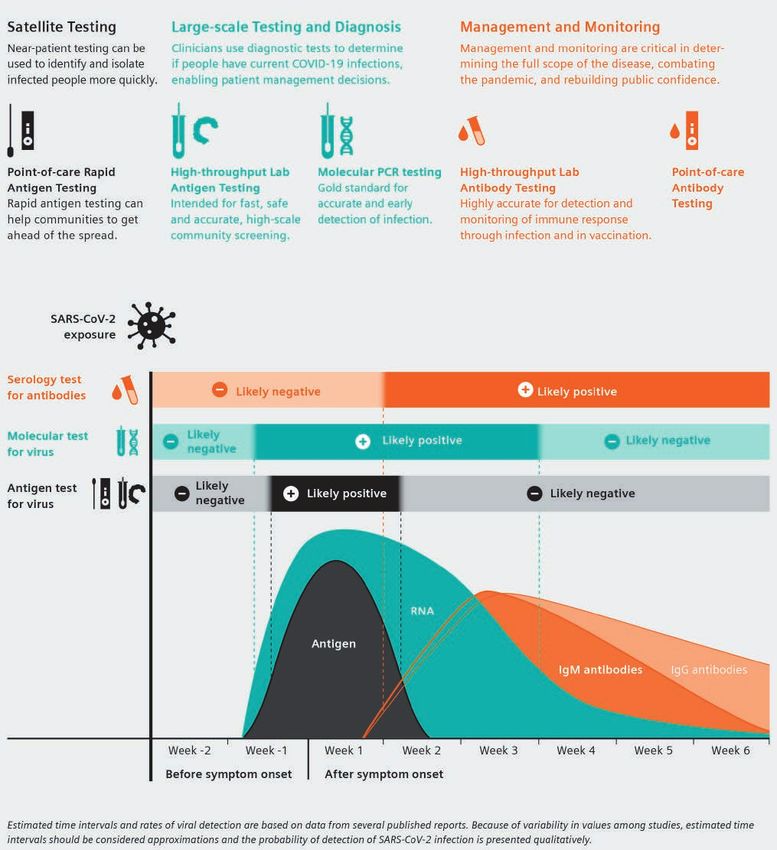
The ongoing impact of COVID-19 on
healthcare organizations
While the advent of effective vaccines has been
a game changer, it does not mean that testing
programs are no longer needed. In this paper, we
will examine four current and future COVID-19
testing challenges and solutions to overcome each
one of them. Applying testing solutions to best
effect requires the application of principles of
precision medicine – in this case, getting the right
test to the right person at the right time.

                                                                                                                                                                                          33

                                                                                                                                                                                         The Journal of Precision Medicine
Challenge 1: Accurate, timely diagnosis
COVID-19 infections will continue to occur, and
the disease may become an endemic or seasonal
infection, warranting precision testing programs
for the foreseeable future.
   Testing saves lives, both directly and indirectly.1
Timely diagnostic testing information enables both
appropriate treatment of infected patients, and the
overall protection of the community.

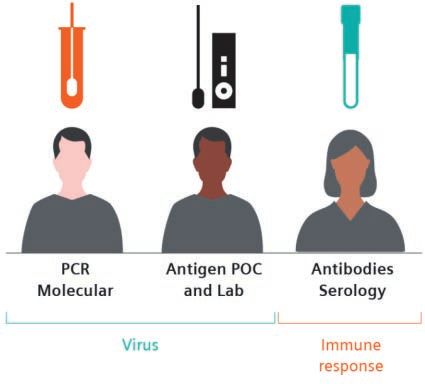
                                                         Figure 1: Complementary roles of PCR, antigen, and antibody testing2

                                                         option for early detection. However, it is possible to    points marking the duration and magnitude of
                                                         be infected with SARS-CoV-2 but not have enough           immunity after infection or vaccination.
                                                         virus to be detected, and the test comes with                Additional tests, including home-based tests,
                                                         stringent handling and processing requirements.           saliva tests, and others that are in development,
                                                            Antigen tests can quickly screen for potentially       may play important roles in the future.
                                                         infectious individuals at point-of-care and central
                                                         laboratory settings by detecting viral proteins.
                                                         They generally require high viral loads to detect
Solution 1: Precision programs to                        infection.3
maximize the impact of testing                              Point-of-care rapid antigen testing does not
There are several COVID-19 tests now available,          require laboratory processing and can deliver
with a wide variety of use cases. When deployed          results in 15 -30 minutes. For addressing a larger
with precision, these tests increase our                 number of patients within a short amount of time,
understanding of the pandemic and shape                  laboratory-based antigen tests offer a way to rapidly
our response to it on a local, regional, and             scale up COVID-19 testing capabilities using
international level.                                     high-throughput analyzers capable of generating
   Each test contributes to a more complete, precise     hundreds of results per hour.
                                                                                                                   Challenge 2. Complex logistics around
picture of COVID-19 in individual patients and              Antibody testing can track community
                                                                                                                   access and supply chains
the dynamics of the pandemic in the community            transmission and previous infection but are not
at large.                                                valid for diagnosing current infection. In addition,      The arsenal of tests described above is only valuable
   PCR testing is highly accurate and is the best        antibody titer levels may prove to be useful data         if healthcare professionals and populations have
@journprecmed                                                                                                     Journal of Precision Medicine  |  Volume 7  |  Issue 2  |  June 2021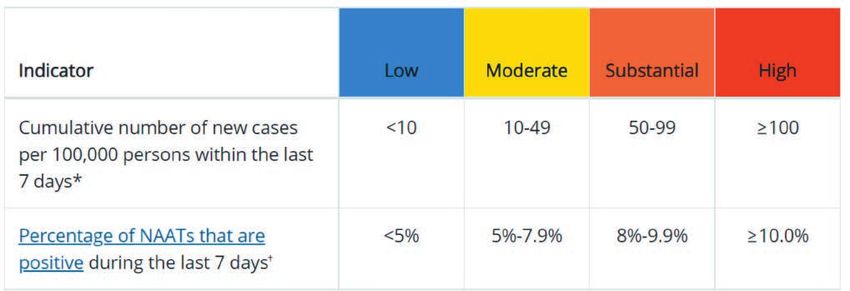
timely access to accurate test results. In the U.S.,                      Point-of-care rapid antigen tests: Communities       Beyond these individual aspects, community
                                    the COVID States Project showed that testing                           that do not have the resources for many PCR or          prevalence is another key factor to consider.
                                    infrastructure can be compromised for several                          lab-based tests are using point-of-care antigen tests   Communities’ positivity rates can be categorized
                                    reasons. Restricted availability of tests, lab testing                 to supplement their testing capacity.                   as indicated in Figure 2.7
                                    capacity, reagents, personal protective equipment
                                    (PPE), as well as limited personnel readiness
                                    all contribute.4

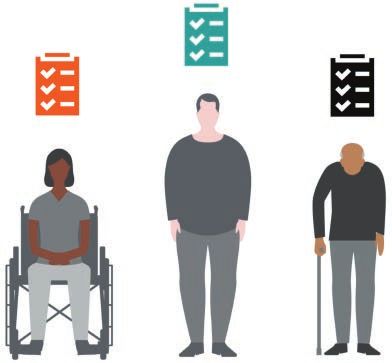
                                                                                                           Challenge 3: Different subpopulations
                                                                                                           require different testing protocols                     Challenge 4: The unknowns: mutations,
                                    Solution 2: Develop and optimize team-                                                                                         durability of immunity, and more
                                                                                                           Healthcare personnel, teachers, essential workers,
 34                                 based and scalable testing infrastructure
                                                                                                           plasma donors and immunocompromised people,             Clinically significant SARS-CoV-2 variants
                                    Infrastructure, team-based work, and logistics                         as well as racial and ethnic minority groups, present   continue to emerge. Variants first identified in the
The Journal of Precision Medicine

                                    related to testing for COVID-19 have improved                          varied circumstances that should be addressed.6         UK (B.1.1.7; Alpha), South Africa (B.1.351; Beta),
                                    dramatically from the situations that characterized                    The specific characteristics of these populations       Brazil (P.1; Gamma), and India (B.1.617; Delta,
                                    the early pandemic response in many nations.                           call for customizable approaches to maximize the        Kappa), as well as others that could potentially
                                    But healthcare executives must not let down                            impact of available tests.                              emerge, may be more infectious and/or cause more
                                    their guard.                                                                                                                   severe disease than earlier viral strains.8
                                        Since the emergence of the pandemic, a few ways
                                    of “stretching” testing resources – especially PCR
                                    resources – have emerged:
                                        Pooled PCR testing: Samples from several
                                    individuals can be pooled and tested to determine
                                    whether any of them show presence of viral
                                    material. The individual test samples from a
                                    positive pool can then be run separately to
                                    identify the people infected. This method is not
                                    appropriate when incidence/positivity is high, but
                                    it can dramatically increase the speed and reach of
                                    screening in lower-prevalence populations.5                            Solution 3: Create precision testing
                                        Lab-based antigen tests: Communities can                           protocols for specific populations
                                    rapidly scale up their COVID-19 testing capabilities                   Clinical presentation, risk of exposure and access
                                    by leveraging lab-based analyzers that can generate                    to healthcare are just some of the necessary            Solution 4: Prepare to face the unknown
                                    hundreds of results per hour.                                          considerations when developing specific protocols.      Every healthcare institution will face these
                                                                                                                                                                   challenges in the coming years. Precision testing
                                                                                                                                                                   plays a central role in preparing to manage
                                                                                                                                                                   the unknowns.

                                                                                                                                                                   Assessing immunity through testing
                                                                                                                                                                   There is no definitive evidence about the extent
                                                                                                                                                                   or duration of antibody-mediated immunity.
                                                                                                                                                                   Ongoing research, it is hoped, will quantify
                                                                                                                                                                   correlations between antibody titers and immunity
                                                                                                                                                                   after infection or vaccination.

                                                                                                                                                                    The Joint Research Centre (EU) and CDC (U.S.)
                                                                                                                                                                    are evaluating whether concentrations of specific
                                                                                                                                                                    antibodies in the bloodstream can help establish a
                                                                                                                                                                    clinical threshold for COVID-19 immunity.
                                    Figure 2: CDC community indicators
                                    Journal of Precision Medicine  |  Volume 7  |  Issue 2  |  June 2021                                                                                  thejournalofprecisionmedicine.com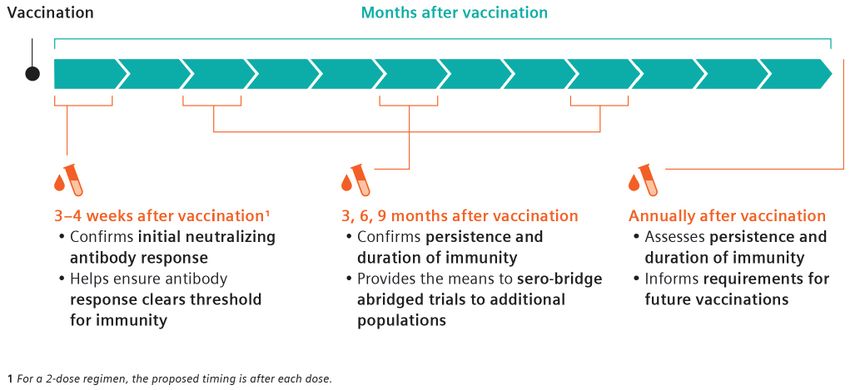
Luis M. Lasalvia, MD, MIB
Vice President and Global Medical
Officer, Siemens Healthineers
Dr. Luis Lasalvia has participated
in about 500 events and
conferences around the world as
key-note speaker, panelist, and
moderator. He has submitted
multiple patents in Europe and the U.S. and authored
• Confirms initial neutralizing • Confirms persistence and • Assesses persistence and more than 50 papers and articles in peer-reviewed
antibody response duration of likely immunity duration of immunity journals and other prestigious publications.
•H elps ensure antibody • Provides the means to sero-bridge • Informs requirements for Luis has led numerous teams in innovation and
response clears threshold abridged trials to additional future vaccinations commercialization, in several clinical fields. He has
for likely immunity populations developed new ventures and partnerships, advised
start-ups, and led more than 30 large programs in the
U.S. as well as several countries in Europe.
Figure 3: The above schematic describes potential uses of antibody testing following vaccination, especially for Reto Merges
assessing duration of immunity in various populations as part of planning for long-term vaccine booster needs.
Effective implementation of this pathway into clinical practice will require the establishment of a recognized Global Head, Expanding Precision
threshold of immunity and the validation of antibody tests for these purposes. Medicine, Siemens Healthineers
With more than 10 years
of leadership experience in
healthcare marketing, Reto 35
Efficacy studies and serological surveys will guide Four solutions for the testing challenges posed Merges has a strong track record
large-scale strategic decisions on managing the by COVID-19 are: in building effective teams for
The Journal of Precision Medicine
pandemic in the coming years. clinical and innovation marketing. In addition, he
has four years of experience in China, ramping up
1. Develop and optimize precision testing research collaborations in China and South Korea.
Identifying emerging viral variants programs, complementing the strengths of He holds a degree in electrical engineering and
Thousands of SARS-CoV-2 mutations have COVID-19 tests information technology from the Karlsruhe Institute
of Technology in Germany and has studied at the
been identified. Some variants may be resistant 2. Develop a team-based approach and scalable Nanjing Normal University in China. His scientific
to antibodies associated with previous infection infrastructure to provide timely access to background is in the field of medical imaging,
or current vaccines; others may reduce the processing of tests, and communication where he has authored many publications and
holds multiple patents.
effectiveness of antibody-based treatments or the of results
sensitivity of existing tests. Tests that target multiple 3. Tailor precision testing protocols to
and/or highly conserved regions of the virus would specific populations
be better able to identify new variants. 4. Encourage organizations to be vigilant
Constant vigilance and ongoing adaptation regarding the unknowns associated with
of precision testing programs to the evolving COVID-19, particularly the impact of
dynamics of COVID-19 are at the foundation of virus variants and the duration of vaccine-
effective management throughout the pandemic generated immunity
vaccine era.
While we have learned much about this evolving
Conclusions pandemic and this virus, there is still more to
COVID-19 cases, hospitalizations and deaths learn. Testing programs that continue to meet
are expected to drop sharply as countries roll out clinical, organizational, social, and evolving
vaccinations. Testing programs must evolve to meet technological needs are, along with vaccines,
changing conditions and ensure that we capitalize the cornerstones of executive management
on our forward progress. of the COVID-19 pandemic. J PM o
References
1. NIH National Institute on Aging. Why COVID-19 testing is and Surveillance Testing. Updated October 23, 2020. https://www.
the key to getting back to normal. September 4, 2020. cdc.gov/coronavirus/2019-ncov/lab/pooling-procedures.html
https://www.nia.nih.gov/news/why-covid-19-testing-key-getting- 6. Centers for Disease Control and Prevention.
back-normal Accessed June 14, 2021 Health Equity Considerations and Racial and Ethnic
2. Sethuraman N, Jeremiah SS, Ryo A. Interpreting Diagnostic Tests Minority Groups. Updated February 12, 2021.
for SARS-CoV-2. JAMA. 2020 Jun 9;323(22):2249-2251. doi: https://www.cdc.gov/coronavirus/2019-ncov/community/health-
10.1001/jama.2020.8259. PMID: 32374370. equity/race-ethnicity.html Suggested reading
3. Guglielmi G. Rapid coronavirus tests: a guide for the perplexed. 7. Centers for Disease Control and Prevention. Examples of
Nature news feature. February 9, 2021. groups to prioritize for screening testing. https://www.cdc.gov/ • COVID-19 testing in the vaccine era
https://www.nature.com/articles/d41586-021-00332-4 Accessed coronavirus/2019-ncov/hcp/testing-overview.html. Updated June • Precision diagnosis in the COVID-19 era and beyond
June 14, 2021 17, 2021 • Moving toward precision in managing pandemics:
4. The COVID States Project. Report #33: Update on COVID-19 test 8. Centers for Disease Control and Prevention. SARS-CoV-2 Five critical domains for success in public health
turnaround times across the country. January 2021. Variant Classifications and Definitions https://www.cdc.gov/ • SARS-CoV-2 Serology Testing in the Setting of Vaccination
5. Centers for Disease Control and Prevention. Interim Guidance for coronavirus/2019-ncov/variants/variant-info.html. Updated
Use of Pooling Procedures in SARS-CoV-2 Diagnostic, Screening, June 17, 2021 Find out more at: siemens-healthineers.com/insights
@journprecmed Journal of Precision Medicine | Volume 7 | Issue 2 | June 2021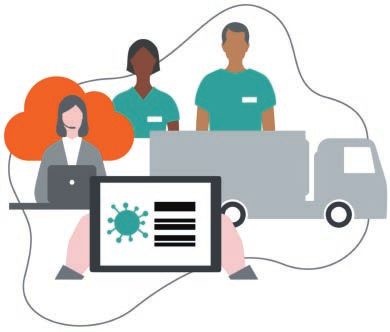
You can also read


