South Auckland Middle School - For boys and girls in Years 7-10 PROSPECTUS
←
→
Page content transcription
If your browser does not render page correctly, please read the page content below
PROSPECTUS

South Auckland Middle School
     ForboysandgirlsinYears 7-10

             Pathway to Opportunity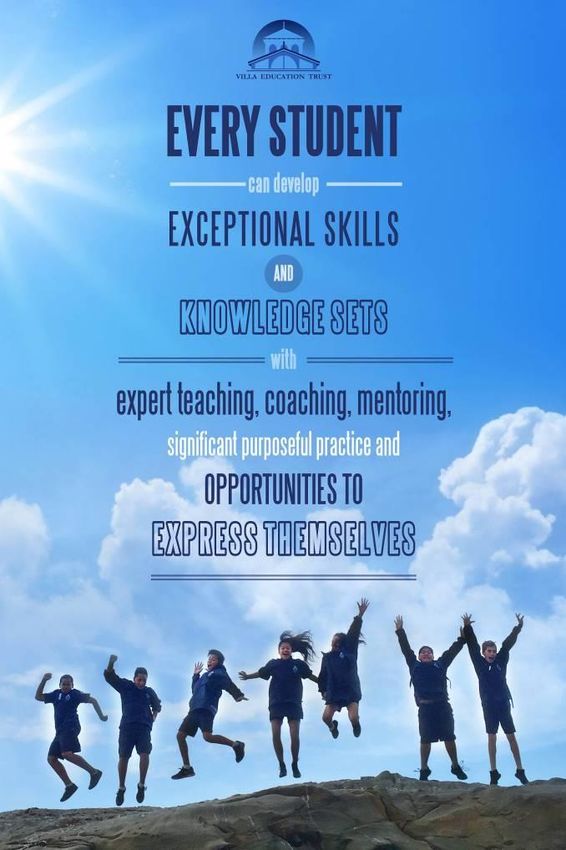
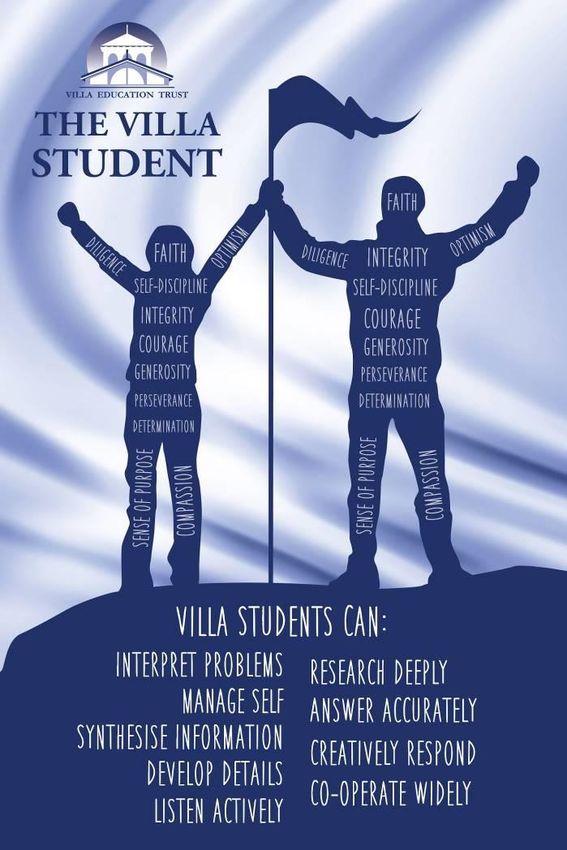
Villa Education: A Model for the 21st Century

Our Story

“For a long time, I had the vision of providing the very best possible education for children by
combining the positive aspects of current schooling with outstanding teaching/learning
techniques, an improved curriculum model, an innovative day structure and a personal and
supportive learning environment.”

                                    Alwyn Poole B.B.S, M.Ed.(Hons), Dip.Tchg, PG.Dip.Spt.Mgmt

South Auckland Middle School (SAMS) opened in Term 1 of 2014. It is a co-educational, small scale
(total roll 180), middle school (Years 7 to 10), located at 198 Mahia Road, Manurewa.

Most schools are based on a 19th Century model and build innovations on old foundations. The Villa
Education Trust model was created to suit students learning in the 21st Century and brings an ideal
means of teaching and learning to the information age. The school has a maximum roll of 180
students. The programme involves all students in fantastic learning experiences and caters for all
intelligence traits and learning styles. Academic standards are high and expectations of the students
are both demanding and fully supported. Teaching staff are given minimal administrative tasks as their
prime focus is to teach to the best of their ability.

The aims of South Auckland Middle School are:
   •   To provide a window of opportunity for outstanding learning for students in Years 7 to 10.
   •   To play a significant part in preparing students for full and effective participation in their
       future academic, cultural, sporting, social and working lives.
   •   To provide a learning environment that is thorough, innovative and able to be applied
       to the best advantage to each student through individualized education.

                                   Our Vision Statement is:

             To allow young people to develop and learn so as to give them a base
                 for excellence in all spheres of life through effective teaching,
            quality facilities, an optimal day structure and an integrated curriculum.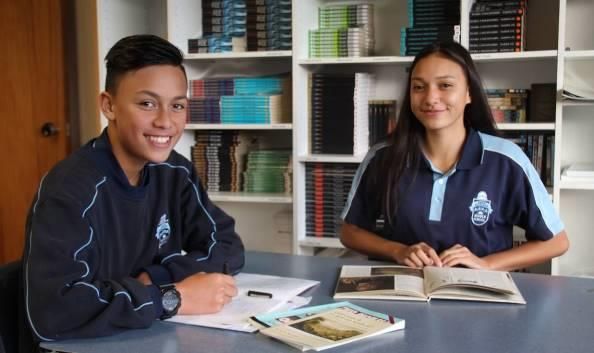
Holistic Education and Support
The Core Values of the school are:

•   Excellence in learning.
•   Cooperation among students, families and the community.
•   Building of personal character through applied Christian values.
•   A strong emphasis on thinking skills and students understanding how they think and learn.

Special features of South Auckland Middle School:

• A small school environment.
• A student:teacher ratio of no more than 15:1.
• An Integrated Project Based Curriculum.
• Individualised education for each student.
• A modified day structure to allow excellent learning outside of the classroom and the use of
  community resources.
• Excellent learning resources - including up to date and thoughtfully used ICT.

About SAMS:
South Auckland Middle School is based
on a middle school age group and uses
an Integrated Project Based Curriculum
designed by the Villa Education Trust.
The school reflects the 8 Essential
Learning Areas as stated in the NZ
curriculum - overlaid by a clear Christian
philosophy and Christian values. The
team of expert educators is led by
Principal Wendy Grieg, who is also the
Academic Manager of Totara Villa.

Parents have an integral part in school
life and are kept informed of their child’s
progress. Staff know each child’s
educational needs and ensure they are
met. The child’s interest areas are
affirmed and they have the opportunity
to significantly develop the capacity to
direct their own learning.

South Auckland Middle School aims to develop the individual talents of every one of its students and
to teach them to relate the experience to, and learn through, the everyday world. We take full
advantage of the excellent learning resources in the community. Parents are invited to take an interest
in all aspects of the schools programmes. They are welcome to take part in both the morning and the
afternoon programmes. Please discuss any special areas of interest with a staff member.
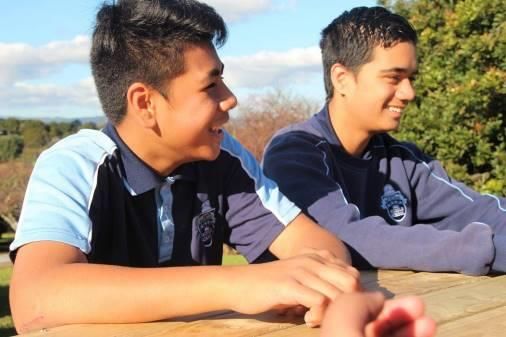
Pathway to Opportunity

Because of our specially-designed curriculum, every South Auckland Middle School
                                  graduate will have:

                  had the opportunity to develop their potential in a wide range of
                  academic, physical, cultural and social areas.

                       been in a continuously stimulating learning environment.

                      experienced the very best teaching, learning and thinking
                      techniques and the best use of ICT skills and
                      opportunities.

                         studied in an environment permeated with a Christian
                         values and philosophy that genuinely facilitates the
                         child’s development.

                      followed an integrated, project based curriculum that has
                      encompassed the New Zealand Curriculum guidelines and
                      developed the Ministry of Education’s essential skills
                      framework.

    “Students leaving South Auckland Middle School will have developed outstanding
       learning and thinking skills to take into their final years of secondary school.
       They will be exceptionally prepared to excel at NCEA qualifications or other
      examination systems, while also having a love of learning and will hold values
                      that will make them useful in their generation.”

                                     Alwyn Poole, Villa Education Trust Academic Advisor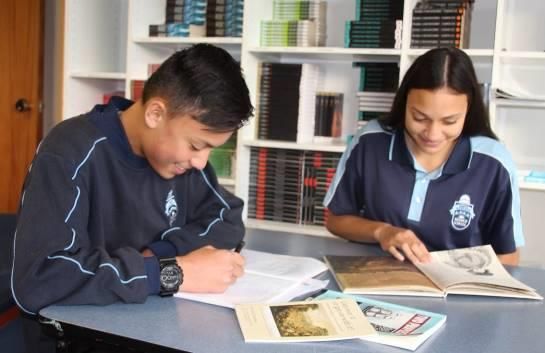
Location and Facilities
South Auckland Middle School is situated at 198
Mahia Road, Manurewa. The building is an
ideal facility for this type of school, housing
science rooms, art/technology suites, ample
teaching spaces, ICT (desktops, laptops, data
projectors, printers, cameras), and areas set aside
for quiet, individual and small group learning. There
is also ample ‘green’ space for morning tea and
lunch breaks. Students are separated into three
Villas (Totara, Manuka and Rata), with a maximum
of 60 in each, overseen by an Academic Manager.

                                                    In the afternoons, the local area becomes the
                                                    school. Students visit and use the parks and
                                                    sports facilities nearby, as well as local
                                                    businesses, libraries, museums, art galleries etc.
                                                    Through proper use of these resources and the
                                                    Internet, the students have the opportunity to
                                                    learn in an environment without walls.

Information and Computer Technology (ICT)

 The school is equipped with up-to-date computer
 technology and other ICT equipment. There is
 intensive ICT skill development and intelligent use
 of the Internet, including the development of
 personal filtering skills to help the students
 distinguish useful and credible information from
 the myriad of trivia.

 Each student will have their own school e-mail
 address to help them communicate both within
 and outside of the school. ICT is used to foster
 creativity, allow access to a vast range of
 information, develop problem-solving skills,
 prepare students for 21st Century life, increase
 enthusiasm, improve research skills, develop
 communication skills and help students work
 cooperatively and internationally. In summary, it is
 used to broaden the scope and diversity of
 learning.
Day & Class Structure
Day and Class Structure

The timetable is designed to allow students to maximise their learning through a number of contexts
and experiences. It also allows parents to have effective input and be fully involved in the education of
their children.

The school day is from 8.30am to 12.50pm, within classes and work groups, to cover the curriculum.
Children work at their own level and with others of like ability. During this time, students are set a variety of
tasks. Expectations of their input are high with little down-time.
A significant amount of the work is taught to ensure that the New Zealand Curriculum is covered in
full. This includes Mathematics, Science, English, Social Studies and Technology. This teaching is
done within the context of the projects that the year groups are currently working through. Students
also have a significant amount of time to direct their own work as individuals and in groups. Research,
thinking, and presenting skills are developed in-depth.
In the afternoons (1.30-3.15pm), year group classes rotate through various activities which include:
Art, Sport (twice a week), Community Service and Community Learning, and Music.

Students primarily work in their year groups during the morning sessions. We sometimes make
changes for individuals to provide a better match to project, interest or need. The year groupings are
the basis for the organisation of the afternoon programmes. Year 10 students are taught in a
manner that keeps in mind preparation for their transition into the final years of schooling. Students
are well prepared for entry into year 11 at a secondary school of their choice and have an excellent base
upon which to excel in the new qualifications framework or overseas administered exams.

Personal Development
The middle years, aged 10
– 15, are a crucial
developmental period in the
lives of young people.
SAMS is a developmental
window as well as a
learning window. It provides
an    environment        where
children can have their
personal,            emotional,
academic, physical, social
and spiritual needs met in a
very supportive manner.
The aim of the middle
school is to give students
an opportunity to be
children for a little longer; to
give them more time to
explore their own interests and dreams. A large amount of energy and commitment is required from
each student. They will develop personally and academically, improve their cooperative learning skills
as well as love learning at South Auckland Middle School and beyond.
Reporting and Assessment
                                                                    Comprehensive formal reports
                                                                    are issued after the end of Term
                                                                    2 and at the end of Term 4. Each
                                                                    project receives a full marking
                                                                    schedule aimed at improving the
                                                                    student’s academic schooling and
                                                                    there is constant verbal and/or
                                                                    written feedback to parents and
                                                                    students. Parents are welcome to
                                                                    request feedback when they are in
                                                                    school and to ask for more formal
                                                                    appointments when they see the
                                                                    need. Emails are welcome and will
                                                                    be responded to promptly. Parents
                                                                    are also welcome to call in and
                                                                    observe part of their child’s class.
At the end of every second project (i.e. the end of each term), students will also be tested in
assessments based on the traditional subject divisions. This is to allow them and their parents/care-
givers to be sure that they are being advantaged by the of learning we use and to give them a
comparison against normal New Zealand school criteria. Some of the projects also require
s t u d e n t s to make clear subject divisions within the aspects they are studying.

We participate in the ICAS Mathematics, English and Science competitions and others that are relevant
and worth the experience.

National Standards Work
Schools are required to report twice a year on how Year 7 and 8 students are performing in relation to
National Standards in Mathematics, Reading and Writing. Reports must include:
   • The student’s current learning goals
   • The student’s achievement progress in relation to the National Standards
   • What the school will do to support the students learning
   • What parents, family and whanau can do to support their child’s learning.

We use E-asTTle, ongoing class tests, teacher observations and discussions with students to
determine a student’s understanding. Teachers make an overall teacher judgement as to where the
student is working in relation to the standards. National Standards reports will be issued with the
child’s IBP document at the end of Term 1 and Term 3.

Homework
There will be varying amounts of homework during the school year, most of which will be student-
driven. Any set homework is expected to be completed on time and to the best of the student’s ability.
Behaviour Code
This Code will be explained at school assemblies and at parent interviews and will be displayed on
posters and in documentation throughout the school. It will also be fully explained in the classroom.

   • No student is to disrupt another student’s learning.
   • If removed from class, the student will work at a desk in the office area for the
     remainder of that class.
   • If the inappropriate behaviour continues, the student may be withdrawn from the afternoon
     programme for a defined period of time. This can be a specific afternoon class or a number of
     consecutive classes.

       Disciplinary Steps

       1) Talk to student           >            Restart              >             Action

       2) Talk to student           >            Restart              >             Action

       3) Meet Senior Staff Committee

Rules

The Trust Board sets rules to ensure that all students are treated fairly, have respect for each other
and for property. Rules may be changed from time to time as the Board sees fit. Given the location
of the school and our community involvement, it is important the rules are kept.

    Attendance – students must attend school each scheduled day. When there is sickness or
    another good reason, the school must be notified as soon as possible on that day. When students
    return to school, a written note is required.

    Inappropriate Items – the normal items that schools exclude are not to be brought to South
    Auckland Middle School (including gum, drugs, alcohol, cigarettes, energy drinks, fizzy drinks,
    inappropriate literature or electronic material).

    Internet Use – the Internet and e-mail facilities must not be misused in terms of sending or
    downloading inappropriate materials. All students/parents will be required to sign a standard
    Cybersafety agreement form.

    Off-Site Behaviour – When off-site during school hours, South Auckland Middle School
    students must wear their uniform well, treat all people with respect and obey all laws with
    regards to traffic.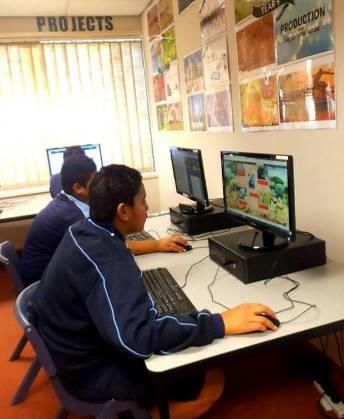
Rules
Term Dates 2018:

 Term 1: Wednesday 31st January - Friday 13th April
 Statutory Holidays: Tuesday 6th February (Waitangi Day), Friday 30th March (Good Friday), Monday 2nd
 April (Easter Monday), Tuesday 3rd April (Easter Tuesday).

 Term 2: Monday 30th April - Friday 6th July
 Statutory Holidays: Monday 4th June (Queen's Birthday)

 Term 3: Monday 23rd July - Friday 28th September
 No Statutory Holidays in Term 3

 Term 4: Monday 15th October - Friday 7th December
 Statutory Holidays: Monday 22nd October (Labour Day)
Integrated, Project Based Curriculum

What is an Integrated Curriculum?

An integrated curriculum treats knowledge as being seamless and interrelated. It is a means of
breaking down the artificial barriers between subjects as they have been traditionally taught. It is also
an effective way of broadening the possible topics that may be learned/investigated. Within the
school’s written curriculum, the staff will ensure that all areas of the Essential Learning Areas
(ELA’s) are covered at the appropriate levels.

What is a Project-Based Curriculum?

A project-based curriculum treats the investigation of a topic as the basis for learning. Students
complete eight projects during each school year. Within each topic, the staff identify the areas of
the national curriculum that need to be overtly taught within the ELA’s. Each year, the topics will
encompass the full ELA requirements for that level.

Within each set project, all of the Learning Areas are included and the students have the
opportunity to direct their own learning and work to a depth and breadth that is difficult to
achieve within a traditional structure. Their learning skills (e.g. goal setting, planning,
investigative research, presentation, computing, etc) are enhanced, as are their thinking skills
(e.g. metacognition, evaluation, synthesising information, etc).

Their basic academic skills (reading, writing, mathematics) are in no way ignored; instead, they are
leveraged on and used as a building block for in-depth work.

Project list:

       Year 7               Year 8                 Year 9               Year 10               Notes

    Architecture       The Human Circus       Flight and Space          Statistics           Individual

    Great Books         Narrative Poetry    New Zealand Writing       Shakespeare            Individual

   A Language &        Language of Music       Maori or Pacific    Advanced Language         Individual –
      Culture            or Movement        Island Language and        & Culture          language tuition
                                                   Culture                                  can continue.

       Plants            Human Beings               War                 Reactions            Individual

     An Artist or      An Ancient Culture       Archaeology         Film or Director or    Pairs/Threes
       An Era                                                             Genre

    Production &        Change through        Production of the     Business in Action    Mind-map based
  Inventions of the       Technology         Present and Future
        Past

   New Zealand:           The Oceans         A People or Country     Law and Culture         Individual
 Places and People                                or Time

      Animals           Great Scientists            Sport               Machines           Pairs/Threes
Individual Base Plans (I.B.P.s) and Essential Learning Areas
An I.B.P. is an Individual Base Plan. As well as working through the school’s curriculum, each
child will have their own programme, which identifies interests, strengths, areas needing
development, goals, and progress measurements. Developing the plans will be a negotiated
process between the child, staff and parents. Each child’s range of abilities will be recognised and
developed using the best learning theory and applications available under the knowledge that
intelligence is not a fixed entity, but able to be developed in each child.
The New Zealand Curriculum identifies 8 Essential Learning Areas - Language and Languages,
Mathematics, Science, Technology, Social Sciences, the Arts, and Physical Health and Well-
Being. South Auckland Middle School’s curriculum is based on these learning areas and the
National Curriculum Statements that are written from them.
Key Competencies
The New Zealand Curriculum specifies five groupings of key competencies to be developed by
all students across the whole curriculum during their schooling. The 5 key competencies listed
in the national curriculum are:
• Thinking
• Using language, symbols and texts
• Managing self
• Relating to others
• Participating and contributingMusic and Art As integral parts of the school culture, music and art have set afternoons dedicated to them respectively. Like all subject areas, students are able and encouraged to incorporate aspects of music and art into their project-based learning. There is a practical in-class programme involving Guitar and Keyboard Skills. This time can also be an opportunity for students to have private music tutoring. As in a normal school situation, this tutoring is at the parents’ expense – the difference is that the child does not have to be withdrawn from normal classroom time. Other options parents can seek to take up include speech and foreign language extension. For art, students are given the opportunity to present their material in varied and creative ways. This includes the study of artists and their work in their historical and social context and always involves practical Art projects where students explore a variety of art techniques including painting, printing, sculpting, photography and ceramics. Students then create works that link back to the theme of their current project. There is also a designated afternoon each week for each year group set aside for Art and a specialist teacher is employed to oversee that time and give guidance.
Sport and the Great Outdoors

 Development of sporting skills and good attitudes towards sports and physical activity is a
 key curriculum aim for the school. Part of our learning philosophy is that learning can
 happen anywhere and not just in the classroom. Each year group will have a total of 2
 sport afternoons each week, comprised of both health and fitness skills.

 During that time, parents are able to withdraw their children for specialised coaching in an
 area of choice. The school will compete in inter-school sports where the numbers
 required allow it. The school has also developed strong links to high-quality coaches and
 sporting providers.

 Where it is a stated interest for a child, sporting development will be included as a part of
 a student’s I.B.P.

 The school uniform is designed for outdoor use. A sports uniform is provided, but
 students will require trainers and a hat and sunscreen for the hotter months. In addition,
 a jacket is required for cooler weather.

Free schooling
South Auckland Middle School provides outstanding education for students – FREE OF CHARGE
 – there are no hidden costs or extras. We provide:

          Uniform                        Stationery                         Extras

  To provide an identity for        South Auckland Middle           We do not require or ask
  students and for                  School will provide             for donations, charge
  practicality for parents, a       stationery, textbooks           enrolment fees or ask for
  full school uniform is            and personal art                contributions for school
  provided FREE OF                  materials to all students       trips, technology, art,
  CHARGE to all students.           FREE OF CHARGE.                 sports and extra
  In addition, PE kit is                                            activities.
  provided for sports.
South Auckland Middle School Staff
At South Auckland Middle School, not only are our teaching and support staff highly qualified,
they are dedicated, enthusiastic about sharing knowledge and always on hand to support
students’ development in every way. With international experience and expertise, staff are able
to empathize with students of all cultures and backgrounds, as well as enhance intercultural and
interracial understanding.
Leadership Team:
Wendy Greig: BMus, Dip Tchg (Secondary) - Principal and Academic Manager
of Totara Villa, English Teacher
An experienced, professional and effective teacher and leader, Wendy believes in
developing learning environments that foster excellence and build positive
relationships. She has considerable experience in the implementation and
development of new and innovative pedagogical strategies that enhance learner
outcomes and success. She has been teaching in South Auckland for more than ten
years; Prior to becoming Principal of SAMS in 2014, Wendy was Head of Faculty -
Performing Arts at Alfriston College.
Rebecca Dow: BA, Dip Tchg (Secondary), MEd - Academic Manager of Manuka
Villa, Social Studies Teacher
Rebecca is an enthusiastic and innovative teacher. She believes that learning should
be relevant, challenging and exciting for students. To achieve this, she focuses on
building positive working relationships and uses a range of learning tools, including
technology and literacy strategies to ensure engagement. Rebecca has taught in both
New Zealand and Australia, and has experience catering for a wide range of student
abilities. She has most recently completed a master’s thesis, in which she focused on
the provision of holistic pastoral care for students.
Warren Cook: BA, Dip Tchg – Academic Manager of Rata Villa, Mathematics
Teacher
Warren trained and taught at several Northland schools before relocating to Auckland to
be involved in the ‘Inzone Education Foundation’. Warren’s vision for children and
learning is driven by his fundamental belief in maximising the wealth of opportunity
that surrounds us and the possibility of personal extension that comes from
life-long learning. Warren aims to inspire the youth/tamariki of today by enabling
them to uncover their personal strengths, talents and goals.
Community Liaison Manager: Filipo Levi - BA, MA, University of Otago:
A former Samoan Rugby Captain, Filipo's role is to build relationships between the school
and families as well as develop links into the local community. He ensures the day-to-day
welfare and family involvement of the children while at South Auckland Middle School and
also tracks and supports them through their Year 11 – 13 schools. "Part of my role is to
help year 7-10 Pasifika and Maori students achieve outcomes in school with the input and
support of their families and community groups. I am very passionate about Education and
seeing our students succeed in all aspects of their lives."Teaching Team:
Melvin Din:M.Sc Dip Tchg; Cert Adult Education – Science Teacher
Melvin is a Physics and Mathematics teacher with 40 years of teaching experience in
many countries and continents. Melvin has taught for 25 years in various schools
in South Auckland and has spent 2 years teaching in Samoa. Experience has taught
Melvin that many students learn better through hands on activities and applies this
in his teaching. Melvin also tries to integrate several learning areas into one project to
make learning more authentic and tangible. Melvin is actively interested in Gifted
and Talented education, participating regularly in forums.
Taylor Griffin: BMUS Tchg Sci – Technology, Science and Music Tutor
Taylor is a caring individual who is constantly looking for the best in every situation.
During his time at SAMS he has gained a greater understanding of how people learn and
apply the skills that are covered in class as well as facilitating the opportunity to build on
these experiences. Taylor has been a music tutor for many years and relishes the
opportunity to assist in the development of young minds.
Deanne Kathagen: BSocSc, Post Graduate Diploma (Secondary) - Social Studies
and Music Teacher
Deanne's passion and energy is a great addition to South Auckland Middle School.
She has a wide range of experience, in both teaching and producing musical theatre
productions and has worked in various roles at a number of schools.
Natasha Miller: BBUS, Grad Dip Arts, Grad Dip Tchg (Secondary) – Teacher
Natasha believes that solid relationships with students and their whanau are integral to
their success and development into the leaders of tomorrow. Natasha brings a
personalised approach to the English classroom so that each student can best reach their
full literacy potential. Natasha has taught extensively in the South Auckland area.
Stephanie Ray: BFA Dip Tchg - Art and Technology
Teacher
Stephanie believes students should gain the richest experience they can from school,
through stimulating Visual Arts and Design Technology programmes that facilitate creativity
and provoke imagination. Stephanie has worked as an art tutor and currently
runs a flourishing artistic practice. Stephanie taught at Mt Hobson Middle School for over
four years before moving to SAMS for the start of the 2017 academic year.Natashia Reddy: BSc - Science and Mathematics Teacher Natashia is a passionate and experienced teacher who has previously taught Science at a High School in Samoa for more than 8 years. She speaks fluent English and Native Samoan and brings a wealth of Pasifika knowledge to SAMS. Natashia is a working mum of five who has a love of all children and enjoys assisting them in reaching their full potential. Renee Ryan: BSW, Grad Dip Tchg (Secondary) - Social Studies Teacher An experienced teacher and mother of two teenage children, Renee recognises the importance of seeing students as individuals and of recognising and harnessing their diversity. Renee believes that as a teacher she must nurture and encourage a love of learning to assist students in realizing their potential and steer and assist them as they grow into well-informed adults. Prior to joining the teaching team at SAMS, Renee taught at Howick College. Mark Tahere: B.E. Tchg - Mathematics and Science Teacher Mark has a passion for working with young people and brings a wealth of 'hands on' experience to his role having managed boarding hostels for Auckland Grammar students and those attending Auckland University. That combined with his busy home life with three teenage sons has prepared him well for working with our Year 7-10 students at South Auckland Middle School! In his spare time, Mark enjoys sport and music. Chloe Thomas: BA, Grad Dip Tchg (Secondary) - English Teacher Chloe is an English and Spanish teacher who has taught a combination of both subjects at various schools in the wider Auckland region. She believes that effective teaching and learning happens through positive relationships in the classroom and open communication with whanau. Chloe likes lessons to be fresh, personalised, interesting and relevant to modern learners. She strives to employ a diverse range of strategies to make learning engaging and memorable. Allan Young: BFA, PG Dip Tchg - Art and Technology Teacher With a strong career background, combined with a genuine passion for student learning, development and achievement, Allan teaches Art and Technology at South Auckland Middle School. Living in South Auckland, he graduated from Elam School of Fine Arts. Allan was in the design industry doing production for print before going into teaching. He has been teaching Art, Design and Technology for eleven years at secondary schools and was the teacher in charge of the junior course in past schools. He was also the HOD of Art for the last two years in a South Auckland School. Allan enjoys working in Art and Technology with staff and students in South Auckland Middle School.
Natalia Young: Advcd Trade Cert Engineering, GDip Tchg (Secondary),
                  PGDipSpecTchg - Technology Teacher
                  Teaching and learning are driving forces for Natalia. Encouraging students to excel
                  and achieve their absolute best is what continues to keep her excited about teaching.
                  Natalia was the first woman in Australasia to qualify as an Engineer’s Patternmaker for
                  the metal casting and plastics industry. After four years teaching Technology in
                  secondary schools, she became a Dean and in 2005, Technology HOF at Mount Albert
                  Grammar School. Natalia has been actively involved in Curriculum Assessment at a
                  National level for Technology since 2003. She is interested in pastoral care of the
                  whole student body with views to future academic and career pathways.

Villa Education Trust Board Members:

       •
       •

       •   Rebecca Dow BA, Dip Tchg (Secondary), MEd
       •   Michael Sapolu LLB, BA
       •   Hayley Parsons B.Ed. Dip Tchg
       •   Karen Poole BBS
       •   Alwyn Poole BBS, Med (Hons), Dip Tchg, PG Dip Sport Mgmt
       •   Cameron Astill
Contact Information
Contact Information:
South Auckland Middle School
198 Mahia Road
Manurewa
Phone: 09 266-6695
Email: admin@southauckland.school.nz
Website: www.southauckland.school.nz
Facebook: South Auckland Middle SchoolYou can also read


