Sports Medicine Symposium Shoulder - Differential Diagnosis - John Johansen, MD Orthopedic One August 17,2019
←
→
Page content transcription
If your browser does not render page correctly, please read the page content below
Sports Medicine Symposium
Shoulder – Differential Diagnosis
          John Johansen, MD
            Orthopedic One
            August 17,2019
• Common acute injuries
  of the shoulder and
  elbow
• Chronic shoulder injuries
  in “athletes”
  –History
  –Physical exam
  –Differential diagnosis of
   shoulder

                               2
Common acute injuries - Case 1
• 25 year old basketball
  player has him arm
  grabbed mid game as
  he’s chasing a loose
  ball. Hears a pop as
  he falls to the ground.
  Sudden onset of pain
  and can’t move his
  arm
• Arm is fixed with the
  shoulder at about 20
  degrees of external
  rotation
                                             3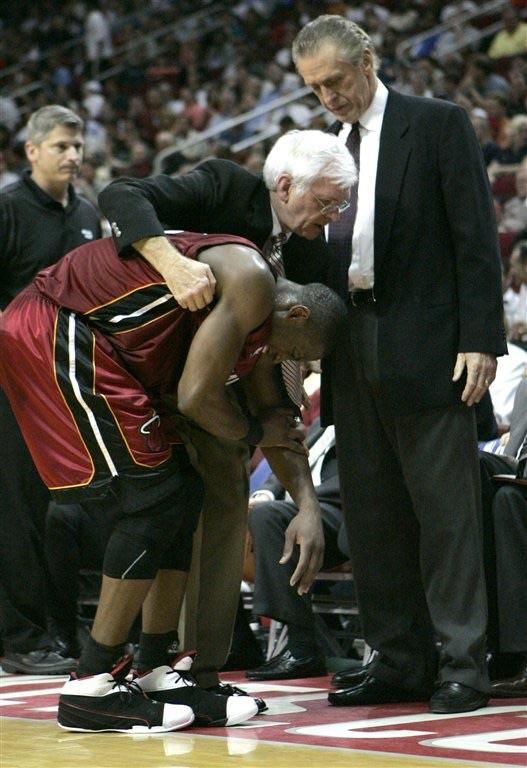
Shoulder dislocation
        • Immediate exam
           – Check position of the arm
           – Inspection
              • Look for change in contour
                of the shoulder
           – Neurovascular exam
              • Axillary nerve
        • X-ray
           – Would suggest X-ray prior to
             reduction
           – Evaluate for associated fracture
                                                4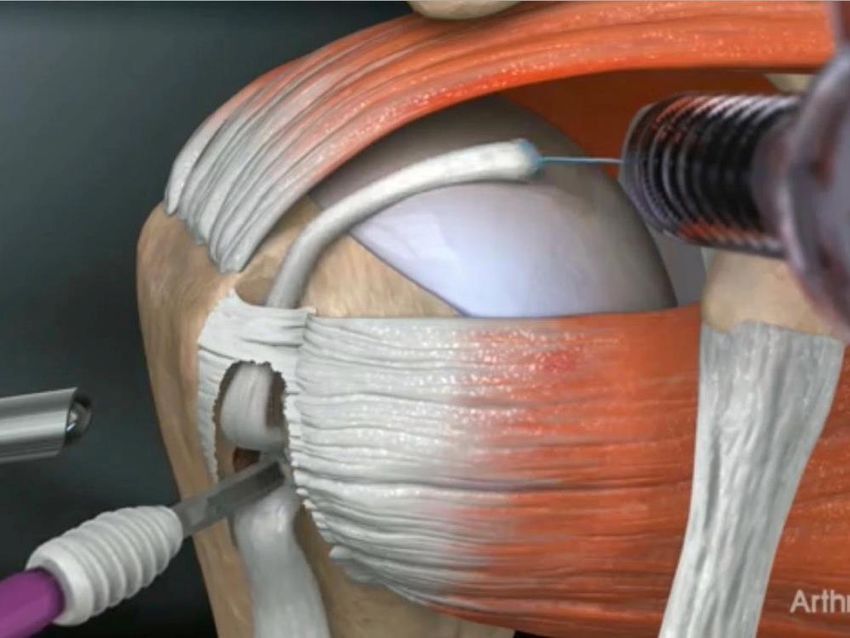
Immediate management - X ray

                               5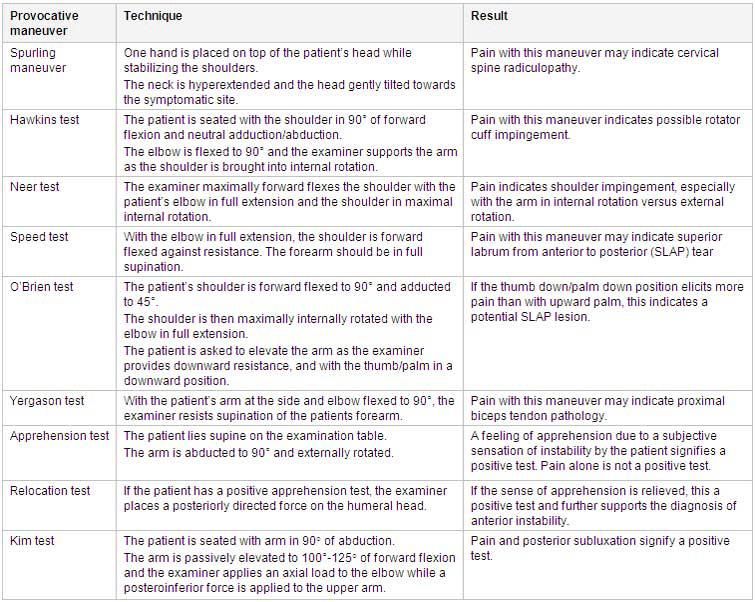
X- ray - Axillary view
• Confirms diagnosis of
  dislocation
• Confirms direction of
  dislocation
• Aids in identifying
  associated fractures
• Diagnosis should not be
  missed with combination of
  a true AP, scapular Y, and
  an axillary view of the
  shoulder
                                            6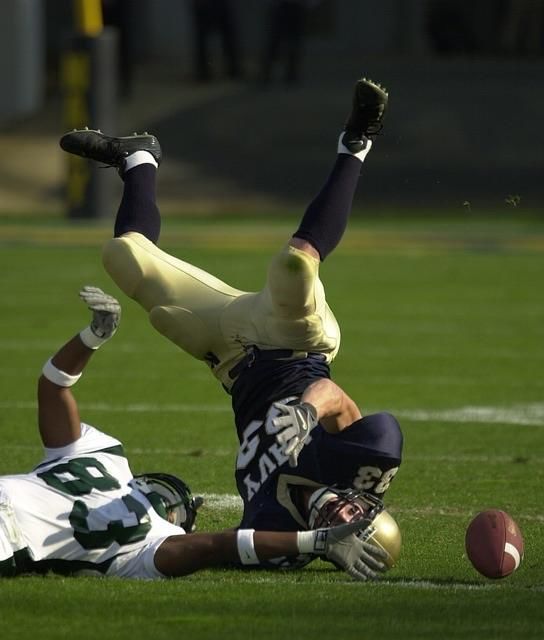
Immediate management
• Confirm diagnosis
  – r/o associated fractures
• Proceed to closed
  reduction
  – Local anesthetic
  – Conscious sedation
  – With adequate sedation
    should be fairly
    straightforward
• Lots of methods described
                                     7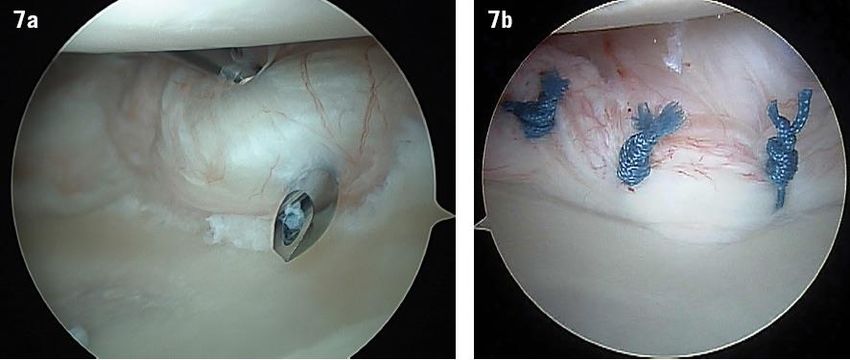
Shoulder dislocations
• Posterior
  –Associated w/ seizures
  –Athletics also though
  –Similar treatment to
   anterior
• Inferior
  –Luxatio erecta
  –Very rare
  –Severe soft tissue injury
                                           8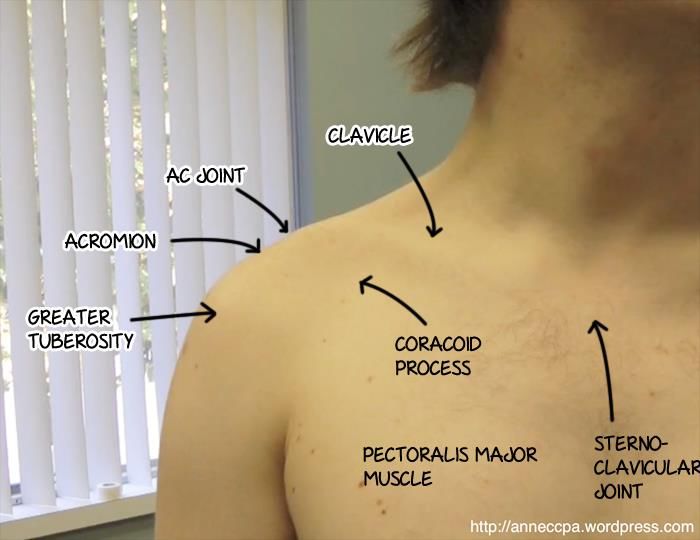
Traumatic Anterior Shoulder Dislocations
• >90% of shoulder dislocations
• Bimodal distribution
   – Age 15-30
   – Age >60
      • NV injuries
      • Rotator cuff tears
• Often sports related
   – Forced abduction/ER
      • Skiing
      • Basketball
      • Football
                                              9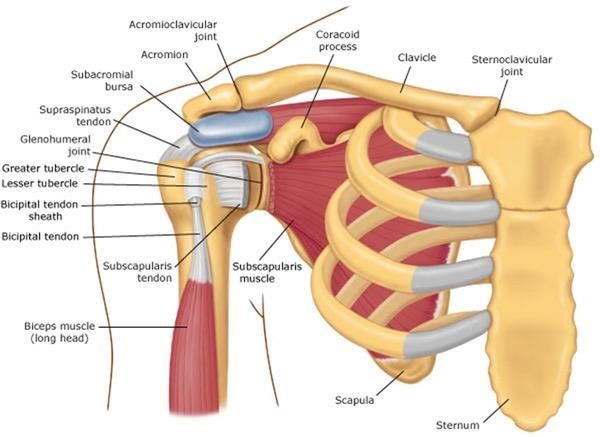
Associated Injuries
• Bankart lesion
  – “Essential lesion” ~95%
  – Anterior labral tear
  – Bony bankart
  – vs. HAGL lesion
• Hill Sachs lesion
  – Impaction fracture
  – Posterior humeral head
• Rotator cuff tears
  – More common in age>60
                              10
History/Physical
• History
– How did it happen?
– Has this happened before?
• First time vs. recurrent
• Prior treatment
– Did it need reduced?
• Physical
– ROM - limited initially
– Strength testing
– + apprehension
11Treatment
• First time dislocation
–Almost always nonsurgical
–rarely operative
• High end athletes
• Teenagers
–Sling x 1-3 weeks
–Physical Therapy
• Periscapular/RC strengthening
–Recovery time highly variable
• 2 weeks- 3 months
• Return to play also variable
12Recurrence Rate
• Age
• Activity level
• Bone loss
–Glenoid
–Humerus
• Prior dislocations
13Recurrent Instability
• Usually surgical treatment
• MRI to assess structural damage/bone loss
• Arthroscope Bankart repair most common
– Least invasive
– Recurrence rate ~ 13%
• Depends on age/activity level
• Bone loss
– 3-6 months off sport
• Depends on the sport
• Open Bankart repair
– Lower recurrence, risk of stiffness
– Contact athletes
• Latarjet
– Severe bone loss
14Case 2
• 21 yo rugby player who is
tackled and lands on his
shoulder.
• Immediate pain
• Can’t use arm much
15AC separation
• Caused by falling
directly on the top of
the shoulder
• Disruption of the
acromioclavicular joint
• Varying levels of
severity
• Typically younger men
• Contact sports -
football, rugby, hockey
16History/Physical
• History
– Mechanism of injury
– Location of pain
• Physical
– AC deformity
– Decreased ROM
– Pain with adduction, IR
– Pain behind back
• X-ray
– R/o fracture
– Check severity
• Further imaging rarely necessary
17Classification
18Radiographs
19Radiographs
GRADE 5
20Treatment
• Varies by surgeon
• Grade 1 •Grade 2
–Non op • Non op
–Sling for several days • Sling for several days
–Use arm once comfortable • Use arm once comfortable
–About 2 weeks to recover • About 6 weeks to recover
–Xray normal, dx based on • PT if necessary, but most
physical exam don’t need it
• Traumatic event
• Pain at AC joint
21Treatment
• Grade III
–Somewhat controversial • Sling for about a week
–Nonsurgical for me • PT for most
–Will have clear deformity, • Will typically take about 3
but most will recover months to recover
excellent function
–Can make an argument to
fix in the dominant arm in
overhead athletes
–Some will choose surgery
due to cosmesis
22Treatment
• Grades 4-6
–Fairly rare
–Surgery recommended
–Recovery is several months
with lots of rehab
–Goal of procedure is to
reduce the AC joint and
hold it in place with
fixation
• Many options for this
23Acute bicep tear - Distal vs. proximal
• Proximal biceps rupture
–Usually older - age > 60
–Describe hearing a “pop”
–Bruising within a couple
days
–Arm “looks different”
• Popeye sign
–Can be atraumatic or while
lifting something
24Acute bicep tear - Distal vs. Proximal
• Distal bicep rupture
–Almost always men
–Age typically 35-60
–Lifting something heavy
–Feel a pop
–May or may not have a
deformity
25How to tell the difference?
• Age - distal rupture younger
• Mechanism - atraumatic will be
proximal, lifting can be either
• Pain more at shoulder or
elbow, where did it feel like the
pop was at?
–Both will say the bicep hurts
• Physical exam
–Contour of the arm
–Hook test
26How to tell the difference?
27Treatment
• Distal rupture
• I usually get an MRI
• Proximal rupture
• Surgical Treatment in most
– Clinical diagnosis, rarely need
cases
more imaging
– Almost always nonsurgical • If nonoperative
– Minimal functional limitations • 40% weakness
– Cosmetic deformity
supination
– Usually symptoms gone within • 30% weakness flexion
a few weeks • Usually not painful
– Surgery • Older patients
• Cosmetic concerns • Much easier if surgery
• ? mechanics done within 2-3 weeks
• Don’t wait on these 28Distal Bicep repair
• Indicated in most cases
• ~3 month recovery
• Splint for ~ 2 weeks
• Then start ROM
• Therapy
• Unrestricted lifting at 3 months
• Risks
– Neuro injury most common risk
– Heterotopic ossification
– Rerupture
29Evaluation of the aging athlete
• Can be a very challenging
area to evaluate
• History and Physical critical
• Exam is nonspecific
• Lots of different tests, and
they all seem to hurt on
everybody
30Differential Diagnosis
• Rotator cuff disease • Cervical spine
– RCT • DJD
– Impingement/tendonitis / • Radiculopathy
bursitis • Brachial neuritis
• Frozen shoulder • Scapular winging
• Glenohumeral arthritis • Calcific tendonitis
• Biceps tendonitis/tear • Septic shoulder
• SLAP tear • AVN
• AC joint DJD • Thoracic Outlet syndrome
• Shoulder Instability • And many moreHistory
Age
– Rotator cuff disease >50
– Frozen shoulder ~40-60
– Osteoarthritis – typically >60
– Instability/SLAP tear < 40
•Location of pain
– Lateral shoulder referred down lateral
arm – Most typical
– Biceps
– Anterior
– Posterior pain/trap/periscapular
• Almost definitely from the neckHistory
• Right/left handed
• Night pain
– Good judge of severity
• Acuity
– Acute
• Fracture
• Dislocation
• Rotator cuff tear
– Chronic
• Rotator cuff disease
• Biceps tendonitis
• OsteoarthritisHistory • Stiffness/decreased ROM – Frozen shoulder vs. DJD • Weakness – Particularly overhead • Prior instability • Aggravating factors – Throwing – Overhead work • Numbness/paresthesia – Start thinking C-spine • Neck pain
Physical Exam
• Inspection
  – Atrophy
    • Supra/infraspinatus
       – RCT
       – Spinoglenoid cyst
       – SSN
    • Deltoid
    • Trapezius
Physical Exam
• Inspection
– Scapular winging
• Medial
– Long thoracic
– More common
• Lateral
– Spinal accessory
– Complication of neck
surgeryPhysical Exam - ROM
• Check FF, ER at 90, ER at
side, IR
• Passive loss of motion
– Frozen shoulder
– DJD
• Active loss only
– Muscle weakness – RCT
– Pseudoparalysis
• Painful arc/shrug signPhysical Exam - Instability • Apprehension test – Anterior – Posterior • Sulcus sign – Multidirectional • Many others
Physical Exam - Palpation
•   Greater tuberosity
•   AC joint
•   Biceps
•   Anterior joint line
•   Trapezius
Physical Exam - Strength
• Rotator cuff
   – Abduction
   – ER
       • infraspinatus
   – IR
       • subscap/biceps
   – Supraspinatus
      • Empty can
• Lag signs
   – Drop arm
   – ER lag
   – Lift off lag/belly press
Provocative Tests
Shoulder vs. Cervical spine
• "Shoulder pain" is often neck
  pain
• Where does it hurt?
  – Shoulder – proximal lateral arm
  – Neck
     • Trapezius
     • Periscapular
     • Posterior shoulder
• Radicular symptoms
  – Numbness or tingling
  – Pain beyond the elbow
Shoulder vs. Cervical spine
• C-spine
– Relatively pain free shoulder
ROM
– Tender over the trapezius
– Limited neck ROM
– Symptoms reproduced with
Spurling's test
• Often difficult to determine
– Consider diagnostic injectionRotator Cuff Disease
• Very common
– Up to 10% at age 50 with partial RCT or worse
– About 50% at age 70
• Range from bursitis to rotator cuff tears
• History
– Usually >50 yo
• Increasing frequency with age
– Night pain
– Hurts proximal lateral shoulder down lateral arm
– Usually atraumatic – gradually worsens with time
– Difficulty with overhead activitiesImpingement/bursitis/tendonopathy
• Exam
– Full AROM/PROM
– Full strength
• Might have pain with giving
way
– + impingement tests
• Neer
• Hawkins
• Tender over greater tuberosity
• XR
– Look for subchondral cysts at
greater tuberosity
– Acromial morphologyRotator Cuff Tear • Supra/infraspinatus – Weakness abd/ER • Subscap – Weakness in IR – Belly press – Lift off lag • Night pain • Painful arc • Shrug sign
Diagnosis
• Typically made by MRI
  –Partial vs. Full thickness
   tears
  –Size of tear
     • small, medium, large,
       massive
  –Atrophy
  –Retraction

                                       47
Rotator Cuff Disease - Treatment
• My treatment algorithm
– If normal strength, no night pain, +impingement signs
• Injection, PT, NSAID’s
• If these fail after ~ 3 mths, MRI
– Age < 60, weakness in abduction/ER
• Typically MRI, if RCT, move toward surgery fairly aggressively
– Age > 70, weakness, no trauma
• Trying to avoid surgery
• Cortisone, PT
• If fail, MRI
– Age 60-70
• Depends on physiology and patient preference
48Rotator Cuff Repair
• Surgery has high success
rate (>90%)
–Patient selection important
–Best healing rates in
younger patients and
smaller tears
• Long painful recovery
–4-6 wks in sling
–3-4 months PT
–Full recovery up to 12-15
months
49Frozen Shoulder
• Global loss of motion
– Both passive and active
– Normally idiopathic
• History
– Age 40-60
– More common in women
– Diabetics
– Typically gradual onset
– Can be very painful
– Putting on a coat
– Reaching to back seat
– Typically proximal lateral
shoulder painFrozen shoulder
• Diagnosis made on exam
– Globally diminished ROM
• Only this and DJD will do this
• >60 yo start thinking arthritis
– Shrug sign
– Normal strength
• ROM is the problem
– Severe pain at extremes of motion
• X-ray – normal
• MRI
– They'll want one, but don't needFrozen shoulder - treatment
• Physical therapy
–Can’t get better without it
–Passive/active ROM, no
strengthening
–Vast majority will improve
• Pain control
• If fails, manipulation
under anesthesia - more
therapy
52Biceps tendonitis/SLAP tear
• Age< 40
– Common cause of shoulder
pain
– Throwing athletes
• Overuse syndrome
• Age > 40
– Degenerative change
– Associated w/ RC disease
– Atraumatic
• Pain anterior
– Can refer into biceps muscleBiceps tendonitis/SLAP tear
• Exam difficult
• Tender over anterior shoulder/bicipital
groove
• Pain with apprehension test
• O'brien's test
– Worse in pronation
• Speed's/Yergasons
• XR – normal
• MRI – SLAP tears very common on MRI
– Pathologic in younger patients
– Common finding if > 50 yo
– Biceps subluxation/dislocation a bigger issueBiceps - treatment
• Tendonitis
– Anti-inflammatories
– PT
• SLAP tear
– Rehab
– Cortisone
– Surgery
• Age 30 Biceps tenodesis/tenotomy
• Biceps subluxation/dislocation
– Most likely to be surgical
– Biceps tenodesis
55AC joint pain • Will localize pain directly at AC joint • In younger patients will often be isolated problem – Osteolysis distal clavicle – Weightlifters • When older associated with RC disease • Exam – Crossed arm adduction – Pain w/ forced IR – Hawkin's test • X-ray – May see bone spurs/joint narrowing at AC joint
AC joint pain
• Treatment
  –AC injection
  –PT
  –Surgery
    • Distal clavicle
      excision

                                        57
Thank You!!!
You can also read


