Squid-inspired robot swims with nature's most efficient marine animals - Tech Xplore
←
→
Page content transcription
If your browser does not render page correctly, please read the page content below
Squid-inspired robot swims with nature's
most efficient marine animals
20 January 2021

                                                      The "cost of transport" is used to compare
                                                      efficiencies of species across biology, and by this
                                                      measure the jellyfish is the most efficient animal in
                                                      nature, easily beating running and flying animals
                                                      and bony fish.

                                                      The new robot was developed at the University of
                                                      Southampton and is the first submersible to
                                                      demonstrate the benefits of using resonance for
                                                      underwater propulsion. Resonance refers to large
                                                      vibrations that occur when applying a force at the
                                                      ideal frequency, like pushing a child on a swing.
                                                      This allows the robot to use very little power but
                                                      generate large water jets to push itself forward.

                                                      The simple but effective mechanism consists of
The squid-inspired pulse-jetting robotic swimmer. Credit:
                                                          rubber membrane enclosing eight 3-D-printed
Bujard et al., Sci. Robot. 6, eabd2971 (2021)
                                                      flexible ribs, which together form a 'propulsive bell'.
                                                      A small piston in the top half of the robot taps this
                                                      bell repeatedly so that it expands and then springs
                                                      back. This mimics a jellyfish's swimming technique
Scientists at the University of Southampton and
                                                      and produced the jets of fluid to propel the robot
University of Edinburgh have developed a flexible
                                                      through the water. When the piston operates at with
underwater robot that can propel itself through
                                                      the correct frequency—the natural resonance for the
water in the same style as nature's most efficient
                                                      components—the robot can move at one body
swimmer—the Aurelia aurita jellyfish.
                                                      length per second and match the efficiency of the
                                                      Aurella aurita jellyfish.
The findings, published in Science Robotics,
demonstrate that the new underwater robot can
                                                      The latest tests show the new robot is ten to fifty
swim as quickly and efficiently as the squid and
                                                      times more efficient than typical small underwater
jellyfish which inspired its design, potentially
                                                      vehicles powered by propellers. This increased
unlocking new possibilities for underwater
                                                      efficiency, combined with the additional benefits of
exploration with its lightweight design and soft
                                                      the robot's soft, flexible exterior would make it ideal
exterior.
                                                      for operating near sensitive environments such as a
                                                      coral reef, archaeological sites, or even in waters
Co-author Dr. Francesco Giorgio-Serchi, Lecturer
                                                      crowded with swimmers.
and Chancellor's Fellow, at the School of
Engineering, University of Edinburgh, said: "The
                                                      Co-author Thierry Bujard, a Masters student in
fascination for organisms such as squid, jellyfish
                                                      Naval Architecture at the University of
and octopuses has been growing enormously
                                                      Southampton, designed and built the robot in a
because they are quite unique in that their lack of
                                                      matter of months. Thierry said, "Previous attempts
supportive skeletal structure does not prevent them
                                                      to propel underwater robots with jetting systems
from outstanding feats of swimming."
                                                      have involved pushing water through a rigid tube
                                                      but we wanted to take it further so we brought in

                                                                                                     1/3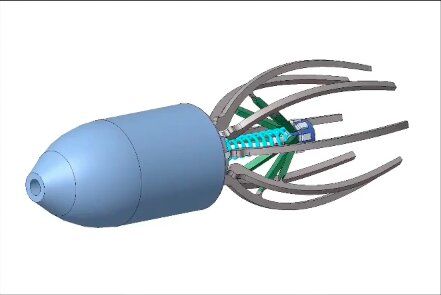
elasticity and resonance to mimic biology. I was
really surprised by the results, I was confident that     CAD image of robot design. Credit: University of
the design would work but the efficiency of the           Southampton
robot was much greater than I expected."

Dr. Gabriel Weymouth, Associate Professor in the
University's School of Engineering, who supervised        "The last decade has seen a surge in research into
the project added, "The great thing about using           flexible and biologically-inspired robots, such as
resonance is that we can achieve large vibrations         Boston Dynamic's "Big Dog", because they can be
of the propulsive bell with a very small amount of        much more versatile than standard industry robots.
power; we just need to poke it out of shape and let       This research demonstrates that these concepts
the elasticity and inertia do the rest. This has          can also be applied to underwater robotics.
allowed us to unlock the efficiency of propulsion
used by sea creatures that use jets to swim.              "There are still many challenges and exciting
                                                          possibilities to explore with soft underwater robotic
                                                          technologies. We are now looking to extend the
                                                          concept behind this robot to a fully manoeuvrable
                                                          and autonomous underwater vehicle capable of
                                                          sensing and navigating its environment."

                                                            More information: T. Bujard el al., "A resonant
                                                          squid-inspired robot unlocks biological propulsive
                                                          efficiency," Science Robotics (2021).
                                                          robotics.sciencemag.org/lookup …
                                                          /scirobotics.abd2971

                                                          "Squid-inspired robots perform swimmingly,"
                                                          Science Robotics (2021).
                                                          robotics.sciencemag.org/lookup …
                                                          /scirobotics.abf4301

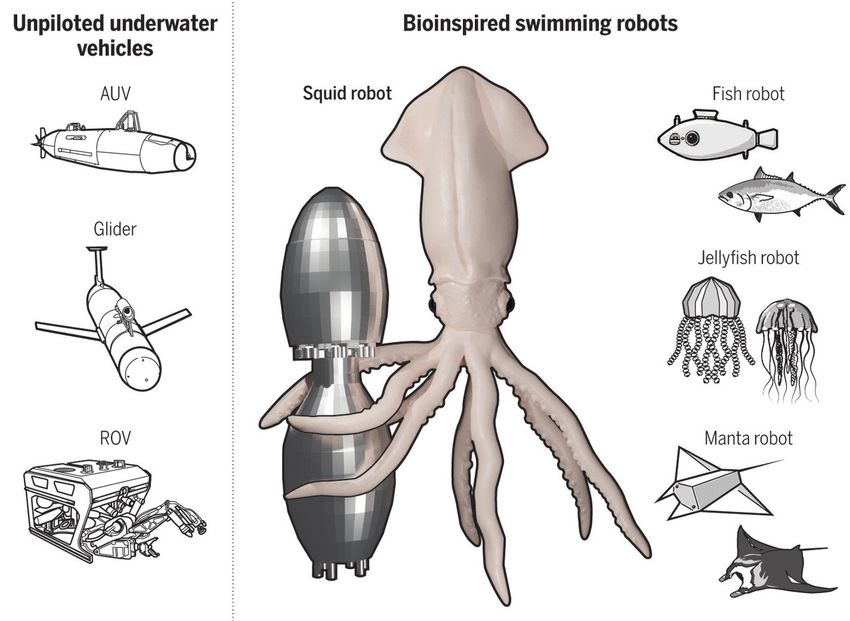
A menagerie of bioinspired robots for ocean monitoring.
Credit: Bujard et al., Sci. Robot. 6, eabd2971 (2021)
                                                           Provided by University of Southampton

                                                                                                             2/3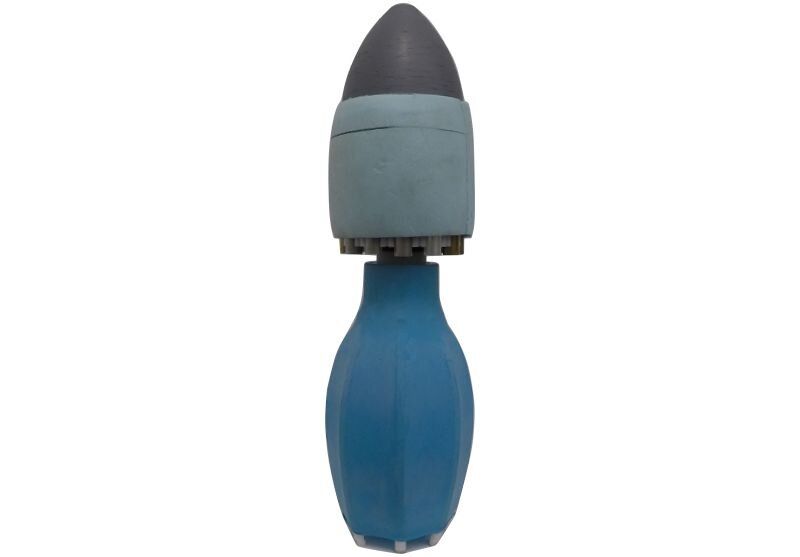
APA citation: Squid-inspired robot swims with nature's most efficient marine animals (2021, January 20)
                                   retrieved 28 January 2021 from https://techxplore.com/news/2021-01-squid-inspired-robot-nature-
                                   efficient-marine.html

                                   This document is subject to copyright. Apart from any fair dealing for the purpose of private study or research, no
                                   part may be reproduced without the written permission. The content is provided for information purposes only.

                                                                                                                                                3/3

Powered by TCPDF (www.tcpdf.org)
You can also read


