St Albans Secondary College Transition Handbook
←
→
Page content transcription
If your browser does not render page correctly, please read the page content below
St Albans Secondary College
         Transition Handbook

                  2021
Contents
St Albans Secondary College recognises and respects the significant contribution made by guardians Principal’s Welcome 5
and carers to our school community. For ease of readability, throughout this handbook parents,
guardians and carers are all referred to as parents. Contacting the School 6
2 Term Dates for 2021 6 3
About the School 7
St Albans Secondary College Vision 8
is dedicated to providing
Values 8
an environment that values
excellence, is respectful of all School and Sub School Structure 9
members of the community and
A Team Approach 9
that inspires each individual to
achieve their potential, and to A Smooth Transition 9
take their place with confidence
in a changing society. November Information Pack 10
Student Orientation Day 11
School Charges Policy — Year 7, 2021 12
Achievement Leadership
Payment Arrangements and Methods 14
Camps, Sports and Excursions Fund (CSEF) 16
Excellence
College Uniform 16
Commitment
College Uniform Policy 16
Uniform Pricelist 17
At School 20
Vision
Pride
First Day of Year 7 20
Integrity
Structure of the Day 20
Creativity
Bell Times 20
Responsibility
Lockers 20
Sick Bay 21
Respect
Travelling To and From School 21
Critical Thinking
Early Student Pick Up 21
Honesty
Being School Ready 21
Canteen 21
Fairness
Canteen Pricelist — 2021 22
House System 23
Year 7 Curriculum 24
Transition Handbook 2021Select Entry Accelerated Learning Program (SEAL) 25
Principal’s Welcome
Scholarship Program 25
On behalf of the School Council, staff and students, I would like to welcome you to St Albans Secondary
School Camp 26 College. I know that, for many of you, the selection of a secondary school has been a long process
involving talking with members of the community and discussions with your child’s primary school
Extra Curricular Programs 26
4 teachers. We are honoured that you have selected our school for your child. 5
Student Leadership — Student Representative Council (SRC) 26
St Albans Secondary College has an established and well-earned reputation for providing quality
Student Wellbeing 27 education for the students of the St Albans community. This comes from creating a learning environment
that fosters the academic and personal development of each of our students.
Individual Needs Program 27
Your child will participate in a range of educational and social programs, as well as having access
Bring Your Own Device (BYOD) Program 28 to challenging and exciting extra curricular activities. Over the last few months our transition team
has worked to ensure we understand your child’s primary school achievements, as well as identifying
Mobile Phones 28
their future learning needs. They have spoken to primary school teachers and met many of the new
Student Management Policies 29 students through online communication platforms.
St Albans Secondary College believes in the importance of building strong partnerships with parents
Student Rights and Responsibilities 30
and offers several parent events throughout the year to support and encourage students to achieve
College Expectations 30 their personal best. By joining our College, your child becomes a valuable member of our community
and we are committed to working together to achieve the very best outcomes for your child.
Anti Bullying Policy 31
In this handbook, you will find information on the Year 7 program, and some of our school policies,
Attendance and Punctuality Policies 33 procedures and events designed to assist your child to transition seamlessly into their new environment.
Absence Notification by SMS 33 I look forward to meeting you and welcoming you and your family into our school community.
Homework 34 Yours faithfully,
Homework Guidelines 34
After School Study Group 34
Parents and the School 35 Ms Kerrie Dowsley
Principal
Parent Roles and Responsibilities 35
Helping Out 35
School Council 36
Communication Between School and Home 37
Parent and Student Portal 37
Student Planner 37
Reports and Progress Meetings 37
School Newsletter 38
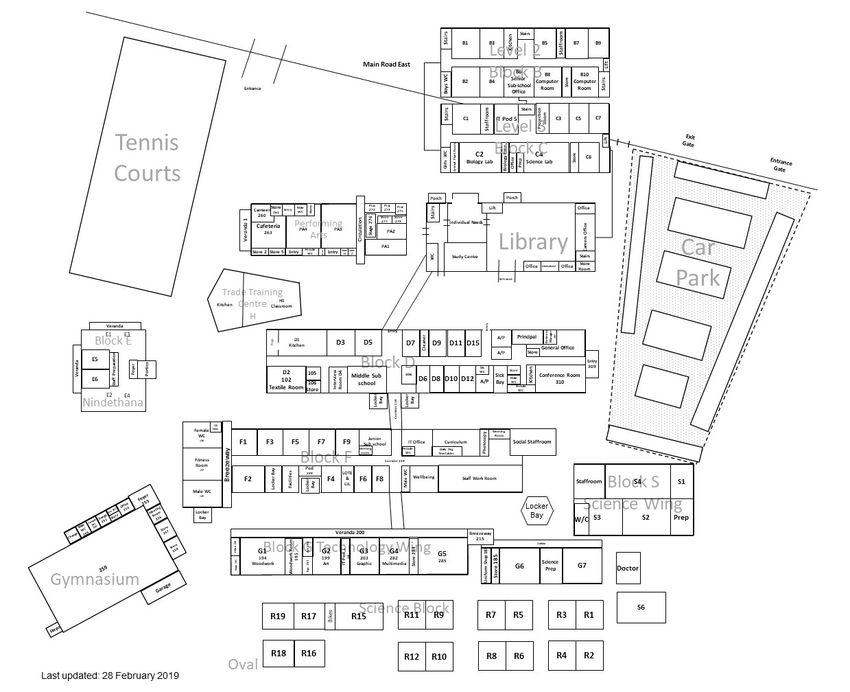
School Map 39
Transition Handbook 2021Contacting the School About the School
If you need assistance and English is not your first language, there are staff members who speak a St Albans Secondary College is a co-educational school of approximately 1,500 students. It is located
variety of languages and the school can also arrange telephone or personal interpreter services. 18 kilometres to the north of the Central Business District of Melbourne, within the City of Brimbank.
St Albans is easily accessible by public transport and by car, being only a 20-30 minute trip to the city
Position Name
6 centre via the Calder Freeway and Western Ring Road. 7
Principal Ms Kerrie Dowsley The College is committed to the delivery of a challenging, high quality and inclusive curriculum,
complimented by challenging programs in the performing and creative arts, sport and physical
development, and information and communications technologies. Students are provided with
Assistant Principal Mr Craig Jennings
opportunities to develop their unique interests and talents through intellectually rewarding
extracurricular activities, such as interschool debating and student leadership programs.
Assistant Principal Ms Tracey D’Elton
St Albans Secondary College offers outstanding facilities for student learning, recreation and
sport surrounded by landscaped grounds. Our students’ learning is supported by access to a
Assistant Principal Mr John Coulson
well-resourced library, performing arts centre, Year 7 and 8 dedicated science centre, Year 12 study
centre, Hospitality Trade Training Centre, a careers office and an international students’ office. The
Student Wellbeing Coordinator Mrs Rebecca Kinsella College is proud of our excellent sporting facilities which include a soccer field and a gymnasium
which is frequently used for basketball, badminton and table tennis training and tournaments.
Students are encouraged to use the College’s weights room and outdoor multipurpose courts.
Individual Needs Coordinator Ms Grace Wendiggensen
The College recognises its responsibility to the community to provide a safe, secure and supportive
International Student Coordinator Ms Thuy Anh Thai Nguyen environment where students can learn and feel valued and respected as individuals. The College
maintains a well-disciplined learning environment supported by sub-school structure and an
experienced Student Wellbeing team.
Junior Sub School Leader Ms Lauren Honeycombe
St Albans Secondary College is a community where staff and parents work together with and for the
benefit of students. Staff are deeply committed to the academic progress and wellbeing of students.
Middle School Leader Ms Becky Annetts
All students are encouraged to interact closely with teachers and seek assistance when needed.
Parents are encouraged to engage actively in their child’s education through membership of school
Senior School Leader Ms Stav Bekiaris committees, participation in classroom support programs, and through regular meetings and contact
with teachers and Year Level Coordinators.
Address 289 Main Road East, St Albans VIC 3021 The College is an integral part of the educational community of St Albans and surrounding suburbs.
Phone +613 9366 2555 Through our Transition Program, strong relationships have been fostered with local primary schools. The
Facsimile +613 9367 9361 school’s work education and tertiary pathways programs have established further positive links with
Email st.albans.sc@edumail.vic.gov.au local community groups and businesses, as well as with tertiary providers.
Website www.stalbanssc.vic.edu.au
Term Dates for 2021
Commences Finishes
Wednesday 27 January (Teachers)
Term 1 Thursday 1 April
Thursday 28 January (Students)
Term 2 Monday 19 April Friday 25 June
Term 3 Monday 12 July Friday 17 September
Term 4 Monday 4 October Friday 17 December
Regular General Office hours are 8:15am to 4:15pm.
Transition Handbook 2021Vision School and Sub School Structure
St Albans Secondary College is dedicated to providing an environment that values excellence, Sub Schools provide smaller communities in a larger school structure. At St Albans Secondary College
is respectful of all members of the community and that inspires each individual to achieve their we have three Sub Schools:
potential, and to take their place with confidence in a changing society.
Junior School —
Years 7 and 8
8 Middle School — Years 9 and 10 9
Values Senior School — Years 11 and 12
The school community at St Albans Secondary College holds these values and guiding principles:
A Team Approach
Students are supported in their transition from primary school to secondary school by a team
Personal of dedicated staff which includes a Transition Coordinator and five Junior Sub School Coordinators.
Integrity This team approach supports students’ academic, social and personal development.
Excellence
In Year 7, students have a Learning Manager who teaches them for Integrated Studies and who is
Respect Curiosity also responsible for monitoring and supporting their learning and wellbeing. Students are assigned
a homeroom where they will complete the majority of their school work. This allows them the
opportunity to form and strengthen relationships with their fellow classmates.
Responsible Empathy To further develop student wellbeing and connectedness to the school, St Albans Secondary College
Leadership
offers excellent student welfare support through the expert services of our Student Wellbeing Team.
A Smooth Transition
The transition from primary to secondary school is an exciting time for students and their parents.
It is the next stage in a lifelong educational journey leading to new experiences and challenges.
Responsible Leadership
The Transition Program
We show leadership by taking responsibility and being committed to our vision and to each other.
St Albans Secondary College works in partnership with the local primary schools to ease students
Respect through the transition period. Students revisit their primary school to share their secondary
school experiences and to work on cooperative projects with primary school students.
We demonstrate respect and fairness to each other. Designed to assist your child to develop positive relationships with both their teachers and peers,
the program also extends students’ knowledge of secondary school, builds resilience, promotes
Integrity their personal confidence and generally helps students settle into College life.
We show integrity at all times, by being open and honest.
Program Activities
P ersonal Excellence
During the year, all Grade 6 students are visited by the Transition Coordinator, who will provide
We take pride in our achievements, and strive for academic excellence. information about the College and address any general concerns. In Term 2, students from
the local primary schools are invited to attend a ‘taster day’ to experience some of the
Curiosity Year 7 core and elective subjects offered at St Albans Secondary College. In addition, students
are invited to attend our annual music drama performance, and to participate in interschool
We value critical thinking, creativity and risk taking in our learning.
activities. In Term 4, students will partake in the ‘Big Day In’, a Wellbeing Day aimed at building
student confidence and self esteem. Our Orientation Day in December provides students with
E mpathy
a further opportunity to become familiar with the layout of the College and develop positive
We demonstrate care for one another and express an understanding of personal points of view. relationships with their new classmates and teachers.
Transition Handbook 2021Parent Support Student Orientation Day
Parents can help to make primary to secondary transition successful by assisting your child St Albans Secondary College warmly invites all Year 7 students for 2021 to attend the Grade 6 Orientation
to get used to a varied schedule and greater independence, planning strategies for making Day at St Albans Secondary College on Tuesday 8th of December 2020 commencing at 8:45am.
new friends, providing support with homework and assignments, attending parent teacher
interviews and encouraging your child to become involved in extra curricular activities.
10 Where to Go 11
It is also important for parents to be well informed of College policies and procedures, Students are asked to meet at the Performing Arts Centre. Class details for students will be posted on
particularly the Year 7 Program. Parents are encouraged to attend parent transition events the board outside the centre. Students are to locate their class on the list and then line up outside
to find out more about the curriculum, school structure, uniform, school charges and the Performing Arts Centre.
other important dates and information. Parents are also welcome to book a personal tour
of the College by appointment with the Transition Coordinator. What Time
*
Changes to the Transition Program 2020/21 may occur/have occurred in accordance with Victoria’s All students are required to be in attendance in front of the Performing Arts Centre no later than
response to the COVID19 pandemic and advice from the Department of Education and Training. 8:45am. Students will be dismissed at the end of the school day at 3:10pm.
November Information Pack What to Bring
An information pack will be sent to families in mid-November which will include a booklist, invoice, Students are asked to bring a pencil/pen. The school will provide all other materials and a lunch on
information on your child’s home group and subjects, uniform shop opening times and key dates. the day.
It is important to advise our office if your postal address or email address has changed. What to Wear
Students are asked to wear neat, casual attire or their current primary school uniform on
Orientation Day.
What’s happening on the day?
At the Student Orientation Day students will;
• tour the school and become familiar with its layout and size;
• meet their classroom teachers and support staff;
• find out about the College uniform, attendance requirements and other school policies
and procedures;
• learn about the Year 7 program and subject requirements;
•
experience an introduction to each of their core and elective subjects including
Integrated Studies, Mathematics, Science, Health and Physical Education and LOTE,
as well as some elective subjects, and
• meet their classmates and participate in ‘getting to know you’ activities.
* Changes to the Student Orientation Day may occur in-line with Victoria’s response to the COVID19 pandemic
and advice from the Department of Education and Training.School Charges Policy – Year 7, 2021 3. Additional School Charges
This is a user pays charge that is associated with the provision of programs that are beyond the
The St Albans Secondary College Council is committed to providing a high quality learning environment
scope of government funds.
for all students. We believe that this makes a significant contribution to our students’ educational
outcome and to their enjoyment of their secondary school experience.
12 Interschool Sports 13
Over recent years, St Albans Secondary College has been working to expand the range of resources
available to students, and to upgrade and improve the standard of the College facilities and grounds All Interschool sport events attract their own charge. Your child’s consent form will state the
to meet the needs of our students and school community. cost of each event. Payment and consent is required prior to your child being able to attend
the event.
The college receives much of its funding through Government grants. However, these grants alone
are not sufficient to provide the quality of facilities and programs we regard as essential for your child.
Camps and Excursions
To assist the college to bridge the gap between funding and actual costs the College Council has
Information about costs for Integration Studies camps and other planned events have been
approved four types of fees and charges.
included on the student’s school charges invoice.
1. Essential Learning Items (ELI) Students may have the opportunity to attend other activities/events related to their home
group throughout the year at an additional cost.
The Essential Learning Items (ELI) applies to all students. This charge is compulsory and is
used towards the provision of essential materials and resources to the students which are
beyond the services for which the government funding provides funds. Most school charges Instrumental Music Lessons
are included in the Essential Learning Items (ELI). Students will only be enrolled in an Instrumental Music lesson once payment has been made
Payment of this charge is compulsory for each student and includes the following: and enrolment form completed.
• Supplementary Class and Homework Materials (including photocopied resources) The College offers lessons in Guitar, Keyboard, Drums, Piano and Voice.
• Locker Hire
$45.00 per Term or $180.00 per year (1x Half Lesson per Week)
• Student Diary
$60.00 per Term or $240.00- per year (1x Full Lesson per Week)
• College Handbooks
• Printing (start-up allocation) All Select Entry accelerated Learning (SEAL) students must take part in Instrumental Music lessons.
• House Lanyard
• Padlock 4. Voluntary Contribution
The College encourages families to support our programs by making a voluntary contribution
The Essential Learning Items (ELI) charge for Year 7 students is $244.00
towards:
Parents will be required to pay at least 50% of the ESLC prior to their child accessing the above
materials and resources. • the provision of extra computers and other IT resources
• the provision of supplementary resource materials including class sets of textbooks
2. Essential Learning Activities (ELA) • establishment of new programs
The Essential Learning Activity (ELA) applies to all students. This charge is compulsory and is used • the development of school grounds and facilities – Tax Deductible (Building Fund)
towards to cost of the following school activities:
• Swimming and Athletics Carnival
• Visiting Speakers and Performers
• End of year activities
The Essential Learning Activity (ELA) charge for Year 7 students is $64.00
Families who have a Health Care Card (HCC) and are eligible for the Camps, Sports and
Excursion Fund (CSEF), will have this amount offset.
Transition Handbook 2021Payment Arrangements and Methods Camps, Sports and Excursions Fund (CSEF)
The Camps, Sports and Excursions Fund (CSEF) provides a payment of $225.00 for eligible students
Payment of the Essential Learning Items (ELI) and Essential Learning Activities (ELA) is compulsory
to attend activities such as school camps, swimming and school-organised sport programs,
for all students. Payment can be made online or in person:
outdoor education programs, excursions and incursions.
1. Compass parent portal – online
14 To be eligible for the CSEF, the applicant (parent) must be, on the first day of term one or the first 15
Parents can log in to the parent portal at https://stalbanssc-vic.compass.education. Parents day of term two, one of the following:
will be provided with their parent portal username and password in Term 4, 2020 by post and/
or email. Payments can be made online in full by credit or debit card (VISA, Mastercard or • an eligible beneficiary of either a Centrelink Health Care Card or a Pensioner
UnionCard) or families can choose to pay by instalments. Instalment amounts and due dates Concession Card
are as follows: • temporary foster carer
• an eligible beneficiary of a Veterans Affairs Gold Card
All new CSEF applications must be submitted to the school prior to the end of term 2.
1st 2nd 3rd 4th
Instalment Instalment Instalment Instalment Parents who have completed an application for the CSEF will have their application verified
Date Date Date Date by Centrelink. Successful applicants will receive $225.00 which is paid directly into the student’s
school account from March 2021. The CSEF will be offset against the ELA and the remaining CSEF
Friday 11 Dec 2020 Friday 12 Feb 2021 Friday 23 April 2021 Friday 18 June 2021 balance will be used for other camps, sports and excursions throughout the year.
Further information regarding the CSEF and eligibility criteria can be found on the Department
2. Payment in person at the school or BPay of Education and Training website.
Alternatively, payments can be made in person at the General office. Payments will be
accepted in cash, EFTPOS (VISA, Mastercard or UnionCard) or Bpay (internet only). Bpay details
will be provided on family statements. Families can also choose to pay by instalments (see table
above for instalment amounts and due dates).
Payment Plans
Other flexible payment arrangements are available by accessing the Parent Portal, under
“course payments” or by contacting Liz Hedger, School nominated Parent Payment contact
person on 9947 3616.
Transition Handbook 2021College Uniform Uniform Pricelist
College Uniform Price List — All Students
Uniform Policy Polo White Polo with School Logo $25.00 - $27.50
Short or Long Sleeve
16 Guiding Principles 17
VCE Polo White Polo with stripe and School Logo $30.00
By having a compulsory uniform the College aims to: Short Sleeve only.
Shirt White Shirt with School Logo $29.50 - $32.50
• promote a positive image of our school in the community,
Short or Long Sleeve
• encourage a sense of pride and belonging amongst our students,
Jumper Woollen Maroon V-neck School Jumper $75.00 - $82.50
• identify our students as belonging to the College.
VCE Jumper Woollen Grey V-neck School Jumper $75.00 - $82.50
with School Logo
Expectations
Jacket Maroon Black and White Jacket with School Logo $75.00
All students of St Albans Secondary College are expected to wear full school uniform every
Summer Dress Maroon and White Check Dress $55.00 - $70.00
day.
Winter Skirt Maroon, Black and White Tartan Skirt $60.00 - $75.00
The uniform must be worn to and from school, at lunchtime and recess, and on all school
excursions. Pants Black Pants with School Logo $40.00 - $55.00
Viscose or Pleated
At all times the manner in which the uniform is worn will reflect pride in the College. This means (Note: No other Black Pants can be worn)
that, the uniform:
Shorts Black Shorts with School Logo $30.00 - $35.00
• will be clean, Blazer Black with School Logo $99.00
• in a state of good repair, Tie (Optional) Black Tie with Maroon, Green & White stripe $20.00
• appropriately fitted, with School Logo
• worn without non-uniform garments being visible (only plain white t-shirts are acceptable Socks White Socks (3 pack) only with Dress, Skirt or shorts $10.00
Student to Purchase
to be worn under the school polo top or shirt).
• worn without non-uniform garments being visible (only plain white t-shirts are acceptable
Tights Black Tights only with Skirt $10.00
Student to Purchase
to be worn under the school polo top or shirt).
Shoes Black Lace Up School Shoes or T-Bar Buckle Up From $69.99 or
• students may wear the official school sports uniform to or from school if they have P.E.
Shoes only Student to Purchase
Period 1 or 6. No other sports clothes may be worn to or from school, or at recess or
lunchtime. Headscarves/ Plain Black or Plain White only Student to Purchase
Headbands
Implementation Neck Scarves Plain Black and White with School Logo $15.00
If, for any reason, a student attends school out of uniform, she or he must report to their Year Level
Coordinator before going to class.
College Uniform — PE/Sports
Sub School Leaders and Year Level Coordinators will conduct regular uniform checks. If a
student is at school out of uniform, one of the following practices may be appropriate: Polo Maroon with House Name & School Logo $30.00
•
if the parent/guardian cannot be contacted the student will be provided with emergency Track Pants Black School Track Pants with Green, $35.00
Maroon and White Stripe
clothing for that day and after that shall not return to school until they are in full uniform;
•
if the parent/guardian can be contacted the student will be sent home to return in full
Shorts Black PE Shorts with School Logo $25.00
school uniform; Shoes Runners — Lace Up White Runner (No Marking Sole) $30.00 or
Student to Purchase
• the student will be required to attend a detention;
• where there is a longer term difficulty, the school will consult with parents to find a solution. *Please note: prices may be subject to change without notice.
Transition Handbook 2021Wearing the Uniform Correctly
College Bag
College Back Pack Black Back Pack with Built-in back support and with $60.00
Hats
School Logo
Students are encouraged to be ‘sunsmart’ by wearing a hat for outside activities, especially
during Terms 1 and 4. Hats must not be worn inside or taken to classes.
18 19
Runners
Runners are not to be worn to or from school, or at school except during Physical Education or
Sports lessons, or for lunchtime sport.
Jacket
No Jacket other than the College Jacket is to be worn at school.
Jewellery/Accessories
Jewellery or accessories, other than watches, small sleepers/studs and a simple plain bangle or
necklace, are not to be worn.
School Shoes
These 3 types of school shoes are the only styles to be worn as part of the school uniform. Make-up
Only minimal, if any, make-up to be worn.
Headscarves and Headbands
Headbands must be plain white or black only. Other bandannas or headbands are not to
be worn.
Non Uniform Items
Any non-uniform item of clothing being worn must not be visible.
Please Note
Special uniform orders require a minimum of 4 weeks delivery with an additional cost per item. If
Shoes
you require a custom made uniform you will need to make an appointment with DCS Clothing Please refer to shoe images on page 18 for guidance on acceptable footwear.
and Uniforms to arrange a fitting.
Labelling Items
Supplier: We ask families to clearly label all items with a permanent marker detailing the student’s name
DCS Clothing And Uniforms Pty Ltd operates a Uniform Shop at the College. and year level on the tag.
DCS Clothing And Uniforms Pty Ltd
F 13, 32-42 Aberdeen Road
Altona, VIC 3018
Phone: (03) 9398 2222
Web: www.dcsuniforms.com.au
A uniform shop operates from the school on Monday and Thursday lunchtimes. The uniform shop
offers extended hours of trade at the beginning of the school year. The approximate cost of a
school uniform is $300.
Transition Handbook 2021At School Sick Bay
Students who become ill at the College should report to the Sick Bay, located in D Block adjacent to the
general office. A medical form is required to be filled in by parents at enrolment. Parents are asked to
First Day of Year 7 keep this record up-to-date by informing the College of any significant injuries or illnesses which occur.
Students will start Year 7 on Thursday 28 January 2021. Students should be in full uniform on the first day. Any student who is taking medication should report to the Sick Bay and leave the medication in the
20 21
care of the First Aid Attendant.
Students are asked to report to the Performing Arts Centre by 8:45am where they will join their home
groups. They should bring their pencil case, two or three exercise books, a water bottle and their lunch.
Alternatively, they can purchase their lunch from the school canteen. Travelling To and From School
All items students bring to school including their uniform should be clearly labelled with their full name Students walking to and from school must use the pedestrian crossing on Main Road East. Students
and Year Level. riding their bicycles to and from school must wear a bike helmet and can store their bicycles in the
racks adjacent to the Science Centre. Students must not ride their bicycle on school grounds.
Structure of the Day
The school year is divided into four terms, with the first two terms referred to as Semester One Early Student Pick Up
and the last two terms as Semester Two. A school day is divided into 6 lessons (periods) of 50 minutes, Where a student is required to be picked up early from school, a signed note from the parent/guardian
giving a total of 30 periods for the week. stating the date, time and reason for early pick up should be provided to the students coordinator on,
or prior to, the day.
Students should be at school no later than 8:45am every day. During the 10 minutes before Period 1,
they are required to go to their lockers and organise their books for classes. Students are expected The parent/guardian should arrange to meet the student at the General Office at the specified time.
to be punctual for all classes.
Students will not be given permission to meet the parents outside of the school grounds.
Bell Times
Being School Ready
Locker Bell 8:45am
At St Albans Secondary College students are encouraged to be responsible and independent
Period 1 8:55am learners. This means that students are on time and organised for each class; making sure that they are
Period 2 9:45am in full school uniform, have all necessary textbooks, classwork and any other materials required.
Recess 10:35am
Students are also expected to have lunch provided from home or purchased at the school canteen.
Locker Bell 10:52am The General Office will not accept school lunches dropped off for student pick up.
Period 3 11:00am
Period 4 11:50am
Canteen
Lunch 12:40pm
The canteen offers a wide, inviting range of healthy and snack food items and provides a welcoming,
Locker Bell 1:20pm
social environment for students to enjoy their lunch in a clean seated indoor cafeteria.
Period 5 1:30pm
Period 6 2:20pm The canteen is open daily from 8:15am for breakfast and then again at recess and lunchtime. Lunch can
be ordered before school and collected in a separate queue at lunchtime.
Dismissal 3:10pm
During the first week of Term 1, Year 7 students are dismissed ten minutes prior to the lunchtime bell and
Lockers allowed access to the canteen before the rest of the school. This helps our newest students become
familiar and comfortable with the canteen area.
Lockers are allocated in the first week of school. Students will be provided with a strong padlock to
keep their books and equipment safe and secure.
Transition Handbook 2021*Please note: prices may be subject to change without notice.
Canteen Pricelist – 2021 House System
BREAKFAST FROM THE BAKERY Students are allocated to one of four House Colours upon enrolment: Red, Blue, Green or Yellow. The
Egg and Bacon Muffin $4.00 Assorted Gourmet Pies $4.50 Houses have been named after influential Australian identities:
Ham & Cheese Toasties $3.50 Sausage Roll $3.20
Ham & Cheese & Tomato Toasties $4.00 Assorted Muffins $3.50
22 Fresh Yogurt V $4.00 Assorted Slices $3.50 23
Hash Brown (oven baked) V, GF $1.00 Vegetable Pasties $4.00
Cheese & Vegemite Pinwheel $1.50 House Colour Australian Identity
RECESS SELECTION Iced Donut from $3.00
Croissants from V $4.00 Steve Irwin - nicknamed "The Crocodile
Toasted Bacon & Egg on whole meal Roll $4.00 SANDWHICHES (Made to order) Hunter", was an Australian wildlife expert,
Cheese & Spinach Roll V $4.00 Assorted Breads Irwin House Red
television personality, and passionate
Sweet Chilli Chicken Wrap (warm) / Salad w Lettuce, Tomato, Cucumber, Red Onion V $4.00
BBQ chicken Wrap $5.00 Salad add Ham $4.50 conservationist.
Nacho with Salsa, Sour Cream, Salad add Chicken $4.50
Tasty Cheese V, GF $4.00 Salad add Cheese V $4.50
Egg & Lettuce $4.50
Ken Rosewall - former world top-ranking
Hot Dog w Topping (optional) from $3.50 Rosewall House Blue
Assorted Noodles Flavours $3.00 Tuna with Tomato & Red Onion $4.50 professional Australian tennis player.
Sweet Potato Rosti Vegan, GF 3 for $3.00 Chicken Lettuce & Mayo $4.50
Falafal Bites Vegan, GF 3 for $3.00 Chicken with Avocado & Cheese $4.50
Ham, Cheese & Tomato V $4.00
Ita Buttrose - successful journalist,
LUNCH SELECTION Cheese & Tomato V $3.50
Homemade Soups (Term 2&3) V, GF $4.00 Add .50 for Rolls or Wraps Buttrose House Yellow businesswoman, entrepreneur, television
Chicken Parma Panini Add $1.00 for Focaccia personality and author.
w Napoli Sauce and Cheese $5.50 Gluten Free Available upon Request (GF)
Pork Riblett Panini w Lettuce & BBQ sauce $5.50 Cathy Freeman – former Olympic champion
Meatball Sub w Napoli Sauce & Cheese $4.00 DRINKS
500ml Deep Spring Mineral Water Varieties $3.50 runner and the first Indigenous Australian to
Veg Sub w Cos Lettuce, Tomato, Freeman House Green
Red Onion & Mayo V $5.00 500ml Ice Tea Varieties $4.00 become a Commonwealth Games gold
(See canteen regarding the items below) 750ml Pump Flavoured Water $4.00 medallist.
Homemade Pasta - Small $4.00 450 Mt Franklin Sparkling Flavoured Water $3.00
Large $5.00 Up and Go Varieties $3.00
Stir Fry or Hokkien Noodles - Beef/Chicken 300ml Oak Milk Flavoured $3.00
Small $4.00 600 ml Oak Milk Flavoured $4.00 These great Australians were chosen as they are shining examples to our students of what determination
Large $5.00 250ml Oak Mini Shakes $3.00
and a will to be their best can achieve.
Vegetarian Quiche Slice $4.00 500ml Ice Break $4.00
Roast Beef Roll w Gravy $5.00 300ml Keri Juice Varieties $3.50 Students must purchase their Physical Education polo top in their allocated House colour (see Uniform
Baked Potato w Sour Cream V, GF $4.00 250ml Fruit Box Varieties $2.50
Pricelist – page 17).
RECESS & LUNCH SELECTION COFFEE The school’s Swimming and Athletic Carnivals are run on an Inter-House format and house points are
Traveller Beef Pie (salt reduce) $3.70 Barista made Coffee, Hot Chocolate from $3.00
awarded to students for participation in a wide range of activities across all facets of their school
Chicken Burger w Lettuce $5.00 Hot Drink & Donut Special $5.00
Homemade Pizza Slice from $3.00 experience. Sub-school House Captains and Vice Captains have been appointed to build student
Dim Sims, Dumplings, Potato Snack from $1.00 ICE CREAM involvement, connectedness and ownership of the program.
Angus Beef Burger w Cheese, Tom. Sauce $5.00 Assorted Paddle Pops $1.80
Veg Sub w Cos Lettuce, Tomato, Red Onion, Mini Callippo $1.50
Mayo V $5.00 Paddle Pop Thick shake $2.50
Chicken Schnitzel Panini w Lettuce, Cheese Icy Twist $1.50
& Mayo $5.50 Frozen Yogurt $2.50
SUSHI from $6.00 SNACK OPTIONS
Popcorn $2.00
Chicken Teriyaki, California, Tuna and Avocado (2)
Delites $1.00
COLD DELI SELECTION Red Rock Deli Chips $2.50
Fruit Salad w Yogurt $4.50
Garden Salad w Italian Dressing, Greek Salad, Taboli,
All chicken is Halal certified
Roast Veg Vegan & Cous Cous Roast Veg $5.00
Yogurt w Berries $4.50
Jelly $1.50
In Season Fruit from $1.00 $3.00
MINIMUM
ORDERS CAN BE PLACED VIA THE QKR APP AND THROUGH THE CANTEEN
DOWNLOAD THE QKR APP ON YOUR MOBILE OR IPAD TODAY.
Transition Handbook 2021Year 7 Curriculum Select Entry Accelerated Learning Program (SEAL)
St Albans Secondary College offers a varied and challenging curriculum designed to cater for St Albans Secondary College supports students identified as capable of learning at a faster pace and
different students’ needs. in greater depth than their peers, by providing opportunities for high achieving students to accelerate
and enrich their academic studies, leadership skills and creative talents.
In Year 7, students study a common core curriculum for 27 out of the 30 periods in a week. For the
remaining 3 periods, they experience the Arts and Technology elective program, rotating through Our expert team of teachers is specially trained in gifted and talented education to accelerate the
24 pace of learning, ensure depth of learning and to closely monitor each student’s progress. 25
a range of electives throughout the year.
St Albans Secondary College offers places in the SEAL program to a limited number of high achieving
The core subjects studied in Year 7 include:
and committed students. Students are selected through our Scholarship and SEAL testing session run
• Integrated studies • English or EAL by the educational assessment organisation Edutest, early in Term 2. Students are tested in verbal and
numerical reasoning, reading comprehension and mathematics. In Term 3, students will sit another
• Mathematics • Language Other than English (LOTE)
test in literacy and numeracy to determine class groups. Suitable SEAL applicants will demonstrate
• Science • Health & Physical Education academic skills well above those of their age group, and will be highly recommended for the program
• Literate Practices (Literacy) by their primary school teacher.
Students who are identified through the selection process show exceptional ability in:
There are 2 Languages Other than English (LOTE) offered. Students choose to study either
• high academic performance and will benefit from an accelerated and enriched learning
Italian or Japanese from Year 7 to 9. Units 1–4 in Italian and Japanese are also offered
experience that is demanding, open-ended, and designed to engage their higher order
to students in Year 11 and 12 VCE.
abilities;
The elective program for Year 7 includes: • working independently and cooperatively;
• Art • Music • meeting all deadlines;
• Coding and Algorithms • Textiles • listening to and learning from others;
• Dance • Visual Communications • problem solving and persevering;
• Drama • Woodwork • working consistently; and
• Food Technology • submitting work of a high standard.
As well as receiving a place in the SEAL program, high achieving applicants may also be awarded a
Scholarship for Academic Excellence (see Scholarship Program).
Subjects Periods per Week
In Year 7, SEAL students will complete Analysis and Critical Literacy (ACL) to continue to extend and
Integrated Studies 4 develop their literacy skills. In Years 7, 8 and 9, students will complete extension core subjects and will
be accelerated in the mathematics course. Enrichment electives in the Sciences, such as Forensic
English / EAL 5 Science are also offered to students in Year 9.
At Year 10, students may choose to accelerate their learning further by completing Units 1 & 2 of one
Mathematics 5
or more Victorian Certificate of Education (VCE) subjects. Students who have successfully completed
Science 3 Units 1 & 2 in Year 10 will then advance to Units 3 & 4 in Year 11. Students are offered the opportunity
to complete all VCE Mathematics subjects over two years.
Literate Practices 3 St Albans Secondary College reserves the right to place students into a mainstream class if they are
not benefitting from the SEAL program or if their academic performance in the SEAL program is not
Health and Physical Education 3 satisfactory.
Languages Other Than English (LOTE) 3
Scholarship Program
Visual and Performing, Creative Arts and Technology 3 Every year St Albans Secondary College awards scholarships to students who demonstrate significant
achievement and aptitude in the areas of Sport, Leadership, Visual & Performing Arts and Citizenship
Learning Manager 1 as well as General Academic Excellence.
Total Periods per Week 30 Scholarship applicants are required to submit copies of their NAPLAN results, school reports, teacher
recommendations and an extended writing piece, as well as attend an interview at the College
accompanied by their parents. In addition, students applying for the General Academic Excellence
Scholarship (SEAL program) are also required to sit an academic test.
Preliminary applications for scholarships are to be submitted by the end of May the year preceding
the students’ commencement of Year 7. Enquiries about the Scholarship Program should be directed
to Marlene Cassar, Transition Coordinator.
Transition Handbook 2021School Camp Student Wellbeing
St Albans Secondary College owns its own camp site in the Strathbogie Ranges, approximately 180kms St Albans Secondary College’s Wellbeing team provide a proactive and comprehensive Student
north of Melbourne. Wellbeing Program that builds and promotes a sense of belonging and resilience.
The Camps Program for Year 7 is part of Integrated Studies. The purpose of the camp is for students The Wellbeing team includes a student wellbeing coordinator, social worker, health promotion nurse,
26 to increase their self esteem, build solid relationships with their teachers and new classmates, learn to family engagement officer and wellbeing program officer. Mental health support from a Psychologist 27
interact within a group and to develop communication and leadership skills. is also available onsite through the CareinMind mental health service.
Students are provided the opportunity to appreciate and connect with Australia’s natural environment The Wellbeing team offer a range of supports to students including; counselling, small group workshops,
by participating in activities such as swimming, mini-golf, canoeing, archery, environmental projects, family engagement and referrals to external services. The Wellbeing team run proactive programs
bush walking, table tennis, volleyball and basketball. such the chills skills program, and promote events such as the National Day of Action Against Bullying
and Violence, R U Ok? Day, IDAHOBIT Day and more.
Year 7 camps are held in Term 1 and early in Term 2.
The Department of Education’s “Doctors in Schools” initiative also funds a General Practitioner (GP)
and Practice Nurse to attend the College one day a week to provide medical advice and health care
Extra Curricular Programs
to students as needed.
Our College offers an array of extra curricular activities designed to complement and enhance the
academic foundation provided by the core curriculum and electives. Being involved in extra curricular
activities gives students the opportunity to develop their connectedness to the school community, Individual Needs Program
establish friendships and participate in elite levels of competition and performance. Students who The Individual Needs Program ensures that all students are provided with a safe, accessible and
participate in our extra curricular programs are often recipients of regional awards. inclusive learning environment. The school will identify Year 7 students on the Program for Students
with Disabilities (PSD) or students who would benefit from additional support through the transition
Instrumental Music Sport Clubs/General Interest information provided by their teachers and parents.
• Voice • Outdoor Soccer • Debating
The program for each individual student will vary and may involve participation in one or more of the
• Piano/Keyboard • Futsal • Garden/Environment
following:
• Guitar/Electric Bass • Table Tennis Club
• Chess Club • Regular Student Support Groups (SSGs)
• Drums and Percussion • Badminton
• Dance • Development of an Individual Learning Plan (ILP), Individual Education Plan (IEP), Student
• Saxophone • Volleyball
Support Plan (SSP) and/or Self-Regulation Plan for goal setting, monitoring progress and
• Tennis • Literary Lunch Club
identifying areas of difficulty.
• Netball • Lunchtime Games
• A modified learning program which enables maximum participation and engagement.
• Basketball • Breakfast Club
• Life Skills Program to enhance a student’s ability to become an independent member of
• European Handball • International Students
the community.
English Classes
• Australian Rules Football • Assistance with ‘readiness for learning’ and organisation skills through the Student Support
• After School Study
• Rugby Program.
Program
• Social Skills Program to strengthen interpersonal skills.
• SPELD program, an intensive literacy program focussing on phonics, grammar and
punctuation skills.
Student Leadership — Student Representative Council (SRC) • Classroom teacher assistants to support the student in class
We believe that participation in leadership activities develops personal confidence, responsibility • Use of the sensory room as needed by the student.
and self esteem, and offers enhanced job prospects. Many positions of leadership are available for
• Use of specialised resources provided to the student, including mechanical devices, IT
students across all year levels.
software etc.
In Year 7, each class elects a Class Captain and Vice Captain who liaise with the Principal Class • Specialist services provided by our school health professionals onsite, e.g. Speech Pathology
and Junior Sub School Coordinators on behalf of the student body. The SRC works democratically • Referral to external services for further assessment or support.
to represent the student body in school decision-making. Students work together, with help from a staff
• Specialised transition program for students as they move from Grade 6 to secondary school.
member, to organise activities for students to participate in secondary school life and to contribute
For further information regarding the Individual Needs Program, please contact the Individual Needs
students’ opinions and ideas.
Coordinator, Ms. Sophie Rosewarne.
Transition Handbook 2021Bring Your Own Device (BYOD) Program Student Management Policy
The evolution of technology has had an increasing impact on the way students think, connect The College’s Student Management Policy is based on the following personal and communal rights
and communicate. As part of this, we want to ensure our students gain the skills, knowledge and and responsibilities:
understanding that will allow them to succeed in a technology rich world.
• All students have the right and responsibility to learn;
28 St Albans Secondary College have a Bring Your Own Device (BYOD) Program from Years 7 to 12. 29
• All students have the right to feel comfortable & safe, and the responsibility to contribute
These devices will be owned by students and their families and can be either purchased through to the comfort & safety of others;
the school’s business partners, purchased from independent retailers, or brought from home if you
• All students have a responsibility to develop empathy for the wellbeing of others.
already have a suitable device. All students are expected to have a device to support their studies.
Visit our website for further information regarding suitable devices at All students have the right to learn
http://stalbanssc.vic.edu.au/curriculum/byod .
Therefore all students have the right to:
Mobile Phones • learn as much as possible;
• have all work expectations clearly explained to them;
In accordance with the Department’s Mobile Phones Policy issued by the Minister for Education,
• receive regular feedback about their progress;
personal mobile phones must not be used at St Albans Secondary College during school hours,
including lunchtime and recess. • have a curriculum that is meaningful and appropriate, whilst also being challenging and
promoting high expectations;
St Albans Secondary College understands that students may bring a personal mobile phone to And all students have a personal and communal responsibility to:
school, particularly if they are travelling independently to and from school. Students who choose
• take full advantage of learning opportunities in order to strive for personal excellence;
to bring mobile phones to school must have them switched off and securely stored in their locker
during school hours. In the case of an emergency, parents can reach their child by calling the • behave in a way that allows others to learn and work effectively; and
General Office. • encourage others to behave appropriately and to work hard.
All students have the right to feel comfortable and safe
Therefore students have the right to:
• be emotionally and physically safe;
• be valued as individuals, and treated justly and fairly at all times;
And all students have a personal and communal responsibility to:
• be aware of, and to follow, College policies and procedures;
• obey all reasonable requests of staff members;
• contribute to school-based decisions through an active participation in student forums,
leadership activities and peer representation roles.
All students have a responsibility to develop empathy for the
wellbeing of others
Therefore students have a personal and communal responsibility to:
• to treat, and encourage others to treat, all members of the College community fairly and
with respect;
• respect and encourage others to respect both personal and college property;
• accept and encourage others to accept differences in the backgrounds, opinions, sexual
diversity and attitudes of others.College expectations Anti Bullying Policy
St Albans Secondary College has set some expectations that are non-negotiable. This has been done
to ensure that the rights of others are protected, and all individuals are encouraged to act responsibly. Guiding Principles
Bullying behaviour at St Albans Secondary College will be addressed as part of our school’s
30 Attendance duty of care to provide a safe and supportive school environment. 31
Students are expected to: We promote a school community in which everybody feels valued, respected and safe, and
where individual differences are appreciated, understood and accepted.
• attend school and all classes at school and be punctual to school and classes unless they
have a valid explanation; Students must be empowered to talk about what is happening to them if any bullying behaviour
• remain in their classroom unless they have the teacher’s written permission to leave; and is to be addressed.
• remain in the school grounds unless they have written permission to leave from their Year
Level Coordinator. Rights and Responsibilities
• All students have the right to learn.
Appearance and environment
• All students and staff have the right to feel comfortable and safe, and the responsibility to
Students are expected to:
contribute to the safety and comfort of others.
• wear the College uniform in a manner that is consistent with the Uniform Policy; and •
All students and staff have a responsibility to develop empathy for the wellbeing
•
actively contribute to the cleanliness and neatness of the classroom and school of others.
environment.
What is Bullying?
Appropriate item and activities Bullying is hurtful, typically repetitive behaviour directed by more powerful individuals or groups
Students are expected to: against those who are less powerful. It creates a risk to another person’s health and safety
— either psychologically or physically — or their property, reputation or social acceptance.
• bring only appropriate items, materials and equipment to school;
• only use portable media players outside of class time; Bullying is uninvited, unwelcomed, intimidating and/or offensive to the recipient.
• leave their bags in lockers during class time;
• bring a water bottle to class when needed; Management of Bullying Incidents
• leave mobile phones switched off and in their locker during the school day. Phones can St Albans Secondary College responds to incidents of bullying and harassment using a whole
only be used outside of the school grounds; school approach which is based on our guiding principles.
• not have chewing gum at the College.
Prevention
Behaviour
The school is proactive in preventing bullying and harassment by actively working with the
Students are expected to: school community to promote a culture that has a zero tolerance of bullying and harassment.
Students and staff are empowered to talk about their needs. Student’s rights to learn and to feel
•
respect the rights of others to be safe from physical, emotional or verbal bullying/
safe and comfortable are strongly supported through policy and actions.
harassment;
• use appropriate, respectful language; The school implements a number of programs and activities that promote the development of
• care for and show respect for other people’s property; social skills and community responsibilities.
• line up outside their classroom prior to class, and wait for their teacher to enter the room;
• behave in a way that allows others to learn and work effectively.
Intervention
Intervention strategies reflect the principles outlined in our Student Management Policy. They
acknowledge the rights and responsibilities of all school community members, and focus on the
harmful impact inappropriate behaviour has on others.
It is each staff member’s responsibility to monitor their classroom environment to ensure students’
rights and responsibilities are upheld and to intervene in any incidents of bullying or harassment.
Transition Handbook 2021It is each student’s responsibility to make sure that they are not involved in any type of bullying Attendance and Punctuality Policies
or harassment. They also have a community responsibility to report this sort of behaviour if they
Regular attendance at school and all classes is necessary if students are to achieve their best
see it happening to others.
academically and socially. All students are expected to arrive on time for school and for all classes.
Habitual lateness, like absences, has a negative effect on students’ learning.
Any staff member who witnesses or is informed of a bullying incident will take immediate action.
A report will be made to the appropriate Year Level Coordinator. St Albans Secondary College is committed to working with students and parents/guardians
32 to encourage positive attendance behaviours for all students.
33
The Year Level Coordinator will interview students involved and inform parents/guardians
of incidents where necessary. The College’s Attendance Policy requires all students, at all year levels, to maintain an attendance rate
of at least 90%. 90% attendance includes all absences, except:
Our Student Wellbeing Team will provide support where needed for students involved
• absences with medical certificates;
in a bullying incident.
• extended family holidays; and
The full Anti Bullying Policy is available on the school website at www.stalbanssc.vic.edu.au. • major religious and cultural events.
All other absences count against the 90% attendance, including parent approved absences
and suspension.
In order to meet the 90% attendance requirement, students can only be absent for 9 days per semester
without a medical certificate. A student who does not achieve 90% attendance may not be able
to satisfactorily complete the year level or subject. This may result in the student not being promoted to
the next year level.
The following consequences will apply to students who do not meet the expectations in relation
to punctuality:
1st late Coordinator Warning
Student receives a lunch time detention 12:45pm–1:10pm
2nd late
Sub Schools to contact home
Student receives after school detention 3:15pm–3:45pm
3rd late
Sub Schools to contact home
Student receives after school detention 3:15pm–3:45pm
Student is placed on an ‘Attendance Sheet’ for two weeks
4th late Sub Schools to contact Parent/Guardian (via meeting where possible)
Note: for all subsequent detentions students will receive an after school
detention 3:15pm–3:45pm.
Parent contact/meeting with SSL & PCO
5th late
Strategies discussed – suspension if appropriate.
We thank you for your support in ensuring that your child attends school on time each day,
and for notifying their coordinator if they are absent.
‘It’s not okay to be away. 90% Attendance — No Less’
The full Attendance and Punctuality Policy is available on the school website at
www.stalbanssc.vic.edu.au.
Absence Notification via SMS
• Families are expected to notify the school of a student absence by contacting the school to
record student absences before 10:30am on the morning of the absence.
• The College will notify families via an SMS message if a student has been recorded for one or
more periods absent without an explanation.
• Notifications will be sent at 10:00am, 11:00am and 3:45pm
• Families are required to reply to these messages to notify the school of the reason for the absence.
• Families that do not reply will be contacted by the Year Level Coordinators to discuss the
student’s absence.Homework Parents and the School
Regular homework is a valuable component of the learning process and provides parents
an opportunity to participate in their child’s education. Parent Roles and Responsibilities
Regular homework assists with the development of good study habits. Some of the different types of For the smooth running of St Albans Secondary College, the school enlists the support of parents
34 homework your child may be asked to complete are listed below. as partners. The College establishes home-school links that actively involve parents in their child’s 35
education and we ask parents to view home-school collaboration as a mutual responsibility.
Homework Type Homework Activities Include As teachers and parents share the responsibility of encouraging, modelling and reinforcing appropriate
behaviour, it is important that parents understand their role in the development and establishment of
Practice Exercises provide students • Completing Mathematics exercises
these behaviours.
with the opportunity to apply new • Practising spelling words
knowledge or to review, revise and •
Practising words or phrases learnt in a We ask parents to partner with us and support their child and the College by:
reinforce newly acquired skills. Language Other Than English (LOTE)
• Reading for pleasure • Demonstrating a positive attitude at home about school, teachers and the importance
• Writing essays and other creative tasks of education.
• Practising and playing musical instruments • Keeping open communication with their child’s teacher, coordinator and the Principal
• Practising physical eduction skills communicating any concerns they may have. This helps to address any difficulties and
maintain a positive learning and social environment.
Preparatory homework provides • Reading background material for history
opportunities for students to gain • Reading English texts for class discussion • Monitoring homework and assignments to make sure they are completed well and on
background information so they • Researching topics for class work time and encouraging their child to work to the best of their potential, academically and
are better prepared for future lessons • Collecting newspaper articles socially.
• Revising information about a current topic. •
Demonstrating respect and good manners towards others in the school community
including teaching staff, administration and other staff working in the school.
•
Attempting to provide, to the best of their ability, proper rest and nutrition for their
Homework Guidelines
child, as these are extremely important if they are to function well at school.
1. All students should record homework in their Student Planner.
• Making themselves aware of their child’s performance at school and be open to a
2. Students will receive homework in all subjects on a regular basis. mutual sharing of concerns.
3. Homework should be submitted/completed by the due date. • Being a positive role model when visiting the school.
4. Parents/guardians are encouraged to check and sign the Student Planner each week.
5.
The following is suggested as an appropriate amount of time to spend on homework
Helping Out
at each Year Level: Parents are invited to contribute to the school in the following ways:
• attendance at parent teacher interviews;
Year Level Amount of Time per Night
• helping their child with homework;
Years 7 and 8 1 to 1½ hours per night
• providing learning space at home for their child;
Years 9 and 10 1½ to 2 hours per night • checking their child’s planner each week;
Year 11 2½ to 3 hours per night • contacting the school if their child is experiencing any problems;
Year 12 3 to 4 hours per night • participating in the monthly Parents and Friends Association;
• participating on the Curriculum Committee;
Parents/guardians are invited to contact their son/daughter’s Year Level Coordinator if they have
• participating on School Council;
any concerns or questions regarding homework.
• helping their child with reading or numeracy programs;
• helping or participating in sporting activities;
After School Study Group
• providing learning activities — crafts, guest speaking, cooking, work experience etc, and
An After School Study Group runs each week on a Thursday from 3:15pm until 4:30pm in the library
• attending adult learning classes offered by the school.
and is staffed and supervised by teachers. Students are able to get help with their work, use school
computers and internet facilities, and access books, newspapers etc. Parent permission is required for
supervision purposes. Permission letters are available from the Junior Sub School.
Transition Handbook 2021You can also read


