Statement of Performance Expectations - TAUĀKĪ MAHI HUA - G.11 - Creative New Zealand
←
→
Page content transcription
If your browser does not render page correctly, please read the page content below
G.11

      ARTS COUNCIL OF NEW ZEALAND TOI AOTEAROA

Statement of Performance
             Expectations
                                              TAUĀKĪ MAHI HUA
                                                                                2017/18
                    Creative New Zealand Statement of Performance Expectations 2017/18 1
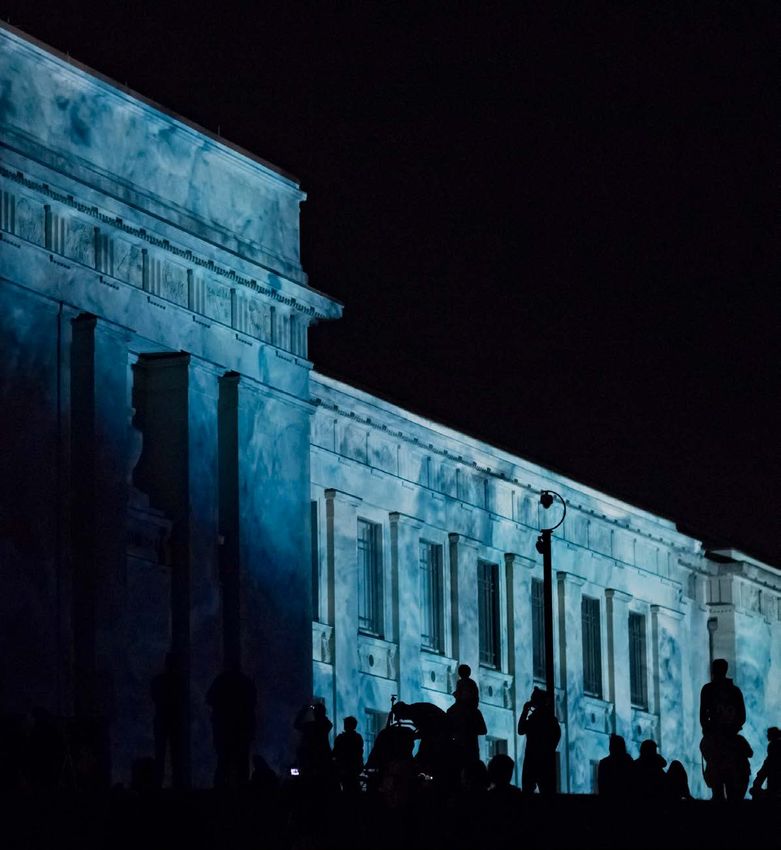
Contact us Front Cover:
Website: www.creativenz.govt.nz Antarctica - While You Were Sleeping by Joseph Michael
was premiered over three nights at Auckland’s War
Wellington Office Memorial Museum as part of the Auckland Arts Festival
Level 10 in 2017.
Aorangi House
85 Molesworth Street The 360-degree, 1:1 scale projection on the exterior of
PO Box 3806 the museum was accompanied by an immersive score by
Wellington 6140 composer Rhian Sheehan, which included the cracks,
T: 04 473 0880 creaks and groans of the icebergs.
F: 04 471 2865
As with previous projects, Joseph collaborated
E: info@creativenz.govt.nz
with numerous composers, creatives and technicians
Auckland Office from around the world to recreate the exquisite
Level 1 Antarctic landscapes.
Southern Cross Building
www.joemichael.co.nz
Cnr High and Victoria Streets
PO Box 1425
Auckland 1140
T: 09 373 3066
F: 09 377 6795
E: northern@creativenz.govt.nz
Christchurch contact
E: southern@creativenz.govt.nz
ISSN 2463-3127 (Print)
ISSN 2463-3135 (Online)This Statement of Performance Expectations documents the Arts Council of New Zealand’s (Creative New Zealand’s) planned activity, performance targets and forecast financial information for the period 1 July 2017 to 30 June 2018. It is presented in accordance with sections 149B to 149M of the Crown Entities Act 2004. Michael Moynahan Chair, Arts Council 30 June 2017 Caren Rangi Deputy Chair, Arts Council 30 June 2017
Contents
Ngā ihirangi

INTRODUCTION                                          1
                                                          OUR ORGANISATION             38
KUPU ARATAKI
                                                          TŌ TATOU TARI
  Foreword                                            2
                                                              What we do               39
  About our plan                                     3
                                                              Our relationships        39
  Our performance framework                         4
                                                              The Arts Council         39
    Output class and funding model                   4
                                                              Policies and processes   40
    Our strategic direction for 2016–2021             5
                                                              Our staff                40
    Our performance framework for 2017/18             7
                                                              More information         40
NON-FINANCIAL PLANNING AND PERFORMANCE              9
WHAKAMAHERE UTU KORE MAHI
    Our outcomes                                    10
    Our deliverables                                 13

FINANCIAL PLANNING AND PERFORMANCE                  24
WHAKAMAHERE PŪTEA MAHI
    Our investment for 2017/18                      25
  Prospective financial statements                  27
    Prospective statement of comprehensive
    revenue and expense                             28
    Prospective statement of changes in net
    assets/equity                                    28
    Prospective statement of financial position     29
    Prospective statement of cash flows             30
    Notes to the prospective financial statements   31
SECTION 1 INTRODUCTION KUPU ARATAKI 1 Creative New Zealand Statement of Performance Expectations 2017/18
Foreword                                                       Across our programmes, we will work to ensure the vitality
                                                               of ngā toi Māori (Māori arts), the arts of Pasifika and of the
                                                               diverse cultures of New Zealand. These arts have a special,
Kupu whakataki                                                 treasured place in Aotearoa and make a huge contribution
                                                               to life in New Zealand. Our work will help assure their
We are pleased to present our Statement                        vibrancy and sustainability into the future.
of Performance Expectations for 2017/18,                       Although we are passionate about our work, we are only
the second annual plan under our                               able to develop a thriving arts sector with the generous
Statement of Intent 2016–2021.                                 support we receive from the New Zealand Government,
                                                               the New Zealand Lottery Grants Board and other patrons,
Every day, in every corner of the country, the arts have       funders and partners.
a meaningful impact on the lives of New Zealanders. As
Aotearoa’s national arts development agency, we stand          We look forward to another year where New Zealand
proudly behind those involved in the arts. From orchestra      artists shine at home and abroad, and where every
pits and art galleries to community halls and marae, we        New Zealander has the opportunity to participate in and
encourage, promote and support the arts for the benefit of     experience the arts.
all New Zealanders.

We begin the financial year in a strong position, owing to
healthy early funding forecasts for 2017/18 from the New
Zealand Lottery Grants Board. A strong 2016/17 result has
also seen a rise in lottery revenue over that predicted at
the beginning of the last financial year.

This gives us the opportunity to help insulate the arts
sector against funding uncertainties, and it will allow us
to be a more resilient investor in the year ahead. We’ll
also look to strengthen our own organisation’s ability to
support the arts sector and deliver to the strategic vision,
outcomes and goals we’ve set ourselves as we head
towards 2021.                                                  Michael Moynahan
                                                               Chair, Arts Council
In 2017/18, the Arts Council will deliver important
elements from two of these goals. We will implement an
investment strategy that will guide the way we invest in
the arts sector, to ensure this investment is being put
to best effect. We will also strengthen our role as a
powerful advocate for the arts. With our refreshed
advocacy strategy, we are poised to better demonstrate
the benefits the arts can have for economic growth,            Stephen Wainwright
regional development and stronger communities.                 Chief Executive, Creative New Zealand

                                                                      Creative New Zealand Statement of Performance Expectations 2017/18 2
Section 1: Introduction About our plan Ta tātau mahere Creative New Zealand is Aotearoa’s national arts development agency. We encourage, promote and support the arts in New Zealand for the benefit of all New Zealanders. More information about our organisation is on page 39. Each year, Creative New Zealand publishes a statement of performance expectations (SPE) that sets out its planned activity, performance targets and forecast financial information for the relevant financial year. The SPE sits under the Statement of Intent (SOI) 2016–2021 and describes how this year’s work will contribute to achieving the SOI’s medium-term strategy. This SPE covers the 2017/18 financial year (ie, 1 July 2017 to 30 June 2018) and comprises two parts: ▪ non-financial planning and performance – describes our work for the year ahead and sets out performance measures around our outcomes and deliverables (annual priorities and core activities) ▪ financial planning and performance – provides our financial statements for the 2017/18 year and the notes to those statements. We will report against these two parts in the 2017/18 Annual Report. Given the potential for change in the level of funding we receive from the New Zealand Lottery Grants Board (NZLGB), and the timing of this advice with respect to our planning and reporting cycle, we may need to amend this SPE during the 2017/18 year as circumstances require. We will consult with the Minister for Arts, Culture and Heritage should changes be required. 3 Creative New Zealand Statement of Performance Expectations 2017/18Important Photographs and Contemporary Art
Our performance                                               ▪ advocating for the arts (external focus)
                                                              ▪ improving service delivery (external/internal focus)

framework                                                     ▪ improving our organisation (internal focus).

                                                              Delivering on these goals, supported by our purpose and
Te tūtuki i a mātau mahi                                      our values (ie, our foundation), will help us achieve our
                                                              outcomes and our vision (ie, our future).
The SOI sets out Creative New Zealand’s
                                                              No output classes have been given reporting exemptions
strategic direction over the 2016 to 2021                     by the Minister of Finance. We do not propose to supply
period. Our performance framework is                          any class of outputs in 2017/18 that is not a reportable
                                                              class of outputs.
derived from that strategic direction.
                                                              We operate under one central government output
Broadly, our strategic direction comprises three parts:
                                                              expense: Promotion and support of arts and film. The
▪ our future – what we want to achieve overall (our           Ministry for Culture and Heritage is our monitoring
  vision) and the difference we want our work to make         department. The Minister for Arts, Culture and Heritage
  (our outcomes)                                              is our responsible Minister.
▪ our focus – what we want to achieve by 2021 (our            We are principally funded through Vote: Arts, Culture and
  goals, supported by objectives) and what we do to           Heritage and the NZLGB. In 2017/18, Creative New Zealand
  support this (our deliverables)                             expects to receive:
▪ our foundation – our reason for being, as set out in
                                                              ▪ $15.689 million from the New Zealand Government
  our Act (our purpose) and the core principles that
                                                                through Vote: Arts, Culture and Heritage
  guide our work (our values).
                                                              ▪ an estimated $33.75 million from the NZLGB. This
We also contribute to the broader aims for the cultural         figure takes into account Lotto New Zealand’s forecast
sector and the Government’s wider priorities.                   payment to the NZLGB for 2017/18, along with the
                                                                average payment from the NZLGB to Creative New
Our strategic direction for 2016–2021 and our performance
                                                                Zealand over the previous six years. The final expected
framework for 2017/18 are outlined in the following pages.
                                                                2017/18 payment from the NZLGB will be confirmed in
Output class and funding model                                  July 2017.

Creative New Zealand has one output class – Promotion
and support of the arts – which is a reportable class for
the purposes of the Crown Entities Act 2004. Under this
output class we will work to achieve our five strategic
goals and related objectives by 2021 (refer to Creative
New Zealand’s strategic direction for 2016–2021 on pages
5-6).

Our goals and objectives are directly supported by our five
deliverables:

▪ investing in the arts (external focus)
▪ developing the arts (external focus)

                                                                    Creative New Zealand Statement of Performance Expectations 2017/18 4
Section 1:
Introduction
Our strategic direction for 2016-2021
OUR VISION CULTURAL SECTOR VISION
DYNAMIC AND RESILIENT NEW ZEALAND ARTS, VALUED IN AOTEAROA AND INTERNATIONALLY
What we want to achieve overall New Zealand’s distinctive culture enriches our lives
OUR FUTURE
Titiro whakamua
OUR OUTCOMES STRONGER ARTS COMMUNITIES, ARTISTS GREATER PUBLIC ENGAGEMENT WITH
CULTURAL SECTOR OUTCOMES
The difference we want our
AND ORGANISATIONS THE ARTS
as shown by as shown by Create: Cultural and sporting activity flourishes in
work to make
High-quality New Zealand art is developed New Zealanders participate in the arts New Zealand
New Zealand arts gain international success New Zealanders experience high-quality arts Engage: Engagement in cultural and sporting
activities is increasing
Preserve: Our heritage can be enjoyed by future
generations
We regularly refine our We develop the arts sector’s We are a powerful advocate
Excel: Artists, athletes and organisations achieve
OUR GOALS investment to ensure the arts capacity to succeed for the arts
excellence
(supported by objectives) continue to develop in New
OUR FOCUS
Zealand for New Zealanders
Te arotahi
What we want to achieve
by 2021
EXTERNAL FOCUS EXTERNAL FOCUS EXTERNAL FOCUS
▲ CULTURAL SECTOR PRIORITIES
We improve service delivery and systematically We become a more focused,
OUR DELIVERABLES Fostering inclusive New Zealand identity
look afresh at how best to deliver activities with higher-performing, learning organisation Supporting Māori cultural aspirations
What we do to support our and for the arts sector Front footing transformative technology
goals/objectives
Improving cultural asset sustainability
EXTERNAL/INTERNAL FOCUS INTERNAL FOCUS
Measuring and maximising public value
OUR FOUNDATION
Te tūāpapa
OUR PURPOSE OUR VALUES
Our reason for being, as set out in our Act The core principles that guide our work
To encourage, promote and support the arts in Mana Toi • Tauiwi • Mana Māori • Mana Pasifika • Mahitahi •
New Zealand, for the benefit of all New Zealanders Te Taumata • Tauutuutu • Manaakitanga
5 Creative New Zealand Statement of Performance Expectations 2017/18 Creative New Zealand Statement of Performance Expectations 2017/18 6Section 1:
Introduction
Our performance framework for 2017/18
VISION OUTCOMES AND MEASURES GOALS DELIVERABLE AREAS AND MEASURES
Annual Priorities Core Activities
Investing in the arts
Signalling our future funding Investment programmes
intentions
% of investment organisations that meet or exceed expectations for overall ●
organisational performance
% of investment organisations that meet or exceed expectations against KPIs set in ●
We regularly refine our investment to
individual funding agreements (‘Investment programme success rate’)
ensure that the arts continue to develop # of organisations in the investment programme: Tōtara and Kahikatea ●
Stronger arts communities, artists
in New Zealand for New Zealanders
and organisations as shown by:
Project funding
NEW ZEALAND ARTS, VALUED IN AOTEAROA
High-quality New Zealand art is ●
developed % of completed projects that meet/exceed expectations in funding agreements
# of grants awarded (Grants and special opportunities, and International programme) ●
# of new New Zealand works developed ● ●
(across all programmes) # of grants awarded (Creative Communities Scheme)
% Project completion rate ●
New Zealand arts gain international
DYNAMIC AND RESILIENT
success
AND INTERNATIONALLY
# of individuals/organisations funded ● Developing the arts
by Creative New Zealand to engage
internationally (across all progammes) Driving the development of arts sector % of clients who agree capability building programmes align with their needs and ●
# of international arts activites/events ● organisations priorities
funded by Creative New Zealand % of clients who rank capability building initiatives as extremely or very effective, ●
(across all progammes) We develop the arts sector’s capacity Realigning our capability and relevant and helpful
to succeed international programmes % of capability building initiatives delivered to the sector that have met or exceeded our ●
expectations (new SPE measure in 2017/18)
# of capability building initiatives delivered to the sector ●
Greater public engagement with the
arts as shown by:
Advocating for the arts
New Zealanders participate in
the arts Working with Māori and local % of advocacy actions described in the annual advocacy action plan that have met or ●
# of participants in arts activities ● We are a powerful advocate government exceeded our expectations (new SPE measure in 2017/18)
funded by Creative New Zealand for the arts # of advocacy actions, including submissions on arts matters ●
Boosting the impact of our research
New Zealanders experience
high-quality arts
# of attendances at arts activities/ ● Improving service delivery
events funded by Creative New Zealand
Aligning our business practices with % of customers and clients who are satisfied with overall service received from ●
We improve service delivery and
our investment intentions Creative New Zealand
systematically look afresh at how best to
% of funding decisions made within timeframes ●
deliver activities with and for the arts sector
Refining our systems
● SPE measure Improving our organisation
● Non-SPE measure
Delivering to the Investment Strategy # Maintain or improve audit management ratings ●
We become a more focused, higher- % Improve on Best Workplaces Survey – overall performance index ●
performing, learning organisation Developing our people $ Maintain operating costs inline with agreed budgets ●
# Undertake internal review of process and policy against standards ●
7 Creative New Zealand Statement of Performance Expectations 2017/18 Creative New Zealand Statement of Performance Expectations 2017/18 8SECTION SECTION 2: 2 Non-financial planning and performance NON-FINANCIAL PLANNING AND PERFORMANCE WHAKAMAHERE UTU KORE MAHI 9 Creative New Zealand Statement of Performance Expectations 2017/18
Non-financial planning
                                                               Two measures relating to investing in the arts and numbers
                                                               of grants awarded will no longer be reported externally. We
                                                               will continue to report them internally to provide context
and performance                                                for our activities, however we aim to focus our external
                                                               reporting on impact and outcome measures rather
Whakamahere utu kore mahi                                      than quantitative activity measures. The performance
                                                               framework will continue to evolve as we bring a more
This section outlines performance                              external perspective to our measures. We also plan to
                                                               keep improving our data collection, so we get a more well-
measures around our outcomes and                               rounded picture of the sector’s performance.
deliverables (annual priorities and core
activities). We will report on these, along                    Our outcomes
with significant areas of work set out in                      Our outcomes describe the difference we want our work
                                                               to make. They guide our work, including how we assess
the ‘What we will do’ sections, in our
                                                               applications to our funding programmes as well as the
Annual Report 2017/18.                                         delivery of our development and advocacy initiatives.
Our ability to meet the expectations in these measures         We are planning on achieving two outcomes.
depends on the level of resourcing we receive over
the course of the year. Unlike many other government           ▪ Stronger arts communities, artists and
agencies, the degree of our revenue that is variable is high     organisations as shown by: high-quality
(eg, around 69 percent in 2016/17).                              New Zealand art is developed; and New Zealand arts
                                                                 gain international success.
Because of this, we tend to adopt a conservative approach
                                                               ▪ Greater public engagement with the arts as
to forecasting our measures. While they are described
                                                                 shown by: New Zealanders participate in the arts; and
as ‘targets’ in the tables throughout this section, in many
                                                                 New Zealanders experience high-quality arts.
areas, they are generally either:
                                                               An important focus for our work in 2017/18, across
▪ demand driven and therefore dependent on the
                                                               the organisation and for both outcomes, will be on
  number of applications received and the specific
                                                               advancing ngā toi Māori (Māori arts) including through
  amounts funded (eg, the number of new New Zealand
                                                               the development of a Māori arts strategy. In 2016/17, we
  works developed)
                                                               partnered with Te Puni Kōkiri to develop an action plan
▪ the result of activity in the arts sector outside of our     and we supported a memorandum of understanding.
  direct control (eg, New Zealanders participating in or       In 2017/18, we will continue to develop our relationship
  experiencing the arts).                                      with hapū, iwi and Māori as important advocates and co-
                                                               funders of the arts in Aotearoa New Zealand.
Despite our cautious approach, we have raised targets
in certain areas. This achievement has resulted from           In 2017/18, we will also advance our Mana Pasifika work
strong performance in these areas in previous years, such      by developing a Pacific arts strategy. Pacific arts have long
as the number of individuals and organisations funded          been a priority for Creative New Zealand, and the success
by Creative New Zealand to engage internationally, and         of Pacific arts and artists is a distinct feature of the arts
the number of attendances at arts activities and events        landscape in New Zealand. The Pacific arts strategy will
funded by Creative New Zealand through its investment          aim to set a clear strategic direction for Pacific arts and
programmes. As we note in our SOI, this is a sign of an        artists in New Zealand and drive Creative New Zealand’s
enthusiastic, confident and productive arts sector, whose      work in this area from 2018 to 2021.
creative output is flourishing.

                                                                     Creative New Zealand Statement of Performance Expectations 2017/18 10
SECTION 2:
Non-financial planning and performance
We will also continue to support the creation of, and To achieve this outcome, we will work to ensure that
participation in, a diverse range of New Zealand arts high-quality New Zealand arts are developed. This will
through the implementation of Creative New Zealand’s give artists and arts organisations opportunities to
Diversity in the Arts Policy. In addition, we’ll work together continually develop their artforms, the quality of their work
with Foundation North to offer the Auckland Diversity and their artistic skills and capabilities. It will also allow
Project Fund for another year. them to experiment, be innovative and take risks, and
create work that excites and engages audiences.
Stronger arts communities, artists
Given that international success is an important part
and organisations as shown by:
of a healthy New Zealand arts sector, our international
→ High-quality New Zealand art is developed programme connects high-quality artists with global
→ New Zealand arts gain international success markets and audiences through presentation, touring,
relationship building and collaborative projects, including
Dynamic and resilient arts come from sustainable and cultural and artistic exchange. This in turn helps them
successful arts communities, artists and organisations. increase their income, develop their practice in relation
to the international arts environment, and promotes
New Zealand and its arts to international audiences.
Measures :
No. Name 2015/16 Actual 2016/17 Target 2017/18 Target Note
O1.1 High-quality New Zealand art 314 ≥360 ≥360 The number of new New Zealand
is developed: Number of new works includes works funded through
New Zealand works developed Grants and special opportunities
(across all programmes) funding and the Investment
programmes. The number is largely
driven by available resources,
applications received and amounts
funded. We ensure high-quality New
Zealand art is funded through robust
application and assessment processes.
O1.2 New Zealand arts gain 275 ≥150 ≥150
international success: Number
of individuals and organisations
funded by Creative New Zealand
to engage internationally (across
all programmes)
O1.3 New Zealand arts gain 538 ≥250 ≥400
international success: Number
of international arts activities and
events1 funded by Creative New
Zealand (across all programmes)
1 ‘Arts activities’ capture a variety of works that Creative New Zealand
funds (eg, plays, concerts, dance performances, exhibitions,
workshops, masterclasses, publications). ‘Events’ capture the
number of opportunities audiences have to experience arts activities
(eg, each time a play, concert, dance performance, workshop,
masterclass occurs; each day an exhibition is open to the public;
each sale or publication).
11 Creative New Zealand Statement of Performance Expectations 2017/18Greater public engagement with
the arts as shown by:
→ New Zealanders participate in the arts
→ New Zealanders experience high-quality arts
By engaging with the arts, New Zealanders show that they
appreciate and value them as a part of their day-to-day lives.
To achieve this outcome, we want New Zealanders to have
as many opportunities as possible to participate in the
arts. This includes opportunities to celebrate, practise
and transmit their diverse artistic traditions and cultural
heritage, and to develop links between communities that
improve cross-cultural understanding.
Audiences are vital to a vibrant arts sector. This year, we
will continue to broaden the opportunities for all New
Zealanders to experience the arts, providing them with
access to diverse artistic experiences.
Measures :
No. Name 2015/16 Actual 2016/17 Target 2017/18 Target Note
O2.1 New Zealanders participate in Participation includes the active
the arts: Number of participants involvement of individuals, groups
in arts activities funded by and/or communities in the making
Creative New Zealand: or presentation of art. It applies to
professional, emerging and non-
O2.1.1 Investment programmes 59,996 ≥35,000 ≥40,000
professional artists, including those
O2.1.2 Creative Communities Scheme 158,824 ≥100,000 ≥150,000 involved in cultural and recreational
activities.
O2.1.3 Project funding: Grants and New in 2016/17 Baseline Baseline
special opportunities developed developed
O2.2 New Zealanders experience This measure refers to audience
high-quality arts: Number of numbers, including paid audiences,
attendances at arts activities readers, viewers and attendances at
and events funded by Creative free events.
New Zealand:
O2.2.1 Investment programmes 1,250,415 ≥955,000 ≥955,000
O2.2.2 Project funding: Grants and New in 2016/17 Baseline Baseline
special opportunities developed developed
Creative New Zealand Statement of Performance Expectations 2017/18 12SECTION 2:
Non-financial planning and performance
Our deliverables Investing in the arts
Our deliverables are what we’ll do to support our goals and Investing in the arts supports the following
objectives, as set out in our SOI. goal/objectives:
▪▪ Investing in the arts: Providing financial assistance to Goal Objectives
artists, arts practitioners and arts organisations and We regularly refine our 1. We’ll develop an investment
their projects. investment to ensure strategy which systematically
that the arts continue to tests the contribution of our
▪▪ Developing the arts: Assisting arts organisations and develop in New Zealand key programmes to improving
individual artists and practitioners to develop their skills for New Zealanders the resilience of artists and arts
and capability, including in community engagement. (external focus)
infrastructure and delivery to
▪▪ Advocating for the arts: Promoting the value of the New Zealanders.
arts to government agencies and other stakeholders, 2. We’ll use the investment
and empowering the arts sector and the public to strategy as the principal
‘make the case’ for the arts. tool for guiding investment
decisions in the arts sector,
▪▪ Improving service delivery: Continuing to improve and improve the sector’s
the way in which we deliver services to the arts sector, understanding of the policies,
including focusing on what we’re best placed to deliver. guidelines and criteria that
underpin investment decisions.
▪▪ Improving our organisation: Improving the way we
operate as Aotearoa’s national arts development agency. 3. We’ll refine our investment
decisions and reallocate
Each area’s deliverables are a combination of: resources based on
transparent policies.
▪▪ Annual priorities: These are a mix of new projects
and on-going work, and tend to be more innovative What we’ll do
or high-profile in nature than core activities. They are Funding from Creative New Zealand supports individual
likely to change from year-to-year, as we make progress professional development opportunities as well as the
towards meeting our goals. creation, presentation and distribution of art – across
▪▪ Core activities: These relate to more ‘business community and professional arts – throughout New Zealand
as usual’-type activities, such as running funding and overseas.
programmes like Arts Grants or Quick Response,
Most of Creative New Zealand’s work is delivered through
delivering capacity building initiatives, or carrying out
investing in the arts via our key funding programmes, as
advocacy such as submissions to local government.
outlined on the next page. More information about funding
programmes is available on our website:
www.creativenz.govt.nz/find-funding
13 Creative New Zealand Statement of Performance Expectations 2017/18Programme Funds Timeframes Description
Investment Toi Tōtara Haemata (Arts Leadership) Funding for 2 to 5 years Contestable longer-term funding to arts
programmes Investment Programme (Tōtara) organisations to support the continuous delivery
of arts programmes that deliver to our outcomes.
Toi Uru Kahikatea (Arts Development) Funding for 1 to 3 years
Investment Programme (Kahikatea)
Grants and special Quick Response Grants (including Funding up to $7,500, Contestable shorter-term funding to arts
opportunities Tohunga and Tukunga) three times a year practitioners and organisations to support the
delivery of arts that meet our outcomes.
Arts Grants (including Toi Ake) Funding up to $65,000
(up to $130,000
depending on artform),
two times a year
Scholarships, residencies and Varies
bursaries
Creative Creative Communities Scheme Average funding of Small grants funding that supports local arts
Communities Scheme $2,000 administered projects and encourages broad community
through local involvement, diversity and engaging young people.
authorities
International International Presentation Fund $350,000 per annum International presentation and exchange
with four funding initiatives that support the presentation of
rounds per year New Zealand arts internationally.
Other international funding (eg, Varies
Venice Biennale)
In 2016/17, we began developing an investment strategy to ▪▪ the Auckland Diversity Project – working to increase
systematically test the contribution of our key programmes the participation and attendance of Māori, Pasifika and
to improving the resilience of artists and arts infrastructure Asian audiences with the arts in Auckland, and support
and delivery of the arts to New Zealanders. The strategy and promote development of arts by, with, and for
has been shaped by our guiding principles, as set out in the Māori, Pasifika and Asian individuals and communities
Arts Council of New Zealand Toi Aotearoa Act 2014, and ▪▪ the Asia Artform Exchange Fund (Stage 2) – offering
our current vision and outcome statements. New Zealand artists, arts organisations and
The Arts Council will approve the strategy in 2017/18, practitioners the opportunity to build relationships and
and we will implement it as our main tool for guiding increase artistic exchange with artists and practitioners
investment decisions across all our funding programmes. in targeted territories in Asia.
Implementation of the Investment Strategy is linked to Progress on the above initiatives will be presented in
many of the deliverables discussed in the following page. Creative New Zealand’s Annual Report, both for 2016/17
In addition to the core funding programmes outlined above and 2017/18.
several important initiatives undertaken in 2016/17 will
continue in 2017/18. These include: In 2017/18, we are budgeting for $40.767 million to be
distributed to the community through investments or
▪▪ the 57th Venice Art Biennale – co-funding and leading grants. We are often only a partial investor, with additional
New Zealand’s presence at la Biennale di Venezia with funding or resources coming from local government, other
Lisa Reihana’s Emissaries central government agencies, corporate sponsorship,
▪▪ regional pilots in Waikato and Southland – working community and gaming trusts, ticket sales, volunteers,
with communities to deliver on important arts private philanthropy and donations.
development needs
Creative New Zealand Statement of Performance Expectations 2017/18 14SECTION 2:
Non-financial planning and performance
Annual priorities
Measures:
No. Name Description 2017/18 milestones Achievement result
G1.1 Signalling our future We develop and communicate Investment Strategy and The arts sector has a clear
funding intentions where we will maintain and implementation plan are agreed understanding of our investment
develop our investment in the by the Arts Council (December priorities and our investment
arts, arising out of the new 2017) and outlined to the arts shifts to match the Investment
Investment Strategy. sector (February 2018). Strategy.
Core activities
Measures:
No. Name 2015/16 Actual 2016/17 Target 2017/18 Target Note
INVESTMENT PROGRAMMES
G1.2 Percentage of investment 87% ≥95% ≥95% This measure reports on investment
organisations that meet clients’ delivery against performance in
or exceed expectations four areas: artistic, audience, financial and
for overall organisational organisational. It includes all Tōtara and
performance Kahikatea clients with continuous funding
agreements.
G1.3 Percentage of investment 94% ≥95% ≥95% This measure reports on investment clients’
organisations that meet delivery against the key performance
or exceed expectations indicators (KPIs) in individual funding
against KPIs set in agreements. It includes all Tōtara and
individual funding Kahikatea clients with continuous funding
agreements (‘Investment agreements.
programme success rate’)
PROJECT FUNDING
G1.4 Percentage of completed 99% ≥98% ≥98% This measure reports on evaluated
projects that meet or completion reports for project funding:
exceed expectations in Project funded Kahikatea clients; Grants
funding agreements and special opportunities; International and
capability building programme grants; and
other project funding.
15 Creative New Zealand Statement of Performance Expectations 2017/18Developing the arts
Developing the arts supports the following goal/objectives:
Goal Objectives
We develop the arts sector’s 1. We’ll identify relevant capacity areas to provide services in, which support the growth and development of
capacity to succeed (external the arts sector.
focus)
2. We’ll communicate our capacity offerings to the arts sector, and those offered in complementary areas by
others, and deliver initiatives which help support:
▪▪ Māori, Pasifika and New Zealand’s growing diversity
▪▪ artistic quality and renewal and international success
▪▪ audience focus and diversifying revenue generation
▪▪ digital expertise.
3. We’ll ensure that those we provide services for/to maximise the opportunities they take up, and use this
development as a strong platform for future growth.
What we’ll do The five tailored packages aim to provide support to
investment clients as follows.
Creative New Zealand provides opportunities for arts
organisations and individual artists and practitioners to ▪▪ Growth – helping organisations continue to grow and
build their skills and capability. Our capability building develop through developing a digital strategy and
initiatives are primarily targeted at investment clients, but increasing skills in database management, as well
resources are also available for the wider arts sector. improving systems, processes and reach. This package
also provides training on how to diversify income so an
The content of the Capability Building programme is
organisation becomes more sustainable.
informed by the main findings from the Organisational
Development Model self-assessment survey of investment ▪▪ Extension – helping organisations to develop
clients. This is data we receive from clients about their partnerships and extend networks and reach.
organisations, key trends as identified by consultation with ▪▪ Refresh – helping organisations to deliver and/or
the sector, and our strategic priorities. extend high-quality programming and explore new
opportunities for growth and development.
The 2017/18 programme will build on initiatives introduced
in 2016/17, which included two new funds as part of ▪▪ Change – helping organisations to evaluate
the Arts Philanthropy and Partnerships Programme. strategy and business planning in a time of change
The Partnership Incentive Fund aims to support arts and/or development.
organisations to diversify sources of income, increase ▪▪ Building a foundation – helping organisations to get
support from donors and business partnerships and established. This includes an induction programme
develop their fundraising capability. The Fundraising for with access to training resources and helps share
the Arts – Staff Placements Fund, a partnership between information and build networks. It also includes an
Creative New Zealand and Foundation North, offers offer of targeted capability support.
selected arts organisations funding towards salary costs of
a fundraising staff placement. The Capability Building programme will be delivered
through various approaches, including in partnership with
We will again provide initiatives tailored to investment other agencies or organisations and through contracts with
clients with similar characteristics, to align with their consultants for coaching and workshops, Creative New
development goals and to complement our funding. Zealand-led initiatives and customised grants.
In 2017/18, $1.577 million is currently budgeted for
developing the arts.
Creative New Zealand Statement of Performance Expectations 2017/18 16SECTION 2:
Non-financial planning and performance
Annual priorities
Measures:
No. Name Description 2017/18 milestones Achievement result
G2.1 Driving the development We enhance arts organisations’ Funding and capability building Arts organisations are more
of arts sector development through our initiatives are linked and successful in identified areas.
organisations investment in the arts sector, communicated to relevant arts
linking our funding and organisations (June 2018).
capability building initiatives to
enable future success.
G2.2 Realigning our capability We connect our capability Capability building and Demonstrable measures are
building and international building and international international programmes are in place to show how our
programmes programmes more closely with better integrated, with defined investment is adding value to
the new Investment Strategy. goals and targets to clarify the arts sector.
what future success looks like
(June 2018).
Core activities
Measures:
No. Name 2015/16 Actual 2016/17 Target 2017/18 Target Note
G2.3 Percentage of clients who New in 2016/17 ≥70% ≥70% These measures are based on the
agree capability building Organisational Development Model survey, a
programmes align with self-assessment tool for investment clients
their needs and priorities to review their organisation’s strengths and
weaknesses and to track progress over time.
G2.4 Percentage of clients who New in 2016/17 ≥70% ≥70%
The survey results help us tailor capability
rank capability building
initiatives that respond to areas of need. The
initiatives as extremely
survey is completed annually.
or very effective, relevant
and helpful
G2.5 Percentage of capability New in 2017/18 New in 2017/18 Baseline This new measure focuses on Creative
building initiatives developed New Zealand’s assessment of the immediate
delivered to the sector results of individual capability building
that have met or exceeded initiatives against the relevant objectives set
our expectations for each initiative.
17 Creative New Zealand Statement of Performance Expectations 2017/18Advocating for the arts
Advocating for the arts supports the following
goal/objectives:
Goal Objectives
We are a powerful advocate 1. We’ll create, in partnership with the arts sector, a compelling case for the value of the arts to
for the arts (external focus New Zealanders.
2. We’ll systematically strengthen our relationships with iwi, local authorities and other co-investors and
funders, and provide and communicate a suite of unique research, analysis and reports.
3. We’ll proactively measure and report on our success in advocating for the arts, and how this contributes
to strengthening the arts sector and improving public engagement.
What we’ll do An important focus for our work in 2017/18 will be on
continuing to enhance our relationships with Māori and
Creative New Zealand advocates for the benefits of the
local government. Good progress was made on both
arts to a variety of audiences, including government
fronts in 2016/17, including developing a memorandum of
agencies and local authorities. We also provide research
understanding and associated actions with Te Puni Kōkiri,
and resources to the arts sector to help allies carry out
and boosting our engagement with Local Government New
their own advocacy around those benefits.
Zealand and selected councils.
In 2016/17, we developed a refreshed advocacy strategy
In 2017/18, we will also advance our Mana Pasifika work
for 2016–2021, which outlines important audiences,
– continuing to recognise and engage with the arts of
messages and allies, as well as how we might better
the Pacific – and communicate our messages to other
measure our successes in the advocacy space. The
audiences, like the business community, private and
strategy is supported by annual advocacy action plans
philanthropic funders and central government.
and the 2017/18 plan being developed in tandem with
this SPE. A clear focus for Creative New Zealand on the Much of our advocacy work is delivered through existing
most effective things to fund, through the new Investment programmes and resources (principally staff time). In
Strategy, will also provide a better idea of what we would 2017/18, $0.575 million is budgeted specifically for advocacy.
like to encourage others to do.
Our advocacy actions include:
▪▪ collaborating with other agencies on areas of mutual
interest
▪▪ carrying out policy development and research for the
benefit of the arts sector
▪▪ making submissions on issues affecting the sector or
Creative New Zealand
▪▪ delivering resources to the sector, such as the
Advocacy Toolkit
▪▪ carrying out other advocacy initiatives (eg, developing
new ways to engage the public in the arts).
Creative New Zealand Statement of Performance Expectations 2017/18 18SECTION 2:
Non-financial planning and performance
Annual priorities
Measures:
No. Name Description 2017/18 milestones Achievement result
G3.1 Working with Māori and We will continue to enhance Agreements established with Our agreements with important
local government our relationship with Māori and influential entities to drive partners are advanced, so that
local government as important important developments for Māori arts develop regionally,
advocates and co-funders of the Māori arts and culture nationally and internationally.
arts in Aotearoa New Zealand. (June 2018).
Local government’s
Research on local government responsiveness to the arts
support for the arts is shared increases, as shown through
(September 2017), and more local authority arts plans
tools to support improved and strategies, and the arts
responsiveness to the arts – co- featuring as an important
created with Local Government enabler in more local authority
New Zealand – are developed long-term plans.
and shared (June 2018).
G3.2 Boosting the impact of our We will deliver our triennial New Research commissioned, carried More Māori entities and local
research Zealanders and the arts research out and published (March 2018) authorities partner with us in the
looking at attitudes, attendance and engagement plan delivered research.
and participation in the arts, and (from April 2018).
increase its role as an important
advocacy tool for the arts sector.
Core activities
Measures:
No. Name 2015/16 Actual 2016/17 Target 2017/18 Target Note
G3.3 Percentage of advocacy New in 2017/18 New in 2017/18 ≥90% This new measure focuses on Creative
actions described in New Zealand’s assessment of the immediate
the annual advocacy results of individual advocacy actions, as
action plan that have set out in the relevant annual advocacy
met or exceeded our action plan.
expectations
Advocacy actions include: advocacy
updates and briefings to the sector (eg,
research), new or significant updates to
advocacy tools and individual submissions
to local and central government agencies.
19 Creative New Zealand Statement of Performance Expectations 2017/18Improving service delivery
Improving service delivery supports the following
goal/objectives:
Goal Objectives
We improve service 1. We will systematically look at our initiatives and activities and test whether we should continue to do them,
delivery and systematically change them or invite others to take them on.
look afresh at how best
to deliver activities with 2. We will simplify our current programmes and initiatives to provide clarity and enhance our focus on work that
and for the arts sector we are better placed to advance than others.
(external/internal focus)
3. We will routinely seek insights from users to improve their experience of our digital platforms.
What we’ll do Unlike our funding spend (ie, investing, developing and
advocating), no fixed sum is allocated towards improving
The way we support the arts sector is important, and we
our services. Rather, it is covered by our operating costs,
will continue to make things simpler for our customers
which are currently budgeted at $7.979 million in 2017/18.
and clients when they are engaging with us. In 2017/18,
we will ensure our systems and processes are set up to
best support the new Investment Strategy. This includes
refining our systems to improve service delivery and
operational efficiency.
In May 2017, the Government outlined 10 new Better
Public Services targets, building on the success of the
initial targets set in 2012. Two goals in particular will
inform our work to improve our service delivery: Result
9: Business gains value from easy and seamless dealings
with government and Result 10: People have easy access
to Public Services, which are designed around them, when
they need them.
An important focus for our work is on making it easier for
staff and clients to use our grants management system.
In 2016/17, clients across all of our funding programmes
experienced first hand the benefits of the new online
system. A new business intelligence tool was introduced in
2016/17 with the aim of rolling this out to all staff across the
organisation in 2017/18. This will help give us more timely
and useful planning and reporting information for both our
own decision-making and the sector’s wider information.
In 2017/18, we will also produce a report on the health of
our arts investment programmes. Covering the period
2012 to 2016, this report will provide additional feedback
and insights for our investment clients about their own
performance and that of the wider portfolio over time.
Creative New Zealand Statement of Performance Expectations 2017/18 20SECTION 2:
Non-financial planning and performance
Annual priorities
Measures:
No. Name Description 2017/18 milestones Achievement result
G4.1 Aligning our business We will adjust our systems Operational changes necessary Systems are well placed to
practices with our and processes to best support for the delivery of the Investment better serve and deliver on
investment intentions the delivery of our investment Strategy are appropriately our investment intentions, and
intentions, as set out in the new planned and/or implemented progress on delivering on these
Investment Strategy. (June 2018). intentions is tracked.
G4.2 Refining our systems We will continue to refine our An activity statistics table We have a better understanding
systems, so as to improve is introduced across all of the impact our work is having,
service delivery and operational programmes for improved with reduced costs to our
efficiency. reporting on the impact of business.
our work (July 2017), and
legacy systems are retired and
integrated into the new Grants
Management System (June
2018).
Core activities
Measures:
No. Name 2014/15 Actual 2015/16 Target 2017/18 Target Note
G4.3 Percentage of customers n/a ≥70% ≥70% The 2017/18 target is based on the results
and clients who are of the 2014/15 Client Satisfaction Survey
satisfied with overall conducted by research agency Colmar
service received from Brunton (66%). Creative New Zealand has
Creative New Zealand begun surveying customers and clients
more frequently (at least annually) using a
less formal online survey.
21 Creative New Zealand Statement of Performance Expectations 2017/18Improving our organisation
Improving our organisation supports the following
goal/objectives:
Goal Objectives
We become a 1. More focus means we give more effort to fewer things that have the most impact.
more focused,
2. We’ll improve the tools we have to do our jobs, set and then achieve high performance expectations, enhance
higher-performing,
learning organisation our learning in identified areas, and become a best practice organisation in terms of how we engage with
(internal focus) Māori, Pasifika and diverse groups in New Zealand.
3. We’ll ensure that the way we improve our performance evolves over time, responding to our own successes,
areas for improvement and the external environment.
What we’ll do As with Improving service delivery, no fixed sum is
allocated towards improving our organisation; resources
Along with Improving service delivery, this area focuses
come from our operating costs, which are currently
on how we can carry out our work better. This area has a
budgeted at $7.979 million in 2017/18.
particular focus, though, on ourselves as an organisation,
rather than directly delivering services to our customers
and clients.
Beginning in 2016/17, our Organisational Development
Project focuses on how we can best position our
organisation for future success in delivering on the goals,
outcomes and vision we set for ourselves in the SOI
2016–2021. The recommendations from this project will
help us in 2017/18 to identify Creative New Zealand’s future
development needs and begin upskilling staff in these areas.
This continues our work from 2016/17 to update our
learning and development policies and practices.
These were updated to include the requirement that all
employees have an active, agreed development plan in
place. We will also help staff to understand how their work
contributes to the new Investment Strategy and identify
the key skills required for its successful implementation.
In 2017/18, those we serve will continue to have an
important role in helping us understand how we can
improve. The 2016/17 customer survey results will indicate
how we are going, help us to see where we have improved
from our last survey in 2014/15 and show where there are
further opportunities to grow.
Creative New Zealand Statement of Performance Expectations 2017/18 22SECTION 2:
Non-financial planning and performance
Annual priorities
Measures:
No. Name Description 2017/18 milestones Achievement result
G5.1 Delivering to the We will help staff understand Staff engagement around the Staff have a clear understanding
Investment Strategy how their work contributes to Investment Strategy occurs of how they deliver on the
the new Investment Strategy (August 2017) and key skills are Investment Strategy and
and identify the key skills identified and discussed with ‘investment thinking’ is
required for its successful staff (December 2017). increased.
implementation.
G5.2 Developing our people We will identify Creative New Creative New Zealand’s Capability begins to grow in
Zealand’s future development developmental needs are areas that are critical to success.
needs and begin upskilling staff identified and prioritised
in these areas. (September 2017) and training
initiatives are provided (from
October 2017).
Core activities
Measures:
No. Name 2015/16 Actual 2016/17 Target 2017/18 Target Note
G5.3 Maintain or improve audit Good or very Very good Very good This measure includes annual audit ratings
management ratings good for management control, financial systems
and service performance information.
G5.4 Improve on ‘Best 72.8% ≥74% ≥74% This measure is an average of the survey’s
Workplaces’ survey – section scores, covering areas like quality
overall performance index and performance focus, communication
and co-operation, and learning and
development.
23 Creative New Zealand Statement of Performance Expectations 2017/18SECTION 3
FINANCIAL PLANNING
AND PERFORMANCE
WHAKAMAHERE PŪTEA MAHI
Creative New Zealand Statement of Performance Expectations 2017/18 24SECTION 3:
Financial planning and performance
Financial planning In its financial planning and performance, Creative
New Zealand will:
and performance ▪▪ budget and manage operating expenditure to ensure
that the minimum level of retained earnings approved
by the Arts Council is maintained
Whakamahere pūtea mahi
▪▪ manage the level of working capital to ensure liabilities
This section provides our prospective financial statements are paid when due, and maintain a conservative cash
for the 2017/18 year and the notes to those statements. It management strategy – investing in term deposits
also talks in further detail about our investment in the arts and/or interest-bearing accounts with established
for 2017/18. organisations approved by the Council
The prospective financial statements in this section ▪▪ budget and manage capital expenditure within levels
are based on policies and approvals in place as at 30 June approved by the Council
2017 and are exclusive of goods and services tax (GST) ▪▪ operate within the financial delegations approved by
(except for payables and receivables, which are the Council
GST inclusive).
▪▪ operate prudently within the organisation’s robust
The prospective financial statements form part of the internal controls.
SPE and form the basis for end-of-year reporting in the
financial statements contained in the Annual Report. Our investment for 2017/18
Actual results presented in the Annual Report may vary An important focus for Creative New Zealand, and one
from the information presented here, and the variations that informs this plan, revolves around balancing revenue
may be material. variability with the provision of as much reasonable certainty
The prospective financial statements outline Creative as we can muster in our investment and service delivery.
New Zealand’s activities and planned performance. When planning our investment for 2017/18, we took several
The use of this information for other purposes may not factors into account including:
be appropriate.
▪▪ maintaining our investment in the arts at a level
These prospective financial statements have been that was as high as prudently possible, noting the
prepared on the basis of assumptions as to future events particularly strong 2016/17 result for lotteries revenue
that Creative New Zealand reasonably expects to occur, over that predicted at the beginning of that year
associated with the actions that Creative New Zealand
▪▪ continue to deliver to our strategic outcomes in a
reasonably expects to take, as at the date that this
similar pattern as in prior years, noting the need to
information was prepared.
look at strengthening our own organisation’s ability
Figures shown in these prospective financial statements to support the arts sector and deliver to the strategic
are based on the following: vision, outcomes and goals we’ve set ourselves as we
head towards 2021
▪▪ June 2016 – actual figures from the 2015/16 Annual
Report ▪▪ working out how we might better insulate the arts
sector from future fluctuations in our New Zealand
▪▪ June 2017 – forecast figures based on the actual figures
Lottery Grants Board (NZLGB) funding.
on 31 May 2017
▪▪ June 2018 – budget based on the budget approved by
the Arts Council on 28 June 2017.
25 Creative New Zealand Statement of Performance Expectations 2017/18On the latter, the Arts Council amended its policy on Our Investment programmes are growing as more
accumulated funds from ‘the minimum “equity level” organisations are accepted into these programmes and as
should not drop below 10 percent of total revenue’ to ‘the funding for existing organisations is increased. As a result,
minimum “equity level” is accumulated funds do not drop we are now committing more of our budget to longer-term
below 15 percent of total revenue at the end of the third funding agreements. The amended policy on accumulated
year of any budgeting cycle’. funds will give the Arts Council the ability to better signal
its longer-term investment intentions.
Increasing the minimum level from 10 percent to 15
percent, or from around $4.8 million to $7.2 million, helps Figure 1 shows changes to Creative New Zealand’s
create a financial buffer that exceeds the largest single- investment in the arts sector, operating costs and revenue
year drop in actual NZLGB revenue in recent times. over time.
Figure 1: ‘Investments’ vs. Operating Costs vs. Revenue
$60,000,000
$50,000,000
$40,000,000
$30,000,000
$20,000,000
$10,000,000
$0
In $’000 2008 2009 2010 2011 2012 2013 2014 2015 2016 2017 2018 2019
‘Investments’ 32,213 34,079 34,799 35,788 38,529 38,575 41,673 43,581 43,723 40,176 42,918 44,875
Operating Costs
(excl. NCA losses)
7,282 7,593 7,756 7,607 7,650 7,2 7,379 7,678 7,350 6,867 7,979 7,990
Revenue 45,037 40,790 44,474 45,190 44,187 48,403 54,178 48,625 51,074 55,336 50,379 48,629
‘Investments’ as % of
total expenditure
81.6% 81.8% 81.8% 82.5% 83.4% 84.2% 85.0% 85.0% 85.6% 85.4% 84.3% 84.9%
Op.Costs as % of
total expenditure
18.4% 18.2% 18.2% 17.5% 16.6% 15.8% 15.0% 15.0% 14.4% 14.6% 15.7% 15.1%
2017 = forecast result for 2016/17
2018, 2019 = current budget
for 2017/18 and 2018/19, subject
to change.
Creative New Zealand Statement of Performance Expectations 2017/18 26You can also read


